Real Astrology

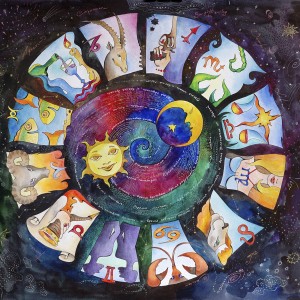
ARIES (March 21–April 19)  I predict that August will be a Golden Age for you. That’s mostly very good. Golden opportunities will arise, and you’ll come into possession of lead that can be transmuted into gold. But it’s also important to be prudent about your dealings with gold. Consider the fable of the golden goose, whose owner grew impatient because it laid only one egg per day; he foolishly slaughtered his prize animal to get all the gold immediately. That didn’t work out well. Or consider the fact that to the ancient Aztecs, the word teocuitlatl referred to gold, even though its literal translation was “excrement of the gods.” Moral of the story: If handled with care and integrity, gold can be a blessing.

TAURUS (April 20–May 20)  Taurus socialite Stephen Tennant (1906–1987) was such an interesting luminary that three major novelists created fictional characters modeled after him. As a boy, when he was asked what he’d like to be when he grew up, he replied, “I want to be a great beauty.” I’d love to hear those words spill out of your mouth, Taurus. What? You say you’re already all grown up? I doubt it. In my opinion, you’ve still got a lot of stretching and expansion and transformation to accomplish during the coming decades. So yes: I hope you can find it in your wild heart to proclaim, “When I grow up, I want to be a great beauty.” (P.S.: Your ability to become increasingly beautiful will be at a peak during the next 14 months.)

GEMINI (May 21–June 20)  “Manage with bread and butter until God sends the honey,” advises a Moroccan proverb. Let’s analyze how this advice might apply to you. First thing I want to know is, have you been managing well with bread and butter? Have you refrained from whining about your simple provisions, resting content and grateful? If you haven’t, I doubt that any honey will arrive, ether from God or any other source. But if you have been celebrating your modest gifts, feeling free of greed and displeasure, then I expect at least some honey will show up soon.

CANCER (June 21–July 22)  Don’t worry your beautiful head about praying to the gods of luck and fate. I’ll take care of that for you. Your job is to propitiate the gods of fluid discipline and hard but smart work. To win the favor of these divine helpers, act on the assumption that you now have the power and the right to ask for more of their assistance than you have before. Proceed with the understanding that they are willing to provide you with the stamina, persistence and attention to detail you will need to accomplish your next breakthrough.

LEO (July 23–August 22)  “Sometimes, I feel the past and the future pressing so hard on either side that there’s no room for the present at all.” A character named Julia says that in Evelyn Waugh’s novel Brideshead Revisited. I bring it to your attention as an inspiring irritant, as a prod to get you motivated. I hope it will mobilize you to rise up and refuse to allow your past and your future to press so hard on either side that there’s no room for the present. It’s a favorable time for you to fully claim the glory of being right here, right now.

VIRGO (August 23–September 22)  I’m not an ascetic who believes all our valuable lessons emerge from suffering. Nor am I a pop-nihilist who sneers at pretty flowers, smiling children and sunny days. On the contrary: I’m devoted to the hypothesis that life is usually at least 51 percent wonderful. But I dance the rain dance when there’s an emotional drought in my personal life, and I dance the pain dance when it’s time to deal with difficulties I’ve ignored. How about you, Virgo? I suspect that now is one of those times when you need to have compassionate heart-to-heart conversations with your fears, struggles and aches.

LIBRA (September 23–October 22)  Do you absolutely need orchids, sweet elixirs, dark chocolate, alluring new music, dances on soft grass, sensual massages, nine hours of sleep per night and a steady stream of soulful conversations? No. Not really. In the coming days, life will be a good ride for you even if you fail to procure those indulgences. But here are further questions and answers: Do you deserve the orchids, elixirs and the rest? My answer is yes, definitely. And would the arrival of these delights spur you to come up with imaginative solutions to your top two riddles? I’m pretty sure it would. So I conclude this horoscope by recommending that you do indeed arrange to revel in your equivalent of the delights I named.

SCORPIO (October 23–November 21)  “Don’t try to steer the river,” writes Deepak Chopra. Most of the time, I agree with that idea. It’s arrogant to think that we have the power to control the flow of destiny or the song of creation. Our goal should be to get an intuitive read on the crazy-making miracle of life, and adapt ourselves ingeniously to its ever-shifting patterns and rhythms. But wait! Set aside everything I just said. An exception to the usual rule has arrived. Sometimes, when your personal power is extra flexible and robust—like now, for you—you may indeed be able to steer the river a bit.

SAGITTARIUS (November 22–December 21)  “Dear Astrologer: Recently I’ve been weirdly obsessed with wondering how to increase my levels of generosity and compassion. Not just because I know it’s the right thing to do, but also because I know it will make me healthy and honest and unflappable. Do you have any sage advice?—Ambitious Sagittarius.” Dear Ambitious: I’ve noticed that many Sagittarians are feeling an unprecedented curiosity about how to enhance their lives by boosting the benevolence they express. Here’s a tip from Anaïs Nin: “The worse the state of the world grows, the more intensely I try for inner perfection and power. I fight for a small world of humanity and tenderness.”

CAPRICORN (December 22–January 19)  Time does not necessarily heal all wounds. If you wait around passively, hoping that the mere passage of months will magically fix your twists and smooth out your tweaks, you’re shirking your responsibility. The truth is, you need to be fully engaged in the process. You’ve got to feel deeply and think hard about how to diminish your pain, and then take practical action when your wisdom shows you what will actually work. Now is an excellent time to upgrade your commitment to this sacred quest.

AQUARIUS (January 20–February 18)  The questions you’ve been asking aren’t bad or wrong. But they’re not exactly relevant or helpful, either. That’s why the answers you’ve been receiving aren’t of maximum use. Try these questions instead: 1. What experience or information would you need to heal your divided sense of loyalty? 2. How can you attract an influence that would motivate you to make changes you can’t quite accomplish under your own power? 3. Can you ignore or even dismiss the 95 percent of your fear that’s imaginary so you’ll be able to focus on the 5 percent that’s truly worth meditating on? 4. If I assured you that you have the intelligence to beautify an ugly part of your world, how would you begin?

PISCES (February 19–March 20)  A scuffle you’ve been waging turns out to be the wrong scuffle. It has distracted you from giving your full attention to a more winnable and worthwhile tussle. My advice? Don’t waste energy feeling remorse about the energy you’ve wasted. In fact, be grateful for the training you’ve received. The skills you’ve been honing while wrestling with the misleading complication will serve you well when you switch your focus to the more important issue. So are you ready to shift gears? Start mobilizing your crusade to engage with the more winnable and worthwhile tussle.

This Week in the Pacific Sun

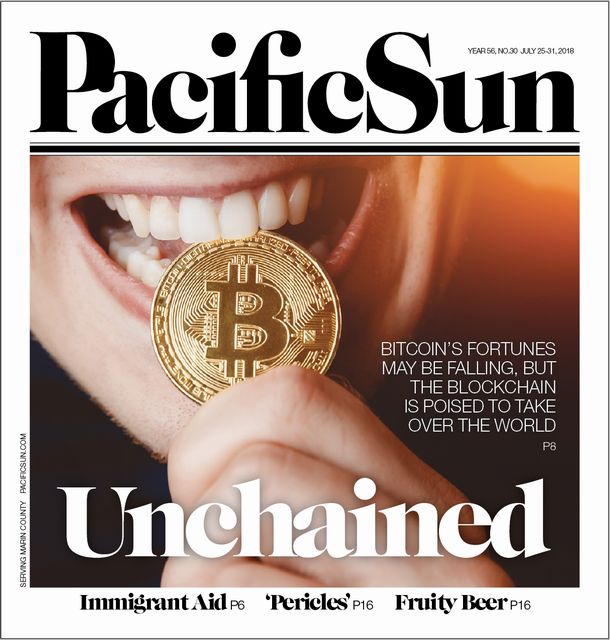
This week’s Pacific Sun has a little bit of everything and it’s all good. Our cover story dives deep into the Blockchain, the technology behind Bitcoin and all crytopcurrency. Bitcoin’s bubble may have burst but the Blockchain is here to stay. In the new section, Tom Gogola checks in with Assemblyman Marc Levine and his bill to help out of state nonprofits help some of the most vulnerable people in the world—immigrant youth living in Trump’s America. Tanya Henry has a story on a new Jamaican restaurant in San Rafael. Charlie Swanson profiles musician Marty O’Reily and his stay in an Airstream in the hills of Mt. Tam. And Charles Brousse gives thumbs up to the Marin Shakespeare Company’s production of Pericles. We’ve got all that and more in this week’s ish.

Blockchain Gains

Even the most charismatic heroes are destined to be supplanted by their more stable, if less flashy, contemporaries. This seems to be hard-boiled into our human destiny. Agamemnon and Achilles were replaced by their less flamboyant counterpart, Odysseus; the fiery promise of fossil-fuel technologies is now being phased out by the boring, reliable and simple electric motor. It’s the same play being performed on different stages with a different cast. In that vein, one of the most recent dramas can be seen in the spectacular rise and fall of bitcoin.

If you’ve been following bitcoin over the past six months, it may feel like the hero is now stumbling down a dark alley—clutching a mortal wound and too preoccupied with applying pressure to see all the “dead end” signs. There are certainly some bitcoin investors feeling that way. Stories abound of people taking out high-interest loans and second mortgages to get in on what was sold as a once-in-a-lifetime investment opportunity toward the end of 2017.

Those unfortunate souls pumped untold billions of dollars into the trending cryptocurrency by purchasing bitcoin tokens. In January 2017, this was an industry valued at over $830 billion. Ten days later, that number dropped over $360 billion, and nobody knows why.

Now, as the predicted crashes in bitcoin’s value are manifesting, all may seem lost. But like any good drama, there’s a twist. It appears that bitcoin was not the star after all. It is its underlying technology—something known as the blockchain—that deserves attention.

The blockchain is the ledger system that makes bitcoin such a powerful idea. In addition to its influence on global finance, blockchain promises to upend everything from accounting and project management to cybersecurity and the insurance industry—and everyone, from your neighbor to the Chinese government, seems to be involved somehow.

Blocks ’n’ Bits

The blockchain is a distributed ledger—similar to the kind the accounting department at work uses to track incoming and outgoing expenses. Originally, ledgers were kept in actual books; then they moved to computer programs like Excel and QuickBooks. And then the internet came along.

The blockchain is an electronic ledger that lives on multiple servers all over the globe. These ledgers are open to anyone and, because of this, it is difficult to change any data recorded on the blockchain—or cook the books, as they say—without raising red flags.

Every server carries the full ledger, so there is no central authority managing the chain. Because it is not tied to a state government, the blockchain is ideal for facilitating cross-border trade—both as a means of tracking the movement of goods and services, and as a platform upon which to build a cryptocurrency, like bitcoin.

Bitcoin is known as a cryptocurrency because it draws its inherent value from a cryptographic algorithm. An individual bitcoin is essentially the solution to a complex math problem. There are a finite number of solutions to be drawn from the bitcoin algorithm, and solving these problems involves serious computing power.

As such, those who use their own machines to solve these equations—called miners—are rewarded with bitcoins or other digital tokens for their solutions. This incentivizes the mining process and encourages more people to join the system.

For true believers, bitcoin represents the first sparks of a global revolution that will democratize wealth, the internet and society as a whole. In theory, the underlying technology that bitcoin uses to store its data—the blockchain—has the power to decentralize all online information, storing it in cryptic jumbles across the hard drives of millions of computer users, freeing us from the tightening grip of greedy banks, monopolizing tech giants and overeager governments.

Still, skeptics see little more than a bubble fueled by wild, irrational speculation and hucksters pushing get-rich-quick schemes. At the moment, it would seem that the bitcoin skeptics have been vindicated. The cryptocurrency was exchanging for nearly $20,000 on Dec. 16, an astonishing feat for a value system created practically out of thin air. Since then, the price has tumbled, dipping below $7,000 in early February. It currently sits at $7,446. It’s doubtful that number will be current by the time you pick up this paper or read this article online.

But whatever blockchain’s value at the end of any given day, one thing is certain: a global system that verifies transactions through a distributed, decentralized network—one that is internally incentivized to be fast and accurate—is incredibly valuable. That’s because the majority of our lives have to do with verified or verifiable data, whether that information lives in a formal ledger or exists as an informal tally in our heads. Beyond all our financial transactions, there’s our energy and data usage, our communications, time spent on jobs and countless other exchanges that happen explicitly or in the background of our lives.

That’s why the topic of blockchain and its many uses kept popping up at China’s biggest political event this past spring (the National People’s Congress and Chinese People’s Political Consultative Conference). Outside of food, shelter and water, accounting is the other major necessity of modern humans. It’s vastly more significant than any other technology we possess. In fact, all other technologies begin with an attempt to increase accounting efficiencies. A few examples include the internet, banking, trade, metallurgy and roads.

Applications

Finance people love the blockchain. Accountants, in particular, are absolutely smitten with its potential. Instant auditability, legal proof, contract verification and an immutable audit trail are just some of the buzzy catchphrases accountants mutter in their sleep. Blockchain promises to make their dreams a reality.

This is why Josh McIver decided to start ULedger—a blockchain-based accounting company—instead of continuing with the so-called Big Four (Deloitte, PwC, EY, KPMG). That’s understandable. If Robin Hood ever got his hands on a rifle, he’d probably put his bow and quiver down, too. McIver is certain that the technology he and his team are developing will become the future of enterprise auditing.

According to McIver, his technology “helps companies assert and prove the integrity of their data.” That’s no small feat. Today that proof of integrity is the responsibility of hundreds of thousands of accountants. ULedger promises efficiency, auditability, legal proof of contractual obligations and immutable audit trails so “anytime that a company has data that needs to be proven in some manner, or when other people make decisions based on that data, they can use ULedger to authenticate or certify the integrity of that data.”

Right now, the city of Boise, Idaho, is using the technology to help streamline utility payment responsibilities between home buyers and sellers, a once-tedious task that tied up valuable city resources.

There are thousands of blockchain applications in the works. Most of them are built using Ethereum (a foundational blockchain technology that simplifies the development of how the blockchain stores data). All of them promise to change the world. The majority will disappear into the ether (or ETH, which is what the Ethereum token is called), but some will endure and persist. It’s difficult to wade through the white noise. It helps to have a guide.

One such sherpa is Chris Groshong, a biochemist turned blockchain enterprise expert who now heads the blockchain consulting firm CoinStructive. If you don’t have the patience to dig through all the pre-sales and initial coin offerings (ICOs), find a Groshong to help you understand what does what and how.

According to Groshong, this next generation of blockchain companies affect a broad spectrum of markets. Get comfy; this ride will take you from banking, through alternative energy and end with a digital feline that’s worth as much as a stake in a hypercar (the rarest and most expensive of supercars).

Power to the People

Beyond financial tools, there are the day-to-day things like electricity. As much as the current administration would like to bolster the old ways of creating power, everyone knows that sustainable sources, such as solar, wind and hydro, are the way to go. That’s where Dan Bates and Impact PPA come in.

Bates is a veteran of renewable energy and a pioneer in blockchain. His idea is simple: He installs solar and wind farms around the world and lets people buy the power they need. He’s installed his power plants in 35 countries, most notably, troubled, developing locations. So why is Bates investing in developing a blockchain technology and token?

The “PPA” in Impact PPA stands for “power purchase agreement.” Bates wants everyone to have the ability to invest in the empowerment of disenfranchised peoples across the globe.

Traditionally, the financing of power grids has been the responsibility of the government. But what if there is no local government that can finance that? Sure, we have global banking institutions that can handle that, but Bates’ question is how to get around the financial and bureaucratic bottleneck presented by, for instance, the World Bank, USAID, Power Africa, and nongovernmental organizations?

The way to solve that, according to Bates, is to get a group of manufacturers, installers and local leaders to commit to a PPA and sell the tokens on the blockchain to people who Bates thinks are “interested in social good; they’re interested in the effects of climate change, and how to mitigate those effects and want to put their money into something that will have a positive impact on the planet.”

As with all blockchain technologies, those who invest early will have the greatest potential for profit. Impact PPA’s power token is called GEN; it allows people who live around Impact PPA power stations to buy as much energy as they need. The token pays for building the renewable energy power plants and lets anyone around the globe invest.

Bates’ team is currently rebuilding the west coast of Haiti. The first of 42 cities is Les Irois. He’s doing this even if no one buys his blockchain token. Bates hopes to accelerate global access to renewable energy through the blockchain’s ability to let people invest in a transparent way.

Funny Money

Collectible. Breedable. Adorable. Start meow!

When you develop a blockchain technology, you really want adoptability, scalability and value. That means your technology is easily used, by a lot of people, who will pay a lot for it. As tempting as instant auditability, reliable verification of contracts and global deployment of community-funded renewable energy sound . . . who doesn’t like cats?

CryptoKitties are digital cats that straddle a version of the blockchain that contains all their digital kitty DNA. Owners store their binary felines in digital wallets, like any other cryptocurrency, but they can also breed their kitties with others. That’s how new kitties are released. When CryptoKitties breed, their DNA is mixed to produce the new generation block and that is added to the blockchain.

You purchase CryptoKitties with Ether (ETH). Normal kitties will set you back fractions of one token, where as the exclusive varieties can cost several hundred tokens. As Ether hovers around $700 a token, the asking price of some CryptoKitties can reach north of $535,000.

For those who are tired of traditional methods of earning enough money to live in Marin County, like inventing the next disruptive technology or becoming the head of a cartel, CryptoKitties may provide a reasonable way to maintain some degree of stability.

If kitties aren’t your thing, and you prefer something more stable and realistic like a hypercar, check out BitCar, where you can buy a part of something like a Bugatti Chiron. Not only will you be able to chuckle confidently at the schmuck pulling up in the Lamborghini Gallardo, but you can also sleep safely in the knowledge that your hard-earned cash is safe, somewhere where the Chiron is garaged, in Dubai or Doha or Vladivostok or Tokyo maybe. Anyway, wherever it is, as long as your wallet is safe and secure, it’s basically in there.

Crypto Critics

One of the most visible thought leaders involved with bitcoin and blockchain is Roger Ver. He’s an early adopter of bitcoin, and very influential in the space. Bitcoin has made Ver very wealthy, but he’s not satisfied with what the Bitcoin Core technology has become.

“By the end of the year, Bitcoin Core will no longer be the dominant crypto,” is a prediction of Ver’s that seems to be coming to fruition. He has led a push to redefine bitcoin’s functionality and structure to improve what he feels are shortcomings that should have been fixed years ago. He wants to increase transaction speed, lower transaction costs and continue what he believes are the core duties of bitcoin: a way of reliably sending money, peer to peer, quickly, cheaply and with a good amount of anonymity.

Around Aug. 1, everyone holding Bitcoin Core (BTC) in their digital wallets received an equivalent amount of Bitcoin Cash (BCH), a new cryptocurrency that continues what Ver and other early bitcoin adopters believe is its original mission. This has earned Ver a place among the most influential voices around.

His battle cry, “#BitcoinCash, is what I started working on in 2011: a store of value AND means of exchange,” is an echo of what Gavin Andresen (one of the first developers of Bitcoin Core) said in 2010. The two carry a lot of influence, which has propagated Bitcoin Cash across the globe.

Right now the biggest problem with Bitcoin Core (the original iteration of bitcoin) is that it’s slow, expensive and incredibly volatile. A solution to the volatility problem is Kowala (KUSD), a fast and cheap token pegged to the U.S. dollar. Why would someone want cryptocurrency that always equals the dollar when dollars already exist? To simplify the cryptocurrency process for users.

“Our mission statement is to remove the obstacles to mass adoption,” Kowala co-founder Eiland Glover says.

Removing volatility, expense and latency is certainly an improvement over Bitcoin Core, but where is the sweet payoff for eager investors looking for rapid tenfold returns? At face value, this just sounds like a good way to pay for products and services with a decentralized token. Who wants that?

It turns out that a lot of people want that. The search for a reliable and stable cryptocurrency is still on. It’s what Bitcoin Core was supposed to be before things got out of hand. Kowala’s team has developed a unique algorithm that serves as its backbone. To maintain an equivalent value to the dollar, Kowala’s system either mints or purchases and destroys KUSD tokens. Investors can purchase a part of the network and its mining ability by purchasing MUSD tokens.

The constant minting or destruction of tokens ensures that KUSD is secured by the value of work being done on the network. Every transaction pays a small fee to the verifying miner, and that fee across all transactions is the work that stabilizes the system. It’s as if your sweat and toil was the stabilizing factor for the currency in which you’re paid.

What’s exciting is that anyone can create their own token and design their own blockchain, and anyone can invest during the early stages for very little. New blockchain technologies are funded by presales and initial coin offerings (ICOs) that are open to the public. The winning technologies will pay exponential dividends to their early investors. Just like in the dotcom days, you can employ a Wall Street trader or a local fortuneteller to find the best use of the technology; either one will be just as good. Just don’t get roped in like the suckers in the late ’90s who bought pieces of a Beanie Baby trading site or invested in a server made of Legos.

Just kidding. That was eBay and Google.

John Flynn contributed to this story.



Movie Times

0

Across the Universe (PG-13) Regency: Sun, Tue 2, 7

Björk: Biophilia Live (Not Rated) Lark: Thu 7:30

Blindspotting (R) Regency: Fri-Sat 11:40, 2:10, 4:30, 7, 9:30; Sun-Thu 11:40, 2:10, 4:30, 7

Captain Underpants (PG) Northgate: Tue 10am

The Catcher Was a Spy (R) Lark: Mon 12:30; Tue 3; Thu 10:45am

The Darkest Minds (PG-13) Northgate: Thu 7:05, 9:40

Dark Money (Not Rated) Rafael: Fri-Sat 1:15, 5:45; Sun 6:30 (filmmaker Kimberly Reed in person); Mon-Tue 5:45; Wed-Thu 5

Dark Victory (PG) Lark: Tue 7; Wed 11; Thu 3

Deconstructing The Beatles: Birth of The Beatles (Not Rated) Rafael: Sun 2

Disney’s Newsies: The Broadway Musical! (PG) Northgate: Sat 4

Don’t Worry, He Won’t Get Far on Foot (R) Rafael: Fri-Sat 1, 3:30, 6, 8:30; Sun 1, 6, 8:30; Mon-Tue 3:30, 6, 8:30; Wed-Thu 6, 8:30

Eighth Grade (R) Regency: Fri-Sat 12, 2:30, 4:50, 7:20, 9:45; Sun-Thu 12, 2:30, 4:50, 7:20

Equalizer 2 (R) Fairfax: Fri-Wed 1:05, 3:55, 6:55, 9:50 Northgate: Fri 10:05, 10:35, 12:55, 3:45, 6:35, 740, 9:30, 10:35; Sat 10:05, 11:05, 12:55, 3:45, 6:35, 740, 9:30, 10:35; Sun-Wed 10:05, 11:05, 12:55, 1:55, 3:45, 4:50, 6:35, 740, 9:30, 10:35

The First Purge (R) Northgate: Fri-Wed 11:10, 4:30, 9:55

First Reformed (R) Lark: Fri 4:20; Sun 10:30am; Mon 6:30; Wed 1:20

Generation Wealth (R) Regency: Fri-Sat 11:10, 1:50, 4:40, 7:30, 10:05; Sun-Thu 11:10, 1:50, 4:40, 7:30

Hearts Beat Loud (PG-13) Lark: Fri 2:15; Sun 9; Mon 4:20; Thu 5:10

Hereditary (R) Lark: Fri 9; Sat 6:15; Tue 9:10; Wed 3:40

Hermitage Revealed (Not Rated) Lark: Sun 1

Hotel Transylvania 3: Summer Vacation (PG-13) Larkspur Landing: Fri, Mon-Wed 7:15, 9:40; Sat-Sun 11:45, 2:15, 4:45, 7:15, 9:40 Northgate: Fri-Wed 11:25, 2, 4:35, 7:15, 9:45

Incredibles 2 (PG) Larkspur Landing: Fri, Mon-Wed 6:30, 9:25; Sat-Sun 12:30, 3:30, 6:30, 9:25 Northgate: Fri-Wed 10:20, 1:20, 4:20, 7:20, 10:20

Leave No Trace (PG) Regency: Fri-Sat 11:30, 2:20, 5, 7:40, 10:15; Sun-Thu 11:30, 2:20, 5, 7:40

Mamma Mia! Here We Go Again (PG-13) Fairfax: Fri-Wed 1:25, 4:05, 6:45, 9:25 Larkspur Landing: Fri, Mon-Wed 7, 9:45; Sat-Sun 11, 1:40, 4:20, 7, 9:45 Northgate: Fri-Wed 10:30, 11:30, 1:10, 2:10, 3:50, 5, 6:30, 7:45, 9:15, 10:30 Sequoia: Fri-Sat 1:45, 4:20, 7, 9:40; Sun 1:45, 4:20, 7; Mon-Wed 4:20, 7; Thu 4:20

The Metropolitan Opera: Turandot (Not Rated) Lark: Wed 6:30

Mission: Impossible—Fallout (PG-13) Cinema: Fri-Wed 12, 3:30, 10:25; 3D showtime at 7 Fairfax: Fri-Wed 12, 3:25, 6:50, 9:20, 9:55 Northgate: Fri-Wed 11:20, 12:30, 2:50, 3:55, 6:20, 7:30, 9:50, 10:45; 3D showtimes at 10:10, 1:40, 5:10, 8:40 Playhouse: Fri-Sat 12, 12:15, 3:15 3:30, 6:30, 6:45, 9:30, 9:45; Sun-Wed 12, 12:15, 3:15 3:30, 6:30, 6:45 Rowland: Fri-Sun 9:45, 1, 7:30, 10:45; 3D showtime at 4:15

Mountain (Not Rated) Lark: Fri 10:40am; Sat 12:05; Sun 5:10

Ocean’s 8 (PG-13) Lark: Sat 1:45, 8:50; Sun 6:50; Mon 10:20am; Tue 12:40 Northgate: Fri-Wed 1:45, 7:10

Rachel Hollis Presents: Made for More (PG-13) Regency: Thu 7:30

RBG (PG) Rafael: Fri-Sat, Mon-Tue 3:45, 8; Sun, Wed-Thu 3:45

The Rider (R) Lark: Fri 6:45; Sat 4; Sun 3; Mon 8:45; Tue 10:30am; Thu 12:45

Ryuichi Sakamoto: Coda (Not Rated) Rafael: Sun 4:15; Thu 7

Sailor Moon R and S: The Movies (PG) Regency: Sat 12:55; Mon 7

Sea to Shining Sea (Not Rated) Rafael: Wed 7 (filmmakers Maximon Monihan and Sheena Matheiken in person)

Skyscraper (PG-13) Northgate: Fri-Wed 12:05, 2:45, 5:20, 8, 10:40

Sorry to Bother You (R) Regency: Fri 11, 1:40, 4:20, 7:10, 9:55; Sat 4:20, 7:10, 9:55; Sun, Tue 11; Mon 11, 1:40, 4:20; Wed 11, 1:40, 4:20, 7:10; Thu 1:40, 4:20 Sequoia: Fri-Sat 2:05, 4:40, 7:20, 9:55; Sun 2:05, 4:40, 7:20; Mon-Wed 4:40, 7:20; Thu 4:40

The Spy Who Dumped Me (R) Northgate: Thu 7, 9:55

Teen Titans GO! to the Movies (PG) Fairfax: Fri-Wed 12:10, 1:35, 2:25, 3:50, 4:40, 6:55, 9:10 Northgate: Fri-Wed 11:50, 2:15, 4:40, 7:05, 9:25

Unfriended: Dark Web (R) Northgate: Fri-Wed 7:50, 10:15

Whitney (R) Northgate: Fri-Wed 11:35, 2:20, 5:05

Won’t You Be My Neighbor? (PG-13) Rafael: Fri-Sun 1:30, 4, 6:15, 8:15; Mon-Thu 4, 6:15, 8:15


Movie Reviews

Across the Universe (2:13) Julie Taymor/Fab Four musical phantasmagoria about star-crossed lovers caught up in the protests, self-discovery and violence of the 1960s; Evan Rachel Wood stars.

Björk: Biophilia Live (1:37) Catch Iceland’s fave avant-garde electro-pop superstar as she performs every song from her hit album at London’s Alexandra Palace.

Blindspotting (1:35) Stylish and energetic human dramedy about two locals dealing with race, class and crime in a rapidly gentrifying Oakland.

Captain Underpants (1:29) DreamWorks cartoon version of the bestselling kids’ books about a delusional school principal who thinks he’s a dimwitted superhero.

The Catcher Was a Spy (1:38) True tale of renaissance man Moe Berg, the erudite, multilingual major league catcher who spied for the OSS during WWII; Paul Rudd stars.

Dark Money (1:38) Eye-opening documentary about the heroic fight the state of Montana has been waging against corporate donations to political candidates since the Citizens United decision of 2010.

Dark Victory (1:44) Classic tearjerker stars Bette Davis as a hedonistic heiress facing down a brain tumor; Humphrey Bogart and Ronald Reagan are among her suitors.

The Darkest Minds (1:45) A group of mysteriously super-powerful teenagers escape from a government lockup and resist the evil grownups who just don’t understand them.

Eighth Grade (1:34) Coming-of-age comedy focuses on a supposedly unremarkable 13-year-old girl as she navigates the fraught final week of middle school.

Disney’s Newsies: The Broadway Musical! (2:25) Filmed performance of the hit musical about a band of turn-of-the-century New York news kids who lead a strike against Hearst and Pulitzer.

Don’t Worry, He Won’t Get Far on Foot (1:53) Joaquin Phoenix stars as John Callahan, the real-life envelope-pushing paraplegic cartoonist; Gus Van Sant directs.

Equalizer 2 (2:09) Denzel Washington’s back as the moody and mysterious righter of wrongs; Melissa Leo costars.

The First Purge (1:37) Dystopian horror flick about a not-so-distant United States where rampant, violent lawlessness is celebrated one night per year.

Generation Wealth (1:46) All-encompassing documentary look at the modern American obsession with riches and such self-destructive corollaries as narcissism, consumerism and body image.

Hearts Beat Loud (1:37) Sweet-natured musical about an aging hipster who bonds with his teenage daughter when they start an indie rock band.

Hermitage Revealed (1:23) Take an eye-filling tour through the 250-year-old St. Petersburg museum and its priceless collection of everything from prehistoric artifacts to Old Masters to Catherine the Great’s private jewels.

Hotel Transylvania 3: Summer Vacation (1:25) The monstrous cartoon innkeepers are back and looking for fun on a spook-filled ocean cruise; Mel Brooks, Steve Buscemi and Fran Drescher vocalize.

Leave No Trace (1:48) Poignant tale of a father and daughter’s idyllic life in the Oregon wilds and the encroaching urban Zeitgeist that threatens it.

Mamma Mia! Here We Go Again (1:50) Prequel/sequel mashup about young Donna’s lovers and Sophie’s impending motherhood reassembles Meryl Streep, Pierce Brosnan, Julie Walters and Amanda Seyfried.

The Metropolitan Opera: Turandot (2:20) Catch diva extraordinaire Nina Stemme in Franco Zeffirelli’s dazzling production of the Puccini opera in big-screen high definition.

Mission: Impossible–Fallout (2:27) Tom Cruise, Ving Rhames, Alec Baldwin and the rest of the IM crew return in an action-packed, race-against-time summer frolic.

Mountain (1:14) Panoramic documentary celebrates the world’s most awesome alps and the climbers who scale their death-defying heights.

Rachel Hollis Presents: Made for More (2:00) The motivational speaker delivers her aspirational message of female empowerment and community.

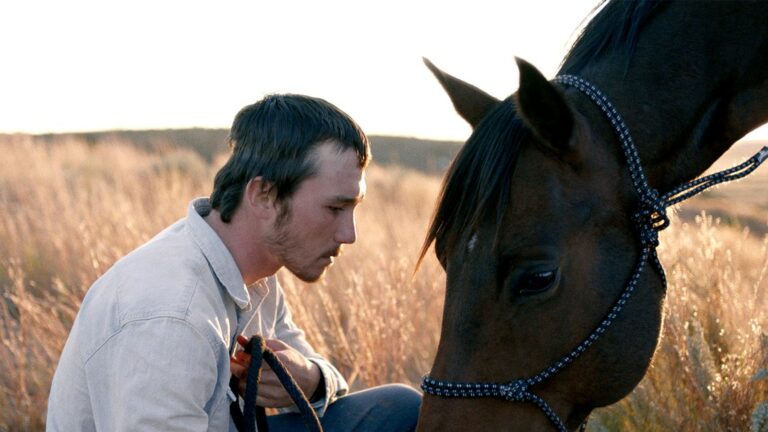
The Rider (1:43) Neorealist modern Western about an Oglala Lakota Sioux rodeo rider and his family and friends features nonprofessional actors and the epic setting of Pine Ridge Indian Reservation.

Ryuichi Sakamoto: Coda (1:42) Documentary tribute to the acclaimed techno-pop pioneer, Oscar-winning film composer and ardent environmentalist.

Sailor Moon R and S: The Movies (2:00) The popular Naoko Takeuchi manga gets movie-fied in an anime double bill of intergalactic love and justice.

Sea to Shining Sea (1:25) Docu-comedy follows a happy-go-lucky Amsterdam skateboarder and his grumpy American BFF on an offbeat road trip across the U.S.A.

Skyscraper (1:43) Security expert Dwayne Johnson goes all Die Hard when he finds himself in the world’s tallest skyscraper with a stem-to-stern inferno and several hundred people who want to kill him.

Sorry to Bother You (1:45) Boots Riley absurdist fantasy satire about an Oakland telemarketer striving his way through a netherworld of big-tech billionaires and anti-Zeitgeist revolutionaries.

The Spy Who Dumped Me (1:57) Action comedy stars Mila Kunis and Kate McKinnon as two innocents thrust into international intrigue by a connected ex; Gillian Anderson co-stars.

Teen Titans GO! to the Movies (1:24) The satirical kids’ TV cartoon series hits the big screen with its brash, goofy humor intact, musical numbers and all.

Unfriended: Dark Web (1:28) Horror flick for the Zuckerberg age as a doofus twenty-something realizes that an evil presence has been watching his every move through his laptop.

Heroes & Zeroes

Hero
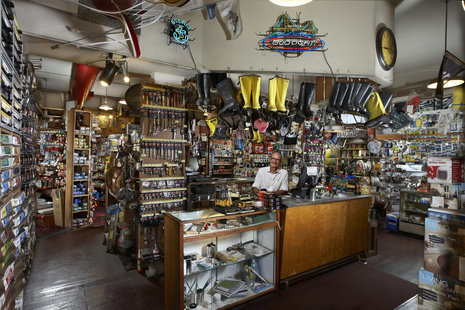
Monsanto’s Roundup, a controversial chemical weed killer linked to serious diseases, will be off the shelves Waterstreet Hardware on Caledonia Street in Sausalito by the end of July. The independently owned store says there’s “overwhelming evidence” that Monsanto’s Roundup is not safe, and references the book Whitewash by Carey Gilliam. (Read it. You’ll go organic before your next meal.) The store is also reviewing its current inventory to determine whether it’s stocking other products that may be harmful to the environment, and, if so, will do its best to replace them with organic or natural merchandise. We see why this wonderful merchant, which has survived for more than 35 years, remains the only hardware store in town.
Zero
“Neither rain, nor sleet, nor gloom of night stays these couriers from the swift completion of their appointed rounds.” But a car parked in front of your mailbox will stop it cold. A Tam Valley resident says the mailperson refuses to deliver mail when there’s a car parked legally in front of the mailbox. Failing to honor the postperson’s vow seemed practically treasonable to us, so we did a bit of research about a United States Postal Service promise. It’s a suburban myth. Though the words are chiseled in stone at the New York City Post office and the Smithsonian’s Postal Museum, it’s not an official oath. Worse yet, there seems to be no official policy about getting out of the mail truck, even on a beautiful summer day. Unless there’s a package. Sometimes they’ll deliver a package to the front door of a home. OK, so it’s not treason. Just another government agency with inconsistent policies leaving behind confused taxpayers.
Got a Hero or a Zero? Please send submissions to ni***************@***oo.com. Toss roses, hurl stones with more Heroes and Zeroes at pacificsun.com.

Heroes & Zeroes

Hero

Monsanto’s Roundup, a controversial chemical weed killer linked to serious diseases, will be off the shelves Waterstreet Hardware on Caledonia Street in Sausalito by the end of July. The independently owned store says there’s “overwhelming evidence” that Monsanto’s Roundup is not safe, and references the book Whitewash by Carey Gilliam. (Read it. You’ll go organic before your next meal.) The store is also reviewing its current inventory to determine whether it’s stocking other products that may be harmful to the environment, and, if so, will do its best to replace them with organic or natural merchandise. We see why this wonderful merchant, which has survived for more than 35 years, remains the only hardware store in town.

Zero

“Neither rain, nor sleet, nor gloom of night stays these couriers from the swift completion of their appointed rounds.” But a car parked in front of your mailbox will stop it cold. A Tam Valley resident says the mailperson refuses to deliver mail when there’s a car parked legally in front of the mailbox. Failing to honor the postperson’s vow seemed practically treasonable to us, so we did a bit of research about a United States Postal Service promise. It’s a suburban myth. Though the words are chiseled in stone at the New York City Post office and the Smithsonian’s Postal Museum, it’s not an official oath. Worse yet, there seems to be no official policy about getting out of the mail truck, even on a beautiful summer day. Unless there’s a package. Sometimes they’ll deliver a package to the front door of a home. OK, so it’s not treason. Just another government agency with inconsistent policies leaving behind confused taxpayers.

Got a Hero or a Zero? Please send submissions to ni***************@***oo.com. Toss roses, hurl stones with more Heroes and Zeroes at pacificsun.com.

Upfront: Inner Sanctuary

A just-signed bill authored by California state Assemblyman Marc Levine has given the state another bulwark against the Trump administration’s zero-tolerance immigration policies and expands the state’s social safety net for undocumented immigrant youth.

AB 2642 makes it easier for out-of-state nonprofit organizations to care for undocumented youth in California, potentially keeping them out of detention centers, “and helping them obtain special immigrant juvenile status,” says a Levine statement, “that allows them to remain in the country legally.”

Levine’s law builds on previous legislative efforts undertaken in the state to provide safeguards for vulnerable immigrants who are aging out of the state’s foster-care system and could be subject to deportation. In 2014, Levine authored the immigrant-friendly AB 900 which, according to a statement from Levine’s office, “aligned state law with federal law by providing probate courts with expanded jurisdiction for youth, who are older than 18 and younger than 21, and who are also eligible to apply for Special Immigrant Juvenile Status (SIJS).” Brown signed that bill in  2015, and Levine says it’s helped thousands of vulnerable youth in the state.

His latest bill builds on the SIJS asylum bill by expanding the available social services net to undocumented youth. Until now, only nonprofits incorporated in California could serve as a legal guardian for unaccompanied minors. Levine’s bill allows out-of state nonprofits operating in California “help meet the growing demand to protect immigrant children that is straining the capacity of California-based organizations.”

In an interview, the three-term state assemblyman, representing California’s 10th district, echoes other empathic electeds and Californians who have taken note of the Trump family-separation policy and are troubled by the advent of detention centers for immigrant youth amid ramped-up deportation efforts underway by federal officials. The state has itself passed a set of “sanctuary state” laws which have been upheld of late in federal court.

When it comes to what actual powers the state’s sanctuary bill conveys, Levine says it’s a great question and that he’s often engaged in conversations with his wife to the effect of, “Are you doing everything that you can to stand up to the Trump administration?”

Short of physically putting himself between Immigration and Customs Enforcement agents and immigrant children, he highlights that it’s crucial for elected officials to “bear witness” to the numerous facilities spread throughout the state that are currently housing immigrant youth.

Trump’s Department of Justice sued the state over its sanctuary law last year. It’s been a useful tool for law enforcement agencies to the extent that it forbids local law enforcement from turning detainees over to ICE agents.

Levine recently visited a facility in San Bernardino, which he describes as an “eye-opener. We are pulling people out of communities and detaining them in the desert,” he says, “far from the public eye and media attention. It’s dangerous for these facilities to be in the middle of nowhere,” he says, and all the more crucial for officials to inspect the facilities under the unfolding immigration crisis sparked by Trump’s policies. “We must bear witness to the detention centers,” he says as Trump uses his Department of Justice to “mold the U.S. into his twisted vision.”

Several weeks ago the Bohemian and Pacific Sun reported on a detention center in Fairfield which predates the Trump era, the BCFS Health and Human Services facility. That center has been used to house youths who have been (unfairly, it turns out) suspected of gang affiliation, who are also undocumented.

Without criticizing the Fairfield facility, Rachel Prandini, a staff attorney at the Immigrant Legal Resource Center and Legal Services for Children, both in San Francisco, says the Levine bill could provide a measure of protection for any resident at that facility who reaches the age of 18 and ages out of the facility, and might be picked up by ICE. “It is possible that it could help kids there,” says Prandini.

Levine’s bill arrives on an immigration landscape that’s been upended by Trump’s zero-tolerance policies. The assemblyman says he held off on introducing his bill in order to keep distinct the difference between the recent family separation crisis and immigration policies that predated recent moves undertaken by Trump’s Department of Justice. The Fairfield facility has been operational since 2010.

“They are separate and distinct in that we are trying to keep children out of detainment facilities,” he says, “so that they could pursue legal status in California and remain here instead of being deported.”

His previous immigrant-focused bill, says Levine, provided a measure of asylum for youthful undocumented immigrants in the state who were fleeing violence in countries such as Honduras and El Salvador. “We had problems with the challenge of children fleeing horrific, terrible situations in other countries and coming to California where there was no social safety net for them. They were preyed upon by organized crime,” he adds, and AB 900 afforded those youth a legal guardian for three years after they turned 18.

“Those years would give them time to get legal status.” The bill’s been a big success, he says, and the immigrant-rights organization the Canal Alliance in San Rafael estimates that some 50 children have been protected by SIJS locally, “and thousands of children across California.”


Dining: Jamaican Me Hungry

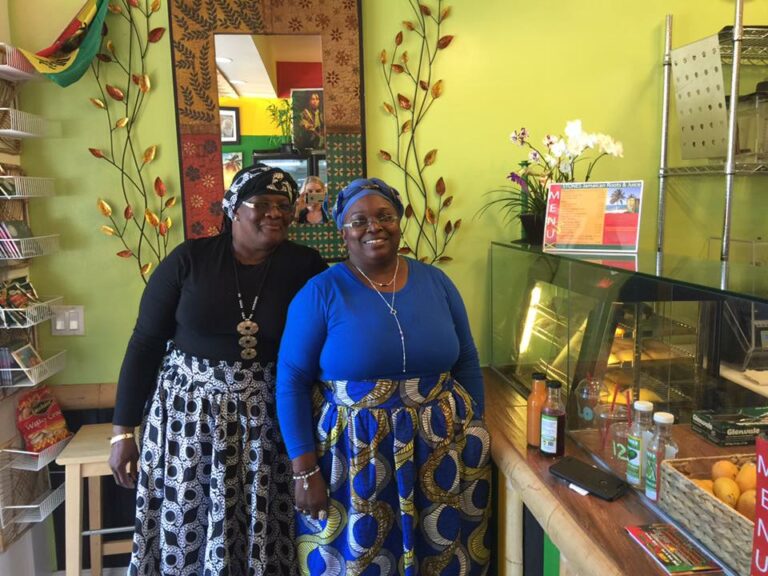
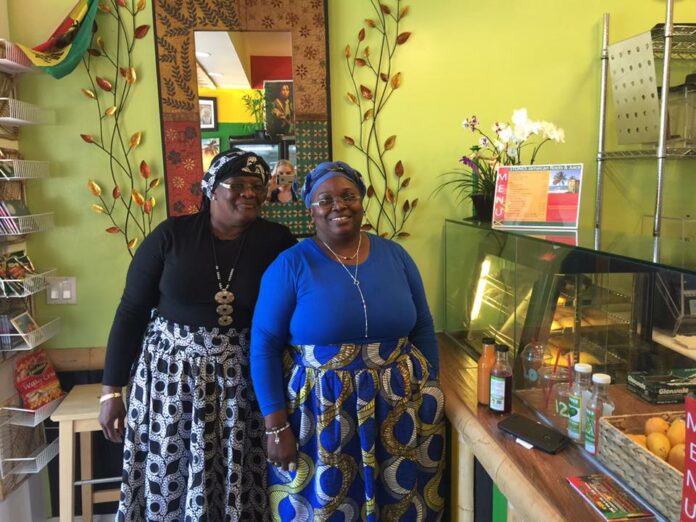
What does a reggae musician do when he’s not touring? He opens a Jamaican juice bar. That’s what Terra Linda resident Strickland Stone and his partner, Pamela Wald, did last May, opening Stones Jamaican Roots and Juice in the space previously home to Berry Bliss, a frozen yogurt store in San Rafael’s West End Center.

“One Taste, One Love—Let’s Get Together” reads a red, yellow and green painted sign in the window of the bright and welcoming 10-seat storefront. A Spotify channel keeps a steady stream of reggae tunes playing, and a handful of food offerings along with several inventive juice choices round out the menu.

Stone, who grew up in a small village in Jamaica, has always loved to cook. His mother was the town’s healer and midwife, and taught him to identify healing herbs at a young age. So when he decided to start bottling juices, he wanted to utilize healthful ingredients like ginger and edible flowers and herbs. But before he landed on juices, he started preparing box lunches of jerk chicken and other Jamaican favorites.

When his customers wanted more than water with their midday meals, Stone began creating various juice combinations—and that was the beginning of his business that now includes four different concoctions with clever names like Jack It Up, made with jackfruit and tropical juices, Dub Tonic (named after his longtime band) and Sorigin Roots—a blend of beets, hibiscus and ginger.

Along with the bottled juices, there are also “blend-ups,” smoothies made with fresh fruit. In addition, three daily specials are offered and a handful of side dishes. I tried the jerk chicken and callaloo vegetable stew specials that come with a side of cole slaw, a toothsome corn biscuit known as a “festival dumpling” and a slice of fried plantain. The chicken is nicely roasted and moist—a side of spicy sauce is provided for dipping. The callaloo features a mild medley of cooked greens, onions and tofu over a generous portion of slightly sweet jasmine rice that’s enough for two meals.

For now, the couple are renting a commercial kitchen to prepare their savory meals and transporting them to the storefront. They also sell a few Jamaican foodstuffs and hope to eventually bring handmade clothing, hats and more from Jamaica.

The family-run business gets plenty of help from Stone’s teenage children and a cousin, who along with Wald are currently running the store until Stone returns from his latest gig—tour dates in Europe with Damian Marley through the month of August.

Stones Jamaican Roots and Juice, 1815 Fourth St., San Rafael. 707.628.3902.

Letters to the Editor

C Change

The No on C side conducted a campaign of disinformation that intentionally created confusion (“C-Saw,” July 18). I was polled three times over the course of several months prior to the election, and had one paid campaigner come to my door after that. The first poll surveyed what issues people in Napa County did and did not like. Then the No on C folks claimed in their advertising that Measure C would cause all the things the poll covered that people didn’t like.

They also claimed that they were in support of sustainable agriculture, which, of course, people like me, who they surveyed that first time around, favored. Overuse of our water and the loss of significant watershed habitat does not, however, help sustain agriculture over the long haul.

The next two polls were push-polls designed to tilt people into opposition of Measure C, again by spreading disinformation based on what people did and didn’t like in the first poll.

It was the worst form of propaganda, pure and simple, paid for by moneyed interests.

Karen Lynn Ingalls

Calistoga

Small Wonder

Thanks to writer Esther Riley (Letters, July 18) for exposing entrenched Democrat incumbents who for decades have been taking not only corporate but big labor and other special interest cash, while publicly decrying this to their loyal but duped voters. They’re typical deep state politicians who speak out of both sides of their mouths. No wonder millions of moderates like me voted for Trump and Republicans.

Rex Allen

San Rafael

State of Disunion

Heading to November with a severely polarized country that is nowhere near uniting or agreeing on anything, it seems to me that those who have the most to gain from this division are bombastic political pundits who know exactly how easy it is to push emotional buttons. One wonders if the term “bipartisanship” is forever lost and a thing of the past.

Dennis Kostecki

Sausalito


Real Astrology

ARIES (March 21–April 19)  I predict that August will be a Golden Age for you. That’s mostly very good. Golden opportunities will arise, and you’ll come into possession of lead that can be transmuted into gold. But it’s also important to be prudent about your dealings with gold. Consider the fable of the golden goose, whose owner grew impatient...

This Week in the Pacific Sun

This week's Pacific Sun has a little bit of everything and it's all good. Our cover story dives deep into the Blockchain, the technology behind Bitcoin and all crytopcurrency. Bitcoin's bubble may have burst but the Blockchain is here to stay. In the new section, Tom Gogola checks in with Assemblyman Marc Levine and his bill to help out...

Blockchain Gains

Even the most charismatic heroes are destined to be supplanted by their more stable, if less flashy, contemporaries. This seems to be hard-boiled into our human destiny. Agamemnon and Achilles were replaced by their less flamboyant counterpart, Odysseus; the fiery promise of fossil-fuel technologies is now being phased out by the boring, reliable and simple electric motor. It’s the...

Movie Times

Across the Universe (PG-13) Regency: Sun, Tue 2, 7 Björk: Biophilia Live (Not Rated) Lark: Thu 7:30 Blindspotting (R) Regency: Fri-Sat 11:40, 2:10, 4:30, 7, 9:30; Sun-Thu 11:40, 2:10, 4:30, 7 Captain Underpants (PG) Northgate: Tue 10am The Catcher Was a Spy (R) Lark: Mon 12:30; Tue 3; Thu 10:45am The Darkest Minds (PG-13) Northgate: Thu 7:05, 9:40 Dark Money (Not Rated) Rafael: Fri-Sat 1:15,...

Movie Reviews

Across the Universe (2:13) Julie Taymor/Fab Four musical phantasmagoria about star-crossed lovers caught up in the protests, self-discovery and violence of the 1960s; Evan Rachel Wood stars. Björk: Biophilia Live (1:37) Catch Iceland’s fave avant-garde electro-pop superstar as she performs every song from her hit album at London’s Alexandra Palace. Blindspotting (1:35) Stylish and energetic human dramedy about two locals dealing...

Heroes & Zeroes

Hero Monsanto’s Roundup, a controversial chemical weed killer linked to serious diseases, will be off the shelves Waterstreet Hardware on Caledonia Street in Sausalito by the end of July. The independently owned store says there’s “overwhelming evidence” that Monsanto’s Roundup is not safe, and references the book Whitewash by Carey Gilliam. (Read it. You’ll go organic before your next meal.)...

Heroes & Zeroes

Hero Monsanto’s Roundup, a controversial chemical weed killer linked to serious diseases, will be off the shelves Waterstreet Hardware on Caledonia Street in Sausalito by the end of July. The independently owned store says there’s “overwhelming evidence” that Monsanto’s Roundup is not safe, and references the book Whitewash by Carey Gilliam. (Read it. You’ll go organic before your next meal.)...

Upfront: Inner Sanctuary

A just-signed bill authored by California state Assemblyman Marc Levine has given the state another bulwark against the Trump administration’s zero-tolerance immigration policies and expands the state’s social safety net for undocumented immigrant youth. AB 2642 makes it easier for out-of-state nonprofit organizations to care for undocumented youth in California, potentially keeping them out of detention centers, “and helping them...

Dining: Jamaican Me Hungry

What does a reggae musician do when he’s not touring? He opens a Jamaican juice bar. That’s what Terra Linda resident Strickland Stone and his partner, Pamela Wald, did last May, opening Stones Jamaican Roots and Juice in the space previously home to Berry Bliss, a frozen yogurt store in San Rafael’s West End Center. “One Taste, One Love—Let’s Get...

Letters to the Editor

C Change The No on C side conducted a campaign of disinformation that intentionally created confusion (“C-Saw,” July 18). I was polled three times over the course of several months prior to the election, and had one paid campaigner come to my door after that. The first poll surveyed what issues people in Napa County did and did not like....
3,002FansLike
3,850FollowersFollow