Hero & Zero

Hero

A man contemplating suicide sat on the guardrail of the Atherton freeway overpass with his legs dangling above Highway 101. Novato police dispatched Corporal Nick Zolli, who arrived at the scene and slowly moved toward the 27-year-old. In a matter of minutes, Zolli gained his trust by speaking calmly and telling him he was there to help. The two developed a rapport. The corporal continued to reassure him, while he placed his hand on the man’s back. Eventually, he convinced him to climb back over the guardrail to safety. Zolli, a 13-year veteran of the Novato PD and a top mental-health officer, handled the tense call with the composure and empathy necessary to save the young man’s life. The department says his experience as the peer support team leader and his training with crisis intervention are true assets to the Novato community. Hats off to Corporal Zolli.

Zero

We just knew a few Marin parents would be ensnared in the college-admission cheating scandal. Indictments last week allege that fifty people around the country committed crimes. Three of them live in Marin County—and pardon the ranting, but the scandal highlights that it’s just too white and privileged around here. We don’t always appreciate the struggles of regular folks when they have to eke out a living. Anything we want here, we buy. Throwing cash at a problem usually takes care of it. Even stringent college admission requirements are no match for Marin’s monied class. So, let’s not consider the hard-working student denied admission because a cheater’s kid gained entry into a top college. Let’s instead think about the ruthless nature it took to complete the con. Parents want the best for their kids, and that’s fine, but Marin’s wealth already gives our children enough advantage: private schools, tutors, college entrance exam prep courses. And here’s the thing: Just because we can afford it doesn’t mean we’re entitled to it. What a concept!

Hero & Zero

Hero
A man contemplating suicide sat on the guardrail of the Atherton freeway overpass with his legs dangling above Highway 101. Novato police dispatched Corporal Nick Zolli, who arrived at the scene and slowly moved toward the 27-year-old. In a matter of minutes, Zolli gained his trust by speaking calmly and telling him he was there to help. The two developed a rapport. The corporal continued to reassure him, while he placed his hand on the man’s back. Eventually, he convinced him to climb back over the guardrail to safety. Zolli, a 13-year veteran of the Novato PD and a top mental-health officer, handled the tense call with the composure and empathy necessary to save the young man’s life. The department says his experience as the peer support team leader and his training with crisis intervention are true assets to the Novato community. Hats off to Corporal Zolli.
Zero
We just knew a few Marin parents would be ensnared in the college-admission cheating scandal. Indictments last week allege that fifty people around the country committed crimes. Three of them live in Marin County—and pardon the ranting, but the scandal highlights that it’s just too white and privileged around here. We don’t always appreciate the struggles of regular folks when they have to eke out a living. Anything we want here, we buy. Throwing cash at a problem usually takes care of it. Even stringent college admission requirements are no match for Marin’s monied class. So, let’s not consider the hard-working student denied admission because a cheater’s kid gained entry into a top college. Let’s instead think about the ruthless nature it took to complete the con. Parents want the best for their kids, and that’s fine, but Marin’s wealth already gives our children enough advantage: private schools, tutors, college entrance exam prep courses. And here’s the thing: Just because we can afford it doesn’t mean we’re entitled to it. What a concept!

Odd Pairing

0

Playwright Ayad Akhtar burst on the theater scene in 2013 with Disgraced, a searing drama about identity politics and Islamophobia, which earned him the Pulitzer Prize for drama. Gender issues in the Islamic community are the focus of Akhtar’s The Who & the What, running now at MTC through March 24.

The play opens in the kitchen of the home of Afzal (Alfredo Huereca), where his daughters, Mahwish (Annelyse Ahmad) and Zarina (Denmo Ibrahim), are engaged in a sisterly debate about marriage. Mahwish, a traditionalist, wants to get married but feels she can’t until her older sister is betrothed. Zarina, who was engaged at one point, has lost interest in dating and sees no reason for her sister to wait.

Afzal does what every loving father would do for his eldest single daughter—he opens up a fake account under her name on a Muslim dating site and starts interviewing prospective boyfriends. One of the prospects, a convert to Islam named Eli (Patrick Alperone), had actually met Zarina before. They’ll date and eventually marry, which allows Mahwish to marry. They’ll all live happily ever after.

Not quite. Zarina is a writer, and her relationship with Eli has given her the impetus to continue her work on a novel about the prophet Mohammed. It questions Mohammed’s infallibility, is sexually graphic and challenges the religious oppression of women. When Eli reads the book, he’s stunned. When Afzal reads the book, he’s apoplectic.

It’s an odd combination of situation comedy and theological debate that doesn’t mix particularly well. It’s no fault of the cast, who are quite good. Director Hana S. Sharif elicits a performance from Huereca that elevates Afzal above the typical meddling parent, and Ibrahim is very effective as a Muslim woman in a modern world battling against her own subjugation.

Alparone’s Eli may be the most interesting character, despite the thankless role of plot propeller. It’s the script that falters, with dialogue that is often trite and a conclusion that feels rushed and wholly unbelievable.

The Who & the What strives to be both a Muslim-American comedy and a drama about religious orthodoxy. It has its moments, but with each genre subtracting from the other, it succeeds at neither.

‘The Who & the What’ runs Tuesday–Sunday through March 24 at Marin Theatre Company, 397 Miller Ave., Mill Valley. 415.388.5208. $25–$60. marintheatre.org.

Shakespeare in Loud

When is a free outdoor performance a thing of public service and culture and art, and when is it just noise?

That’s the debate currently being battled in Mill Valley, where residents near Old Mill Park have petitioned the city to reduce the auditory impact of an annual Shakespeare festival that comes to the park’s small amphitheater for nine afternoon performances over four weeks every summer.

“The duration of practices and performances needs to be addressed,” stated a letter, anonymously distributed throughout the Old Mill Park neighborhood and sent to the city. The letter went on to request “a substantial reduction” in the noise and other disruptions in the park.

According to the actors and artists of Curtain Theater—the nonprofit that has staged the productions annually for 19 years—the company is already complying with city ordinances prohibiting amplification of any kind in the park, along with other curfews, limitations and restrictions designed to limit the impact of the productions on residents.

Whatever the company has done or is doing, it’s not enough.

Or so insist the letter writers, who appear to have been stirred into action by last summer’s production of Shakespeare’s Henry IV, Part One, a history play crammed with battle scenes and war trumpets. The suggestions in the letter include a request that the Curtain reduce its number of shows from nine to four, that it limit rehearsals in the park to just one or two, and that each rehearsal be much shorter.

The sound-battered citizens also want the city to limit the number of large weddings held in the park, and to some extent, their size and duration.

City rules have long allowed up to three events in the park per day, according to Jenny Rogers, director of arts and recreation for the city of Mill Valley. But in response to neighborhood feedback, large-scale events have recently been cut back to one per day. Food trucks have been eliminated, and all catering activities have been banned.

Many nearby residents would love to see such actions expanded even more, reversing the steady evolution of Old Mill from a neighborhood park into an event venue. At the very least, many would like the city to charge enough to make the aural inconvenience worth the trouble.

At the March 6 meeting of the commission, the public was invited to share its thoughts.

“I can hear every word of every rehearsal, and every performance, all through the day,” said Nell Marshall, who lives on Cascade Avenue, near the park. “There have been times I cannot take a work call at home, because even with my windows closed, the sound of the actors voices is so loud.”

Steve Beecroft, who lives right behind the park and serves on the board of the Curtain Theater, countered the call for fewer performances in the park, reminding the commissioners that the theater company provides its shows for free.

“I think it would be a travesty if a few loud complainers were able to dictate what happens in a park created for the benefit and enjoyment of all in our community,” he said, pointing out that the Curtain Theater has circulated its own petition with more than 700 signatures and 400 comments supporting the company. “If the number of performances were reduced, the Curtain would not be able to raise enough funds to continue.”

Linda Maxwell, who identified herself as having lived near Old Mill Park for 25 years, also addressed the impact of Shakespeare in the Park.

“While the audience hears one performance,” she said, “the neighborhood listens every weekend, for months, to the same play, including rehearsals and performances. I propose that the Curtain Theater compromise by agreeing to rehearse elsewhere. This would provide a needed balance, giving the neighborhood some peace and quiet to enjoy their weekend.”

According to Moore and Rogers, the group will return in the future with action items and recommendations. The commission is committed, Moore said, to finding a fair solution to the issues discussed by the public.

“We really are. We may not make everyone 100 percent happy,” added Rogers, “but we’re going to try to get as close as we possibly can.”

From Iran with Love

1

Shahyar Ghanbari might be an unfamiliar name to most in America, but in Iran it is a different story. “Right now I have written 300–400 songs, many of which are sung by famous Persian singers,” Ghanbari says.

Originally from Tehran, Ghanbari traveled to London in 1965 when he was 15, and was immediately captivated by the music playing everywhere. “I loved the Beatles, Pink Floyd, Bob Dylan—I was completely changed by this music,” says Ghanbari. He would later become known as one of the most influential writers of the new wave of Persian modern songwriting. “I returned to Tehran, and I decided to modernize how I wrote songs. I put poetry in all the songs, and for those days this was very new,” he says.

Ghanbari published his first song when he was 18 and continued writing songs until he was 24, when the revolution in Iran started. Ghanbari was outspoken in his poetry and songwriting, and refused to censor himself despite the threats from the government, and eventually he was forced into exile. He took refuge in France, where he would meet his future wife.

Until he met her, Ghanbari had shied away from actually singing the songs he wrote, but then something changed. “She was my first listener,“ he says. “From day one, I would have loved to sing my songs, but I hadn’t the courage to do that. When I lost my family, my country, then met my wife, I suddenly had the courage to sing the songs I wrote.”

Now Ghanbari has produced 14 solo albums, some in French, some in English, and some in his native Persian tongue. His music is passionate, carrying a deep emotional undertone. His lyrics seem to be pulsing with a message for the listener; even when the lyrics are in a different language, the feeling behind his voice diminishes the language barrier.

How his lyrics evolve, however, remains a mystery to Ghanbari. “It is as if someone else is writing those songs for you, because the next day when you read it, it is like someone else gave you the whole thing. It is very strange,” Ghanbari says. “There is no word to describe it.”

Ghanbari will be singing and speaking poetry when he performs with Persian Flamenco guitarist Farzad Arjmand in San Rafael, but he also looks forward to connecting with the audience through conversation. “I always converse with the audience about my songs,” he explains, “because most of them are part of the culture.”

Shahyar Ghanbari and Farzad Arjmand perform on Saturday, March 23, at Fenix, 919 Fourth St., San Rafael. 7pm. $50–$75. 415.813.5600.

Advice Goddess

Q: I’ve been with my boyfriend for four years. I thought I was super-happy, but I recently got a crush on a co-worker. Now I’m worried that maybe I’m not totally satisfied in my relationship. If I were truly in love with my boyfriend, why would I be crushing on somebody else? Does this make me more vulnerable to cheating? Should we go into therapy?—So Confused

A: You’re in a relationship, not a coma. That said, your worries are understandable. There’s been a belief, even among some researchers, that crushing (on somebody other than one’s partner) is the gateway to cheating—as well as lower commitment and lower relationship satisfaction. Obviously, crushy thoughts about, say, a co-worker can lead to a hookup (or more) in a way that matter-of-fact thoughts do not. However, it turns out that researchers failed to make a distinction between having a crush (an attraction to a person other than one’s partner) and having a high degree of what’s called “attention to alternatives” (basically, eyeballs ever on the prowl for “attractive alternatives” to one’s current partner).

In research by doctoral student Charlene F. Belu and psychologist Lucia F. O’Sullivan, 80 percent of the participants reported having a crush on somebody other than their partner while in a committed relationship. Only a small subset (17 percent) of those participants “reported they would leave their romantic partners for their crush if the opportunity arose,” suggesting that for many, their crushes “are not considered true viable alternative partners.”

The researchers found people’s crushes to be “of relatively long duration, although not as long as the length of” a person’s “current romantic relationship.” This “duration . . . suggests that one’s crush endures in parallel to one’s primary relationship.” They even speculate that having a crush may even help sustain a relationship, by (mentally) “providing some variety to help cope with monotony” that’s a natural part of long-term relationships but “without the risks inherent to infidelity.”

So, getting back to you, as long as your relationship’s satisfying and the only sex vacations you take with your crush are in your mind, you’re probably OK.

Q: Out of nowhere, a male friend started criticizing me, telling me that I need to change careers to make more money. He does have a successful business (started with seed money from his extremely wealthy family). But I didn’t ask for his advice, and besides, I love my job, and I’m working on what I need to do to move forward. So I ended up snapping at him. He got mad and insisted that he just wants the best for me.—Steamed


A: Criticizing someone does not make them want to change; it makes them want to Google for listicles like “10 Foolproof Tricks for Getting Away with Murder.”

To understand your friend’s spontaneous outburst of unsolicited advice, consider that human communication is strategic. Evolutionary scientists Vladas Griskevicius and Douglas Kenrick find that seven “deep-seated evolutionary motives”—emerging from survival and mating challenges our ancestors faced—“continue to influence much modern behavior.” These evolved motivations still driving us today are (1) evading physical harm, (2) avoiding disease, (3) making friends, (4) acquiring a mate, (5) keeping that mate, (6) caring for family and—ding-ding-ding!—(7) attaining status.

Yes, status. There’s a good chance that your dispenser of unsolicited advice has the best of intentions; he can be the expert, the career seer, the swami of success. But whatever this guy’s motive, you have no obligation to donate your attention to his cause.

The best time to set boundaries is before they’re needed. Or needed again. Gently inform your friend that you truly appreciate his desire to help but the only advice that works for you is the solicited kind. Should he wish to, uh, solicit your solicitation, he can ask: “Would you be open to hearing . . . ?” If you accept, it might help you keep an open mind if you focus on what you two have in common—for example, a relative who proclaimed, “When I die, all of this will be yours!” Unfortunately, your grandma was making a sweeping gesture toward her salt and pepper shaker collection.

Horoscope

ARIES (March 21–April 19) During the coming weeks, everything that needs to happen will indeed happen only if you surprise yourself on a regular basis. So I hope you will place yourself in unpredictable situations where you won’t be able to rely on well-rehearsed responses. I trust that you will regard innocence and curiosity and spontaneity as your superpowers. Your willingness to change your mind won’t be a mark of weakness but rather a sign of strength.

TAURUS (April 20–May 20) In the animated kids’ film Over the Hedge, 10 talking animals come upon a massive, towering hedge they’ve never seen. The friendly group consists of a skunk, red squirrel, box turtle, two opossums and five porcupines. The hedge perplexes and mystifies them. It makes them nervous. There’s nothing comparable to it in their previous experience. One of the porcupines says she would be less afraid of it if she just knew what it was called, whereupon the red squirrel suggests that from now on they refer to it as “Steve.” After that, they all feel better. I recommend that you borrow their strategy in the coming weeks. If a Big Unknown arrives in your vicinity, dub it “Steve” or “Betty.”

GEMINI (May 21–June 20) I urge you to locate a metaphorical or very literal door that will give you access to a place that affords you more freedom and healing and support. Maybe you already know about the existence of this door—or maybe it’s not yet on your radar. Here’s advice from Clarissa Pinkola Éstes that might help. “If you have a deep scar, that is a door,” she writes. “If you have an old, old story, that is a door. If you love the sky and the water so much that you almost cannot bear it, that is a door. If you yearn for a deeper life, a full life, a sane life, that is a door.”

CANCER (June 21–July 22) Musician Carole Kaye is the most famous bass guitarist you’ve never heard of. Over the course of five decades, she has plied her soulful talents on more than 10,000 recordings, including gems by Frank Zappa, Stevie Wonder, Frank Sinatra, Simon and Garfunkel, and the Beach Boys. Twenty-seven-time Grammy winner Quincy Jones has testified that Kaye has written “some of the most beautiful themes I’ve ever heard in my life” and that she “could do anything and leave men in the dust.” I trust this horoscope will expand the number of people who appreciate her. I also hope you’ll be inspired to become more active in spreading the word about the gifts that you have to offer the world. It’s high time to make sure that people know more of the beautiful truth about you.

LEO (July 23–August 22) “When you want happiness, what are you wanting?” asks aphorist Olivia Dresher. The repeat of an event that made you feel good in the past? A sweet adventure you’ve thought about but never actually experienced? Here’s a third possibility. Maybe happiness is a state you could feel no matter what your circumstances are; maybe you could learn how to relax into life exactly as it is, and feel glad about your destiny wherever it takes you. In my opinion, Leo, that third approach to happiness will be especially natural for you to foster in the coming weeks.

VIRGO (August 23–September 22) There are old traditions in many cultures that pay special attention to the first brick or stone that is laid in the earth to initiate the construction of a future building. It’s called a cornerstone or foundation stone. All further work to create the new structure refers back to this original building block, and depends on it. I’m pleased to inform you that now is a favorable phase to put your own metaphorical cornerstone in place, Virgo. You’re ready to begin erecting a structure or system that will serve you for years to come. Be sure you select the right place for it, as well as the best building materials.

LIBRA (September 23–October 22) Born under the sign of Libra, Ivan Kharchenko (1918–1989) was a military officer and engineer for the Soviet army. His specialty was disarming explosive devices before they detonated. Over the course of his career, he defused an estimated 50,000 bombs and mines. Let’s make him your patron saint for the coming weeks. Why? Because I suspect you will be able to summon a metaphorical version of his power: an extraordinary capacity to keep volatile situations from blowing up. You’ll be a virtuoso at waging peace and preventing strife.

SCORPIO (October 23–November 21) There was a time, less than a century ago, when pink was considered a masculine color and blue a feminine hue. In previous eras, many European men sported long hair, wore high heels, and favored clothes with floral patterns. Franklin D. Roosevelt, one of America’s most prominent 20th-century presidents, sometimes wore skirts and feather-bedecked hats as a child. With these facts as your keystone, and in accordance with astrological omens, I encourage you to experiment with your own gender expressions in the coming weeks. It’s prime time to have fun with the way you interpret what it means to be a man or woman—or any other gender you might consider yourself to be.

SAGITTARIUS (November 22–December 21) According to estimates by population experts, about 109 billion humans have been born on planet Earth over the millennia. And yet I’m quite sure that not a single one of those other individuals has been anything like you. You are absolutely unique, an unmatched treasure, a one-of-a-kind creation with your own special blend of qualities. And in my prophetic view, you’re ready to fully acknowledge and celebrate these facts on a higher octave than ever before. It’s high time for you to own your deepest authenticity; to work with extra devotion to express your soul’s code; to unabashedly claim your idiosyncratic genius.

CAPRICORN (December 22–January 19) We don’t know as much about European history between the sixth and ninth centuries as we do about other eras. Compared to the times that preceded and followed it, cultural and literary energies were low. Fewer records were kept. Governments were weaker and commerce was less vigorous. But historians don’t like to use the term “Dark Ages” to name that period because it brought many important developments and activities, such as improvements in farming techniques. So in some ways, “Lost Ages” might be a more apropos descriptor. Now let’s turn our attention to a metaphorically comparable phase of your own past, Capricorn, an era that’s a bit fuzzy in your memory, a phase about which your understanding is incomplete. I suspect that the coming weeks will be an excellent time to revisit that part of your life and see what new evidence and insights you can mine.

AQUARIUS (January 20–February 18) Why do some American libraries ban certain books, ensuring they’re unavailable to local readers? The reasons may be because they feature profanity or include references to sex, drug use, the occult, atheism and unusual political viewpoints. Marjane Satrapi’s Persepolis is one of the most frequently censored books. Others are Maya Angelou’s I Know Why the Caged Bird Sings, Beloved by Toni Morrison, and The Kite Runner by Khaled Hosseini. In my astrological opinion, these are exactly the kinds of books you should especially seek out in the coming weeks. In fact, I suggest you commune with a variety of art and ideas and influences that are controversial, provocative and intriguing.

PISCES (February 19–March 20) At the age of 97, Piscean cartoonist Al Jaffee is still creating new material for the satirical Mad magazine, where he has worked since 1964. There was one 63-year stretch when his comic stylings appeared in all but one of Mad’s monthly issues. I nominate him to be your role model during the next four weeks. It’s a favorable time for you to access and express a high degree of tenacity, stamina and consistency.

Dramatic Mouthful

0

In late 1942, when our country was a year into World War II, Thornton Wilder’s The Skin of Our Teeth opened on Broadway. Wilder, whose Our Town dramatized the lives of one small community over a period of 12 years, expanded his sight a bit with a play that covers all of human existence as experienced by a single, suburban New Jersey family.

The show opens in the home of Mr. and Mrs. Antrobus (Steven Price and Christine Macomber), who reside there with their two children and their maid, Sabina (Nina Point Dujour). The family is desperate to keep their home fire burning because, you see, a glacier is overtaking New Jersey. Soon, the family is breaking up anything in the house than can be burned to save their lives, the lives of their pet dinosaur and wooly mammoth, and a bunch of refugees they’ve let into the house, including Homer and Moses.

Confused yet? Well, that’s just the first act.

The second act takes us to Atlantic City, where Mr. Antrobus has just been elected president of the Ancient and Honorable Order of Mammals, Subdivision Human. He wishes to run away with bingo parlor hostess/newly elected Miss Atlantic City Lily Sabina Fairweather (also Dujour) and end his 5,000-year-old marriage. A great flood intervenes, but thankfully there’s a big boat nearby with room for the Antrobus family—and two of every creature.

Got it now? Well, the third act takes us back to what remains of the Antrobus home after the conclusion of a seven-year war. Mr. Antrobus has lost the will to start over, having done so for millennia. Will humanity survive? Of course it will, as we circle back to the beginning of the show because, as Sabina tells the audience, “the end of this play has not been written.”

Director Molly Noble has her hands full with Skin of Our Teeth, as unconventional a piece of theater as one could imagine, and she pulls it off. Characters addressing the audience, Biblical references, anachronisms strewn freely throughout, stopping mid-play for additional rehearsal—Wilder seems to have thrown everything in but the kitchen sink.

Ah, but there was a method to his madness and Nobles’ large cast of local theater veterans and College of Marin students honor the playwright’s not-as-absurd-or-as-long-as-it-sounds vision. Might a message of optimism in the face of repeated disaster and the indomitable human spirit resonate with audiences today?

‘The Skin of Our Teeth’ runs through March 16 at the College of Marin James Dunn Theatre, 835 College Ave., Kentfield. Thursday–Saturday, 7:30pm; Sunday, 2pm. $10–$20. 415.485.9385. pa.marin.edu.

Spring Screens

With March well under way and spring around the corner, the clouds are starting to clear in the North Bay, meaning the stars are coming out to shine. From now through May, several of Hollywood’s top actors, emerging filmmakers, gifted documentarians and others will make their way to Sonoma and Marin for special screenings and festivals offering one-of-a-kind film experiences for local audiences.

‘High Fidelity’

First up, one of the most recognizable faces in movies for the last 30 years, John Cusack comes to Santa Rosa to screen and discuss his hit comedy High Fidelity on March 15 at the Luther Burbank Center for the Arts.

The story of record shop owner Rob Gordon (Cusack) recounting his top five failed relationships is set against a backdrop of over 70 pop songs spanning multiple decades and genres of music; the film has become one of the most beloved romantic comedies for music and film lovers alike. Cusack not only starred in the movie, he co-wrote and co-produced it, bringing the novel by Nick Hornby to life.

“I had made a bunch of films with Joe Roth, who ran Disney,” says Cusack. “And I had just made the first film I wrote and produced called Grosse Pointe Blank. We had a really good experience, and we had a big soundtrack on that movie. Kathy Nelson, who was the music supervisor, was a real wizard.”

After the success of Grosse Pointe Blank, Cusack turned to High Fidelity and brought Nelson along for another music-centric film. But this time, the music took on a physical role, with Cusack and his friends (Jack Black and Todd Louiso) hanging out in a record shop and debating various top five lists like “Top five recording artists” and “Top five musical crimes perpetrated by Stevie Wonder in the ’80s and ’90s.”

High Fidelity also told a compelling story about love and relationships, as Rob attempts to figure out where he went wrong in the past and fix his current romantic situation, while also reorganizing his record collection autobiographically.

“I’m not as much of a collector in person, but I certainly value music the same way,” says Cusack of his character. “A lot of people live autobiographically through art, and they have albums and songs and movies that mean something to them in their life, when they first heard the song, or the era of the song. Those themes run close with me.”

High Fidelity was also the breakout role for Jack Black, whom Cusack recruited for the part. “I knew we had an ending to the film because I knew Jack and had seen his act Tenacious D in Los Angeles,” says Cusack. “I knew the part was perfect for him and that he would be able to knock ’em dead with the music at the end. We had a ball.”

Beyond being one of the most entertaining movies about music ever, High Fidelity captured an audience through the relatable characters and emotional narrative.

“It tells a lot of secrets about men, our inner monologue and thought processes,” says Cusack.

On hand for the screening and conversation, Cusack looks forward to the chance to talk with fans of the film.

“What we usually like to do is take questions directly from the audience,” says Cusack, who has toured with other films. “They’re into the movies and know them well. I like to take questions and let them ask whatever they want.”

John Cusack appears Friday, March 15, at the Luther Burbank Center for the Arts, 50 Mark West Springs Road, Santa Rosa. 7:30pm. $39 and up. 707.546.3600.

Tiburon International Film Festival

There is a good reason why the Tiburon International Film Festival, running April 12–18, is known as the United Nations of cinema. The event is dedicated to understanding cultures and people throughout the world through the medium of film. Since 2001, the festival has showcased independent film selections from across the globe, and this year’s 18th annual lineup includes films of every genre from nearly 30 countries.

Several special programs highlights this year’s TIFF, starting with a tribute to comedian, singer, actress and television star Kaye Ballard, whose career has spanned eight decades. The tribute includes a screening of the documentary, Kaye Ballard: the Show Goes On!, directed by Dan Wingate, who will be present at the screening on April 13. Another legend receiving the tribute treatment is classic Hollywood director William Wellman, who is saluted with a screening of his original 1937 film A Star Is Born and a discussion with his son, William Wellman Jr., who will share his memories of his legendary father on April 14.

TIFF also hosts a Marin filmmakers program on April 15 and a Bay Area filmmakers showcase on April 17, each screening a collection of shorts from local filmmakers who will be on hand for Q&A session.

International selections include Hungarian film Eternal Winter, the first feature film about the 700,000 Hungarian victims of the WWII Soviet labor camps, and Iranian film Amir, from promising first-time writer and director Nima Eghlima.

Tickets for the Tiburon International Film Festival can be found at tiburonfilmfestival.com.

DocLands Documentary Film Festival

Formed in 2017 and hosted by the California Film Institute, DocLands Documentary Film Festival is a relative newcomer to the film festival scene in Marin, though it has already made an impact with its compelling, thoughtful film program and its non-competitive, non-juried and inclusive atmosphere. Beyond the festival, happening May 2–5 throughout Marin, Doclands is a great tool for filmmakers, as two signature programs from 2018 return for the 2019 festival. DocPitch is designed to connect filmmakers and their works-in-progress to distributors, funders, nonprofit organizations, philanthropists, fellow filmmakers, and future audiences. DocTalk will again provide a platform for local and visiting filmmakers to share with fellow filmmakers their tips and techniques for working in an ever-changing industry.

While film selections for this year’s event are yet to be announced and individual tickets go on sale in early April, the festival’s past selections have included films addressing climate change and sustainability as well as films about overcoming obstacles and celebrating the human spirit. Both come to light in one film Doclands has announced for this year, The Weight of Water, directed by Michael Brown and starring renowned mountain climber and kayaker Erik Weihenmayer, the first blind person to reach the summit of Mt. Everest. The film follows Weihenmayer’s navigation of the Colorado River through the Grand Canyon in a kayak. Both Brown and Weihenmayer will be on hand for a special reception benefiting Environmental Traveling Companions before the film screens on May 4.

Other films and tickets can be found at doclands.com.

‘Star Trek II: The Wrath of Khan’

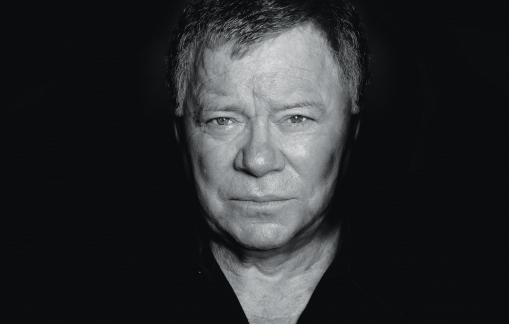
Finally, San Rafael takes to the stars in a big way when it welcomes iconic actor, writer and director William Shatner to town for a conversation to accompany a screening of the best Star Trek movie ever, Star Trek II: The Wrath of Khan, on May 16 at the Marin Center.

In revisiting his beloved character of James T. Kirk, captain of the starship Enterprise in both the original 1966 Star Trek television series and then in seven feature films, the first thing that Shatner points out is that the character almost didn’t exist.

“The people who were doing Star Trek had made a pilot with another actor,” says Shatner. “And they couldn’t sell it, but the idea was intriguing enough. A very unusual and maybe unique event took place; NBC said make another pilot with a different script and recast everybody except the guy playing the Vulcan [Leonard Nimoy].”

So it was, and the role of Captain Pike was changed to Captain Kirk. Shatner was called in to read the new part. “I thought they took themselves a little too seriously and I suggested that we have more fun with it,” he says. “I had, the year before, done a film on Alexander the Great and I was riding horses, wearing a breechcloth and doing weight training. So I had an idea of what a hero might act like, and I kept thinking of a phrase I had heard somewhere, ‘the look of eagles.’”

Taking all that, Shatner created an archetype in science fiction, the brash but brave Captain Kirk, who fights for his crew and for the good of all. Though the original series lasted only three short years, the crew of the starship Enterprise would return in 1979 for the first of several feature films. Those films also famously spawned many other television series that continue to this day, not to mention books, video games and other media.

In revisiting the character of Captain Kirk in the movies, the actor approached Kirk as an older, wiser captain. “I began to look more closely on how an aging hero, who is one step slower, might act and feel,” says Shatner. “And on the loneliness of having an inanimate ship as the love of his life. There were many strains of things that I didn’t comprehend or look at when I was playing him on television.”

While 1979’s Star Trek: The Motion Picture garnered mixed reviews, the sequel became a smash hit with critics and audiences. Star Trek II: The Wrath of Khan is in fact a sequel to an episode from the original series, “Space Seed,” in which the superhuman Khan is revived from suspended animation and attempts to capture the Enterprise. That episode ends with Khan and his crew being exiled to a planet, where we find them at the beginning of the 1982 film.

“Somebody knowledgeable said, ‘Let’s get back to the series,’” says Shatner of Wrath of Khan. “The stories were the important part. So when they said let’s do a story instead of running-and-jumping, I thought that was the right way to go. And it turned out to be a success because we did that.”

As the title points out, Khan makes his wrath known in the movie, and as portrayed by the late Ricardo Montalbán, Khan is considered one of Star Trek’s greatest villains. The film concludes with not only one of the most memorable yells in cinema history (“Khhaaaan!”) it features Shatner, Montalbán and Nimoy all giving world-class performances.

“Leonard was a wonderful actor, everything done so internally, and a great gentleman and wonderful friend,” says Shatner. “The best of acting is a tennis game between the actors, and there’s this playful thing that should happen. If it’s there, it becomes alive; even if the dialogue isn’t necessarily sparkling, actors can bring it to life if they bring themselves to life, and these guys were able to that.”

William Shatner beams down Thursday, May 16, to the Marin Center’s Veterans Memorial Auditorium, 10 Avenue of the Flags, San Rafael. 7:30pm. $39 and up. 415.473.6800.


Time and Punishment

0

Russian novelist Fyodor Dostoevsky—who poured his blood, sweat and tears into the pages of Crime and Punishment—would feel at home in John Beck’s splendid, searing new documentary, Invisible Bars, which runs 56 minutes and packs a wallop every step of the way.

“The degree of civilization in a society can be judged by entering its prisons,” Dostoevsky exclaimed. Jailed by Czar Nicolas I for reading “dangerous” literature, he was lined up before a firing squad and pardoned at the proverbial last minute. Dostoevsky only served six years in a Siberian prison, a grim yet redemptive experience that fueled Crime and Punishment.

Beck’s Invisible Bars, which he worked on intermittently for five years, suggests that a society ought to be judged not only by what goes on inside prisons, but also by what happens on the outside to kids who suffer the loss of an incarcerated parent.

As Invisible Bars makes abundantly clear, those kids grow up with the stigma of a mom or a dad locked up in places like San Quentin, on the site where a prison was built in 1850.

Invisible Bars spits out facts as hard and as cold as the walls of San Quentin. California has only 5 percent of the world’s population, but 25 percent of the world’s inmates. In California every year, half a million kids grow up with a parent in prison. In the United States, 5 million kids have parents behind bars.

Those stunning figures come near the start of Beck’s movie, along with the trenchant comment that America is the most “incarcerated country in the world.” More men and women are in prison here than in Putin’s Russia or in any dictatorship in Africa, Asia and South America.

Invisible Bars doesn’t analyze why this country has the world’s most highly developed “prison-industrial complex”—as critics of the penal system call it. That’s the responsibility of students of crime and punishment, not filmmakers like Beck who want to raise awareness about the epidemic of mass incarceration.

What Beck does exceeding well is put inmates and their children in front of the camera and provide a space for them to talk about their pain, their suffering, their sense of shame and their enduring love that isn’t snuffed out by prisons bars. Beck also showcases two San Francisco public defenders, Jeff Adachi, who died in February, and Chesa Boudin. At the start of Invisible Bars, Adachi explains, “When it comes to children, the California criminal justice system is cold-hearted.”

Boudin takes over from there. The child of parents who belonged to the Weather Underground, he was raised by Bernardine Dohrn and Bill Ayers after his biological mother and father, Kathy Boudin and David Gilbert, were arrested and jailed following a botched robbery of a Brinks vehicle in 1981. Three men died; two of them police officers.

Gilbert is still in prison. Kathy Boudin was released after 22 years behind bars. Looking back at his traumatic childhood, Chesa says that he blamed himself for the incarceration of his parents. Now he’s running for San Francisco District Attorney to inject justice into the criminal justice system.

Invisible Bars shows how punishing prisons can be on kids like Chesa, but it doesn’t punish viewers. Rather, it uplifts and inspires by showing families as they break down barriers, tell stories and focus their hurt and anger.

Because of kid protesters, Marin County now boasts a Children of Incarcerated Parents Bill of Rights.

Filmmaker Beck walked away from his job at Santa Rosa’s Press Democrat in 2009, after 12 years as a staff writer. Since then, he’s made documentaries, including one about ugly-dog contests and another about a Trappist monastery near Chico. Filming Invisible Bars took him to places he had never been before.

Surprisingly, San Quentin wasn’t the prison where Beck heard what he calls the most “honest heartfelt stories.” That was Solano State Prison in Vacaville where he witnessed the workings of the Long Term Offender Program, which aims to rehabilitate and not punish, a rare thing these days.

“When I went to Solano, I never felt unsafe,” Beck says. “Rather, I knew I was getting a rare opportunity to go behind the curtain and hear real dialogue.”

Last year, Beck joined Fred Stillman’s seven children when they traveled by van from Santa Rosa to Solano—a 90-minute drive—to meet and greet their father, who was released after serving 23 years in prison. Stillman, now 60, and his daughter, Jessica, 32, saw Invisible Bars behind bars at Solano, where Beck arranged for the film to have its world premiere.

“That was heavy, watching the film on the inside with my dad and other prisoners,” Jessica says.

For much of her childhood, Jessica rarely saw her father. When she did, it was through a glass partition. Stillman’s mother raised her. Now, she has a BA from the University of San Diego and an MA from the University of San Francisco.

On a rainy Saturday morning, Stillman—who lives in San Francisco in “transitional housing”— visited Jessica in Santa Rosa, where she works at the Rape, Crisis Trauma and Healing Center. She’s trying to persuade Sonoma County to adopt a Children of Incarcerated Parents Bill of Rights, similar to Marin’s.

Stillman explains that, over the course of more than two decades, prison authorities moved him from Pelican Bay, where he was in solitary, to Susanville and then to New Folsom, followed by a string of penal institutions in Salinas Valley, Jamestown and Soledad, which was, he says, “a picnic compared to the other places.”

“Once, I got lost in the hole and my mother thought I was dead,” he adds. It wasn’t until he was housed at Soledad that he was allowed to touch his children and they were allowed to touch him.

“For a long time, I was a monster in prison,” Stillman says. “Then I learned to accept responsibility for my own actions.” He figures it cost the state of California $1,150,000 to “warehouse” him for 23 years. As he points out, the prison-industrial-complex is big business.

“I almost gave up on myself,” Stillman says. “But my kids never abandoned me, and once I joined the Long Term Offenders Program at Solano, I knew I had a chance to get out.”

One of Stillman’s biggest challenges was juggling gang membership. To survive, he had to join a gang while, at the same time, denying gang affiliation when authorities accused him of membership in one. To guards, who insisted he belonged to a white gang, he replied, “That’s not possible. My mother was Mexican and no white gang would want a Mexican.”

On Aug. 6, 2018, the day Stillman was released from prison, he walked around Fisherman’s Wharf, admired the Golden Gate Bridge and enjoyed the view of the bay from Sausalito. When he looks back at the prisons where he was incarcerated, he calls them “evil places.”

Despite its heavy topic, Invisible Bars has an upbeat soundtrack that includes music by the rap group E-Dub and the Grateful Dead, who performed at San Quentin in 1968, shortly before Johnny Cash sang there.

Invisible Bars was about as DIY as you can get,” Beck says. “The only way I could make the film was to wear a lot of different hats as cinematographer, editor and sound recorder, as well as writer, producer and director. They all add up to storyteller.”

In the last scene, Stillman faces the camera and says he would still be in prison “if it wasn’t for my kids.”

“It took decades,” Beck says, “but the Stillmans got past the stigma, the shame and the guilt, and rebuilt their family.”

KQED will broadcast ‘Invisible Bars’ on March 19 at 11pm, March 20 at 5am and March 21 at 10am.

Hero & Zero

Hero A man contemplating suicide sat on the guardrail of the Atherton freeway overpass with his legs dangling above Highway 101. Novato police dispatched Corporal Nick Zolli, who arrived at the scene and slowly moved toward the 27-year-old. In a matter of minutes, Zolli gained his trust by speaking calmly and telling him he was there to help. The two...

Hero & Zero

Hero A man contemplating suicide sat on the guardrail of the Atherton freeway overpass with his legs dangling above Highway 101. Novato police dispatched Corporal Nick Zolli, who arrived at the scene and slowly moved toward the 27-year-old. In a matter of minutes, Zolli gained his trust by speaking calmly and telling him he was there to help. The two...

Odd Pairing

Playwright Ayad Akhtar burst on the theater scene in 2013 with Disgraced, a searing drama about identity politics and Islamophobia, which earned him the Pulitzer Prize for drama. Gender issues in the Islamic community are the focus of Akhtar’s The Who & the What, running now at MTC through March 24. The play opens in the kitchen of the home...

Shakespeare in Loud

When is a free outdoor performance a thing of public service and culture and art, and when is it just noise? That’s the debate currently being battled in Mill Valley, where residents near Old Mill Park have petitioned the city to reduce the auditory impact of an annual Shakespeare festival that comes to the park’s small amphitheater for nine afternoon...

From Iran with Love

Shahyar Ghanbari might be an unfamiliar name to most in America, but in Iran it is a different story. “Right now I have written 300–400 songs, many of which are sung by famous Persian singers,” Ghanbari says. Originally from Tehran, Ghanbari traveled to London in 1965 when he was 15, and was immediately captivated by the music playing everywhere. “I...

Advice Goddess

Q: I’ve been with my boyfriend for four years. I thought I was super-happy, but I recently got a crush on a co-worker. Now I’m worried that maybe I’m not totally satisfied in my relationship. If I were truly in love with my boyfriend, why would I be crushing on somebody else? Does this make me more vulnerable to...

Horoscope

ARIES (March 21–April 19) During the coming weeks, everything that needs to happen will indeed happen only if you surprise yourself on a regular basis. So I hope you will place yourself in unpredictable situations where you won’t be able to rely on well-rehearsed responses. I trust that you will regard innocence and curiosity and spontaneity as your superpowers....

Dramatic Mouthful

In late 1942, when our country was a year into World War II, Thornton Wilder’s The Skin of Our Teeth opened on Broadway. Wilder, whose Our Town dramatized the lives of one small community over a period of 12 years, expanded his sight a bit with a play that covers all of human existence as experienced by a single,...

Spring Screens

With March well under way and spring around the corner, the clouds are starting to clear in the North Bay, meaning the stars are coming out to shine. From now through May, several of Hollywood’s top actors, emerging filmmakers, gifted documentarians and others will make their way to Sonoma and Marin for special screenings and festivals offering one-of-a-kind film...

Time and Punishment

Russian novelist Fyodor Dostoevsky—who poured his blood, sweat and tears into the pages of Crime and Punishment—would feel at home in John Beck’s splendid, searing new documentary, Invisible Bars, which runs 56 minutes and packs a wallop every step of the way. “The degree of civilization in a society can be judged by entering its prisons,” Dostoevsky exclaimed. Jailed by...
3,002FansLike
3,850FollowersFollow