Style: Clothing that tips the scales

by Katie Rice Jones

Let’s face it; pouring on the holiday cheer tends to also pour on the pounds. When January finally rolls around, most of us are looking for ways to detox and trim down. Hence we buy gym memberships, start fad diets, and do cleanses. However, even the most “tried and true” weight loss methods are bound to fall short of your expectations (go figure!) if, at the same time, you are wearing the wrong clothes. Yes, wearing the wrong kind of clothing can visually counteract any of your New Year weight loss methods and be very effective at tipping the scales in the wrong direction. That’s why it’s important to understand which fashion designs and modes of dressing fatter you.

Tight pieces
Tight pieces accentuate weight gain, while fitted or tailored separates diminish it. 

Small-ish separates
You will always look thinner in something that is a little too big, while trying to squeeze into something too small will look like you should have sized-up.

Baggy with baggy
To avoid looking massive, never pair baggy with baggy (see photo). If you want to wear an oversized sweater, pair it with either leggings or skinny jeans.

Large-scale prints
Prints are hot this season, but tread carefully when you wear them. Large-scale prints add dimension and volume to your body.

Layers on layers
Just like when wearing baggy clothes, your outfit should balance fitted layers with loose layers.

Shapeless jackets
Don’t hide your weight gain under an oversized, shapeless jacket. It isn’t helping.  Voluminous jackets with little to no waist definition will make you appear larger.

Shiny separates
Sequin and metallics reflect light, thus casting you in a bigger light.

Bulk accessories
From oversized bags to jewelry to snoods, bulky accessories do little to elongate and slim your body.

Katie Rice Jones is the Pacific Sun’s lifestyle editor-at-large, a Marin-based style expert and author of the maternity fashion book titled ‘Fashion Dues & Duen’ts; a Stylist’s Guide to Fashionably Embracing Your Baby Bump’ (Know Act Be Books, 2014). Available NOW at Amazon.com. Learn more at FashionDue.com.

Letters

I want a new drug law

This year and time, let us commemorate the passing of the Harrison Narcotics Act’s 100th anniversary! Here, ladies and gentleman, marks a major turning point of American history, when the menace of deadly, addictive drugs were finally curtailed by turning a moderate medical issue into a major criminal problem. No more cocaine-crazed negroes nor opium-smoking Chinese to cause anybody problems! When our good government realized that the 10th Amendment (granting powers to the states if laws weren’t specifically outlined in the Constitution) became officially null and void. It’s a step in the right direction that states are finally easing up on cannabis, but why shouldn’t this also be applied to all psychoactives? Per a United Kingdom study around 2009, when damage to the user and damage to society are taken into account, alcohol is by far the most damaging drug, yet most of us use it responsibly. To spin it another way, tobacco kills exponentially more than all the others. To weaken organized crime, make the streets safer (due to no more drug wars and less gang turf violence), why isn’t legalization ever discussed as an option? I guess we need more minorities in prison. And the CIA does have to make money somehow, I suppose.

Tony Good, San Rafael


All creatures, great and small

Aren’t humans amazing? They kill wildlife—birds, deer, all kinds of cats, coyotes, beavers, groundhogs, mice and foxes by the millions—in order to protect their domestic animals and their feed.

Then they kill domestic animals by the billion and eat them. This in turn kills people by the millions, because eating all those animals leads to degenerative—and fatal—health conditions like heart disease, stroke, kidney disease and cancer.

So then humans spend billions of dollars torturing and killing millions more animals to look for cures for these diseases.

Elsewhere, millions of other human beings are being killed by hunger and malnutrition because food they could eat is being used to fatten domestic animals.

Meanwhile, few people recognize the absurdity of humans, who kill so easily and violently, and then plead for “Peace on Earth.”

C. David Coates, Marin


But will they bury him in the endzone at the Meadowlands?

One of the fun realities of the increasingly divided society we call America is that people of means, and their children, can easily shelter themselves from everybody else.

Marin, where I lived for most of my life and helped raise four fine children, is a prime example of this emerging cultural phenomenon.

There are likely more Marinites who have visited Nairobi than Oakland. I stole that one from Chris Rock.

And because more and more people who get themselves elected to positions of higher office, such as in the House and Senate, are people of means, this chronic tendency toward avoidance becomes a problem of representative democracy as well as a social problem.

At one time in this country’s history, in perhaps a more innocent and egalitarian time, the careers of people with political ambitions often were sprung from ordinary neighborhoods, in cities and rural areas.

In many of these neighborhoods, the centers of community and influence were taverns, restaurants, beauty shops, and barbershops, where ambitions were fulfilled one person, one vote, one haircut, and one drink at a time.

So, picture, if you will, a neighborhood bar in a working class section of Chicago. Maybe it’s a joint right out of Jack London’s John Barleycorn, except it’s not in Oakland.

Maybe the surrounding neighborhood has, over the past hundred or so years, sent its share of young men and women to shed blood in the cause of protecting American interests in places such as Baghdad and Kabul, Pleiku and Inchon, Anzio and Alsace.

It’s a place of honest sacrifice, where actual democracy is approved of and in effect pretty much every day.

And then, Dick Cheney walks into this bar. This is a man who has shed a lot of blood in his years of public service, none of it his. He is an acknowledged, visible, righteous, unapologetic, magnificent profiteer of the war industry.

Mr. Cheney takes a seat at the bar, orders a Rob Roy, and begins to defend the torture that he either ordered or tolerated at places such as Abu Graib.

Keep in mind that he is no longer at his ranch in Wyoming. He is not sitting in a boardroom, having coffee and doughnuts with his homies. He is not in the comfort of an interview in a Fox News studio.

A number of patrons recognize him and come near to hear what he has to say for himself.

As they listen, the mood in the bar changes. Smiles are replaced.

Can you imagine what might (should) happen in this scenario?

I can.

And, I can spell Hoffa.

Skip Corsini, San Carlos


This is the price we pay for ‘Game of Thrones’ …

I recently experienced an interesting confrontation with the giant media monopoly Comcast. My PC was no longer connecting with the service. When support could not repair the problem remotely, it was suggested I should have a technical expert come by and check the problem. There was no suggestion I would be charged even though the problem was considered potentially a Comcast one. It was on my next bill.

When I checked at the Comcast service office in San Rafael I was told, unless I had purchased the prevention program at a cost of $399, I would be charged no matter if it was a problem with my PC or was a Comcast problem.

This is tantamount to corporate blackmail and illustrates the complete lack of concern for its customers. My location is an irreversible dead zone for satellite coverage, holding customers such as myself hostage to pure greed.

This message was also sent to the FCC.

Alfred Auger, Fairfax


Son of a gun

When I was young I had toy guns that mirrored the times. There were no Uzis, AR-15s or AK-47s. We played Army and, yes, even Cowboys and Indians. I grew up in a Midwestern state, my dad hunted and when I got to an age where I was ready to start hunting with him I was taught the responsibility of a real gun. Even though I no longer hunt I still own guns and like to occasionally target practice. I still believe that it’s the person, not the inanimate object, that makes a gun a bad thing and, no, I do not belong to the NRA. We need to look at society on a whole and see where we are heading, and the path is not looking all that rosy. For all the advances we have made in psychology and reasoning we seem to be missing the point. We are quick to blame everything and everyone else for our own personal shortcomings.

Still Rockin’, Marin

Food & Drink: Tasty trends

Html code here! Replace this with any non empty text and that's it.

Top 10 food trends of 2014

by Tanya Henry

As another year comes to a close, like most, it’s a mixed bag—glad to see some things go and already nostalgic about others. Whatever the case, trend or not, here is a roundup of foods and practices we saw quite a bit of in 2014. Some will transcend trend status and continue on into 2015 and beyond—especially if we keep them going—we have the power!

KALE Though I have always been a fan of most leafy greens, I have to say that I am suffering from kale fatigue. The fibrous “superfood,” with its high levels of antioxidants and vitamins C and A, has become far too ubiquitous for my taste. Love it in salads, but does it really have to be dehydrated, drenched in spices and eaten as a snack? Fried and sprinkled on soups, pastas and eggs? Seriously, it doesn’t have to be included in every meal—it’s versatile, but let’s give it a break. Bring on the cauliflower!

FERMENTED FOODS As someone who made kombucha in my apartment in San Francisco in the ’90s and recalls having multiplying mothers taking over my pantry, I can’t help but chuckle to see the trend explode as it has. But kombucha (fermented tea) isn’t the only product leading the way in this frenzy; sauerkraut, kimchi, kefir and yogurt all contain bacteria and yeasts that benefit from this age-old process of converting sugars to acids. Since chefs have jumped on this bandwagon, we are likely to continue to see some interesting permutations and creations—I for one am looking forward to the discovery.

JUICING It seemed that bagels and morning pastries were suddenly replaced by goopy green smoothies and unrecognizable (read unappetizing) liquid concoctions. Kiosks popped up overnight touting their cleanses that included exotic cold-pressed watermelon and rose water combos for a mere $10 for an 8-ounce drink. Strategically placed near yoga studios and health clubs, the trend remains in full swing and the flavors continue to expand—utilizing ginger, vanilla and cinnamon. The Vitamix and other heavy-duty juicers have also enabled us to juice beyond bananas to cucumbers, kale and carrots. Essentially this craze has resulted in the recrafting of the smoothie from a heavy, calorie-laden and mostly fruit beverage, to lighter, vegetable-based drinks that utilize smaller amounts of fruit and larger quantities of vegetables combined with spices to add sweetness.

SRIRACHA I was just fine when this Thai chili garlic sauce was used to add some kick to scrambled eggs, a burger or a burrito. In fact it offered some welcomed competition to the iconic, but one-note Tabasco. But then it got out of hand. Sriracha chocolate and popcorn? Lip balm with spicy Sriracha flavors. No! Ironically a Sriracha factory in Southern California was ordered to shut down after neighbors complained of the spicy smells it was producing. Definitely a case of too much of a good thing.

ANCIENT GRAINS Being the child of hippie parents, I was eating millet—wheat berries and amaranth—before I was 10. With the introduction and accessibility to a host of flavorful and tasty grains—meal choices have expanded exponentially. Not only are grains like faro and spelt great for salads, but incorporating them into breakfast to replace oatmeal allows us to really mix things up. Many are equally tasty combined with nuts and yogurt, or veggies and salad dressing. This trend is especially exciting for vegetarians—I hope it continues.

UMAMI It seems like this trend has been years in the making. Initially it was likely the negative association with MSG that caused the savory flavor trend to come to a screeching halt. Now with the L.A.-based chain Umami Burger popping up throughout the state, and Asian food more popular than ever—this “savory fifth taste” is definitely on the radar. Asian sauces, salts and soups often include umami, along with plenty of foods like beef, tomatoes and mushrooms that already have the flavor naturally occurring in their makeup.

GLUTEN-FREE Though I’m amused to see packaging for items like oatmeal, shampoo and almond milk touting their “gluten-free” status, in the end, this trend seems to be helping folks with any sensitivities around wheat, lead more flavorful and pain-free lives. The number of GF products available on large grocery store shelves continues to grow by the day. Clearly this is something whose time had come. There is even a beautifully photographed quarterly magazine created here in San Francisco titled Gluten-Free Forever that will make even the most die-hard wheat-eater swoon. Check it out here: www.gffmag.com.

FOOD DELIVERY SERVICES It seems like another meal delivery service pops up every day. Between Blue Apron, Munchery and AgLocal, you can now choose to have complete meals delivered to your doorstep, choice cuts of meat from local ranchers, or a mystery box of fresh fruits and vegetables in CSA boxes. This is not a new idea, but it appears that the infrastructure and distribution models have improved so much that the chances of going bankrupt like Webvan did 20 years ago are just a vague memory.

FOOD HALLS As more and more of us become food-obsessed, large food emporiums or halls are in planning stages or already opened in cities across the country. Several such halls are slated for various neighborhoods in San Francisco, and one has already arrived at 6th and Market streets. The hall features multiple vendors offering everything from artisan coffee, sustainable seafood and curry and Vietnamese food. Unlike previous markets, this new breed tends to focus on sustainable, artisanal, handcrafted and local.

LOCAL, LOCAL, LOCAL With many folks dedicated to “decreasing the size of their carbon footprints,” a noticeable shift toward buying from and supporting local businesses continues to resonate. Chefs, specialty food producers and we the consumers, are eating and shopping closer to home. Though it’s not likely the big box stores will close their doors anytime soon, there is an ever-growing awareness of the importance to support our local communities by keeping our dollars closer to home.

Share your end-of-the-year hunger pains with Tanya at th****@********un.com.

Feature: Breaking the news

0

Html code here! Replace this with any non empty text and that's it.

A roundup of top local stories from 2014, in case you’ve been under a rock.

by Molly Oleson

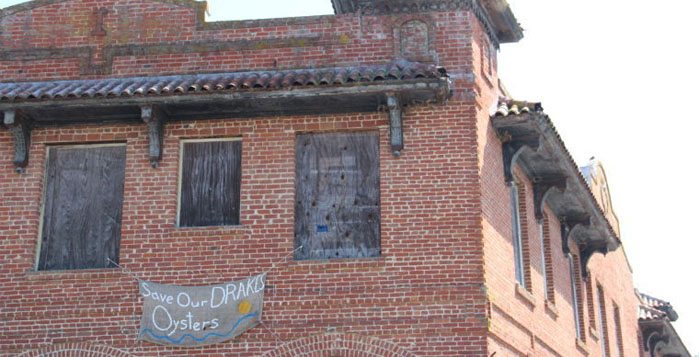
Drakes Bay Oyster Company proves yet again that it will not go down without a fight. In July, the U.S. Court put an end to owner Kevin Lunny’s legal challenge to a Nov. 2012 decision not to renew a 40-year-old permit to harvest oysters in federally protected waters. Around two weeks later, in a last-ditch effort to save the West Marin company (which had agreed to halt operations by Dec. 31), a coalition of farmers and restaurant owners entered the saga with a case that claimed that the shuttering would result in an economic blow to the county. A U.S. District judge faulted the case for “a complete lack of merit,” and a February hearing on its dismissal is scheduled. Meanwhile, Lunny has announced plans to open a seafood restaurant in Inverness.
On Aug. 11, Oscar-winning actor and comedian Robin Williams was found dead in his Tiburon home. An investigation into the death by the Marin County Sheriff’s Office Coroner Division revealed that Williams committed suicide by asphyxia due to hanging. A toxicological evaluation showed that prescription medications in therapeutic concentrations were found, as well as the absence of alcohol or illicit drugs. In October, the Throckmorton Theatre hosted a celebration of life event, where longtime friends of Williams shared memories and laughs with a sold-out crowd.
The latest on the hot-button housing issue in Marin: After much debate between housing proponents and higher-density critics, the Board of Supervisors votes unanimously to approve the housing element, which will guide development through 2023. The 419-unit proposal from county planners was cut to a total of 378 units by the board. Of that total number, the element calls for 210 low-income units, 70 moderate-income units and 98 market-rate units. Slow-growth in Marin continues.
In August, the Marin County Open Space District (MCOSD) released a recirculated Draft Tiered Program Environmental Impact Report for its first comprehensive Road and Trail Management Plan—which aims to direct future use and management of roads and trails on the MCOSD’s 34 preserves. Receiving numerous comments from the public on the report, the MCOSD released a final Environmental Impact Report in November. Further comments led to a memorandum this month to the MCOSD Board of Directors, incorporating and responding to the comments. One day, there will be peace on the county’s trails.
The Marin Organizing Committee (MOC) met in October to discuss the next steps in creating a permanent shelter for the homeless in Marin. A total of $1.25 million is the goal to keep such a place open for one year. Seeking commitments from the county’s 11 towns to fund a shelter, the MOC was greeted with open arms by Fairfax, the first town to agree to donate money to the cause. Councilman Larry Bragman attributes the generosity to the town’s social consciousness and progressiveness. Which town will step up next?
It may finally be raining buckets, Marin, but that doesn’t mean that we’ve forgotten about the alarmingly dry state of things this year. According to scientists with the University of Minnesota and Woods Hole Oceanographic Institution in Massachusetts, the California drought of 2014 was the most severe dry spell in at least 1,200 years. While the Marin Municipal Water District offered hands-on activities on Earth Day to educate families about sustainability solutions—addressing drought, climate change and the future of water conservation, WaterNow—a nonprofit “tackling the water crisis by jump-starting sustainable water solutions in communities”—began a partnership with the county. A pilot project is underway to boost Marin’s water supply by promoting the use of graywater.
Climate change is for real. This year, Marin took steps to address growing concern about threats to the environment and human safety. Released in August, the Marin County Climate Action Plan Update 2014 builds on the 2006 GHG Reduction Plan and provides an update of greenhouse gas emissions in 2012. It also includes an assessment of actions that Marin will take to further reduce emissions by 2020. According to the report, the proposed new community emissions target would put the county on the forefront of climate action planning in the state. Way to lead, Marin!
Major progress has been made in the last year on the Sonoma-Marin Area Rail Transit (SMART) project. Construction has included everything from in-ground infrastructure to above-ground tunnels to old track removal and new track installation. It won’t be long before we start hearing those whistles.
The situation is dire when it comes to Marin’s aging population. A 30-page report titled, “Aging in Marin: What’s the Plan,” which was issued in June by a civil grand jury and examines the county’s ability to provide for its senior citizens, concludes that there is a lack of a long-term, strategic and financial plan in place. According to the report, one in four residents of Marin is 60 years or older, and by 2030, one in three residents will be a senior. As the population ages, service demands will rise. But with a declining number of people available to help with that demand, many seniors will find themselves unable to meet their needs for food, housing, transportation and medical care.

Let Molly know if this is news to you at mo*****@********un.com.

Heros of Marin: Heidi Kuhn

by Molly Oleson

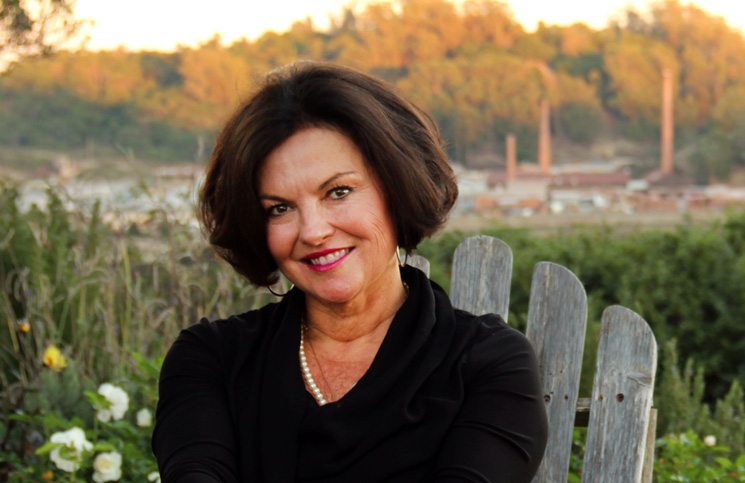
It all began with a toast. Raising a glass in her San Rafael home more than 17 years ago, Heidi Kuhn, a fifth-generation Marinite and mother of four, had an epiphany. Deeply inspired by the defining work of the late Princess Diana—who the world had lost just three weeks prior—Kuhn had a strong vision to turn landmines into vineyards.
“It was an epiphany from my heart,” says Kuhn, sitting in the backyard of her home, passed on to her from her grandparents and overlooking the bay. “That the world may go from mines to vines. And you could hear a pin drop. It was an epiphany of turning—almost a visual, of blood to wine, killing fields to vineyards, peace on earth.”t all began with a toast. Raising a glass in her San Rafael home more than 17 years ago, Heidi Kuhn, a fifth-generation Marinite and mother of four, had an epiphany. Deeply inspired by the demining work of the late Princess Diana—who the world had lost just three weeks prior—Kuhn had a strong vision to turn landmines into vineyards.

People around the globe, Kuhn says, understood that the passing of Princess Diana was not just the passing of a princess, but of somebody who stood for compassion. “And the passion she brought through the issues she shed light to.”

Kuhn says that she wanted to give her dinner guests that night something very meaningful, and ensure that the work of Princess Diana would be carried on. “I looked at the kaleidoscope around where we stood and I thought, the Napa vintners, the Sonoma vintners, the Marin vintners—these people harvest the land, they celebrate the harvest, they smell the juicy nectar of the grapes,” Kuhn says. “Whether fermented or not, this is life.”

Encouraged by her guests to take her toast out of the living room and into the world, Kuhn presented her idea in Napa Valley the following week. Support from key vintners like Robert Mondavi, Mike Grgich and Diane Disney Miller—“pioneers and dreamers in their own right”—led to the 1998 launch of Roots of Peace, an organization dedicated to replacing landmines in war-torn regions worldwide with bountiful agriculture.

“We need to focus on the economics of peace,” says Kuhn, founder and CEO of Roots of Peace and recipient of the Pacific Sun’s 2014 Heroes of Marin Lifetime Achievement award. “We need to empower people. We need to provide food security on war-torn lands. We need to help heal communities. And to me that begins by the removal of a simple landmine—it’s a metaphor of hatred, and it’s a physical example, but we need to begin that act of removing the hatred from our one soil and then literally planting the roots of peace.”

Since the global initiative began, Roots of Peace has removed more than one million landmines and unexploded ordnances from continents across the globe, and has helped more than one million farmers to improve orchards and crops. “Like little Johnny Appleseed, I go around the world, giving people cards and inviting them to join me,” Kuhn says. “We’ve planted rice in Cambodia, grapes in Afghanistan, orchards in Croatia, flowers in Bosnia.”

Kuhn refers to her work as “changing the tide of hatred into love” by restoring damaged communities to economic self-sufficiency. “When you plant a seed, regardless of the color of your hand, the politics in your mind or the faith in your heart, that seed will grow, as it has for thousands of years,” she says.

A deep respect for the land can be traced back to Kuhn’s family roots in Marin County. Her great-great-grandfather sailed to California from Maine in the early 1850s, purchasing thousands of acres of land in what is now Marin and Sonoma. Her grandfather was president of the Rotary Club of San Francisco in the early 1940s, and his legacy was to help establish what was to be called the United Nations.

“For me, Marin County is really about the land and its people,” says Kuhn, noting that the original model for the Golden Gate Bridge was once laid out on her living room table, when her grandparents lived in the house and hosted a fellow “dreamer” who wanted to “turn his vision into reality.”

Kuhn’s grandmother, she says, encouraged her to dedicate her life to doing something for peace. “And to take those riches that we derive from the land and from its people, and to bring that beautiful spirit of Marin County out into a world that is so thirsty, so hungry … for love.”

A graduate of San Rafael High School, Kuhn holds a degree in political economics of industrial societies from UC Berkeley. A reporter and producer for CNN and other news organizations in the ’80s and ’90s, Kuhn was living in Alaska with her husband, who was working for IBM and who is now the president of Roots of Peace. She then went on to begin her own television news organization—NewsLink International—reporting on the Exxon Valdez oil spill and the melting of the Ice Curtain between U.S./Soviet relations.

The road hasn’t always been smooth. Before the birth of her fourth child, Kuhn was diagnosed with malignant cancer and told that she would not live. “That stops you in your tracks,” she says. “But it can also either paralyze you or make you realize that each day is a gift.”

She’s held on to the latter. “That’s the way I’ve always chosen to live my life,” she says. “I’ve just had to lead with faith, not fear, and be that pioneer woman that I know my great-great-grandfather would be very proud of.”

Although Kuhn is honored to win the Lifetime Achievement award, she says she’s far from done with her work. Her biggest goal? “World peace,” she says, without missing a beat. “Don’t blink.”

“It’s in my soul; it’s in my DNA; it’s in my spirit; it’s in my mind; it’s in my intelligence, to do whatever I can with the human footsteps that I have, and with these hands, to inspire the world to not forget the legacy of war,” she says. “Those beautiful leaders who have been in my life—let’s use them and draw upon that inspiration and believe in the world what is possible rather than what’s not.”

Hero FYI

  • Kuhn has been honored with the Cal Berkeley Alumni Award for Excellence and Achievement and the Jacqueline Kennedy Onassis Award/National Jefferson Award for Public Service, among other local and international recognitions.
  • She recently launched a crowd-rise campaign, sponsored by Jeff Skoll (co-founder of eBay) in which people around the world can participate in a “virtual walkathon” for peace.
  • Kuhn says that political landmines have been her biggest challenge, and that her most gut-wrenching experience has been the Taliban’s attack on Afghanistan—a country 80 percent dependent on agriculture—this past May.
  • Most rewarding has been “the farmers and the families on the ground,” Kuhn says. “It’s the face of my children and my husband, and it’s the light in the eyes of the children around the world that keeps me going.”


Heroes of Marin: Emily Sims

by Stephanie Powell

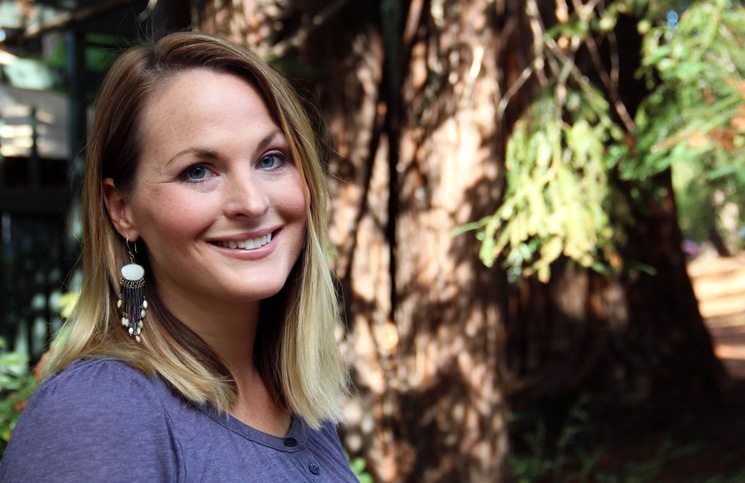
I don’t see myself as a role model,” says Emily Sims, founder of West Marin Advocacy, the driving force behind the Marin County Human Trafficking Task Force and recipient of this year’s Pacific Sun Heroes of Marin Role Model award. “I just see myself sort of trying to survive every day in Marin County.”
Raised in Marin, Sims spent her elementary years at San Anselmo’s Wade Thomas and a year at Branson on scholarship. It wasn’t until she began attending Sir Francis Drake High School when she really began to grasp a larger sense of Marin’s community.don’t see myself as a role model,” says Emily Sims, founder of West Marin Advocacy, the driving force behind the Marin County Human Trafficking Task Force and recipient of this year’s Pacific Sun Heroes of Marin Role Model award. “I just see myself sort of trying to survive every day in Marin County.”

“[It] really opened my eyes to what I wanted to be a part of in Marin County and what I didn’t want to be a part of,” Sims says, speaking about her experience at the Branson School and the eye-opening financial disparity that can be found within the county. “I realized that folks that had less, who were sort of judged as being less than, were the folks that actually had the most compassion.”

In her teens, Sims moved with her mom to Canada, where she had a formative experience with law enforcement that, little did she know, would precipitate an influential career shift.

“I saw friends whose parents treated them poorly—both when I lived [in Marin] and when I lived in Canada. I remember one instance, when I lived in Montreal, a friend of mine was beaten by her father and [the police] didn’t do anything,” Sims says. “They said that it was normal, and that parents were allowed to beat their children.”

It was that disconnect, Sims says, that propelled her into her career in advocacy work and into establishing West Marin Advocacy (WMA)—a nonprofit based in West Marin that provides direct, confidential advocacy services to survivors of community and family violence. WMA offers a breadth of services from assisting survivors of domestic violence and sexual assault to working with clients who have had unfavorable experiences with law enforcement and mediating between the parties to achieve whatever goal the client may be seeking—from obtaining a restraining order to filing a police report.

“I guess there’s a side of me that made me feel angry,” Sims says, “when I would see someone have the courage to call the police and then law enforcement not treating that person accordingly or not assisting them.”

Sims started by making a move back to California in 2002 and studying political science at Golden Gate University, which opened up the opportunity to work in the domestic violence unit of the San Francisco Police Department. While garnering first-hand experience in advocacy alongside officers, Sims was secretly fighting a battle of her own—she was in an abusive relationship from ages 19 to 21.

“It was hard,” Sims says of working on domestic violence cases while simultaneously experiencing personal abuse. “[It was] shameful, terrifying. I was pretty isolated from my family. I think that it’s the perfect example that anyone can go through an abusive relationship because looking from the outside in, I had an education, I was working and I think that sometimes when people have a lot at stake it makes that abuse feel even more profound.”

But Sims, a survivor of the abuse, never let her experience define her. She continued her education at Sonoma State University, focusing on interdisciplinary studies—a blend between public administration and women’s and gender studies.

It was at the end of 2009 when Sims founded WMA, which she says initially started as “very grassroots.”

“When I came back to Marin, and because of the work I did in San Francisco, friends would call me if they needed a restraining order,” Sims says, “or people would call me if they tried to make a police report and hadn’t been assisted in an appropriate way.”

Sims cites geography as a leading motivation for starting her agency. “A lot of people were not getting the services that they were entitled to because of geography,” she says. “You know we have county agencies, and a lot of them are centered in San Rafael, and for folks who live over the hill or in West Marin, it’s just geographically difficult to get to those agencies.”

West Marin Advocacy, Sims says, receives about four to five calls per week—the most common of which come from domestic violence or sexual assault survivors looking for housing or shelter.

“I like to provide services for people who are homeless as well and let them know that they can still live with dignity—that you can not have an address and still be a vital part of our community,” Sims says. “Being a service provider in the community [is to] recognize someone for their value, not for their socioeconomic status—that’s really important to me.”

But it was her thesis, “Social Service and Law Enforcement Responses to Human Trafficking,” that would end up sparking a blaze in Marin’s community agency circuit.

“I was interested in looking at what our county was doing to address human trafficking,” Sims says. “It was a really hot-button issue for other counties in the Bay Area and it was a little head-scratching why people weren’t looking at it in Marin County.”

During her research, Sims says, she spoke to members from the County of Marin Probation Department to the District Attorney’s Office to the Human Rights Commission to further explore human trafficking’s presence in Marin.

“[The agencies] did a Google search and the only thing that came up was my thesis,” she says. “So we started working together to try and get more awareness to the general public that this is an issue that is happening here. When I kind of identified that there was a need for community awareness, there was a huge response from law enforcement and community agencies.”

That response formed the Marin County Human Trafficking Task Force, a collaboration of agencies that includes the DA’s office, the Dominican Sisters of San Rafael and Health and Human Services. From April to October of this year alone, the task force has identified and provided referrals to 27 human trafficking survivors countywide.

Sims is quick to add that human trafficking doesn’t just mean “a mass amount of people moving huge distances.” It’s force-, fear- and coercion-based, she says. “It’s not just people being brought into the country hidden or tucked away. It could be someone who is from Marin County who is being forced to work against [his or her] will.”

With the increased involvement of Marin’s agencies in the task force, Sims is able to shift her focus back on WMA, her friends and family.

“My role models are my peers,” Sims says, speaking matter-of-factly about her close-knit network. “Working moms and people who manage to work and care for their kids without the ability to pay for full-time child care. Pretty much all of the women that I grew up with—they are the people that when I want to stay in bed, I think of them and it’s sort of like a really positive peer pressure.”

Hero FYI

  • What does Sims do for fun? “Clean the house when I’m not working!” she says with a laugh.
  • When asked about her most rewarding accomplishment, without hesitation Sims says, “My daughters.”
  • In October, WMA and the Marin County Human Trafficking Task Force started a campaign around the county for human trafficking. Images of labor trafficking were provided by a federal campaign and appeared at 40 bus stops.


Upfront: School of thoughts

by Peter Seidman

Rather than calm the debate over a proposed affordable housing project in Marinwood, a study the county commissioned to quantify the effects of a proposed development created new lines drawn in the sand.

A respected economist, Robert Eyler, presented the study recently to the Board of Supervisors. Eyler is head of the Marin Economic Forum, a professor and chair of economics at Sonoma State. The study aims to delineate the effects of a housing development in Marinwood that would include 72 units of below-market-rate housing and 10 units of market-rate units. The study includes potential effects on the Dixie School District.

The data included in the study about the effects of the project on local schools comes after opponents have raised objections to the project based, they say, on the deleterious financial consequence of allowing a developer to build the 72 units of below-market-rate housing.

The objections open a can of debate that involves the complicated and arcane procedure by which the state funds schools.

The Dixie School District is what’s called a basic aid district, which means that local property taxes make up the bulk of its general fund revenue. That’s because as part of the state’s school-funding mechanism for a basic aid school district, the district’s per-pupil-property tax revenue exceeds the state per-pupil revenue allocation limit. That means that the district is left to rely in large part on local property taxes.

An affordable housing project such as Marinwood Plaza, which the BRIDGE Housing Corporation has proposed, can throw a wrench into school funding projections. Affordable units, like the ones BRIDGE wants to build, can qualify for a property tax waver. The school district and property owners in the district would have to take up the responsibility to cover the education costs for children in the affordable units if they wanted to keep per-pupil funding stable.

Whether that’s an unfair burden or a fair social responsibility depends on which side of the debate a person stakes a position. There’s no question that the Dixie School District, which has three elementary schools for kindergarten through eighth grade, is, like most districts, revenue-challenged. Currently about 2,000 students attend classes.

BRIDGE Housing Corporation formed in 1983 when the San Francisco Foundation received a major anonymous grant aimed at creating solutions to the dearth of affordable housing in the Bay Area. Since then, Bridge has earned a firm reputation as a responsible creator of affordable housing that blends with the surrounding neighborhood. The agency’s track record regarding management of the developments it creates is likewise respected.

At one time, Bridge estimated that about only 44 students would be added to the immediate attendance rolls from the Marinwood Plaza development. Not all of the children who will live in the units would be of elementary school age at the same time, note proponents of the proposal, and that would lessen the financial effect on Dixie schools. The influx won’t be an avalanche. Based on the number of bedrooms, it’s not out of the question to estimate that between 44 students and, say, about 100 students would be added to Dixie School District classes.

If Bridge builds the development and receives waivers, the local community would face a shortfall in school funding that would affect the added pupils and also the current children in Dixie schools, say opponents of the proposal.

The objection dovetailed into the anti-government sentiment that erupted in the November election. In that election, San Rafael Councilman Damon Connolly ousted Susan Adams to take a seat on the Board of Supervisors, based in part on a campaign platform of slow-growth, especially when it came to Marinwood. He stated that the county should reset its thinking on the development proposal. Supervisor Judy Arnold, who won reelection in her Novato district by a narrow margin, recently said that 72 affordable units might be too many for the neighborhood, essentially supporting Connolly’s call for a reset.

The political fallout came after strong objections from Marinwood neighbors and often-raucous meetings during which emotions spilled out, swamping a rational debate that the Eyler study seeks to establish.

There’s an irony in the debate over Marinwood that stretches back to the start of discussions about a possible project. “Jerry” Hoytt built some of the first houses in Marinwood in the 1950s. Marinwood Plaza, at the corner of Miller Creek Road and Marinwood Avenue, served as a focal point for neighbors in the west side of Highway 101 between Terra Linda and Novato.

The plaza went into decline, and starting in 2004 local residents began working on a landmark cooperative effort with Hoytt and the county to determine the best route to rehabilitation for the little shopping area. To Jerry Hoytt’s credit, he reached out to the community to fashion a front-loaded planning process for the property. If the community would support a redevelopment plan early in the planning process, and the county would ease the way for construction (Marinwood is unincorporated), selling the property would be much easier for Hoytt. The process also would help ease the way for smooth planning because neighborhood stakeholders already would have thrown in their support.

That kind of front-loaded planning process had never happened to successful completion in Marin. The idea to develop a community consensus before entering the formal planning stage was aimed at forestalling the kind of community revolt that occurred in Novato, where neighbors said that they had never realized the full consequences of a proposal for a new Whole Foods. Neighbors in Mill Valley that had a similar shock when they realized that the town was embarking on a major renovation of Miller Avenue. Despite numerous public meetings in both towns, residents said that they had been unaware of planning strategies, details and consequences.

The irony is that Adams played a key role in creating the front-loaded community consensus strategy in Marinwood, where she lives near Marinwood Plaza. A local task force formed, the Marinwood Village Collaborative. Early on it included numerous individuals from the neighborhood, organizations and county government representatives. The collaborative, Hoytt and the county worked and reworked redevelopment proposals. In 2006, county supervisors endorsed a proposal for a grocery store, ancillary retail, a community plaza and a redesign of Marinwood Avenue. The conceptual plan also included a housing component. The county identified the area as suitable for new housing and contemplated a target of making up to half of the units built qualify as affordable. The idea is that Marinwood is particularly appropriate for affordable units because it’s near the freeway and public transportation, and a revamped plaza would put the housing units near shopping.

The concept called for building up to 100 housing units. The Bridge proposal represents a considerable reduction. Even so, calls to reduce the number of units on the site continued. Eventually, Bridge settled on the 82-unit figure. The corporation was the only entity that brought a practical development plan to the county.

The argument that the affordable units—and the property tax waivers they could bring—would harm the Dixie School District added to the emotional paroxysm that slow-growth/no-growth advocates were espousing, especially those who looked with a particularly unfavorable eye at what they call high-density development.

The Marin Economic Forum study, among other criteria, is an attempt to look at the numbers to determine their effect—without emotion—on local schools.

The Marinwood neighborhood is an above-average socio-economic area. The median income is $130,000 a year—well above the county average. To maintain school funding at current per-pupil levels after the Bridge project, homeowners might have to contribute more property tax to their local schools. Opponents call that an unfair burden. Proponents of adding affordable housing say it might be a burden, but it’s the socially responsible thing to do to move toward a more diverse community. And that’s what lights the emotional match.

If the Dixie School District remains a basic aid district and must rely in large part on local taxes to fund its schools, how much would local homeowners have to contribute on an annual basis to maintain stable funding with the added pupils? As so many things concerning school finances, much is uncertain, a fact the Marin Economic Forum study acknowledges. But if, for estimate’s sake, the district receives no additional funds from the state, the cost for those additional students could be borne by the 2,351 households in Marinwood (again for estimate’s sake) to maintain stable per-pupil funding. (Marinwood has 84.2 percent owner-occupied housing. For estimation, it’s safe to assume that property owners would increase rents to cover increased property taxes.)

According to the Marin Economic Forum study, “If the new housing units increase school enrollments without commensurate increases in revenues, given current projections of land improvements and property taxes that would come from such enrollments, there is an implicit loss of $251 per student per year.” That would hold true for 45 added students. That means the $251 per-pupil per year would have to be apportioned out among 2,351 households (for estimate’s sake), if the goal is to keep per-pupil funding stable. The 45 pupils would add $11,295 a year to school costs. Divided by the (estimated) number of households, each household would be responsible for funding approximately an extra $5 a year to recoup the implicit loss estimated in the Marin Economic Forum study.

If 100 students enter Dixie schools, the study states, “The reduction would be $559 per pupil.” That could mean an annual added tax per household of $24, if neighbors wanted to maintain stable per-pupil funding.

Projections can be tricky things, but the calculations lay out the ballpark in which Dixie Schools would play if the Bridge project added students—and if property owners in the district agreed that funding their local schools to educate the kids in the development is a worthy endeavor.

The Dixie School District might not be totally reliant on local taxes to fund the added pupils. It depends on state school funding mechanisms, an always hard-to-estimate variable. But as the Marin Economic Forum study states, “If property taxes grow more quickly than expected, Dixie schools may be basic aid schools and not receive state funding.” On the other hand, the study continues, “If the increase in new students is large enough, Dixie may continue to be state-funded due to enrollment growth outpacing local revenue growth.”

After meeting a rather harsh unveiling, the Marin Economic Forum study is due for a peer review to corroborate its numbers and estimates and assumptions.

The Bridge proposal currently is on hold as the corporation negotiates what could be a larger property purchase than the original 3.5 acres included in the residential proposal.

That altered element, in addition to the fallout from the November election, which followed vociferous objections and political action from opponents, are signs that attitudes are hardening in Marin. The Marin Economic Forum study is a chance to digest the numbers and give Marin residents the opportunity to determine whether they want to welcome or reject a development like the Bridge proposal.

“No study or data exists to make a precise estimate of the number of students Dixie Schools will receive from the new units,” the study concludes, “or the type of households that will be formed. This study provides ways to frame the future discourse in a way that focuses on the major variables involved rather than classic arguments seen in Marin County that are neighborhood-specific. The academic literature suggests that framing the question around economic and social variables of interest and not the opinions of neighbors helps make better decisions and plan for shaping public resources.”

It also opens the possibility for rational compromise.

Contact the writer at pe***@******an.com.

 

That TV Guy 12/5 – 12/11

by Rick Polito

Friday, Dec. 5

Grumpy Cat’s Worst Christmas Ever Apparently the grumpy cat has a better agent than the Sneezing Panda and the Dramatic Chipmunk. Lifetime. 8pm.

Thor Sibling rivalry in Asgard. It turns out mom always liked Thor best, but Loki could have handled it better. (2011) FX. 8pm.

John Tesh Big Band Live Tesh will be leading his 16-piece orchestra through such classics as “Please! Not that Guy Again, Didn’t We Get Rid of Him in the 90s?” and “Some Enchanted Earplugs.”KQED. 11pm.

Saturday, Dec. 6

The Dark Knight Rises This is the one where a ruthless villain named Bane takes over Gotham, holding the citizens hostage while he plunders the city’s riches. He comes from the League of Shadows, which we think is Goldman Sachs. (2012) TNT. 6:30pm.

It’s a Wonderful Life A small town real estate operator sells his neighbors on a suburban sprawl development only to have the money mysteriously disappear at the end, setting the stage for a too-big-to-fail bailout. (1947) NBC. 8pm.

The Day The post-apocalypse opens up a broad range of exciting opportunities with your community. But the cannibals are kind of a downer. (2011) The Movie Channel. 9pm.

Sunday, Dec. 7

I Love Lucy Christmas Special In a re-broadcast from the ‘50s star, guest star Joseph McCarthy helps Lucy and the Mertz’ discover the dark truth behind Santa’s red suit and his socialist income redistribution scheme. CBS. 8pm.

Eaten Alive Donning a snake-proof suit, a man attempts to get eaten by an anaconda. Swallowed into a constricting darkness where you have the life squeezed out of you? Sorry. Been there. Have the divorce papers to prove it. Discovery Channel. 9pm.

Bill Cosby Rediscovered: American Masters Somebody in programming isn’t talking to somebody in news. KQED. 9pm.

Monday, Dec. 8

Castle It turns out a murdered ER physician was working for organized crime, as if there is some doctor who is not working with a price-fixing insurance syndicate that trades in drugs and death. ABC. 10pm.

NCIS: Los Angeles The team investigates a string of murders of Marines whose children attended military academies in yet another reminder that sending your troubled teen to a school where they learn to use guns may not be the great idea it sounds like. CBS. 10pm.

Tuesday, Dec. 9

Rudolph the Red-Nosed Reindeer A reindeer and an elf are treated cruelly by their community and wander off to find the Island of Misfit Toys, where differences are celebrated in this metaphor for growing up gay in America. CBS. 8pm.

Santa Claus is Comin’ to Town He doesn’t even bother with the naughty or nice list anymore—he subcontracts that to the N.S.A. ABC. 8pm.

Victoria’s Secret Fashion Show If you are going to gain the typical seven pounds this holiday season, maybe you should share some of that with these models. They look hungry. CBS. 10pm.

Wednesday, Dec. 10

Blaze The story of Louisiana Gov. Earl Long’s affair with a stripper takes us back to a simpler era when a relationship could be more discrete and less Twitter’d. We’re reasonably sure that 1950s voters were not ready for the Anthony Weiner-style photo essay. The Movie Channel. 6:30pm.

NOVA In The First Man on the Moon, we learn about Gene Armstrong’s historic trip to the soundstage, where the moon-landing was faked. KQED. 8:30pm.

Extreme Cheapskates This is the Christmas episode. What’s worse than getting socks for Christmas? Getting used socks for Christmas. The Learning Channel. 9pm.

Thursday, Dec.11

101 Dalmations Irresponsible pet owners give rise to scores of unwanted dalmations, and yet the courageous Cruella de Vil is criticized for her innovative solution. (1961) American Movie Classics. 9pm.

How Sherlock Changed the World For starters, he made it impossible to wear that hat and smoke a pipe on the 364 days a year that aren’t Halloween. KQED. 9:30pm.

Critique That TV Guy at le*****@********un.com.


Trivia 12/5

1. What city in Monterey County claims to be the “Garlic Capital of the World”?

2. Are penguins warm or cold-blooded animals?

3. The answer to this question is: passport, driver’s license, both or neither. And the question is: Does Queen Elizabeth have a passport, driver’s license, both or neither?

4. The atomic number of a chemical element is based on the number of what in its nucleus?

5a. What two letters begin the names of almost one-third of the 50 U.S. states?

5b. What three letters begin the names of almost one-fourth of the 50 states?

6. Who was the first attorney to become president of the United States?

12 - 5 Trivia Options7. Recent winners of this year’s (2014) American Music Awards. (None of whom were American!)


7a. This English-Irish pop boy band won artist of the year.

7b. The rap/hip-hop favorite artist was what blonde female recording artist and model from Australia?

7c. This ballad-crooning London singer-songwriter won favorite pop/rock male artist.

8a. Departed Giants third baseman, Pablo Sandoval, was known by what animal-like nickname?

8b. He was born in 1986 in what country?

9. Hey, math students, this one’s for you: If a piece of rope is being continuously cut in such a way that one-third of the rope is cut off each time, what percentage of the original rope will remain after five cuts?

10. Who wrote these classics of literature?

10a. Great Expectations

10b. The Adventures of Sherlock Holmes

10c. Brave New World

10d. The Call of the Wild

BONUS QUESTION: It was two years ago that the sarcastic humor online publication the Onion named what 29-year-old world leader as Sexiest Man Alive for 2012?

[showhide type=”post” more_text=”Show answers…” less_text=”Hide answers…”]

›› trivia café answers

1. Gilroy
2. Warm
3. Neither; since the passports are given out by herself, she doesn’t need one … and she doesn’t require a driver’s license either (she doesn’t drive).
4. Protons
5a. M or N (eight states each)
5b. A, I or W (four states each)
(Thanks to Joe Herzberg of Corte Madera for the question.)
6. John Adams, Harvard Law School
7a. One Direction
7b. Iggy Azalea
7c. Sam Smith
8a. Kung Fu Panda
8b. Venezuela
9. (2/3) to the power 5 = 13 percent
10a. Charles Dickens
10b. Arthur Conan Doyle
10c. Aldous Huxley
10d. Jack London

BONUS ANSWER: Kim Jong-un, North Korea (Don’t forget: the  Onion is a humor website!)

[/showhide]


Theater: A ‘Total’ Hit

0

by Charles Brousse

If a blend of Monte Python and Saturday Night Live, punctuated by a bloody tongue-in-cheek nod to The Sopranos in the closing minutes, sounds like an appealing format for political satire that has some serious messages to impart, then you should hurry on down to San Francisco’s Z Space. There, in a cozy venue once occupied by The Jewish Theatre, Peter Sinn Nachtrieb’s The Totalitarians is entering the final two weekends of what is being called a “rolling world premiere” sponsored by the National New Play Network, whose mission is to enable playwrights to work with member companies to develop promising scripts that will be produced in at least three of their theaters around the country.

Nachtrieb’s bio is a local-boy-makes-good story. Raised in Mill Valley, he, after graduating from Marin Academy, earned a double degree in biology and theater from Rhode Island’s Brown University, then returned to California for an M.F.A. in creative writing at San Francisco State. His breakthrough was Hunter Gatherers (2007), an edgy look at the primitive urges that compete with accepted social norms in the psyches of today’s upwardly mobile professionals. Lauded for its originality, the play won that year’s coveted Steinberg Award on a national level and the Will Glickman Prize for best new play here in the Bay Area. Since then, a series of satires that explore the contradictions that bedevil contemporary American society and threaten its future have firmly established his position among this generation of young dramatists.f a blend of Monte Python and Saturday Night Live, punctuated by a bloody tongue-in-cheek nod to The Sopranos in the closing minutes, sounds like an appealing format for political satire that has some serious messages to impart, then you should hurry on down to San Francisco’s Z Space. There, in a cozy venue once occupied by The Jewish Theatre, Peter Sinn Nachtrieb’s The Totalitarians is entering the final two weekends of what is being called a “rolling world premiere” sponsored by the National New Play Network, whose mission is to enable playwrights to work with member companies to develop promising scripts that will be produced in at least three of their theaters around the country.If a blend of Monte Python and Saturday Night Live, punctuated by a bloody tongue-in-cheek nod to The Sopranos in the closing minutes, sounds like an appealing format for political satire that has some serious messages to impart, then you should hurry on down to San Francisco’s Z Space. There, in a cozy venue once occupied by The Jewish Theatre, Peter Sinn Nachtrieb’s The Totalitarians is entering the final two weekends of what is being called a “rolling world premiere” sponsored by the National New Play Network, whose mission is to enable playwrights to work with member companies to develop promising scripts that will be produced in at least three of their theaters around the country.

In the hands of director Ken Prestininzi and a group of actors who seem joyfully in sync with the author, The Totalitarians is about as representative an example of Nachtrieb’s distinctive writing style as could be wished for. According to the program, the setting is “Some version of Nebraska” in “The not too distant future. Which is much like the present.” What you see, however, in scenic designer Giulio Cesare Perrone’s garishly modern set is a nearly empty room with peach-colored walls, a tomato-red floor on which are scattered torn pages of note paper and a queen-sized bed backed against an arched cutout in the rear wall whose interior deep blue lighting allows characters to suddenly emerge as if they’ve popped out of an undersea cave. Obviously, this isn’t the Nebraska you and I think of, with waving fields of corn, but it certainly is appropriate for the events that follow.

Like the Pythons and SNL, Nachtrieb has never cared much about plots unfolding in linear fashion or characters being consistent in thoughts and actions. The Totalitarians is no exception. What storyline there is revolves around the lieutenant governor candidacy of Penelope Easter (Jamie Jones), a former roller derby champ and mother of four, whose intellectual acumen is roughly comparable to a certain vice presidential nominee in our 2008 national election. Francine (Alexis Lezin) is her campaign manager who hopes to share the candidate’s ascent to power by providing “catchy” slogans like “Freedom from fear.” Jeffrey (Liam Vincent) is Francine’s doctor-husband, beset by his wife’s obsessive ambitions, growing doubts about his sexual identity, and anxiety stemming from an inability to inform a young patient that he has a terminal illness. Finally, there’s Ben (Andrew Humann), the deeply troubled, conspiracy-driven cancer patient who is the catalyst for the play’s bloody climax.

As the chain of absurdies lengthens and audience laughter subsides, it’s obvious that Nachtrieb has more than light entertainment on his mind. Effective social satire requires that situations and characters be oversized, but the underlying issues remain clearly visible. The Totalitarians, especially when given such a solid production as that currently at Z Space, accomplishes this. At the same time, however, there’s a bit of a musty feeling about the whole enterprise—a lack of surprise—as if we’ve seen it all before, both in real life and on the stage. It should be noted that on the night I attended, the under-30s in the audience (and there were many) cheered wildly at play’s end.  

Charles can be reached at cb******@*tt.net.

NOW PLAYING

The Totalitarians runs through Sunday, Dec. 14 at Z Space, 450 Florida St., San Francisco. Information: 866/811-4111, or www.zspace.org.

Style: Clothing that tips the scales

Tipping the Scales
by Katie Rice Jones Let's face it; pouring on the holiday cheer tends to also pour on the pounds. When January finally rolls around, most of us are looking for ways to detox and trim down. Hence we buy gym memberships, start fad diets, and do cleanses. However, even the most "tried and true" weight loss methods are bound to fall...

Letters

Pacific Sun
I want a new drug law This year and time, let us commemorate the passing of the Harrison Narcotics Act’s 100th anniversary! Here, ladies and gentleman, marks a major turning point of American history, when the menace of deadly, addictive drugs were finally curtailed by turning a moderate medical issue into a major criminal problem. No more cocaine-crazed negroes nor...

Food & Drink: Tasty trends

Tasty Trends by Pacific Sun
Top 10 food trends of 2014 by Tanya Henry As another year comes to a close, like most, it’s a mixed bag—glad to see some things go and already nostalgic about others. Whatever the case, trend or not, here is a roundup of foods and practices we saw quite a bit of in 2014. Some will transcend trend status and continue...

Feature: Breaking the news

Save Drakes Oysters by Pacific Sun
A roundup of top local stories from 2014, in case you've been under a rock. by Molly Oleson Drakes Bay Oyster Company proves yet again that it will not go down without a fight. In July, the U.S. Court put an end to owner Kevin Lunny’s legal challenge to a Nov. 2012 decision not to renew a 40-year-old permit to harvest...

Heros of Marin: Heidi Kuhn

Heidi Kuhn - Hero of Marin
by Molly Oleson It all began with a toast. Raising a glass in her San Rafael home more than 17 years ago, Heidi Kuhn, a fifth-generation Marinite and mother of four, had an epiphany. Deeply inspired by the defining work of the late Princess Diana—who the world had lost just three weeks prior—Kuhn had a strong vision to turn landmines into...

Heroes of Marin: Emily Sims

Emily Sims - Role Model
by Stephanie Powell I don't see myself as a role model,” says Emily Sims, founder of West Marin Advocacy, the driving force behind the Marin County Human Trafficking Task Force and recipient of this year’s Pacific Sun Heroes of Marin Role Model award. “I just see myself sort of trying to survive every day in Marin County.” Raised in Marin, Sims spent...

Upfront: School of thoughts

by Peter Seidman Rather than calm the debate over a proposed affordable housing project in Marinwood, a study the county commissioned to quantify the effects of a proposed development created new lines drawn in the sand. A respected economist, Robert Eyler, presented the study recently to the Board of Supervisors. Eyler is head of the Marin Economic Forum, a professor and...

That TV Guy 12/5 – 12/11

Rudolph the Red-Nosed Reindeer
by Rick Polito Friday, Dec. 5 Grumpy Cat’s Worst Christmas Ever Apparently the grumpy cat has a better agent than the Sneezing Panda and the Dramatic Chipmunk. Lifetime. 8pm. Thor Sibling rivalry in Asgard. It turns out mom always liked Thor best, but Loki could have handled it better. (2011) FX. 8pm. John Tesh Big Band Live Tesh will be leading his 16-piece...

Trivia 12/5

Trivia Cafe - 12-5
1. What city in Monterey County claims to be the “Garlic Capital of the World”? 2. Are penguins warm or cold-blooded animals? 3. The answer to this question is: passport, driver’s license, both or neither. And the question is: Does Queen Elizabeth have a passport, driver’s license, both or neither? 4. The atomic number of a chemical element is based on the...

Theater: A ‘Total’ Hit

by Charles Brousse If a blend of Monte Python and Saturday Night Live, punctuated by a bloody tongue-in-cheek nod to The Sopranos in the closing minutes, sounds like an appealing format for political satire that has some serious messages to impart, then you should hurry on down to San Francisco’s Z Space. There, in a cozy venue once occupied by...
3,002FansLike
3,850FollowersFollow