The Mutation of the Mother Hips

0

­­Located on the outermost edge of civilization, a world and millennia away from Mesopotamia, California has never stopped evolving. While humanity has trudged ever westward through the rise and fall of empires, cloaked in bearskins, then togas and then Birkenstocks, a small group of modern troubadours have spent their time penning songs for the ages, the Mother Hips.

The band’s story can be found in documentaries like Patrick Murphree’s Stories We Could Tell and Bill DeBlonk’s This Is the Sound, and a coffee-table photo book by Jay Blakesberg, as well as thousands of articles and interviews. In essence it goes like this: In 1990, Chico State students, guitarists and songwriters Tim Bluhm (now a resident of San Anselmo) and Greg Loiacono met, partied and found their voices to be two sides of a coin. They formed the Mother Hips with Isaac Parsons (bass) and Mike Wofchuck (drums) in 1991. The group’s 1993 freshman album, Back to the Grotto, accompanied by their electrifying live performances, bound them, first and foremost, heart and soul, to the Chico scene.

It should be noted that the Chico scene in the early ’90s was, in a word, epic. Newly kegged Sierra Nevada Pale Ale fueled wild bacchanal fraternity parties where the Mother Hips provided the soundtrack, weaving in and out of the last vestige of true Animal House shenanigans. It was in this cauldron of bubbling, fermenting creation that the Mother Hips materialized. The Mother Hips were adamantly not a hippie band, not a jam band—they were singular and searching for something new to be heard. As Rolling Stone magazine summarized it, “The Mother Hips are divinely inspired by the four great (North) American B’s: the Byrds, Buffalo Springfield, the Band and the Beach Boys.”

The Mother Hips’ look and attitude shaped their image, but it was craftsmanship and a dedication to songwriting that attracted the attention of Rick Rubin’s American Recordings. The renegade label oversaw the band’s beautiful second and third releases, Part-Timer Goes Full (1995) and Shootout (1996).

In the last 25 years, the Mother Hips have released 10 must-be-heard albums that have influence bands who see them as pioneers of a sound dubbed “California soul.” From the Dead Winter Carpenters to the Infamous Stringdusters, there is a legion of bands trekking the road the Mother Hips paved.

Their latest album, 2018’s Chorus, fits perfectly in line with all their releases; in fact, it’s an iteration of everything that has come before. It is their most stripped-down effort, an exploration of the decade’s worth of sounds the band has mined, harvested and put through its rock tumbler. While the previous nine albums were the work of Martian mind melds, this latest is the work of rugged individualists—something John Muir might have listened to if he had an iPod while he traversed the redwoods, the jagged coastline and the snowy peaks of Northern California.

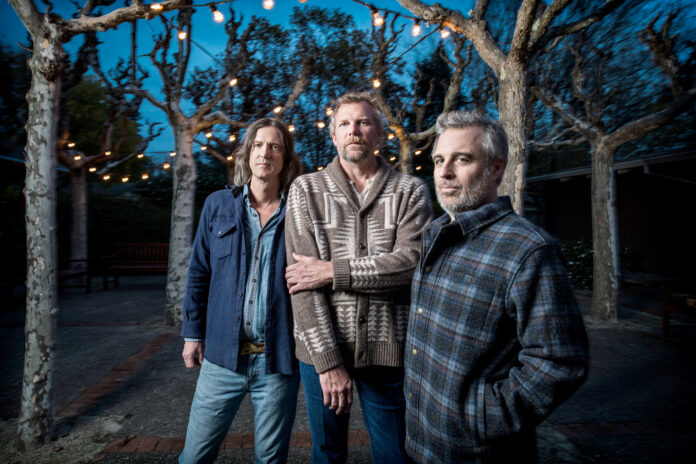
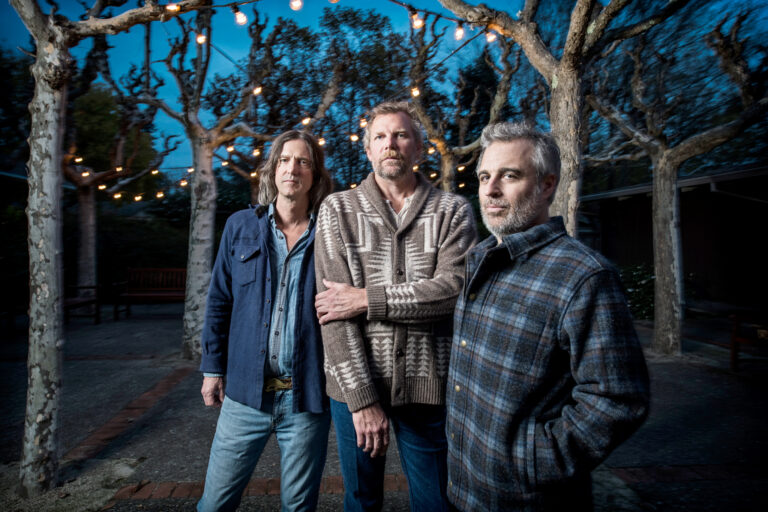
The world is definitely in a bout of chaos right now, and—if art imitates life—the Mother Hips are mirroring that flux. Changes in the band are coming as quickly as the color of the autumn leaves are mutating. Pushing three decades into their career, the Mother Hips are currently a trio, as the cover of Chorus shows, down to Bluhm, Loiacono and longtime drummer, since 1997, John Hofer.

Bassist Scott Thunes, who brought a catalyst of energy to the band over the last few years, is gone. Longtime friend Jackie Greene played bass for the recording of Chorus, but the position of bass guitar is now in the hands of Brian Rashap, house bassist at Terrapin Crossroads in Marin since 2013. From his early work in a Southern California Grateful Dead cover band called Station EXP to becoming Phil Lesh’s production manager and bass tech on tour, it’s been nothing short of a long, strange trip for Rashap.

Steely-eyed co-founder Loiacono is philosophical when it comes to the changes the band endures. “I enjoy playing with different configurations and seeing what new people bring to our songs,” he says.

It’s impossible to record an album in a vacuum. Sometimes the music drives the band, and sometimes, as in the case of Chorus, the personal lives of the band members drive the music. It cannot be downplayed that Tim Bluhm’s last three years formed much of the sentiment of this album. A very public divorce with songstress Nicki Bluhm weighs heavily over the album, as does the 2015 extreme-sporting accident that left Bluhm with a shattered right hip, a completely snapped left ankle and other injuries.

Every album that came before Chorus was the product of four strong personalities bouncing off each other’s ideas. Power struggles and dynamics shaped intricate lyrics with lattice-work melodies. Bluhm and Loiacono may seem forever bound to each other musically, but the last several years have found them growing apart. While Loiacono was developing as an artist—going solo, refining his guitar work to a fine sheen, grinding with a number of other bands (Green Leaf Rustlers and the Chris Robinson Band)—Bluhm was trapped in his own body, enduring a recovery process that included over a dozen surgeries, bone infections and other complications.

But 2018 has found the Mother Hips in new form, revolving their extensive catalogue into ever-changing set lists to please old and new fans alike. Each step the band takes contributes to their complex, rich story, and as is often noted, it is the journey not the destination that matters.

And for the Mother Hips, the journey is ever forward, further and beyond.

The Mother Hips play Tuesday and Wednesday, Oct. 30 and 31, at Sweetwater Music Hall, 19 Corte Madera Ave., Mill Valley. Doors open, 7pm; show, 8pm. $32 advance; $35 at the door. 415.388.3850.

By DNA

Dark Journey

0

What was he doing, the great god Pan, / Down in the reeds by the river? / Spreading ruin and scattering ban . . .

These opening lines from the Elizabeth Barrett Browning poem “A Musical Instrument” are spoken midway through Amy Herzog’s The Great God Pan, now running in a gripping production directed by Taylor Korobow at Petaluma’s Cinnabar Theater. It’s an 85-minute-long treatise on the power of memory, its oft-foggy character and the ruin that can emerge from the deep recesses of the mind.

Frank (Nick Sholley) and Jamie (Aaron Wilton) are childhood friends who have not seen each other in 25 years. Frank has reached out to Jamie to share some disturbing information: he’s filing a case against his father for sexual abuse, and he wants to know if Jamie has anything he wants to share.

Jamie, while insistent that nothing happened, begins to investigate his own past. He speaks to his parents (Richard Pallaziol, Susan Gundunas), who have their own revelation to share, and his old babysitter Polly (Kate Brickley), who is suffering from the onset of dementia but clearly remembers other events from Jamie’s childhood quite differently than he does.

The situation has added stress to an already brittle relationship with his girlfriend and social-worker-in-training Paige (Taylor Diffenderfer), who thinks Jamie’s childhood events may be an explanation for his homophobia, commitment issues and sexual problems. Or are Jamie’s problems a reflection of his upbringing by loving but aloof parents? Or are they just his problems?

And what of Frank? Polly remembers him as a liar. He himself says there are events he remembers that he chose not to think about, and things that he didn’t remember until recently. And then there are things recently described to him that he still doesn’t remember—yet. Even if everything he says is true, was Jamie ever involved?

The entire ensemble is superb with Wilton giving a tremendous performance as Jamie, a man whose very structured life is on the verge of collapse as he seeks answers to the questions raised by Frank. Those questions hover over the play like the forest-like set pieces designed by Jon Tracy. Tracy’s set is a terrific physical manifestation of the fluidity of memory, and the cast’s interaction with and manipulation of it is a mesmerizing component of the show.

An intriguing story, riveting performances and striking design combine to make a show that, once seen, is not easily forgotten.

‘The Great God Pan’ runs through Oct. 28 at Cinnabar Theater, 3333 Petaluma Blvd. N., Petaluma. Friday–Saturday, 8pm; Sunday, 2pm. $15–$50. 707.763.8920. cinnabartheater.org.

Day of Durell

The first single-vineyard Syrah that I remember having was a Kendall-Jackson wine from the Durell Vineyard in Sonoma Valley. It was way back in the 1990s, but the silky, sinuous wine proved memorable.

Later, I saw that a grapevine nursery was offering a Syrah clone called “Durell.” Must be some special vineyard, right? So I was delighted to accept an invitation to Destination Durell this month, a pilgrimage to the home of the mother vine of a great California Syrah.

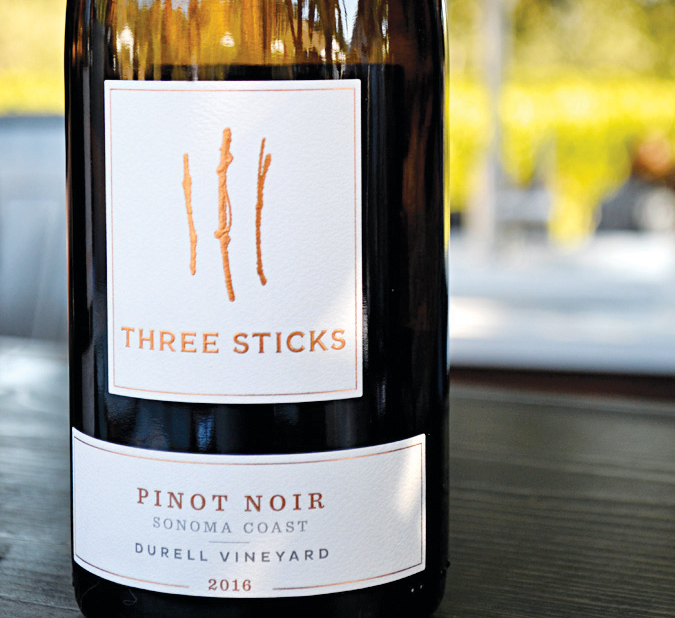
At the parking area, I hop on an electric cart that whirs toward a low hill topped with vineyard rows. But the tour stops at an oak-shaded grove. This event, hosted by Three Sticks Wines, is more of a wine club party (signing up to the list will also net you an invitation) than the educational tour I’d hoped for. But onward: there’s an educational opportunity at the first winetasting station I visit after slurping a candied splash of Three Sticks 2016 Pinot Blanc ($50) offered at check-in.

At the “Durell Zone,” there’s 2016 Durell Vineyard Chardonnay ($55), as crisp and rich as a toasty butter cookie, and 2016 Pinot Noir ($70), which in this vintage is a rich baritone to the tenor of the winery’s Gap’s Crown Pinot Noir ($70). But where’s the Syrah?

I ask the guy pouring the wines if he can help. Yes he can, since Rob Harris is director of vineyard operations for the whole outfit owned by venture-capitalist-turned-vintner Bill Price. Harris gives me the bad news about the original Syrah: “It’s no longer with us.”

But mourn it not: cuttings from the original vines live on in a block sold to Ram’s Gate Winery by Ellie Phipps Price, who bought it in 1998 with then-husband Bill. The other block of Syrah, sold to Chateau St. Jean for a single-vineyard bottling, is just some more common Syrah, like clone 1, says Harris.

Ah, the plot thickens. Durell’s Syrah originated from a test vine from UC Davis’ Foundation Plant Services (FPS) planted in 1973, then called Shiraz 1 because it came from Australia. Later cuttings got the Durell designation after growers requested it by that name, and it came back to the wine world via FPS as Syrah clone 8.

Durell is mainly a Pinot Noir and Chardonnay vineyard, after all, but Three Sticks pays homage to this complicated history with a red field blend of white and red Rhône varieties called Casteñada ($45). A mélange of Syrah, Grenache, Grenache Blanc, Viognier and Marsanne, it’s refreshingly uncomplicated.

Find Durell Vineyard wines at Three Sticks Wines, Chateau St. Jean, Ram’s Gate Winery, Dunstan Wines and others.

Cage Match

0

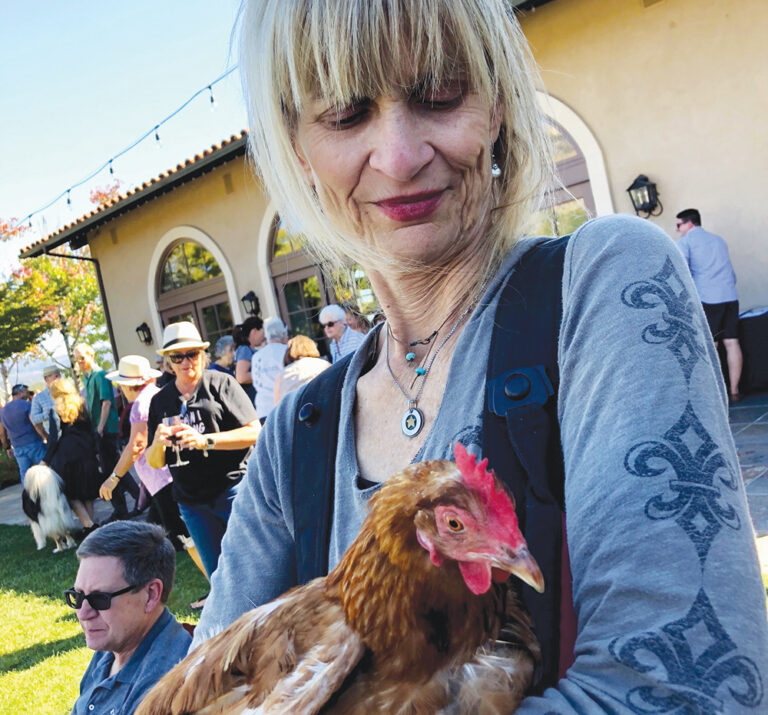
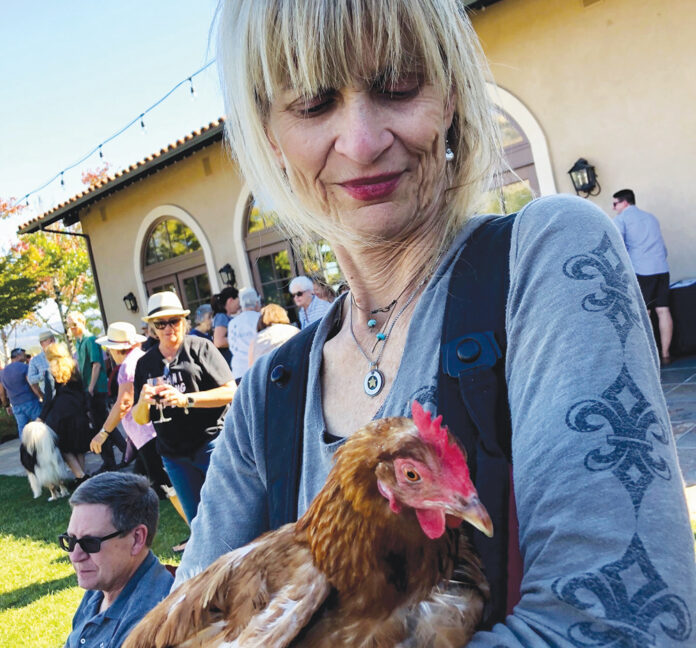
In late September, the Sonoma County Sheriff’s Office arrested 58 animal-rights protesters who were protesting—and allegedly trespassing and stealing chickens—at McCoy Poultry Services in Petaluma. It was the third such protest this year of regional chicken-and-egg processors by the animal-rights activists at Direct Action Everywhere (DxE).

Days before the animal-rights protest and alleged chicken theft at McCoy, the Sonoma County Farm Bureau announced an upcoming forum called “Beyond the Fence Line,” promoted as an informational session for farmers and ranchers in the area as they grapple with an uptick in animal-rights activism. The announcement reads: “Are you prepared for an activist targeting your farm, ranch or business? Few are. Don’t wait until you are in an unfortunate situation to realize you don’t have the tools you need to prepare for and manage activists.”

Scheduled speakers at the Oct. 29 event include Hannah Thompson-Weeman of the national nonprofit Animal Agriculture Alliance; Mike Weber of Weber Family Farms in Petaluma; local environmental lawyer Tina Wallis; and Sonoma County Sheriff’s Office (SCSO) Captain Jim Naugle. The event is being held at the Santa Rosa Junior College’s Shone Farm in Forestville; tickets are $20 for Farm Bureau members and $50 for non-members. Everyone’s invited to attend, according to the press release.

The rise in animal-rights activism locally arrives as state voters are being asked to vote on Proposition 12 this November. The measure sets out to revise current state law when it comes to regulations around cage-free animals, including calves, breeding pigs and egg hens.

Current state law under 2008’s animal-welfare-oriented Proposition 2 says that the animals “must be able to turn around freely, lie down, stand up and fully extend their limbs.” There’s no cage-free mandate in the state of California, even though Proposition 2 originally set out to make California a cage-free state by 2015.

Critics of Proposition 12 have pounced on what they call an unseemly agreement between the Washington, D.C.–based Humane Society and hen-egg corporate interests such as the United Egg Producers—not to mention big egg buyers like McDonald’s, which has joined with the popular and politically correct “cage-free” movement in recent years.

The state pushed out an anti-cruelty henhouse measure via Proposition 2 in 2008, and according to its intent, hens were supposed to have been cage-free for three years by now. That didn’t happen, say animal-rights activists from the Humane Farming Association, Friends of Animals, and Californians Against Cruelty, Cages and Fraud. In their rebuttal to Proposition 12, they argue that the “negligent drafting” of Proposition 2 means that “millions of egg-laying hens still suffer in egg-factory cages throughout California”—and will continue to do so at least through 2022, under Proposition 12.

Proposition 12, say critics, repeals Proposition 2 and only requires that hens, caged or otherwise, get one square foot of floor space by 2020. The new cage-free date with destiny is now set for 2022. Other notable opponents of Proposition 12 include People for the Ethical Treatment of Animals.

Calves raised for veal would be required to have 43 square feet of floor space, and breeding pigs would have 24 square feet of floor space by 2022, under Proposition 12.

Still, Proposition 12 is supported by Matt Johnson at DxE, even if the group hasn’t taken a position. He highlights that it’s an improvement over Proposition 2 in that it would increase enforcement activities that are now not being pursued by local agencies. “Sonoma authorities are supposed to be serving the public good,” he says, “but they are very close to the farmers. Prop. 12 gives us hope insofar as the California Department of Food and Agriculture is now the enforcement mechanism,” not local authorities.

The same group of protesters has targeted Liberty Duck, Petaluma Farms and McCoy Poultry in recent months, says SCSO spokesman Sgt. Spencer Crum. “It seems to be a continuing problem with this group,” he says.

Capt. Naugle says that the animal-rights group that has protested the Petaluma business is indeed characterized by its persistence—but that the late September mass arrest followed an earlier protest where nobody had been arrested. There were several meetings between the SCSO, and other county officials, and the group, between the first and second protests this year, Naugle says. Thanks to those meetings, a recent protest at Poultry Farms was uneventful to the extent that nobody was accused of trespassing or stealing chickens. “They stayed with the agreement,” he says.

The peaceful-protest agreement did not hold. The sheriff’s office got no heads-up from DxE in advance of the September protest at McCoy, Naugle says. As a result, “[t]hey broke they law and were arrested.”

DxE has a different take and believes that it is legally obliged, under California’s animal-welfare statute (section 597e of the penal code), to step in and save animals that they believe are being treated cruelly. Direct Action Everywhere member and attorney Jon Frohnmayer says that the substance of the meeting he attended with Sonoma County—which included the County Counsel’s office along with SCSO and the Department of Health—“was our presentation of our analysis [of 597e], that any sort of of animal cruelty, even to pigs, chickens and cows, is criminal under California law.”

The law, Frohnmayer charges, allows anyone to give food and water to any animal that’s been denied food or water for up to 12 hours. As such, DxE believes that it is legally empowered, if not obligated, to take matters into its own hands when, for example, whistleblowers come forward with damning videos of allegedly suffering animals.

No final charges have issued from the Sonoma County District Attorney stemming from the heated September confrontation at McCoy. “My understanding is that we are still reviewing the cases,” says Donna Edwards, media coordinator for Sonoma County District Attorney Jill Ravitch. She suggested the Bohemian check in again in a week.

Activists arrived at McCoy wearing Tyvek suits, notes Naugle—indicating an intent to trespass onto the bio-secure property. He says eventual charges “may include trespassing, conspiracy to commit burglary [and] . . . conspiracy to steal the chickens.”

Naugle says the SCSO’s input at the Oct. 28 Farm Bureau event will be to educate attendees on the balance between activists’ right to protest peacefully and lawfully, and a business’ right to remain free of trespassers—let alone chicken thieves.

Direct Action Everywhere has no plans to disrupt the event, but the organization is none too happy about the lineup and what it sees as a consistent failure to appreciate the state’s animal-cruelty law as it intersects with the general public’s right to free allegedly abused animals from wherever they may be living.

“They are literally having law enforcement going to the Beyond the Fence Line, but under the law, what we’re doing is justified,” says Johnson. “They are plainly taking sides.”

A Cool Buzz

Tokey was sitting by the phone one morning, waiting for the call that never came. The Obama-era Housing and Urban Development Secretary Julian Castro was scheduled for a chat about his new book, An Unlikely Journey—but there was no call. Pretty bogus.

Tokey was sad that Castro did not call. He left the office and stopped at SPARC for some medicine, and was less sad when he got home. He carried on with the critical task at hand. Having binged through Madam Secretary, next up on Netflix was Designated Survivor, starring Kiefer Sutherland as a HUD secretary who becomes commander-in-chief after conspirators blow up the Capitol. “This is weird,” thought Tokey, “Keif’s a former HUD secretary too?”

Tokey was enraptured by the glow of flame as the Capitol dome blazed out, and plowed through most of the first season of the SPARC medicine. Now it was later, much later, and he was about to have a revelation. The dog jumped off the bed and hid. “What if Julian got elected president and gave Joaquin a cabinet post—and made him the designated survivor! He’d be, like, his own designated survivor! Whooa!” Tokey grabbed An Unlikely Journey and found the relevant passage—the virtue-signaling moment.

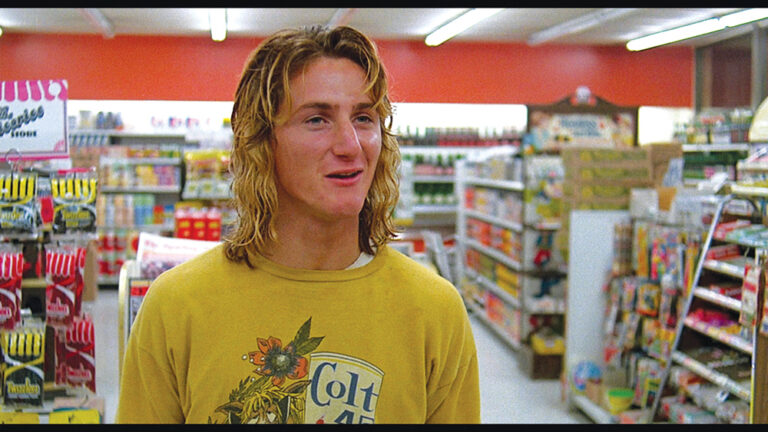
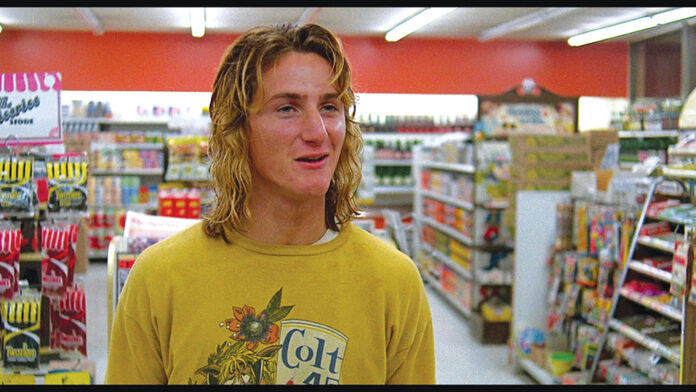
Here, Castro writes about his college friend Jon: “A Californian in the mold of Jeff Spicoli of Fast Times at Ridgemont High, he always seemed to be holding a beer in one hand and dribbling a basketball with the other. Jon was a lesson in how you can succeed and still be relaxed. After all, he wasn’t smoking weed at the beach—he was at Stanford.” So nobody who graduated Stanford ever smoked weed? Not even Elon Musk?

Tokey recalled Spicoli’s views on Jeffersonian Democracy as he thought about Castro’s likely 2020 run for president. “So what Jefferson was saying was, ‘Hey! You know, we left this England place because it was bogus. So if we don’t get some cool rules ourselves, pronto, we’ll just be bogus too.’”

“Now that’s a statesmanlike . . . statement,” Tokey thought, and wondered if Marin County resident Sean Penn would return his call if he reached out for further comment. Probably not, but it never hurts to ask. And if it does? They got some good medicine for that kind of pain.

Julian Castro appears at Dominican University’s Angelico Hall on Thursday, Oct. 25, at 7pm. $40 (includes book). 20 Olive Ave., San Rafael. bookpassage.com/event.

By Tokey McPuffups

Munching Marin

Masa Plan

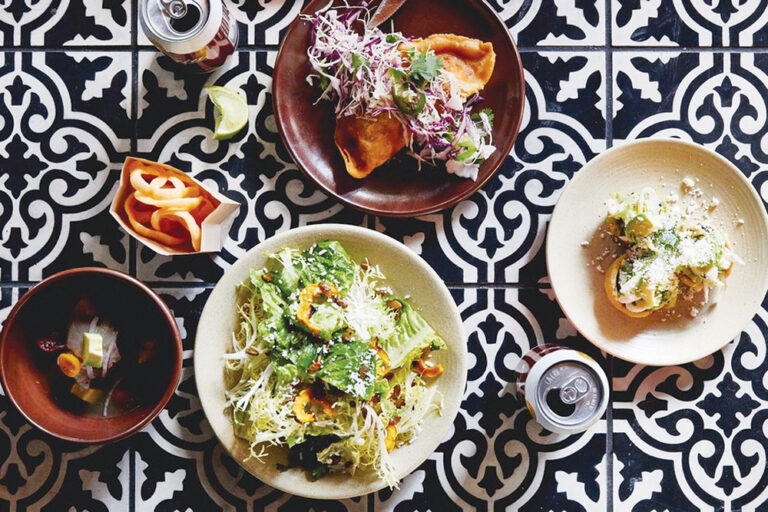
Flores, San Francisco’s estimable Mexican restaurant, opens its new outpost in the Corte Madera Town Center on Oct. 29. Yummers. The restaurant prides itself on tortillas made by hand daily out of fresh masa, and the menu bespeaks a sensibility geared toward traditional Mexican food. Tortillas are served with entrées that include a mole negro poblano, duck-confit enchiladas and citrus-roasted pork shoulder.

Executive chef Luis Flores—it’s a family affair, this restaurant—is a longtime Marin County resident and says in a statement that the tortillas are the thing: “We get our corn from local farmers and grind it into masa every morning, so it really is a local farm-to-table process.”

Other menu standouts that catch our eye include crab tostados and a whole roasted fish—not to mention a slew of swank and contemporary beverages that include mezcal margaritas. And, hey, if you’re reading this on Oct. 24, know that there’s a soft opening at Flores for dinner service only. Regular hours kick in on the 29th, when this Marin newcomer will be open seven days a week for lunch and dinner. There’s talk of a brunch menu being offered as of Nov. 17. Stay tuned for more on that.

Dollar Down

West Marin locals have been hitting the social media pretty hard wondering what’s going on with the popular Sand Dollar restaurant in Stinson Beach. The restaurant is closed to replace a septic system, according to the Sand Dollar website. Our source-in-the-know says it won’t reopen until next spring.

That’s a drag. Local residents recall how, back in 2008, the Sand Dollar was a go-to place for locals who wanted a place to celebrate the election of Barack Obama—and folks were jabbering on Next Door this week about whether he place will open on the night of Nov. 6, come hell or high water (high water is more typical in Stinson, which flooded badly last winter).  Every indication we’re getting is that the Sand Dollar’s down for the count until spring—but there are plenty of other places to fret over the election results come next Tuesday. Our election-night plans are in flux but depending on how thing go, may or may not include some tasty chocolate edibles and a relaxing walk on the beach.

Mill Valley Market Watch

The Mill Valley Market, in business for 90 years in Marin County, announced earlier this month that it had bought Vintage Wine & Spirits, located at 82 Throckmorton Ave., itself a thriving business for some 80 years. A statement announcing that the two long-standing businesses had merged noted that the sale will ensure that Vintage remains “one of only two independent fine wine and spirit shops in southern Marin, with origins dating back to shortly after Prohibition.” The Mill Valley Market Farm is located in Glen Ellen and delivers fresh produce to the market daily.

World Vegan Day

Well, World Vegan Day is coming up on Nov. 1, and the researchers at the personal-finance website WalletHub have run the numbers: the average person can save up to $750 a year by skipping meat. The researchers at WalletHub also figured out the best U.S. cities for vegetarians and vegans, and San Francisco came in fifth on that list, after New York City, Portland Ore., Orlando, Fla., and Seattle. The big town to the south benefits mightily from a robust regional agricultural economy, which translates into San Francisco having the most community supported agricultural programs per square foot of population. One of those is Eatwell, which offers food subscriptions and delivers to Marin County. Other San Francisco CSAs of interest to Marinites include Full Belly Farm and Greenhearts Family Farm, both of which deliver to the county.

Banh Mi Oh My

I was talking recently with Jason Faircloth, owner-operator of the newish Splitrock Tap & Wheel, about his menu, and Faircloth noted that a new dish was on its way: the Vietnamese banh mi sandwich. I’ve been thinking about it ever since. I’m sort of obsessed with this sandwich—the crunchy bread, the fragrant cilantro, the tongue-tickling hot sauce, the grilled meat—so I went to the Split Rock online menu to see if it’s up there, with plans to pop in at some point between now and the end of Western Civilization as we know it, and grab that sammie.

Alas, the banh mi is not on the Splitrock online menu, but I found a couple of other wonderfully homey items that are sort of fun to contemplate in an idle and vaguely hungry manner, around lunchtime; i.e., the peanut butter and jelly sandwich, made with Skippy and strawberry jam. That’s a $4 pocket-rocket of quick energy for any bicyclist who happens to come through this cafe-cum-bike-shop in Fairfax. There’s also a $4 grilled-cheese sandwich made with American cheese—hopefully of the individual, plastic-wrapped Kraft variety. Sorry, that’s my suburban middle-class childhood speaking. What I meant to say was, hopefully of the organically rendered and locally sourced variety.

Sustainable

The Sustainable Enterprise Conference, to be held at the Embassy Suites in San Rafael on Oct. 25, is promoted as the biggest annual conference of its kind in Marin County, with 40 speakers, 35 exhibitors and 300 business and community leaders, and students—all gathered to chew the tofu over the many and varied  contours of sustainability. Speakers run the gamut from U.S. Rep. Jared Huffman to Autodesk Foundation executive director Joe Speicher. The daylong confab is sponsored by the co-working space VenturePad (the Pacific Sun rents space at VenturePad), and of course they’ll be talking about food; among the numerous topics that hit on sustainability is a planned afternoon session on sustainable agriculture and food systems, wellness and food equity. The event runs from 8am until a 5–7pm reception. Tickets are available up to the day of the event, and they’re promising all sorts of local foods for breakfast, lunch and the reception. Sign us up! Register at https://greenmarin.biz.

This Week in the Pacific Sun

This week in the Pacific Sun we celebrate our Heroes of Marin issue, with contributions by Tanya Henry and Nikki Silverstein—read on to see who are their favorite people in Marin County. In the music pages, Charlie Swanson talks with indie-rocker Luke Temple and on the big stage, Harry Duke reviews a play that’s keyed in on the Oslo Accords (remember them?). In our dining section, Stephanie Hiller reports from a recent conference dedicated to women farmers—and has an unforgettable lunch at said conference—and I’ve got a writeup on Fairfax resident Giuseppe Dezza’s photos from El Salvador now up at the College of Marin. Pretty heroic stuff, that. Oh, and Wallace Baine’s got a great writeup of a new book about the Brown family dynasty, just in time for Jerry to hit the bricks with the Gav-Gov waiting in the presumptive wings. Speaking of: We’ve also got a handy little guide on how to register to vote in Marin County—and more! —Tom Gogola, News and Features Editor

Heroes of Marin

HEROES: Mark Spilsbury and Amy Whelan

By Tanya Henry

“It all started with the pancake breakfasts of sausages, fluffy pancakes and orange juice in the garage of my local fire department in La Canada,” says Mark Spilsbury, food service manager at Cedars, the Marin center for individuals with intellectual and developmental disabilities. “It was a great feeling.”

Spilsbury grew up in Southern California with civic-minded parents, who instilled in him the notion of what he refers to as “doing well by doing good.” He’s been at Cedars for almost 10 years, and like a lot of chefs, has cooked all over the country. After attending college as an art major at Colorado University in Boulder, he moved to New York and started catering. “It felt like I was joining the circus—there was something new every day.” He prepared meals in abandoned warehouses in Brooklyn, he prepared sit-down dinners at Lincoln Center, he served food to the winners at post–Grammy Award shows.

It was never boring.

Eventually Spilsbury returned to his home state, and in the early 1990s landed in Marin County and started to work for the Whistlestop center in a kitchen that produces 500 meals for seniors daily in San Rafael.

Spilsbury also opened his own restaurant, sold savory and sweet crepes at the Fairfax farmers market and worked with Heidi Krahling’s catering arm of Insalata’s restaurant. But it’s his work at Cedars that brings him the most joy.

“The folks here might tell me they don’t like the food one day, but then they’ll give me a hug and tell me they like me. It feels good.”

Spilsbury begins work at 5:30am on Cedars’ Generoso Pope Jr. campus, where he prepares breakfast for the residents. He returns at lunchtime to prep the midday meal. There are other community-based group homes in Marin, but regardless of where the Cedar participants live, they have access to numerous day programs, including a beautiful garden nestled on the hillside of a 22-acre property in San Rafael that’s run by another Marin hero, Amy Whelan.

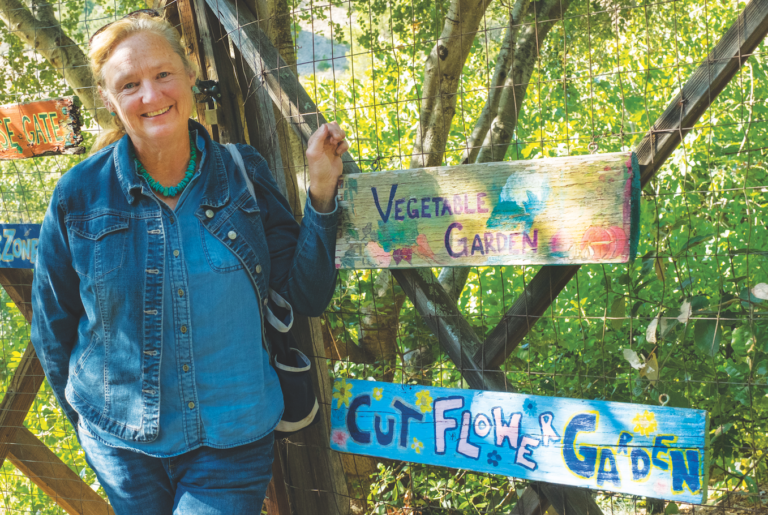
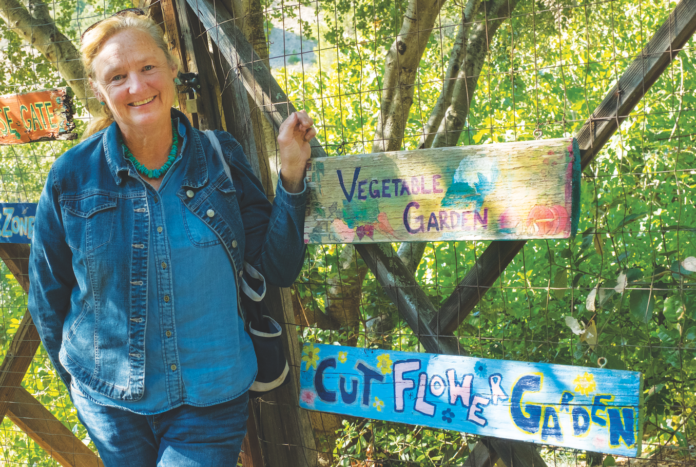
“Giving back is in my DNA,” says Whelan, a one-time outdoor adventure guide who came to Cedars 28 years ago looking for a therapeutic garden experience. She’s been running the program and preparing vegetarian lunches ever since. The Inverness Park resident describes their program as more than a garden. “It’s like a little farm,” she says proudly.

Whelan walks me through a rectangular swath of land designed with metal handrails and PVC trellises to allow folks with physical disabilities to enjoy the spread. A gigantic fig tree fans out near a host of crops neatly cultivated. There are rows of various pepper varieties, eggplant, thornless berries, tomatoes and corn. The summer-crop season is winding down and heartier winter crops like Swiss chard will soon take their place. An entire section of the plot is designated for flowers, and a greenhouse and shed provide participants with the opportunity to learn about starts and planting from seed.

“Every day, eight people work in the garden and learn everything from how to plant and harvest vegetables, to composting and beekeeping,” Whelan says. She’s committed to teaching folks about the connection between growing good food and making healthy choices in life. Mark and Amy provide the nourishment, as they too are nourished by their contributions to an organization that offers a place where people with intellectual and developmental disabilities can live creative, productive and joyous lives.

Cedars turns 100 next year and is hosting a harvest fair in November, where the public is invited to buy hot-pepper jelly, fig jam, jars of honey, handmade soaps and herbal mixes.


HERO: Jimmy ‘Fishbob’ Geraghty

By Nikki Silverstein

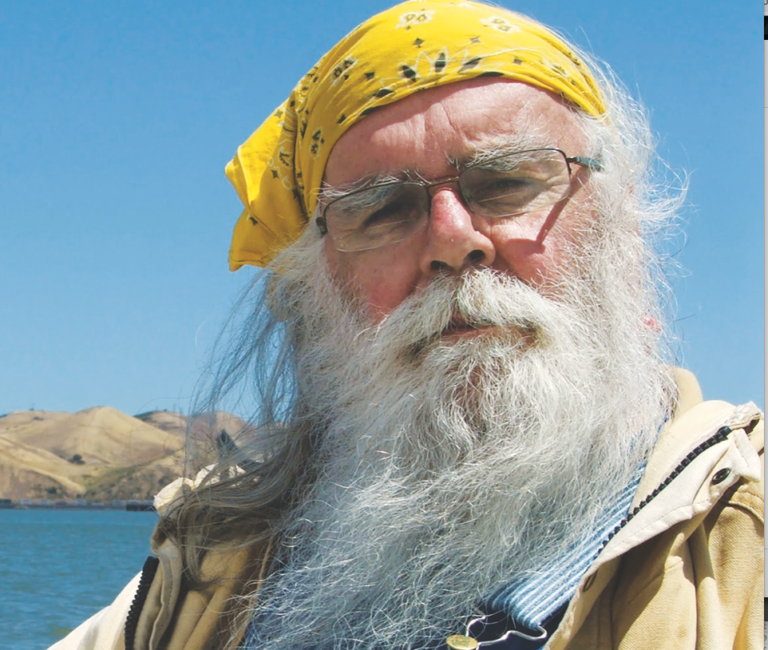
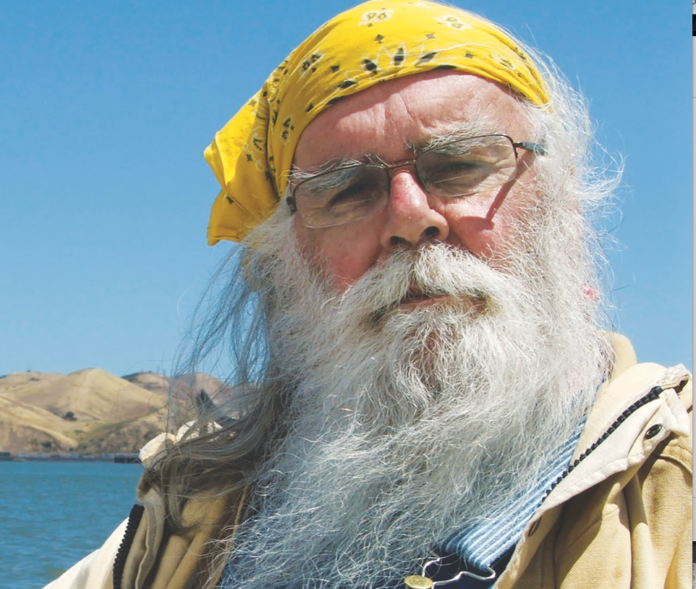
Making quite the entrance, Jimmy “Fishbob” Geraghty arrives for our interview on a black electric bike, his long gray mane flowing behind him. Clad in denim overalls and flip-flops with a yellow scarf covering his pate, pirate style, he proudly displays a button fastened to his chest: “Unfuck the World”

“That’s what I want to do,” he says.

Geraghty led a charmed early life and grew up in places like beautiful Westchester County (a bedroom community of New York City) and the Hamptons, part of Long Island, with its quaint and tony seaside communities. Both areas are mostly Caucasian. “As a white guy, you have privileges you don’t even realize you have,” Geraghty says.

For the love of a girl on the West Coast, he moved to Marin County in 1988. He settled in the Canal District to be near his boat. “I woke up when I moved in there. I saw a lot of wrong,” he says of the area that is mostly Latino.

He gained the “Fishbob” moniker when he created an earring out of an 18 karat gold hoop with a little red and white fishing bobber snapped onto it. “Quite fashionable,” he says.

About five years ago, Geraghty moved from the Canal due to rent increases, and now resides in Gerstle Park. The boat is gone.

After an injury forced him to leave the autobody business in early 2000, he began taking classes at Marin Community College. “A new world opened for me,” he says. He became involved with politics and nonprofit organizations in town. When the United States went to war with Iraq in 2003, Geraghty was a full-fledged activist and protested against the U.S. invasion.

During the Immigration and Customs Enforcement (ICE) raids in the Canal District in 2007, he was part of the Canal Patrol, going out from 5pm until dawn to keep the community safe. That same year, he produced the film Why We Come, to tell the story of the immigrant experience.

Now he spends 60 hours a week working with a diverse group of local nonprofits and serves on the boards of the Community Media Center of Marin and Sustainable San Rafael. He’s a member of the San Rafael Bicycle and Pedestrian Advisory Committee, a founding member of United Marin Rising and an alternate for the San Rafael General Plan 2040.

Self-taught, Geraghty designs and maintains websites for many nonprofits and is the videographer for Change the Name, the controversial push to rename the Dixie School District.

His heart, though, is with the Canal, where he describes himself as “a behind-the-scenes cheerleader for the Canal Welcome Center.” Geraghty painstakingly mapped the Canal District for the San Rafael transition from at-large to district-based city council elections, which will give the area more representation.

Geraghty doesn’t see himself as a hero, even if the Pacific Sun does. “I’m honored, but the real heroes are the people that live in the Canal.”

“It keeps me on my game,” he says of his volunteer work. “I surround myself with people smarter than me, connecting with others and working for change. That’s when the real magic happens.”

Geraghty identifies the three biggest problems facing Marin as housing, traffic and racial disparity. The good news is he sees plenty of solutions for all of these problems. His advice: Get involved. “Find a group working on your passion or concern. Become aware.”

Self-Care Companions

The Headlands Center for the Arts is known to local art lovers for its ever-changing programming, community dinners and open houses full of natural light. On Oct. 25, it will become associated, for the first time, with wellness, by hosting a women’s event with In Good Company, a conference and events brand out of San Francisco.

The In Good Company conference debuted last year and was organized by Katie Hintz-Zambrano, the woman behind Mother Magazine, a popular online resource for parenting-focused interviews, tips and style. The 2017 conference attracted over 300 women and speakers, like veganism guru Laura Miller, accessories designer Clare Vivier and Bob Bland, one of the organizers of the Women’s March movement.

A September conference brought together over 400 attendees. In between the two conferences, In Good Company has hosted lifestyle-centric events in Petaluma and elsewhere. For the Marin event, limited to a hundred women, In Good Company taps into the self-care niche.

“We wanted to create a separate event that was a bit more intimate and also focused on slowing down, unplugging and connecting to oneself, nature and other women,” says Hintz-Zambrano. In the program: a journaling workshop with Alex Elle, a wellness consultant behind the popular hey, girl podcast; a guided hike; a yoga class; a panel on creativity—and food throughout the day. The pricey ticket comes with a slew of schwag, from hiking boots to yoga mats.

The chosen location is a major source of inspiration. “The Headlands Center for the Arts is such a beautiful, unique and historic building, and a venue that we’ve always wanted to do an event at,” Hintz-Zambrano says. “It’s really a perfect complement to what we are trying to accomplish, with a day centered on self-care, wellness and sparking creativity.”—Flora Tsapovsky

In Good Company, Thursday, Oct. 25, Headlands Center for the Arts, 944 Simmonds Road, Sausalito. 9:30am–6pm. beingoodcompany.co/tickets.

The Yield

In Sebastopol last weekend, a large gathering of women farmers from around the Bay Area gathered to talk food and farming under the heading “Foundations and the Future.” During a daylong event featuring ritual, stories, art—and a fabulous lunch of farm-fresh foods—the point was made: if there’s any hope for humanity, it lies in the embrace of healthful food.

For the past 20 or so years, young people in Sonoma and Marin have been drawn to farming, despite the financial risks and formidable hurdles—especially the access to land. Many of the new farmers in the region are women, and some of them showed up for the event. “Farming is something we can do to contribute,” said Megan Mendenhall, marketing director of the #NoRegrets Initiative in Pacines, near Santa Cruz. “And it’s a way to shape the future.”

The conference, held at the Permaculture Skills Center, is the brainchild of Sebastopol native Caitlin Hachmyer, 34, who has run her Red H Farm for almost a decade. (See our profile on Hachmyer in the Sept. 6, 2017, “Spotlight on Sebastopol” issue.)

“Women worldwide grow over half the food, yet in lots of academic and professional settings the spokesmen are the men,” Hachmyer says. “In this political moment, it’s really clear that people whose voices have been silenced are not going to remain silent. Food transcends any demographic.”

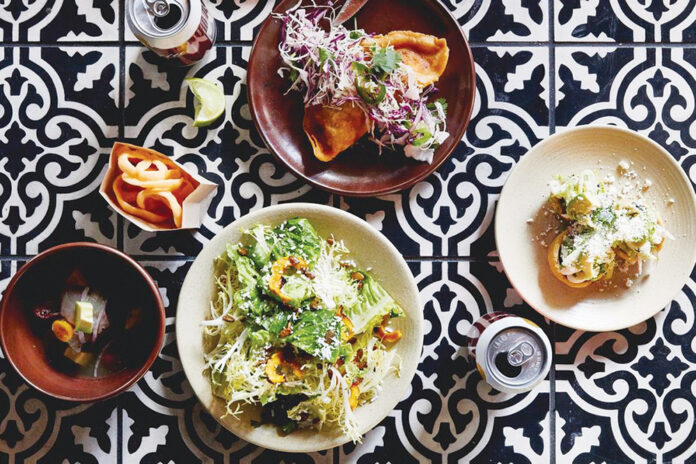
And the food served at the conference was exceptional, if not transcendent. Seven local farms provided the ingredients for a build-your-own taco lunch catered by A Good Life and served outdoors. Attendees enjoyed warm corn tortillas, brown rice pilaf, black beans, seasoned chicken, two salads and a variety of cheeses; the fixings were purchased from Bi-Rite Farm in Sonoma, Beet Generation in Sebastopol, Tierra Vegetables in Santa Rosa, and elsewhere.

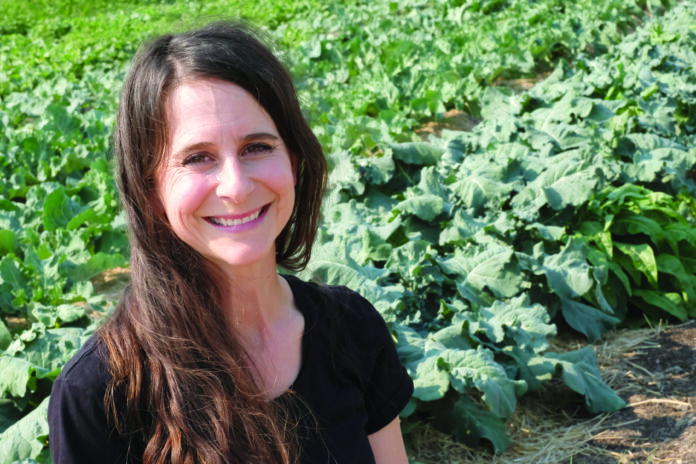
Lunch was served, a conch was blown, and a panel of women farmers each told a story of how the magic of making things grow had become part of their lives. Judith Ysrael changed to a plant-based diet with her husband and nine children, she reported, but they were daunted by the prices at their local health food store. They started to grow food in their backyard in Southwood Park in Sacramento. Now they run an organization, Project GOOD, that teaches youth to “cultivate the land, themselves and their community.”

Panelist and Bay Area native Kelly Carlisle came out of the corporate world and reported to the 140 attendees (which included a smattering of men) how thrilled she was when a lemon tree she bought at a nursery produced two lemons. It was a Harry Potter moment, she said, which led her to grow pounds of vegetables in her backyard.

But at first she was afraid to eat the vegetables she’d grown, Carlisle said to laughs—because they didn’t have a label.

Now she’s a Master Gardener and runs an urban-farm project for youth in Alameda.

The Mutation of the Mother Hips

­­Located on the outermost edge of civilization, a world and millennia away from Mesopotamia, California has never stopped evolving. While humanity has trudged ever westward through the rise and fall of empires, cloaked in bearskins, then togas and then Birkenstocks, a small group of modern troubadours have spent their time penning songs for the ages, the Mother Hips. The band’s...

Dark Journey

What was he doing, the great god Pan, / Down in the reeds by the river? / Spreading ruin and scattering ban . . . These opening lines from the Elizabeth Barrett Browning poem “A Musical Instrument” are spoken midway through Amy Herzog’s The Great God Pan, now running in a gripping production directed by Taylor Korobow at Petaluma’s Cinnabar...

Day of Durell

The first single-vineyard Syrah that I remember having was a Kendall-Jackson wine from the Durell Vineyard in Sonoma Valley. It was way back in the 1990s, but the silky, sinuous wine proved memorable. Later, I saw that a grapevine nursery was offering a Syrah clone called “Durell.” Must be some special vineyard, right? So I was delighted to accept an...

Cage Match

In late September, the Sonoma County Sheriff’s Office arrested 58 animal-rights protesters who were protesting—and allegedly trespassing and stealing chickens—at McCoy Poultry Services in Petaluma. It was the third such protest this year of regional chicken-and-egg processors by the animal-rights activists at Direct Action Everywhere (DxE). Days before the animal-rights protest and alleged chicken theft at McCoy, the Sonoma County...

A Cool Buzz

Tokey was sitting by the phone one morning, waiting for the call that never came. The Obama-era Housing and Urban Development Secretary Julian Castro was scheduled for a chat about his new book, An Unlikely Journey—but there was no call. Pretty bogus. Tokey was sad that Castro did not call. He left the office and stopped at SPARC for some...

Munching Marin

Masa Plan Flores, San Francisco’s estimable Mexican restaurant, opens its new outpost in the Corte Madera Town Center on Oct. 29. Yummers. The restaurant prides itself on tortillas made by hand daily out of fresh masa, and the menu bespeaks a sensibility geared toward traditional Mexican food. Tortillas are served with entrées that include a mole negro poblano, duck-confit enchiladas...

This Week in the Pacific Sun

This week in the Pacific Sun we celebrate our Heroes of Marin issue, with contributions by Tanya Henry and Nikki Silverstein—read on to see who are their favorite people in Marin County. In the music pages, Charlie Swanson talks with indie-rocker Luke Temple and on the big stage, Harry Duke reviews a play that's keyed in on the Oslo...

Heroes of Marin

HEROES: Mark Spilsbury and Amy Whelan By Tanya Henry “It all started with the pancake breakfasts of sausages, fluffy pancakes and orange juice in the garage of my local fire department in La Canada,” says Mark Spilsbury, food service manager at Cedars, the Marin center for individuals with intellectual and developmental disabilities. “It was a great feeling.” Spilsbury grew up in Southern California...

Self-Care Companions

The Headlands Center for the Arts is known to local art lovers for its ever-changing programming, community dinners and open houses full of natural light. On Oct. 25, it will become associated, for the first time, with wellness, by hosting a women’s event with In Good Company, a conference and events brand out of San Francisco. The In Good Company...

The Yield

In Sebastopol last weekend, a large gathering of women farmers from around the Bay Area gathered to talk food and farming under the heading “Foundations and the Future.” During a daylong event featuring ritual, stories, art—and a fabulous lunch of farm-fresh foods—the point was made: if there’s any hope for humanity, it lies in the embrace of healthful food. For...
3,002FansLike
3,850FollowersFollow