Upfront: Mist opportunity

1

by Ellen Shehadeh

As California faces unprecedented drought, people are finding ways to conserve water. Some methods—installing graywater systems or water-efficient appliances—are expensive and labor-intensive.

Enter fog catchers, a low-impact, low-tech system that requires no pumps or electricity, is easy to set up and has minimal equipment requirements. For as little as $75 (or as much as $200), you can have your own fog catcher.

Fog catchers have long been used in developing countries like Guatemala, Chile and Nepal, and are simple to construct. All that’s needed are netting, poles, a gutter-like device and barrels for collecting water. If you have space in your yard or are a farmer with lots of acreage, you can set up a space-appropriate fog catcher.

According to FogQuest (fogquest.org), a Canadian nonprofit that has built water-collection systems around the world, a fog catcher screen of 40 square meters can catch 200 liters of water a day. The nets are made of a meshlike polyethylene or polypropylene, and resemble an oversized tennis net whose efficiency depends on the spacing of the holes and the coating. According to FogQuest, there are no commercial sources for these screens in North America.

But you don’t need to buy special screening, says Brock Dolman, co-founder of the Occidental Arts & Ecology Center and co-director of the WATER Institute’s permaculture design program there. Ordinary shade cloth, available at most nurseries, works fine. Whatever the type of screen material used, it must be cleaned and cared for to assure water purity.

Tim Page, co-founder of F.E.E.D. (Farmers Exchange of Earthly Delights) Sonoma, says that fog catching “could make a lot of sense and might be a potentially viable solution” during this time of water scarcity. But he also observes that, as far as water goes, Sonoma County is in pretty good shape. Page says that foggy San Francisco, which depends on the Hetch Hetchy reservoir for its water, is a good candidate for fog catching.

Dolman agrees. When he lectures to groups, he pushes people in San Francisco to put fog-catching devices on their roof gardens.

There’s even room for high-style fog catchers to catch on here. Leave it to the Italians to combine function and design in their fog catchers. Designer Arturo Vittori and Swiss architect Andreas Vogler have created graceful, sculptural fog catchers, some of them 30 feet tall, that allow Ethiopian villagers to harvest water from fog. Called Warka Water after the Ethiopian fig tree, the catchers are made with locally sourced materials—bamboo, mainly.

Closer to home, coastal redwood trees have utilized fog-catching methods for as long as they’ve been around. Biologist Todd Dawson of UC Berkeley has studied the fog-collection systems of redwoods and found they have special leaves that absorb fog-water into the tree. Water not absorbed recharges the groundwater.

In 2014, Chris Fogliatti, a researcher interested in the molecular make-up of fog, set up a small-scale project in Tilden Regional Park in Berkeley. Three weeks later, he’d gathered two liters of water for every square inch of mesh in the fog catcher.

Others are taking up the call—only to hit a fog-bank of bureaucracy. West Marin’s Richard Kirschman is an inventor, activist and developer, and says that he is scouting a suitable location for his fog-catching project.

Kirschman has consulted with the superintendent at Point Reyes National Seashore, to no avail. The vast parkland would seem an ideal location to gather some fog droplets—lots of open space and lots of fog—but Kirschman hasn’t been able to get past federal rules and regulations in place at Point Reyes that don’t allow for these sorts of projects.

That’s too bad, since fog catchers in foggy parts of the world have proven to be a reliable source of water. On the high, fog-shrouded Atacama Desert of Chile, fog catchers are deployed to irrigate barren land so natives can grow crops. The Chilean fog catchers harvest enough water to operate a brewery called Atrapaniebla—which translates into “Fog Catcher.” Unfortunately, the amount of beer produced is limited to 6,000 gallons a year because of chronic water shortages in Chile.

Lagunitas Foggy Lager, anyone?

Arts: The nostalgia of food

 by Molly Oleson

“You’re tall—watch your head,” warns Jennifer Carden, as she leads me into the tiny Aristocrat camper that’s parked on her front lawn in Novato, and which has been gutted, renovated, painted a sparkly bluish-green with a tangerine-colored door and dubbed “Teal Thunder.”

Inside, small works of art—all food-themed—line the clean white walls.

“We’re calling it a mini gallery,” Carden says proudly of the space, which is the new home of Super Fresh Food Art Gallery—known as the world’s first contemporary art gallery dedicated to art about food.

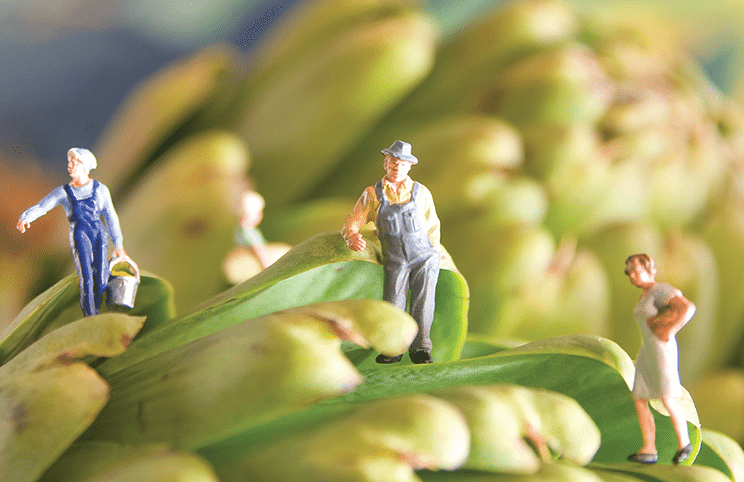
Carden, director of the gallery, co-owns the successful business with her husband, Matthew Carden—well-known for his photographs that combine food with popular culture to create images of small figurines floating on seas made of cake frosting, hiking across giant strawberries or scuba diving inside wine glasses.

On top of running the gallery, Jennifer, a chef, cookbook author and food stylist, styles the food for her husband’s photos. “He’ll say, ‘I need a cake that looks like an ocean,’” she says with a laugh. “Or, ‘I need a popsicle that looks like a 6.’”

The two artists, who have collaborated on numerous books together and have “always been interested in the food world,” merged their interests to create the gallery, which was located on Grant Avenue in downtown Novato until a three-year lease ran out in April. A love of campers, and an idea to move the artwork more into the virtual world, led to the small version of Super Fresh—which gets its name from something that’s “really cool.” “The art is super, and it’s all fresh and it’s food, and it’s something totally different and new,” Jennifer says.

In addition to Matthew’s work, the art of around 10 artists, all with different styles and perspectives on food, is represented. There are pastel-colored paintings of desserts by Pat Doherty, detailed drawings by Beverly

A detail of the work of Cara Brown. Photo courtesy of Super Fresh Food Art Gallery

Shipko of half-eaten Oreos and vibrant mosaics of Twinkies by Jim Bachor. “We want stuff that’s really pop-y,” Jennifer says, noting that she’s in the process of adding more artists and expanding the business to include “satellite galleries” at places like winery tasting rooms in Sonoma.

Art about food prompts conversations about food culture. “It depends on what age you are, but like my generation—we grew up with a lot of junk food, and a lot of fast food,” Jennifer says. “It wasn’t a big deal to have a box of Slim Jims and a box of Ho Hos in your house.” Now, she says, living down the street from a grocery store that only carries food produced within a 30-mile radius, those habits are not so common.

“There’s a lot of judgment around food,” she says of living near the California coast, after growing up in upstate New York. “And so I think it’s really fun that I can have artists who can make a mosaic and a painting and a photograph of a Twinkie, and it’s OK, you know?! You can put that on your wall. If you want to judge me for having a Twinkie on my wall, fine!” she says, in between giggles. “Go ahead! But that’s what I ate growing up, you know?”

The food-themed art also stirs up memories of eating the food, and a specific time and place. “It’s interesting,” Jennifer continues, “because my husband—a lot of his work is based on nostalgia—what we remember. So a lot of his work has to do with fast food, junk food, sugar—all that stuff. Because it’s your comfort; because if that’s how you grew up, that’s what you remember, right?”

It’s entertaining for Jennifer to see what foods her artists are drawn to, and what foods viewers flock to. “People have all these different feelings about food,” she says. “The little white squiggle on the chocolate frosting [of a Hostess cupcake]—everybody knows that. And so I think most of our clients buy art for the nostalgia of it—of what’s in the art.”

The mission of Super Fresh Food Art Gallery has always been to inspire people, Jennifer says. “I think we’ve definitely met our goal. We like talking to people and saying, ‘What would you like to do if you could do anything?’”

When they tell her, she encourages them to do it. “And I think with this,” she says, pointing to the mini gallery at her “carnival-like home,” “This is so crazy to park a sparkly blue camper on your front yard. I just think, if that doesn’t inspire people to just do something crazy, then we’ve got it all wrong!”

“There are many versions of your own dream,” she says. “I feel like you can create something out of anything.”

Text Jennifer at 415/377-7212 to stop by the gallery, or visit superfreshgallery.com. And check out Matthew Carden’s photograph on our cover this week.

Music: Ziggy Marley speaks

2

by Haley Bollinger

Reggae star Ziggy Marley plays the Sonoma Mountain Village Event Center in Rohnert Park on Aug. 12, with Steel Pulse opening, as part of his Fly Rasta Tour. We spoke with him about the tour, his music, organic food, love and ganja.

What are you looking forward to about your North Bay show?

I’m very excited about coming up to your spot there, you know. I like playing music and spreading this message that we have to spread, and hopefully inspiring some people. I’m always happy about doing that.

What is your favorite part of touring?

Playing the music and meeting different people and seeing different parts of the country and the world. I really enjoy that.

How did it feel to win the Grammy this last year for best reggae album?

It felt good, but that is not the purpose [of my music]. But it was nice.

What messages are you trying to convey through your music?

My main message is love, and that is the most important message the world needs, you know, so I want and hope when people come they leave with more love and spread that love all around—spread that love to other people and keep it spreading until one day there will be so much love in the world that there is no way that war and hate or violence can take hold. That’s the objective to spread love, you know.

Do you have any new projects you are excited about?

After we finish this tour I’m going straight into the studio to work on the next album. So I am excited about that. Putting out new music and writing songs, experimenting with ideas in the studio and seeing how we can come up with a different sound than the last record, and keep things exciting. I’m looking forward to that.

Why did you start Ziggy Marley Organics?

I like food. I like cooking. I make breakfast and dinner for the kids. It turned into an extension of who I am, but also it gives me a chance to talk about health, nutrition and that we should eat properly and be aware of what we are putting into our bodies, especially since a lot of the processed food in America is manufactured and manipulated and has been genetically modified. We should be aware of these things, and this is a platform to talk about that and make people be aware. Food does affect us. Food affects the world.

How do you feel about the legalization of marijuana?

It’s going in the right direction and it’s a positive thing for society. Obviously, there’s the medical value of it, which helps everybody, and then there is the recreational value of it, which can help people, too. Being conscious of its use and educating people about it and educating children and making sure that it is used in a proper way and not abused. Even though we support it, we still have to be conscious that if not used properly it can be destructive, just like anything else.

Ziggy Marley and Steel Pulse play Sonoma Mountain Village on Aug. 12; 1400 Valley House Drive; Rohnert Park; 7:30pm; $43.50; $73.50; somoconcerts.com.

Hero & Zero: A star catcher and a name discrepancy

by Nikki Silverstein

Hero: Was that Buster Posey in the Giants stands who caught a foul ball headed straight for a fan’s noggin? Nope. It was that equally talented 10-year-old San Anselmo kid who put it away and saved his distracted father from a heck of a headache. John Pizzi, Jr. wore his glove and was on alert at a San Francisco Giants game on Sunday afternoon when Brandon Crawford hit a fast-moving foul over the first base line. “It came. I stuck my glove out, caught it while my dad wasn’t looking,” said the modest Pizzi, Jr. Even the TV commentators were impressed, with one calling him “awesome.” We agree that we have an awesome hometown hero and we’re sure proud of him. Dad, you owe him one.


Zero:
We agree with activists Kerry Peirson of Mill Valley and Noah Griffin of Tiburon that the Dixie School District in San Rafael needs a name change. Some believe that the name refers to the Old South and the 11 Dixie states that seceded from the Union. Could be. The district was formally established on November 3, 1863, while the Civil War was raging. A school district official says it was named for a Mary Dixie, a Miwok descendant. Whatever the origin of the name, there’s no denying that the word Dixie brings up connotations of slavery, racism and the Confederacy. Similar efforts to change the name have failed in the past. It’s time for the school board members to take a stand to end the Dixie era.

Wine: Scavenged poetry

by James Knight

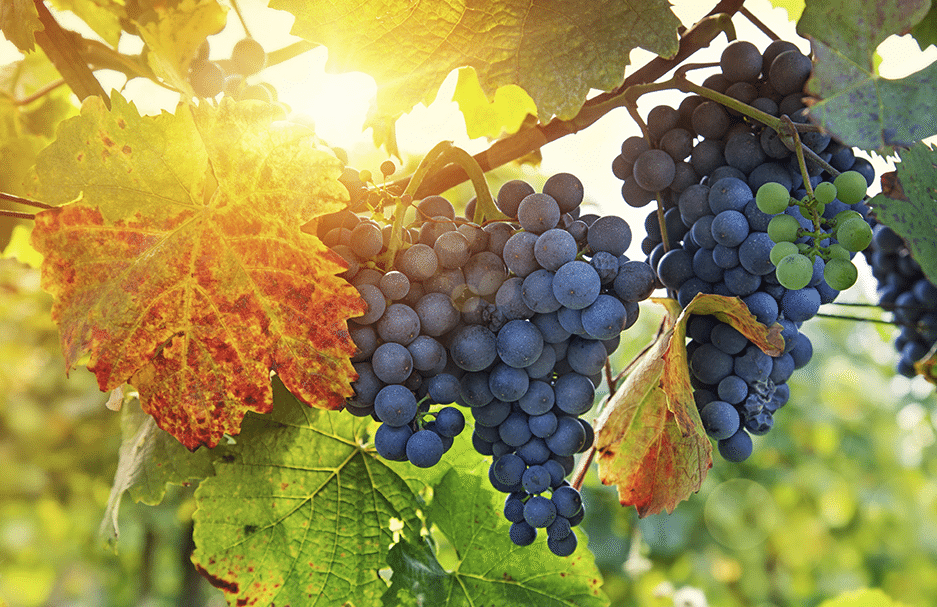
Part of the lure of home winemaking has always been getting some wine on the cheap. And as long as you don’t charge for your own time, there’s nothing cheaper than picking free grapes.

Traditionally, the home winemaker’s standby was “second crop” grapes. Most grapevines produce two clusters at the base of each new shoot. After these have been picked and trucked off to the winery, however, vigorous vines are free to plump up a secondary crop of tiny clusters farther on down the shoot. They may be just a few berries each, and it can take hours to glean enough for a few gallons of wine.

“In my experience, Zinfandel and Charbono are the best for second crop,” says Vince Tofanelli, who grows some of the last such “heritage” varieties in the Calistoga area. “Given a long growing season, those little bunches can make for a very nice table wine.”

But don’t go knocking on Tofanelli’s door. His son-in-law has dibs on the second crop—and even then, he has to share with an Italian family that’s been gleaning the vineyard for the past 35 years.

“Second crop is probably not as big a deal as it was 30 years ago,” says Nancy Vineyard (yes, that’s her name), co-owner of Santa Rosa’s fermentation outfitter The Beverage People. Time was, Vineyard says, when home winemakers just waited until after harvest and then moved in to pick it. “But that has completely changed.”

Diligent growers are trimming excess crop to enhance the quality of the first crop. Many home winemakers are now farming their own hobby vineyards and selling excess crop to others. The Beverage People keeps a binder of free listings, with grapes mostly offered at market price, from $1 to $4 per pound. The price tends to drop as it gets closer to harvest time.

Vineyard pays at least $2 a pound for Pinot Noir from a grower down the road to make what she calls “end of the road Pinot.” That’s a lot of cash to make a barrel of wine, which takes more than 700 pounds of grapes to fill. But it’s still under $5 a bottle. “And this is the stuff that you buy for $40 or $50 a bottle,” Vineyard says. “This isn’t Charles Shaw.”

If you can’t find grapes, the North Bay provides plenty of free harvest opportunities for making blackberry wine—providing that time is no constraint. “People who want to pick blackberries are very committed,” Vineyard says.

The Beverage People, 1845 Piner Road, #D, Santa Rosa; 707/544-2520; thebeveragepeople.com.


Food & Drink: Chasing morels

by Tanya Henry

“Everyone has that hunter-gatherer instinct,” says Kevin Sadlier, who has been foraging for wild mushrooms for nearly 20 years. But before he began chasing morels, Sadlier was a chef at the Pier House Restaurant in Key West, Florida in the ’80s.

Sadlier then moved to California and began managing Sloat Garden Center in San Francisco. Eventually, he decided that he wanted to open his own nursery and earn a better living. In 1997 he moved to Marin and opened Green Jeans Garden Supply on Redwood Highway in Mill Valley. Eighteen years later, Sadlier and his wife Xander Wessells run the business and employ between 6 and 10 people.

It’s obvious from Sadlier’s inviting and beautifully designed roadside nursery that he’s committed to his work. But get him talking about mushrooms, and it’s clear that that is where his heart is.

“I pick year-round,” says the enthusiastic forager, who will travel to Colorado in August during monsoon season and search for porcinis, Idaho and Montana in the spring for morels and Oregon in September and October for matsutakes, lion’s mane, porcinis and golden, blue and white chanterelles. From late fall to spring, Sadlier stays closer to home (the Sierras), and almost all of his carefully planned hunts take place on privately owned land where property owners allow him access.

“Foraging used to be elitist—kind of like golf,” he says, acknowledging that it has become much more mainstream. But it’s not just the hunt that offers the thrill for Sadlier—it’s the entire process. He does his research, studies maps, interprets the environment (weather, trees, rain, fire, etc.) and then sets out.

Sadlier, who sells his fungi at his nursery, prides himself on cleaning the mushrooms that he finds in the field. He uses an Italian-made mushroom knife to clean the dirt off and carries the mushrooms in paper or cloth bags to allow them to breathe. He picks as many as he can find (generally between 30 and 40 pounds), leaving none behind. “I’m greedy,” he says. “If someone wants the same mushrooms I find, they should get there before me.”

Over the years, Sadlier has developed relationships with select local chefs—Bruce Hill and Jared Rogers from Picco and Molina’s Todd Shoberg—who look to him for his fresh hauls of porcinis, morels and chanterelles.

Don’t be surprised if the next wild mushrooms enjoyed at a favorite local restaurant were expertly foraged, cleaned, transported for miles and delivered to the chef by none other than Kevin Sadlier.

When Sadlier is not foraging for culinary mushrooms, he can be found at Green Jeans Garden Supply, 690 Redwood Highway, Mill Valley; 415/389-8333; greenjeansgardensupply.com.

Film: A bug’s life

0

by Richard von Busack

In Ant-Man, set in San Francisco, scientist Hank Pym (Michael Douglas) must keep the shrinking suit he invented back in the ’60s, which he believes is too dangerous, out of the hands of his former employers, S.H.I.E.L.D.

When Pym discovers that S.H.I.E.L.D. is duplicating experiments on the “Pym particle” formula, he hires burglar Scott Lang (Paul Rudd), just released from San Quentin, to steal the new iteration of the ant-suit. Called the “Yellowjacket,” a bee-size carapace equipped with tiny lasers, the rival suit is the perfect instrument for surveillance and assassination. It will take a village of ants, led telepathically by a pea-size hero, to steal back this terrible weapon.

Ant-Man has to negotiate a narrow path between honoring superhero conventions and avoiding clichés. And for the most part, it delivers what was promised, as well as a few surprises: a fall through the cracks in the floors of a Tenderloin tenement; an itty-bitty fight atop a speeding toy train; and a journey deep into the heart of matter itself, featuring psychedelic chrome doodads that pop out of the ether in 3-D.

Director Peyton Reed sets up the movie as the story of a parallel set of fathers levered into action by their daughters. Lang has to turn to crime to pay child support for an adorable daughter with two front teeth missing; Pym quarrels with his restless 30-something offspring, Hope (Evangeline Lilly). She’s bitter, with the full wrath of a would-be superheroine whose father won’t let her wear the amazing ant-suit.

There are multiple in-jokes tying this film into the entire Marvel Studios roster. Hearing of the villain’s plot, Lang says, “I think our first task is to call the Avengers!” When one of his pet ants is killed, Lang threatens the villain with a wee fist: “You’re going to regret this!”

This movie about shrinkage has a nice sense of proportion.

Advice Goddess

by Amy Alkon

Q: I was engaged to a woman 20 years ago. We were in college and in our mid-20s. I realized that I wasn’t ready to get married and called off the engagement. I loved her and wanted to stay with her, but she broke off the relationship. I’ve had relationships since then, but I still regret not marrying her. She’s married now, and I shouldn’t even be thinking about her so many years later, but I can’t seem to shake the loss of her. How do I get her—and, moreover, the regret—out of my head?—Stuck

A: The reality is, you’re the envy of a number of people—like those who ran up $80,000 in legal fees battling for joint custody of the suede sectional and are now working as a manservant for their divorce lawyer while living in a tent in his backyard.

You’ve got a bad case of the “coulda shouldas,” which, in psychology, is called “counterfactual thinking,” as in thinking “counter” to the actual “facts” of what happened. It’s basically a mental redo of the past—imagining what could have been. There’s healthy counterfactual thinking—using how things turned out as a reminder to act differently in the future. Also healthy is recognizing that things could have turned out worse, like with all the divorcey fun above, plus having to borrow your kids like library books on alternate weekends.

The unhealthy kind of counterfactual thinking is what you’re doing—setting aside the now to obsess over how great things surely would have been, “if only … ” Never mind how pointless this is, considering that the closest thing you own to a working time machine is probably a battery-operated cuckoo clock that your grandma gave you.

And never mind how this woman is forever 24 in your head—preserved like a bug in amber at the peak of her hotitude—and never does things those pesky real women do, like nagging you to fix that broken thingie until your head is about to explode all over the kitchen wallpaper.

You can get out of Regretsville. You just need to have a funeral for your relationship. And yes, I know this sounds like a ridiculously hokey stunt, but more and more, researchers are finding that the physical is tied to the psychological—like that physical acts of “closure” lead to psychological closure and that treating thoughts as physical objects makes them as disposable as objects. In a study by psychologist Pablo Brinol, participants who wrote down troubling thoughts and then ripped them up were found to have “mentally discarded them” and actually experienced relief. Following their lead, put this behind you psychologically by doing it physically: Write down what happened. Burn the paper in a dish. Maybe do a little ceremony. And then scatter the ashes as you would those from Fluffy’s urn.

And, finally, have a little compassion for yourself. OK, so it’s best not to follow up, “Will you marry me?” with “Uh … take-back!” But you were young and probably immature, and you realized that you’d gotten yourself in over your head. And to your credit, you had the guts to admit that you weren’t ready, unlike all the people who come to the realization that they aren’t, but go through with the wedding anyway. (“Who’ll join me in a toast to ‘miserably ever after?!’”)


Q: A good male friend (going back 20 years) is a great guy—fiercely ethical and very kind—and is irate about the jerks I’ve been out with recently. He has two guy friends he thinks I’d like. Is it safe to assume that they’ll be cool/respectful because this is coming through our mutual friend? (I figure it can’t be worse than truly blind dating online.)—Jerk Magnet

A: A friend who cares about you wouldn’t knowingly put you together with jerks—which would be like recommending a prospective tenant to his landlord with, “He just wants a quiet, safe place … ” and neglecting to mention “… where he can pursue his hobby of balcony chicken farming.”

And the good news is that a good guy is likely to have friends “of a feather.” Studies by psychologist J. Philippe Rushton suggest that we have a genetically driven preference for both mates and friends who are similar to us—especially in age, ethnicity and educational level, but also in opinions and attitudes. So, if this guy likes and respects women, there’s a good chance that his friends do, too. But a “good chance” is not the same thing as an “ironclad guarantee.” In other words, go in with your eyes wide open, because it’s still largely a gamble; it’s just less likely that your friend will be all, “Found the perfect guy for you. We all call him ‘B’—because it’s easier than saying ‘Beelzebub.’”

Letter: ‘It would be proper to acknowledge … ‘

Recognition due

Dear Editor,

I enjoyed your article on the new Mountain Bike Hall of Fame, in Fairfax (July 1), and which I visited several weeks ago!

Without taking anything away from the wonderful history of the sport in Marin, I feel some recognition should be given to the parallel development of mountain biking in Colorado. The mountain towns of Crested Butte and Gunnison teamed with eager and creative riders adapting Schwinn “paperboy” frames, in order to hit the trails.

As a matter of fact, the Original Mountain Bike Hall of Fame was founded in 1988 by Carole Bauer, along with Tim Blewett and Dave Lindsay, IN Crested Butte, Colorado.

In 1998, Carole left the Hall of Fame to Linda Hall and Kay and Don Cook, who maintained the Hall in Crested Butte; until they generously consented to the recent move to Fairfax.

It would be proper to acknowledge Crested Butte as ONE of mountain biking’s birthplaces, and to credit it with founding the original Hall of Fame.

Kind regards,

Laurie Fossier-Mills, Sausalito

This Week in the Pacific Sun

0

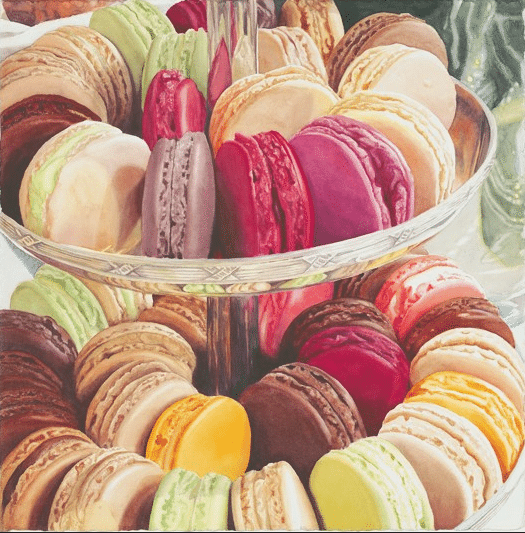
Screen Shot 2015-07-22 at 12.23.33 PMThis week in the Pacific Sun, you’ll find our Food & Wine issue–containing stories about off-the-beaten-track food, second-crop grapes, mushroom and seaweed foragers and a contemporary art gallery dedicated to representing art about food. On top of that, you’ll find an interview with Ziggy Marley (who will be playing in Sonoma next month) and a Best Bet on the Far West Fest–coming to Point Reyes this weekend, and featuring headliner Ozomatli. All that and more on stands and online today!

Upfront: Mist opportunity

by Ellen Shehadeh As California faces unprecedented drought, people are finding ways to conserve water. Some methods—installing graywater systems or water-efficient appliances—are expensive and labor-intensive. Enter fog catchers, a low-impact, low-tech system that requires no pumps or electricity, is easy to set up and has minimal equipment requirements. For as little as $75 (or as much as $200), you can have...

Arts: The nostalgia of food

 by Molly Oleson “You’re tall—watch your head,” warns Jennifer Carden, as she leads me into the tiny Aristocrat camper that’s parked on her front lawn in Novato, and which has been gutted, renovated, painted a sparkly bluish-green with a tangerine-colored door and dubbed “Teal Thunder.” Inside, small works of art—all food-themed—line the clean white walls. “We’re calling it a mini gallery,” Carden...

Music: Ziggy Marley speaks

by Haley Bollinger Reggae star Ziggy Marley plays the Sonoma Mountain Village Event Center in Rohnert Park on Aug. 12, with Steel Pulse opening, as part of his Fly Rasta Tour. We spoke with him about the tour, his music, organic food, love and ganja. What are you looking forward to about your North Bay show? I’m very excited about coming up...

Hero & Zero: A star catcher and a name discrepancy

hero and zero
by Nikki Silverstein Hero: Was that Buster Posey in the Giants stands who caught a foul ball headed straight for a fan’s noggin? Nope. It was that equally talented 10-year-old San Anselmo kid who put it away and saved his distracted father from a heck of a headache. John Pizzi, Jr. wore his glove and was on alert at a...

Wine: Scavenged poetry

by James Knight Part of the lure of home winemaking has always been getting some wine on the cheap. And as long as you don’t charge for your own time, there’s nothing cheaper than picking free grapes. Traditionally, the home winemaker’s standby was “second crop” grapes. Most grapevines produce two clusters at the base of each new shoot. After these have...

Food & Drink: Chasing morels

by Tanya Henry “Everyone has that hunter-gatherer instinct,” says Kevin Sadlier, who has been foraging for wild mushrooms for nearly 20 years. But before he began chasing morels, Sadlier was a chef at the Pier House Restaurant in Key West, Florida in the ’80s. Sadlier then moved to California and began managing Sloat Garden Center in San Francisco. Eventually, he decided...

Film: A bug’s life

by Richard von Busack In Ant-Man, set in San Francisco, scientist Hank Pym (Michael Douglas) must keep the shrinking suit he invented back in the ’60s, which he believes is too dangerous, out of the hands of his former employers, S.H.I.E.L.D. When Pym discovers that S.H.I.E.L.D. is duplicating experiments on the “Pym particle” formula, he hires burglar Scott Lang (Paul Rudd),...

Advice Goddess

advice goddess
by Amy Alkon Q: I was engaged to a woman 20 years ago. We were in college and in our mid-20s. I realized that I wasn’t ready to get married and called off the engagement. I loved her and wanted to stay with her, but she broke off the relationship. I’ve had relationships since then, but I still regret not...

Letter: ‘It would be proper to acknowledge … ‘

Recognition due Dear Editor, I enjoyed your article on the new Mountain Bike Hall of Fame, in Fairfax (July 1), and which I visited several weeks ago! Without taking anything away from the wonderful history of the sport in Marin, I feel some recognition should be given to the parallel development of mountain biking in Colorado. The mountain towns of Crested Butte...

This Week in the Pacific Sun

This week in the Pacific Sun, you'll find our Food & Wine issue--containing stories about off-the-beaten-track food, second-crop grapes, mushroom and seaweed foragers and a contemporary art gallery dedicated to representing art about food. On top of that, you'll find an interview with Ziggy Marley (who will be playing in Sonoma next month) and a Best Bet on the...
3,002FansLike
3,850FollowersFollow