Feature: Off the eaten path

When it comes to putting together our annual food and wine issue, we often look to the bounty of local farms, ranches and vineyards for inspiration. And they are inspiring. But this time around we decided to look off the beaten path for foods and food experiences that range from the esoteric to the straight-up bizarre. So instead of farm-to-table, think far out–to-table.—Stett Holbrook

The Eye of the Fish

I had to eat that fish eyeball. I just had to.

Let me explain. I came up with a recipe years ago that’s proven to be a real hit, though it’s a challenging recipe to do on California’s beaches.

“Fish on a Rock” is the recipe, and it’s simple: Catch a fish and gut it. Do not remove the skin, or the head. Start a fire on the beach and place a big, flat rock on top of the fire. Wait for the rock to heat up, put the fish on top of the rock and cook the fish in the salty breeze as you do a sun dance or whatever.

Take a moment to enjoy your surroundings, and squeeze a lemon if one’s handy. Eat the fish as you commune with your inner Survivorman. Eat the whole damn fish.

One time, I was out on the beach cooking up a big porgy on a rock. Porgies are a kind of sea perch, wicked popular in the African-American community on the East Coast (“Fry it hard!”). These little scrappers are hella fun to catch—they’re in the same fish family as seabreams.

Problem is, California beaches just don’t have the variety of rocks you find in Montauk, N.Y., the mother country out on Long Island’s East End.

That’s a land carved out of departing glaciers, and as such, there’s wild variety of stones of various shapes and sizes that were left behind. So says Walt Whitman: “Even to my unscientific eyes there were innumerable wonders and beauties all along the shore, and edges of the cliffs. There were earths of all colors, and stones of every conceivable shape, hue, and destiny . . .”

Alas, Fish on a Rock may not work here—we’ve got crumbly sandstone, volcanic rocks, not much else on our beaches, at least insofar as I’ve experienced them. Fish on a Surfboard won’t work, and anyway, for the most part, you’re not supposed to be lighting a fire on the beach. I suggest you tote an iron skillet to the beach to compensate for the lack of stones.

Picture this. It was a fine late-summer afternoon, the porgy was roasting on a rock, and the porgy eyeballs started to bulge as the white fish-flesh sizzled.

The eyeballs started to speak to me, like that freaky mounted fish from The Sopranos.

They demanded that I eat them! It was a craving such as one might have for a pint of Ben & Jerry’s, but this wasn’t no Phish Food.

I fashioned some chopsticks from beach reeds and kept staring at that eyeball, flipped the fish over and stared at the other.

It was eyeballing me!

I ate the fish fillets, carved out the cheeks—and then moved on to the eyeballs.

They weren’t bad; in fact they were quite tasty: salty, squishy, heavy with a fish-fat fishiness—and the trick, I’ve learned, is to let the eyeball linger on the tongue before it slithers down yon gullet.

The idea is that you want to extract the micro-burst of fish-fat flavor. If that triggers your inner ewww, I suggest you think happy thoughts about oysters and other enjoyably slippery things. Activate your inner Anthony Bourdain, close your eyes, and go for it.—Tom Gogola

Call of the Wild

In Barbara Kingsolver’s Animal, Vegetable, Miracle, she and her family commit to eating only what they can grow and source locally. Given their homestead in southern Appalachia, that means going without many warmer weather crops. To make it a bit easier, they each get to choose one food from afar they can’t do without—coffee, bananas, pineapple . . .

If it were me, I’d have a hard time choosing my one imported food. I love avocados. And chocolate. And coffee. But if push came to shove, and peak oil peaked out sooner than predicted and cargo ships and trucks could no longer make it here, I think I’d be OK. Kevin Swift clued me into a local source for those foods, or at least an approximation of them: the California bay laurel tree.

Swift lives in Occidental and is a wild-food forager with a fondness for the aromatic and ubiquitous bay laurel. The leaves are good for seasoning pasta sauce, and the seeds are an underappreciated source of food, one used by local Pomo and Miwok indians for millennia.

It takes a bit of work and proper timing, but it’s possible to make “chocolate” and “coffee” from the pods. The trees are related to the avocado, so it’s even possible to make an analogue of guacamole from the seed husks. And like chocolate and coffee, food from bay trees packs a caffeine-like buzz.

The time to gather the seeds is about four to six weeks from now. You want them when they start to fall to the ground. Bay seeds are about as big as marbles and quickly turn from green, to yellow, to purple and to black mush. You want them in the purple stage.

“They are very ephemeral,” says Swift.

Once you find a suitable source, remove the flesh to expose the shell. Raw, the nuts are exceedingly astringent. But roasted for 20 to 30 minutes at 250 or 300 degrees and then shelled, they lose their bite and go from nutty to chocolate-y to coffee-y.

Grind them up with a little sugar and milk, and you’ve got homegrown, homemade chocolate. But be careful how much you eat.

“It definitely has a buzz in it,” Swift says.

Coffee is trickier because the nuts are so fatty and oily, but devotées say you can put the ground nuts in a French press and brew as you would a good Ethiopian yirgacheffe.

The bay nut can be pickled, too. Last month, Swift pickled a batch of nuts in their immature green stage. They turn out like cocktail onions, he says—cocktail onions with a coffee-like buzz.

Swift says he prefers taking to the woods than going to the grocery store for food.

“I’d rather look for what’s around me,” he says. “There’s so much deliciousness in our backyards.

We just don’t look for it.”—Stett Holbrook

Sea Farmer

Heidi Herrmann co-owns Healdsburg’s 1.5-acre Strong Arm Farm. She used to make the rounds of local farmers’ markets, but found that selling carrots and lettuce yielded too little money for the effort. Now she focuses on growing more lucrative crops like tuberose lilies for wholesale markets. She’s carved out a niche for another crop that has proven to be profitable as well. She doesn’t even have to grow this one, because it’s seaweed.

Herrmann, who teaches sustainable agriculture at Santa Rosa Junior College, is a commercial seaweed harvester on the side. About 10 times a year, when the tide is particularly low, she dons rain boots and an

Heidi Herrmann, co-owner of Strong Arm Farm, is a commerical seaweed harvester.

external frame backpack and picks her way across the rocky reefs north of Jenner in search of nori, kombu, wakame and a few other species of seaweed. After hauling the sea vegetables up from the shore, she rinses and dries the seaweed and bags it up.

The kombu adds a rich, umami flavor to soups and stews. Wakame is great toasted and eaten by itself or added to salads and soups. Nori, the seaweed used to wrap sushi, is best toasted and crumbled over salads and vegetables.

Given the demand, Herrmann could harvest more, but she wants to keep her operation small.

Keeping the business small keeps it fun, she says. She doesn’t surf or fish, so gathering seaweed gives her a connection to the ocean.

“Many people have done this before,” she says. “It feels part of a continuum.”

Herrmann enjoys gathering an ancient food that requires a degree of risk and more than a little hard work. She gathers about 250 pounds of wet seaweed on each outing.

“You’ve got to lug it out. There are dangers. It’s slippery. There are urchins. I like that it’s not easy.”

And unlike farming, there’s no weeding or planting required.

“I let the ocean do the work.”—Stett Holbrook

Herrmann is leading a sunrise seaweed-gathering outing with Forage SF on Aug. 1 that includes a presentation and meal featuring local seaweed at the Jenner Inn the night before. Go to foragesf.com/seaweed-foraging for more information.

Berry Good

The goji berry tree became known across the Pacific Rim thousands of years ago for its nutritional value and sweet taste. Asian immigrants first brought the hearty shrub, Lycium barbarum, to California 200 years ago. These days, the goji berry is touted as a superfood, and now Goji Farm USA is growing the plants in Sonoma County.

“There’s no aspect of this plant that isn’t highly nutritious,” says founder and CEO Tibor Fischl. The Santa Rosa resident and outdoor enthusiast, who, among his other credits, co-invented the world’s first full-suspension mountain bike 20 years ago, has moved into food production with the same focused attitude.

These days, the gogi berry is touted as a superfood.
These days, the goji berry is touted as a superfood.

Goji Farm USA produces a beverage called Goji Phyto-Brew from berries and seeds that are roasted, ground and brewed as an organic tea. “With the roasting and milling, we got so much more of a concentrated impact of the gojis than anything else we could do,” says Fischl.

For the past three years, Fischl has sourced his berries from organic farmers around the country. More recently, Fischl teamed up with Jay Jensen at NovaVine, a family-run propagation farm in the hills just east of Santa Rosa. The farm specializes in growing grape-vine stock, for wineries, and now goji berries.

The current goji crop of 550 “mother plants” is predicted to top a quarter of a million within a few years.

Available in the North Bay at retailers like Whole Foods and Pacific Market for about $4, the slightly tart and earthy tea is refreshing and has a mildly uplifting effect.

Unlike caffeinated or sugary beverages, the anti-oxidant and vitamin-rich drink offers a natural alternative to powering through the day. The tea is reportedly high in “oxygen radical absorbance capacity” and is touted as a way to combat free radicals, which cause aging and illness. The tea is also very high in folic acid and vitamin B6, two key nutrients.

“But the biggest test of the beverage is how you feel when you down one of these bottles,” says Fischl.

The roasted quality of the tea, best consumed chilled, offers a complex natural berry flavor. “It’s a really rich beverage, almost like a goji espresso,” says Fischl.

Goji Farm’s next harvest is set for this fall, and to celebrate, they are throwing a harvest party on Oct. 9. For more information, go to GojiFarmUSA.com.—Charlie Swanson
Horoscope: What’s Your Sign?

by Leona Moon

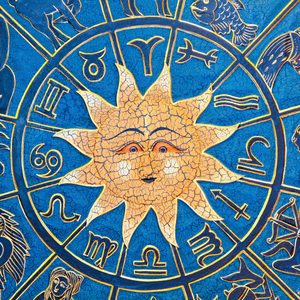
ARIES (March 21 – April 19) Leave your hair how it is, Aries! Venus goes retrograde on July 25 until Sept. 6—leaving you with a block of time when you’ll have to suffer through those split ends and stray grays. It’ll also be a good time to reflect on your spending pattern, as Venus rules all things luxury.

TAURUS (April 20 – May 20) Sign on the dotted line, Taurus! If you’re about to cut a deal with a company you’ve been working on a project-by-project basis with for many years, make sure to cross your T’s and dot your I’s on July 22. The sun and Saturn are teaming up to guarantee that you and your John Hancock get the best deal possible.

GEMINI (May 21 – June 20) Romance is in the air, Gemini! It certainly isn’t on your Tinder app. Take a short vacation on July 25—driving 100 miles down the coast might do the trick. A new area code is just what you need to meet the perfect stranger at a diner—one who digs your corny jokes, or to get a change in scenery in your Tinder app’s 50-mile radius.

CANCER (June 21 – July 22) Trying to make a move, Cancer? Sure, the new moon in your sign last week had you contemplating every aspect of your life, but we’re talking about that waterfront property, complete with a water trampoline and wine cellar. Whatever deals you may be involved in when it comes to refinancing, selling or renting out your space, you’re going to have to resume at a later date—like in October.

LEO (July 23 – Aug. 22) Put the box down and back away from the ring, Leo! Venus is retrograde as of July 25, which means that it’s not time to get engaged. If you’re thinking of popping the question to your beloved, think again—otherwise you’ll have to deal with a big, fat, awkward “No.” Your luxurious side will have to go into hibernation for a while. Think Netflix and pajamas.

VIRGO (Aug. 23 – Sept. 22) Get out your calendar, Virgo! It’s time to plan a date with your beloved. Love has been on the back burner and it’s time to throw a little surprise your significant other’s way. We’re not talking an “I love you”-in-the-sky kind of surprise—at this point, bringing him or her a cup of coffee in the morning might wake up the butterflies in his or her stomach.

LIBRA (Sept. 23 – Oct. 22) It’s time to reflect, Libra! Venus, your guardian planet, goes retrograde on July 25, which might make you feel like you’re stuck in a rut or that any personal growth may feel impossible. But, moreover, now’s the time to deeply examine your life and prepare to make some big decisions—like where you want to vacation in 2016, or what Netflix show to binge-watch next.

SCORPIO (Oct. 23 – Nov. 21) Money in the bank, Scorpio! Mercury and Saturn are the duo you can thank for all of the extra green showing up in your bank account. Expect an extra check or accidental deposit into your account on July 22. It couldn’t come at a better time—remember how much you owe your BFF for betting against the Warriors in the championship? Pay up!

SAGITTARIUS (Nov. 22 – Dec. 21) We know you love to party, Sagittarius, but now is not the time! Get-togethers are fine, but all-night ragers might land you or a beloved behind locked doors at the Marin County Jail. Venus goes retrograde on July 25, taking with it your flare for all things luxury. A cheese platter and bottle of red will do the trick to entertain your friends—you don’t need a bouncy house, slip ’n’ slide and a DJ.

CAPRICORN (Dec. 22 – Jan. 19) Do you hear that sound, Capricorn? What started as a slow clap turned into a rally. Your boss hasn’t been doing his job lately and your co-workers need a leader, so step up to the plate. Give a motivational speech on July 22.

AQUARIUS (Jan. 20 – Feb. 18) If you want a VIP’s approval, get it now, Aquarius! Time is ticking until Uranus, the planet of surprise, goes retrograde on July 26. Get your ducks in a line, be bold and ask for what you really want. Otherwise, you’ll be stuck in limbo until early 2016. Make a list, check it twice and hand it over to your boss.

PISCES (Feb. 19 – March 20) Really impressed with Kylie Jenner’s lips, Pisces? The plump-lip trend might not be going anywhere, but it’s not time to jump on board that ship. Plastic surgery is not in the cards for you until after the first week of October. Admire from a distance—unless you want to end up looking like Charro.

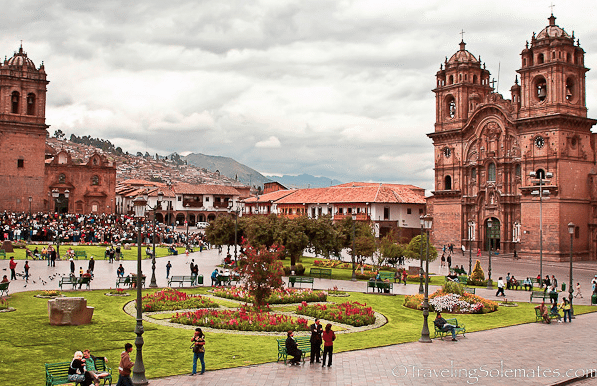
Trivia Cafe: What city in Peru was the administrative, political and military center of the Inca Empire, which reached its maximum influence in the 14th to 16th century?

For more trivia questions (and answers!) see Howard Rachelson’s Trivia Café every week in thePacific Sun.

Answer: Cusco, Peru

Letter: ‘It is a shame … ‘

Two sides to every story

I read Nikki Silverstein’s Hero & Zero article [July 8] about the security guard at Italian Street Painting Marin. I was emailed by five different people who felt the article unfairly depicted the situation. As founder of Italian Street Painting Marin, who has volunteered my time to produce the event for the past 3.5 years, I am also disappointed in the article.

If Nikki had actually taken the time to investigate the situation rather than only address Richard’s side, she would have realized that we were not letting any more people in the event area once it closed at 6pm, due to the beginning of the event tear-down. We have large trucks entering the site and tents, etc., to remove. This is a very dangerous environment, especially for children. Due to the potential danger, we told the guards at closing to not let anyone back into the event area until after all the tents and equipment were removed. We were also trying to get those within the event to leave, for this same reason. The way Nikki wrote this article was so very negative and it is a shame to have picked out this one incident to report on when she had no idea of what was going on or why the guard may have been acting as he did. All she did was take the word of Richard, and didn’t bother to check out the reasons for the temporary closure. Also, was there a witness to this incident other than Richard and his friends or family? Remember, there are two sides to every story.

Regards,

Sue Carlomagno, founder, Italian Street Painting Marin

Letter: Thank you!

Positivity

Thank you for the great article [‘Integrity in Baking,’ July 8]!

Teeny Cake, via Pacific Sun’s Facebook page

Letter: Respect

With all due respect

So Joe … “Seems a Bit Extreme” [Letters, July 8] indicates you are OK with the meme that piece of rag with “chosen colors” represents today (really, since the Civil War), for skinheads and haters, all ladies and gentlemen who bemoan the passing of an idyll that existed (and could still!) in the context of free labor. Neither the plantation owners nor industrialists are responsible for the way of life they enjoyed as much as the free and exceedingly cheap labor that provided it, the fruits of which we, and privileged folk especially, enjoy today.

Nostalgia, the nationalistic xenophobic impulse behind states’ rights (aka “our way is the right way of life”) requires the sort of short-sightedness that forgets who worked the “miracle” and the flag is a signal whether conscious or unconscious that its still OK to be blind to all that. It always comes with a plaintive defensiveness, hence “seems a bit extreme.” Sometimes it grows violently disgruntled, as paranoia seeps into the cultural DNA (Denial, on a National scale, of Avarice).

So next time we go to San Rafael Public Library, lets practice a balanced approach. Let’s think of the Ludlow miners when we thank Andrew Carnegie, shall we? And let’s stop pretending the “old ways” hold any more promise for most of us today than they did for the vast majority of confederate dead, fooled into thinking they could keep their land (and hard-scrabble existence) if they fight for the landlords and win the south for them.

From Marin, with all due respect,

Anonymous

Letter: ‘Why on Earth … ‘

Hardly heroic

Joe Bialek’s letter as well as Nikki Silverstein’s “Hero” were complete drivel [July 8 issue]. Well, mostly drivel, as Bialek’s assertion that the taking down of the Confederate flag is ultimately irrelevant was, unfortunately, correct.

Mr. Bialek seems to have no understanding that some gun owners enjoy target shooting at gun ranges, hand loading ammunition for optimal accuracy, clay pigeon shooting with shotguns, or for competition. That all mentally ill Americans should be denied their 2nd Amendment rights is a gross oversimplification and quite offensive. Should a person diagnosed with depression and no history of violence be at the mercy of their attacker(s) in the event of a home invasion? All the recent anti-gun rhetoric is completely out of control. Although much less publicized, take a look at the case of Carol Browne. Had the New Jersey resident been able to obtain a handgun, her unfortunate death may well have been prevented. Alas, draconian gun laws in that state require a lengthy process, and her restraining order against an ex-boyfriend in addition to  increased surveillance did nothing to protect her. I am in agreement with most left-wing political goals, but liberalism is quite inimical to all sides and seems to ultimately result in little more than solipsistic whining, bitching, and moaning. We could all could use less of it, everyone.

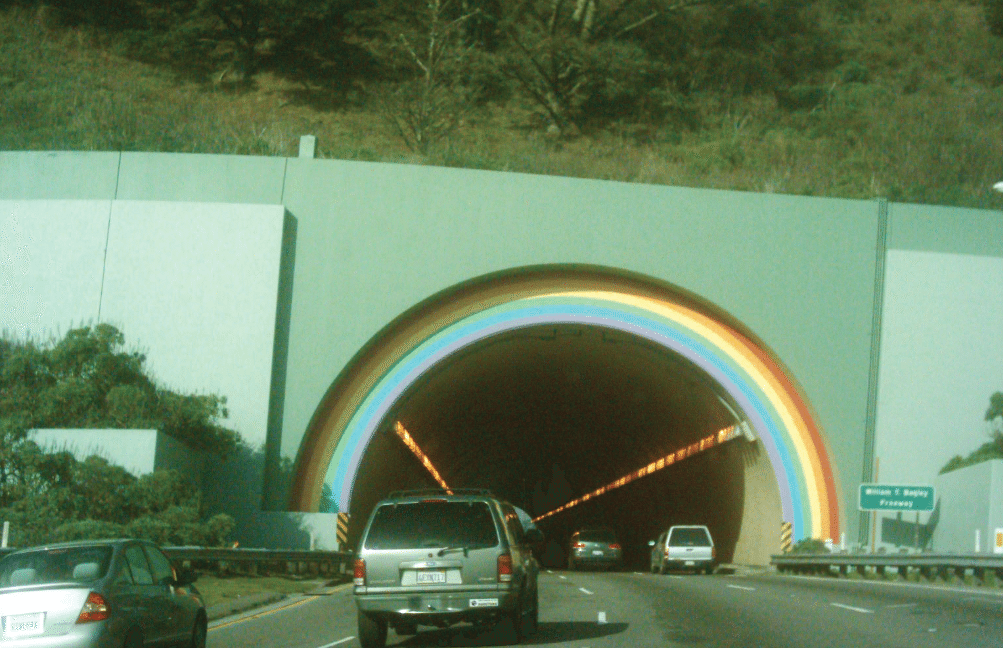
Why on Earth is Julie Wainwright a “Hero” for obtaining signatures to change the perfectly succinct and logical name of the Waldo Tunnel to the Robin Williams Tunnel? Although everyone was initially upset about his suicide, hasn’t anyone given some thought to the fact that the wildly overrated comedian hadn’t appeared in a decent movie since 1997’s Good Will Hunting?

Is this really the best Nikki Silverstein could come up with? Jesus Christ, that’s just pathetic! Not too long ago, I helped a diabetic old woman carry her bags to a clinic so she wouldn’t collapse before reaching her destination. Since I was not busy, I just felt a duty to help someone. Hardly heroic, but far better than the arbitrary and completely unnecessary renaming of the rainbow-painted tunnels at the Southern Marin entrance and exits. Wainwright is far more a “Zero” in reality.

Tony Good

Letter: ‘To be clear … ‘

Check the facts

Recent articles and blogs have totally mischaracterized my investment in Colony American Homes (CAH) and the role the single-family rental industry has on housing today.

To be clear, I am a small limited partner in one CAH fund and, as such, I am a passive investor with no control over any of CAH’s business decisions.

That said, the comments made about Colony American Homes and other investors in single family homes for rent are totally false and inflammatory. The investments are removing distressed inventory from the market, which has been depressing home prices. Many of these homes being purchased were foreclosed years ago, and had become a blight on neighborhoods. Instead, the investors rebuild communities and provide jobs. And they allow families who cannot buy or prefer not to, to stay in the communities they want. The average renter stays for five years.

Finally, the homes being purchased by CAH and other investors are typically all-cash investments so they are not crowding-out other buyers; most homes purchased are not even on the open market.

Readers would be better served if the authors had bothered to check the facts about my investment and the positive role institutional investors are having on the housing market.

Richard Blum[in response to ‘Homewrecker,’ July 8].

Editor’s Note

The Pacific Sun stands by the ‘Homewrecker’ story.

Food & Drink: Jonesin’ for bacon

by Tom Gogola

Rolling through the North Bay a couple of weeks ago was my old friend Jones—my first journalism mentor from when I worked at an alternative weekly in Albany, New York. He was the state columnist back then, covering that dirty old capital city in the late 1980s, and I was the cub reporter fresh out of college with a head full of Gonzo and rather long hair.

Jones planned to toot over on the ferry from Oakland to San Francisco to Sausalito on his way to Oregon, and he called to suggest that we meet up at Fred’s Place, a diner-style breakfast and lunch joint near the anchor-outs in Sausalito. Jones knew the place from the 1960s—he has connections and friends all around the Bay Area.

Sounded great to me. I bounced over the mountain from Bolinas in the morning and grabbed an inside stool, coffee please and what’s the Wi-Fi password? I cranked out some copy and checked out the scene at this smallish corner outpost.

The kitchen crew was dominated by cheerful Latinos working the line, big loads of hash browns were smoldering on the grill and a generally well-heeled bustle of families, loners, regulars and weirdos came and went. Fred’s reminded me right away of a place like Marin Joe’s: They wear the old-school well.

The menu is dense with the expected offerings of a joint such as this: All of the usual diner stuff, all of it a little on the upscale end. This ain’t no dive joint with Angry Eddie dumping his Lucky Strike ashes into your Denver omelette.

You’ve got a whole selection of eggs-with to choose from, beaucoup burgers on the bun and salads in several incarnations. One standout item was a house specialty of the artery-annihilating variety that we’ll save for next time: Deep-fried French toast, known as Fat Fred.

Here’s a suggestion: Go to Fred’s, shut up about your health and order the “Millionaire’s Bacon” with whatever it is that you’re getting. Jones and I both ordered a heap of eggs, hash browns drizzled in a super-rich Hollandaise, some juice and coffees, one decaf, one not. Breakfast was rounded-out with some chewy pads of sourdough toast and a side of the bacon, about which more shall be revealed momentarily.

Our meet-up reminded me of a persistent, specific food memory that Jones is a part of. One time we met up at a place in New York that’s no longer there, called West Side Stories—an upscalish diner of the standard-issue variety, with mauve tones and vaguely delicate cup-and-saucer sets on the tables.

All of these years later, and it must be 25 of them, I can still recall, in exquisite detail, the robust flavor of the cup of coffee I ordered that morning. I have several memories like this: Recollections of a basic food or drink pegged to a specific encounter with the item. There has to be a word for this phenomenon, but I don’t know what the hell it is—Proustian recall?

I asked Jones as we lit into our eggs if he thought that there was a word for this and he came up with “transcendence.” He’s onto something. And speaking of, this being Fare Thee Well country, we talked about the Grateful Dead and the great times we had seeing the band in Albany back in 1990—those shows wound up on a popular three-disc set, Dozin’ at the Knick.

We finished our meal and ambled over to my car, which has seen better days. Jones had an afternoon meet-up with friends in Santa Rosa, and I had a story to write and a red-eye to catch in San Francisco that night. It would be a hectic day and that sturdy breakfast would come in handy. The only way out is through, they say, to which I would only add: through bacon.

I had to tell Jones that the front passenger window of the Grand Marquis was broken (my damn dogs did it), so the ride to Santa Rosa would be a little breezy. My tires are getting worn down, again, and the radio still won’t work. I started the car and it occurred to me that maybe Jones and I will never be millionaires, but we can still eat us some Millionaire’s Bacon, and hope for the best.

I reminded Jones that he provided me with a mantra many years ago that I still say to myself on occasion, or at least once a day when The Worry takes hold: Nothing bad will happen.

Jones had a key role in another of these persistent memories around food and drink. Way back when, he hooked me into a community of East Coast radicals who head up to Adirondack Loj in upstate New York every Labor Day for a three-day campout.

One year I was up in the mountains solo for a few days before the Labor Day festivities. It was a weird trip because of what was going on some 1,500 miles away: Hurricane Katrina. My late aunt was then living in the outskirts of New Orleans and had evacuated to northern Louisiana with her friend Big Pam, but I couldn’t reach her for days.

Wouldn’t you know it but the raggedy, howling remnants of Katrina blew through the campsite one night, along with the largest raccoon I had ever seen—before I moved to Bolinas, that is.

One morning I got up and hiked Mount. Marcy, the highest peak in New York at 5,343 feet. That’s not saying much in the face of California’s epic peaks, but fans of the writer Russell Banks will know Mt. Marcy as Cloudsplitter. This is John Brown country, and Cloudsplitter is Banks’ novelistic paean to the late abolitionist. The John Brown Farm is nearby, in the shadow of a training ski jump installed for the 1980 Winter Olympics. Go U.S.A.!

Anywho, it was a long, satisfying day on the trail, and at the end of it I went to the camp grocery store for a 16-ounce Coke. I stood outside the store and slugged it back—and now that I’m kicked back in my chair with the memory, I can still remember exactly how that Coke tasted. It tasted goooooood.

Transcendence indeed. Jones showed up for the weekend camp-out a day or two later, and I remember eating a lot of pie. My aunt popped up in my phone messages—she was fine, but her car was trashed by Katrina. Nothing bad will happen.

My occasional meetings with Jones still have a familiar and grounding arc to them, and I couldn’t be more grateful for an old friend like him.

Doesn’t matter how many years go by. Our meet-up at Fred’s was like every other one we’ve had over the years: We caught up on mutual friends and interests, updates on the family scene and pushed the enterprise forward: social justice of the unapologetic variety.

Jones is a real inspiration on that front. His wife is a vegetarian, but we are not.

You were wondering about the Millionaire’s Bacon? The stuff has been featured on the TV show United States of Bacon, so it’s basically a national goddamned treasure.

What’s in it? Applewood-smoked bacon baked for four hours with brown sugar, cayenne pepper, chili flakes and black pepper.

Unforgettable stuff, that.

Fred’s Place Coffee Shop, 1917 Bridgeway Blvd., Sausalito; 415/332-4575.

Upfront: In the dark

by Peter Seidman

Stinson Beach hotline cut

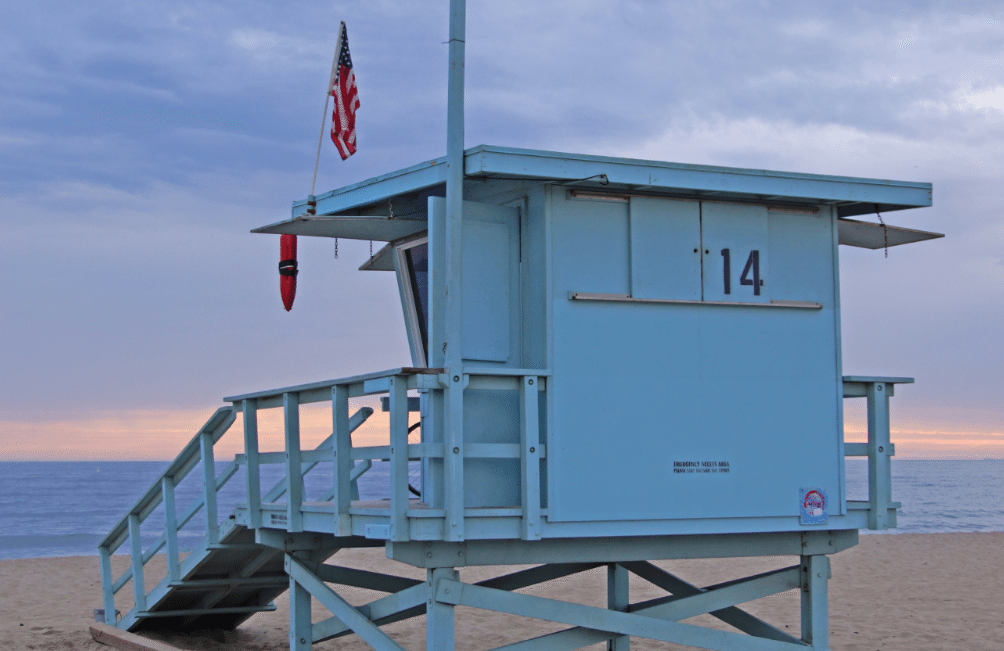
For as long as many people on the east side of Mount Tam can remember, the summer and fall beach and ocean activity season has been marked by a familiar routine: Wait until around 9am (sometimes later) and place a call to the lifeguard tower at Stinson Beach.

A telephone hotline with a recorded message would tell eager beachgoers the weather and wave conditions, as well as offer predictions about whether the fog would clear or the wind would increase in the afternoon.

Earlier this spring, though, callers to the line, which usually was hot from around March or April to around November, received a message saying that the hotline was shut down. The reason given was that due to a low volume of calls, no more weather and wave reports would be recorded.

That may seem to be a trivial circumstance to people who view a ride over Mount Tam to the beach merely as an occasional jaunt. But to dedicated beachgoers, and especially to committed wave-riders who live on the east side of the mountain, the information garnered on the hotline could mean a drive that paid off with big rewards or prevented a wasted trip. The hotline also could save motorists more than time. As gas prices rose, the cost of a round-trip drive to the beach from eastern Marin also increased. That could result in a not insubstantial expense for beachgoers used to making the Stinson drive two or three or more times a week. And for wave-riders, the information on the hotline helped make a decision about what spot would be best for a day on the ocean.

It looks as though the reason for the low call volume is that the general public didn’t know about the hotline, hence the low volume of calls. Dedicated surfers and other beachgoers, of course, knew about it and relied on it.

Rather than shut the hotline, another alternative could have been—and still could be—to do some marketing and let people know about the telephone service, if call volume must remain a determining factor. Even if only a relative few wave-riders and beachgoers call the line, it’s still a valuable service, especially in the case of a beach closure after a shark sighting or lack of parking on a hot summer day.

The line, at 415/868-1922, is still live, although no message gets recorded. Eager wave-riders receive just rings with no one home. So it seems that the cost of maintaining a telephone line isn’t the determining factor behind letting the hotline go dark.

The staff time needed to record a daily message during the summer season is minimal. The lifeguards at Stinson are part of the Golden Gate National Recreation Area. A spokesperson said that she had no knowledge about the status of the hotline. Considering the small effort to record a message, perhaps the national park bureaucracy could consider helping to reinstate the hotline.

The loss of the Stinson Beach report isn’t the only example of a decline in the possibilities for wave-riders and beachgoers to get information that would help them decide whether a trip over the mountain is warranted.

Proof Lab, the surf and skate and outdoor shop at Tam Junction, used to have a recorded telephone surf report, but like the Stinson report, the Proof Lab report has gone dark. Live Water Surf Shop in Stinson Beach doesn’t have an eyes-on-the-water daily report either.

That leaves one remaining option, which is especially helpful for surfers. The 2 Mile Surf Shop in Bolinas still has a daily-recorded report. But it’s Bolinas-centric. Good for surfers. Not so good for beachgoers with a Stinson destination in mind. Conditions for surfers in Bolinas can be dramatically different than for beachgoers who want to lie out in the Stinson sand. Still, at least for now and until and unless the Stinson hotline goes live again, the 2 Mile report is the only game in town. The number for the 2 Mile report is 415/868-2412.Y

San Anselmo park remains focus of flood-control objections.

Dissention shows no signs of abating in the Ross Valley, where a proposal to use a neighborhood park as part of a major flood-control project remains a meaty bone of contention.

Even a report issued earlier this year that predicted dire consequences in the Ross Valley if residents fail to agree on flood-control measures didn’t persuade San Anselmo residents to find common cause.

Opponents of a plan to use Memorial Park in San Anselmo as a temporary detention basin to hold floodwater remain adamant, and say that transforming the park would destroy a recreational asset beloved by neighbors and other residents in the town. They also say that the project would reduce property values during construction, cause unacceptable traffic congestion and leave the town with a generic-looking park rather than a homegrown community asset. In addition, they claim that a Memorial Park detention basin would retain a relatively small amount of floodwater.

Proponents of the idea, however, say that using Memorial Park as a detention basin would result in a project that actually could improve the park. Dueling statistics and some harsh accusations have flown from both sides.

A consultant’s review of the efficacy of the detention basin plan failed to satisfy objectors. Memorial Park remained high in a ranking system to determine the effectiveness of the basins. But in an example of what has become a relatively common occurrence in the county, objectors turned to the political system to stymie elected officials. They crafted a measure for the November ballot that would, if San Anselmo voters pass it, prohibit the town from using Memorial Park as a detention basin. The Town Council weighed in with a competing ballot measure.

Whether a vote of the electorate, with a process susceptible to campaign rhetoric and persuasion tactics, is the best way to craft a major flood-control measure is an open question. (The process echoes the progression of the desalination proposal, which voters managed to stall through a ballot-measure mechanism.)

Proponents of taking the flood plan to a vote say that it’s right that the electorate should decide what to do with their park. Opponents, however, say that rather than supporting a democratic process, those who favor going for a vote really are aiming their political ammunition at blocking the use of the park and putting a spike in the flood-control project.

In addition to the tactical questions, which are legitimate debate points, the Memorial Park contretemps highlights a continuing feeling of distrust that a significant portion of the Marin electorate holds for elected officials. The question of whether direct democracy or representative democracy is the best medicine for the county’s political body also has become a familiar, if unspoken, part of the wider implications involved in this and many other narrow issues facing the county and its cities.

The Flood Control Zone 9 Advisory Board decided recently to delay a decision about whether to include Memorial Park as an element in what’s called a Programmatic Environmental Impact Report (PEIR).

The report will look at the detention sites that remain on the list to determine possible impacts. In addition to the detention basins, bridge improvements and replacements, creek widening and other methods of improving water flow will be part of the study, which is expected to take about 18 months.

That’s another 18 months before an environmental report can even be put on the table—if objectors don’t slow the process through additional political maneuvers. It’s already close to 10 years since Ross Valley voters approved a ballot measure to raise funds for a comprehensive flood-control project.

Neighbors have every right to view a beloved local park as integral to their lifestyle and the atmosphere of their neighborhood. But as scientists predict a possible El Nino winter, which could bring rains similar to those in 1982, will San Anselmo residents be able to find compromises in a “We’re-in-this-thing-together” mode? Or will it be another decade or more before effective flood control comes to the Ross Valley?

Feature: Off the eaten path

When it comes to putting together our annual food and wine issue, we often look to the bounty of local farms, ranches and vineyards for inspiration. And they are inspiring. But this time around we decided to look off the beaten path for foods and food experiences that range from the esoteric to the straight-up bizarre. So instead of...

Horoscope: What’s Your Sign?

All signs look to the 'Sun'
by Leona Moon ARIES (March 21 - April 19) Leave your hair how it is, Aries! Venus goes retrograde on July 25 until Sept. 6—leaving you with a block of time when you’ll have to suffer through those split ends and stray grays. It’ll also be a good time to reflect on your spending pattern, as Venus rules all things...

Trivia Cafe: What city in Peru was the administrative, political and military center of the Inca Empire, which reached its maximum influence in the 14th to 16th century?

For more trivia questions (and answers!) see Howard Rachelson’s Trivia Café every week in thePacific Sun. Answer: Cusco, Peru

Letter: ‘It is a shame … ‘

Two sides to every story I read Nikki Silverstein’s Hero & Zero article about the security guard at Italian Street Painting Marin. I was emailed by five different people who felt the article unfairly depicted the situation. As founder of Italian Street Painting Marin, who has volunteered my time to produce the event for the past 3.5 years, I...

Letter: Thank you!

Positivity Thank you for the great article ! --Teeny Cake, via Pacific Sun’s Facebook page

Letter: Respect

With all due respect So Joe … “Seems a Bit Extreme” indicates you are OK with the meme that piece of rag with “chosen colors” represents today (really, since the Civil War), for skinheads and haters, all ladies and gentlemen who bemoan the passing of an idyll that existed (and could still!) in the context of free labor. Neither...

Letter: ‘Why on Earth … ‘

Hardly heroic Joe Bialek's letter as well as Nikki Silverstein's “Hero” were complete drivel . Well, mostly drivel, as Bialek's assertion that the taking down of the Confederate flag is ultimately irrelevant was, unfortunately, correct. Mr. Bialek seems to have no understanding that some gun owners enjoy target shooting at gun ranges, hand loading ammunition for optimal accuracy, clay pigeon shooting...

Letter: ‘To be clear … ‘

Check the facts Recent articles and blogs have totally mischaracterized my investment in Colony American Homes (CAH) and the role the single-family rental industry has on housing today. To be clear, I am a small limited partner in one CAH fund and, as such, I am a passive investor with no control over any of CAH’s business decisions. That said, the comments...

Food & Drink: Jonesin’ for bacon

by Tom Gogola Rolling through the North Bay a couple of weeks ago was my old friend Jones—my first journalism mentor from when I worked at an alternative weekly in Albany, New York. He was the state columnist back then, covering that dirty old capital city in the late 1980s, and I was the cub reporter fresh out of college...

Upfront: In the dark

by Peter Seidman Stinson Beach hotline cut For as long as many people on the east side of Mount Tam can remember, the summer and fall beach and ocean activity season has been marked by a familiar routine: Wait until around 9am (sometimes later) and place a call to the lifeguard tower at Stinson Beach. A telephone hotline with a recorded message...
3,002FansLike
3,850FollowersFollow