Grate-fool

1

Trawling for Thanksgiving quotes, Pacific Sun-contributor and Petaluma Argus-Courier community-editor David Templeton emailed a questionnaire to the usual suspects. He topped it with “What are you most thankful for right now?” I have yet to reply because A) I’m on my own damn deadline and B) the question gives me psychic hives.

I begrudge Templeton nothing, but the query registers as a threat to the heap of social anxiety that cringes just below my well-hewn persona. Perhaps it’s too personal or too undeveloped to express, or maybe I haven’t taken the time to cook up a pithy, on-brand answer—something affably wry with just enough poignancy to suggest I’m human.

This isn’t the first time I’ve failed this test. Remember Cafe Gratitude, the vegan cafe on Marin’s Miracle Mile? They were known for a peculiar ritual that arrived with the bill—the server would ask, in that sanctimonious tone peculiar to aughts-era millennials, “What are you grateful for?”

Sudden, self-righteous rage was harder to come by back then so I suppose I should’ve been grateful for that. As with Templeton now, I hadn’t worked up a bit back then, so I improvised something about my disdain for ending sentences in a preposition.

“There’s no ‘attitude’ in ‘gratitude,’” they replied.

I had to write it down on the napkin to make sure. Damn it, they were right. Cafe Gratitude shuttered all of its Bay Area eateries by 2015. The owners retreated to Los Angeles and a year later endured death threats from vegans after they decided to start eating meat again. No one got hurt (except, apparently, some animals) and Cafe Gratitude continues to thrive as a vegan hub in several LowCal locations.

I was curious as to whether the proprietors brought their post-meal question ritual to Los Angeles, so I called the location in my old neighborhood, Venice. When asked, Jalysa kindly informed me that their location asks a different question every day. At the time of this reporting, the query was “What are you overcoming today?” I suppose I’m overcoming my ingratitude today, Jalysa. Here’s why:

According to PsychologyToday.com, that online enclave where armchair psychologists can diagnose their exes’ borderline personality disorders, one will also learn that “Psychologists find that…feeling grateful boosts happiness and fosters both physical and psychological health, even among those already struggling with mental health problems.” Which is to say me and my entire readership. So, in our mutual self-interest, I’ll start:

I’m grateful someone put the Charlie Brown Thanksgiving playlist on Spotify.

I was playing “Charlie’s Blues” while writing these very words when my partner Karen asked, “Are you on hold?”

“Good grief,” I sighed. But, yeah, some Vince Guaraldi jazz does sound like on-hold music.

Grateful or grating? I dunno. Now you, dear reader—what are you grateful for?

Saintly ‘Maid’

1

What’s a mother to do when her daughter says she hears the voice of an angel instructing her to lead an army to war? ‘Love her unconditionally’ is the short answer provided by playwright Jane Anderson in Mother of the Maid, running at Marin Theatre Company through Dec. 15.

Poets, authors, playwrights and filmmakers have told the tale of Joan of Arc for close to six centuries now, and one wouldn’t think there’s much more to say on the subject. Playwright Anderson moves the focus of the story to Joan’s family and turns what is often treated as a religious or historical treatise into part situation comedy/part medieval family drama.

Joan (Rosie Hallett) confesses to her mother Isabelle (Sherman Fracher) that the voice of Saint Catherine has informed her that Joan’s destiny is to lead a great French army and cast the English from her country. When Joan’s father Jacques (Scott Coopwood) finds out, he tries to beat the effrontery out of her. Thinking that a trip to the local vicar will rid Joan of the idea, the family is surprised when Father Gilbert (Robert Sicular) finds Joan’s claim credible. Under the escort of her brother Pierre (Brennan Pickman-Thoon), Joan is soon off to the palace of the Dauphin to meet her destiny.

Much of that ‘destiny’ occurs off-stage as the focus remains on the impact of Joan’s decisions on those around her. Her brother first attaches himself to Joan as a protector but soon sees the circumstances as a way out of the peasant life. Her father trusts no one and senses things will not end well, and her mother does what mothers do—she stands by her child through thick and thin and tries to keep the family together.

Anderson tackles a lot of themes here: faith, class, power, sexism and familial relationships. She expresses these themes’ universality through the use of anachronistic dialogue which, while occasionally jarring, does make the material more accessible.

Director Jasson Minadakis and a quality cast do a fine job in bringing balance to Anderson’s sometimes odd mixture of comedy and drama. The scenic design by Sean Fanning and lighting design by Chris Lundhal is superb with breathtaking visuals. Sara Huddleston’s sound design in conjunction with Penina Biddle-Gottesman’s delivery of Chris Houston’s compositions aurally transport us between the worldly and other-worldly.

Yes, you know how the story ends, but remember—it’s not the destination, it’s the journey.

‘Mother of the Maid’ runs Tuesday–Sunday through Dec. 15 at Marin Theatre Company, 397 Miller Ave., Mill Valley. Tues–Sat, 7:30pm; Sat & Sun, 2pm. $10–$60. 415.388.5208. marintheatre.org.

Aha, Rioja

When I say Burgundy, you say Pinot Noir—the red wine grape of Burgundy that’s also made the Russian River Valley a famous wine region. And when I say Bordeaux, you say Cabernet. Got the pattern? So when I say Rioja, you say—huh?

The answer is Tempranillo, the major red-wine grape of Rioja, the best-known wine region of Spain. But Tempranillo is not at all a key grape in the wine history of Alta California, the northernmost territory settled by the decidedly wine-positive, military-ecclesiastical complex of the Spanish Empire in the 18th century. Instead, they brought Mission, a productive but now largely-forgotten grape. Did we miss out?

Last April, I received an out-of-the-blue shipment of Rioja wines from a press agency. Luckily, Rioja wines cellar well, and I recently put them up against the few local versions that I could find from intrepid Tempranillo-positive wineries.

Faustino VII 2017 Rioja Tempranillo ($10.99)

The least-costly wine of the bunch is handily opened with a screw-cap enclosure and conveys a lot of basic information about Rioja style for the price: the aroma is more reminiscent of old casks of wine than anything else, and it’s nothing if not serviceable. While I could find nothing that connects the Dutch gentleman pictured on the label to this winery, founded in the 1860s, it does suggest that the Puritans picked up some fashion tips from their sojourn in 17th-century Holland.

Finca Las Cabras 2013 Rioja Crianza ($19)

My favorite of the Rioja bunch, this spices up that singular, old (and traditionally, American oak) cask aroma with French-roast coffee, chocolate cake and cooked strawberry. Roasted pecan and dried-berry trail mix? A Portolá trek dream mix.

Muriel 2014 Fincas de la Villa Rioja Reserva ($19.99)

Here’s a more serious Rioja, showing aromas of dried black olives, blackberry fruit leather and finishing on an all-too-serious display of grippy tannins.

Marimar Estate 2015 Don Miguel Vineyard Russian River Valley Tempranillo ($53)

Better known as a Pinot Noir plot in cool Green Valley, this vineyard derives its name from the late Miguel Torres—Marimar’s father, and a big name in Spanish wine. Deep color, sticky tannin and charred flavor from this cool-climate site.

Enriquez 2013 Sonoma Coast Tempranillo ($44)

This is a Right Bank Bordeaux–lover’s special, sporting tea-leaf aromas and a super-easy, aged Bordeaux feel that dances across the tongue.

Mi Sueño 2016 Napa Valley Tempranillo ($60)

From California-dreamer Rolando Herrera, this is the sweetest-smelling of these wines, with blueberry and vanilla aromas that tease like from a tiny tin of fruit-scented candies. A nice alternative to Merlot or some of your more easygoing Zins.

Advice Goddess

Q: I was feeding my meter the other day, and this guy chatted me up outside his store and got me to take his number. He seemed sweet, but things got weird when he wanted to come over the next night. I said that didn’t work for me, but I offered to swing by his work and say hi during the day. He responded angrily: “No. I wanna come to your house, but you aren’t ready for it.” I politely explained that I didn’t know him at all and wasn’t into casual sex anymore. If that didn’t work for him, that was totally cool and we could just be friends. He got angry again, saying (bizarrely), “I’m not a negative person” and then “But now you’ll never know how awesome I am!” I was dumbfounded. Why do some guys get so jerky when you turn them down or just want to take things slow?—Baffled

A: Sure, you might miss out on how “awesome” he is. You might also miss out on trying to call 911 with your face while zip-tied to the coffee table.

We can’t know exactly why the guy went so nasty on you. The easy assumption is that he wanted sex. However, research on men’s responses to romantic rejection suggests some interesting possibilities, including strong masculine “honor beliefs.” Social psychology doctoral student Evelyn Stratmoen explains, “Masculine honor beliefs dictate that men must respond aggressively to threat or insult in order to create and maintain their desired masculine reputations.”

“Honor beliefs” come out of a “culture of honor.” It rises up in places with weak or nonexistent formal law enforcement. It’s why men of yore fought duels. In modern life, we see it in gangs and prisons. Literary scholar Jonathan Gottschall explains in “The Professor in the Cage: Why Men Fight and Why We Like to Watch” that a “culture of honor” is a “culture of reciprocation.” “In a tit-for-tat fashion,” a man “returns favors and retaliates against slights.” His building a “reputation for payback” protects him physically, socially and even economically.

In two studies that Stratmoen and her colleagues ran, they found that as men’s “honor beliefs increased”—that is, when individual men had more intense honor beliefs—“so did their perceptions that a man’s aggressive responses to the woman rejecting his attempt to initiate a relationship with her were … appropriate.” The Stratmoen team’s findings suggest that being romantically rejected “is perceived as an insult to the man’s honor,” making him feel insulted and like less of a man and justified in using “aggressive behaviors, possibly in an effort to restore his lost honor.”

Other research by social psychologist Khandis Blake and her colleagues found that men showed heightened aggression following romantic rejection by a “sexualized” woman: a woman wearing revealing, sexy clothing and expressing attitudes that “give an impression of sexiness and availability for sexual encounters.” The researchers grant that “women have varied reasons for self-sexualizing,” like finding it “empowering and enjoyable.” Their motivations may even be “nonsexual in nature.”

However, women with a sexualized look and demeanor activated a sex-seeking mindset in men (primed “sexual goals,” as the researchers put it) in a way nonsexualized women did not. This sex-goal activation—plus the presumption that a sexualized woman is “more interested in having sex”—increases “the expectancy that romantic interest is reciprocated.” Any romantic rejection that follows has a worse bite—“a greater ego threat,” especially in men with shaky self-esteem—triggering aggressive responses.

Now, this is not a call for women to start shopping at Burka Barn or Amishcrombie & Fitch. Wearing a miniskirt (or expressing “liberated” attitudes about sex) does not make you responsible for men’s behavior any more than serving chocolate cake at a party makes you responsible for a guest’s subsequent struggle to fit into their favorite pants.

In short, you did everything right, asserting what works for you in kind and dignity-preserving ways. Though this guy’s party manners fell off faster than a bumper Scotch-taped to a car, other aggro men might be better at hiding their Mr. Scary Side. With those guys, your new “take it slow” approach should serve you well. And with the good guys out there, your not wanting to rush into anything is ultimately a signal: You’re a woman worth having—and for more than relationships that begin at 11 pm and end at 1, give or take 20 minutes after the guy’s shoe is confiscated and dragged off to a secure location by your sociopathic Pomeranian.

Bike Frame

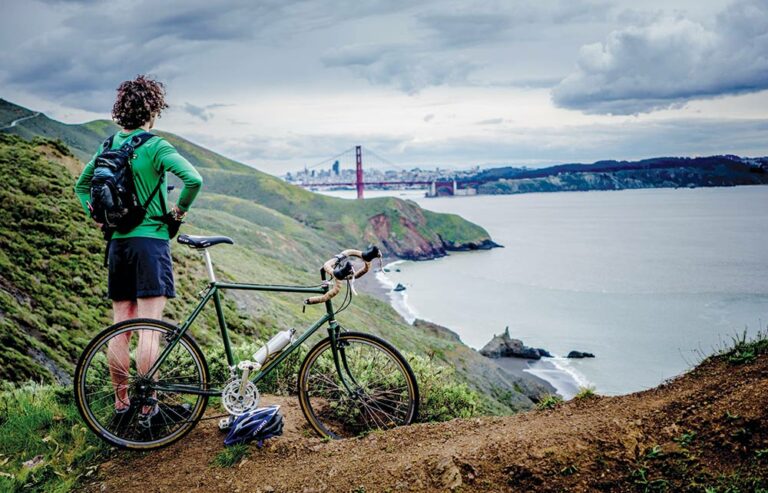
On Saturday, Nov. 16, hundreds of bicyclists pedaled onto the San Rafael–Richmond Bridge to try out a brand-new bicycle path across the 4-mile span. Although completed in 1956, the bridge connecting Marin and Contra Costa counties never allowed cyclists access—until now.

Marin County bicyclists consider the bike path a big win, yet Marin County’s roads are among the most dangerous for cyclists in the state, according to a December 2018 transportation safety report commissioned by the county.

The report, known as the 2018 Marin County Travel Safety Plan, presents statistics about the rates of dangerous driving habits—including drunk driving and speeding—and lists the county’s most dangerous roads and intersections.

The county ranked among the safest in the state in a broad range of categories. Overall, it ranks 48th out of 58 California counties for total fatal and injury collisions. However, it also scored very poorly in two categories. Between 2012 and 2016, the 5-year period covered by the report, Marin County had the second-highest collision rate for cyclists and third-highest collision rate for pedestrians over the age of 65 among all California counties.

There were 2,756 reported crashes and 219 fatalities or serious injuries during the study period, according to the report, which was largely funded by a state grant.

The 2018 report was the latest step in the county’s efforts to improve transportation safety and to encourage walking and biking. These methods of transportation—known as active transportation—are seen as both healthy for community members and a means to reduce greenhouse gas emissions.

The county’s report does more than diagnose the problem; it also suggests 51 high-priority engineering solutions for the most dangerous stretches of road throughout unincorporated Marin County and the cities within the county.

At the time of the report, three of the projects were funded and underway last December. County staff and politicians hope the report will help the county qualify for additional transportation funding from the state but, so far, the county hasn’t received funding for any of the suggested projects just yet.

Still, traffic safety efforts require more than just engineering projects, in part because the projects are expensive and time-consuming.

Thus, county staff spent much of the past year partnering with Marin’s cities to create a “framework to reduce collisions countywide,” according to Craig Tackabery, the chief assistant director of the Department of Public Works.

“This framework is aimed at actions to best advocate for safe streets, safe speeds, safe people and safe vehicles,” Tackabery told the Pacific Sun in an email.

The county hopes to release the document in early 2020. Tackabery says staff see the document as “a guide that advances actions collectively to reach desired outcomes.” He adds, “It is possible that individual agencies may implement policies.”

Vision Zero

At a Dec. 18 Board of Supervisors meeting last year, Supervisor Damon Connolly mentioned the prospect of implementing an increasingly popular method of reducing traffic injuries and fatalities in Marin County.

The strategy, known as Vision Zero, is an all-encompassing approach for reducing traffic fatalities and injuries.

Rather than referring to traffic deaths as “accidents,” the Vision Zero approach stresses that “traffic fatalities are preventable.” As the thinking goes, these deaths—about 40,000 across the country every year—should not be accepted as a natural, unavoidable cost of car culture.

Over the past decade, major cities across the United States, including San Francisco, Los Angeles and New York, have passed Vision Zero policies. San Mateo, San Jose, Santa Barbara and San Diego have also passed Vision Zero legislation in California.

Jurisdictions that join Vision Zero must set a goal for zero traffic deaths and serious injuries. They then attempt to reach the goal through a combination of collaborative strategies including, but not limited to, education, enforcement and engineering projects.

In San Francisco, which set a goal for zero traffic deaths by 2024, transportation planners teamed up with public health and law enforcement officials to accurately track deaths and injuries and then enacted joint efforts to reduce fatalities and injuries. Five years after setting the goal, the annual fatality rate in San Francisco during the past two years has been lower than the historic average of about 30 deaths per year.

The framework that Marin County officials are working on is not branded as a Vision Zero policy—it doesn’t have a name at all yet—but it may share some similarities with a Vision Zero approach to reducing fatalities, including collaborative approaches between county and city departments.

Connolly, who raised the issue at last year’s Board of Supervisors meeting, says he supports Vision Zero, adding that Marin County “can learn a lot from Vision Zero’s implantation in other jurisdictions.”

“There are some things like speeding, aggressive driving and distracted driving that are beyond engineering solutions,” Connolly told the Pacific Sun via email. “But coupling the work our engineers do in improving intersections and roadways with more education of road users and tactical law enforcement, we can make our roads safer for bicyclists and pedestrians.

Bjorn Griepenburg, policy and planning director at the Marin County Bicycle Coalition, said that some of Marin’s cities have made early efforts to pass Vision Zero policies but, so far, none of them the policies have passed.

Jurisdictional Lines

In addition to requiring participation between local agencies, traffic safety often involves input from state agencies. For instance, CalTrans, the state transportation agency, controls and maintains the freeways and some other streets throughout the state. That can lead to differences of opinion or delays in roadway improvements.

In October, Gov. Gavin Newsom vetoed the Complete Streets for Active Living Bill, a piece of legislation which would have required CalTrans to consider implementing safety improvements every time it repairs or repaves state-maintained roadways which serve as local streets.

In Marin County, the legislation would have impacted Tiburon Boulevard (Route 131) and Shoreline Highway (Route 1), according to an analysis by the California Bicycle Coalition. Marin County’s 2018 report lists both CalTrans-maintained roadways as candidates for priority safety projects in .

In a statement explaining his decision, Newsom stated that, while he valued the bill’s intent, the legislation used “a prescriptive and costly approach” to improving transportation safety.

In compliance with an earlier executive order “CalTrans is increasing and accelerating its investments in active transportation where appropriate and feasible,” Newsom stated.


The Mountain Play’s the Thing

Theater with altitude. That’s a clever slogan for a theater that produces shows 1,900 feet above sea level, but for the Mountain Play Association, it’s more than just a catchphrase to slap on a T-shirt. For the 107-year-old company, the general organizational attitude has always been about elevation (elevated challenges and elevated hopes, elevated expectations and, whenever possible, elevated quality in each annual production), ever since staging a pageant (about Abraham and Isaac) high on Mt. Tamalpais in the summer of 1913.

And then another, the Sanskrit epic Shakuntala, in 1914.

And another, Rip Van Winkle, in 1915.

Except for the summer of 1924, when the area was closed due to an epidemic of hoof-and-mouth disease closed the area, and a four-year period during WWII when the U.S. Army occupied the grounds were occupied by the U.S. Army, there has been a Mountain Play production at the Cushing Memorial Amphitheatre every year since. After years of drawing crowds with a mix of pageants and plays and musicals, and at least one stab at Shakespeare, the nonprofit company decided in 1981 to focus on musicals only during the annual five-weekend, May-to-June extravaganza, which now draws thousands of people up the mountain every year. The most recent production was the rock-musical Grease, and the company has announced Hello Dolly as its 2020 production.

“We’re continuing to evolve deeper into the 21st century,” said Eileen Grady, the Mountain Play’s executive director and artistic producer, in between handshakes and speeches at the organization’s grand fundraising Gala at Marin Osher JCC on Nov. 2. “We’re constantly fine-tuning everything we love and enjoy about the Mountain Play. Right now we are working hard to be—if I had to state it in a single sentence—just deepening our roots into the community.”

One of the ways the organization will do that is by co-producing a show off the mountain in the fall. This is a longtime plan for the company, which announced a year ago it would look into turning the Mountain Play into a year-round experience by staging productions closer to sea level, at other times in the year. Thus the current collaboration with the Ross Valley Players, a production of the Christmas-set musical She Loves Me, which opened last weekend at the Barn Theater and runs through Dec. 22.

“We’ve had a strong, collaborative relationship with Ross Valley Players since the 1930s,” Grady said. “For me, coming off the mountain to start doing shows in between the summertime Mountain Play musicals really is about deepening that relationship, and working to build other relationships like it. It’s a little like coming out of the closet—‘Guess what? We’ve been partners behind the scenes for years!’ It really feels good to be out there working together in a way that’s mutually beneficial to both companies, and gives the Mountain Play some visibility in a whole new way.”

Grady just completed her first year as executive director of the Mountain Play, a role she took over from Sara Pearson, who last year, after 12 years at the helm, stepped into a newly created role of director of leadership and development. Grady has been with the company for a number of years as associate producer.

During her after-dinner speech at the Gala, and before offering a stirring and grateful tribute to Pearson—who officially retired this month as a staff member of the Mountain Play—she admitted her first year was quite literally a trial by fire and storm, and continued to call up the concept of gratitude.

“Gratitude is something I’ve been thinking a lot about, because gratitude is the key word for, ‘I survived this last year,’” she said from the podium, to a room full of supporters and donors. “Thanks to the weather last season, we lost our opening weekend performances to rain and pushed through a red flag advisory weekend, complete with a fire on one of those days. I say gratitude because every member of the Mountain Play family, from the garbage crew to the audience, showed up. They were present, they had smiles on their faces, it was beautiful—and I don’t think I said ‘Thank you’ enough, but I don’t know that I ever stopped saying ‘Thank you.’”

A few days later, and one day after her retirement officially took place, Pearson is clear that her commitment to the Mountain Play, and the future she’s worked a dozen years to strengthen, is far from over.

Though she’s technically no longer on staff, she’s been hired as an independent consultant and will focus on major-donor development and support. Of the roughly 5,000 regular supporters and donors to the Mountain Play, the staff considers about 170 of them are considered “major donors.” Pearson says connecting with those folks, having more regular conversations over coffee and the like, will be her primary job.

“These are people I’ve become friends with over the years and I will finally have the time to just sit down and talk to them,” says Pearson, speaking on the phone. “So, retirement isn’t exactly retirement, but for me, this change does have one immediate impact: I didn’t go into the office today. That’s new. Not having to go into the office opens up all kinds of possibilities for me in regards to my love for this organization.”

In many ways, she says, this was the right time, organizationally, for this personal and professional evolution, and her own selection of Grady as her successor was a key element in the progression.

“Eileen is the one thing I’m proudest of when I look back on my years in leadership with the Mountain Play,” Pearson says. “And there are a lot of things I’m proud of, and thankful that I was able to be a part of.”

When Pearson came aboard as executive director in 2007, after several years on the board of directors, there were a number of intimidating landmarks ahead of her. They included the retirement of longtime Director Jim Dunn’s retirement in 2012—after 30 years as the public face of the Mountain Play—followed in 2013 by the 100th anniversary of the Mountain Play, with an accompanying commemorative coffee table photography/history book which Pearson spearheaded. She also led the charge on a comprehensive, strategic Mountain Play plan for 2017–2021.

“To get to that, we went through a huge exercise in planning for the future,” allows Pearson, who has long championed the current drive to expand the Mountain Play beyond a once-a-year, mountaintop event. “The organization is ready for some big things, and I take some satisfaction in helping it to get there, but I do feel I can step away now. We’ve been staffing up, making gradual, calculated changes. We have big dreams, high hopes and big plans; and we have a lot of people in this community on our side—the Mountain Play is ready for the future.”

“She Loves Me” runs through Dec. 22 at Ross Valley Players’ Barn Theater, 30 Sir Francis Drake Blvd. $25$40. Show times Thursdays at 7:30 p.m.; Fridays and Saturdays at 8 p.m., Sundays at 2 p.m. “Hello Dolly” on Mt. Tamalpais runs May 24June 21 at the Cushing Memorial Amphitheatre on Mt. Tamalpais. General Seating tickets $20$45, reserved seating $60$175. Tickets on sale by the end of November. MountainPlay.org.

Lie To Me

Aging performers can be sad to watch. Right when they should be doing the best work of their careers, they’re playing wise codgers and lending their years of integrity to luxury-car-commercial voiceovers.

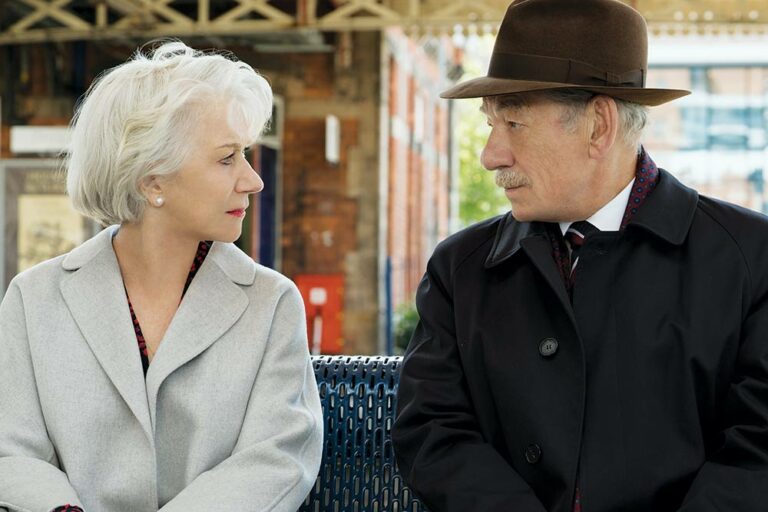
Happily, Bill Condon’s The Good Liar rejoices in old age’s boundless capacity for treachery, the senior citizen’s avidity for just one more piece of pie. On the typewritten titles McKellen (Ian) and Mirren (Helen) get last-name credits before their first names bleed up through the paper. Do they really need first names at this stage?

It’s 2009, and a couple is busily typing away at a computer dating site for people in their sunset years. They tell little white lies as they correspond. He, Roy, claims not to smoke, as he puffs on a cig; she, Betty, denies drinking as she takes a nice swig from a glass of white wine. They meet. He’s a kindly, tweedy, wrinkly old gentleman with a trustworthy Walt Disney mustache. He practically signals his virtue with semaphore flags: “What I deplore most in life is dishonesty.” He has a son with whom he’s estranged: “I don’t approve of his lifestyle … he designs kitchens.”

Meek Betty has a grandson, Steven (Russell Tovey) who watches Roy like a hawk—he’s worrisomely muscled and his ears stick out as if he’s always listening in. After the first date, Roy departs for a titty bar’s private lounge, there to meet an equally dodgy circle of “financiers,” including his main partner in grift (the great Jim Carter). All get ready to launder some Russian money.

Roy could use a hideout. Over the objections of Steven, Betty moves the old man into her guest room, far out in the suburbs. She’s in frail health, poor dear; stroke prone, she must be kept in beige surroundings lest colors over-excite her. As they grow closer, Betty suggests a trip to Berlin. The thrilling city has some unhappy history. In long flashbacks that don’t knock this film off its axle, we learn more about Roy and that mysterious scar on his neck he’d rather not talk about.

If you don’t suspect The Good Liar’s title ought to be plural, you’re far younger and more innocent than the cast. We can predict Roy-the-enterprising-weasel will become a cornered rat. Still, McKellen shows he’s a virtuoso of villainy, glowing in false benevolence, groaning bravely about his gammy leg or flicking a police CCTV camera away with the point of his umbrella so it won’t record his next crime. He’s a pleasure even in slighter moments of disgust, scowling at a squad of power-walking seniors huffing up the street in front of Betty’s house. And his last cowed glare at the audience is a payback scene worthy of a Lon Chaney movie.

At this point, Mirren has kept her personal magic as long as Marlene Dietrich, and with a great deal less artifice; the keenness of eye and firmness of mouth projects enough force to hold this film’s stories together. And there’s a shrewd final moment where Betty, alarmed by the noises of three little girls in her yard, has second thoughts. The girls are there to keep a happy ending from being too happy. A skyscape is all the more beautiful for having a cloud in it.

‘The Good Liar’ is now playing in wide release.

Flashback

0

50 Years Ago

President Richard Nixon threw his full support behind the Point Reyes National Seashore purchase yesterday, thus practically ensuring its funding in time to save the 53,000-acre scenic wonder from subdivision.

…Thus another small step for man and another giant leap for mankind seems on the brink of happening.

…Nixon’s statement of support neatly disposes of the opposition to the parkland purchase by Robert Mayo, director of the Bureau of the Budget, who serves at the pleasure of the President and is expected to do his bidding.

Alice Yarish, 11/19/69

40 Years Ago

The longest school strike in California history came to an end last week — a grueling nine-week walkout by teachers and office workers of the Jefferson High School District in northern San Mateo. Two weeks before, the San Francisco Federation of Teachers was fined $3000 for its refusal to obey a Superior Court order halting a September strike against city schools. Both strikes were marked by scenes of bitterness and violence. Jefferson officials plan to press criminal charges against 20 teachers for infractions committed in the heat of the strike. And in San Francisco, striking teachers were accused of slashing tires, blocking milk and food deliveries, and marching into school buildings and frightening the children.

Such reports cannot help but add to the growing disenchantment with public education. It becomes difficult for parents, even liberal pro-union parents, to reconcile the teacher as the purveyor of civilized ideals with the teacher-activist defying the law.

⁠—Linda Xiques, 11/16/79

30 Years Ago

Ross got tough on smoking. The council unanimously passed an ordinance that bans cigarette smoking in all indoor public areas. That includes restaurants, shops and medical offices. Council member Peter Barry’s measure hadn’t looked like a winner until backers collected 200 signatures supporting it in a six-hour stint in front of the post office.

⁠—Newsgram, 11/17/89

20 Years Ago

Homeless people were dealt a blow recently when the Supreme Court left standing a Florida law that prohibits people from panhandling or soliciting change around the beach. This seems like a blatant form of discrimination against the poor, especally when you consider that for most of us, the bulk of what we do each day in some way involves asking for money.

…This Supreme Court inaction follows on the heels of a report that the Contra Costa County Public Health Department is doing a documentary on the homeless, and is on the lookout for some, and I quote, “good homeless families.”

Well, there you have it. The homeless problem isn’t that we have lots of homeless people on our byways, it’s that the ones we have aren’t aesthetic enough. They beg. They’re rude. They look unsightly. They’re just … yuchy. We don’t want to see ’em.

⁠—Stan Sinberg, 11/17/99

Hero & Zero

Hero

We love our firefighters, but we also hold adoration for our neighbors who jump into action and put out a fire before the fire truck arrives. A group of neighbors in the San Geronimo Valley worked together to douse a stubborn compost-pile fire. Larry saw the smoke coming from behind his neighbor’s house and determined no one was home. After recruiting James and David, the three men hosed the fire and performed other tasks to quash the danger of the fire spreading.

A passerby called the local fire department, which responded pronto. However, thanks to the heroic efforts of Larry, James and David, the Woodacre Fire Department had no fire to put out. The firefighters mopped up the mess and ensured there was no further risk. “I feel better about humanity in general and the special spirit of the people of San Geronimo Valley,” said James. Bravo to the team who saved the day.


Zero

How many times do experts have to tell us not to feed the wildlife? Some of us need to hear it more often, especially the person feeding the pigeons in the vacant lot across from the Good Earth in Mill Valley. Neighbors complain the birds create a nuisance by excreting all over the area. Cars, houses, patio furniture and anything left outside now drips with pigeon poop.

The waste causes property damage and produces unsanitary conditions. Oh, person feeding the flock, if we can’t appeal to your sense of cleanliness, how about the fact that you’re actually hurting the pigeons and quite possibly people?

Keeping the birds fat and happy attracts more birds, which leads to overbreeding and overcrowding. Feeding the wrong food causes nutritional deficiencies in the pigeons and brings disease to other birds.

According to a New York Times article, “People with cancer, HIV or AIDS … are more susceptible to diseases associated with pigeons.”

Just quit feeding the pigeons. Your neighbors and fellow bird lovers will thank you.


email: ni***************@***oo.com


Hero & Zero

Hero

We love our firefighters, but we also hold adoration for our neighbors who jump into action and put out a fire before the fire truck arrives. A group of neighbors in the San Geronimo Valley worked together to douse a stubborn compost-pile fire. Larry saw the smoke coming from behind his neighbor’s house and determined no one was home. After recruiting James and David, the three men hosed the fire and performed other tasks to quash the danger of the fire spreading.

A passerby called the local fire department, which responded pronto. However, thanks to the heroic efforts of Larry, James and David, the Woodacre Fire Department had no fire to put out. The firefighters mopped up the mess and ensured there was no further risk. “I feel better about humanity in general and the special spirit of the people of San Geronimo Valley,” said James. Bravo to the team who saved the day.


Zero

How many times do experts have to tell us not to feed the wildlife? Some of us need to hear it more often, especially the person feeding the pigeons in the vacant lot across from the Good Earth in Mill Valley. Neighbors complain the birds create a nuisance by excreting all over the area. Cars, houses, patio furniture and anything left outside now drips with pigeon poop.

The waste causes property damage and produces unsanitary conditions. Oh, person feeding the flock, if we can’t appeal to your sense of cleanliness, how about the fact that you’re actually hurting the pigeons and quite possibly people?

Keeping the birds fat and happy attracts more birds, which leads to overbreeding and overcrowding. Feeding the wrong food causes nutritional deficiencies in the pigeons and brings disease to other birds.

According to a New York Times article, “People with cancer, HIV or AIDS … are more susceptible to diseases associated with pigeons.”

Just quit feeding the pigeons. Your neighbors and fellow bird lovers will thank you.


email: ni***************@***oo.com


Grate-fool

Trawling for Thanksgiving quotes, Pacific Sun-contributor and Petaluma Argus-Courier community-editor David Templeton emailed a questionnaire to the usual suspects. He topped it with “What are you most thankful for right now?” I have yet to reply because A) I’m on my own damn deadline and B) the question gives me psychic hives. I begrudge Templeton nothing, but the query registers...

Saintly ‘Maid’

What’s a mother to do when her daughter says she hears the voice of an angel instructing her to lead an army to war? ‘Love her unconditionally’ is the short answer provided by playwright Jane Anderson in Mother of the Maid, running at Marin Theatre Company through Dec. 15. Poets, authors, playwrights and filmmakers have told the tale of Joan...

Aha, Rioja

When I say Burgundy, you say Pinot Noir—the red wine grape of Burgundy that’s also made the Russian River Valley a famous wine region. And when I say Bordeaux, you say Cabernet. Got the pattern? So when I say Rioja, you say—huh? The answer is Tempranillo, the major red-wine grape of Rioja, the best-known wine region of Spain. But Tempranillo...

Advice Goddess

Q: I was feeding my meter the other day, and this guy chatted me up outside his store and got me to take his number. He seemed sweet, but things got weird when he wanted to come over the next night. I said that didn’t work for me, but I offered to swing by his work and say hi...

Bike Frame

On Saturday, Nov. 16, hundreds of bicyclists pedaled onto the San Rafael–Richmond Bridge to try out a brand-new bicycle path across the 4-mile span. Although completed in 1956, the bridge connecting Marin and Contra Costa counties never allowed cyclists access—until now. Marin County bicyclists consider the bike path a big win, yet Marin County’s roads are among the most dangerous...

The Mountain Play’s the Thing

Theater with altitude. That’s a clever slogan for a theater that produces shows 1,900 feet above sea level, but for the Mountain Play Association, it’s more than just a catchphrase to slap on a T-shirt. For the 107-year-old company, the general organizational attitude has always been about elevation (elevated challenges and elevated hopes, elevated expectations and, whenever possible, elevated...

Lie To Me

Aging performers can be sad to watch. Right when they should be doing the best work of their careers, they’re playing wise codgers and lending their years of integrity to luxury-car-commercial voiceovers. Happily, Bill Condon’s The Good Liar rejoices in old age’s boundless capacity for treachery, the senior citizen’s avidity for just one more piece of pie. On the typewritten...

Flashback

50 Years Ago President Richard Nixon threw his full support behind the Point Reyes National Seashore purchase yesterday, thus practically ensuring its funding in time to save the 53,000-acre scenic wonder from subdivision. ...Thus another small step for man and another giant leap for mankind seems on the brink of happening. ...Nixon’s statement of support neatly disposes of the opposition to the...

Hero & Zero

Hero We love our firefighters, but we also hold adoration for our neighbors who jump into action and put out a fire before the fire truck arrives. A group of neighbors in the San Geronimo Valley worked together to douse a stubborn compost-pile fire. Larry saw the smoke coming from behind his neighbor’s house and determined no one was home....

Hero & Zero

Hero We love our firefighters, but we also hold adoration for our neighbors who jump into action and put out a fire before the fire truck arrives. A group of neighbors in the San Geronimo Valley worked together to douse a stubborn compost-pile fire. Larry saw the smoke coming from behind his neighbor’s house and determined no one was home....
3,002FansLike
3,850FollowersFollow