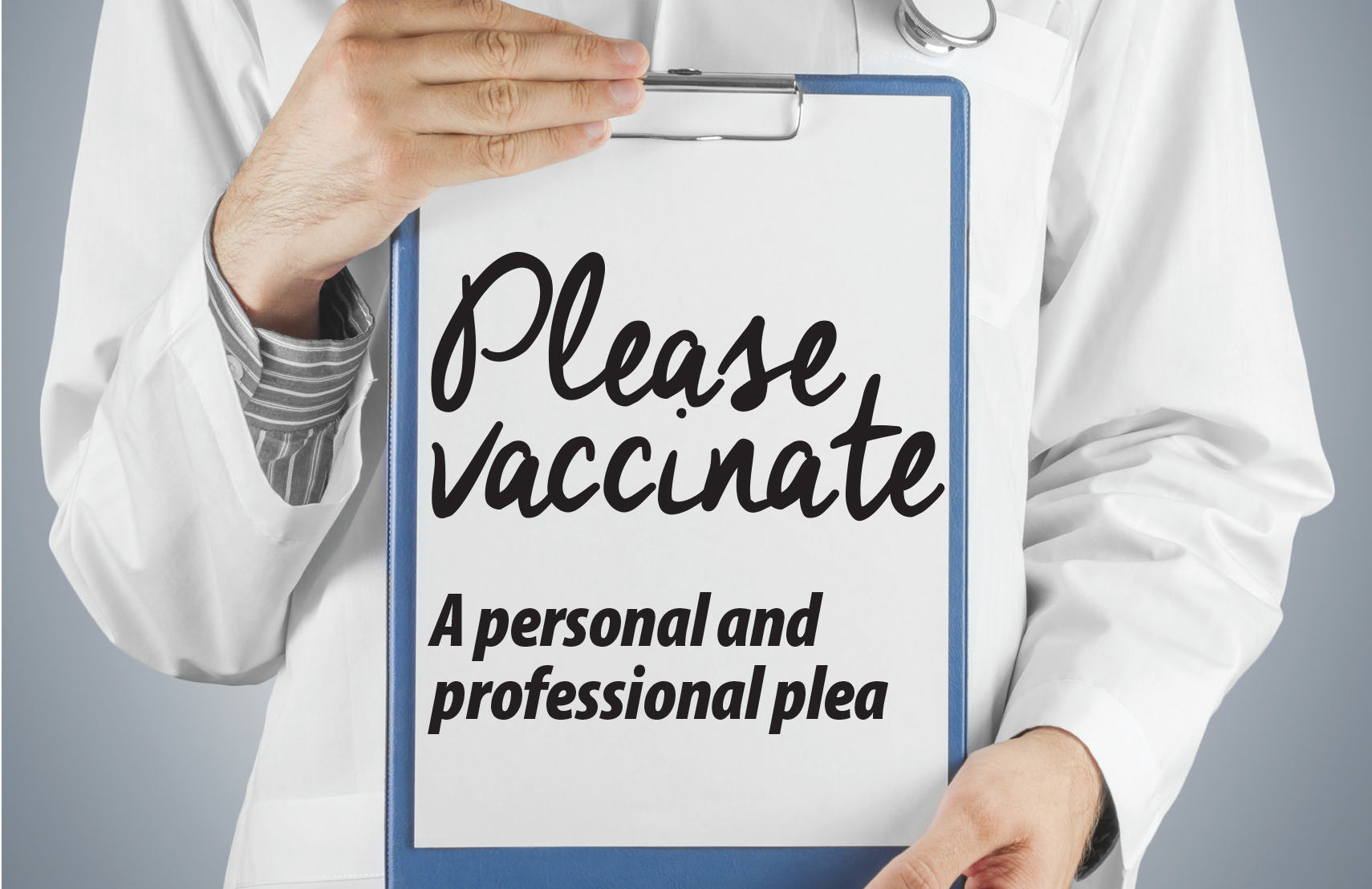
Opinion: Please vaccinate

by Sadja Greenwood and Steve Heilig

Dear Parents (and others),

We write as concerned health professionals and Marin community members. Our topic: Vaccination, or lack thereof, and risks to our health.

The urge to protect one’s children is one of the strongest known to humans (and other species). Parents will sacrifice their own lives for their offspring, if needed. Thus it should not be so surprising that, when questions are raised about the safety of vaccines, many parents have concerns, and even forgo the shots—even though protecting children (and adults) from serious diseases is the reason that the vaccines exist.

This controversy has arisen ever since vaccines were first discovered, and is here again as infectious diseases such as measles and pertussis (whooping cough) reappear—following declines in vaccination rates in some communities, including our own. Accusations, blame and conspiracy theories abound. And in some areas, the percentages of unvaccinated children have increased to levels where real experts tell us that we are all in danger of disease outbreaks.

This is particularly important in Marin, so much so that Jon Stewart recently mocked our county as being a center of “mindful stupidity” (ouch). The jab was spurred by a new California Department of Public Health report and database confirming that Marin’s rates of non-vaccination are among the very highest in the state. Stewart’s fellow television host Jimmy Kimmel then piled on, saying that some “parents here seem more frightened of gluten than smallpox.” This month’s National Geographic magazine has the theme of “The War on Science,” with examples being climate change, evolution, the moon landings—and vaccination. Thus we become a laughing stock; but laugh as many might, the reality of the risk is not funny.

In some California schools, the percentage of kindergarteners who were vaccinated against the measles in the 2013-14 school year was lower than rates in the developing world. In Sudan, for example, 85 percent of 1-year-olds were vaccinated against measles in 2013, according to the World Health Organization. Here at home that same year, only 54 percent of kindergarteners were immunized against measles at Bolinas-Stinson Elementary, and even less—2 students out of 11, or 18 percent, were reported as fully vaccinated. At the Bolinas Children’s Center, the rate was 35 percent fully vaccinated; At the Stinson Montessori School, one kid out of 13 (8 percent) was reported as fully vaccinated. In Marin overall, 84 percent of kindergartners are fully vaccinated; statewide, the rate is about 90 percent, with our neighbors to the north, Sonoma and Mendocino counties, higher than that. Depending on factors such as the type of disease, most experts feel that vaccination rates should be at over 90 percent, with 95 percent or higher more optimal.

We don’t expect to “solve” the vaccination controversies here—the arguments seem unresolvable to some, no matter how many facts are presented. We can only provide our own perspective, based on experience and training. And by way of disclaimer, it might be important to some readers to note that we are not “tools” of any organization or industry. As longtime medical and public health advocates, we offer our thoughts here as two who have adhered to no orthodoxy, choosing to challenge established thought and practice wherever we have hoped doing so would lead to better health. We have no financial interest in drug companies or anything else related to vaccines—in fact, one of us has developed policies to remove all pharmaceutical marketing in medical schools and hospitals, with some success so far. Again, we list this information only for those who might suspect our motives or orientation.

Here is our key point: Most medicine involves risk/benefit calculations. Virtually nothing is 100 percent risk-free, or 100 percent effective. Used wrongly, aspirin can kill. And yes, vaccines can have risks. But it is clear to us that, overall, the benefits far outweigh the risks both for the vast majority of individuals of all ages and for the community overall. Now, this can seem difficult to grasp—in part due to the success of vaccines over the decades, we don’t see the sickness and death that is being prevented anymore. With prevention, success means that something does not happen—and thus current generations have been fortunate to not live in continual fear of infectious diseases.

The Decline of Awful Diseases

I (Sadja) grew up in the 1930s, way before many vaccines were available. I distinctly remember my mother’s fear of polio, the lack of understanding of its transmission, the avoidance of swimming pools, the iron lungs, the reliance on Sister Kenny’s methods of hot compresses and gentle movement of paralyzed limbs, our paralyzed President Roosevelt. When the Salk vaccine became available in the 1950s, it felt miraculous. That polio vaccinators are being murdered today in Pakistan and some African countries is horrible, as with universal vaccination, this virus could be eliminated.

While in medical school, I saw an 8-year-old boy die of tetanus, even though a vaccine was available but not widely used. I saw a child whose throat was clogged with diphtheria exudate, unable to breathe. I had whooping cough (pertussis) at age 11 and missed a half-year of school, as did many children, with convulsive coughing and vomiting. I saw desperately ill children with measles admitted to hospitals. I remember the extreme fear of pregnant women who contracted ‘German measles’ (rubella) because of devastating birth defects that could ensue (women would sometimes say that they had German measles to qualify for an abortion, since this was the only way abortion could be legally obtained). Mumps can result in sterility for men, and also can affect a woman’s ovaries.

There are many other such examples of the painful and even lethal impacts of diseases that few people have encountered in recent years—fortunately for all of us. There are multiple reasons for this. As some anti-vaccination advocates note, many diseases have indeed declined in modern history prior to the introduction of the relevant vaccine (or other medical intervention). Contributors can include cleaner water and air, better food and better living conditions in general. But to sustain such healthy trends often takes both healthier communities and vaccination programs.

To give one striking example, the one disease eradicated by human effort in our time was smallpox, wiped out in Asia by a concerted, intense vaccination campaign. The experts there knew that they could not eliminate poverty, hunger, sewage and so forth in India, but that smallpox vaccination could interrupt the transmission of the horrible disease long enough for it to die out. After millions of vaccinations, it worked, even though the other conditions stayed the same. It was a targeted triumph that has prevented incalculable suffering and death since the 1970s. And there are other such examples; Steve has seen entire hospital wards in Asia and Africa that had been converted from infectious disease units, usually places of rampant death, into much less lethal places as those diseases became rare following international health programs with vaccination as their key weapon.

Measles is currently in the news. Yes, as with Ebola, some of the reporting has been sensationalistic and some political statements absurd. But think of this—throughout the world, measles kills about 400 children every day, and many more are made very ill, some with lasting problems. Historically it has been one of the most lethal infections affecting humans. The success of measles vaccination has made us either forget that or never know what this infection can do. Considering that, and that until recently there were hardly any cases at all in our country (as opposed to, say, a recent and ongoing outbreak of over 50,000 cases and many deaths in the Philippines), even the relatively small “Disneyland outbreak” we are seeing is very concerning to us. Although it may be unlikely that a big outbreak will spread as in the past—primarily due to many people being vaccinated—it is a frightening reminder to us of the suffering of those times.

One positive side-effect of the current measles outbreak and all the attention that it has garnered is a reported increase in parents asking more questions about vaccination and how they might best protect their children—this might result in increased vaccinations, but it is still too early to confirm that.

True Expertise—and Concern

Every pediatrician—every doctor, in fact—who we know, vaccinates themselves and their kids. They love their children as much as anybody. They tend to really like their young patients, too (OK, with maybe a few exceptions). They know, science, see the effects of their interventions and report the rare bad reactions when they do occur. And for doctors who give such shots, vaccines are rarely, if ever, moneymakers—sometimes the contrary, as insurers will reimburse so poorly that it actually costs a practice to administer the shots. But doctors provide vaccination anyway for any patient unless there is a medical reason not to do so, and that is because it works. To do anything other than what is best for the patient is rightly seen as a dereliction of duty.

The vast majority of scientists who have studied vaccines, support giving them. Even most who have questioned some aspects of vaccination still tend to favor vaccines. This is true for journalists as well—see, for example, Robert Kennedy, who favors making vaccines safer but is still pro-vaccine. Likewise, there has been much online talk of a possible Centers for Disease Control “whistle-blower” who has come forth to question research and practices done while he was at the CDC—but who still says, “I want to be absolutely clear that I believe vaccines have saved and continue to save countless lives. I would never suggest that any parent avoid vaccinating children of any race. Vaccines prevent serious diseases, and the risks associated with their administration are vastly outweighed by their individual and societal benefits.”

But research has shown that for some reason, many people give equal weight to nonscientific, unsupportable sources, such as online comments and editorials by self-appointed advocates with little or no scientific background. This reminds us of the climate change debate. More than 95 percent of the real experts agree that humans are causing global warming, but a small percentage get “equal time” in the media and even influence policy and behavior (and of course, there is big money behind “climate denial”). In the case of vaccine denialism, it seems that mistrust of authority (not always a bad thing!), a lack of science education and the parental instinct we started with above play into non-vaccination. A certain small number of crusaders presume to know more than almost everybody else, even though most of them have little to no training in relevant disciplines. Try, for a moment, to imagine how it feels for well-motivated scientists and doctors, who have spent many years learning how to understand and apply science to improve human health, to be attacked by those who, like anti-vaccine activist and actress Jenny McCarthy, proudly admit that, “The University of Google is where I got my degree from.”

The Autism Non-Connection

Based on many discussions we’ve had, parents in Marin and elsewhere express concerns not only about links to serious conditions like autism or cancer, but about the general issue of possibly overloading a child’s immune system with too many vaccinations in too short a time, or even “poisoning” them with toxins that they have heard are in vaccinations. But many who once believed that an autism connection existed are backing away from that position, convinced by evidence. There are many nuances in this debate, and even some reputable researchers who allow that in some limited cases, older vaccines might have “tipped” some children towards problems in the past—although the vaccines in question have been made even safer now.

Extensive analysis of all available good studies has not supported the fears that vaccines have contributed to the rise in autism and similar conditions. The most recent “meta-analysis” of many studies found, like all the others, that “vaccinations are not associated with the development of autism or autism spectrum disorder. Furthermore, the components of the vaccines (thimerosal or mercury) or multiple vaccines (MMR) are not associated with the development of autism or autism spectrum disorder.” On the other hand, the most recent study purporting to link autism to vaccines has been withdrawn, since the author used bad methods and had conflicts of interest—much like the original study that started this debate.

Autism Speaks, the nation’s leading autism advocacy group, just released a statement saying, “Vaccines do not cause autism … We urge that all children be fully vaccinated.” Which is what every medical group which has closely examined this issue has concluded as well, and again, the researcher who first brought it up has been wholly discredited and sanctioned, his medical license revoked. Something else is going on, causing the rise in autism. In addition to possible culprits like advanced maternal and/or paternal age at pregnancy, various infections, maybe even antidepressants taken during pregnancy, and more, there might indeed be environmental factors in autism—chemical pollution, for example.

Regarding risk in general, again, almost nothing is totally risk-free. With respect to vaccines, very rarely, the side-effects from a vaccine can be severe. Some people are likely more susceptible to bad reactions, and vaccines carry warnings to evaluate patients for such known risks, but not all can be prevented. About one person per million will have a severe allergic reaction to the MMR vaccine. Mostly, though, it’s a mild reaction, if anything. Such statistics are true for most vaccines, and researchers are continually trying to make them even safer, as they should.

Thin Conspiracy Theories

For those who think that the medical/scientific “establishment” has conspired to hide the ill effects of vaccines for profit or other reasons, again, we are not always fans of “big pharma,” but cannot support that. First, there would be much more potential financial profit for drug companies and the medical industry from sick people than from preventing diseases. For even the biggest vaccine manufacturers such as Merck, vaccines make up only about 10 percent of their business, and are one of the less profitable sectors (and thus the need for protection from lawsuits, or few if any companies would make vaccines at all).

Also, scientists are trained to be competitive and to debunk theories and discoveries; reputation is everything in both science and medicine. The idea that tens of thousands of scientists from all over the world would collaborate on such a vast hoax to sell bad vaccines and hide ill effects is less believable to us than most anything else in this debate. And we must observe, again, that some of the most prominent anti-vaccine figures have been discredited, even convicted, of the very kind of transgressions they have alleged that thousands of others have done. Some have tried to profit from the uncertainty they create by selling questionable “cures” for diseases. Now that is shameful.

For those who believe/hope that optimal nutrition and “natural” foods, supplements, etc., will make one and one’s kids immune from disease—and that “big medicine” or “big pharma” repress such products to keep them from competing—there is really no good evidence of that. We, as longtime proponents of healthy eating and nutrition, wish it were true that such good practices could protect us from infections. But it is not. General immunity might well be improved by smart diet and exercise, but the kinds of diseases that vaccines prevent respect no such robust health. Likewise, there is no evidence that “alternative” approaches such as chiropractic, etc., can make one immune to such infections. And frankly, it is unethical to claim they do, as misleading people in this manner—usually done by people who themselves have a financial interest in selling something—can endanger both individuals and others in the community.

Vaccination and Community Solidarity

On a somewhat more philosophical note, effective vaccination requires a form of solidarity—meaning, community consciousness and action. “Herd immunity,” wherein protection for a community comes from most people being vaccinated, is a complex but very real phenomenon. It takes all of us doing our part, vaccinating our children and ourselves where indicated. Relying on others to make our community, schools and kids safe by vaccinating, even if you don’t believe in it yourself, is just not in the collective spirit that has made our communities the great places they have long been.

One should not be using others’ kids as a sort of “human shield” to keep your own safe. Babies who are still too young to be vaccinated are put at risk. Plus, it simply doesn’t work to try to “self-quarantine” oneself and hope the broader hazards won’t impact you and your loved ones. As Dr. Phil Landrigan, one of the best environmental scientists and pediatricians around recently said, “Rather than worry about a vaccine-autism connection that has been proven not to exist, parents should be banding together and writing their elected officials to insist that chemicals be properly tested for toxicity to children before they are allowed to enter the American market. The Europeans have passed such legislation. We should, too.”

We agree. We believe that policies have made it not only too easy for pollution of all kinds to affect our health and environment, but also for parents to be overly influenced by bad information and to opt out of vaccination due to unfounded fears. Proposals are now being made to make it much more difficult to opt out, to ban unvaccinated kids from schools and so forth. Some of these might make sense, some less so. We do not believe in taking away parental rights, but parents who do vaccinate, who have kids with immune problems or other medical conditions that put them at risk, and so forth have rights, too. There should be reasonable consequences for not doing the right thing, such as less access to schools, public spaces, and the like. The UC system will soon require that all students are vaccinated; would a parent be well advised to eliminate their kids’ chance of going to a UC campus because of bad advice from the Internet? We wish that every parent would avail themselves of solid scientific information and a sense of communal responsibility that good public health requires.

Dr. Mike Witte, family practitioner and pediatrician since 1981 with the Coastal Health Alliance in West Marin, says, “There are still too many vaccine holdouts to ensure overall protection of our communities. Will legislation at the state level change this? Maybe. We would be relieved to have this decision made firmer under the law. But our job as healthcare professionals, and as a society, is in finding much better ways to communicate this real science so that it can be heard and trusted by many more of the vaccine doubters.”

We agree, and that is our intention here as well—not to force vaccination but to show that it is the right thing to do. We should not go back to the time when now-preventable diseases were prevalent: It seems tragic that so many people are not taking advantage of the amazing gifts of vaccination. We hope that every parent—every adult—who has kids who are not fully vaccinated, or who are not vaccinated themselves, will consider the facts, the health of their kids, and of the community, and seek advice from their pediatricians and doctors. If they go in with an open mind, and with the kind of trust they otherwise likely place in them, they might be surprised. They will work with people to confront their fears, and the misinformation that they might have heard elsewhere. And then—vaccinate.

We thank you for your attention. Good health to you and yours.

Sincerely,

Sadja Greenwood and Steve Heilig

Sadja Greenwood is a retired physician and public health advocate who writes a health column for the ‘Bolinas Hearsay News’ and the ‘Point Reyes Light’. She was an Assistant Clinical Professor in the Department of Obstetrics, Gynecology and Reproductive Sciences at UCSF. Steve Heilig is a veteran health advocate trained in epidemiology, environmental and public health, and medical ethics. He works at Commonweal in Bolinas and with the San Francisco Medical Society (which accepts no pharmaceutical industry support) and is an editor of both the Cambridge Quarterly of Healthcare Ethics and the ‘Bolinas Hearsay News’. A version of this plea recently appeared in both the ‘Bolinas Hearsay News’ and the ‘Point Reyes Light’.
Horoscope: What’s Your Sign?

by Leona Moon

ARIES (March 21 – April 19) Have you recently taken on meditating, Aries? Originally it may have been to reduce the risk of developing an ulcer from the voice of that annoying co-worker, but think big-scale now. On March 20—with the solar eclipse in Pisces—you will be bursting with creativity. You might end up multitasking while meditating, and landing on some million-dollar ideas.

TAURUS (April 20 – May 20) Did someone say new friends, Taurus? Don’t mind if you do! You’re about to feel a little extra social on March 22. Not that your current group of friends doesn’t give the Breakfast Club a run for their money, but it’s time for a little branching out. There’s only so much Mario Kart you can play before you realize that there are other things in life. Find a new hobby and new friends.

GEMINI (May 21 – June 20) Are all of your awards just collecting dust, Gemini? Cut some coupons and invest in some Swiffer pads on March 21—you’ll be receiving another acknowledgment of success to add to your collection. That’s right—your boss finally realized that you’re his or her leading star. An Employee of the Month plaque never looked so good sitting next to your vintage wrestling trophies.

CANCER (June 21 – July 22) Trying to get a green card, Cancer? Or, maybe, you’re trying to acquire dual citizenship—either way, expect an international influence to take center stage on March 23. Do you have a friend flying in from overseas, or business to attend to? Whatever your concern has been, you’ll notice that forceful winds of change will bring progress.

LEO (July 23 – Aug. 22) Show you the money, Leo! It would appear that you’ve got money on the mind. The solar eclipse on March 20 will bring some major benefits to your income sector. We’re talking luxury toilet paper, extra shots of espresso in your morning cup o’ joe, maybe even a purebred cat—you name it, you can buy it! Buy yourself a gift as a reward for all of your fiscally conscious behavior.

VIRGO (Aug. 23 – Sept. 22) First comes love, then comes what, Virgo? Surprise—you’re getting married! The solar eclipse on March 20 will highlight your relationship with your partner. There’s nothing negative going on here—leave all of the fights about losing your socks in the laundry and accidentally buying half & half instead of 2 percent milk at the door. Wedded bliss is nigh!

LIBRA (Sept. 23 – Oct. 22) If you dream it, you can achieve it, Libra! Yep, even those sculpted abs and those chiseled buttocks. Let’s not lie—you’ve let yourself go. Living next door to a convenience store can do that to you—it’s not called “convenient” for nothing. Toss the M&M pancakes out the door and trade ’em in for some egg whites on March 24.

SCORPIO (Oct. 23 – Nov. 21) No pressure, Scorpio, but it’s now or never. You’re overdue to find your one true love, and it’s looking like March 20 might bring you a special delivery—whether you’re ready for it or not. It could be an old flame or it could be the neighbor you always see at the mailbox. Look for love around every turn—you never know what fine piece of cosmic-serious-soul-mate ass is waiting around the corner!

SAGITTARIUS (Nov. 22 – Dec. 21) Did your toilet overflow, Sagittarius? Well, if it hasn’t already, consider this a warning. Use the facilities with caution, if you know what I mean, when your significant other is over on March 20—the term “troubled water” will have a whole new meaning.

CAPRICORN (Dec. 22 – Jan. 19) Are you getting sued, Capricorn? That really does suck—there’s no piece of celestial advice I can offer that will alleviate a situation that will send Judge Judy packing. The good news: You’ll reach an agreement after March 25. Channel your practical side for best results.

AQUARIUS (Jan. 20 – Feb. 18) Did you sell your soul, Aquarius? Well, it must have been something big because cash is headed your way! Maybe you found that vintage Mickey Mouse dial-up phone that your mom stashed in the attic, or the Tickle Me Elmo that your family stored away to pay for your college someday. Whatever it is—good find!

PISCES (Feb. 19 – March 20) Whoa, Pisces. You’ve got a new moon solar eclipse in your sign on March 20 that has your name all over it. What does this mean, watery one? It means—no matter what anyone tells you—that you’re right. If you want it, go after it—you’re feeling confident and secure for the first time in awhile. It’s well-deserved—go raise hell and chase what you want!

Video: Oscar-snubbed and CIA-recruited

0

by Richard Gould

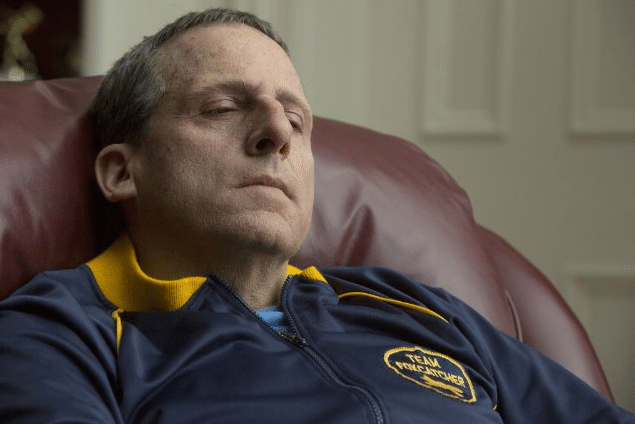
Two new releases make it a Blu-ray weekend to savor:  First, the Oscar-snubbed FOXCATCHER, Bennett Miller’s haunting and meditative story of the real-life tragedy surrounding the Schultz brothers’ wrestling team that made headlines twenty years ago.  Channing Tatum and Mark Ruffalo play ambitious but damaged siblings who are eager to recapture Olympic gold, but who unwittingly get caught up in one man’s Olympics obsession–the fantastically rich weapons magnate-slash-wrestling nut John du Pont, who styles himself as coach and father figure to the pair.  Ruffalo and Tatum’s performances make the film, but it’s Steve Carell’s ghostly star-turn as du Pont–basically he’s unrecognizable–that commands the attention.  A tormented aristo used to having his way in everything, du Pont is misty and remote yet seething with destructive currents—money, military power, thwarted sexuality, fear for the country’s lost greatness and Mom.  Then follow up with THE INTERVIEW for a chaser.  To hear all the intrigue surrounding the Sony hack (digital fingerprints now point to everyone but North Korea) you’d never know the damn thing was funny–riotously so in parts.  Seth Rogen and James Franco star–Franco as the celeb talk show host recruited by the CIA to do a hit on Kim Jong-un, who’s a fan.  But with Jong-un being the charmer he is, seasoned newshound Dave Skylark (Franco) finds himself breaking the profession’s cardinal rule:  Never get too close to your subject.  A piece of dumb fluffery completely unequal to the place history has reserved for it–which itself is hilarious.

Hero and Zero: Sharing the road and soaring gas prices

by Nikki Silverstein

Hero: We’re thrilled that the San Rafael Police Department spent last Friday focused on enforcing safety laws that protect bikers and pedestrians. Though the sting lasted for only eight hours, it netted 33 scofflaws. Offenders included 10 drivers ticketed for red light, stop sign and illegal turn violations; six drivers nabbed for distracted driving; three bicyclists caught for red light and wrong way violations; and 14 pedestrians cited for crossing against a red light, jaywalking and failing to obey signs and markings. Why all the fuss? It’s warranted. Over the past three years, the San Rafael Police Department has reported five fatalities and 229 injuries from collisions involving pedestrians and bicyclists. We’re not sure when officers will be on the prowl again, but let’s just share the road.

Zero: We gasped in disbelief at the sign in front of Bridgeway Gas in Sausalito. On March 11, the posted price was $6.97 per gallon for regular unleaded gas. To give you perspective, the Shell up the street was charging $3.49. Someone must have played a joke by swapping out the numbers on the Bridgeway Gas board. To be helpful, we dashed inside the station to alert the woman behind the counter, who identified herself as the owner’s wife. She confirmed that the exorbitant price was correct. “We sell to tourists,” she said. “They don’t care what they pay.” Technically, Bridgeway Gas isn’t violating California law, because price-gouging is tied to a declaration of emergency. Perhaps, but we declare that the owner is guilty of being an inflated Zero.

Got a Hero or a Zero? Please send submissions to ni***************@***oo.com.

Upfront: Mixed feelings on mixed-use

by Peter Seidman

The housing element that Larkspur recently sent to the state for certification encapsulates a debate about the concept of mixed-use development. It’s a concept that has bounced around Marin for decades. It may be one of the few ways Marin towns can accommodate state housing mandates.

Shopping centers have been a focal point of mixed-use proposals. It makes sense to combine housing with commercial development, say proponents of the concept. But a vocal number of residents in towns that are home to shopping centers balk at changing the character of the centers. Adding homes to the centers to create mixed-use developments will inevitably create unbearable traffic congestion, they argue.

That’s pretty much the scenario that played out in Larkspur recently. A debate over the potential future of the Bon Air Center ended with the Larkspur City Council voting 4-1 to approve an updated housing element that includes the potential addition of 40 units to a potential mixed-use development in a potential future Bon Air Center. That “potential” number encapsulates the often Byzantine and always nebulous rules and regulations and polices regarding housing allocations in California.

In addition to locating housing at shopping center sites, the mixed-use concept can play a big part in creating housing in downtown areas. San Rafael is a good example. But the concept has, with some exception, gone wanting in the shopping centers that dot the county.

The backlash against Plan Bay Area and proposed priority development areas triggered a new kind of animosity toward the mixed-use concept at the centers as well as other locations. Although planners and proponents have seen mixed-use as a kind of paradigm of a walkable, livable environment, critics have reached a level of ascendency where mixed-use often has taken on a bad smell. Critics have batted down mixed-use, including proposals for Strawberry, the Larkspur Landing area and Marinwood.

The proposal for Bon Air actually has been kicking around for some time. Larkspur included mixed-use housing at the center as part of the town’s 2010 housing element. At the time, the town estimated that the center could accommodate up to 90 units. That was included as part of a housing element designed to meet a state mandate that called for Larkspur to have zoning that would allow 382 housing units. (Whether the state mandates are realistic is a legitimate question—one worthy of debate. But as long as they exist, Marin and its towns must abide.)

The vicissitudes of state housing regulations stipulate that towns must zone for a certain number of housing units in a housing cycle. The units never actually have to get built. The latest housing element—the one the town sent to the state for certification—calls for using zoning to plan for just 40 units at Bon Air, with only 20 of them allocated for very-low-income housing. That allocation makes a substantial dent in the number of affordable units the state says Larkspur must plan for in the current housing cycle, which runs to 2023.

According to the state, a family of four in Marin earning up to $56,550 a year is categorized as very-low-income. A family of four earning up to $30,550 is categorized as extremely-low-income. The median income for that family of four in Marin is $103,000 a year.

The glitch for housing proponents is that the state requires a housing element simply to identify possible sites for affordable housing. The state requires no action that would result in actual building, recognizing the fact that most potential mixed-use sites, including Bon Air, are privately owned.

Dubbed Southern Marin’s Community Lifestyle Center, Bon Air encompasses 182,000 square-feet in multiple buildings that house a variety of service-oriented businesses and retail outlets. It covers 16.6 acres and was built in 1952. The site, on Sir Francis Drake Boulevard near Highway 101, looks on paper to be an ideal location on which to add housing above the commercial outlets.

But critics of the suggestion say that the addition would exacerbate already congested traffic that the center generates. By the time the proposal for mixed-use made it to the council, town planners had dropped the original 90 units of housing in the 2010 element down to the 40 units on which the council voted. Even with that reduction, slow growth/no growth advocates said that the town should reject the proposal.

Representatives of a relatively new organization, Marin Against Density (MAD) were part of an audience that packed council chambers. The objections to the potential affordable housing voiced at the council meeting ran a familiar gamut. In addition to traffic congestion, critics said that the county has insufficient water to add housing. They also said that adding residents would put an unacceptable strain on local schools.

The Marin Municipal Water District prepares a periodic water-delivery estimate and projects that it will have enough water to accommodate potential future residents included in the housing elements that Marin towns and the county are sending to the state. The number of potential students who would be included in a cohort of 20 affordable units would be a relatively small addition to local schools. (An attempt to reach members of MAD was unsuccessful.) That leaves traffic.

Wendi Kallins attended the council meeting. She represented the Coalition for a Livable Marin, an organization that sprung up in an attempt to chart a moderating course in a countywide housing debate that reached an overheated state after Plan Bay Area rolled onto the scene. According to the coalition’s website,

“We stand for town character. We stand for livable places. Our mission is to create and maintain the vibrant, inclusive, and sustainable places that make Marin, in combination with its magnificent open space, such a great place.”

Kallins says that Marin residents should take a wider-angle picture of the housing situation. She recalls the first countywide plan that called for concentrating future development along corridors that included Highway 101—and Sir Francis Drake.

The idea was to prevent runaway development from blanketing the county’s open space and ridgelines. “We certainly do not want any of our open space used for new housing,” Kallins says. “If we are going to build new housing, it makes the most sense to have it near shops and services. That means in traditional downtowns.” It also could mean adding a housing component to shopping centers when they get renovated. That could be the case if and when Bon Air gets a makeover. It’s entirely up to the owners of the property, now and in the future, to build the proposed mixed-use housing or reject it.

It’s virtually undeniable—although critics still argue the point—that mixed-use housing above commercial establishments in a shopping center actually reduces the amount of potential vehicle trips in a town. When people live near—or above—retail outlets and commercial services, they can walk to them rather than drive.

The state mandate says that Larkspur—and other communities—must add housing to accommodate future growth. In the round of housing allocations now underway, Larkspur must add 132 units—40 of which must be affordable.

Where the town plans those additional housing units is included in the updated housing element. If critics had succeeded in rejecting all of the mixed-use units proposed for Bon Air, the town would have had to find another location or locations to accommodate them. Proponents of lower-density housing often say that towns should consider proposing more second units to satisfy the state mandate rather than clustering them in one location. (Remember, the units never have to actually get built. The town only has to zone for them and include a certain number in its housing element as potential housing sites.)

Larkspur Councilman Larry Chu notes that his town is dealing with the issues brought on by “build out,” a planner’s term for “no more room in the inn.” It’s a problem that other Marin cities—and the county—also face. A few years ago, Chu says, the Metropolitan Transportation Commission conducted a study and found only 11 developable parcels left in Larkspur, and they “were predominantly single-family-home sites.” In addition to the lack of buildable parcels on “easy ground,” the state makes it harder to meet housing mandates by prohibiting construction on wetlands and areas that pose a high fire hazard. That’s not necessarily a bad thing, but it limits the possibilities. “That leaves Larkspur built out,” Chu says.

And when it comes to looking toward second units for a way out, the prospects are not that bright. “We have averaged about one per year during the last eight to 10 years,” Chu says. And in many cases, those units wouldn’t qualify as affordable. In Larkspur, second units are defined as being up to 750 square-feet. The size—and the likely rent that landlords would charge—put them out of the affordable category. Chu says that when calculating the amount of rent a landlord could charge a very-low-income client for a single bedroom, single occupancy unit, it comes to roughly $550. “It’s hard to find a room for that in Marin.” The realities of the market as well as state and federal subsidies bend affordable housing toward the clustering concept.

And a dearth of available units isn’t the only hitch in the second-unit step. If the town were to find many additional places to site second units, they would exacerbate traffic more than siting the second units above commercial outlets in a shopping center. People who live in the second units dispersed around town would drive to the shopping center, creating more traffic on town roads leading to the center, where people would not have to drive if they lived at the center.

Clustering affordable housing at mixed-use sites makes the most sense, say proponents, as long as a town can place design parameters that make the housing attractive to the new tenants and the rest of the community.

Opponents of mixed-use now routinely sound the WinCup call. Development will create WinCups across the county, they say, referencing the monolithic block of new housing in Corte Madera. But that project is the result of poor planning and egregious design. It’s out of scale and inappropriate for the county. But it’s not worthy of a rallying cry in opposition of housing. With all the architectural acumen in Marin, the county and its cities can do better—and should do better.

Kallins says that she’s no fan of WinCup. “It’s a bad design. It’s not human-scale. When talking about this kind of mixed-use development, we should talk about not just the number of units and how many stories it will be but about the relationship of everything. Is it walkable? WinCup is not exactly a pleasant place to walk [for instance] to get to the ferry.” How a project looks can affect how it’s received in a community. WinCup will receive no design awards. “Design really does matter,” Kallins says.

The restrictions that Larkspur already has in place ensure that a mixed-use concept at Bon Air never would be reminiscent of WinCup. For starters, only one building is suitable for building one or two stories above the commercial ground floor. And the town has a 35-foot height limit, which limits any construction to a total of three stories.

But opponents continue to chip away at the mixed-use concept, at Bon Air and elsewhere. The question for mixed-use proponents is whether logic can overcome visceral objections based on a myopic battle cry of density. “When I talk to people one-on-one,” Kallins says, “I say we don’t want to build on open space. I ask whether we should build our housing near shops and services and transit and places where people can bike and walk, and they say that makes sense.”

Contact the writer at pe***@******an.com.

Lifestyle: Perching etiquette

by Katie Rice Jones

As a writer, I am always on the lookout for the perfect place to “perch.” You know—a place where you can spend hours writing without the pressure of outstaying your welcome. One would think that my home office would make for the ideal spot, but frankly, I find it too darn distracting. That’s where the pitter-patter of little feet and the mounds of dirty laundry call to me like a fix to a junkie. So to get a decent day of writing in, I must leave the domicile in search of a coffee house with an amiable staff, good tables, comfortable chairs, strong coffee, ample outlets and reliable wireless.
In 2012, when I started writing my now-published book, Fashion Dues & Duen’ts; a Stylist’s Guide to Fashionably Embracing Your Baby Bump, finding a cafè in Marin County that met that long list of requirements was a tall order. However, over the years since, there has been a sea change in cafè managers’ attitudes about perchers.

BEST PLACES IN MARIN FOR WRITERS TO PERCH:

  • The Coffee Roastery, San Anselmo
  • Marin Coffee Roasters, San Anselmo
  • Peet’s Coffee & Tea, Northgate Mall, San Rafael
  • Taylor Maid Farms (inside Copperfield’s Books), San Rafael
  • Book Passage, Corte Madera

Places like Peet’s and Starbucks once charged for—or limited the amount of—time that you could stay and use their wireless connection. However, policies changed after cafès started tabulating what perchers spent in their establishments. Now many cafès, chain and local, roll out the red carpet for perchers, call us by name, remember how we take our coffee, provide us with unlimited wireless and let us to stay all day. However, there is a slight catch: You must obey the universal coffee house rules.

COFFEE HOUSE RULES:

  • Don’t bring in a coffee drink from another coffee house. Like, ever.
  • Don’t bring in your own food.
  • Don’t take a “four-top” table if there’s plenty of bar space or a “two-top” available.
  • Don’t frequent the same coffee house too often. Put your cafès on perch rotation.
  • Don’t talk loudly on your ringy.
  • Don’t have an obnoxious ringtone. Put your phone on vibrate.
  • Don’t ask other perchers or staff to watch your stuff when you walk away to use the facilities.
  • Don’t watch videos or listen to music without a headset.
  • Don’t order stinky food in a crowded cafe.
  • Don’t leave your laptop or ringy unattended. Trust me, they will get pinched.
  • Don’t view nefarious content when among cafè patrons.
  • Don’t hog the outlet.
  • Don’t leave your table a mess. Clean up after yourself.

And most importantly …

  • Don’t use the cafè’s wireless connection or table without buying something. Your usage fee is a cup of coffee and/or a bit of food. Cafès are in the business of doing business, after all.
    There’s no doubt that cafès have their own sets of distractions, but since you likely have no emotional connection to their noise, you can simply drown it out. If you can’t, try the Mill Valley Public Library.

Katie Rice Jones is the Pacific Sun’s lifestyle editor-at-large, a Marin-based style expert and author of the maternity fashion book ‘Fashion Dues & Duen’ts; a Stylist’s Guide to Fashionably Embracing Your Baby Bump’ (Know Act Be Books, 2014). Available now at Amazon.com. Learn more at FashionDues.com.

Talking Pictures: Open minds

by David Templeton

“Got the questions,” writes Dr. Judy Melinek. “Will work on the answers ASAP.”

Under normal circumstances, when I can’t arrange to see a movie with someone and then talk about it afterwards, I call them up and we talk on the phone. But when the “someone” in question is Dr. Judy Melinek, the renowned San Francisco forensic pathologist and New York Times bestselling co-author, even a short phone conversation can be tricky to schedule.

I’m busy. She’s busy.

She’s really, really busy.

So Melinek (www.drworkingstiff.com), co-author with T.J. Mitchell of the book Working Stiff: Two Years, 262 Bodies, and the Making of a Medical Examiner, has opted instead to have our post-film conversation in the form of emailed questions and answers.

In this case, I know that she’s already seen the movie.

David & Me, a mesmerizing documentary by Ray Klonsky and Marc Lamy, is being presented this Monday, March 16, at the Christopher B. Smith Rafael Film Center, as part of a nation-wide, two-year-old program known as “Science on Screen.” That same evening, at theaters across the country, a spectacular array of films with subtle science connections will be screened, each movie paired with a scientific expert who will introduce the film and talk about the science at work in the story.

At the Capri Theatre in Montgomery, Alabama, Soylent Green will be screening, and chemistry professor Dr. Maureen Murphy will be there to discuss the nutritional value of people. In Brookline, Massachusetts, at the Coolidge Corner Theatre, novelist Deborah Blum (The Poisoner’s Handbook) will be discussing the history and potency of arsenic, along with the classic Cary Grant farce—you guessed it—Arsenic and Old Lace.

In San Rafael, Melinek will be the scientific guest of honor, accompanying a film about the unlikely friendship between a budding filmmaker and his pen pal—David McCallum, a convicted murderer who, after 29 years in prison, still insists that he’s innocent of the crime that put him there. Melinek, who has worked for years with The Innocence Project (www.innocenceproject.org), will be on stage to explain and illuminate the scientific principles at the heart of McCallum’s case.

Forensic pathologist Dr. Judy Melinek will be the guest of honor at the March 16 screening of 'David & Me.'
Forensic pathologist Dr. Judy Melinek will be the guest of honor at the March 16 screening of ‘David & Me.’

In answer to my question, “What did you think of the movie?”, Melinek writes back, “I thought the movie was a moving tribute to friendship, and that it highlights the difficulty in our legal system of overturning a wrongful conviction.”

As she describes with vivid detail and plenty of humor in her book—a memoir of her forensic training and years of colorful training among cops, corpses and criminals—Melinek is often called upon to testify at criminal trials, like McCallum’s. On occasion, the system performs less admirably than it was created to do.

“It is terribly demoralizing to watch our system fail as thoroughly as it does in David’s case,” she writes. “It’s infuriating to watch an innocent man unjustly imprisoned. When I am put under oath as an expert witness, it is my duty to testify accurately and in an unbiased manner—so when I watch the police and prosecutors behave unethically in eliciting confessions, I can’t help but take it personally. They sully the work we all do in pursuing truth and justice in the realm of the public good.”

In David & Me, there is a point where it is revealed that new DNA has been discovered at the scene of the crime. The possibility that someone else might have been present—might even have been the true killer—becomes a pivotal point in the drive to re-examine the evidence of McCallum’s conviction.

“DNA is still a big mystery to a lot of us,” I write to Melinek, asking her to bring her expertise to that moment in the movie. Her response is measured.

“Just because the DNA is there doesn’t mean that the person it identifies is the killer,” she points out. “Okay, so what if he isn’t the killer? Perhaps he’s a useful witness. We can’t know that from the presence of DNA alone, however. We know that the person with this unique DNA profile was there at the scene at some point in time, and that’s all we know. He might be a witness. He might even know what really happened. But if he refuses to testify or get involved, then the defense is back to square one. If there are too many maybes, then novel DNA evidence, which might seem at first to be a great find, may ultimately lead nowhere.”

In the film, there is enormous resistance to the effort of the filmmakers and the team of lawyers and activists they work with. It’s as if the system doesn’t want to admit a mistake could have been made, even if that means letting an innocent man stay in prison.

“Why,” I write to Melinek, “wouldn’t the system want to make sure the people in jail really belong there?”

“It isn’t the judicial system that is the problem,” Melinek writes back. “It’s [certain] individuals within it. There are prosecutors who are promoted and evaluated based on their conviction rate, not on the fairness of the convictions. There are police detectives who are pressured to close cases and meet performance measures for arrests and citations. In Working Stiff, I describe cases in which police officers tried to mislead me about the circumstances of a case—or even refused to investigate a death—in an effort to get me to change what I would write on the death certificate.

“These are the outliers,” she adds. “In almost all of the homicide cases I’ve worked on, I found the police to be professional, ethical and motivated. But it’s the outliers that color our perception of the criminal justice system as unfair and biased—especially when they succeed in bringing about results, like David’s conviction, that really are unfair and biased.”

Thinking about the central friendship of the movie, I wonder at the relative unlikeliness of a lifelong inmate like McCallum becoming such an inspiration to a young man with little or no experience of the justice system.

“Would you,” I write, “ever become friends with someone like that—someone accused or convicted of a horrifying crime?”

“I HAVE become friends with exactly that sort of stranger!” Melinek responds. “Through my work for the Innocence Project, I have met several wrongfully convicted exonerees who are now free men. They are all incredibly inspiring and resilient people.

“Wrongfully convicted or rightly so—people in prison are still people,” she says. “Not all of them have family members or friends who are willing to stand by them throughout the years of their incarceration. But having a connection to people in the outside world is important for prisoners’ mental health, and helps them integrate back into society when they are released.

Melinek then writes, “Information about helping convicts in California reintegrate can be found at http://ca-reentry.org.

“So, what part of the film stood out for you the most?”

“My only critique of the film is that it focuses on the search for witnesses and not on the forensic science,” she writes back. “I would have liked to know more about the autopsy findings and the other physical evidence in the case, in addition to the DNA. In many cases when the police get a confession, they stop investigating a case.

“But, as the film points out, if the confession is coerced then the physical evidence and eyewitness testimony become essential for exonerating the wrongfully convicted, and for catching the real perpetrator. We have to know what this evidence consists of, and the film doesn’t really explore that aspect of this investigation.”

As our exchange comes to an end, I ask one last question.

“What,” I ask, “would you like people to take away from the film?”
Melink’s response, appropriate for a person as busy as she, is both succinct and practical.

“Open your mind to what you can do to help others,” she says. “Using your skills to help people in need changes you, irreversibly—and for the better.”

Ask David what he’s done to help at ta*****@*******nk.net.

Horoscope: What’s Your Sign?

by Leona Moon

ARIES (March 21 – April 19) Are you trying to bring back saggy pants, Aries? Or is it just all of the money in your pockets weighing you down? Your piggy bank is looking good on March 17—Venus is heading into Taurus, your house of money-making mischief! That golden toilet you’ve always wanted—it’s yours.

TAURUS (April 20 – May 20) You are looking something fierce, Taurus! Is it that Head ‘n’ Shoulders you secretly slipped into the Pantene bottle to hide your dandruff problem from your significant other? Maybe it’s that new under-eye cream. Or it’s just Venus entering your sign and transforming you into a bona fide sex god(ess). Update your Tinder profile on March 19.

GEMINI (May 21 – June 20) Let it go, Gemini! You can’t always get what you want—and when you get dumped it’s usually for a reason. Venus is entering Taurus, your house of closure and endings, which could mean one of two things: Let go of your ex or finish binge-watching Game of Thrones before the next season starts.

CANCER (June 21 – July 22) Are you joining Events & Adventures, Cancer? Whether you’re seeking the comfort of everlasting friendship or a serious make-out session, your planner is bound to fill up ASAP this month. March 16 marks a day of flirty fun that will have you socializing all day. If paparazzi existed in Marin, they’d be hiding behind racks at Copperfield’s just to snap your pic.

LEO (July 23 – Aug. 22) Get ready to prioritize work over play, Leo! You’ve got a new set of rules to attend to and shoulder pads full of responsibility weighing you down. You’ll be thinking timesheet instead of tequila on March 14. Do your best to carve out a little time for fun—before your friends find a new pack of lions to roam around the town with.

VIRGO (Aug. 23 – Sept. 22) Trying to make a baby, Virgo? We call ‘em like we see ‘em, and honestly—this isn’t the best week to spread your seed. Saturn is going retrograde in Sagittarius on March 14, which will only delay your success in multiplying. Go ahead and keep practicing if you must, but you won’t see results for a few weeks.

LIBRA (Sept. 23 – Oct. 22) Who’s a people-pleaser, Libra? Not you! Get ready to tilt the scales—you could care less what your boss has to say about the font you used in your last email blast. And you certainly don’t care if your significant other likes the latest pair of shoes you’ve decided to invest in. Don’t bite your tongue on March 15.

SCORPIO (Oct. 23 – Nov. 21) Put yourself first, Scorpio! Are your friends trying to guilt-trip you into watching The Bachelor and sipping tequila on Monday night when you know you should be hard at work on your latest freelance project? Don’t give in! Your presence really isn’t required for the bachelor to pick the wrong gal. Do yourself a favor and pick money over love in this case.

SAGITTARIUS (Nov. 22 – Dec. 21) Did you really just watch three hours straight of QVC (a TV shopping channel), Sagittarius? If you meekly uttered, “Yes,” it’s time for some serious self-reflection. Isaac Mizrahi sure is a personality, but there is no excuse for sacrificing your dignity to this degree. Pull it together on March 16 and evaluate yourself and your actions.

CAPRICORN (Dec. 22 – Jan. 19) Are you looking for love in all of the wrong places, Capricorn? Being lonely isn’t any fun, but neither is listening to an arrogant, self-absorbed date discuss all of the great things he or she accomplished in a four-year period. Take the time to investigate your next potential date—and by investigate, I mean stalk him or her on Facebook to make sure it isn’t a waste of time.

AQUARIUS (Jan. 20 – Feb. 18) Tired of your friend crashing on your couch, Aquarius? We’ll spell it out for you, you overly friendly soul—you are being used and abused. That friend who is “staying around to help you make healthy decisions” realistically is “avoiding a rent check.” Kick him or her to the curb on March 14—what are friends for, if not a reality check?

PISCES (Feb. 19 – March 20) Time to think about your career, Pisces. Is this really the position that you’d like to climb the ladder in? Don’t stress—now’s not the time to make big moves, but it is time for big thoughts. Soak up advice from an old mentor on March 15.

That TV Guy

Friday, March 13 The Day After Tomorrow Global warming shuts down the Gulf Stream, snapping much of Europe and North America into a sudden Ice Age, wrapping the cities in ice, paralyzing the highway system and forcing Sun Belt residents to become even more smug. (2004) American Movie Classics. 7pm.

King of the Nerds In the finale, one contestant is named “King.” We don’t know what the prize is but we’re pretty sure it does not include a tan or a decent haircut. TBS. 9pm.

The Tonight Show The hype train for the new Avengers premiere has begun. Tonight, Samuel Jackson reveals which eye he will wear the patch on. NBC. 11:35pm.

Saturday, March 14 Married at First Sight In this reality series, men and women meet and get married on the spot. They don’t even have the opportunity to get hammered and wake up in a Vegas hotel room with a bad tattoo and no memory of the night before. It kind of takes the romance out of it. A&E Networks. 8pm.

In an Instant A father and his daughter are attacked by a grizzly bear in Glacier National Park. Experts say the best thing to do when encountering a bear is to stand your ground and try to appear as large as possible. You can change your pants later. ABC. 9pm.

BloodRayne: The Third Reich A half human/half vampire warrior confronts a Nazi zombie army to thwart Hitler’s scheme to become immortal. This is the third film in the series, but don’t worry: You’ll catch on to the plot nuance and subtle character development by the second act. (2011) The Movie Channel. 9pm.

Sunday, March 15 Downton Abbey Marathon Don’t get excited. It’s pledge week. You’ll have three tote bags, a mug and a pack of “From the Desk of Robert Crowley” stationery. KQED. 6:30pm.

Good Will Hunting A young man with a genius intellect works as a custodian in a prestigious university, where he is discovered by a professor who interrupts him right as he is on the verge of developing a “super mop.” (1997) Sundance Channel. 7:15pm.

Pirates of the Caribbean: On Stranger Tides Capt. Jack Sparrow is back, this time hunting for the fountain of youth with Penelope Cruz, who, from what we can tell, already found it. (2011) ABC Family. 9pm.

Monday, March 16 Quantum of Solace In Daniel Craig’s second outing as James Bond, the secret agent takes on a ruthless syndicate aiming to seize and control the water supply of an entire South American country. If Whole Foods has taught us anything, it’s that you only need to control 16 ounces of water at a time to get rich. (2009) SyFy. 6:30pm.

Food Fortunes This is “Shark Tank” for food with inventors and chefs pitching food products and kitchen gadgets to a team of investors. The food investment community is very discerning, as evidenced by the Veg-omatic, the Chop-Omatic, the Slice-Omatic, the Egg-Stractor and the Yogurt-Powered Hot Dog Catapult. Food Network. 10pm.

Hotel Amazon Why are those mints crawling across my pillow? Travel Channel. 10pm.
Tuesday, March 17 Inside March Madness The real madness was putting $5 in the office betting pool. TruTV. 8:30pm.

Iron Man 3 In the third film, Tony Stark unleashes a squad of Iron Man suits equipped with artificial intelligence. Anyone who has tried to use a Roomba on shag carpeting knows how bad an idea that is. (2013) Starz. 10:55pm.

Wednesday, March 18 The Bleeding A soldier returns from Afghanistan to learn that his mother has been murdered and his brother is a vampire king. Some people have more trouble adjusting to civilian life than others. Maybe a support group would help. (2009) SyFy. 5pm.

CSI: Cyber An Uber-like car dispatch program is hacked to target specific customers. You’ll have to tune in to see what the criminals have in mind. We suspect something hideous like a Michael Bolton playlist on the stereo. CBS. 10pm.

The Sound of Music 50th Anniversary A look at a community of fans who go to conventions, gather online, trade trivia, sell memorabilia and annoy co-workers humming, “How Do We Solve a Problem Like Maria?” If you, or a loved one, start wearing clothes made out of curtains, seek help immediately. ABC. 10pm.

Thursday, March 19 Alien v. Predator: Requiem A pair of out-of-towners discovers a unique form of conflict resolution. (2007) Spike TV. 6pm.

Assault on Wall Street After a personal tragedy triggered by the loss of his pension to a greedy financial advisor, a veteran takes arms against the greedy financial institution that ruined his life. The police respond with a SWAT team, and applause. (2013) The Movie Channel. 6:20pm.

Gladiator A Roman general betrayed and sold into slavery is trained as a gladiator and forced to fight in gruesome, lethal battles before a bloodthirsty audience. Throw in an annoying host and some former child stars and it could be the next reality TV hit. (2000) American Movie Classics. 8pm.

Critique That TV Guy at le*****@********un.com.

Opinion: Please vaccinate

by Sadja Greenwood and Steve Heilig Dear Parents (and others), We write as concerned health professionals and Marin community members. Our topic: Vaccination, or lack thereof, and risks to our health. The urge to protect one’s children is one of the strongest known to humans (and other species). Parents will sacrifice their own lives for their offspring, if needed. Thus it should...

Horoscope: What’s Your Sign?

All signs look to the 'Sun'
by Leona Moon ARIES (March 21 - April 19) Have you recently taken on meditating, Aries? Originally it may have been to reduce the risk of developing an ulcer from the voice of that annoying co-worker, but think big-scale now. On March 20—with the solar eclipse in Pisces—you will be bursting with creativity. You might end up multitasking while meditating,...

Video: Oscar-snubbed and CIA-recruited

by Richard Gould Two new releases make it a Blu-ray weekend to savor:  First, the Oscar-snubbed FOXCATCHER, Bennett Miller's haunting and meditative story of the real-life tragedy surrounding the Schultz brothers’ wrestling team that made headlines twenty years ago.  Channing Tatum and Mark Ruffalo play ambitious but damaged siblings who are eager to recapture Olympic gold, but who unwittingly get caught up...

Hero and Zero: Sharing the road and soaring gas prices

hero and zero
by Nikki Silverstein Hero: We’re thrilled that the San Rafael Police Department spent last Friday focused on enforcing safety laws that protect bikers and pedestrians. Though the sting lasted for only eight hours, it netted 33 scofflaws. Offenders included 10 drivers ticketed for red light, stop sign and illegal turn violations; six drivers nabbed for distracted driving; three bicyclists caught...

Upfront: Mixed feelings on mixed-use

by Peter Seidman The housing element that Larkspur recently sent to the state for certification encapsulates a debate about the concept of mixed-use development. It’s a concept that has bounced around Marin for decades. It may be one of the few ways Marin towns can accommodate state housing mandates. Shopping centers have been a focal point of mixed-use proposals. It makes...

Lifestyle: Perching etiquette

by Katie Rice Jones As a writer, I am always on the lookout for the perfect place to “perch.” You know—a place where you can spend hours writing without the pressure of outstaying your welcome. One would think that my home office would make for the ideal spot, but frankly, I find it too darn distracting. That’s where the pitter-patter...

Talking Pictures: Open minds

by David Templeton "Got the questions,” writes Dr. Judy Melinek. “Will work on the answers ASAP.” Under normal circumstances, when I can’t arrange to see a movie with someone and then talk about it afterwards, I call them up and we talk on the phone. But when the “someone” in question is Dr. Judy Melinek, the renowned San Francisco forensic pathologist...

Pacific Sun 03.13.2015

http://issuu.com/pacificsun/docs/pacificsun_03-13-15

Horoscope: What’s Your Sign?

All signs look to the 'Sun'
by Leona Moon ARIES (March 21 - April 19) Are you trying to bring back saggy pants, Aries? Or is it just all of the money in your pockets weighing you down? Your piggy bank is looking good on March 17—Venus is heading into Taurus, your house of money-making mischief! That golden toilet you’ve always wanted—it’s yours. TAURUS (April 20 -...

That TV Guy

Friday, March 13 The Day After Tomorrow Global warming shuts down the Gulf Stream, snapping much of Europe and North America into a sudden Ice Age, wrapping the cities in ice, paralyzing the highway system and forcing Sun Belt residents to become even more smug. (2004) American Movie Classics. 7pm. King of the Nerds In the finale, one contestant is...
3,002FansLike
3,850FollowersFollow