Letter: ‘There are 25,000 adverse vaccine events reported each year.’

Here are a few undeniable realities …

In Charlie Morgan’s letter [“The Needle and the Damage Not Done,” March 6] the writer says he has never heard a convincing argument not to vaccinate for measles and, by implication, for anything else. Without getting into the important specifics of the actual history of each vaccine, here are two compelling reasons not to be so complacent:

First, there are known risks. According to the Vaccine Adverse Event Reporting System (VAERS) there are 25,000 adverse vaccine events reported each year (by MDs, not idiot parents or pesky chiropractors). The Centers for Disease Control and Prevention estimates that 10 percent—the FDA only 1 percent—of these events are actually reported. Most doctors refuse to admit that such things happen. That means that between 250,000 and 2,500,000 occur each year. Many are mild and not too debilitating, but others are not. According to the Merck Manual, the Physicians Desk Reference and the vaccine-package inserts themselves, known side effects for many vaccines—which physicians are required to inform you of—include seizures, encephalitis, meningitis, Guillain Barre syndrome and death. No one should have to submit to a medical procedure with such risks, according to the Nuremberg Code. These sources also list precautions and contraindications to vaccines, i.e., no one with any history—or family history—of seizures or neurological problems, is supposed to get the DPT shot. This has been World Health Organization policy for 30 years. The rest of the developed world is on board with it. Yet the American Academy of Pediatrics is on record as stating, “We do not see any need for screening.” Has your doctor screened your child? Or ever not given all the scheduled vaccines, no matter what? This is one area where the personal exemption is a safeguard against unchecked medical license.

Second, while current talk is all about measles (already down 97 percent before vaccination began, according to indisputable international statistics), the great overlooked danger is that giving up the right to refuse mandatory injection means giving up the right to refuse any of the two dozen post-911 vaccines, many of dubious value, and 300 more already in the developmental pipeline. This is a surrender of liberty based on trust in the altruism of companies who pay out hundreds of millions in fines on a regular basis. Almost every vaccine from polio on down the line that has been released on the public, caused serious injury, been recalled, retooled and tried again. The science is not “settled.”

A vaccine becomes mandatory not by an unbiased process, free of financial ties to industry; rather, manufacturers lobby the advisory board at the CDC, many of whom have direct monetary interests with vaccine companies—i.e., Paul Offit, MD, was patent holder for Rototeq—and without public oversight gets slipped into the schedule. The roots of this problem lie in a precedent started in 1986 when the Reagan administration made it impossible to sue a vaccine manufacturer for injury. Prior to this time, millions of dollars had been paid out for damages. Doctors were actually being somewhat circumspect in recommending many vaccines. But the vaccine companies lobbied hard for immunity in order to safeguard profits. We are the only country in the world with such a carte blanche for the industry. At the same time, the government created the Vaccine Injury Compensation Program, which has since paid out over $2 billion dollars in vaccine injury claims. To deny that this is a reality—and deny such injuries when they happen, as is common practice among doctors—is a sickening betrayal on the part of our medical caregivers.

Peter Holleran, DC, San Rafael

Food & Drink: Luck of the Irish

by Tanya Henry

We all know that there are many Marins. Every town has its own distinct character and flavor, and nowhere is it more apparent than in our coffee shops. One I have recently rediscovered is Emporio Rulli in Larkspur. Its romantic Old World, Euro-style interior, with dark wood, pretty marble tabletops and glass cases filled with fanciful pastries is more inviting than most. It’s a place I feel encouraged to slow down and take my time to leisurely enjoy an espresso. And now, for one weekend (March 19-21) Rulli is featuring a special Italian treat—Zeppole, in honor of La Festa di San Giuseppe (The Feast of St. Joseph). This luscious deep-fried doughnut-like pastry filled with custard and whipped cream and topped with an amarena cherry is over-the-top decadent. Hint—it goes really well with espresso drinks. Experience it for yourself for one weekend only at Emporio Rulli, 464 Magnolia Ave., Larkspur.

BEER FIX For some Fairfax flavor—think beer! The 20th annual Fairfax Brewfest is coming! This day-long party offers up plenty of great beer-tasting (more than 20 different craft brews will be on tap, and some of the brewmasters themselves will be pouring!), music and food. Look for North Bay favorites, including Marin Brewing Company, Iron Springs and Lagunitas. Headlands Brewing Company will be making its debut this year, and other favorites—from Pizza Orgasmica’s IPA to the East Bay’s Drake’s Brewing Company—will also be on hand. Not surprisingly, this beer-fueled event gets a bit rowdy by the evening, so if you’re looking for a chill time to taste local brews—I recommend getting there early. Tickets are $40 in advance, at participating pubs and at the door. The ticket price includes unlimited tastings, a commemorative sampler glass and live music. Food will be available to purchase, but is not included in the ticket price. The festivities are from 1-5pm (doors open at 12:30pm) on Saturday, March 14 in the Fairfax Pavilion, 142 Bolinas Road. To purchase tickets and learn more, visit www.fairfaxbrewfest.com.

A FRESH START Learn from the best! In 2011, Bon Appètit magazine named Della Fattoria as one of “America’s 10 Best Bread Bakeries.” Kathleen Weber, founder and baker at Della Fattoria Bakery in Petaluma, and now a James Beard Award nominee, along with her son Aaron, will demo a mouthwatering menu from 6:30pm-9pm on Thursday, March 26, as part of the Fresh Starts Chef Events series. The three-course meal will of course include Della Fattoria breads. Tickets are $55 each and include dinner. Wine will be available for purchase. The event takes place in the showcase kitchen at the Next Key Center, 1385 N. Hamilton Parkway, Novato. All proceeds benefit shelter and job-training programs at Homeward Bound of Marin. For more information or registration, visit www.hbofm.org, or call 415-382-3363 x 243.

PARTY LIKE THE IRISH Since the next publication of this column won’t be out until AFTER St. Patrick’s Day, I thought I would include a quick roundup of places to get your Irish on next week:

Finnegan’s Marin in Novato will be offering a special menu, including favorites like Corcoran’s Corned Beef, a Dublin Pot Roast and Guinness Chocolate Mousse. Their kid’s menu even includes a corned beef plate. This is my top choice for a true taste and feel of the Emerald Isle. Check them out at 877 Grant Avenue in downtown Novato.

The Mayflower Pub — This is more bar than restaurant, and more English than Irish, but they do have a Guinness, steak & mushroom pie, a great selection of beers on tap and very importantly, Irish whiskey. Visit them at 1533 4th St., San Rafael.

The Sleeping Lady — This family-friendly venue will offer a special night of Irish music on Tuesday, March 17 at 7pm. Corned beef & cabbage and a pint of Guinness will be on the menu. Don’t miss out on the fun at 23 Broadway Blvd., Fairfax.

• Not surprisingly, Irish music, dance and food will all be offered at Murphy’s Irish Pub. For a day-long party, dress in your favorite green duds and head to Sonoma for a proper celebration of all things Irish. Learn more at www.sonomapub.com.

Share your hunger pains with Tanya at th****@********un.com.

Letter: ‘I remember when pickup trucks only had two doors.’

As they say, keep on truckin’ ...

I’m so old, I remember when pickup trucks only had two doors. Now they weigh 6,000 pounds with bumpers that are window-height to a normal sedan. And Marinites are supposed to be environmentally conscious?

Carlo V. Gardin, Fairfax

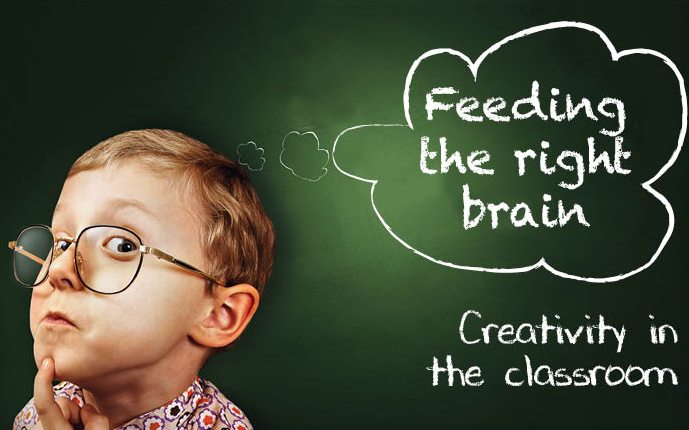
Feature: Feeding the right brain

0

by Lily O’ Brien

My teacher asked me what questions I would have for Leonardo da Vinci if I could go back in time and talk to him,” says Nell Jerde, a 13-year-old seventh-grader at the pre-school through eighth-grade Greenwood School in Mill Valley. She is currently studying the Renaissance in one of her classes, and this type of learning is why she says she loves her school.

Nell’s mother, Jennifer Jerde, a Mill Valley resident, believes that this kind of creativity in the classroom is critical to a child’s personal and professional development, and for helping to assure success later in life.

She has another daughter—a fifth-grader at the Greenwood School, and both have been there since kindergarten. The Jerdes have had to make financial sacrifices to send their daughters to the Greenwood School, but feel that it has been worth it. “The world needs creative people very badly,” Jerde says.

When the girls were in another pre-school program, Jerde had heard about the Greenwood School and felt strongly about sending her daughters there. “When the kids were little, I realized that I wanted them to get an education that enabled them to be creative, and by that I mean that they could problem-solve and make things that didn’t exist before,” Jerde says. “Play is the work of a young child, and imagination and creativity come out of play.”

So how important is creativity in early education? There is no question that it is important for kids to get a solid education in the basics like science, math and social studies, but there seems to also be a need for “out-of-the-box” thinking to succeed and excel in today’s world. Research on this topic in the past few years led California to adapt the Common Core Standards, a set of evidence-based educational standards (developed in consultation with teachers and parents from across the country) designed to help students from kindergarten through the 12th grade learn what they need to know in order to be successful in college, career and life.

Jerde understands the importance of creativity—she runs her own brand identity firm that develops both strategy and visual concepts for a variety of companies. “People have this misconception that creativity is not as important as the more measurable things like math, and that art won’t enable people to be gainfully employed,” she says.

Jerde believes that exposing kids to a lot of media is not good for them, and she likes the fact that the Greenwood School puts the emphasis on kids cultivating their imagination, without too much mass media input. “When you expose young children to media like TV,” Jerde says, “they aren’t creating, but are reenacting things they have seen. Active creativity only happens when they are exposed to other stuff.”

Her daughter Nell agrees. “A lot of creative thinking is involved in the learning and the teaching and a lot of art is used [at the Greenwood School],” she says. “We are always encouraged to try to think of new ideas and different ways to do things.” She is especially interested in this kind of learning since both of her parents are in creative fields (her father is an architect).

In addition to the Greenwood School, there are a number of other schools and organizations in Marin County dedicated to promoting creative thinking in early education—to feed the right brain. One of these places is the Marin County Office of Education, which is launching a program this month called the “Integrated Learning Specialist Program.”

The program includes three (voluntary) courses for teachers, and is designed to teach them how to take a more creative approach to teaching core classes—integrating such things as art into their teaching method.

Chris Spores, Director of Education Services for the Marin County Office of Education, found the program while observing a class in Alameda County (which is partnering with them) and got very excited about it. In that class, teachers were showing students a plan for a new project, but in a creative way—they had put the plan on a large piece of paper/artwork they had made.

“The idea is that [the program] is going to improve classroom teaching and learning across all subject matters,” Spores say. She is excited about promoting the program because it “aligns beautifully” with Common Core, by using lots of critical thinking. “The arts get integrated into the classes like social studies and language arts—it’s a blending of the two.”

The common theme seems to be that by integrating these kinds of activities and projects into regular classes, kids’ imaginations will be sparked. “I think that most teachers teach to their strengths, and this opens them up to reaching more students—like those students who really are very musical,” Spores says.

“This would allow that type of student to relate to the curriculum in a different way. Part of it is engagement and part of it is the way in which they learn. Integrating the arts into a science or history class—I think it’s just a more thorough way of teaching.”

Archie Douglas, head of the Greenwood School, believes that creativity is essential for development and success in today’s world. One way the school accomplishes this is by not introducing computers into the classroom right away. “Until the introduction of ‘Digital Literacy and Citizenship’ in the sixth grade, you will not find technology at Greenwood,” Douglas says. He claims that there is a growing pile of documentation that supports the theory that “early-age screen time stifles creativity, reduces concentration spans and inhibits the development of crucial interpersonal skills.”

“I like to say that students need to learn to use the computer that sits on their shoulders first—there will be plenty of time for tech in the years ahead,” Douglas says. He claims that as a result of this approach to learning, Greenwood School graduates “regularly demonstrate their creative, integrated, outside-the-box thinking—in high school, in college and beyond, that helps them to be successful throughout the rest of their lives.”

Douglas also believes that standard teaching methods can tend to teach kids to develop only part of their brains, which can turn them just into straight linear thinkers who only understand how to use the scientific method, and not how to be intuitive. “Then kids will just be like computers or robots,” says Douglas, “not thinking flexibly and not out-of-the-box, which will just turn their brains into boxes. What we are building here at Greenwood School is better brains).”

“Not everyone will be the next Steve Jobs,” he adds, “but a lot of them will be artists and self-employed. Their education has taught them freedom, not conformity, and that freedom will serve them well in the fluid and challenging world ahead.”

Dr. Valerie Pitts, Superintendent for the Larkspur-Corte Madera School District, says that there has been a huge transformation in education since the beginning of the 21st century, and specifically in the last three to four years. “We are shifting from this incredible focus of the last two decades that we have had on content, to our new standards which incorporate this element of deeper thinking and problem-solving, and tapping into that creativity that kids have—that sort of limitless potential to be able to look at things a little bit differently,” she says. “The new standards are more rigorous and more built around this notion that we need to teach kids how to problem-solve, think critically, communicate, collaborate and be creative, which we have come to call ‘21st century skills.’”

Pitts believes that this new approach to teaching and education is crucial and says that teachers she works with are very excited about it and are constantly thinking of new ways to tap into kids’ innate creative ability and to help shape it.

“We are always moving forward in education to keep up with the times and the information flow,” Pitts says, “and it has always had an impact on what’s going on in our classrooms. And in the 21st century, we know that these skills are really critical for success, so they are being taught in classrooms as early as pre-school.”

Another organization that takes an imaginative, interactive approach to education is the Bay Area Discovery Museum in Sausalito. Their mission is “to ignite and advance creative thinking for all children.” In addition to their exhibits, they offer a wide variety of classes, camps and events, including a Center for Childhood Creativity with presentations on a variety of topics, and an annual Creativity Forum—a thought leadership luncheon for parents, educators, business leaders and the research community that includes a panel of prominent speakers in the area of education.

Amy Eisenmann, Associate Director of Museum Programming, believes that the museum attracts a large number of parents who bring their children to the museum because they want their children to be exposed to a wide variety of topics in ways that are not possible in the classroom setting. “Parents bring their families for classes or to explore the museum, or send their children to our camps or licensed pre-school with the hope and expectation that their children will be exposed to those experiences and environments that help them to become more creative, preparing them for their future success in life,” Eisenmann says.

She adds that although their school programs do focus on developing STEM (Science, Technology, Engineering and Mathematics) skills, the museum programs support learning those basic standards through methods that also develop essential skills such as creative and critical thinking, which will serve children the rest of their lives.

Eisenmann believes that creativity is an essential element of the learning process for kids. “Creativity sometimes is perceived as a trait that is limited to the arts and that is largely based on genetics (either you’re born creative or you’re not), but neither is true,” she says. “Scientists in particular exercise creativity as they explore new ways of thinking about our world and investigate their questions.  Creativity has been shown to be less heritable than either IQ or personality, meaning that the contribution of the environment is tremendous. A child becomes a more creative individual when the environment encourages creativity, for example, by allowing a child to make decisions and work collaboratively. It is no longer enough to just have a lot of knowledge—you have to be able to come up with new and creative ideas to solve problems and work with lots of different kinds of people to succeed in our current economy,” she says.

Ask Lily about her creative endeavors at lo*****@********un.com.

Letter: ‘She made light of both the oughts.’

Ode on a Hero & Zero

Did you see what she did?
What she did was nearly hid!
A change in font she slipped by us;
Was it artsy, or female bias?

Boldly did she face the HER
Did the same with the ZER.
Without even second thoughts,
She made light of both the oughts.

What will she do to a poem so picky,
So “In your face,” to our Ms. Nikki?
Will it cause a brow to furrow?
Might it be named a happy HERO?

(God forbid—not a ZERO.)

Anonymous, San Rafael


This week in the Pacific Sun

0

Our Education issue offers you a glimpse of some of the latest—and upcoming—changes in education, and includes a piece by Lily O’ Brien, who explores what Marin schools and museums are doing to ensure that all kids have opportunities to be creative. David Templeton chats with forensic pathologist and New York Times bestselling author Dr. Judy Melinek about ‘David & Me,’ a documentary that shines light on an unlikely friendship between a convicted murderer and a filmmaker. And Katie Rice Jones provides a guide for where and how to “perch” in Marin. All that and more in this week’s Pacific Sun, available online and on stands today.

Letter: ‘Obesity rates were far lower in the 1960s and ’70s…’

What’s .8 billion between friends?

Charlie Morgan’s assertion that Islam has the most followers is not correct [“The Needle and the Damage Not Done,” March 6]. According to the latest stats from The Huffington Post, there are roughly 2.3 billion Christians of all denominations, while Islam has about 1.5 billion. As for Elizabeth Lynne’s argument against vaccination [“You’ve Got to Fight for Your Right … to Measles Paaartay!” March 6], please keep in mind the recent population explosion all over the world (due in no small part to religious leaders seeking larger numbers of followers and by proxy more power), that obesity rates were far lower in the 1960s and ’70s (and that a much heavier population is far more susceptible to myriad diseases like diabetes and cancer), plus modern medicine debatably keeping people alive longer than necessary have all exacerbated this issue.

Tony Good, San Rafael

Advice Goddess

by Amy Alkon

Q: This guy I’m dating usually texts back when I text him. But sometimes, like last night, he doesn’t write back. And I’m just texting stuff like, “How was your night?”—not “OMG, I miss you.” His not responding feels so disrespectful. I want to read him the riot act. —Deeply Upset

A: Unfortunately, it’s the rare man who has a mind-reading helmet, and even if this one does, there’s a pretty good chance it’s in the back of his closet under a pile of superhero underwear.
So yes, you actually do have to tell a man what you want. But choose your tone wisely. Reading a man the riot act is the right idea if you’re just looking to vent and be done with him. Angrily attacking someone or even just criticizing them will set off their fight-or-flight system. Their brain dispatches a bunch of biochemical messengers to alert the internal palace guard that they’re under attack. This, in turn, shuts down the systems that aren’t necessary for escape or battle, such as their digestive system (yeah, whatever) and their intellect—as in, their ability to consider your point. Oops.

To give this guy a chance to hear you and maybe even change his ways, turn to the wisdom of the world’s first behavioral economist, Adam Smith. In his 1759 potboiler, The Theory of Moral Sentiments, Smith notes that evoking someone’s sympathy motivates them to want to ease the suffering of the person they’re feeling sympathy for. In other words, instead of attacking the guy, simply let him know how hurt you feel when you text him and get only the cold glare of the blank screen in response—the equivalent of his replying to some question you ask him at a party by diving over the porch railing into an embankment.

Unless he has an ashtray or another small household object where his heart is supposed to be, chances are he’ll feel bad that you’re feeling bad and try to reassure you. Also, as I explain in Good Manners for Nice People Who Sometimes Say F*ck, “technology makes a nearly instant response possible; it doesn’t mandate it.” But by calmly explaining that you’d really appreciate a response—at some point, even the next day—he can lay out what works for him, and the two of you can see whether it’s possible to meet in the middle. By talking instead of raging, you’ll be getting off to a very good start that transcends problem-solving in the text messaging department. If you can’t tell a guy he’s hurting your feelings, how can you tell him, “So I was parking your brand new car, and I don’t have the best depth perception, and, well … ”?

Q: I was crazy about this guy I started dating, but he got complacent, so I ended it. I started seeing someone else, which led my ex to proclaim that he loves me and wants me back. I recently ended things with the other guy, largely because I still have strong feelings for my ex. My ex swears he’ll break up with his current girlfriend but seems in no hurry to do it. How long should I wait in the wings for him?—Clock-Watching

A: How long should you wait? Well, that depends on whether you’re hoping to go on your first date with him in a flying car.

Relationships are “built on trust,” not rust—forming on you while you “wait in the wings” for a guy who’s under no pressure to speed up the timetable on having the uncomfortable breakup conversation with his current girlfriend. Another explanation for his dawdling may be the “mere ownership effect,” a behavioral economics term describing our tendency to irrationally overvalue and cling to something simply because it’s already in our possession. Consumer behavior researcher Sara Loughran Dommer finds that this ownership effect is even stronger when there’s an “ego threat” involved, like, oh, when your ex’s thoughts of you also bring up thoughts of you dumping him (even if he did deserve it for sleeping on the job).

However, the behavioral science cookie jar has something for you, too—“reactance,” our fear of missing out on an opportunity, the principle behind “Limited-time offer!” To chip away at his current complacency, give him a two-week “grace period” to straighten things out. Allowing him some time suggests that you have strong feelings for him. Making it a limited time suggests that you have strong feelings for yourself (self-respect and, out of that, boundaries). Good things can come to those who wait—just not so long that the movies playing on date night are Bruce Willis in “Die Hard With a Pacemaker” and Jackie Chan in “Kung Fu From a Walker.”

Trivia: Marin County’s first settlers worked in the farming and ranching industry, primarily raising what kind of animals?

For more trivia questions (and answers!) see Howard Rachelson’s Trivia Café every week in the Pacific Sun.

Answer: Cows—at first for hides and tallow (the fat was used for soap and lubricants) and later for milk and meat.

Letter: ‘All people from the continent of America are Americans.’

Yeah, but you don’t mean the Canadians, right?

I would like to let Peter J. Thomas of Americans for Constitutional Liberty [“It’s Gonna Be A Long Four Years, Folks,” Feb. 27] know that America is the name of a continent. All people from the continent of America are Americans.

Yvette Wakefield, Mill Valley

Letter: ‘There are 25,000 adverse vaccine events reported each year.’

Here are a few undeniable realities ... In Charlie Morgan’s letter the writer says he has never heard a convincing argument not to vaccinate for measles and, by implication, for anything else. Without getting into the important specifics of the actual history of each vaccine, here are two compelling reasons not to be so complacent: First, there are known risks....

Food & Drink: Luck of the Irish

by Tanya Henry We all know that there are many Marins. Every town has its own distinct character and flavor, and nowhere is it more apparent than in our coffee shops. One I have recently rediscovered is Emporio Rulli in Larkspur. Its romantic Old World, Euro-style interior, with dark wood, pretty marble tabletops and glass cases filled with fanciful pastries...

Letter: ‘I remember when pickup trucks only had two doors.’

As they say, keep on truckin’ ... I’m so old, I remember when pickup trucks only had two doors. Now they weigh 6,000 pounds with bumpers that are window-height to a normal sedan. And Marinites are supposed to be environmentally conscious? Carlo V. Gardin, Fairfax

Feature: Feeding the right brain

by Lily O’ Brien My teacher asked me what questions I would have for Leonardo da Vinci if I could go back in time and talk to him,” says Nell Jerde, a 13-year-old seventh-grader at the pre-school through eighth-grade Greenwood School in Mill Valley. She is currently studying the Renaissance in one of her classes, and this type of learning...

Letter: ‘She made light of both the oughts.’

Ode on a Hero & Zero Did you see what she did? What she did was nearly hid! A change in font she slipped by us; Was it artsy, or female bias? Boldly did she face the HER— Did the same with the ZER. Without even second thoughts, She made light of both the oughts. What will she do to a poem so picky, So “In your face,” to...

This week in the Pacific Sun

Our Education issue offers you a glimpse of some of the latest—and upcoming—changes in education, and includes a piece by Lily O’ Brien, who explores what Marin schools and museums are doing to ensure that all kids have opportunities to be creative. David Templeton chats with forensic pathologist and New York Times bestselling author Dr. Judy Melinek about ‘David...

Letter: ‘Obesity rates were far lower in the 1960s and ’70s…’

What’s .8 billion between friends? Charlie Morgan’s assertion that Islam has the most followers is not correct . According to the latest stats from The Huffington Post, there are roughly 2.3 billion Christians of all denominations, while Islam has about 1.5 billion. As for Elizabeth Lynne’s argument against vaccination , please keep in mind the recent population explosion all over...

Advice Goddess

advice goddess
by Amy Alkon Q: This guy I’m dating usually texts back when I text him. But sometimes, like last night, he doesn’t write back. And I’m just texting stuff like, “How was your night?”—not “OMG, I miss you.” His not responding feels so disrespectful. I want to read him the riot act. —Deeply Upset A: Unfortunately, it’s the rare man who...

Trivia: Marin County’s first settlers worked in the farming and ranching industry, primarily raising what kind of animals?

For more trivia questions (and answers!) see Howard Rachelson’s Trivia Café every week in the Pacific Sun. Answer: Cows—at first for hides and tallow (the fat was used for soap and lubricants) and later for milk and meat.

Letter: ‘All people from the continent of America are Americans.’

Yeah, but you don’t mean the Canadians, right? I would like to let Peter J. Thomas of Americans for Constitutional Liberty know that America is the name of a continent. All people from the continent of America are Americans. Yvette Wakefield, Mill Valley
3,002FansLike
3,850FollowersFollow