Letter: ‘You should be far more careful in verifying claims…”

Dissing the Dirt

In the most recent edition of the Pacific Sun, your Dirt Diva makes several totally untrue statements. First of all, antibiotic-resistant foods are not “killing people” around the world. That’s simply untrue. Regardless of any profit motive any malevolent corporation might have, there are plenty of journalists who’d love to jump all over a story like this. Why have there been no credible reports of such things from reliable and authoritative sources? Because they haven’t happened. Personally I do worry a great deal about the American practice of stuffing animals with antibiotics because of the danger of breeding “superbugs,” but making false claims will only weaken our argument against such practices. Hysteria and hyperbole have no place in effecting change for the better.

Likewise your correspondent claims that “organic food has … more macro- and micro-nutrients.” Once again this is factually untrue.

We live in a world of people making shrill, baseless assertions to promote their cause. But positive change doesn’t come from scaremongering, false claims, or any other sloppy journalistic behavior. At Pacific Sun you should be far more careful in verifying claims prior to publication, unless you’re content to have your paper regarded in the same light as the National Enquirer.

Allan M Lees, Marin

Upfront: The war on plastic bags

by Peter Seidman

After waging a guerrilla war on local plastic bag bans, the plastics industry has turned its attention to the California Plastic Bag Ban Referendum.

The tactic against the statewide prohibition on plastic bags is just the latest maneuver the plastics industry and bag manufacturers have employed to block bans.
Marin is one of the first places in the country to face a plastics industry assault on a local ban.

Fairfax was among the first entities in the state to enact a bag ban, but only after ducking a legal attack from bag manufacturers, which used a blocking move that presaged future legal tussles in California. Shortly after the Town Council approved a single-use plastic bag ban in 2007, plastics manufactures charged that the town had violated the California Environmental Quality Act (CEQA) because Fairfax had failed to follow environmental review guidelines. The legal challenge asserted that if the town wanted to proceed with a bag ban, it could do so only after assessing how a plastic bag ban would affect the use of paper bags, so-called biodegradable plastic bags and other alternatives. Conducting an environmental review of that nature can cost tens of thousands of dollars, and Fairfax was understandably hesitant.

The California Environmental Quality Act challenge has become a common tactic used by critics seeking to stop projects—everything from transportation infrastructure to housing developments to, yes, plastic bag bans. Fairfax pulled its own legal maneuver from its toolbox and took a proposed bag ban to voters, who approved a ban by a 78.5 percent margin. The town used a CEQA exemption to its advantage. Going to the ballot meant that the town could forego the CEQA rules on which the bag manufacturers based their legal threat.

The plastics industry and bag manufacturers, after losing the skirmish in Fairfax, turned their attention to a proposed countywide ban for unincorporated Marin. When county supervisors were ready to vote for a single-use plastic bag ban in unincorporated Marin in January 2011, a group called Save the Plastic Bag Coalition (SPBC) raised a familiar refrain and dumped a load of legal objections on the county. But the challenges delayed supervisors from approving a bag ban by only a few weeks.
Former Supervisor Charles McGlashan, who had spurred the county to approve a bag ban, said the legal challenge would not deter the ultimate outcome. Former Supervisor Susan Adams, who worked closely with McGlashan on the bag ban, said, “This board is committed to moving forward.” And it did.

The American Chemistry Council (ACC), a trade association that acts as an advocate for companies engaged in the business of chemistry, also moved forward—in an attack on a Marin bag ban. The industry-backed group was traveling the state mounting efforts to block bag bans in local jurisdictions. One of those attempts involved a lawsuit against Manhattan Beach—and one involved a lawsuit filed against the bag ban in Marin.

Although SPBC, founded by former Tiburon resident Stephen Joseph, a San Francisco attorney, managed to put a thumb in the bag-ban dyke, sustainability proponents saw the two court cases as a delaying tactic rather than a mortal blow for single-use bag bans.

The suit against Manhattan Beach went all the way to the California Supreme Court, which ruled that the city did not have to complete the CEQA review the Bag Coalition wanted because Manhattan Beach is a relatively small community and a ban would pose no severe environmental damage no matter what happened after a single-use bag ban.

SPBC remained committed to stopping other proposed bag bans, and contended that bans could do more environmental harm than good. That charge of harm rests on the supposition that banning single-use plastic carryout bags increases the use of paper bags, which in many ways actually pose more of an environmental threat than plastic bags. And that’s why localities pushing bag bans favored setting a fee on paper bags as an important component in bag bans.

The proponents acknowledge that paper bags pose an environmental concern in large part because they do not break down easily in landfills, where layers lack sufficient oxygen to promote decomposition. Setting a fee on paper bags would discourage their use, encouraging shoppers to bring their own reusable bags.
For a time, the prospect of compostable plastic bags made a splash, but it turned out that they, also, do not break down easily in current landfills.

The county had prevailed in the lawsuit that SPBC filed against the county’s bag ban. Marin took the position that it needed no extensive CEQA environmental review because the bag ban should be what’s called “categorically exempt”. In other words, the ban on plastic bags and a five-cent fee on paper bags would pose no environmental damage and would, in fact, be environmentally beneficial because the fee would help curtail paper bag use. A Marin Superior Court Judge agreed.

The bag ban battle moved to the state Legislature in 2010 with AB 1998, authored by Assemblywoman Julia Brownley, D-Santa Monica. It would have banned single-use plastic bags at grocery stores, pharmacies, convenience outlets and similar stores. Democratic state Senator Mark Leno, who represents Marin, was the bill’s principal co-author. AB 1998 passed the Assembly and gained support from the California Grocers Association. Governor Schwarzenegger said he would sign the bill if it passed through the Legislature. That didn’t happen. The bill failed to pass a Senate floor vote by a 14 to 21 margin.

“AB 1998 would ban all the single-use bags that have been polluting our oceans and waterways and threatening marine life,” said Brownley before the Assembly vote. In addition to banning plastic take-out bags at checkout stands, AB 1998 mandated that shoppers who didn’t bring their own bags would have to buy paper bags made out of at least 40 percent recycled paper for a minimum of 5 cents per bag. Shoppers also could purchase reusable bags. The law would have taken effect January 1, 2012. The plastics industry, and most notably the American Chemistry Council, spent millions of dollars on media buys to influence legislators.

Local bag ban proponents were waiting to see what the Legislature would do before continuing their local bag ban efforts. That’s happening again, except this time local proponents of bag bans want to move forward as fast as possible to effectively block a referendum that would itself block a statewide bag ban.

In 2014, Governor Jerry Brown signed SB 270, which was set to take initial effect on July 1, 2015. It would prohibit large grocery stores and pharmacies from using single-use plastic carryout bags. Small grocery stores, convenience and liquor stores would be prohibited from using the bags on July 1, 2016. The bag bans, like other bans that have been proposed and those that have been enacted in California, deal with only take-out bags. They allow the single use of bags for meat, break, produce and other food. And like other bag bans in California, the statewide ban would set a fee for recycled, compostable and reusable bags if shoppers needed them. SB 270 sets a 10-cent fee on the bags.

In an attempt to blunt the cost of that fee on low-income shoppers, SB 270 would exempt shoppers who use payment cards or vouchers the California Special Supplement Food Program issues.
The legislation also attempted to blunt the initial effects of a statewide ban on the plastics industry. SB 270 would provide $2 million to plastics manufacturers in the state to help retain and retrain workers in the bag industry.

The operative term now is “would.” California Secretary of State, Alex Padilla, has certified that signatures gathered to block SB 270 qualify the referendum for the 2016 ballot. The successful qualification of the referendum suspends the start of the statewide ban at least until the outcome of that election. (The certification carries an irony: When Padilla, D-Pacoima, served in the Legislature last year he introduced SB 270.)

When Fairfax voters went to the polls, they approved their bag ban by an overwhelming margin. Bag ban proponents hope and expect the same will be true statewide in 2016. But the wording of the referendum has caused some confusion that could affect the vote. A “yes” vote means a voter wants to uphold SB 270. A “no” vote means a voter wants to overturn SB 270 and reject a statewide bag ban.
While the political battle over SB 270 leads up to the November 2016 election, local jurisdictions are moving to pass their own local bag ordinances. The referendum will not affect the local bans, including those in Marin, where other cites and towns have joined Fairfax and the county. That acceptance of bag bans has proliferated across the state, where an estimated 138 localities have passed bag bans.

“It’s not surprising that after spending more than $3.2 million, 98 percent of which is from out of state, the plastic bag industry has bought its way onto the California ballot to protect its profits,” says Mark Murray, spokesman for Californians vs. Big Plastic (CVBP). “Every poll shows that Californians strongly support the law, and the $30 million to $50 million it will cost the plastics industry to launch a full-fledged campaign in 2016 will be proven to be an act of political malpractice, particularly since nearly half the state will no longer have plastic bags by election day.”

But the plastics industry and bag manufacturers see things quite differently. The American Progressive Bag Alliance submitted more than 800,000 signatures to qualify the referendum. After sampling the signatures, election officials determined the organization had at least 110 percent of the 504,760 signatures needed to qualify.

After losing CEQA objections in the courts and failing to stop local bans, the plastics manufacturers and the bag makers switched tactics and aimed their attacks at the concept of setting fees on carryout paper bags.
Another organization involved in the controversy, the American Progessive Bag Alliance (APBA), and its allies that are trying to spike the statewide ban by saying the referendum will give voters a chance to cast ballots on what they term a bad law, one that they say would cost 2,000 local manufacturing jobs. Lee Califf, executive director of the ABPA has said SB 270 “would funnel obscene profits to big grocers without any money going to a public purpose or environmental initiatives.”

That reference to “obscene profits” refers to the collection of the small fee for a bag that shoppers would have to buy at the checkout counter if they had no bag and needed one. The attack makes it seem as if the ban is designed to generate a cash windfall for retailers and grocers. Proponents of the bag bans always have intended for the fee to act as a deterrent, not as a revenue stream. If shoppers bring in their own reusable bags, say proponents, no cash needs to be exchanged for bags, and no “obscene profits” come into the picture.

At one time bag ban opponents pushed for more robust recycling measures, which resulted in shoppers able to return single-use bags to stores, where the bags could be collected.
But the strategy has not worked, say proponents of single-use bag bans. Despite the statewide program to collect and recycle the single-use bags, only a small single-digit percentage end up in the recycling stream.

The rest end up blowing in the wind or buried (in a best-case but undesirable scenario) in a landfill.
“Single-use plastic shopping bags pose a costly burden on our environment and our economy,” says Murray of CVBP. “After listening to the public, hundreds of local elected officials, the state Legislature and the governor have moved to eliminate plastic bags. Virtually all of the plastic bags sold in California are produced by just three out-of-state corporations.”

Contact the writer at pe***@******an.com

Hero and Zero: An abalone dinner and a macho biker confrontation

by Nikki Silverstein

HERO: Generosity abounds in Marin. Our civic-minded heroes this week pooled their creativity and talents to make a positive impact in their community. Nathan Cobert, President of the Marin Scuba Club, is an avid abalone diver. When his Terra Linda Rotary chapter held its annual fundraiser last month, Cobert offered to provide the ingredients for an abalone dinner. His donation inspired another Rotarian, Fan Tan Smith, to offer his culinary skills to prepare a lavish six-course feast featuring abalone and exclusive wine pairings. The dinner extravaganza went for a whopping $1400 at auction, with munificent Rotarians Brian McLeran and John Bottari taking home the gastronomic prize. The proceeds benefit the Rotary chapter’s scholarship fund for deserving Terra Linda High School students. Gentlemen, thank you for your service.

ZERO: Let’s consider neutering aggressive males in Marin. It might stop these testosterone-laden, cavemen throwbacks from physically assaulting folks. Our most recent candidate for surgery is the macho mountain biker who used brute force last week during a confrontation with a 65-year-old female hiker on a trail in the Lucas Valley Open Space. Preserve. A witness called 911, and the woman was rushed to the hospital with bruises, cuts and swelling to her head, arm, torso and leg. Don’t forget the tech CEO cyclist who pulled a guy out of a car to violently beat him, and the good doctor who grabbed one of his 50 guns to shoot the road rage man who tailgated him home. If these bullies won’t control themselves, we should help them. Snip, snip.

Got a Hero or a Zero? Please send submissions to ni***************@***oo.com.

Publisher’s Note: Come grow with us

by Bob Heinen

Great journalism, community involvement, a forum for sharing ideas. That’s what we do here at the Pacific Sun.

We bring readers, business owners, thought leaders, activists and nonprofits together to make Marin a special place to live.

If you are like most of us, you would love a job that allows you to do well while doing good. We are looking for smart, creative market managers/new business developers to help expand our coverage. We have more prospects than we can handle with our current team of great marketers.

Your career at the Sun will be rewarding beyond a potentially lucrative income. You’ll have the opportunity to support a wonderful community resource by sharing our stories with business owners who wish to connect with a strong and loyal reader base.

Come speak with us. We are the Pacific Sun. Your future.

Video: The sound of insanity

by Richard Gould

BIRDMAN isn’t Michael Keaton’s own story of course, but it’s hard to think of a better pairing of actor to role. His recent Oscar-junket rounds for the film, set against the background of his career-making turns wearing the cape in 1989 and ’92, show a cheerful willingness to be misunderstood. Keaton plays “serious” actor Riggan Thomson, whose ill ease with the comic book character that brought him fame years ago has put him on a mission to stage a Raymond Carver short story on Broadway, starring himself. More theatre de l’absurde in the rehearsals than “Angry Old Man,” it’s seen by most as an attempt by Thomson to find relevance in an industry that’s passing him by. But we see what others can’t; All he really wants to do is break through his numbness. Costar Mike (Edward Norton) arrives, bringing some real theater chops and an ego to match; when Thomson isn’t being upstaged by him, he’s contending with a daughter whose self-destructiveness and cutting barbs are enough by themselves to shoot him down–say nothing of the theater critics. But Thomson’s flights of imagination seem to rise above the surrounding grimness–his strange telekinetic powers, and a certain booming-voiced feathered man just over his shoulder. The film’s single tracking shot has wowed many, but I was more struck by the dazzling one-piece score by Antonio Sanchez, who believes–as composer Alfred Newman did in 1945’s Leave Her to Heaven–that insanity’s theme song is a military march.

Home & Garden: Taking a stand

by Annie Spiegelman, the Dirt Diva

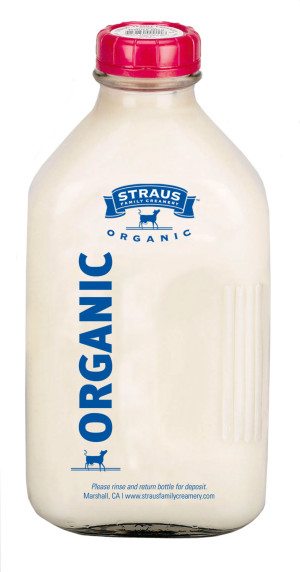
As a diva, once I learned where the milk is sourced from at my local Starbucks, I decided to search for a new coffee joint that serves organic milk in their lattes. (Thank you, Rustic Bakery.) Diva or not, you, too, deserve safe milk in your delicious, overpriced coffee drink! Coffee giant Starbucks purchases milk from large, industrialized farms where cows are fed a diet comprised of genetically modified corn, soy, alfalfa and cottonseed.

Plus, a high dose of antibiotics. Non-organic livestock production is responsible for 80 percent of all antibiotic use in the world, and the dairy industry, in particular, uses the strongest and most dangerous forms. As an example, a super potent antibiotic drug used by commercial dairy farmers called Ceftiofur creates resistant bacteria after only one dose.

Scott Blankenship, founder and CEO of Amplifyd, a social activism startup based in Berkeley, is concerned about the health risks. “Most people are aware that the overuse of antibiotics can create super bacteria no longer resistant to the antibiotics we’ve come to rely on to save our lives,” Blankenship says. “But what’s truly frightening and alarming are the numerous and recent scientific studies telling us that this is no longer an apocalyptic theory but rather something happening now, and it’s killing people at an increasing rate all over the world.”

Blankenship’s latest advocacy platform is inviting coffee lovers to take a stand by asking Starbucks to make the switch to organic-only milk in a unique, easy and powerful way—through the use of consumer pledges. It can be a win-win for everyone (consumer and corporation) if the company makes the switch. “At the end of the day, corporations respond to their financial bottom line,” Blankenship says. “Through consumer pledges, we have the ability to positively incentivize corporations to change by increasing that bottom line if they change their behavior, without any risk or effort by the consumer.”

Here’s how it works at amplifyd.com:
1. You select the dollar amount you want to pledge.
2. Your credit card information is securely saved for later. (Your pledge amount will never be charged unless the campaign is won.)
3. Amplifyd will then use the collective pledges as the financial incentive to get Starbucks to switch to organic milk. The more collectively pledged, the more financial incentive these companies have to change.
4. If (and only if) the campaign is won by March 31, 2015, and Starbucks decides to offer organic milk in their stores, Amplifyd will charge your credit card for the amount you pledged. They’ll then send you a gift card with the pledge amount they just charged, minus their transaction fee, which you can use with the company that made the switch.

Just what is considered “organic” milk?
According to the U.S. Department of Agriculture, organic dairy cows must graze in pastures for at least four months per year, their feed for the rest of the year must not have been grown from Genetically Modified Organism (GMO) seeds or treated with pesticides or synthetic fertilizers and the cows must not be treated with hormones or antibiotics.

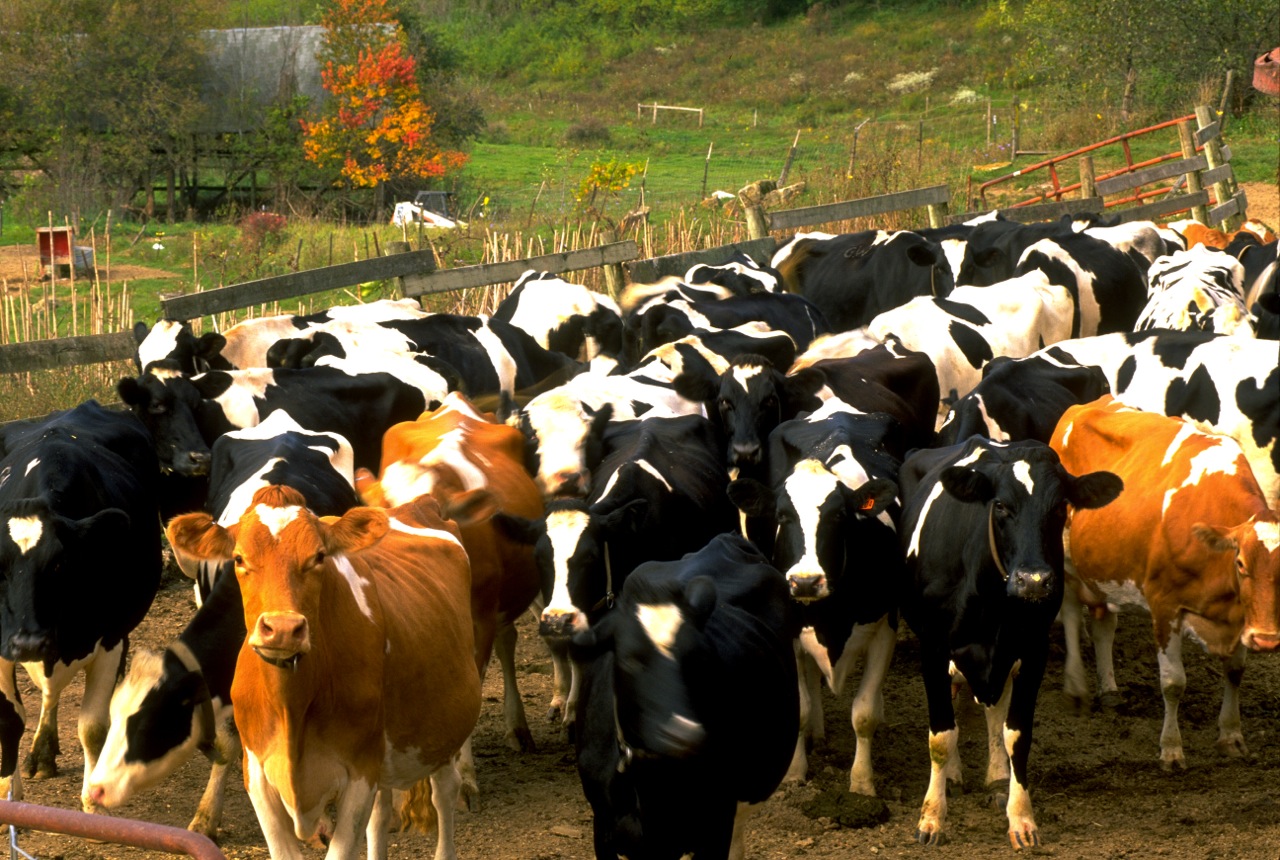
This is what healthy and happy organic cows look like. Photo courtesy of Organic Valley Farms

WHY ORGANIC?

Nutrition:
Studies show that organic food has less cancer-causing pesticide residue than conventionally grown crops and more macro- and micro-nutrients. A 2003 University of Washington study found that children who were fed mostly organic produce and juice had only one-sixth of the level of organophosphate pesticide byproducts in their urine compared to children who ate conventionally grown foods.

The President’s Cancer Panel examined the impact of environmental factors and the use of synthetic chemicals on cancer risks before reporting its findings in 2010. Written in collaboration with the National Institutes of Health and the National Cancer Institute, the report recommends that American consumers eat food grown without pesticides and synthetic fertilizers.

And, can we stop thinking about me, me, me? (Unless you are a diva.) And think about the farm workers?
The President’s Cancer Panel’s 2008-2009 Annual Report showed an increased incidence of certain types of cancers in farm workers and their spouses and an increased incidence of leukemia in children living in agricultural areas.

Climate Change:
After conducting research trials on organic agriculture for nearly three decades on its 333 acres, the Rodale Institute’s records show that organic systems’ soils, when intensively managed with compost and cover crops, can store more than 2,000 pounds of carbon per acre, per year. If all of the world’s 3.5 billion tillable acres were converted to these biological farming methods, we could reduce global CO2 emissions by 40 percent.

Feeding the World:
Globally, scientists are finding that regenerative organic farming holds the only sustainable solution to fight world hunger. A recent report to the United Nations drafted by more than 400 cross-disciplinary researchers and development workers drew the conclusion that organic, regenerative agriculture utilizing available and affordable techniques—such as cover cropping, crop rotation and composting—would serve the people of the developing world far better than imported chemical fertilizer and other outside purchased inputs.

Today, I want you to stop thinking that organic food is just for the elite! When you look at its full value, organic food is still a bargain. “The cost of non-organic food doesn’t include the loss of topsoil or crop-disaster relief, health concerns, climate change or dead zones in the Chesapeake Bay and Gulf of Mexico,” says the Rodale Institute’s Tim LaSalle. “If you factor in all that, conventional, chemically grown food is actually much more expensive than organically produced food.”

Blankenship believes that the switch to organic milk would reverberate across the industry. “Starbucks [is] such [a] large milk-buyer that a switch to organic milk would have a big impact on this critical health problem,” he says. “This would be a huge win for consumers and would be a step forward in safeguarding the effectiveness of the antibiotics used to save human lives.”

To pledge, or to watch the latest video from Amplifyd on their organic milk campaign, visit: www.amplifydpledges.com/campaign/organic-milk.

Send Annie free lattes (with organic milk) at th*********@*******nk.net.

Roots of Peace

ROP-Logo-Green-Horiz-Text-227x82-transparent


by Molly Oleson

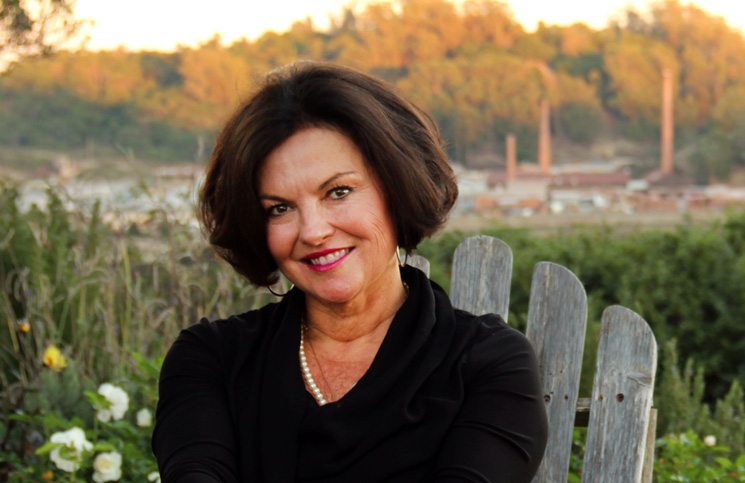
It all began with a toast. Raising a glass in her San Rafael home more than 17 years ago, Heidi Kuhn, a fifth-generation Marinite and mother of four, had an epiphany. Deeply inspired by the defining work of the late Princess Diana—who the world had lost just three weeks prior—Kuhn had a strong vision to turn landmines into vineyards.
“It was an epiphany from my heart,” says Kuhn, sitting in the backyard of her home, passed on to her from her grandparents and overlooking the bay. “That the world may go from mines to vines. And you could hear a pin drop. It was an epiphany of turning—almost a visual, of blood to wine, killing fields to vineyards, peace on earth.”t all began with a toast. Raising a glass in her San Rafael home more than 17 years ago, Heidi Kuhn, a fifth-generation Marinite and mother of four, had an epiphany. Deeply inspired by the demining work of the late Princess Diana—who the world had lost just three weeks prior—Kuhn had a strong vision to turn landmines into vineyards.

People around the globe, Kuhn says, understood that the passing of Princess Diana was not just the passing of a princess, but of somebody who stood for compassion. “And the passion she brought through the issues she shed light to.”

Kuhn says that she wanted to give her dinner guests that night something very meaningful, and ensure that the work of Princess Diana would be carried on. “I looked at the kaleidoscope around where we stood and I thought, the Napa vintners, the Sonoma vintners, the Marin vintners—these people harvest the land, they celebrate the harvest, they smell the juicy nectar of the grapes,” Kuhn says. “Whether fermented or not, this is life.”

Encouraged by her guests to take her toast out of the living room and into the world, Kuhn presented her idea in Napa Valley the following week. Support from key vintners like Robert Mondavi, Mike Grgich and Diane Disney Miller—“pioneers and dreamers in their own right”—led to the 1998 launch of Roots of Peace, an organization dedicated to replacing landmines in war-torn regions worldwide with bountiful agriculture.

“We need to focus on the economics of peace,” says Kuhn, founder and CEO of Roots of Peace and recipient of the Pacific Sun’s 2014 Heroes of Marin Lifetime Achievement award. “We need to empower people. We need to provide food security on war-torn lands. We need to help heal communities. And to me that begins by the removal of a simple landmine—it’s a metaphor of hatred, and it’s a physical example, but we need to begin that act of removing the hatred from our one soil and then literally planting the roots of peace.”

Since the global initiative began, Roots of Peace has removed more than one million landmines and unexploded ordnances from continents across the globe, and has helped more than one million farmers to improve orchards and crops. “Like little Johnny Appleseed, I go around the world, giving people cards and inviting them to join me,” Kuhn says. “We’ve planted rice in Cambodia, grapes in Afghanistan, orchards in Croatia, flowers in Bosnia.”

Kuhn refers to her work as “changing the tide of hatred into love” by restoring damaged communities to economic self-sufficiency. “When you plant a seed, regardless of the color of your hand, the politics in your mind or the faith in your heart, that seed will grow, as it has for thousands of years,” she says.

A deep respect for the land can be traced back to Kuhn’s family roots in Marin County. Her great-great-grandfather sailed to California from Maine in the early 1850s, purchasing thousands of acres of land in what is now Marin and Sonoma. Her grandfather was president of the Rotary Club of San Francisco in the early 1940s, and his legacy was to help establish what was to be called the United Nations.

“For me, Marin County is really about the land and its people,” says Kuhn, noting that the original model for the Golden Gate Bridge was once laid out on her living room table, when her grandparents lived in the house and hosted a fellow “dreamer” who wanted to “turn his vision into reality.”

Kuhn’s grandmother, she says, encouraged her to dedicate her life to doing something for peace. “And to take those riches that we derive from the land and from its people, and to bring that beautiful spirit of Marin County out into a world that is so thirsty, so hungry … for love.”

A graduate of San Rafael High School, Kuhn holds a degree in political economics of industrial societies from UC Berkeley. A reporter and producer for CNN and other news organizations in the ’80s and ’90s, Kuhn was living in Alaska with her husband, who was working for IBM and who is now the president of Roots of Peace. She then went on to begin her own television news organization—NewsLink International—reporting on the Exxon Valdez oil spill and the melting of the Ice Curtain between U.S./Soviet relations.

The road hasn’t always been smooth. Before the birth of her fourth child, Kuhn was diagnosed with malignant cancer and told that she would not live. “That stops you in your tracks,” she says. “But it can also either paralyze you or make you realize that each day is a gift.”

She’s held on to the latter. “That’s the way I’ve always chosen to live my life,” she says. “I’ve just had to lead with faith, not fear, and be that pioneer woman that I know my great-great-grandfather would be very proud of.”

Although Kuhn is honored to win the Lifetime Achievement award, she says she’s far from done with her work. Her biggest goal? “World peace,” she says, without missing a beat. “Don’t blink.”

“It’s in my soul; it’s in my DNA; it’s in my spirit; it’s in my mind; it’s in my intelligence, to do whatever I can with the human footsteps that I have, and with these hands, to inspire the world to not forget the legacy of war,” she says. “Those beautiful leaders who have been in my life—let’s use them and draw upon that inspiration and believe in the world what is possible rather than what’s not.”

Hero FYI

  • Kuhn has been honored with the Cal Berkeley Alumni Award for Excellence and Achievement and the Jacqueline Kennedy Onassis Award/National Jefferson Award for Public Service, among other local and international recognitions.
  • She recently launched a crowd-rise campaign, sponsored by Jeff Skoll (co-founder of eBay) in which people around the world can participate in a “virtual walkathon” for peace.
  • Kuhn says that political landmines have been her biggest challenge, and that her most gut-wrenching experience has been the Taliban’s attack on Afghanistan—a country 80 percent dependent on agriculture—this past May.
  • Most rewarding has been “the farmers and the families on the ground,” Kuhn says. “It’s the face of my children and my husband, and it’s the light in the eyes of the children around the world that keeps me going.”


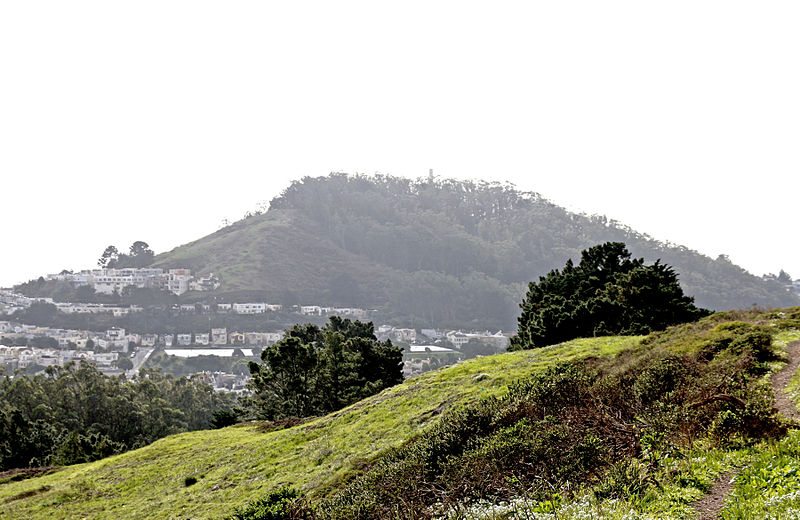
Trivia: At 928 feet, what is San Francisco’s tallest mountain peak?

For more trivia questions (and answers!) see Howard Rachelson’s Trivia Café every week in the Pacific Sun.

Answer: Mt. Davidson

Letter: ‘This is your year for World Series cheer!’

Ain’t ‘Casey at the Bat,’ but it’ll do…

The start of each season,
Your team has new reason
To think maybe this might be their year,
Though every team’s fans,
Also making their plans
To partake of team’s World Series cheer!

Let the fire burn out
In your stove, we’re about
To join your team for Spring Training fun;
Though snow is not melting
Back home, we’re sweltering
Underneath a near-tropical sun.

We’ll see who’s been signed to
Join your team, and now who
Still looks fit in their old uniform,
We will evaluate
Those who came to camp late,
See who already blew out his arm;

For I think it behooves
Fans to study the moves
By their teams made in off-season deals,
Like your team who ain’t won
Major League Gonfalon
In years despite your life-long appeals.

But it’s a new season,
And you have your reason
To think certainly “This Is Next Year!”
So. Despite other fans
Also making their plans,
This is your year for World Series cheer!

Elliott Kolker, Stinson

Letter: ‘You should be far more careful in verifying claims…”

Dissing the Dirt In the most recent edition of the Pacific Sun, your Dirt Diva makes several totally untrue statements. First of all, antibiotic-resistant foods are not “killing people” around the world. That’s simply untrue. Regardless of any profit motive any malevolent corporation might have, there are plenty of journalists who’d love to jump all over a story like this....

Upfront: The war on plastic bags

by Peter Seidman After waging a guerrilla war on local plastic bag bans, the plastics industry has turned its attention to the California Plastic Bag Ban Referendum. The tactic against the statewide prohibition on plastic bags is just the latest maneuver the plastics industry and bag manufacturers have employed to block bans. Marin is one of the first places in the country...

Hero and Zero: An abalone dinner and a macho biker confrontation

hero and zero
by Nikki Silverstein HERO: Generosity abounds in Marin. Our civic-minded heroes this week pooled their creativity and talents to make a positive impact in their community. Nathan Cobert, President of the Marin Scuba Club, is an avid abalone diver. When his Terra Linda Rotary chapter held its annual fundraiser last month, Cobert offered to provide the ingredients for an abalone...

Publisher’s Note: Come grow with us

by Bob Heinen Great journalism, community involvement, a forum for sharing ideas. That’s what we do here at the Pacific Sun. We bring readers, business owners, thought leaders, activists and nonprofits together to make Marin a special place to live. If you are like most of us, you would love a job that allows you to do well while doing good. We...

Video: The sound of insanity

by Richard Gould BIRDMAN isn't Michael Keaton's own story of course, but it's hard to think of a better pairing of actor to role. His recent Oscar-junket rounds for the film, set against the background of his career-making turns wearing the cape in 1989 and ’92, show a cheerful willingness to be misunderstood. Keaton plays "serious" actor Riggan Thomson, whose...

Home & Garden: Taking a stand

by Annie Spiegelman, the Dirt Diva As a diva, once I learned where the milk is sourced from at my local Starbucks, I decided to search for a new coffee joint that serves organic milk in their lattes. (Thank you, Rustic Bakery.) Diva or not, you, too, deserve safe milk in your delicious, overpriced coffee drink! Coffee giant Starbucks purchases...

Roots of Peace

Heidi Kuhn - Hero of Marin
https://www.youtube.com/embed/wqPDSmk3FhE     by Molly Oleson It all began with a toast. Raising a glass in her San Rafael home more than 17 years ago, Heidi Kuhn, a fifth-generation Marinite and mother of four, had an epiphany. Deeply inspired by the defining work of the late Princess Diana—who the world had lost just three weeks prior—Kuhn had a strong vision to turn landmines into...

Trivia: At 928 feet, what is San Francisco’s tallest mountain peak?

For more trivia questions (and answers!) see Howard Rachelson’s Trivia Café every week in the Pacific Sun. Answer: Mt. Davidson

Letter: ‘This is your year for World Series cheer!’

Ain’t ‘Casey at the Bat,’ but it’ll do... The start of each season, Your team has new reason To think maybe this might be their year, Though every team’s fans, Also making their plans To partake of team’s World Series cheer! Let the fire burn out In your stove, we’re about To join your team for Spring Training fun; Though snow is not melting Back home, we’re sweltering Underneath a near-tropical...
3,002FansLike
3,850FollowersFollow