Talking Pictures: The thrill of the hunt

0

by David Templeton

“The absolute best thing about San Andreas was Paul Giamatti,” says North Bay geologist and junior college teacher of earth science Susan Panttaja, “because he was so obviously a really good scientist, and in movies like San Andreas, the scientists are not always very good scientists.”

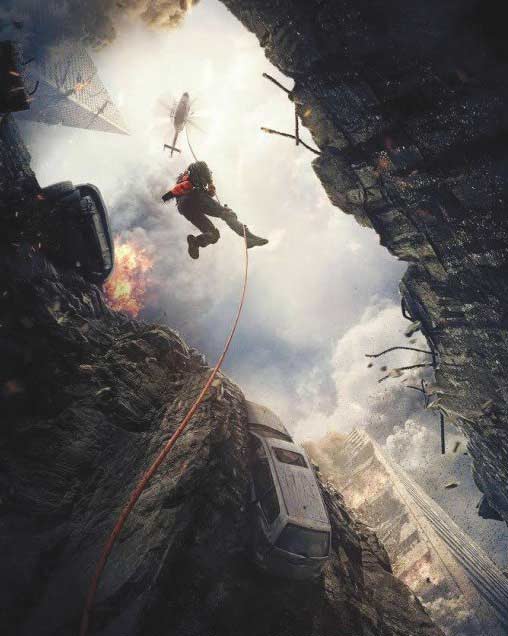
San Andreas, the city-rattling blockbuster in which the state of California suffers the biggest recorded earthquake in history, might star action hero Dwayne Johnson (aka “The Rock”) as the film’s steady heart and soul, but it’s Paul Giamatti who provides the movie’s brains.

As Cal Tech geophysicist Lawrence Hayes, Giamatti gets to deliver the most intelligent lines, which are pretty much the only intelligent lines in a film that’s riddled with cringe-worthy dialogue but loaded with jaw-dropping special effects. From Los Angeles to San Francisco, every major landmark we’ve seen on postcards is either dented, destroyed or seriously threatened—though why Coit Tower survives when the rest of the city crumbles is never explained.

Perhaps Panttaja can explain it. She has a knack for taking complex scientific principles and decoding them so that even regular folks can understand. It was once said of her during a science hike in the San Andreas Fault Zone at Point Reyes, “She knows what a rock is thinking.” I confess that I was the one who said that. Panttaja, in addition to being brilliant and insightful, also happens to be my wife.

“Part of what makes Paul Giamatti a believable scientist in this movie,” she says, “is the sense he gives at the beginning, before the earthquakes have begun, when he’s displaying that thrill-of-the-hunt thing that scientists have when they are working on a problem. The actual science they were doing—something about electromagnetic pulses as a way to predict earthquakes—that was very reasonable science. And yet, he and his collaborator were so thrilled and excited when they started getting results, and then they took off on this adventure to get more data, to go and look at stuff, which is a lot of what science is. It’s looking at stuff. The joy of the science they were doing was so believable and fun to watch. I’ve seen that a million times.

“A lot of people think scientists are boring and serious,” she adds, “but as a scientist myself, I’d say that one of the best things about science is the excitement of the lab, with all the grad students scurrying around in the cramped little offices, and the incredible joy that happens when you’re pulling the data together and starting to see a pattern, and then you just want to run out and get more data. It feels like the best thing in the world, and I thought it rang really true in this movie.”

Ultimately, Panttaja observes, what’s most moving about Giamatti’s character—“mild spoiler alert ahead”—is that he loses his partner when the quakes start happening, and that loss, pardon the pun, shakes him up pretty badly.

“It happens,” Panttaja says. “Science can be dangerous. Certain scientists do take risks, certain geologists go out and investigate things where there are very real dangers. I think of the scientists who died at Mount St. Helens when it erupted. We do occasionally put ourselves in dangerous places to do what we do.”

Though Panttaja’s current work is rarely more hazardous than her drive on 101 to Santa Rosa Junior College, she did her graduate work in Antarctica, where she scaled mountains, dangled into crevasses and trekked through sub-zero temperatures.

“Geologists do die doing their work,” she acknowledges. “They get injured. But they also work as safely as they can. They are not reckless, but they are trying to figure something out, and sometimes that means you lose a good scientist, as happens in the film. I thought Giamatti’s reaction to that was one of the best things in the movie. And when he recognizes that there’s going to be another quake, having just lost somebody, all of that grief turns to heart, and he starts doing everything he can to save people. His humanity comes out in the movie, beautifully, I think.”

Giamatti, in fact, gets to utter what Panttaja believes is the best, most useful lines in the whole film.

“The truest, realest thing in San Andreas is when Giamatti says, ‘Take cover, and hold on!’” she says with a laugh. “He tells people what to do when an earthquake happens. Take cover. Hold on. I loved that, and he said it with so many levels of emotion. It takes a great actor to say, ‘Take cover and hold on,’ and make it scary, comforting and beautiful all at once. I just love that character so much.

“The rest of the movie,” she goes on, “was kind of ridiculous. Like that huge trench near Bakersfield—that was supposed to be the San Andreas Fault? Really? I don’t think so. That just wouldn’t happen. Were talking about a strike-slip fault. The 1906 quake did have ground shift and separate like that, but for very short distances. We’re not going to see gaping holes in the Earth that run for miles and miles so you can’t drive far enough in either direction to get around it.”

Of course, it does give “The Rock” a chance to steal a plane to fly over the trench on his way to save his daughter from a collapsed building in San Francisco, where Coit Tower is still standing.

“I’m glad the murals in the tower were saved,” Panttaja says, “but I really think Coit Tower would go down; at least it would in an earthquake big enough to cause all that other damage.”

And don’t even get Panttaja started on the tsunami that hits the city in the latter part of the film.

“You need vertical displacement to get a tsunami,” she says. “A strike-slip fault is lateral displacement, not vertical, so a tsunami hitting the city after a quake on the San Andreas Fault—that would never happen.”

That scientific impossibility aside, as disaster movies go, Panttaja confesses that she had a good time with San Andreas.

“I must admit it was lots of fun,” she says, adding that, with sales of earthquake supplies having increased by 300 percent following the release of the movie, “Maybe we need a ridiculous disaster movie every three or four years, just to make people think about what they’d do in an emergency.

“And besides,” Panttaja says with a laugh, “sometimes it’s just good fun, and maybe even a little cathartic, to watch everything fall down and go boom.”

Film: The constant gardener

0

by Richard von Busack

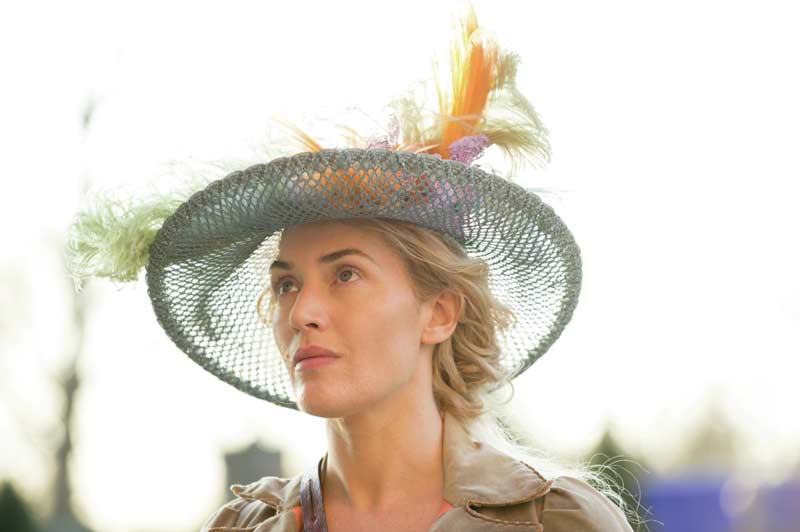
We’re at the creation of Versailles in 1682. Here we find much flared-nostril romance between Kate Winslet as the garden designer Sabine de Barra, a gloveless worker who grubs and prunes, and Matthias Schoenaerts as André Le Notre, the stern official landscape architect. What impedes the courtship in A Little Chaos is Sabine’s longstanding trauma over the way she was widowed. More trouble comes from the objections of the witchily unfaithful Madame Le Notre (frequent villainess Helen McCrory).

King Louis XIV (director and co-writer Alan Rickman) moved to an estate carved out of swampland, the better to escape the Parisian mobs. The film suggests this move as a semi-religious mission, the seeking of a “window into perfection.” Rickman directs in a way that the king himself—who was only about 40 at the time—is the center of this film.

The romantic dialogue is badly stilted. If there’s chaos here, it’s a chaos of accents, most of them British. The best scenes are the ones that Rickman reserves for himself and Winslet. His majesty has a pleasingly candid friendship with the lady. Winslet’s curves and untidy golden hair are flattered by the outfits. She looks businesslike, ever-weary, with heavy eyelids and parted lips. Maybe she’s just short-winded from the tight corsets.

It is always fun watching other people work, but the landscape plans aren’t quite clear and Schoenaerts is too grim to fantasize about. Still, the supporting work is adept. Jennifer Ehle is beguiling as the discarded royal favorite Madame de Montespan. Stanely Tucci is the King’s well-liked homosexual brother “Monsieur” who frets about life in the country (“Muck, or beasts making muck …”). Rupert Penry-Jones stands out as an ironical chevalier, taking Sabine on her first tour of court; he has such suaveness, one wonders why Sabine doesn’t run off with him instead of with her lovesick Le Notre.

Arts: Chalking it up

by Molly Oleson

“The first time I saw it, it was just kind of mind-boggling,” says local artist Joel Yau, of walking through San Rafael streets that had been transformed to masterpieces by artists toting colorful sticks of chalk. “Art on the street? In two days? Really?!”

One stroll, 15 years ago, through the Italian Street Painting Marin event—an annual, two-day tradition that honors the street painters of Italy—and Yau was hooked. Since that first encounter, he’s collaborated on countless 12 ft. by 12 ft. pieces with friends, and has branched out on his own to dream up work for street painting festivals in cities across the country, as well as in places like Mexico, Germany and the Netherlands.

Next weekend, Yau will join more than 100 artists, or Madonnari (street painters), for the event, which was created in 1994 by Sue and Joe Carlomagno, after the art form first appeared in Santa Barbara in 1987.

“It’s their baby; it’s the passion,” Yau says of the couple, noting that they’ve traveled around the world to seek out painters and bring them to Marin. “They really champion the artists.”

Yau credits Kurt Wenner, an American artist who spent half his life in Italy, for bringing pavement art to the streets of America.

“He’s really the godfather of street painting, and perhaps an art form,” Yau says, noting Wenner’s impressive and popular 3D work, which appears and then disappears on pavement around the world.

Although many disagree about where street painting first began—some say Florence, and others Venice—it is believed that the Madonnari date back to 13th century Italy. Last year’s event in Marin featured street painters illustrating California in the 1940s, and this weekend, Carnevale di Venezia will be the theme. In addition to talented local and international artists, visitors can expect a lively parade of costumes featuring models in Venetian cloaks, and elaborate masks made by Novato artist Veronica Venezia DeMartini.

One of Yau’s favorite parts about painting on the pavement en plein air is the dialogue that happens between artists and onlookers. Yau, who is finalizing sketches for this year’s Carnival theme, says that he even invites the most curious admirers to crouch down with him and lend a hand if they like.

“It really is something,” he says.

The Italian Street Painting Marin festival, a program of the EveryLife Foundation for Rare Diseases, takes place on Saturday, June 27 from 10am to 8pm, and on Sunday, June 28 from 10am to 6pm at 5th and A streets in downtown San Rafael. Tickets are $5 on Saturday and $10 on Sunday; children 12 and under are free. For more information, call 415/884-2423, or visit italianstreetpaintingmarin.org.

Advice Goddess

by Amy Alkon

Q: I have a great circle of female friends, but one of “the group” has a way of making backhanded comments about my appearance that make me feel bad about myself. Her latest topic is my breasts and how much smaller they are than hers. Incredibly, she manages to work this into any conversation—exercising, fashion, shopping, camping. If I confronted her, I know she’d act as though she’s been paying me compliments. (“But you’re SO lucky to have small boobs!”) How can I get her to stop?—Annoyed

A: Stopping her would be easier if you two were guys: “I don’t like the way you’re talking about my boobs, Marjorie. Let’s take this outside.”

But while men will sock each other in the bar parking lot (and can sometimes go back in and have a beer), women engage in what anthropologists call “covert aggression”—attacks that are hard to pinpoint as attacks, like gossip, social exclusion and stabbing another woman in the self-worth. (“Stabracadabra!”—you’re bleeding out, but nobody but you can tell!)

Psychologist Anne Campbell, like others who study female competition, explains that women seem to have evolved to avoid physical confrontation, which would endanger their ability to have children or fulfill their role as an infant’s principal caregiver. (Ancestral Daddy couldn’t exactly run up to the store for baby formula.) So while guys will engage in put-down fests as a normal part of guy-ness, even women’s verbal aggression is usually sneaky and often comes Halloween-costumed as compliments or concern: “Ooh, honey, do you need some Clearasil for those bumps on your chest?”

The tarted-up put-down is a form of psychological manipulation—a sly way of making a woman feel bad about herself so she’ll self-locate lower on the totem pole. And because men have visually driven sexuality, women specialize in knocking other women where it really hurts—their looks. Like those supposedly minuscule boobs of yours. (Right … you’ll have a latte, and she’ll just have another mug of your tears.)

The next time that she, say, turns a trip to the mall into a riff—“Har-har … Victoria’s Secret is that they don’t carry your size!—pull her aside. (In a group of women, conflict resolution is most successful when it’s as covert as female aggression—as in, not recognizable as fighting back.) By not letting the others hear, you remove the emotionally radioactive element of shaming. This helps keep your defense from being perceived as an attack on her—yes, making you the bad guy.

Simply tell her—calmly but firmly: “These mentions of my boobs are not working for me. You need to stop.” Be prepared for the antithesis of accountability—a response like, “Gawd … chill” or “I have no idea what you’re talking about.” But she’ll know exactly what you’re talking about, which is that you’ve just become a poor choice of victim. She may float a remark or two to test your resolve, so be prepared to repeat your warning—calmly but firmly—until she starts acting like just one of the girls instead of yet another breast man.

Q: I’m a successful lawyer in my late 40s doing online dating. I’m active in the Republican Party and philanthropic causes, so I often go to benefit dinners, for which I typically buy two tickets in advance. I’ve asked two women I met online to come to these as a first date, but both canceled by text at the last minute. (The dinner yesterday was $1,000 a plate and for a political cause that means a lot to me.) Maybe I’m just attracting rude women, but I’m beginning to wonder whether I’m doing something wrong.—Empty Chairs

A: You can learn a lot about a woman on the first date—like that she still hasn’t worked out her drinking problem and that she doesn’t always like to wear panties. Ideally, you find these things out while seated across from her at Starbucks, and not after she climbs on the table at a benefit and starts doing some sort of fertility dance with the centerpiece.

Sure, it seems convenient when your need for a plus-one coincides with your desire to go on a first date with some online hottie. But you’re better off coming up with a list of attractive female friends you can take or even male friends who share your politics or just enjoy free meals enough to not challenge your tablemates to a duel over theirs. Not taking a woman you barely know is also an important business safeguard—so that when some conservative client of yours turns to your date and asks, “So how do you two know each other?” he won’t hear something like, “We met in the ‘Republicans Who Like Hot Wax Play’ chat room on Christian Mingle.”


Hero & Zero: Duck rescuers and an institute eviction

by Nikki Silverstein

HERO: A motorist alerted a California Highway Patrol (CHP) officer that a frantic duck paced back and forth at a storm drain near the Golden Gate Bridge. CHP officers Kenji Burrage and Matt Smith responded to the scene and rescued eight ducklings stuck in the storm drain. Mama was reunited with seven of her babies and relocated next to the bay. Unbeknownst to the officers, one duckling wandered away after being liberated. Once the lone baby was discovered, the officers searched in vain for the rest of the family. Officer Burrage placed the duck in his motorcycle’s saddlebag and rode to San Rafael. At every stoplight, he checked on the little one, who is now doing well at WildCare. We can’t stop quacking about the compassion of those ducky officers.

ZERO: The Tiburon Salmon Institute (TSI) received a letter evicting them, by July 1, from their home at the Romberg Tiburon Center for Environmental Studies. The property owner, San Francisco State University (SFSU), remains unresponsive to the public outcry. Perhaps Karina Nielsen, Romberg’s director, has never watched the delight of school children as they release young salmon into Richardson Bay at TSI’s annual Kiss and Release event. Maybe SFSU President Leslie Wong is ignorant about the salmon population’s struggle to survive the drought and human impact. The institute has released more than a million salmon into the bay during the last 42 years and educated thousands of children about salmon and their habitat in creative, hands-on ways. Help TSI by signing the petition at change.org.

Got a Hero or a Zero? Please send submissions to ni***************@***oo.com.

Letter: ‘I personally love the layout … ‘

‘Makes sense to me’

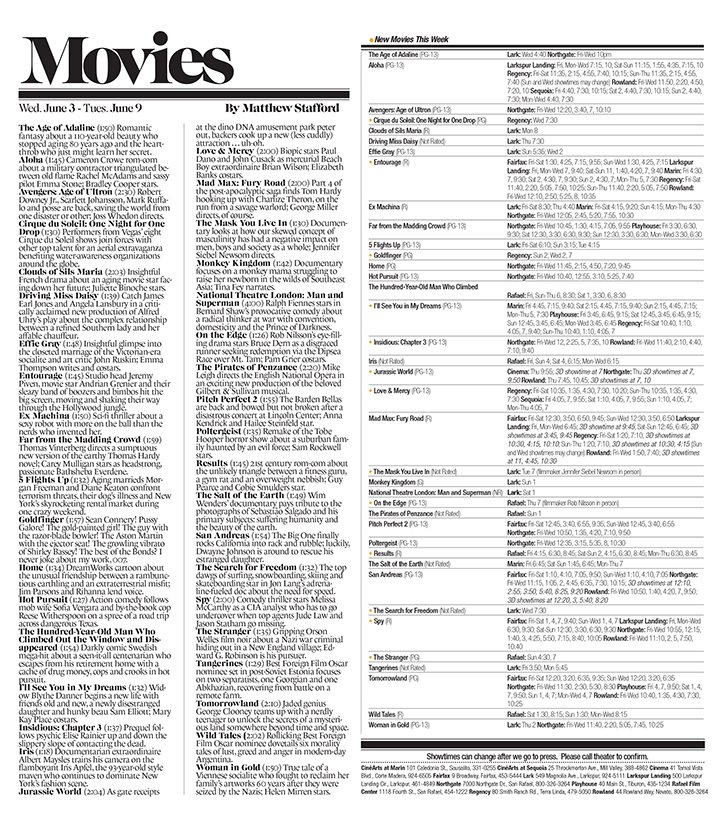
You kindly printed my letter expressing joy to know that the Bohemian had taken over the Pacific Sun and in spite of those who do not [know] how to logically search for music or entertainment, I personally love the layout by venue … makes sense to me. HOWEVER,  I cannot find the movie section this week. PLEASE TELL ME YOU ARE NOT DELETING THAT SECTION? And where is it???????????? Your wonderful one-page ad for a movie on page 16 is indeed impressive.

Linda Wosskow

Letter: ‘My main reason … ‘

‘Please bring it back’

Why are you leaving out the “Movies” page in the “new” Sun? One week there was a note that the printing schedule was such that you didn’t have the info.—this week, no explanation. The “Movies” page was my main reason for picking up the “Sun.” I read other parts also, but the Movies page was the main reason I got the paper. Please bring it back.

P.S. I don’t really like the “shiny” paper being used; please bring back the old.

Jim Gormley

Letter: ‘I completely agree … ‘

‘If you must … ’

I completely agree with Jai Conley’s letter in the June 17-23 issue. If you must print Sonoma county events from what has always been a Marin paper, please separate them from those in Marin.

Also, under Concerts, you omitted the Summer Music Festival, an annual series of concerts created by College of Marin’s Paul Smith. These concerts are from June 20 to June 28 at different venues in Marin. Please include future classical music concerts in the listings such as those at the College of Marin, Dominican Guest Series and the Mill Valley Chamber Society. Thanks,

Barbara Rozen

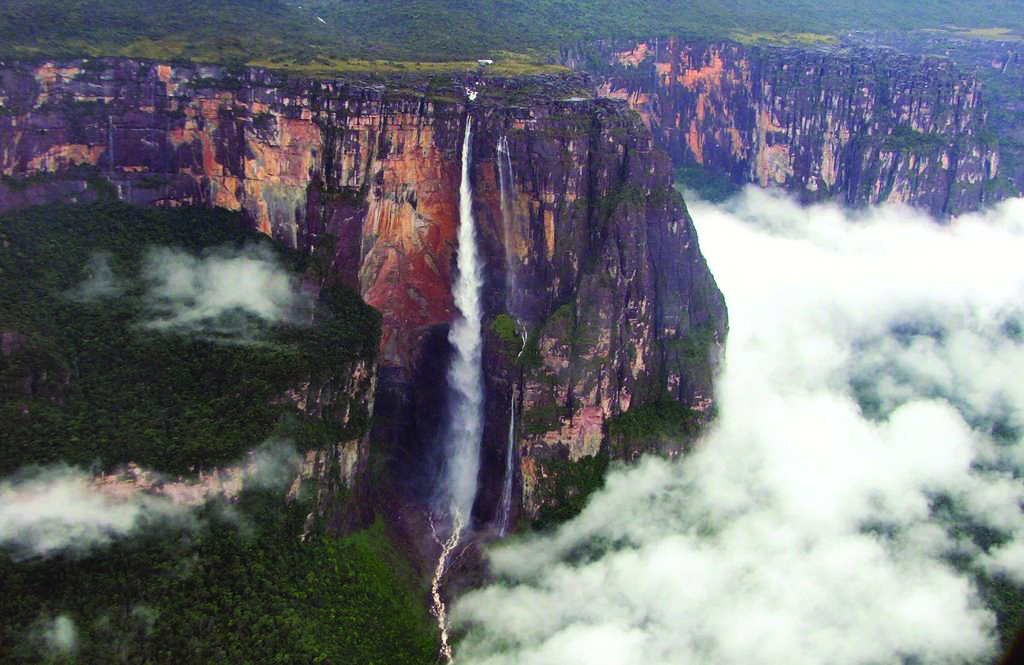
Trivia: The world’s tallest waterfall, almost one kilometer long, is known locally as Sendero Salto Ángel. It’s located in what country, and we call it what?

For more trivia questions (and answers!) see Howard Rachelson’s Trivia Café every week in the Pacific Sun.


Answer: Venezuela; Angel Falls

Food & Drink: Beyond Expectations

by Tanya Henry

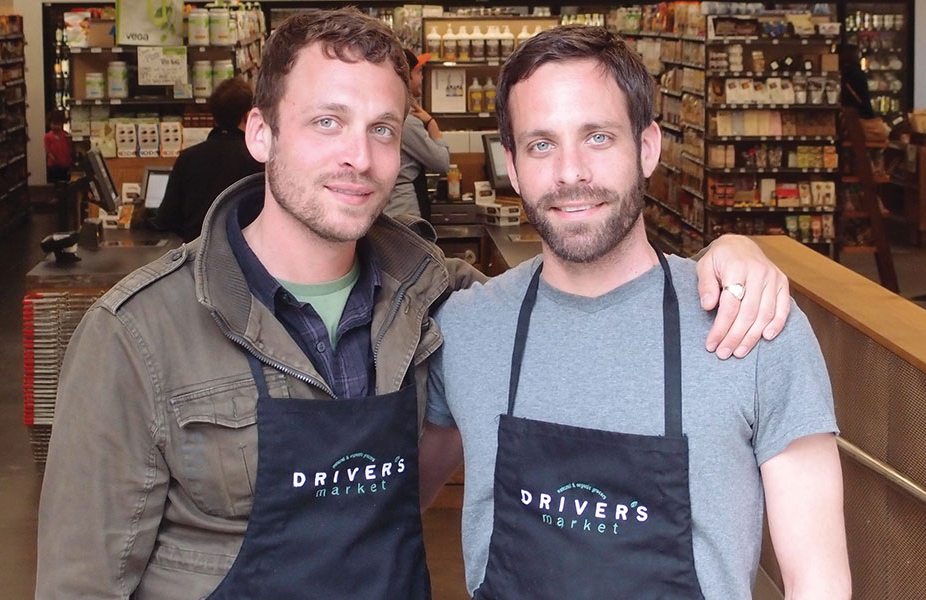
It’s obvious from the “Good mornings,” smiles and nods that Adam and Graham Driver receive from customers walking into their natural and organic grocery store at 200 Caledonia Street that folks are pleased that they are there.

After just two years, 35-year-old Adam and his younger brother (by one year) have doubled sales and staff at their Sausalito-based Driver’s Market. “Everything about the store is bigger than we thought it would be,” says Adam, who seems a bit awestruck that the small neighborhood staple—which won the 2014 Business of the Year award from the Sausalito Chamber of Commerce—has become exactly what they hoped it would be and more.

Neither brother had imagined that their days would be filled with sourcing products from local purveyors and restocking 100 percent organic produce and bulk food sections. After studying theater, Adam moved to Los Angeles from Ann Arbor, Michigan, and landed acting gigs wherever he could find them. By 2005 he was burnt out and moved to Sausalito, taking a job at the Real Food Company (where Driver’s is today) and began working as a produce-buyer for $12 an hour.

Soon he was co-managing the store, but frustrated that he was unable to implement changes, as the owners were off-site and not invested in making improvements. Before quitting in 2010, Adam began taking business classes at the College of Marin and working on a business plan for his own market.

During a pickup basketball game, he serendipitously met Paul Geffner, a longtime Sausalito resident and entrepreneur who had opened Escape from New York Pizza in the mid-’80s in San Francisco. The two men became friends, and in 2011 they, along with family members, opened Driver’s Market in the 100-year-old building that had housed grocery stores since the mid-’70s.

In the meantime, Graham had left Ann Arbor after completing degrees in photography and psychology and was living with their older brother in Ashland, Oregon. It didn’t take much convincing to get both brothers to Sausalito to help Adam and Paul embark on building a new kind of market. “We had to completely gut the place and get all new electrical and plumbing,” says Adam, who adds that it threw his business plan off by about 100 percent. But he also notes that they have already surpassed their 50-year projections.

“Our number one goal is to push the industry forward,” Graham says. “If we can have a store that doesn’t source from ‘big food,’ we will.”

Talking Pictures: The thrill of the hunt

by David Templeton “The absolute best thing about San Andreas was Paul Giamatti,” says North Bay geologist and junior college teacher of earth science Susan Panttaja, “because he was so obviously a really good scientist, and in movies like San Andreas, the scientists are not always very good scientists.” San Andreas, the city-rattling blockbuster in which the state of California suffers...

Film: The constant gardener

by Richard von Busack We’re at the creation of Versailles in 1682. Here we find much flared-nostril romance between Kate Winslet as the garden designer Sabine de Barra, a gloveless worker who grubs and prunes, and Matthias Schoenaerts as André Le Notre, the stern official landscape architect. What impedes the courtship in A Little Chaos is Sabine’s longstanding trauma over...

Arts: Chalking it up

by Molly Oleson “The first time I saw it, it was just kind of mind-boggling,” says local artist Joel Yau, of walking through San Rafael streets that had been transformed to masterpieces by artists toting colorful sticks of chalk. “Art on the street? In two days? Really?!” One stroll, 15 years ago, through the Italian Street Painting Marin event—an annual, two-day...

Advice Goddess

advice goddess
by Amy Alkon Q: I have a great circle of female friends, but one of “the group” has a way of making backhanded comments about my appearance that make me feel bad about myself. Her latest topic is my breasts and how much smaller they are than hers. Incredibly, she manages to work this into any conversation—exercising, fashion, shopping, camping....

Hero & Zero: Duck rescuers and an institute eviction

hero and zero
by Nikki Silverstein HERO: A motorist alerted a California Highway Patrol (CHP) officer that a frantic duck paced back and forth at a storm drain near the Golden Gate Bridge. CHP officers Kenji Burrage and Matt Smith responded to the scene and rescued eight ducklings stuck in the storm drain. Mama was reunited with seven of her babies and relocated...

Letter: ‘I personally love the layout … ‘

‘Makes sense to me’ You kindly printed my letter expressing joy to know that the Bohemian had taken over the Pacific Sun and in spite of those who do not how to logically search for music or entertainment, I personally love the layout by venue … makes sense to me. HOWEVER,  I cannot find the movie section this week....

Letter: ‘My main reason … ‘

‘Please bring it back’ Why are you leaving out the “Movies” page in the “new” Sun? One week there was a note that the printing schedule was such that you didn’t have the info.—this week, no explanation. The “Movies” page was my main reason for picking up the “Sun.” I read other parts also, but the Movies page was the...

Letter: ‘I completely agree … ‘

‘If you must … ’ I completely agree with Jai Conley’s letter in the June 17-23 issue. If you must print Sonoma county events from what has always been a Marin paper, please separate them from those in Marin. Also, under Concerts, you omitted the Summer Music Festival, an annual series of concerts created by College of Marin’s Paul Smith. These...

Trivia: The world’s tallest waterfall, almost one kilometer long, is known locally as Sendero Salto Ángel. It’s located in what country, and we call it what?

For more trivia questions (and answers!) see Howard Rachelson’s Trivia Café every week in the Pacific Sun.   Answer: Venezuela; Angel Falls

Food & Drink: Beyond Expectations

by Tanya Henry It’s obvious from the “Good mornings,” smiles and nods that Adam and Graham Driver receive from customers walking into their natural and organic grocery store at 200 Caledonia Street that folks are pleased that they are there. After just two years, 35-year-old Adam and his younger brother (by one year) have doubled sales and staff at their Sausalito-based...
3,002FansLike
3,850FollowersFollow