Open Mic: Does Lynn Woolsey Deserve a Commemorative Post Office?

By Joe Manthey

In December, Jared Huffman (D-San Rafael) introduced legislation to rename the Petaluma downtown post office in honor of former Congresswoman Lynn Woolsey. While I can think of many reasons why it should not be renamed after Woolsey, one of them stands out: Tina Phan.

When she was 17, Phan was raped in her apartment by Stewart Pearson, a young man she had known since the seventh grade. She had allowed him to sleep on her couch when, after they had attended the same late-night party, he claimed he had no bus money to get home. Phan awoke the next morning, in her bed, to a toilet-bowl-cleaner-and-Ajax-soaked rag pressed over her face. As she gasped for air and tried to scream, her attacker bruised her face and lips with the rag while brandishing a knife. “He raped her, telling her she was not the first and would not be the last,” a 2004 SF Gate article states. 

Pearson plead guilty to rape in a plea bargain in exchange for sodomy and assault charges being dropped. Enter Lynn Woolsey. On her congressional stationery, she wrote a letter of support on behalf of the convicted rapist to the sentencing judge, asking for leniency and noting that he had volunteered for her campaign. “[I]n my mind, he is not a criminal,” Woolsey reportedly told the Marin Independent Journal in 2004.

The assault was “as bad as it gets,” prosecutor Alan Charmatz reportedly told the Marin IJ in 2004. “It’s hard to imagine that after someone has committed a brutal crime like that they (Woolsey’s office) would want to write a letter,” Charmatz continued.

Woolsey apologized to Phan indirectly through the newspaper. Phan was outraged by Woolsey’s letter and rightfully refused to accept Woolsey’s apology, stating that the congresswoman had abused her power and that her subsequent apology was “hollow” and politically motivated. Said Phan, “I just want people to know what kind of morals Lynn Woolsey has.”

Pearson was sentenced to eight years in prison, the maximum sentence for rape. Given these facts, Huffman’s proposal is not only a slap in the face to Phan, who courageously went public to hold Woolsey accountable for her reprehensible behavior, but to all rape victims.

Joe Manthey is a Petaluma-based male advocate. To have your topical essay considered for publication, write to us at op*****@********un.com.

School Reopenings More Common in Rural Areas and in Private Schools

0

By Ricardo Cano, CalMatters

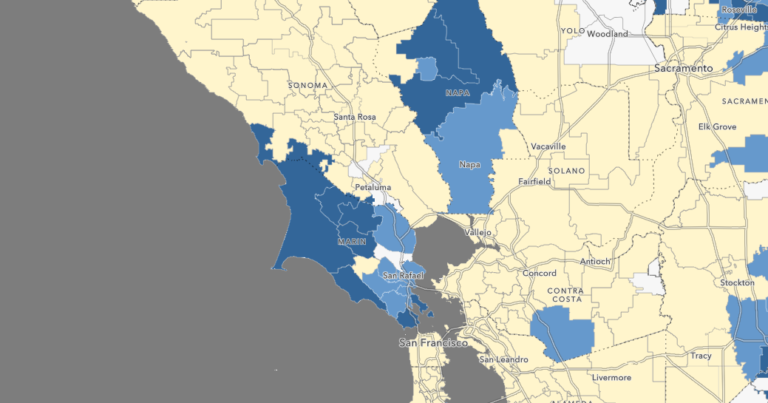
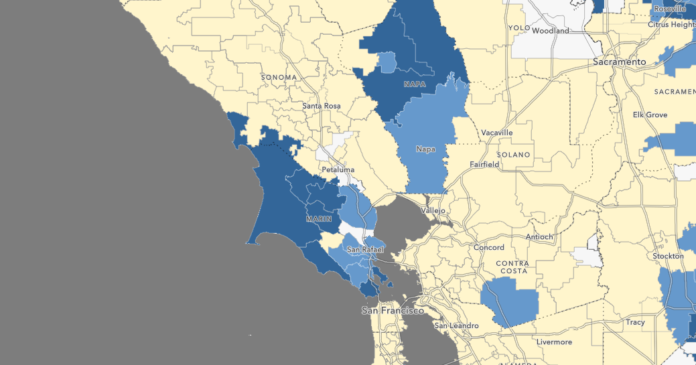
New state mapping data details California’s school-reopening divide, in which hundreds of school districts — mostly smaller and rural or inland — are offering in-person instruction to elementary students while many of the state’s largest, urban districts remain indefinitely in remote learning.

But the divide between public and private schools is much starker: Eleven months after schools closed for in-person learning, most California private schools appear to offer some form of in-person learning, according to the state’s map data.

The maps published Friday by the California Department of Public Health offers the first nearly comprehensive picture — not every private or charter school has reported data — of exactly where schools are physically open. The state’s maps note whether district, charter and private schools are offering in-person learning to students full-time, in a hybrid model that splits time on campus and at home, or in distance learning only. 

You can view the maps here.

Public pressure toward reopening has increased as other states are phasing in on-campus learning. Most California counties, however, have not yet begun offering vaccines to educators, a key sticking point in negotiations between school boards, superintendents and labor unions for full-scale reopenings in California. The schools that have reopened have done so using state safety guidance but with widely varying testing protocols, with some implementing little or no surveillance testing.

The contrast between public and private school reopenings has been consistent since the start of the coronavirus pandemic. Months ago, K-6 schools could apply for waivers from the state department of education to reopen for in-person instruction. Private schools far outstripped public schools in approved waivers. Most private and charter schools do not have the same teacher union representation that public school districts do. 

The Safe Schools for All Plan introduced by Gov. Gavin Newsom in late December included new health and safety guidelines for in-person instruction, as well as requirements that schools report to the state whether they are physically open. Under the new rules, which went into effect Jan. 25, schools are required to report their status, as well as data on cases transmitted within campuses, to the state Department of Public Health biweekly.

Friday’s release did not include data detailing outbreaks reported at schools, though the state said the information “will be added as soon as possible.” 

“As COVID-19 conditions continue to improve and vaccinations ramp up throughout the state, this map will provide local communities with accessible, up-to-date information on how districts in their communities and beyond are adapting to the pandemic, including safety planning and implementation,” Gov. Gavin Newsom said in a statement Friday. 

For nearly a year, state officials had little information on school reopenings since the initial closures, which frustrated lawmakers said at a hearing last fall hampered the state’s response to reopening campuses.

The data released Friday morning arrives at a pivotal moment in California’s fraught school-reopening debate. 

In dozens of counties, case rates are falling below the 25 positive cases per 100,000 residents threshold that allow school districts to offer in-person instruction to elementary so long as strict safety measures are put in place. 

Gov. Gavin Newsom said earlier this week that a deal with the Legislature centered on reopening elementary schools this spring was imminent after widespread criticism stalled his initial proposal. State data shows fewer high schools have physically reopened compared with elementary schools. Middle and high schools are also not allowed to reopen unless their counties reach the red tier in the state’s reopening framework, meaning case rates have fallen below 7 positives per 100,000 residents.

The new data illustrates the different realities playing out for students across California. 

In San Francisco, where local officials are suing the school board and district to hasten reopening campuses, all of the city’s 108 district schools serving 53,000 public-school students remain in online learning, while 15,800 students in 114 of the city’s private, parochial and public charter schools are learning in person. 

A short drive across the Golden Gate Bridge, nearly all of Marin County’s public and private schools are offering in-person instruction. All but one elementary school campus was open in some fashion as of late January, according to Mary Jane Burke, superintendent of the Marin County Office of Education

In Marin, there were nine cases of suspected in-school transmission between early September, when several campuses first reopened, and Jan. 29, according to information tracked by the county.

Public schools in many large cities and communities that have experienced higher case rates appear more likely to remain in online learning, according to the state’s maps.

Some of California’s public schools reopened as early as August, namely in northern and rural counties. Placerville Union School District, a district of 1,300 students located 45 minutes northeast of Sacramento where most schools are shuttered, was among the public schools that began hybrid instruction to start the academic year. 

“If you put the protocols in place, it runs smooth,” Placerville superintendent Eric Bonniksen said. “All of our students are wearing masks. All of our teachers are wearing masks, we are doing social distancing. Overall, it runs smooth like a regular school day.”

Keeping It Real: Virtual Festival Benefits Redwood Empire Food Bank

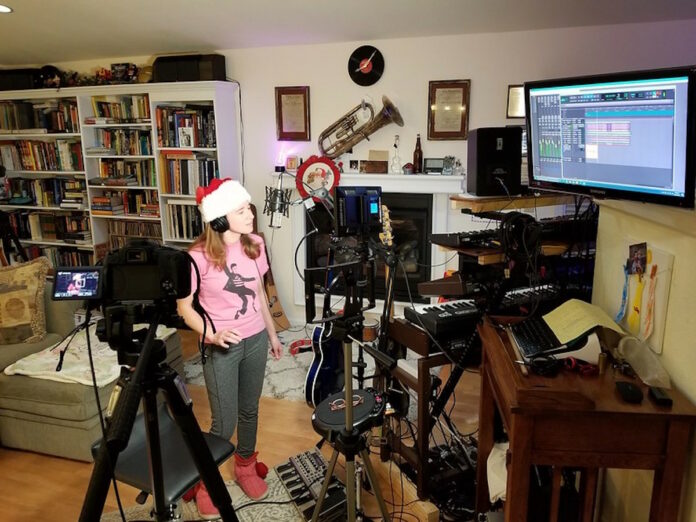
The Real Neato Music Festival was poised to become one of the North Bay’s most beloved jams when it debuted in the summer of 2019 at the Rio Nido Roadhouse.

Sonoma County–raised and San Francisco–based musician Eli Meyskens and Bay Area event producer and artist manager Daniel Strickland organized that inaugural event, featuring local and Bay Area bands rocking out under the redwoods of West Sonoma County. The pair and their collaborators were already planning their second round of music last year when the Covid-19 pandemic closed everything amid a stay-at-home order.

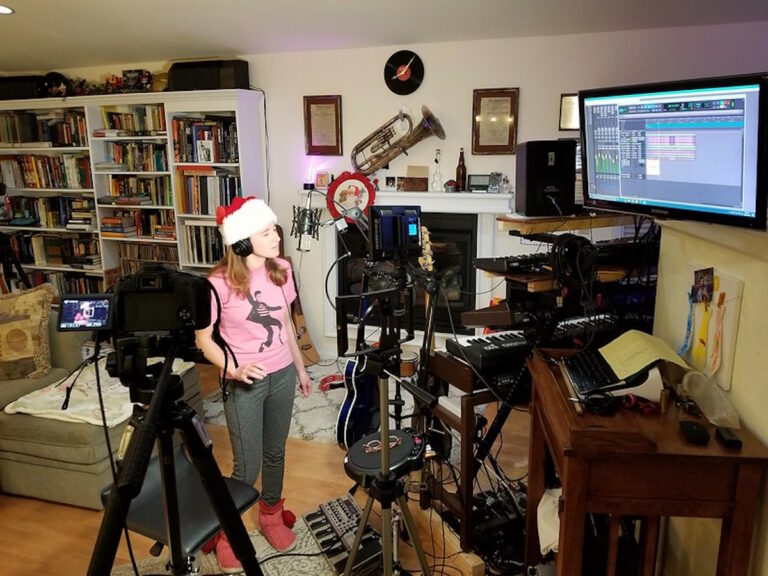
Undeterred, Strickland, Meyskens and fellow organizers presented Real Neato at Home, a virtual music festival, last June. The online gathering boasted several popular acts performing from their homes for the socially distant audience, and donations supported the bands as well as the NAACP Legal Defense Fund, in response to the Black Lives Matter movement.

Now, Real Neato at Home is making its winter debut with a new virtual music festival, dubbed Real Neato 3, which airs online Saturday, Feb. 20, at 6pm and 8pm.

“Music is critical to our culture, mental health and community,” Strickland says. “We’re all going without right now.”

As 2020 progressed and the pandemic persisted, the Real Neato collaborators—including Meyskens, Strickland, Brooks Dierker and Nicole Schwieterman (owner of event sponsor Fleet Wood SF)—started talking about what 2021 was going to look like.

“Some days I feel optimistic because we are going to have a vaccine, and other days I feel like it’s going to take time for people to get the vaccine,” Strickland says. “And after the vaccine, people aren’t necessarily going to be comfortable going out and doing some things they did before.”

The Real Neato organizers decided that the event would have to remain online this year; but why wait until the summer?

“We wish we could be doing a real show in real life,” Strickland says. “But, what can we do to support the artists, and support a cause?”

With that in mind, Real Neato’s upcoming virtual festival on Feb. 20 will once again feature a powerhouse lineup of local acts, and will collect donations for a new cause: helping to end food insecurity in the North Bay.

“The Redwood Empire Food Bank has been doing this work for a long time,” Strickland says. “I reached out to [Redwood Empire Food Bank Development Associate] Devin Murray; they were thrilled to partner with us.”

For the upcoming virtual event, Real Neato is also partnering with several Sonoma County breweries—including Fogbelt, Seismic, Cooperage and Steele & Hops—for a food drive to coincide with the festival as well as California Craft Beer Week.

Real Neato 3’s music lineup for Feb. 20 features several returning favorites such as Oakland indie-pop artist Emily Afton, world music ensemble La Gente SF, North Bay rocker John Courage, psychedelic soul outfit Down Dirty Shake, self-proclaimed “Beach Funk Americana” group The Ha, outlaw country stars Caravan 222 and folk singer-songwriter Dominique Gomez.

In addition, several new acts will appear on the show, including psychedelic rock royalty King Dream, North Bay folk artist Ismay, San Francisco performer DONCAT, Santa Rosa singer-songwriter Schlee, rowdy rockers the Live Oaks and soul-folk outfit the Incubators.

“It’s a stressful time right now,” Strickland says. “We want to provide music to give people some light and enjoyment.”

“Real Neato 3” airs online Saturday, Feb. 20, at 6pm and again at 8pm. For details on how to donate, visit realneato.com.

State Requires Three Days of Backup Power for Some Internet Services

By Keith Burbank, Bay City News Service

Some California residents with landlines and wired internet service will have power for three days in a power outage following a decision Thursday by the California Public Utilities Commission

The decision affects residents and others such as firefighters and hospital patients in areas of high wildfire risk.

In eight months, wired service providers must meet the backup requirement for hospitals, fire departments and other critical facilities. The same applies to facilities that provide service for wireless networks and communities not well-served by wireless services. 

For all other facilities, CPUC commissioners gave wired service providers 18 months to meet the commission’s requirement. 

“We need this sort of backup in place,” said Commissioner Martha Guzman Aceves before commissioners voted. 

Commissioners voted unanimously, 4-0, with Commissioner Darcie Houck absent ahead of her swearing in next week. 

In complaints filed with the commission, some people said that “they do not have reliable wireless service and solely rely on wireline during emergencies,” according to the Public Advocates Office, which advocates for utility ratepayers.

One person from Grass Valley said that “whenever the public utility power goes off, the Comcast ‘landline’ telephone service fails. I live in an area without cellular mobile coverage, so the telephone is my lifeline for wildfire alerts and health issues.”

The resident added, “As a regulated service it seems that Comcast needs to install backup power, especially since our utility turns the power off regularly in Northern California.”

Following a request for comment from Comcast, Carolyn McIntyre, president of the California Cable and Telecommunications Association, said in a statement, “We support the Commissioners’ decision to prioritize critical network facilities and connection support for wireless service.”

But she said they are still reviewing the decision and she stopped short of commenting on the requirement to provide backup power to residents not well-served by cellphone service. 

Jim Kimberly, a spokesman for AT&T said, “We agree with the California PUC on the importance of keeping customers and first responders connected during emergencies, including power shutoffs. 

“That is why we have invested more than $8.7 billion in our California networks from 2017 to 2019.”

The Public Advocates Office urged commissioners to require providers to have their backup power in place by October 2021, which won’t be met.

But the Public Advocates Office applauded the decision overall. 

“These difficult times are making Californians more dependent than ever on our phones and the Internet for communications to telework, visit a doctor via telehealth, attend school via distance learning, and be in touch with loved ones,” said Elizabeth Echols, director of the office.

“Everyone should be able to rely on their phones and Internet during power outages, regardless of where they live or what kind of phone technology they have.”

Craft Beer Week

Annual Cali brew cruise

This much I know I love: California Craft Beer Week starts on a Friday and ends on a Tuesday—11 days later.

That’s a helluva week of beer and precisely the kind of math I do after I’ve had a couple of pints (and by a couple, I mean multiply everything I say by a factor of two). This recalls the “fuzzy logic” some mathematicians made vogue in the ’90s, but with more fizz.

Fuzzy logic is “employed to handle the concept of partial truth, where the truth value may range between completely true and completely false,” according to the mathematical minds of V. Novák, I. Perfilieva and J. Močkoř in their treatise Mathematical Principles of Fuzzy Logic. “Fizzy logic,” from the tragicomical mind of D. Howell, means about the same, but with some local brews, a pinch of deadline anxiety and more press releases from the beloved flack of fizz Jesse P. Cutler than one ever thought possible thrown in.

Nearly a decade ago, I had a gig at Fandom (then Wikia) seeding their beer wiki with beery bon mots. Cutler, if memory serves, secured me media credentials to an early iteration of California Craft Beer Week that was tantamount to scoring one of Bogart’s ill-gotten letters of transit in Casablanca. It meant I had safe passage from the South Park, San Francisco, tech barge and could wade my way to the Isle of Beer and still be on the clock. I remain both grateful and hungover.

When our dear publisher reminded me that the Craft Beer Week was upon us, falling as it does close to our Love & Sex edition, I was confident I could combine the concepts into a single, frothy valentine.

But love of beer is different than love and beer. If they meet in the wrong proportions, they get jealous of one another and the sense of betrayal sounds something like Caesar slurring “Eh, brew, touché?”

If you’re one of a couple and looking for a third in the form of brew, here’s my Fizzy Logic: If a beer can survive in Wine Country, it must boast some kind of evolutionary mutation that makes it worth raising the wrist. I found it in HenHouse Brewing Company’s timely release “Cluck The ’Rona.” This kick-ass Kölsch may not cure Covid, but it will definitely help you survive quarantine (not to mention, help get your craft brew column to the finish line).

Editor Daedalus Howell is the lead singer of Beers for Fears at DaedalusHowell.com.

Acts of Love: Local Theaters Offer Virtual Romance

Love is in the air this week, but so is the coronavirus. Eleven months after the North Bay went into lockdown, Valentine’s Day is the last social holiday to fall victim to the pandemic. 

This year, the usual romantic outings and festive gatherings that come with Valentine’s Day will have to largely remain socially distant. In that spirit, several North Bay theater companies are offering an entertaining night for at-home audiences, with plenty of virtual Valentine-themed plays and productions coming up.

Novato Theater Company—already committed to an online season of shows for 2021—opens the year with a special Valentine offering, “Celebrate Love!”, which will feature intimate performances by 10 couples familiar to NTC audiences. The online showcase goes live on NTC’s Youtube page on Saturday, Feb. 13, at 7pm.

“We are blessed at NTC for having so many couples involved in the theater,” Marilyn Izdebski, NTC board president, says. “What better way to start our season than to celebrate Valentine’s Day? More than any other year, we need this time to smile and be happy.”

Like many other theater companies, NTC is still unable to produce in-person plays and continues to operate in survival mode. While “Celebrate Love!” is free to watch, NTC is gladly accepting donations at Novatotheatercompany.org.

“We are trying hard to pay the rent so we can reopen,” Izdebski says. “That is our goal, to stay alive and produce as much [online] content as we are able to. All of these shows are such a collaborative effort and we have such a supportive Board of Directors. Everyone is involved, just like producing a show on a stage.”

Sonoma Arts Live, which performs on the Rotary Stage at the Sonoma Community Center, is also fighting to stay afloat financially and creatively during the pandemic.

“It seems like years since we’ve been able to put on a production,” Larry Williams, longtime director at SAL, says in a statement. “We theater folk are resilient and determined though.”

With that determination, Williams is directing a live-streaming performance of “Pinky,” a popular play by North Bay playwright (and this paper’s former theater critic) David Templeton. Loosely based on Templeton’s first high school crush, “Pinky” is a love story involving treasure hunts, sword fights, monsters and a buried treasure hidden in a shopping mall food court.

“Pinky” stars Sonoma County husband-and-wife team Julianne and Mark Bradbury, who will perform the play live from their home Friday to Sunday, Feb. 12–14 and Feb. 19–21. Admission is by donation, though pre-registration is required at Sonomaartslive.org.

“‘Pinky’ is our Valentine’s gift to the audience we miss so much,” Jaime Love, SAL executive artistic director, says in a statement.

6th Street Playhouse also gets romantic when it hosts “Love Is: A Valentine’s Day Cabaret” streaming on demand Feb. 12–15. The online show includes musical performances by beloved 6th Street Playhouse artists and guest appearances by stars Chris Noth (Sex & the City) and Tony-nominated actor Patrick Page (Hadestown). Get tickets at 6thstreetplayhouse.com.

The Raven Players are also feeling the love this weekend with the “Valentine Virtual Variety Show,” streaming live Feb. 12–14 and featuring songs about love lost—and won. Reserve your date at Raventheater.org.

Open Mic: The Cost of the Death Penalty

By David Dozier

A study in California revealed that the cost of capital punishment in the state has been over $4 billion since it was reinstated in 1978. Since California has executed 13 prisoners during that time, the cost per execution is more than $307 million. Other financial facts about the death penalty show capital cases in some states costing millions more than life imprisonment. 

So, more people are asking: Is it worth it? 

Cost is one factor people sometimes don’t consider in that debate. The complexity of seeking it and carrying out an execution is a long and expensive process. Many capital cases are appealed, and incarceration on death row can span 10, 15 or 20 or more years. And with capital punishment costs imposing a burden on state government budgets that are already stretched, it’s more cost-effective to commute death penalties to life imprisonment without parole. 

But cost is just one reason that President Joe Biden should work toward ending the death penalty in the U.S. As part of his criminal justice reform platform, he has pledged to abolish the federal death penalty and to give incentives to states to stop seeking death sentences. (Currently, capital punishment is authorized in 28 states.) Another reason to end the death penalty is its ties to racism. The Biden-Harris administration plans to address racism on many fronts. 

Awareness of the killings of unarmed Black people by police has heightened the sensitivity of White Americans to racial injustice and prompted protests. The death penalty is targeted at persons of color: Black Americans make up 13% of the U.S. population – but 34% of persons executed since 1976. 

Too often, the death penalty is a poor man’s punishment. District attorneys are more likely to go after poor defendants who are trying to fight for their lives with overworked and underpaid public defenders. DA’s sometimes put dirty cops above the law by refusing to prosecute police who kill unarmed persons of color. That’s because police unions and prison guard unions pump lots of money into DA political campaigns. But if a Black man kills a policeman, police and police unions will push DA’s to seek the death penalty. 

A third reason the death penalty should be eliminated both in the U.S. and around the world is because it is cruel – a barbaric and sadistic violation of human rights. It is pure hypocrisy for a nation such as ours to view itself as a beacon for human rights while ranking seventh in the world for the number of executions we administer. Executions are a form of torture that violate the Eighth Amendment prohibiting the federal government from imposing cruel and unusual punishment. 

The U.S. government under President Donald Trump in 2020 carried out the most federal executions ever in a single year. But under Biden, the pendulum should swing; the question is how much on a state level. Meantime, it’s good to see public opinion shifting toward the elimination of the death penalty. Using an unbiased question, a 2019 Gallup poll on capital punishment showed 60% of Americans favored life in prison for murder while only 36% preferred the death penalty. 

Public support for the death penalty has dipped near a 48-year low, and at the same time there is a bipartisan movement in state legislatures and Congress to end it. Many politicians and ordinary Americans are bothered by executions of innocent people. For every nine prisoners executed, an innocent death row inmate is exonerated. DNA science and advances in law enforcement have cleared numerous death row inmates. 

Numerous Democratic lawmakers have already written to President Biden about their objections to the death penalty, asking him to sign an executive order to eliminate federal executions and calling capital punishment unjust, racist and defective. And conservatives in several states have pushed back against the death penalty, saying it is too costly, inconsistent with conservatives’ opposition to abortion, subject to error, and not an effective deterrent. 

The momentum of states toward abolishing the death penalty, and the strengthening  bipartisan footing against it on state and federal levels, make Biden’s goal of ending capital punishment a stronger possibility. You can measure the cost of the death penalty in many ways – in terms of public policy and sheer, enormous dollars; in morality; and in racism. But any way you slice it, it comes out as wrong. The Biden Administration has a great opportunity to get it right. 

David Dozier is the author of “The California Killing Field.” To have your topical essay considered for publication, write to us at op*****@********un.com.

Letters to the Editor: Past It’s “Good By” Date

Past Time

I read with interest the sad story of Mr. Peter and the City of Petaluma (“Spilled Milk,” Jan. 27). First off, I think it necessary to reiterate the obvious: full marks to the City of Petaluma for repeatedly trying to see this business succeed. I think a “reasonable” person would agree that basically: enough is enough, and those efforts need to be discarded and further action, like a tax lien, is the next step.

Ray Charles can see that Mr. Peters management of this business presents a real hazard to the community he apparently so wants to be a part of. I personally think this business could possibly be profitable, but it will take a person with tenacity and willingness to work within the system as it is today, as well as management skills and a solid business plan to make this happen. Here’s to hoping so. When one has a carton of milk which is spoiled … Mr. Peters is past his “best by” date.

Joseph Brooke, Pt. Reyes Station

New Start

Editors,     

President Biden is foolishly endangering this nation and the whole humanity by attempting to intimidate Russia’s President Vladimir Putin with his barrage of highly critical and insulting remarks made toward Russia’s present leader. I was hoping-perhaps naively-that our new President would show greater wisdom than our former presidents by finally replacing the U.S.’s cold war hostility towardRussia with a genuinely sincere attempt to de-escalate the frightening tensions with that great nation. It is this angry rivalry between our nations that has created the suicidal nuclear arms race and has kept the entire human race in constant peril of a nuclear holocaust.   

By quickly leveling serious charges of human rights abuses against President Putin, President Biden has denied Russia’s leader of the basic right afforded to even common criminals-the right and human courtesy to express his own views on Navalny’s arrest ect. without being prejudged as guilty.   

It is this constant and underlying rage expressed by our new president toward another world leader that has brought nations to war in the past 10,000 years and led to the deaths of untold millions of innocent human beings in the most ugly and inhuman military conflicts imaginable.   

To continue on this now ancient path toward future wars will lead to the destruction of all life on this planet. The impending catastrophe of global warming coupled with the existence of thousands of nuclear weapons will not permit us humans to remain as we are. Our very survival as individuals and as a species demands that humankind take a quantum leap in intelligence, empathy and understanding each other.    

In the name of sanity and all that is beautiful, just and compassionate, I urge President Biden and our nation’s other leaders to abandon this failed path of anger, excessive national pride and international confrontation. We must not miss the fleeting opportunity to join with Russia, China, Iran, North Korea and all the other nations of the world in finally replacing violence, hatred, global warming and nuclear weapons with genuine international peace and an atmosphere of love and human solidarity.   

Most sincerely yours,     

Rama Kumar, Fairfax

Convict Trump

Dear Editor,

Today I was sickened once again by the video scenes of mayhem at the Capitol on January 6. Ask anyone who was involved (or see their hats, banners, and flags) and they will say they were “invited” by Trump. That they were urged to storm the Capitol. We heard him do that, and imply he would go with them. It was criminal of a President–or a private citizen–to request this deadly action.

People were killed. Others thought they would die. Senators were threatened. People were using the American flag to beat police officers. The world was watching the near downfall of our Democracy.

What are Senators doing in Washington if they do not have the moral courage to uphold their oath of office, and defend the constitution by officially condemning and convicting Donald Trump? Damn their next election. Vote to uphold decency and Democracy!

Alice Cochran, San Rafael

Marin County Asks Residents to Complete Internet Usage, Access Survey

Marin County is asking residents to fill out a survey on how they access and use the internet as part of the county’s Digital Marin initiative to address inequity issues when it comes to going online.

The survey, which county officials says takes only about 10 minutes to complete, includes questions about access, quality, affordability and use of the internet by residents. The anonymous answers will be used to identify potential projects and priorities for the Digital Marin program, which launched in December.

People working on the Digital Marin project are also conducting focus groups, holding interviews, and doing sector-specific surveys around the county to learn more about people’s use of the internet.

People can find the surveys in English and Spanish, as well as other information about the Digital Marin project here.

Love at Second Sight: A Reporter’s Parents Marry Again

After 36 years of divorce, my parents got married again. Up until the day Mimi and Sol asked me to help them fill out a marriage license application online, I wasn’t even sure of their marital status. 

He always said it was none of my business, while she maintained they were married. Apparently, my dad only revealed information on a need-to-know basis and she lived in fantasy land.

From what I pieced together, they originally married in 1950 and divorced in 1980, though this dissolution never stopped them from shacking up. Their romance during the divorce years confused my sister and me. He bought her a beautiful home in South Florida, and he resided in South Carolina. She spent freely and he paid the bills. They vacationed together, and when the temperature soared during Florida summers, she stayed with him.

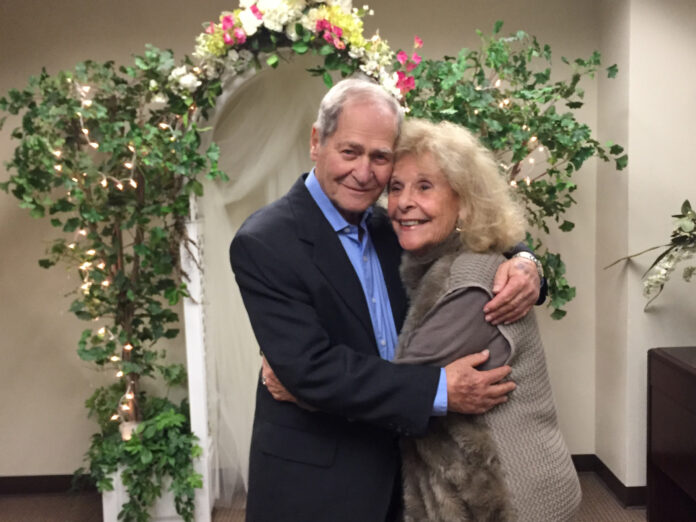
Their licit affair continued until New Year’s Eve 2016 in Las Vegas. With their marriage license in hand and an appointment at City Hall, my folks, my sister and I filed into the Office of Civil marriages, where photos of celebrity weddings adorned the walls. My parents followed in the footsteps of Mia and Frank, Priscilla and Elvis, and Joanne and Paul.

After a bit of paperwork, Mimi and Sol stood in front of the county clerk and a fake floral canopy decorated with tulle. Being Jewish, we pretended it was a chuppah.

My on-again/off-again beau of a dozen years, Rick, planned to meet us in Vegas, but then he thought better of it. Two years prior to this wedding date, my parents had everyone convene in Sin City over the Thanksgiving holiday, promising they would tie the knot during the trip. My father got cold feet at the last minute and all we got was a hot turkey dinner. Rick’s explanation for not joining in on round two was quite simple: Fool me once, shame on you, fool me twice …

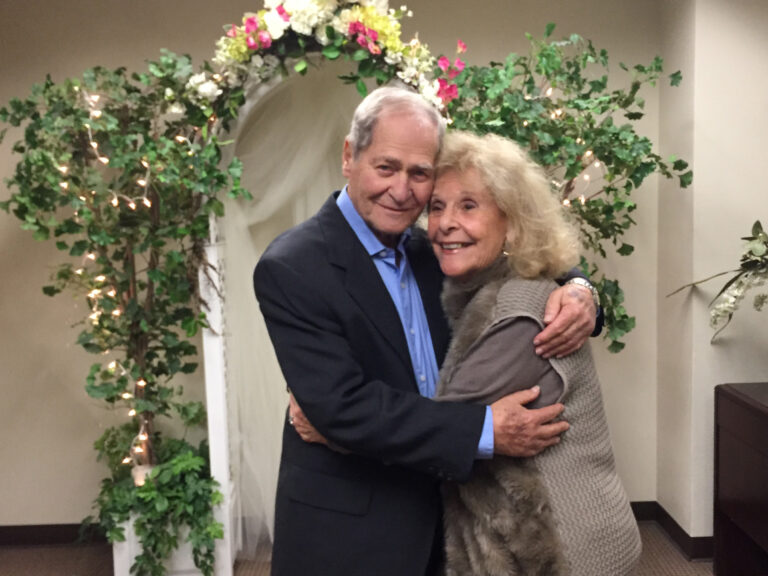
I’m happy to report that this time Rick was the fool, because the nuptials went off without a hitch. The dapper groom dressed in a deep-blue suit and a bright-blue shirt that matched his eyes. The bride looked fancy in her faux-fur duster layered over a tan blouse and slacks.

Sol gently held both of Mimi’s hands in his while they repeated the vows the clerk recited. When the ritual finished and they were introduced as husband and wife, my sister and I cried tears of relief. We were no longer the product of a broken family. And we did something that most kids never do, we signed on the dotted line as witnesses to our parents’ marriage.

My mother, the 83-year-young bride, was absolutely giddy. My father, at 87, had a twinkle in his eye. I told everyone we passed that they just got married and my father shook hands with perfect strangers as they congratulated him.

The lovely evening continued with a carriage ride (OK, it was really an Uber SUV) through Las Vegas to the doorstep of Michael Mina’s, my first foray into the delights of a Michelin-star rated restaurant.  We ordered enough food for a wedding party twice our size and passed plates around the table, allowing the four of us to sample all the delectable dishes.

Dinner conversation included talk of my dad’s upcoming and well-deserved retirement after more than seven decades of working full-time. The workaholic finally agreed to step away from his business at the end of January, just 30 days away. They would sell the place in South Carolina and live a life of leisure together in the South Florida home. The future looked golden.

We rang in the New Year together, the newlywed parents and their two spinster daughters. The next day, we flew home to four separate airports, filled with hope for a rewarding and healthy 2017.

My mother spent the first two weeks of January preparing for my father’s arrival, happily Marie Kondo-ing her home to make space for his belongings. He found a realtor and signed the documents for the listing. Retirement was fast approaching.

On the morning of Jan. 20, my father, who checked in every morning with all of us, hadn’t phoned and we couldn’t reach him. Worried, we called the police for a welfare check and started contacting local hospitals. Unfortunately, we found him in one. My father had tumbled down the stairs at a client’s house the night before.

His days were up and down. In a semi-conscious state most of the time, there were still glimpses of my dad. One night he watched CNN and called Trump a schmuck. Another day, he tried to bribe the nurse to let him go home. My family and I clung to those moments, willing him to keep getting better, even as he endured setbacks like pneumonia and a blood clot.

Although Sol fought hard to stay with us and embark on his new life with Mimi, he passed away in her arms on Valentine’s Day. The dynamo with a keen wit and a gentle heart was gone. I miss him tremendously, especially those daily phone calls where he shared his enthusiasm about closing a tough deal at work, winning a bundle playing craps or finishing a good book.

My mother has adjusted to life without my father, although she now suffers from the middle stages of Alzheimer’s disease and resides in an assisted-living community. Photos of Sol are displayed on almost every flat surface of her home, keeping his memory alive. She still recalls the first time she saw him and both weddings.

The Covid pandemic prevents my sister and me from seeing her. Phone calls consist of us prompting her that she’s speaking to her children. Sadly, we’re fading from my mom’s mind. The saving grace is that she seems content in her new world.

This Valentine’s Day marks the fourth anniversary of Sol’s passing. It may seem incongruent, but Feb. 14 is still a day of love for me. It’s the day when we light the Yahrzeit candle in his honor and talk about the mensch who was my father and friend.

May we all appreciate the gift of life and show our love for the people we hold near—even if they are six feet away. Happy Valentine’s Day.

Open Mic: Does Lynn Woolsey Deserve a Commemorative Post Office?

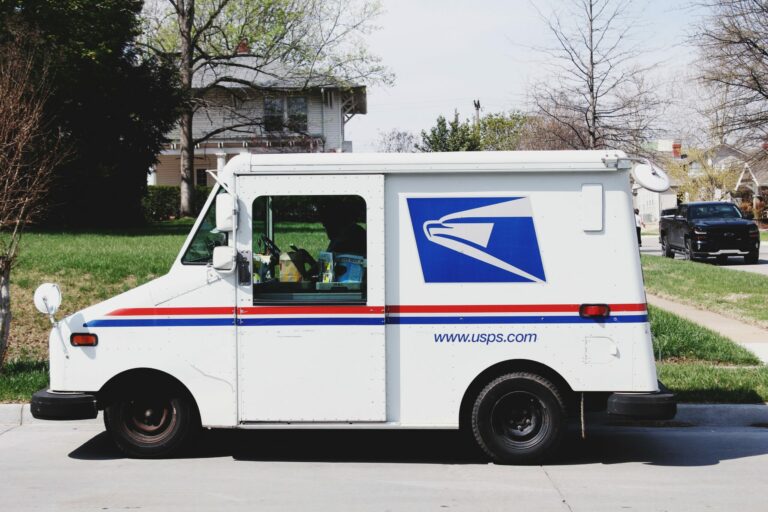
USPS truck - Pope Moysuh/Unsplash
By Joe Manthey In December, Jared Huffman (D-San Rafael) introduced legislation to rename the Petaluma downtown post office in honor of former Congresswoman Lynn Woolsey. While I can think of many reasons why it should not be renamed after Woolsey, one of them stands out: Tina Phan. When she was 17, Phan was raped in her apartment by Stewart Pearson, a...

School Reopenings More Common in Rural Areas and in Private Schools

California schools map
By Ricardo Cano, CalMatters New state mapping data details California’s school-reopening divide, in which hundreds of school districts — mostly smaller and rural or inland — are offering in-person instruction to elementary students while many of the state’s largest, urban districts remain indefinitely in remote learning. But the divide between public and private schools is much starker: Eleven months after schools...

Keeping It Real: Virtual Festival Benefits Redwood Empire Food Bank

The Real Neato Music Festival was poised to become one of the North Bay’s most beloved jams when it debuted in the summer of 2019 at the Rio Nido Roadhouse. Sonoma County–raised and San Francisco–based musician Eli Meyskens and Bay Area event producer and artist manager Daniel Strickland organized that inaugural event, featuring local and Bay Area bands rocking out...

State Requires Three Days of Backup Power for Some Internet Services

Telephone poweroutage Unsplash
By Keith Burbank, Bay City News Service Some California residents with landlines and wired internet service will have power for three days in a power outage following a decision Thursday by the California Public Utilities Commission.  The decision affects residents and others such as firefighters and hospital patients in areas of high wildfire risk. In eight months, wired service providers must meet...

Craft Beer Week

Craft Beer Week
Annual Cali brew cruise This much I know I love: California Craft Beer Week starts on a Friday and ends on a Tuesday—11 days later. That’s a helluva week of beer and precisely the kind of math I do after I’ve had a couple of pints (and by a couple, I mean multiply everything I say by a factor of two)....

Acts of Love: Local Theaters Offer Virtual Romance

Love is in the air this week, but so is the coronavirus. Eleven months after the North Bay went into lockdown, Valentine's Day is the last social holiday to fall victim to the pandemic.  This year, the usual romantic outings and festive gatherings that come with Valentine's Day will have to largely remain socially distant. In that spirit, several North...

Open Mic: The Cost of the Death Penalty

By David Dozier A study in California revealed that the cost of capital punishment in the state has been over $4 billion since it was reinstated in 1978. Since California has executed 13 prisoners during that time, the cost per execution is more than $307 million. Other financial facts about the death penalty show capital cases in some states costing millions more than life...

Letters to the Editor: Past It’s “Good By” Date

Petaluma Creamery Sonoma County Daedalus Howell
Past Time I read with interest the sad story of Mr. Peter and the City of Petaluma (“Spilled Milk,” Jan. 27). First off, I think it necessary to reiterate the obvious: full marks to the City of Petaluma for repeatedly trying to see this business succeed. I think a “reasonable” person would agree that basically: enough is enough, and those...

Marin County Asks Residents to Complete Internet Usage, Access Survey

Computer internet access Unsplash
Marin County is asking residents to fill out a survey on how they access and use the internet as part of the county's Digital Marin initiative to address inequity issues when it comes to going online. The survey, which county officials says takes only about 10 minutes to complete, includes questions about access, quality, affordability and use of the internet...

Love at Second Sight: A Reporter’s Parents Marry Again

After 36 years of divorce, my parents got married again. Up until the day Mimi and Sol asked me to help them fill out a marriage license application online, I wasn’t even sure of their marital status.  He always said it was none of my business, while she maintained they were married. Apparently, my dad only revealed information on a...
3,002FansLike
3,850FollowersFollow