
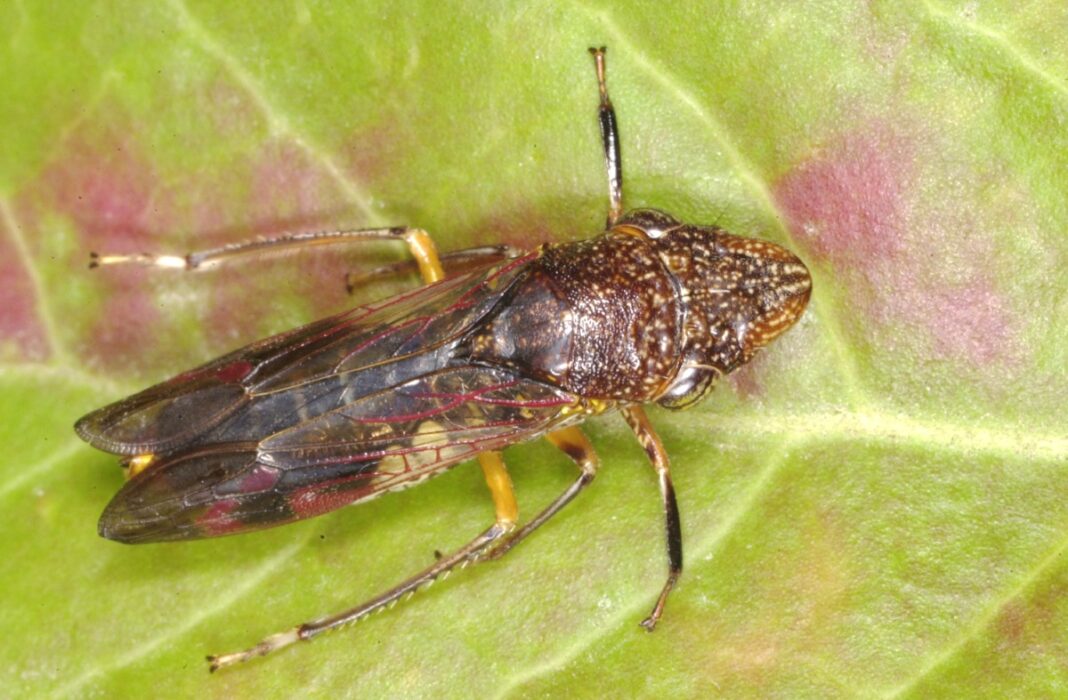
As if the wine industry didn’t have enough issues—declining consumption and climate change to start—now an invasive insect that can spread deadly diseases to grapevines and other plants has arrived.
The glassy-winged sharpshooter just hitched a ride from a Fresno nursery to Costco stores across Northern California, including those in Sonoma and Marin counties. That could spell trouble for the region, considering the non-native leafhopper established itself in Southern and Central California in the 1990s, damaging thousands of acres of plants ever since.
Local agriculture officials need the public’s help to stop the destructive pest from taking up residence here, where it doesn’t belong. Time is of the essence, because it poses a threat to wine country’s vineyards, as well as citrus trees and ornamental plants in the entire region.
Customers who recently purchased grapevine plants from Costco in Santa Rosa, Rohnert Park and Novato should call their local department of agriculture.
Egg masses, nymphs and adults turned up at the Sonoma County stores. In Marin, inspectors found eggs and nymphs in the plant material.
“We’ve never seen anything like this before,” said Pierpaolo Aymar, Sonoma County’s deputy agriculture commissioner.
Prior to the Costco infestation, Sonoma County inspectors had occasionally spotted a glassy-winged sharpshooter egg mass at a retail store. Aymar saw one adult last year, ensnared during a routine trapping program that placed hundreds of traps around the county.
Marin Agricultural Commissioner Joe Deviney describes similar past experiences. His staff has intercepted the insect during store inspections. But it’s rare.
According to Deviney, the current situation is different because the infested plant material went to select Costco locations in multiple Northern California counties, including nearby Alameda, Contra Costa, Mendocino, Napa, San Mateo, Santa Clara and Solano.
“And then many of the plants were purchased and left the scene,” Deviney noted. “They’re out in the wild now.”
By “in the wild,” he means they’re sitting on patios or already planted in gardens. About 132 grapevine plants are unaccounted for in Marin, with Sonoma County still trying to track down 158 plants.
How did this catastrophe happen? Fresno County Deputy Agricultural Commissioner Amanda Zito explained to the Pacific Sun what went wrong.
All the infested plants originated from Burchell Nursery in Fresno County, a region that has been dealing with the glassy-winged sharpshooter for years. Burchell is in an area of concern, close enough to the county’s established quarantine zone that officials placed the nursery under a compliance agreement in 2024, Zito said.
Before plants leave the nursery, Burchell is obligated to notify the receiving county’s agriculture department that a shipment will be arriving. Additionally, the nursery must provide a “blue tag,” basically a hold notice informing the vendor to contact their agriculture commissioner for an inspection prior to selling the plants.
Burchell skipped those steps entirely.
According to Zito, the nursery has had high staff turnover, and new employees weren’t familiar with the shipping requirements.
Fresno County responded swiftly, shutting down Burchell’s shipping and instructing the nursery to treat its entire yard with pesticide. Going forward, a new compliance agreement requires that Burchell conduct a 100% visual inspection and pesticide treatment for every plant shipment headed to partially or non-infested counties.
Both Aymar and Deviney emphasize that Costco is not at fault and cooperated fully. In fact, even without the blue tag, the Santa Rosa location called the Sonoma County Department of Agriculture to ask whether inspectors wanted to see the Burchell Nursery shipment.
“Thankfully, because of our good relationship with Costco, they tend to call us when they’re not sure if plant material needs inspection,” Aymar said. “We wouldn’t have known otherwise.”
Sonoma County sounded the alarm, and counties across Northern California were alerted. To prevent a potential infestation, officials need every person who purchased the grapevine plants from Costco to contact them.
“We’ll put up a trap, we’ll do a survey of the area, we’ll take care of the plant completely, and Costco will give you your money back,” Deviney stated.
Calls have begun trickling in. Last week, Marin collected eight of the plants. Fortunately, they didn’t find glassy-winged sharpshooter eggs, nymphs or adults. About 40 people have reached out to Sonoma County, and they are also collecting and inspecting the plants.
“We’ve got a ways to go here,” Aymar said. “I’m hoping that in the next week or two, there’s a big push, and people contact us.”
The urgency stems from the glassy-winged sharpshooter’s feeding habits. As its needle-like mouth penetrates plant tissue, this leafhopper can transmit the bacterium Xylella fastidiosa, which causes the deadly Pierce’s disease in grapevines.
Xylella fastidiosa also produces diseases in other types of plants. Since the pest feeds on more than 250 plants, residential gardens are just as susceptible to damage as commercial vineyards.
Still, Aymar and Deviney stress that the biggest concern is for the region’s grapevine plants. Sonoma has 60,000 acres of wine grapes, and Napa has 40,000. Marin has less than 200.
If an infestation takes hold, eradication methods exist. Yellow sticky traps lure the insects. Organic sprays can be applied in residential areas. And another insect could come to the rescue.
“There’s a parasitic wasp that doesn’t hurt humans, doesn’t hurt dogs, doesn’t hurt birds,” Deviney said. “It’s very, very specific, and it lays its eggs in the eggs of glassy-wing sharpshooters. And then when the egg hatches, the larva of the wasp consumes it.”
At this point, Marin and Sonoma counties have seen no indication of an infestation “in the wild.” The agriculture commissioners would like to keep it that way, with the public’s help.
Anyone who bought grapevines at Costco locations in Sonoma and Marin counties from April 19-May 21 should double-bag the plants immediately and contact their local agriculture department. Do not place potentially infested plant material into the trash, compost or green waste.
In Sonoma County, call 707.565.2371 or email So******@**********ty.gov. Marin County residents, call 415.473.7888.









This might account for some extensive changes in the Napa Valley wine industry, closures of wineries, for sale signs on vineyard fences. The word “might” is included to allow for the possibility that wine consumption patterns are declining. But that many vacant buildings and warehouses on the road from Napa to Calistoga?