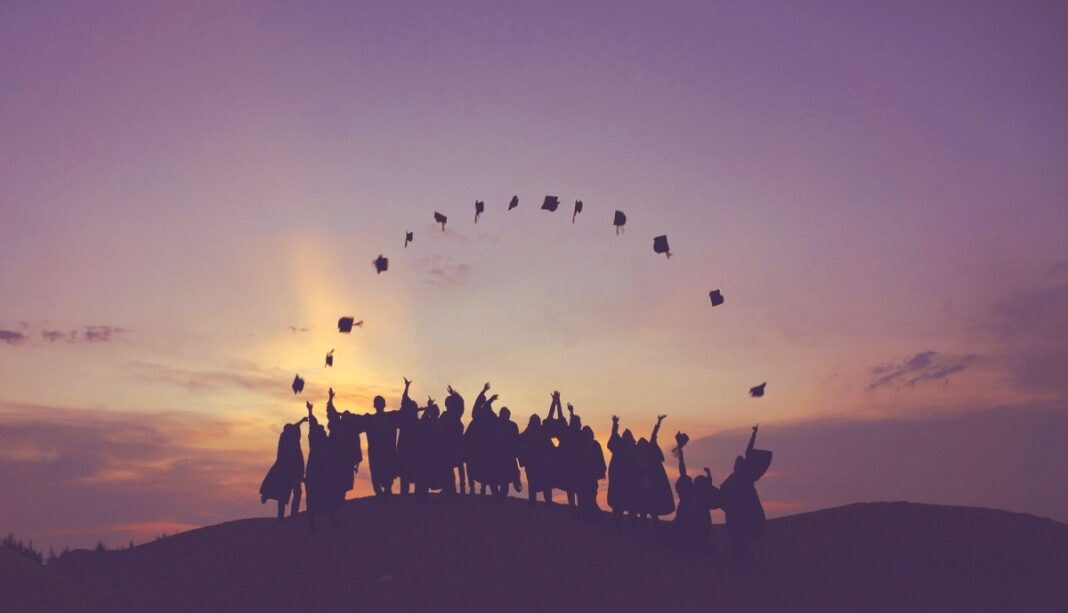
The commencement speeches are over. The caps have been thrown. Somewhere, a graduate is clutching a diploma worth anywhere from $0 to $250,000 while doomscrolling apartment listings. And finding nothing.
Welcome to adulthood, Class of 2026.
The newest crop of high school and college graduates is entering a world that is simultaneously full of opportunity but also kind of on fire. Depending on which economist, influencer or exhausted parent one consults, this generation is either poised to thrive in a dazzling AI-powered future or about to join a tech-dystopia with breadlines making headlines.
The good news first: Unemployment remains relatively low by historical standards, particularly for college graduates. According to the U.S. Bureau of Labor Statistics, workers with bachelor’s degrees still earn substantially more over their lifetimes than those without them. Healthcare, renewable energy, skilled trades and technology-adjacent jobs continue to grow. The World Economic Forum predicts that AI and automation will create millions of new roles globally even as they eliminate others.
Translation: There will be jobs. They just may not resemble the jobs they or their parents imagined for them.
For years, young people were told to “follow their passion” into knowledge work only to graduate into a labor market where artificial intelligence can now generate presentations, code, marketing copy and suspiciously heartfelt emails in seconds. Entry-level white-collar work—the traditional proving ground for ambitious young graduates—is increasingly vulnerable to automation.
Moreover, according to Washington think-tank the Economic Policy Institute, the college wage premium has been flat or falling in recent years.
Meanwhile, electricians, nurses, plumbers and HVAC technicians are enjoying something close to a cultural revenge arc. America spent decades pushing four-year degrees while quietly underinvesting in the trades. Now many skilled laborers are aging out of the workforce just as infrastructure projects and housing demands surge. In some regions, experienced tradespeople can out-earn junior office workers carrying six figures of student debt.
Speaking of debt: Americans collectively owe more than $1.7 trillion in student loans, according to the Federal Reserve. Even graduates fortunate enough to land decent-paying jobs face an economy where basic adulthood milestones keep drifting further into the horizon.
Housing remains perhaps the defining anxiety of this generation. Median home prices have risen dramatically over the past decade while mortgage rates remain stubbornly high. In many cities, even rent feels aspirational. Young adults are increasingly living with parents longer—not necessarily because they lack ambition, but just from the sheer economics of the situation.
Relationships are changing too. Americans are marrying later, having fewer children and reporting higher levels of loneliness despite (or perhaps due to) unprecedented digital connectivity. Dating apps have gamified romance, and young people possess infinite access to one another but increasingly limited faith in institutions like marriage once thought to support long-term stability.
And yet there are reasons for optimism.
This generation is arguably more adaptable than any before it. They survived pandemic-era schooling, economic whiplash and the psychological chaos of growing up online in the late social media moment. Many young people approach work with fewer illusions about corporate loyalty and greater emphasis on flexibility, mental health and personal meaning. Remote work, while increasingly contested by employers, has permanently altered expectations around lifestyle and geography. A graduate can theoretically work for a company in New York City while living in Omaha—or in their childhood bedroom in Petaluma.
There is also a strange freedom in entering adulthood during a period when everyone admits the old roadmap no longer works. Previous generations pursued linear lives: school, job, marriage, mortgage, retirement. The Class of 2026 is inheriting something more improvisational. Careers will zigzag. People will reinvent themselves repeatedly. Stability may no longer come from institutions but from adaptability itself.
Still, history suggests that generations shaped by instability often become culturally inventive. The graduates of 2026 may not inherit the prosperity once promised to the American middle class (if such a thing could be said to exist in a few years), but they are entering adulthood with a sharper understanding of how fragile systems actually are.
In other words, they may be uniquely qualified for the strange century unfolding before them.