
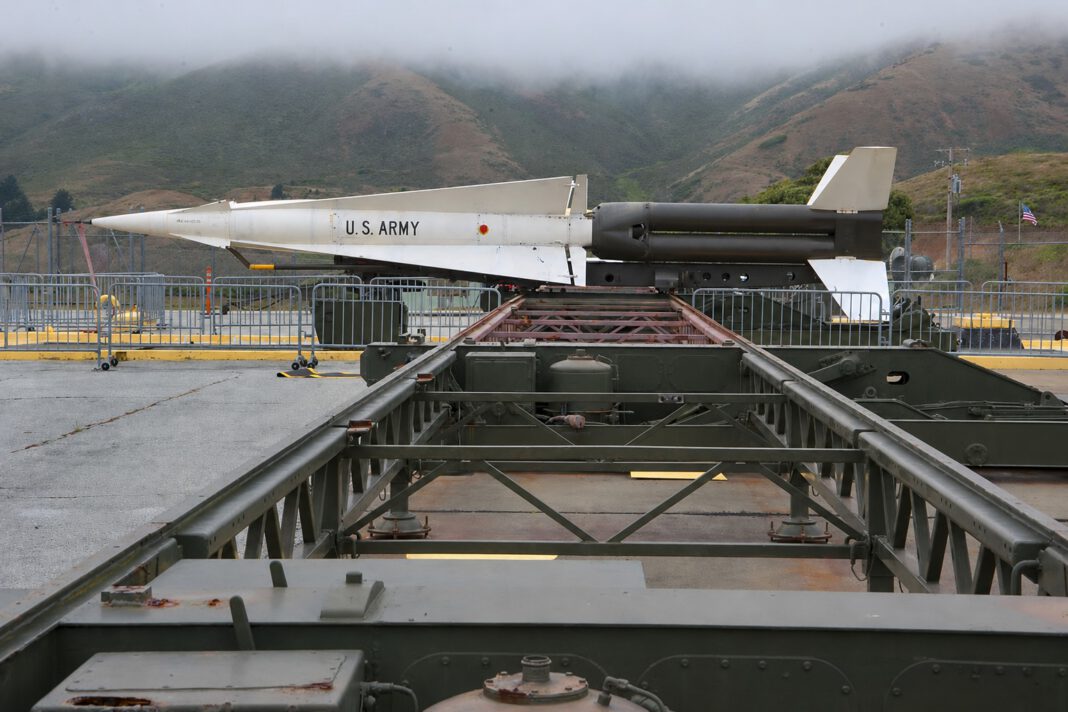
This story is part two of ‘Project Nike: Remembering Marin’s nuclear missile base,’ which ran last week.
Al Kellogg is one of the docent/volunteers at SF-88. He served originally at SF-93, the Marin missile site outside of Fort Barry.
A wonderful storyteller, he remembers how his experience with Project Nike first started. Kellogg had miscalculated his San Mateo College experience.
“After graduating from high school in 1965, I was working at the same time as a janitor in San Francisco. Nobody told me that I had to take 12 units during summer, so I did not enroll for summer school,” Kellogg says now. “About two weeks after not enrolling in summer school, I got my draft notice.”
The Vietnam War was raging at that time, so calculating that fighting a cold war in the United States was better than fighting a hot one in Southeast Asia, Kellogg decided that he might want to take a closer look at what the military had to offer.
“I went down to the Army and was trying to get a slot as a photographer. There was no photography available, so the recruiter asked if I would consider this air defense system,” Kellogg recalls. The deal was that if he took an extra year of enlistment, he would be guaranteed a first placement assignment in the Army’s Air Defense Artillery.
“Since I had a girlfriend, I decided that it might be a good idea to stay close to home. I got lucky and got San Francisco, so I knew that after Boot Camp I was going to the Air Defense Command, and I wouldn’t have to go to Vietnam,” he notes.
Kellogg was 19 years old when he was assigned to C Battery at SF-93 in San Rafael.
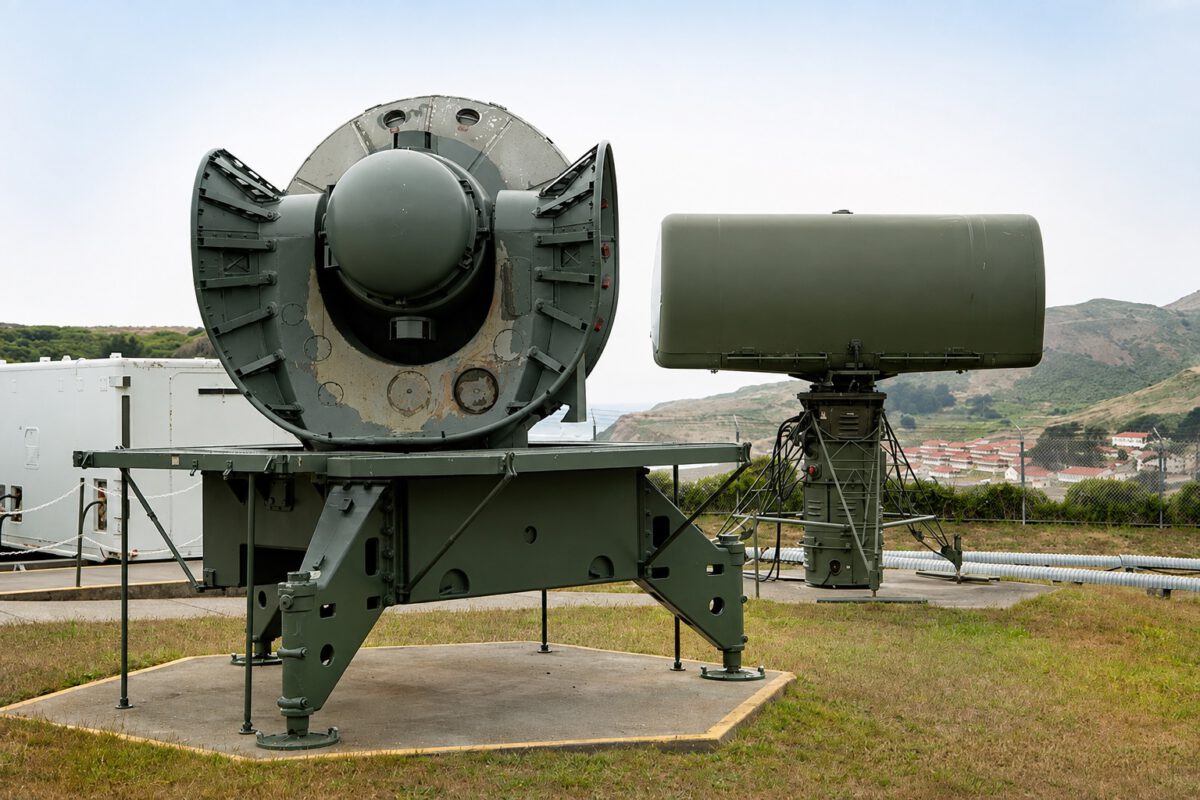
“When I reported to the captain’s office, he looked at my test scores and said that I did very well on the Army test and that my score was high enough to be a radar operator,” he says. “So, he assigned me to the Alternate Battery Acquisition Radar (ABAR). This radar had been developed to screen out jamming.”
The work was grueling, 24 hours on and 24 hours off.
“The reason for that,” says Kellogg, “is that we had to do our own calibrations of the equipment every six hours because of the tube technology. The tube technology was sensitive to weather changes, so we had to tweak all of the unit transmitting receiver boxes every six hours and adjust all the pods for maximum performance along with the six-hour checks.”
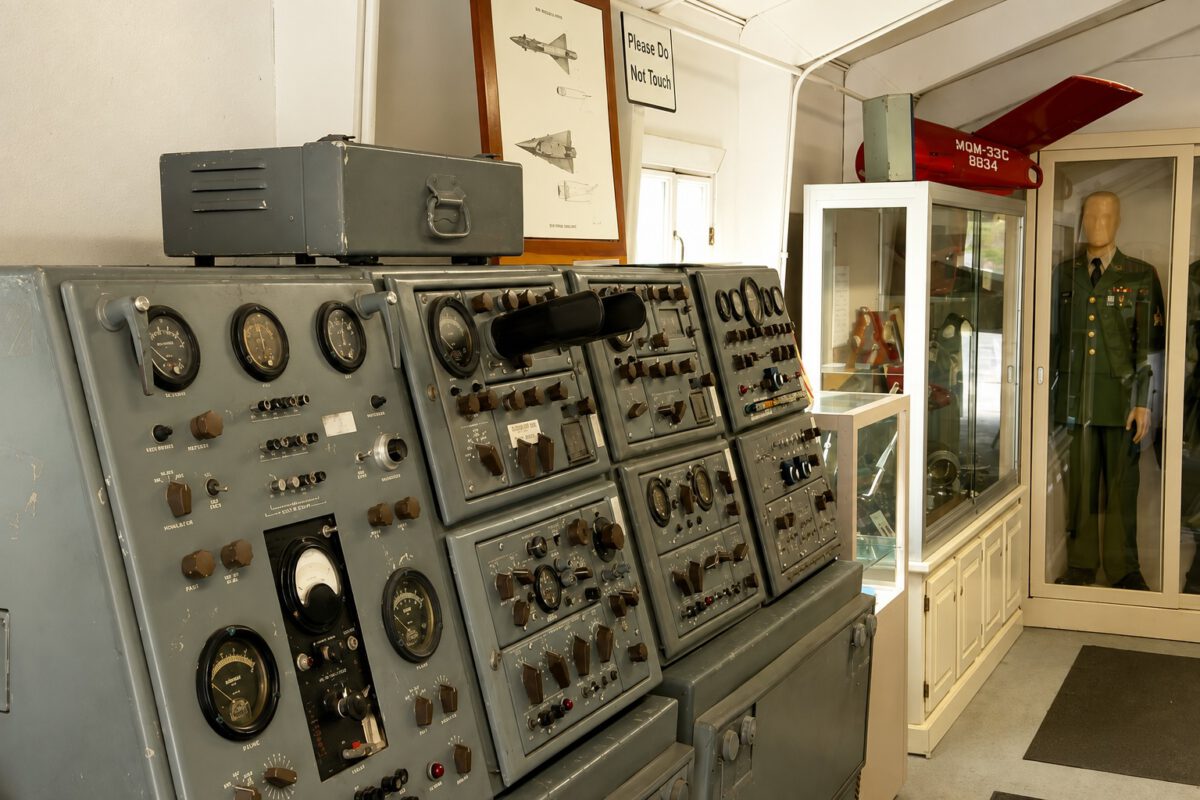
That was in addition to standing regular duty, and all the other regular mundanity of serving in a regular Army unit. And then there were practices.
“Practice usually lasted about an hour and a half after the six-hour checks,” recalls Kellogg. “Our checks were at nine in the morning, three in the afternoon, nine at night and at three in the morning, followed by an hour and a half worth of target training. I lasted 16 months.”
The final straw was a late-night practice in which he was woken and went through the entire drill, only to have the administering officer ask him if he was cold when he was done.
It was only then that Kellogg realized that he had done the entire practice dressed in only military issued underwear and boots.
“I realized that the sleep deprivation was killing me, so I decided I’d take my chances in Vietnam,” he explains. “I put in a transfer for the Army Corps of Engineers. I got the transfer and went to the Army Drafting school in 1968. After that, I reported to Germany to a Core Engineer unit, and I was overseas for 28 months.”
Kellogg got married, became a parent and returned home in 1970. Then he joined the Army Reserves and used his radar experience to become a telecommunications engineer. He did that job for 48 years and at the same time became a general contractor, leaning on his experience in the Army Corps of Engineers.
“I did both jobs until I was 60,” he says, raising a clearly crooked finger for emphasis. A “gift from the Corps,” he notes.
After the Army, Kellogg took to biking as a way to stay in shape. “I worked my way up to 80 to 100 miles,” he points out. On one of his rides, he was going through the Marin Headlands. “I was coming down the hill from the Hawk Hill radar site, and I saw a Nike missile up at SF-88 with a car parked out in front. I decided to ride in and find out what was going on because I knew the base had closed in 1974. I met a man there, and he told me that they were trying to make it into a museum. That was 34 years ago, and I’ve been there ever since.”
Using both of his work experiences as a volunteer at SF-88, Kellogg did much of the general construction maintenance on the site, including running all of the water, rebuilding the dog yards, pouring concrete, as well as tending to all of the asphalt repairs. “I even rebuilt the outside obstacle course in the dog yard,” he says.
“I left the Nike Missiles as a specialist 4, an E4,” says the now 78-year-old Kellogg. “I eventually obtained the rank of staff sergeant [E6] with a seven-year stripe.”
Many of the volunteers associated with SF-88 can seem somewhat wary of outsiders asking questions. Some have different personal views on what their service represents, and some are just unsure of the current nature of the secrecy surrounding their former jobs. One mentioned to me that the FBI had been out to speak with them as recently as two years ago.
It’s interesting that the veterans at SF-88 all band together now. Because fraternization was frowned on during their actual service. In a “need to know” environment, often one hand didn’t know exactly what the other hand was doing. By design. The military even looked the other way as rivalries formed within units, not discouraging such derisive nicknames as “scope dopes” for the radar operators and “pit rats” for the magazine crews. These two sets of enlisted men were separated from each other (except at mess), and separated from a third set on the bases, the Military Police. And all of these men were further separated from the officers.
“I am sure this is all declassified, so that I can talk about it,” says Rick Enos, as we sit in the outside dining area directly in front of Cultivar, the newest trendy downtown Sausalito restaurant. Enos is a manager there, and he has had a long Marin County restaurant experience, including managing both the Cantina in Mill Valley and the Trident in Sausalito. He also once owned a string of Mexican restaurants and was an officer in the corporation that was Victoria Station. But before all of that, he was a young man of draft age during the Vietnam War.
“I took an ROTC commission right out of college,” he says. “I graduated from Santa Clara, and most of my friends went to graduate school to basically avoid Vietnam.”
Enos first went through training on the Hawk missile system in El Paso, Texas at Fort Bliss, and his eventual assignment options came down to either Fort Leavenworth in Kansas or the Demilitarized Zone (DMZ) in Vietnam.
“Neither of those options were acceptable to me,” he says.
He asked around, and one of his best friends suggested that he take the test for the language institute.
“I went to this major, and I begged him to let me take the test, and he finally relented and said OK,” he recalls.
Enos isn’t sure exactly how it happened, but he credits his Catholic background for a rudimentary knowledge of Latin.
“We aced the test,” he says, sounding surprised, even to this day.
Enos was to eventually be assigned to either Allied Staff in Berlin or NATO Headquarters in Brussels, all after six months studying French at the Defense Language Institute.
“It was a pretty cool assignment,” says Enos. Only, it wasn’t to be.
“When we got to Europe, at Frankfurt processing, they took a look at these orders and said, ‘I don’t know how this happened, but this isn’t a company grade assignment. This is for lieutenant colonels and above,” he explains.
So instead of heading to Brussels or Berlin, he and a buddy ended up in another Belgian assignment.
“‘You are both going to be assigned to the Belgian Air Force Nike Hercules firing batteries,’” Enos recalls his assigning officer saying. “‘We’ve got five of them up in the Eiffel Mountains. You’ll be in the same unit, but you are probably going to be 40 or 50 miles apart.’”
Enos stops talking for a minute as one of the bussers at Cultivar, a young man of about 20, refills our glasses of water.
“Anyway, they handed me a piece of paper and said, ‘Here; you’ll need to sign this paper.’ And I looked at it, and I said, ‘What is this?’”
“You are going to be the custodian of nuclear warheads assigned to the Belgian Air Force,” said the officer.
“Really?” replied Enos. “How many?”
“Well, there are 10 of them, and two of them have the power of Hiroshima” came the response.

Twenty-two years old, a ROTC second lieutenant with a language major and no significant artillery experience, Enos was now signing a manifest for 10 nuclear bombs on his very first day.
“We were largely an inspection unit,” Enos says. “So, every month somebody’d come through there. And we’d go through this whole exercise.”
“These were Nike Hercules; this is the height of the Cold War, 1969, and they had nuclear warheads installed on these things. They were activated by something called a permissive action link. It was called PAL. I had half the combination, and on my desk was a red phone where the other half would come by presidential order. I’m sure it wouldn’t have been the actual president calling if that phone rang, but it was a pretty big deal,” he remembers.
“I think there was one time where we went active, and I don’t know how far apart we were from potentially pushing the button on those things, but it got called off. And that was pretty hairy,” he notes.
Enos had no idea at the time—and it has only recently been reported on—but the “authorization” chain for Nike by then had already nearly failed once. On Oct. 28, 1962, during the height of the Cuban Missile Crisis, a Nike missile battery in Shuri, Okinawa, received a coded order to arm and launch four of its nuclear armed Nike Hercules missiles in response to approaching Soviet aircraft. Luckily, battery officers suspected something was wrong with the order and did not launch the missiles. It was eventually confirmed that the order itself was a mistake.
That was the second Nike Hercules mistake on Japanese soil. There had been two accidents with Nike Ajax in the U.S. in the 1950s, one accidental launch in the Washington, D.C. area that landed near the Washington-Baltimore Expressway without exploding, and an explosion on the launch pad in New Jersey that killed 10 people (six military and four civilian contractors).
The first Japanese mistake had been on June 19, 1959, when a nuclear armed Nike Hercules was accidently launched from the Naha Air Base—also in Okinawa—during a routine maintenance check. It flew horizontally about 500 yards before crashing into the water. The missile’s safety protocols prevented the warhead from detonating, but two soldiers died as a result of the accident. And only recently has much of this information been made public.
Hiding in Plain Sight
In the book, The Last Missile Site, the last commander of SF-88, Lt. Col. Susan P. Cheney, the first (and last) woman in a command role for Nike, is quoted as saying:
“By the time we launched everything, we were going to be gone. You’ve got to remember; one missile, one airplane. If they were flying close enough together, we probably would get two. But if the Soviets followed the attack scenario they had in those days, which was waves of planes, all we did was slow them down.”
The question with Project Nike is not so much what would happen during an attack but rather what would happen after it.
Cheney addressed that too, in her comments:
“Our life expectancy when we were lieutenants, and I still remember this, sitting in the Nike-Hercules class, we were told our life expectancy was five minutes from the time the balloon [missile] went up, to the time that it was time to do it…We were their number one target. Command and control and us.”
A story that Kellogg often tells visitors to SF-88 suggests something slightly different.
Sometime in 1968, radar associated with the Marin Nike sites detected an inbound aircraft with no “Identification, Friend, or Foe” signal (IFF). The plane was also flying outside of the “prescribed lane” for commercial aircraft, and those two anomalies triggered an alert status at SF-93.
A non-nuclear Nike Hercules was raised up from the underground magazine and placed in its upright launch position. Kellogg could watch what was happening on his radar scope.
“Two Voodoo interceptors (McDonell F-101s) scramble out of Hamilton. Both of them go up and around the mountain—I can see them on my scope—and they get in behind the target,” he recalls.
One of the fighters peels off, leaving the other one trailing the unidentified craft. The order comes through: “Forget it. We’re good.” The missile is disarmed and lowered back down into the magazine. Kellogg finishes his duty cycle and goes to sleep. The next morning on the news, he watches footage of an F-101 escorting a Pan Am passenger jet into SFO. It had experienced a total electrical/navigation failure, and the pilot had brought the plane in using only dead reckoning.
Which is not exactly the story of a heroic last-ditch defensive effort.
By 1962, the United States was planning to sign the Nuclear Test Ban Treaty along with the former Soviet Union and the United Kingdom. That treaty (signed and ratified in 1963) banned all nuclear weapon tests in the atmosphere, in outer space and underwater. It did not specifically prohibit underground nuclear tests, but it prevented any tests that released radioactive debris beyond the testing state’s territorial limits. In advance of this treaty, the United States decided to do some last-minute testing, choosing Johnston Island, an atoll in the Pacific about 800 miles southwest of Hawaii, for the test site
In June 1962, Operation Fishbowl began. And it did not go well. Two attempts resulted in having to self-destruct Air Force Thor rockets due to malfunctions, with one spreading radioactive material near Johnston Island. A third attempt yielded a nuclear electromagnetic pulse (EMP) so much larger than expected that it rendered all of the testing equipment and its data useless. It also knocked out the power in Hawaii for 72 hours and damaged some orbiting satellites. Another cancelled launch was followed by an explosion on the launch pad causing radioactive contamination. Testing was finally halted in July.
In the interim, the Cuban Missile Crisis happened. The former USSR delivered nuclear armed inter-continental ballistic missiles (ICBMs) to Cuba and began building bases to launch them, ultimately forcing the historic confrontation with President John Kennedy. The U.S. eventually made a secret agreement, whereas we removed nuclear armed Jupiter missiles from Turkey and Italy, and in exchange the Soviets removed their ICBMs from Cuba.
In October 1962, Operation Fishbowl resumed with another self-destruct. Three more successful tests followed, and the final atmospheric test of a nuclear bomb by the United States happened on Nov. 4, 1962, and it was powered by a Nike Hercules missile.
That is a success rate of just 50% under ideal, controlled circumstances. Even in the modern era, rocket science is not an exact science. Take the recent failed Blue Origin launch and explosion, or the unexpected fiery crash into the ocean of Space X just a few weeks later.
“Back in 1969, I thought this was all state of the art,” says Enos, who has taken the tour out at SF-88. “Now that whole system looks like something put together in somebody’s garage.”
But back then it was state of the art. And top secret. And theoretically far removed from the general public.
Nike security units used sentry dogs, those who were specially trained to only respond to their handlers (and often in different languages—German being the language used at SF-88). A “two-man” safety protocol was also in place. If anyone was found alone in the most interior fenced area (the area around the missile pits), the order was either “shoot to kill” or set the dogs on them.
Long time Tiburon resident Ron de Vogel is a retired high-end car salesperson who once sold both Porsches and Ferraris in Mill Valley. But in 1975, he was a corporal in the Dutch army, one of the very last groups of conscripts drafted by the Dutch, and he was assigned to help guard an American nuclear facility in the ‘t Harde area in the northern Netherlands.
“They won’t tell you,” he says in response to a question about what kind of nuclear missiles they were. “But it was definitely made clear to everybody that it was a nuclear site.”
De Vogel called it the worst kind of guard duty. “In most guard duty, you get to walk around,” he notes. But in this situation, it was six hours on, six hours off, sitting alone in the dark in a foxhole armed with an Uzi submachine gun.
“The instruction you got as a soldier was that if you asked the question “Who’s there?” and you didn’t get an answer, you were to shoot to kill,” says de Vogel. And then he tells a story of how that once went wrong.
“I was doing double duty as a paramedic and as a sentry,” he recalls of one night. “I heard some rustling going on about 100 feet away, and then there was a gunshot.”
A Dutch army lieutenant was trying to ascertain if the night guards were actually staying awake, so he snuck up on them. One of the other sentries became anxious in that moment, and according to de Vogel: “Instead of saying, ‘Stop; who’s there?’ and then shooting, he did it the other way around.”
The lieutenant was shot through the shoulder but survived.
“It was kind of stupid to walk around in the dark with soldiers that have live ammunition and are instructed to shoot to kill,” says de Vogel now. “But that sort of thing happened quite frequently actually.”
Working at a nuclear armed facility was a serious job that required serious people. The soldiers in the new nuclear army were cut from a different cloth. In many circumstances, not only did they have to test into their positions, but they also had to be hand selected by their commanding officer. The work required intelligence, dedication, as well as stamina.
Eventually Enos made captain, and the military did what the military often does; they shipped him off to Da Nang in Vietnam. Two weeks of Jungle Training in Panama, and then he was overseeing the main port used during one of the largest military drawdowns in history, as the United States prepared to leave South Vietnam.
“The men at Nike were a lot different than the guys that were at the port in Da Nang,” says Enos. Eleven months of anxiety followed.
“It was three o’clock in the morning in Vietnam, and I was reading this thing that says that there was a new little regulation, which said that anybody, regardless of status, can get out of the Army, if they went back to a graduate program,” he remembers.
Enos promptly called his alma mater, convinced his former dean to sign him up, and 10 days later he was out of the military. He took one semester at graduate school and then landed a job with Victoria Station.
“I believe it was a suicide mission,” Enos says now of Nike. “And I didn’t even think of it again until I went on the tour out here and the guy said the same thing. Besides, we were 22; we didn’t really think about it much.”
SF-88 sits on a formerly secure military base, as does SF-87 across the valley, and SF-91 is on Angel Island. All are fairly remote and isolated. It’s only once one finds SF-93, the very base that Kellogg once served at, that things take on a slightly different perspective.
The remains of Nike Missile Base SF-93 sit atop a small hillock just barely outside the city limits of San Rafael in unincorporated Terra Linda. To get there, one first heads towards The Club restaurant at McInnis Park, then turns left at the Little League field, drives up the hill past the putt-putt golf course, passes the regular nine-hole golf course, before going beyond the tennis courts and parking near the skateboard park. Less than 200 yards up the hill is what looks like a vacant lot.
From that lot, if one looks just beyond the skateboard park, and beyond the public road, they can see the former command and control buildings which still stand. Their last recorded use was as an Honor Farm for the Marin County Jail.
When I was there, a group was setting up portable grandstands for a mountain bike racing event, oblivious to the site’s history as a nuclear missile base. Below those temporary grandstands, SF-93 was once the home of eight nuclear bombs, each with a yield of 20 kilotons of TNT. Little Boy, the bomb dropped on Hiroshima, was just 15 kilotons.
In the distance, about a mile away, one can see the church steeple of the St. Vincent’s School for Boys, a former orphanage (founded in 1855) which is now a residential group home. And then, to its right, about two miles away, sits the former home for the base commanders of Hamilton Field. Men who actually knew the breadth and scope of Project Nike. And they were reminded of that fact every time they looked out of their breakfast room window.
“Back then, I thought we were there to protect the population,” says Kellogg. “I realize now, we were there to protect the military.”
A cursory glance around the Bay Area with that understanding really puts things in a new perspective. If one views the Nike placements around the area as protection of the civilian population, they don’t really make much sense. We were essentially going to launch and explode 35 or more nuclear bombs over the state capital of Sacramento—for instance. But if one views the Bay Area as a massive military industrial complex—Mare Island, Alameda Naval Base, Hamilton Field, the Presidio, Treasure Island, Angel Island—then Sacramento as a calculated loss makes perfect sense.
Project Nike was a comparative multi-trillion-dollar expense (in today’s money). And if we further realize that the national debt between 1960 and 1970 rose by approximately 30%, then we can safely assume that Nike was at least a part of that. And since it was financed money, technically we are still paying for it today. Since Nike was decommissioned, the United States has not had a national missile defense plan. The Patriot Missile system was developed (as a kinetic impact nonexplosive missile), and it has been quite successful, but deployment of it nationwide is seen as cost prohibitive.
Once ICBMs became the dominant threat (and after SALT II), the United States has instead relied on the Mutually Assured Destruction model (MAD). Meaning that any use of a nuclear weapon will trigger a massive counterattack. And so far, that system has worked. But every once in a while, the idea of a new national missile defense system costing billions (or trillions) of dollars is floated about, be it the Star Wars Defense plan of the ’80s or the Golden Dome of the new millennia. But so far, the costs of implementing these plans have outweighed the fear of attack.
Nike Hercules was the first and last nuclear armed anti-aircraft missile. Its successor, Nike Zeus, with an additional $200 million price tag ($1.3 trillion adjusted for inflation) and a whopping 100-kiloton payload, was designed to take out nuclear missiles specifically, and it was never deployed. Altogether, Project Nike protected the United States for just about 19 years and came with a multi-trillion-dollar price tag. Since then, we have been “unprotected” for 42 years, and one cannot help wondering which course of action was better.
“Watching those Nike Hercules come up out of the ground was really quite something,” says Enos of his missile battery in Belgium.
And thanks to SF-88, the National Park Service and the veteran volunteers who still faithfully man it, one can experience the awesome severity of that Cold War sight even today. And then they can decide for themself whether it was all worth it.
As an ironic aside, in Plutarch’s seminal play, titled Ajax, the Greek chorus warns the eponymous hero: “If you try to cure evil with evil, you will add more pain to your fate,” right before Ajax loses a contest, destroys his own property, goes mad with shame and then kills himself.






Thank you, Jeff Burkhart, for a tremendously enjoyable and comprehensive read. I’m often reminded of your wonderful book “20 years behind bars,“ and might easily retitle this article as “20 years behind concrete.“ I’ve spent decades researching, and actually in a few cases, climbing down into the remaining Marin Nike sites before they were completely covered over, years ago. SF-88 being the notable exception. It’s astonishing how many people in central Marin don’t know about SF-93 above Smith Ranch Rd.
Jeff’s a tremendous bartender (still at The Buckeye?) with great stories and love of history. Bravo!