Letter: ‘Herd mentality? I think not …’

Suffer the little children, and forbid them not their vaccinations

[In regards to Don Harte’s letter, “Measles Shmeasles,” Feb. 13, which argues that measles is a trivial childhood malady, and that it is vaccinations that cause more harm]: When an otherwise healthy child suffers through a case of the measles, it likely isn’t a tragedy. However, if that otherwise healthy child exposed an infant or a child with a compromised immune system to the measles, that scenario could end in tragedy. Herd mentality? I think not. Behaving responsibly for your child’s benefit and the good of your entire community doesn’t make a parent a lemming, it means that the parent understands basic science and the sanctity of life. Go bellow about something that could actually help others. Global warming, terrorism, lack of gun control, homelessness. But, please, enough complaining about measles and vaccinations. We’ve actually already solved those issues, as long as we all participate. Be well.

Nikki Silverstein, Sausalito

Horoscope: What’s Your Sign?


ARIES (March 21 – April 19) Start carrying around a compact mirror, Aries! All eyes are darting your way on Feb. 20 when Venus, the planet of love, and Mars (your ruler) take a road trip into your sign. You’re going to be looking your best with little maintenance required. Now’s the time to change your profile picture—you’ll only need to take two or three selfies instead of 17.

TAURUS (April 20 – May 20) Want a raise, Taurus? Who doesn’t?! While we’re all for a little negotiating and knowing what you’re worth, it’s not time to talk about change with a boss on Feb. 23. That doesn’t mean that you can’t make a mean PowerPoint presentation and get the wheels turning, though. We’re talking music, graphs and charts.

GEMINI (May 21 – June 20) It’s your big break, Gemini! Your TV pilot is finally about to take off on Feb. 20—all of that anxiety was for nothing! You’ve got some extra help from Neptune and its grooming you to be thrown in front of a camera. Whether you’re appearing on screen next to Antonio Banderas or shooting a Kickstarter video, you’ll be ready to give an Oscar-worthy performance.

CANCER (June 21 – July 22) All aboard the Love Boat, Cancer! It’s no secret that you’ve been pulling out all of the stops—are your button-ups ironed? Are you wearing your best blazer? Do your socks match?! Well, the stars are here to tell you that all of that personal attention to your physicality has paid off. Look for Valentine’s weekend 2.0 on Feb. 23.

LEO (July 23 – Aug. 22) Take a road trip, Leo! Pack your bags and your lover—you’re overdue for a trip out of town. You’ll take anything—even Livermore is looking like a plausible romantic destination. Don’t focus on the location; it’s all about the company. Channel your inner romantic and woo like you were born to do!

VIRGO (Aug. 23 – Sept. 22) Did you buy a lotto ticket, Virgo? Well, it may not come as a surprise to you, but you won! Er, you won something. If you’re not cashing in millions this week, maybe you won a spelling bee or a wet T-shirt contest—whatever it is, luck is on your side! We’ll cross our fingers that it’s the lottery and you’re counting cash!

LIBRA (Sept. 23 – Oct. 22) Get ready to sign on the line, Libra! It’s time for you to commit! Love is in the air and it’s taking over your oxygen supply on Feb. 22. Things are heating up and getting serious with a special someone—so don’t be shy; tell him or her how you really feel about being in their Facebook profile picture.

SCORPIO (Oct. 23 – Nov. 21) Hitting the trails hard this weekend, Scorpio? Watch out! This isn’t any average hike—don’t hit the trails donning a cat sweatshirt and sweaty headband. You’re not going to run into your run-of-the-mill lonely hikers—you’ll be following a path that will lead you to a VIP in your industry. Bring your networking A-game and some extra water.

SAGITTARIUS (Nov. 22 – Dec. 21) What’s better than just the two of us, Sagittarius? Three’s company! It’s time to make a baby. At least it’s more entertaining than doing your taxes. Think of all of the endless entertainment that’s headed your way—balancing plates on a pregnant belly and/or late-night grocery runs for brussel sprouts and Ben & Jerry’s. Not to mention the practice of unparalleled financial disciple for 18 years.

CAPRICORN (Dec. 22 – Jan. 19) Trying to sell your home, Capricorn? If the imminent feeling of finding a new home is starting to weigh on your antlers, er, shoulders, don’t worry—it’s in the stars! The best little in-law unit is headed your way. If it’s not on Craigslist, you’ll find it by word-of-mouth.

AQUARIUS (Jan. 20 – Feb. 18) Feel like you’re in a Breaking Bad chemistry class, Aquarius? That’s because on Feb. 22, love is taking over. Sparks will be flying and feelings will be felt. Whether single or coupled up, make sure to practice some of your pick-up line staples.

PISCES (Feb. 19 – March 20) Dinner is on you, Pisces! And why is that, you might ask? Well, money is headed your way. It looks like that raise you put in for 23 months ago might finally just got approved. Do your best to strategize a new financial plan so the extra cash stays in your wallet and doesn’t end up down the drain.

Feature: Ali Akbar Khan

0

by Steve Heilig

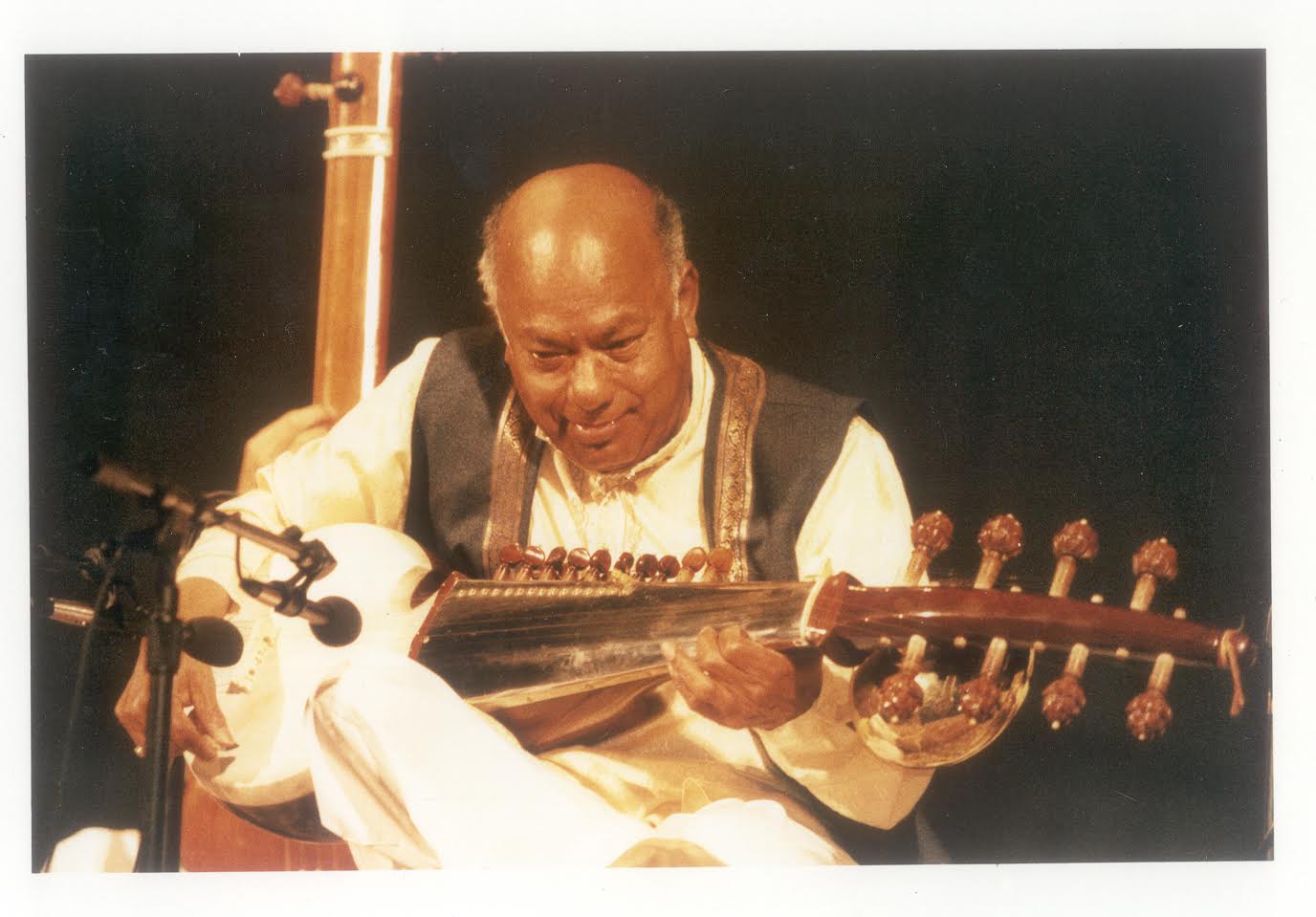
Marin County might seem an unlikely American center of Indian musical history and education, but so it has been for the past half-century. And that is largely due to the late, great Ali Akbar Khan, called an “absolute genius … the greatest musician in the world” by another master, renowned violinist and composer/conductor Yehudi Menuhin. And now Khan’s decades of performing and teaching have been archived in an “online university” so that anyone wishing to study and enjoy his art can access his vast contribution to one of the most subtle and beautiful forms of music.

So who was the musician known to the legions who revered him as “Khan Sahib” (khan meaning “leader” and sahib meaning “master”) and to others as “The Rajah of Ragas”? Born in a line of renowned musical figures in India in 1922, he spent his entire life, almost from birth, immersed in learning and playing North Indian classical ragas on the sarod, a 25-stringed sitar-like instrument, usually carved from a single piece of teak or mahogany. His apprenticeship included study and practicing virtually every waking hour for 20 years, and by the 1950s he was the undisputed master of his demanding instrument. In 1967, a couple of years after moving to California, he founded the Ali Akbar College of Music in Berkeley, soon moving to San Rafael, and for the next 40 years he taught six classes a week for nine months a year to what would total around 10,000 students. His school became the premier training site for performers of Indian music in this country. By the time of his death in 2009 he had garnered countless awards, honorary degrees and fellowships and other recognitions from many nations, and in India, he was designated a “National Living Treasure.”

Another Marin Indian musical maestro, internationally renowned tabla player Zakir Hussain, has said of Khan Sahib that he was, “The musician of the century of India … one of those musicians who show up once in a blue year and give the music the nudge it needs to move on to the next level.”

I had the daunting honor of interviewing Khan in his cozy San Anselmo home in 2002; meeting someone of such renown and with a reputation as a demanding taskmaster was a bit nerve-wracking at first, but before long he was smiling and laughing as he explained Indian musical traditions and recalled his life. While he had never quite attained the popular image here that his sitarist brother-in-law Ravi Shankar garnered in the 1960s due to his friendship with Beatle George Harrison and appearances at major rock festivals, he was at least equally respected among Indian music aficionados. As for American musicians, one story has Jimi Hendrix listening intently to an entire performance by Khan and Shankar and then, after it ended in a blazing display of intuitive interplay, simply shaking his head and saying, “That’s it—I give up.”

But in fact Khan, like Shankar, lamented some aspects of Indian music’s sudden popularity in the 1960s—“That there was some real interest was a good thing,” he reflected. “But first there were at least five years of wrong ideas, of drugs and incense and funky dress and hippie style, mixed up with the music.” But he was also not a complete purist—some superb musicians like Hussain were mixing it up with the likes of the Grateful Dead. Khan smiled and said, “It’s OK, if they know what they are doing,” and warned that the wrong sort of musical blends could actually make one sick, or at least “give them all sorts of headaches … if you spoil it, or hear it at the wrong time, you can have an allergic reaction, like a rash.”

He also told me that he loved American country music, like that of Hank Williams and Willie Nelson—again, if played and heard in a proper, respectful manner. “I like the melodies,” he explained. “Understand that traditions like these often develop for important reasons, and need to be maintained and preserved in ways that help people, wherever they may be. That is just what we try to do.”

Thus the new archive of Khan’s classes and performances. The classes were recorded, either in audio or video, as were 900 concerts. With the intent “to utilize the library to continue offering the finest education in North Indian Classical Music in the world,” the recordings have been digitized, and cross-referenced with the essential help of $375,000 worth of grants and donations from Khan’s admirers. Khan Sahib taught 361 different ragas over the years, and from them derived the 7,197 compositions currently in the library, offered at three levels (beginner, intermediate, advanced), and for voice (20 styles, from ancient Dhrupad to Kheyal to Thumri, and 17 more) and individual instruments (sarod, sitar, bow & flute). The ragas are classified under eight categories, ranging from Pathos and Joy to Peace and Devotion; the season, the time of day, the appropriate light (dawn, first candle, sunset, midnight) and the scales (Asawari, Bhairav, and eight more). This amounts to a mountain of musical wisdom, a unique trove of profound teaching and listening.

An introductory portion of the database is available online at www.aliakbarkhanlibrary.com, but for real access, the true musical pilgrim will want to go to the Ali Akbar Khan Library at 215 West End Avenue, San Rafael. There they can hear and study the database without charge from 11am-6pm on Mondays and Wednesdays, and from 11am-9pm on Tuesdays and Thursdays.

Official opening day ceremonies are set for this Saturday, Feb. 21, with a “ribbon cutting” at 4pm, followed by a dinner and concert featuring Alam Khan, Ali Akbar Khan’s son. Passing on the tradition, indeed.

“My sons and I, we wish to give all listeners that joy and beauty and hope so they can feel it in their souls,” Khan said. “It can help people like medicine. The sound goes inside and the soul accepts it—some people feel happy, somebody cries, and all of it is good.”

Ask Steve if he can feel it in his soul at le*****@********un.com.

NOW PLAYING

Ali Akbar Khan Library, 215 West End Avenue, San Rafael, 94901, 415/454-6372, of****@**cm.org.

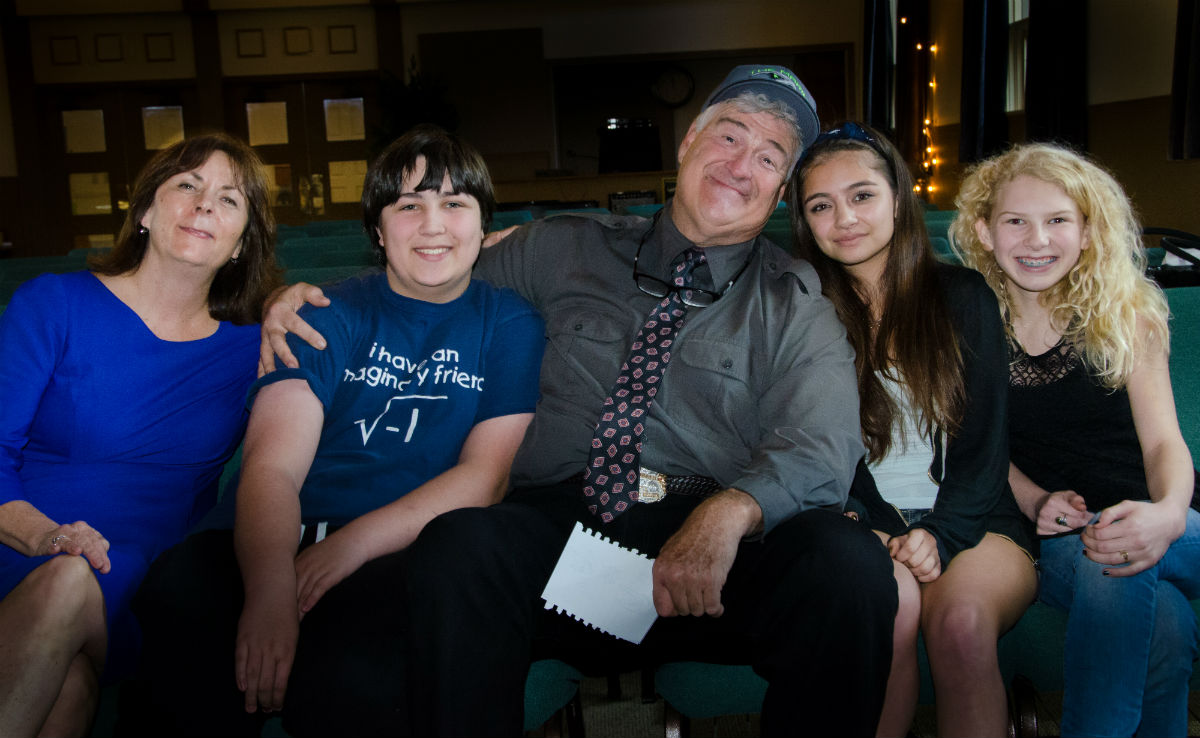
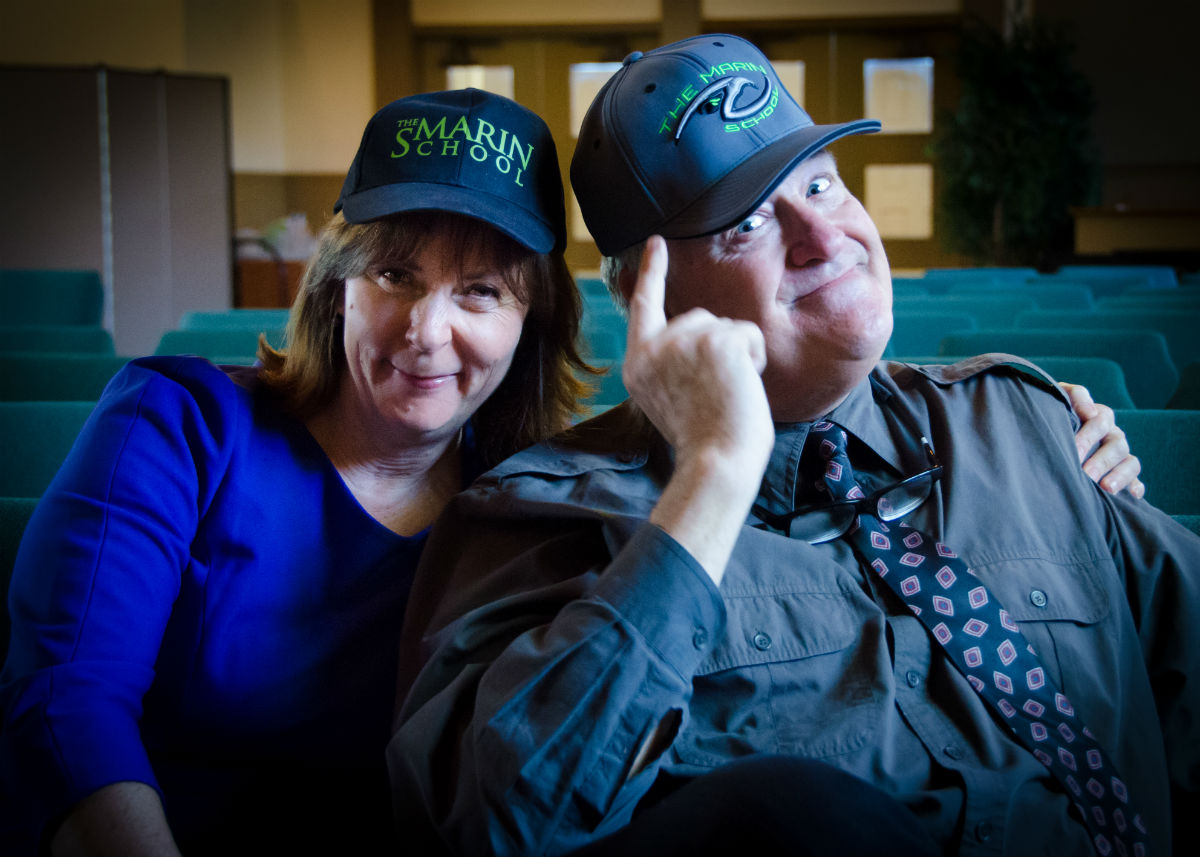
Michael Pritchard talks at the Marin School

1

“Don’t be mad, cuz it will make you sad, and that is bad.”–Michael Pritchard

Video: Lights, camera … action!

by Richard Gould

NIGHTCRAWLER stars Jake Gyllenhaal as low-level criminal Lou Bloom who strikes paydirt one evening capturing a few seconds of bleeds-it-leads video footage for the L.A. news market. A quick study of sleaze in all forms, he hones his new craft following the unwritten rules of the news biz and the city’s class divide–where nothing south of the 10 freeway is apt to draw a 310-viewer’s tear or clench a lapel. Even better, Lou has Weegee’s gift for capturing the most gruesome and newsworthy pix of the previous night, sometimes moving and posing car-tossed corpses to make them more friendly to the small screen, or forcing a police confrontation for live TV by using a well-timed 911 call. In a town where gossip and tragedy are echo-chambered to the level of myth and farce, he moves about with the ease of a natural spawn. But one mass murder threatens to drive up the career and personal stakes for him considerably, with nothing less than KWLA’s Nielsen ratings on the line. This sort of antihero has populated two centuries of highbrow lit, pulps and serials, but he’s seldom seen in Hollywood films, whose audiences don’t warm to two hours of unrelieved cynicism about the American dream. Rene Russo co-stars as the news director aiming to make a secure name for herself in the cutthroat world of local news.

Hero & Zero: No one eats alone and a misunderstanding of epic pooch-portions

by Nikki Silverstein

Hero: Kentfield couple Laura Talmus and Ace Smith founded Beyond Differences after their daughter Lili died at the age of 15 from complications of a cranial facial syndrome. The nonprofit’s mission is to end social isolation in middle school, which Lili unfortunately experienced. Talmus and Smith partnered with a group of teens from Marin to create an inclusive culture, one in which all teens feel accepted and valued by their peers. Today that group has grown into hundreds of teens across the country. On Friday, Feb. 13, they are sponsoring the second annual No One Eats Alone Day. The one-day event is intended to be a learning experience that will touch middle school kids for the rest of their lives. Visit www.beyonddifferences.org for more information.

Zero: “Cute dog. Boy or girl?” That straightforward question briefly confused a Sausalito family with a newly adopted puppy. They were sure their pup was female, but a long-practicing veterinarian informed them that their dog is male and would need to be neutered. The Southern Marin vet stood his ground when the family asked for clarification. Later, the family’s young daughter asked her neighbor Isa, who has two dogs, if she could determine the pooch’s gender. Isa was certain the dog was sans penis, which was later confirmed by a different vet. We’re so embarrassed for the initial doctor that we won’t identify him, but suggest that he get his eyesight checked immediately. This, my friends, is why you should always seek a second opinion.

Food & Drink: Delicious doting

by Tanya Henry

With the carefully timed release of the movie Fifty Shades of Grey (Feb. 14), some plan to spend the day with their amour glued to the big screen. But if your tastes tend toward the more, er modest, here are a few ideas for you that don’t require toys that can’t be purchased in a children’s store.

DO IT YOURSELF DECADENTLY Grab your sweetie and head over to ITK (In The Kitchen) Culinary in Sausalito. Spend the evening together preparing a decadent chocolate lava cake topped with fresh berries and cream. The cost is $150 per romantic meal. The sumptuous menu includes the classic Oysters Rockefeller, a Carrot Ginger Soup and Cornish Game Hens. You will even have the opportunity to whip up a couple of dishes, and the class begins at 5pm, lasting approximately 2.5 hours. Saturday, Feb. 14, 5-6:30pm, 300 Turney St., Sausalito, 415/331-8766.

GOOD SEED Here is a tasty idea that also supports a good cause. The Living Seed Company, an organization that gives heirloom and open-pollinated seeds to schools and groups who are growing gardens, has planned a fundraiser dinner that will be prepared exclusively from food that comes from farms and local West Marin producers. This dinner—on Saturday, Feb. 14 at 7pm—will support the Giving Seed Program. Tickets are $75. To reserve a spot, call 415/663-8002.

ALL-STAR CAST FOR V-DAY For a lively Valentine’s Day, check out Terrapin Crossroads for a special brunch at 11am. Stay for dinner and live music by Bonafacio Silas and Terrapin All-Stars. The restaurant is located at 100 Yacht Club Dr. in San Rafael. Reservations are recommended. 415/524-2773.

WINE ABOUT IT If it’s wine you desire on Valentine’s Day but don’t want to travel far, just head into downtown Novato and visit Trek Winery’s tasting room. The family-owned winery offers up a number of varietals, including Sauvignon Blanc, Chardonnay, Syrahs and Zinfandels. The tasting room is located at 1026 Machin Ave. in Novato. Tasting room hours: Sunday 1-7pm, Wednesday-Thursday noon-8pm, Friday-Saturday noon-10pm, closed Monday & Tuesday. Learn more here: www.trekwine.com.

GOT TO HAVE THE HEART-SHAPED BOX If Valentine’s Day just isn’t right for you without the heart-shaped box, here is a cheat sheet for those who just gotta have it:
See’s Candies—348 Corte Madera Town Center
Miette—2227 Larkspur Landing Circle, Marin Country Mart
Yum Chocolates—73 Throckmorton Ave., Mill Valley
SweetE Organic—800 Redwood Highway, Suite 612, Strawberry Village, Mill Valley

EARLY BIRD GETS THE WORM If you have never been to Slide Ranch, it is a must-visit! I’m posting this early because it always fills up—so reserve your spot now—you won’t regret it! This Spring Fling event is for the whole family, and it’s a perfect way to welcome the new season. Celebrate springtime at the Slide Ranch farm with live music, organic cuisine and hands-on farm and craft activities. Milk goats, feed chickens, tour the organic garden, make fresh food, watch sheep-shearing, learn about nature crafts, go on a coastal hike and more! Saturday, April 25. 10am-4pm, $25/person; $30/person at the gate. Children 2 and under are free. Call the office at 415/381-6155 for more information.

Share your hunger pains with Tanya at th****@********un.com.

Upfront: Driving us up the wall?

by Peter Seidman

Most Marin cities and the county face restrictions on the amount of federal gas tax money they can spend. The cause: Rejecting the Plan Bay Area concept of priority development areas.

When motorists fill their gas tanks in Marin, they pay 18.4 cents per gallon in federal gas tax for the regular formulation of gas. The state’s ethanol concoction comes with a lower tax, but whichever rate gets figured into a gas-tax-return equation, when the feds send the gas tax back to Marin, it now comes with restrictions that previously didn’t exist. And those restrictions constrain the way Marin can spend money on critical road and transportation maintenance and improvement projects.

The road to the current situation started when AB 32 became law in 2006. It mandates a reduction of greenhouse gas emissions to 1990 levels by 2020. A separate executive order called for reducing emissions by 80 percent below 1990 levels by 2050.

A central vision of how AB 32 would work included a scenario in which counties, cities and towns would, among other goals, promote efficient energy use, encourage workforce housing and push for improved public transit.

In 2008, the Legislature took AB 32 one step further down the road to regional planning with SB 375. It’s part of the Sustainable Communities Strategy. It seeks to coordinate land-use and transportation planning. The law requires cities and counties to develop “sustainable strategies.” It pushes for integrating non-motorized transportation, public transit, walking and transit-oriented development into local agency long-range plans. “Improved planning means cleaner cities, less time stuck in your car, and healthier, more sustainable communities,” said California Air Resources Board Chairman Mary D. Nichols in a press release explaining SB 375. “Cities that choose to develop Sustainable Communities Plans that meet these targets have an advantage when it comes to attracting the kinds of vibrant, healthy development that people want.”

The concept of sustainable communities, as encapsulated in a transit-oriented development concept proved to be a focal point for critics who objected to the state dictating regional planning, especially regional planning that tied transportation planning and funding to housing development and planning.

The concept dictates that a Regional Transportation Plan moving forward under the mandate of SB 375 should aim to create sustainable communities. When the idea first circulated and the law was enacted, the consequences seemed academic.

When the Association of Bay Area Governments (ABAG) unveiled the Plan Bay Area concept that called for regional housing plans that set the number of homes that each of the Bay Area’s nine counties should accommodate, slow-growth Marin residents raised loud objections, saying that the concept of a regional planning agency setting goals for Marin was inappropriate. They also said that the numbers of homes ABAG set for the county and its cities were unrealistic and burdensome, a requirement that would change the face of Marin and degrade its “small-town atmosphere” with “stack and pack” high-density housing along the Highway 101 corridor.

Supporters of the transit-oriented development concept noted that ever since Marin’s first countywide plan, the county had embraced the idea of a developed corridor along Highway 101 to provide housing to accommodate workers and create downtown areas that were friendly to pedestrians and bicyclists.
While the debate over whether the state’s regional planning mandate, and the idea of connecting housing development to transportation planning, raged, the Bay Area’s regional planning agencies, ABAG and the

Metropolitan Transportation Commission (MTC) were crafting the practical implications of the philosophical concept.

A key issue was how MTC would weigh various criteria in deciding how to disburse transportation funds generated with federal gas tax money. The disbursement policies represented the first attempt to meet the new sustainable strategy. In 2012, MTC created and approved a policy document for a four-year cycle.

According to the document, “One Bay Area Grant is a new funding approach that better integrates the region’s federal transportation program with California’s climate law and the Sustainable Communities Strategy. Funding distribution to the counties will encourage land-use and housing policies that support the production of housing with supportive transportation investments.”

Critics of the strategy and of transit-oriented development contend that policies will not reduce greenhouse gas emissions to any appreciable extent, and they will only impose unacceptable development for communities that accept the premise. The critics urged the county and Marin cities to withdraw from ABAG and from the sustainable strategy that ties housing with transportation. Corte Madera, in fact, did withdraw from ABAG, although it still must abide by state housing requirements.

The MTC policy document stipulates how MTC will accomplish a practical application of its policies. And that application directly affects how much money the county and its cities will have to spend on transportation projects.

The MTC policy document states that funding disbursement of federal gas tax money will use “transportation dollars to reward jurisdictions that accept housing allocations through the Regional Housing Need Allocation process and produce housing.” MTC also will reward communities that support the Sustainable Communities Strategy “by promoting transportation investments in Priority Development Areas.” The agency’s policy document also states that the disbursement strategy will allow “investments in transportation categories such as Transportation for Livable Communities [Initiative], bicycle and pedestrian improvements, local street and road preservation, and planning and outreach activities, while also providing targeted funding opportunities for Safe Routes to School …”

It’s clear from the policy document that communities accepting the regional housing goal concept of priority development areas can stand at the front of the funding line when federal gas tax gets disbursed. The One Bay Area Grant distribution strategy focuses on a number of weighted criteria. Population accounts for 50 percent of the formula. Also included is the total numbers of housing units a community is willing to plan.

And within that number is the total number of low-income and very low-income housing units.

The policy document is clear on the intent of the weighted criteria: “The objective of this formula is to provide housing incentives to complement the region’s Sustainable Communities Strategy, which together with a Priority Development Area-focused investment strategy will lead to transportation investments that support focused development.”

To underscore the intent of the funding strategy, communities must spend a set minimum percentage of funding coming through MTC from the feds in priority development areas. Most Bay Area counties must spend 70 percent of their federal gas tax money in priority development areas and adjacent areas that benefit the priority development areas.

Four North Bay counties—Marin, Sonoma, Napa and Solano—managed to get something of a waiver under which they can spend 50 percent of the federal gas tax money on priority development areas “to reflect the more rural nature of these counties,” according to the policy document. (The stipulated policies hold true for a four-year cycle, and MTC can change them at the end of a cycle.)

Even with the reduction of priority development area spending to 50 percent, Marin residents opposed to Plan Bay Area and what they perceive as oppressive housing requirements continued their objections to the priority development area concept. By the time the debate had quieted, proposed priority development areas in Marin had been excised. Currently only two priority development areas of consequence remain in Marin: downtown San Rafael and Marin City. (A small area near the Cal Park Hill tunnel was on the list, but the county withdrew housing consideration for it, meaning it doesn’t figure in the MTC disbursement calculations for priority development areas.)

In a four-year cycle, MTC receives gas tax disbursement from the feds and takes 50 percent of it for regional projects. The third lane and bike path on the Richmond-San Rafael Bridge is one example. The other 50 percent goes to the nine Bay Area counties, which must spend their set percentages in priority development areas.

The problem for Marin—because critics of the housing plan rejected priority development areas—is that only two priority development areas remain in which to spend a full 50 percent of the federal gas tax revenue. That means that cities and towns such as Fairfax and Novato, which have no priority development areas, will only see half of the federal gas tax money—and they must share it with the rest of the non-priority development areas in the county.

Dianne Steinhauser, executive director of the Transportation Authority of Marin, says that her agency takes about 25 percent of the money MTC disburses to Marin and sends it out for road maintenance projects. The total amount of federal gas tax that comes to Marin is $10 million over four years. “When I get that in the next cycle,” Steinhauser says, “I will have to spend 50 percent of it connected to just two areas, in downtown San Rafael and Marin City.”

The number of projects in Marin that need funds far outstrips the total funds that come from federal gas tax, even without the 50 percent requirement. And even with using the gas tax funds to leverage more funds, the number of maintenance and improvement projects still outstrips the funding supply. Taking 50 percent off of the top for only two areas leaves the funding picture even worse for the rest of the county.

And it’s no easy task to find funding sources to make up the money that will have to go to just the two priority development areas. The state used to kick in some money from the state gas tax, but it now uses all of its tax revenue to maintain the state transportation infrastructure.

“I heard all the arguments” during the Plan Bay Area debate, Steinhauser says. Critics said that they objected to holding transportation funding hostage to housing development. It wasn’t worth accepting the transportation money, they said, to alter the character of the county. They said, “Reject the money!” And they did. And the county and its cities did.

Marin County Supervisor Steve Kinsey serves on MTC. “The money is going to go where the PDAs are,” he says. “The spigot is pretty well turned off for [the rest] of Marin.” There’s talk that staff at MTC is thinking about increasing the Marin priority development area spending requirement to 70 percent, which would make things even harder in Marin. Steinhauser thinks the North Bay counties, working together, can hold off that impetus.

The priority development battle has left Marin with a tarnished reputation, at least in the eyes of other Bay Area counties. (Critics might say it’s a badge of honor and individuality.)

In regional planning circles, Marin is considered “a bad performer,” Steinhauser says. “They make that very clear. We are not well-appreciated. We are admonished by other counties on a regular basis.”

Now, the county and its cities face the practical implications that come with the loss of the federal gas tax funding as it gets restricted to San Rafael and Marin City. Steinhauser says that critics have wanted to reject the regional funding and planning strategy and now they should come up with ways to raise the money lost to their communities. “That’s my answer,” she says. “We need to put things in front of voters, whether it’s a local city sales tax or a countywide revenue source of some sort. If we want to thumb our noses at these federal funds, then we need to be realistic about what [funds] we have to work with. We don’t have these [federal] monies any longer.”

Contact the writer at pe***@******an.com.

That TV Guy

by Rick Polito

Friday, Feb. 13 Fools Gold Matthew McConaughey and Kate Hudson play an estranged husband and wife who discover clues to the location of shipwreck treasure. They also discover a reason for McConaughey to take his shirt off every five minutes. (2008) American Movie Classics. 7pm.

Be My Valentine Charlie Brown The round-headed kid finally gets a date with the cute little red-headed girl. We imagine this is going to turn out like Lucy and the football and Charlie will end up going home to Internet porn. ABC. 8pm.

Hawaii Five-0 The murder of a journalist presents the team with a peculiar case. Most journalists starve to death. CBS. 9pm.

Saturday, Feb. 14 Rollerball The nation becomes enthralled with a violent sport that can leave the players dead or maimed for life. But that’s just football. This is a science fiction movie. (2002) The Movie Channel. 7:20pm.

Well, if the 12-year-old boys are also learning how to drive, we guess you could call it a sort of coming-of-age film ...
Well, if the 12-year-old boys are also learning how to drive, we guess you could call it a sort of coming-of-age film …

Harry Potter and the Chamber of Secrets Or, if you’re a 12-year-old boy Harry Snotter and the Chamber Pot of Secretions. (2002) ABC. 8pm.

Casablanca Anti-government insurrectionists with drinking problems hang out in a bar and suppress their emotions. (1943) KQED. 8pm.

Zack and Miri Make a Porno If you’re considering this as a career option, we recommend buying a high definition video camera. And leaving the lens cap on. (2008) Comedy Central. 10:15pm.

Sunday, Feb. 15 The Fifth Element Bruce Willis plays a cab driver in a gritty future, where he gets caught up in a galactic mystery, but is never able to find the sixth element: a plot. (1997) SyFy. 4pm.

Saturday Night Live 40th Anniversary Special Researchers have found it possible to predict a person’s age and health conditions by the last Saturday Night Live sketch they remember. If the words “more cowbell!” mean anything to you, it’s time to start getting your cholesterol checked. If you are quoting “Kill My Landlord” or recognize the name “Joe Piscopo” you are shopping for bifocals. If you’re still talking about “Land Shark” or “Samurai Delicatessen” you are on life support. NBC. 8pm.

Monday, Feb. 16 Splitting Adam A teenager accidentally clones himself, which helps him accomplish everything in his busy schedule but also sets him up for a “Mom always loved my clone best” session with his therapist. (2015) Nickelodeon. 7pm.

The Celebrity Apprentice In the finale, the remaining contestants are tasked to find somebody who still considers them a “celebrity.” NBC. 8pm.

Tuesday, Feb. 17 Ben-Hur Charlton Heston is there for the birth of Christ, the crucifixion, a number of key Roman wars and a terrific chariot race, a list of experiences he shares with Brian Williams. (1959) Turner Classic Movies. 5pm.

Westminster Kennel Club Dog Show A small group of dog owners make it to the final rounds where they are transported to an alternate universe where they are considered normal, functioning human beings. USA Network. 8pm.

Wednesday, Feb. 18 To Kill a Mockingbird We don’t know whether the screening is a response to news of a second novel in the series being published, but we hear the mockingbird survives in the sequel. (1962) Turner Classic Movies. 7:15pm.

Alright! He admits it--there was no plot, after all.
Alright! He admits it–there was no plot, after all.

Booty Call It’s nice to see that Oprah’s network has returned to its original, sophisticated, mission of presenting program that respects women and feminine values. (1997) Oxygen. 8pm.

Thursday, Feb. 19 Jurassic Park Dinosaurs grown from ancient DNA run amok on an island, all the while careful to eat only the really evil guys. (1993) American Movie Classics. 8pm.

Comedy Central Roast: Charlie Sheen There is so much material here that it seems almost too easy—like shooting fish in a barrel—except he’s had sex with most of the fish. Comedy Central. 9:30pm.

Silver Linings Playbook Released from a mental institution, a delusional bipolar man still obsessed with his ex-wife meets and falls in love with a beautiful woman. This doesn’t work for everybody. Don’t put “delusional bipolar” in your OkCupid profile. (2012) The Movie Channel. 10pm.

Critique That TV Guy at le*****@********un.com.

Trivia: What is the only enclosed shopping center in Marin County?

Answer: The Mall at Northgate.

For more trivia questions (and answers!) see Howard Rachelson’s Trivia Café every week in the Pacific Sun.

Letter: ‘Herd mentality? I think not …’

Suffer the little children, and forbid them not their vaccinations : When an otherwise healthy child suffers through a case of the measles, it likely isn’t a tragedy. However, if that otherwise healthy child exposed an infant or a child with a compromised immune system to the measles, that scenario could end in tragedy. Herd mentality? I think not. Behaving...

Horoscope: What’s Your Sign?

All signs look to the 'Sun'
        ARIES (March 21 - April 19) Start carrying around a compact mirror, Aries! All eyes are darting your way on Feb. 20 when Venus, the planet of love, and Mars (your ruler) take a road trip into your sign. You’re going to be looking your best with little maintenance required. Now’s the time to change your profile picture—you’ll only...

Feature: Ali Akbar Khan

by Steve Heilig Marin County might seem an unlikely American center of Indian musical history and education, but so it has been for the past half-century. And that is largely due to the late, great Ali Akbar Khan, called an “absolute genius ... the greatest musician in the world” by another master, renowned violinist and composer/conductor Yehudi Menuhin. And now...

Michael Pritchard talks at the Marin School

"Don't be mad, cuz it will make you sad, and that is bad."--Michael Pritchard

Video: Lights, camera … action!

by Richard Gould NIGHTCRAWLER stars Jake Gyllenhaal as low-level criminal Lou Bloom who strikes paydirt one evening capturing a few seconds of bleeds-it-leads video footage for the L.A. news market. A quick study of sleaze in all forms, he hones his new craft following the unwritten rules of the news biz and the city's class divide--where nothing south of the...

Hero & Zero: No one eats alone and a misunderstanding of epic pooch-portions

hero and zero
by Nikki Silverstein Hero: Kentfield couple Laura Talmus and Ace Smith founded Beyond Differences after their daughter Lili died at the age of 15 from complications of a cranial facial syndrome. The nonprofit’s mission is to end social isolation in middle school, which Lili unfortunately experienced. Talmus and Smith partnered with a group of teens from Marin to create an...

Food & Drink: Delicious doting

by Tanya Henry With the carefully timed release of the movie Fifty Shades of Grey (Feb. 14), some plan to spend the day with their amour glued to the big screen. But if your tastes tend toward the more, er modest, here are a few ideas for you that don’t require toys that can’t be purchased in a children’s store. DO...

Upfront: Driving us up the wall?

by Peter Seidman Most Marin cities and the county face restrictions on the amount of federal gas tax money they can spend. The cause: Rejecting the Plan Bay Area concept of priority development areas. When motorists fill their gas tanks in Marin, they pay 18.4 cents per gallon in federal gas tax for the regular formulation of gas. The state’s ethanol...

That TV Guy

That TV Guy
by Rick Polito Friday, Feb. 13 Fools Gold Matthew McConaughey and Kate Hudson play an estranged husband and wife who discover clues to the location of shipwreck treasure. They also discover a reason for McConaughey to take his shirt off every five minutes. (2008) American Movie Classics. 7pm. Be My Valentine Charlie Brown The round-headed kid finally gets a date with...

Trivia: What is the only enclosed shopping center in Marin County?

Northgate mall
Answer: The Mall at Northgate. For more trivia questions (and answers!) see Howard Rachelson’s Trivia Café every week in the Pacific Sun.
3,002FansLike
3,850FollowersFollow