Harvest Issue: Legalization realization

3

by Tom Gogola, Stett Holbrook and Molly Oleson

It’s harvest time in the North Bay, and that means two things: Grapes and marijuana. For this year’s harvest issue, we thought we’d take a look at the latter crop, because this is a special year for Northern California’s cannabis industry. All signs are pointing to a ballot measure in the November 2016 election that will seek to legalize marijuana, although what that legislation will look like is far from clear. We have entered the last days of prohibition, and we’ll be covering the subject as the clock winds down.—Stett Holbrook

Hezekiah Allen

Chairman and executive director, Emerald Growers Association

Hezekiah Allen’s hopes for legalization are clear: “What we’re working to do is end the injustice of prohibition.”

The hard part, he says, is coming up with legislation that makes matters better, not worse.

Any new law must address public safety by drawing a clear line between criminal enterprises and small-scale farmers and businesses, he says. It must regulate and protect environmental resources and clarify the law for small businesses. Getting those things in place is by no means guaranteed with no frontrunner initiative or legislation yet. The worst-case scenario would be two or more initiatives on the ballot, he says. With 50–60 percent support for legalization, competing initiatives could divide the electorate, leading to infighting within the cannabis industry and defeat at the polls.

“We need to win,” Allen says.

He wants any new law to protect the thousands of people who work  in California’s cannabis industry. Leaving them out would be disastrous, he says.

“That’s a really bad situation to put small businesses in,” Allen says. “What sort of crisis would we have created?”

As he sees it, the best way forward is to work within the medical marijuana regulatory framework legislators in Sacramento passed last week, and to make sure any new legislation is consistent with it.

“I think the policy work has been done,” he says.—Stett Holbrook

Omar Figueroa

Cannabis Lawyer & Craft-Cannabis Advocate

Sebastopol’s Omar Figueroa pins his hopes for any statewide legalization effort on the thousands of mom-and-pop cultivators in the state whose livelihoods now stand in the balance. He hopes that in a legalized cannabis economy, they don’t get screwed by a vertically integrated economy, where might makes right.

“My concern is that these mom-and-pop operators will be pushed aside by big corporate interests,” Figueroa says. “We are already seeing this,” he adds, in the form of big-business dispensaries that can afford the lobbyists necessary to advocate before lawmakers. “Mom and pop are getting left behind. My big-ticket hope would be that we have an initiative that would allow these thousands of mom-and-pop cultivators to thrive under a legalized regime.”

Figueroa has other big dreams. He’d like to see the state lead the way in the creation of a cannabis genetics repository, “where all genetics are stored and accessed and made available for research,” and that it leads the way in the creation of social cannabis consumption, i.e., cannabis lounges.

He also wants any statewide cannabis regulatory package to include local boards comprising elected officials. These cannabis commissioners would reflect transparency in the emergent new weed economy, he says, “but the fear is that instead of having elected officials choosing what laws get enacted, we’d have political appointees engaging in regulatory arbitrage—the making of regulations for the benefit of the few.” —Tom Gogola

Chief David Bejarano

California Police Chiefs Association

Chief David Bejarano heads the police force in Chula Vista, Calif., and he’s also top dog at the California Police Chiefs Association, a statewide organization whose hopes and concerns over the 2016 legalization of cannabis boil down to: We hope it doesn’t; we’re concerned that it will; and we hope to have a place at the table if it does.

In an interview, Bejarano identifies numerous areas of concern when it comes to cannabis legalization and its intersection with law enforcement; those concerns mirror many of those brought to bear by his organization as they’ve worked closely with lawmakers to come up with chiefs-friendly language in a statewide medical-cannabis policy hashed out by the Legislature this year.

If legalization must happen, says Bejarano, his organization is keyed on public-health concerns, especially among youth whose brains are at risk at an early age; an increase in drug-related DUIs on state roads; and heightened illicit sales if the state sets the cannabis tax so high that it encourages a black market. Which brings up that violent and entrenched Mexican drug cartel that Colorado doesn’t have to deal with, notes Bejarano.

Despite whatever tax boon might come to the state, Bejarano argues that it won’t “offset the social cost of cannabis,” which he says will be paid in the criminal justice and healthcare systems.

“We’re standing side by side with the [California] State Sheriffs’ Association, and oppose legalization,” he says. “But if it’s voted upon by the voters, we have to be at the table to protect public safety, and push for strong regulation. And we should be at the table.”

Bejarano says he hopes that if the state does go legal in 2016, it won’t take 20 years for lawmakers to come up with a statewide regulatory apparatus, as happened with medical cannabis.

He hopes cannabis revenues that can be realized are redirected into healthcare, rehabilitation programs and in nipping back the “higher burden on the enforcement side, especially the drug DUIs. We need more drug-recognition experts. That is the challenge for us. We don’t have enough of these officers.”

Closer to home, I asked Sonoma County district attorney Jill Ravitch for her hopes and concerns over cannabis. A spokesman says she’s not ready to go there yet. “She’s going to choose not to comment on it. As we get closer to legalization, reach out again.”—Tom Gogola

Anonymous Cannabis Grower

Pot growers are not a monolithic group. Some grow outdoors. Some grow inside. Some own their land and others rent. Some have quasi-legal status as suppliers to medical marijuana dispensaries, and others grow for the black market. So how legalization might affect them depends on what kind of grower they are. I spoke with one indoor grower (who requested anonymity) about what his hopes and fears are if legalization comes to pass. His biggest concern: Price.

The price for a pound of weed (now about $3,000 to $3,600 for indoor-grown) continues to fall because of growing supply, but also changing techniques out-of-doors. Many outdoor growers now use a technique called light deprivation that involves tarps and hoop houses to compress growing cycles by getting plants to flower sooner and more often. That means that what once was a glut of outdoor-grown cannabis in October and November now gets spread out, eating into the premiums that indoor-grown herb commands outside of the “flood” of the traditional fall outdoor crop harvest.

His other concern is whether new legislation will protect small-scale growers or open the door to deep-pocketed mega-growers who force out little guys like him.

With those factors in play, this grower echoes what many in the industry say: “No one really knows what’s going to happen.”

On the upside, legalization may create greater demand and new opportunities for him. “Colorado ran out of weed when they legalized it. It’s a weird supply-and-demand act people are doing in their heads.”—Stett Holbrook

Dylan Marzullo

Co-owner, Deep Roots

As the co-owner of a hydroponic growing and gardening supply shop in Santa Rosa and Sebastopol that caters to cannabis growers, Marzullo gets asked about the run-up to legalization all the time.

“That’s the question of the decade,” he says. “I have this conversation at least five times a day.”

He hopes business will stay the same, but if voters approve legalization, he realizes his industry will grow, and with it will come more competition from big retailers like Home Depot and Lowe’s. Those stores already carry some of the soil amendments and fertilizers that Deep Roots carries.

“We’re at the mercy of where the market goes.”

He says he’s carved out a narrow niche, and his edge is know-how and a willingness to deal.

“Big stores are not willing to negotiate on a larger level. They’re asking full retail price for everything.”

He hopes growers will appreciate the role they play in what is, for now, a small, local community.—Stett Holbrook

Kevin A. Sabet

Smart Approaches to Marijuana (SAM)

For Kevin A. Sabet, director of the Drug Policy Institute at the University of Florida, co-founder of Project SAM (Smart Approaches to Marijuana) and advisor to three U.S. presidential administrations, the move to legalize weed is all about one thing: Money.

“There’s a huge industry that wants to make money off of other people’s problems,” Sabet says by phone, on his way to speak to schools and communities in Hawaii about the risks and effects of “21st-century marijuana”—much stronger than the marijuana of 10 to 20 years ago. “And I’m very concerned about that.”

Sabet founded SAM in 2013 because he was concerned with the false dichotomy of the marijuana debate: That we either have to legalize marijuana or incarcerate people for it. “I thought there were many better, smarter solutions on these two extremes,” he says.

Sabet’s biggest worry, he says, is with the adolescent brain. “My concern is that access and availability and legalization would increase the influence of an industry that’s going to downplay the harms.”

Last week, Sabet spoke to schools in Marin, where he says that many parents were unaware of the negative effects of marijuana, and thanked him for bringing the issues to their attention. “I heard a lot of people saying that this is not an issue that folks want to talk about around here—that this is kind of something that gets slipped under the rug,” Sabet says. “And that it’s really an elephant in the room because, you know, no one starts their heroin addiction putting a needle in their arm, right?”

Learning from Colorado about how the marijuana industry has taken hold should be frightening for Californians, Sabet says, who have taken a strong stance against tobacco.

“I find it particularly ironic when certain people talk about how anti-tobacco they are and anti–tobacco industry, yet they’re OK with sort of rolling out the red carpet for the marijuana industry.”—Molly Oleson

Random North Bay Pothead

Marin County, Somewhere

As if in a dream, I encountered a random North Bay pothead over the weekend. He was wandering around an undisclosed location in West Marin, smoking a joint while eating a plum and reading the latest Bolinas Hearsay News. I approached this man, a wild-eyed hippie in dirty, patched coveralls, as he blew a big puff of smoke in the general direction of capitalism, which random North Bay pothead disdains as a matter of principle.

I approached random North Bay pothead and asked, “What are your hopes and concerns when it comes to cannabis legalization in California?” To which he responded: “Are you a narc?”

I convinced him I was a reporter on a search for hopes and concerns as they relate to cannabis legalization.

“I’m concerned that you’re walking up to people you don’t even know and asking them dumb questions,” he said. “But I’m hopeful you might join me for a puff of this fine, stanky homegrown, so that we might get to know one another before I answer your questions in a more thoughtful manner.”

Wisps of smoke blew across Elephant Mountain, which we had by then mounted—though the memory is hazy, at best. The man finally admitted from atop the massif, “I’m concerned that when cannabis is legalized, my entire self-generated identity as a West Marin outlaw vagrant will go up in smoke, and I’ll have nothing. I’ll be nothing, nobody. Yet I’m hopeful that I’ll be able to go grab a gram at the Tamalpais Junction 7-11 to go with my Slurpee. That would be cool.” —Tom Gogola


Harvest Issue: Paradigm shift

0

by Charlie Swanson

When cannabis activist and author Steve DeAngelo’s name is spoken, it is usually accompanied by words like “pioneer,” “visionary” and “national leader.”

With a wealth of knowledge and nearly four decades of advocacy under his belt, DeAngelo presents his case for marijuana reform in his new book, The Cannabis Manifesto: A New Paradigm for Wellness, published on September 22 by North Atlantic Books.

“I encountered the cannabis plant as a teenager, and I immediately knew it was a good plant and that it was going to play a big role in my life,” DeAngelo says. “But at the same time, I hated the idea of becoming a criminal and living even less free than I was already living.”

Born in Philadelphia and raised in Washington, D.C., DeAngelo began his activism on the streets and eventually worked on D.C.’s medical cannabis initiative, I-59, in 1998. Despite an overwhelming popular vote, Congress vetoed the initiative and DeAngelo set his sights west.

When he landed in Oakland in 2000, DeAngelo found that there were two kinds of dispensaries working under California’s medical cannabis initiative, the Compassionate Use Act, passed in 1996. The first were well-meaning but underfunded and unprofessional. The second were strictly for-profit businesses that turned dispensaries into what DeAngelo calls “scary and offensive.”

“I felt there was a need for a gold standard to demonstrate to the world that cannabis could be distributed in a way that brings benefits to communities instead of harm,” DeAngelo says.

In 2006, DeAngelo founded the Harborside Health Center, a landmark nonprofit dispensary in Oakland that is now the largest in the country. The center provides free holistic health clinics, laboratory-tested medicine, low-income care packages and a wide array of patient services.

When writing the Manifesto, DeAngelo drew on his passion and a lifetime of knowledge. The work dispels many of the myths associated with cannabis. DeAngelo believes that there is no such thing as recreational cannabis use. “You have a person who, in their own self-conception, is just getting high, but if they went to a medical doctor and told them what they were using cannabis for, they would be diagnosed with several medical conditions,” DeAngelo says.

He argues that cannabis is more effective than pharmaceuticals and comes without harmful side effects. And he says that he has the science to back it up.

Yet science is not what is leading the way to legalization. “In California, we’ve had 20 years of medical cannabis,” he says. “Almost everybody in this state knows at least somebody who has used medical cannabis and found it helpful, and that’s what is really turning the tide—the personal, direct experiences that people have with this plant.”

Steve DeAngelo appears on Saturday, Oct. 3 at 4pm at Book Passage, 51 Tamal Vista Blvd., Corte Madera; 415/927-0960.

Film: Check mate

by Richard von Busack

Pawn Sacrifice is a monomaniacal character study of 1970s chess master Bobby Fischer, who was always very close to madness. Tobey Maguire, as Fischer, plays a man besieged by the world. The film seems to think that blunt competitiveness will make us identify with a climber; after all, movies can make us identify with anyone, as long as he’s playing offense. But Fischer is a genuinely offensive guy: Paranoid, mercenary, anti-Semitic, insufferably arrogant, and he doesn’t seem very interested in women.

Director Edward Zwick (Glory, The Last Samurai) takes it on faith that Fischer must win for the good of the nation and to take the Soviet Union down a peg: “We’ve lost China, we’re losing Vietnam,” points out Fischer’s government handler (Michael Stuhlbarg). Even hippies get their patriotism on when they see Fischer’s game: “Maybe the U.S.A. isn’t so bad after all!” exclaims an extra.

It’s tough to judge what’s more clumsy, the five-ton needle drops—really, the Doobie Brothers? “White Rabbit” again?—or the appeals to the flag via newsreel montages of the Soviet Union at its most blustering. Zwick’s scenes are flat except for some Icelandic landscapes that no doubt paid for themselves in tax credits. Maguire, in endless close-ups, seethes as his Russian nemesis, Boris Spassky (Liev Schreiber), flashes a wafer-thin, sardonic smile.

Schreiber eroded my patriotism. He keeps taking the movie into an interesting new direction that Zwick won’t follow. When Fischer’s nerves snap, Spassky murmurs, “You don’t look well, Robert James.” It would have been easy to make Pawn Sacrifice work better: Give us more Spassky, show his share of hard times—which would have created some communion between the opponents. But as it stands, the film simply encourages us to see Fischer as a Cold War casualty who cracked up to keep us free.

Theater: Lasting recognition

0

by Charles Brousse

Ever since Edward Albee settled into semi-retirement, American playwrights have been engaged in a game of “Who’s Next?” One after another, names have appeared and then vanished, like comets crossing the night sky. A few (Sam Shepard comes to mind) have lingered a little longer, and now we have Sarah Ruhl, whose The Oldest Boy is currently having its West Coast premiere at the Marin Theatre Company, making a strong bid for lasting recognition.

Ruhl’s career has had a remarkably steep trajectory. When still in her 20s, The Clean House (2005)—recently revived by the Ross Valley Players—was a finalist for that year’s Pulitzer (as was In the Next Room, or the Vibrator Play in 2010). Among her several national awards, she received a $500,000 grant from the MacArthur Foundation in 2006. Her plays are being produced in regional theaters throughout the country and have been especially well received in the Bay Area, where no less than five of them have appeared, or will shortly appear, within the space of a few months. Only Shakespeare beats that total.

The basis for this unusual popularity appears to be found in Ruhl’s ability to examine important issues with a unique blend of realism and surrealism (she calls it “three dimensional poetry”) that is non-linear, non-confrontational and—even in its darkest moments—filled with lightness, surprise and whimsy. This is not a sellout to commercialism. She wants us to think about serious problems … but they are framed with unexpected metaphors and illogical disconnects. That, she maintains, is closer to life’s reality than the usual orderly progression from crisis to resolution.

All of the just described elements are clearly visible in The Oldest Boy. The perfectly cast Christine Albright and Kurt Uy seem like average American parents—except that they’re not. Both have deep cultural and religious problems stemming from their backgrounds. She’s a lapsed Catholic, searching for a more “rational” approach to life; he’s a young restaurateur and Tibetan-born Buddhist, who is troubled by the fact that he broke off a family arranged engagement to marry her. She believes in a strong maternal bond with their 3-year-old son Tenzin; he promotes the traditional Buddhist detachment from earthly things.

Neither comments on the fact that Tenzin (played by a life-sized wooden puppet, expertly manipulated by Melvign Badiola and Jed Parsario) delivers pronouncements on all kinds of matters in an authoritative old man’s voice. Nor—beyond initial objections by Mother (Ruhl’s name for the character)—do they put up much resistance when a robed Tibetan Lama (Jinn S. Kim) and his monk companion (Wayne Lee) walk unannounced into their house and say they’ve come to take Tenzin to India, where he will be honored as the reincarnation of a long dead holy man. Time passes and soon the lad is telling them to return home because he doesn’t need them anymore.

Ruhl doesn’t resolve anything, or even examine the key issue of whether the Buddhist belief in reincarnation that is taking away their precious child is rationally defensible. Like most of her plays, when it’s over, The Oldest Boy just stops, leaving—like a Zen koan—the question of what it all means hanging in the air.

MTC’s production is impeccable, from Jessica Thebus’ sensitive direction, to the solid contributions of Jeff Rowlings (lights), Fumiko Bielefeldt (costumes), Chris Houston (sound), Collette Pollard (set) and combined work of the many others involved.

Will Sarah Ruhl’s current success defy the recent American practice of constantly demanding new faces as the most talented older ones migrate to television and cinema? It’ll be interesting to see.

NOW PLAYING: The Oldest Boy runs through Sunday, October 4 at the Marin Theatre Company, 397 Miller Ave., Mill Valley; 415/388-5208; marintheatre.org.

Arts: Starring roles in life

by Joanne Williams

“Would you like to swing on a star? Carry moonbeams home in a jar? And be better off than you are? … You could be swingin’ on a star.”

This Disney ditty became the theme song of Performing Stars, a Marin City-based nonprofit founded in 1990 with the idea that providing low-income and at-risk children with opportunities in art, music, theater and dance would help them “reach for the stars.”

In the early days, the budget was low, but there was, and still is, an abundance of enthusiasm and energy from executive director Felecia Gaston, who believes that every child deserves a starring role in life.

“We have launched numerous careers and inspired personal achievement,” Gaston says from her office in Marin City, recalling the struggles and productive encounters she’s had with Marin leaders who have helped her along the way.

“We start when the children are just three and four years old, encouraging [them] through ballet, hip-hop, tap dancing, zydeco, baton twirling, drumming, a drill team and other performance arts to develop self-reliance and confidence that they’ll carry throughout their adult lives,” Gaston says.

Has it worked? Twenty-seven-year-old Rayiesha Breaux started hip-hop dancing with Performing Stars when she was six, and kept it up until she was ready for Tam High School. “It helped me develop confidence and stage presence,” she says, “and to take a leadership role in high school.” Breaux graduated from San Francisco State in political science. Next step: Law school. “Right now I have my paralegal certificate,” she says, “so it’s a start.”

Breaux is just one example of the kids who have thrived because of Performing Stars. “Teachers throughout the county have told us how delighted they are to see positive behavior changes in Performing Stars students,” says Anne Rogers, who, as executive director of Marin Food Bank, helped in the development of the group.

“Felecia and I both yearned to develop a program that would have an impact not only in Marin City but would change the stereotype and mental image that comes to mind when people in other parts of Marin hear about Marin City,” Rogers says. “Dance and other arts are not the only activity. Performing Stars meet weekly to discuss good manners, etiquette, discipline, self-esteem, proper grooming and dress codes for the group.”

“Anne pulled together a founding board of directors, including Norma Howard and other influential people, but since we had no track record it was hard to get funding in 1990,” Gaston recalls. “But when $1,000 came from a Marin County Community Development Block Grant, we were on our way.”

The Marin Ballet offered dance scholarships for the first 16 kids, Gaston says, and Performing Stars moved from classroom to classroom in Marin City to rehearse. Today, the nonprofit—which enrolls around 100 kids per year—rehearses at Bayside Martin Luther King, Jr. Academy, The Branson School, in public housing and wherever else they can find space. More than 1,400 children have benefited from the program over the last 25 years.

Art was a hard sell in those beginning days, competing with sports programs and tutoring, but Gaston, now 59, has a persuasive personality that is hard to resist. As a single parent she was unafraid to ask for help from her parents, neighbors, friends and associates. Gaston claims to have no special talent herself. “Don’t dance, don’t sing,” she says. “I took dance and ballet as an adult and have written three self-published books.”

Gaston became another mother figure for one young woman, who wishes to remain anonymous, and provided a safe nurturing environment to escape the dysfunction at her home at the time. “I was a child in search of myself,” the young woman says, and found a home with Performing Stars. “At home I was always told I would amount to nothing. This program taught me that I can take a stand and make my life count.”

Juan Perez, who grew up in Marin City and now lives in Wilmington, North Carolina, started with a dance troupe and drill team that he performed with until he was 13. After high school he joined the Marines, served at Guantanamo Bay and in Iraq and now is just shy of his Associate Arts degree in engineering. He’s 34, married and expecting his first child.

Another young man says that Performing Stars helped him finish school and become a better person. “I learned how to communicate with others,” he says. “We were like a big family.”

In a recent letter from the White House, President Obama congratulates Gaston and Performing Stars on their anniversary. “For years, you have carried forward a proud tradition,” the letter reads. “By daring to imagine the world as it could be and working tirelessly to realize that vision, you are helping America reach a better tomorrow.”

Performing Stars will celebrate their 25th anniversary at a sold-out gala on Sept. 26. Learn more at performingstars.org.

Food & Drink: Claim to fame

by Tanya Henry

“Bonjour Chef G,” respond students at Willow Creek Academy, where, thanks to a determined parent, a willing community and plenty of support, the school now has Chef Guillaume Pfahl preparing Fresh, Local, Organic, Seasonal and Non-GMO (FLOSN) food for 370-plus students five days a week.

The K-8 charter school that opened in 2002 and started with 37 students sits on a sprawling 14-acre campus with four vegetable gardens, chickens and a creek. It serves a diverse student body within Sausalito Marin City School District and with as many as 50 percent of the 377 students qualifying for free and reduced lunches (through the National School Lunch Program), the school receives $50,000 yearly in subsidies. Until last year, Willow Creek had contracted with Revolution Foods to provide lunches for their students at a cost of $3.75 per lunch.

Though school lunches have improved over the years, parent Yasmine McGrane saw an opportunity for her children’s school to do something radically different. She reached out to The Conscious Kitchen, an organization dedicated to helping schools implement sustainable food programs, and brought them on board. In addition, she contacted food pioneer Alice Waters and toured the Berkeley-based Edible Schoolyard. Local restaurateurs Tera and Alfredo Ancona of Cibo chipped in with a dinner that raised $10,000 for a new program, and Cavallo Point also lent its support to the school’s new planned food program.

“Over 50 parents showed up to our board meeting,” McGrane says of the meeting where teachers and parents unanimously voted to revamp the existing food program at their school. With enough funds raised (in under one year), McGrane led the charge in bringing in Chef G, outfitting the kitchen with new equipment and building a kitchen team.

When school started back this fall, the kids were able to eat their lunches in a renovated multi-purpose room—aka the dining hall—complete with Mason jars filled with flowers and herbs from the school’s gardens. Best of all, Chef Guillaume had prepared fresh, organic meals for them—introducing items like quinoa, salads, yellow watermelons and much more.

Head of School Royce Conner couldn’t be more pleased that Willow Creek Academy and fellow Sausalito school, Bayside Martin Luther King, Jr. Academy, have succeeded in becoming part of the very first school district in the country to provide a sustainable, nutritious, non-GMO school meal program for their students.

“It’s all for the kids,” Conner says.

Beer issue: Celtic cheers

by Tanya Henry

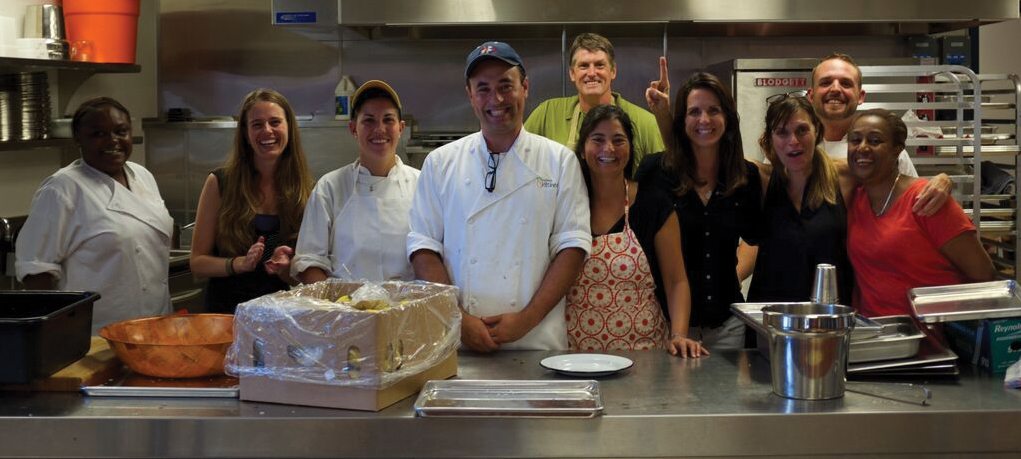
There are no large flat-screen TVs at Novato’s Baeltane Brewing pub and tasting room. “We want people to talk to each other,” explains Cathy Portje, who along with her partner and brewer Alan Atha own and operate their two-and-a-half-year-old neighborhood brewery in Bel Marin Keys.

A Celtic theme runs through the small, inviting storefront, where a few chunky wooden tables, a four-seat bar and outdoor patio can seat up to 30 people. Twelve gleaming tap handles emblazoned with the brewery’s distinctive name leave no question that this is a beer lover’s haven, and everything from the lettering on their labels, to their outdoor sign gives a nod to the couple’s love for all things Gaelic.

“I think each one of our beers has its own personality,” says Portje, deciphering their tagline, “A Tale in Every Glass.” The couple focuses on Belgian-style ales, including their most popular brew, Citroen Farmhouse, a perfect hot weather beer with tangy citrus notes and wheat overtones. Their golden-hued Luminesce Tripel has an alcohol content of 10 percent and offers a potent, malty experience that is expected from this style of Belgian beer. Given our love of IPAs in this region, it’s not surprising that Baeltane’s Rumpelstiltskin Double IPA is one of their best sellers.

As far as breweries go, Baeltane is small. They have a three-barrel system with a 23-barrel fermentation capacity. But size is relative—it wasn’t that long ago that Portje and Atha were making beer out of their home. After entering a number of competitions—and specifically one during San Francisco Beer Week—they received so much positive feedback that they decided to step it up from their garage to a professional operation.

While Atha is busy with new recipes and brewing, Portje runs the tasting room and financial side of the business. She hasn’t quit her day job as a medical social worker in Walnut Creek, but it likely won’t be long before the word gets out about these tasty Lowcountry-style brews right here in our own backyard.

Baeltane Brewing & Tasting Room, 401-B Bel Marin Keys Blvd., Novato; 415/883-2040; baeltranebrewing.com.

Beer issue: Home front fermentation

by Molly Oleson

At J & M Brewing Supplies, which opened in Novato in May of 2012, you’ll find everything you need to make your very own homemade brew, whether you favor IPAs or wild ales. Co-owner Shawn Cochran, 31, tells us what it’s like to brew, how fun it is to share his love of brewing and what it takes to get started.

Why did you open J & M Brewing Supplies in Marin?

I came on as an owner a little bit later. Marty Wall and Joe Capone are the other two owners. They had the idea to start it here because basically Joe lived in Sonoma, and he used to have to drive all the way down to Berkeley to get supplies and there just wasn’t a shop in all of Marin. And he thought it would be a good idea to open one because, you know, he liked to brew.

What’s your mission at the store?

To provide good, fresh ingredients for brewing. And actually not even just brewing—we do winemaking and cheesemaking as well. And to be here to give advice, and to help people out with fermentation.

What’s the interest in homebrewing like in Marin?

High—just like it is everywhere. Beer has become very popular the last 10 or 15 years, and people realize that you can make stuff at home that’s just as good, if not better, than the best beers you can buy at the store. So yeah—really popular hobby right now.

What kind of stuff do you sell?

Ingredients, supplies—so the main things are malts, and malt extracts, and hops and yeast. But all sorts of different stuff, too—different sugars and additives—a wide range. Hopefully anything you would need to ferment beer, wine and cheese.

What kind of beers could people make with the supplies?

Anything, really. I’d say probably the most popular beers now are hoppy beers like IPAs, so people make a lot of those. But it’s really just whatever kind of beer you want to make. There’s nothing really harder or easier about making different beer styles—it’s just that there are different ingredients.

What’s the experience of your customers like?

Great. Our shop, you know, it’s not like going to a place where you have to go; it’s a hobby store, it’s a place that people are generally excited about because it’s something that they choose to do. So our customers are great—they’re happy, they’re there, they’re asking questions, they’re having a good time. We love our customers.

Do you see a range of experience when it comes to brewing?

Oh yeah, absolutely. From someone who’s just always had it in their mind that they might want to brew beer and they finally drop by our shop, and they want to know how it’s done … When I decided to brew beer, I had no idea how to do it. I didn’t even know what ingredients were in it, really, besides like reading off a Budweiser label that said, ‘Barley, malt, hops.’ And then we even get commercial breweries. So anywhere from the absolute beginner to the pro.

And you guys offer a basic kit to get people started. What’s in it?

Basically everything you’d need to make beer at home. So fermenters … buckets or a big water jug. And then, all the stuff that you’d need to package it, like a capper and caps. And it comes with sanitizer and siphon equipment, thermometer. The one investment that one usually needs to make to get started brewing beer is a big kettle or a big pot to boil it in—because beer’s boiled, unlike most other fermented things. We don’t include the kettle in the basic equipment kit because we want to leave that choice—of how deep they want to go into it—up to them.

What’s the timeframe like for someone who wants to make his or her own beer?

There are three different parts. There’s the brew day, where you actually boil—make the beer. So probably about two weeks later for most recipes; bottling day, where you bottle it, and then probably another two to six weeks later is the day you get to drink it. So most beers are ready in four to eight weeks.

Do you have advice for people who want to get into homebrewing?

There are definitely a lot of techniques and things you can do to make the beer better, but one thing that’s often repeated is cleaning and sanitization. So take care of your equipment. Basically if you can follow instructions—like out of a recipe for cooking—you can make great beer. It’s very procedural. A lot of the more artistic side of it is recipe development and stuff like that, but as far as just brewing beer, anyone can do it.

Are there other resources in Marin that you recommend?

I mean, a lot of it, I guess, is go get good beer and drink it, and wonder how someone made that. So any type of craft beer store would be a great place to go if you’re interested in making beer.

What’s your favorite kind of beer to make?

I like hoppy beers like a lot of people, so we like to brew a lot of IPAs. We also like to brew—this takes a little bit more time aging—what are being called sour beers, or wild ales. But I like all beer. I mean, a good beer is a good beer. It doesn’t really matter what the style is.

What do you like most about homebrewing?

Probably pride in the finished product—knowing that you made it. Just like any other hobby, you want to be good at it. So maybe tapping the keg of a batch that you’re just really proud of and that tastes really good.

What’s your favorite part about owning the store?

Well this is kind of like a cliché to say, but if you like what you do, you never work a day in your life. I enjoy coming to work every day.

J & M Brewing Supplies, 101 Roblar Dr., Suite C, Novato; 415/883-7300; jmbrew.com. Call to find out about free brewing demonstrations.

Advice Goddess

by Amy Alkon

Q: I just moved in with my fiancé, whose 5-year-old daughter stays with us part of the week. On the evenings she’s at the house, my fiancé just goes to sleep, leaving me to entertain her. (She likes to play endless games like “Guess how many fingers I’m holding up!”) Well, I work a full-time job, and I’m exhausted in the evenings. He and I got into a big fight because I said he can’t just clock out like this. He told me that I need to “set boundaries” with her. Is this really my job? I’m not her mother, and I’m not even officially her stepmother yet.—Dismayed

A: So what did he do before you moved in, just chain her to the radiator while he took a snooze?

When I was growing up, I’d have to play with toys by myself or go out and poke a worm with a stick. These days, parents go way over the top in how involved they think they should be in playtime, and kids exploit this, extorting constant adult attention.

Developmental psychologist Peter Gray explains that play evolved to be the “primary means” for children to learn to solve their own problems, overcome their fears and take control of their lives, and this parents-as-playmates thing may stunt kids’ self-reliance. Gray, like anthropologist David Lancy, points out that parents being all up in kids’ playtime business is a very recent development. Throughout human history, parents have been too busy doing the little things—you know, like trying to keep the family from starving to death—to read the hieroglyphic version of The Very Hungry Caterpillar to their kid 500 times in a row.

It isn’t fair for your fiancé to clock out and make you Youth Activities Director. (I’m guessing that your Match.com profile didn’t have you listed as BirthdayClown777.) It’s also important that you develop a nice warm relationship with this little girl before you start going all Department of Corrections on her. Connection first, discipline second is the order in which the most successful stepparent-stepchild relationships are formed, explains stepfamily researcher Kay Pasley.

Of course, it is essential to set boundaries with willful, ill-behaved brats, including those who are, oh, 45. (Fatherhood is a journey, but not just from the livingroom to the bed.) As for how much of a role you’ll take in stepmommying, deciding that is part of deciding how your marriage will play out day to day, and that takes discussion: What you’re each comfortable with, what you need and what seems fair. (Who knew? There’s more to marital planning than cage-fighting another bride for the hot caterer.) Once you and he figure everything out, you and your stepdaughter can play many fun games—starting with one of my favorites from Camp Tamakwa: “Let’s draw a pee-pee on your sleeping dad’s face with permanent marker!”


Q: I’m a 32-year-old woman, and I’m dating this guy, but I’m very insecure about my body. The other morning, I needed to go to the bathroom, but I didn’t want to walk naked out of the bedroom. I told him I felt self-conscious about being naked. He didn’t offer me a robe or a shirt or anything, and I found that kind of insensitive.—Modest

A: They’ll hand you a paper gown at the doctor’s office, but that’s because you’re probably speaking to the intake nurse for the first or second time; you didn’t stay up till 4am riding her like a pony.

This guy’s lack of “sensitivity” to your naked plight may also come out of how men generally don’t have quite so much insecurity about their appearance—and for good reason. Though a woman will go for a hunkbucket if she can get one, women evolved to prioritize men’s status and power over looks. (Think Henry Kissinger, Sarkozy, Shrek.)

Men’s attraction to women, however, is largely visually driven. Women get this, so a woman can feel anxious when her tummy-wrangling garment is dangling from the ceiling fan and fret that her breasts, unbra’d, no longer stand up like two missiles about to be launched. But, as in this situation, when a guy keeps calling and coming back for more, chances are he’s feeling appreciative of what you have and not worried that seeing it naked will have him hurling in the nightstand drawer.

Consider that a big part of sex appeal is confidence. Strutting around like you’re hot is a big step toward feeling that way. Try something for two weeks: Forget how insecure you feel naked and act as secure as you’d like to feel—tempting as it is to grab a pillow and back out of the bedroom like a cop when he knows the felons in the warehouse have him outnumbered.


Film: Mild in the streets

by Richard von Busack

Director Crystal Moselle was on the street in Manhattan one day when she encountered the Angulo siblings, a group of long-haired, teenage boys dressed like Reservoir Dogs characters, in black suits and sunglasses.

Over the course of four and a half years, Moselle got to know the boys and their mother, the gentle Suzanne, a reticent woman from Michigan who was homeschooling her sons out of the apartment building where they lived. Moselle learned of the Angulo’s bizarre history. Their Peruvian father, Oscar, is an ex–Hare Krishna who gave his seven sons names from the Hindu religion. Oscar refused to let them leave the house, sometimes for a year at a time.

One question the film doesn’t answer is why a religious maniac would allow movies into his home, when the power of cinema to mold and change people should be apparent even to the most blinkered New Ager. The boys got their views of the world watching Tarantino, the Halloween series and Christopher Nolan. Besotted, these captives recreated the films as best they could with cardboard sets and duct-taped costumes.

Moselle doesn’t identify the boys every time, and since they’re born a year or so apart and have similar mannerisms, we do get a sense of them being a pack—a pack of playful puppies. Any actual violence between the cooped-up teens is kept offscreen, as is the commented-upon violence between Oscar and Suzanne. It’s clear that discretion was the price of Moselle’s access.

The director’s camera feasts on the unselfconscious male beauty of these adolescents. The film has great goofy charm during a trip to Coney Island. But there’s an element of manipulation in the way Moselle frames this family history—in essence, a story of appalling child abuse—as a tale of success, complete with a happy ending down on the farm.

Harvest Issue: Legalization realization

by Tom Gogola, Stett Holbrook and Molly Oleson It’s harvest time in the North Bay, and that means two things: Grapes and marijuana. For this year’s harvest issue, we thought we’d take a look at the latter crop, because this is a special year for Northern California’s cannabis industry. All signs are pointing to a ballot measure in the November...

Harvest Issue: Paradigm shift

by Charlie Swanson When cannabis activist and author Steve DeAngelo’s name is spoken, it is usually accompanied by words like “pioneer,” “visionary” and “national leader.” With a wealth of knowledge and nearly four decades of advocacy under his belt, DeAngelo presents his case for marijuana reform in his new book, The Cannabis Manifesto: A New Paradigm for Wellness, published on September...

Film: Check mate

by Richard von Busack Pawn Sacrifice is a monomaniacal character study of 1970s chess master Bobby Fischer, who was always very close to madness. Tobey Maguire, as Fischer, plays a man besieged by the world. The film seems to think that blunt competitiveness will make us identify with a climber; after all, movies can make us identify with anyone, as...

Theater: Lasting recognition

by Charles Brousse Ever since Edward Albee settled into semi-retirement, American playwrights have been engaged in a game of “Who’s Next?” One after another, names have appeared and then vanished, like comets crossing the night sky. A few (Sam Shepard comes to mind) have lingered a little longer, and now we have Sarah Ruhl, whose The Oldest Boy is currently...

Arts: Starring roles in life

by Joanne Williams “Would you like to swing on a star? Carry moonbeams home in a jar? And be better off than you are? … You could be swingin’ on a star.” This Disney ditty became the theme song of Performing Stars, a Marin City-based nonprofit founded in 1990 with the idea that providing low-income and at-risk children with opportunities in...

Food & Drink: Claim to fame

by Tanya Henry “Bonjour Chef G,” respond students at Willow Creek Academy, where, thanks to a determined parent, a willing community and plenty of support, the school now has Chef Guillaume Pfahl preparing Fresh, Local, Organic, Seasonal and Non-GMO (FLOSN) food for 370-plus students five days a week. The K-8 charter school that opened in 2002 and started with 37 students...

Beer issue: Celtic cheers

by Tanya Henry There are no large flat-screen TVs at Novato’s Baeltane Brewing pub and tasting room. “We want people to talk to each other,” explains Cathy Portje, who along with her partner and brewer Alan Atha own and operate their two-and-a-half-year-old neighborhood brewery in Bel Marin Keys. A Celtic theme runs through the small, inviting storefront, where a few chunky...

Beer issue: Home front fermentation

by Molly Oleson At J & M Brewing Supplies, which opened in Novato in May of 2012, you’ll find everything you need to make your very own homemade brew, whether you favor IPAs or wild ales. Co-owner Shawn Cochran, 31, tells us what it’s like to brew, how fun it is to share his love of brewing and what it...

Advice Goddess

advice goddess
by Amy Alkon Q: I just moved in with my fiancé, whose 5-year-old daughter stays with us part of the week. On the evenings she’s at the house, my fiancé just goes to sleep, leaving me to entertain her. (She likes to play endless games like “Guess how many fingers I’m holding up!”) Well, I work a full-time job, and...

Film: Mild in the streets

by Richard von Busack Director Crystal Moselle was on the street in Manhattan one day when she encountered the Angulo siblings, a group of long-haired, teenage boys dressed like Reservoir Dogs characters, in black suits and sunglasses. Over the course of four and a half years, Moselle got to know the boys and their mother, the gentle Suzanne, a reticent woman...
3,002FansLike
3,850FollowersFollow