For more trivia questions (and answers!) see Howard Rachelson’s Trivia Café every week in the Pacific Sun.
Answer: Romanesque (shown in visual: Cathedral in Pisa)
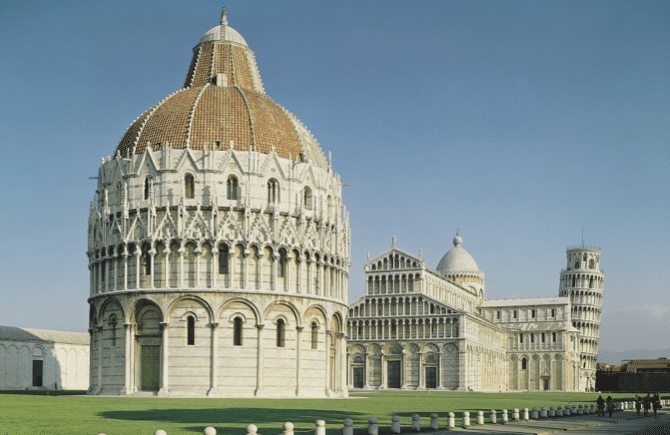
For more trivia questions (and answers!) see Howard Rachelson’s Trivia Café every week in the Pacific Sun.
Answer: Romanesque (shown in visual: Cathedral in Pisa)

by Nikki Silverstein
Hero: Helmets off to the courageous firefighters throughout Marin. More than 100 are battling raging wildfires in Lake County and other areas of California, while many of those staying behind are working seven days a week to keep us safe. We’ve managed to keep them busy, too. Crews responded to three suspicious fires in Novato, Marinwood and Hamilton last Friday afternoon and quickly contained each one. Though several acres burned, people and homes remained unscathed. An unusual incident the following evening required the expertise of several fire departments. Caught in hazardous conditions on Tomales Bay, 54 kayakers on a paddle tour were rescued last Saturday night and early Sunday morning during a response led by the Marin County Fire Department. Thanks to our true Heroes.
Zero: Bill was driving on Northern Avenue in Tam Valley, headed towards Shoreline, with a father and son on their bikes ahead of him. The driver kept his distance, to avoid a dangerous situation by passing them. As the duo approached the stop sign at Maple, the father sped ahead of the son to lead him through the intersection. “Both cyclists did a Marin Stop,” Bill said. (According to Bill, a Marin Stop is defined as blowing through a stop sign without bothering to slow down.) Meanwhile, a blue Honda Odyssey was turning from Shoreline onto Maple and had to come to a screeching halt to avoid hitting the bikers. Nice parenting, Pops, for demonstrating your lack of judgment and putting your son in harm’s way.

by Charles Brousse
Excepting the comedies, there’s no scarcity of villains in Shakespeare’s 37-play canon. Prominent among these is a bent-backed cripple with a withered arm and leg, whose path to and brief occupancy of England’s throne are recounted in gory detail in Marin Shakespeare Company’s compelling production of Richard III, currently on view in Dominican University’s Forest Meadows Amphitheatre.
A glance at the lengthy list of leading actors who have, over the decades, assayed the title role might lead one to wonder why such an unsavory character would be so popular. I think the answer is simple. It’s fun to pretend to be outrageously evil if it doesn’t end up generating a feeling of moral revulsion among the onlookers. Just as today’s filmmakers fill the screen with improbable violence to sell tickets, Shakespeare knew that the people who frequented his Elizabethan Theatre enjoyed watching murder and mayhem, especially when it exposed the foibles of the country’s aristocratic elite. The trick was to make this behavior so extreme that no one would mistake it for reality and then—just in case anyone was offended—make sure the “bad guys” receive their punishment.
For two-plus hours, MSC’s Richard, the remarkable Aidan O’Reilly, hobbles about the stage, spreading his poison, only to end up deserted on the battlefield, offering to exchange his kingdom for a horse, as his enemy, Richmond, closes in to deliver the coup de grace. Everyone out there in the dark can now return home exhilarated by their brush with evil, but satisfied by its conclusion.
Actually, Richard is such a complete monster—lacking even the hint of compassion or honesty—that this balancing act is difficult for an actor to pull off. O’Reilly does it by avoiding the conventional theatricality employed by Laurence Olivier and many others in favor of a natural, disarming delivery of the opening, “Now is the winter of our discontent … ” monologue and continuing with periodic progress updates about the mayhem he intends. It’s a clever gambit. The unexpected openness may soften the image and lead some to believe that we’re dealing with a bored, socially alienated young man rather than a dangerous psychopath. The kind who shoot up schools nowadays.
As corrupt as Richard of Gloucester is, most of the nobles who surround him at the court of ailing King Edward IV (ably played by Michael Schaeffer) are equally so, making them easy targets for his machinations. Those who prefer to play by the rules, like Edward’s brother, the Duke of Clarence and the Queen’s friend, Lord Hastings (solid portrayals by Nick Sholley and Steve Price respectively), are among his early victims.
Michael Ray Wisely contributes a stirring performance as Buckingham, who, spurred by the promise of a sizable land grant, becomes Richard’s partner in crime, only to be dispatched when he refrains from immediately approving the latter’s plan to murder the young heir to the throne (Carl Robinett) and his cousin (Patrick Ewart), who have been unlawfully imprisoned in the Tower of London. Other standouts in the very large cast include Elena Wright (Queen Elizabeth), Livia Demarchi (Anne, widow of Prince Edward, who is seduced into a marriage with his murderer) and Phoebe Moyer as the irascible Queen Margaret.
The production, directed by Robert Currier, is generally sound, though marred by what seems like an unfinished “concept” that mixes unrelated period costumes and activities. For all that, the strength of the O’Reilly-led acting ensemble makes this Richard III a worthy revival of a play that is too often treated as a grotesque cartoon.
NOW PLAYING: Richard III runs through September 27 at Forest Meadows Amphitheatre, Dominican University, San Rafael; 415/499-4488; marinshakespeare.org.

by Tom Gogola
The Medical Marijuana Regulation and Safety Act of 2015 was hashed out of three separate and distinct medical cannabis bills that came before the California legislature this session; late last week a final bill emerged that’s expected to get the Jerry Brown signature.
While a sense of relief settles over the state’s medical cannabis community—a statewide set of uniform medical cannabis policies is generally seen as a good thing—the emergent bill remains opposed by the Drug Policy Alliance (DPA), which supports decriminalization efforts and has been a great go-to resource for proponents of sane drug policies, both here and nationally.
The state has struggled to get its medical cannabis house in order since passing its landmark 1996 bill that provided access to patients in need, and this year was seen as the year that it finally would come up with a bill that could pass muster in the legislature.
The pressure’s on: A statewide medical cannabis regime is widely considered a necessary prerequisite for any full-on legalization push, and that’s expected to unfold via a 2016 referendum now in the works.
If the medical cannabis act is a forerunner for what’s to come as advocates roll out legal-weed plans for 2016, it’s plain to see that the forces of law and order are going to have a big place at the legalization table.
One of the sticky wickets in the proposed legalization rollout is: What happens to people who have been cultivating cannabis in the shadows and got caught and charged with a felony? If the medical cannabis language adopted by the legislature last week is any indication, old-line “mom and pop” growers from places like Mendocino and Humboldt counties are screwed.
Therefore: “We’re not as happy as you might think,” says Lynne Lyman, the San Francisco-based California State Director of the Drug Policy Alliance, and for two reasons: The act would exclude individuals with cannabis-related felony offenses from participating in the new, legalized cannabis economy by denying them the licenses everyone now needs to get in order to grow and distribute medical cannabis.
Lyman adds that the economic impact of this move would be felt disproportionately among members of minority communities who want to get in on the legal-weed economy, too: Blacks, whites and Latinos use drugs at roughly the same rates, says Lyman, but blacks and Latinos are far more likely than whites to wind up locked up over it. “We tend to apply our drug laws disproportionately,” Lyman says.
So who’s responsible for the felony-charge language? Well, that language has been a dogged demand from The Man, and you can sniff the hard-ass section of the act in question right back to input from the California Police Chiefs Association (CPCA), which had yielded a steady and heavy hand of law enforcement on recent efforts to cue up a statewide medical cannabis bill. Indeed, it was a CPCA-initiated flurry of late-in-the-game, tough-on-crime amendments to last year’s attempt at a medical cannabis omnibus that tanked the bill.
Lyman says that the DPA opposed the act and the tough-on-crime bills that fed into it, but hoped that there would have been amendments offered up late in the game that would let those with felony convictions get the new state license. By all indications, as of our press deadline, that was not happening.
Lyman also cited a part of the act that allows localities to set their own rules around cannabis as a further driver of their opposition.
This piece of the act appears to be a legislative nod to the pressure put on cannabis bill-writers by the League of California Cities: Thanks to that lobbying group’s efforts on behalf of localities, whatever the state medical cannabis law says, localities will still be able to ban patient access by banning cultivation and dispensaries in their fuddy-duddy midst. Patients in declared no-cannabis towns and counties would have to drive elsewhere to get their medicine, and Lyman says that’s a bad move, especially for disabled patients who might not have the means to access it.
by Tom Gogola
Pub-grub … bar bites … tavern trayf … There are only so many ways to generalize about the eats you’ll find at your typical beer joint.
There’s nothing wrong with pulling up to the stool at Dino’s Dive to be greeted with a Bud and a choice from the usuals: Burgers and wings, potato skins gloopy with the cheddar, the mozzarella-marinara dippity-doo-dah routine, maybe some stuffed mushrooms or a cuppa that greasy turkey soup. You know the score.
Well, Mill Valley Beerworks gives the slip to those saloon-slop conventions. It’s a low-lit and sleekly pub-like place on the quieter end of Throckmorton Avenue in Mill Valley, that splits the difference between pleasuring a haute-hops scene and embracing Marin County’s convivial kickback sensibility.
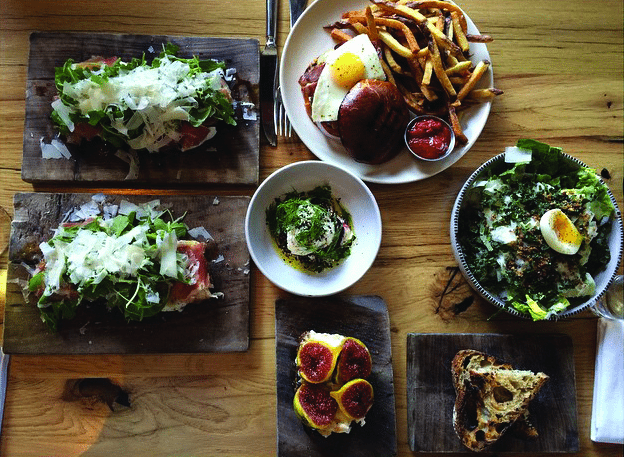
There’s a burger on the menu, but I have a feeling that Beerworks doesn’t necessarily want you to order it. See, the Beerworks bacon-cheeseburger is going to set you back $18—pricey!—and represents the only gesture in the direction of pub-grub.
Oh, it’s pleasing, don’t get me wrong. There’s a slab of bacon to chew on, a sharp slather of aioli dressing and a pleasantly greasy brioche bun. Order the burger and you’ll be hard-pressed to work through half the fries in front of you. Especially after you’ve just taken a tour through half the items on the small-plates menu—which are anything but small.
Let’s just dive right in. A crisp, cool salad, the Little Gem Caesar ($12), features romaine fronds and thin ribbons of kale and romaine in a toss brought to crunchy pleasure with seasoned breadcrumbs. This was shareable for two and with a slightly redolent backbite of anchovy, bespeaking Caesarian authenticity.
Then on to a wooden bowl of wee mussels brimming in a fennel and garlic broth ($12). The mussels were firm, plump and clean—nary a grain of sand or off-flavor bivalve in the mix—and the rich, slippery broth was made for slurping, spooning or otherwise sopping with hearty hunks of levain toast. A classic.
If you had to pick a small-plate comparison dish with which to compare the burger, it would be the maitake mushroom toast ($14). It’s a signature item, a heap of thinly sliced, char-flavored mushrooms over toast with some ricotta and beet greens. It’s meaty like the burger, yet suitable for vegetarians.
And then there was the burrata. The burrata ($10) is an oozy dollop of made-from-mozzarella soft cheese, here served with coins of marinated beet root, red quinoa, and sesame and poppy seeds. The numerously noncompeting textures and flavors conspired to win this dish the most points for complexity.
Off the mains, we had to try the halibut. A little pricey at $28, given the diminutive filet, an iron-shaped offering roasted to golden-brown goodness and served over shelling beans and heirloom tidbits of broccoli di cicco.
There’s a starters menu at Beerworks—and, no, you aren’t going to be able to order fries and be done with it. Try a couple of cheese choices ($7 each). The Wabash Cannonball was a soft, round wad of goat cheese served with peach jam. The cheese was rich without being overly goaty. The Smokey Blue, from Rogue Creamery in Oregon, was the standout choice between the two—smoked over hazelnuts and served with a half fig.
Beerworks is basically a sister restaurant of the new Fort Point Beer Company, founded in 2014 in San Francisco by some young cats, and the menu offers options from the house selection and from guest brewers. Two of the owners had previously opened Beerworks in 2010.
The four-beer sampler for $12 is a good deal and better still for Beerworks’ restraint in the department of suggested “beer pairings.” That’s kind of a twee gesture that has no place in a pub, even a gastro-pub like Beerworks.
I stayed with the house brews. Fort Point’s KSA holds up the light-and-satisfying-ale end of the deal. The St. Francis Belgian offered subtle and nearly metaphysical undertones of molasses, as advertised; by contrast, the Treble Hook rye was sharp and pointed—like its namesake says it ought to be. Beerworks Black was stout-like and delivered on promised notes of toffee.
You’re wondering about service and the general vibe here? My guest and I arrived at Beerworks at 8pm and perched at a two-top in the front window, where we could overlook Throckmorton and the Beerworks crowd. There was a full house when we got there, and a full house when we waddled out around 10:30pm.
And it was mostly the same full house. In that time I saw a total of one group exit the restaurant. Our waitress confirmed that Beerworks has staying power in spades. You’ll want to linger.
The night wore on and we lingered over port and dessert. A dark chocolate torte ($8) for me; for my friend, a dollop of elderflower mascarpone ($8) over sliced melon, rendered sushi-roll style. The mild, creamy mascarpone only served to remind us of the burrata.
We lingered some more and on the way out the door, the crew fired up some music: Karen O of the Yeah Yeah Yeahs singing that great song—you know the one.
It was the perfect accompaniment to dance out the door to as we spilled into the cool Marin night: “Wait!! They don’t love you like I do! Wait!!”
Mill Valley Beerworks, 173 Throckmorton Ave., Mill Valley; 415/888-8218; millvalleybeerworks.com.

by Lily O’Brien
“I love music too much to stop,” writes Mac Rebennack (aka Dr. John), via email. “It feeds my soul and I hope it feeds the spirit of other people too.” He and his band, the Nite Trippers, are on the list of stellar musicians set to perform this Saturday at Sound Summit, a daylong rock festival and benefit for Mt. Tamalpais State Park.
Six-time Grammy Award-winner Dr. John was an icon in the ’70s, known for his distinctive gravelly-growly voice, and Southern-style, bluesy rock music. He grew up in New Orleans, where his father owned an appliance/record store, and got exposed to a multitude of musical styles—jazz, blues, New Orleans R&B and Creole, which could only evolve in such a cultural melting pot of a city, and would come to influence and shape his immediately recognizable sound.
Known for his colorful style, Dr. John graces the stage with a long, braided ponytail, draped in beads and feathers, and frequently decorates his piano with skulls—part of his signature voodoo-mixed-with-mysticism, signature N’ Orleans style.
The “Doctor” came to California in the ’60s, and became a busy session player in L.A. with the now-famous “Wrecking Crew,” playing anonymously on recordings that became hits for anyone from Van Morrison to the Rolling Stones. “I do have a history of music in California—that’s where I recorded my first two Dr. John albums as a solo artist,” he writes.
It was then that he decided to launch a solo career and developed his iconic persona of Dr. John the Nite Tripper—inspired by a mysterious spiritual healer named Dr. John who came to New Orleans from Haiti.
Since that time, over a span of more than 40 years, Dr. John hasn’t slowed down, and has no intention of doing so anytime soon. His current tour will take him to more than 25 cities across the U.S. and Europe.
Sound Summit, produced by Michael Nash, will also feature local bands that include Southern rock country blues band, The Mother Truckers, fronted by singer/guitar player Teal Collins and her husband, singer/guitarist Josh Zee, who met at an open mic night and blues jam in San Rafael in 2000.
The band is known for its high-energy, good-time, rockin’, honky-tonk performances, and what Collins calls the “chick and dude” dynamic between herself and Zee. They share the singing and songwriting, and try to

write songs that are “fun, interesting and never hit all the clichés.” Their unconventional style is reflected in many of their song and album titles, like “Break-Up Sex,” and “Let’s All Go to Bed.”
“One time we were joking around,” Collins says over the phone, “and we said, ‘We should call this album … Totally Unmarketable Music!’”
Collins, who has recorded sessions for Grammy Award-winning producer Narada Michael Walden and has received Gold and Platinum albums for her work on albums by Shanice and Third Eye Blind, credits Zee as being a major draw for their band, calling him a “guitar player extraordinaire.” Zee has been featured in numerous publications, including Guitar Player Magazine.
After several years playing locally, in 2005 Collins and Zee decided to move to Austin, Texas, “the live music capitol of the world,” and stayed there for 10 years. They also did a lot of touring and played with many different musicians, including Willie Nelson.
Collins and Zee returned to the Bay Area this past December, joining up with the original members of the band—Pete Franco on bass, Dana Miller on drums, and new “Trucker,” John Varn on keyboards. They are currently in the process of writing songs for a new album, and plan to travel less and play more locally.
“It’s just been so great to be back … especially if you’ve been in Texas for 10 years,” Collins says. “I loved Austin too, but the Bay Area is such a feast for the senses and it is so beautiful—I love it here.”
Dr. John shares the same sentiment. “It’s a double blessing to be back in Cali to help,” he writes of Sound Summit.
Sound Summit, Saturday, September 19, 11am to 7pm (doors open at 10am) at the Mountain Theater, Ridgecrest Blvd. in Mt. Tam State Park; SoundSummit.net.
Fashion prediction
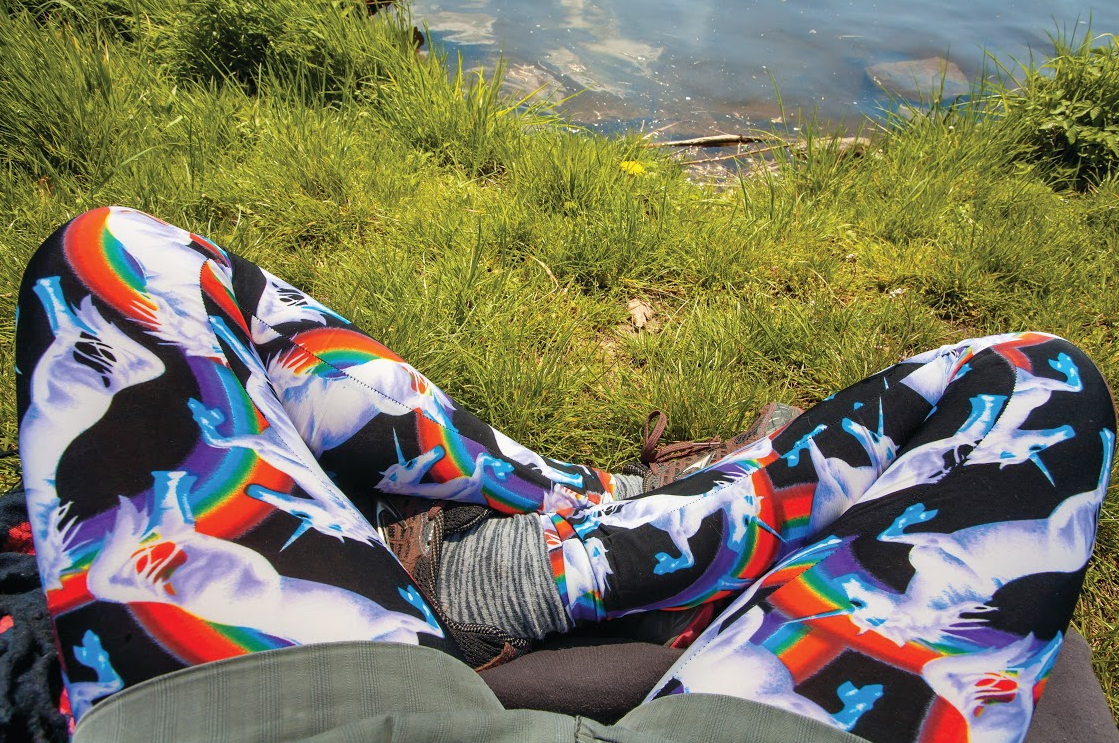
I predict that at some point in the near future, all women in Marin
under 50 years old will all be wearing yoga pants at the same time.
—Carlo V. Gardin
The horror
I continue to be horrified by the apparent ascendance of Trump–and his growing horde of followers [‘Glee club,’ Sept. 9].
I’m even more horrified by the lack of appropriate response from the so-called media, who are for the most part almost giddy and gleeful at the spectacle. Sickening.
I am happy that Tom Gogola asked whether Jimmy Fallon would dare to question Trump on his undocumented immigrant workers, during his 9/11 guest appearance. Ha! Of course not!!
There’s so much ‘oppo research’ on Trump–just ask Pulitzer Prize-winning economist David Cay Johnston, who has “21 Questions for Trump” that are revelatory.
I await a journalist with the balls to really confront Trump, face to face.
—B. Hamme
‘Get a clue, CA wine industry’
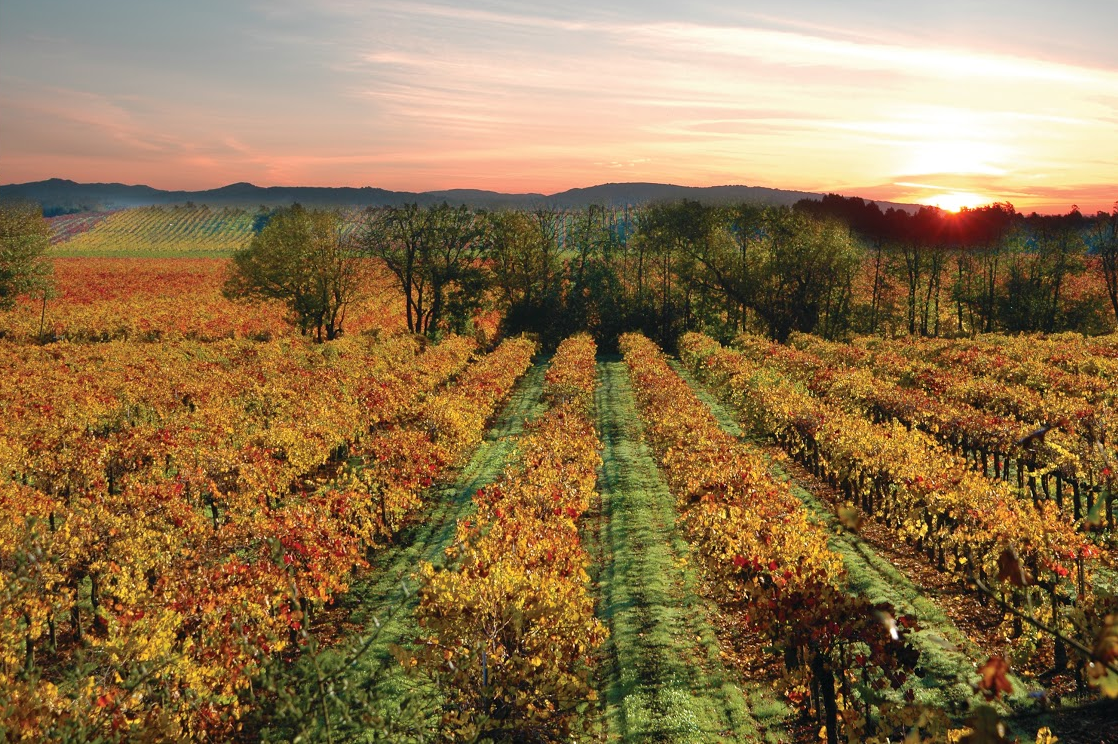
I’ll be the first to admit I’m a HUGE wine fan and consume it regularly [‘Coho vs. pinot,’ Sept 9]. I’ve also from time to time made my living from the wine industry. However, wine is not more important than water. And wine is not more important than the environment.
The wine industry either needs to embrace being regulated, or it needs to be even more aggressive with reducing consumption of both water and pesticides than government regulations would require. Frankly, California should follow the example set by places like Tuscany, where dry-farming is required by law.
JFDI California! Some of these wine industrialists sound exactly like GOP climate denier nut jobs, arguing that there isn’t good enough evidence that severely drawing down the watershed impacts nature adversely. Seriously, get a clue CA wine industry, you’re just hurting yourselves by doing things like being in denial, and that is a river that flows through California.
—Alejandro Moreno S., via pacificsun.com

FOLLOW US
Copyright © Weeklys All rights reserved.
OUR PUBLICATIONS