Edible Complex

0

Five years after Colorado legalized recreational cannabis—and five years after New York Times columnist Maureen Dowd had her scary fetal-position encounter with a Rocky Mountain state edible in a hotel room (she ate too much of a candy bar)—that state has raised an alarm over an emerging problem with ingesting edibles in unhealthy amounts, and winding up in the hospital with severe anxiety or other symptoms.

How is this problem playing out in California, which legalized marijuana in 2017 and is now offering recreational cannabis consumers a range of edible products that range from chocolate bars to gummy bearsto THC-infused soda?

In some measure, it’s a bit early to tell, say health officials and other experts. The state has only just embarked on legalization and the data is just starting to roll in to Sacramento officials charged with ensuring a safe rollout of California‘s ambitious legalization regime for recreational cannabis.

The Pacific Sun contacted some 50 healthcare providers in the North Bay, from the big regional hospitals to the small-town health clinics. We contacted paramedics and county health officials. What came back indicates that, if anything, this is an emerging story with scant detail from the state about the frequency of emergency-services calls and hospital visits related to cannabis use.

The survey of local healthcare providers, county health officials and emergency service revealed they don’t track the information. For example, Dean Fryer, a representative of Sutter Health in Sonoma County, says that the company does not monitor hospital admissions by cannabis-related admissions, and couldn’t therefore say whether they’ve seen a spike in edibles-related health issues since 2017.

“We have no way of really quantifying or knowing if this is an issue [or] if there’s a rise in admissions,” Fryer says. “It’s not tracked in that way.

Edibles-related calls for service do not appear to be tracked at the ground level, either. A representative of REDCOM Dispatch, the centralized agency which directs calls to fire and emergency service responders within Sonoma County, said the organization does not track emergency calls related to cannabis use.

Veteran emergency service officials in West Marin say that they have not seen any uptick in edibles-related calls since legalization took hold in California. For them, alcohol-related calls for service are predominant. Those officials amplify what others interviewed for this story have noted: Those who overdose on THC-infused edibles are often older persons who have not experimented with cannabis for some time—and are unaware that the cannabis they are ingesting has gotten far stronger since their youth. If anything, notes one high-ranking emergency services official in West Marin, young people are keenly aware that eating cannabis can be a far more potent experience than smoking it. And, say those officials, the handful of edibles-related calls they’ve gotten over the past couple of decades have not been for pre-packaged edibles on the legal market, but rather for an overly potent homegrown brownie or other food infused with cannabis.

Those edibles don’t come with the same degree of product information as is required under California law, including information about the potency of the product. But the state has struggled to square up its own regulations concerning THC potency in edibles, with conflicting regulations coming from two key state agencies—the Bureau of Cannabis Control and the California Department of Public Health.

Meanwhile, the production and manufacturing of edibles is overseen by one of the three legs of the California cannabis regulatory regime, the Manufactured Cannabis Safety Branch (MCSB).

But, says CDPH spokesman Matt Conens, the MCSB’s role is not to assess whether edible health-related problems are on the rise—but to make sure the products it approves are safe and properly manufactured and packaged.

In February, as California’s interim cannabis regulations became permanent—and as first reported by the Marijuana Business Daily—state regulators moved to update regulations in the edibles industry. Officials moved in when it was discovered that the CDPH and the Bureau of Cannabis Control had differing regulations concerning the amount of THC that an edible could contain.

The agencies in charge of regulating California‘s legalization rollout, noted the MBD, “issued seemingly conflicting rules detailing THC limits, testing and packaging for infused products. That caused some testing labs to unexpectedly fail products based on different interpretations of the rules.

The snafu caused great upset in an edibles industry worried that, among other things, the discrepancies could expose edibles-producers to lawsuits from consumers, reported MBD, claiming they were harmed because the THC limits printed on the packaging didn‘t reflect the exact THC contained in the product.

What this means is that localities are now sending their cannabis-health data to a state cannabis bureaucracy that itself may be in need of fine-tuning when it comes to allowable potencies in the products it is regulating. And, while the Office of Statewide Health Planning and Development is in charge of collecting patient data reported by hospitals (including ER visits and visits for cannabis poisoning) it’s yet to undertake an analysis of the data, says spokesman Andrew Diluccia, “and would not be able to provide any information/context as to why there might be rises or falls in cannabis poisonings. OSHPD does not have subject matter experts to address this issue. Also, the poisoning data does not contain how the cannabis entered the body (i.e., inhalation, ingestion), so there would be no data specific to edibles.

While Sonoma County “supplies all kinds of data to the state,it‘s also just getting up to speed on any edibles-related health impacts that may be afoot in the county, says Roshish Lal, the spokesperson for the Sonoma County Department of Health.

He notes that when the county eventually sends its cannabis-related data to the state Department of Health, “I don‘t know whether it will be broken down specifically—there are so many products.

The main barrier to tracking the problem is that California has not formally defined the symptoms of a cannabis overdose and has not created a system to record cases, says Matt Willis, Marin County’s Public Health Officer. Although medical providers are likely able to identify a cannabis-related incident when an individual comes into their care, they are currently unable to record it since the state has not defined the criteria.

The lack of state leadership has left county and city governments to attempt to track the problem on their own, he says. Many do not, but some are trying.

Six months ago, Marin Health and Human Services partnered with the county coroner to begin recording the level of THC during toxicology screenings in cases of accidental deaths.

“We are unlikely to have the same quality of data as Colorado does until we build a system to collect it,” says Willis, who adds that his department is also discussing ways of tracking cases in Marin County’s three emergency rooms.

If there has been an increase in the number of overdoses, Willis expects that it is due to the potency of cannabis since legalization. Legislators may be operating under outdated assumptions about the strength of the product; edibles are particularly dangerous because those experimenting with them may take a second or third dose while waiting for the drug to take effect.

While cannabis products are unlikely to be fatal on their own in the same way opioids and other drugs can be, Willis says he is concerned that the rate of DUIs because of cannabis use could increase.

Cannabis-related health issues are showing up in the South Bay since legalization, says Dr. Greg Whitley, chief medical officer at Dominican Hospital in Santa Cruz. The symptoms that users most often come in with, Whitley explains, include severe anxiety, vomiting, an exacerbation of asthma or emphysema—and severe intoxication. “Those people can come in with symptoms of just basically feeling really, really stoned—off-balance, difficulty walking, dizziness,” he says, and often it‘s as a result of over-consumption of edibles. “Sometimes people are lethargic,adds Whitley, who’s worked at Dominican since 2001 and served as the emergency room‘s medical director until taking his new position April 1. Sometimes people look like they’re having a stroke because they’ve had basically an overdose of THC.”

Whitley also noted, anecdotally, that over the past couple of years, the number of people coming to the Dominican emergency room with acute cannabis-related symptoms has skewed older. A decent-sized chunk of the patients, he reports, have included fathers and grandfathers who‘ve gotten into a family member’s pot brownies without realizing there might be any special ingredients.

And Whitley echoes the West Marin emergency services officials when he notes that lots of times, its older people who are surprised at the enhanced potency of the cannabis they are ingesting.

Additional reporting: Jacob Pierce
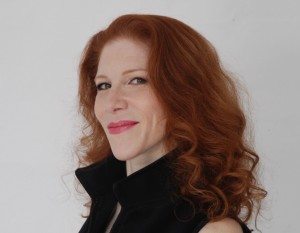
Advice Goddess

Q: I’m a married lesbian. Yesterday on the phone, my wife invited her sister to spend the night (in our small one-bedroom apartment) without asking me. When I confronted her, saying it’s OUR home, she said, “It’s my sister!” Family’s very important to her, and her sister didn’t come, so I let it go. But what’s the protocol with guests, specifically family?—Feelings Ignored

A: To err is human—as is the tendency to duck personal responsibility like it’s a shoulder-fired missile.

We have a powerful drive to be consistent—to have our actions match what we claim to stand for. We are also frequently inconsistent. Welcome to “cognitive dissonance,” social psychologist Leon Festinger’s term for the discomfort we feel when we hold two competing beliefs or attitudes or when our beliefs and our behaviors clash. An example of this (totally random!) would be the belief “I’m a loving, respectful, considerate spouse” and then the behavior “I just hauled off and told my sister our home is her hotel room—without so much as a courtesy ‘Hey, hon…?’ to my wife.”

Social psychologist Elliot Aronson, one of Festinger’s former students, found that we manage our inconsistencies through “self-justification.” This involves creating an explanation for our hypocritical attitudes or behavior that makes us look good: smart, honest, and 100 percent% in the right.

So (again, super randomly!) an example of self-justification would be a spouse who’s just acted like a singleton instead of a partner—who excuses it with “Family is everything to me!” instead of conceding “Whoopsy…got a little impulsive on the phone and forgot to run Sis’s visit by you.” (Just a guess, but you probably wouldn’t have been all “Sorry, but the couch is totally booked up with our unfolded laundry.”)

As for your question—“What’s the protocol with guests, specifically family?”—unfortunately, there’s no set of numbered stone tablets to answer that. In fact, as with so many questions that come up in relationships, the process of answering—not the actual answer—is what really matters.

I see this constantly in my work as a volunteer mediator (doing free dispute resolution for Los Angeles residents in the LA City Attorney’s office). Conflicts that turn ugly and escalate are typically the result of people pushing for “positions” without regard for “interests.”

Positions are our goals—the “what,” as in what we want another person to do (or stop doing). So, your position might be “I want to be asked, even just as a formality, before you tell somebody they can stay over.” Interests are the underlying motivations—the “why”: “I want to be treated with respect, like my feelings matter.”

In my mediations, I’ve found that positions that are deeply important to a person can become far less do-or-die when you tend to their underlying interests. This starts with framing whatever happened in, uh, flame-retardant rather than inflammatory terms. You do this by expressing your feelings—“I felt really humiliated when X happened’’—instead of making accusations: “You did this, you relationship criminal!”

Hearing feelings (instead of blame) allows you to empathize with each other. (HINT: You should actively try to empathize—and, in mediator lingo, “validate” feelings,” meaning let the other person know that you get where they’re coming from.) For example, in addressing this guest issue, you might’ve said to your wife, “I hear how important family is to you.” Hearing that you understand eliminates the need for her to try to MAKE you—meaning she can approach the conflict between you more like a loving partner than a “Thrones” swordsmistress, bent on turning the enemy into a human doily.

The beauty of dialing down from combat mode like this is that it enables you to engage in collaborative problem-solving—for example, brainstorming together to come up with ideas for how things could work regarding overnight guests at your place.

And finally, following the lead of parents with tantrummy children, you could preplan to say “Hey, let’s take a time out” when things get heated.

Art of the Matter

“The arts are not a charity, we’re an economic driver. We want to make that message loud and clear.”

So stated Gabriella Calicchio, director of the Marin Cultural Association, within the first several seconds of a high-energy town hall-style meeting April 2 at the Marin Center in San Rafael. The packed gathering was held to celebrate the recently completed first draft of the long anticipated “Arts and Cultural Master Plan,” and also to collect first-hand feedback on the plan.

Exuberantly titled “Arts Culture Action Marin!” the current 42-page plan is the result of two-plus years of work by the Marin Cultural Association and stands as an ambitious blueprint/roadmap that could have a profound impact on the future of Marin’s vibrant artistic community.

Pointing to a graph showing the influx of $76 million annually for Marin County—monies created mainly through arts-related jobs, arts-based commerce and the resulting tourism to the area—she described the new master plan as a game-changer.

“This plan is the beginning of a whole new way of thinking about and talking about the arts in the county,” said Calicchio.

How much weight the plan will ultimately have, and whether it will be worth the effort, is to be determined. The Marin County Board of Supervisors votes on the plan next month, and if it’s adopted—as it is expected to be—there will still be a number of major questions, namely: where will the money come from?

Those questions were on hundreds of lips as the meeting commenced and though spirits were high, the mood was a conspicuous balance of optimism and desperation. Currently, the plan stands as a kind of mysterious holy grail that may be the solution to everyone’s problems, but might just be a fancy way of framing and categorizing the many needs currently facing Marin County’s arts community.

The document (available at MarinCultural.org) was developed under the leadership of Calicchio with contributions from numerous local arts leaders, supporters and outside consultants. The grant-supported report cost $130,000.

Attending the town hall meeting were a who’s who of Marin’s art world: representatives of the Marin Symphony, Marin Theatre Company, the Mountain Play Association, Osher Marin Jewish Community Center, Marin Arts, Marin Open Studios, Actors Equity Association, local schools, arts and recreation departments, and numerous individual artists and arts supporters.

Calicchio’s opening remarks set the tone for a wide-ranging, two-hour discussion during which the talk rarely strayed from Calicchio’s underlying point: that Marin’s nonprofit arts community deserves to be thought of as a vital contributor to the county’s overall economy.

But without clear steps toward raising funds in support of the plan’s far-reaching goals, how useful is it? Calicchio suggested a potential arts tax, or perhaps a percent-for-art ordinance requiring developers to contribute a fraction of new building costs toward an arts fund.

Calicchio suggested it’s high time the county found new ways to support the arts.

“We have more artists per capita than any other county besides L.A., but there has never been a dedicated funding source for the arts in this county,” she said.

“Our public feedback indicates that a large percentage of Marin County residents would support a tax to pay for the arts,” said David Plettner-Sanders, managing partner for The Cultural Planning Group, a San Diego-based consultancy firm that worked on the plan. “So do know that your community is behind you.”

So what, exactly, is in the plan? And are there any clear ideas in the thing that can quickly deliver the goods to an arts community desperate for cash? The actual “plan” boils down to just a six-page list of strategies formed around three distinct, but vague goals.

The first goal, for example, is to cultivate and advance Marin as “an arts and cultural center.” The second is to ensure that Marin’s arts are “by and for everyone,” which seems to address a need for more diversity within the arts and those who have access to arts programs. The third goal is to sustain and grow Marin’s arts resources.

As for how such goals will be addressed, each one comes with a list of proposed strategies, but no clear path to implementation.

Under goal No. 1 (cultivating Marin as an arts center), the strategies include “supporting the advancement of Marin’s artistic identity,” while another suggests promoting an “awareness of, participation in, and support for Marin’s Arts and Culture.”

The four strategies accompanying goal No. 3—focusing on growing Marin’s arts resources—are essentially a breakdown of demographic groups (nonprofits, individual artists) and their needs (more space for arts, and more funding), with a loosely stated aim of increasing such funding for Marin’s arts community.

One attendee expressed concern that the plan did not include a commitment to working with trade unions in the county.

Another wants an end to legal restrictions on billboards and murals.

Another gentleman expressed alarm that shut-in veterans were not specifically named as part of those underserved communities mentioned in Goal No. 2.

But nearly everyone in the room had something strong to say about the lack of local money for the arts. The impression given was of an infinite number of Robin Hoods, eager to serve their targeted communities, all competing for the same small sack of gold.

“It’s a good beginning, a positive start,” said Bruce Burtch, a San Rafael-based arts consultant and the founder of the Marin Youth Poster Contest. “But there are a plethora of arts opportunities in this county,” he continued, referencing the numerous performances, classes, competitions and other programs that often struggle to find actual participants.

As for how the Art and Culture Master Plan will fit into solving such issues, the plan’s creators say it will be one step at a time. And the next step, according to Calicchio, is to take the comments collected at the meeting, combine them with public feedback generated through Marin Cultural’s website and then develop a definitive implementation plan. That document will be voted on by the Board of Supervisors May 14. Assuming they vote in support of the plan, a public launch party will then be held sometime in September.

Then, of course, the real work begins.

And clearly, a big part of that work—and the underlying dream buried in the vagueness and uncertainty of this master plan—will be in finding a way for Marin County to dig deep, get creative, and start paying for the big, vibrant, very hungry local arts scene the community so frequently claims to value.

New Tariff in Town

0

The old joke about the California lieutenant governor’s office has been that its occupant’s main duty is to wake up in the morning, see whether the governor is still alive and, if so, go back to bed.

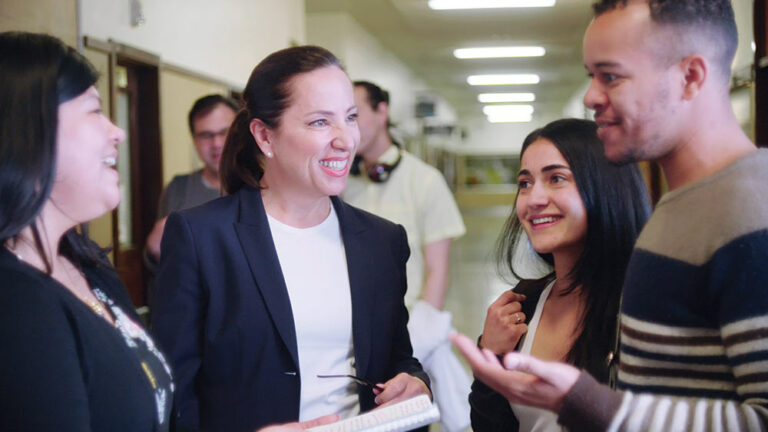
But that was before Gov. Gavin Newsom made Eleni Kounalakis his point woman on President Donald Trump’s trade wars.

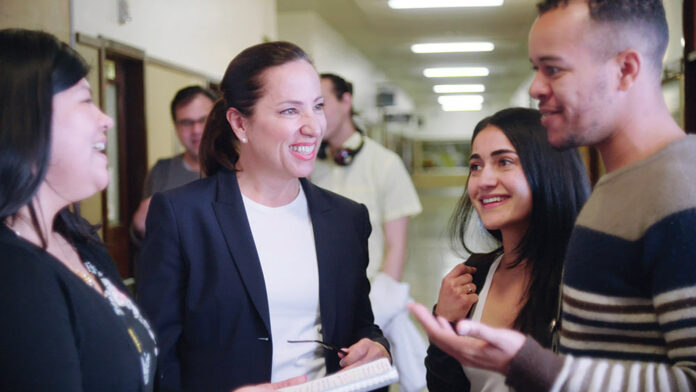
Now, California’s lieutenant governor is among the busier officeholders in Sacramento—hustling to meet with members of Congress, federal agencies and trade organizations and deploying whatever influence she can to protect California’s place in the world market.

She has her work cut out for her. It has been a year since Trump sent a collective shudder through California’s economy, imposing taxes on imported steel and aluminum that in turn prompted China to impose new tariffs on agricultural products.

India and other countries soon followed suit, setting tariffs as high as 100 percent on some of California’s high-value crops. Since then, the Trump administration has engaged in trade brinkmanship on many fronts—including on-again, off-again threats to close the Mexican border. Meanwhile, a bevy of signature California products—almonds, pistachios, walnuts, wine grapes, oranges, dairy—have teetered on the verge of becoming collateral damage.

So far, the worst-case scenario has not come to pass, and some products, such as pistachios, have survived relatively unscathed, at least for now. But the damage has not been insignificant, either.

In a report last August, Daniel A. Sumner, an economist with UC Davis’ Agricultural Issues Center and Department of Agricultural and Resource Economics, projected that higher tariffs could cost major U.S. fruit and nut industries $2.64 billion per year in exports to countries imposing the higher levies; the economic blow could rise to as much as $3.34 billion because of lower prices in alternative markets.

And some fears have been entirely realized. Sales of California oranges to China are off by more than half, broader problems in the state dairy industry have been exacerbated by trade tussles, and the almond and wine industries have struggled to cope with price pressures and punishing tariffs.

“Whenever you have an atmosphere of uncertainty, it creates a chilling effect,” Kounalakis said in an interview. “Customers in Asia will look for alternatives elsewhere.”

And, she added, if customers find suppliers in other countries—say, Turkey for pistachios or New Zealand for wine—it could be hard for California to win them back.

As he had vowed on the campaign trail, Trump since taking office has hewed to an “America first” protectionist stance, pushing back against Republicans’ traditional embrace of open markets. He pulled out of the 12-country Trans-Pacific Partnership and pushed for a reboot of the North American Free Trade Agreement. The resulting United States-Mexico-Canada Agreement (USMCA)—what some describe as NAFTA 2.0—faces an uphill battle for ratification in the now Democratic-controlled House.

To ease the burden on hard-hit farmers throughout the country, the U.S. Department of Agriculture has paid out billions of dollars in aid, mostly to producers of soybean, corn and other commodities. Most California growers did not qualify for direct payments, but some sold products to the federal food-purchase program, which feeds needy U.S. residents; some grower groups received funds to help market their products overseas.

When it comes to trade with China, a huge and growing market, billions of dollars and tens of thousands of jobs are at stake in California. According to the UC Davis Agricultural Issues Center, the state’s top five agricultural exports in 2017 just to China and Hong Kong amounted to more than $1.6 billion. Last September, China added a 10 percent tariff on U.S. wine imports, atop a previous 15 percent tariff increase implemented in April 2018.

California has 6,800 almond growers, most of them small to medium-size, family-run enterprises. A study by the Almond Board of California found that the crop generated more than 100,000 jobs, mostly in the Central Valley. The industry contributes about $11 billion annually to the state’s economy.

For wine grape growers, tariffs have been a double whammy. U.S.-imposed levies have raised significantly the cost of steel products—wire, stakes, metal posts—needed to establish vineyards.

Under the Trump administration, “things have gotten a lot more bumpy,” said John Aguirre, president of the California Assn. of Winegrape Growers in Sacramento. “We see a much softer market for wine grapes.”

The industry is concerned about continued access to China, which had been a growing market. Last September, China added a 10 percent tariff on U.S. wine imports, atop a previous 15 percent tariff increase implemented in April 2018.

Since trade policy is mostly determined at the federal level, California officials such as Kounalakis have only a limited ability to make a difference. Still, the lieutenant governor—a former ambassador to Hungary during the Obama administration—notes that the state’s size and stake in the market make it critical that California strive to be heard.

“For anyone who thinks that this international portfolio is, you know, having tea and going on trips,” Kounalakis recently joked during a panel discussion in Sacramento, “that’s not what this is about.”

CalMatters is a nonpartisan, nonprofit journalism venture committed to explaining how California’s state capitol works and why it matters.

Bluesy Virtuosos

0

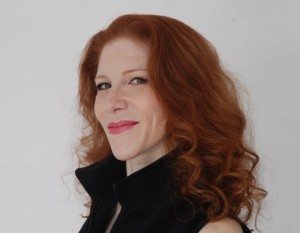
Classically trained cellist Rebecca Roudman lets loose in Dirty Cello.

J Mijares

Bluesy Virtuosos

Dirty Cello gets busy on record and on the road

By Charlie Swanson

Raised in San Rafael and now living in Novato, Rebecca Roudman makes her living as a cellist in the Oakland Symphony and the Santa Rosa Symphony. She started playing classical music when she was 7 years old, and after graduating as a music major in college, it was all classical music all the time.

“But classical music has never my first love,” says Roudman. “It’s been everything else; blues and bluegrass and rock.”

Eight years ago, she took a musical detour in that bluesy direction, teaming with her flutist-turned-guitarist husband Jason Eckl to form Dirty Cello a crossover smashup of cello strings and stomping blues rhythms that hit a note with Bay Area audiences almost immediately. “There was interest, people thought it was kind of cool and kind of weird,” says Roudman. “That’s the kind of people we are.”

Musically, Roudman’s biggest hurdle was learning to improvise on the cello during performances, not a skill that’s emphasized in classical training.

“It was an uphill battle at first,” she says. “Now, it feels natural, which feel good.”

Soon after they started, Dirty Cello expanded from a duo to a full four-piece band, and today the group includes bassist Colin Williams, drummer Ben Wallace-Ailsworth and occasionally vocalist and multi-instrumentalist Sandy Lindop.

This year is shaping up to be one of the group’s busiest yet. They’re currently preparing to release Bad Ideas Make Great Stories, their second record of 2019 after Bluesy Grass, which came out in January.

“It’s a pretty unique record because it’s made from personal stories of all our adventure we’ve been on,” says Roudman.

After a record-release concert at the HopMonk Tavern in Sebastopol, Dirty Cello again goes international, performing in England, Israel and Iceland over the summer.

“If people are expecting to see a classically-trained cellist playing mellow, smooth music, it’s not that,” says Roudman. “They’re going to hear something they haven’t heard before.”

Dirty Cello performs on Friday, April 26, at HopMonk Tavern, 230 Petaluma Ave., Sebastopol. 8pm. $13-$20.707.829.7300. dirtycello.com.

Horoscope

ARIES (March 21-April 19): The Qing Dynasty controlled China from the mid-seventeenth century to the early twentieth century. It was the fifth biggest empire in world history. But eventually it faded, as all mighty regimes do. Revolution came in 1911, forcing the last emperor to abdicate and giving birth to the Republic of China. I’m inclined to think of your life in 2019 as having some similarities to that transition. It’s the end of one era and the beginning of another; a changing of the guard and a passing of the torch. The coming weeks will be a favorable time to be very active in deciding and visualizing the empire you want next.

TAURUS (April 20-May 20): I hope that sometime soon you’ll acquire a new source of support or inspiration. Now is a phase of your astrological cycle when you’re likely to attract influences that are in alignment with your deep values. This addition might be a person or animal. It could be a vibrant symbol or useful tool. It may even be a fantasy character or departed ancestor that will stimulate vitality you haven’t been able to summon on your own. Be on the lookout for this enhancement.

GEMINI (May 21-June 20): Poet David Hinton analyzed the Chinese word for “poetry.” Its etymological meaning is “words spoken at the fertility altar.” Let’s make that your theme, even if you don’t write or read poetry. I suspect the coming weeks will be a favorable time to take a vow or utter a solemn intention in front of a homemade fertility altar. The oath you speak might express a desire to boost your use of your physical vitality: your lust for life, your adoration of the natural world, or your power to produce new human life. Or your vow to foster your fertility could be more metaphorical and symbolic in nature: the imaginative intimacy you will explore or the creativity you’ll express in future works of art or the generous effects you want to have on the world.

CANCER (June 21-July 22): Christopher Robin Milne was the son of author A. A. Milne, who wrote the Winnie-the-Pooh stories. He said there are two ways to navigate through life. Either you “take a bearing on something in the future and steer towards it, or take a bearing on something in the past and steer away from it.” So in his view, “There are those who look ahead and pull and those who look behind and push.” I’m hoping that in the coming weeks and months, you will make a delighted commitment to the first option: taking a bearing on something in the future and steering towards it. I think that approach will inspire you toward the most interesting success.

LEO (July 23-Aug. 22): The national animal of Finland is the brown bear. The national insect is the ladybug and the national instrument is a stringed instrument known as the kantele. As for the national author, it’s Aleksis Kivi, who produced just one novel that took him 10 years to write. He also published a short collection of odes and a few plays, adding up to a grand total of less than 800 pages of work. I think that the efforts you make in the coming weeks could have a disproportionately large impact as well, Leo. What you lack in quantity will be irrelevant compared to the sheer quality you generate.

VIRGO (Aug. 23-Sept. 22): I follow the blogger Evanescent Voyager because she makes me cry with sad joy and exultant poignance on a regular basis. One of her other fans wrote her a love note I could have written myself. It said, “Your emotional brilliance and thoughtful passion break me into pieces and then weave me back together with more coherence than I had before reading you. I revere your alchemical talent for undoing me so you can heal me; for lowering my defenses so I can be open to your riches; for demolishing my habitual trance so you can awaken my sleeping genius.” I believe that in the coming weeks, life itself will offer to perform these same services for you, Virgo. I urge you to accept!

LIBRA (Sept. 23-Oct. 22): “Love is no assignment for cowards.” That’s a quote attributed to the ancient Roman poet Ovid. What did he mean? Was he foreshadowing the wisdom of pop singer Pat Benatar, who in 1983 told us, “Love is a battlefield”? Was Ovid implying that to succeed in the amorous arts we must be heroic warriors prepared to overcome fears and risk psychological dangers? Probably. But I will also point out that it takes as much courage to create fun, interesting togetherness as it does to wrestle with the problems that togetherness brings. You need just as much bravura and panache to explore the sweet mysteries of intimacy as you do to explore the achy mysteries of intimacy. Keep these thoughts in mind as you marshal your audacity to deepen and expand your best relationships in the coming weeks.

SCORPIO (Oct. 23-Nov. 21): The literal meaning of the French term jolie-laide is “pretty and ugly.” Bloggers at wordsnquotes.com define it as follows: “It’s a fascinating quirkiness that’s irresistible, like a face you want to keep looking at even if you can’t decide whether it is beautiful or not.” Jolie-laide overlaps with the Japanese term wabi-sabi, which describes a person or thing that is lovely because of its imperfection and incompleteness. I bring these facts to your attention because I think you have extraordinary potential to be a master embodier of both jolie-laide and wabi-sabi in the coming weeks.

SAGITTARIUS (Nov. 22-Dec. 21): As Czech playwright Vaclav Havel (1936–2011) matured, he became a political dissident who opposed the Soviet Union’s authoritarian grip on his country. Eventually he was a key player in the Velvet Revolution that banished Communism. When Czechoslovakia emerged as a new democracy, its people elected him president. Havel later thanked Lou Reed and the band the Velvet Underground for fully awakening his liberationist leadership. He said their unruly music stoked his longing to establish a culture where total creative freedom was possible. I mention this, Sagittarius, because now is a favorable time to identify the music or art or films or literature that might fuel your emancipation in the coming months.

CAPRICORN (Dec. 22-Jan. 19): Capricorn author J. R. R. Tolkien toiled on his masterpiece The Lord of the Rings for 12 years. Once he finished, it wasn’t published for more than five years. So 17 years passed between the time he launched his precious project and the time when it reached an audience. I don’t think you will need that much patience in shepherding your own venture to full expression, Capricorn. But I hope you’ll summon as much faith in yourself as Tolkien had to rouse in himself. To do so will bring out the best in you!

AQUARIUS (Jan. 20-Feb. 18): Released in 1998, The Prince of Egypt is an animated film that tells the story of the Hebrew prophet Moses. In the climactic event, the hero uses magic to part the waters of the Red Sea, allowing his people to run across the sea floor and escape the army that’s chasing them. To make that seven-minute scene, 28 professional animators labored for 318,000 hours. In the coming months, you could create your own version of that marvel, Aquarius. But you’ll need a team to help you, and that team is not yet ready to go. The coming weeks will be a favorable time to get it ready, though.

PISCES (Feb. 19-March 20): Piscean businessman Steve Jobs testified that taking LSD was “one of the two or three most important things” he ever did in his life. It opened his mind in ways he felt were crucial to his development. What are the three most important things you’ve ever done, Pisces? I invite you to revisit at least one of them, and see if you can take it to the next step of its power to inspire you. What if it has even more to offer you in your efforts to become the person you want to be?

Homework: What other sign would you want to be if you could take a vacation from your actual sign? Why? Write Freewillastrology.com.

Advice Goddess

Q: I’m so tired of these supposed magician multitaskers on their cellphones. The guy I’m dating and some of my friends don’t seem to get how disrespectful it feels when they play around on their phone or text while I’m talking to them. Am I crazy to want eye contact and attention when I’m talking?—Irritated

A: This smartphone multitasking thing probably goes further than anyone knows – like, I’m picturing a parishioner in the confessional and the priest in the adjoining booth on his phone, shopping for a new cassock: “Next-day delivery. Sweet!” Parishioner: “Um, father…did you hear me say I murdered three people and still have them in my trunk out back?”

Somebody came up with an annoyingly cute name—phubbing (a mash of “phone” and “snubbing”)—for when someone ignores you in a social setting by being all up in their phone. Not surprisingly, research by social psychologist Varoth Chotpitayasunondh finds that phubbing comes off as a form of social ostracism—allowing the snub-ee to experience that fun feeling some of us had in third grade when other kids diagnosed us with cooties and sentenced us to eat alone for the rest of elementary school.

Chotpitayasunondh’s research suggests that being phubbed by friends and acquaintances threatens our fundamental need for “belongingness.” Other research on phubbing’s effects in romantic partnerships finds (again, not surprisingly!) that it erodes intimacy and makes for less-satisfying relationships and diminished personal well-being. Regarding phubbers’ skewed priorities, the title of a study by communications prof James A. Roberts says it all: “My life has become a major distraction from my cell phone.”

The important thing to remember is that you have a choice in how you are treated—whether you’ll put up with having, oh, 46 percent of someone’s attention. Your power in pushing for respectful treatment comes out of what I call the “walk away principle”: how willing you are, when somebody refuses to give you the level of respect you want, to just say, “Well, I’ll miss you!”

Q: I’ve been in recovery from drugs for six years, and I had to set a boundary with an old friend who’s abusing drugs again and lying to me and using me. I kept trying to help him, but all the lying and scamming was just too much. I finally blocked him on my phone—as I knew I had to. So why do I feel so bad about it?—Been There

A: A guy will insist he’s clean, tell you he’s finally just “high on life”—a state which…hmmm…doesn’t usually involve shouting matches with the curtains.

Your feelbad about saying no to any further convos with this guy actually has some ancient roots. Ancestral humans lived in a seriously harsh environment, so we evolved to cooperate—to work together and help each other—making it less likely we’d starve to death and/or get eaten by lions. But people don’t always put out a memo listing their needs, so how do we know when to help? Well, welcome to the evolution of empathy, our tuning into others’ emotions and “catching” what they’re feeling (to some degree).

Unless you’re a sociopath or a sex robot, empathy rises up automatically, as does its sister state, compassion. Compassion, as I define it in “Good Manners for Nice People Who Sometimes Say F*ck,” is “empathy with an action plan”—motivating us to want to do something to help when we see a person suffering.

In other words, your emotional overlords have been pinging you, alerting you that somebody’s in distress, and unfortunately, reason (as usual!) is late to the party. That’s to be expected, because reason is what cognitive scientists call an “effortful process,” in contrast with the automatic “Awww, poor you!” of empathy. Get reason out of bed and use it to remind yourself that you weren’t helping this guy; you were enabling him—“protecting (him) from the consequences of his behavior” (as they put it at HazeldonBettyFord.com). Sure, there may come a time when he’s ready to “say no to drugs,” but right now, he and drugs are having some very interesting conversations and may even start a podcast.

Breakfast Breakthrough

0

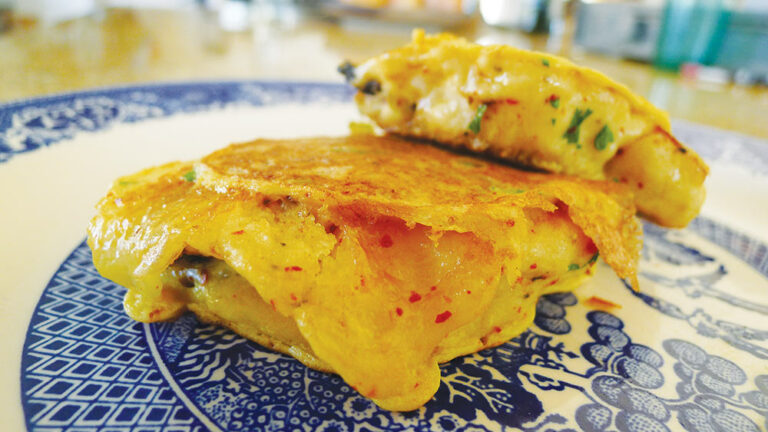
Necessity is the mother of invention, and I am the father of two young necessities. That is why, in the foggy hours of a recent morning, I invented pancake French toast.

They wanted French toast for breakfast, but we were out of bread. I wondered if we had any other bread-like materials in the house that could be soaked in egg and fried in butter. I decided on pancakes.

Making French toast out of pancakes involved an extra step of making blueberry pancakes first, but disaster was averted. After the school bus left I got back to work. Though I rarely eat breakfast, I was curious about those golden brown disks of French toast pancakes. I’m not a sweet-breakfast person; I like my eggs salty and spicy. I saw no reason why pancake French toast couldn’t be savory.

After all, crepes—those beloved French pancakes—come with both sweet and savory fillings. So savory French toast pancakes made sense, at least on paper. I began my experiments. A mushroom and garlic version was lovely, as was the tofu scallion. My favorite is ham and cheese.

One thing they all have in common is their supple, spongy-yet-toothy texture. A brown, crispy, French toast-like exterior guards an eggy batter below the surface, and a dry puffy pancake in the middle. At the table, they are formidable adversaries: fat, rounded and heavy. Unlike most pancakes, which leave you hungry a few minutes later, these won’t abandon your belly.

In this recipe, pancakes are dipped in beaten eggs, as if they were slices of bread. For lovers of sweet breakfast, the same technique can be used, with berries in the pancake mix and cinnamon, nutmeg and vanilla in the French toast batter.

I hate to sound like a shill, but the best pancakes I’ve ever made have been with Krusteaz Buttermilk Pancake Mix. I first tried it in Alaska as a breading for deep-fried halibut, mixed with beer instead of water. It’s magical stuff.

Ham and Cheese French Toast Pancakes

Makes 3 large pancakes

Ingredients

1 cup prepared pancake batter, preferably Krusteaz, rested for at least 10 minutes

1 slice ham, mortadella, prosciutto or bacon, cut into half-inch pieces

2 tablespoons finely diced Swiss cheese

2 tablespoons unsalted butter, plus more for serving

1 large egg

2 tablespoons milk or heavy cream

Freshly ground black pepper, red pepper flakes or hot sauce (optional)

1 tablespoon chopped fresh parsley

Instructions

1. In a medium bowl, combine the pancake batter, ham and cheese.

Heat a stovetop griddle to medium-high. Coat it with 1 tablespoon butter, and the scoop out the pancake batter to form 3 large pancakes. Don’t worry about any protruding pieces of ham or cheese. They will fall in line when you flip the pancakes. Cook for about 2 minutes per side; overcooking will create an impermeable skin that won’t soak up the French toast batter.

Remove the cooked pancakes and let them cool on a plate for about 10 minutes.

2. Meanwhile, crack the egg into the unwashed vessel in which you mixed the pancake batter. Add the milk and spices, if desired, and beat. Incorporate as much of the leftover pancake mix as possible in order to give body to the French toast batter. One at a time, dip the cooled pancakes into the French toast batter. The art is to let them soak for just the right amount of time. Too quick, and they don’t absorb enough French toast batter. Too long and they can disintegrate. About 30 seconds should do it.

3. In a pan on medium heat, add the remaining tablespoon of butter and swirl to coat. Add the battered pancakes, then pour any remaining batter on top of the pancakes; it will run down the sides and start cooking into scrambled eggs. When the egg around the sides looks cooked, about 2 minutes, flip the pancakes and cook for 2 minutes on the other side. Serve with salsa, mayonnaise or gravy.

The Magic Word

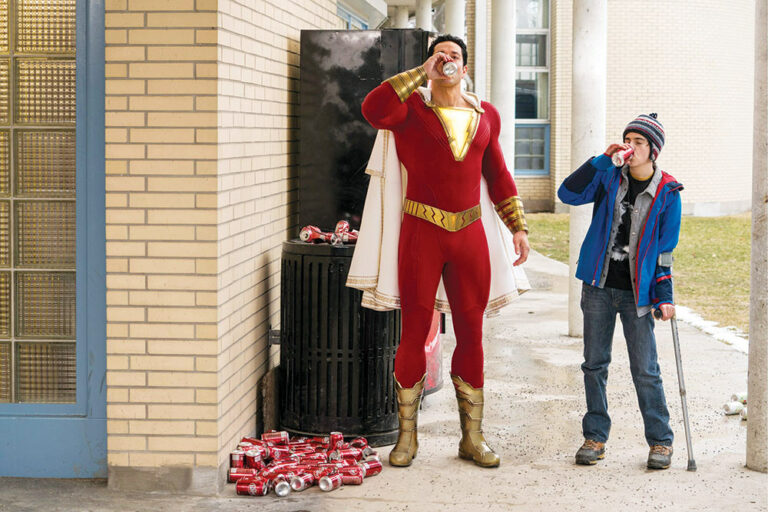
Mostly satisfying, often juvenile, Shazam is a Christmas-in-Easter superhero origin story. It’s Xmas in Philadelphia. Young Billy Batson (Asher Angel) is brought via subway to a grotto wherein a dying wizard (Djimon Hounsou) dwells. He, Ancient Shazam, passes on the powers he has held for centuries, after a long search for a pure-hearted kid. Billy, who has his sorrows as a foster child, comments, “I don’t think there’s anyone like that.” Yet, when Billy utters the magic word “Shazam,” a lightning bolt changes him into Earth’s Mightiest Mortal: a hunk played by Zachary Levi, the Jewish prince physician on Amazon Prime’s original series Marvelous Mrs. Maisel. This new Shazam is a novice superhero who doesn’t even know his own strength, despite the coaching from his foster brother Freddy (Jack Dylan Grazer), a motor-mouthed reject who treasures a bullet flattened from the chest of Superman himself, complete with a certificate of authenticity.

Why this figure is called Shazam instead of Captain Marvel, as he was in the 1940s, is a long and boring story of copyrights easily explained on the Internet. The Swedish director David Sandberg brings a ponderous, antiseptic touch to this adventure with plenty of bonding time between Billy and his new foster siblings. As the youngest Darla, the charming Faithe Herman seems to model her performance on Sally Brown from the Peanuts TV specials.

Playing the evil Dr. Sivana, who pursues Billy in both his forms, Mark Strong goes harshly serious, and thus has neither the chuckling menace of the shrimpy bald nemesis in the comics or anything to differentiate himself from other generic comic book villains lurking about. And he should have had more of a good time, seeing as his character is all seven deadly sins wrapped up in one man.

The wise-ass little kidisms here are fitfully amusing—in his adult form, Billy gets to do the things he’d always wanted, like buying beer and sneaking into a ‘gentleman’s club.’ Ultimately, one wished there had been more bounce and less grit, more of the easy delightful stuff such as Shazam’s saving of a plunging bus, where he ends up cheek to cheek with an almost-victim through the cracked windshield glass. Truly the most fun was the surprise appearance of one of the comic book’s most ingenious villains, which takes place, appropriately for the season, in an Easter egg.

‘Shazam’ is playing in wide North Bay release.

Hero & Zero

Hero

ExtraFood, a food recovery program working to end hunger and wasted food in Marin, just received its first refrigerated truck. Until now, the heroic nonprofit relied on its volunteers to transport food in their own vehicles. For the one in five people that need food assistance in our county, the new truck is a gamechanger. It enables the nonprofit to rescue one million pounds of food and feed 9,000 vulnerable people each month. A huge and heroic shout-out to the truck’s sponsors: the Bothin Foundation, Marin Community Foundation, Whole Foods Market, Nugget Markets, Marin General Hospital, Kaiser Permanente, Homeward Bound of Marin, West Marin Community Services, St. Vincent de Paul Society of Marin County, Whistlestop Nourish, Marin Sanitary Service, Recology and Zero Waste Marin.

Zero

Despite the continued rains, spring has arrived and with it, baby animals. Keeping away from young wildlife may sound like common sense, but apparently some humans lack that gene. The Marine Mammal Center in the Marin Headlands reports that people are taking selfies with harbor seal pups and putting the animals at risk for abandonment by their mothers. And, the center says even when they explain the reason for staying away from the pups; some folks just don’t believe it. Let’s consider the facts: harbor seal moms leave their offspring for short periods of time to forage for food offshore, but they keep an eye on them. If the mother sees a person or a dog near her baby, she’ll often abandon it. Sadly, an abandoned pup slowly starves to death. So forget about that photo with the cute baby seal you see alone on the beach. By skipping the selfie, you may save a pup’s life. The Marine Mammal Center advises people to stay at least 50 yards away from that cute harbor seal pup.

email: ni***************@***oo.com

Edible Complex

Five years after Colorado legalized recreational cannabis—and five years after New York Times columnist Maureen Dowd had her scary fetal-position encounter with a Rocky Mountain state edible in a hotel room (she ate too much of a candy bar)—that state has raised an alarm over an emerging problem with ingesting edibles in unhealthy amounts, and winding up in the...

Advice Goddess

Q: I’m a married lesbian. Yesterday on the phone, my wife invited her sister to spend the night (in our small one-bedroom apartment) without asking me. When I confronted her, saying it’s OUR home, she said, “It’s my sister!” Family’s very important to her, and her sister didn’t come, so I let it go. But what’s the protocol with...

Art of the Matter

“The arts are not a charity, we’re an economic driver. We want to make that message loud and clear.” So stated Gabriella Calicchio, director of the Marin Cultural Association, within the first several seconds of a high-energy town hall-style meeting April 2 at the Marin Center in San Rafael. The packed gathering was held to celebrate the recently completed first...

New Tariff in Town

The old joke about the California lieutenant governor’s office has been that its occupant’s main duty is to wake up in the morning, see whether the governor is still alive and, if so, go back to bed. But that was before Gov. Gavin Newsom made Eleni Kounalakis his point woman on President Donald Trump’s trade wars. Now, California’s lieutenant governor is...

Bluesy Virtuosos

Classically trained cellist Rebecca Roudman lets loose in Dirty Cello. J Mijares Bluesy Virtuosos Dirty Cello gets busy on record and on the road By Charlie Swanson Raised in San Rafael and now living in Novato, Rebecca Roudman makes her living as a cellist in the Oakland Symphony and the Santa Rosa Symphony. She started playing classical music when she was 7...

Horoscope

All signs look to the 'Sun'
ARIES (March 21-April 19): The Qing Dynasty controlled China from the mid-seventeenth century to the early twentieth century. It was the fifth biggest empire in world history. But eventually it faded, as all mighty regimes do. Revolution came in 1911, forcing the last emperor to abdicate and giving birth to the Republic of China. I'm inclined to think of...

Advice Goddess

Q: I’m so tired of these supposed magician multitaskers on their cellphones. The guy I’m dating and some of my friends don’t seem to get how disrespectful it feels when they play around on their phone or text while I’m talking to them. Am I crazy to want eye contact and attention when I’m talking?—Irritated A: This smartphone multitasking thing...

Breakfast Breakthrough

Necessity is the mother of invention, and I am the father of two young necessities. That is why, in the foggy hours of a recent morning, I invented pancake French toast. They wanted French toast for breakfast, but we were out of bread. I wondered if we had any other bread-like materials in the house that could be soaked in...

The Magic Word

Mostly satisfying, often juvenile, Shazam is a Christmas-in-Easter superhero origin story. It’s Xmas in Philadelphia. Young Billy Batson (Asher Angel) is brought via subway to a grotto wherein a dying wizard (Djimon Hounsou) dwells. He, Ancient Shazam, passes on the powers he has held for centuries, after a long search for a pure-hearted kid. Billy, who has his sorrows...

Hero & Zero

Hero ExtraFood, a food recovery program working to end hunger and wasted food in Marin, just received its first refrigerated truck. Until now, the heroic nonprofit relied on its volunteers to transport food in their own vehicles. For the one in five people that need food assistance in our county, the new truck is a gamechanger. It enables the nonprofit...
3,002FansLike
3,850FollowersFollow