Hero & Zero


Hero

Curb appeal in a town ranks up there in importance with location, location, location. Thanks to an anonymous donor, a prominent San Anselmo traffic median is about to get a $1.5 million makeover. The transformation will take place on Red Hill Avenue, a busy thoroughfare into town. Landscaping improvements include removal of diseased trees and the addition of irrigation and thousands of plants.

“I think it’s best not to look a gift horse in the mouth,” said Councilman Ford Greene before the vote to accept the substantial donation.

Bravo to the mystery benefactor!


Zero

Standing in the hallowed halls of the Record Plant in Sausalito, folks get goosebumps thinking of the notes strummed there. Artists including Andrea Bocelli, Huey Lewis, Metallica, Heart, Santana, Carrie Underwood, Stevie Wonder, Van Morrison, Aretha Franklin, Kenny G, Sammy Hagar, the Doobie Brothers, Blues Traveler, Tracy Chapman, Journey, Linda Rondstadt, Joe Satriani, Dave Matthews Band, Third Eye Blind, John Lee Hooker, Faith No More, Chris Isaak, New Kids on the Block, Luther Vandross, Celine Dion, Mariah Carey, Harry Connick Jr., the Grateful Dead, Prince, Jefferson Starship, Rick James and many more recorded some of their greatest hits in its studios. Heck, Fleetwood Mac recorded Rumors, one of the top 10 best-selling albums of all time, at the Plant.

Today the Record Plant is a yoga studio called Harmonia. They give tours of the revered building. But some fear the tours are no more. Marinites, on Nextdoor posts and in emails sent to Hero & Zero, report being told so by Harmonia. Unfortunately, this is how rumors get started.

Jennifer Adler, owner of Harmonia, says they honor the musical history of the space and that, despite the rumours, they definitely still offer tours. She thinks the misinformation began when they stopped doing the tours through Airbnb Experiences.

“You can book one with the front desk or walk in and get a tour,” says Adler.

Extra kudos to Harmonia for keeping the visits free of charge. A zero for those who would spread rumours. We hope this settles the no-tour tall-tales once and for all. Email in**@***********in.com for more info.


email: ni***************@***oo.com


Hero & Zero


Hero

Curb appeal in a town ranks up there in importance with location, location, location. Thanks to an anonymous donor, a prominent San Anselmo traffic median is about to get a $1.5 million makeover. The transformation will take place on Red Hill Avenue, a busy thoroughfare into town. Landscaping improvements include removal of diseased trees and the addition of irrigation and thousands of plants.

“I think it’s best not to look a gift horse in the mouth,” said Councilman Ford Greene before the vote to accept the substantial donation.

Bravo to the mystery benefactor!


Zero

Standing in the hallowed halls of the Record Plant in Sausalito, folks get goosebumps thinking of the notes strummed there. Artists including Andrea Bocelli, Huey Lewis, Metallica, Heart, Santana, Carrie Underwood, Stevie Wonder, Van Morrison, Aretha Franklin, Kenny G, Sammy Hagar, the Doobie Brothers, Blues Traveler, Tracy Chapman, Journey, Linda Rondstadt, Joe Satriani, Dave Matthews Band, Third Eye Blind, John Lee Hooker, Faith No More, Chris Isaak, New Kids on the Block, Luther Vandross, Celine Dion, Mariah Carey, Harry Connick Jr., the Grateful Dead, Prince, Jefferson Starship, Rick James and many more recorded some of their greatest hits in its studios. Heck, Fleetwood Mac recorded Rumors, one of the top 10 best-selling albums of all time, at the Plant.

Today the Record Plant is a yoga studio called Harmonia. They give tours of the revered building. But some fear the tours are no more. Marinites, on Nextdoor posts and in emails sent to Hero & Zero, report being told so by Harmonia. Unfortunately, this is how rumors get started.

Jennifer Adler, owner of Harmonia, says they honor the musical history of the space and that, despite the rumours, they definitely still offer tours. She thinks the misinformation began when they stopped doing the tours through Airbnb Experiences.

“You can book one with the front desk or walk in and get a tour,” says Adler.

Extra kudos to Harmonia for keeping the visits free of charge. A zero for those who would spread rumours. We hope this settles the no-tour tall-tales once and for all. Email in**@***********in.com for more info.


email: ni***************@***oo.com


Public Hanging

Now that the death penalty is once again front and center, thanks to the abscess in the Oval Office, I think we should do it up right. So, let’s bring back public hangings. Because they are state-sponsored killings, using our tax dollars, we should all be able to enjoy them. We’ll put them on live TV in prime time. The shows will be called Saturday Night Dead. The method of execution will change every episode to make it fun. Given the chickenshit way we murder prisoners these days, behind closed doors so that no one sees how many racial minorities are involved, in this manner we will shine a light on the way we conduct public business, in the land of the free and the home of the brave, for all the world to see. Think of the ratings. It’s a terrific idea, assuming it’s well executed, of course. Jeffrey Epstein, get in here, you’re up first.

Craig J. Corsini

San Rafael

Drive-Bywords

Ho Hum! Another drive-by shooting in Oakland or Chicago, or San Jose. We hardly notice them anymore. Tragic as it is to the victims, it’s yesterday’s news. Only the major terrorist attacks get much attention anymore.

The truth is, drive-by shootings usually take place in inner city neighborhoods which are largely invisible to the eyes of middle class or more affluent folks. We may not say it, but unconsciously we expect that “drive-by’s are a dime of dozen in those areas, and there’s nothing we can do about it anyway.”

Well, we are dead wrong about that. Drive-by shootings happen for many reasons, but they are all connected one way or another with you and me, with the dysfunctional prison system, with the deep and ever-widening chasm between the haves and the have-nots, our underfunded education and mental health programs and our outrageously out-of-balance military budget. All of which we, as citizens, can do something about.

We are also guilty of a different type of drive-bys. We are not pulling the triggers of those AK 47’s, but we too easily accept the murderous results of their actions. We drive by the black kid being hassled by a police officer for no other reason than the color of his skin. We don’t see the elementary school in need of repair or the veteran waiting for the benefits long overdue him or the working family who have been priced out of a housing market unresponsive to the needs of ordinary people.

We are not bad people, you and me. Most of us are not totally unaware of what is going on in our midst. We don’t consider ourselves racist. (Hell no! my friend Jose is a great guy. We bowl together on Saturdays.)

But folks, we are not hitting on all eight cylinders. Our potential for leaving this world a much better place is not being tapped fully, not even close. It’s so much easier to escape into the womb of a comfortable lifestyle.

Hey, we are not breaking any laws (well, maybe we’ll fudge a bit on our taxes). We might even go to church on Sundays and not cheat on our spouses. Is that enough?

The future for ourselves and our children is being written right now. Do we want to be an active participant in making this a better world or just another drive-by?

Hank Mattimore

Windsor

Dung Hope

My sentiments on President Trump are simple: he is not a president, not a leader, not a great mind, not a success, not a billionaire, not a businessman, not an iconoclast, not a negotiator. This is a small, inept, corrupt, ignorant, racist, misogynistic criminal who will find himself under indictment once he’s out of office. May his name be forever tossed onto the dung heap of history and ultimately forgotten for anything other than his criminality.

Jonathan Derovan

Via Pacificsun.com

The Art of Propaganda

0

Lilka Areton, director of the Museum of International Propaganda, is seated at her desk hovering over an issue of Der Adler on a recent Friday afternoon in San Rafael. It’s a vintage issue of the German magazine that dates back to the World War II, and she’s visibly stunned at the juxtaposition of content.

As she thumbs through the pages, Areton expresses a kind of knowing astonishment at the magazine. It’s a recent acquisition for the museum, which opened three years ago as an extension of the student-exchange program she and her husband, Thomas Areton, run out of a nearby San Rafael office. Since then, they’ve been dealing with a fan base locally that really wishes they’d devote more time to bashing Donald Trump and his modern-day propaganda-by-Tweet machine.

Areton lets out a few clucks at the pages of the general interest German magazine, which vacillates between celebrations of Hitler’s era and more prosaic celebrations of Christmas in wartime Germany, articles about dance concerts, advertisements selling mundane bits of consumer product to the German people that stood by while Hitler rampaged across Europe.

There’s nothing in these pages, says Areton, that would indicate any of the horrific activities undertaken by the Nazis, no hint of the raging anti-Semitism that helped give rise to Hitler, no sign of any concentration camps for a European Jewry hideously victimized by the Nazis during the Holocaust. She sighs and closes the bound copy that contains several issues of the magazine.

A giant poster of Vladimir Lenin hangs behind the front desk at the museum. The place is itself chock-full of all sorts of engaging political agitprop from nations and regimes around the world, from North Korea to South Africa to Cuba to the Soviet Union. The Chinese Cultural Revolution is on full display, and local artist Patrick Gannon has contributed a painting called Guernica 2017 that’s an amazing reproduction of the famed Picasso painting that chronicled the destruction of the Basque by the Nazis during the Spanish Civil War. The implication from Gannon is that nowadays the chief bomb-hurler in charge has his sights set on Guatemala if not Guernica.

The Pacific Sun last visited the museum in 2016 for a profile of the Aretons and their new endeavor in San Rafael. Three years later, they’ve got a popular weekly movie night on Wednesdays and they’ve added to their growing collection of international propaganda. But they’ve also had to deal with you-know-who.

A lot has happened in American politics since 2016, no? Namely, the elevation of Trump to the presidency of the United States. The Aretons have been engaged with the question of how to grapple with the Trump phenomenon, which arrived in this country with its own set of propaganda markers: The Make America Great Again hats. The Deplorables for Trump T-shirts. Barack Obama’s birth certificate. The plastic straws that read Trump in 2020.

If nothing else, future historians may interpret this era as the moment America fully capitulated to the politics of spectacle, thanks to a convergence of a Trump-struck media, the authoritarian strong-man himself, and the emergence of—indeed, the mass acceptance of governance-as-spectacle.

That style was mastered by Mao, repackaged on Trump’s behalf by Fox News and on full display last week in Congress as Republican defenders of Trump literally took the words right out of Sean Hannity’s mouth in their smear-questioning of Robert Mueller during hearings over
Russian interference in the 2016 election.

But visitors to the museum will find scant evidence that a master propagandist has seized the White House, and that’s by design. The museum, says Areton, has become something of a lightning rod for locals, a place for people to write their own politics on the walls of the museum, metaphorically speaking, to find a place where their political voice can be heard.

Some of them want the nonprofit to go full-throttle anti-Trump. Others, she says, won’t step foot inside because of the cast of characters on display here—Mao, Marx, Stalin.

“There’s a right-wing lady who won’t even come in,” says Areton, because the museum doesn’t offer any critical context or judgment to its intriguing displays from authoritarian regimes and elsewhere. This woman wants to know, says Areton, “Why aren’t you explaining how horrible Stalin was?”

Others come in, she says, and are furious about a piece of racist American WWII-era propaganda that highlights American attitudes toward their Japanese foes during the war: A poster depicts a Japanese soldier as a rat who is about to take the bait on a militarized rodent-trap atop a map of Alaska. The text readers: “Alaska: Death Trap for the Jap.”

But the mainline critique coming from locals is that the museum’s not taking on Trump, she says. The intensity and frequency of the complaint has caused some consternation for the Aretons, who opened their museum as a sort of adjunct to their long-standing student exchange business.

“There are people who come in here who hate Trump with so much vengeance,” she says, her voice tailing off for a moment. “We don’t know how to handle it, to tell you the truth.”

The Aretons, she says, have avoided the politics around Trump as they intersect with their need to run a business and offer a museum that’s fair to history and aims to highlight, simply, that there are many forms that propaganda can take. They are neither Democrat nor Republican, but libertarians, she says, and have stayed away from, for example, displays of religious propaganda. The museum is focused mostly on political figures and movements, and the question hanging in the air is how or if this Trump moment ends, and whether the –ism will outlive the man if he ever leaves office.

That issue, to say the least, has caused some great consternation among Americans savvy to the machinations of propaganda. Thomas Areton’s the executive director of Cultural Homestay International, the couple’s exchange-student program run out of a nearby office on West End Avenue in San Rafael.

He says in an email exchange about Trump and the museum that, given the anti-Trump sentiment that prevails in the county, he’d expect to find rocks hurled through the glass windows if they went all-in with a Trump propaganda exhibit. Even if it was neutral on the subject of Trump himself, much as the museum is neutral on the subject of Stalin, Mao and Hitler.

Soon after his ascension to the presidency, the museum hosted a show of anti-Trump art, which featured some art that’s still hanging in the museum—in the back of the museum. For that show, Gannon contributed an encaustic painting called “Fractured Flag” in response to Trump’s election.

The county’s general anti-Trump animus was on full display during that show, says Lilka Areton, which featured about 100 paintings speaking out in various ways against the rise of the authoritarianism in the United States. “We didn’t feel the need to have any pro-Trump art,” she says. But nestled in with the anti-Trump contributions from Gannon that remain at the museum, there’s a pro-Trump poster that reads “Defend American Freedom. ‘I Am Gonna Build That Wall.’

Lilka notes that the poster’s could be read as clever anti-Trump propaganda. It’s both ham-handed and sort of amateurish. “Even the pro-Trump propaganda comes off as anti-,” she says with a chuckle.

Areton is a graduate of U.C. Berkeley and the child of a Marxist father who sent her to Russia when she was in her early 20s. She lived in Peru and worked with the Peace Corps; her family was persecuted during the McCarthy era and the experiences left Areton with a fierce libertarian streak that, she says, her husband eventually embraced. Thomas’ mother survived Auschwitz and lived in then-Czechoslovakia under Soviet control. The museum features a compelling side-by-side photo comparison from Slovakia taken before and after the Soviet occupation.

The latter scenes are far more welcoming in that they don’t contain any barbed wire–topped fencing and look like photos taken at a park. There’s also a snip of barbed wire from the demilitarized zone separating North and South Korea, to go along with a few posters of classic North Korean propaganda. But don’t hold your breath waiting for a photo of Trump meeting with his North Korean counterpart.

“We think [Trump] is appalling,” she says, “but we’re not part of the resistance.”

Areton says she could envision a possible show centered on this era, perhaps in five years, but that there’s no consensus between her and her husband about a Trump exhibit that highlighted the propaganda of this era. Indeed, it sounds like there’s some healthy debate going on between the couple about how, exactly, to grapple with Trump, if not Trumpism.

“But maybe someday,” she says.

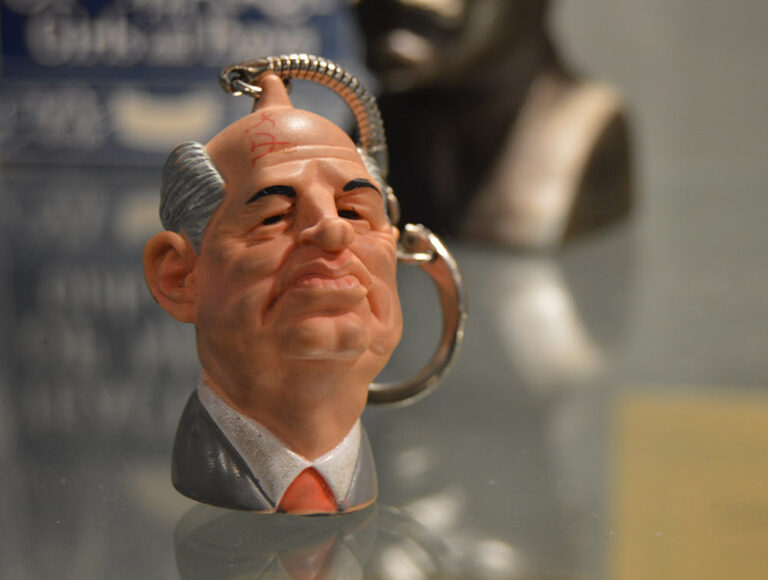
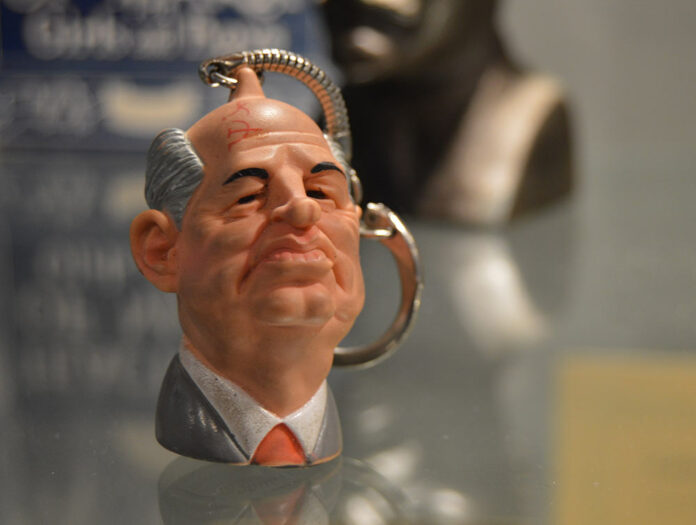
There’s a question that hangs in the air while one takes in the posters and paintings and ephemera at the museum—the Gorbachev key chain, the Reagan bedroom slippers, the huge Guernica 2017 painting, the vibrant, politically charged posters all conspire to create a sense of kitsch met with a broader culture war that’s raging, if not in the streets then at least online.

The question is generally framed as “Do art and politics mix?” but here the answer is simple: Of course they do.

As Lilka Areton observes, the issue is how do they mix, and to what end. The question of this intersection of art and politics is all the more relevant today as trusted arbiters of propaganda and its devious agenda fall by the wayside, and as a president reaches the heights of spectacle through his dramaturgy by Tweet. Meanwhile, the legendary high-satirical Mad Magazine is in its death throes, the great sixties-era political satirist Paul Krassner has just died—and the Washington Post last week assigned their theater critic to review the “performances” of the various candidates running for the Democratic nomination this year. The paper that broke Watergate is now capitulating to the exact media-president problem embodied by Trump, so notch another victory for the triumph of spectacle. Maybe those Washington Post theater reviews of politics can be part of a future show at the Aretons’ museum, alongside some red MAGA hats.

Swan Song

Located just off the heart of downtown San Rafael, the Falkirk Cultural Center is an 11-acre oasis of gardens and galleries with an elegant three-story, 17-room home, a blend of Queen Anne and Eastlake styles built in 1888 centering the property.

If you’ve never seen it for yourself, this month’s San Rafael Art & Wine Festival is the perfect opportunity to stroll the grounds and see the historic structures while taking in visually stunning works of art and sampling the best of the North Bay’s winegrowing and beer brewing communities.

Taking place on Saturday, Aug. 10, the San Rafael Art & Wine Festival features live music, wine tasting from regional wineries, beer tasting from local breweries, arts and crafts from local and regional artists alike and a festive food truck selection.

The afternoon is free and open to the public, and attendees can either purchase a wine and beer sampling wristband that comes with a tasting glass, or purchase full pours of wine and beer on their own. Participating wineries include Wattle Creek Winery, Terra Savia, Ojos de Toro, St Mayhem, Russe Wines and The Baissett Collection among others.

For the art enthusiast, the festival boasts over 25 booths displaying art, sculpture, jewelry, clothing and other crafts. The Falkirk Cultural Center is also currently exhibiting a group show from the California Watercolor Association, featuring over 30 artists displaying more than 40 paintings, largely done in the plein air style.

The center holds three spacious, light-filled galleries on the second floor of the mansion that are open to the public and exhibit a variety of contemporary art throughout the year. In addition to juried group shows, the center holds showings of Bay Area collective groups such as the California Society of Printmakers, BayWood Artists, the Association of Clay and Glass Artists and many more.

San Rafael Art & Wine Festival takes place on Saturday, Aug 10, at Falkirk Cultural Center, 1408 Mission Avenue at E Street, San Rafael. 11am to 6pm. Free admission; sampling tickets are $25 advance, $30 at the door. 415.485.3328.

Horoscope

ARIES (March 21-April 19): “Dear Diary: Last night my Aries friend dragged me to the Karaoke Bowling Alley and Sushi Bar. I was deeply skeptical. The place sounded tacky. But after being there for twenty minutes, I had to admit I was having a fantastic time. And it just got better and more fun as the night wore on. I’m sure I made a fool of myself when I did my bowling ball imitation, but I can live with that. At one point I was juggling a bowling pin, a rather large piece of sweet potato tempura, and my own shoe while singing Led Zeppelin’s “Kashmir”—and I don’t even know how to juggle. I have to admit this sequence of events was typical of my adventures with Aries folks. I suppose I should learn to trust they will lead me to where I don’t know I want to go.”

TAURUS (April 20-May 20): In his poem Wild Oats,” poet W. S. Merwin provided a message that’s in perfect alignment with your current astrological needs: “I needed my mistakes in their own order to get me here.” He was not being ironic in saying that; he was not making a lame attempt to excuse his errors; he was not struggling to make himself feel better for the inconvenience caused by his wrong turns. No! He understood that the apparent flubs and miscues he had committed were essential in creating his successful life. I invite you to reinterpret your own past using his perspective.

GEMINI (May 21-June 20): Even if you’re an ambidextrous, multi-gendered, neurologically diverse, Phoenician-Romanian Gemini with a fetish for pink duct tape and an affinity for ideas no one has ever thought of, you will eventually find your sweet spot, your power niche and your dream sanctuary. I promise. Same for the rest of you Geminis, too. It might take a while. But I beg you to have faith you will eventually tune in to the homing beacon of the mother lode that’s just right for you. P.S.: Important clues and signs should be arriving soon.

CANCER (June 21-July 22): What would a normal, boring astrologer tell you at a time like now? Maybe something like this: “More of other people’s money and resources can be at your disposal if you emanate sincerity and avoid being manipulative. If you want to negotiate vibrant compromises, pay extra attention to good timing and the right setting. Devote special care and sensitivity to all matters affecting your close alliances and productive partnerships.” As you know, Cancerian, I’m not a normal, boring astrologer, so I wouldn’t typically say something like what I just said. But I felt it was my duty to do so because right now you need simple, basic, no-frills advice. I promise I’ll resume with my cryptic, lyrical oracles next time.

LEO (July 23-Aug. 22): Let’s check in with our psychic journalist, LoveMancer, who’s standing by with a live report from inside your imagination. What’s happening, LoveMancer? “Well, Rob, the enchanting creature on whose thoughts I’ve been eavesdropping has slipped into an intriguing frontier. This place seems to be a hot zone where love and healing interact intensely. My guess is that being here will lead our hero to breakthrough surges of love that result in deep healing, or deep healing that leads to breakthrough surges of love—probably both.”

VIRGO (Aug. 23-Sept. 22): Virgo figure skater Scott Hamilton won an Olympic gold medal and four World Championships. He was a star who got inducted into the United States Olympic Hall of Fame and made a lot of money after he turned professional. “I calculated once how many times I fell during my skating career—41,600 times,” he testified in his autobiography. “But here’s the funny thing: I also got up 41,600 times. That’s the muscle you have to build in your psyche—the one that reminds you to just get up.” In accordance with current astrological omens, Virgo, I’ll be cheering you on as you strengthen that muscle in your psyche during the coming weeks.

LIBRA (Sept. 23-Oct. 22): What’s the story of your life? Psychologist James Hillman said that in order to thrive, you need to develop a clear vision of that story. How do you do that? Hillman advised you to ask yourself this question: “How can I assemble the pieces of my life into a coherent plot?” And why is this effort to decode your biography so important? Because your soul’s health requires you to cultivate curiosity and excitement about the big picture of your destiny. If you hope to respond with intelligence to the questions and challenges each new day brings, you must be steadily nourished with an expansive understanding of why you are here on Earth. I bring these ideas to your attention, Libra, because the coming weeks will be an excellent time to illuminate and deepen and embellish your conception of your life story.

SCORPIO (Oct. 23-Nov. 21): “Artists are people driven by the tension between the desire to communicate and the desire to hide,” wrote psychoanalyst Donald Winnicott. I think that description fits many people born under the sign of the Scorpio, not just Scorpio artists. Knowing how important and necessary this dilemma can be for you, I would never glibly advise you to always favor candid, straightforward communication over protective, strategic hiding. But I recommend you do that in the coming weeks. Being candid and straightforward will serve you well.

SAGITTARIUS (Nov. 22-Dec. 21): Sagittarian poet Aracelis Girmay writes, “How ramshackle, how brilliant, how haphazardly & strangely rendered we are. Gloriously, fantastically mixed & monstered. We exist as phantom, monster, miracle, each a theme park all one’s own.” Of course that’s always true about every one of us. But it will be extraordinarily true about you in the coming weeks. According to my analysis of the astrological omens, you will be at the peak of your ability to express what’s most idiosyncratic and essential about your unique array of talents and specialties.

CAPRICORN (Dec. 22-Jan. 19): Sometime soon I suspect you will arrive at a crossroads in your relationship with love and sex—as well as your fantasies about love and sex. In front of you: a hearty cosmic joke that would mutate your expectations and expand your savvy. Behind you: an alluring but perhaps confusing call toward an unknown future. To your left: the prospect of a dreamy adventure that might be only half-imaginary. To your right: the possibility of living out a slightly bent fairy tale version of romantic catharsis. I’m not here to tell you what you should do, Capricorn. My task is simply to help you identify the options.

AQUARIUS (Jan. 20-Feb. 18): How many handcuffs are there in the world? Millions. Yet there are far fewer different keys than that to open all those handcuffs. In fact, in many countries, there’s a standard universal key that works to open most handcuffs. In this spirit, and in accordance with current astrological omens, I’m designating August as Free Yourself from Your Metaphorical Handcuffs Month. It’s never as complicated or difficult as you might imagine to unlock your metaphorical handcuffs; and for the foreseeable future it will be even less complicated and difficult than usual for you.

PISCES (Feb. 19-March 20): People who sneak a gaze into your laboratory might be unnerved by what they see. You know and I know your daring experiments are in service to the ultimate good, but that may not be obvious to those who understand you incompletely. So perhaps you should post a sign outside your lab that reads, “Please don’t leap to premature conclusions! My in-progress projects may seem inexplicable to the uninitiated!” Or maybe you should just close all your curtains and lock the door until your future handiwork is more presentable. P.S. There may be allies who can provide useful feedback about your explorations. I call them the wounded healers.

Beervana

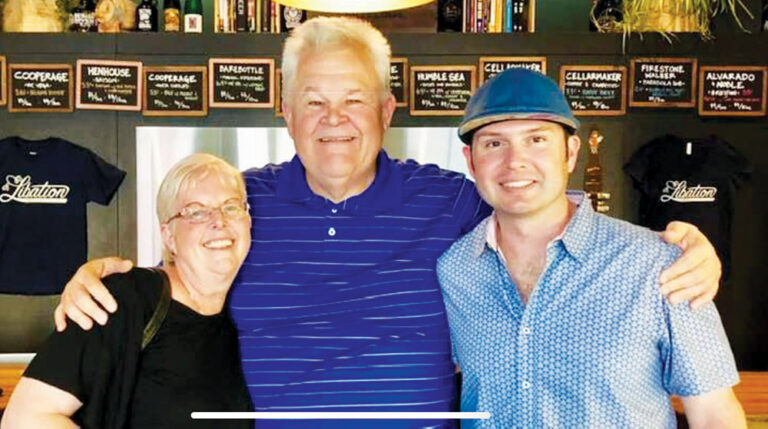
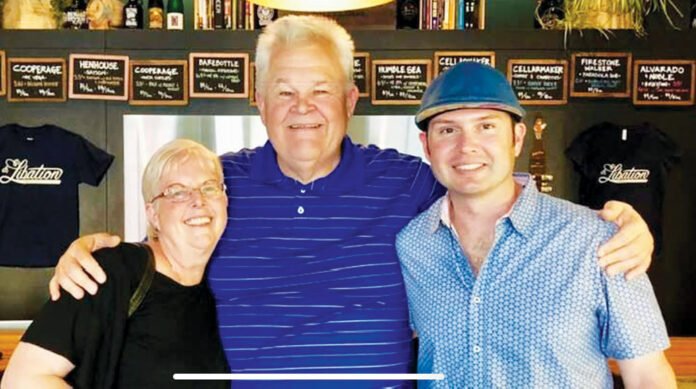
Ryan Spencer took longer than he anticipated to open Libation Taproom & Bottleshop on B Street in downtown San Rafael. By the time permits were secured, plans completed and the entire space refurbished with a nod to the building’s historic 1914 architecture style, it was October 2018—over three years from start to finish.

It seems the long process paid off—Libation Taproom & Bottle Shop is not just another brewery. This place offers a next-level beer experience. With 20 rotating taps, each brew has a designated chalkboard denoting the name of the brewery, the type of beer and a description. When a tap runs out, the chalkboard is turned upside down, the line is cleared and a similar style beer replaces the previous one. It’s a tight operation and it’s obvious Spencer isn’t new to this business. In fact, he spent five years as the general manager at City Beer Store in San Francisco, which offers the identical model on a larger scale.

But Spencer’s obsession with craft beer began even before his first job in the industry—it started when he was in college at Indiana University. His German neighbor introduced him to home brewing and he was hooked. When he returned to California, he endured a brief stint in a corporate job before following his beer calling to Jupiter (a beer garden in Berkeley) and then on to Drakes Brewing Company in San Leandro.

“I’ve got beer ADD—I’m always looking for something new,” says Spencer, which explains why, along with the 20 taps, there are cold cases filled with beers seldom seen. It’s not uncommon for Spencer to drive to Salinas, Monterey or Santa Cruz to purchase small batch brews to bring to his customers. The mindset is more akin to the culinary world—taste what is fresh and in season right now. There’s even something for non-beer aficionados here, like kombucha.

Don’t get attached to one particular exact brew; just enjoy the seasonality and nuanced flavor of the beer. The menu will be different—but similar—next week, next month or next year. That’s what farm-to-bottle (or keg) tastes like.

Lizard Vision

0

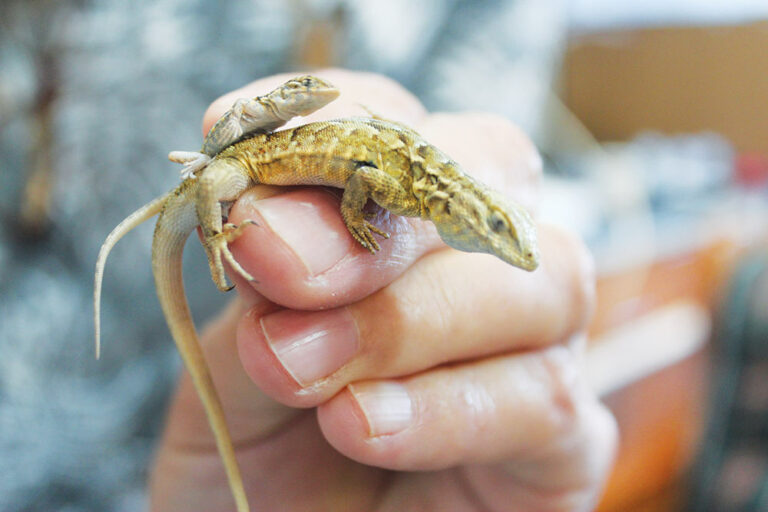
In three refrigerated closets set to precisely 15, 18 and 21 degrees Celsius, Barry Sinervo is using several dozen salamanders assembled in small plastic tubs to predict the future.

On one metal shelf is a contingent of surreal-looking “Mexican walking fish” called axolotls—a nearly-vanished species from the Mexico City canals forged by the Aztecs. Other shelves hold endangered Santa Cruz long-toed salamanders and a black-and-red-spotted species native to the Sierra Nevadas.

“These are going extinct,” Sinervo says as he wrangles a lanky giant salamander. The cast of creatures changes often at the lab in UC Santa Cruz’s coastal biology building, but the goal stays the same.

“We gotta save them,” Sinervo says.

The focus on amphibians—in particular Sinervo’s first passion, lizards—may seem niche within the wide world of evolutionary biology, but scientists find them an excellent proxy for the physical and social changes climate change spurs in all kinds of species. Sinervo uses the data he gathered over three-plus decades of tracking extinctions and adaptations to hone universal formulas that may also predict extinctions for birds, fish and mammals.

“In a funny way, I’m the Nostradamus of biodiversity,” says Sinervo, a trained mathematician and herpetologist (a biologist specializing in reptiles and amphibians). “We can prove the sixth mass extinction is happening now.”

The affable 58-year-old, whose office door says “Dr. Lizardo,” has a remarkably sunny demeanor for someone who made a career out of predicting environmental catastrophes. He credits his upbringing in Ontario’s rugged Thunder Bay region with instilling an early appreciation for nature’s quirks. “I had iguanas as a kid, and I hunted snakes,” Sinervo says. “You know the mating balls that males end up in, where you get a male copulating a male? That was my sex education.”

Eccentric humor and northern humility lend Sinervo the ability to get away with things many academics can’t, like referencing his own TED Talk without sounding pretentious. In that 2015 talk, he recounted how around 2001 he first noticed European lizards disappearing from their usual habitats. He and his colleagues soon found similar extinctions all around the world, pointing to a new era of mass extinction with die-offs comparable to the last Ice Age. Except this time, it’s happening much faster.

“Biological annihilation,” or an “assault on the foundations of human civilisation” are how recent reports describe the current era of biodiversity loss, which some researchers call the “anthropocene.” Gerardo Ceballos, of the Universidad Nacional Autónoma de México, led a 2017 study that tracked habitat loss for 27,500 land-dwelling species. He told the Guardian, “The situation has become so bad it would not be ethical not to use strong language.”

At their home on the Central Coast, Sinervo and his wife noticed species such as the northern alligator lizard—unique for giving birth to live young rather than laying eggs—disappear from their backyard. The same emissions-driven temperature increases causing habitats to go haywire also accelerate sea-level rise in coastal communities, which are beginning to grapple with how to protect billions of dollars worth of seaside real estate threatened by higher tides and more frequent extreme weather.

“We really have a train wreck coming,” says Gary Griggs, a coastal geologist and author who helped write recent state climate assessments with Sinervo. “Well, there are a couple train wrecks.”

From Santa Cruz to Big Sur; from the mountains of Central Mexico to the Amazon rainforest and the Kalahari desert; Sinervo now reliably predicts death and destruction everywhere he goes.

But he also has a secret which helps him avoid the cynicism and depression that might accompany his line of work: It gets easier after you come face to face with your own demise.

Heat Rising

Sinervo was aware of the conversation about climate change as far back as the late 1980s, while studying at the University of Washington. Back then, it was a theoretical conversation. If people didn’t take action to curb carbon emissions causing global temperatures to spike, the thinking at the time went, it was likely more species would start to disappear.

Sinervo’s frequent research collaborator Donald Miles, a fellow lizard expert and professor at Ohio University, remembers a “small but dedicated” group of ecologists and biologists sounding the alarm about climate change around the time he started working with Sinervo in 1993. Sinervo was always funny and enthusiastic, Miles remembers, but he was intense, working long hours and building a reputation as a prolific publisher in scientific journals.

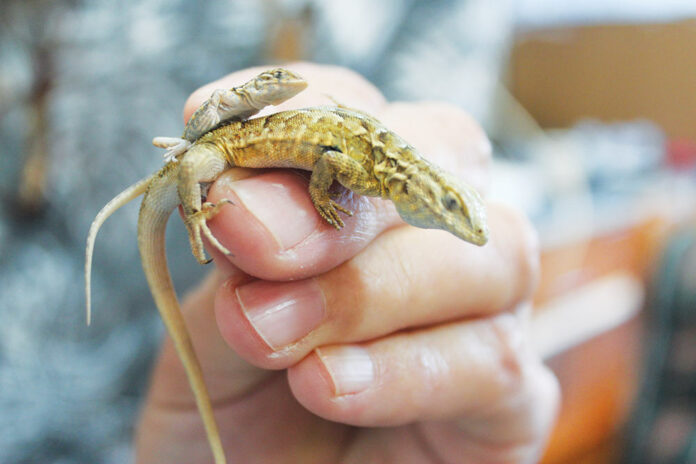
Sinervo made a name for himself as a doctoral student and was hired by UCSC, after he discovered what he describes as a naturally occurring game of rock-paper-scissors near a research site in Los Banos. For male side-blotched lizards that come in three colors—orange, blue or yellow—he established that each group’s character traits keep the three populations in equilibrium. The orange lizards’ blatant aggression beats the smaller blue lizards, using brute force to win more mating partners. But the yellow lizards can trick the macho orange lizards by imitating females to sneak in and find more mates. Blue can still trump yellow, though, since they’re monogamous and thus more vigilant in protecting mating partners.

The “roshambo” research, as Sinervo calls it, was one of what would become many examples of how lizard evolution can shed light on an issue that confounds humans.

“A lot of people struggle with teaching gender,” Sinervo says. “With the lizards, you can kind of begin to grapple with all that. They’re not just male and female.”

In the process, Sinervo also established his street cred with fellow herpetologists.

“He’s a very proficient lizard capturer,” Miles says of Sinervo’s sharp eye and quick reflexes to lasso a lizard lurking in a crevice. “For every lizard I would catch, Barry would catch two.”

Even today, Sinervo has a cooler in his office marked “herps only,” with a no smoking sign through a drawing of an ice cream cone—a system his wife developed to distinguish coolers for transporting lizards and salamanders from coolers for transporting food.

By 2007, Sinervo and Miles had worked together enough that the UCSC professor sent a grad student with Miles to Mexico on a supposedly routine research trip. Following the directions of Mexican colleague Fausto Roberto Méndez de la Cruz, the duo headed to a reliable site east of Mexico City. But they couldn’t find the lizards there, nor in several surrounding areas. They called for reinforcements.

“There were five people looking for lizards, and we didn’t find any of the species,” Miles recalls. “Maybe it’s climate change,” he told Méndez de la Cruz.

In the following months, Sinervo made similar extinction discoveries in the Yucatán, and by 2010, a team of more than two-dozen researchers on several continents expanded the findings into a landmark article published in the journal Science under the title “Erosion of Lizard Diversity by Climate Change and Altered Thermal Niches.” In layman’s terms, the researchers connected the dots between extinctions by proving climate change was the common link.

“Then we knew it was global,” Sinervo says. “Other people had published extinctions that seemed enigmatic, but we could explain them all around the world.”

Professionally, things were better than they’d ever been. Within a few years, hundreds of other researchers cited the paper, and Sinervo attracted new funding from groups like the National Science Foundation to train hundreds of graduate students in the field. In 2014, he received a $1.9 million grant from the University of California Office of the President to create an Institute for the Study of Ecological and Evolutionary Climate Impacts.

The following year, Sinervo returned from a whirlwind 26-country tour of Europe, China, the Amazon and other hotbeds for extinction. As usual, the results were brutal. He struggled to process the constant bad news.

“Oh my god it was so depressing,” he says. “For several years I was thinking, ‘I’m leaving my son with nothing.’”

But today, in his office filled with reminders of doom, Sinervo’s attitude is different. And he pinpoints exactly what changed his mind.

“You know I’ve had cancer, right?” he says.

The Brink

Adenoid cystic carcinoma, or ACC, is a rare form of malignant tissue growth often found in salivary glands of the head and neck. Sinervo knew biology better than almost anyone, and the diagnosis was devastating. The cancer invaded his sinuses and soft palate, requiring a team of Stanford researchers to rebuild his throat.

Still, Sinervo was pragmatic. Not wanting to rack up carbon emissions driving to Stanford twice a week, he took the bus from Santa Cruz to a train in San Jose to another bus in Palo Alto, which took about four hours round trip. He still grew lettuce in his backyard for vegetarian meals and insisted he and his family reuse old iPhones. Over time, his perspective shifted.

“As I normalized my fight with cancer and realized maybe I’ll be able to overcome it, I did that in parallel with my fight against climate change,” Sinervo says.

The best way he can describe it is by comparing it to overcoming post-traumatic stress. Virtually everyone is likely to encounter cancer in some way—if not personally, then through someone they know.

“Everybody will be touched by it, and we do everything we can,” he says. “Climate change is like that. It will affect everybody on the planet personally.”

Sinervo points to examples such as mountainous areas of El Salvador and Guatemala being ravaged by drought and intense heat, making it impossible to grow food there, and contributing to the migration crisis on the southern U.S. border. And, California now experiences more frequent deadly wildfires fueled by hotter, drier conditions.

Sinervo’s heat maps show species like the desert tortoise currently living in the Mojave Desert moving toward the coast as temperatures rise, raising big questions about the future of the Central Coast’s famous agriculture industry.

Sinervo is also wading deeper into public policy discussions about reforestation, habitat preservation and other ways to potentially reverse the impacts of climate change. At the same time, his colleagues watching the shoreline warn it’s time to talk about a point of no return with regards to the erosion threatening coastal homes and infrastructure.

Griggs is part of a team of engineers, economists and geologists hired by the city of Santa Cruz to put together a plan for what to do about oceanfront West Cliff Drive and its recurring sinkholes. At the county level, a first-of-its kind coastal armoring program is being discussed to set new rules for building seawalls, which studies show will likely erode public beaches and impact surf breaks. The alternative is retreating from coastal property—a prospect that could require buyout programs or changes in how climate risk is priced into homeowner’s insurance.

“When do we pull the plug? It’s going to be different for the public infrastructure than private residences,” Griggs says. “Every decision that gets made is going to have a huge impact on all these other parts of the puzzle.”

In the process, Griggs says, it’s entirely possible scientists like Sinervo will find themselves at odds over habitat conservation with property owners inclined to dig in their heels and protect their homes or investments. That’s to be expected, Sinervo says.

“We will need government to impose all these things,“ he says. “This is not a moral call. Some people are just more selfish than others, and they won’t do it. Others will.”

“I work on the equations for why we behave the way we behave, and I understand it. It’s the way we evolved.”

Sinervo worked all the way up until his surgery at Stanford in 2017, when Miles was at the hospital with his wife, who is a psychotherapist. While Sinervo underwent radiation therapy, he began work on another paper.

“Barry is not the person who gives up,” Miles says.

New Normal

In January, Sinervo made it to the last destination on the worldwide extinction tour he started before his cancer diagnosis. The findings were brutal. Sinervo’s equation had successfully predicted a 60,000-square-mile extinction zone in the Kalahari desert in Southern Africa.

“That one’s mind-blowing,” he says, scrolling through heat maps on his laptop at UCSC. “This is scary shit. I get afraid sometimes of my own work.”

Sinervo is different now than he was before his battle with cancer. In his 2015 TED Talk, he came across as a quintessential dad-academic in khakis and a lime-green button up. He spoke in a measured tone, and occasionally peppered in PG-rated phrases like, “The world is going to hell in a handbasket.” This spring, he took it up a notch with a stand-up cameo in comedian Shane Mauss’ science-themed show at DNA’s Comedy Lab in downtown Santa Cruz.

“I’m going to try to inject a little levity into this. Not much,” Sinervo quipped in a voice that, post-surgery, has taken on a more nasally, slightly artificial quality. “We’re talking about a fucking mass extinction.”

His participation in Mauss’ show was part of Sinervo’s new focus on communicating what he’s learning to a wider audience, partly out of a desire to compel people to get serious about cutting red meat out of their diets, buying local and reducing consumption—specific ways to significantly reduce environmental impact—rather than to create vague hysteria about climate change. But the stand-up gig and efforts like the Twitter feed—where he often calls out his students (#SciencePadwans and #ScienceJedis)—are also logistical necessities.

“I can’t tweet about this fast enough, let alone write papers,” he says.

Sinervo’s curly brown hair is now gray, lending him a mad scientist vibe that’s amplified when he wears goggles to protect his left eye, which has remained closed since the surgery. It all fits when you walk into his small, second-floor office and see a series of incomprehensible equations scribbled on a white board—Sinervo’s working formulas to predict extinction anywhere in the world.

“I’m trying to make it as simple as possible,” he says of the horseshoes and commas and other symbols that denote variables like population growth and species interactions.

A natural teacher happy to explain any of his dozens of papers, there’s just one type of question that visibly irritates Sinervo, and that’s whether this issue can be dealt with, as many climate-change skeptics suggest, 20 years from now, or maybe 50? After 2100?

“It’s now. That’s what my work is showing,” Sinervo says. “It’s now. It’s now.”

The combination of Sinervo’s unique style and his research credentials have attracted a new generation of climate-conscious acolytes to the lab at UCSC.

“Barry is sort of like the climate change guru when it comes to lizards,” says Pauline Blaimont, a 28-year-old recent grad of UCSC’s evolutionary biology doctoral program. With Sinervo’s help, she spent several summers studying how lizards in the Pyrenees mountains are (or aren’t) adapting to hotter conditions.

Blaimont, from Southern California, has always been into animals. Lizards are perfect for studying climate change, she says, since they’re exothermic, regulating body temperature by directly basking in the sun. When it’s too hot, they spend more time in the shade—allowing less time to hunt insects—and see reduced levels of physical activity until they ultimately must migrate or face extinction. Since they’re low on the food chain, what happens to lizards also has ripple effects for the birds, snakes and mammals that eat them.

Like Sinervo, Blaimont says research has bled into her personal life. She and her partner do Meatless Mondays, and she’s distilled her advice to others into one directive: “Reduce, reuse, recycle, but in that order.”

Students in Sinervo’s lab currently study on-the-ground adaptations to climate change, like how “moms reprogram their babies for the future” by passing on altered hormones or genes.

Sinervo, who is currently most enthusiastic about reforesting the Amazon, acknowledges his efforts to “normalize” extinction through comedy, social media and other channels is “more on the edge” in the world of buttoned-up climate scientists. It makes sense, since his research has always been kind of unusual.

Miles, his collaborator, says looking at the bright side is the only real option. Reached while on a research trip in France during another intense heat wave last month, he was enthusiastic about Germany’s efforts to cut coal-fired electricity and ramp up renewable energy. In the U.S., a wave of young, insurgent left-wing politicians are also raising the profile of a “New Green Deal” or similar drastic shift away from fossil fuels.

“Species can recover,” Miles says.

Sinervo harkens back to his first job as a lumberjack cutting down trees in Canada with his brothers (one of whom, Pekka, is also a first-generation college graduate and physicist who studies the Higgs boson, or “God particle,” often described as a fundamental building block of the universe). He remembers a day when he was 16 and had to cut down an old-growth balsam tree. He started to consider the equilibrium between nature and human livelihood. “I went, ‘Wow, I’m gonna change things when I get older,’” Sinervo says.

He sees the global mobilization to close the ozone hole by slashing the use of man-made chemicals as a prime example of humanity’s capacity to confront existential threats. Until then, he’ll do whatever he can to get other people to join him.

“It’s the end of the world as we know it,” Sinervo sang at his recent comedy debut, channeling R.E.M., “and I feel fine.”

Susan Landry contributed to this story.

Advice Godess

Q: A guy I don’t know well sent me a creepy Facebook message with pervy language. Next, he messaged me a bunch of tantra memes—sex as a celebration, blah, blah, blah. It grossed me out. Why would a guy think he can be so blatantly sexual out of nowhere? What should you say to a guy who does this?—Yuck

A: When a guy messaging you starts sounding like Rumi or some other ancient elder, it’s usually for good reason—like that he’s short on hookup partners and the market’s way behind in building realistic, washable sex robots.

It would be instructive for men who do this to consider sex differences in the appeal of unsolicited genital selfies—sent, for example, by strangers on dating sites. The Kinsey Institute’s Justin Garcia reports that only 5 percent of women are aroused by unsolicited penis selfies; the vast majority are just grossed out by them.

As for the reception vagina selfies get, a Los Angeles woman sent 37 men on a dating site an unsolicited vagina pic (not hers, one she found on the internet). Three men replied with shirtless pix; seven sent messages about what they’d like to do to the pictured vagina; eight asked for more pix; nine sent penis selfies; and one sent a video the woman told Metro UK included “a, um, happy ending.”

The difference in men’s and women’s responses to “down there” selfies from strangers makes sense in light of how female emotions seem to have evolved to protect women from becoming single mothers—getting knocked up and then ditched. Research by anthropologist John Marshall Townsend suggests female emotions push women to look for signs of commitment from a man, even when they know they want nothing more than casual sex with him. This, in turn, probably leads many or most women to be put off by overt sex talk from a man—before there seems to be an emotional connection.

Yet, perhaps due to what anthropologist Donald Symons calls the human tendency “to imagine that other minds are much like our own,” many men whip out the sex talk and the zipperwurst pix for women they barely know. If a guy who does this is some Tinder rando, you can just block him. But when it’s a male friend or other guy you’d rather not cut off entirely, you need to be straight with him—like, “Dude, from now on, you gotta keep any messages totally platonic”—and be straight with him again if he tries again. (I mean, come on … if you wanted gross unsolicited sexual comments, you’d wear a halter top and booty shorts to 7-Eleven.)

Q: My best friend just got dumped by her boyfriend and she’s totally devastated. I always thought he was a jerk, but I know saying that won’t help her feel any better. I want to be there for her but don’t know how. What’s the best thing to say to somebody who’s heartbroken?—Lost

A: Assuming she isn’t all “I wanna be alone!” you really just need to show up. You might even bring a little something: “I’m here, and I’ve got dinner. Very low-carb, too—your ex’s head on a spike.”

The thing is, for many of us, watching somebody sob is uncomfortable along the lines of walking in on them having sex. We are clueless about what to say to the weeping person, and we often use that as reason to bolt or to not show up at all.

To be a better friend than that—to stick around when the going gets sobby—it helps to understand sadness isn’t some pointless emotional ailment. Like a tire jack, sadness has a function. In evolutionary terms, it’s “adaptive,” meaning that over evolutionary history, it helped solve some of humans’ recurring survival and mating problems. Psychiatrist and evolutionary researcher Randolph Nesse points out in “Good Reasons for Bad Feelings: Insights from the Frontier of Evolutionary Psychiatry” that sadness slows us down and often leads us to ponder our choices, which can help us avoid putting our mistakes on endless repeat.

One way you might help your friend is by encouraging her to find meaning in what she went through—that is, to learn from the experience so she can make better romantic choices in the future. However, it may be too early for that. So your immediate job could be pretty simple: You’re an ear that hands her Kleenex and occasionally dispenses cheery thoughts.

Trashed

0

Jeff Dondero, 70, is a former Marin County resident and journalist who wrote for the “Pacific Sun,” the “Marin Independent Journal” and other papers in the 1970s. He now lives in Rohnert Park.

“I probably worked for every suburban paper in Marin County,” he says in an interview with the ‘Pacific Sun.’ Along the way he became interested in green construction and sustainability issues. He published “The Energy Wise Home” and “The Energy Wise Workplace” in 2017. He takes on America’s trash problem in “Throwaway Nation: The Ugly Truth About American Garbage,” published this year by Rowman & Littlefield.

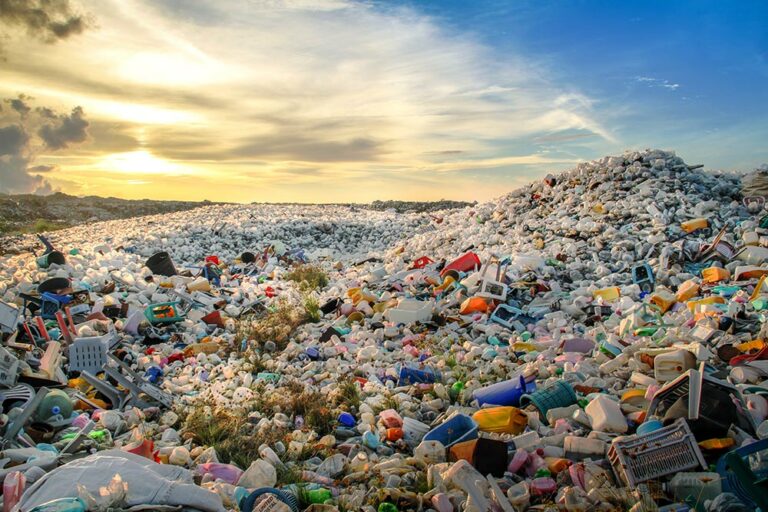
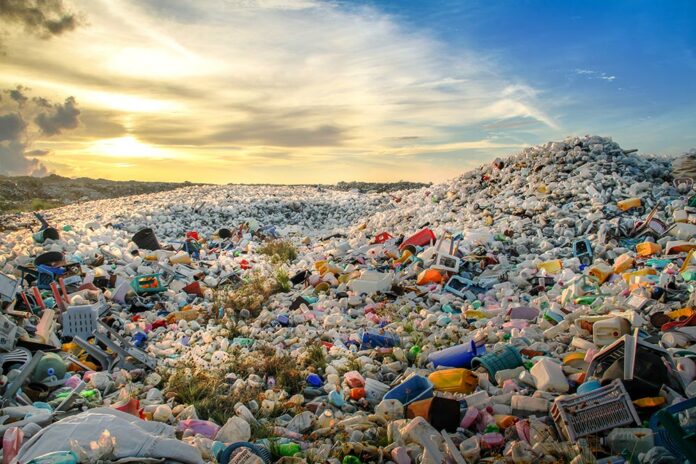
“We’re the first generation that’s literally burying ourselves in our own crap,” he says of his fellow baby boomers. An avid sailor, he says our trash is piling up in the oceans, too. “You can’t go anywhere on the ocean without seeing our garbage.”

And human refuse doesn’t stop on earth.

As he writes in “Throwaway Nation,” space itself is now cluttered with our trash. The moon alone has 400,000 pounds of trash on it, and space junk abounds in the outer atmosphere, putting what Dondero sees as the imminent space tourism industry on a collision course with interstellar trash.

He paints a grim picture, but holds out hope that the same technological savvy and push for profit that created these mountains of trash will convert our waste into new resources.

“We have to plan, but we’re trying to catch up from decades of abuse,” he says. “It’s everybody’s responsibility.”—Stett Holbrook

Excerpts from Throwaway Nation, the Ugly Truth About American Garbage

If we were guests, we would have been asked to leave. As proprietors, our property value would have plummeted. As groundskeepers, we would have been fired. Just because we are the dominant species doesn’t mean we own the place and can be passive guests. We have the responsibility to leave it for those who come next. We have influenced conditions on this planet throughout its history—and objectively not for the better. It seems that it wasn’t enough to befoul just the planet; now we are also leaving our left-behinds in space and on other planets.

Space Junk

Thank God man cannot fly and lay waste to the sky as well as the earth. — Henry David Thoreau.

The good news is that no one has ever been injured or killed due to falling space junk. The bad news is that unless we clean up our extraterrestrial neighborhood, space travel, especially in orbit, is very likely going to be deadly. In space are thousands of collisions with space junk waiting to happen.

We are responsible for the mess of “orbital debris” that we left by accident, neglect, or design, and dumped on the moon and Mars—our newest extraterrestrial “spacefills.” Humans have a real nasty habit of discarding their stuff wherever they go. According to NASA, hundreds of millions of pieces of space debris are now floating through our region of the solar system.

Elon Musk is the newest name in contributing to the junkyard of space. He may be a way-cool space entrepreneur, but he’s debuting in space as a high-class litterer, contributing to the accumulation of space scrap in the next phase in Earth’s interplanetary journeys. In 2018, SpaceX, Musk’s company, launched a cherry-red Tesla Roadster and its dummy “driver,” Star Man, on its Falcon Heavy rocket, blasting David Bowie’s “Life on Mars” on its way to Mars orbit. We don’t mean to be a spoil-space-sport about this, but come on—the car isn’t exactly going to be “draggin’ the cosmos” and doing hot laps on the red planet.

The moon, our next-door neighbor, has felt the negligent hand of humans with our various detritus, including astronaut poop and barf bags. This, of course, has conservationists very concerned about the moon’s protection should further trips there be undertaken. At present Tranquility Base is still tranquil, as there is not any wind or rain up there to damage or blow things around or, at the moment, any more tourists to leave things behind. But it looks as if not much thought has been given to protection of our rocky satellite or laws enacted regarding its protection. As yet, only California and New Mexico have recognized the moon as an international historic sight, and for now, it isn’t recognized as a historic landmark or considered a World Heritage Site by the United Nations Educational, Scientific and Cultural Organization (UNESCO).

In 2009, NASA and The Defense Advanced Research Projects Agency (DARPA), an arm of the U.S. Department of Defense responsible for the development of emerging technologies, convened a space junk wake-up call. The team took a hard look at the issues and challenges of de-cluttering space of human-made orbital rubble.

But whatever the method, it’s time we started to clean up our act. Maybe that’s why we haven’t had direct contact with any extraterrestrial beings—they just can’t stand our mess.

Fish to Farm to Table to Trash

People don’t know whether to be astonished, ashamed or amused when it comes to the magnitude of food that Americans throw away. No other country in the history of the world has the ability to raise, produce, eat and toss out as much as we do.

Mothers still shake fingers at their children admonishing fussy eaters, “Just think of all the children in the world that are starving and would love this food you’re wasting.” Of course, most of us answered, “OK, send it to them.” Fact is, mom was right. And so were we, kind of, because we export more food than any other nation on Earth, more than $135 billion each year.

All levels of the food system are riddled with waste—farming, harvesting, transportation, packaging, wholesale and retail marketing, and finally our tables. Food waste levels are 20 to 25 percent of manufacturing, 15 to 20 percent of retail sales and 55 to 65 percent from consumers.

The truth is there’s enough food to feed every single person in America if we can help farmers, manufacturers and retailers get the food to the people who need it. That’s why the Feeding America network and its partners work with farmers and food companies to rescue food and deliver it to families facing hunger. Things could be changing on the food waste front, with the US Department of Agriculture (USDA) and the EPA setting the first-ever national food waste reduction goal, aimed at cutting national food waste in half by 2030.

Food facts and figures:

  • Less than 1 percent of pesticides applied to crops reach the pest, the rest poison the ecosystem. Each year 25 million people are poisoned by pesticides in less-developed countries and over 20,000 die.
  • One-third of the world’s fish catch and more than one-third of the world’s total grain output are fed to livestock—the most wasteful way to produce protein. It takes 175 gallons of water to produce an eight-ounce soy burger, and a whopping 450 gallons of water to produce a quarter-pound beef burger. [Grassfed beef, however, is far less water intensive].
  • About 50 percent more food is wasted today per person than in the mid-1970s and more than two-thirds of the food we throw away is edible.
  • Food is so cheap and available to most families that they throw out up to 25 percent of their food and beverages. This can cost the average family between $1,365 and $2,275 annually.
  • A study by the University of Arizona found that 14 percent of the food trashed in America was not even unpackaged.
  • A 20 percent reduction in food waste would be enough to feed 25 million Americans. Five percent of Americans’ leftovers could feed four million people for one day.
  • Between 40 and 50 percent of wasted food uses up 25 percent of all fresh water in the United States.
  • It costs $750 million to dispose of food thrown away annually.
Trendy to Trash

It’s high irony that the industries that produce haute couture; flawlessly colored and perfectly cosmetized faces and hair; and impeccably lighted, posed, and glossy high-fashion photos are also industries whose dirty secrets are hidden in clothes closets.

The fashion industry (including cosmetics) is the second-dirtiest business in the world, right after oil and petroleum products, with rampant production schedules and unconscionable recycle rates. A lot of power is needed to produce 150 billion-plus articles of clothing each year and most of the countries where those garments are produced use coal for their energy source. This helps to explain why the apparel industry is responsible for 10 percent of all carbon waste emissions globally. According to a 2013 report cited by Esquire magazine, the global apparel industry produced enough garments in 2010 to provide 20 new articles of clothing for every person on the planet.

The incredible 500 percent increase in worldwide clothes production since the 1990s is due largely to teenagers and trendy “fast fashion.” Today, the fashion industry and the culture of throwaway clothing it has inspired have produced some startling statistics. The average American throws away more than 82 pounds of textiles per year. We’re buying more than 80 billion new items of clothing each year in this country, much of which is not being reused, recycled or repurposed.

Thinking Inside and Outside the Box

Who hasn’t experienced “wrapping rage” trying to dislodge some desired doodad from the bondage of a heat-sealed plastic blister pack clamshell or other encasement? What’s worse is that over-packaging mania accounts for a third of the waste thrown away in the United States.

And, less than 14 percent of plastic packaging, which is the fastest-growing form of packaging, gets recycled. Packaging adds twenty-nine million tons of non-biodegradable waste to landfills every year.

Americans use 100 billion plastic bags a year, which require 12 million barrels of oil to manufacture. Of all the plastic problems people face, the aggravating single-use plastic bag is the baddie. There was recently a kind of a test case for bagging the problem in California. The state has been in the lead for many ecological causes in the past. Proposition 67, a plastic bag law, was passed in 2016.

And the ban seems to be working. In San Jose the storm drain systems are 89 percent cleaner and streets and creeks have been reported as 60 percent cleaner. In Los Angeles County, the ban resulted in a 94 percent reduction in single-use bag use. In Alameda County, officials reported finding 433 plastic bags, compared to 4,357 in 2010. Monterey County reported even better news, with volunteers discovering only 43 plastic bags while performing their clean-up efforts, compared to 2,494 in 2010.

So, either people are so cheap that they’re using fewer bags because they have to buy them, or they’re getting the message about plastic pollution, or a little of both.

Then there’s the question of recyclability. Plastic juice pouches and drink boxes are generally not recyclable. The 1.4 billion Capri Sun pouches thrown away every year laid end-to-end would reach nearly halfway to the moon. NRDC joined the Make It, Take It campaign (a coalition of organizations devoted to waste recycling and resource conservation) to ask companies like Kraft, which produces and distributes Capri Sun, to use recyclable, reusable or compostable packages for beverages. They have made comments about an effort to recycle, but when asked if they plan to improve their packages or efforts to improve the sustainability of their product, CapriSun declined to comment.

Eight in 10 Americans are now shopping online, accounting for about 10 percent of all retail sales, and just about all products arrive in cardboard boxes.

Every day at the Recology plant in San Francisco, approximately 625 tons of recyclables, including more than one hundred tons of cardboard, are collected, and the amount of plastic film has increased for eleven consecutive years. Plastic film recycling—a category that includes flexible product wraps, bags, and commercial stretch film made primarily from polyethylene (PE)—has increased nearly 84 percent since the first report was issued in 2005.

China, our best customer for garbage, is setting new limits on the contamination it will allow in mixed paper bales that American trash companies ship for recycling. “They’ve started getting more rigorous, even tearing open bales at customs,” said Chaz Miller, policy director for the National Waste & Recycling Association. Because the income from exporting our garbage to China often subsidizes the cost of some neighborhood garbage collection programs, taking less of America’s used paper will cause our bills to collect, recycle, or dispose of it, to rise.

And guess what—many of the items we order online are made in China and come in recycled cardboard boxes from paper material bought from the United States.

Opening Pandora’s Pharmacy

There’s a persistent and pervasive, high-priced illness in America today. It’s the overly expensive, overly prescribed and incredibly wasteful amount of American medicine made available to the public under and over the counter, in concert with doctors and America’s big pharma. It’s hand in hand in glove with one of the worst effects of modern medical technology—the belief that whatever ails us, taking a pill will kill it no matter the cost or waste.

The average American takes about 12 medications annually compared to seven 20 years ago. Back then, spending on drugs totaled about 5 percent of the total US health care costs, now it’s more like 17 percent. Spending on prescription medications has increased by a knockout of $200 billion in two decades.

We take a total of 2.9 billion trips annually to purchase retail over-the-counter (OTC) products. On average, U.S. households spend about $338 per year on OTC products. This amounts to tens of billions of dollars spent on vitamins, supplements, diet pills, cold cures, herbal remedies and other medicaments—providing incredible economic benefits to the companies that manufacture them.

Part of the growth of the almost half-trillion-dollar medical industry was brought about by waste—both in over-prescribing by the pharmaceutical and medical industry and in the discarding of medicine by consumers. Lamentably, methods of drug waste disposal are causing a major health hazard. Consumers aren’t the only ones tossing their drugs down the drain or in the garbage. The Associated Press estimates hospitals and long-term medical care institutions across the United States dump 250 million pounds of pharmacologically active drugs that can have severe effects on humans and wildlife directly into public sewer systems each year.

A study published in the BMJ concluded Medicare and private insurers, as well as patients, pay companies about $1.8 billion a year for medications that are thrown away—that’s 10 percent of drug companies’ projected 2016 revenue of $18 billion. Add another $1 billion to doctors and hospitals as price markups on those discarded medications. Those profits would not exist if companies sold vial sizes more in line with the needs of patients, researchers suggest, and the problem is not unique to cancer drugs.

Hero & Zero

  Hero Curb appeal in a town ranks up there in importance with location, location, location. Thanks to an anonymous donor, a prominent San Anselmo traffic median is about to get a $1.5 million makeover. The transformation will take place on Red Hill Avenue, a busy thoroughfare into town. Landscaping improvements include removal of diseased trees and the addition of irrigation...

Hero & Zero

  Hero Curb appeal in a town ranks up there in importance with location, location, location. Thanks to an anonymous donor, a prominent San Anselmo traffic median is about to get a $1.5 million makeover. The transformation will take place on Red Hill Avenue, a busy thoroughfare into town. Landscaping improvements include removal of diseased trees and the addition of irrigation...

Public Hanging

Now that the death penalty is once again front and center, thanks to the abscess in the Oval Office, I think we should do it up right. So, let’s bring back public hangings. Because they are state-sponsored killings, using our tax dollars, we should all be able to enjoy them. We’ll put them on live TV in prime time....

The Art of Propaganda

Lilka Areton, director of the Museum of International Propaganda, is seated at her desk hovering over an issue of Der Adler on a recent Friday afternoon in San Rafael. It’s a vintage issue of the German magazine that dates back to the World War II, and she’s visibly stunned at the juxtaposition of content. As she thumbs through the pages,...

Swan Song

Located just off the heart of downtown San Rafael, the Falkirk Cultural Center is an 11-acre oasis of gardens and galleries with an elegant three-story, 17-room home, a blend of Queen Anne and Eastlake styles built in 1888 centering the property. If you’ve never seen it for yourself, this month’s San Rafael Art & Wine Festival is the perfect opportunity...

Horoscope

ARIES (March 21-April 19): “Dear Diary: Last night my Aries friend dragged me to the Karaoke Bowling Alley and Sushi Bar. I was deeply skeptical. The place sounded tacky. But after being there for twenty minutes, I had to admit I was having a fantastic time. And it just got better and more fun as the night wore on....

Beervana

Ryan Spencer took longer than he anticipated to open Libation Taproom & Bottleshop on B Street in downtown San Rafael. By the time permits were secured, plans completed and the entire space refurbished with a nod to the building's historic 1914 architecture style, it was October 2018—over three years from start to finish. It seems the long process paid off—Libation...

Lizard Vision

In three refrigerated closets set to precisely 15, 18 and 21 degrees Celsius, Barry Sinervo is using several dozen salamanders assembled in small plastic tubs to predict the future. On one metal shelf is a contingent of surreal-looking “Mexican walking fish” called axolotls—a nearly-vanished species from the Mexico City canals forged by the Aztecs. Other shelves hold endangered Santa Cruz...

Advice Godess

Q: A guy I don’t know well sent me a creepy Facebook message with pervy language. Next, he messaged me a bunch of tantra memes—sex as a celebration, blah, blah, blah. It grossed me out. Why would a guy think he can be so blatantly sexual out of nowhere? What should you say to a guy who does this?—Yuck A:...

Trashed

Jeff Dondero, 70, is a former Marin County resident and journalist who wrote for the “Pacific Sun,” the “Marin Independent Journal” and other papers in the 1970s. He now lives in Rohnert Park. “I probably worked for every suburban paper in Marin County,” he says in an interview with the ‘Pacific Sun.’ Along the way he became interested in...
3,002FansLike
3,850FollowersFollow