Nationalist Emergency

0

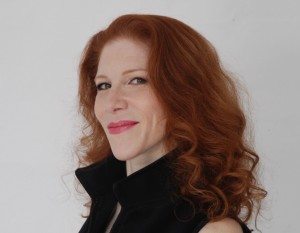
“We have been feeling the brunt of this administration—the brunt of the constant criminalization of immigrants, since 2015,” says Danielle Walker. She’s the spokesperson at San Rafael’s Canal Alliance, the local immigrant services nonprofit that’s seen an influx of immigrants, mostly traumatized women and children who’ve been released from detention centers to await their fate as asylum seekers.

They come to San Rafael because they either have family or have some other connection to the Canal District neighborhood. Now, says Walker, there’s an additional level of fear that communities such as San Rafael with big immigrant populations are becoming the targets of right-wing terrorists.

In the aftermath of the weekend shootings in El Paso and Dayton, and on the heels of the mass shooting at the Gilroy Garlic Festival two weeks ago, local fears about Immigration and Customs Enforcement (ICE) have been enhanced by the fact that brown-skinned persons—or anyone, for that matter—can’t go to a Walmart in Texas without fear of being murdered by a Trump-supporting white nationalist.

This week, there’s been a lot of focus on the mental health of the shooters. But what about the mental health of victims of hate-inspired violence? It’s an issue that the Canal Alliance deals with every day in its programs and services, says Walker.

“Whether it’s (English as a second language), or after-school programs, or in the front lines of social services or immigration,” she says, “ everyone is being ‘trauma informed’ on the effects of that climate on our community.”

Those effects range from numbness to rage to sheer terror. And, at a certain point, it does feel like all that’s left is upper-case outrage to go along with a growing sense of outrage and fear at the apparent convergence of executive-level hate speech and right-wing violence in this country.

Over the weekend, and in response to deadly shootings in Texas and Ohio that came on the heels of last week’s Gilroy Garlic Festival shooting, locally, U.S. Rep. Jared Huffman could only point out, in all upper-case on his Facebook page, that “ASSAULT RIFLES AND HIGH CAPACITY MAGAZINES THAT CAN INFLICT INSTANT CARNAGE LIKE THIS MUST BE BANNED.”

Huffman was referring to the Ohio gunman who opened fire and killed nine people and wounded 27 others in Dayton, in a span of 30 seconds. His motives remain unclear and inchoate. The El Paso killer spelled out his motives in a manifesto that took Trump’s words about an “invasion” at the border to heart.

State officials had already been decrying Republican fealty to the National Rifle Association at the time of the weekend shootings that have shaken the country. Speaking to reporters at Santa Clara Valley Medical Center following the Gilroy massacre two weekends ago, Gov. Gavin Newsom highlighted how California’s strict gun laws—semi-automatic weapons and high-capacity rounds are banned in the state—can’t stop a terrorist from purchasing one of the weapons where they’re legal.

The Gilroy shooter, Santino William Legan, purchased his deadly weapon, an AK-47-style assault weapon, in a Nevada gun store before killing three people at the popular Gilroy festival. He committed suicide at the scene; reports that police shot and killed him within moments of the shooting were erroneous. The Sonoma County Fair officials announced security upgrades would be in place as, like the general public, law enforcement struggled to make sense of the carnage and what to do about it.

Marin County Sheriff Robert Doyle is just as exasperated as the next citizen in light of these shootings, and say that in their aftermath “we should not necessarily be focusing on anything other than how horrific this was.”

The Gilroy and Dayton shootings, he adds, may not have had anything at all to do with race. He highlights the vexing issue of what law enforcement can or should do locally in the aftermath of shootings in other parts of the state or country. “As for public events, are we going to turn in to a military state, where we have armed people at farmer’s markets, playgrounds, public events?”

It’s not a rhetorical question for law enforcement when it comes to security at public events. As Doyle notes, “most people who lawfully own firearms don’t do this. I don’t know what the answer is. I guess the natural reaction is more security, but in Gilroy, the guy cut through a fence. Somebody could still get in if they wanted to. But that doesn’t mean we shouldn’t make it safer.” He says the Marin sheriff’s office has deployed officers in recent years at local events where there was a large gang presence.

“It’s a very difficult problem,” Doyle says.

And getting more difficult by the day. Gov. Newsom’s comments following the Gilroy shooting focused on the U.S. Senate’s unwillingness to take up meaningful gun control legislation when it comes to military-style assault weapons. Much of that reluctance has historically been tied to the NRA’s power and influence in Washington and its lawmakers.

Over the weekend just passed, Newsom could only amplify the growing sense of outrage after the El Paso shooting, which targeted Latino shoppers at a Walmart at the Texas border town: He said it was an epidemic. He said it was a crisis. And, he repeated what others have repeated in other states when mass shootings come to town—he said that the U.S. Senate had to act. Instead: thoughts and prayers. The all-too-familiar ritual.

Newsom’s post garnered nearly seven thousand comments, many of which were in support of gun control and many of which were not. The comments provide a picture of the morass that this country finds itself in when it comes to gun violence and what, if anything, can be done about it, when citizens are so widely split on root causes and solutions.

So, while Newsom was being accused of dancing on victims’ graves to push his liberal anti-gun agenda, Trump was Tweeting that the weekend shootings would provide an opportunity for a GREAT law to come out of it (his capital letters) that would further put the blame for all this country’s ills at the hands of undocumented immigrants.

Texas is an open-carry state and Walmart is not a gun free zone. Numerous reports about the incident noted that there were several armed people in the Walmart at the time of the shooting. At least one of those persons told reporters that he feared for his own safety at the hands of law enforcement if he took action against the shooter.

Other California posters noted on Newsom’s FB feed that the problem isn’t white nationalist violence unleashed by Trump and his minions, it’s “a generation raised on Hollywood and videogame violence, poor parenting and schools, social media and yes, fake news.”

“What I’m most disappointed in is the lack of dialogue after these events occur,” says Doyle. People go silent, he says, or retreat to their ideological bunkers, or insist on convenient explanations. “Some people say it’s angry white men. Others, it’s the mentally ill,” he says. The Gilroy shooter bought a weapon in Nevada and legally brought it to California, he notes, and further observes that a national ban on assault weapons won’t stop a perpetrator intent on turning that weapon into a fully automatic killing machine.

Social-media posturing is one thing. Protecting the local community is entirely another. For members of Marin’s large immigrant community, the shooting added another layer of fear to a community that’s already been mobilized over Trump’s weaponization of ICE. They’re not happy about Doyle releasing non-American felons to ICE, but Doyle says he’s on the lookout for everyone’s safety in the county.

There’s been an unfortunate conflation between the inhumane detention centers at the border with local policies around ICE and when the county should participate in the removal of violent felons from the community. Doyle’s dealing with the reality that not every immigrant is a shining example of the American melting pot. For example, one undocumented felon in Marin raped an unconscious person. “I defy you to say that I should have released that person back into the community,” says Doyle, who adds that locals outraged by conditions at the border detention centers have come to an errant conclusion: “That’s what the sheriff is doing here.”

He’s not, nor is he releasing those felons back into a community that’s dealing with a big influx of young, traumatized asylum seekers just released from prison-like conditions at the border. And, as Doyle notes, it’s unconstitutional for him to hold what would be ICE detainees in the local lockup, despite what some Marin County supervisors have suggested he do.

Walker at the Canal Alliance says there’s been progress between her organization and Doyle on the issue of his policy of releasing some felons to ICE. “There are outliers in every community,” she says. “And most immigrants don’t come here to commit crimes.” The goal, she adds, is to “ensure justice in our community, and fairness and justice in the immigrant community.”

The Marin community has stepped up in a big way on that front. At a Town Hall Monday afternoon Huffman told an overflow crowd at the Dance Palace in Pt. Reyes Station that Marin County “punches above its weight” when it comes to welcoming refugees from Central America.

Marin, he noted, surpasses San Francisco and Oakland on that front. And many of them come through the Canal Alliance on their way to settling in the county. Recently, says Walker, they’ve been seeing at least three asylum seekers a day, including families and unaccompanied minors. It’s been going on for several weeks, she says, and most of the immigrants are women and children. “Our social services team has doubled down and tripled down on these kids, who are going to have to join the school system.”

The shooting in El Paso, she says, “is especially scary for immigrant communities with a high degree of an immigrant population, such as the Canal District of San Rafael. There is pervasive fear anytime—ICE at the grocery store, shooters, or just violence against immigrants.”

The good news is that along with Marin’s welcoming attitude toward immigrants, it’s also a peaceful place when it comes to gun violence, unlike, say, Texas. According to the Centers for Disease Control, the county falls below the state and national average when it comes to firearms-related deaths.

Indeed, the county comes in at half the national average when it comes to firearms-related deaths per 100,000 population. In 2017, the county experienced 20 firearms related deaths, or six deaths per 100,000 residents. In California as a whole, the figure is eight per 100,000, and in the country as a whole, it’s 12 per 100,000.

And the county’s taken proactive steps to stem gun violence locally by addressing mental-health and domestic-violence issues as they intersect with gun violence. In late July, the Marin County District Attorney’s Office hosted a gun violence restraining order training to make use of a little-utilized state law that allows for firearms to be confiscated from persons who pose a danger to themselves or others. A California law that took effect in 2016 allows family members or law enforcement to seek a restraining order “against someone they believe poses an immediate and present danger of harming themselves or others,” according to a release announcing the training.

The training was conducted by the San Diego city attorney’s office, which was a driver behind the gun-violence restraining orders and focused on issues such as domestic violence and dealing with persons with dementia or Alzheimer’s disease who may have access to firearms. The law was passed in the aftermath of 2014’s mass killing in Santa Barbara County where six people died.

At the same time California was wading into controversial waters around who can and who can’t own a gun—the Trump Administration was moving to end Obama-era federal restrictions on gun ownership for persons with demonstrable mental-health issues. Now he’s blaming mental illness on the El Paso killer.

Regional Second Amendment hard-liners who decry liberal attempts at gun control might also take note of an investigation that appeared in the Guardian in June of this year which found that the Bay Area had experienced a big and surprising drop in deadly gun violence between 2007 and 2017.

That report, among other highlights, showed that its possible to talk about high rates of gun violence in minority communities without calling those communities rat- and crime-infested shitholes, which is the president’s preferred rhetoric when it comes to places like Baltimore and Chicago. Last week, Trump teed off on the homeless crisis in San Francisco by way of extending his shithole-cities rhetoric to a region that’s largely been in open defiance of his presidency.

It’s too bad for Trump that the Bay Area, reported the Guardian, “is defying expectations on gun violence amid growing inequality and economic pressures,” across the 12 counties that comprise the region.

The Guardian found that even as Oakland and San Francisco are being transformed by gentrification (and are seeing big drops in gun violence along the way) that “outlying suburbs the towns where many residents forced out by gentrification have moved—did not see a corresponding increase in violence.”

There’s still around 300 gun homicides a year in the Bay Area, the Guardian ruefully noted—and many of those occur in places like Richmond and Oakland, where, like the rest of America, the majority of gun victims are African-Americans living in poor and segregated communities.

Much of the gun violence that occurs in Marin County takes place in the African-American majority Marin City. The takeaway is telling and sobering in its own right: The mass shootings are disastrous, horrific and soul-crushing but, as the Guardian reported “it’s this everyday toll of violence, not mass shooting casualties, that drives America’s gun homicide rate 25 times higher than those of other wealthy countries.”
Real Deal

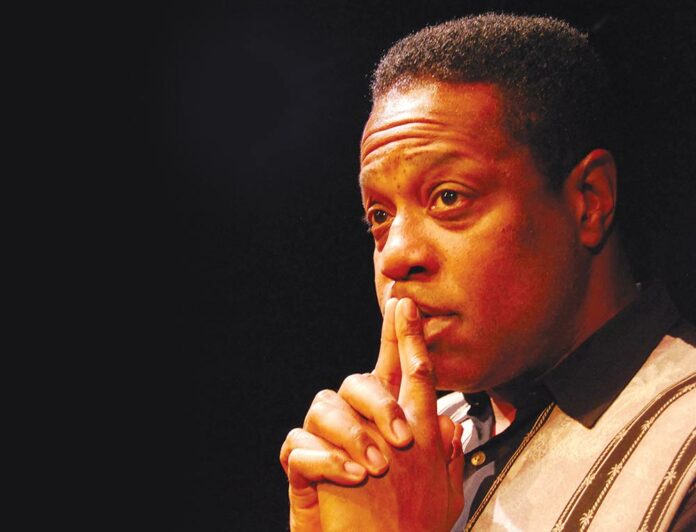
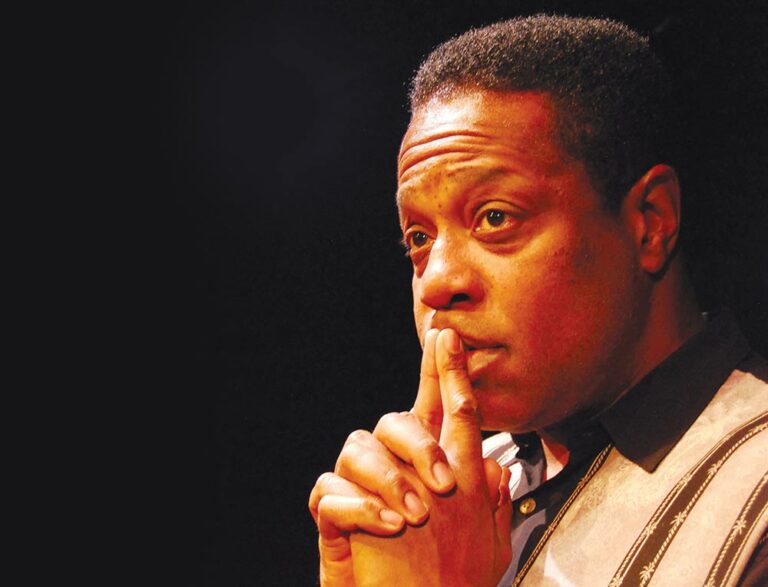
When Brian Copeland moved from Birmingham, Ala. to San Leandro, Calif. at age 8 in the early 1970s, the town, which borders Oakland, was 99 percent white. Copeland, who’s black, experienced racial profiling and affronts from his white landlords, neighbors, schoolmates and police. After surviving childhood and finding his voice through theater, comedy and talk radio, Copeland experienced another affront, this time from African-American audience members or radio listeners who accused him of not being a “genuine black man.”

It’s a duplicity Copeland spent years trying to work out in his mind, and it’s a story he shares with audiences in his acclaimed one-man-show Not a Genuine Black Man, which premiered in San Francisco 15 years ago, and which Copeland still regularly performs to sold-out crowds.

Not a Genuine Black Man is one of several hit one-man-plays Copeland has written and performed in the last two decades that address personal issues like his own struggles with depression in The Waiting Game and political issues like the true-crime story of The Scion. His latest, The Great American Sh*T Show with Charlie Varon, returns to San Rafael for a performance on Aug. 18 at the Marin Center.

“My father was never around, my mother and grandmother raised me, and my mother died when I was 14,” says Copeland of his childhood. “So it was grandma, and she was always supportive of anything that I wanted to do.”

In fifth grade, Copeland was introduced to theater, and began performing in the school musical every year. The plan was for him to become a lawyer when he graduated from high school, but fate intervened when Tommy Thomas, better known as Tommy T, opened the original Tommy T’s Comedy Club about a mile from Copeland’s house.

Copeland was already a fan of comedy,—using a fake ID to get into clubs in San Francisco—and he approached Thomas about performing at an open mic.

“He said, ‘I’ve got a comic who’s sick tonight, can you do 15 minutes?’ And I go, ‘sure,’” Copeland says. “Because I was 18 and stupid enough to think I could do anything.”

Still, he got laughs on stage and got hooked on comedy. Copeland began working on his standup while also attending pre-law classes and working full time. Soon, he knew he had to make a choice.

“I gave myself one year with comedy,” says Copeland, who took a leave of absence from school and quit his day job when he was 20 years old. “If in one year I wasn’t doing anything with this or making any money, I would go back to school and the camera shop where I worked, but I never went back.”

He worked his way up the Bay Area comedy scene to become a headliner, and after signing a deal with Hollywood-based talent agency William Morris, Copeland often hit the road to open for performers like Aretha Franklin, Dionne Warwick, Ray Charles, Natalie Cole and other legendary artists.

At the same time, Copeland made a name for himself on the radio, turning guest spots on KGO into a regular weekend program, The Brian Copeland Show, which debuted in 1994 and was for years the most listened-to radio show in its time slot. In the mid–2000s, Copeland also did a weekly commentary feature for the station called Copeland’s Corner, and he was also often heard on the air with KGO veteran Ronn Owens of the Ronn Owens Report.

“When I started in 1975, I was doing the evening shift,” remembers Owens. “Brian would call in with an absolutely perfect imitation of the late Ray Taliaferro (KGO’s early-morning host). It was so unbelievably good; I invited him into the studio. That’s how we first got together.”

Most recently, Owens and Copeland teamed up for the R&B (Ron and Brian) Joke Hour, a segment in which Owens solicited jokes from the audience and read them aloud on the air. “The ones that were really good I kept, and the ones that were questionable, I gave to Brian,” Owens laughs. “The irony is that people love that show. I’ve interviewed three presidents of the United States and people still ask me more about the R&B Joke Hour than anything else.”

Copeland’s broadcasting career also includes hosting programs on just about every Bay Area television station, including a five-year stint as co-host of KTVU’s Mornings on 2.

All the while, Copeland struggled with identity, depression and other internal conflicts that eventually came out in his playwriting.

“For years, I wanted to do a one-man show, but I had no idea what to do a show about,” Copeland says. “I had (television and film legend) Carl Reiner as a guest on my radio show, and during the break I told him I wanted to write something, but I didn’t know what to write.”

“He said every writer and performer goes through this,” Copeland says. “He said, ‘For me, it was 1959, I had been (writing for television) with Sid Caesar for years, I had no idea what to do; and then I got this book by radio comedian Fred Allen, Treadmill to Oblivion. In the book, Fred Allen says you have to find the piece of ground you alone stand on and write from there. I thought, what’s my piece of ground? I’m a married comedy writer in New Rochelle with my wife and kids writing for a comedy show in New York, and that idea became The Dick Van Dyke Show.’”

“That was Carl’s piece of ground, Dick van Dyke’s character was Carl,” Copeland says. Just as Reiner drew from his life for his storytelling, Copeland was inspired to write Not a Genuine Black Man from his own life experience.

“I got a crank letter at the radio station a few weeks after that and the letter said, ‘As an African-American, I am disgusted every time I hear your voice because you are not a genuine black man.’ I thought, bingo, that’s my piece of ground,” Copeland says. “I have lived with that nonsense for a lot of my adult life, this whole being ‘too white for black people and too black for white people.’”

As much as Not a Genuine Black Man is a study in racial stereotypes and an autobiographical account of Copeland’s experiences, the show is a universal tale of being alone.

“At some point in your life, you’re going to be the only one—the only man, the only woman, the only Christian or Muslim or Jew,” Copeland says. “This whole racial-betrayal nonsense shows up in every culture.”

While writing the show, Copeland also learned about the widespread housing discrimination charges that were leveled against San Leandro organizations and landlords in the ‘70s.

“Now my story had changed, it’s not just my story, it’s the story of the evolution of the city,” Copeland says. The show debuted at San Francisco venue The Marsh in 2004 and was scheduled to run six weeks. It ran for three years straight. Copeland took the show national for another eight years, performing it in over 30 cities, including a critically acclaimed run Off-Broadway.

He recently brought Not a Genuine Black Man back to the stage because of the highly charged racial and political climate of the day, performing it at The Marsh in between performing his latest work, The Great American Sh*t Show, in which he and actor/writer Charlie Varon trade off monologues about their experiences over the last three years.

Varon and Copeland first met in 2004, when Copeland was working on Not a Genuine Black Man. “There’s this fascinating moment when an artist discovers something, finds some new truth, some new way of speaking about reality,” says Varon. “For Brian, it’s both personal and political. He’s got this incredible cocktail of standup comedy, personal storytelling and a sensibility that is his and his alone. He’s able to encapsulate pain and absurdity in the same breath.”

Varon calls The Great American Sh*t Show a completely accidental show that came about after he heard Copeland tell a story onstage about being called the n-word for the first time in years on the day after the 2016 election, from a guy driving a Prius no less. “An environmentalist and a racist,” Varon laughs. “All I know is: I left the theater a different person after hearing Brian’s monologue.” He approached Copeland about collaborating on a full show about life in the Age of Trump, and the two developed the show to say all the things they’ve been feeling since November 2016.

While The Great American Sh*t Show also touches on topics ranging from the #MeToo movement to the separation of families at the border, it’s not all despair. Rather, the show is a cathartic dose of laughter and insight Copeland and Varon both admit is preaching to the choir. “And the choir is really grateful for the sermon,” says Varon. “The show brings people together to acknowledge what we’re living through (and) how unprecedented it is, and to affirm that we can take action and work to change the situation.”

In addition to performing The Great American Sh*t Show in San Rafael this month, Copeland is preparing to bring back his popular “Best of SF Solo Series,” in which he invites other Bay Area monologists to perform in Marin, beginning in October.

“Brian is one of the most generous artists I’ve met,” Varon says. “He’s always looking for the next artistic gift he can give.”

Brian Copeland and Charlie Varon present ‘The Great American Sh*t Show’ on Sunday, Aug 18, at the Marin Center Showcase Theater, 10 Avenue of the Flags, San Rafael. 7:30pm. $45. tickets.marincenter.org.

Benign Shadows

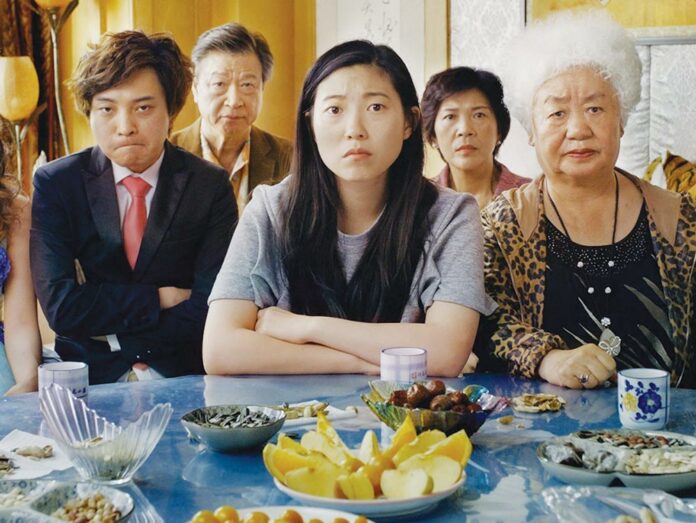
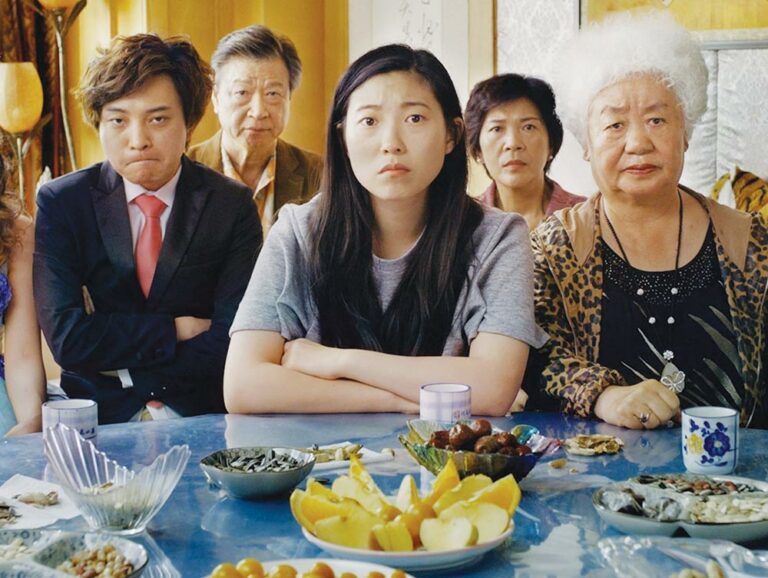
New York writer and performer Awkwafina played the Eve Arden part in Crazy Rich Asians. Blonde of wig and husky of voice, her wacky sidekicking made the film come alive. In The Farewell, she’s no longer a fashionable Singapore firecracker, but plays Billi, a young writer shrouded in earth-toned clothes, who has a teenager’s slump to her shoulders and who dwells under an almost-visible cloud of disappointment.

Billi is not a smiler—she has little to smile about. She’s broke, behind in the rent and was just turned down for a Guggenheim grant. Drawn back to the suburbs by a phone call, she learns that back in China her Nai Nai—grandma (Shuzen Shao)—has stage-four lung cancer. We’re told there’s a saying that it’s not the cancer that kills, it’s the fear of it that kills. So, the family comes up with a fib: The X-rays show only “benign shadows” on the grandmother’s lungs. In order to see Nai Nai one last time, the relatives trump up a wedding for one of the cousins to a Japanese girlfriend he doesn’t really know that well.

While the family is in China, we see Billi endure the kind of friction she was trying to get some distance from. Her relatives give her trouble about how little money she makes as a writer. Billi’s dad (Tzi Ma) is a problem drinker. The mom (Diana Lin) has a chilly, remote side. Like so many, Billi has a better relationship with her grandmother than her parents.

Director/writer Lulu Wang takes a straightforward approach, without the flashbacks customary in stories about families and memory. We see what Billi sees; how the China of her happy childhood is being bulldozed for a forest of soulless high rises. It’s in the wedding segment that The Farewell gets really fun, with the gaudy colors of the banquet hall—iridescent blue velvet curtains, landscapes in too-bright hues hanging on the walls—and the well-rehearsed staff welcoming the guests by chanting in unison, like cheerleaders. It’s not a preposterously formal occasion. The emcee is in an aloha shirt. A little kid picks up a whole crab and stares into its face with trepidation. There’s a memory game—shot from a lazy Susan-mounted camera—where you take a shot of booze if you fail to keep the words straight.

Shao is a heartening grandma with a lot of salt to her; particularly entertaining when she’s laughing over old times with her fellow Red Army vets. She’s a figure anyone would love and grieve for, but it’s Awkwafina as a young woman feeling like a stranger in both the East and the West, who keeps this story tantalizingly tense.

‘The Farewell’ is playing at the Century Regency, 280 Smith Road, San Rafael. 415.479.6496.

It’s About Time

I enjoyed reading Tom Gogola’s article “Making Bank” (June 27, 2019).

In my former life as a legislative staff person in Sacramento, I was the consultant for the Senate Select Committee on Investment Priorities and Objectives, chaired by Senator John Dunlap, who represented parts of Sonoma County, including Santa Rosa, as well as Napa, Solano, Yolo and part of Sacramento County. I wrote a bill that would have created a California State Bank after the committee held hearings throughout the state. The lobbyists for the California Bankers Association (CBA) told me “the CBA does not want to see a pre-print bill hit the legislators’ desks.” Suffice it to say the CBA killed the bill and Sen. Dunlop was defeated in re-election in 1978.

The 15 largest banks in the county hold a combined $13.7 trillion in assets, almost doubling since U.S. taxpayers bailed them out in 2009, after the banks nearly destroyed our national economy with their reckless financial behavior. These are the same banks that finance fossil-fuel caused climate change, and along with PG&E’s negligence, are responsible for many of us to lose our homes, businesses and lives in the 2017 wildfires.

It is about time the citizens of this state created our own public banks as well as a state-owned utility.

John C. Harrington, PhD

Napa

Impeach Now

I watched former Special Counsel Robert Mueller testify before Congress. During his testimony, he confirmed the results of his investigation: 37 indictments, at least seven convictions and guilty pleas, and more than 10 episodes of obstruction of justice by Donald Trump himself.

Given all of the evidence, I don’t understand at this point why Congress still hasn’t moved forward with an impeachment inquiry.

No one should be above the law in our country. Period. I don’t care who you are—if you’re the CEO of a company or the president of the United States of America. Donald Trump must be held accountable, just like any other American would be. If it had been anyone else who obstructed justice as blatantly as Trump did, they’d be behind bars.

Robert Mueller did his job and it’s far past time for lawmakers in Congress to step up and do theirs.

Some people say that we shouldn’t pursue impeachment because there are so many other issues to deal with. What about health care? Infrastructure? Climate change? Immigration?

And to these people, I say: Congress could address these issues and pursue an impeachment inquiry at the same time? That’s what we pay them to do.

It’s time for our representative and all of Congress to take action to hold Trump accountable and open a formal impeachment inquiry now.

We must do all we can to safeguard what we as Americans say we stand for by upholding the laws that support our citizens. To allow our president to act criminally without impeachment threatens America now and future generations to come.

Paula Capocchi

Corte Madera

Horoscope

ARIES (March 21-April 19): When it came time to write your horoscope, I was feeling unusually lazy. I could barely summon enough energy to draw up the planetary charts. I said a weak prayer to the astrological muses, pleading, “Please don’t make me work too hard to discover the message Aries people need to hear; just make the message appear in my mind.” As if in response, a voice in my head said, “Try bibliomancy.” So I strolled to my bookcase, shut my eyes, pulled out the first book I felt and went to a random page. Here’s what I saw when I opened my eyes: “The Taoist concept of wu-wei is the notion that our creative active forces are dependent on and nourished by inactivity; and that doing absolutely nothing may be a good way to get something done.”

TAURUS (April 20-May 20): There’s an old Rosicrucian vow you might have fun trying out: “I pledge to interpret every experience that comes my way as a communication of God with my soul.” If you carry out this intention with relaxed playfulness, every bird song you hear is an emblem of Divine thought; every eavesdropped conversation provides hints of the Creator’s current mood; the shape spilled milk takes on your tabletop is an intimation of eternity breaking into our time-gripped realm. In my years of offering you advice, I’ve never before suggested you try this exercise because I didn’t think you were receptive. But I do now. (If you’re an atheist, you can replace “God,” “Divine” and “Creator” with “Life.”)

GEMINI (May 21-June 20): Below are unheralded gifts possessed by many Geminis but not commonly identified by traditional astrologers: 1. a skill for deprogramming yourself; for unlearning defunct teachings that might otherwise interfere with your ability to develop your highest potentials; 2. a sixth sense about recognizing artificial motivations, then shedding them; 3. a tendency to attract epiphanies that show you why and how to break taboos that may have once been necessary but aren’t any longer; 4. an ability to avoid becoming overwhelmed and controlled by situations you manage or supervise.

CANCER (June 21-July 22): In 1993, I began writing a book titled The Televisionary Oracle. By 1995, I’d generated over 2,000 pages of material I didn’t like. Although I was driven by a yearning to express insights that had been welling up in me for a long time, nothing about the work felt right. I was stuck. But finally I discovered an approach that broke me free: I started to articulate difficult truths about aspects of my life, about which I was embarrassed, puzzled and ashamed. Then everything fell into place. The process that had been agonizing and fruitless became fluidic and joyful. I recommend you try this strategy to dissolve any mental blocks you may be suffering from: Dive into and explore what makes you feel ashamed, puzzled or embarrassed. I bet it will lead to triumph and fulfillment, as happened for me.

LEO (July 23-Aug. 22): I’m overjoyed that you’re not competing for easy rewards, or comparing yourself to the mediocre crowd. Some people in your sphere may not be overjoyed, though. To those whose sense of self isn’t strong, you may be like an itchy allergen; they may accuse you of showing off or acting puffed up. But freaks like me appreciate creative egotists like you when you treat your personality as a work of art. In my view, you’re a stirring example of how to be true to one’s smartest passions. Keep up the good work! Continue to have too much fun! I’m guessing that for now you can get away with doing just about anything you want as long as it doesn’t hurt anyone.

VIRGO (Aug. 23-Sept. 22): Let’s enjoy a moment of poignant silence in honor of your expired illusions. They were soulful mirages: full of misplaced idealism and sweet ignorance and innocent misunderstandings. Generous in ways you may not yet realize, they exuded an agitated beauty that aroused both courage and resourcefulness. Now, as those illusions dissolve, they will begin to serve you anew, turning into fertile compost for your next big production.

LIBRA (Sept. 23-Oct. 22): Old rules and traditions about how best to conduct intimate relationship are breaking down. New rules are still incubating. Right now, the details about how people express their needs to give and receive love seem to be riddles for which there are no correct answers. So what do you do? How do you proceed with the necessary blend of confidence and receptivity? Can you figure out flexible strategies for being true both to your need for independence and your need for interdependence? I bring these ruminations to your attention, Libra, just in time for the “Transforming Togetherness” phase of your cycle.

SCORPIO (Oct. 23-Nov. 21): It’s time for your once-a-year shout-out to your most audacious possibilities. Ready? Go ahead and say, “Hallelujah! Hosanna! Happiness! Hooray for my brilliant future!” Next, go ahead and say, “I have more than enough power to create my world in the image of my wisest dreams.” Now do a dance of triumph and whisper to yourself, “I’m going to make very sure I always know exactly what my wisest dreams are.”

SAGITTARIUS (Nov. 22-Dec. 21): During the next three weeks, I advise you to load up on copious amounts of caffeine from Monday at 8am until Friday at 6pm. Then drastically cut back on the coffee and consume large amounts of alcohol and/or marijuana from 6:01pm on Friday through 6pm on Sunday. This is the ideal recipe for success. JUST KIDDING! I lied. Here’s the truth, Sagittarius: Astrological indicators suggest you would benefit from making the coming weeks be the most undrugged, alcohol-free time ever. Your potential for achieving natural highs will be extraordinary, as will your potential to generate crucial breakthroughs while enjoying those natural highs. Take advantage!

CAPRICORN (Dec. 22-Jan. 19): I don’t presume you should or will gleefully embrace the assignment I’ll propose. The task may indeed be too daunting for you to manage right now. If that’s the case, don’t worry. You’ll get another chance in a few months. But if you are indeed ready for a breathtaking challenge, here it is: Be a benevolent force of wild nature; be a tender dispenser of creative destruction; be a bold servant of your soulful dreams—as you demolish outmoded beliefs and structures that have kept a crucial part of your vitality shackled and latent.

AQUARIUS (Jan. 20-Feb. 18): I’ve cast a feisty love spell that will be triggered in anyone who reads the first line of this horoscope. And since you’ve done that, you’re now becoming even smarter than you already were about getting the most out of your intimate alliances. You’re primed to experiment with the delights of feeling with your head and thinking with your heart. Soon you’ll be visited by revelations about any unconscious glitches that might be subtly undermining your togetherness, and you’ll get good ideas about how to correct those glitches. Astrological rhythms will be flowing in your relationships’ favor for the next seven weeks!

PISCES (Feb. 19-March 20): I estimate about 25 percent of your fear results from your hesitation to love as deeply and openly and bravely as you could. Another 13 percent originates from an inclination to mistake some of your teachers for adversaries, and 21 percent from your reluctance to negotiate with the misunderstood monsters in your closet. But I suspect that fully 37 percent of your fear comes from the free-floating angst you telepathically absorb from the other 7.69 billion humans on our planet. So, what about the remaining four percent? Is that based on real risks and worth paying attention to? Yes! And the coming weeks will be an excellent time to make progress in diminishing its hold on you.

Advice Goddess

Q: Two weeks ago, I finally dumped my totally abusive jerk of a boyfriend. I do miss him, but I know I made the right decision. I came to see that he was cruel, manipulative, sociopathic and toxic. However, I stupidly went on Facebook and saw that he already has a new girlfriend! I’m so pissed that I was replaced so quickly. I don’t want him back, but I do want to make him suffer, basically to get revenge for all he put me through. My friend keeps telling me revenge is unhealthy and toxic and forgiveness is good for you and I need to forgive him. Is she right?—Burned

A: Revenge looks so Clint Eastwood-cool in the movies—less so when you get arrested for keying “micropenis!!!” into your ex’s car, right under a street cam.

The desire for revenge is basically the urge to punish people who’ve harmed us or those close to us. It’s widely believed to be a poisonous and maladaptive feeling that leads to poisonous and maladaptive behavior—like forays into the dark web to seek out a highly recommended but affordably priced assassin.

In fact, evolutionary psychologist Michael McCullough explains in “Beyond Revenge” that the revenge motive seems to be “a built-in feature of human nature,” a sort of psychological police force guarding our interests. It was likely vital to the evolution of human cooperation, which in turn led to essential human innovations such as flush toilets, open-heart surgery and the Dorito.

Research McCullough cites suggests the revenge motive serves three functions: deterring aspiring aggressors, deterring repeat aggressors and punishing (and reforming) freeloading moochbags.

The thing is, revenge has a companion motivation, forgiveness, which McCullough describes as “an internal process of getting over your ill will for an offender.” Interestingly, whether we forgive appears to be context-sensitive, meaning it usually isn’t the particular crime so much as the particular criminal that matters. McCullough notes the forgiveness motivation seems to switch on when there’s a valuable relationship at stake—a continuing relationship between the harmer and harm-ee.

In your situation, however, there’s no ongoing relationship to motivate you to forgive the guy. And though forgiveness is correlated with mental health and even physical well-being, the assumption that forgiveness is always the best course of action is a little under-nuanced.

To decide what’s best for you, consider the reason you give for wanting revenge: because your ex was on to the next woman pronto after you dumped him. Also consider that you now identify him as a pretty terrible person and partner. Of course, the reality is, we all want to be wanted, sometimes even by people we really don’t have any business wanting. But ask yourself something: In light of the sort of person you now see him to be, is it surprising in the least that he immediately latched onto his next victim?

Next, look at your life and calculate how much time and energy you’re investing in thinking dark and nasty thoughts about him. Is keeping the hate fires burning for him benefiting you? Does it feel energizing (that is, rewarding), or does it feel a bit poisonous, both psychologically and maybe even physically?

Sure, it’s understandable you’d long to do something—take some action, even the score—in response to feeling angry. However, if the reason for your anger is ultimately that you didn’t look too closely at whom you were getting together with, maybe what’s most productive for you now is deciding to let go of the past and working on being better at boyfriend vetting in the future. This starts with reviewing your last relationship from start to finish. Be intensely honest with yourself about all you overlooked about the guy and how you got used to his escalating levels of abuse as your continual “new normal.”By focusing on your part in this and how selective you need to be, you can shift into a sense of satisfaction that things will be different for you in the future.

Oz at Home

Among the many clichés about Australia, few of them involve a nation of culinary sophisticates who know their way around the fine, dry Riesling category.

“We’re in a transition in terms of how Americans view Australia,” says Blair Poynton, who hails from Western Australia and is marketing manager for Old Bridge Cellars, a wine importer located in downtown Napa. The rugged image of Paul Hogan taking time out from wrestling crocodiles to throw a shrimp on the barbie is a thing of the past—although his efforts on behalf of Australia’s tourism may have inspired many Americans to visit.

“What they’re mostly blown away by,” Poynton says, “is the quality of life and quality of dining there. It’s incredibly sophisticated and modern. We whinge about the quality of coffee, and so on.” And they know Riesling. “Even people who aren’t really big wine drinkers would know that a Riesling is dry—even what the difference is between a Great Southern and a South Australia Riesling.”

Recently, I was surprised at how closely two Australian Rieslings matched up, stylistically, with a pair of Napa Valley wines.

Leeuwin Estate 2018 Art Series Margaret River Riesling ($22) A bit like a green Sauvignon Blanc, but without the extra helping of pyrazine (which can smell a little like cat pee), this has shy, young Riesling aromas of Pixie Stix, lime, aloe vera and mandarin orange, and smacks tartly of white grapefruit.

Trefethen 2018 Oak Knoll District Riesling ($26) A juicy refresher for summer evenings now, with aromas of white rose, rosemary, lavender and melon, and flavors of kiwi and lime, this will surely gain complexity with age. Reminiscent of the Leeuwin, it’s crisp and dry, and should satisfy anyone who likes “New Zealand-style” Sauvignon Blanc.

d’Arenberg 2018 The Dry Dam Adelaide Riesling ($17) This is made with a touch more residual sugar, but the searing acidity typical to South Australian Riesling is such that all you notice is chalky acidity, lime juice and aromas of honeysuckle and golden apricots on toasted baguette points.

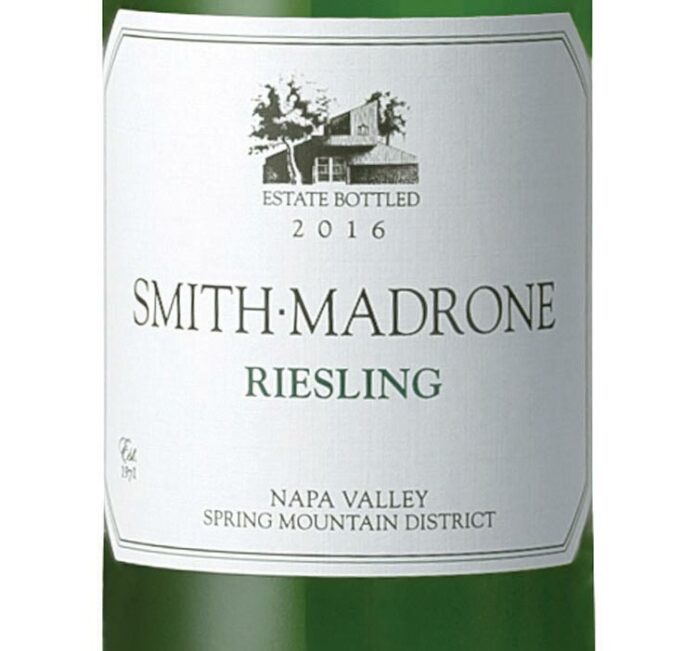
Smith-Madrone 2016 Spring Mountain District Riesling ($34) Holy honeycomb-lanolin gelato! This wine’s two of a kind with the d’Arenberg, but a few extra years bring aromas like toasted honeycomb to the fore. Sounds sweet? It’s not sweet. Riesling can develop scents that seem tantalizingly dulcet, yet the wine remains crisp, dry and refreshing. The lanolin note is like a softer version of the “petrol,” or mineral oil, aroma that aged Rieslings (and some younger ones, like the d’Arenberg) may show, and there’s a tinge of herb, as well—though it’s not as “würzy” as Gewürztraminer. Dry Riesling is great with seafood—like, say a shrimp off that barbie.

Sister Act

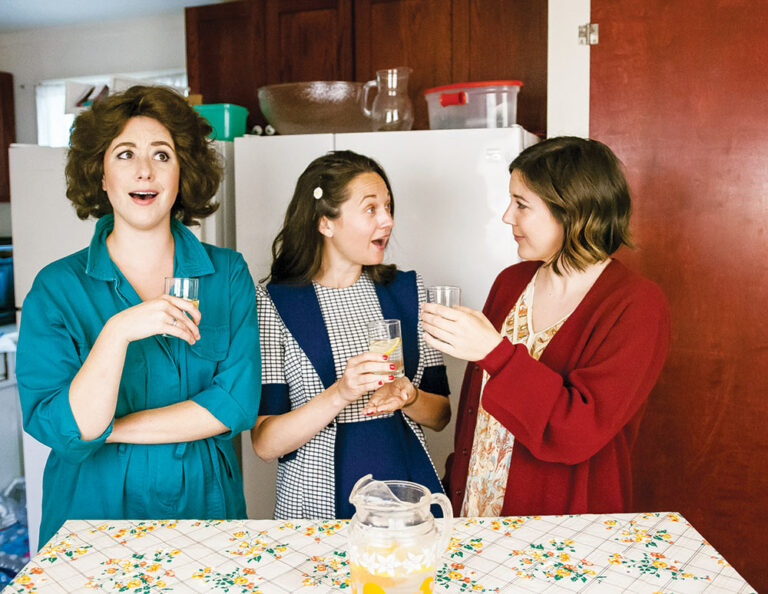
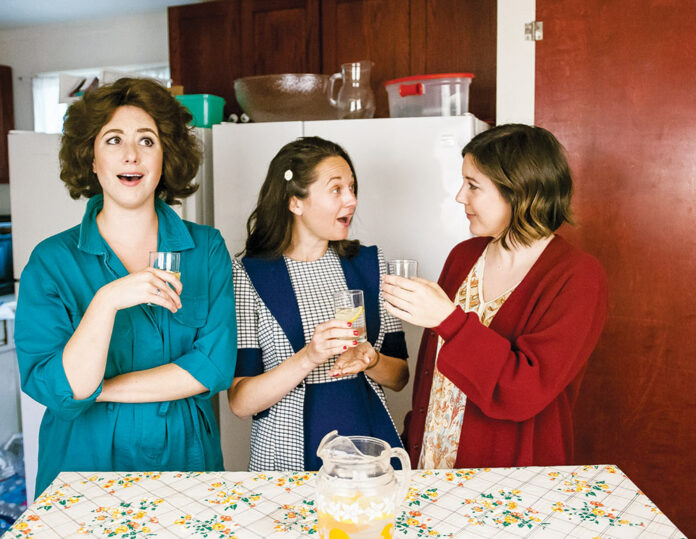
The Ross Valley Players conclude their 89th season with a production of Crimes of the Heart, running in Ross through Aug. 11. Beth Henley’s tragicomedy won the 1981 Pulitzer Prize for drama and was followed by a film adaptation starring Sissy Spacek that nabbed three Oscar nominations.

The Magrath sisters are gathered at their grandfather’s home in Hazelhurst, Miss. in support of sister Babe (Margaret Grace Hee) who’s out on bail after shooting her husband in the stomach. Lenny (Jensen Power) is taking care of Grandpa after sister Meg (Chandler Parrott-Thomas) took off to Southern California in pursuit of a singing career.

Things haven’t turned out so well for any of them. Lenny’s given up hope of ever finding love because of a shrunken ovary. Meg, who left a broken heart in town, is back after suffering a breakdown and spending the last year working for a pet food company. Babe will soon stand trial for the attempted murder of her ne’er-do-well husband. Current problems and past grievances will test the bonds of sisterhood.

Full of the absurd and the grotesque for which the style of “Southern Gothic” is known, Henley’s play has six great character roles for actors, and director Patrick Nims filled those roles well. In addition to the three aforementioned sisters, there’s Chick Boyle (Caitlin Strom-Martin), a neighboring cousin with a perpetually upturned nose; Doc Porter (Michel Harris), the man Meg left behind; and Barnett Lloyd (Jeremy Judge), the wet-behind-the-ears defense attorney who’s taken Babe’s case for “personal” reasons.

The cast keep their performances nicely modulated, and no one succumbs to the urge to go full “Southern” and chew the scenery which, by the way, was provided via a finely detailed set by Ron Krempetz. The action is relegated to the kitchen of the modest Mississippi home, along with a short staircase leading to the rest of the house and front and back entry/exit ways. Subtle lighting and sound cues really enhance the environment.

Henley mines the dark material (suicide, infidelity, attempted murder, etc.) for a lot of humor, and none of it seems cheap. The ability of these women to carry on despite the harshness of their lives and to still have hope for better times to come is one of this show’s appeals. Audiences looking for a little support in their lives might learn a little something from the Magrath sisters.‘Crimes of the Heart’’ runs Friday–Sunday through Aug. 11 at the Barn Theatre in the Marin Art and Garden Center, 30 Sir Francis Drake Blvd., Ross. Thurs–Sat, 8pm; Sunday, 2pm. $15 – $27. 415.456.9555. rossvalleyplayers.com.

Hawaiian Style

0

Most mainlanders know the meaning of aloha, but fewer have heard of Aloha ‘Āina. That’s a bit ironic, considering that the concept of Aloha ‘Āina is arguably even more integral to the Hawaiian way of life. While it literally translates to “love of the land,” its actual meaning is far more complex, encompassing not only one’s connection to the Earth, but also environmental consciousness and cultural understanding of all types.

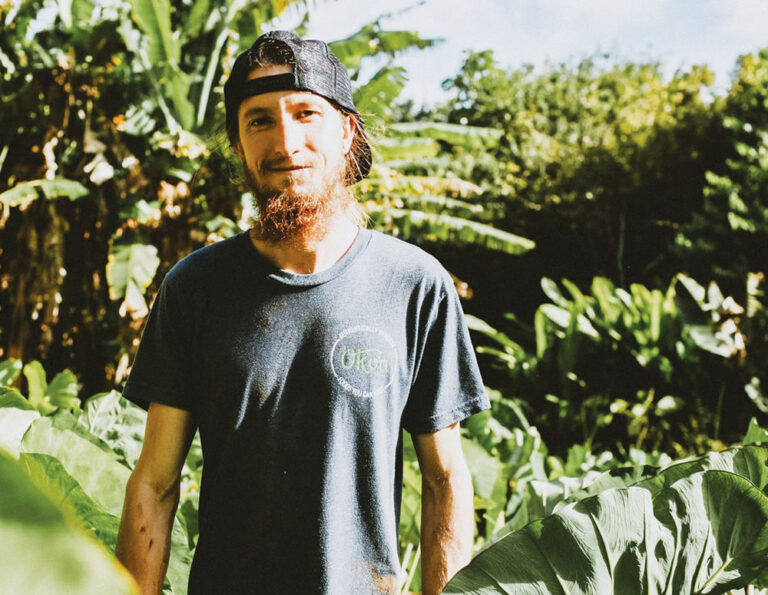
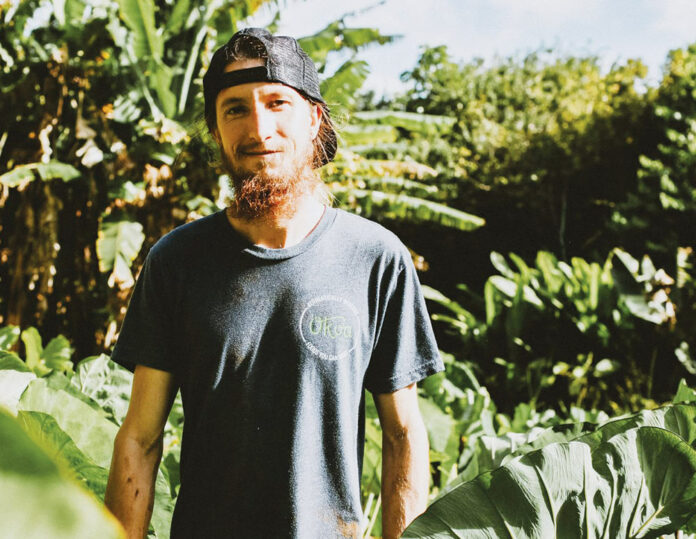
It’s also the principle by which Pat Simmons Jr. lives his life. He’s primarily known for his music, which is to be expected when you’re the son of Doobie Brothers guitarist Patrick Simmons and your own musical career began when you were barely old enough to walk.

But the 28-year-old Simmons, who released his debut album This Mountain in 2017 and is currently working on a follow-up, sees his music mainly as a medium for his message.

“For me, my ultimate hope and goal with my music right now is to spread the word about what’s happening in Hawaii,” says Simmons. “It’s so hard for me to be away right now, knowing that my ohana, my Hawaiian family, is standing up for their sacred mountain and trying to protect the place they call home.”

This Mountain was defined by strong hooks, Simmons’ environmental messages and a laid-back, often rootsy folk sound. For this follow-up album, which he hopes to release by the end of the year, he’s taken a somewhat different approach.

“I really enjoyed making This Mountain, but I left a lot of the decisions up to my dad,” says Simmons. “This time around, I’ve been choosing the material, just being more creative in my own way. Being the sole producer for the first time.”

Another Hawaiian word that is especially important to Simmons is na-au—intuition, which is how he is finding his way through his music career and his life.

“Part of my mission with the music is to really utilize my opportunity to talk about important things, because we’re in such a pivotal moment as a species, and people need to wake up to the realities that we face on the planet,” he says.  “It’s not easy, because there’s so much of the industry side of the music, where you’ve gotta write a song and it’s got to be catchy, and it’s gotta sell. There’s that whole pressure that I feel. But really, when I listen to my heart, when I tap deep into my na-au, I just keep following these messages that need to be heard.”

Pat Simmons Jr performs on Sunday, Aug 4, at Aqus Café, 189 H St., Petaluma. 2pm. Free. 707.778.6060.

Flashback

0

50 Years Ago

To the Editor:

There must have been others beside myself upon seeing the American flag installed upon the moon, wished the United Nations could have been placed beside it.

-Richard Ward, Mill Valley

7/30/1969

40 Years Ago

We hear a lot about the need for low-income housing in Marin. Somehow we assume the amount of housing is static and the demand for it is increasing. The truth is we are losing what low-income housing we have at a rapid rate. “Social agency people” trying to help Marin’s newly homeless are heartsick. It’s like trying to stem an incoming tide with a floor mop.

Kay Valenica of Marin Emergency Housing, which offers meals and temporary shelter to people who have lost their homes through evictions, rising rents or natural disasters, is appalled at the rapid decrease in housing for the poor: “The old hotels are being closed down, old apartments are being converted, rents are going up ⁠— Proposition 13 hasn’t affected this county, rents have continued to climb all along. There has been a terrific increase in the number of people looking for housing.”

-Linda Xiques, Week of July 27 – August 2, 1979

30 Years Ago

There is not one emotionally honest moment in Nora Ephron’s and Rob Reiner’s new romantic comedy, When Harry Met Sally… It is composed of sitcom one-liners, conventional sexual attitudes and a rose-colored homage to New York, New York that ought to send Woody Allen scurrying for his lawyers. Not even the score is credible. Composed of old pop-jazz faves sung by Frank Sinatra, Louis Armstrong and Ella Fitzgerald, it might click with Woody’s neurotic Manhattanites, but for a pair of transplanted University of Chicago grads, circa 1977, it’s pure anachronism.

…You see why the makeup is necessary when [Meg] Ryan goes on a crying jag; she’s pretty enough when perfectly made up, but that potatoey face crumples without its bulwark of Max Factor. Ryan’s excessive makeup is a major symptom of what is wrong with When Harry Met Sally. It not only isn’t real, it isn’t very romantic either — unless, like Harry, Sally and Jerry Brown, you have very lowered expectations.

-Stephanie von Buchau, Week of July 28, 1989

20 Years Ago

Rev Jorge Hume, caught stealing from church coffers, says Bishop Patrick Ziemann of Santa Rosa forced him to have sex so he would not report the theft. Hume filed suit claiming sexual coercion. Bishop Ziemann, who quit his post after the suit was filed, says the sex was consensual. And that Hume was trying to shake down the church for $8 million to keep quiet about it. In seven years there have been five cases of sexual misconduct by priests in the diocese, costing it at least $1.3 million.

-Steve McNamara, July 28 – August 3, 1999

The Pacific Sun Races are shifting into a new gear. After 21 years in happy partnership with Kees Tuinzing’s Total Race Systems, we have joined hands with the fabled Tamalpa Runners. As before, the Sun and Tamalpa race director Craig Stern will aim to link a quality race with great community feeling. That goes for the 10K, the 2.5 miler and the terrifically entertaining youth races held on the College of Marin track.

-Steve McNamara, same year.

Nationalist Emergency

“We have been feeling the brunt of this administration—the brunt of the constant criminalization of immigrants, since 2015,” says Danielle Walker. She’s the spokesperson at San Rafael’s Canal Alliance, the local immigrant services nonprofit that’s seen an influx of immigrants, mostly traumatized women and children who’ve been released from detention centers to await their fate as asylum seekers. They come...

Real Deal

When Brian Copeland moved from Birmingham, Ala. to San Leandro, Calif. at age 8 in the early 1970s, the town, which borders Oakland, was 99 percent white. Copeland, who's black, experienced racial profiling and affronts from his white landlords, neighbors, schoolmates and police. After surviving childhood and finding his voice through theater, comedy and talk radio, Copeland experienced another...

Benign Shadows

New York writer and performer Awkwafina played the Eve Arden part in Crazy Rich Asians. Blonde of wig and husky of voice, her wacky sidekicking made the film come alive. In The Farewell, she’s no longer a fashionable Singapore firecracker, but plays Billi, a young writer shrouded in earth-toned clothes, who has a teenager’s slump to her shoulders and...

It’s About Time

I enjoyed reading Tom Gogola’s article “Making Bank” (June 27, 2019). In my former life as a legislative staff person in Sacramento, I was the consultant for the Senate Select Committee on Investment Priorities and Objectives, chaired by Senator John Dunlap, who represented parts of Sonoma County, including Santa Rosa, as well as Napa, Solano, Yolo and part of Sacramento...

Horoscope

ARIES (March 21-April 19): When it came time to write your horoscope, I was feeling unusually lazy. I could barely summon enough energy to draw up the planetary charts. I said a weak prayer to the astrological muses, pleading, “Please don’t make me work too hard to discover the message Aries people need to hear; just make the message...

Advice Goddess

Q: Two weeks ago, I finally dumped my totally abusive jerk of a boyfriend. I do miss him, but I know I made the right decision. I came to see that he was cruel, manipulative, sociopathic and toxic. However, I stupidly went on Facebook and saw that he already has a new girlfriend! I’m so pissed that I was...

Oz at Home

Among the many clichés about Australia, few of them involve a nation of culinary sophisticates who know their way around the fine, dry Riesling category. "We're in a transition in terms of how Americans view Australia," says Blair Poynton, who hails from Western Australia and is marketing manager for Old Bridge Cellars, a wine importer located in downtown Napa. The...

Sister Act

The Ross Valley Players conclude their 89th season with a production of Crimes of the Heart, running in Ross through Aug. 11. Beth Henley’s tragicomedy won the 1981 Pulitzer Prize for drama and was followed by a film adaptation starring Sissy Spacek that nabbed three Oscar nominations. The Magrath sisters are gathered at their grandfather’s home in Hazelhurst, Miss. in...

Hawaiian Style

Most mainlanders know the meaning of aloha, but fewer have heard of Aloha ‘Āina. That’s a bit ironic, considering that the concept of Aloha ‘Āina is arguably even more integral to the Hawaiian way of life. While it literally translates to “love of the land,” its actual meaning is far more complex, encompassing not only one’s connection to the...

Flashback

50 Years Ago To the Editor: There must have been others beside myself upon seeing the American flag installed upon the moon, wished the United Nations could have been placed beside it. -Richard Ward, Mill Valley 7/30/1969 40 Years Ago We hear a lot about the need for low-income housing in Marin. Somehow we assume the amount of housing is static and the demand for...
3,002FansLike
3,850FollowersFollow