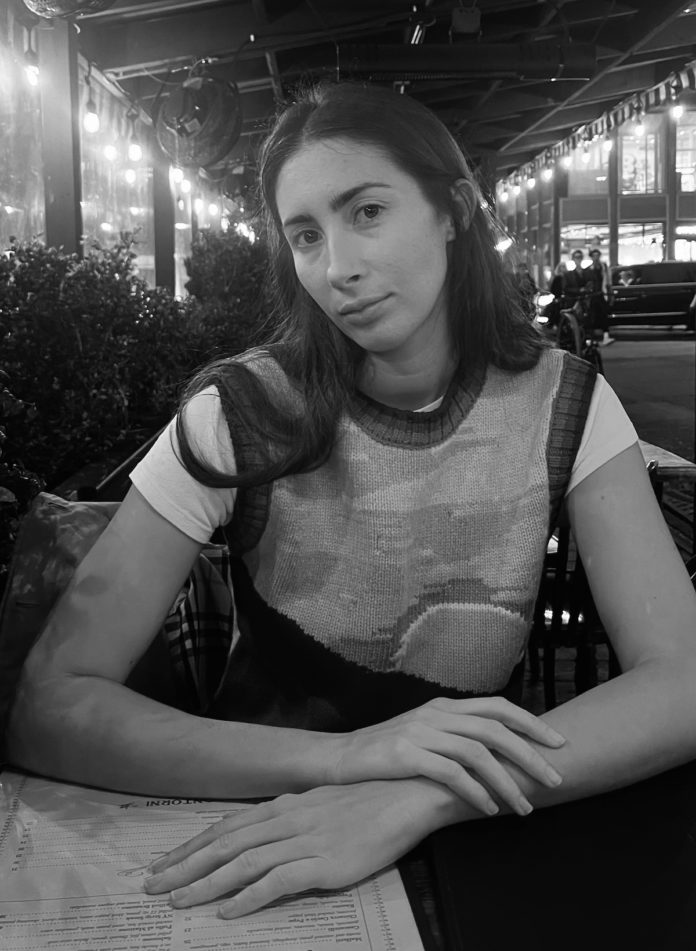
Winemaking Minimalist: Anaba Wines’ Katy Wilson

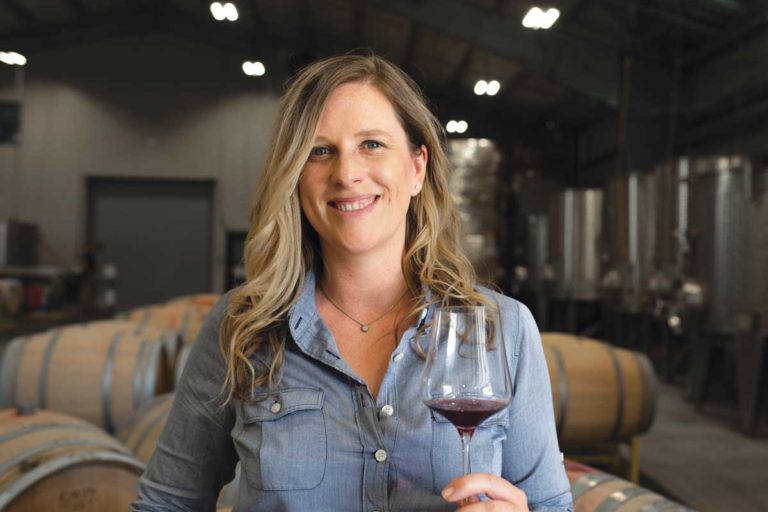
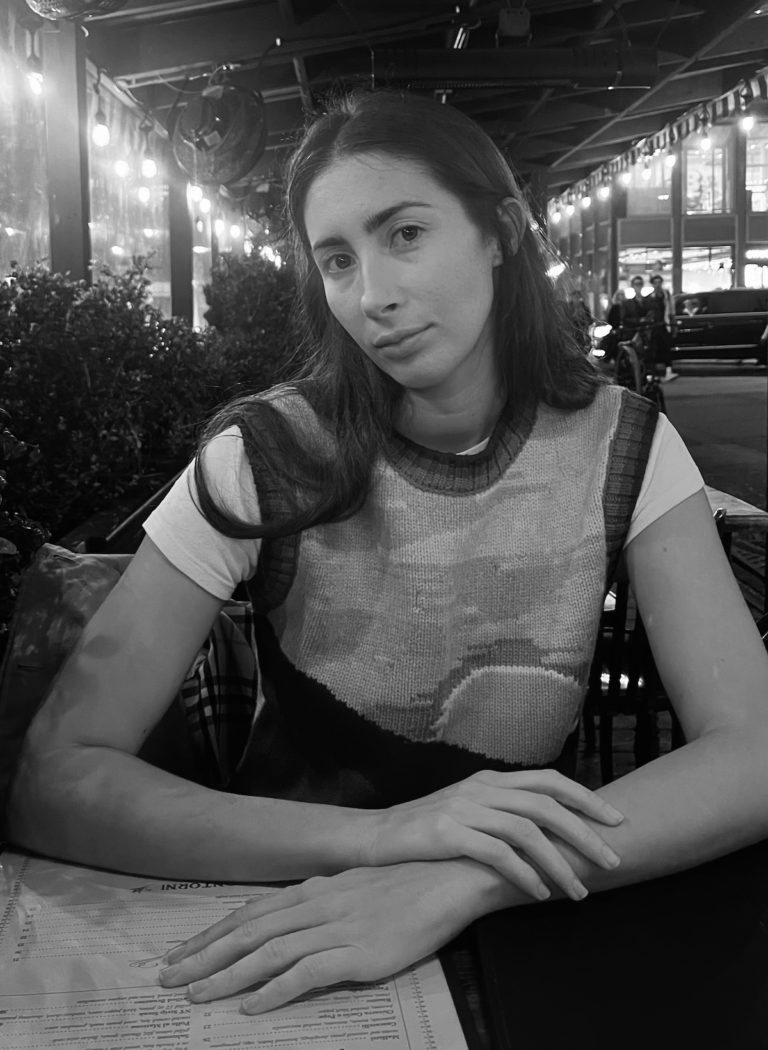
Katy Wilson lives in Napa, but her work is deeply rooted in Sonoma County. She’s winemaker of Anaba Wines as well as her own low-intervention brand, LaRue.

After Cal Poly, she chased harvest seasons across hemispheres at wineries including Joseph Phelps, Testarossa, Torbreck in Australia’s Barossa Valley and Craggy Range in New Zealand’s Hawkes Bay.

Returning to California, she knew that pinot noir was part of her destiny, and she joined Flowers Winery on the Sonoma Coast as harvest enologist before advancing to assistant winemaker.

Wilson launched LaRue in 2009, producing at Kamen’s facility, where she worked under Mark Herold through 2014. Though their winemaking philosophies differed dramatically, that contrast proved transformative. By 2012, she had formed a consulting partnership with Ross Cobb (for Claypool Cellars and Banshee Wines) where they connected with Noah Dorrance, who launched Reeve Wines in 2015, inviting the two to be winemakers for the new label.

In 2014, she departed Kamen and began collaborating with Smith Story Wine Cellars. A friend then introduced her to John Sweazey at Anaba Wines—the fit was perfect.

They later constructed Anaba’s winery facility, which now houses several projects. Currently, she serves as winemaker at Anaba, consulting winemaker for Reeve and Smith Story, while continuing LaRue Wines.

Wilson is known for her minimalist winemaking style that highlights Sonoma County’s special vineyard sites. It is obvious, through her collaboration and work with top tier labels, that she is doing what she was meant to do.

Amber Turpin: How did you get into this work?

Katy Wilson: I grew up on a walnut orchard, and knew I wanted to be in agriculture. When I attended Cal Poly San Luis Obispo and discovered that wine could be part of a future career—combining creativity and chemistry—I immediately began a double major in wine & viticulture and agricultural business.

Did you ever have an ‘aha’ moment with a certain beverage? If so, tell us about it.

I don’t really have one big ‘aha’ moment, but I do remember while working for Eberle Winery while in college, the owner let us pick any bottle from his personal cellar during a company holiday party. I chose a 1983 Heitz Cabernet Sauvignon. It was delicious.

What is your favorite thing to drink at home?

Champagne or a gin and tonic.

Where do you like to go out for a drink?

Zuzu in Napa has a fun gin and tonic bar.

If you were stuck on a desert island, what would you want to be drinking (besides fresh water)?

Pinot noir.

Anaba Wines, 62 Bonneau Rd., Sonoma, 707.996.4186. anabawines.com

Preventing WWIII

Since Russia’s invasion of Ukraine, the world has coalesced into two opposing blocs: NATO—comprising most of Europe, the United States, Canada, Japan and South Korea—versus Russia, China, North Korea, Iran and India.

Each side aids its allies through weapons, trade or troops. Yet negotiations to end the conflict have stalled, largely due to Vladimir Putin’s reluctance to engage. NATO continues to supply arms while avoiding direct troop confrontation, mindful of Russia’s nuclear arsenal. The result is a protracted stalemate that risks widening into a global war.

If the Ukraine-Russia conflict escalates, it could trigger World War III. The United States faces a choice: Continue supplying weapons and sanctions in hopes of forcing Putin to negotiate—or take a more visionary approach by addressing the root cause of war itself.

Most nations still resolve disputes through the law of force, not the force of law. Yet the European Union offers a model for peace: Once bitter enemies, France and Germany now settle disagreements through the European Parliament and courts, not battlefields.

Why has the EU succeeded where the United Nations has not? Because the UN operates on treaty law—voluntary agreements without the enforcement mechanisms of real law. The UN cannot compel nations to act against their perceived interests, leaving it largely ineffective in preventing war.

What’s needed is a reformed, democratic and empowered United Nations—one capable of enforcing international law rather than merely recommending it. Under Article 109 of the UN Charter, member nations can convene a conference to modernize the institution and create a true system of global governance based on enforceable law.

Such reform would not instantly end the Russia-Ukraine war, but it would establish the framework to prevent future conflicts. The alternative—a continued slide toward greater war and destruction—is untenable. It is time for the world’s nations to invoke Article 109 and begin building a new UN, one designed not for another century of war, but for lasting peace.

Jerry Tetalman is the chair of the development committee of Citizens for Global Solutions.

Of Art & Insects

0

Sebastopol

Butterfly Effect at Gold Ridge

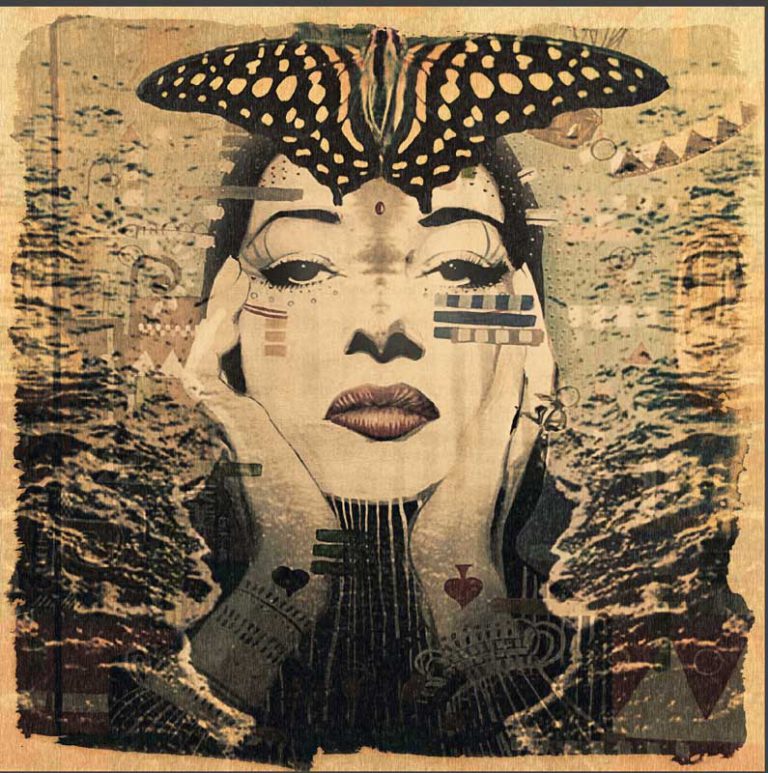
On Saturday, Oct. 11, Gold Ridge Organic Farms hosts Butterfly Effect—an immersive evening of art, music and purpose pairing creativity with impact. Fresh from her show in Prague, artist and humanitarian Layla Love presents 40 original works exploring art as a vehicle for change. She’s joined by art critic Anthony Haden-Guest, MMA champion Max “Pain” Griffin and Gold Ridge founder Brooke Hazen for conversations on art, purpose and protecting what we love. Live performances by Lily Fangz and Louise Solywoda will animate the night, alongside dance, chocolate pop-ups and superfood elixirs. The event supports Rise of the Butterfly, Redemption House and Reef Revival, organizations dedicated to empowering survivors of trafficking and restoring ocean ecosystems. 5:30–8:30pm, Saturday, Oct. 11, Gold Ridge Organic Farms, 387 Canfield Rd., Sebastopol. Free admission. Details and RSVP at bit.ly/Layla-Love.

Sebastopol

Fools’ Paradise (lost?)

A cinematic “love letter to our wild” comes to Rialto Cinemas Sebastopol on Wednesday, Oct. 8, with two screenings of Fools’ Paradise (lost?), at 1 and 7pm—each followed by a Q&A with filmmaker Alexandra Lexton, founder of Lex Productions. The 7pm discussion will be moderated by author and mindfulness teacher Mark Coleman. Filmed across numerous landscapes, the documentary explores how healing ourselves and the planet begins with reconnection to the natural world. Through intimate portraits of adventurers, scientists and changemakers—including nature photographer Jody MacDonald, author Florence Williams, Indigenous scholar Lyla June, ecotherapist Dr. John Francis and others—Lexton reveals stories of resilience, reciprocity and renewal. Part science, part soul, Fools’ Paradise (lost?) invites audiences to rediscover their own inner wild while confronting the urgent call to protect the outer one. 1 & 7pm, Wednesday, Oct. 8, Rialto Cinemas, 6868 McKinley St., Sebastopol.
Filmmaker Q&As follow both screenings. Details at
rialtocinemas.com.

Larkspur

Lavay at the Lark

Marin Jazz and the Lark Theater present Lavay Smith & Her Red Hot Skillet Lickers for a night steeped in the golden age of American jazz. Known for their pitch-perfect renditions of Count Basie, Dinah Washington, Bessie Smith and Little Esther Phillips classics, the band delivers a balanced blend of swing, blues, R&B and New Orleans soul. Led by powerhouse vocalist Lavay Smith, the group’s all-star lineup is a favorite among dancers and jazz purists alike—the Skillet Lickers have headlined major venues like Jazz at Lincoln Center and SFJAZZ, where they remain the most-booked act in the organization’s history. 7:30pm, Saturday, Oct. 25, Lark Theater, 549 Magnolia Ave., Larkspur. Tickets $65–$75. marinjazz.com.

Fairfax

Spirit of Diwali

Spirit of Diwali with the Laya Arts Collective brings the color and rhythm of India’s festival of lights to the Marin County Free Library. Led by dancer Priya Narayana, this family-friendly performance illuminates the story of the Ramayana through the classical Bharatanatyam dance form—blending movement, music and myth in a celebration of light over darkness. 1–1:45pm, Saturday, Oct. 18, Marin County Free Library, 2097 Sir Francis Drake Blvd., Fairfax. Free. Sponsored by the Friends of the Marin County Free Library. Details at bit.ly/3VREDDA.

Your Letters, Oct. 8

Mix Tix

Dale Carnegie was onto something when he encouraged stepping outside of our comfort zones. For some people, merely voting is a step too far.

In last November’s presidential election, that was about 90 million Americans. I propose an outside-our-comfort-zone approach for upcoming elections: a mixed presidential ticket. That is, a Democrat and Republican president and vice president, or vice versa.

There’s no constitutional rule against it. There are few members in both parties who might pull it off, but a mixed ticket would show voters which side truly believes in bipartisanship and wants to get things done.

Jim Newton

Chicago

MAGA Mouth

After Donald Trump’s embarrassing escalator and teleprompter rants to the world at the UN, followed by the costly, godawful performance by him and Pathetic Pete in front of 800-plus Top Brass, I would think some, if not many, MAGA people have come to the realization that Trump is all mouth and no brains.

Keep up the good work, a—hole.

Bob Canning

Petaluma

Give Peace a Chance

Peace is up against hate every minute. Let’s hope peace doesn’t give up…. (“When Peace Crashed,” Oct. 1).

Joe Na

Via Bohemian.com

This Bites: Tick causes red meat allergy

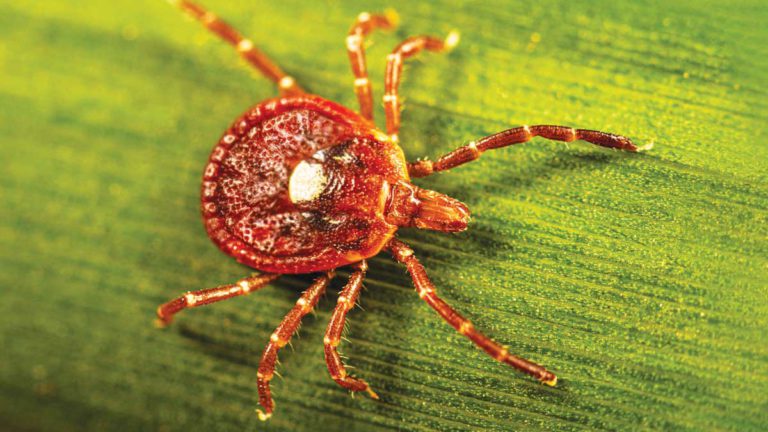
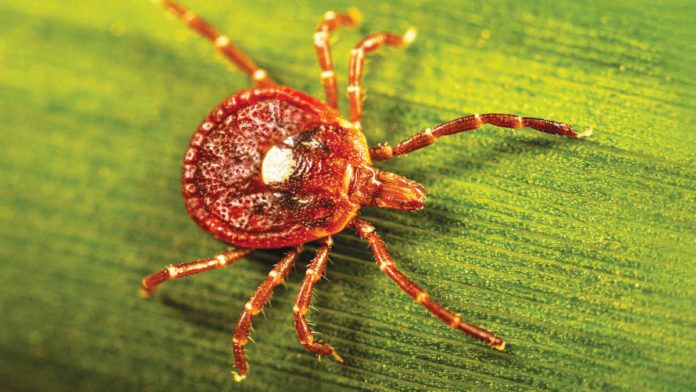
Alpha-gal syndrome is an allergy to red meat caused by tick bites. It is most commonly associated with the lone star tick, recently found as far from its usual range in the South as Martha’s Vineyard. Less widely reported is that California’s own western black-legged tick can also trigger the potentially fatal condition.

Two years ago, Laura Hieb, a retired teacher from Jenner, learned about alpha-gal in the most dangerous way.

“I went to a July fourth party. Very upscale. The host bought delicious steaks for everyone,” Hieb said. “I came home around 10:30pm and around 1:30am became violently ill.”

Alpha-gal is a sugar present both in the meat of most mammals, though not humans, and the saliva of certain ticks. When a tick bite elicits an immune response from its human victim with alpha-gal present in the wound, because it is foreign to them, their body learns to treat it as a threat, regardless of the source. Their next exposure to alpha-gal, whether from a tick or a steak, can cause hives, dizziness, vomiting and diarrhea, and in the most severe cases, swelling of the tongue, throat and airway.

“I was rapidly going into anaphylactic shock. I could not breathe; my throat was closing. And of course I was out here in Jenner all alone,” said Hieb, who luckily recognized the symptoms from previous allergic reactions and self-administered Benadryl. “I took maybe five and lay down and tried to focus on breathing. And I made it through.”

Unlike most allergic reactions which take effect almost immediately, AGS symptoms often occur several hours after exposure, complicating diagnosis, delaying or misdirecting treatment. This can also lead to repeated accidental exposures which some evidence suggest results in increasingly severe reactions.

Though the western black-legged tick is found in 56 out of 58 counties, confirmed AGS diagnoses in California are still relatively rare, so meaningful data on the risk-per-bite of developing AGS doesn’t yet exist. Cases as severe as Laura Hieb’s are rarer still. But for those unfortunate few, it is life changing. And so she worries others are being missed.

After Hieb’s physician tested for all the known allergens she was exposed to at the party, to no avail, she solved the puzzle herself. “Within just days, I saw this article in AARP magazine about alpha-gal, so I called the allergist,” Hieb said. The detail that stood out to her was the delayed reaction, along with a tick bite on her back. But until she educated them, her care providers at Kaiser Permanente were completely unaware of the issue.

In fact, of 1,500 medical practitioners surveyed by the CDC, 42% had never heard of AGS and another 35% were not confident in their ability to diagnose or manage AGS patients.

Once AGS develops, lifestyle changes are the only preventative option to date. “I’ve had to change my diet completely,” Hieb said. “I had another scary incident eating at a restaurant because I didn’t realize there was bacon crumbled on my omelette… So now I carry an EpiPen.”

Avoiding alpha-gal is made all the more complicated since it can show up in unexpected places such as cosmetics and medications. Incidentally, it was an alpha-gal-containing cancer drug undergoing a clinical trial that tipped doctors off to the molecule’s deadly potential.

In 2004, a subset of patients receiving Cetuximab had severe allergic reactions on their first dose. Drug allergies usually build up over time. Meanwhile, doctors in the southeastern U.S. were seeing odd, delayed allergic reactions to red meat. University of Virginia allergist Dr. Thomas Platts-Mills and his team found alpha-gal antibodies common between both sets of patients and noted that many recalled tick bites. Further investigation confirmed that tick bites could trigger the same reaction as Cetuximab and that alpha-gal was the causal factor.

Not every tick bite results in a sensitivity to alpha-gal, and the risk is difficult to quantify since the majority of bites go unreported, the severity of AGS symptoms vary and awareness of the condition remains low. Depending on which study is cited, the rate of bites that result in some degree of alpha-gal sensitivity might be anywhere from 5.5–35%.

Research from Germany, where native species of ticks also cause AGS, has shown rural communities to be 20 times as likely to develop the condition. In the same research, those repeatedly exposed to tick bites, like hunters and forestry workers, were at the highest risk of all, with some evidence suggesting an accumulative effect, but that is unconfirmed.

Low level alpha-gal sensitivity may go unnoticed and, since the most common symptom is gastrointestinal distress, intermediate cases are easily mislabeled as other enigmatic digestive issues like irritable bowel syndrome or Crohn’s disease. According to the Centers for Disease Control, more than 110,000 AGS diagnoses have been made in the United States since 2010. But the CDC’s research suggests that including undiagnosed cases would increase the number to as high as 450,000; if the lone star tick keeps expanding its range, a phenomenon attributed to climate change, they expect it to keep climbing.

The arrival of the lone star tick in affluent Martha’s Vineyard has caused a spike in awareness of AGS, increasing the likelihood of future resources dedicated to treating or curing the condition. But not everyone agrees that this is the desirable outcome.

Speaking on a panel at the 2016 World Science Festival, bioethicist Matthew Liao used tick-borne AGS as an example when describing methods for inducing behavioral changes in unwilling people for his interpretation of the greater good.

This sentiment was echoed in a recent paper by medical ethicists Parker Crutchfield and Blake Hereth wherein they argue “that if eating meat is morally impermissible, then efforts to prevent the spread of tickborne AGS are also morally impermissible.” The two go on to conclude: “It is presently feasible to genetically edit the disease-carrying capacity of ticks. If this practice can be applied to ticks carrying AGS, then promoting the proliferation of tickborne AGS is morally obligatory.”

According to California State Parks information officer Adeline Yee, the best way to prevent all tickborne illnesses found in our state, whether AGS, Lyme disease or Rocky Mountain spotted fever, is to prevent tick bites from happening.

Some tips include: Tuck pants into long socks while hiking. Walk in the middle of trails to avoid areas ticks enjoy, such as long grass or shady, moist underbrush. Be sure to check thoroughly for hitchhikers in gear and on the body. Enlist the help of a friend for hard to see places.

If one knows they might be around ticks, they may consider sealing pants at the ankles with duct tape and applying a layer sticky side out. That way, if they stumble across some of the pesky parasites, they will see them on the tape and know to check their body extra carefully. Should one slip through and manage to attach to their body, a loved one or a pet, proper and prompt removal can go some way to reducing the likelihood of an illness.

Collectively, our best defense is awareness. Awareness about ticks, about illnesses like AGS and awareness of fringe ethicists championing their weaponization in the name of utopia.

Greek to Me: ‘The Love of the Nightingale’

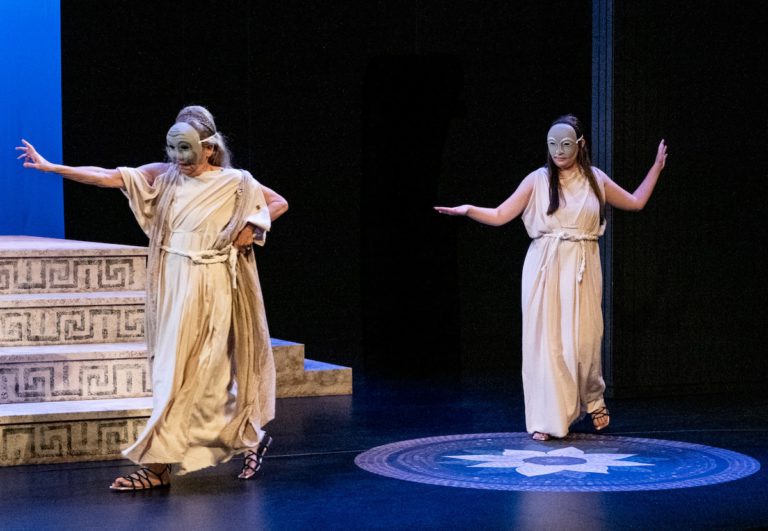
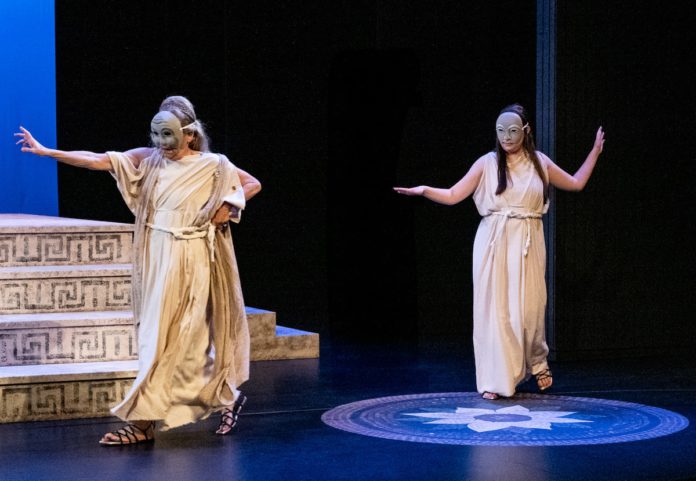
The College of Marin has opened its 2025/26 season with Timberlake Wertenbaker’s The Love of the Nightingale, a retelling of the Philomele myth. The show, directed by Erin McBride Africa, runs in the James Dunn Theater through Oct. 19.

Please note that this review, like the play itself, deals with themes of mutilation, domestic abuse and sexual violence.

The story centers on Philomele (Arya Safavi), a young princess of Athens. Her older sister, Procne (Lissette Chao), is married off to the king of Thrace, Tereus (Gregory Wilker), and taken away to Thrace. Lonely and isolated, Procne asks Tereus to bring Philomele for a visit. Tereus does so, but on the trip home starts to lust after the young, spirited woman. After raping her, he cuts out her tongue to keep her from telling about his crimes.

All the actors should be recognized for tackling such a difficult play. Most notable were Safavi as the spirited Philomele, Polly Yurke as the conflicted Iris and Jamie Montellato as King Pandion, who gave the most grounded performance in the play.

The set designer (Huda Al-Jamal) and light designer (Walter Holden) take full advantage of the space. The minimalist set, paired with the stage-sized scrim, creates a beautiful canvas. Additionally, the use of fabric flies to change scenes is the kind of simple yet effective stagecraft that causes us theater geeks to become very excited.

Sadly, the sound design (no designer named) leaves a lot to be desired. At one point, the design includes ongoing, high-pitched electronic screeching.

The sound is not the only discordant note. McBride has made the decision to have all the actors use stylized ancient Greek acting methods instead of allowing for realism. It’s possible, given the subject matter, that the stylized acting was a way to protect the student actors from the full emotional impact of the story being told. That’s understandable given that this is at a college. But as with any highly stylized acting choices, if everyone is not at the same level, it tends to overshadow the play itself.

If one wants good theater, they have to support the students. However, it’s also hard to recommend a show that is so inherently (but fixably) flawed.

‘The Love of the Nightingale’ runs through Oct. 19 in the James Dunn Theatre at the College of Marin, 835 College Ave., Kentfield. Friday–Saturday, 7:30pm; Sunday, 2pm. Free. Donations welcome. 415.485.9385. pa.marin.edu.

Free Will Astrology: Week of Oct. 8

0

ARIES (March 21-April 19): No relationship is like any other. The way we bond with another has a distinctive identity that embodies the idiosyncratic chemistry between us. So in my view, it’s wrong to compare any partnership to a supposedly ideal template. Fortunately, you Aries are in a phase when you can summon extra wisdom about this and other relaxing truths concerning togetherness. I recommend you devote your full creativity and ingenuity to helping your key bonds ripen and deepen.

TAURUS (April 20-May 20): Poet Rainer Maria Rilke advised, “Be patient toward all that is unsolved in your heart and try to love the questions themselves.” These days, dear Taurus, that’s your power move: To stay in conversation with mystery without forcing premature answers. Not everything needs to be fixed or finalized. Your gift is to be a custodian of unfolding processes: To cherish and nourish what’s ripening. Trust that your questions are already generating the early blooms of a thorough healing.

GEMINI (May 21-June 20): I am a great admirer of Bart Simpson, a fictional fourth-grade student on the animated TV show The Simpsons. He is a constant source of unruly affirmations that we could all benefit from incorporating into our own behavior when life gets comically weird. Since I think you’re in such a phase now, Gemini, I am offering a batch of Bart-style gems. For best results, use them to free yourself from the drone of the daily routine and scramble your habitual ways of understanding the world. Now here’s Bart: 1. “I will not invent a new religion based on bubble gum.” 2. “I will not sell bottled ‘invisible water.’” 3. “I will not try to hypnotize my friends, and I will not tell co-workers they are holograms.” 4. “I will not claim to be a licensed pyrotechnician.” 5. “I will not use the Pythagorean theorem to summon demons.” 6. “I will not declare war on Thursdays.”

CANCER (June 21-July 22): During its entire life, the desert plant Welwitschia mirabilis grows just two leaves. They never wither or fall off but continually grow, twist, split and tatter for hundreds of years. They keep thriving even as their ends are worn or shredded by wind and sand. I love how wild and vigorous they look, and I love how their wildness is the result of their unfailing persistence and resilience. Let’s make Welwitschia mirabilis your inspirational symbol in the coming weeks, Cancerian. May it motivate you to nurture the quiet, enduring power in your depths that enables you to express yourself with maximum uniqueness and authenticity.

LEO (July 23-Aug. 22): Have you been to Morocco? I love that so many houses there are built around spacious courtyards with intricate tilework and lush gardens. Sooner or later, of course, the gorgeous mosaic-like floors need renovations. The artisans who do the work honor the previous artistry. “In rebuilding,” one told me, “our goal is to create new magnificence that remembers the old splendor.” I hope you pursue an approach like that in the coming weeks, Leo. The mending and healing you undertake should nourish the soulfulness you have cultivated, even as you polish and refine.

VIRGO (Aug. 23-Sept. 22): Virgo novelist Agatha Christie often planned her elaborate plots while cleaning her house or washing dishes. She said such repetitive, physical tasks unlocked her creativity, allowing ideas to emerge without force. I suggest you draw inspiration from her method in the coming weeks. Seek your own form of productive distraction. Instead of wrestling with a problem in a heroic death match, lose yourself in simple, grounding actions that free your mind to wander. I am pretty sure that your most brilliant and lasting solutions will emerge when you’re not trying hard to come up with brilliant and lasting solutions.

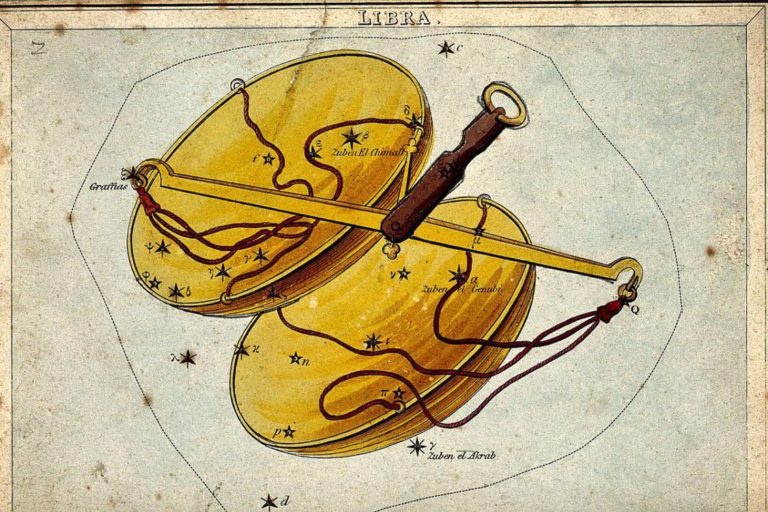
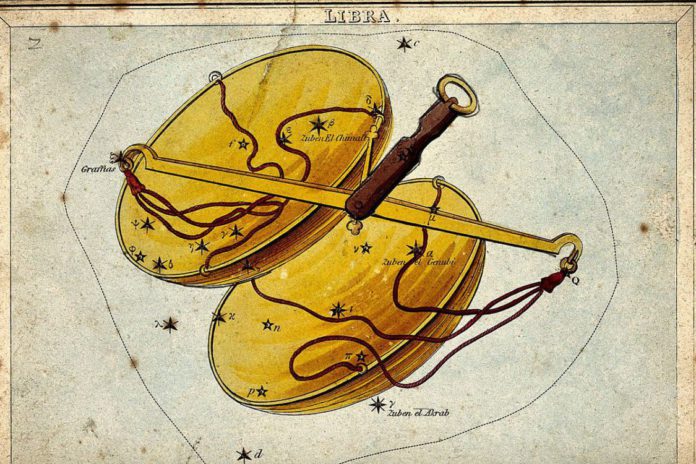
LIBRA (Sept. 23-Oct. 22): Libra architect Christopher Alexander developed a sixth sense about why some spaces feel comfortable while others are alienating. What was the source of his genius? He avoided abstract principles and studied how people actually used spaces. His best architecture soulfully coordinated the relationships between indoor and outdoor areas, private and public zones, and individual needs and community functions. The “quality without a name” was the term he used to identify the profound aliveness, wholeness and harmony of spaces where people love to be. In the coming weeks, Libra, I hope you access your own natural gift for curating relationships and cultivating balance. Your solutions should serve multiple needs. Elegant approaches will arise as you focus on connections rather than isolated parts.

SCORPIO (Oct. 23-Nov. 21): Some medieval mystics claimed that angels spoke in paradoxes because the truth was too rich for simple logic. These days, I believe you Scorpios are extra fluent in paradox. You are raw yet powerful, aching and grateful, confounded but utterly clear. You are both dying and being reborn. My advice: Don’t try to resolve the contradictions. Immerse yourself in them, bask in them, and allow them to teach you all they have to teach. This may entail you sitting with your sadness as you laugh and letting your desire and doubt interweave. The contradictions you face with open-heartedness will gift you with sublime potency and authority.

SAGITTARIUS (Nov. 22-Dec. 21): The ancient city of Petra, built in sandstone cliffs in what’s now Jordan, was mostly hidden from the outside world for centuries. In 1812, Sagittarian Swiss explorer Johann Ludwig Burckhardt rediscovered it by disguising himself as a pilgrim. He trained extensively in the Arabic language, Islamic culture and local customs so he could travel incognito. You Sagittarians can benefit from a similar strategy in the coming weeks. Life will conspire to bring you wonders if you thoroughly educate yourself about the people and situations you would like to influence. I invite you to hike your empathy up to a higher octave, cultivate respect for what’s unfamiliar, and make yourself extra available for exotic and inspiring treasures.

CAPRICORN (Dec. 22-Jan. 19): During the 1800s, countless inventors chased the impossible dream of perpetual-motion machines: Contraptions that would run endlessly without any fuel source. Every attempt failed; such devices bucked the fundamental laws of physics. But here’s good news, Capricorn: You are close to cracking the code on a metaphorical version of perpetual motion. You are cultivating habits and rhythms that could keep you steady and vital for a long time to come. I predict the energy you’re generating will be self-sustaining.

AQUARIUS (Jan. 20-Feb. 18): Octopuses have three hearts and blue blood. They taste with their skin, solve puzzles and squeeze their entire bodies through coin-sized holes. No wonder they are referred to as the aliens of Earth, just as you Aquarians are the aliens of the zodiac. According to my analysis, now is a perfect time for you to embrace your inner octopus. I authorize you to let your strangeness lead the way. You have the right and duty to fully activate your multidimensional mind. Yes, you may be misunderstood by some. But your suppleness, radical empathy and nonlinear genius will be exactly what’s needed. Be the one who sees escape routes and paths to freedom that no one else perceives. Make the impossible look natural.

PISCES (Feb. 19-March 20): Dear Pisces, it’s like you’re in one of those dreams when you’re exploring the attic or basement of your home and discover secret rooms you didn’t realize existed. This is good! It means you are finding uncharted frontiers in what you assumed was familiar territory. It suggests you are ready to see truths you weren’t ready for before. Congrats! Keep wandering and wondering, and you will discover what you didn’t even know you needed to know.

Homework: It may be time to trade in an old symbol of security for a new one. Newsletter.FreeWillAstrology.com

Another Silent Spring: A special report on accelerating mass extinction events

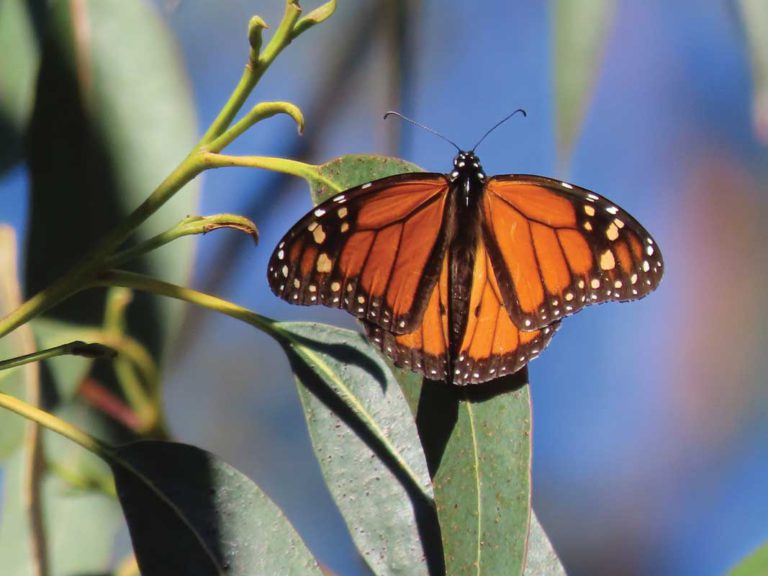
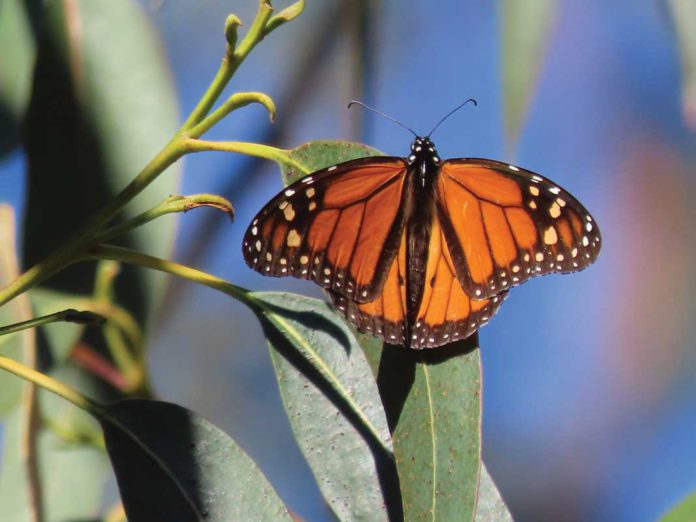
Alongside the endangered redwood, the monarch butterfly is a symbol of our land.

We have taken the monarch as our emblem—one sees it in many places—on our T-shirts and jewelry, our journals, our sky-flying kites; it is on our place-making murals of fluttering monarchs and happy people. The monarch floats up from our subconscious and haunts our dreams…

Little wonder, the annual migration of the western monarchs—flying up the coast from

Mexico—is one of the great natural wonders of the North Bay.

Or, I should say, it was.

As I write, at the height of fall harvest, we are at the height of the monarch migration. Let me ask our readers—trash consumerism aside, has anyone seen a single solitary one?

Although it goes little reported, in the last 10 years, the monarch population has collapsed, from a degraded and declining baseline of several million in the 1990s to just

9,000 this last year. (See The Xerces Society for Invertebrate Conservation’s paper, Western Monarch Declines to Near Record Low, 2025.)

That means if one has been so lucky—so blessed—to see one monarch this year, in 1995 they would have seen 200 monarch butterflies floating through our skies. If they have seen 10, they would have seen 2,000 monarchs—can one imagine such a prodigy? Most likely one has seen zero. Our blue and brown, hazy skies are empty.

The only one I have seen was on one of our murals, which has been transformed, ironically, from a celebration of this place and its natural abundance into a memorial for the dead. What does the probable extinction of the monarch butterfly, our emblem, mean to us? What is the significance that monarchs are thought to carry our spirits to the afterlife according to Mexican folkloric belief? What will become of our souls when they are gone?

Emptier Skies

Poets have called butterflies “nature’s living jewels.” As a general trend, across the United States, butterfly populations are collapsing. (See North American Butterfly Association’s American Butterflies magazine story, “The Great Butterfly Die-Off,” 2025.)

Can one even imagine a world without the play of butterflies? If that thought causes pain, then one is connected to the butterfly and its pain. With its death, something dies in oneself.

It’s not just butterflies that are going extinct. As a generality, most “winged insect” populations are now in a mass die-off. That broad group and segment of life includes butterflies and moths, mosquitos, honey bees, flies, dragonflies, beetles of all stripes, wasps, cicadas, lightning bugs, ladybugs, etc.

They are all rapidly disappearing, right here, and all around the world. The rapid decline is so dramatic and distressing that some scientists are calling it “The Insect Apocalypse.” (See Current Biology Magazine, “The Insect Apocalypse and Why it Matters,” 2019.) That’s a striking phrase. It’s a big story. It’s the headline for 2025.

It’s funny we haven’t even heard of it, huh? I haven’t seen any mention of it endlessly doomscrolling my Instagram Reels. But perhaps one has noticed it, if only secondarily—with less need to spray pesticides on their lot or clean smashed bugs off their windshield.

As a class, insects represent a major part of the “biomass” on Earth—that is the weight and the number of life forms on Earth. And they’re rapidly dying away. That might not move someone. When we interact with insects, quite often it is as pests and as nuisances. “Bugs are gross.” But it should be concerning—insects, as the basis of biomass, are the basis of food chains. Pluck hard on that food web, and it ripples out to shake all living species.

Hurt by the seeming indifference of most people to insects, local butterfly expert John

Hibbard (my own father) elaborated on that point: “In the grand scheme of nature, butterflies [and caterpillars] exist to feed birds.”

The elder Hibbard is right; along with insect populations, bird populations are collapsing all around us. According to a recent report by the North American Bird Conservation Initiative (NABCI), 30% of North American bird species are now in free fall decline. (See NABC’s “The State of Birds,” 2025.) Birds are falling, from emptier skies. And silent is the spring (see Rachel Carson’s epochal Silent Spring, 1962). And these deaths are not painless deaths. Mass starvation—the inability to get insect food for themselves and their young—is a cause of their collapse.

Doubtless that moves anyone. Birds are in our hearts. They are our symbols of liberation and escape. They are the mascots of our schools, our teams, and the emblems of great nations. Birds are in our dreams. In the folkloric belief of many lands, birds are thought to communicate between earth and heaven, carrying communications from the gods (hence, “divination by augury”). So what does this augur for us? If we and our swine could even survive, would we even want to live in a world without birds?

I am afraid I am understating the case, because it’s not just butterflies and birds—it’s moths and bats too. As the basis of the food web, insects directly feed most small mammals, reptiles, ambitions and fishes, which in turn feed larger animals scaling up the food chain to apex predators. All are now at risk.

Think of all the iconic species we learned to name as innocent children and hugged as stuffed animals in the safety of our small beds. Think of all the spirit animals that guide us as adults when we are spiritually lost. They are now themselves lost, disoriented, wandering among the fast fragmenting wilds, straying, and starving into human developments, as well as dying under the wheels of heavy trucks.

Our plants are dying too. Insects feed animals, and they also pollinate flowering trees and plants—forming a vital link in their reproductive cycle and fruiting. Insect death ripples and rips through the meadows and forests where we seek spiritual refreshment and peace. All the food web is shaking violently, as in a great earthquake, as in a great storm.

The Holocene Mass Extinction

Reader—fellow human being—we have reached an inflection point, a decision point. And now, it is time to choose. Have no doubt. This is the biggest story of our times. Make no mistake. Trump is just noise. China is noise. Tik Tok trends are noise. Taylor Swift’s wedding is noise. The football season is noise. And Disney-Marvel is a desperate distraction from what is happening here and now.

Stop distracting oneself. Undeceive oneself. Put the pieces together. Endangered apes and elephants in Africa, dead coral reefs in Arabia and Australia, collapsing fisheries, disappearing kelp forests, the slash and burn destruction of the Amazon, the endangered honey bee, the last flight of the monarch—these are all pieces of a much bigger story—Global Mass Extinction.

Per The International Union for Conservation of Nature (IUCN), a once-every-four-years gathering of global nature conservation experts, leaders and decision-makers, 28% of all living species are now at risk of extinction. It won’t stop there. (See IUCN’s “Red List.”) That’s trillions of insects, plants and animals sick and starving, unable to propagate or keep their young alive. Mass extinction is the headline for 2025 and 2026 and 2027. And it’s the only story that matters.

Factors & Cause

The surprising thing is, we all already know the factors causing what scientists call the “holocene mass extinction event.” But, with a galvanic thrill, let us review them with renewed urgency.

The leading causes of mass species extinction are development: roadbuilding, land clearing, timber cutting, mining, house building, livestock grazing, monoculture farming and pollution of formerly “undeveloped land”—i.e., animal habitats and ecosystems. Development is driven by bad policy, over-population and consumptive consumerism gone mad.

Those are the general factors oppressing all other species. But there is also a specific factor, suppressing all insect life, and setting off a cascade effect of dropping dominos among the larger animals and plants that depend on them for food or reproduction.

All I can say is that it is a relatively new pesticide in increasing agricultural use. It is a broad-spectrum insect killer and long-lived. In dust suspension it has blown about everywhere, and it is present in most of the inorganic food that we eat.

I have been warned by some of my science advisors not to be more specific than that. The corporations that make it would think nothing of breaking me or burning this paper down with smear campaigns and baseless but expensive nuisance lawsuits. In fact, that seems to be part of their multibillion dollar business plan. It’s good business to close newspapers.

But the cause is us. Whether or not we are fully aware of it, we are doing this. We are making this happen with our daily choices. This is the true story of our times, and it is the true meaning of our lives. It is our legacy. Like it or not, gathered around our own good works, lie thousands of dead butterflies and bees, and birds and squirrels, lizards, snakes, fish, foxes, otters, coyotes, elk, wolves, bears, eagles and mountain lions. Don’t look away.

And while we have now exceeded the point of irreparable damage to life on Earth and may lose the innocent monarch butterfly, it is in our power to choose again, and save other species. Just as we already know the causes, we already know what to do.

But let us revisit those changes with renewed urgency and purpose. Thrill to it.

An Urgent New Environmentalism

A meta-analysis of research published by Science Magazine in 2020 revealed “Declines in Terrestrial But Increases in Freshwater Insect Abundances.” The authors of this scientific paper attributed the turn-around to environmental laws and regulations designed to clean up and protect our waterways. Those very same protections are now being torn up by the Trump Administration, which is now opening all federal land to rapacious development.

The first lesson of this story is the powerful effect that good government policy can have on reducing species loss. The second lesson is that, for the present, we can’t count on the government to lead the response to mass extinction. Still, the oft repeated refrain conservative politicians make when shredding market regulations restraining the worst impulses of capitalism is true: “The power lies in the choice of consumers.” And I will add, in the will of voters.

As consumers, we can make a daily difference. And as loud local activists and voters, we can draft and organize the local policies and programs that can scale nationally or internationally when Donald Trump topples. Here, submitted by some of the local naturalists and international scientists that helped inform this article, are priorities for a grassroots campaign to slow mass extinction. They are none of them new. It’s the old green agenda. But it’s urgent.

1. Support candidates with a green agenda.

The green new deal. Stopping the sale of federal land, new parks, linking existing parks. Fighting climate change and climate denial. Help farmers transition to organic (pesticide-free) farming and subsiding the purchasing of expensive organic food (health food for all).

2. Supporting non-profits that promote environmental conservation.

One can support them with their vote, money or in-kind donations; their volunteer time; or by using their Facebook, TikTok and Instagram to boost their message.

3. Buy less—reduce, reuse, repair.

4. Buy local—local production and shipping has a reduced environmental impact.

5. Buy organic food and wine.

6. Buy less meat—start with “Meatless Mondays”

7. Avoid purchases with high carbon footprints. If one flies, buy carbon offsets.

8. Convert part or all of one’s yard or business landscaping to promote pollinator-friendly native plants. Look up “butterfly gardening” and “national park in your backyard.”

9. Spend time connecting with wild nature. It’s good for the body and good for the soul.

10. Talk about these issues with family and friends. Have a conversation about this article. Keep this issue alive on all platforms.

One has seen this list before. But now they know we do these things for the bird and the butterfly, the otter and the oak tree. We can’t wait for Washington and Sacramento.

The Humans

Why isn’t mass extinction the story everyone is talking about? Some of the environmental activists, butterfly people, birders and research scientists I spoke to seemed to imply that people just don’t care. “People only care about people.”

But, the fact is, we do care—we are connected to these animals and flowering plants, heart and soul. We love our plants and pets. We love the monarch butterfly. And, whatever people say, humans are fundamentally moral creatures. What proves our morality is how much time and energy we spend distracting ourselves, avoiding a confrontation with the truth.

We fear the truth about our actions because, no matter what we say in public, we don’t actually think that we are good people. We know that if we confronted the truth we would be forced to change—by our own fundamentally moral constitutions.

We fear the change, and we fear the reckoning. But we forget how cleansing it can be to make amends, and how lightening it can be to make sacrifices for other living beings. And although we grumble, we forget how adaptive we are. The discomfort of change is brief, and briefly it is forgotten.

Don’t look away. When buying inorganic food or trendy plastic junk, one is buying a dead song bird too. Each time. In time, those purchases add up to a dead bald eagle, and a dead grizzly bear. One has bought those dead animals. And must pay for them—the cost comes out of their own soul. We are connected. When one buy organics, they literally save lives.

We can change. This is in our power to stop this. And change we must. In this journalistic diatribe I have emphasized what mass extinction will cost our souls (our dreams, symbols, our wonderment, emblems, archetypes, awe, mascots, cartoons, spirit guides, our love, our friends). However, mass extinction may cost us our lives too. For if there is a domino effect, collapsing up the food chain, the last domino to fall will be humans—the apex predator. We cannot simply fence off our corn and our cattle as the environment collapses and burns all around us.

The words of Dr. Joshua Arnold, a scientist who studies the role of beneficial insects in human food agriculture, put it succinctly: “There is a dogma about what we will be able to craft our way out of any problem, but the promises of technology will not be able to make up for a dying planet. Everything we do depends on the ecosystem around us. We might be able to eek on by for a time but we will suffer… Technology won’t save us.”

According to The World Economic Forum and the United Nations Food Summit, pollinating and pest eating insects are critical to the cultivation of 35% of the world’s food supply (“Why We Need to Give Insects the Role they Deserve in Our Food Systems,” 2021).

With the human population projected to increase by 2 billion by 2050, that projected food shortfall has us fighting a world war. The Insect Apocalypse is the harbinger of a greater slaughter. There still is time to avert it. Let the death of the monarch be our turning point.

Learn more & act: linktr.ee/massextinctionLINKS.

MVFF’s 2025 ‘Mind the Gap’ Prize Goes to Tatti Ribeiro, a Graduate of Tamalpais High School

The Mill Valley Film Festival (October 2–12, 2025) awarded this year’s Mind the Gap Creation Prize to Tatti Ribeiro for her debut feature film Valentina. Set in the border town of El Paso, Texas, Ribeiro opens the film with the following disclaimer: “Most of the people, places, and events in this film are real. Valentina is not.” In a phone interview, the director compared her film to Borat and Nomadland, hybrid narratives that feature actors interacting with non-actor civilians. Keyla Monterroso Mejia (Curb Your Enthusiasm and The Studio) plays Valentina but Ribeiro places the character in and amongst the everyday lives of El Pasoans.   

“I really like the approach of being able to control one person in a preordained story,” Ribeiro said. Before they’d shoot a scene, she and Monterroso Mejia would talk about the game plan but when someone would unexpectedly enter the frame they’d improvise. She explained that, “It’s heavily unscripted in some ways and controlled in other ways.” Scenes take place at a blood bank, a church mass with a priest delivering his sermon, and at a real border crossing. 

The opening sequence follows Valentina and her brother as they walk across the border from Mexico into El Paso. It’s not a dangerous crossing and no law enforcement agents question or detain them. Ribeiro has spent a considerable amount of time working in El Paso. Her experience of the place diverged from many of the overheated headlines that get people’s online attention. “We hear so much psychotic drama about the border and I just have no interest in exploring trauma porn,” she said. “Over the last ten years reporting in and out of El Paso, I was having a great time. That’s what I wanted to show.”   

A similar shot opens Denis Villeneuve’s Sicario but in his film there’s a shootout. “I’ve been in and out of El Paso working as a reporter for the last eight to ten years and you cross it all the time,” Ribeiro said. People cross over for dinner, for dental work, to hang out and see their families. It’s about a five minute walk. Even so, the film captures the inherent tension involved in crossing a border. “That’s the whole point. They want you to be nervous. That’s what surveillance is for,” she said.     

The comic situations in Valentina are defined by those border tensions. The character races around the city to get to her many part-time jobs while also attending to a series of bureaucratic obstacles. Ribeiro flashes Valentina’s diminishing bank account totals on screen to punctuate certain situations. Her account plummets into negative numbers after her car is impounded. The plot mashes up the tragicomic ideas in Alexander and the Terrible, Horrible, No Good, Very Bad Day and Rohinton Mistry’s A Fine Balance. There are distressing moments throughout the film but the director eventually veers away from a tragic take on a challenging day.

Casting Monterroso Mejia as the central figure, sets and fixes the movie’s tone. The actress is easy to identify with. She inspires our sympathy as we watch her deal with parking tickets, takes care of her father’s paperwork, and negotiates paychecks. Ribeiro was in the early process of outlining the film when she watched Monterroso Mejia’s episodes of Curb Your Enthusiasm. “I was thinking about what actors could handle it,” she recalled. 

“Obviously, somebody who’s completely bilingual, funny, charming, sharp — all these things.” The two of them clicked at their initial meeting. “It changed everything because, ultimately, the actor is more important than the character that’s in your mind,” Ribeiro said. “So we morphed it to her and Keyla became such a big part of the tone.” 

Unlike Sacha Baron Cohen’s Borat character and Nathan Fielder’s bent reality programs, people in El Paso greeted Monterroso Mejia as Valentina with love rather than skepticism, hostility or wariness. “We put her in these moments where I thought there would be more tension or maybe she would get into an argument,” Ribeiro said. “Instead, people were wanting to help her or to talk with her.” The character became softer and nicer because of these real life interactions.  

“These are real people, real migrants and I don’t think the best way to approach them is to ask them about something harrowing,” Ribeiro said. “The best way to interact with people and show any version of humanity is through a sense of humor and being normal.”

Valentina will have its world premiere at MVFF on Friday, October 3 at the Sequoia Cinema in Mill Valley. Tatti Ribeiro and Keyla Monterroso Mejia are expected to be in attendance. A second screening will take place on Monday, October 6 at The Rafael Film Center. 

‘9 to 5 The Musical’ Works Novato

If there’s one thing this divided nation can agree on, it’s this: Dolly Parton.

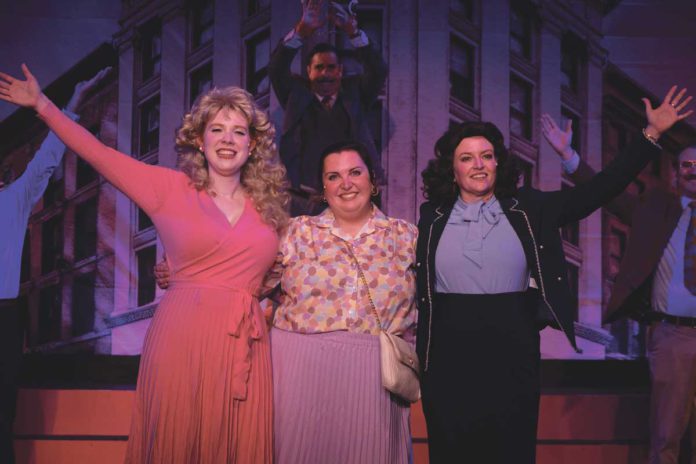
She’s a national treasure. Consequently, anything affiliated with her automatically starts out with a heap of goodwill. So it is with 9 to 5: the Musical. The Novato Theater Company has a production running through Oct. 12.

Based, of course, on the 1980 film starring Jane Fonda, Lily Tomlin and Parton, it took 28 years for it to be developed into a Broadway musical. The film’s co-screenwriter, Patricia Resnick, wrote the book, and Parton herself supplied the score. The book of the musical adheres pretty closely to the film, with Parton adding more than a dozen original songs beyond the classic title tune.

For those who missed the film, it’s the tale of three hardworking office women at Consolidated Industries and the challenges they face dealing with their sexist, egotistical, lying hypocritical bigot of a boss.

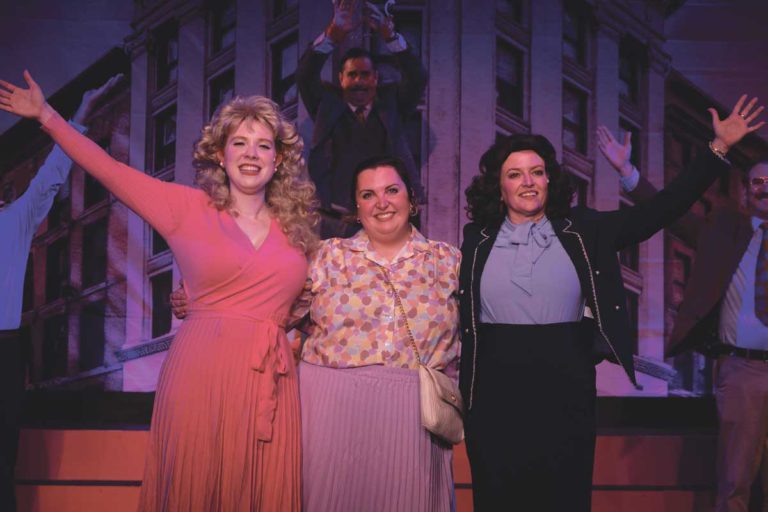
The protagonists remain the same. Violet Newstead (Andrea Thorpe) is constantly overlooked for a promotion, even though she really runs the company. Judy Bernly (Lauren-Sutton-Beattie) is new to the company and new to actually working after being ditched by her louse of a husband. Doralee Rhodes (Bethany Cox) is the secretary who everyone thinks is sleeping with the boss.

The antagonists also remain the same. Office busybody Roz Keith (Amy Dietz) is constantly looking for ways to knife her co-workers in the back while secretly lusting after Mr. Hart (director Larry Williams in the role the weekend I attended, Pat Barr for the other performances). Hart is, of course, a scoundrel, and the ladies band together to give him his comeuppance.

Williams has a good cast at work here. All three leads are solid, with Thorpe’s Violet the backbone. Sutton-Beattie is a delightfully comic Judy, and Cox wisely resists aping Parton’s work in the role. The wig is enough to conjure fond memories of Parton, and Cox takes it from there.

There’s a hard-working ensemble moving desks and chairs throughout the show while providing nice vocal support to the group numbers. Nick Brown leads a great five-piece band that kept things musically moving during those transitions.

Parton’s score is quintessentially Parton, with “Backwoods Barbie” a highlight, along with the title tune.

This is comfort theater, bound to please those familiar with the source material and provide a good evening or afternoon’s entertainment for those who aren’t.

‘9 to 5 the Musical’ runs through Oct. 12 at the Novato Theater Company, 5420 Nave Dr., Ste. C, Novato. Fri & Sat, 7:30pm; Sun, 2pm., $25–$37. 415.883.4498. novatotheatercompany.org.

Winemaking Minimalist: Anaba Wines’ Katy Wilson

Katy Wilson lives in Napa, but her work is deeply rooted in Sonoma County. She’s winemaker of Anaba Wines as well as her own low-intervention brand, LaRue. After Cal Poly, she chased harvest seasons across hemispheres at wineries including Joseph Phelps, Testarossa, Torbreck in Australia’s Barossa Valley and Craggy Range in New Zealand’s Hawkes Bay. Returning to California, she knew that...

Preventing WWIII

Open Mic writers express their perspectives on a variety of topics.
Since Russia’s invasion of Ukraine, the world has coalesced into two opposing blocs: NATO—comprising most of Europe, the United States, Canada, Japan and South Korea—versus Russia, China, North Korea, Iran and India. Each side aids its allies through weapons, trade or troops. Yet negotiations to end the conflict have stalled, largely due to Vladimir Putin’s...

Of Art & Insects

Sebastopol Butterfly Effect at Gold Ridge On Saturday, Oct. 11, Gold Ridge Organic Farms hosts Butterfly Effect—an immersive evening of art, music and purpose pairing creativity with impact. Fresh from her show in Prague, artist and humanitarian Layla Love presents 40 original works exploring art as a vehicle for change. She’s joined by art critic Anthony Haden-Guest, MMA champion Max...

Your Letters, Oct. 8

Mix Tix Dale Carnegie was onto something when he encouraged stepping outside of our comfort zones. For some people, merely voting is a step too far. In last November’s presidential election, that was about 90 million Americans. I propose an outside-our-comfort-zone approach for upcoming elections: a mixed presidential ticket. That is, a Democrat and Republican president and vice president,...

This Bites: Tick causes red meat allergy

Alpha-gal syndrome is an allergy to red meat caused by tick bites. It is most commonly associated with the lone star tick, recently found as far from its usual range in the South as Martha’s Vineyard. Less widely reported is that California’s own western black-legged tick can also trigger the potentially fatal condition. Two years ago, Laura Hieb,...

Greek to Me: ‘The Love of the Nightingale’

The College of Marin has opened its 2025/26 season with Timberlake Wertenbaker’s The Love of the Nightingale, a retelling of the Philomele myth. The show, directed by Erin McBride Africa, runs in the James Dunn Theater through Oct. 19. Please note that this review, like the play itself, deals with themes of mutilation, domestic abuse and sexual violence. The...

Free Will Astrology: Week of Oct. 8

Free Will Astrology
ARIES (March 21-April 19): No relationship is like any other. The way we bond with another has a distinctive identity that embodies the idiosyncratic chemistry between us. So in my view, it’s wrong to compare any partnership to a supposedly ideal template. Fortunately, you Aries are in a phase when you can summon extra wisdom about this and other...

Another Silent Spring: A special report on accelerating mass extinction events

Alongside the endangered redwood, the monarch butterfly is a symbol of our land. We have taken the monarch as our emblem—one sees it in many places—on our T-shirts and jewelry, our journals, our sky-flying kites; it is on our place-making murals of fluttering monarchs and happy people. The monarch floats up from our subconscious and haunts our dreams… Little wonder, the...

MVFF’s 2025 ‘Mind the Gap’ Prize Goes to Tatti Ribeiro, a Graduate of Tamalpais High School

The Mill Valley Film Festival (October 2–12, 2025) awarded this year’s Mind the Gap Creation Prize to Tatti Ribeiro for her debut feature film Valentina. Set in the border town of El Paso, Texas, Ribeiro opens the film with the following disclaimer: “Most of the people, places, and events in this film are real. Valentina is not.” In a...

‘9 to 5 The Musical’ Works Novato

If there’s one thing this divided nation can agree on, it’s this: Dolly Parton. She’s a national treasure. Consequently, anything affiliated with her automatically starts out with a heap of goodwill. So it is with 9 to 5: the Musical. The Novato Theater Company has a production running through Oct. 12. Based, of course, on the 1980 film starring Jane Fonda,...
3,002FansLike
3,850FollowersFollow