Officials Seek to Remove Richardson Bay ‘Anchor-Outs’

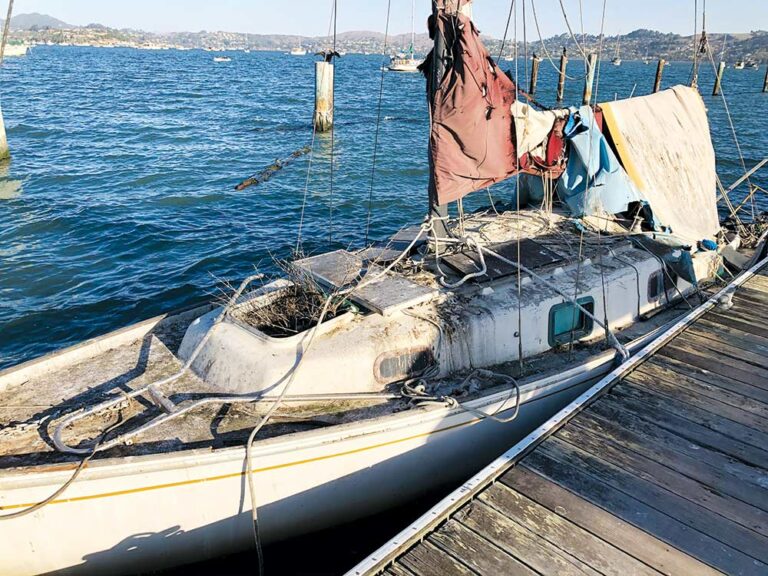
No rent, no mortgage, no property taxes. The allure of living for free in Marin has attracted many people over the years to take up residence on boats anchored in the open waters of Richardson Bay.

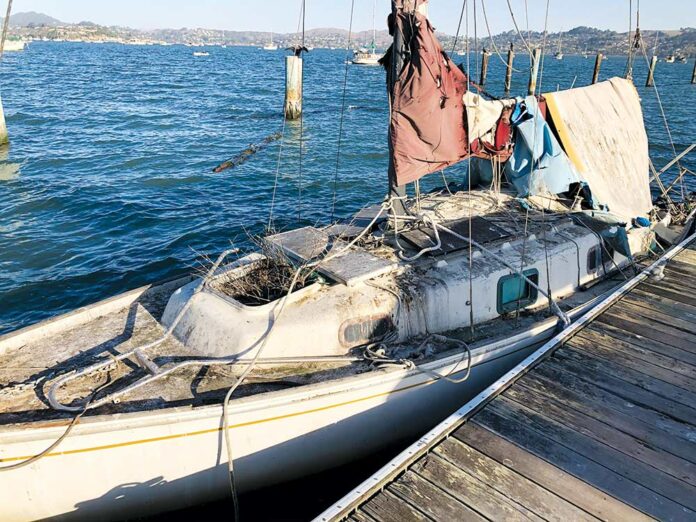
Currently, 135 vessels remain anchored off the shorelines of Sausalito, Mill Valley, Tiburon and Belvedere, according to a recent count by local officials. The people who live on those boats are often called “anchor-outs.”

Much to the chagrin of the authorities governing the waters, most anchor-outs refuse to give up their floating dwellings, although applicable laws state that vessels in Richardson Bay may idle only for 72 hours, unless granted permission to stay longer. Inconsistent enforcement of the law has allowed more and more boats to come into the Bay, drop anchor and set up makeshift homes.

Now, despite the on-going pandemic, a state agency is pressuring local officials to remove the anchor-outs from Richardson Bay.

The San Francisco Bay Conservation and Development Commission (BCDC), a state agency, was established in 1965 to regulate development in and around the San Francisco Bay. The Richardson Bay estuary falls under its purview.

But the BCDC has not consistently required Sausalito, Mill Valley, Tiburon, Belvedere and Marin County to enforce the 72-hour anchorage regulation.

“Until the Fall of 2015, the BCDC did not have an enforcement attorney,” said Larry Goldzband, BCDC Executive Director. “Before that, the BCDC had two people doing enforcement. We hired chief counsel in 2015, and then when we were able to hire enforcement counsel and an enforcement manager, we began growing the enforcement program.”

Apparently, the program did not grow quickly enough for the state, because in May 2019, the state auditor released a report concluding the BCDC’s “failure to perform key responsibilities has allowed ongoing harm to the San Francisco Bay.” The report refers to, among other issues, a case opened in 2010 involving 200 vessels anchored illegally in Richardson Bay.

“Commission staff have indicated that many of these boats are in a state of disrepair and that they frequently sink, resulting in the release of harmful chemicals into the Bay,” the report states.  “Although the illegally moored boats in Richardson Bay have harmed a delicate ecosystem, the commission has done little to resolve the situation.” 

After the auditor’s report was issued, the BCDC began pressuring Richardson Bay authorities to step up enforcement of the 72-hour law. The authorities include the City of Sausalito and the Richardson’s Bay Regional Agency (RBRA), a coalition of the governments of Belvedere, Mill Valley, Tiburon and unincorporated Marin.

The enforcement efforts were paused during the early months of Covid-19. But, in a recent virtual meeting, BCDC officials urged local officials to clear Richardson Bay.

“The Richardson Bay problem needs to be fixed,” Goldzband said. “We explained to the RBRA and Sausalito that it’s their responsibility to enforce the law.”

Sausalito, it appears, has made great strides. Once a member of the RBRA, Sausalito cut ties with the agency in 2017, because the city was one of the largest financial contributors, yet was not given a role in setting policy.

“When we left the RBRA, we had 90 boats in Sausalito waters,” said Sausalito City Councilmember Joan Cox. “Today we have six occupied and three unoccupied boats.”

The six occupied boats are “legacy” anchor-outs and “older folks” live on them, Cox said. The city asked the BCDC to defer enforcement of removing these boats, as the occupants are experienced mariners. Cox anticipates it could take five years to reduce the number of legacy vessels. Sausalito law enforcement is working with the Ritter Center, a Marin nonprofit that helps prevent homelessness, to find marina housing for those in need.

The RBRA is also working to reduce its number of anchor-outs; however, it has not been as successful as Sausalito, likely because it has only one staff member. Curtis Havel, the RBRA harbormaster, began working for the agency in July 2019, just after the BCDC began cracking down on the RBRA to rid Richardson Bay of the anchor-outs.

Currently, 126 boats remain in the Richardson Bay waters that Havel patrols—120 occupied and six abandoned.

Havel’s rule is that at least two people must be on his boat to approach anchor-outs, as his life has been threatened more than once. Fortunately, he works in cooperation with the Marin County Sheriff’s marine patrol unit and the Coast Guard.

The RBRA has had more than 80 unoccupied, unseaworthy boats seized and destroyed since August 2019, though the practice was halted during Covid-19, according to Havel.

Robbie Powelson, Tam Equity Campaign founder, alleges the RBRA has a disturbing trend in home destruction. 

“Literally, everyone I have confirmed as having lost a home to Curtis Havel has been a woman,” Powelson said in a written statement. “I have met men losing boats under extraneous circumstances, but only women have reported to me losing their homes while they were still living in them.”

Although the Pacific Sun reached out to several of the women named by Powelson, none returned calls for comment.

“There’s a narrative associated with the anchorage that I’m seizing boats and making people homeless during the pandemic,” Havel said. “That’s simply not true. My goal isn’t to take away anyone’s home. It’s to make the anchorage a safer place. Right now, there are 17 boats out there that can save themselves and another 10 that are operational. The rest aren’t seaworthy.”

The RBRA is also working with housing outreach partners. According to Havel, a housing advocate is usually on his boat on a weekly basis. They know who occupies each boat and they have their phone numbers.

Even as Sausalito and the RBRA work to find alternative living arrangements for the anchor-outs, the BCDC is not relenting. They want Richardson Bay free of anchor-outs as soon as possible.

“People can’t live on the Bay,” Goldzband said. “That’s not what it’s for. There are no shopping centers in the Bay. There are no movie theatres in the Bay. You cannot just put a boat in the middle of it and not have [the boat] move.”

“I don’t think it’s a homeless issue,” he continued. “The people on the Bay are living illegally. If these people need a place to live, the local governments need to deal with it.”

One thing all parties agree on is that loss of life is unacceptable. Recently, a man had a heart attack after his boat crashed into another boat in the anchorage. Another resident was located in her boat and pronounced dead by San Rafael Fire Department paramedics. The Marin County Coroner’s Office has yet to determine her cause of death.

Goldzband said he has full faith the local governments will be able to ensure the safety of their residents.

Havel is not as certain. With winter storms approaching, he is concerned about the unseaworthy vessels. After all, 135 boats remain anchored out in Richardson Bay.

“People buy a boat for nearly nothing in the middle of the summer,” Cox said. “Then winter comes. People just don’t realize how treacherous it is to live out in the Bay.”

EDITOR’S NOTE: Paragraph 28 has been updated with information from the Marin County Coroner’s Office.


Letters to the Editor: King of Denial

Trump lacks the guts to admit that he lost the election because of his own mistakes on many important issues. Any President who openly brags about conquering women with his personal wealth is almost begging to lose his chance for re-election. And openly denying the seriousness of the coronavirus pandemic while thousands of his constituents are dying from this deadly virus was also a sure way to lose this election.

Yet for me the final straw that broke the camel’s back is President Trump’s adamant climate change denial. With our planet quickly overheating and igniting massive wildfires all over California, any politician who refuses to fight for our Earth’s environmental survival has no right to even think about being the President of a major greenhouse gas emitting nation.

So instead of pretending to be the victim of any election fraud President Trump needs to more honestly face his own major mistakes during his four years as our nation’s most powerful person.

Rama Kumar

Fairfax

Open Mic: Shaken, Not Stirred

By E.G. Singer

“My name is Bond, James Bond,” so spoke actor Sean Connery, introducing his character to millions of moviegoers of the 1960s and beyond. He went on to play that character, penned by author Ian Fleming, multiple times.

Many actors have played James Bond, but Mr. Connery, who passed away at age 90 on Oct. 31, was the first—and defined the character as a throwback to the swashbuckling heroes of previous generations, but with the added sophistication and wit that accompanied his persona.

He was of Scottish, working-class roots, which he carried proudly throughout his life. Poverty and lack of formal education schooled his circuitous route to “stardom,” a term he undoubtedly had ambivalent feelings about, but nevertheless reaped the rewards from.

In between many, many jobs, interspersed with body building, he gravitated towards acting and began to find work in small parts in movies, television and on stage until being cast (without a screen test!) as James Bond in Dr. No. The rest is history, as they say.

“My strength as an actor, I think, is that I’ve stayed close to the core of myself,” Mr. Connery stated.

But, whether it was true to his upbringing—which had instilled a confidence in him at an early age—his artist’s creative soul or the realization that the shelf life of a modern “action hero” was limited, he began choosing very different genres of movies and period pieces to display his talents. Whether it was as Colonel Arbuthnott in Murder on the Orient Express; or Robin Hood in the mythological retelling of Robin and Marian; or the crime-solving monk in The Name of the Rose; or the street-wise cop in The Untouchables (which won him an Academy Award); or Harrison Ford’s eccentric father in Indiana Jones and the Last Crusade, Sean Connery brought his strong good looks, truthfulness and gravitas to his every performance.

So for those of us who imbibe, we raise a glass in memory to Sir Sean Connery, and request our martini be shaken, not stirred.

E.G. Singer lives in Santa Rosa.

Smoke the Vote

Cannabis users and cannabis activists—the entire U.S. cannabis world—are giddy with success right now. In five states, blue as well as red, all the marijuana initiatives on the 2020 Election Day ballot passed with flying colors.

Ellen Komp, the Deputy Director of the California branch of the National Organization for the Reform of Marijuana Laws (NORML), told me, “There’s still a long way to go. Californians can’t legally ship marijuana around the country and around the world. Federal law forbids it, and cannabis is still illegal in the eyes of the White House and the Senate, which didn’t flip, as many Democrats hoped. That makes it harder to change the laws on a national level.”

During Komp’s 30 years with NORML she has witnessed huge changes in California, Colorado, Oregon, the State of Washington and elsewhere. This Election Day, Arizona, New Jersey and Montana passed legislation permitting recreational use by adults. In the Deep South, Mississippi voters approved medical marijuana. In the Northeast, New Jersey voters okayed both recreational and medical cannabis. Jersey activists hope their new laws will pressure neighboring pot-phobic New York State. But very state has its own rules.

“At some point we’ll reach critical mass and push for federal changes,” Komp told me. “The government doesn’t just give you your rights. You have to fight for them and then you have to fight to protect them.” What’s needed, Komp points out, are workers’ rights and civil rights for cannabis users. Also, public places and public events where one can legally smoke pot.

In Arizona, voters approved Prop. 207, allowing citizens with cannabis convictions to have their records expunged. In Mississippi, Initiative 65 requires the state to issue cannabis licenses not later than Aug. 15, 2021. In Montana, 1-190 allows adults to cultivate up to four mature plants. South Dakota voters approved Constitutional Amendment A, allowing adults to cultivate up to three plants for personal use in some jurisdictions. Local authorities can also ban cannabis. Alas, that doesn’t bode well for South Dakota. Lawsuits seem inevitable.

In a press release, Erik Altieri, NORML’s executive director, said, “marijuana legalization is an issue that’s supported by Americans, regardless of party politics.” Indeed, while marijuana has divided the nation it has also brought citizens together in hippie communes, on 4/20, in the armed services and during the current pandemic.

Jonah Raskin is the author of “Marijuanaland: Dispatches from an American War.”

Online Memorial Honors Late Marin County Artist Connie Smith Siegel

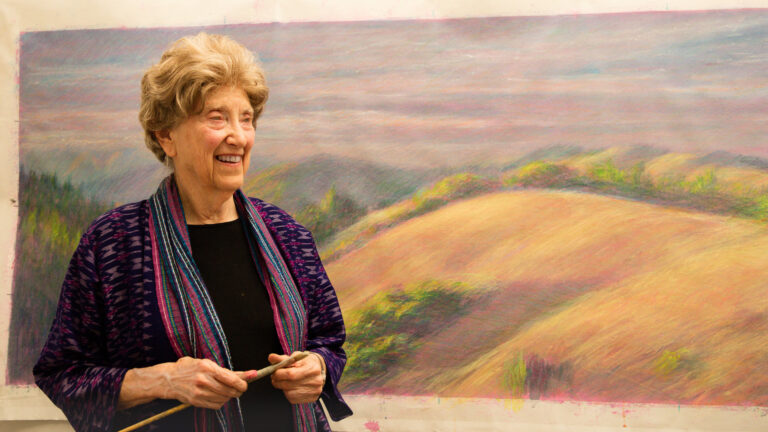
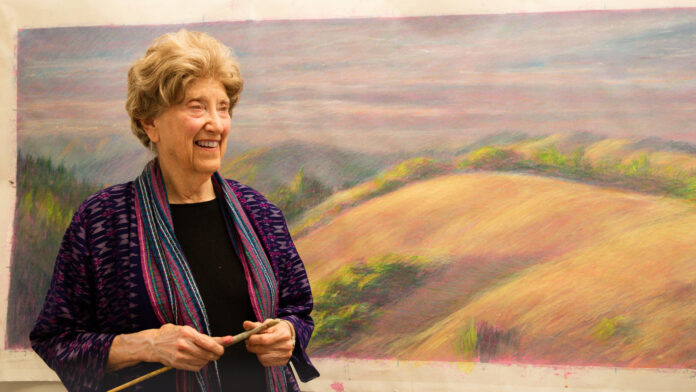
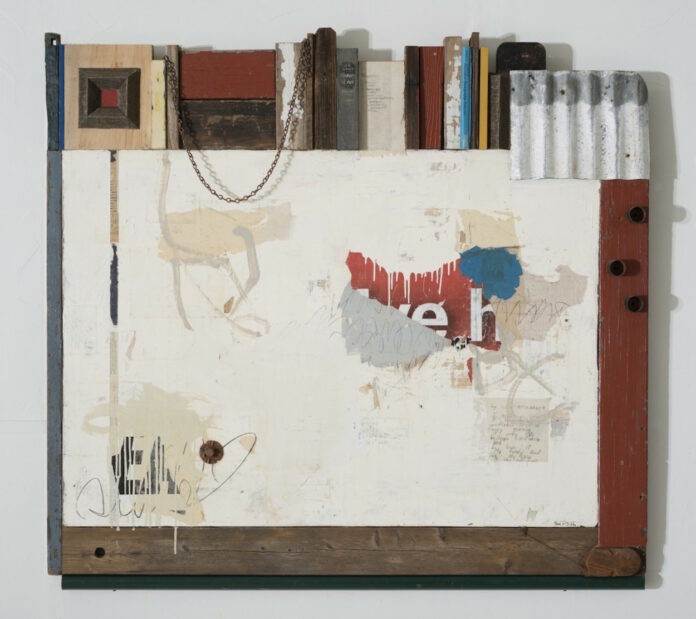
Beloved artist and teacher Connie Smith Siegel lived and worked in the town of Woodacre in Marin County’s San Geronimo Valley for more than 40 years before her death on August 4 at age 83. Siegel was a popular figure in the North Bay art world, and her landscape paintings have been widely admired and exhibited locally for decades.

This weekend, Marin County gathers virtually to remember and celebrate Siegel’s life and art during a Zoom memorial service hosted by the San Geronimo Valley Community Center on Sunday, Nov 15, at 4pm.

Born on April 20, 1937, in Colorado Springs, Siegel received her MFA from the University of Colorado, Boulder, in 1962, and her work in art and teaching took her to places like Amarillo College in Texas and eventually to California in 1975, where Siegel taught at the California Institute of Integral Studies and JFK University in addition to teaching private workshops and classes at her home and other venues such as Sonoma State University, UC Santa Cruz, and Esalen Institute.

Siegel’s work is in the permanent collections of the Achenbach Foundation for Graphic Arts at the Palace of the Legion of Honor in San Francisco, as well as Hastings College of the Law and the Oakland Museum. In her life, Siegel also exhibited at Dominican College, Marin Art Festival, William Sawyer Gallery and John F. Kennedy University among other venues.

Throughout her career, Siegel connected art to the community and encouraged art as a healing practice. For much of her life, Siegel created art through Sensory Awareness, in which our own senses and awareness of our surroundings informs our behavior and psychology.

As such, Siegel was a landscape painter who imbued her works with a “spirit of place.” Siegel often painted outdoors across Marin and Sonoma County, and she traveled widely to find beautiful natural settings that she could transform into lively paintings done in oil, acrylic or pastel. Each spring, Siegel could be found drawing in the San Geronimo Valley, and each fall she would pack her camper and paint in the Sierras.

Sensory Awareness also became the basis for Siegel’s teaching methods and her books The Spirit of Drawing, The Spirit of Color and The Healing Spirit of Drawing and Color. In addition to her art and her teaching, Siegel was a fierce environmental activist as well as a champion for peace. Her art was used in anti-nuclear protests in the ’80s and she worked with the pioneers in movement and expressive therapy, practiced Buddhist meditation and studied Nonviolent Communication.

Siegel’s ability to create community often manifested in projects like the Artist Potluck Group of local creatives who regularly met to share and critique their art, and her exhibitions often featured opening receptions that incorporated musicians and poets performing alongside her paintings.

Most recently, Siegel held two retrospective shows just before the Covid-19 pandemic, one at the San Geronimo Valley Community Center and one at Toby’s Gallery in Point Reyes Station.

Those who wish to remember Siegel can RSVP now for the Nov. 15 online memorial service, and there will also be a “Connie Day” on a number of Marin nonprofit art organizations’ social media pages on Friday, Nov. 13. Visitors to the online memorial can make donations in Siegel’s name to the San Geronimo Valley Community Center, Marin Open Studios, West Marin Senior Services, or Hospice by the Bay.

Conniesmithsiegel.com.

Marin County Couple and 100 Volunteers Feed Elderly

By Woody Weingarten, Bay City News Service

The Respecting Our Elders motto — with apologies to the U.S. Postal Service — could be, “Neither pandemic nor heat nor wind can stay these couriers from the swift completion of their appointed rounds.”

For sure, the all-volunteer, food-rescue charity hasn’t allowed Covid-19 or power outages to stop it from feeding Marin County’s poor and hungry older adults (and others).

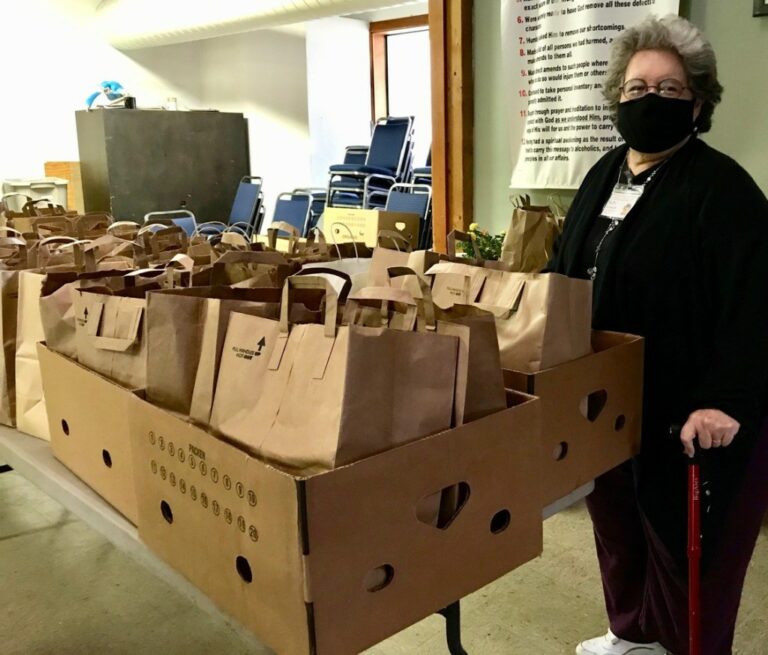
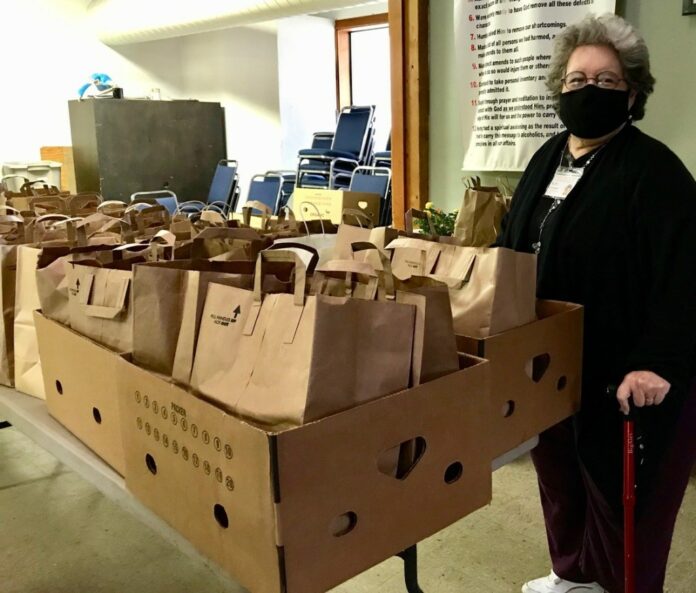
Though some bumps surfaced when the coronavirus first hit, most were quickly eliminated, allowing the Novato-based nonprofit’s 100 volunteers to continue delivering an average of 500 pounds of free food each day, according to 75-year-old Ruth Schwartz, its president and board chair.

The fresh food consists mainly of dated goods that need to be taken off shelves, produce a little too ripe to sell and grocery items with damaged packaging.

It currently comes from daily pickups at seven Marin supermarkets plus the Sunday farmers’ market, ranging from pork, beef and meatloaf to produce and prepared foods from deli counters.

Flowers and donated merchandise (like toiletries and cleaning supplies) are also distributed to needy recipients, notes Curt Kinkead, 78, Schwartz’s husband of 27 years and the organization’s secretary and lead volunteer.

Food is now handed out at seven senior facilities. The organization also services a Saturday bag program as well as an open food day where “anyone can show up and get served, no questions asked,” said Schwartz.

Delivery to a San Rafael church stopped because the facility closed down; all the other spots had some interruptions, she said, “but all are back in operation, working within COVID-19 safety requirements.”

Added Kinkead, “We’ve promised recipients that we’ll feed them free for as long as they — or other people they want to help — need it. A lot of our recipients don’t cook, so that’s a real blessing.”

Clients frequently voice their appreciation.

“If you want to be loved by a bunch of people, just bring them food,” Kinkead said with a smile.

Risks of contracting the virus are kept to a minimum via mask wearing and social distancing, and Kinkead is glad to report that “we haven’t had a single volunteer come back positive for COVID.”

All the volunteers come from the charity’s recipient base: “We have the best of the poor taking care of the rest of the poor,” he said. “Nobody’s ever done it better, more efficiently or more lovingly.”

Although the couple has lived at Novato’s Los Robles Mobile Home Park since 2010, they founded Respecting Our Elders 15 years ago while living at the Villas at Hamilton, a subsidized housing development, because they realized, Schwartz explained, that “some of our neighbors weren’t getting enough to eat” and they were certain they could do something about it.

Their initial goal was simply to reduce the amount of money participants in what Kinkead had labeled “a hell hole of poverty and despair” would need for food so they might have a little left over for a movie or coffee date.

They quickly succeeded, beginning with food from one store, Trader Joe’s in Novato, then adding Whole Foods in Mill Valley, then more and more supermarkets.

Because what they hand out is given to them cost-free, their overhead is limited to about $700 a month for gas, $1,600 for two sets of tires a year for the van, and $500 a month for brake jobs and other repairs.

For that, they do accept donations.

Kinkead, who volunteers for the charity seven days a week, made his living as a guide in Southern California for 250,000 whale-watchers. He is the author of two books, a novel and a work of nonfiction about whales, dolphins and their connection to the universe.

Schwartz, aka The Wonderlady, is a self-publishing consultant who helps writers bring books to market.

How long do they plan to work with Respecting Our Elders?

“As long as we can,” said Kinkead.

Holiday Arts Guide


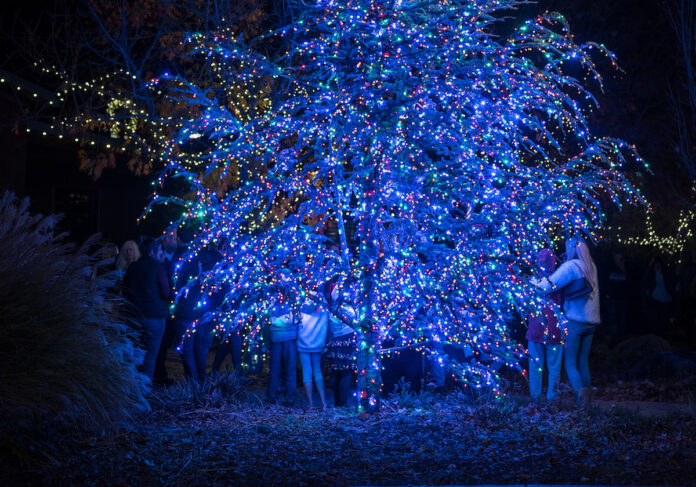
If 2020 proved anything, it’s that time marches on. Even as the Covid-19 pandemic shutters social gatherings in parts of the North Bay, the holidays approach, and with them comes a plethora of socially distant and virtual events that promise to brighten spirits. To help navigate the season, we present a guide to local holiday events, shopping, performances and other artsy offerings leading up to Christmas.

The Thanksgiving Play
Anyone who has experienced familial quarreling during the holidays will relate to Sonoma County–based Left Edge Theatre’s virtual production of The Thanksgiving Play. The satirical comedy about reconciling the holiday’s celebratory atmosphere with the dark legacy of colonial expansion in America is presented live over Zoom on Thursday through Sunday, Nov. 12–15, at varying times. The show will then be available to stream on demand from Nov. 16–29. $10–$30. Leftedgetheatre.com.

Warren Miller’s Future Retro
Each year, adventure-film producers Warren Miller Entertainment assemble a feature-length film based on winter sports spotlighting world-class skiers and other sports figures performing mind-bending stunts around the world. This year marks the first-ever digital release of the annual film, and Warren Miller’s Future Retro streams into homes this month. The jaw-dropping film features athletes taking big risks and finding big rewards on mountains in Iceland, Alaska and elsewhere. The film will be released in regional premieres; West Coast audiences can view Future Retro on Saturday, Nov. 21, at 7pm. The film will be available to stream for two days, and tickets include other digital content and other perks. $69. Warrenmiller.com.

Holidays Along the Farm Trail
Each winter, Sonoma County Farm Trails hosts a series of shopping and agricultural activities to celebrate the season. This year, Sonoma County Farm Trails is keeping gatherings small and close to home, though the organization will still host several virtual offerings, including farm-fresh gifts and local décor available on the group’s Facebook and Instagram pages and at Farmtrails.org.

Holidays in Yountville
Dubbed “the brightest town in Napa Valley,” Yountville annually offers an escape from big-box store shopping with down-home events and experiences throughout the season. This year’s calendar includes more than 50 virtual and safe in-person events, with craft and cooking classes, virtual tastings, an online gift guide and a virtual holiday light tour of Yountville on Friday, Nov. 27. Yountville.com.

San Rafael Parade of Lights & Holiday Festival
(Editor’s Note: This event has been canceled for 2020) San Rafael’s 41st annual event moves ahead in 2020 as a single-day celebration that opens with an afternoon holiday marketplace boasting local shopping and kids activities before the evening’s brightly-lit events which include the parade at 5:30pm followed by a tree-lighting ceremony with Mr. and Mrs. Claus in the city’s plaza. Fourth and B streets, San Rafael. Friday, Nov. 27, noon to 8pm. Free. Sresproductions.com.

Winter Lights
Santa Rosa’s downtown Courthouse Square lights up each Christmas with a massive tree-lighting ceremony. This year, rather than a one-day event, Winter Lights will take place from Thanksgiving through New Years Day, with activities for the family, photo opportunities, holiday specials from local restaurants and shops, and other entertaining elements presented with social distancing and safety in mind. Nov. 27 to Jan. 1, at Third Street and Mendocino Avenue, Santa Rosa. Downtownsantarosa.org.

Sausalito Gingerbread House Competition & Tour
This 14th-annual citywide event features festive and delicious gingerbread houses displayed in the windows of local businesses that are mostly within walking distance of each other, meaning this is a family-friendly diversion from the hustle and bustle of holiday shopping. Dec. 1–31. Downtown Sausalito. Maps are available at participating merchants or at Sausalito.org.

Broadway Holiday Experiences
Sonoma County’s award-winning Transcendence Theatre Company has already proven it can provide theatrical entertainment to at-home audiences with this past summer’s “Best Night Ever Online” season of virtual showcases. Now, the company sets its sights on the holidays with festive song and dance performances playing at drive-in venues and online. Broadway Holiday Experiences play Fridays to Sundays, Dec. 4–6 at SOMO Village, 1100 Valley House, Rohnert Park; and Dec. 11–13 at Sonoma Raceway, 29355 Arnold Dr., Sonoma. 5pm. $59 and up. Online performances stream Dec. 18–23 on YouTube, times vary. Free, donations accepted. Transcendencetheatre.com.

Light Up a Life
Heartland Hospice honors lives lost with annual candle- and tree-lighting ceremonies in Sonoma County each winter. This year, Light Up a Life will be a virtual tree-lighting and remembrance ceremony on Friday, Dec. 6, at 6pm. Purchase a light to honor a loved one by calling 707.778.6242.

Calistoga Lighted Tractor Parade
This small town celebrates the holiday season and its agricultural heritage each winter with a parade featuring vintage tractors, antique trucks and other rustic autos adorned in dazzling lighting displays. This year, the event has been modified to display tractors decked in lights throughout town for a social-distanced celebration on Saturday, Dec. 5. Lincoln Avenue, downtown Calistoga. 5:30pm. Free. Visitcalistoga.com.

Winterfest Sausalito
This 33rd annual event will comply with Covid-19 safety precautions when it presents its popular Lighted Boat Parade—featuring dozens of brightly decorated vessels along the Sausalito Waterfront—on Saturday, Dec. 12, at 6pm. Entry forms for participating vessels and other details can be found at Winterfestsausalito.com.

Luther Burbank Plant Sale & Gift Shop
While Luther Burbank’s historic home and gardens are not holding an annual open house this holiday season, there will be a two-day sale featuring socially distant shopping with holiday-themed cards and face-coverings available in the gift shop. Saturday and Sunday, Dec. 12–13, Luther Burbank Home & Gardens, 204 Santa Rosa Ave., Santa Rosa. 1–4pm each day. Lutherburbank.org.

Songs of Light
San Rafael’s Osher Marin JCC is usually the scene of one of Marin’s biggest Hanukkah parties. This year, all are welcome to Osher Marin JCC’s virtual holiday presentation, “Songs of Light: A Multi-Genre Musical Celebration of Hanukkah” that takes place on Zoom for one night only. The event will be hosted by James Sokol, the director of the Kurland Center for Adult Learning & Living at the Osher Marin JCC, who leads a virtual program that explores the Festival of Lights through the music of Broadway, opera, pop and more. Register in advance for the free event, and take the musical trip on Sunday, Dec. 13, at 1pm. 415.444.8002.

Hanukkah with Shomrei Torah
This year this progressive Santa Rosa congregation hosts a virtual version of the Jewish holiday of lights, beginning with a three-part Zoom presentation on Hanukkah’s origins, spiritual meaning and more on three consecutive Wednesdays, Dec. 2–16, at 7pm. Free. Then, Congregation Shomrei Torah holds a virtual Hanukkah celebration—details to come—on Thursday, Dec. 17 at 6:15pm. Cstsr.org.

Holiday Gift Market
Healdsburg Center for the Arts’ annual gallery show offers an opportunity to find and purchase original, handmade creations, crafts and goods from local artists. Saturday, Nov. 21, though Wednesday, Dec. 30. Healdsburg Center for the Arts, 130 Plaza St., Healdsburg. Free. Healdsburgcenterforthearts.org.

Petaluma Merchant’s Holiday Open House
Each year, downtown Petaluma helps shoppers find deals and enjoy festive holiday treats, horse-and-carriage rides, balloon art, face painting and more during an open-house outing. This year’s event will look different due to Covid-19, with details still forthcoming. For now, the open house is happening Saturday, Dec. 5. Putnam Plaza, 129 Petaluma Blvd. N., Petaluma. 11am to 5pm. Get further details by calling 707.762.9348.

Posada Navideña
A holiday tradition in Mexico, Posada Navideña features performances blending dance, music and song. Each year, Luther Burbank Center for the Arts hosts a showcase, and this year the venue welcomes Northern California company Calidanza for a virtual performance featuring lively entertainment online on Friday, Dec. 11, at 7pm. The online performance will be available for free for 48 hours after its premiere. Lutherburbankcenter.org.

County Seeks Input on Proposal to Covert Part of Highway 101 Shoulder Into Bus Lane

By Bay City News Service

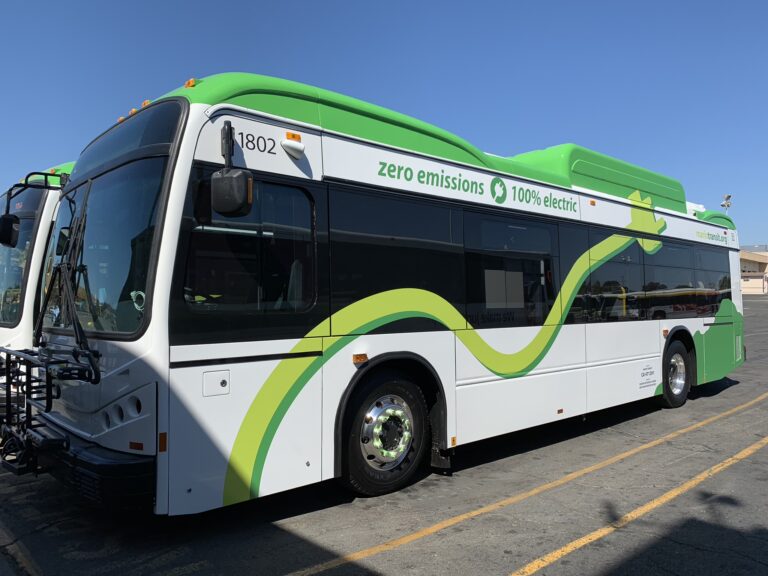
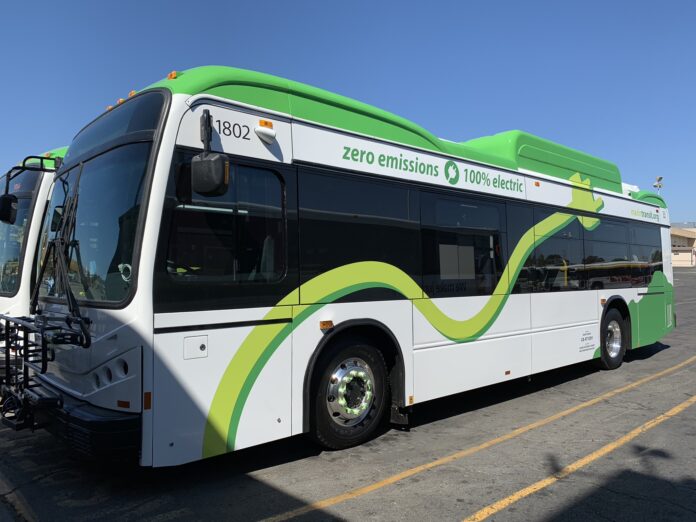
The Transportation Authority of Marin is conducting a study and seeking public input on whether parts of the U.S. Highway 101 shoulder in central and northern Marin County should be converted to part-time transit lanes for buses.

The project would use the existing shoulder of Highway 101 from Atherton Avenue/San Marin Drive in Novato to Mission Avenue in San Rafael, allowing buses to travel up to 35 miles per hour during peak congestion times when traffic is going slower in other highway lanes.

Residents are asked to fill out a survey before 5:00pm Friday, Nov. 20, to provide feedback on the proposal.

“We know we need an innovative solution to help reduce congestion in Marin County. If buses can use the US 101 shoulder, it will add freeway capacity without having to add new lanes, which is not feasible in northern Marin,” TAM executive director Anne Richman said in a news release.

More information about the proposed project can be found here.

Health Officials Caution Against Holiday Travel

Health officials representing 10 counties and the city of Berkeley advised Bay Area residents against traveling for the holidays this year, cautioning that family gatherings could worsen the spread of Covid-19 in the Bay Area and beyond.

Public health officers from the counties of Alameda, Contra Costa, Marin, Monterey, Napa, San Mateo, San Francisco, Santa Clara, Santa Cruz, and Sonoma, and the city of Berkeley signed on to the recommendations. The full list is available here.

Although they are not barring anyone from traveling, the health officers recommend against organizing large gatherings and planning non-necessary travel, including holiday trips. The officers advise that “in-person gatherings be small, short, stable (no more than three households over an extended period), and outdoors.”

If individuals do decide to travel or gather to celebrate the holidays, the health officials recommend that they follow all of the normal health precautions, including maintaining social distance, wearing a mask as necessary, and washing hands regularly. 

“Marin residents considering travel should know that Covid-19 rates are high in many regions across the country, and not everyone around you will always be taking the right precautions,” Dr. Matt Willis, Marin County’s Health Officer, said in a prepared statement Monday. “Keep doing the things you’re doing to protect yourself and others, even if the people are around you are not.”

The officials strongly recommend that those who do travel self-quarantine for 14 days upon their return home if activities while traveling put them at a higher risk of catching Covid-19.

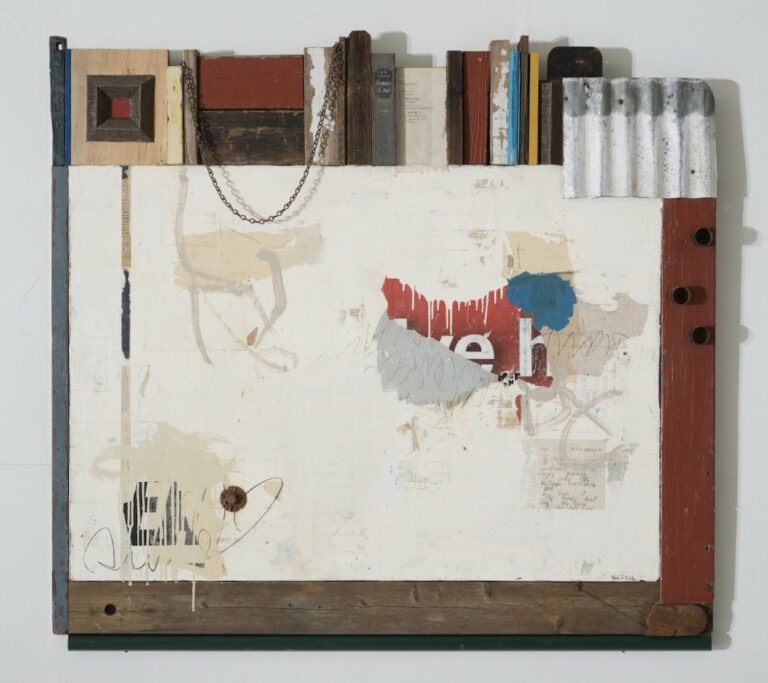
Several Marin Artists Featured in de Young Museum Open Exhibit

Located in Golden Gate Park, the de Young Museum–part of the Fine Arts Museums of San Francisco–has been a fixture of the Bay Area arts world since 1895 and it has a longstanding tradition of engaging the local community and showcasing local talent as well as international artists.

This year, the museum celebrates its 125th anniversary by inviting Bay Area artists to participate in “The de Young Open” group art exhibition, on display now though the end of the year. 

More than 6,000 artists from nine Bay Area counties applied to be part of the exhibition, and curators and artist judges selected 881 works created by 763 artists, including more than 70 Marin County-based creators.

Of those Marin artists, Sausalito’s renowned ICB (Industrial Center Building) artist collective has announced that 11 of the group’s artists have been chosen to show 13 works in the exhibit.

The ICB artists in the show produce a range of work including photography, mixed media, oil painting, acrylics and sculpture. The ICB, a destination for art collectors and visitors from around the country, has been a vibrant community of artists for more than 50 years, and many of the artists who call the ICB’s studios home are nationally and internationally recognized figures.

The ICB artists whose work will be on display at the de Young include Leslie Allen (Sausalito), Sophy Bevan (Mill Valley), Maria Burtis (San Francisco), Chris Chaffin (Mill Valley), Rachel Davis (Lucas Valley, San Rafael), Bibby Gignilliat (Mill Valley), Nancy Ilg (San Rafael), Ivy Jacobsen (Fairfax), Stephen Mangum (San Francisco), Sharon Paster (Belvedere) and Carla Roth (Ross).  

“I am honored and excited about the opportunity to be part of this amazing exhibition at the de Young,” says ICB artist Bibby Gignilliat. “The chance to be part of a group of outstanding Bay Area artists in this way is a dream come true and the break I’ve been waiting for.”

“I’m over the moon and thrilled that my work will be on the wall in one of my favorite museums,” says Rachel Davis, another ICB artist.

Now with Covid-19 restrictions in place and regular Open Studios events cancelled, several of the artists at ICB are also offering one-on-one Zoom sessions or socially distanced and masked studio visits until things return to normal.

Other Marin artists involved in the exhibit include Renée Bott, Kim Ford Kitz, Jane Hambleton and Lisa Kokin, all represented by Seager Gray Gallery in Mill Valley; and artists Charles Anselmo and Marna Goodrich Clarke from Gallery Route One in Point Reyes Station.

In addition to artists from Marin County, the “de Young Open” is showing works by artists living in Alameda, Contra Costa, Napa, San Francisco, San Mateo, Santa Clara, Solano, and Sonoma County.

The “de Young Open” jury process was announced in March, though the exhibit was delayed until this fall due tot he Covid-19 pandemic. Works of art in the exhibit are hung “salon-style,” installed edge to edge and floor to ceiling in the de Young’s large Herbst galleries on the lower level. The work is also being exhibited in an online gallery and all artists in the show can offer their work for sale and retain 100-percent of the proceeds. 

“The de Young Open” runs through Jan 3, 2021 at the de Young Museum, Golden Gate Park at 50 Hagiwara Tea Garden Dr., San Francisco; and the show is online now at deyoung.famsf.org.

Officials Seek to Remove Richardson Bay ‘Anchor-Outs’

No rent, no mortgage, no property taxes. The allure of living for free in Marin has attracted many people over the years to take up residence on boats anchored in the open waters of Richardson Bay. Currently, 135 vessels remain anchored off the shorelines of Sausalito, Mill Valley, Tiburon and Belvedere, according to a recent count by local officials. The...

Letters to the Editor: King of Denial

typewriter opinion newspaper
Trump lacks the guts to admit that he lost the election because of his own mistakes on many important issues. Any President who openly brags about conquering women with his personal wealth is almost begging to lose his chance for re-election. And openly denying the seriousness of the coronavirus pandemic while thousands of his constituents are dying from this...

Open Mic: Shaken, Not Stirred

By E.G. Singer “My name is Bond, James Bond,” so spoke actor Sean Connery, introducing his character to millions of moviegoers of the 1960s and beyond. He went on to play that character, penned by author Ian Fleming, multiple times. Many actors have played James Bond, but Mr. Connery, who passed away at age 90 on Oct. 31, was the first—and...

Smoke the Vote

Cannabis users and cannabis activists—the entire U.S. cannabis world—are giddy with success right now. In five states, blue as well as red, all the marijuana initiatives on the 2020 Election Day ballot passed with flying colors. Ellen Komp, the Deputy Director of the California branch of the National Organization for the Reform of Marijuana Laws (NORML), told me, “There’s still...

Online Memorial Honors Late Marin County Artist Connie Smith Siegel

Beloved artist and teacher Connie Smith Siegel lived and worked in the town of Woodacre in Marin County's San Geronimo Valley for more than 40 years before her death on August 4 at age 83. Siegel was a popular figure in the North Bay art world, and her landscape paintings have been widely admired and exhibited locally for decades. This weekend,...

Marin County Couple and 100 Volunteers Feed Elderly

Ruth Schwartz Respecting Our Elders
By Woody Weingarten, Bay City News Service The Respecting Our Elders motto -- with apologies to the U.S. Postal Service -- could be, "Neither pandemic nor heat nor wind can stay these couriers from the swift completion of their appointed rounds." For sure, the all-volunteer, food-rescue charity hasn't allowed Covid-19 or power outages to stop it from feeding Marin County's poor...

Holiday Arts Guide

If 2020 proved anything, it’s that time marches on. Even as the Covid-19 pandemic shutters social gatherings in parts of the North Bay, the holidays approach, and with them comes a plethora of socially distant and virtual events that promise to brighten spirits. To help navigate the season, we present a guide to local holiday events, shopping, performances and...

County Seeks Input on Proposal to Covert Part of Highway 101 Shoulder Into Bus Lane

Transit Marin County Highway 101
The project would allow buses to travel up to 35 miles per hour during peak congestion times.

Health Officials Caution Against Holiday Travel

Covid-19 Santa Claus holidays mask
Health officials representing 10 counties and the city of Berkeley advised Bay Area residents against traveling for the holidays this year, cautioning that family gatherings could worsen the spread of Covid-19 in the Bay Area and beyond. Public health officers from the counties of Alameda, Contra Costa, Marin, Monterey, Napa, San Mateo, San Francisco, Santa Clara, Santa Cruz, and Sonoma,...

Several Marin Artists Featured in de Young Museum Open Exhibit

Located in Golden Gate Park, the de Young Museum–part of the Fine Arts Museums of San Francisco–has been a fixture of the Bay Area arts world since 1895 and it has a longstanding tradition of engaging the local community and showcasing local talent as well as international artists. This year, the museum celebrates its 125th anniversary by inviting Bay...
3,002FansLike
3,850FollowersFollow