The Viruses They Are A-Changin’

A poem 

By J.F.

You people who gather in big angry mobs

Go back to your homes, go back to your jobs

The mutants are spreadin’ much worse than before

If your lives to you are worth savin’

Then you better start vaxxin’ and maskin’ some more

For the viruses they are a-changin’

Those media types, who blab with false words

So keep your eyes wide, and steer clear of those turds

For you gotta speak up, or fade into the din

And there’s no tellin’ who might be listenin’ in

For the pro-vaxxer now will be later to win

For the viruses they are a-changin’

Come senators, congressmen get off your duff

Please spring into action, enough is enough

The world needs your help, but your house is so broke

The variants outside are ragin’

Do something right now or your jobs we’ll revoke

For the viruses they are a-changin’

Come mothers and fathers, save your daughters and sons

The virus will kill, but it don’t need no guns

Do what you have to, to fight the new strains

It seems like we’re rapidly agin’

Time’s runnin’ out as we still make some gains

For the viruses they are a-changin’

Watch ev-o-lu-tion, now play its game

Smart ones will live and the weak will be lame

If we all work together with no one to blame

Pandemics will surely be vanquished

Just a little while longer, it’ll be on the wane

For the viruses they are a-changin.’

J.F. lives in Novato and is a retired scientist who cares very deeply for his two granddaughters and the kind of world they will inherit in the future.

Love Was His Message: Remembering Joshua Bluegreen-Cripps

By Daniella Caveney

Those of us who have attended live music concerts in Sonoma County and the North Bay have probably heard of Joshua Bluegreen-Cripps.

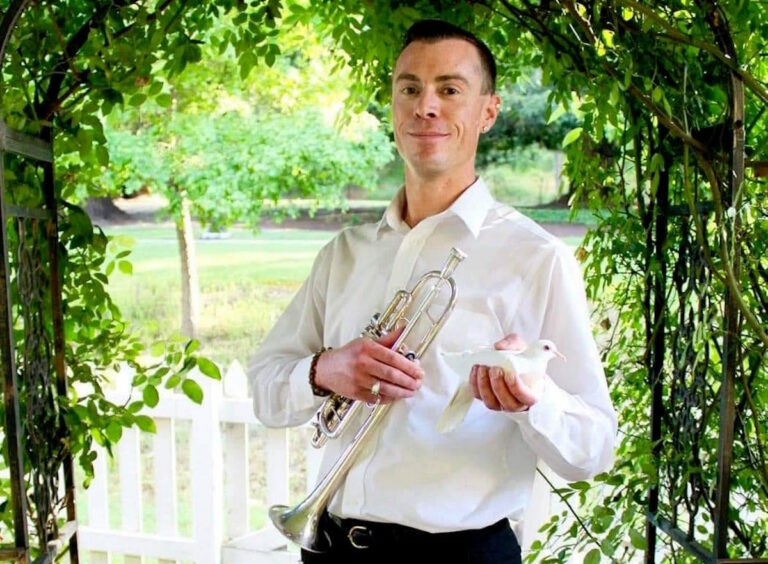
Joshua, who died on Jan. 31 at the age of 44, was a concert producer, trumpeter, magician, showman, DJ, KJ and yoga instructor. He was a giant in our community, always thinking of ways to bring people together with music. He loved everyone and celebrated everyone.

Joshua picked up a trumpet when he was in 4th grade and never put it down. At one point he was the youngest member of the Santa Rosa Youth Symphony, playing principal trumpet. In his youth he also sang in choir and picked up his love for magic, honing multiple tricks and even getting hired to perform magic tricks at events while he was in middle school.

In high school he won awards for his musicianship and multiple festivals. He began teaching trumpet as a teenager. His first original band, Tin Circus, was a ska band that drew a cult following in the ’90s. Joshua could play anything on trumpet. He went on to play with multiple musical groups including the Vespertine Orchestra, the Wednesday Night Big Band, the Tahoes and Tru Lyric.

Joshua loved being involved with Sonoma County Pride and was on the board of Petaluma Pride. Even though he was open with his friends, he actually did not “come out” to his entire community until his 40s. He said he previously worried that expressing himself openly might affect his career if someone did not want to hire him because he was a gay man. When approached to produce a local pride event, he made a conscious decision to express himself more openly and was excited to be featured in full makeup on the event poster. Joshua wanted to set an example for queer youth in our community and felt that his openness might help others come out.

He reconciled his relationship with what he called his “higher power” and loved to talk about spirituality. He frequently prayed or set a spiritual intention before performing, and his clear prayer was always to touch the hearts of the audience and to bring people together through music.

Joshua was a fantastic magician and performed advanced tricks, illusions and grand stage magic. One of the signature tricks he perfected was making a dove appear from a flaming dinner platter, which always wowed his audiences. Joshua performed for Catholic Charities and multiple schools, and children were mesmerized by his presence. He often did facepainting at his magic show events for children.

Joshua was a talented DJ and produced multiple shows at the Phoenix Theater, Maritime Hall and Sonoma County Fairgrounds. He produced EDM music for parties during the era when warehouse parties were all the rage, but his focus was on community and on getting people together. He even found locations in nature and brought in generators to provide music for hundreds of guests. He understood that young people need community and places to be together.

Joshua was voted best DJ in the North Bay for multiple years and also won the Couples Choice Award from The Knot & Wedding Wire for his work as a wedding DJ. He DJ’d for “Stepping Out to Celebrate Life,” a huge Breast Cancer-awareness event.

Joshua loved karaoke so much that he decided to become a KJ, or karaoke jockey, and hosted several weekly karaoke nights in Sonoma County. He was proud of his skill at fine-tuning the audio mix to make singers sound their best, and he put his whole heart into late nights, which earned him a loyal following of passionate karaoke attendees. He made everyone feel so special.

Joshua was an avid runner, Bikram yogi and Bikram yoga instructor. He dabbled in Chinese medicine and herbs, owned a full cupping set, studied essential oils, grew his own wheatgrass and made his own kombucha. He was interested in the environment and even became a solar-installation consultant. He never let his genetic pancreas condition slow him down; instead he committed his life to health. He was nerdy about supplements, herbs and food as medicine. He even carried a cooler around with him everywhere he went, which he stocked with probiotic yogurt, a protein bar, coconut water and alkaline water.

Something lesser known about Joshua is that he was a progressive participant in the legalization of medical cannabis. Recognizing a need to help people who used cannabis as part of their medical treatment acquire it safely and affordably, he became active in researching and challenging some of the laws that made it difficult for people to get medical cannabis. At one point he successfully argued for the return of medical cannabis that had been seized, which was the first time seized cannabis was returned in Sonoma County.

Joshua was also a marketing genius and sucessfully promoted many events from their gestation through to their end. He would begin by calling fellow musicians and saying, “Hey, let’s get a show together for Valentines Day,” and the next thing his musician friends knew, they would be signed up for a two-hour photo shoot and Josh would show up with all his camera equipment and props. Joshua would then proceed to take 100 fabulous photos of himself and everyone else involved in the gig. So many musicians who worked with him have him to thank for some of their best photos.

One of the last shows Joshua produced was his “Feel Good Show.” The title he chose really captured what he was all about. He loved when the show was free and open to the whole community and all ages. He mostly hired his friends to play on the gigs he produced, but he was inclusive, and it didn’t take him long to make and book new musician friends. He loved to feature student musicians and often surprised a talented young person by inviting them onto stage for a song or two. Joshua captured the hearts of our entire community.

Joshua Love Fest, a community celebration remembering Joshua Bluegreen-Cripps, happens Sunday, Feb. 13, at Sally Tomatoes, 1100 Valley House Dr., Rohnert Park. 10am to 5pm. Sign up to perform or share photos of Josh at jblovefest.weebly.com.

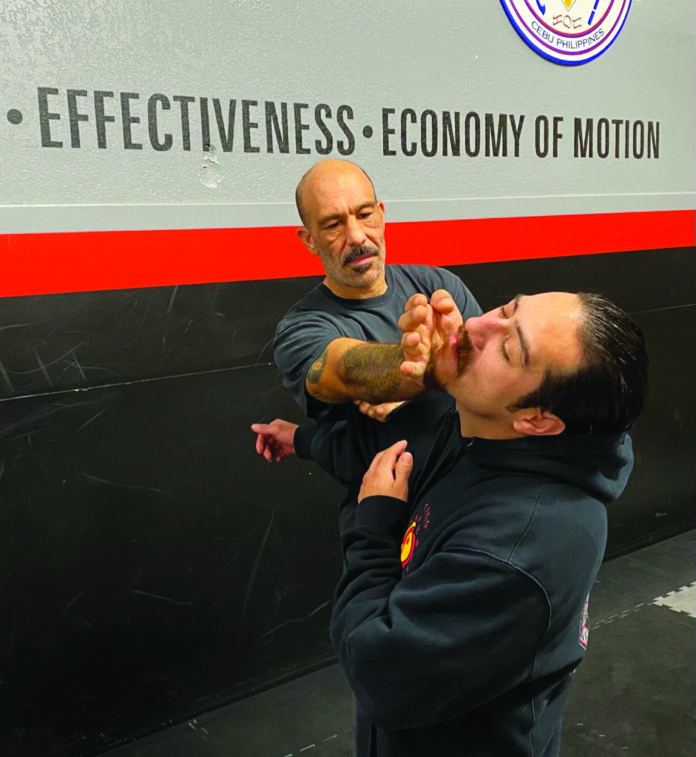
How Do You Jeet Kune Do? Damon Evans keeps Bruce Lee’s Martial Arts Legacy Alive

When Damon Evans was adding yet more martial arts to his arsenal of fighting systems—in this case, the Filipino discipline known as Kali and the Thai style known as Muay Chaiya—his maestros kept telling him his timing was off.

Not in his moves, but when he was born. He should have lived several centuries before, they said, when he could have become a legendary warrior.

Evans is nevertheless in charge of his destiny even in these modern times, when keeping the torch of tradition burning is actually even more important than it was in the ages of Vikings, Vandals, Mongols and Huns. Born under the sign of Aquarius—the bringer of water, typically symbolizing knowledge—these days Evans thinks of himself more as a scholar of martial arts than a warrior. Having a daughter tends to soften your outlook, he says.

In 2001 Evans founded The Academy of Jeet Kune Do Sciences in Petaluma, where he offers classes and private lessons for kids and adults in a dizzying variety of martial arts styles, including Muay Thai, Kung Fu and Brazilian Jiu-Jitsu, plus ones few have heard of, such as Savate, Silat and Pananjakman. The mental benefits from martial arts training are incalculable, so for those ready to change their lives, beginner classes are held Monday, Wednesday and Friday from 6–8pm.

Membership runs around $150 per month, and Evans recommends training at least twice per week. After 12–18 months students will have graduated from phase one, and will have a sense of accomplishment no one can ever take from them. From there, it’s merely a question of how high they want to go.

As for the name of the studio—The Academy of Jeet Kune Do Sciences—well, that’s what’s at the studio’s core—that core, of course, where chi, or life force, is concentrated. It also has a Bay Area tie-in, as Jeet Kune Do is Cantonese for “way of the intercepting fist,” and is the system developed by Bruce Lee, the movie star and martial artist who was born in San Francisco’s Chinatown in 1940.

Lee began his martial arts studies in Wing Chun Kung Fu, but in 1967 decided to break with the centuries-old tradition and develop his own hybrid fighting style that emphasized simplicity and practicality for self-defense in real-world situations. He called it “the style of no style.”

But that doesn’t mean there are no ingredients. JKD, as it’s called for short, combines elements of western boxing with kung fu, but Lee’s real innovation came from fencing, which he learned from his brother.

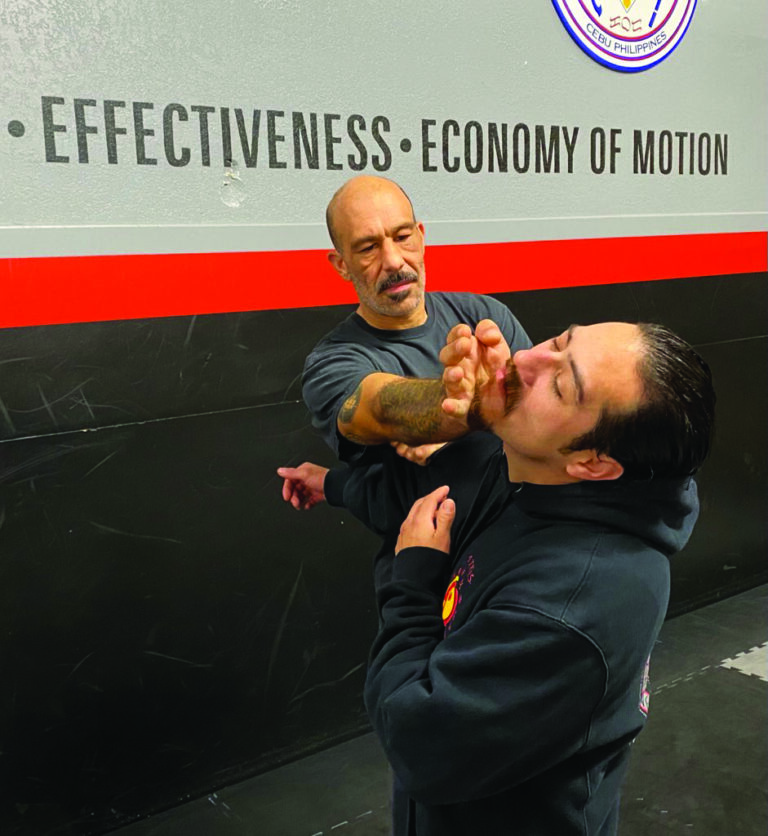
Instead of standing square to the opponent as in kung fu, or with the weaker, jabbing hand in front and the strong one in back, as in boxing, Lee applied a wide, side-on fencing stance with his strong “weapon” hand in front. It puts a fighter’s naturally dominant hand in front to take control of a confrontation. It is the closest to the opponent and will do the most work—blocking, grabbing, gouging. But, most importantly, it is poised with every heartbeat to deliver a straight, fast and accurate “intercepting fist,” or what in fencing would be called a stop-thrust.

The fencing stance also put Lee’s dominant leg in the front, for quick kicks to the opponent’s front knee. In the spirit of science, JKD is said to be comprised of 60% kung fu, 20% boxing and 20% fencing. For Evans, it is the best and most practical foundation for self-defense, and much of what is taught in militaries around the world is some form of watered-down Jeet Kune Do.

Never doubt the power of just a little bit of training in dealing with a belligerent jerk in a bar, even a bigger guy who’s liquored-up. In general, skill will beat strength, Evans says. However, technique will beat mere skill, and tactics—or a dynamic, strategic approach to confrontation—will beat technique. At the very top of the pyramid is a force that cannot be taught. Call it adrenaline, rage or the will to self-preservation. Evans simply calls it “indominable spirit,” saying that when it comes to that, “Nature has already given you everything you need.”

The 2021 pitch to finally take up training is really no different than at any other time, Evans says. The world is always uncertain and fearful, and confidence and capability do much to assuage that. “This stuff is life changing and life saving,” Evans says, “and that’s really all there is to say. There is the closest to reality you’re going to get. There is nothing more realistic than combat.”

Martial arts also develop and heighten our sense of awareness, so that we cease going through life dazed and lost in thought—or lost in phone—and make us acutely aware of living in the moment, knowing that a freak car accident or entering a store at the the same time as an armed robber is always a possibility, however remote. “You learn unpredictability in martial arts, because that’s all life is,” Evans says. “The reason you train is because you never know what will happen.”

One person who learned this first-hand is Evans’ most special student: his son. One would think that growing up with a dad who’s a martial arts instructor as opposed to, say, a math teacher, would be a young boy’s ideal, but not Evans’ son, who partook of his training begrudgingly and showed no great like or dislike for it.

Then one night when he was 20, while out with friends, they were confronted by three thieves—one of whom was armed with a knife—who demanded their wallets. Everyone anxiously complied save for Evans’ son, who simply stood his ground and said, “No.” This simple defiance was enough to convince the thieves not to mess with him, to nod their respect and go on their way.

Afterwards, son approached father and expressed his gratitude, thanking Evans for all the skills and courage he’d instilled in him as a boy. It had finally paid off, and without even having to throw a single intercepting fist.

For more information, visit www.jkdsciences.com or call (707) 762-0111.

Air Look— Airbrush Artist Malcolm Stuart

0

Happy Wednesday, my lovely ones! How was the week? Great fits, gorgeous art, good company? Fingers crossed.

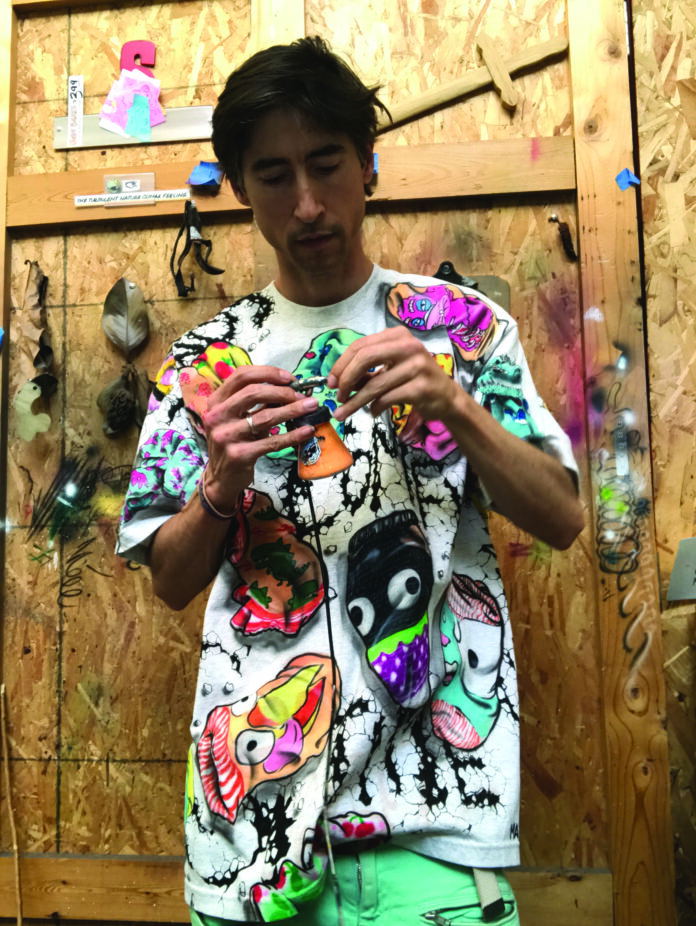
I have an all-of-the-above to share, in the form of Oakland-based airbrush-artist Malcolm Stuart.

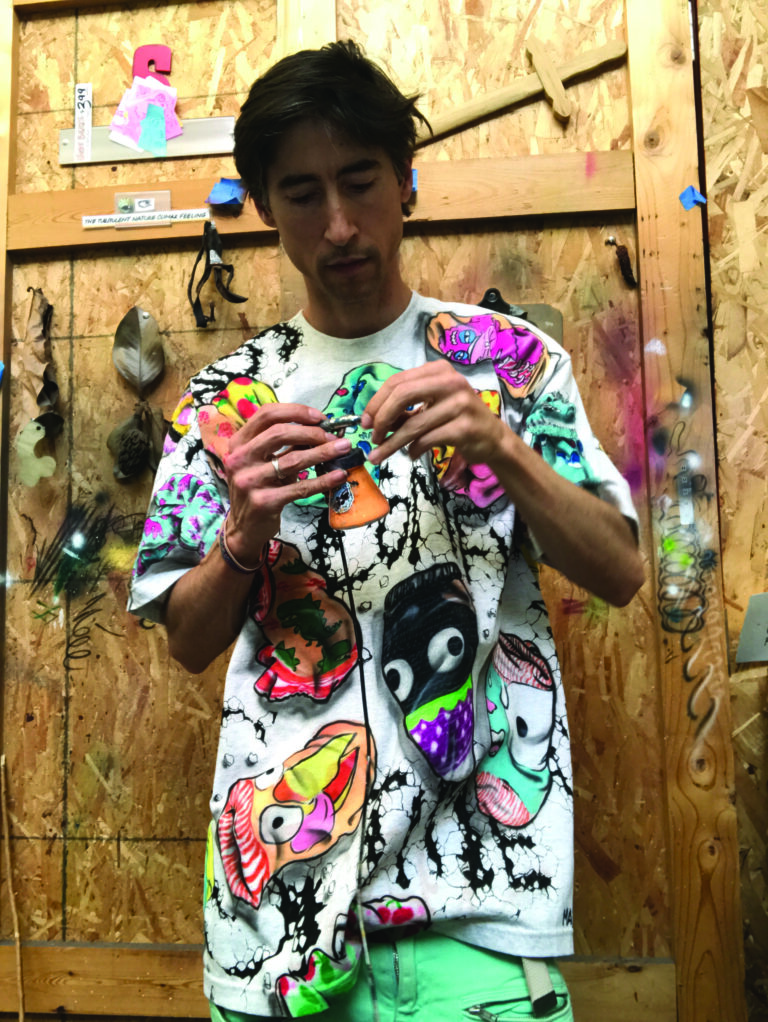
Malcolm’s airbrush art is found on pillows, in prints and—my favorite—in wearable form. He adorns shirts, hoodies and Dr. Martens with his specific brand of swirling, luridly colored airbrush art.

I asked Stuart to share his genesis story and creative process with us. Here’s what he said: “I started airbrushing in 2003, in NYC, when I was turned on to an airbrush artist who was looking for an apprentice. If it weren’t for that opportunity to learn from a master, I don’t think I would have ever taken to it. It’s really difficult. It took about 8 months of rigorous training before I barely had enough skill to start airbrushing fast and sloppy shirts. Eventually I was doing more refined work, and applying my new exciting skill to my own work.

“I draw much of my inspiration from direct observation of the world in its uncontrived states, like animal bodies and plants, natural forms, objects of daily life. My inner world of dreams, both day and night, feed my work, too. I look at art and fashion too, of course, but it’s rare that I find single sources I could label as inspiration. When I’m inspired by other artists’ work it usually doesn’t translate into my own in any clear sense. Sometimes it’s their methods, their way of thinking about their practice that inspires me, and not the work itself.”

He continued, “Lately I’ve been looking at the print work of Yoshitaka Amano for his ability to create complex and detailed worlds with energetic and seemingly unselfconscious, gestural marks. I excite myself when I make something that can’t be placed in ‘reality.’

“For me, fashion is to clothes what dancing is to walking. It’s the decision to elevate and play with what is otherwise a practical and mundane necessity. Fashion is making conversation with society on an intimate level, on the social level. Clothing is a non-verbal conversation. Not engaging with it, not finding your own fashion sense, is like wearing small talk. To me it’s a missed opportunity to connect and play with each other. George Clinton says it well in this Funkadelic song lyric, ‘Loan me your funky mind, and I shall play with it, for nothing is good, unless you play with it …’”

Check out Stuart’s work at malcolmstuart.com or @malcolmstuart.

Look as good as ever, everyone!

Love,

Jane

Letters to the Editor—Grassroots work from Golden Gate Village and Marin Housing Authority

Grassroots Housing

In a time when so many citizens feel alienated and powerless, the example of Golden Gate Village residents is a tribute to grassroots empowerment.

The presentation of the Golden Gate Village Resident Council to the Marin Housing Authority Commission on Jan 25 (“Plan B,” Pacific Sun, Jan. 31) was a solid proposal for renovation and preservation of the Marin City public housing project, which is on the National Register of Historic Places, a treasure that Marin County should work hard to conserve.

The ball is now in the County’s court. The Marin Housing Authority Commission should designate the Resident Council plan as the preferred alternative in its submittal to the Department of Housing and Urban Development and then join heads, hearts and hands with the residents to make it a reality. A truly collaborative working group must be established that works with residents with respect and admiration for what they have already accomplished. A timeline for work, especially immediate repairs, should be established that reflects the urgency of the situation.

Thank you, Golden Gate Village residents, for your example of citizen engagement and perseverance.

Mary Morgan

Point Reyes Station

Hope for Housing

Thank you for featuring the uplifting presentation at the Marin Housing Authority (“Plan B,” Pacific Sun, Jan. 31). I hope the Pacific Sun will be able to report a positive response from the Marin Housing Authority Commissioners—our five Board of Supervisors and two Tenant Commissioners—regarding unanswered questions.

Specifically, have the Commissioners officially adopted the Resident Council plan presented on Jan. 25 as the preferred plan, and have they formed the proposed working group to include the Golden Gate Village Resident Council? The working group members would work together and set a timeline to address both immediate maintenance issues and the overall plan. The Golden Gate Village Resident Council website—ggvrc.org—is well worth a visit. You can find the Resident Council’s proposed plan there.

Kris Brown

Inverness

Sexology and Sexy Time — Considering Sex from a Psychological Standpoint

0

It’s February, and it’s nearly Valentine’s Day. Thus our minds turn languidly to thoughts of love—and sex.

Ah, sex. What a concept. One of the more fundamental and pleasurable features of the human experience, it’s also riddled with hangups, repression, pain and insecurities. Between fervent, knuckle-slapping nuns to tense, abstinence-based sex-ed classes, society has struggled to have a healthy sexual relationship, and sex has been considered dirty, dangerous and even sinful. These circumstances don’t lend themselves overly much to strong sexual identity and a sense of ease-ful sex-ploration.

But things are trending in an ever-more-postive direction, and every Valentine’s Day marks a bit more progress on the calendar of sexual understanding and freedom.

To that end—sexology.

Perhaps a new term to some—indeed it only came into use in the early 20th century—sexology, defined by the Encyclopedia Britannica, is the scientific study of human sexuality, including human sexual interests, behaviors and functions. Once considered a form of research and therapy geared primarily towards those struggling with serious sexual issues, sexology is now understood more commonly. In the latest iteration of the Diagnostic and Statistical Manual of Mental Disorders—the DSM 5—the definition of sexology has been updated to reflect that sexual therapy, the kind provided by a sexologist, is not unique to people with sexual disorders or anything otherwise “wrong” with their sexual impulses or drive. Sexology—and sexologists, also known as clinical sexologists or sex therapists—provide support to those looking to improve their overall sexual health, confidence and understanding, for reasons other than an acute issue.

In other words, working with a sexologist does not mean that something is wrong sexually, and further, going to a sexologist can be an exciting and viable option for anyone looking to improve their sex life. After all, as Shakespeare wrote in Twelfth Night, “Love looks not with the eyes but with the mind, / And therefore is winged Cupid painted blind.” In other words, it is the state of mind that makes sexuality a stimulating, playful and empowering experience. Without that state of mind, sex can be anything from boring to heartbreaking.

Considering sexology from the perspective of the DSM 5 is important when considering how great of a need there is to reframe the value of paying attention to one’s sex life. Though a great deal of progress has been made in the realm of sexuality, talking about sex can feel taboo, embaressing or shameful, especially if it isn’t in an immediately positive way. Bragging about great sex might feel safe, but if there’s an issue in the bedroom—even a minor one—sometimes the first instinct is to clam up. In an article published in Cosmopolitan Magazine in 2020, writers Arielle Pardes and Mara Santilli quote noted sexologist and social worker Shamyra Howard as saying “a huge part of my work takes place outside the office. It’s my goal to remove the stigma and shame associated with sex, and motivate people to have conversations about sexuality in any setting. I know that sexuality education can and does save lives, and I’m out here performing CPR.” (“15 Things I Wish I Knew Before I Became a Sexologist,” Cosmopolitan, 2020)

The thing is that sex, when all is well, is absolutely wonderful, and furthermore, sexual mishaps and hangups are not just normal, but often an important part of deepening intimacy and self-understanding. Moving through a sexual challenge can open up greater confidence, pleasure and intimacy, both with a sexual partner and in life in general. This is the kind of change that can show up outside, as well as inside, the bedroom.

If any of this is sounding like a good move to make this Valentine’s Day season, there is a great sexologist in the area. With an office in downtown San Rafael, the nationally-recognized and French-born sexologist Dr. Claudia Six provides sexology services to both Marin and Sonoma county residents, and has practiced clinical psychology for more than 25 years. Six holds a doctorate in clinical sexology, a master’s in counseling psychology, is certified by the American College of Sexologists and is a Board Certified Clinical Sexologist by the American Board of Sexology—suffice to say, Six knows her sex.

Counseling sessions with Six are available to those looking for one-on-one or couples treatment, but they can be expensive, and sexology treatment isn’t often covered by health insurance. For those looking to explore and develop themselves sexually without paying out of pocket, Six has a book, titled Erotic Integrity, that offers a self-conducted journey of sexual exploration. Originally published in 2016, Erotic Integrity is a chance, for a much more reasonable fee, to develop a healthier, more robust sex life through really investigating one’s sexual identity—a thing seldom openly investigated.

Six coined the term “erotic integrity,” from erotic—as in, all things pertaining to erotic love—and integrity—as in, adehering to a code of values. Six describes this erotic integrity as something latent within every human being, which only needs attention to become a fortified and guiding characteristic. The more one understands their erotic integrity, the better one can recognize, communicate and fulfill their sexual desires.

The book includes 10 different types of sexual themes—including performance anxiety, sexual boredom, coming out and more—and then takes the reader through three steps to live a more manifest sexual life: knowing one’s sexual identity, fully accepting it and living fully into it. With her 30-plus years of experience, Six cites real cases of sexual challenge and repression with real resolutions that afford great insight and instill a sense of how common sexual confusion and challenges are.

Six, in an interview on The Quick & The Dirty podcast with Hilary and Sandra, says that the key thing in this process is learning to pay attention. “You need to pay attention to your body,” she says, “if there’s a level of ickiness or anxiety. I use anxiety as an umbrella term for discomfort, and often people experience a kind of anxiousness because they’re not being honest with themselves. It can take someone asking you the right questions to figure it out. But tune in—are you blissfully happy? How is your sex life? What makes it good? Sometimes people can’t answer.”

The idea behind erotic integrity is to create and cultivate a sexual identity such that questions about one’s sex life aren’t answered generically for lack of information, but lead to a well-excavated space of desire and self-knowledge.

If this sparks interest, Erotic Integrity is available online at Six’s website or as an ebook. A free quiz is also available for those looking to get a snapshot of their sexual health before they begin working.

There are also some locally available products that can help bring sexual identity and sensuality more into the forefront this season of love. Sensuous Beauty, a product line from Sebastopol, specializes in sensual body products made small-batch, from scratch and entirely from natural ingredients, many of which have been used for their healing properties throughout the centuries. 

This line of pleasure products includes vulva balm—made with wildcrafted cocoa butter, vitamin E and beeswax—and a rose-and-violet breast-balm sampler infused with wildcrafted Lady’s Mantle flowers and sweet almond oil, perfect for rejuvenation and great on sensitive skin. Also available are massage lotions and oils, which are ideal for romantic evenings of sensual discovery with an intimate partner. 

Sensuous Beauty products can be found at Milk and Honey, in downtown Sebastopol; at the Petaluma Wellness Arts Center, which also offers treatments using Sensuous Beauty Products; and at Oliver’s Market on Stony Point Road.

With Valentine’s Day just around the corner, take the opportunity to further develop a healthy sexual self. I leave you with these words, spoken by Beatrice to Bennet in Much Ado About Nothing: “I love you with so much of my heart that none is left to protest.” 

Happy Valentine’s Day!

Hops Spring Eternal —‘FeBREWary’ Returns

Before the advent of search engine optimization, newspaper headlines leaned heavily on puns, which accounts for my vestigial admiration for “FeBREWary.”

Devised as a month-long celebration of beer in all its permutations, this year marks the sixth in the collaboration between Visit Santa Rosa and a bevy of local breweries. This includes the issuing of a “Santa Rosa Beer Passport”—a promotional effort that literally puts an official stamp on ye olde pub crawl.

This is how it works: Visit at least 11 participating locations, get a passport stamp at each and walk home with a complementary commemorative “oversized bottle opener medal” and lanyard. Maybe next year they’ll also throw in some ibuprofen and add names to the list of those seeking liver donations.

Obviously, FeBREWary is not about making healthy lifestyle choices, there are plenty of other months for that—the National Council on Alcoholism and Drug Dependence, for example, has claimed April as Alcohol Awareness Month. This is about promoting the area’s brewing heritage and showcasing artisan producers in the craft beer industry. It’s also something of a victory lap. Years ago, when I was a cub reporter, I interviewed Lagunitas Brewing Company-founder Tony MaGee, who explained how local craft brews would one day usurp the reign of the foreign beer market. Anyone else remember Spaten Optimator? 

Magee and his contemporaries proved victorious … with the ironic twist that Lagunitas eventually sold to Heineken. Now, the next generation of local brewers are maintaining the mantle while presumably sidestepping acquisition themselves—or not. Rumors flow as freely as beer itself, but what matters now is taking the opportunity to enjoy some world-class beer with the offchance of earning some “I knew them when” cred, should the moment arrive.

Observant beer drinkers might even see “Hoppy,” a top hat-wearing mascot inspired by the verdant, cone-shaped flowers of the hop plant—basically a deformed leprechaun—who’s purpose, I presume, is meant to scare the beery-eyed straight before the next DUI checkpoint. This too, I admire. Easy targets have innate media appeal—well done.

Speaking of checkpoints, this “passport” business brings to mind the scene in Casablanca when Major Strasser asks Bogart’s Rick, “What is your nationality?” to which he replies, “I’m a drunkard.” And that, according to his pal Renault, “makes Rick a citizen of the world.” This month Santa Rosa is that world—in fact, it’s bigger. Join me as I get my beer passport and strap in—this rocket’s going to the neBREWla.

More for information, visit www.visitsantarosa.com/beerpassport.

Culture Crush—Napa Wine Train, Maria Muldaur and her Jazzabelle Quintet, and More

Napa 

Love Train

Sweep the one you love off their feet and onto the rails of the Napa Valley Wine Train. The mobile Wine Country experience is getting all mushy for February, with romantic packages available that include gourmet food and drinks aboard the train’s two-story Vista Dome, an elevated observation-style dining car with luxuriously plush booths. For Valentine’s Day weekend, the train offers lunch and dinner tours complete with sparkling wines, a multi-course meal and gifts for your sweetheart, running Thursday through Monday, Feb. 10–14. Reserve your spot on the Napa Valley Wine Train at winetrain.com.

Ross

Pop-Up Love

This weekend, love is in the air and on sale at Marin Art & Garden Center’s Valentine’s Day Pop-Up at the shop. German-born local artist and goldsmith Lilia Chandran hosts her Werkstatt—that is, workshop—boutique at the center, featuring handcrafted 18k gold pieces, romantic décor, artwork and music. Additionally, floral artist Rebecca J. Designs sells romantic bouquets of fresh flowers, Love Handles Candles offers waxworks based on Greek statues and Lily Bites brings chocolate truffles, baked goods and other artisanal sweets. Friday through Sunday, Feb. 10–13, at 30 Sir Francis Drake Blvd., Ross. 10am to 4pm each day. Maringarden.org.

Healdsburg

Love on the Menu

A trio of downtown Healdsburg spots are helping guests celebrate Valentine’s Day this month. Hotel Healdsburg, Spoonbar and Harmon Guest House all have romantic specials up their sleeves. The Rooftop, at Harmon Guest House, celebrates throughout the month of February by adding special Valentine-themed delights to its menu. Spoonbar, at h2 hotel, is also adding delicious, festive Valentine-inspired menu items and cocktails from Feb. 9–14. Hotel Healdsburg’s Dry Creek Kitchen is creating a lovers-inspired five-course tasting menu Feb. 11–14. Get details on these offers at hotelhealdsburg.com, spoonbar.com and harmonguesthouse.com.

Santa Rosa

Animated Love

Cozy up with your Sweet Babboo at the Charles M. Schulz Museum for a love-filled Peanuts movie marathon weekend and Valentine’s Day event featuring crafts and a photo with Charlie Brown. Included with admission, the museum’s theater screens several mushy Peanuts shorts, including A Charlie Brown Valentine; You’re in Love, Charlie Brown and more, Feb. 12–14 (The same schedule will run each day). Also, kids are invited to get crafty and take their picture with ole’ Blockhead from 11am to 2pm on Monday, Feb. 14, at 2301 Hardies Lane, Santa Rosa. Get details at schulzmuseum.org.

—Charlie Swanson

Marin Activists Call for Sheriff’s Oversight Committee with Subpoena Power

The Marin County Board of Supervisors rejected a proposal last week to create a community working group to collaborate with the Sheriff’s Office on improving its services and developing trust with the public.

Although the community working group concept was favored by the sheriff, the supervisors’ decision to nix it came after two dozen community members at the meeting advocated for a stronger independent oversight model, which would create a committee with the power to issue subpoenas. The Sheriff’s Office is not obligated to comply with any recommendations made by either group; however, subpoena power will allow the oversight committee to find and publicly expose wrongdoings.

Assembly Bill 1185, state legislation which passed in September 2020, allows counties to establish sheriff’s oversight committees with subpoena power. Last June, Marin’s board of supervisors formed a subcommittee—including two board members and the sheriff—to review AB 1185 and make recommendations. No one from the community was selected to serve on the subcommittee.

AB 1185 lets a county set up a sheriff’s oversight committee composed of civilians or an office of inspector general, “either by action of the board of supervisors or through a vote of county residents.” Both entities are given subpoena powers for persons, officers and documents pertaining to the sheriff’s office. Still, the authority given to the oversight committee or inspector general is limited, as neither is permitted to obstruct the investigative functions of the sheriff.

Across California and the nation, county sheriffs hold immense power, often with no oversight. In Marin County, the board of supervisors has previously said that the only authority they have over the Sheriff’s Office is controlling the budget.

Marin is the most racially disparate county in the state. For years, local activists and concerned residents have maintained the Sheriff’s Office discriminates against BIPOC and poor persons. Black people are pulled over in Marin City at a higher rate than white people. Ditto for Latinx people in San Rafael. From 1990 through 2020, the Sheriff’s Office referred Black people for prosecution at over eight times their demographic presence in the county.

“When I started serving on the Marin County human rights commission, the lion’s share of complaints were allegations about law enforcement misconduct, mostly from the Sheriff’s Office,” Cesar Lagleva, a longtime community activist, said in an interview. “We tried to resolve these complaints, but Sheriff Robert Doyle was hostile to the human rights commission when we brought this to his attention. He denied any wrongdoing by his department or officers.”

Doyle, who has served as sheriff for 24 years, has conducted resident surveys and, in the early 2000s, created a civilian advisory council to offer feedback on the department’s performance. Still, it appears these efforts may have been window dressing.

“In fact, MCSO [Marin County Sheriff’s Office] officials told us that their Policy Committee [an internal group made up of Sheriff’s personnel] does not consider citizen input,” according to a Marin County Civil Grand Jury report issued in 2006.

In 2020, the board of supervisors appointed a civilian work group to meet with the Sheriff’s Office on a use-of-force policy. After just two meetings and an exchange of draft proposals, the Sheriff’s Office sought to terminate the group, according to an October 2020 email from Captain Scott Harrington to a group member. The group replied that they did not want to stop the process prematurely, but the Sheriff’s Office released its new use of force policies the following month.

During the last two years, the Sheriff’s Office has received only four complaints, all exonerated or not sustained after internal investigations. Lagleva alleges BIPOC and poor people are too intimidated to file grievances about their experiences with the Sheriff’s Office and jail.

Proponents of AB 1185 say the subpoena power it offers is crucial. State Assemblyman Kevin McCarty, author of AB 1185 and other police reform bills, wrote that it “strengthens County Sheriff oversight bodies.”

However, Undersheriff Jamie Scardina, who is running unopposed for sheriff this year, said in an interview that implementing an oversight committee with subpoena power is unnecessary because the Sheriff’s Office will make available any documents it can legally provide.

As a member of the board subcommittee that advocated for the working group option, Scardina said he envisioned the Sheriff’s Office working collaboratively with the group to build trust. More tangible suggestions from Scardina about what the group could focus on included examining the recidivism rate at the jail, discussing complaints received by the Sheriff’s Office and taking group members on ride-alongs.

“The best they could come up with is a working group with a set of offerings to try to strengthen public trust in the sheriff’s services,” Lagleva, the activist, said. “On the face of it, it looks cute, but it has no teeth. This recommendation has little or nothing to do with services. Some of it is sound, but [using this model] we can’t begin to address the injustices suffered by BIPOC and poor people at the hands of the Sheriff’s Department.”

Doyle disagrees. The longtime sheriff sees the community working group as a good compromise between AB 1185 and what the Sheriff’s Office thinks is appropriate. In addition, he does not believe the law will deliver what residents and activists want.

However, the vast majority of those who provided public comments at last week’s board of supervisors’ meeting were clear that a working group is unacceptable. More than 20 people strongly supported an oversight committee with subpoena power, while only one person said the working group was “good public policy.”

It appeared the board of supervisors was listening. By the end of the meeting, all five supervisors agreed that the subcommittee will remain intact and dive deeper into AB 1185.

Supervisor Damon Connolly, who serves on the subcommittee, said in an interview that his goal is to include community members who have “lived experience” with the Sheriff’s Office in the oversight process. Connolly doesn’t just want to hold the sheriff accountable; he thinks the board of supervisors should be accountable, too.

“I believe it’s crucial that there be a meaningful way, a transparent way, an accountable way, an independent way to trust law enforcement in our community,” Connolly said. “I’ve heard from community members that there needs to be a higher level of trust.”

The board did not give a date when the public can expect to hear the subcommittee’s next recommendation. The activists and residents who spoke at last week’s meeting said they will accept no less than subpoena power.

“No systems or institutions can, in good faith, say they are working towards meaningful equity without first acknowledging racist policies,” Lagleva said. “It is an issue of ethics and morals. If this sheriff’s office operates clean, then what are they afraid of?”

The Cold-Coffee Caper—Based on a True Event

0

By Henri Bensussen

House-cleaning day, and Liliana bursts through the back door, a quivering exclamation point in polyester and spandex fueled by indignation. 

Robbed while distracted at the outlet store—“A woman by the coffee urn, it must have been her,” she says. Her purse gone, replaced by a coffee cup, a place-holder token and clue. Cops told her this happens all the time. Someone takes the cash, tosses away the bag with its precious contents. Victim left holding a cold cup of coffee.

Fine eyebrows, two little arcs, jumpy as window shades, her skin so fresh compared to mine, no scars or worry lines developed by age from negatives in a chemical bath. I wander through rooms arranging, straightening, while she’s on the attack, moving chairs and dressers, inspecting light fixtures, wielding her efficient mop and vacuum to search out the dirt of decades past as if that would uncover thief and theft.

She brings me a rusty dime and a dollar bill shedding spools of dust. “I found it under the bed,” she says, triumphant. Clear proof of my guilt.

I spread it out, this dusty bill eroded to a dime’s worth, the dime to a penny. Two hours later she heads to the bank holding tight to three well-earned 20s. 

Sitting at the polished table before a spotless window that frames a spring garden where every flowering plant is flowering, and drained by the morning’s dramatic turns, I wish a jinni to appear with a cup of coffee for me, and wonder: Who needed that purse the most—snatcher, owner or the jinni caught in a dust ball?

Henri Bensussen lives in Santa Rosa and is the author of the chapbook of poems, “Earned Colors,” and of essays, poems and stories published in various anthologies.

The Viruses They Are A-Changin’

A poem  By J.F. You people who gather in big angry mobs Go back to your homes, go back to your jobs The mutants are spreadin’ much worse than before If your lives to you are worth savin’ Then you better start vaxxin’ and maskin’ some more For the viruses they are a-changin’ Those media types, who blab with false words So keep your eyes wide, and steer...

Love Was His Message: Remembering Joshua Bluegreen-Cripps

By Daniella Caveney Those of us who have attended live music concerts in Sonoma County and the North Bay have probably heard of Joshua Bluegreen-Cripps. Joshua, who died on Jan. 31 at the age of 44, was a concert producer, trumpeter, magician, showman, DJ, KJ and yoga instructor. He was a giant in our community, always thinking of ways to bring...

How Do You Jeet Kune Do? Damon Evans keeps Bruce Lee’s Martial Arts Legacy Alive

Click to read
When Damon Evans was adding yet more martial arts to his arsenal of fighting systems—in this case, the Filipino discipline known as Kali and the Thai style known as Muay Chaiya—his maestros kept telling him his timing was off. Not in his moves, but when he was born. He should have lived several centuries before, they said, when he could...

Air Look— Airbrush Artist Malcolm Stuart

Click to read
Happy Wednesday, my lovely ones! How was the week? Great fits, gorgeous art, good company? Fingers crossed. I have an all-of-the-above to share, in the form of Oakland-based airbrush-artist Malcolm Stuart. Malcolm’s airbrush art is found on pillows, in prints and—my favorite—in wearable form. He adorns shirts, hoodies and Dr. Martens with his specific brand of swirling, luridly colored airbrush art. I...

Letters to the Editor—Grassroots work from Golden Gate Village and Marin Housing Authority

Click to read
Grassroots Housing In a time when so many citizens feel alienated and powerless, the example of Golden Gate Village residents is a tribute to grassroots empowerment. The presentation of the Golden Gate Village Resident Council to the Marin Housing Authority Commission on Jan 25 (“Plan B,” Pacific Sun, Jan. 31) was a solid proposal for renovation and preservation of the Marin...

Sexology and Sexy Time — Considering Sex from a Psychological Standpoint

Click to read
It’s February, and it’s nearly Valentine’s Day. Thus our minds turn languidly to thoughts of love—and sex. Ah, sex. What a concept. One of the more fundamental and pleasurable features of the human experience, it’s also riddled with hangups, repression, pain and insecurities. Between fervent, knuckle-slapping nuns to tense, abstinence-based sex-ed classes, society has struggled to have a healthy sexual...

Hops Spring Eternal —‘FeBREWary’ Returns

Click to read
Before the advent of search engine optimization, newspaper headlines leaned heavily on puns, which accounts for my vestigial admiration for “FeBREWary.” Devised as a month-long celebration of beer in all its permutations, this year marks the sixth in the collaboration between Visit Santa Rosa and a bevy of local breweries. This includes the issuing of a “Santa Rosa Beer Passport”—a...

Culture Crush—Napa Wine Train, Maria Muldaur and her Jazzabelle Quintet, and More

Click to read
Napa  Love Train Sweep the one you love off their feet and onto the rails of the Napa Valley Wine Train. The mobile Wine Country experience is getting all mushy for February, with romantic packages available that include gourmet food and drinks aboard the train’s two-story Vista Dome, an elevated observation-style dining car with luxuriously plush booths. For Valentine’s Day weekend,...

Marin Activists Call for Sheriff’s Oversight Committee with Subpoena Power

pixabay - police car lights
The Marin County Board of Supervisors rejected a proposal last week to create a community working group to collaborate with the Sheriff’s Office on improving its services and developing trust with the public. Although the community working group concept was favored by the sheriff, the supervisors’ decision to nix it came after two dozen community members at the meeting advocated...

The Cold-Coffee Caper—Based on a True Event

By Henri Bensussen House-cleaning day, and Liliana bursts through the back door, a quivering exclamation point in polyester and spandex fueled by indignation.  Robbed while distracted at the outlet store—“A woman by the coffee urn, it must have been her,” she says. Her purse gone, replaced by a coffee cup, a place-holder token and clue. Cops told her this happens all...
3,002FansLike
3,850FollowersFollow