Named Ashokawna—“the water to the east”—by the Southern Pomo. Slavyanka, “slavic woman,” by the Russian Colony. “Saint Ignatius” and “big river” by the Spanish colonists who came after. The river itself remains nameless, and mighty, winding 115 miles to the sea.
It drains 1,500 square miles of Mendocino and Sonoma counties, fed by 240 tributary streams and creeks. It fills Lake Mendocino and Lake Sonoma, our drinking reservoirs and the aquifers beneath them. It waters vineland and timberland. Each year, it pours an average of 1.5 million acre-feet into the ocean at Jenner.
An estimated 30 to 40% of Mendocino and Sonoma jobs depend on it, directly or indirectly.
We should bow to the Russian River, artery of the north. Instead, we treat it as a gutter.
In 2025 alone, the Russian Riverkeeper—self-styled protectors of the river—pulled roughly half a million pounds of trash from its waters, a volume that has grown, year over year, for the past five years. To do so, the Healdsburg nonprofit organized 900 local volunteers across 75 separate cleanup events along its length.
That mobilization, says Don McEnhill, deputy director of the Riverkeeper, is one of the clearest signs of a slowly shifting culture. When he was a young recreationalist in Healdsburg, it was common for old-timers summering along the river to stack their garbage on its banks, left for the winter rains to carry away.
McEnhill says the annual Salmon Creek coastal cleanup event has begun turning up noticeably less trash each year. The river’s health—it discharges trash, microplastics, motor oil, industrial chemicals, agricultural fertilizers, feces, pesticides, pharmaceuticals and acidifying minerals into the sea—is a major determinant of our coastal region’s health.
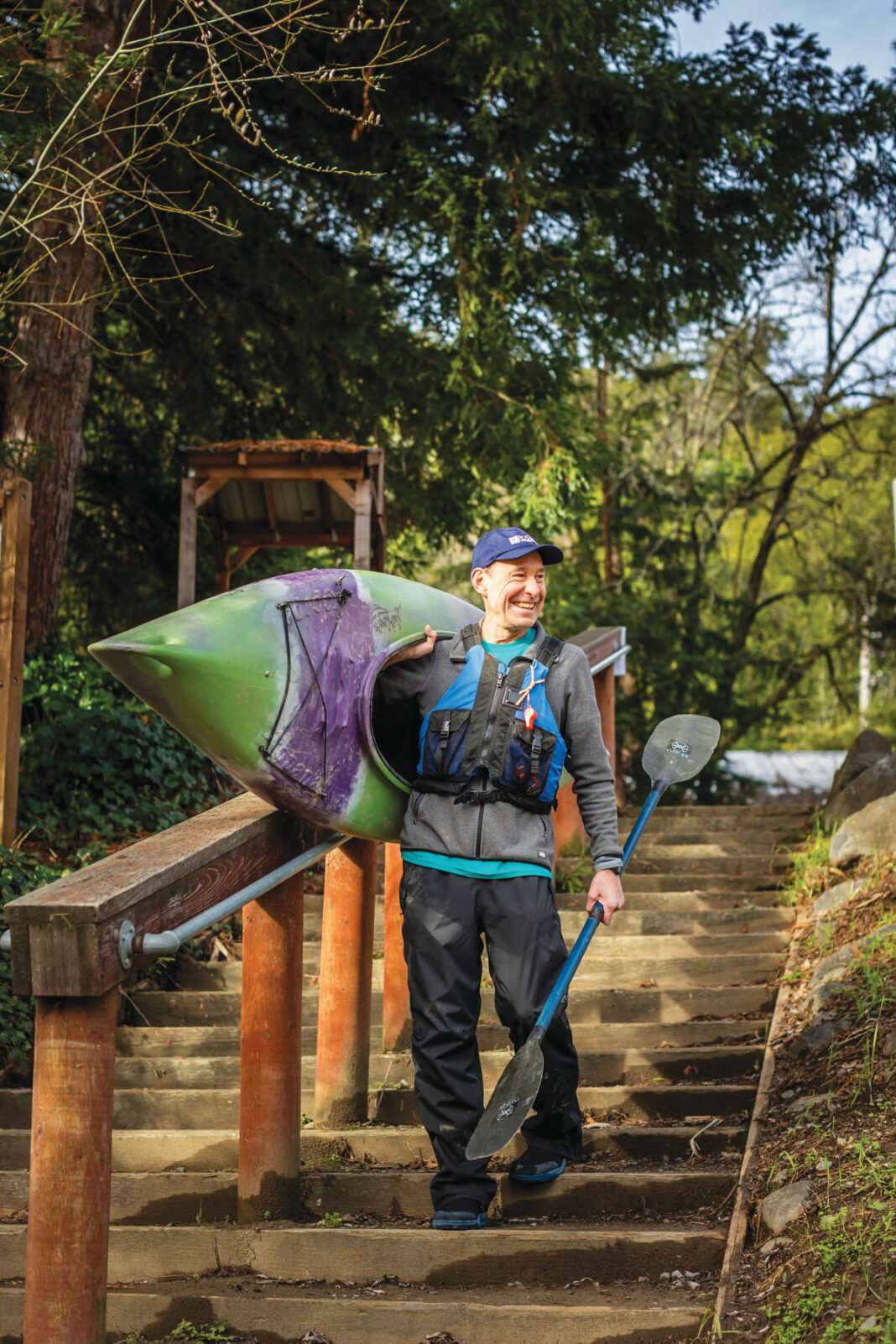
After a prominent career at several distinguished mountain bike and camping companies, McEnhill returned to his native Sonoma County to become leader of the Riverkeeper.
Cincinnatus Hibbard: Among the key victories of your career was ending the destructive gravel mining in the river. What is your assessment of the general health of the river?
Don McEnhill: In some ways, the river has gotten healthier; in other ways, it is not as healthy as it was 50 years ago. I think we have done a fantastic job improving the treatment of our wastewater plants so that they are discharging less pollutants. At the same time, in the last 50 years, we have continued to develop [with agriculture and houses] and shrink the river, when with climate change we know we are going to get bigger and bigger floods. Since 1942, we have shrunken the area that the river occupies by 80%. With land use, we are marching backwards.
And that is the elimination of river ecosystems…
Yes, and the more room we give the river, the more it recharges our groundwater and protects us from drought.
What about overpumping from the river?
(Laughs). That is the political lightening rod of them all… If you look at the paper water rights that exist in the Russian River, there are water rights equivalent to 2.5 times the actual volume of the river.
And still, you’re hopeful.
People are paying a lot more attention to the health of our waterways because of droughts, wildfires and climate change. There is more awareness—and with it, stewardship. Each year, we have more volunteers. And authorities are actually returning our calls. (laughs)
Learn more: One may give back to the river and become a river keeper. The Russian Riverkeeper hosts cleanup and restoration events year-round. Safety gear, river facts and (sometimes) snacks are provided. Donations are welcome: russianriverkeeper.org.