There’s a great scene in the critically acclaimed 2014 film documentary Take Me to the River, produced by Talking Heads’ keyboardist and Marin resident Jerry Harrison, in which guitarist Charles “Skip” Pitts, Wilson Pickett’s former bandleader and the creator of that staccato wah-wah sound heard on Isaac Hayes’ hit single “Theme from Shaft,” instructs a promising Memphis teenager on the secret of his snaking slide-guitar lines.
Call it the passing of the torch, in this case red-hot soul music being handed down from 1960s blues and soul heavyweights to today’s hip-hop generation.
The feature film, expected to be released on DVD this year, celebrates the intergenerational and interracial musical influence of Memphis in the face of pervasive discrimination and segregation. It includes footage shot at the legendary Royal Studios, home to Hi Records, and also recounts the history of the Memphis-based Stax Records.
Actor and singer Terrence Howard serves as a sort of soulful Virgil, as the film brings multiple generations of award-winning Memphis and Mississippi Delta musicians together, following them through the creative process of recording a new album while capturing the gritty heart of that Southern soul capital.
Joining the students from the Stax Music Academy were such blues, soul and rap artists as Howard, William Bell, Snoop Dogg, Mavis Staples, Otis Clay, Lil P-Nut, Charlie Musselwhite, Bobby “Blue” Bland, Yo Gotti, Bobby Rush, Frayser Boy, and the North Mississippi Allstars, among others.
Harrison’s connection to Memphis is musical as well as sociological: The Talking Heads recorded the namesake of the film, Junior Parker’s “Take Me to the River,” which was popularized in 1974 by soul singer Al Green.
At Stax, Isaac Hayes and David Porter wrote and produced some of Sam & Dave’s biggest hits, but they did not receive production credits until the ‘Soul Men’ album.
Marin’s connection to the Stax sound runs deep: longtime Marin resident Booker T. Jones, the leader of Booker T. & the M.G.’s, and his bandmates, guitarist Steve Cropper and bassist Donald “Duck” Dunn, were the house band for many legendary Stax sessions. And the Marin-based pop act Huey Lewis & the News leaned heavily on the Stax sound for its chart-topping, blue-eyed soul.
Last month, the Concord Music Group started reissuing two-thirds of its catalog of Stax singles with the release of a pair of box sets: The Complete Stax/Volt Soul Singles, 1968-1971, Vol. 2 and The Complete Stax/Volt Soul Singles, 1972-1975, Vol. 3, both on CD and for the time as digital downloads.
Vol. 2 arrived on Dec. 16; Vol. 3 is due in the spring.
No plans have been announced to release the hit-heavy Vol. 1, 1959-1968, which included key sides by Otis Redding, Booker T. & the M.G.’s, Rufus and Carla Thomas, Johnnie Taylor, Albert King and Eddie Floyd, among others.
Originally released in 1993, the nine-disc Vol. 2 includes a 148-page booklet with an exhaustive essay by Stax historian and compilation co-producer Rob Bowman. The material ranges from Booker T. & the M.G.’s groove-heavy hit instrumental “Green Onions” and the Staple Singers’ gospel-inflected “Respect Yourself” to John Lee Hooker’s “Grinder Man” and Isaac Hayes’ “Walk On By.”
The set also features tracks by William Bell, the Bar-Kays and bluesman Little Milton, as well as the country-soul duo Delaney & Bonnie. There also are lesser-known Stax artists like The Mad Lads, Jean Knight, Little Sonny and Roz Ryan.
The Stax/Volt label (known as Soulsville U.S.A.) served as a gritty, blue-collar adjunct to the squeaky-clean sounds of Detroit’s Motown label, which billed itself as Hitsville USA. While Motown artists like Marvin Gaye—with his dapper demeanor and tailored Italian silk suits—were coolly churning out catchy pop-soul hits without so much as breaking a sweat, Stax/Volt acts like Sam & Dave were tearing up stages with a far more visceral brand of soul.
Only Stax could bring together Johnnie Taylor, Eddie Floyd, William Bell, Carla Thomas and members of The Staple Singers for the celebratory “Soul-a-lujah,” a track that was resurrected by Boy Meets Girl, the ’80s pop duo of Shannon Rubicam and George Merrill (Merrill, who penned some of Whitney Houston’s biggest hits, is a part-time West Marin resident).
How did Stax do it?
The label owner and often maligned-producer Al Bell, says engineer Terry Manning in the liner notes. “Al just had that amazing ability, more than I had ever seen, to know the required emotion, to be able to impart that to people, and for it to come across. … These albums just reek of emotion [and] Al Bell, to me, was the director of emotion.”
Q: I had an amazing first date with this guy: dinner, a movie, a stroll around the park and a passionate good-night kiss. That was two weeks ago. Since then, I haven’t heard a peep. How was it awesome for me but not for him? Were we, unbeknownst to me, on two different dates?—Disturbed
A: When a man disappears on you after a great first date, it’s natural to search your mind for the most plausible explanation—that is, whichever one doesn’t shred your ego and feed it to your fish. Top choices include: 1. He was kidnapped by revolutionaries. 2. His couch caught fire while he was setting up candles around a shrine to you, and he’s now homeless and, more importantly, phoneless. 3. He double-parked at 7-Eleven, and then a witch put a spell on him, turning him into a Big Gulp, and some skater kid drank him.
The reality is, maybe you and he actually were, “unbeknownst to [you], on two different dates.” We have a tendency to assume others’ thoughts, beliefs, feelings, and desires match our own, explains psychologist Nicholas Epley in Mindwise. What we forget to consider are what Epley calls “the broader contexts that influence a person’s actions.” For example, maybe smack in the middle of all that “awesome,” the guy was raking through a few thoughts—like whether he’s truly over his previous girlfriend, whether he likes the woman from Tuesday better, whether he’s straight.
And sorry, but despite the “passionate” kiss, it’s possible the attraction to you just wasn’t there. One of my guy friends, a reformed cad, explained: “I used to do this all the time with women. I’d realize I wasn’t that attracted to them, but since I was already there on the date, I’d keep moving forward and see if I could get laid, ’cause why not? So from their point of view, the date was ‘awesome,’ but what they didn’t know was that there was never going to be a second date.”
The hurt and “huh?” you feel when this sort of thing happens is a measure of the distance between expectations and reality. You can avoid this by managing your expectations, and the best way to do that is by not allowing yourself to have any. In short, until your phone rings and the guy is on the other end asking you for a date or another date, he doesn’t exist. When you’re on a first date that seems to be going well, the attitude to take is to enjoy yourself to the fullest in the moment—which is loads easier when you aren’t all up in your head figuring out what you’ll say when the little girl you two have together comes home at age 8 demanding to be allowed to have her nipples pierced.
Q: I’ve been friends with this guy for almost five years. We’ve always been attracted to each other, but we’ve never been single at the same time. Now we’re starting to date, and I have to say I feel a lot more safety and trust because we were friends first. I’m also not as concerned that he’ll take me for a ride or play games. Am I being unrealistically optimistic, or is there some truth to this?—Been Hurt Before
A: There is safety in having been friends with a person for a while, like how you can be reasonably sure that when he says, “Here, let me help you into the car,” it won’t be the trunk. And because we evolved to care deeply about maintaining our reputation, it also helps that you two have mutual friends. (A bank robber is less likely to hit a branch where all the tellers know him by name.) However, once you’re in a relationship, all sorts of emotional issues can pop up and start biting, and what prevents that is not having been friends but having done the work to fix whatever was bent or broken.
To be realistically optimistic, make yourself look at the guy’s worst qualities, and decide whether you can live with them. You should also consider what went wrong in your prior relationships. Sure, getting hurt is sometimes a random act, like a stove falling out of the sky onto your car. But often, it’s something you could have seen coming—and would have, if you hadn’t been so busy sewing all the red flags into a big quilt. Finally, even if a guy doesn’t have a skull in his kitchen cabinet labeled “Marcy,” keep in mind that there are special surprises that will only reveal themselves once you’re “more than friends”—like his superhero underwear and his habit of taking over a bed “alphabet-style” (warding off zombies by sleeping in the letter X).
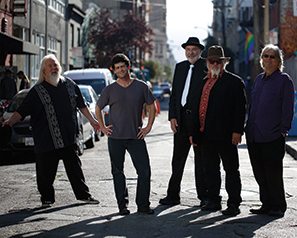
HOUSTON JONES musical creations are that rare mix of virtuosity and humility that gets me every time. The opportunity to see them so close to home, and in the historical Throckmorton Theatre at that, should be a real treat. Did you know it’s rumored that Charlie Chaplin loved this place which retains it’s old-timey box theatre vibe down to the heavy velvet curtains and time-worn shine in the beautiful wood details?
Houston Jones: High octane Americana, blues, folk and bluegrass. 8pm. $21-35. Saturday, Jan. 24. Throckmorton Theatre, 142 Throckmorton Ave., Mill Valley. 383-9600. throckmortontheatre.org.
“It was the best of times, it was the worst of times, it was the age of wisdom, it was the age of foolishness … we had everything before us, we had nothing before us …”
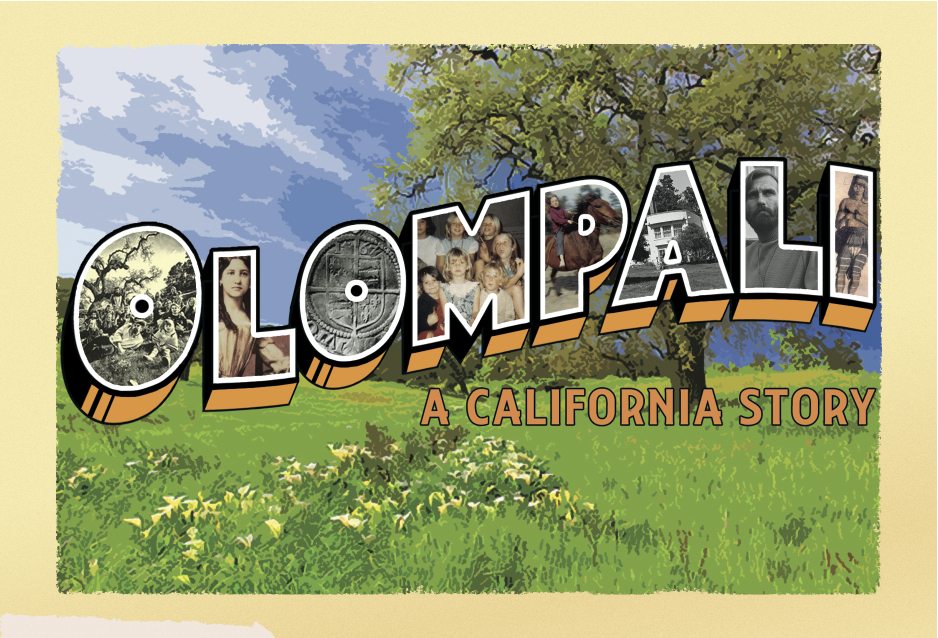
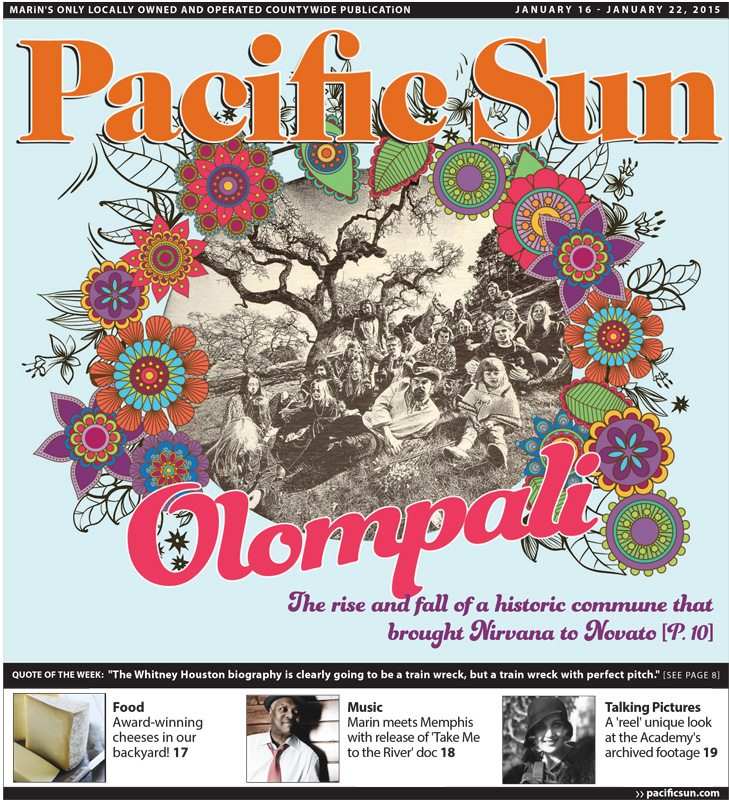
So wrote Charles Dickens long before a Marin businessman named Don McCoy dropped out and created a utopian community at Rancho Olompali in 1967, a time and a place that had many convinced they were magically living in heaven and later found they were heading directly the other way.
This is a big part of the tale McCoy’s oldest daughter Maura will tell in the feature documentary, Olompali: A California Story, that she is producing with partner Gregg Gibbs.
“Dad had inherited $500,000 from his family,” Maura says. “That’s like $4 million today. He and his friends, who all had kids, started looking for a large house with a large yard. A realtor [going by the tag Codfish Carrier] showed them Rancho Olompali, a few miles north of Novato, and everyone fell in love with it! It’s one of the most beautiful places you can imagine, out in the country, 690 acres with a 26-room mansion for maybe $1,000 a month!”
What’s not to like? A mountain rises behind you to 1,558 feet with stunning views. The land is filled with oak and bay trees and a storied past. And the silvery waters of the bay sit right in your sightline.
While it didn’t start out to be the quintessential hippie commune of the ’60s, when parents and their kids want to live as an ensemble, that’s what you get. It became even easier when Don, the nucleus of the Chosen Family, as they chose to call themselves, “wanted people not to stress out by working at a job. But if you had talent, he wanted you at the ranch; you pitched in with labor,” recalls Noelle Barton, who with her mother Sandy [a San Francisco nightclub singer] was part of the original core group. “We had an awareness and sharing mentality.”
Maura, who now lives in Marina del Rey [Los Angeles County], reflects on this and says, “As I got older I kind of put Olompali behind me. I rejected hippie things and went back to a more conventional lifestyle. We always reject what we’ve been raised with, and I wasn’t really that interested in it in my 20s or 30s … Then Gregg and I came up here and saw an exhibit at the Marin History Museum about Olompali and he thought, ‘Why don’t we make film about this place and tie it in with your experiences and your father’s history there?’”
Over several months in 2013, a Kickstarter campaign raised more than $45,000 for principal photography. Now in post-production, the film, Maura says, presents them with the daunting challenge of simultaneously trying to raise finishing funds and getting the film ready to submit to the Mill Valley Film Festival. “I have to say there are always periods of doubt with a project of this magnitude,” she says. “Obviously there have been some [momentum] lulls, we don’t have a firm completion date, or release date, and there’s this Grateful Dead documentary that’s being produced by [Martin] Scorsese. And they got [senior state archaeologist] Breck Parkman to walk around and talk about the band living at Olompali. Hey, that’s our guy!—they’re stealing our thunder. It can be discouraging, but now I feel this will actually benefit us. If that film is successful, it can generate interest in ours.”
As to the challenge of digging up material from a long-ago era, the fact that so many kids experienced the commune made it possible to get first-hand recollections 47 years later. “We, who are still alive, are in touch with almost everyone except a few who we have lost track of over time,” Noelle Barton says, “and I would say at least 80 percent of the founding families and their kids are all one family to this day.”
“Unfortunately, we don’t have my dad here to tell his story,” Maura says, “but he put it on tape! He went to the Marin Civic Center library in 2000 and did a whole oral history that they recorded there. We have an archive of a radio show he did. These things keep coming out of the woodwork. One person had a whole cache of newspaper clippings—including a story in the Sun called ‘Nirvana in Novato; We interviewed Carol Garrett last year—she’s since had a stroke—and she is one of our best subjects. She’s the one who had a nude wedding at the ranch and she pulled out an album loaded with photographs. These things are priceless!”
Mary and Maura McCoy at Olompali, 1968. Photo by Sandy Barton.
When the Chosen Family set up house at Olompali and was finished choosing (at least temporarily), by most accounts there were about 10 adults, 15 girls and four boys: Don and his three girls, Maura, Dana and Mary; Sandy and Noelle; Bob and Sheila McKendrick (who would later divorce Bob and marry Don), their two daughters and son; and Buz Rowell, their de facto ranch manager. They soon added the likes of a pot-smoking nun, Sister Mary (now Mary Norbert Korte) and a pot-smoking elementary school teaching principal, Garnet Brennan, whose 30-year career was erased by the Nicasio school district after she admitted to smoking weed.
Six of Sister Mary’s poems appeared in the book Women of the Beat Generation, including one titled, “There’s No Such Thing As An Ex-Catholic.” Meanwhile, Brennan, whose termination was a national news story picked up by LIFE magazine, set up the dining area at the mansion as the classroom of the “Not School.”
“We had displays, supplies, books, tests—yes, she tested us,” remembers Maura McCoy, who was 10 at the time. “She was a professional educator and a great person to have there.”
Noelle Barton at Olompali, 1968. Photo by Sandy Barton.
“We had a Montessori-type school,” Barton says. “Kids in the real world didn’t have their own horses or an oversize swimming pool or the freedom to choose their own bedtime. Kids even got to pick what color to paint their room. You can’t dream of a life like that. At my age [then 17] all boundaries and restrictions were removed. You don’t have to go anywhere. Or do anything. Music came to us [including the Grateful Dead, who lived at the ranch during the summer of 1966, and were close enough with Don and Sandy to just drop in on weekends].”
Others who supposedly passed through could either be found in a Grammy lineup or a police lineup: Janis Joplin, Grace Slick and Jefferson Airplane, a 5-year-old Courtney Love, Nina Simone, Lou Gottlieb (of the Limeliters), Bill Cosby, Ken Kesey, Jack Kerouac, Hells Angels and Charles Manson. The back cover of the Dead album Aoxomoxoa features a photo of Jerry Garcia and commune members, including Maura McCoy, among the trees at Olompali.
Several of the children from the commune, including Noelle and Maura, appeared in the photo on the back cover of the Grateful Dead’s ‘Aoxomoxoa’ which was released in 1969. Photo by Tom Weir.
“Everything was in the moment,” Noelle Barton recalls, “and you had a choice, a lot of freedom and merriment. You might make some wrong choices along the way because you didn’t have enough [life] skills … There were people who showed up later to take advantage of those freedoms, but not at the beginning. We worked hard, making meals three times a day for 50-60 people, shopping for food, cleaning up after. But work isn’t a chore when you’re sharing with people you care about—six or more of us washing dishes together and laughing and talking—it’s more adventure than chore. We milked our own cows, milked our own goats, fed and groomed horses, tended the garden.”
“It was a special and wonderful life,” Maura says. “Just a lot of freedom as children. Pot was definitely made available to us, but it was entirely up to us. On occasion like a party anyone could have LSD. I tried it, didn’t like it. Nobody thought pot was harmful, even though some of the younger kids who have kids of their own now say, ‘How could they have done that?’ But it was a different time.” At Monday night meetings of the Family, each adult drew a child’s name out of a hat and would “adopt” that boy or girl for the week. “We were collectively parented,” Maura says. “More specifically, to make sure each child was being looked after, we were assigned each week to a specific adult. They just wanted to experiment with different ways of parenting. I wasn’t missing anything, any more than any child of divorce who misses a parent.”
Maura’s sister Mary concurs. “I was only 6 at the time,” she says. “[But] that was a difficult period for all of us. You suddenly lose your place in the universe with regard to your mother and father, and when I lived with my parents, I had a bedroom—and all of a sudden I’m sharing a big space with many other kids in the mansion, but new friends trumped the rest of it.”
Maura the filmmaker has no illusions about making money with a documentary. “This project is a labor of love,” she confesses. “It is my way of remembering my father [Don McCoy died in 2004]. It is also a tribute to a place that now holds a special significance in my memory and in my heart, and which has an incredible story of its own.”
According to archaeologist Parkman, Native Americans had been there for between 1,500 and 4,000 years. “If you lived at Olompali, within minutes you could catch fish or deer, you could grow things, you were close to water—it would be like living in the parking lot of Trader Joe’s today, never having to worry about food.”
As American settlers tried to steal California away from Mexico, the first battle of the Mexican-American War erupted on June 24, 1846—The Battle of Olompali, right here in Marin, and the only clash of the Bear Flag Revolt that resulted in casualties.
One of the most amazing finds on the property is an Elizabethan silver sixpence dated 1567, the time of Sir Francis Drake’s landing in Marin County. Perhaps he stopped by to trade with the Miwok Indians, via a route we’re reasonably certain did not encompass Highway 101. See, even then you couldn’t count on it.
How the land passed from the Miwoks to a land baron to a dentist and others, eventually to the University of San Francisco and, ultimately, to California and its current status as Olompali State Historic Park is juicy history that McCoy and Gibbs plan to harvest for the film.
Several men from the commune work on the construction of the bakery platform, which can still be found at the park to this day. Second from left is Don McCoy. 1968. Photo by Sandy Barton.
As part of the communal template that was being forged there in ’67 and ’68, new people anxious to be part of it all had to be voted in. One who did was Peter Risley, a 20-year-old freelance photographer hired to shoot photos for a Pacific Sun article on what one reporter called “The White House of Hippiedom.”
“After I joined the experiment the photography dropped away, due a lot to my immaturity,” Risley says. “I was a good idealist, but not a good businessman.”
Buz Rowell remembers that Risley “hit it off with everyone and he sort of took over the garden. The kids and adults helped him and, because animals dumped their stuff there, it was really productive. We grew chard, corn, beans, tomatoes, cukes, squash, yeah marijuana, but not too much, because people were always bringing in gunny sacks of Acapulco Gold.”
We tracked Risley down in Kapaau, Hawaii, where he is now an award-winning organic farmer with a pretty sober view of life, now and then. “It was there I decided farming was what I wanted to do—it was needed and I could do something for the world. Things that made Olompali relevant—it’s now intensified. We’re in trouble because of the way we relate to the earth and each other. Our society has yet to open up to what we were trying to do back then.”
He recalls the press gleefully descending on the ranch, apparently anxious to puncture holes in what many perceived to be the absurdities of the freethinking counterculture.
“The media stuff was always happening, which created a negative situation. We weren’t ready to deal with it. We were dealing with our personal lives. A lot of stuff that happened was imposed on us. I really liked Don a lot, and I saw things that happened to him that reverberated with all of us. He was a man who landed in a hurricane. Don’t forget that period was right in the middle of revolution—this great change in America and particularly on Haight Street—and the feeling was, ‘We’re it!’ But there was not a snowball chance in hell that [the commune] could survive, and that was our own fault. Because of the publicity, he was getting letters from people looking for answers and wanting to come and live there, people trying to use him. We just got crushed by reality and our own naiveté.”
Carol Garrett (Knope), who was interviewed for the film, with her horse on the grounds of the estate. The Burdell mansion is in the background. 1968. Photo by Sandy Barton.
About seven months into Don McCoy’s communal life, in the summer of 1968, his father asked his grandfather to put Don’s inheritance into conservatorship “so he doesn’t piss it all away.” Maura says, “Dad didn’t fight it. He’d become all hippie by then and actually felt the money was a bit of a burden.” But they did offer him enough to join Sheila and Buz at the Worldwide Spiritual Conference in India, though that may have sounded the death knell for the ranch.
In November 1968, while they were still in Calcutta, someone left a gate open at Olompali and a horse ran down the driveway that led directly to the freeway. A second gate [at the bottom of the hill] was usually kept closed, but that, too, was open and the horse ran onto Highway 101, causing the driver of a semi to jackknife as it slammed into the animal. Both the horse and the driver were killed.
When the group returned to California from India, Buz Rowell says the structure of the commune had been changed by Bob McKendrick. “The ranch was never the same after that,” he remembers. “A lot of people had joined up since we’d been gone, people living up in our hills. You’d look at them and ask, ‘Do they live here?’ and someone would say, ‘Duh, I dunno.’”
In January of 1969, narcotics agents made two raids at the commune, busts that Maura believes were the result of an informer in their midst. When the narcs demanded to know who owned all the marijuana, Don replied, “It belongs to God. I just smoke it.” Charges were eventually dropped.
Not long after, in the early morning hours of February 2, old and faulty wiring caused a raging electrical fire. “From the highway you could see flames leaping out of windows,” recalls Noelle Barton, who had been working a light show that night. “When we shot up the road, the fire trucks were already there, but they weren’t doing anything. They were waiting for the captain to arrive to give orders, but he had had a heart attack on his way over.” Though everyone got out without injury, a dog, two cats and a parakeet were burned to death and the blaze gutted the 150-year-old, two-story mansion.
After the fire, Olompali was hanging on by a thread. “Watching it fall into shambles was very sad,” Rowell says. “It was nothing like the joy when we started. There were no family meetings anymore or sounding things out. Don was losing touch with reality and that was dividing people, too. The ranch fell into the hands of [the late Bob] McKendrick, who I didn’t get along with—there were more drugs, PCP, speed, hallucinogens. The school was not there anymore—children had gone back to public schools. They started moving out; that’s what was missing, it just wasn’t there anymore. Things were deteriorating. It became authoritarian.”
Don McCoy had a breakdown and was, according to Maura, at Marin General under observation in the mental ward. Then, signaling the final tragic note of a movement that ultimately had witnessed the last of its music in the air and flowers in the hair, two toddlers—2-year-old Nika Carter and 3-year-old Audrey Keller—were pedaling a tricycle along the edge of the unfenced pool and fell in and drowned.
“I was in the workshop in the dormitory when it happened,” Rowell remembers. “People started screaming. I came out and saw everyone racing around frantically trying to start cars.” No one could get any of their wrecks to fire up and by the time they were able to get the girls to a hospital in a neighbor’s truck, it was too late. “On that day, my dad looked out the [hospital ward] window and saw people from Olompali rushing in,” Maura says, “and, later when he heard what had happened, thought he would be blamed for this.”
Outraged county officials had had enough. They charged up to the ranch, found dozens of building code violations, and had landlord USF order everyone out within 30 days.
Although that was the end, there are connections to that time and place by members of the core family that apparently cannot be severed. Rowell, who now lives in a trailer park just south of Jenner, says, “Whenever I’m going south to San Francisco, I always stop at Olompali and take a solitary walk around and remember how it used to be. Although we live in different places, I have kept in touch with a lot of our people for many years.”
Maura McCoy says that her attachment to the relationships she formed back then has deepened the deeper she gets into her production. “I was definitely exposed to different ways of thought, to people who had yearning for peaceful ways of living, collectively with others. It gave me a more liberal and progressive outlook on life in general, introduced me to organic foods, to eastern religion, to farming, to alternative theater. Maybe today that sounds almost mainstream, but we were really counterculture then. And I embrace the emotional honesty that my father always expressed, and the straightforward, generous spirit that made him a well-loved man.”
Noelle Olompali Barton, executive producer, and Maura McCoy, producer. Photo by Greg Gibbs.
Noelle Barton puts it this way: “It is my lifelong dream to manifest this documentary so, once and for all, the story can be told by us, correctly, because it was our life!! We’re definitely not going to whitewash it—mistakes were made along the way. It was the rise and fall of a utopian society, with an ending that, to me, was a big shock. But the film, which will be narrated by Peter Coyote, is just about recording history—and we have a lot of colorful history. It was spectacular and obviously beyond the comprehension of those people who didn’t live through those days … but even with the bad experiences that befell us, it was still one of the greatest adventures and I feel blessed to have been there then. Physically we lost the ranch but, as the film will show, we never lost each other.”
Ask Mal if he’s reached Nirvana at le*****@********un.com.
ARIES (March 21 – April 19) Reserve your next Throwback Thursday for your BFF, Aries! The new moon in Aquarius on Jan. 20 has you ready to mingle. If you happen to be single, this could finally be the time to give love a chance. If you’re coupled up, it’s likely that you’ll find the Amy Poehler to your Tina Fey.
TAURUS (April 20 – May 20) Get ready to dot your I’s and cross your T’s, Taurus! An offer on Jan. 22 is looking real good. Remember that ice cream-taster job that turned you down a few months back? Well thanks to Mercury going retrograde, they want you back and bad. You have the upper hand now with whatever offer manifests as a blast from your past.
GEMINI (May 21 – June 20) Are you stuck in quicksand, Gemini? Everything’s going real slow right about now—and who can you thank for that? Mercury, your ruling planet, goes retrograde on Jan. 21 and with it brings a hellstorm of miscommunication. You know the drill: expect surprises from your past, don’t sign any papers and try not to drop your cellphone in the toilet.
CANCER (June 21 – July 22) Love is in the air and on the interwebs, Cancer! You can’t seem to quit swiping right—you’re consumed by all-things love and lust at the moment. While you might think you have online dating down to a science, be careful what you send out to some of your favored suitors. A mass selfie might find itself with a pair of mutual (soon-to-be angry) friends.
LEO (July 23 – Aug. 22) Don’t leave your credit cards laying around, Leo! Your carefree demeanor might get the best of you on Jan. 19. It might be time to quit using your pockets and to start using a wallet. Identity theft is around the corner, and that unsuspecting 80-year-old grandma visiting from Florida couldn’t be happier with your lack of organization when she picks your pocket!
VIRGO (Aug. 23 – Sept. 22) Wondering if you’ll be the next case of measles, Virgo? Health will be the question with the arrival of the new moon in Aquarius. If you’ve had an ongoing, long-term health issue that doesn’t seem to beat it even with a few overdoses of Airborne, it’s time to get yourself checked out. The problem might be something larger than you originally imagined. Do yourself a favor.
LIBRA (Sept. 23 – Oct. 22) You don’t know until you try, Libra! Try to make a baby that is! The new moon, in fellow soul sign Aquarius, is here to help make big changes—like making children. If you’re committed to you for the rest of your life and not interested in a little one, this new moon could be emphasizing a new baby in another sector of your life—like a creative passion project.
SCORPIO (Oct. 23 – Nov. 21) Put the Fitbit down, Scorpio! While working out is always a great thing, we just can’t condone another gadget at this time. Especially with Mercury going retrograde on Jan. 21. Keep water away from electronics and take out all of the Apple insurance you can—things are about to get real messy for your tech-savvy appliances.
SAGITTARIUS (Nov. 22 – Dec. 21) Planning on taking a walk down Memory Lane, Sagittarius? We’re not talking past loves here—we’re talking an actual walk. You might find your inner adventurer seeking a familiar thrill—the thrill of one of your favorite locales. Brainstorm about some of your favorite places growing up and pay a visit—it might be the perfect place for a little reflection and reinvention.
CAPRICORN (Dec. 22 – Jan. 19) It never hurts to ask if you do it politely, Capricorn. Especially when the question, er, in question, could be solely responsible for you upgrading from Two Buck Chuck to a Robert Mondavi cabernet. It’s time for a raise and don’t be afraid to ask on Jan. 20—the stars want to see a little extra cash in your wallet!
AQUARIUS (Jan. 20 – Feb. 18) Got a plan, Aquarius? Well, the new moon has a plan for you! Any lingering thoughts that have been clouded with what-ifs are about to take flight. Put some stock in your wildest dreams. Consider Jan. 21 your very own personal day to channel your inner Wolf of Wall Street moment—minus the felonies, house arrest and crumbling family life.
PISCES (Feb. 19 – March 20) Feeling more courageous than Popeye after devouring some spinach, Pisces? Well Mars entered your sign and will find itself getting settled there this week. On Jan. 16 you’ll be full to the brim with courage and ready to voice your deepest thoughts and concerns. Use your innate intuition and follow your gut—you know what you need!
During recent interviews in which you were asked about the invasion of Iraq and subsequent “enhanced” interrogation techniques involving Iraqi citizens who opposed the invasion for some reason, you told interviewers that “it worked” because it saved American lives, in your opinion.
The invasion itself, you forgot to mention, had already worked to kill some 4,000 Americans and many thousands of Iraqis. But it didn’t cost much money and we didn’t have to draft any college kids.
So, yes, it all worked, like all great fiascos do. It worked to create and strengthen an insurgency of Iraqi citizens and others to defend themselves against further attacks and war crimes. It worked to calm things inside Iraq, too. If you read the papers hardly any lethal bombs are being set off in and around Baghdad these days. It’s great to see the civil war there cool down.
It also worked to further destabilize an entire region of the globe as the insurgency spilled over and merged into Syria, Afghanistan and Pakistan. Iran was already lost, of course, in the 1950s when the Shah was installed by the CIA. That worked, too.
And it worked to shine a light on another fun addiction that works so well, unconditional love for Israel.
It’s all worked lately to promote terrorist attacks in war-torn locations such as London and Paris and, for the next year or so, such attacks will likely take place in other major cities across the globe, perhaps even in America.
Once these crafty insurgents get on a roll, it’s darn hard to get them to take a break so we can watch the NFL playoffs in peace. Plus who knows what’s going to happen when spring training comes along. (Bring your handguns to the Scottsdale bunker, Giants fans).
It helped that we got bin Laden, though, that’s for sure.
So, thank you, it all really did work. We proud Americans wish to thank you and the others (Paul, Condi, W., Donnie, Colin) for having the courage and foresight to take us on this journey through the New American Century.
This week’s cover article on trafficking really sucks. Used to be, the Pac Sun would actually spend some time delving into the subjects they chose to cover. In the late ’70s, when I worked for a sister weekly of the Pac Sun in Denver, Colorado, one of the subjects covered took weeks of installments to unfold. They didn’t cover one angle and call it a day.
Worse, the article panders to the kind of fear-mongering currently propagated by the anti-affordable housing people, who maintain to Marinites that their own communities are safe until their children are taken away by “bad people” (often racialized) who come into their communities.
A more complete view of the industry you are barely covering would go look into the presumption that prostitution is rooted in the rape of children. Emi Koyama at eminism.org notes that the vast majority—read those two words again—the vast majority of young people “rescued” from the trade are 16- and 17-year-olds, and it’s rare that there’s anyone under 13.
You also would have done the math: for the average age to be around 13, there needs to be many more 5- to 12-year-olds forced into prostitution than are empirically possible.
While the exploitation of teenage women remains very problematic, it is the extension of the definition of the term “trafficking” into the realm of anti-prostitution which discolors a proper view of that most intriguing industry.
One accepted and untrue presumption is that most women prostitutes are streetwalkers. Another misperception is that most prostitutes are controlled by pimps. Your article does nothing to dispel either viewpoint. Rather, the article plays on the obvious scene that streetwalkers are the most visible workers in sex. Thus, we scorn them, just as we scorn the faces of poverty on the streets of San Rafael, people whom we brand with the bad word of “homeless” but who in fact might not be without housing.
It’s just not true that most women selling sex for money are pimped. See Maggie O’Neill’s blog at “The Honest Courtesan,” where she attacks that view as well as the average of trafficked teens and other myths.
See also Melissa Gira Grant’s excellent book Playing the Whore. It has several thought experiments. One is the slight distinction that consensual sex between adults is legal, but if it involves the exchange of pieces of paper with numbers printed on them, then it’s not.
Another thought experiment is when a man buys a woman dinner on a date, and then goes to bed with her—that dinner can be seen as a form of payment. A similar situation is that of a husband who works and his wife does not—that can also be seen as constituting a form of prostitution.
Finally, there’s this humorous conjunction (which you guys had laid in your lap recently in the form of a letter to the editor, but chose to sneer at): suppose a client of a massage parlor pays for extra services, but then films said interaction and places it upon the Internet. That interaction then becomes legal porn, and is thus not prostitution.
Harping on the child prostitution angle keeps one from the poignant point that sex traffickers (which actually means transporting women against their will across borders to sell them to other humans, which is just another form of pimping) don’t want legal prostitution, because if you decriminalize it you take away their power and profit.
Let’s finish up with one of the conspicuous holes in the article: the figure given by the writer of 58,000 abductions in 1999. That 16-year-old stat stands right next to a quote about prostituted children. One must thus question why the author wrote the article in that way. In contrast, and in fact, one can find sources which declaim a much higher annual number of missing children by a factor of four, with a 97 percent recovery rate.
It would have been much more characteristic of the Pacific Sun and its longtime heralded purpose of providing more info and depth than the local daily. So I challenge the Pac Sun to delve into this subject deeper, rather than contribute to the continuing hysteria in such a superficial manner, which is a disservice to the community this once-vaunted weekly purports to serve.
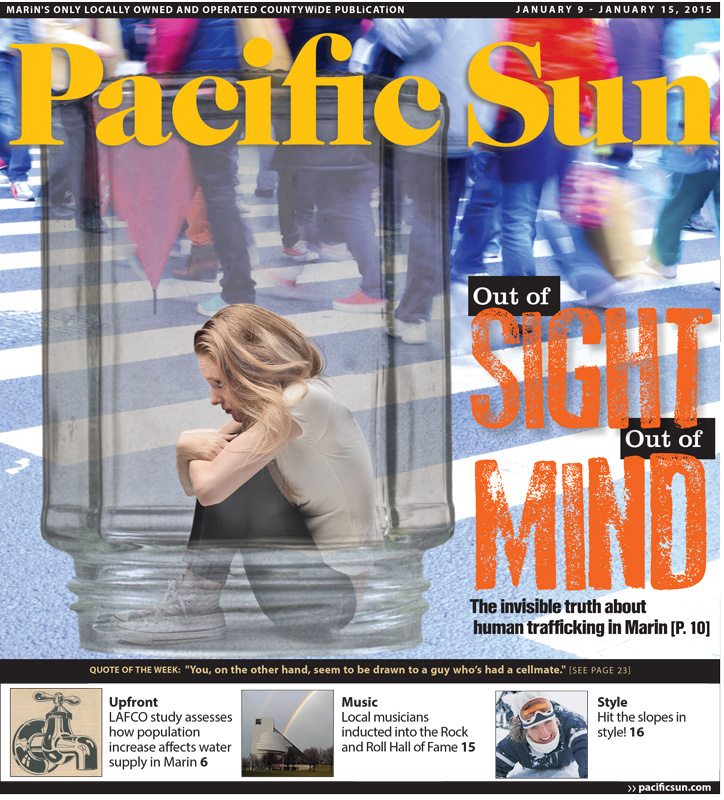
After finishing “Stuck in Traffic” [Jan. 9], I was confused by the author’s omission of race from her discussion of human trafficking in Marin, especially in contrast with the image used on the front of the paper. The cover of the Sun portrays a white, teenage girl trapped under a glass jar, presumably a visual metaphor for modern-day slavery. The article then goes on to discuss the prevalence of human trafficking in Marin and the Bay Area, yet the author does not once address the actual racial dimensions of the problem. Sex trafficking demographics in the Bay Area starkly contrast with Marin County’s own demographic. Most girls and women trafficked in the Bay Area are black, hispanic, and/or Asian. White girls are not the dominant demographic traded and exploited in the human trafficking trade in America. So, why show a white girl in captivity on the front of the paper? I can only assume that because of the overall demographics of Marin County, the Pacific Sun thought it would be more attention-grabbing to display a “relatable” white girl on the cover? I consider this the print equivalent of “click-bait.”
The cover, paired with the content of the article, would imply that white girls in Marin make up even a semi-relevant portion of the human traffic coming through the Bay Area. Please explain the editorial decision to run this cover image alongside this article.
What exactly caused Olompali to go from hippie commune to a state park? Mal Karman takes a look at the counterculture hub that housed rock ‘n’ roll legends and resides in Novato’s backyard. David Templeton will take you on a ‘reel’ unique trip down memory lane with his conversation this week with Randy Haberkamp, managing director of the Academy of Motion Pictures Arts & Sciences. Some of the Academy’s most priceless archived footage is schedule to screen at the Rafael Film Center. Meanwhile, Peter Seidman tackles traffic and transportation. Is the electric bicycle the answer for our eternal traffic hell in Marin? All that and more in this week’s issue of the Pacific Sun, available online and on stands today.
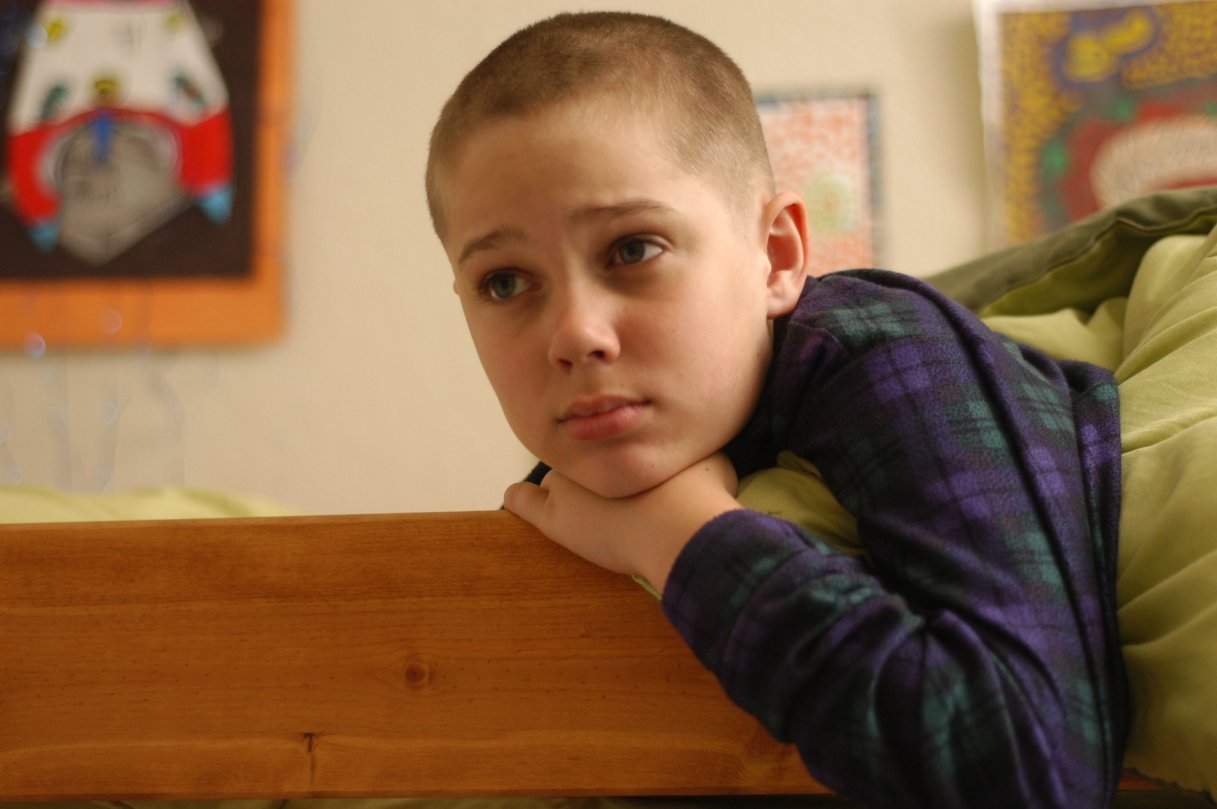
BOYHOOD is a major achievement, a film that rattles around your brain for weeks after seeing it, with insights and intimacies that just keep shining through the story’s deceptive commonplace. We’re with the Evans family—mother, two children and an absent father—as they’re buffeted along life’s ups and downs in small-town Texas: A move, divorce, a camping trip, first day at a new school, a ball game. But then something miraculous happens. The young children grow less young, the grownups get older, and writer-director Richard Linklater starts to reveal to us the great hidden actor on our lives, time, in all its awesome power. Shot over the course of a dozen years using the same actors—Ellar Coltrane from age 6, Lorelei Linklater, Patricia Arquette and Ethan Hawke—Boyhood follows each through the little triumphs and falterings that come with a decision, bit of blind luck, or added grain of maturity as the kids begin to arrive at their new selves. Good stuff for a coming-of-age film, but expanded here to the span of a full childhood, it becomes epic. The simple act of going to an Astros game with dad or having a new romance hit the skids, seen through the lens of those years leading up to it, is wrenching. (As Coltrane and the director’s daughter grew to young adulthood, Linklater hewed more closely to the people they’d become—the creative risk and receptivity feels like real life itself.) Three hours sail by and, like the experience of a great novel, you come away feeling the Earth’s rotation underfoot.
by Greg Cahill
Time for a Stax soul serenade.
There’s a great scene in the critically acclaimed 2014 film documentary Take Me to the River, produced by Talking Heads’ keyboardist and Marin resident Jerry Harrison, in which guitarist Charles “Skip” Pitts, Wilson Pickett’s former bandleader and the creator of that staccato wah-wah sound heard on Isaac Hayes’ hit single “Theme from...
by Amy Alkon
Q: I had an amazing first date with this guy: dinner, a movie, a stroll around the park and a passionate good-night kiss. That was two weeks ago. Since then, I haven’t heard a peep. How was it awesome for me but not for him? Were we, unbeknownst to me, on two different dates?—Disturbed
A: When a man...
HOUSTON JONES musical creations are that rare mix of virtuosity and humility that gets me every time. The opportunity to see them so close to home, and in the historical Throckmorton Theatre at that, should be a real treat. Did you know it’s rumored that Charlie Chaplin loved this place which retains it’s old-timey box theatre vibe down to...
by Mal Karman
“It was the best of times, it was the worst of times, it was the age of wisdom, it was the age of foolishness ... we had everything before us, we had nothing before us ...”
So wrote Charles Dickens long before a Marin businessman named Don McCoy dropped out and created a utopian community at Rancho Olompali...
by Leona Moon
ARIES (March 21 - April 19) Reserve your next Throwback Thursday for your BFF, Aries! The new moon in Aquarius on Jan. 20 has you ready to mingle. If you happen to be single, this could finally be the time to give love a chance. If you’re coupled up, it’s likely that you’ll find the Amy Poehler...
Enhanced sarcasm technique
Dear Former Vice President Cheney:
During recent interviews in which you were asked about the invasion of Iraq and subsequent “enhanced” interrogation techniques involving Iraqi citizens who opposed the invasion for some reason, you told interviewers that “it worked” because it saved American lives, in your opinion.
The invasion itself, you forgot to mention, had already worked to kill...
‘Sun’ bogged down in ‘Traffic’
This week’s cover article on trafficking really sucks. Used to be, the Pac Sun would actually spend some time delving into the subjects they chose to cover. In the late ’70s, when I worked for a sister weekly of the Pac Sun in Denver, Colorado, one of the subjects covered took weeks of installments to...
Whiter shade of beyond the pale
After finishing “Stuck in Traffic” , I was confused by the author’s omission of race from her discussion of human trafficking in Marin, especially in contrast with the image used on the front of the paper. The cover of the Sun portrays a white, teenage girl trapped under a glass jar, presumably a visual...
What exactly caused Olompali to go from hippie commune to a state park? Mal Karman takes a look at the counterculture hub that housed rock 'n' roll legends and resides in Novato's backyard. David Templeton will take you on a 'reel' unique trip down memory lane with his conversation this week with Randy Haberkamp, managing director of the Academy...
by Richard Gould
BOYHOOD is a major achievement, a film that rattles around your brain for weeks after seeing it, with insights and intimacies that just keep shining through the story’s deceptive commonplace. We’re with the Evans family—mother, two children and an absent father—as they’re buffeted along life’s ups and downs in small-town Texas: A move, divorce, a camping trip,...