Food & Drink: How sweet it is

by Tanya Henry

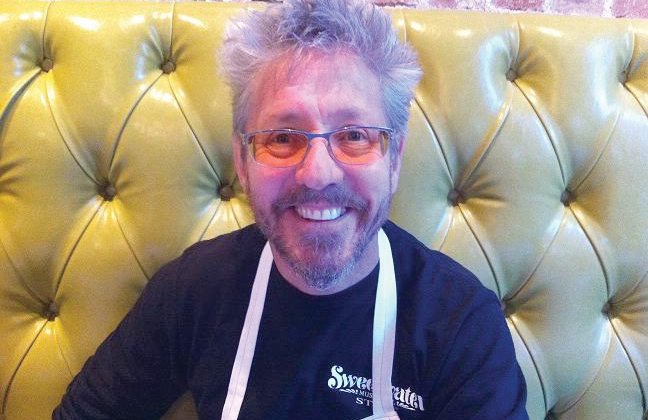
Bringing food, art and music together under one roof is what chef/restaurateur Gordon Drysdale says he was ultimately born to do. Those familiar with Gordon’s House of Fine Eats will recall the cavernous SoMa space that boasted modern art-covered walls, a hip music lounge and most memorably, a roasted brussels sprouts, egg and bacon salad.

Given the Mill Valley resident’s love for music and food, it is not all that surprising that he was asked to head up the kitchen at the revived Sweetwater Music Hall & Café, which reopened its doors in 2012. The newest incarnation of the venerable music institution is now housed next to what had been the longtime home of this weekly newspaper on Corte Madera Avenue in downtown Mill Valley.

Originally hailing from Rochester, New York, Drysdale came west after graduating from the Culinary Institute of America (Hyde Park). Completing stints (honing his classical French technique) in New Jersey, multiple L.A. restaurants and Newport Beach–where he met his wife of 30-plus years–he eventually landed in the Bay Area in the late 1980s. Drysdale immediately went to work for Cindy Pawlcyn of Real Restaurants, where he was the opening chef at Bix and went on to the Buckeye Roadhouse before going back over the Golden Gate Bridge to run, for nearly 20 years, the ultra-sleek Caffé Museo in SFMOMA–designed by Swiss architect Mario Botta. More recently, he opened several Pizza Antica pizzerias, including one in Strawberry that was conveniently located only eight minutes away from his Homestead Valley neighborhood (of 27 years).

“We still use beautiful, fresh ingredients and prepare them simply,” Drysdale says of his café menu at the Sweetwater. Occasionally he will even tailor a menu to fit the theme or tastes of visiting musicians. On that note, he was recently approached by music producer Tom Corwin to host a TV pilot entitled, “Starving Artists” that aims to introduce musicians through their love of food. For the shoot, Drysdale hosted Nicki Bluhm & the Gramblers and enjoyed one of their favorite meals, followed by a performance by Bluhm and her band.

Having logged countless hours of backbreaking work running Bay Area restaurant kitchens, the fit and energetic Drysdale is more excited than ever about his craft. With a dizzying array of projects in the works–one of which includes revitalizing the working wharf in San Francisco–the accomplished restaurateur never takes himself too seriously. He frequently echoes British chef Marco Pierre White’s famous quip, “At the end of the day, it’s just lunch.”

Share your hunger pains with Tanya at th****@********un.com.


Advice Goddess

by Amy Alkon

Q: I’m just out of a bad relationship and ready to start dating. I recently met a guy I liked at the mall. There was definitely a physical attraction, and we had a lot in common, but not an hour after we met, he sent me a text that said, “Miss you already.” That set off red flags for me. Sweet or creepy? I’m on the fence.—Want to be Charitable

A: He’s looking forward to watching you sleep—from the third-floor apartment across the way, with a set of high-powered binoculars.

Then again, it’s possible that socially, he’s kind of a mouth-breather. Socially clueless guys will sometimes dig around in the “Chicks Love This Stuff” bin, pull out some romantic-sounding line and lay it on a woman, hoping it’ll stick. They don’t get that prematurely expressed affection can creep women out. Sure, his “Miss you already”—or one of its cousins, “I loved you before I even knew you!”—sounds like a sweet sentiment. But using it before real feeling has time to develop can suggest that one’s underlying motivation is not, “Can’t wait to take you to Paris” but maybe, “Can’t wait to keep you in a crate under my bed.”

That’s probably where your intuition is taking you. Intuitions—gut feelings—are judgments we arrive at without conscious reasoning. But they don’t come out of nowhere. Your brain compares input from your current environment with prior situations (from your past and your evolutionary past), looking for patterns that suggest danger is afoot. The thing is, these alerts are often wrong. But that actually isn’t a bad thing. Evolutionary psychologists Martie Haselton and David Buss find that we seem to have evolved to make the less costly error—like your erring on the side of red-flagging a guy because it’s less costly for you to end up home alone on a Saturday night than to end up crated or dead.

Should you override your weirdo-dar? It can feel unfair to write somebody off on the basis of one yicky remark. But if you’re going to take a risk, it should be an informed risk, meaning that you use information about past behavior (which you’re rather short on) to predict the likelihood that a situation will go south. You also factor in your ability to deal if it does. Like if he turns stalker, will you be all, “Not gonna make it through the armed guards and the moat around my house,” or “My neighbors in 4B would cheerfully buzz in Charles Manson”?

On the other side of informed risk is “cross my fingers and hope it turns out OK,” which, given the level of information you have, is pretty much where you are now. However, the reality is, sometimes throwing caution to the wind makes sense—like if the guy in question seems to be the last man on Earth or your last shot before eternal spinsterhood. If this is the case, it would probably be prudent to pair your high hopes with a bedside Taser, on the off-chance that Mr. Right turns out to be Mr. Right Outside in Your Bushes.


Q: I’m dating my co-worker, and this is kind of embarrassing, but I’ve hooked up with two other guys at our company. These encounters happened a while back, and they were meaningless. My concern is that one of these guys will get wind of the fact that I am seeing and really like this guy and they’ll tell him and he’ll be put off. He knows I used to be pretty wild and said he didn’t want to know the specifics, but he also didn’t know that they involve our co-workers. Should I warn him?—Unsure

A: To be human is to engage in episodes of poor judgment: Drop-crotch pants … cornrows on a white person … vajazzling (adhering sparkly gemstones to a part of your body that nobody looks at and grumbles, “Gosh, if only it weren’t so plain”). Likewise, though life partners sometimes start as co-workers, it’s generally best to score hookup partners from the larger population pool—men whom you might occasionally run into at the grocery store, as opposed to every 45 minutes in the coffee room.

However, what’s done is done, and what your new beau wants to hear about it is none of it. And sure, there’s a chance that one or both of these guys will spill, but there’s also a chance that neither will. If it comes out, deal with it as needed. Otherwise, what he doesn’t quite know won’t, well … let’s just say that the abstract idea that you were wild is different from his having mug shots in his head of the specific co-workers who’ve ignored the tattoo on your pelvic bone: “Abandon All Hope, Ye Who Enter Here.”


Film: Head trip

by Richard von Busack

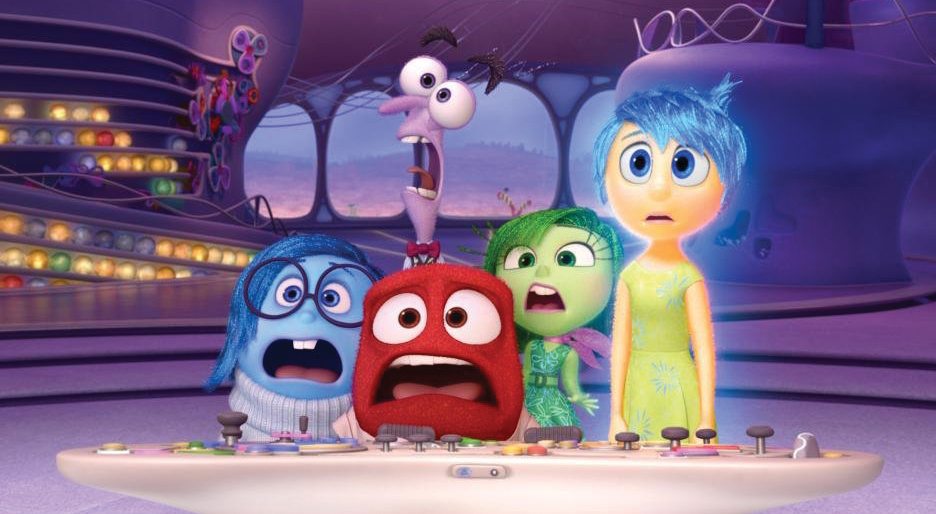
Pixar, the studio that tries harder than any of them, tries something different in Inside Out. It’s a cartoon inner-space voyage into the subconscious, starring a cast of psychological abstractions.

Riley (voiced by Kaitlyn Dias), not yet a teenager, is uprooted by her parents from her idyllic Minneapolis home to a dingy Victorian in an authentically delineated San Francisco. We see the crisis disrupting her life from the inside of her personality. Riley’s troubles are processed by five color-coded figures: the luminescent, blue-haired pixie Joy (voiced by Amy Poehler), who puts her seal on every event; Sadness (Phyllis Smith of The Office), a shapeless, bespectacled sloucher in a chunky white turtleneck sweater; Disgust (Mindy Kaling), green and scowling with disdain, and, lurking like minions, Anger (Lewis Black) and Fear (Bill Hader).

Joy’s job is to collect and protect memories before they’re sent to the core. The newly minted memories are the size and color of glow-in-the-dark bowling balls. They roll down ramps of mammoth machinery to be safely archived below decks, before sadness can touch and cloud them.

For all the mulling over of emotional conflict, Inside Out is as restless as any summer action film, with both a rocket journey and a train wreck. The amusement-park-like “islands” of Riley’s inner-life (one, a “Goofyland,” is where Riley goes when she pretends to be a monkey to cheer her dad) crumble under the girl’s stress, shaking as if they’d been built on a psychological San Andreas fault.

Co-director Pete Doctor is trying for something funny and also profound. He mostly succeeds. And once again, Pixar gets you right between the ribs, this time with a scene of familiar reconciliation—when Riley comes to understand that there is something called bittersweetness that dwells between the extremes of joy and sadness.

‘Inside Out’ opens June 19 in wide release.


Music: The road goes on

0

by Charlie Swanson

Acclaimed songwriter and country star Robert Earl Keen is best known for hits like his universally loved anthem, “The Road Goes On Forever,” yet the sixth-generation Texan has always had a soft spot for bluegrass, the music of his youth.

Keen shares this lifelong passion on a new album, Happy Prisoner: The Bluegrass Sessions, and a summer tour making its way to Sweetwater Music Hall on Wednesday, June 24.

“The first date I ever had, I took a girl to a bluegrass festival,” Keen says. “I don’t recommend it.”  Speaking from the hill country of Kerrville, Texas, Keen delves into his latest fork in his musical road. “It did solidify the fact, that number one: I really did love bluegrass. And number two: That really shouldn’t be your first date with a girl you want to keep going out with,” Keen laughs.

Growing up on a steady diet of records by the likes of Bill Monroe and the Stanley Brothers, Keen learned to play guitar alongside those albums and with bluegrass fiddle players in Houston where he grew up.

“It’s really affected the whole way I write and sing,” he says. Still, in a career that spans over three decades, Keen has never produced a strictly bluegrass album until this year, when Happy Prisoner: The Bluegrass Sessions was released in February to universal critical praise and a top spot on the U.S. Bluegrass charts.

“I got to a point in my life where I thought, you know, if I don’t do this now, I might never do it,” says Keen about the new album. Collected from a list of 100 of his favorite songs, this record features 15 classic and beloved bluegrass tunes played in Keen’s signature drawl and grit.

Guest appearances by friends like Lyle Lovett and Sara Watkins (Nickel Creek) bolster Keen and his band’s playing, and the record encompasses an eclectic array of what bluegrass means to Keen.

“A lot of people have a real myopic view of bluegrass, but I think of it in terms of a broad spectrum with real nuances,” Keen says. “I wanted to pick songs that represented the entire bluegrass landscape.”

Bringing that landscape to the North Bay, Keen returns to Sweetwater, where he has appeared numerous times since sending the venue a handmade press kit back in his earliest days of playing.

This time around, Keen and his core band of 20 years will be working the stage with a blend of material off the new record, as well as a crop of his biggest hits, like “Shades of Gray” and “Feelin’ Good Again,” done up in a bluegrass style.

NOW PLAYING: Robert Earl Keen performs on Wednesday, June 24, at Sweetwater Music Hall, 19 Corte Madera Ave., Mill Valley; 8pm; $55-$60. For more information, call 415/388-1100, or visit sweetwatermusichall.com.

Theater: Emotional dynamite

0

by Charles Brousse

When plays and musicals are praised for their “theatricality,” it usually means that the artists involved have succeeded in creating an exciting alternate reality that encourages people to stop worrying about the plausibility of what they’re seeing and embrace an approach to truth that is based on what the English poet/aesthetic philosopher Samuel Taylor Coleridge, writing in 1813, called a “willing suspension of disbelief.” Once that level of involvement is achieved, almost anything that happens on stage is acceptable.

The opening night audience’s enthusiastic response to Marin Theatre Company’s season-ending Bay Area premiere of Tarell Alvin McCraney’s Choir Boy illustrates what a powerful influence theatricality can be.

Writing at a time when America is wracked with angst over racial and LGBT issues, McCraney loads his script with emotional dynamite. The setting is the Charles R. Drew Prep School for Boys, an African-American enclave of a type that used to be fairly common south of the Mason-Dixon Line, but today is becoming increasingly rare. His protagonist, Pharus Jonathan Young, is the effeminate and extremely talented student leader of Drew’s renowned choir. The choir’s performances at the annual graduation ceremonies are used to help open the wallets of wealthy donors. In the drama’s opening moments he is front and center, singing a solo version of the school anthem when he is interrupted by a voice accusing him of being a closeted homosexual. To the dismay of Drew’s headmaster and Board of Directors, who see their financial future imperiled, the severely shaken Pharus is unable to continue.

That incident sets the story line for the remainder of the roughly 90-minute, intermission-less play. The accuser is a fellow choir boy, Bobby Marrow, the headmaster’s nephew, who aspires to replace Pharus as group leader. Their rivalry intensifies as they hurtle toward a conclusion that will benefit neither, and Pharus has to confront the issue of his own sexual identity. All of this takes place against a chattering background of concerned relatives and school officials that adds fuel to the already incendiary atmosphere.

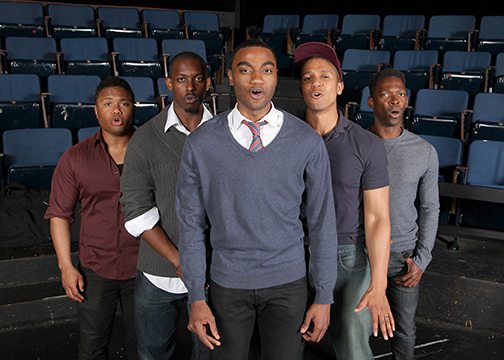
Admittedly, it’s a lot to digest, and in the initial stages I found myself questioning both the credibility of McCraney’s premises and some of MTC director Ken Gash’s production choices. For example, how could Drew’s vaunted choir—supposedly the institution’s major vehicle for attracting donors—be composed of only five boys? Why did Headmaster Marrow approve Pharus, whose exaggerated speech and mannerisms clearly suggest he is gay, to represent the school to an extremely conservative board and public? Why are actors of an age more suited to post-doctoral students cast to play 16-year-olds? And why are the two adults—the headmaster and a venerable teacher named Mr. Pendleton—made to seem so ineffectual?

The more I watched Choir Boy unfold, however, the more these doubts were replaced by the pure pleasure of watching the skillful performances of Jelani Alladin, Jaysen Wright, Dimitri Woods, Forest Van Dyke and Rotimi Agbabiaka, including rocking dance numbers and beautifully harmonized spirituals (organized by music director Darius Smith). Although Ken Robinson (Headmaster Marrow) and Charles Shaw Robinson (Mr. Pendleton) are not the main attraction, they are a nice counterbalance to their boisterous “adolescent” charges.

McCraney is a very hot young playwright these days, and “theatricality” is his trademark.

Charles can be reached at cb******@*tt.net.

NOW PLAYING: Choir Boy runs through June 28 at the Marin Theatre Company, 397 Miller Ave., Mill Valley. For more information, call 415/388-5200, or visit marintheatre.org.


Upfront: Into the weeds

by Tom Gogola

A state cannabis commission headed by Lt. Governor Gavin Newsom will issue its final report July 7, a key date along the road to an expected referendum for the legalization of recreational marijuana on the 2016 California ballot.

July 7 also marks the soft filing deadline set by state Attorney General Kamala Harris’ office to give the state enough time to vet qualifying signatures for voter initiatives.

The double sevens were not good news for ReformCA, a legalization advocacy coalition whose member groups range from the National Organization for the Reform of Marijuana Laws (NORML) to the NAACP.

The group hasn’t filed yet because it wants to absorb the commission’s report to make sure its initiative was in sync with its findings. Now the groups says that it will have to spend more money to get its signatures verified.

The timing suggests that several delicate dynamics are at play as the state rolls toward 2016: The Blue Ribbon Commission (BRC), and Newsom, can’t favor, or appear to favor, one of several legalization initiatives over another—especially when the commission isn’t itself pro-legalization, even if Newsom is.

Nor can the commission create an appearance that it is coordinating its efforts with ReformCA, even if ReformCA tried to coordinate its efforts with the BRC’s report.

ReformCA pledged to take the commission’s findings into account before writing its initiative in hopes of greater buy-in from voters. But the commission has a timetable of its own.

ReformCA was waiting on the commission report to get input from legalization opponents such as the California Police Chiefs Association. Also high on the list: What to do about cannabis users who are on probation, and those Emerald Triangle mom-and-pop growers anxiously awaiting their fate. Newsom met Humboldt County growers last month to hear their concerns.

“We’d be foolhardy to not understand perspectives of other communities that we may not have had access too, who came out of the woodwork on behalf of the lieutenant governor,” said Dale Sky Jones, who chairs ReformCA and teaches at Oaksterdam University in Oakland, a cannabis cultivation school.

“This is why we are waiting for the [commission],” she says. In anticipation of the deadline, ReformCA had set “an ideal drop-dead date” of July 6 to file its initiative, Jone says.

The cannabis activist says that she understands the commission’s delicate position, given that Californians “don’t want to feel that [legalization] is being pushed down their throats.”

The July 7 filing deadline is tied to verification measures used to certify signatures needed to petition for a proposition. The “full check” system goes beyond random sampling and requires that California’s secretary of state direct county elections officials to verify every signature on the petition.

Harris’ office could not comment on any of the pending initiatives. Press secretary Kristin Ford told this reporter via email that “the AG looks forward to reviewing the findings of the commission.”

Harris is a candidate for Barbara Boxer’s Senate seat in 2016 and has to walk a fine line here, too. Harris’ spokesperson reiterated a previously reported position that she’s not “morally opposed to the legalization of marijuana. But as the state’s top law enforcement officer, it is important to address issues that impact public safety in a thoughtful manner.”

Harris’ work extends to other states that have gone legal.

“Our dialogue with Washington and Colorado has yielded some important avenues to explore and understand further, like edibles and packaging,” Ford wrote.

The unfolding politics of ending prohibition in California seem to go as follows: There are very real concerns over a 2016 presidential election gone bad—Bush III backlash, anyone? Boxer’s seat is up for grabs. There’s an ambitious lieutenant governor who says that he would support an initiative, “provided it is the ‘right one,’” as ReformCA points out on its website.

Meanwhile, several legalization initiatives have already been filed with the attorney general—including one from Sebastopol cannabis lawyer Omar Figueroa—but ReformCA has been tuned in to the commission’s work this spring as it sought to establish itself as the most serious coalition. How serious? ReformCA put Howard Dean campaign guru Joe Trippi on its payroll two years ago and is treating the legalization referendum as a “national issue,” Jones says.

Jones says that she started to push Newsom “once [the BRC] was announced” and at every opportunity, “I asked him to turn it the hell up!”

“I’m probably driving the lieutenant governor insane,” she says with a laugh. “Every time I see him, I tell him, ‘Hurry up—you’re going too slow.’”

The commission’s general outlook on legalization? Not so fast.

The forthcoming white paper follows a trio of public forums held this spring that emphasized public safety, youth issues and the tangled web of banking and taxation, says Abdi Soltani, a member of the BRC steering committee.

Soltani, executive director of the American Civil Liberties Union of Northern California, says that the report, 18 months in the making, will distill the findings and highlight challenges and options California faces as it moves toward the expected 2016 vote. It’s not a referendum on the referendum, he says, which is to say that the commission isn’t endorsing a pro-legalization regime.

“We wanted to gather people who would be thoughtful about what is it that has to be thought through if the state goes forward,” he says. “But there is nothing inevitable about anything. In the end, the voters will make the decision.”

Pressed for details on what the report might offer, Soltani stressed fairness and transparency. “After July 7, we’ll be in a position to get on an equal-opportunity basis with all interested parties,” he says, “and we’ll share this with the public.”

Given the size of California, the order of magnitude is much greater here than in states that have legalized recreational cannabis, such as Colorado or Washington. “The biggest factor that presents the biggest challenge is that we would still be dealing with the federal prohibition,” Soltani says. “I don’t think we’ll come out of this process claiming to know everything. It’s a long road. How do you transition from a system that’s prohibition to a system that’s legal? There will be course corrections and new regulations along the way, and we have to take a long view.”

Jones says that she’ll press on with the work of gathering signatures and raising money. “The fact that they are coming in on July 7 when the ideal drop date is July 6 is going to make it more expensive,” she says.

Jones says a referendum will cost between $4 million and $6 million: That’s for getting all the required signatures, and getting the vote out in November 2016. But she says “the goal we are shooting for is $10 [million] to $20 million.”

To qualify for the ballot, the group must gather 585,000 signatures—8 percent of the electorate in the 2014 gubernatorial election. Most of the fundraising, Jones says, would go for big media buys, which are contingent on two unknowns at the present: “Who is going to be president, and how much opposition to legalization is going to be mustered in the state.”

Jones says that she is treating cannabis not as an issue but as a national candidate in 2016. It’s a full-on hearts-and-minds campaign.

“Cannabis—you know her,” Jones says. “You’ve had experiences, and you feel like you know Mary Jane already.”


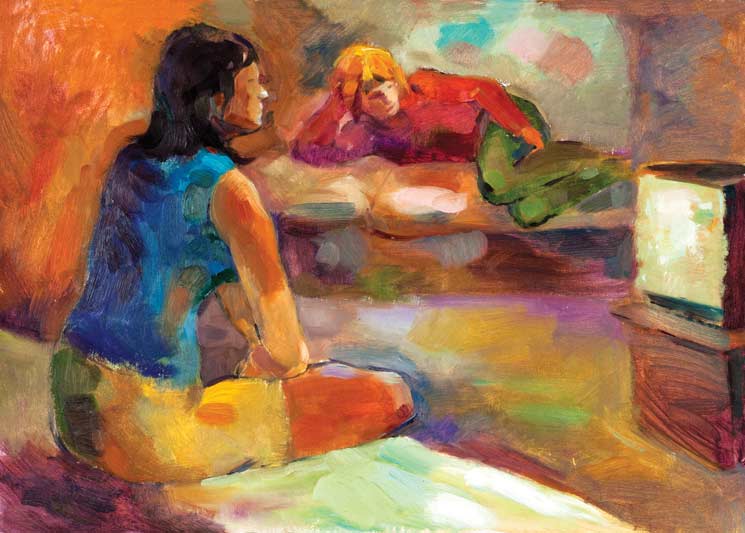
Feature: The End of TV

1

by Richard von Busack

It was September 25, 2012. The snacks were laid out on the coffee table, the IPAs were popped and the rental was paid. It was time to watch Marvel’s The Avengers on the first day it was downloadable from iTunes. On it came. Almost. The black screen of doom informed us that it would take 18 hours to download.

The next evening, we tried again. The Avengers was on just long enough to get to an opening scene of Tony Stark doing some underwater welding. “Is that Aquaman?” said the already-skeptical wife. The movie froze solid, five minutes in, staying that way for the rest of the evening. At this point, the wife wanted vengeance herself.

Downloadables left consumers with the familiar frustration of a show crashing in its first or—even worse—last 10 minutes, with screen freezes and spinning asterisks, or yet another apology in cruel white sans serif type. For more than two decades, visionaries told us that streaming television was the future of TV. By the time it was unveiled, on-demand video was so buggy that it was hard to credit the claims.

But this summer, the bugs are at last almost all gone, and streaming video offers much of what cable previously supplied. The innovation could be called “TV a la carte”—the experience of watching multimedia content untethered to a cable provider.

Los Gatos’ Netflix, which introduced so many to this kind of viewing, claims that what we all watched for the previous 60 years—“linear television,” they call it—is on its way out. According to Time magazine, Netflix’s downloads suck down one-third of Internet traffic. Already, more consumers watch television through an Internet connection than through a cable or satellite service. A reliable Internet hookup—a necessity for anyone trying to make a living in Northern California—provides a huge amount of film and television content for a relative pittance.

Americans are now discontinuing cable in favor of a $7.99 Netflix subscription, with perhaps another $7.99 subscription for Hulu Plus, and maybe a third $99-a-year subscription for Amazon Prime, whose original programming includes the Emmy-winning Transparent.

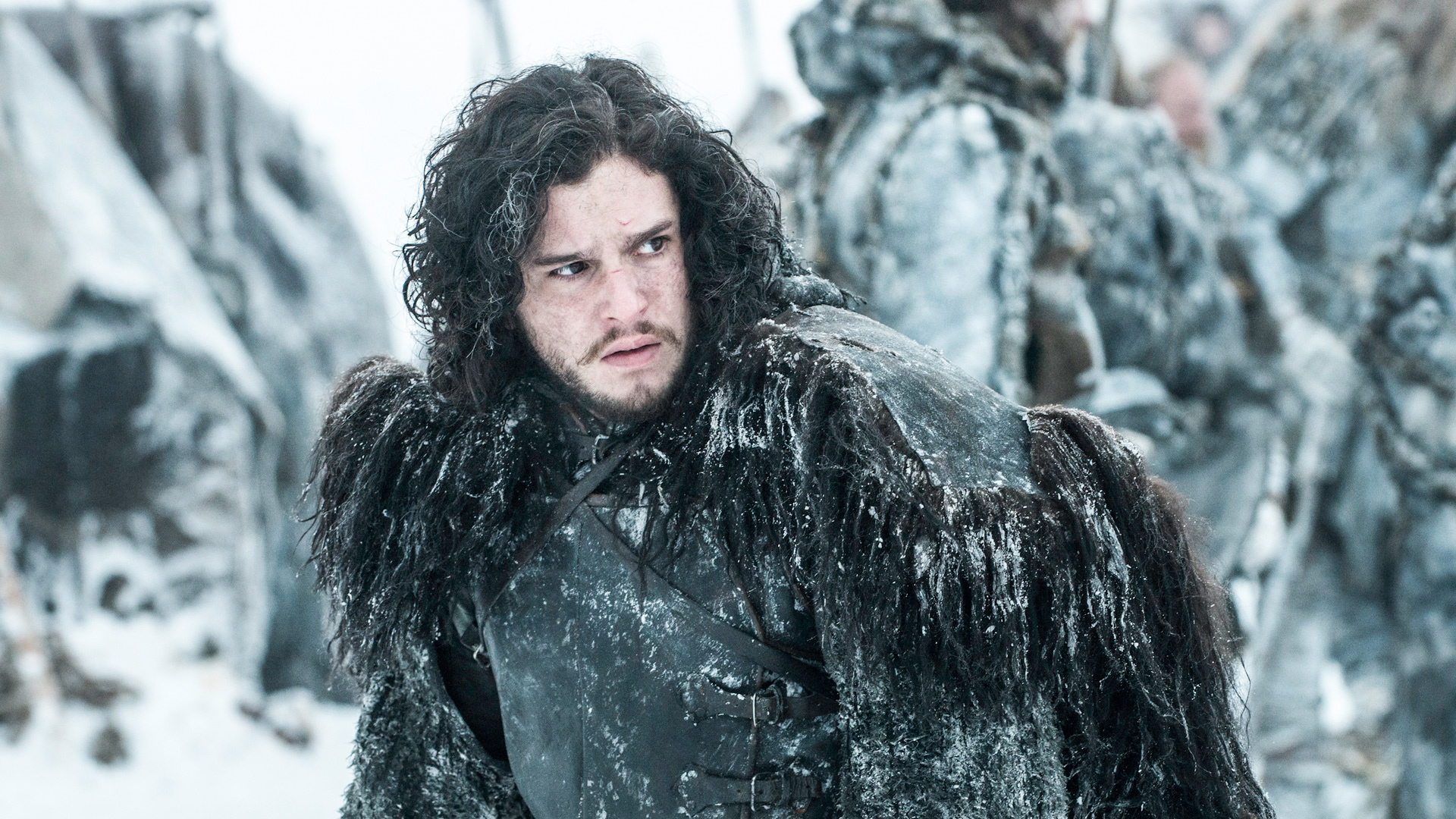
For golden-age studio fans, Warner Archive Instant, at $9.99 per month, offers one of the newest and most tempting Internet channels. Here are loads of Pre-Code, vintage anime and musicals. Last month, HBO finally abandoned its cable-only model for HBO Now—a $14.99 monthly subscription to get Game of Thrones, Silicon Valley and True Detective without paying Comcast. It’s possible to subscribe to all of them and still save money compared to cable.

A friend who works at a local movie theater attended a New York Times-sponsored seminar titled, “Look West.” He noted, “East Coast pundits and ideologues harrumphingly admitted that California is winning every culture war because of our stranglehold on tech. This particular iteration of the series featured the Hulu CEO, the Sling TV CEO and Vimeo CEO, all explaining why no one wants to watch TV anymore. They have these great phrases like ‘cord cutters’ and ‘cord nevers,’ meaning people who don’t even know what it means to have cable TV in their home.”

Netflix was the gateway drug to streaming; a system that proved it works, by combining a rising studio for original programming and pairing it with a reliable distribution network. The best evidence of the company’s aspirations to become a full-fledged studio arrived last month at a red-carpet event held at the Metreon in San Francisco, where a preview was shown of Sense8, a new Netflix series created by Andy and Lana Wachowski (The Matrix, et al). Sense8 is about a group of eight individuals in eight of Earth’s most thrilling cities, locked together as a hive-mind by some mysterious technical/mystical/biological means.

Much of the cast came in for a grip-and grin-session in front of a picture window overlooking Yerba Buena Gardens. Activist and actress Daryl Hannah was there, as was Lost’s Naveen Andrews. Tearing up the place in a low-cut orange gown was the vivacious transgendered star of Sense8’s San Francisco sequences, Jamie Clayton. Working for Netflix meant a chance to see people like herself on television: “We’re not on the other channels,” she says.

Among the dozen-odd starlets, dressed to kill, was a mild-mannered and quietly dressed figure: Grant Hill, the Australian producer of Terence Malick’s masterpiece The Tree of Life, and much of the Wachowski siblings’ films. Hill said that while every studio is different, it was a new experience working with Netflix. “What’s different is that Netflix is its own distributor. And they don’t have a big development group.” It’s generally agreed among filmmakers that the most terrible part of filmmaking is “development hell”—the Dantean levels of rewriting and note-reviewing during pre-production.

“If you have a story and Netflix likes it, they will take it,” Hill said. “They’ll open lines of communication, and make suggestions—very astute, very helpful comments. I hadn’t worked in this medium before, so I appreciated the support.”

Netflix has 40 million subscribers in the U.S., and 20 million more elsewhere. By 2016, the company plans to be “pretty much everywhere in the world.” This year, Netflix says, it is spending $3 billion on content—original and otherwise. Despite this vastness, Netflix sees itself as a “passion brand.” Their communique—which they prefer handing out to reporters instead of speaking with them—states: “We don’t and can’t compete on breadth of entertainment with Comcast, Sky, Amazon, Apple, Microsoft, Sony, or Google.  For us to be hugely successful we have to be … Starbucks, not 7-Eleven.  Southwest, not United. HBO, not Dish.”

Gina Keating, whose book Netflixed studied the rise of the company, told me: “I am not at all surprised that Netflix has made streaming ubiquitous, although it did not look like a sure bet when the app was launched in 2007. The content catalog was small—mainly older titles. What sealed the deal was the disregard content owners had at the time for streaming. They just about gave away rights, not realizing the Netflix user interface had ‘trained’ consumers to look online for content. Plus, Netflix had seven years of data on its consumers and could tailor its catalog to what they liked. That data trove is the basis for decisions about Netflix original content as well.”

In addition to the original programming created in Los Angeles, under the direction of Ted Sarandos, Netflix seeks to cull the hundreds of thousands of movie choices into smaller but better programming. They “seek the best of the 20 documentaries about bicycling.” Then they measure the clickthroughs. The counting of clickthroughs—a mystery I’ll touch on in a minute—explains the vanishing of a film that you’d intended to watch. That, after the technical blackouts, is the single most frustrating aspect of a la carte TV.

The anonymous author of the Netflix Manifesto seeks the mot juste: Netflix is launched, its rival Hulu is (merely) turned on. Hulu went from beta-testing to a billion dollars in revenue within six years, after being financed by a consortium led by News Corporation and NBC Universal, and later Disney/ABC and CW. One critic—Mark Rogowski, writing in Forbes, suggests that Hulu should be even bigger than it is given how much industry money it had behind it.

But Los Angeles-based Hulu and its “hulugans” program tons of television, current and vintage. When I pay Hulu their monthly fee, I’m proudest about them carrying much of The Criterion Collection, the crown jewels of cinema. In this pride, I’m probably like my parents, who used to display that set of the Great Books of the Western World in their foyer, despite never reading them.

Hulu carries ads. Repeated ads. And that’s been the difference between Netflix and Hulu … until possibly the near future, since according to Fortune magazine’s Tom Huddleston, Netflix is considering before and after film advertisements in some markets.

You could contrast this Criterion coolness with the hotness of Netflix’s brilliant superhero series, Marvel’s Daredevil. Looking like a fan-made labor of love, the violent film noir exposes all the problems in its closest artistic rival, Gotham on Fox. Imagine what Daredevil would look like if it ran the gauntlet of the broadcasting industry’s standards and practices. Hulu, with the huge amount of industry money behind it, has scads of quality television in their trove. This doesn’t mean just obscure foreign classics, but the entirety of Seinfeld. All the episodes are indexed and ready for the picking, any time one needs a particular episode to illustrate the supineness of human nature. While the entertainment industry drowns in a swamp of male hormones, Hulu also carries Broad City and Inside Amy Schumer from Comedy Central.

Netflix takes justifiable pride in the creation of House of Cards. The American version soaked up the Tory union-busting quality of the original, British version, without noticing or caring about the difference between America and England. To echo the common complaint, the more you know or care about politics, the less House of Cards makes a lick of sense. (And Laurence Olivier’s 1955 film of Richard III, to which House of Cards owes an unpayable debt, is right there on Hulu.)

Remember when Steve Jobs said in 2010: “Nobody’s willing to buy a set top box”? The AppleTV, which Jobs also once publically referred to as “a hobby” has now gotten a bit more important. The recent Worldwide Developers Conference in San Francisco saw the unveiling of the newest model Apple TV. It’s rumored to have an improved touch control, providing the first updating of the device in years. It’ll have to be very improved to rival the Roku. Named after the Japanese number 6, because it was the DVR inventor Anthony Wood’s sixth startup, the Saratoga-based underdog TV system offers an assortment of programming that won CNET’s survey of over-the-top video players.

Lloyd Clarke, a longtime inventor and Roku’s director of product management, explained how a smaller company could compete against the larger streaming hardware developers. “We’re smaller, yes, and that means we can focus on what we can do better,” Clarke says. “Since 2008, when we started, we’re completely focused on streaming. We get up in the morning and that’s what we think about. There are currently 2,000 channels available through Roku—Netflix is just one of them—and we’re adding five to seven a week.”

The simplicity of Roku is what sells it. Clarke describes coming back from watching Avengers: The Age of Ultron with his son and then deciding to go back to track down all available Samuel L. Jackson films across all available channels. Roku can also notify consumers of the date that a certain film will be available, compare prices from various channels and then notify consumers when the prices come down.

A Roku is just about to replace my still-functional Apple TV of a few years back, as that little black widget slowly evolves into an intelligent drink coaster. Roku is more expensive than Google’s low-priced Chromestick, but the voice-activated software ought to be an industry standard. No more of that miserable pecking away during a search, one letter at a time, like the bell-ringing Tio Salamanca on Breaking Bad.

Will the new, omnivorous, non-linear viewing make it difficult to watch an entire film in the usual way we define a film—three acts, 90 to 120 minutes, credits at both ends?

Mike Mosher, the Silicon Valley recording artist formerly known as “Mike Mayonnaise,” is now a professor at Saginaw Valley State in Michigan. He says he’s not seeing a limit in the attention span among his students in the heartland.

“We use YouTube in classes, including TED Talks, and chafe when our university network chokes,” Mosher says. “But personally, we don’t watch streaming movies, except YouTube songs. We pop in a DVD or VHS downstairs in front of the big couch.”

Elliot Lavine, the film noir expert who is a teacher for Stanford’s Continuing Studies program, finds his students are still up to the task of watching entire films. “They consider themselves serious movie-watchers and are more apt to sit through an entire film very easily,” he says. “Since the students in my classes tend to be older than your average college student, it doesn’t seem to be an issue at all.”

Chipping away at the difference between movies and television is a subgenre of films released simultaneously on the digital screen and the theater. On Jan. 27, 2006, Steven Soderbergh’s film Bubble became the first movie released in the theater and on TV on the same day, with a DVD release following four days later.

At the time, Soderberg famously said of downloadable cinema: “I don’t think it’s going to destroy the movie-going experience any more than the ability to get takeout has destroyed the restaurant business.” One wonders if exhibitors share his optimism eight years later—2014 was a terrible year for business. Even George Lucas admitted in a lecture at USC last year, “What used to be the movie business, in which I include television and movies, will be Internet television.”

I asked Netflixed author Keating whether streaming will make cinema extinct, and she suggests it’s possible. “Because VOD [Video On Demand] is so cheap and programming is getting better and better, consumers are demanding a premium experience for the high cost of theater admission. If theater owners and content makers supply that, I think people will keep going to the movies.”

Lavine is more pessimistic. “It already is killing cinema and has been for some time,” he says. “Whenever ‘ease and comfort’ enter the equation, trouble cannot be far behind. Going out to the movies will eventually be a thing of the past, at least as far as modestly produced films are concerned. It won’t be long before only huge films will find their way into theaters. Everything else will be streamed into your home. You don’t need a weatherman to know which way the wind blows.”

As for the numbers of actual viewers these small movies will get when they’re relegated to Internet television, that’s an open question. As noted film journalist Scott Tobias wrote on TheDissolve.com: “We know nothing … figuring out what’s successful or unsuccessful on VOD—or the overall viability of the format, period—is like being lost in a wilderness within a wilderness. And the powers-that-be aren’t passing out flashlights.”

That’s what makes Roku’s April 30 announcement interesting: the Nielsen organization, famed for its television ratings, is partnering with Roku to quantify who is out there watching. The numbers matter to filmmakers; if they know how popular their work is, they have more leverage when selling their small handmade films to Netflix or another provider. It also matters to producers, who need to be able to prove a track record when it comes time to finance the kind of little film that will eventually only be viable on Internet television.

One wonders at the fate of the DVD, with sales dropping as the quality of high-def streaming increases. Cinephiles still buy Blu-Ray from specialty distributors to get the best out of their home theater. After the epic fail of Netflix trying to split itself into separate online and DVD rental, it’s still red-enveloping DVDs. But this post-office-driven market is declining. Bloomberg News reports that Netflix had 58 mail order outlets at their peak. There were 39 such centers as of fall 2013. Netflix declined to show me around one of the remaining distribution centers, or to speculate on when it forecasts getting out of the physical DVD market.

Keating says that the company is likely to be mailing out DVDs years from now. “(Netflix founder) Reed Hastings joked, before the Qwikster debacle, that he would deliver the last DVD personally around 2030. I thought that seemed like a very long window but he based his calculations on the projected lifespan of CDs and how iTunes had affected that growth curve.”

If CDs eventually vanish, and there is no semi-permanent copy of a film (it’s an open secret that the lifespan of a DVD is nothing like permanent), YouTube will be a last refuge for orphan films, public domain or public domain-ish work. YouTube won’t say what percentage of its content is feature films, posted legally or otherwise. What they promote is the homebrewed video, the celebrity housecat, the person who becomes a star while cooking drunk. What credits YouTube more is less wacky work: the marvelous array of instructional videos, music lessons and technical patches available for free.

Whatever happens, cinema is bound to undergo a change. And such a bounty of moving images has its downside. Structurally, cinema first emulated the play. Technical sophistication allowed it to become something more. With sound and length and depth of field, cinema was able to emulate the interior reveries and the social importance of the novel. And sometimes it transcended even that.

For decades, cinema lovers saw the form perfected—the three-act, 90-minute format. This format will come under pressure from the wide return of an older format than the novel: the serial. Not counting the primetime work like Mad Men, The Sopranos or Breaking Bad, do we often have movies as good as Korean soap operas? Or melodramas as juicy as the ones in Latin America?

“Feature films can barely compete with TV nowadays, both in narrative structure and style,” Lavine says. “Compelling filmed entertainment is now the property of the small screen. Film culture, as it was once known, will be forever gone. The motion picture industry is slowly and painfully committing suicide right before our eyes.”

It’s hard to see the end of what seemed like a perfect form into something that seems formless, open-ended. And it’s a little poignant seeing the event of a television show at a given time displaced by on-demand, a la carte viewing. It’ll be strange to explain to future generations what it was like to have a regular appointment on Sunday at 8pm for The Simpsons. A la carte television is one more element of decentralization in a land where the center long ago lost its hold.

And some are restless at the way a la carte TV becomes a hometown table buffet. Writer Akiva Gottlieb’s complained in The Nation, “If anything, Netflix’s frictionless all-you-can-eat access model has devalued the image … It’s turned the act of viewing into an endless game of whack-a-mole. I can think of few digital innovations more annoying than the pop-up bombarding you with related programming the very instant a movie cuts to black.”

The ultimate multimedia transformation of the moving image, predicted long ago, has finally come to pass. We’ve made our own hypertexts, combining a handheld device and a TV screen. With a television in front of our faces, and a smartphone in the palm, we cross-reference clothes and items. We comment on what we’re watching to an audience of Tweeters. What was that obscure song they just did the outro with on Mad Men? Where exactly is that location in New York?  Where have I seen that actress before? These distractions combine with the old incoming tasks familiar since the 1950s, when audiences first deserted the theater for television.

In his farewell to his 30-year career, San Francisco art critic Kenneth Baker paraphrased the poet John Ciardi: “‘We are what we do with our attention.’ Immersion in digital media has the peculiar effect of making it inordinately difficult to know what we are doing with our attention at the time.”

Now that so much is available for us, where will we turn our gaze?

Horoscope: What’s Your Sign?

by Leona Moon

Aries (March 21 – April 19) Get ready to enjoy a view that’s much nicer than that pile of bills stacking up next to your bed, Aries! You’re headed out of town on June 22—a little quality vacation can go a long way. There’s no better way to kick off the summer season than with a Mai Tai in your hand and sunscreen on your face.

Taurus (April 20 – May 20) Restoration Hardware, who, Taurus? You’ve been the count (or countess) of collecting furniture lately. All that dumpster diving and Goodwill shopping that your significant other has been eye-rolling you about is going to pay off on June 21. Home is where the heart is, and nothing says that more than that set of antelope antlers hanging in your gothic-inspired dining room.

Gemini (May 21 – June 20) Stand by me, Gemini! The new moon in Gemini on June 16 left you feeling a little sentimental. Do you miss making those giant slip ‘n’ slides with free-flowing Coronas back in high school? Some things, unfortunately, do change—at least you’re of legal age to drink the beer now. Reunite with an old buddy on June 18.

Cancer (June 21 – July 22) Are your ears burning, Cancer? Your intuition is at an all-time high on June 17. Whatever feelings you may have about a certain situation or a special someone are likely to be dead-on. Your next-door neighbor might be kind enough to water your plants when you’re out of town, but he or she is definitely snooping through your mail.

Leo (July 23 – Aug. 22) What you’ve been waiting for is about to arrive, Leo! And, no, we’re not just talking about that vintage necklace you found on eBay last week. Spoiler alert: It’s a surprise—what we can tell you is that it’s headed your way on June 22. It’s all thanks to a little friendly beam from Uranus—seriously.

Virgo (Aug. 23 – Sept. 22) Congrats on Employee of the Month, Virgo! It looks like the stars have aligned for your celebration banquet on June 21. A little hard work goes a long way—there’s never any doubt with you. It looks like working a little overtime and missing the Game of Thrones finale will pay off.

Libra (Sept. 23 – Oct. 22) You’re one-of-a-kind, Libra—has anyone told you that lately? The stars are setting you up for some romantic success on June 22. It’s a one-of-a-kind celestial lineup that won’t come your way again until December of 2019. Not even your boss’ lack of communication or your neighbor’s nosiness can trump this joyful day.

Scorpio (Oct. 23 – Nov. 21) Good job, Scorpio! No, seriously, you have a great job. It looks like your bosses are noticing that you’re more of a superstar than a sheep, too. Your recent projects have caught a few of your company’s VIPs’ attention. Your innate creativity mixed with your effortless charm can only result in one thing: A pay raise.

Sagittarius (Nov. 22 – Dec. 21) Love is in the air, and you might be, too, Sagittarius! Are you flying home from a faraway destination only to meet up with a blind date? This matchless correspondence might just be the one you’ve been waiting for. Line up the mental mug shots (hopefully just figuratively) of your potential beloveds and take your pick!

Capricorn (Dec. 22 – Jan. 19) Get ready for a breakthrough, Capricorn! Have your mom and sister been on your case, lately? Something’s gotta give, if they don’t. Get ready for a family-style intervention on June 19—an intervention so grand that even A&E would be intimidated to film it.

Aquarius (Jan. 20 – Feb. 18) Gear up for some weekend travel, Aquarius. Getting up off your couch and walking one block to your neighboring coffee shop doesn’t count. New scenery might be just what you need to ease the stress of a little work-related drama. Take in the seaside on June 20.

Pisces (Feb. 19 – March 20) Are you dreaming, Pisces? Nope—that freelance job offer is the real deal! A project that would only appear once in a blue moon will land in your inbox on June 19. Celebrate, of course, but don’t have one too many margaritas and forget to reply!

This Week in the Pacific Sun

This week in the Pacific Sun, you’ll find our cover story, by Richard von Busack, about the fall of cable and the rise of streaming television. Tom Gogola writes about the politics of pot legalization, and Charles COVER_1524_web_smallBrousse reviews Marin Theatre Company’s production of ‘Choir Boy.’ Tanya Henry chats with Gordon Drysdale, the chef at Sweetwater, about merging food and music, and Charlie Swanson checks in with Robert Earl Keen about his upcoming bluegrass show. All that and more on stands and online today.

Hero and Zero: A bay rescue and a rip-off

by Nikki Silverstein

Hero: Steve took advantage of the beautiful weather last weekend by kayaking on Tomales Bay. With stellar scenery and calm water, he expected smooth paddling ahead. Unfortunately, the fun ended when he tipped his boat, landed in the water and was unable to get back in. Experienced kayakers know that you should never underestimate the power of the bay and always have a “plan B.” Steve didn’t. As luck would have it, a group of people fishing nearby reached him quickly. Three men and a woman rescued him and towed his boat to shore. In the excitement, he didn’t get their names and asked us to extend his heartfelt appreciation. Next on Steve’s agenda? He’ll be taking kayaking classes and working on emergency procedures.

Zero: It was almost a year ago that state investigators found that Whole Foods overcharged California customers. Though the grocery chain never admitted guilt, they agreed to pay $800,000 in fines and charge accurate prices going forward. Dionne Warwick and Naked Eyes know about promises, and now Debbie, a Sausalito resident, does too. Upon returning home from the Whole Foods on East Blithedale, she reviewed her receipt and realized that she had paid more than double the posted price for potatoes. And those expensive nectarines noted on her bill weren’t in her bag, because she actually bought apples, which cost far less. She schlepped back to the store and the manager refunded her money. “Customers at Whole Foods need to review their receipts judiciously,” Debbie said.

Got a Hero or a Zero? Please send submissions to ni***************@***oo.com.

Food & Drink: How sweet it is

by Tanya Henry Bringing food, art and music together under one roof is what chef/restaurateur Gordon Drysdale says he was ultimately born to do. Those familiar with Gordon’s House of Fine Eats will recall the cavernous SoMa space that boasted modern art-covered walls, a hip music lounge and most memorably, a roasted brussels sprouts, egg and bacon salad. Given the Mill...

Advice Goddess

advice goddess
by Amy Alkon Q: I’m just out of a bad relationship and ready to start dating. I recently met a guy I liked at the mall. There was definitely a physical attraction, and we had a lot in common, but not an hour after we met, he sent me a text that said, “Miss you already.” That set off red...

Film: Head trip

by Richard von Busack Pixar, the studio that tries harder than any of them, tries something different in Inside Out. It’s a cartoon inner-space voyage into the subconscious, starring a cast of psychological abstractions. Riley (voiced by Kaitlyn Dias), not yet a teenager, is uprooted by her parents from her idyllic Minneapolis home to a dingy Victorian in an authentically delineated...

Music: The road goes on

by Charlie Swanson Acclaimed songwriter and country star Robert Earl Keen is best known for hits like his universally loved anthem, “The Road Goes On Forever,” yet the sixth-generation Texan has always had a soft spot for bluegrass, the music of his youth. Keen shares this lifelong passion on a new album, Happy Prisoner: The Bluegrass Sessions, and a summer tour...

Theater: Emotional dynamite

by Charles Brousse When plays and musicals are praised for their “theatricality,” it usually means that the artists involved have succeeded in creating an exciting alternate reality that encourages people to stop worrying about the plausibility of what they’re seeing and embrace an approach to truth that is based on what the English poet/aesthetic philosopher Samuel Taylor Coleridge, writing in...

Upfront: Into the weeds

by Tom Gogola A state cannabis commission headed by Lt. Governor Gavin Newsom will issue its final report July 7, a key date along the road to an expected referendum for the legalization of recreational marijuana on the 2016 California ballot. July 7 also marks the soft filing deadline set by state Attorney General Kamala Harris’ office to give the state...

Feature: The End of TV

by Richard von Busack It was September 25, 2012. The snacks were laid out on the coffee table, the IPAs were popped and the rental was paid. It was time to watch Marvel’s The Avengers on the first day it was downloadable from iTunes. On it came. Almost. The black screen of doom informed us that it would take 18...

Horoscope: What’s Your Sign?

All signs look to the 'Sun'
by Leona Moon Aries (March 21 - April 19) Get ready to enjoy a view that’s much nicer than that pile of bills stacking up next to your bed, Aries! You’re headed out of town on June 22—a little quality vacation can go a long way. There’s no better way to kick off the summer season than with a Mai...

This Week in the Pacific Sun

This week in the Pacific Sun, you'll find our cover story, by Richard von Busack, about the fall of cable and the rise of streaming television. Tom Gogola writes about the politics of pot legalization, and Charles Brousse reviews Marin Theatre Company's production of 'Choir Boy.' Tanya Henry chats with Gordon Drysdale, the chef at Sweetwater, about merging food...

Hero and Zero: A bay rescue and a rip-off

hero and zero
by Nikki Silverstein Hero: Steve took advantage of the beautiful weather last weekend by kayaking on Tomales Bay. With stellar scenery and calm water, he expected smooth paddling ahead. Unfortunately, the fun ended when he tipped his boat, landed in the water and was unable to get back in. Experienced kayakers know that you should never underestimate the power of...
3,002FansLike
3,850FollowersFollow