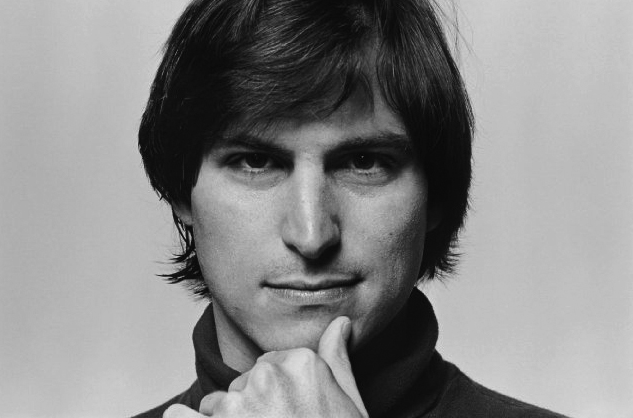
Steve Jobs: The Man in the Machine celebrates Jobs’ accomplishments while demagnetizing his cult of personality. The thought-provoking interviews flow down a stream of music from one of Jobs’ favorites, Bob Dylan—the evocative, sensitive music of a man also capable of being a nasty piece of work.
Chrisann Brennan, the mother of Jobs’ child, describes the man’s callousness here as she did in her memoir, where she wrote, “Steve’s lack of fair play seems shameless to me.” Bob Belleville, a weeping former Apple exec, quotes the eulogy he wrote, recalling that “Santa Claus” was one of the faces of Steve.
There are still a lot of people who believe in Santa, remembering the advent of the iPod, the iMac, the iPad. Director Alex Gibney’s film will come across as blasphemy to the kind of people who put “#iSad” on their Facebook pages on that October day four years ago.
Perhaps little crimes indicate indifference to bigger ones. Jobs was an able-bodied jerk who took handicapped parking spaces. But Gibney checks off a bigger roster: Apple’s tax sheltering $137 billion overseas; the company’s stinginess to charities under Jobs; the suicide-wracked subcontractor Foxconn; the downstreaming of pollution and unsafe working conditions; the gaming of stock options.
One tidbit we see here: A vintage magazine advertisement showing an iteration of the Apple computer that sold for $666.66. It was sold with a logo that’s the symbol of temptation and the Fall of Man.
The only way to fully appreciate these magic little machines is to understand that they’re the result of ceaseless health-ruining, family-fracturing labor by people whose names we will never know. Belleville describes Jobs’ career as “a life well and fully lived,” yet Jobs’ struggle never ended. His designs grew obsolete, like the commodities they are. Considering them is like considering Jobs’ life: You don’t know whether to marvel over the achievement or mourn over all the waste.
Q: I’m a 37-year-old woman, and I’ve always been quick to have sex, but I’m trying to just “date” first. Well, I’ve been on five dates with this one guy, and all we’ve done is kiss. Now I’m beginning to think that he isn’t attracted to me or is put off by my past, which, unfortunately, I was honest about.—Dismayed
A: Try to think of this as artisanal dating. Maybe he’s finished building the bed out of antique Popsicle sticks but his carpal tunnel kicked in while he was killing the flock of ducks for the mattress or spinning the cotton for the sheets.
If that sounds like a stretch, well, it’s no more of one than your notion—that the guy’s gone out with you five times because he finds you repellant or stays up nights picturing your sexual past (complete with barricades and rent-a-cops for crowd control). Do you think he’s enrolled in some underground rewards program, like you go out with a woman six times and you get a complimentary latte or maybe an iTunes gift card?
Evolutionary psychologists David Buss and David Schmitt point out that “human mating is inherently strategic.” Genetically, they explain, it’s generally in a man’s best interest to pursue a “short-term sexual strategy.” (Scientific journals and tenure committees frown on terms like “hit it and quit it.”) Basically, a man can limit his participation in sex to the fun part and still pass on his genes. Women coevolved to expect men to try for this sort of limited participation (so your bewilderment at his crossed legs isn’t exactly surprising). But a man can come to a point where a “long-term sexual strategy” becomes wiser, and it’s generally when he’s serious about finding a partner and not just a sex partner for the evening.
Note that the guy keeps coming to pick you up, and not because he is an Uber driver or is being held at gunpoint by your mother. You could say something to him—maybe, “Hey, I was really hoping you’d take me home one of these nights.” This may be the nudge he needs to make a move—or at least tell you what’s up. And sure, it is within the realm of possibility that he has ED, an STD, low sexual desire, or a seriously small penis and is waiting until you’re emotionally attached to break out the news. But it’s also possible that you aren’t the only woman he’s seeing and he’s trying to be adult about it, meaning that he’s learned that many women get emotionally attached after sex. Sleeping with two women is a good way to end up with a girlfriend—and one would-be girlfriend in the bushes with ricin-tipped blow darts or at least searching Yelp for the best-rated local assassins.
Q: My friend says that you only find out who somebody truly is when you break up with them. He suggests that I pick a few fights with anybody I’m dating so I can see their true colors. Is this really a wise idea?—Skeptical
A: If you really want to see what a person’s made of, after goading them into a fight, you might do a lung capacity test, like by holding them down and trying to drown them in a bathtub.
Though it seems an obviously bad idea to pick petty arguments, your friend has a point—that you don’t find out who somebody really is when the most pressing question they’re asked is, “Do you need a few more minutes to look at the menu, monsieur?” What comes out in the early stages of dating is temperament more than character. In social psychology, temperament is basically what “flavor” a person is—introverted or extraverted, loud or quiet, happy or glum. Character is values-driven behavior—meaning whether a person’s likely to do what’s right as opposed to what’s easiest. (Like if there’s a landslide, do they try to save you or just wave goodbye?)
Character is mostly revealed in two ways: Over time and through stress. To speed up the character revelation timetable, do challenging activities together—the sort in which “party manners” are hard to maintain: Camp. Go on a high-stakes scavenger hunt. Go on a juice fast. Go on a juice fast while camping. Who a person really is can’t help but come out when they’re in the middle of the woods with you, they haven’t eaten solid food in a week and a hiker walks by with a bag of Doritos. (It’s the little things that count—like how they lovingly brush that telltale orange dust out of your hair before the cops come.)
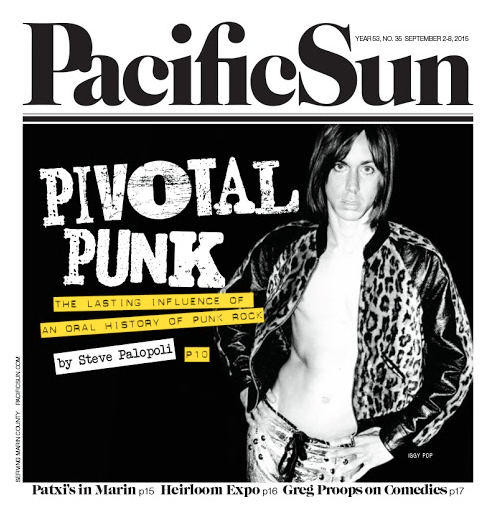
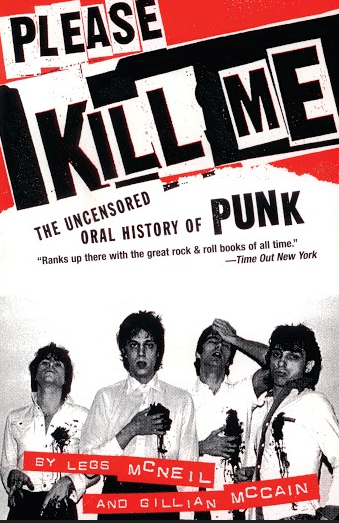
This week in the Pacific Sun, you’ll find our cover story, by Steve Palopoli, on the lasting influence of the book Please Kill Me: The Uncensored Oral History of Punk. David Templeton talks to comedian Greg Proops about how humor in movies has changed, the Dirt Diva reminds us that the National Heirloom Exposition is upon us and Tanya Henry visits Marin’s new Patxi’s Pizza. All that and more on stands and online today!
Aries (March 21 – April 19) Sick of the drama, Aries? Let the rest of your inner Shakespeare out—Venus turns direct on Sept. 6, which will leave you with less ‘accidentally texting your ex’ situations and more brownie points. It traveled retrograde the past few weeks through Leo, your house of passion and all things lusty, so try to swing that by your significant other if you’re still in the doghouse.
Taurus (April 20 – May 20) Restoration Hardware, who, Taurus? You were born with taste that even their Fall/Winter catalog can’t even begin to fathom. Remember that ambitious project you took on? Turning your basement into a full-functioning apartment? Well, it’s time to pick up the blueprints and make it happen on Sept. 2. If you stay idle on it too long, inspiration might not strike for a while.
Gemini (May 21 – June 20) What do you have planned for your three-day weekend, Gemini? I bet you’re thinking a whole lot of Lagunitas IPA, good friends and maybe a few video games and football. Unfortunately, think again. A male figure—father or older brother, most likely—is going to need to lend a hand, or muscle-y arm. So trade the six-pack for a pick ax.
Cancer (June 21 – July 22) You’ve had a case of the Mondays for a while now, Cancer. Let go and let live! You’re overdue for some fun in the workplace—we’re not talking throwing Twitter bro parties, but maybe a half-day on Friday and take your staff bowling—where there’s beer. You might learn a thing or two about some of your mysterious co-workers that could lead to your next innovative project.
Leo (July 23 – Aug. 22) Prepare to chill, Leo. Mercury squares off with Pluto, leaving a slightly uncomfortable situation. If you’re trying to advocate for yourself at work, it’s not the best day to ask for a raise. You’re stubborn, so make sure that any fight you pick is worth sticking by—it’s not going to end pretty. If you can avoid confrontation altogether and take a vow of silence, that might be your best bet.
Virgo (Aug. 23 – Sept. 22) Need some extra advice when it comes to your relationship, Virgo? If your significant other has been driving you borderline insane these past few months, we’ve got some good news for you. A little retreat might be just what you need to see one another in a new light. It doesn’t have to be a full-fledged couple’s retreat, but rent a hotel room in Calistoga for the weekend and a breakthrough is nigh—push through!
Libra (Sept. 23 – Oct. 22) Getting pretty serious, Libra? It looks as if the stars will have you taking a huge leap with your beloved—potentially moving in with a significant other. Whatever the next milestone may be, it will be full of passion, joy and maybe a little confusion. Everything needs an adjustment period—especially with the way you sing in the shower.
Scorpio (Oct. 23 – Nov. 21) Who’s that calling you on the phone, Scorpio? It’s your dream career from five years ago—you finally did it! The job you conjured up ages ago has finally found its way into your lap. You can’t believe it? Neither can some of your family after many years of you following your, at times, passionately stubborn self. Ride the wave of creativity and continue to flourish!
Sagittarius (Nov. 22 – Dec. 21) Download Skype ASAP, Sagittarius! Your next big gig has you working with a world leader, or someone across the world. This is no project for the faint of heart—you might be traveling to help children in Africa or build houses in Costa Rica. You’ve got reach with this one and you’re more than ready to make an impact. Bring your sass and wit along, as it will mix perfectly with your drive and creativity.
Capricorn (Dec. 22 – Jan. 19) Tired of your current apartment, Capricorn? Chances are that you don’t see what you’re putting into it as worth it. That’s fine—and realizing the need to relocate and that you deserve better is the first step. The stars want you to wait until after Sept. 6, when Venus goes direct in Leo, before you start scouring Craigslist and RadPad. In the meantime, you can dust the baseboards and do little tasks to prepare.
Aquarius (Jan. 20 – Feb. 18) Times they are a-tryin’, Aquarius! If you’ve found yourself between a rock and a hard place, don’t panic. It happens to all of us—there are some things that even a cold beer or chilled glass of sauvignon blanc can’t solve. Your partner will be there for you to lean on, so don’t be scared. This isn’t going to be like that trust fall exercise from summer camp in the fourth grade.
Pisces (Feb. 19 – March 20) Did you step into the fighting ring at work, Pisces? Maybe you pushed someone’s buttons to see what he or she is made of? While, sure, that does build character, you’ve also got to think that you have to see this person 40 hours a week. Try to make amends by surprising him or her with coffee and a delicious pastry—may I recommend madeleines?
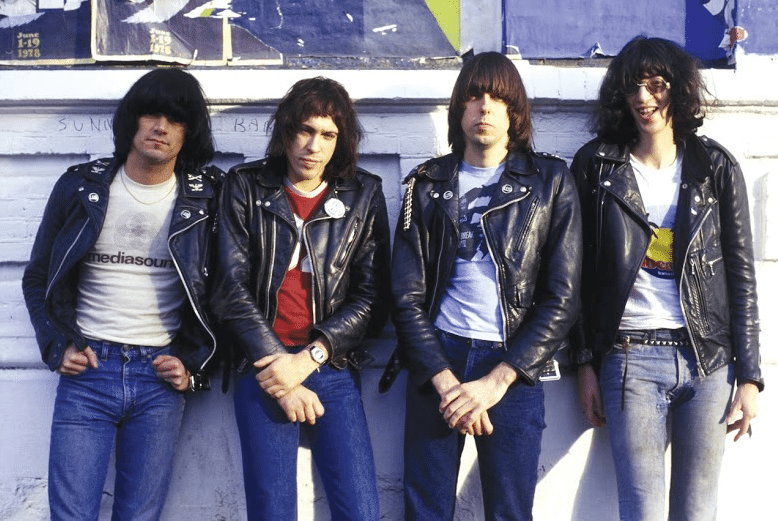
In much the same way that punk was a musical revolution, the definitive book about punk was a literary one. With its modernization of the oral history tradition—telling its 424-page story entirely in a string of quotes that form a solid, winding narrative—Please Kill Me: The UncensoredOral History of Punk revolutionized both the book industry and the way we think about storytelling when it was published in 1996.
Despite its gritty, grimy subject matter (or, more accurately, because of it), Please Kill Me was sublimely elegant in the way it matched form to content. Finally, here was a book about punk that reflected the actual spirit of the movement by representing its subjects’ words as directly as possible, with a minimum of filters or interference from the authors. It took nonfiction back to its primal urges.
Perhaps the book’s mix of iconoclasm and literary ambition makes sense considering it was co-authored by two writers with very different backgrounds, but a surprising like-mindedness. One, Legs McNeil, is the man some credit with giving punk music its name in the first place, when he founded Punk magazine in 1975.
He started it with cartoonist John Holmstrom and publisher Ged Dunn, and together they provided a fledgling New York scene led by the Ramones, Patti Smith and Richard Hell (and eventually also British bands like the Sex Pistols) with a unifying concept. His co-author, Gillian McCain, was the program coordinator of the Poetry Project at St. Mark’s Church—famed for its connections to Smith, Jim Carroll, William Burroughs and other punk poets beginning in the 1970s—from 1991 to 1995, roughly the same time that they worked on Please Kill Me.
After hundreds of interviews with everyone from icons like the late Lou Reed and Iggy Pop to lesser-known scene stealers like former “company freak” record exec Danny Fields and filmmaker Bob Gruen, the result was the bestselling book ever about punk music, which has been published in 15 languages around the world.
Now, as Grove Atlantic prepares the 20th-anniversary edition of Please Kill Me, the book sits side by side with the dozens of imitators it has spawned, everything from similarly focused music books like We Got the Neutron Bomb: The Untold Story of L.A. Punk; Grunge Is Dead: The Oral History of Seattle Rock Music; and Louder Than Hell: The Definitive Oral History of Metal to general-pop-culture megahits like Live from New York: An Uncensored History of Saturday Night Live by Tom Shales and Andrew James Miller, and their follow-up Those Guys Have All the Fun: Inside the World of ESPN (about which a fictionalized major film adaptation was recently announced). The oral history craze has reached such a fever pitch—and, perhaps, level of absurdity—that the July issue of Vanity Fair features the “definitive oral history” of the movie Clueless.
So why isn’t Legs McNeil proud of blazing a trail for this new wave of 21st century oral histories?
“They sucked,” says McNeil by phone from L.A., where he and McCain are working on a new oral history book about the ’60s rock scene there. “I wish someone would do a good oral history. At least as good as Please Kill Me, you know?”
‘Please Kill Me’ co-authors Legs McCain and Gillian McCain.
McCain, on the same phone call, is more diplomatic. “When I look at just the punk books that have come out as oral histories, not even oral history music books, I think there’s a hundred, literally. It’s just unbelievable,” she says. “So Legs may not be proud that we were the trailblazers, but I am.”
FIRST PERSON SINGULAR
McNeil’s stance may sound like punk posturing, but actually the pair adhered to some strict rules while doing Please Kill Me that later imitators have often ignored, usually to their detriment.
“We refuse to cheat,” says McCain, “where we’d have a piece of prose in between two people talking. ‘And then so and so went to blah blah blah.’ To me, that’s cheating.”
McNeil says the demanding structure of oral histories is what makes them so easy to screw up. With no exposition to support them, the quotes have to weave a tight narrative.
“They’re really difficult,” he says. “Oral histories are like rock and roll itself—very, very fascistic and anal. Seriously. Once you break the formula, no matter what you’ve done up till that point, the whole thing falls apart. It’s not like you can make a mistake. You know, like in memoirs there are shitty chapters where the guy goes off on his cat or his mother or something, and you go with that because it’s going to get good again. But in an oral history you can’t have that, because it’ll collapse.”
Please Kill Me established a blueprint for understanding the punk movement that has been followed by almost every book since, with the Velvet Underground as the first real protopunk band, and Lou Reed as the godfather of punk. While the Velvets were already widely accepted as punk progenitors by the ’90s (with no small amount of credit going to the 1990 cover album Heaven & Hell: A Tribute to the Velvet Underground, which kicked off the tribute record craze), the actual story of how punk evolved from band to band through New York and Detroit had never really been told.
But the book’s framing device—beginning with the Velvet Underground starting out in Andy Warhol’s Factory scene, and ending with the band’s reunion in 1992—was something that developed over time. Finding such a framework was key, since the origins of punk could be said to stretch all the way back to the beginning of rock itself; just look at how the Sex Pistols worshipped Eddie Cochran, or how the Cramps covered the Johnny Burnette Trio and the Count Five.
“It wasn’t easy, because we started interviewing people from [’60s garage band]? and the Mysterians,” says McCain. “So we weren’t sure we weren’t going to go that avenue, but it ended up we didn’t. There’s so many garage bands. And the people around the Velvet Underground were in the narrative later, so they were part of this intertwining—with Iggy, and Lou on the cover of Punk magazine. But with the garage bands, there was no interconnectedness.”
“What we did in Please Kill Me was we showed the linkage from the Velvet Underground to the Stooges,” says McNeil. “Nico moves in with Iggy, John Cale produces Iggy’s first album. We kind of mapped it all out, and every punk book has taken that formula. And no one has ever said, ‘Hey, thanks for connecting the dots!’”
“I think a lot of people give us credit,” counters McCain. “Often in the acknowledgements, they’ll say, ‘We want to thank Legs McNeil and Gillian McCain for turning us on to this format.’”
“Well,” grumbles McNeil, “maybe they should have bought us dinner.”
SCRAP MEDDLE
The dynamic between McCain and McNeil is a fascinating one.
One of McCain’s earliest memories of meeting McNeil speaks volumes about their dynamic.
“We had a mutual friend, and she said, ‘I’m going over to Legs’ to watch a movie.’ And we became friends. He lived on St. Mark’s and First [Avenue], and I was working at the Poetry Project at Second Avenue and 10th, so he’d drop by the office,” she recalls. “He’d come to readings and really drive me nuts, because during a poetry reading he’d be standing at the back, and whenever he’d move the least little bit, his leather jacket would creak. It just drove me insane. That’s how we met.”
“It was a doomed relationship,” says McNeil drily. “She does a great imitation of me coming to the Poetry Project. I’d go, ‘Let’s go out for a cigarette,’ and then I’d split. I was always embarrassing her.”
Disagreements over who and what would make it into the book could be contentious, but McCain says McNeil was able to make tough editing decisions that she couldn’t bear.
“Legs really forced me to edit,” she says. “At first I was like, ‘No, I want to put in Ed Sanders learning semiotics at grad school at NYU.’ And he was like, ‘No.’ ‘But it’s so good!’ ‘No.’”
“Gillian and I argue a lot,” says McNeil. “If Gillian really sticks to her guns, then I have to scratch my head and go, ‘Whoa, wait a minute . . . ’ I’m pretty forceful, and I have a pretty strong personality. But Gillian seems to be able to cut through the bullshit.”
For all of their differences, he’s surprised at how much they think alike, which comes out especially when they do interviews together.
“We always look at each other knowingly,” says McNeil. Also, we never use notes, which is really weird. The person stops talking, and we both come in at the same time with the same question. That happens about 85 percent of the time.”
“That’s true,” says McCain. “I think that’s something that makes people comfortable, that we don’t bring in notes. We just have conversations with them. Sometimes I have a few notes on a Post-it that I put in my pocket, and when I go to the bathroom, I look at it.”
“I always lose my scrap of paper,” McNeil says. “But since I’ve written it down, I know what it is.”
McCain credits McNeil with eliciting many of the stories that made Please Kill Me both shock and amuse. The book is full of them: Nico giving Iggy Pop his first STD. Billy Murcia of the New York Dolls choking to death in a flat in London while partygoers around him flee. Dee Dee Ramone writing “Chinese Rock” out of spite toward Richard Hell, but then giving Hell a co-writing credit for it because he wrote two lines. Malcolm McLaren on the differences between New York punk and the Sex Pistols.
“I learned so much from Legs,” says McCain. “He gets on the phone with Malcolm McLaren and goes, ‘First off, I don’t want to talk about the Sex Pistols.’ And Malcolm McLaren is so fucking relieved! He asks him questions about the New York Dolls, which he was probably rarely asked about before Please Kill Me. And then gradually the Sex Pistols come up, but he’s more engaged, because he didn’t think he had to talk about it.”
“You disarm people,” admits McNeil. “You’ve got to be immediately intimate with them. Because you’re going to ask them everything. You’re going to have to ask them who they’re sleeping with, what drugs they were taking, what they were thinking, what their emotional state was at the time.”
Still, McNeil says he has yet to interview someone who was reluctant to talk.
“I think for a lot of people it’s almost like therapy. They’re really into telling their story,” he says. “It’s kind of fascinating.”
TOO TOUGH TO SELL
McNeil’s experimentation with the unfiltered style of Please Kill Me can be traced, to some extent, back to his time with Punk magazine.
“Kind of with the Q&A interviews, which were hysterically funny,” he says. “Holmstrom would do things like in the first Lou Reed interview, Lou was talking about his favorite cartoonists, and John drew him in the different styles, like Wally Wood. It was very cool. We did things like when I interviewed Richard Hell at Max’s and I passed out—and Richard kept talking. Stuff like that. That was fun, you know?”
Both McNeil and McCain were inspired by Edie: American Girl, the 1982 oral history of Edie Sedgwick by Jean Stein and George Plimpton. Though a bestseller and critically acclaimed for the groundbreaking exposition-free style that anticipated Please Kill Me, it failed to have the same cultural impact. McNeil, however, saw its potential.
“He started doing a book with Dee Dee [Ramone],” says McCain. “Dee Dee asked him to write his autobiography with him. Legs had the idea, because he loved Edie, to do it as an oral history. So he was getting Danny [Fields’] interviews transcribed, and all these people, and I said to him, ‘This story is so much bigger than Dee Dee. He’s a seminal character, but it’s just such a huge story.’ Then Dee Dee got kind of hard to get along with, and when they parted ways, Legs was like, ‘Do you want to do this with me?’ So that’s how it started.”
Considering that Please Kill Me would go on to have a huge impact on the book industry, it’s ironic that publishers showed no interest in the project at first. Despite 1991 being “the year punk broke,” as one documentary title put it, with the success of Nirvana’s Nevermind and pop-punk bands like Green Day and the Offspring storming the radio in 1994, a book about punk was still a tough sell back then. And it certainly didn’t help that it was an oral history, a literary genre associated with Studs Terkel books about old-timey things like the Great Depression and World War II.
“We knew we wouldn’t be able to sell it on just a proposal and a chapter, because people wouldn’t get it. Not only the subject matter, but also the oral history format. So we had written the whole book before we tried to sell it,” says McCain.
The exhausting interview schedule had some out-there moments, like the interview with former Stooges guitarist Ron Asheton, which McNeil counts among his favorites.
“We did like 10 hours in one sitting. Drinking milk and vodka or some weird thing,” says McNeil. “I was just listening to him, and he’s talking to his cats through the whole thing. ‘Leave her alone, Patches!’”
The great white whale for the two of them was Iggy Pop. “We purposefully wanted to leave him for last, because we wanted to be able to ask really informed questions,” says McCain.
Iggy ended up being McCain’s favorite interview that she did with McNeil.
“I think we ask questions in a certain way that maybe makes people think about things in a different way, or reminds them of certain things. That was our goal, to get stories other people hadn’t. But when you ask a question [to Iggy Pop] like, ‘OK, you’re at the Yost Field House. You’ve stolen some IDs.’ This is how Legs framed it. ‘You’re 14 years old, and you see Jim Morrison come onstage. How do you feel?’ I don’t think many people have framed questions like that. That’s why we wanted to do him at the very end, so we totally knew what we were talking about.”
McNeil went on to co-write another oral history book, 2005’s The Other Hollywood: The Uncensored Oral History of the Porn Film Industry. But for that one, he worked with Jennifer Osborne and Peter Pavia. He and McCain didn’t work together again until they co-edited Dear Nobody: The Real Life Diary of Mary Rose, a collection of a teenager’s journal entries that came out last year. They then began work on Sixty-Nine, the Please Kill Me–like oral history of L.A. rock they hope to finish in two years.
McNeil attributes the long gap between their collaborations to the ragged ending of their work on Please Kill Me.
“We were just exhausted,” he says. “And Gillian hated me. Understandably. I think she had a nervous breakdown after. I think working with me sent her over the edge.”
But she did come around.
“Well, yeah,” says McNeil, “but after 20 years.” She forgot the hard parts, he says.
And now, on the new book? McNeil laughs. “I reminded her.”
“I’ve been waiting for that question for months!” So exclaimed second-term U.S. Rep. Jared Huffman, D-San Rafael, when I got him on the phone recently. The question: Who are you supporting for president in 2016?
The answer may surprise readers who have already taken note of the fact that there’s a pretty heady battle shaping up in the Democratic Party over the presidential campaigns of U.S. Sen. Bernie Sanders and Hillary Rodham Clinton. Sanders has been getting huge, boisterous crowds around the country with his fiery blasts of populist rhetoric and anti-corporate, up-the-people messaging. The knuckle-draggers over at the National Review are taking Sanders and his message so seriously, they even called him a Nazi.
Huffman is a progressive Democrat whose congressional district comprises a region of the country so distinctive in the American political imagination that George Bush was once reduced to calling U.S.-born jihadi John Walker Lindh “some misguided Marin hot-tubber.”
So readers may be surprised that Huffman is all-in for Hillary Clinton, many months before the Democratic primaries get into gear. The Iowa caucus kicks it off next February; the California primary is June 7.
“Sanders is bringing some great points to the discussion,” Huffman says, “but at the end of the day, our Democratic nominee is going to be Hillary Clinton, and I’m going to support her.”
Huffman is pragmatic even as he throws a populist cheer in the direction of Sanders, a Vermont socialist who ran for Senate as an Independent, and who caucuses with the Democratic Party.
“Bernie is getting great crowds and he’s getting people excited on the left—that’s a good thing. But Hillary Clinton is going to dominate all the primaries, she’s going to start racking up delegates, and it will be clear, early on, that our nominee is going to be Secretary Clinton. But I think the good news for all of us is that she seems to be embracing some of the things Bernie is saying as well.”
All will be clear in a year. The Democratic National Convention goes down in Philadelphia next July 25–28.
So who is Huffman handicapping for the Republican Party nomination? No surprise there: “I’m crossing my fingers and hoping for Donald Trump,” says Huffman, “but we’ll probably wind up with someone more like Scott Walker.”—Tom Gogola
Stomp out homophobia!
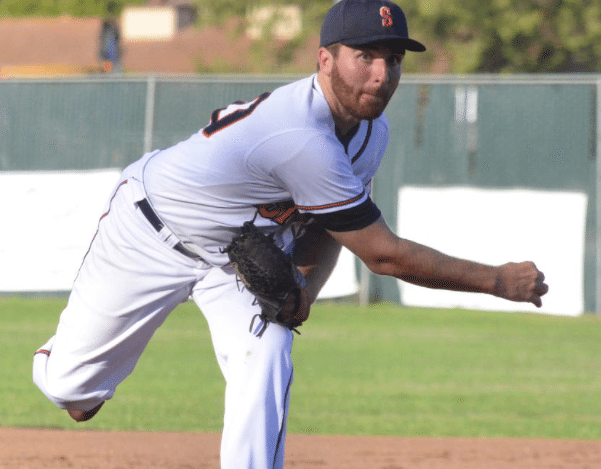
When the Sonoma Stompers’ Sean Conroy pitched a 7-0 shutout against the Vallejo Admirals in June, he made history, and it wasn’t necessarily for his stellar performance on the field: Conroy is the first openly gay, actively playing professional baseball player.
Last week, the Baseball Hall of Fame in Cooperstown, New York, announced that they would acquire Conroy’s jersey, his hat, a baseball, rainbow-colored arm warmers and socks and the signed team roster from the June 25 Pride Night game.
“When I found out I was going to be in the Hall of Fame it was definitely unexpected,” Conroy says. “I feel honored that they recognized the whole team and the way in which they supported me and each other that night.”
Conroy is a native of Clifton Park, N.Y. and a graduate of Rensselaer Polytechnic Institute (RPI), where he broke school records for his pitching excellence: In 33 starts at RPI, he went 21-7 with an earned run average of 2.07.
At the June 25 game, Stompers players wore the rainbow-colored socks and arm warmers to show support for Conroy. At the end of the game, his teammates ran out to home plate and hugged him. Fans of all ages flooded the field, asking for autographs.
The Hall of Fame’s announcement comes just as the Milwaukee Brewers’ first baseman David Denson came out as the first openly gay Major League Baseball player.
In the late 1970s, legendary L.A. Dodgers player Glenn Burke came out privately to his teammates and staff. However, Burke came out publicly as gay after retiring from the pros in the 1980s.
Gay baseball fans are elated, including Ken Rogers, a fan who attended the Stompers Pride Night game. “Baseball has always been a great game, but never complete for me,” says Rogers, whose own father was scouted by the Yankees for his pitching skills. He always felt a deep love for the game, but somewhat of a disconnect, as he never saw gay players on the field until Conroy—who Rogers credits with “changing that” and making him feeling more connected to America’s favorite pastime.
“It feels like the game finally loves me back,” Rogers says. “Thanks to Sean Conroy and to professional baseball for helping my world to feel a little more authentic.”—Sarah Stierch
I agree fully with Charles Brousse … Ron Campbell is truly GREAT [‘Comic effect,’ August 19]. My wife and I saw the performance earlier this month. We love to go on Friday night to hear the pre-show talk which was also delightful. Campbell came by our seats during the performance as well, making short work of my wife’s red wine. His timing, words and facial expressions were perfect as he swooped in and then out in an instant.
I must add one other thing. As a Poet Entertainer I feel a kind of kindred spirit with Campbell. (And envy too!) I believe that the corniest shtick can be perfectly wed to the most sincere and serious matters in this life. How else can we truly experience them? After all, laughter opens the heart and gets it ready to feel more deeply!
Bethany needs to get a better grip on life, not everyone is so damn sensitive [Hero & Zero, Aug. 12]. I mean we are talking about a minor league Baseball Team that is trying to promote goodwill and sportsmanship in Marin County and everywhere they play.
Everyone needs to calm down and realize the whole world is about different feelings and we all should be able to accommodate all those whether they send the message we believe is correct or not.
Everyone has the right to enjoy life. Live & let live.
You need not to have ever seen Shakespeare’s The Taming of the Shrew to know what it’s about. More than 400 years after Shakespeare invented them, Kate and Petruchio—the feisty and ferocious fiancé and her would-be “tamer”—are among the most famous creations in Western theatrical literature. The pleasure of sitting down to a fresh production of such a well-known play is the anticipation of wondering if the cast, crew and director will make this old story seem new, unpredictable, surprising—or fail miserably in the attempt.
That’s always a possibility.
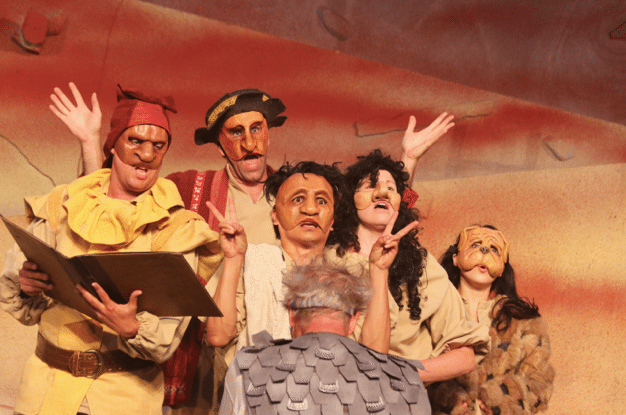
I am happy to report that in Curtain Theatre’s rollicking outdoor production—free to the public and running weekends in the Old Mill Park in Mill Valley—the only real failure on display was the fact that there were a few unhappy audience members who failed to bring a sweater or coat, and were visibly shivering in the second act when the Mill Valley fog began rolling in.
As for the production itself, it’s a blast.
There are plenty of fresh ideas, uniformly strong performances, a boatload of clever theatrical surprises and a few moments of true genius. The fluid, fast-paced direction by Carl Jordan—here tackling Shakespeare for his first time—results in a buoyant, bouncy fluff-ball of a play, with a stunningly high laugh-to-minute ratio, and gallons of charm and visual razzle-dazzle.
Though it follows the recent trend of occasionally replacing Shakespeare’s text with random non-Shakespearean lines, and adding original tunes, this Shrew works, proving to be an audacious, entertaining and thoroughly delightful staging of the Bard’s complex comedy about a battle of wits and words between a woman who will suffer no fools and the foolish man who finally wins her heart.
The setting and basic attire of the production are fairly traditional, with a live band playing Renaissance tunes before the show, but director Jordan lets us know early on that he will be taking a decidedly playful tone with the material, beginning with an original pop-rock-inspired tune that essentially stands as a prologue. In this production, people do tend to burst into song, tossing out snippets of popular rock songs, a few lovely originals by music director Don Clark and one hilariously heartbreaking rendition of ‘A Hundred Bottles of Beer on the Wall.’
Kate (a splendidly three-dimensional Melissa Claire) makes her initial appearance wielding a chainsaw (a hilarious visual!), stalking across the stage while belting out the lyrics of George Thorogood’s ‘Bad to the Bone.’Petruchio (Alan Coyne, excellent) is played as a goofy sweetheart with a giddy knack for improvisational madness, and questionable taste in codpieces.
The marvelous ensemble is too large to give proper credit to all, but notable standouts include a brilliant Heather Cherry as Petruchio’s frazzled servant Grumio, Tom Reilly as Kate’s gracefully befuddled father, Juliana Lustenader as Kate’s shallow-but-winsome sister Bianca, Steve Beecroft as the crafty servant Tranio and an amiably silly Seth Dahlgren as Hortensio, a wildly persistent suitor to Bianca.
And … did I mention that the show is free?
After 16 years, Curtain Theatre is still managing to exist solely on the donations that audiences happily drop in the baskets at the end of the show. And trust me—this one is well worth paying to see.
NOW PLAYING: The Taming of the Shrew runs on Saturdays, Sundays and Labor Day, through September 13, at Old Mill Park Amphitheatre in Mill Valley. All shows begin at 2pm. Free. For more information, visit curtaintheatre.org.
When Zulu Spear burst onto the Bay Area music scene in the 1980s, there was simply no other band like it. Originally founded by South African expatriate singer, composer and dancer Sechaba Mokeoena and fellow South African singer, percussionist and dancer Gideon Bendile, Zulu Spear was one of the first groups to perform world beat/South African roots music–introducing traditional South African “mbaqanga” rhythms and harmonies, and mixing them with American rock and blues.
Bendile, who had been traveling the world with Ipi Ntombi, a South African musical, was in Las Vegas when the tour ended. “He [Mokeoena] called me when I was in Vegas to come and join him. So I came here and we became partners,” Bendile says by telephone from his Santa Rosa home. We all came from the show and ended up in the Bay Area, and that’s when we formed Zulu Spear.”
But the real story behind the band is historical. Back in the ’80s, apartheid was brutally being enforced in South Africa, and Zulu Spear wanted to call attention to the atrocities. “We were focused on apartheid,” Bendile says. “Very few people knew what was going on in South Africa … we were singing freedom songs … and we were asking Americans to put on sanctions—and they did, and thank God for that.”
In fact, when the late South African President Nelson Mandela came to the Oakland Coliseum in 1990, Zulu Spear performed for him—and a crowd of more than 60,000 people. “We played our music and that’s when we saw that what we did, had worked,” Bendile says. “We saw our leader right here in front of our eyes.”
Known for both musically and visually exciting shows—many of the members wear Zulu warrior outfits—Zulu Spear has toured all over the world, sharing the stage with groups like Ladysmith Black Mombasa, the Neville Brothers, Dave Brubeck and even the Grateful Dead.
The band has had many incarnations, and recently went into the studio to record a new album, Dancing in the Jungle, with five of the original members: Ron Vanleeuwarde (guitar and vocals), Matthew Lacques (guitar), Jerome Leondard (drums), Morgan Nhlapo (vocals, dance) and new member, Pope Flynn (congas and percussion). Bendile says that they would like to tour again, but that this time, the music is being inspired by something different. “Now we are singing mostly about peace and ‘Ubuntu’ (human kindness),” Bendile says. “I am passionate about it … because there is a lot of greed and corruption and there is a lot of war, so we are all about peace now.”
Zulu Spear performs on Friday, August 28 from 6-9pm at Pacheco Plaza, 366 Ignacio Blvd., Novato. Free. 415/883-4648; pachecoplaza.com.
by Richard von Busack
Steve Jobs: The Man in the Machine celebrates Jobs’ accomplishments while demagnetizing his cult of personality. The thought-provoking interviews flow down a stream of music from one of Jobs’ favorites, Bob Dylan—the evocative, sensitive music of a man also capable of being a nasty piece of work.
Chrisann Brennan, the mother of Jobs’ child, describes the man’s...
by Amy Alkon
Q: I’m a 37-year-old woman, and I’ve always been quick to have sex, but I’m trying to just “date” first. Well, I’ve been on five dates with this one guy, and all we’ve done is kiss. Now I’m beginning to think that he isn’t attracted to me or is put off by my past, which, unfortunately, I...
This week in the Pacific Sun, you'll find our cover story, by Steve Palopoli, on the lasting influence of the book Please Kill Me: The Uncensored Oral History of Punk. David Templeton talks to comedian Greg Proops about how humor in movies has changed, the Dirt Diva reminds us that the National Heirloom Exposition is upon us and Tanya Henry...
by Leona Moon
Aries (March 21 - April 19) Sick of the drama, Aries? Let the rest of your inner Shakespeare out—Venus turns direct on Sept. 6, which will leave you with less ‘accidentally texting your ex’ situations and more brownie points. It traveled retrograde the past few weeks through Leo, your house of passion and all things lusty, so...
by Steve Palopoli
In much the same way that punk was a musical revolution, the definitive book about punk was a literary one. With its modernization of the oral history tradition—telling its 424-page story entirely in a string of quotes that form a solid, winding narrative—Please Kill Me: The Uncensored Oral History of Punk revolutionized both the book industry and...
Huffman’s pick
“I’ve been waiting for that question for months!” So exclaimed second-term U.S. Rep. Jared Huffman, D-San Rafael, when I got him on the phone recently. The question: Who are you supporting for president in 2016?
The answer may surprise readers who have already taken note of the fact that there’s a pretty heady battle shaping up in the Democratic...
Laughter opens the heart
I agree fully with Charles Brousse … Ron Campbell is truly GREAT . My wife and I saw the performance earlier this month. We love to go on Friday night to hear the pre-show talk which was also delightful. Campbell came by our seats during the performance as well, making short work of my wife’s red...
A grip on life
Bethany needs to get a better grip on life, not everyone is so damn sensitive . I mean we are talking about a minor league Baseball Team that is trying to promote goodwill and sportsmanship in Marin County and everywhere they play.
Everyone needs to calm down and realize the whole world is about different feelings...
by David Templeton
You need not to have ever seen Shakespeare’s The Taming of the Shrew to know what it’s about. More than 400 years after Shakespeare invented them, Kate and Petruchio—the feisty and ferocious fiancé and her would-be “tamer”—are among the most famous creations in Western theatrical literature. The pleasure of sitting down to a fresh production of such...
by Lily O'Brien
When Zulu Spear burst onto the Bay Area music scene in the 1980s, there was simply no other band like it. Originally founded by South African expatriate singer, composer and dancer Sechaba Mokeoena and fellow South African singer, percussionist and dancer Gideon Bendile, Zulu Spear was one of the first groups to perform world beat/South African roots...