Not Just a Book Report: Christie George’s ‘The Emergency Was Curiosity’

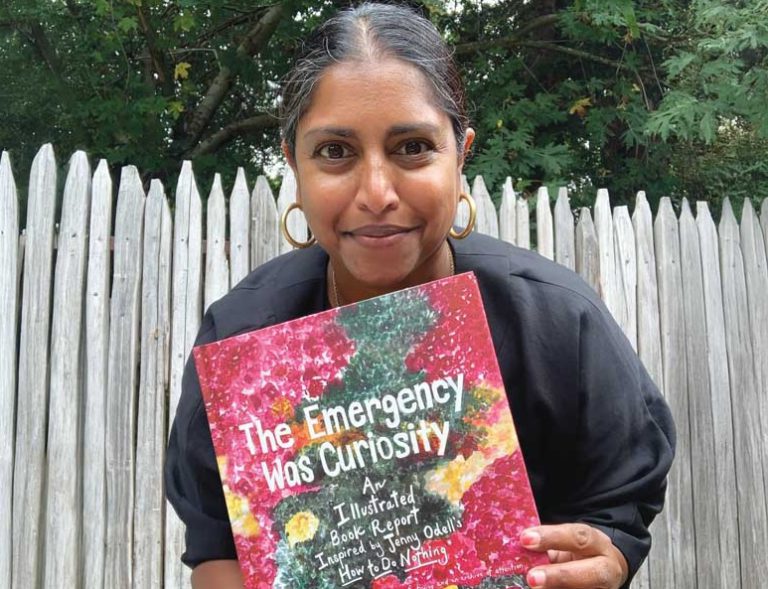
Author Christie George’s new book is a hand drawn line to the recent, misremembered past. It is an early pandemic project, begun as we were hoarding TP and baking bread.

It has now been five and a half years since the beginning of the Covid pandemic—five years since the close of the Black Lives Matter summer, and the racial reckoning that wasn’t. Although we rushed to forget the pandemic like a bad dream, it is important to remember it and remember it clearly—we are living in the world and politics that Covid created.

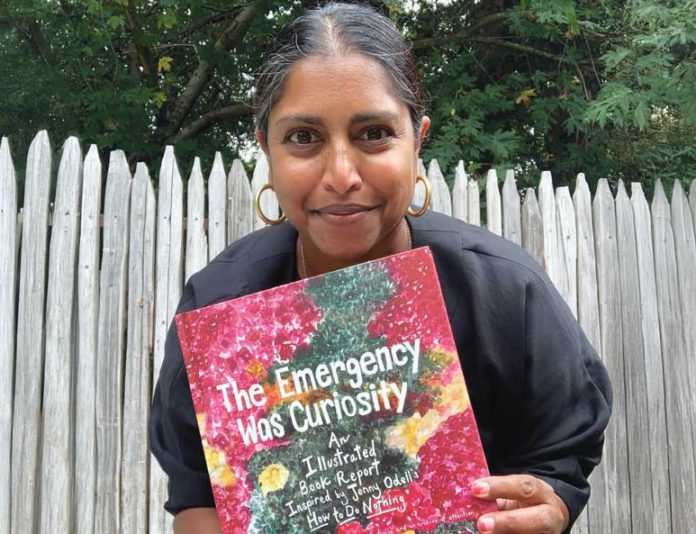
The Emergency Was Curiosity is the title of Christie George’s “new” book. It is a quotation drawn from artist Jenny Odell’s 2019 book, How to Do Nothing. If I can provide an interpretive gloss to George’s title, I would render it as, “what if an ‘idle’ and intuitive, childlike curiosity and wonder were raised up to the level of urgent priority—above the productive items that remain stuck at the top of our frantic, adult to-do lists.”

Mine’s not as pithy though. If I can provide the same (dis) service to Jenny Odell’s title, I would render it, “How to do nothing recognized as having ‘productive value’ to the misaligned and crushing capitalist machine.”

Odell’s book blends cultural critique and activism in its warning challenge to our modern “attention economy,” wholly captured by screens and social media, that seemly operate like control devices, keeping us distracted, stupid, misinformed, angry, hateful, anxious, hysteric and afraid (the better to rule us).

Also, Odell’s book is a call to liberation “disguised as a self-help book.” George’s new book is a commentary on Odell’s. Although she isn’t wholly comfortable with calling it “a book.” She prefers to call it a “fan letter,” a “collage,” “a book report” or a “zine.” Although it is hard-bound in a floral pattern watercolored by George, those terms evoke the loose, rambling, low-stakes art projects of a child on an idle summer day—or an adult in pandemic lockdown learning how to draw.

George entered the 2020 pandemic armed with Odell’s 2019 book, and her “book report” diarizes her experience of using the book to win back her attention and rediscover her self and her family and her wild West County home. It’s a charming and useful book (and pandemic portal) filled with hand-typed pages, doodles, diagrams, lists, manifestos, watercolors and nature field guides from pandemic year 1.

Cincinnatus Hibbard: Christie George, why did you start this book report and diary?

Christie George: I had a feeling I would not remember the early days of the pandemic faithfully—we are unreliable narrators of experience. I felt that I would remember it as way better than it was or way worse than it was… In reality, horrible things and beautiful things were happening all at the same time…

And now it remembers those days for all of us—better than a bronze memorial. You were intending to print only three copies—for yourself, for family and for Jenny Odell, but were convinced by experiences with friends and strangers to print more?

Sharing it was like an intimacy hack. If I give it to them—and if they read it, we are accelerated deep into a conversation around how we are wrestling for control of our attention in our daily lives. This is all I’m in it for—to talk to people about these ideas. That’s why I continue to share it. And I’ve now received many book reports on the book report (laughs).

Learn more: christiemgeorge.com.

NorBay Theater Awards Return to Spotlight Local Stages

0

The curtain is rising once again on one of the North Bay’s signature celebrations of stagecraft.

After a five-year hiatus, the Marquee Theater Journalists Association (MTJA) has announced the nominees for the 2025 NorBay Theater Awards. The program, which recognizes outstanding performances and productions in Sonoma and Napa counties, will be presented on Sunday, Sept. 28, at the California Theatre in Santa Rosa.

The MTJA first launched in 2015, designed as a critics’ collective to highlight excellence in local productions. The NorBay Awards had been warmly embraced during their first five years, but the program was put on hold when the pandemic hit in 2020. With some original members moving on and the theater world itself in recovery, it wasn’t feasible to continue at the time.

In the past two years, however, North Bay theater has regained its footing, and new contributors have joined Weeklys’ theater coverage. When local companies and artists expressed interest in reviving the awards, the association determined the time was right and that there were enough productions—and critics—to support a meaningful, critically-based program.

“To be honest, the local theater scene hasn’t changed that much in the last five years,” said Harry Duke, this paper’s resident theater critic and a founder of the MTJA. “We lost one company (Main Stage West in Sebastopol) and the theater program at Sonoma State University, and one company has taken their shows on the road (Cinnabar Theater), but we’ve gained a company as well (Mercury Theater in Petaluma).”

The most significant change the critic has observed is an increase in diversity both onstage and backstage. “That’s something that continues to need to be worked on. As far as how that’s reflected in the awards, they were always designed to recognize outstanding work, regardless of who is doing it or where,” Duke said. “That continues to be the goal.”

One innovation that has set the NorBays apart from the beginning is the elimination of gender distinctions in performance categories.

“That was one thing I insisted upon when we were developing the awards,” Duke explained. “Other categories like director or writer aren’t gender-specific, so why should performance categories be?”

Throughout, the voting process emphasized collaboration. Each member could submit up to five nominees per category, with the seven most-mentioned advancing to the ballot. The group then met to openly discuss the nominees, allowing critics to advocate for their picks and hear one another’s perspectives. After this exchange, the final decisions were made through ranked-choice voting.

“The members put a lot of thought into this process,” Duke observed.

As for trends in this year’s nominations, Duke noted, “Musicals continue to be the most popular genre of theater produced locally. Solo or small-cast shows were done a lot coming out of the pandemic, but there were few this past year, so we folded them into the drama category.”

The critics also expected more comedies “…to help us deal with the difficult political environment we’re living in now,” Duke suggested. “But maybe people are just finding it too difficult to laugh about anything these days.” – Weeklys Staff

The NorBay Theater Awards will be presented 6–8pm, Sunday, Sept. 28, at the California Theatre, 528 7th St., Santa Rosa. Admission is free. caltheatre.com.

Guide Giddy: The 48th Mill Valley Film Fest

For those of us who live close enough to Mill Valley and San Rafael to regularly attend the annual Mill Valley Film Festival, September is a super exciting month.

“Why not October?” one might ask, when the annual festival, which is now in its 48th year, takes place for 10 weird and wonderful days? It’s because September is when programmers officially announce the films and special guests that will be the focus of our attention during the course of the increasingly well-attended festival.

Taking a look at the MVFF lineup for the first time every September is like tearing open one of those curated brown-paper-wrapped mystery packages from the local record shop, the kind with a surprise-packed stack of vinyl records hiding inside.

Or maybe September is like the famous box of chocolates that Forrest Gump’s mom was always yammering on about.

Just like that, we never know what we’re going to get … until we do.

In September. When we pick up the magazine-thick program guide for the first time and start thumbing through it. Which is what I’m doing right now as I write this. In real time.

Ready? Let’s go. The cover of the program guide for the film festival, which runs from Thursday, Oct. 2 to Sunday, Oct. 12, is very cool and mysterious—a single red movie theater seat perched all alone on an asphalt walkway under a canopy of towering trees. It’s very artsy. And it does make the point that compared to a lot of film festivals, this one happens in a beautiful part of the world where nature and creativity grow up together in twisty, knotty, branchy ways. Like I said: artsy.

Let’s turn the page and give it a quick flip to see what stands out.

True to form, this year’s festival appears to be jam-crammed and thrill-filled with great movies and cool people. I see the recognizable faces of Joel Edgerton (who will be honored at a spotlight event on Tuesday, Oct. 7, along with his movie, Train Dreams), and the impossible-to-miss Tonatiuh (from Netflix’s Carry-On), who’ll get the star treatment along with his new movie, Kiss of the Spiderwoman, the film adaptation of the musical, also starring Jennifer Lopez and Diego Luna. Even shot from behind, I recognize the hard-rocking posteriors of Metallica, whose documentary, Metallica Saved My Life, will be screened at 6pm, Thursday, Oct. 9 and 3pm, Friday, Oct. 10.

And wait; is that Spike Lee?

Yes, the director responsible for Do the Right Thing, The 25th Hour, Malcom X and BlacKKKlansman is coming to the Mill Valley Film Festival. Looks like he’ll get a special tribute on Saturday, Oct. 11, with lots of clips from all of his films, including (I assume) his latest film, Highest 2 Lowest, currently in theaters. There’s no movie being screened with this tribute; but hey, it’s Spike Lee.

This is quite possibly going to be the hottest ticket of the event. And let’s face it; it’s probably already sold out, but one never knows. It’s the kind of event for which Rush Ticket Lines were invented.

OK, now let’s jump to opening night.

Hamnet, directed by Oscar winner Chloé Zhao (Nomadland), is, as previously revealed, the big screen adaptation of O’Farrell’s bestselling historical romance about William Shakespeare (Paul Mescal) and his wife, Agnes (aka Anne Hathaway), played by the alarmingly exceptional Jessie Buckley (Women Talking), and how the children they share, specifically their son, Hamnet, go on to inspire one of the greatest pieces of theater of all time.

Buckley and Zhao will be there for the screening. And on Friday at 3pm, Buckley will be back for a special afternoon spotlight event looking at her short but stunning career, which includes the films, Wild Rose, I’m Thinking of Ending Things and The Lost Daughter.

The one that stands out for me on Friday, Oct. 3 is Brazilian director Kleber Mendonca Fiho’s The Secret Agent. Wagner Moura (seen last year in Civil War) is a man attempting to escape with his son from the repressive Brazilian government in 1977, in a tense drama all taking place during Carnival.

Saturday, Oct. 4 brings a lot of cool things, including a terrifying and beautiful animated version of George Orwell’s Animal Farm (11:30am); Ralph Fiennes’ new World War II music-themed drama, The Choral (3:30pm); and the documentary Love + War (7pm), about fearless conflict photojournalist Lynsey Addario.

Skipping a couple of pages brings me to Nouvelle Vague, the new black-and-white French New Wave homage from director Richard Linklater (Dazed and Confused, School of Rock, Hit Man), which screens at 7pm, Sunday, Oct. 6 at the Rafael. Starring Zoe Deutch as Jean Seberg and Guilaume Marbeck as Jean-Luc Godard, it takes place on the streets of Paris in 1959, as Godard and his team prepare to shoot the underground film, Breathless. Deutch will be present for a special spotlight event, followed by a reception at San Rafael’s Le Comptoir.

That’s a big night actually, since it also brings side-by-side screenings of Yorgos Lanthimos’ new sci-fi/thriller-kidnapping-comedy, Bugonia (7pm), and director Luca Guadagnino’s new After the Hunt (7pm), starring Julia Roberts in what looks like a tense sexual assault mystery set in the world of academia.

Have fun trying to pick which one of those to see.

On Monday, Oct. 7, there’s yet another show business-themed film from Richard Linklater, Blue Moon (7pm). This one stars Ethan Hawke as the famous songwriter Lorenz Hart, shown right at the moment that his Broadway musical writing partner, Richard Rogers (Andrew Scott), with whom he wrote shows like My Funny Valentine and Blue Moon, decided to team up with Oscar Hammerstein to write Oklahoma!.

Looks like the great Rose Byrne will be there on Friday, Oct. 10, for a special spotlight screening of her new movie, If I Had Legs I’d Kick You (7pm), directed by Mary Bronstein. It’s about a therapist whose life is falling apart, and the self-awareness she gets, but doesn’t always take, from her own therapist, played by Conan O’Brien.

It goes on and on like this. So many cool movies; not enough time.

So let’s just jump to closing night, Oct. 12. The big finale is the much talked about film festival fave, Rental Family, in which an out-of-work actor (Brendan Frazier) in Tokyo takes a job as a make-believe family member for people needing a companion for some public event. Things, as they do, get complicated.

The full lineup of films and special events can be found at MVFF.com.

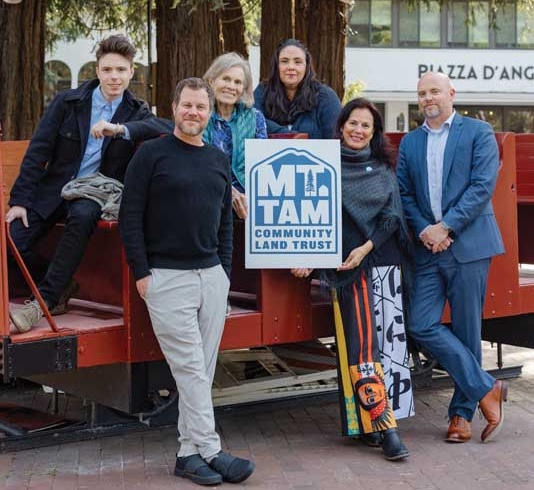
Mt. Tam Community Land Trust Addresses Marin’s Housing Concerns

In the shadow of Mt. Tamalpais, where redwoods meet the bay and generations have built their lives, a growing crisis threatens the very fabric of Marin County.

Teachers, first responders, small business owners and seniors, the people who make the community strong, are increasingly unable to afford to live here. The soaring cost of housing isn’t just pushing families out; it’s eroding the diversity, vitality and resilience that make Marin’s community so unique.

But in the face of these challenges, a grassroots solution is taking root. The Mt. Tam Community Land Trust (CLT), a nonprofit born from local collaboration and urgency, is working to protect homes and futures by reshaping how land and housing are held.

Instead of leaving neighborhoods vulnerable to market speculation, the trust acquires and stewards local homes to permanently allow for affordable housing options in a philanthropic effort to ensure that the people who keep Marin running can remain part of its story for generations to come.

This isn’t just about housing units; it’s about the collective vision of the Marin County community. By focusing on long-term affordability, equity and sustainability, Mt. Tam CLT is helping Marin imagine a different future—one where families aren’t forced to choose between their livelihoods and their hometowns, where seniors can age in place with dignity and where public resources are preserved for the common good.

“I grew up for part of my childhood in Marin County, but my single mother was displaced after separation and, as a schoolteacher, she didn’t make enough to remain in my hometown,” explained Luke Barnesmoore, a member of the board of directors for Mt. Tam Community Land Trust. “This is a deeply personal issue for me. I believe if someone is going to dedicate their lives to the community and be part of what makes Marin’s schools some of the best in the country, and help maintain the quality of life that Marin offers, [that person] should be able to afford to live in the place they work.”

Unlike large-scale developers, the Mt. Tam Community Land Trust isn’t in the business of bulldozing open space or pushing out existing neighborhoods. Instead, the trust focuses on acquiring existing homes and properties, then preserving them as permanently affordable housing. By taking land off the speculative market and placing it into community stewardship, Mt. Tam CLT ensures that these homes remain stable and accessible to locals, while keeping the character of Marin’s towns and landscapes intact.

“The Mt. Tam CLT is focused on preservation,” said Barnesmoore. “We’re not focused on developing and changing the environment—we’re focused on acquiring the existing structure to allow those who live and work in Marin to afford their housing in perpetuity.”

“We hope to steward the noble cause of providing more affordable housing to locals while also maintaining the open space so people can enjoy the beauty of nature,” Barnesmoore continued. “If teachers are commuting for hours a day, they don’t have the energy to be as engaged and present for their students. So, there’s a very human motivation to our organization, one that says, ‘I don’t think it is right for people to work full-time jobs in the county and be a huge part of what makes it the amazing county that it is, and then not get to live in it.’”

According to the Mt. Tam CLT statistics on housing in Marin County, 43% of school staff cannot afford even a studio apartment until a decade into their careers, making it difficult to recruit and retain educators. Nearly 20% of seniors live below the poverty line, many pushed from lifelong homes by rising costs.

Marin ranks among the top three California counties with the widest economic and racial inequities. Sixty-two percent of the workforce lives outside the county, driving congestion and pollution while straining local businesses. To afford average rent in Marin, renters must earn $53.96 an hour, which, for context, is 3.5 times the state’s minimum wage.

“Reduced to the barest of bones, the dominant world view in American society typically forms a form of dualism: good vs. bad, worthy vs. unworthy—the idea is that it’s OK for the ‘unworthy’ people to have unjust outcomes or suffer or face the consequences of their unworthiness,” explained Barnesmoore. “Throughout the history of city planning in the U.S., we designed the cities and regional planning schemes to create places where the ‘haves’ and ‘have-nots’ should live, and … Marin County, for the last 50-plus years, has been imagined as a place of the ‘haves.’”

Marin’s housing crisis is also about inclusion. The Mt. Tam CLT is working to make sure opportunities extend to those who have historically had the least access, including lower-income households and minority residents. Its focus areas range from workforce housing and affordable senior living to accessory dwelling units that support multigenerational families and add gentle density.

With an emphasis on stewardship and long-term community benefit, the trust also acknowledges that its work takes place on the ancestral lands of the Coast Miwok people, a reminder that caring for the land and those who live on it is part of a deeper responsibility to the future.

“I find myself frequently reminding people that Utopia was never a step away, and the next possible, practical, doable step on our journey to a better society isn’t going to be the perfect one because we don’t live in a perfect world,” said Barnesmoore. “We have to grapple with what’s actually around us. And there’s a certain degree of impatience among people who don’t feel like they have time to wait to live in a utopian society.”

“Given that, the next practical step should be a gesture at the change we want to see,” continued Barnesmoore. “Hopelessness is what leads to radical behaviors, where people try to force the system in the direction we want to see, and we usually break the world when we do that.”

Marin’s housing challenges won’t be solved overnight, but the Mt. Tam Community Land Trust offers a hopeful path forward. By protecting land, preserving affordability and centering community needs, the trust is helping ensure that Marin remains a place where people of all ages and incomes can put down roots and thrive. Everyone has a part to play in shaping that vision.

From supporting projects to fiscal donations to something as simple as spreading the word, small actions build toward lasting change. Together, neighbors can create a Marin that reflects its best values: equity, sustainability and community.

“We’re a community that I really believe has strong values,” concluded Barnesmoore. “I think that we, in general, believe that the world should be more equitable than it is, and we’re also lucky enough to have the resources here in Marin to walk the talk and bring the equitable world that we imagine and preach about so often into practice in our day-to-day lives.”

To learn more about Mt. Tam Community Land Trust, upcoming projects and ways to get involved, visit mttamclt.org, email mt*******@***il.com or call 415.855.5617.

Free Will Astrology: Week of Sept. 24

0

ARIES (March 21-April 19): In Tonglen, a Tibetan Buddhist meditation, you visualize yourself breathing in the suffering, pain or negativity of other people, then imagine breathing out relief, healing or compassion toward them. The practice can also be done on your own behalf. The goal is to transform tension and stress into courage, vitality and healing. I recommend this practice, Aries. Can you turn your scars into interesting tattoos? Can you find mysterious opportunities lurking in the dilemmas? Can you provide grace for others as you feed your own fire? 

TAURUS (April 20-May 20): In a YouTube video, I watched Korean artisans make hanji paper in the same way their predecessors have for 1,300 years. It was complicated and meditative. They peeled off the inner bark of mulberry trees, then soaked it, cooked it and pounded it into pulp. After mixing the mash with the aibika plant, they spread it out on screens and let it dry. I learned that this gorgeous, luminous paper can endure for a thousand years. I hope you draw inspiration from this process, Taurus. Experiment with softening what has felt unyielding. Treat what’s tough or inflexible with steady, artful effort. Be imaginative and persistent as you shape raw materials into beautiful things you can use for a long time.

GEMINI (May 21-June 20): Legendary jazz musician Sun Ra was a Gemini who claimed to be from the planet Saturn. He aspired to live in a state of “cosmic discipline”—not just in his musical training but in his devotion to self-improvement, aesthetic exploration and a connection to transcendent realities. He fused outrageous style with sacred order, chaos with clarity. I invite you to draw inspiration from him. Put your personal flair in service to noble ideas. Align your exuberant self-expression with your higher purpose. Show off if it helps wake people up.

CANCER (June 21-July 22): In Inuit tradition, qarrtsiluni means “waiting in the darkness for something to burst forth.” It refers to the sacred pause before creativity erupts, before the quest begins, before the light returns. This is an apt description of your current state, Cancerian. Tend your inner stillness like a fire about to ignite. Don’t rush it. Honor the hush. The energies you store up will find their proper shape in a few weeks. Trust that the silence is not absence but incubation. Luminosity will bloom from this pregnant pause.

LEO (July 23-Aug. 22): You’re feeling the stirrings of a desire that’s at least half-wild. A surprising vision or opportunity has begun to roar softly within you. But here’s key advice: Don’t chase it recklessly. Practice strategic boldness. Choose where and how you shine. Your radiance is potent, but it will be most effective when offered deliberately, with conscious artistry. You’re being asked to embody the kind of leadership that inspires, not dominates. Be the sun that warms but doesn’t scorch! PS: People are observing you to learn how to shine.

VIRGO (Aug. 23-Sept. 22): If humans ever perfect time-travel, I’m going to the Library of Alexandria in ancient Egypt. It was crammed with papyrus scrolls by authors from all over the world. It was also a gathering point for smart people who loved to compare notes across disciplines. Poets argued amiably with mathematicians. Astronomers discussed inspirations with physicians. Breakthroughs flowed freely because ideas were allowed to migrate, hybridize and be challenged without rancor. Consider emulating that rich mélange, Virgo. Convene unlike minds, cross-pollinate and entertain unprecedented questions. The influences you need next will arrive via unexpected connections.

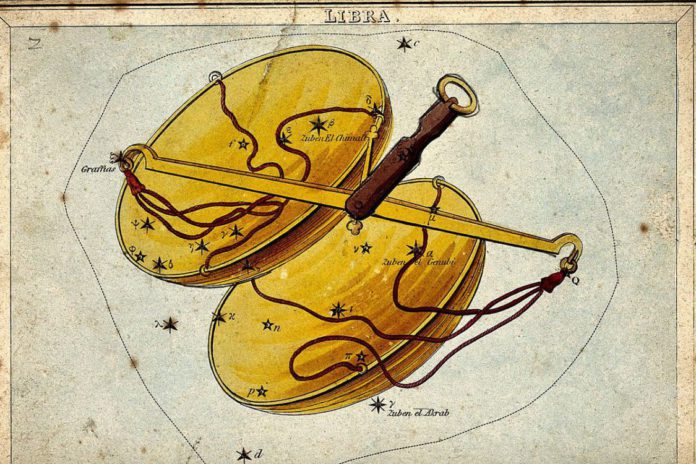
LIBRA (Sept. 23-Oct. 22): The ancient Mesopotamians believed each person had a personal god called an ilu who acted as a protector, guide and intercessor with the greater gods. You’re in a phase when your own ilu is extra active and ready to undergo an evolutionary transformation. So assume that you will be able to call on potent help, Libra. Be alert for how your instincts and intuitions are becoming more acute and specific. If you feel an odd nudge or a dream insists on being remembered, take it seriously. You’re being steered toward deeper nourishment.

SCORPIO (Oct. 23-Nov. 21): In Venice, Italy, floods periodically damage books at libraries and bookstores. Trained volunteers restore them with meticulous, hands-on methods. They use absorbent paper and towels to separate and dry the pages, working page by page. I offer this vignette as a useful metaphor, Scorpio. Why? Because I suspect that a rich part of your story needs repair. It’s at risk of becoming irrelevant, even irretrievable. Your assignment is to nurse it back to full health and coherence. Give it your tender attention as you rehabilitate its meaning. Rediscover and revive its lessons and wisdom.

SAGITTARIUS (Nov. 22-Dec. 21): In classical Indian music, a raga is not a fixed composition but a flexible framework. It’s defined by a specific scale, characteristic melodic phrases and a traditional time of day for performance. Musicians improvise and express emotion within that expansive set of constraints. Unlike Western compositions, which are written out and repeated verbatim, a raga has different notes each time it’s played. I think this beautiful art form can be inspirational for you, Sagittarius. Choose the right time and tone for what you’re creating. Dedicate yourself to a high-minded intention and then play around with flair and delight. Define three non-negotiable elements and let everything else breathe.

CAPRICORN (Dec. 22-Jan. 19): In medieval European monasteries, scribes left blank pages in certain texts. This was not done by accident, but to allow for future revelations. Later readers and scribes might fill these spaces with additional text, marginalia and personal notes. Books were seen as living documents. I recommend a metaphorical version of this practice to you, Capricorn. You will thrive by keeping spaces empty and allowing for the unknown to ripen. You may sometimes feel an urge to define, control and fortify, but acting on that impulse could interfere with the gifts that life wants to bring you. Honor what is as-yet unwritten.

AQUARIUS (Jan. 20-Feb. 18): In West African Vodún cosmology, the deity named Lêgba guards the crossroads. He is the mediator and gatekeeper between the human world and spirit realm. He speaks all languages and serves as the first point of contact for communication with other spirits. In the weeks ahead, Aquarius, you may find yourself in Lêgba’s domain: between past and future, fact and fantasy, solitude and communion. You may also become a channel for others, intuiting or translating what they can’t articulate. I won’t be surprised if you know things your rational mind doesn’t fully understand. I bet a long-locked door will swing open and a long-denied connection will finally coalesce. You’re not just passing through the crossroads. You are the crossroads.

PISCES (Feb. 19-March 20): In 1977, NASA launched two Voyager spacecraft into the abyss. Both carried a message in the form of a golden record to any extraterrestrial who might find it. There were greetings in 55 languages, natural sounds like whale songs and thunderstorms, music by Chuck Berry and others, plus over 100 images and diagrams explaining how to find Earth. It was science as a love letter, realism with a dash of audacity. I invite you to craft your own version of a golden record, Pisces. Distill a message that says who you are and what you are seeking: clear enough to be decoded by strangers, warm enough to be welcomed by friends you haven’t met. Put it where the desired audience can hear it: portfolio, outreach note, manifesto, demo. Send signals that will make the right replies inevitable.

Homework: You know that insult you fling at yourself? Stop flinging it! Newsletter.FreeWillAstrology.com

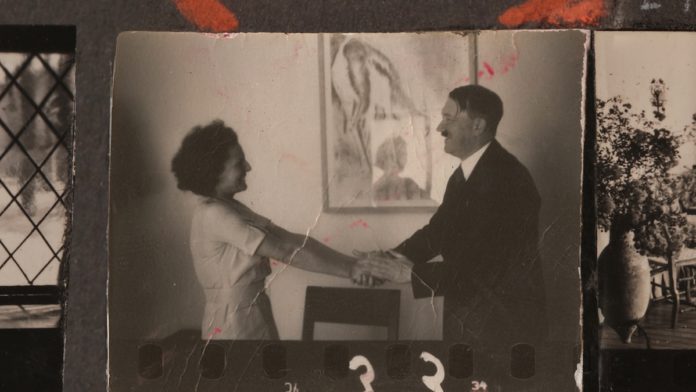
The Failure of a Nazi filmmaker’s Moral Will

0

Riefenstahl

On August 21, the American Supreme Leader created yet another dubious government agency. The “National Design Studio” is named with this administration’s mastery of doublespeak. One imagines this studio as a facility modeled after the one in Noah Hawley’s TV series Legion, where autocad and photoshop are repurposed for mind-control experiments and all of the meanings implied by “branding”. Because only billionaires matter in the 21st century, Joe Gebbia (Airbnb) was appointed to head the agency as the “Chief Design Officer.” Photos of his smug, benign smile are just as terrifying as RFK Jr.’s official snarl.

By accepting the position, Gebbia’s complicity is a given — whatever damage this Design Studio manages to unleash. But, should we ever return to a less punitive era, will he be considered as culpable as the man, and the Legion of Super-Villains, who appointed him? In Andres Veiel’s documentary Riefenstahl, the director and the audience have the answer to that question from the start. With vast archival resources at his disposal, Veiel has constructed an eviscerating cinematic response to Leni Riefenstahl’s life and career as well as Ray Müller’s 1993 documentary The Wonderful Horrible Life of Leni Riefenstahl.  

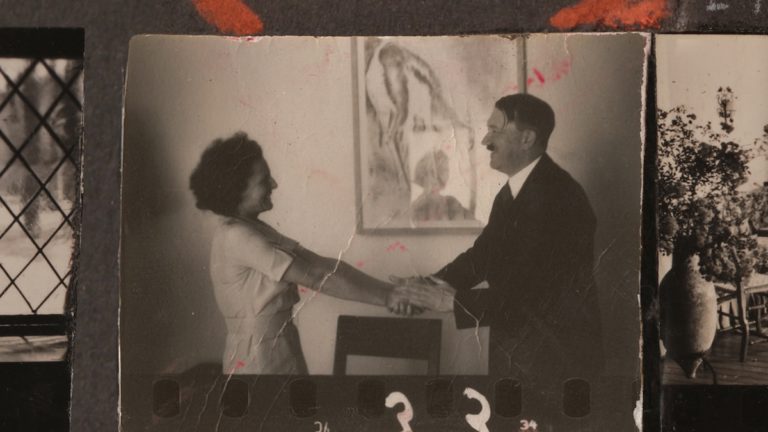
There is no background narrator summing up Riefenstahl’s collaboration with Adolf Hitler and the broader Nazi party on Triumph of the Will and Olympia, the films that established her reputation as the preeminent documentarian of the era. Veiel, instead, ingeniously repurposes Riefenstahl’s own work, and her own voice, to present a litany of damning evidence. Filmed ten years before Riefenstahl’s death at the age of 101, Veiel inserts an interview that was cut from Müller’s doc. In it, Riefenstahl exhibits the kind of rage that matches Hitler’s oratorical flourishes as she reaches a fever pitch of unflinching ferocity.  

Müller had the audacity to ask what interlocutors had been asking of her for decades. He was looking for a glimmer of contrition since an apology, from Riefenstahl’s point of view, was hors de combat. Veiel skillfully arranges video excerpts from British, German and American television talk shows. Whether in black and white or in bleached-out 1970s sepia tones, Riefenstahl returns again and again with the same set of scripted denials, the same unconvincing mask that reveals rather than hides her spiritual decay. With each passing decade, she remains the injured party, wrongly held to account for gas chambers she didn’t build and guns she never fired.   


But the former actress kept returning to the stage. Although Riefenstahl appeared to enjoy tangling with the attention from interviews, both the negative and the positive responses from viewers, Veiel also unearths audio recordings of her conversations with Albert Speer, the Nazi Minister of Armaments and War Production. After his release from prison in 1966, they engaged in a correspondence. As baleful players on a post-Nazi world stage, they advised each other on how to profit from their besmirched reputations. To feed a news-hungry public, the media paid both shadowy figures handsomely. The steely-eyed Riefenstahl gleefully took the money, retreated to a lovely forest chalet, and answered her detractors with an insolent, downturned rictus. 

Riefenstahl cleanly avoids a sexist approach while recounting her life. The documentary does include Riefenstahl’s accounts of a paternal beating and at least two mentions of rape. But anecdotes about her formative years are included to fill in her portrait not to arouse sympathy from the viewer. For Veiel, she is first and foremost a Nazi propagandist, spiritually and psychically paired with her racist cohorts for eternity. 

In 1993, Müller was revisiting Riefenstahl during the production of her final film Underwater Impressions (2002). Her stance of “plausible deniability” infuses his three-hour film with noxious fumes but Müller expects his audience to come to its own conclusions. When Veiel marries an audio account of German soldiers murdering prisoners with a close up of Riefenstahl as an eyewitness, it conveys the truest emotion that ever registers across her celluloid face.  

Riefenstahl opens at the Smith Rafael Film Center on Friday, September 19. 

New Buzz: River Electric’s Haley Wise

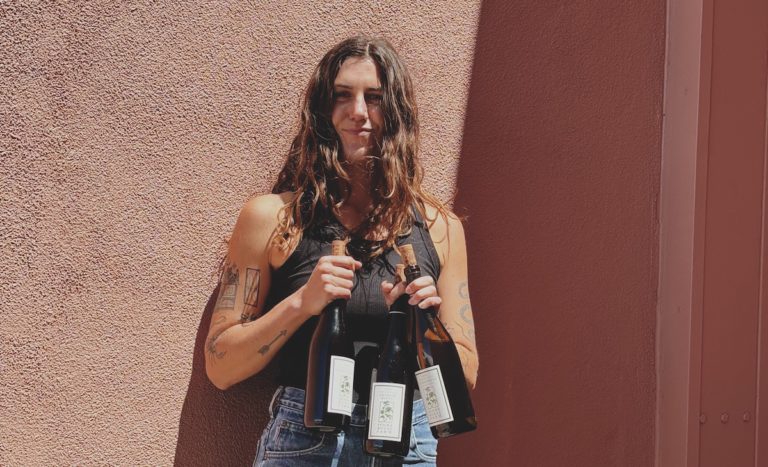
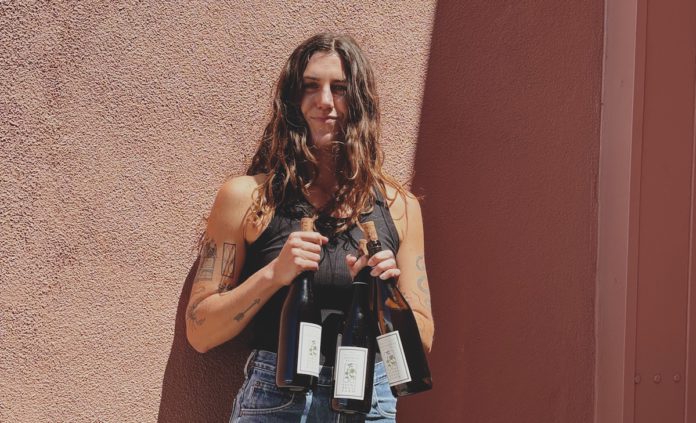
While her experience in the wine industry brought Haley Wise to Guerneville, it’s safe to say that there’s much more keeping her there as food and beverage director at The River Electric resort. It’s a really cool place, with a really cool team of owners and staff. And the surrounding community of Guerneville is also now Wise’s new home, where she lives nearby at Solar Punk Farms. 

How did you get into this work?

Haley Wise: I was lucky to fall into this work by making great friends in the wine industry who took me under their wing. It was the right time, the right place, and I’m very fortunate.

I found myself selling wine for a small natural wine importer and distributor called Merchants of Thirst right as doors were reopening after Covid. On my first day, I walked into Vintage Berkeley on Vine Street, and met one of my soon-to-be mentors, who offered me a job on the spot. That little shop, with its huge selection, opened the door to the never-ending rabbit hole of food and beverage—and the incredible community that comes with it.

Did you ever have an ‘aha’ moment with a certain beverage? If so, tell us about it.

I have an ‘aha’ moment with every single drink I create. If I haven’t gotten to that ‘aha’ moment yet, I just keep tweaking it. I might try something 30 times, but I won’t stop until that lightbulb goes off… We had a lot of ‘aha’ moments while experimenting and crafting the cocktail list for The River Electric—it was a lot of fun.

What is your favorite thing to drink at home?

Wine will always be my first love, and what I reach for when I’m at home. Choosing a wine to share with friends and family over a meal is one of the greatest joys in life. Usually, I’ll go for bubbly, like Champagne if it’s a special occasion, or sometimes something super salty and mineral-driven, like something from Sicily.

Where do you like to go out for a drink?

It’s so fun getting to know the spots in Guerneville as a new resident. I love El Barrio; they have such a fun and adventurous cocktail menu. It’s truly inspiring to see something so well-crafted and elevated in a small town. Be careful of the Negronis at Rainbow Cattle Co. though—they’re usually served on the rocks in a pint glass, filled to the brim. I’m still being totally honest; at the end of the day, there is nowhere I’d rather go.

If you were stuck on a desert island, what would you want to be drinking (besides fresh water)?

A Campari Spritz, for sure. I would close my eyes and pretend I was in my happy place on the coast of Italy with some sardines and olives on the side. 

The River Electric, 16101 Neeley Rd., Guerneville, 707.937.8915. theriverelectric.com.

Farm Finds: Expert Secrets for Local Ingredients

Living in the North Bay during harvest season is a delicious privilege and a downright pleasure.

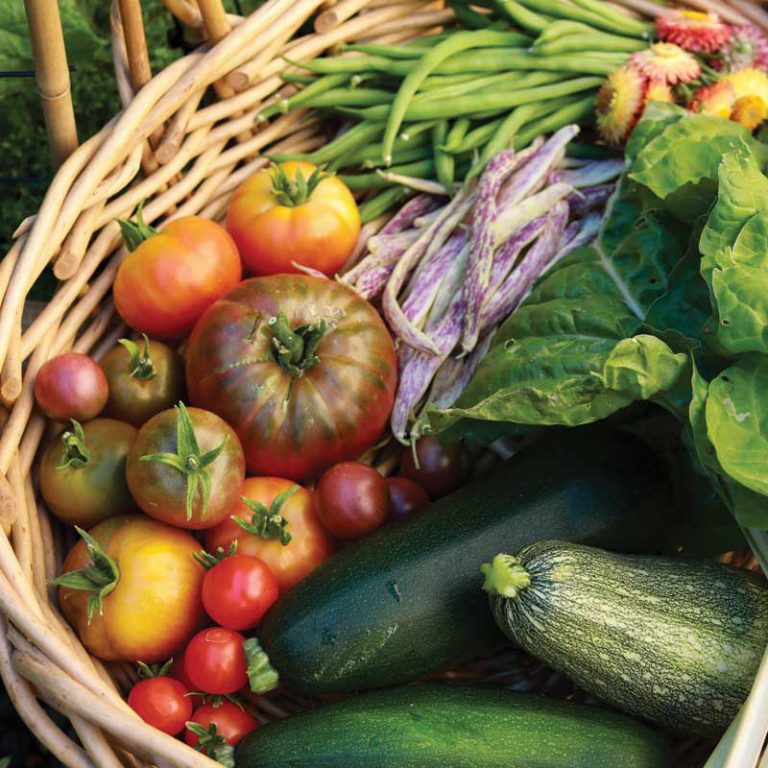
As summer’s heat begins to fade into fall, seasonal crops grow ripe for the picking all across the agriculturally rich counties of Sonoma, Napa, and Marin. And the best part is, one doesn’t have to sow and grow their own fully-stocked pantry to have access to fantastic local food. Not when sourcing local ingredients is so, so much easier than all that tilling, tending, etc…

To help unearth these edible, informational gems, three local experts agreed to share their insight, experience and wisdom on the subject of sourcing local ingredients. Together, they cover the who, what, when, where and why of shopping for local produce and food products. The most satisfying part? Even though the experts were interviewed separately, all three of them were on nearly the exact same page when it comes to their love of local ingredients as well as their advice for sourcing them. And since it is very unlikely they all had a secret pre-interview meeting, it’s safe to assume they speak the truth.

So, who were these experts and what did they have to say? Well, in the spirit of ladies first, Christina Topham, owner and executive chef of Spread Kitchen in Sonoma, began her culinary career in 1999 after leaving a Wall Street tech job. She trained at The French Culinary Institute in New York City and gained experience at Les Olivades in Paris, The Savoy in New York City and Julia’s Kitchen in Napa before launching a boutique catering company in Brooklyn and working as a superyacht chef, sourcing local ingredients across the Caribbean, Mediterranean and Mexico.

Topham returned to Northern California in 2014 and opened Spread Kitchen in 2016, which evolved through the pandemic into meal kits, prepared foods, and farmers market sales, culminating in a brick-and-mortar location in Sonoma in 2022. Today, she serves Lebanese-inspired dishes with a California twist, emphasizing seasonal, local ingredients.

“As a yacht chef, I planned our menus but left some flexibility for whatever ingredients I might find wherever we were at the time,” explained Topham. “Even with the restaurant, using local ingredients requires flexibility, time and effort to source things and pick them up.”

“Local food is… I would say there’s definitely stuff that’s hyperlocal that’s from here in Sonoma,” she added. “But I still consider stuff pretty local if it’s Bay Area-centric. There are varying degrees of local. Super hyper local for me comes from Sonoma County, but then I consider it a good thing if I’m getting something out of Brentwood too, since it’s still way better than if it’s coming out of Arizona or something.”

Topham’s suggestions for those looking to buy more local ingredients include looking into farm boxes nearby (and finding someone to split them with, since they can contain a hefty amount of fruit and veggies). She also suggests heading to farms if they have visiting hours, or even looking for local produce at grocery stores or attending one of the many nearby food festivals or events.

“If people are interested in more local stuff, see what’s going on in your town,” she said. “I feel like there’s always some sort of food event taking place. Olive season is coming up, and I know that there are plenty of olive events around olive season. Plus harvest events. Some farms have events too.”

Luke Regalbuto, owner and operator of Wild West Ferments, works alongside his wife, Maggie Levinger, to create artisanal sauerkraut, kimchi and sodas found in more than 200 stores and at their West Marin Culture Shop in Point Reyes. The venture began when Levinger, who grew up in Inverness, trained in nutrition and restaurant work and developed a passion for probiotics and fermentation while traveling globally.

Wild West Ferments produces all-organic fermented foods using traditional methods like ceramic crocks, focusing on quality, flavor and nutrition while avoiding plastic. Their storefront doubles as a “fermented micro food hall,” showcasing their products alongside other artisanal foods and DIY fermentation resources, reflecting the couple’s commitment to traditional foodways, community and adventurous globally inspired flavors.

“My general philosophy with sourcing ingredients is the more direct, the better,” said Regalbuto. “If you can get your ingredients directly from the farmer or producer, it’ll be better quality. And it’s better for the farmer too … so yes, direct is always going to be the best.”

Regalbuto’s other favorite ways of sourcing local ingredients include farmstands like Little Wing, farmers markets (especially the San Rafael Farmers Market) and the Agricultural Institutes. He also suggests Community Supported Agriculture (CSA) as another fantastic resource.

“If I’ve done all that direct farm shopping but want chickpeas or something that’s not locally produced, then I go to Good Earth,” he said. “It’s my favorite grocery store. For staples, I go to their bulk department. They have such a great variety, and a good bulk section is the mark of a great grocery store, in my opinion.”


Last but far from least is Tony Najiola, the local chef and owner of Petaluma’s own Central Market. For more than 20 years, Najiola’s restaurant has fed its guests with no-frills, all-skills dishes that aren’t trying to impress … they’re just that impressive. Najiola began cooking in New Orleans before moving to New York, eventually settling in San Francisco, and later making Sonoma his long-term home.

“I’ve lived in Sonoma longer than anywhere else in my life,” he said. “Clearly, it resonates with me. Right now, I’m sitting under a 40-year-old plum tree on my property. To be honest, I’ve always been more interested in how food and culture go hand in hand than anything else. I’m not really interested in trying to reinvent the wheel, just in trying to be a good craftsperson and a good cook. That’s all I’ve ever aspired to be —a good cook. That’s where my passion comes from, the desire to make people happy because I’m feeding them.”

Najiola has always been drawn to rustic, ingredient-driven cuisine and the cultural stories behind food, prioritizing craftsmanship and simplicity over culinary theatrics. His secret? Sourcing great ingredients and treating them with respect, skill and refined simplicity. Every dish, after all, is a sum of its ingredients and the hands that cooked them.


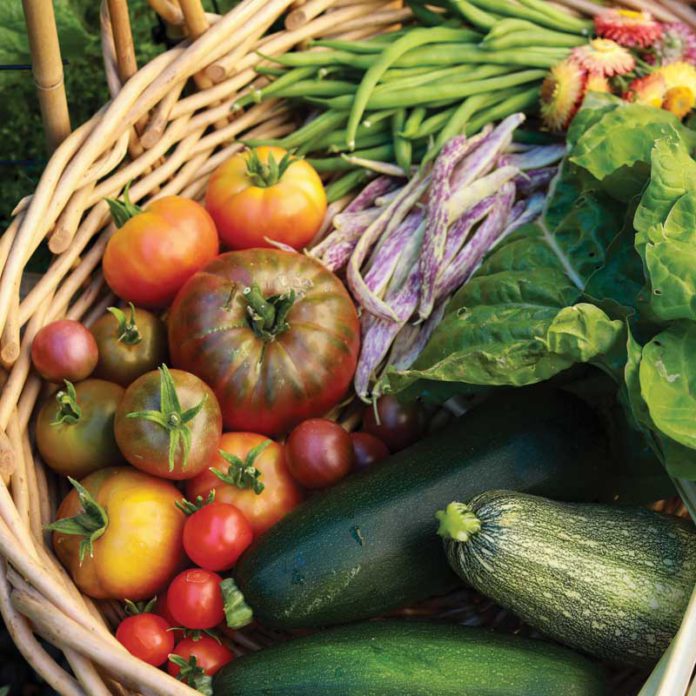
“Right now, we’re in the middle of harvest,” he said. “So it’s easy to get great local ingredients and produce. I can tell you there’s not a meal I sit down to that isn’t represented with tomatoes and cucumbers since their season is right now—you have to embrace what’s in front of you with food, and right now there’s a great variety.”


“All the farms around us are representing the same things,” added Najiola. “I try to deal directly with the farmer for a few reasons, mostly to keep the price down and give them as much income as possible.”

His advice for locals looking to source local ingredients includes FEED Cooperative, the North Bay collective with an impressive network of 50-plus farms. He also suggests finding close-by farmstands and dealing directly with the farmers themselves.

In fact, all three experts’ insight boils down to one overarching theme: Buy ingredients as directly as possible, not just for better taste and nutritional value, but to support the hardworking local farmers and food producers whose labour brings the North Bay its incredible flavor.

“I studied organic agriculture,” said Regalbuto. “When you get your hands in the dirt and work on agricultural projects, you realize how hard it is. I may have moved more into production, but I have such a profound respect for people who do that work, and we have to support them. It’s so hard for food products, especially in the Bay Area, where the cost of living is so high. It won’t be there if we don’t support it.”

“I remember one back-and-forth I had with this tough-as-nails little lady peach farmer,” said Najiola. “I found myself arguing with her on the price of peaches. Then I looked at her one day … and thought to myself, ‘What is wrong with you? Pay her.’ Farming is so, so hard—there’s so much trying to destroy what you’re trying to create. The least we can do is respect and try to compensate that sort of effort.”

“I actually think a really big gap that could be filled a lot better here would be to have a produce market that really carries only local ingredients,” Topham concluded. “When I lived in St. Louis, there was a local market with local eggs, local milk, local produce, local food … a food co-op like that would do really well here, and we could really, really benefit from that. It blows me away that nobody has started something like that between Sonoma, Marin and Napa. How is it possible we don’t have a co-op like that?”

Ultimately, shopping and eating local isn’t just about health, taste or sustainability—it’s about the sum of those parts, which amalgamates to a sense of community one can taste. From the hardworking farmers growing the produce to the people crafting it into delicious products to the ranchers tending cattle and even the cows grazing and making milk and chickens clucking and laying their eggs. All of these components come together to create the tables families and friends gather around, both at home and when eating out. That extensive network of collaboration brings the most incredible, edible and tangible sense of community and humanity to the North Bay.

Sun Day: Solar Offers Power to the People

Great news, everyone: Solar is cheap, easy and only going to improve in efficiency decade after decade, forever. That is unless we choose—against economics and reason—to dig deeper and deeper into the ground for less and less oil at greater cost decade over decade … an activity that will eventually choke us all to death.

So, which is it, folks … Option A or Option B?

The Opportunity

In a new book, Here Comes the Sun, longtime environmental advocate Bill McKibben lays out facts of the accomplished technological revolution in solar and wind power. While there are advantages and objections to them both, in this article, as McKibben does in his book, let us focus mostly on solar, because that is where the innovation curve has really taken off.

“Sometime in the early part of the 2020s we crossed an invisible line where the cost of producing energy from the sun dropped below the cost of fossil fuel,” writes McKibben. “We live on an earth where the cheapest way to produce power is to point a sheet of glass at the sun; the second-cheapest is to let the breeze created by the sun’s heating turn the blade of a wind turbine.”

Famously, in these tariff-ridden times, China produces the majority of the world’s solar panels. After the hiccup in U.S. world leadership that was the 2008 global economic crisis, China took its own path away from fossil fuels toward clean energy. At first, the country’s mix of renewables doubled from 15% in 2008 to 30% in 2020, according to Marcotrends. Then it really took off. “In 2023, China commissioned as much solar PV as the entire world did in 2022,” says the International Energy Agency.

China is the supplier of solar panels internationally as well. In smalling newly developing countries where the East Asian giant has established strong trade ties, the new low cost of solar energy means that countries like Zambia (92.1%), Tajikistan (93.3%), Costa Rica (99.4%) and Bhutan (100%—yay, Bhutan) are choosing to bypass the trap of fossil fuels’ historical low up-front cost and jump straight to solar and the gang. Not only is the infrastructure and management cheaper, but the long term hidden costs of fossil fuels can be avoided.

So that is the rest of the world. How are we doing here in the U.S., land of fossil fuel domination? Pretty great, it turns out, and not just in our little “bubble” of northern California.

In March of this year, the Texas powergrid (yes, Texas) set its weekly records for wind production (28,470 megawatts), solar production (24,818 megawatts) and battery discharge (4,833 megawatts). That last number, the amount of energy from batteries, nearly equaled the full output in the state from nuclear facilities. To repeat: Just the excess renewable energy storage in batteries and then used was equal to the nuclear energy generated in the great state of Texas.

That was March. Solar’s new record in Texas was set on Sept. 9, breaking the previous record from July. The peak of natural gas—the fossil fuel’s big bet on “cleaner energy”—was two years ago. One may look up these numbers at GridStatus.io. When having a tough day, browsing numbers in places like Kentucky, Texas and Florida might just lighten one’s mood.

In fact, according to McKibben, as of June 2023, the world has been installing “a gigawatt’s worth of solar panels on this planet every day.”

It is a story that gets buried under endless chaos and crisis reporting and trolling comments to social posts. Time to bring the good news to light. To do just that, groups around the world are organizing the 1st Annual Sun Day on the autumn equinox. Think Earth Day for cheap, clean power. (See sidebar for local events.)

Raise a Clamor

When McKibben delivered the keynote address to an enthralled audience at Green Music Center for Sonoma State’s Sustainability Days in 2016, we were inspired but not exactly hopeful. The path toward clean energy looked far too long, and the price of the technology was an ongoing barrier.

Now, the low cost of solar power is a lever for change. Own stock? If a company one invests in avoids adding cheaper clean energy to expand on more expensive fossil fuel infrastructure, that company is giving a competitive advantage to its competitor. Stock goes down. Might want to mention that on the next stock holders’ call. Or sell, quick.

Work for a company making that same mistake? One might want to pressure management to adopt cheap energy to protect jobs. School budgets constricting? Boys and Girls clubs needed to cut costs. One can make sure playgrounds and community centers have installed solar, and run a fundraiser to throw on some batteries.

Not interested in cost-cutting or economic arguments? How about energy resilience? Texas knows. The rapid expansion of solar in the state was essential for political survival of elected representatives after the onset of massive power outages across the infamously deregulated power grid.

Drawing attention to war-torn Ukraine, McKibben provides a powerful example of the security advantage of solar over coal in his book. According to Maxim Timchenko, an owner of both clean and traditional power plants, when a Russian rocket hits a coal plant, the repair and restart take months. When a solar plant of similar energy output is hit by a rocket, the facility is up and running at full capacity in seven days. Just swap out the panels and go. How about that for security?

Here’s the thing: Political parties have picked sides about cleaning up the environment. Although surveys suggest that 60% of the global population has a positive view of clean energy (compared with only roughly 20% for fossil fuels), the environmental arguments for the clean power transition have been fully politicized, arguments and claims buried in disingenuous rhetoric and confusing wonk. That was before. Now the real drivers of clean energy are economics and market competitiveness.

China is running with solar power. Developed countries like Germany and Norway (99.1%) are well on their way, and without having to take on the debt of massive fossil fuel infrastructure—shipping, deeper ports, petroleum safe railways, gas stations with (mostly) leak-free tanks—developing countries are eagerly skipping straight to electrical economies. Families and communities around the globe of every class are gaining cheap, distributed access to energy for refrigeration, entertainment, computation, AI interface, e-bikes.

And there is another benefit. “Energy above is fundamentally different than energy from below,” says McKibben, meaning that decentralized power generation for human activity looks very different from centralized energy under the control of forces outside of our communities and neighborhoods. For those “degrowth” minded people, like this writer, who want a simpler, less consumption driven world, McKibben asserts that distributed clean power will bend the arc in that direction.

There are legitimate concerns with the rollout of this new infrastructure, such as the need to mine massive amounts of material from the ground in what are certain to be horrible conditions in lithium and other mines in Africa and beyond. Mines that are already operating and supplying our phones, cars, laptops and much more. We have to insist that slave and forced labor end in all its forms, once and for all. Yes, 100%. And we have to mine the sh** out of lithium. Then we are done.

The more we use any technology, the more efficient it becomes. The same for the materials use. The copper from one solar panel in the ’80s can be recovered to supply five current generation panels. That same copper will go into a higher number of panels in the future.

This is not a hypothetical. Metals, like copper and lithium, are highly recyclable. However much we need for the current rollout of solar PV, we will need less per unit in each generation going forward. Less equals cheaper, and the long arc of innovation here bends unwitting toward justice, because where that arc leads is effectively free power. That is the great opportunity presented to the world economy.

As McKibben pointed out to me while discussing his book, “I think we have plenty of good reasons to be pessimistic; one to be optimistic shouldn’t hurt.”

SIDE BAR:

Sun Day Events in the North Bay

Freedom Singers Sun Day Sing-along
4:45pm, Sunday, Sept. 21 at Mill Valley Depot Cafe & Book Store, 87 Throckmorton.

It Floats: Visit Healdsburg’s Amazing Solar Array

10am, Thursday, Sept. 18 at Healdsburg Wastewater Treatment Plant, 340 Foreman Ln.

Enso Village Tour
11am, Saturday, Sept. 20 at Enso Village, 1801 Boxheart Dr., Healdsburg.

Clean Energy and Clean Air: A Free Screening of ‘Idle Threat’
6pm, Wednesday, Sept. 17 at Little Saint Second Story, 25 North St., Healdsburg.

Sun Day Celebration of Solar
11:30am, Sunday, Sept. 21 at Windsor Community United Methodist Church, 9451 Brooks Rd. S.

Your Letters, Sept. 17

Hold That Nose

Regarding the upcoming Prop 50 redistricting election: We should hold our noses and vote “yes,” but it should never have come to this. Texas and the GOP continue to play unethical games, fully aware of how crucial the 2026 elections will be in determining control of the House.

They have politicized what redistricting is meant to be: the fair re-drawing of voting districts to reflect population changes and ensure balanced representation. Instead, partisan maneuvering has undermined public trust.

We all know how pivotal the 2026 elections will be in restoring balance to both the House and Senate and in repairing the damage done to our country. Vote Yes on Prop 50.

Yvonne Martin

Santa Rosa

Confining Conflict

Political violence is never acceptable. However deep our disagreements, resorting to threats or attacks only corrodes democracy and undermines the very freedoms we’re arguing about. If we can’t keep our conflicts within words and ballots, we risk losing the system that lets us have those conflicts at all.

B. Sandoval

San Rafael

We appreciate your letters to the editor—send them to le*****@******an.com or le*****@********un.com. Letters may be edited for clarity and space.

Not Just a Book Report: Christie George’s ‘The Emergency Was Curiosity’

Author Christie George’s new book is a hand drawn line to the recent, misremembered past. It is an early pandemic project, begun as we were hoarding TP and baking bread. It has now been five and a half years since the beginning of the Covid pandemic—five years since the close of the Black Lives Matter summer, and the racial reckoning...

NorBay Theater Awards Return to Spotlight Local Stages

The curtain is rising once again on one of the North Bay’s signature celebrations of stagecraft. After a five-year hiatus, the Marquee Theater Journalists Association (MTJA) has announced the nominees for the 2025 NorBay Theater Awards. The program, which recognizes outstanding performances and productions in Sonoma and Napa counties, will be presented on Sunday, Sept. 28, at the California Theatre...

Guide Giddy: The 48th Mill Valley Film Fest

For those of us who live close enough to Mill Valley and San Rafael to regularly attend the annual Mill Valley Film Festival, September is a super exciting month. “Why not October?” one might ask, when the annual festival, which is now in its 48th year, takes place for 10 weird and wonderful days? It’s because September is when programmers...

Mt. Tam Community Land Trust Addresses Marin’s Housing Concerns

In the shadow of Mt. Tamalpais, where redwoods meet the bay and generations have built their lives, a growing crisis threatens the very fabric of Marin County. Teachers, first responders, small business owners and seniors, the people who make the community strong, are increasingly unable to afford to live here. The soaring cost of housing isn’t just pushing...

Free Will Astrology: Week of Sept. 24

Free Will Astrology: Week of Oct. 2
Rob Brezsny's horoscopes offer advice and insights, often drawing on cultural references, historical practices, or mythological concepts to inspire personal growth, self-reflection, or a specific approach to current challenges.

The Failure of a Nazi filmmaker’s Moral Will

Riefenstahl On August 21, the American Supreme Leader created yet another dubious government agency. The “National Design Studio” is named with this administration’s mastery of doublespeak. One imagines this studio as a facility modeled after the one in Noah Hawley’s TV series Legion, where autocad and photoshop are repurposed for mind-control experiments and all of the meanings implied by “branding”....

New Buzz: River Electric’s Haley Wise

While her experience in the wine industry brought Haley Wise to Guerneville, it’s safe to say that there’s much more keeping her there as food and beverage director at The River Electric resort. It’s a really cool place, with a really cool team of owners and staff. And the surrounding community of Guerneville is also now Wise’s new home,...

Farm Finds: Expert Secrets for Local Ingredients

Living in the North Bay during harvest season is a delicious privilege and a downright pleasure. As summer’s heat begins to fade into fall, seasonal crops grow ripe for the picking all across the agriculturally rich counties of Sonoma, Napa, and Marin. And the best part is, one doesn’t have to sow and grow their own fully-stocked pantry to have...

Sun Day: Solar Offers Power to the People

Great news, everyone: Solar is cheap, easy and only going to improve in efficiency decade after decade, forever. That is unless we choose—against economics and reason—to dig deeper and deeper into the ground for less and less oil at greater cost decade over decade … an activity that will eventually choke us all to death. So, which is it, folks...

Your Letters, Sept. 17

Click to read
Hold That Nose Regarding the upcoming Prop 50 redistricting election: We should hold our noses and vote “yes,” but it should never have come to this. Texas and the GOP continue to play unethical games, fully aware of how crucial the 2026 elections will be in determining control of the House. They have politicized what redistricting is meant to be: the...
3,002FansLike
3,850FollowersFollow