New Plan

0

This is my third go around being homeless and flying under the radar. I am blind so I of course don’t have the luxury of being able to hide in a van, (“A Man, a Van, a Plan” Features, March 11) which means I have to be more creative. 

The safest thing for me to do before the pandemic was to hang out at one of the 24-hour restaurants near me. Since everything is closed now, pretty much the only way for me to sleep is on BART. I just ride around on the train for a couple hours unless the driver orders people to get off. 

Most of the time, they will just take a break for about five minutes and then turn the train right back around so if you go to San Francisco airport, it will just switch right back around and take you to Richmond. My number one fear is that a police officer will mistake me for someone who is loitering or on drugs. A more risky move for me is to sleep at the bus stop benches. The danger is that I never know if an officer might spot me while they are making their rounds.

People always say to me, why don’t you get a social worker or why don’t you go to one of the shelters that offer services? They will not treat me like a human being. Anytime I’ve tried to do that in the past, they automatically want me to attend counseling or take part in one of their job training programs. They assume that I became homeless because of poor choices that I made in my life. The truth is though that bad things do happen to good people. Along with everybody else, I did not ask for this pandemic to shut everything down. I think a lot of homeless people don’t want to come forward about their predicament for similar reasons as mine. They don’t want to be stereotyped. They don’t want to be labeled. A vast majority of us are decent people with loving hearts.

Hearn Stewart

Oakland

Via Bohemian.com

Pray Their Names

What’s in a name? Reverend Katie Morrison, the creator behind the traveling outdoor-art installation “Pray Their Names,” aims to help us find out. 

The project was envisioned by Morrison as a field of 160 wooden hearts—each bearing a hand-lettered name—memorializing 160 Black lives that have been lost to police violence. It is currently at the First Congregational Church of Sonoma United Church of Christ.

“In the BLM movement we’ve been hearing the call to ‘say their names,’ and I wanted to create a space where people could say their names and then go deeper,” Morrison says. “I call it ‘Pray their Names.’ It’s not separate from Black Lives Matter, it’s in the spirit of the movement. Whatever your spiritual practice, you can interact with the names.” 

Walking amongst the names is a moving experience. Placing one’s own body amongst these lives is a testament to the power of art to influence us in ways beyond intellectual knowing.

The church’s Reverend Curran Reichart, who is married to Morrison, says, “Before she was a teacher, Katie traveled the nation, teaching churches about inclusion. The vision for this installation comes out of a lifelong sense of solidarity with the pain and suffering endured by Black and Brown bodies.”

Morrison, known to her Special Education students at Venetia Valley K-8 School as “Ms. Mo,” says of her piece, “I hope that this visual work will be a source of healing for all bodies, a unifying force to bring people together to meet in the pain and wrestle with the implications of institutionalized racism. Once we acknowledge and face the wrong, we can begin to do what is right.”

There have been more than 8,000 deaths of Black and Brown people by police since Emmett Louis Till’s lynching in Mississippi in 1955. Each of the 160 hearts represent the life of a Black person killed while unarmed and/or in police custody. The blank hearts represent the lives lost whose stories were not told. 

“I want to be clear,” Morrison says, emphatically. “This exhibit is not against the police; just because you do something for people doesn’t mean it’s against other people. I believe the police need places to be resensitized to Black bodies as human beings and places to grieve alongside and places to be able to stand tall again and do a better job.” 

Morrison, who was an American Studies major with a focus on race relations, explains that our culture teaches white people many ways to fear Black people, while they simultaneously benefit from that culture—economically, historically and politically. The police, in particular, have a long, entwined history with racism.

“There are so many connections from the beginning of policing and how police forces came to be in America that is directly linked to slavery,” she says. “The first patrols were slave patrols, and now we have patrol cars.”

At least 20 volunteers became involved in the Pray Their Names project.

“It’s been an incredible opportunity for storytelling all the way through,” Morrison says.

Morrison initially called her friend, Sonoma artist Lois Chambers, to tell her the idea she had for the field of hearts. Chambers recommended Peter Craig, a professional woodworker in town, to cut the hearts, and also her daughter, Nicole Grimes—a professional sign maker at Vine Country Signs in Sonoma—to do the hand lettering of the names. Jeanne Sharkey dug the foot-deep holes in the field next to the church. It took two days to dig just 32 holes. 

“It was like cement; it was so hard to crack the earth,” Morrison says of the field, equating it to how people feel about the subject of her piece. “It’s also so hard for people to crack open and be raw about racism.”

Intent was all-important—Morrison made sure the project was infused with reverence every step of the way.

“Everything about this needs to be respectful,” she says. “Through all the work there’s no joking around, we do this with prayerful intention. If you’re coming to volunteer, you’re willing to hold the grief. When we handle these hearts, we’re thinking about the families, we’re thinking about the mothers who lost children, we’re thinking about the traumatized communities. That intention has been infused every step along the way.”

Visitors can scan a code with their phone on the entryway sign to read the stories of each person named. There are 144 stories, each researched by a team of volunteers.

“Folks can walk the rows with their phone and not only say the names but see the face and read the story, be confronted with the horror within the story of how their lives were ended and then walk in their body with it and hopefully be called to a deeper sense of commitment to dismantle the 1,000 cuts a day that are racism,” Morrison says.

It is Morrison’s hope that the healing power of the memorial be for both Black and white people: that Black people will feel heard and seen in their grief and trauma, and that walking with these stories will give others the clarity and the boldness to confront one another when a friend or colleague expresses racism.

“What reparations can you do—if our government isn’t going to do it, what can you do?” she asks. “What Black businesses can you support? How can you be sure that people on the margins are getting some of the benefits that you get based on being of European descent?”

“As progressive people of faith, we believe that there can be no peace until there is justice for all God’s children, no exceptions,” Reichart says. “Pray Their Names evokes the spirit of all that is good in us. Literally out of the weeds in the churchyard, hearts now bloom.”

The dedication was well-attended and included inspiring talks from Morrison, Reichart and D’Mitra Smith, outgoing Sonoma County Human Rights commissioner. Mayor Logan Harvey and Police chief Orlando Rodriguez were invited, but both were out of town during the event. The mayor helped with the installation beforehand and recorded a message for the dedication expressing his support.

A reading of the names will be held on Friday, July 31 at 7pm. Everyone is invited to come, help read names, lay flowers and walk among the hearts.

The installation of hearts will travel to at least four locations in the coming months. After a month in Sonoma, it will move to Santa Rosa, then Berkeley, then Mill Valley.

And what’s in a name?

“A whole life is in a name,” Reichart says. “From conception to death our names speak of the hopes and dreams of our parents, our own aspirations and accomplishments, our bruises and our blessings, all in that universally shared possession—a name.” 

First Congregational Church UCC, 252 West Spain St., Sonoma. July 18–August 14. Open sunrise to sunset. Free. facebook.com/praytheirnames.

Prison Protest

0

Outraged by the rapidly growing number of Covid-19 cases in San Quentin State Prison, 14 protesters chained themselves to a driveway gate in front of Gov. Gavin Newsom’s home in suburban Sacramento on Monday, July 28.

Gov. Newsom, who lived in Marin County before his election as governor, has failed to manage the Covid-19 outbreak in the state prison system properly, the organizers of the protest, the California Liberation Collective, argued in a statement to the Associated Press.

By Tuesday, July 28, the California Department of Corrections and Rehabilitation reported 7,704 total Covid-19 cases throughout the state prison system. There are 1,753 active cases and 47 deaths across the system, including 528 active cases and 19 deaths at San Quentin alone.

The group also called on Newsom to stop all coordination with the federal immigration agency, ICE.

“(Newsom) criticizes Trump when convenient, but … turns incarcerated Californians who are eligible for release over to ICE instead of their loved ones,” the group told the Associated Press in a statement.

The Associated Press reported that Highway Patrol officers cut the chained protesters off of the fence as dozens more protesters stood nearby in support. It was not immediately clear how many people were arrested.

Contact Corps

Marin County Public Health and Dominican University announced a new partnership on Tuesday, July 28, which promises to give students important experience helping public officials track—and ultimately restrict—the spread of Covid-19.

During the coming fall semester, the university will offer up to 20 students spots in the one-unit course. Students will complete an online training course and then work with public health officials to track the spread of the virus.

“(Contact tracing) is a century-old public health strategy for communicable disease control,” Dr. Patti Culross, director of the university’s Global Public Health program, said in a statement about the partnership. 

The county is funding the course in the hopes that participants will be able to bolster the number of local contact tracers. Currently, about half of the county’s contact tracers are volunteers, according to a statement from the county.

“Although that inspirational spirit is needed to help limit the virus’ spread and tremendously appreciated during the crisis, it will take more than volunteers to effectively handle the demand in the coming weeks and months,” the county statement says.

“We want to be prepared for the ebbs and flows of volunteers as we move forward in this pandemic,” Deputy Public Health Officer Dr. Lisa Santora said of the program. “And we also know that as the school year starts there will be more social activity and possibly an increased number of cases in our county. Having that workforce development opportunity with the university will have us better prepared as we see the increases in cases, which we do expect to see.”

Join an Online Meeting to Explore the History of Sir Francis Drake in Marin

[UPDATE] The online learning session about Sir Francis Drake Boulevard has been rescheduled for Monday, August 17, at 6pm. The planned August 5 session was postponed because of scheduling conflicts with several other videoconferences pertaining to similar civil rights topics.

Two months after the death of George Floyd sparked a nationwide protest movement calling for police reforms and racial justice, the country has already seen major changes in its cultural landscape; not least of which is an ongoing re-examination of historical figures like Christopher Columbus, who are celebrated with holidays, statues and as namesakes of public places despite being involved in slave trading or other unacceptable practices.

In Marin County, that re-examination has landed on Sir Francis Drake, the English explorer who is believed to have sailed to Marin’s coast, making landfall in 1579. According to modern historians, Drake participated in some of the earliest English slaving voyages to Africa starting in 1567, and he earned a reputation for his piracy against the Spanish.

In light of this history, thousands of people have signed an online petition recently in support of renaming Sir Francis Drake Boulevard, which runs for 35-plus miles through Larkspur, Ross, San Anselmo, and Fairfax, plus the unincorporated areas of Greenbrae, Kentfield, Woodacre, San Geronimo, Forest Knolls, Lagunitas, Olema, Inverness Park and Inverness.

Now, this online petition and the grassroots movement behind it have prompted the county to host an online history presentation focused on Sir Francis Drake. The online session takes place on Wednesday, Aug 5, at 6pm.

Chantel Walker, assistant director of the Marin County Free Library, will moderate the online conversation between Dominican University professor Dr. Jordan Lieser, author and historian Dewey Livingston and Federated Indians of Graton Rancheria Vice Chair Lorelle Ross.

Each panelist will present their perspectives on Drake, both from historical and current viewpoints. The public is invited to watch the presentations and to join the conversation by emailing questions beforehand or by using the Q&A feature on Zoom at the time of the event.

This upcoming history lesson follows the county’s previous online listening session on June 26, co-hosted by Marin County Supervisors Katie Rice and Dennis Rodoni. More than 300 people participated in that virtual meeting, and public feedback was both in favor of and opposed to renaming the road. The public also expressed interest in wanting to learn more about Sir Francis Drake and Marin’s indigenous inhabitants.

The online session on August 5 will be closed captioned and will offer Spanish translation and ASL/CDI interpretation. Viewers can watch the webcast live on the County’s Facebook page and the Community Media Center of Marin’s Education Channel. Comcast TV subscribers will be able to watch on Channel 30 or AT&T 99. Video of the session will also be available on the Marin County Library website.

The online petition to rename Sir Francis Drake Boulevard is still online at Change.org. On the petition site, organizers write that, “To have the main road that travels through Marin County be named after a known slave trader glorifies and honors his work. Honoring a slave trader is incredibly offensive and isn’t inclusive to Marin’s community at large. . . Now is the time to take a stand and demand that Sir Francis Drake Blvd be renamed to honor someone or something that stands for inclusivity. This is an opportunity to have Marin County come together, take a stand and unite in solidarity to stop the glorification of the white supremacist Francis Drake.” 

Marine Sanctuary Looking for Marin Council Members

Located 22 miles off the coast of the Point Reyes headlands, the Cordell Bank is an undersea oasis sitting at the edge of the continental shelf that rises from the surrounding sea floor to within 115 feet of the ocean surface.

That ocean bank is the center of the massive Cordell Bank National Marine Sanctuary that supports a rich and diverse array of fish, invertebrates, marine mammals and seabirds. The National Oceanic and Atmospheric Administration manages the sanctuary, and the NOAA is currently seeking local applicants to join its Sanctuary Advisory Council

Established in 2001, the advisory council acts as the community voice of the marine sanctuary, and members are designated by roles representing research, conservation, maritime activities, fishing, education, the community at-large and two federal agency partners. In addition to participating in regular council meetings and an annual retreat, council members also act as liaisons to their represented communities. Council members regularly serve three-year terms and must be 18 years of age or older.

Currently, the council is in need of a member to fill the research position and a member to occupy the community-at-large position, representing Marin County. The Office of National Marine Sanctuaries is now accepting applications for these council seats. Applications are available online now, and are due August 27, 2020.

On the application form, potential council members are asked about their views regarding management and protection of natural, historic or cultural resources such as Cordell Bank, as well as their expertise related to the council seats they are looking to fill. For example, community members hoping to occupy the research seat of the council will be asked to coordinate with groups such as the scientists who recently discovered a new species of deep-sea sponge in Cordell Bank National Marine Sanctuary in June of this year.

Cordell Bank is named for the nonprofit research association Cordell Expeditions, which first explored the bank in 1977. The Cordell Bank National Marine Sanctuary was established in 1989, and is one of 15 federally designated underwater areas protected by NOAA. Beyond the advisory council, the public is welcomed to be involved in the sanctuary in volunteer roles. Currently the sanctuary is specifically looking for locals with video editing skills to help them take hours of underwater footage and turn it into “best of” video clips in a more readily accessible format. Additionally, advisory council meetings are open to the public, though upcoming events may or may not be held due to the current public health crisis.

NOAA also notes that national marine sanctuary offices and visitor centers are closed to the public during the Covid-19 sheltering-in-place. The waters remain open for responsible use in accordance with CDC guidance and local regulations. More information on the response from NOAA’s Office of National Marine Sanctuaries can be found online.

For more information on how to apply to be a member of the advisory council and to download an application form, visit cordellbank.noaa.gov.

Affordable Senior Housing Coming to Fairfax

Marin County residents are among the highest earners in California on average, according to a recent analysis by New York financial technology company SmartAsset. Yet, the county faces a housing crisis, with a booming population that struggles to find affordable options.

Marin County’s mortgages and rents are the highest in California, with a median price for a single-family home coming in at $1.2 million, and the average rent for a two-bedroom unit priced at more than $3,000 per month. In addition to the high cost of rent, Marin’s population has grown by nearly 10,000 in the last 10 years, though the county has added fewer than 1,500 housing units in that time.

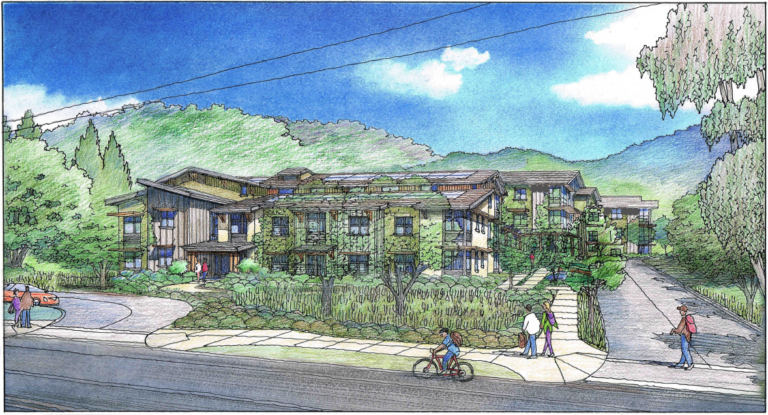
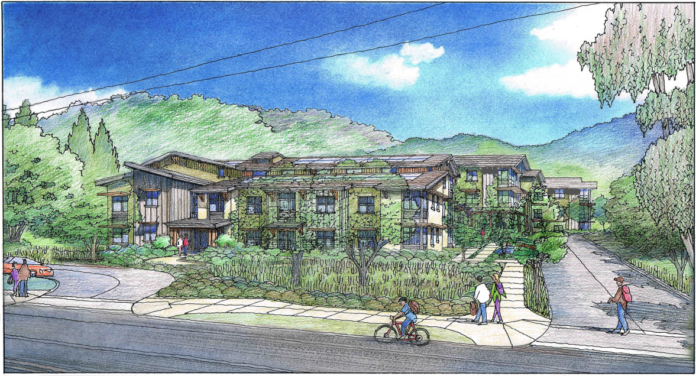
This summer, a new low-income senior complex in Fairfax is meeting the challenge of finding affordable housing with 54 units of one-bedroom apartments opening soon.

The senior community, Victory Village, just completed final inspections and is allowing people ages 62 and older to move in this summer. Due to the Covid-19 pandemic, there will be no on-site opening event, though the county is celebrating the opening just the same.

“We are so pleased that some seniors who have been living in motels during the Covid-19 public health emergency and were previously homeless are among those who get to move into Victory Village,” Marin County Community Development Agency planning manager Leelee Thomas says in a statement. “For those folks and many others, the name of this facility will have a personal meaning. For them, it will be a victory to settle down in a beautiful new home.”

Built in partnership with Bay Area nonprofit group Resources for Community Development, Victory Village’s 53 new one-bedroom homes and one two-bedroom manager’s unit is located one mile north of downtown Fairfax, at the former home of Christ Lutheran Church and Cascade Canyon School.

The community is set among oak woods and offers easy access to a large open-space preserve, while also being located adjacent to bus stops serving Fairfax town center, San Rafael and Downtown San Francisco.

Victory Village is considered a triumph for fair housing and for access for people with physical challenges. Twenty-eight apartments are designed for tenants with mobility impairments, and three of those have enhancements for those with auditory or visual impairments.

Eleven of the Victory Village apartments—20 percent of the units—are designated for people transitioning from homelessness. The community received $2.6 million of assistance from the County of Marin’s Affordable Housing Fund in the form of a $1.5 million grant and a $1.1 million loan.

Thomas says that the project aligns with the county’s years-long goals to meet the challenge faced by residents being priced out of Marin because of high rents and mortgages, noting that there is an ongoing and urgent need to support similar projects, especially in the wake of the current economic troubles connected to the ongoing pandemic.

This is the second time Marin County funds have supported a major housing project in Fairfax. In February 2016, the Board approved $675,000 to prevent 27 units of affordable family housing from being changed to market rates at the Piper Court Apartments.

Construction on Victory Village dates back to the fall of 2018 after more than six years of planning and working to obtain permits. In addition to the housing units, Victory Village also includes a community room, two outdoor courtyards with raised garden beds and drought-wise landscaping. On-site parking and improvements to the site’s sidewalks and crosswalks allow for maximum mobility.

The application period for residents, managed by the Marin Housing Authority, started in February and closed June 29. Residents need to be at least 62 years old and earn less than $72,500 per year to qualify for a home there.

Learn more about Victory Village on Marin County’s Affordable Housing webpage.

Larkspur Library Goes Virtual with Local Author Event

Despite the fact that public speaking usually tops the list of many people’s fears or phobias, most jobs—from the boardroom to the mailroom—require folks to speak up in a group. In the age of virtual Zoom meetings and socially distant get-togethers, speaking to a crowd has become an even more daunting challenge for those trying to stay on message and keep people’s attention.

That’s where Marin County author and media coach Andrea Devaux comes in. Her eclectic career includes spending time as a public speaker, filmmaker and theatrical director. In the North Bay, Devaux is best known as the president and co-founder of Networking Entrepreneurial Women of Marin, which regularly hosts events for professional women such as monthly networking dinners, trips to wine country destinations, outdoor adventures, comedy and game nights and happy hours at local restaurants.

Recently, Devaux combined all of her knowledge and experience into a new book, No Such Thing As Off the Record: A Survival Guide for Media Interviews & Appearances. Later this month, Devaux presents tips and techniques outlined in the book as part of a virtual event with the Larkspur Library on Friday, July 31.

No Such Thing as Off the Record is an essential survival guide for anyone who needs to become an expert on public speaking. It offers skills to navigate tricky interview scenarios and avoid unexpected pitfalls, such as the titular problem of commenting about sensitive subjects “off the record” to a trusted source.

Devaux discusses the book at the upcoming virtual event, which marks Larkspur Library’s first foray into online events. The small public library serving the community of Larkspur has been in its current location since it first opened in 1913, keeping the small town charm of Larkspur alive, and it regularly provides resources and services thanks to the Friends of the Larkspur Library nonprofit organization.

Specifically, the Friends of the Larkspur Library funds many vital library needs, such as upgrades to the library’s reading room and the Children’s Library, new books, audio books and DVDs, computers and printers, children’s summer reading programs and speakers for the Library’s annual speaker series.

Already this summer, the Larkspur Library has adapted to the Covid-19 pandemic by installing new virtual hours, and holding curbside pickup. It hosts online chats, answering emails and returning calls Tuesdays through Saturdays from 11am to 5pm and making appointments for patrons to pick up reserved library materials on those same days from noon to 4pm. Items are checked-out to patrons in advance, staged in a bag for their convenience and placed on a table under a canopy in the parking lot adjacent to the Children’s Room Entrance and Book Drops.

Larkspur Library also took summer reading online for 2020, offering a children’s reading program that concludes on July 31 and hosting an Adults Reading Bingo game running through Aug. 29 in the Beanstack App. Visit the library’s website to download bingo cards and to find out more about this year’s summer reading program.

Andrea Devaux discusses her book “No Such Thing as Off the Record” virtually on Friday, July 31, at 2pm. Free; registration required at Eventbrite.

Pandemic forces a radical re-imagining of theater

0

Way back in the mid-1970s, when pop star Billy Joel was compelled to write a song about the approaching collapse of the American empire, he began his lurid tale of ruin and destruction with a nod to theater. To strike a suitably apocalyptic tone, he chose as the song’s first line: “I’ve seen the lights go out on Broadway.”

The song was called “Miami 2017,” and it turns out Joel undershot the moment by only a few years. On March 12, 2020, by government order, the lights did in fact go out on Broadway. And, in late June, it was announced that Broadway would remain dark for the rest of the year.

A year ago, such an image was the stuff of nightmares, for both those who love theater and those who produce it. Today, it’s a stark reality. And, as goes Broadway, so go hundreds of theater and performing arts companies around the country.

Four months after a sudden and crippling shutdown of live performance that still has no end in sight, the theater industry is in the midst of a painful existential crisis. One that has presented a series of daunting challenges, from keeping staff employed to retaining the attention of audiences to embracing new substitutes for live performance to facing fundamental questions of purpose and meaning.

In the rich and diverse world of Bay Area theater, many companies have been kept afloat to this point by the largesse of their donors and loyal audiences (“You could basically yell into a hole asking for a donation and people would give it to you,” says one insider). But artistic directors in the region—from the mighty powerhouses such as American Conservatory Theatre (ACT) in San Francisco and California Shakespeare Theater (Cal Shakes) in Berkeley, to smaller neighborhood companies ringing the Bay Area—know they can’t depend on generosity as a long-term strategy. With a potent mix of fatalism and hope, theaters in the region struggle with a dramatic adapt-or-die moment. And many are responding by pushing their creativity and ingenuity to its limits.

“The pandemic is likely the biggest catalyst to creativity that any of us will see in our lifetimes in the theater world,” says Ron Evans, a long-time consultant to theater and performing arts companies in the Bay Area and elsewhere. “It’s forced us to basically start from scratch in moving people emotionally.”

Even if the new year dawns with a newly released Covid-19 vaccine, a new president and a new national resolve to revive American commerce, there is emerging in the local theater world a consensus that there is no turning back to the pre-Covid sense of normalcy. Even under the most ideal circumstances, theater companies are likely to emerge in 2021 as different creatures than they were 2019. Whether those creatures are diminished and broken, or stronger and better positioned to meet the future, is now being determined.

The Room Where It Happened

March is commonly a time in live theater when new productions are launched. That was the case with many companies at the moment that the Covid menace moved suddenly from a troubling specter on the far horizon to an immediate shutdown threat.

Sebastopol’s Main Stage West was in the middle of a major transfer of leadership just as Covid-19 forced the theater to cancel upcoming performances of Accidental Death of an Anarchist and A Doll’s House, Part 2.

In April, outgoing Main Stage West co-artistic director and managing director Elizabeth Craven announced that artistic and administrative duties of the theater were being handed over to Keith Baker and Ivy Rose Miller. Recently, Baker and Miller updated Main Stage West patrons and friends with a statement that acknowledges everything in the world of live theater is still very much up in the air four months into the pandemic.  

“When we know more about how to keep you, our actors, and our staff safe during a performance, you will certainly be the first to know,” Baker and Miller write in their statement. “We are taking the opportunity to clean our closets and put a fresh coat of paint on a few things. We continue to make plans for an upcoming season and are pursuing grants to help stay afloat in the meantime.”

Marin Theatre Company was in the middle of presenting the world premiere of playwright Kate Cortesi’s Love when the company was forced to cancel the remaining performances of its 2019/20 season, including the programmed productions of Jordan Tannahill’s Botticelli in the Fire and Antoinette Nwandu’s Pass Over.

“We did not come to this decision lightly. It took us some time because we wanted to make sure we had as much information as possible,” Marin Theatre Company’s artistic director Jasson Minadakis says in a statement on MTC’s website. “But rather than moving these shows around or deeper into the summer, we decided that we will cancel the remaining performances, and we will be focusing on ways to move forward over the summer. We’re hoping to bring much of our company back when we start performances again.”

Novato Theater Company was just days away from opening their ambitious staging of the Who’s Tommy when Marin County’s shelter-in-place orders shuttered the production in mid-March.

“It was a very dark weekend in my life,” says director and choreographer Marilyn Izdebski. “You nurture this baby and right when it’s going to open, you know, it was horrible.”

Izdebski, who is also president of the company’s board of directors, adds that the lack of information regarding the sheltering timeline has put everything at NTC on hold.

“We postponed Tommy, we cancelled Sordid Lives, we had our next season all mapped out, and we can’t even go forward with our next season until we know when and if we can open,” Izdebski says. “We have a tremendous responsibility to our patrons, our members and our staff to wait until it is absolutely safe to re-open.”

History Has Its Eyes on You

When nationwide protests erupted after the killing of George Floyd in Minneapolis, theater companies generally felt an urge to respond in some way that conformed with their mission. Cal Shakes went one further. Instead of focusing on programming, artistic director Eric Ting launched into an acceleration of the kind of soul searching that had been going on since he’d taken the reins at the company four years prior. Covid caused him to question the mission of Cal Shakes, with the aim of forging a new way based on the values of EDI (equity, diversity and inclusion).

“We’ve been wrestling for a while now with what it means to be a theater when you can’t do theater,” says Ting, one of the few people of color in the country running Shakespeare companies. “When the thing that was at the core of our identity as an organization was removed, there was a giant void at the center. That was a clarifying moment for us. Without (performances), we had all this creative energy to focus on something else specifically.

“And the movement toward racial justice was an opportunity for us as an organization to truly embrace the values that we have been practicing and modeling for years now. What would it be like if we actually thought of ourselves, at least for this period of time, less as an arts organization and more as a civic institution in service to the betterment of our community?”

Such conversations are inevitably leading Ting and his staff to even challenge the cultural hegemony of his company’s namesake.

“Not a day goes by,” he says, “when I don’t have a conversation with somebody within the circle of Cal Shakes who says, ‘So, why are we doing Shakespeare?’”

The police protests and the new civil rights movement it has sparked also compelled Bay Area theater companies to come together in response. PlayGround in San Francisco had been developing a production of Vincent Terrell Durham’s Polar Bears, Black Boys & Prairie Fringed Orchards, a contemporary play that dramatizes many of the issues behind the Black Lives Matter movement.

“It starts as a cocktail party,” says PlayGround’s co-founder and artistic director Jim Kleinmann about the play. “Then it goes into this Who’s Afraid of Virginia Woolf thing, and by the time it’s done, everyone is shredded and no one gets out alive.”

Shortly after the Floyd incident, PlayGround actor/producer Aldo Billingslea moved quickly to convert Polar Bears into a Zoom-based online production to be presented on Juneteenth (June 19) with the co-sponsorship of theater companies from around the Bay Area. In the end, 43 Bay Area–based theaters and performing arts companies signed on sponsors, to underwrite the production’s royalty and fees costs. The production is still available for free through Sept. 1.

“We were able to have a conversation, shock people awake and energize around the idea of Black voices and Black theater,” Kleinmann says.

Leaning In

Some companies—including Opera San Jose—conform with what Covid demands of them, and push ahead anyway.

Covid, says OSJ general director Khori Dastoor, is “kryptonite for opera.” Indeed, by its nature, opera is particularly vulnerable to a virus that is a bigger threat to older people (opera’s majority audience), flourishes in enclosed spaces with lots of people (like opera halls) and may be most effectively spread through aerosol droplets by forceful singing (like every aria ever).

After many sleepless nights, Dastoor and her team decided to lean into the crisis. For years, OSJ has had an apartment building in San Jose that it uses to host its resident artists (Dastoor herself lived there in 2007 as a guest soprano; it’s where she met the man who became her husband). For its latest production, OSJ used the apartment building to its advantage, quarantining its cast of performers for the incubation period of two weeks, testing the cast often and isolating them as a kind of “family unit” so they could perform in close proximity without masks. One apartment was left empty as an “isolation suite” in case anyone tested positive.

On top of that, the opera company invested heavily in video technology with an emphasis on high-end audio recording equipment, and partnered with a professional video company to produce the best product they could. The result is an online virtual concert called Dichterliebe (A Poet’s Love), now available for streaming.

“It would be my advice to a lot of folks not to try to fight the tide on this one,” Dastoor says. “It’s bigger than all of us. How do you turn to the population in two years, or however long it’s going to take to come back, and say, ‘Hey, we’re essential!’ Well, are you? We’ve already lived without you for two years and done fine.

“I really think staying present in people’s minds is an essential part of not just entertainment but good health. We’re all reading Stoic philosophy under the covers to keep from going into a deep depression. This is a time when we’re relying on art to pull us through. I want OSJ to be serving that need for people.”

ACT in San Francisco, one of the most high-profile theater companies on the West Coast, is not only a premiere performance theater, but also a highly regarded academy for aspiring actors and directors. It has been able to make the transition to online programming much easier on the educational side than on the performance side.

“There’s a lot of sorrow,” says ACT’s artistic director Pam MacKinnon. “It’s a worldwide shutdown of our craft, so it’s devastating.”

ACT’s own audience surveys indicate that only about 35 percent of the theater’s audience will ever return. In the face of such troubling numbers, MacKinnon says her company must focus on three areas of investment: developing new works for the stage, investing in state-of-the-art digital technology and investing in the company’s already strong education and community programs. “We’re just going to be a smaller theater for a while,” she says. “And, maybe by 2023, we’ll be back to some bigger numbers.”

It’s not just the big players that are suffering, of course. Shoestring theater companies are also fighting to survive. Elly Lichenstein has been with Petaluma’s Cinnabar Theater for 45 years, the last 20-plus as its artistic director. Cinnabar has jumped into survival mode by investing in high-end digital video technology and producing new material much like a television or film studio would do.

“I had to be dragged into this idea,” Lichenstein says, “because it is so antithetical to what live theater really does and what sets us apart from television and movie production.”

Evolution as a Value

Cinnabar’s experimentation is emblematic of another soul-searching arena in theater circles. What exactly is the “secret sauce” that distinguishes stage theater from the vast sea of entertainment options offered by Netflix and their competitors? If it’s the in-person experience, that’s off the table for now.

Jonathan Rhys Williams of Tabard Theatre believes the magic is in the live experience, even if separated from the in-person part of it. This month, Tabard is live streaming a fully staged one-person play called Looking Over the President’s Shoulder for 11 performances, through August 9. In this case, live means live—no on-demand viewing, no pausing the action for a bathroom break, no editing out the flubs.

“It’ll be a three-camera shoot switched live,” Williams says. “It won’t be that single camera in the back of the house. There will be tight close-ups, body mics, high sound quality, all of it. Not losing the live element is very important to us.”

Other than the technological and marketing challenges, streaming—whether it’s live or recorded material—presents big issues on the legal front, with theater companies compelled to work with licensing firms and actors/technicians unions on new contracts. Plus, live streaming represents a challenge on the audience side, re-introducing what used to be called “appointment television” habits in an age when almost everyone is used to on-demand time shifting.

“From the artistic side,” Williams says, “my mind just really starts to fly. What might be able to happen by integrating this new technology? What could we do? We’ve already put people on body mics. What if we put them on body cameras too? It could be a new way of creating theater.”

For still others, the secret sauce in theater is remaining closer to street level, to present theatrical arts that are too immediate or too raw or too provocative to float into the ether of big-budget mass entertainment. Shotgun Players performed in more than 40 different venues in Berkeley before finding a home at the former church at Ashby Stage in 2004. Artistic director Patrick Dooley says the twin catastrophes of Covid and the police protests revitalized Shotgun.

“Evolution is one of our values,” Dooley says. “We’ve always been asking ourselves, ‘How are we able to evolve in the moment?’ But we’re trying to do a little better about looking before we jump. A lot of our success over the years has been, we’re going to jump and we’ll figure out how to build the parachute on the way down. That’s part of the thrill ride for our audience.

“This is going to be a crazy ride. But that can be really stressful for some folks. So, we’re trying to figure out a way to keep that daredevil spirit, while realizing the process is not healthy.”

Shotgun’s response to the Covid summer is The Niceties, a live-streamed, two-person play about a white college professor and an African-American student facing off over the legacy of slavery. The play was presented on Zoom. Dooley is a true believer in a new kind of theater aesthetic emerging from all the on-line experimentation.

“There’s a time in every Zoom performance I’m watching that I just kind of disappear into the moment,” he says, “and I feel I’m right there with them. At first, it’s alienating with the screen and that blue tint. But every time I’ve done one of these, I find that the membrane breaks and I drop in and I buy into the convention.”

The Third Act

What the future holds for local theater is far from certain.

“My hope,” says Mike Ryan, artistic director of Santa Cruz Shakespeare, “is that when we come out the other side of this, there will be a hunger for live work because it has been so long denied to us.”

Consultant Ron Evans says there will be a lot of terrible online theater before the good stuff emerges. But the good stuff is coming: “There will be a flavor of theater that will be digested online and loved. And that style is in the very early phases of finding its voice right now.”

The traumas of 2020 may also inspire new theatrical art, plays only now, or even not yet, being written. One-person plays that don’t require masks or social distancing may be experiencing a renaissance.

On the other end, many theater companies may not survive. Elly Lichenstein of Cinnabar says she’s 99 percent certain that her company “will have to build itself back up, start again from scratch. I can see that as something good, if we have to hand this over to younger people who can start at the bottom like we did 48 years ago.”

“Now that we’ve slammed on the brakes,” says Patrick Dooley, “we have a chance to look at ourselves and take inventory. How are we doing? Is this working for me? Is this sustainable? Is this healthy, or just? It’s giving us some time to do a deep evaluation of the underpinnings of our culture and start to design a different architecture. And that’s radical.”


Pandemic fuel

0

In Sonoma County outdoor spectator sports are shut down because crowds are vectors for the spread of the deadly Covid-19 virus. But some people and businesses believe themselves to be exceptions to the public health rules made to protect us all.

On Saturday night, the Petaluma Speedway hosted the West Coast Stock Car Hall of Fame Classic, and the Bohemian was on the scene at the fairgrounds, observing. Citing Covid-19 public health order restrictions, the Speedway has closed the main grandstand where generations of fans once cheered the raucous machine circuses. Racing fans can now safely watch the exciting contests online. But some diehards are putting themselves into harm’s way, paying three times the regular ticket price of $16 to physically attend the races by purchasing tickets disguised as “pit passes.” Many of these attendees were not wearing masks, nor keeping safe distances from each other—exhibiting the kind of behavior which is blasting the flames of Covid-19, nationwide.

Speedway managers are trying to skirt the public health ban on crowd spectating by charging fans $45 for viewing the races from a smaller, benched viewing area across from the main grandstand, accessed through the pit area. Trying to cover its potential liabilities for spreading Covid-19, the Speedway requires all who enter to sign a blanket liability waiver in case they are infected with Covid-19 whilst on the premises of the racetrack.

Legal experts opine that these Covid-19 waivers are not worth the paper they are printed on. (Adults are required to sign away a child’s right to sue for negligence). For one thing, the Speedway is not consistently enforcing all of the mandated safety precautions it claims to be abiding by on the Covid-19 protection signage it is compelled by law to display. Rather, the Speedway is putting everyone in Sonoma County and beyond who, during the next two weeks, comes into contact with a fan or driver or official who was infected there at risk of illness and death. Are we all agreed that watching stock cars race is worth dying for? Of course not.

On Saturday, the Bohemian observed, and took photos of, unmasked staff selling the $45 “pit passes” to non-mask-wearing fans who were paying to watch. A handful of people roaming the pit, and a few of the spectators watching the races, wore masks, but most did not. Even the racing officials lining up the cars to enter the track were not wearing masks as they leaned in to talk to unmasked drivers. 

The Speedway manager, Rick Faeth, said in a telephone interview that 300 people attended the race on Saturday, including drivers and their crews and Speedway staff of eight and the pit-pass-purchasing spectators. Although Speedway staff is required to take the temperature of all those entering the racing pit, the Bohemian did not see any one having their temperature taken as they strolled through the gates past a not-masked security guard who monitored the entrance for those bearing pit pass wristbands while sitting in a golf cart.

Faeth said he did not have enough staff to “play mask monitor,” but that in the future he would ask the EMTs staffing the Fire Department ambulance that is on hand for car accidents to help discipline the crowd. He commented that the racetrack’s insurer requires that all those who enter to sign the Covid-19 waiver form and that he cannot speak to its legality.

The Speedway’s Covid-19 waiver format was created by California Fair Services Authority, which insures fairs and racetracks in California. The waiver that all who enter the racetrack are required to sign acknowledges, “I am aware that I could be infected, seriously injured or even die due to Covid-19. … I am voluntarily participating in these activities with knowledge of the danger involved and agree to assume any and all risks of bodily injury, death or property damage, whether those risks are known or unknown.”

The densely worded waiver forever indemnifies the Speedway operators, the Sonoma-Marin Fairgrounds, Sonoma County, the state of California and unnamed contractors from “any and all liabilities,” not just for contacting Covid-19, but for any type of harm that occurs to them on the premises. Remarkably, that blanket indemnification includes any acts of negligence by all of the above. And even your heirs and survivors are not allowed to sue if you are killed by Covid-19 contracted at the Speedway. Or so says the waiver, which does not mean it is legally valid.

Legal expert Allison Zieve, with the Public Citizen Litigation Group, reviewed the Speedway’s Covid-19 waiver. She said, “The waiver sounds way overbroad. I am skeptical that any court would enforce it as written, certainly not as to many or most of the claims that it purports to waive.” Its signers are not informed that, in actuality, they really cannot sign away all of their rights to sue. They are just encouraged to believe that the waiver is binding on them and their heirs in perpetuity—but it is not, so the Speedway is not telling the truth to those who are entrusting it with their safety and well being.

While it is not uncommon for skydiving and other businesses selling dangerous experiences to require liability waivers, they cannot escape liability for negligence, which is what the Speedway and its insurer are trying to do—pretending that people can sign away rights to sue for damages under all circumstances. Attorney Zieve asks, “I wonder if the waiver was drafted so broadly just to discourage people from filing lawsuits in the first place, because they assume that they can’t?” 

Writing in the legal profession’s ABA JOURNAL, Tyler T. Rasmussen, a litigation partner with Fisher Phillips in Irvine, California asserts, “To be the most enforceable, you have to have a [Covid-19] contract that is narrowly tailored to your business. It has to be clear and unambiguous and easily understandable by the individual who is reading it.”

There is a larger question to ask, though. The Speedway appears to be violating the state and county requirements that it take the temperature of all those who enter and enforce physical distancing and mask wearing. Since it takes a person infected with Covid-19 two weeks to show symptoms, proving that the virus was contracted at a specific time and place by a specific person is extraordinarily difficult. Why is the Speedway requiring its drivers and the spectators to sign away their right to sue if it is really operating its business according to the public health rules that are designed to protect everyone? California law explicitly protects Speedway employees from signing away their right to sue for negligence. But the fans are told otherwise—and we are all at risk of being victimized by what looks like legal jabber covering for potential negligence.

With new infections sharply rising, Sonoma County Health Officer Dr. Sundari Mase has issued a public warning, “Even gatherings over 10 people are fueling rising infections. Your social bubble should really consist of your household members at this time.” That applies to stock car racers and their pit pass holding fans, too.

Talking Heads’ drummer releases memoir

0

Chris Frantz goes deep behind the scenes of his bands Talking Heads and Tom Tom Club in his new memoir, Remain in Love, which came out July 21. But one thing the drummer for two of the most influential bands to come out of New York’s celebrated punk and New Wave scene in the late ’70s and early ’80s doesn’t write much about in the book is his own drumming.

It’s an especially odd omission considering Frantz’s idiosyncratic style of interjecting loudly and often into Tom Tom Club songs, as immortalized in the greatest concert film of all time, 1984’s Stop Making Sense. Frantz’s excited growling of “James Brown! James Brown! James Brown! James Brown!” is part of what made “Genius of Love” such a rock and hip-hop touchstone, but his added live vocalizations in the film—“The girls can do it too, y’all!” “Psychedelic and Funkadelic!” “Feels good to me!” and of course, “Check it out!”—take it to a whole other level.

Talking to him about it now though, it’s clear he didn’t write a lot about his wild, live style because … well, he doesn’t know exactly what to think about it himself.

“Man, I don’t know,” he says, when asked what inspired it. “All I know is I wish I could have been a little more relaxed. I guess it comes from the hype men that bands would have come out, like Bobby Byrd for James Brown. It sprung up with Tom Tom Club—the mistake was putting a microphone in front of me. If I didn’t have a microphone, at least nobody could hear it.”

For those who only remember the stories about acrimony among the members of Talking Heads after the band broke up, the scenes of sweetness, camaraderie and creative bursts during the band’s time together are exciting and, in a certain way, almost reassuring. 

Even though he is even-handed in his memoir, Frantz isn’t sure how it will be received in some circles.

“I thought about this book for eight years before I actually sat down to write it,” he says. “At first I was afraid that, ‘Well, it might clear any chance of a Talking Heads reunion, I don’t want to do that.’ Because I know there are people who love David Byrne so much they want to be David Byrne; I’ve met a lot of them along the way. So I’m prepared for some people to react badly to anecdotes I told about David in the book. But the fact is that they’re all true—and the fact also is that I didn’t tell all of the anecdotes.”

However, considering the band’s buttoned-up reputation (especially in the early years), the anecdotes about partying and drugs and even Byrne shitting on a hotel bed might actually enhance their rock ’n’ roll reputation.

“We might have had a touch of nerd in us,” says Frantz, “but we weren’t completely nerdy.”

Chris Frantz will do a virtual book event for ‘Remain in Love’ on July 28 at 6pm, in conversation with Jeff Garlin. Go to booksoup.com/event to reserve a spot.

New Plan

This is my third go around being homeless and flying under the radar. I am blind so I of course don’t have the luxury of being able to hide in a van, (“A Man, a Van, a Plan” Features, March 11) which means I have to be more creative.  The safest thing for me to do before the pandemic was...

Pray Their Names

What’s in a name? Reverend Katie Morrison, the creator behind the traveling outdoor-art installation “Pray Their Names,” aims to help us find out.  The project was envisioned by Morrison as a field of 160 wooden hearts—each bearing a hand-lettered name—memorializing 160 Black lives that have been lost to police violence. It is currently at the First Congregational Church of Sonoma...

Prison Protest

Outraged by the rapidly growing number of Covid-19 cases in San Quentin State Prison, 14 protesters chained themselves to a driveway gate in front of Gov. Gavin Newsom’s home in suburban Sacramento on Monday, July 28. Gov. Newsom, who lived in Marin County before his election as governor, has failed to manage the Covid-19 outbreak in the state prison system...

Join an Online Meeting to Explore the History of Sir Francis Drake in Marin

The online learning session about Sir Francis Drake Boulevard has been rescheduled for Monday, August 17, at 6pm. The planned August 5 session was postponed because of scheduling conflicts with several other videoconferences pertaining to similar civil rights topics. Two months after the death of George Floyd sparked a nationwide protest movement calling for police reforms and racial justice,...

Marine Sanctuary Looking for Marin Council Members

Located 22 miles off the coast of the Point Reyes headlands, the Cordell Bank is an undersea oasis sitting at the edge of the continental shelf that rises from the surrounding sea floor to within 115 feet of the ocean surface. That ocean bank is the center of the massive Cordell Bank National Marine Sanctuary that supports a rich and...

Affordable Senior Housing Coming to Fairfax

Marin County residents are among the highest earners in California on average, according to a recent analysis by New York financial technology company SmartAsset. Yet, the county faces a housing crisis, with a booming population that struggles to find affordable options. Marin County’s mortgages and rents are the highest in California, with a median price for a single-family home coming...

Larkspur Library Goes Virtual with Local Author Event

Despite the fact that public speaking usually tops the list of many people’s fears or phobias, most jobs—from the boardroom to the mailroom—require folks to speak up in a group. In the age of virtual Zoom meetings and socially distant get-togethers, speaking to a crowd has become an even more daunting challenge for those trying to stay on message...

Pandemic forces a radical re-imagining of theater

Way back in the mid-1970s, when pop star Billy Joel was compelled to write a song about the approaching collapse of the American empire, he began his lurid tale of ruin and destruction with a nod to theater. To strike a suitably apocalyptic tone, he chose as the song’s first line: “I’ve seen the lights go out on Broadway.” The...

Pandemic fuel

In Sonoma County outdoor spectator sports are shut down because crowds are vectors for the spread of the deadly Covid-19 virus. But some people and businesses believe themselves to be exceptions to the public health rules made to protect us all. On Saturday night, the Petaluma Speedway hosted the West Coast Stock Car Hall of Fame Classic, and the Bohemian...

Talking Heads’ drummer releases memoir

Chris Frantz goes deep behind the scenes of his bands Talking Heads and Tom Tom Club in his new memoir, Remain in Love, which came out July 21. But one thing the drummer for two of the most influential bands to come out of New York’s celebrated punk and New Wave scene in the late ’70s and early ’80s...
3,002FansLike
3,850FollowersFollow