A call for reform

0

This is a plea for any reform-minded citizens to run for the open seats on the Marin Municipal Water District board currently held by Larry Russell, District 5 (Corte Madera, Tiburon, Belvedere) and Armando Quintero, District 2 (San Rafael). We need someone new who will look out for the best interests of the ratepayers.

For years now the Board has turned a blind eye to the corruption at MMWD. The district suffers from excessive management salaries, nepotism and cronyism, financial mismanagement, inefficiency and incompetence. Both Russell and Quintero have approved salary and pension spiking. Russell rarely attends meetings in person. Quintero basically lives and works in Merced. Each one gets $200 per meeting and paid medical insurance.

Here is just one of many examples of corruption at MMWD: Their former general counsel, Mary Casey, whose 2018 total compensation was $376,742, used $35,000 in ratepayer funds to fly out a psychiatrist named Robert Weisman from Rochester, NY. Among Mr. Weisman’s many expenses: $9,468 for travel time; $206 for taxis; $773 for hotels; $56 for parking and $217 for meals. But the most glaring example of corruption is his $2,347 airfare. An online search will show that a roundtrip from Rochester to San Francisco is only $600. It’s no wonder that we pay some of the highest water rates in the country.

So, why didn’t Mary Casey just hire a local doctor and save us all a few thousand dollars? It’s because Mr. Weisman is a friend of one of the members of Mary Casey’s goon squad, Bobbi Lambert, who runs a company called “Confidante” from her home in Novato. Ms. Lambert pulled in nearly $30,000 on this same scam. This is an absolute abuse of power and a waste of ratepayer resources.

If Russell and Quintero succeed in staying in power you can be sure that right after the November election our water rates will go up again so they can continue to finance their wasteful spending. Let’s show both of them the door so we can have a water district that serves the people instead of self-serving bureaucrats.

Eric Morey lives in Woodacre.

Wine Country Women Fight Glyphosate

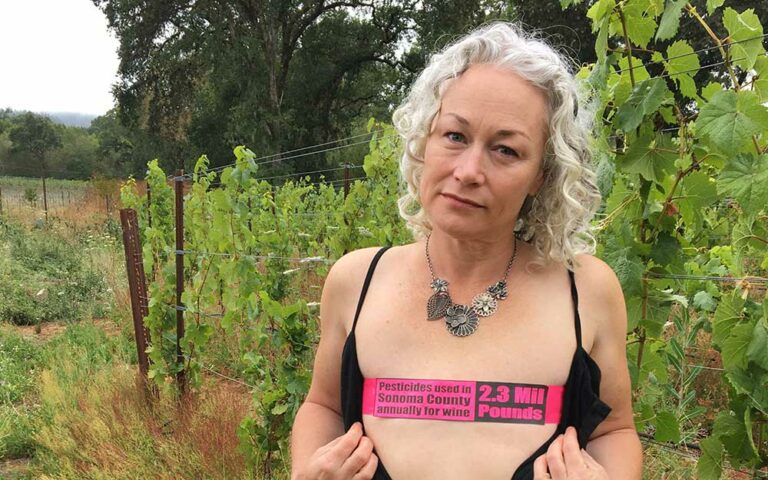
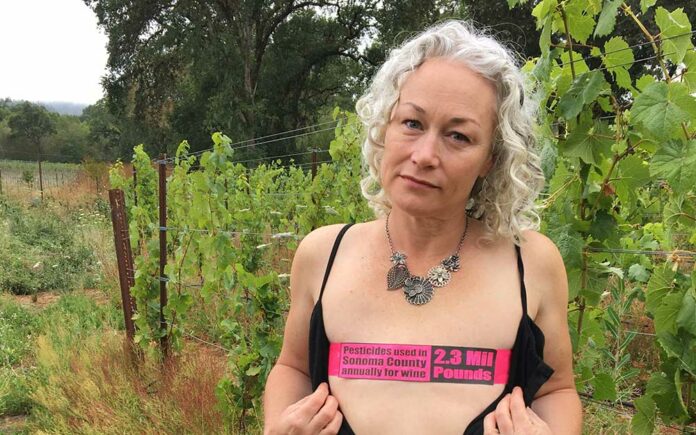
Call it Wine Country or call it Glyphosate Country. According to Padi Selwyn, the cofounder of Preserve Rural Sonoma County, and Laura Morgan, a local physician concerned about the health of the environment, millions of pounds of pesticides have been applied, mostly to wine grapes, in Sonoma County. They say that in 2015, for example, 2,839,007 pounds were applied.  

Exact figures for recent years are hard to come by. Winery owners aren’t publicizing that information. It would undermine their claims to be “sustainable.” Still, the scientific evidence is strong enough for Sonoma County to ban the use of synthetic pesticides such as glyphosate—the most important active ingredient in Roundup—on public property, including parks and bike paths. But land owners, ranchers and farmers have been free to go on using synthetic pesticides.

Not only that, but once an old pesticide is banned, the corporate giants concoct new ones that are even more deadly, according to Mitchel Cohen, who has devoted much of his life and work to the study of Roundup and glyphosate.

Selwyn speaks for Cohen and for many others when she says, “Our paradise is poisoned with herbicides and pesticides.” She’s alarmed and thinks her neighbors should start asking questions and taking action to protect children who have been developing cancers at an alarming rate. According to data from Wine and Water Watch, an organization that coalesced during the last big drought, Napa County has had the highest cancer rates for children in California at 22.8 deaths per 100,000 kids. Sonoma is a close second at 20.6 deaths per 100,000 kids. Any number is too high. Nearly everyone knows someone—a mother, a sister, an aunt, a daughter or a friend—with breast cancer.

Dr. Kurt Straif, a key researcher at the International Agency for Research on Cancer (IARC), argues that glyphosate—which can be absorbed by humans though “our daily bread”—is “genotoxic,” which means that it damages human DNA, and can lead to cancer.

Buying organic foods and beverages is beyond the means of most working families. For the unemployed it’s impossible. You have to be wealthy or grow your own fruits and vegetables—which requires land and access to water—to eat healthy. The only real salvation is a total transformation of the for-profit food system and the creation of an alternative that doesn’t trash land and labor. Marketing campaigns like “Sustainable Sonoma” and “Sustainable Napa” are little more than sops meant to disguise what’s really happening in fields and on farms, though some who are eager not to offend say they’re a step in the right direction.

Right now, Covid-19 occupies front and center in the American consciousness, but N-(phosphonomethyl)glycine, aka Glyphosate, has to be confronted and abolished soon or the planet will be totally polluted. Rachel Carson warned about toxic chemicals, especially DDT in Silent Spring, published in 1962. American women who looked to Carson for inspiration are at the heart of the movement today to ban the contemporary equivalents of DDT.

Zen Honeycutt, the founder and executive director of Moms Across America, points out that “moms buy 85% of the food” in the U.S. and that “moms are taking the helm here.” Honeycutt adds, “Husbands and kids help, too.” The organization Honeycutt founded amplifies voices from coast to coast and targets the powers-that-be. All across the U.S. and especially in Wine Country, women’s voices are growing louder and more eloquent, too,

Increasingly, judges and juries are listening to complaints against Bayer, which recently bought Monsanto for $66 billion. Bayer’s stock recently tumbled, but there’s still big money to be made in toxic chemicals and the seeds that the company sells and that are resistant to glyphosate.

Monsanto/Bayer has just developed a new corn seed that can survive bombardment not only from glyphosate but also by dicamba, glufosinate, quizalofop and 2, d-D, one of the ingredients in Agent Orange which defoliated Vietnam. The U.S. Department of Agriculture has been asked to approve Bayer’s new seed for corn. The company also manufactures the pharmaceuticals that are used to treat the illness caused by toxic chemicals, which has prompted activists to say, “They get you coming and going.” 

Marion Nestle, a New York University professor and the author of Food Politics, points to the growing body of evidence that “glyphosate is carcinogenic, promotes weed resistance, and causes genetically modified crops to require even greater use of toxic chemicals.” The more we poison, the more we need to poison, or so it seems in the world according to Bayer/Monsanto.

Welcome to our poisoned planet. The picture is grim, though some activists, including Sonoma County filmmaker Carolyn Scott, use humor to tell stories about cancer-causing chemicals. Her satirical animated short, Roundup Wine, is an official selection at film festivals this summer.

At the start of summer 2020, when Bayer reached a $10 billion settlement rather than go to court and fight thousands of claims, environments were crying, not cheering. After all, Bayer continues to insist Roundup is perfectly safe when used “properly.”

Thousands of farmers, ranchers and gardeners use glyphosate to kill weeds, as though weeds were un-American and had to be exterminated as quickly as possible, no matter what the risks to life itself.

No warnings appear on the labels for the product. A large container of glyphosate sells for $21.99 and comes with what’s called a “comfort wand” that supposedly makes for an easy application on “the toughest of weeds.”

Mitchel Cohen, the editor of the book, The Fight Against Monsanto’s Roundup: the Politics of Pesticides, who recently bought his message to Sebastopol, says that glyphosate is still used widely in New York City where he lives and works, and that kids (and adults, too) come in contact with it every day and are made sick. Jonathan Latham, the director of the “Poison Papers” project, the editor of Independent Science News and one of the contributors to Cohen’s book, suggests that glyphosate is “unsafe at any dose.” He tweaks consumer advocate Ralph Nader, who insisted that Ford’s Pinto was “unsafe at any speed.”

Bob Cannard, who raises organic fruits and vegetables and sells them at Petaluma’s Green String Farm, and who cultivates organic grapes that go into Cline wines, asks, “What business do you know that benefits financially from poisoning its customers?” For years, Cline used glyphosate in his vineyard. Cannard persuaded him that it was harmful to the environment and to all living things, including humans. Now sheep eat the weeds and fertilize the soil.

Cannard wants the state of California to ban toxic chemicals. He calls his cause “Organic California 2050.” Cannard isn’t rushing anyone. Nichole Warwick, who belongs to a new, hardy breed of environmentalists, is eager to have Roundup banned now. Her own friends have cancers. Kids exposed to toxic chemicals often don’t show symptoms for years, Warwick says. Acting today can prevent health issues tomorrow.

A survivor of breast cancer—it was first diagnosed in 2012 when she was 37—Warwick was born and raised in Merced in the Central Valley, where ag is king and glyphosate is ubiquitous.  She thinks she developed cancer because of her proximity to farms and fields that were sprayed with chemicals.

“There is no history of cancer in my own family,” she tells me.

Soon after Warwick moved to Sonoma County, her son came home with a note from his school, Forestville Academy, that said that Roundup would be sprayed on the campus.

“I was  appalled,“ she tells me. “At first, I felt despair and depressed, but I also wanted to protect my son.”

She adds, “My birth as an activist was very personal.” Nichole joined the Petaluma-based organization Daily Acts and became the Environmental Health Program Manager.

She co-founded, and has served as the executive director of, Families Advocating for Chemical & Toxic Safety (FACTS). She also co-founded and co-directs Sonoma Safe Agriculture Safe Schools (Sonoma SASS). The Sonoma SASS has links to the state-wide body of SASS organizations and is affiliated with Californians for Pesticide Reform (CPR).

For a time Warwick taught school. Now, she’s a full-time activist. At her son’s school, she worked with the principal and helped to educate the custodial staff. After her campaign, there was a moratorium on the use of Roundup. Warwick was successful, she says, because she was persistent and wouldn’t take “No” for an answer. She lobbied for a stewardship program at Forestville Academy, but the school wasn’t ready to take that step.

“Schools in Sonoma County, especially in Forestville and Sebastopol, are flanked by vineyards,” Warwick tells me. “Chemicals get into the dirt, the dust, the air. They drift. Kids are routinely exposed to toxic chemicals. They cough, their eyes itch, they get sick, have respiratory problems, stay home and miss school.”

Students aren’t the only population that has reported health issues. Teachers have also been sick.

Warwick and her fellow activists know what they’re up against in a county in which Sustainable Sonoma is more a reflection of greenwashing than genuine ecological awareness or the embodiment of best practices. Philanthropic organizations, which are often dependent on funding from wineries, are loath to fund the groups that Warwick works with, though funding for pesticide education, outreach and policy change has come from the Jonas Children’s Environmental Health Fund and the Rose Foundation. 

Warwick doesn’t go out of her way to make enemies where there’s no need to do that, though she can be persistent and even a tad confrontational, as she was during a recent Zoom meeting with Sonoma County Ag Commissioner Andrew Smith. Still, she wants allies, not foes, and, as she points out, “farmers and their families are also getting sick. There’s Parkinson’s Disease, dementia and non-Hodgkin Lymphoma, a form of cancer that attacks the lymph nodes.”

Sonoma County’s Edwin Hardeman, now in his 70s, was exposed to Roundup for decades. He developed non-Hodgkin’s Lymphoma and was one of the first American citizens to win a suit against Monsanto. A jury in San Francisco determined that his exposure to Roundup was “a substantial factor” in the development of his cancer. Hundreds of others have filed complaints and are ready to go to court. Tens of thousands of them refused to accept the terms of the June 2020 settlement.

In Sonoma County seven environmental organizations work together to ban toxic pesticides and herbicides: Wine and Water Watch, Families Advocating for Chemical and Toxic Safety, Daily Acts, Preserve Rural Sonoma County, Sonoma Safe, Ag Safe and the North Bay Organizing Project.

Local organizations work with groups around the state. Warwick recently spoke at a meeting of the St. Helena City Council and recommended banning Roundup. She also had a recent online meeting (due to Covid-19) with Val Dolcini, the Director of the Department of Pesticide Regulation (DPR), for the state. Warwick told him that citizens had a right to know when fields, vineyards, orchards and parks were going to be sprayed. He seemed to agree with her.

GRAPE, the Graton Pesticides Research Project, in partnership with UCSF and CPR—with funding from the Breast Cancer Research Foundation—has embarked on a much-needed study of the use of pesticides in and around Graton, where Alexis Kahlow has helped to lead the grassroots opposition to toxic chemicals.  

At a West County organic vineyard, Nichole Warwick tells me, “I’m aware of corruption and collusion, but I’m optimistic about changing the trajectory for the health of our children and our children’s children.” 

Agricultural Institute of Marin Debuts Virtual Cooking Class

For more than 35 years, local food producers and farmers have worked with the Agricultural Institute of Marin (AIM) to educate the public about the health, environmental and economic impacts of eating locally-grown and sustainably-grown food.

In the North Bay, AIM is best known for hosting certified Farmers Markets featuring hundreds of local food purveyors and artisans, and the group welcomes CalFresh and EBT (food stamps) at the markets so that everyone in Marin has access to fresh and healthy food.

For the last several months, AIM has continued to operate many of its outdoor Farmers Markets–which remain open as essential services for the community–with social distancing rules in place to combat the spread of Covid-19. Now, the organization is taking new steps to increase its online presence, beginning with a weekend of Virtual Cooking Classes taking place Saturday and Sunday, Aug 15 and 16.

In celebration of National Farmers Market Week in August, the upcoming first-of-its-kind virtual culinary experience takes participants from “Market to Kitchen,” making two delicious meal that will support small and mid-sized farmers, fishers and ranchers in Marin.

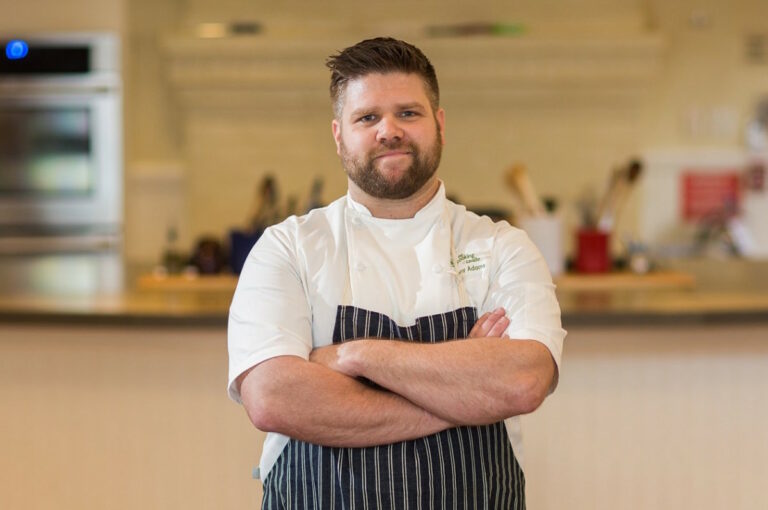
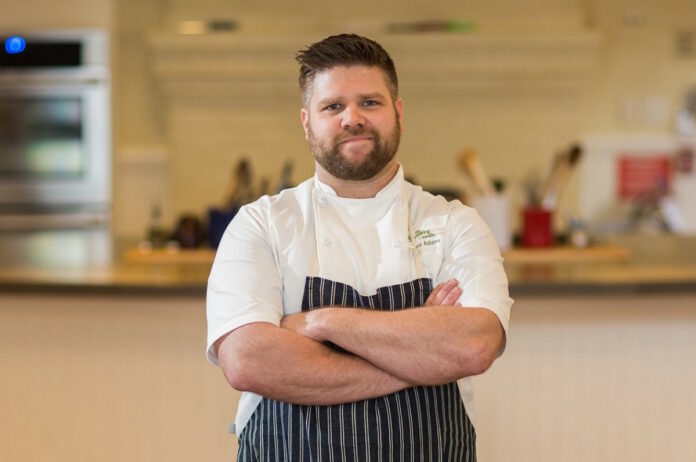
The online cooking classes will be led by Marin-based Chef Tony Adams, who has worked in some of the best fine-dining kitchens in the world. Today, Chef Adams is the director of the Cavallo Point Lodge Cooking School in Sausalito, where he normally instructs more than 200 classes a year for private and public groups.

Chef Adams also recently authored a cookbook and launched his YouTube channel, both called Fill in the Food, which teaches readers/viewers how to cook by method and technique rather than by learning individual recipes.

For the “Market to Kitchen” virtual cooking classes, Adams will demonstrate how to make the most of the local Farmers Markets’ summer ingredients. On Saturday, Aug 15, Adams inspires home chefs with a miso-glazed salmon dinner featuring mushroom fried rice. On Sunday, Aug 16, Adams assembles a mouth-watering mix of seared steaks with garlic bread and a popular summertime panzanella salad.

Each Farmers Market-inspired cooking class is only $37 (the number of years that AIM has been in service) to attend, and all proceeds will go to the Farmers Market Assistance Fund that keeps the markets running and bringing fresh produce to community members.

Register for the virtual classes now to receive an ingredient list through an email notification. Then, shop at a local Farmers Market to get the best ingredients directly from the source and use those ingredients to cook alongside Chef Adams.

In addition to this virtual offering, AIM continues to connect communities in Marin and throughout the Bay Area to local food in innovative ways such as the Bounty Box Program, which allows customers to purchase a bounty of produce via curbside pickup, and the Rollin’ Root, which is a veritable Farmers Market on wheels.

Since the Covid-19 pandemic, AIM has sold over 5,500 Bounty Boxes filled with fresh fruits and veggies, and they’ve donated 1,200 (and counting) boxes to vulnerable individuals, accounting for $150,000 worth of produce that has gone directly in to local producers’ pockets.

For more information, and to register for the “Market to Kitchen” virtual cooking classes, visit AIM’s website now.

King Street Giants Get Vocal on New Album

0

The King Street Giants are the North Bay’s liveliest disseminators of traditional, New Orleans–style jazz.

Inspired by the boisterous and raucous music that can be found in the halls, clubs and streets of the French Quarter, the band originated their sound in street-busking sessions throughout the Bay Area, and in recent years they’ve shared the stage with iconic artists including Bonnie Raitt, Galactic, Rebirth Brass Band, Charlie Musselwhite, New Orleans Suspects and many more at major festivals throughout the West Coast.

On August 3, the King Street Giants released their third full-length LP, Everything Must Go. The 11-track record is the band’s first release to feature vocals and it is the first release under the group’s current name, as the band previously played under the name Dixie Giants until changing the name two years ago.

“We were gearing up to do our first trip to New Orleans (in 2018), and as we were talking to friends and colleagues who had moved or toured down there, we started getting a lot of questions about the name Dixie Giants,” says band co-founder and sousaphone player Nick Pulley.

As the group did research into the name, they found that the word Dixie still has a strong connotation with the Confederacy in the South.

“We all grew up on the West Coast, and the term Dixieland Jazz doesn’t bat an eye,” Pulley says. “But, we learned that Dixieland Jazz was a term that white record labels used in the 1920s and ’30s to tell the public this is white musicians playing this music.”

Dropping the potentially offensive term from their moniker, the group quickly decided to rebrand the band with a name inspired by their at-the-time practice space on King Street in Santa Rosa.

“And, of course we changed the name, and then we moved,” Pulley laughs. “Recently, seeing the Dixie Chicks change their name and seeing (New Orleans–based) Dixie Beer change their name, it’s good to get that reinforcement from people who have an international platform who are making those same changes and learning those same histories.”

For the record, the King Street Giants were warmly welcomed in New Orleans in 2018, and the band—made up of Pulley on sousaphone, Casey Jones on clarinet and tenor sax, Jesse Shantor on alto sax, Jason Thor on trombone, Daniel Charles on banjo and both Libby Cuffie and Dylan Garrison on drums—have made a new name for themselves over the past two years, treating the North Bay to raucous live shows up until the Covid-19 pandemic shut down the scene.

At the time of the shutdown, the King Street Giants had just recorded  Everything Must Go at Prairie Sun Studios. The album features all original tunes, several with vocals, that range from freewheeling shuffles to sonorous ballads and even an old fashioned dirge. Pulley says the album title reflects the group’s attitude about getting rid of bad habits and working on bettering oneself. He also says there is a political angle, and that despite the group’s ebullient musical output, he and other members of the band are currently writing more somber music to reflect the ongoing pandemic and protest movements.

Originally, the group was going to release the album in mid-July, and they were hoping to perform live to celebrate the occasion. Even as the pandemic keeps people isolated, the group went ahead with the album release on August 3.

“We’re very proud of it and there’s no point in sitting on it and keeping it a secret and waiting for a release show to happen,” Pulley says. “The response that we’ve been getting from close friends who’ve heard it has been positive, so why wait? People have time to listen to it, and I think people need something new to listen to.”

Thekingstreetgiants.com

Marin Musician Responds to San Quentin Outbreak in New Song

0

Based in West Marin, world music artist Jai Uttal is renowned worldwide for his mixture of instrumental and spiritual offerings.

Uttal is best known musically for his heartfelt renditions and upbeat adaptations of classic Kirtans, the Indian call-and-response practice of chanting ancient Sanskrit mantras, accompanied by music. He has also released more than 20 albums that blend elements of reggae, jazz, Indian, samba and rock ’n’ roll; most recently unveiling his ambient instrumental album, Gauri’s Lullaby, in May 2020.

Now, Uttal is releasing a new single, “Behind the Walls,” that addresses the ongoing Covid-19 outbreak at San Quentin State Prison, where Uttal has worked with inmates as part of an interfaith program. “Behind the Walls” is available to listen to online now, and Uttal encourages listeners to donate to inmate advocacy group Re:Store Justice.

For more than 40 years, Uttal has brought his music and interfaith spiritual messages to prisons throughout the country, first touring penitentiaries in the early 1970s with his friend, noted spiritual leader Ram Dass.

In 2011, Uttal began performing at San Quentin as part of the interfaith program, ‘Chaplain of the Heart,’ that features a small group of musicians leading semi-regular Kirtan programs in the San Quentin Chapel. Uttal bonded with many incarcerated individuals at San Quentin, and he—like many Marin residents—is disturbed by the ongoing health crisis currently taking place inside the prison.

According to the California Department of Corrections and Rehabilitation, more than 2,000 incarcerated people in San Quentin have tested positive for the coronavirus since June, more than two-thirds of the incarcerated population at the prison. Reports indicate the outbreak at the prison began in late May when infected inmates from the California Institution for Men at Chino were transferred to San Quentin and improperly introduced to the population there.

In “Behind the Walls,” Uttal bemoans the lack of public awareness and action to resolve the prison’s ordeal, which he calls the “San Quentin Blues.” Comprised of an acoustic guitar and Uttal’s voice laid over strings and a trumpet solo, the song is a somber call for help, and proceeds and donations from the single are going to nonprofit Re:Store Justice, which aims to reform the prison system by working with incarcerated individuals as well as recently released persons.

Listen to “Behind the Walls” now and read Uttal’s extensive artist’s statement about the song below.

“I first started singing in Federal penitentiaries around 1973, when I was touring with Ram Dass. We would go into the prisons and I would sing and share a Kirtan as part of his presentation to the inmates. I found those experiences intense and profound. But it wasn’t until decades later that I began to go semi-regularly into San Quentin prison to sing for the inmates and share with them the practice of Kirtan, as part of an interfaith program that had been in place for some time.

Standing outside of San Quentin can be quite intimidating, with its many huge gates and high walls, but, once inside, in the sanctuary of their small chapel, with a room full of enthusiastic men, that trepidation completely disappears. Of course, it took me a while to find my way to be authentic and real with the men; to not see them as ‘other.’ But once that happened, I found a community of brothers there who were so incredibly committed to their spiritual practices and to finding inner freedom within the confines of their incarceration. Their dedication and deep spiritual longing was completely inspiring to me.

So, I went again and again with a small group of musicians and, after a while, I saw that these men, who at first seemed so hard, we’re melting and smiling and singing and expressing so much emotion. In fact, many of the men got off of their seats and danced like wild Bengali Bauls. After one of the kirtans, a man came up to me and said, ‘This is the REAL San Quentin! This is what you have to tell everyone. Nobody believes this. THIS is the REAL San Quentin. We are all brothers here.’ With tears in his eyes, he referred to the prison as ‘The House of Healing.’

So, when I heard about the intense Covid surge inside the prison and how little the authorities we’re doing about it, I was affected very deeply, and personally concerned with the plight of some of my friends there. It’s amazing to me that what’s happening behind those walls is going unnoticed by most of the residents of Northern California. In fact, the devastation that’s occurring because of the virus in so many federal penitentiaries has just been a footnote in the national news. San Quentin was pretty much infection-free until an incomprehensible decision by the prison board transported a bus load of men from a prison in Chino, California, to San Quentin, in Marin County, California. Many of the transportees carried the virus, some already showing severe symptoms. With almost no medical facilities or possibilities for quarantine, the virus spread like a wildfire and began to decimate the San Quentin population. This is still happening.

So I decided to write and record this song, ‘Behind The Walls,’ and release it as soon as possible so people could know what’s happening in their backyard. (San Quentin is about a ten-minute drive from our home!). Thank you so much for listening to my song and reading my words. Much love, Jai”

Jaiuttal.com.

Ivan Escobar is in Heaven

Ivan Escobar works in cannabis heaven, or as they say south of the border, Estamos en la gloria. Born in Michoacán, 21-years-old, and fluent in English and Spanish, he’s employed by a commercial cannabis farm in Sonoma Valley. He couldn’t be happier than he has been this summer, though on a recent day he worked from 6am to 11pm. It’s harvest and not a minute to be lost. With his language skills, Ivan plays an essential role. The jefe —the boss—doesn’t speak much Spanish—and the workers—the trabajadores, don’t speak English. Ivan connects them. He also matches the tasks to be done with the skills of each member of the equipo or team.

“Alejandro is good with machines,” Ivan tells me. “Francisco knows computers, Oscar is good with construction and Adrian is a plant expert.” Ivan aims to bring out the best in each one and help them learn new skills. “Down South you can work and work and work and not get anywhere, because wages are so low,” he says. Field workers on cannabis farms typically make $18 an hour, slightly more than at a vineyard. Ivan is learning to use nitrogen, phosphorus and potassium. “The plant chemistry is amazing,” he says.

Californians know vegetables and fruits are cultivated and harvested by Latinos and Latinas, but they usually don’t know that Lantinos and Latinas also at the heart of the cannabis industry. Field workers are men; indoor work is often done by women. Ivan wants everyone to work at more or less the same pace, no one faster or faster than everyone else. “The team members all have a great work ethic,” he says. “They learn at an early age.”

Ivan attended school in Mexico and took English classes as a boy, but he learned most of his English after he arrived in the U.S., attended middle school and Sonoma Valley High. “Growing up, I never thought I’d be working in the cannabis industry,” he says.

The cultivation of mota (marijuana) is illegal in Mexico, though many Mexicans, especially in rural areas grow their own from seeds. “Rich as well as the poor, use mota,” Ivan says. “People have used it as medicine for a long, long time.”

After the jefe, Ivan is the coolest on the farm. He’s got more chido than anyone else, but he wears his chido lightly and shares it with the equipo members.

Jonah Raskin is the author of “Marijuanaland: Dispatches from an American War.”

Labor groups push for pandemic protections

0

With limited federal labor benefits, including increased unemployment benefits, set to expire—or at least be significantly reduced—in the coming days, California labor groups are pushing state and local lawmakers to boost labor protections in the Golden State.

Throughout the pandemic, a statewide coalition of labor advocates has urged lawmakers to extend sick leave and other benefits, which they argue will allow workers to stay home and prevent the spread of Covid-19.

In February, state Assemblymembers Ash Karla and Lorena Gonzalez introduced Assembly Bill 3216, which would offer workers various extra protections amid the pandemic. The Assembly passed the bill in June, and the Senate is currently considering doing the same.

However, in an effort to appease business groups, the legislation has been significantly watered down during the legislative process, says Maddy Hirshfield, the political director for the North Bay Labor Council.

As a result, the North Bay Labor Council and its allies are pushing local North Bay cities and counties to pass stronger local sick-leave laws, namely a 10-day sick-leave mandate for companies with over 500 employees. 

Under federal rules, employers with more than 500 employees are exempt from Covid-19 sick leave rules. And, under the current version of AB 3216, employees would only receive three days of additional sick leave.

Hirschfield and other advocates, including North Bay Jobs With Justice, who support the state and local measures, say that in addition to providing workers with economic protections when they fall sick, the rule will help prevent the spread of Covid-19. For instance, if a low-income worker in the food service or hospitality industry catches the virus, they would be paid to stay home instead of being required to return to work.

“People will go to work sick if they don’t think they’re going to get paid. It’s just the reality,” says Hirschfield. “It’s a public health risk in the best of times, but during the pandemic it’s a public health nightmare to have people going to work sick.”

“If we’re ever going to flatten this curve we’ve got to use all the tools in the toolbox and providing people an incentive to stay home when they’re sick is a pretty important tool,” Hirschfield adds.

To date, nine local governments, including the cities of Santa Rosa, San Mateo County, San Jose and San Francisco, have passed local sick-leave policies since the start of the pandemic shutdown. Hirshfield says the group is pushing the Marin County Board of Supervisors to consider a version of 10-day sick-leave policy, although the board has not yet scheduled the item for consideration.

Santa Rosa passed the sick-leave extension unanimously in June. Their ruling exempted the city’s own employees from the new rule.

As one might imagine, some businesses are not happy about the state and local proposals, arguing that additional sick leave will be costly to employers who they say are also struggling due to the pandemic’s economic impacts. 

An Assembly staff report states that a group of employers, including the California Chamber of Commerce, opposes AB 3216, the state labor legislation.

“[The bill] imposes staggering, significant and unprecedented new requirements on businesses of all sizes in California during a time of crisis when they can least afford it,” the report states.

In addition to expanding and extending sick leave during the pandemic, the bill would require some employers—including hotels and event centers—to offer laid-off employees their jobs back in writing once the company begins to rehire. That requirement, known as the Right of Recall, seems particularly offensive to business groups.

In a letter to the Assembly opposing AB 3216, the California Chamber of Commerce raised the threat of litigation against the state and the local governments which have already passed similar legislation. According to the Assembly staff report, the Chamber is arguing that the requirement is “the statutory right of recall contained in AB 3216 is legally suspect and would likely be struck down.”

The city and county of Los Angeles passed Right of Recall requirements for some businesses back in May.

Attorney fights for immigration-neutral ruling

0

After leaving a Petaluma bar one night in February 2019, Miguel Rodriguez was arrested for drinking and driving. Rodriguez, who grew up in Sonoma County, is an undocumented immigrant and a participant in the Deferred Action for Childhood Arrivals (DACA) program.

The DACA program, established in 2012, does not entail a path toward citizenship for participants but does provide some stability to participants, commonly known as Dreamers. Participants admit that they are deportable, but are protected from deportation during their enrollment, which is renewable every two years. While enrolled, they are also eligible for a work permit. 

About 200,000 DACA recipients live in California. In 2017, Trump tried to end the DACA program, though it was upheld in the Supreme Court in June 2020. On Tuesday, July 28, Trump announced new plans to limit the scope of the program. 

Rodriguez asked to use a pseudonym in order to protect his family.

Because DUI convictions make a person ineligible for DACA, the legal proceedings which kicked off that night—and are still ongoing—set off a series of changes in Rodriguez’s life that a U.S. citizen facing the same charges would not experience.

Rodriguez’s lawyer Heather Wise says that the Sonoma County District Attorney’s office ignored their legal responsibility to consider her client’s immigration status and to avoid immigration consequences while bringing him to justice.

Because Rodriguez’s experience is not especially unique among immigrants navigating the justice system in California, his story sheds light on the challenges created when one’s legal status in the U.S. is insecure.

“We think of immigration as solely controlled by the federal government, but really, local players have a lot of power over deciding who gets deported and who doesn’t,” Rose Cahn, a senior staff attorney at the Immigration Legal Resource Center (ILRC) explains. “Prosecutors in their charging and plea bargaining posture really are the gatekeepers to the deportation pipeline.”

At the time of his arrest, Rodriguez was enrolled in college, working and living away from home. He had two drinks at a Petaluma bar and left near closing time. At a stop light, he came to a complete stop part-way into an empty crosswalk. When Petaluma police arrested Rodriguez, his blood alcohol content (BAC) was 0.127 percent, over the legal limit of 0.08 percent, according to court documents.

If a U.S. citizen is convicted of a first DUI offense, common consequences may include three to five years of probation, DUI school, fines, six months of driver’s license suspension, installation of an interlock breathalyzer device in one’s car, and more. Upon completion of DUI probation, those convicted are eligible to petition for expungement, which allows a plea to be withdrawn and the case dismissed.

The consequences are more serious for DACA recipients. A DUI is considered a significant misdemeanor offense and makes Rodriguez exempt from DACA eligibility, which could subject him to ICE detention, among other ramifications.

Wise and Rodriguez asked the district attorney for a plea to an alternate charge colloquially known as a “wet reckless,” which would have allowed for Rodriguez to be sentenced to all of the same possible consequences as a DUI without making him ineligible to renew his DACA.

Wet reckless is a charge of reckless driving that carries a note referencing that alcohol or drugs were involved. No one can be initially cited for a wet reckless—it’s a reduced sentence that someone charged with a DUI may plead guilty to in a plea bargaining.

The prosecutors on Rodriguez’s case refused the bargain, stating in an email that they considered the collateral consequences and, “given the [defendant’s] BAC and public safety risk, a wet is not appropriate.”

Rodriguez says, “We spent nine months urging the DA to consider the immigration consequences in my case, essentially reminding them of their own responsibility. I completed a six-month DUI Program—part of the sentencing conditions—before I was convicted of the crime to show the court I take this matter very seriously. A misdemeanor conviction that comes more than six months after the arrest date represents a gross failing of the justice system.”

During the plea bargaining process, Rodriguez and Wise proactively offered that the defendant could, in exchange for the reduced charge, face harsher consequences than the proposed three years of probation the prosecution sought. In exchange for an immigration-neutral sentence, Rodriguez offered to serve additional jail time, complete community service hours, install an interlock device, or wear a continuous alcohol monitoring device to prohibit drinking entirely.

The deputy district attorney prosecuting the case rejected every offer, according to emails and court documents reviewed by the Bohemian. The prosecutor’s supervisor also stated that he did not believe a wet reckless was in the interest of justice.

“It’s just plain false to assert that consideration of immigration consequences requires giving some lesser punishment to non-citizen defendants; it doesn’t,” Cahn says. 

With no option for a wet reckless, Rodriguez was ineligible to renew his DACA status, which requires renewal every two years. It expired in August 2019. Without DACA, Rodriguez lost his job, which meant that he could not afford to keep living on his own. He quit the college classes he was taking in the South Bay and moved back home with his parents.

In December 2019, Rodriguez entered a “no contest” plea to the DUI charges and was sentenced to three years of probation.

On Wednesday, July 29, he will return to court and a judge will rule on his petition for an early termination of probation and expungement. If Rodriguez’s case is expunged then, he will have until August 30, 2020—one year from its expiration—to renew his DACA status.

So, why do prosecutors need to care about a defendant’s immigration status?

In 2016 and 2017, California Legislature passed Penal Code Sections 1016.2 and 1016.3, respectively. Co-authored by the ILRC, the first law states that defense attorneys have a constitutional obligation to advise and defend noncitizen clients from the immigration consequences of offenses. The second law places a parallel requirement on prosecutors to always consider the avoidance of the immigration consequences when engaging in plea bargaining.

Functionally, these penal codes mean that the district attorney is asked to recognize that loss of eligibility for DACA is a punishment that may be more severe than is warranted by a defendant’s charges.

Cahn explains that, for years, prosecutors would often say that to consider immigration consequences of crimes would violate equal protection or somehow give benefit to non-citizens.

“[This legislature] gives us a very powerful tool to say, ‘No, in fact, you must consider those consequences, and you must consider the avoidance of those consequences because the legislature directs you to do so.’” 

The Bohemian emailed to Sonoma County Chief Deputy District Attorney Brian Staebell with general questions about his office’s understanding and application of the 2016–17 state laws governing the treatment of immigration consequences.

Staebell told the Bohemian, “California Legislature placed a responsibility on the prosecution to consider adverse immigration consequences as one factor during plea negotiations. We, as an office, are very aware of our responsibilities in this regard, and we have held training on the subject on more than one occasion.”

However, Wise argues that the Sonoma County’s District Attorney’s office is not truly considering Rodriguez’s immigration status in the proceedings, from their lack of urgency to their lack of acknowledgement of the inequitable impact that the punishment they sought for him carries.

Cahn says that California lawmakers wrote the recent laws because they recognized the value of the state’s immigrants and the impacts of deportation.

“California has the highest immigrant population of any state in the country—one out of every four of us was born outside the country,” she says. “One out of every two children goes to bed at night with a parent born outside the U.S. We as a state understand that deportations wreak havoc on our communities. These laws require that all the key stakeholders in the criminal legal system understand the immigration consequences of crimes and, in effect, take pains to mitigate or eliminate those consequences.”

Cahn says that immigration consequences are often illogical and there is often nothing preferential about dispositions that do not trigger immigration consequences versus those that do.

The ILRC argues that a wet reckless is an appropriate alternative charge to a DUI for immigrant defendants, specifically because it allows for a judge to impose any of the same consequences in the interest of public safety.

“We’re not saying someone should escape accountability for their alleged conduct, and we understand prosecutors have a duty to protect public safety,” Cahn says. “We are saying that protecting public safety doesn’t require that the defendant also be deported at the end of their criminal case.”

In their article, “A View Through the Looking Glass: How Crimes Appear from the Immigration Court Perspective,” judges Dana Leigh Marks and Denise Noonan Slavin write, “The United States Supreme Court has called the effect of being ordered deported or removed to be the equivalent of banishment, a sentence to life in exile, loss of property, life or all that makes life worth living, and, in essence, a ‘punishment of the most drastic kind.’”

Cahn says, “Increasingly we are seeing prosecutors adopt immigration policies that govern their office’s practices—Alameda County, Marin County, Contra Costa County, all have newly revised or newly-adopted immigration policies that provide some direction to all of the line DAs.”

So far, Wise says that the Sonoma County District Attorney has not taken that step. 

Cahn says that she has worked closely with elected district attorneys in the aforementioned counties and led trainings for the California District Attorneys Association, but has never worked with the Sonoma County prosecutor office. 

Crazy Artist Types

Artists are better at coping with challenges—because we’re crazy. Last spring, Artnet News published an interesting piece about researchers from the Yale Center for Emotional Intelligence—yes, apparently there is such a place—that found that creativity correlates with psychological weakness … (wait for it) … and mental strength (phew!).

“In 1963, the pioneering creativity scholar Frank Barron wrote that the ‘creative genius … is both more primitive and more cultured, more destructive and more constructive, occasionally crazier and yet adamantly saner than the average person,’” writes Rachel Corbett in a piece that boasts the longest headline ever published: Artists Are More Anxious and Depressed Than Those in Other Professions—But They Are Also Better at Coping With Challenges, a New Study Says.

File this under “Tell Me Something I Didn’t Know That Also Justifies My Bad Behavior and Fragile Self-Image.” What’s interesting is that Barron’s seemingly contradictory claims were reached via “personality tests and interviews” during the early “Mad Men”–era, prior to the use of more empirical processes. And yet, “they may turn out to be verifiably true,” writes Corbett, Artnews’ deputy editor. She adds, “In other words, the artists were both ‘crazier’ and ‘saner’ than the non-artists, as Barron phrased it.”

Here, here.

Interesting how “non-artist” is essentially used as a synonym for “neurotypical.” Of course, this reading correspondingly suggests that artists are inherently “neuroatypical.” This I’ve always found to be a kind of sloppy catch-all for those whose mood, anxiety and personality disorders (not to mention glistening, effervescent talent) diverge from an imaginary norm. And despite the voguish notion that so-called “invisible disabilities” like the ones listed above are, in fact, superpowers. But the truth is, no matter how dramatically I remove my glasses or rip open my shirt, no one ever says, “It’s Superman!” so much as, “He’s off his meds!”

Meanwhile, the Yale Center for Emotional Intelligence has created a rubric that might be useful for those, like me, who need to upgrade their super-ego to see how well they measure up. Meet RULER (see what I did there?), an acronym for the five skills of emotional intelligence (recognizing, understanding, labeling, expressing and regulating). I have zero mastery of exactly all of the above, which may qualify me to be a guinea pig at the Center. This is the only way I’ll ever get into Yale. New Haven, here I come!

Daedalus Howell is writer-director of the feature film ‘Pill Head,’ now playing on Amazon Prime.

Sadness in His Madness

0

A Poem of Bearing Witness

By Paul E. Cheney

A beggar stands bored

Reaches for his pocket

Finds nothing restored

His cigarette hangs

As disgust plagues his ways

Remorse for him

A way of life

Slow death, without change

Paths to follow, or rearrange

I felt sorry, as often I do

When many a poor man

Enters my view

No other direction, nor inflection

Of an exit, for a prosper

Richer sight ahead

Many wishing, and knowing

They were better off dead

He shakes come morning

Worries without warning

Begs at passersby

Wonders not at questions why

Drinks ’til sunset

Considering tomorrow’s upset

Another day for the beggar man

Chalk one off for you and I

We can be there

Like him

Fate

Future

On a whim

Paul E. Cheney lives in Petaluma.

A call for reform

This is a plea for any reform-minded citizens to run for the open seats on the Marin Municipal Water District board currently held by Larry Russell, District 5 (Corte Madera, Tiburon, Belvedere) and Armando Quintero, District 2 (San Rafael). We need someone new who will look out for the best interests of the ratepayers. For years now the Board has...

Wine Country Women Fight Glyphosate

Call it Wine Country or call it Glyphosate Country. According to Padi Selwyn, the cofounder of Preserve Rural Sonoma County, and Laura Morgan, a local physician concerned about the health of the environment, millions of pounds of pesticides have been applied, mostly to wine grapes, in Sonoma County. They say that in 2015, for example, 2,839,007 pounds were applied.   Exact...

Agricultural Institute of Marin Debuts Virtual Cooking Class

For more than 35 years, local food producers and farmers have worked with the Agricultural Institute of Marin (AIM) to educate the public about the health, environmental and economic impacts of eating locally-grown and sustainably-grown food. In the North Bay, AIM is best known for hosting certified Farmers Markets featuring hundreds of local food purveyors and artisans, and the group...

King Street Giants Get Vocal on New Album

The King Street Giants are the North Bay’s liveliest disseminators of traditional, New Orleans–style jazz. Inspired by the boisterous and raucous music that can be found in the halls, clubs and streets of the French Quarter, the band originated their sound in street-busking sessions throughout the Bay Area, and in recent years they’ve shared the stage with iconic artists including...

Marin Musician Responds to San Quentin Outbreak in New Song

Based in West Marin, world music artist Jai Uttal is renowned worldwide for his mixture of instrumental and spiritual offerings. Uttal is best known musically for his heartfelt renditions and upbeat adaptations of classic Kirtans, the Indian call-and-response practice of chanting ancient Sanskrit mantras, accompanied by music. He has also released more than 20 albums that blend elements of reggae,...

Ivan Escobar is in Heaven

Ivan Escobar works in cannabis heaven, or as they say south of the border, Estamos en la gloria. Born in Michoacán, 21-years-old, and fluent in English and Spanish, he’s employed by a commercial cannabis farm in Sonoma Valley. He couldn’t be happier than he has been this summer, though on a recent day he worked from 6am to 11pm....

Labor groups push for pandemic protections

With limited federal labor benefits, including increased unemployment benefits, set to expire—or at least be significantly reduced—in the coming days, California labor groups are pushing state and local lawmakers to boost labor protections in the Golden State. Throughout the pandemic, a statewide coalition of labor advocates has urged lawmakers to extend sick leave and other benefits, which they argue will...

Attorney fights for immigration-neutral ruling

After leaving a Petaluma bar one night in February 2019, Miguel Rodriguez was arrested for drinking and driving. Rodriguez, who grew up in Sonoma County, is an undocumented immigrant and a participant in the Deferred Action for Childhood Arrivals (DACA) program. The DACA program, established in 2012, does not entail a path toward citizenship for participants but does provide some...

Crazy Artist Types

Artists are better at coping with challenges—because we’re crazy. Last spring, Artnet News published an interesting piece about researchers from the Yale Center for Emotional Intelligence—yes, apparently there is such a place—that found that creativity correlates with psychological weakness … (wait for it) … and mental strength (phew!). “In 1963, the pioneering creativity scholar Frank Barron wrote that the ‘creative...

Sadness in His Madness

A Poem of Bearing Witness By Paul E. Cheney A beggar stands bored Reaches for his pocket Finds nothing restored His cigarette hangs As disgust plagues his ways Remorse for him A way of life Slow death, without change Paths to follow, or rearrange I felt sorry, as often I do When many a poor man Enters my view No other direction, nor inflection Of an exit, for a prosper Richer sight ahead Many wishing, and...
3,002FansLike
3,850FollowersFollow