Jewel Mathieson: Fearless Activist

She called herself “a breast cancer survivor, dancer, award-winning storyteller and poetry slam champion.” Jewel Mathieson was all those things and much more. She was a wife, a mother, an educator, a fierce truth-teller and a vigilant advocate for medical marijuana who helped put the Sonoma Patient Group (SPG) on the map for cannabis dispensaries in Northern California. Her husband, Ken Brown—a longtime mayor (and city council member) in the town of Sonoma—emailed me to say that Jewel “passed” on August 5, 2020. Brown added, “It was very lovely and very sad too.”

Mathieson leaves behind a huge legacy and a big vacuum no one person will be able to fill anytime soon. The cannabis community, along with her family members and friends, will miss her heart, her soul and her fearlessness in the face of odds that might have seemed overwhelming.

I met her about a decade ago, saw her perform her poetry at the Sonoma Valley Museum of Art, interviewed her several times and wrote about her for local publications, including Valley of the Moon magazine. Born Julia Mathieson in 1957, she grew up in Simi Valley in Southern California and adopted “Jewel” as a nickname, moved to Sonoma, met and married Brown, and gave birth to, and raised, two children: Moses Zion, a son, and Eden, a daughter. 

After she was diagnosed with cancer, she underwent chemotherapy, suffered most of the negative side effects—including nausea and loss of appetite—and turned to cannabis for her mental and physical health. At first she used pharmaceuticals, but they didn’t help. Then she tried a batch of cannabis, but it was mixed with cat hair and made her physically ill. Finally she found a source of good, clean, homegrown cannabis, which helped immensely and led her to become a firm believer in “safe access.”

After her first bout with cancer, Jewel seemed to become more outspoken and defiant. Wonderbread Sonoma preferred white wine to weed, at least on the plaza, but behind closed doors the politico potheads got high and brought creative juice to the town culture. Jewel was a shining dark star.

“I’ve wanted to be an example to all women to challenge the status quo, speak out and make our voices heard,” she told me. Much of her passion comes through in these lines from her poem titled “Altared,” from 2006, in which she wrote, “I no longer pray at the altar of indifference / in my queendom of ether / I AM that magical substance that permeates all creation.” We hear you, Jewel, and we honor your memory.

Jonah Raskin is the author of “Marijuanaland: Dispatches from an American War.”

Inauthenticity cure

Some flack from West L.A. beamed me a release for a premium, naturally-alkaline spring water from some Nordic country that hopes to inspire individuals to find their own “pure authenticity.” Ha. When I lived in L.A., I visited the FAQs on the municipal water company’s website. The answer to the question, “Is my water safe to drink?” was a shruggy, “Probably.” I’ve seen Chinatown—everyone knows L.A. and water don’t mix. But here’s the real irony—“authenticity” is a trigger word for creative types, or more precisely, it’s photo-negative, “inauthenticity.” Thanks, flack.

Maybe it’s a Gen X thing, or an artist thing, or a byproduct from all the Fake News we read. Maybe it was because Nirvana’s bassist played a Guild B30E Semi-Acoustic Bass for the Unplugged album, which technically is not totally unplugged.

Fortunately, I was fortified against the pitch, thanks to art. Not in the hippy-dippy “art will save your soul” kind of way but rather through an art installation at the stARTup Art Fair in San Francisco three years ago, when we could still go to such events.

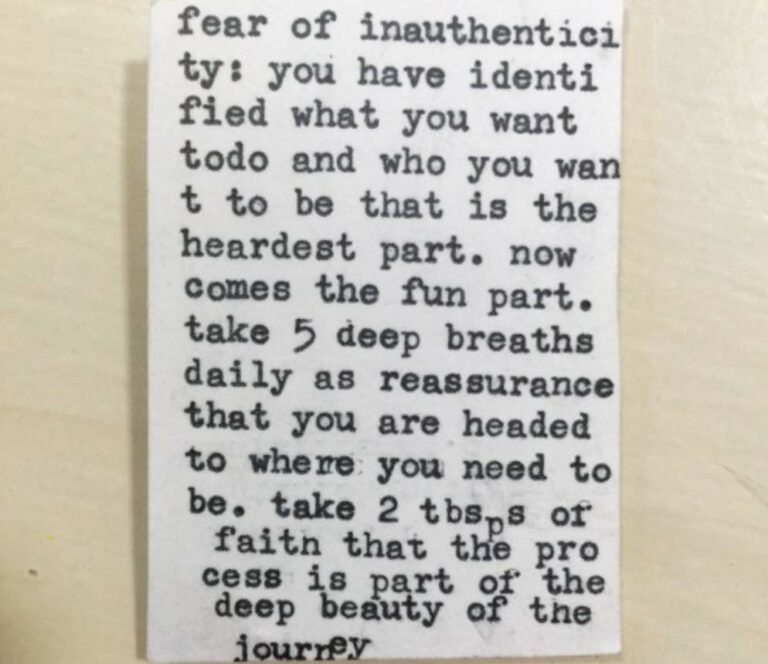
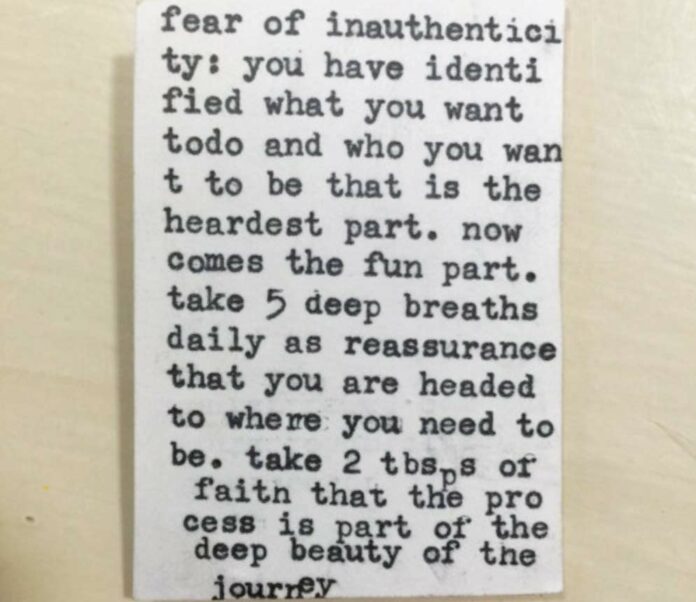
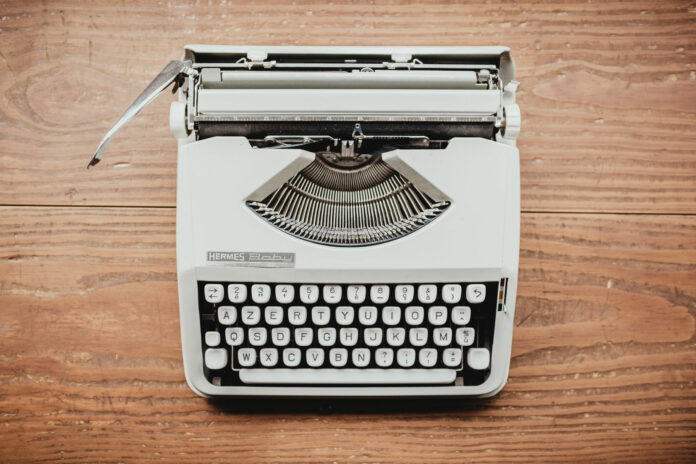
The fair took over the entire Hotel Del Sol and each guest room was converted by an artist into their own exhibit space. Situated in the courtyard by the pool was an artist named Hunter Franks, who was in a booth described by the event’s organizers as a space to open up to a stranger and share a fear to receive a custom, typewritten philosophical prescription from a certified Fear Doctor. So, I sat down and told the Fear Doctor about my fear of inauthenticity. 

This is my prescription:

“Fear of inauthenticity: You have identified what you want to do and who you want to be, that is the hardest part. Now comes the fun part. Take five deep breaths daily as reassurance that you are headed to where you need to be. Take two tablespoons of faith that the process is part of the deep beauty of the journey.”

Instead of washing up writing press releases for water or drowning in printer’s ink, I’m gonna dog-paddle in those two tablespoons of “faith in the process” until I’m safely ashore. Better yet, the prescription is still good. It never expires (unlike the SRRIs in the back of the cabinet). Per his website (HunterFranks.com), “His participatory installations in public space break down barriers and help us reimagine our relationships with each other, our neighborhoods, and our cities.” 

I’ll take a swig of that. — DH

Open Mic: PG&E erects unsightly monster

1

Once again, PG&E is up to its dirty tricks. Without specific prior notice or a public review process, PG&E erected a gargantuan power pole with banks of unsightly transformers and a high voltage electric switch in a densely packed residential street across from a public park in Sausalito. We have been told by PG&E officials that these same power poles will be appearing in residential neighborhoods all over Marin, as a means of combating wildfires by shutting off power with specificity. Who’s next?

Because this neighborhood and our city officials were taken by surprise—PG&E had simply informed us they were doing “routine maintenance”—this pole is obstructing views for many in this middle-class neighborhood occupied by tiny homes with big views. As a result of PG&E’s negligence, many homes in the area now have unsightly views of power transformers where pristine views of the city and the bay once were.

In fact, with this power pole planted in front of it, a recently listed house has had to reduce its sale price substantially as its once pristine view is now obstructed. But aside from obstructed views and impacted home prices, there is a concern about the inherent dangers and possible health hazards from the EMFs this contraption emits so close to homes and directly across from a public park where children play. Lastly, the area of town where this pole was installed is known for its heavy winds—many have already witnessed the transformers swaying in winds that are not considered heavy for this neighborhood.

In order to safeguard our views, Sausalito is known for its tight permit process, yet we have been told by city officials that there is “very little” they can do to help residents combat PG&E’s reckless placement of this monster in our midst. It is indicative of an era of corporate dominance that PG&E has more authority over the quality of our lives than our elected officials do.

Ariel B. keeps busy during pandemic

0

By j. poet

San Francisco singer Ariel B. is facing the pandemic that has shut down the Bay Area with a heart full of song. 

Her video for “Keep On (Quarantine Style),” a song she recorded in San Rafael with Grammy winning producer Narada Michael Walden, opens with her walking down the deserted streets of the Mission district. The song’s rhythm suggests the beating of a distressed heart, one that’s soothed by Walden’s tranquil keyboard fills and B.’s stirring vocals. She gently sings, “Sometimes it’s hard to sleep at night, worried about some fears inside…” before sliding smoothly into the uplifting chorus: “I just keep, keep, keep on.”

“Keep On” is one of the songs B. and Walden have been recording together over the past year. Although she’s well known on the local club scene for her dynamic performances, her work with Walden was poised to catapult her onto the national stage. Then everything shut down. “We have a lot of things we’ve been working on, in various stages of completion,” B. says, “but we have to abide by social distancing guidelines, so it’s harder to get things done.” 

B. grew up in San Francisco’s Bayview neighborhood and studied classical music and opera at the Ruth Asawa School of the Arts, but was more moved by popular music artists like Whitney Houston. 

“I remember seeing Narada Michael Walden’s production credits on her records. I always dreamed about working with him,” she says.

Through her connections to music producer Kenny Allen, B. suddenly found herself driving to Walden’s Tarpan Studio in San Rafael last year. 

“I still get chills remembering it. Whenever I thought of the magic behind my favorite songs, it was always a Narada production,” she says. “After I got home from our first meeting, I opened my email one day. He’d sent me the synthesizer track for ‘Keep On.’ It took me 10 minutes to write the words and create my own vocal melody over the changes.” The next day, she was back in Walden’s studio finishing a rough draft of the song.

B. kept working her day job, but spent every spare moment at Tarpan studios. The plan was to record and release a song a month onto the usual digital platforms, leading up to the release of an EP. Although things have slowed down, B. is keeping busy, working on a Christmas album with producer Jeff Weber and honing her songwriting skills. 

“I work from a place of pure emotion, based on heartbreak; something I have a lot of experience with,” she says. “I also write happier stuff. I write all the time, but sometimes I take a break, if I feel like I’m in my head too much. A lot of songs are just floating in space. You just need to get into a place where you can hear them, but I have to feel them deeply. If you want to evoke emotion in someone else, you have to feel it yourself.”

Watch the music video for “Keep On” at arielbofficial.com/latest. 

Letters: News Talk

0

People need to continue to speak out against the toxins in our food (“Roundup Row,” News, Aug 5). The only thing I don’t agree with in this article is that people can’t afford to buy organic. I have eaten almost 95 percent organic for the past 4 or 5 years. I can buy an entire box of tomatoes at the organic market near me for 5 dollars. I spend about 50 dollars a week there.

I think people buy too much junk. Our country needs to ban all glyphosate and toxic products. In Europe and Russia they are already banned. Russia is the first country to go completely organic. What’s wrong with our government? It seems to me they care more about money than people’s health.

Patricia Dougherty

Via Pacificsun.com

Thank you for this wonderful article (“Roundup Row,” News, Aug 5). In terms of the history of grapes and wine, glyphosate is a newcomer. We have made wine for centuries without it and I look forward to a time when all grape growers recognize that they don’t need to use it.

Barbara Sattler

Via bohemian.com

Yay for Nikki Berrocal (“Roundup Row,” News, Aug 5). She’s doing great work. We need all the help we can get to help make Sonoma County and Cannabis Growers create a better relationship. It will be a ‘win-win’ for all.

Nancy Birnbaum

Via bohemian.com

“Organic” wineries are among the worst point-source water polluters in American agriculture (“Roundup Row,” News, Aug 5). Their use of copper sulfate—an approved organic pesticide—is the reason. As to “organic” food production—it is more of a contributor to climate problems than modern farming practices. It also results in less food per unit area. Just what a starving World needs.

Ben Thomas

Via Pacificsun.com

Virtual Art in the Park Showcases North Bay Creators

The Petaluma Arts Association has supported North Bay artists for more than 60 years, and the group’s signature event, Art in the Park, annually displays dozens of artists from Sonoma, Marin and Napa Counties at Walnut Park in Petaluma for a weekend of art and performance each summer.

This year’s Art in the Park could not happen in person due to the ongoing Covid-19 pandemic. However, the PAA was able to transition to an online format, much like other arts and entertainment organizations facing a new socially-distanced normal.

Now, the Virtual Art in the Park electronically showcases the PAA’s members with an online showcase for the entire month of August, meaning arts lovers can see a vast selection of locally-produced paintings, sculpture and performances online now at VirtualArtinthePark.com.

“The art association is here to provide support, community education and promotion of the arts, and any money we make off of Art in the Park provides scholarships and rewards for students engaged in the arts or [goes] to centers and schools,” PAA Board President Yvonne Glasscoe says.

Not having Art in the Park this year meant that several artists and arts organizations would lose out on that support, so PAA moved to the virtual format in hopes of providing a means of continuing to highlight locals arts through an online platform.

“The overall plan is that when you go to the website, there will be a gallery of highlighted artists that rotates each week,” Glasscoe says. “You can look at the gallery and click on the highlighted artists or search for artists by name.”

In addition to visual artists, the Virtual Art in the Park’s roster of creativity includes musicians and poets, featuring videos of performances and readings. Each artist or performer is given their own page on the site with ways to contact them directly or find them elsewhere on the web.

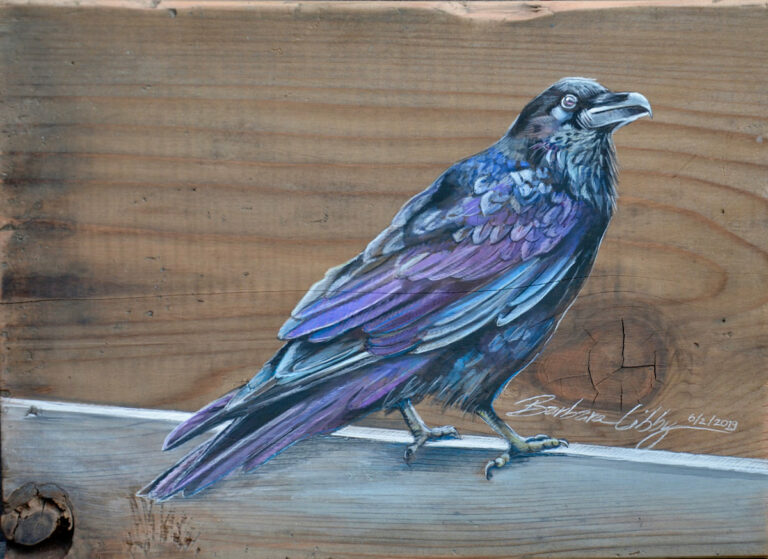
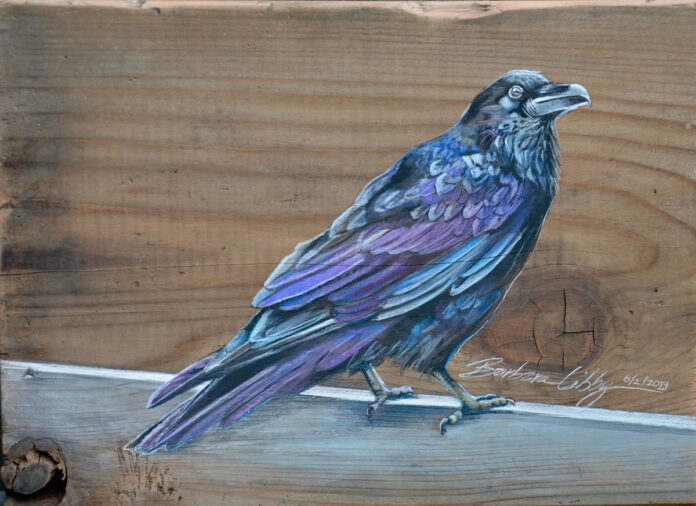
Visitors to the Virtual Art in the Park site can see an eclectic selection of art on display ranging from Marin County painter Barbara Libby-Steinmann’s colorful bird portraits drawn on recycled redwood to Sonoma County electronic music producer Lenkadu’s avant-garde music videos.

Glasscoe says that PAA reached out to hundreds of local creators, and the event is free for the participating artists. PAA is not even taking a commission on works that are sold through the event.

“We thought that was important because right now artists and musicians have nowhere to go to show their work,” Glasscoe says. “We thought it would be a great idea to give this as a gift to the community.”

Glasscoe also envisions this new virtual venture as a way for families stuck at home or friends who are socially distant during the sheltering orders to experience art together while they are apart.

“Like having a book club where you all read a book and discuss it, people can share this art with other people,” Glasscoe says. “One day you can look at artwork, one day listen to poets; have dance night by listening to the musicians. I think of the possibilities of what people could do to explore and maybe find something new that they like.”

VirtualArtinthePark.com

Ask a Freak

0

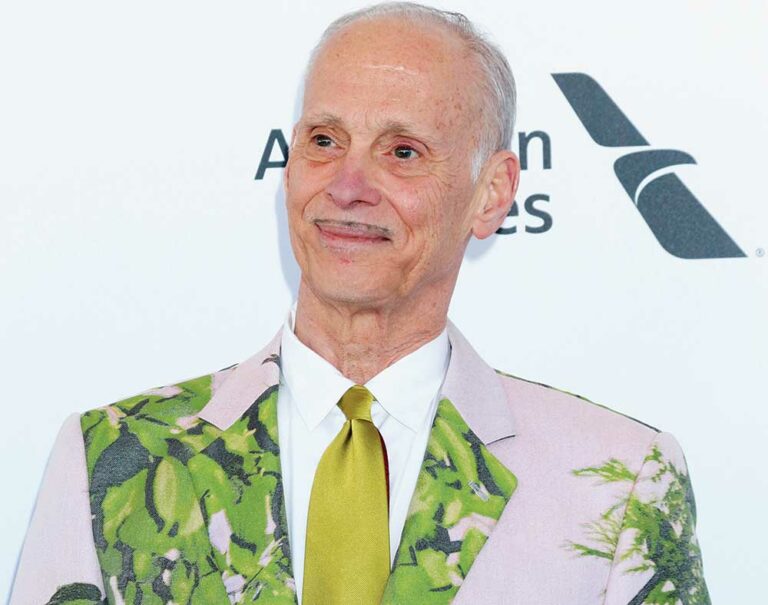
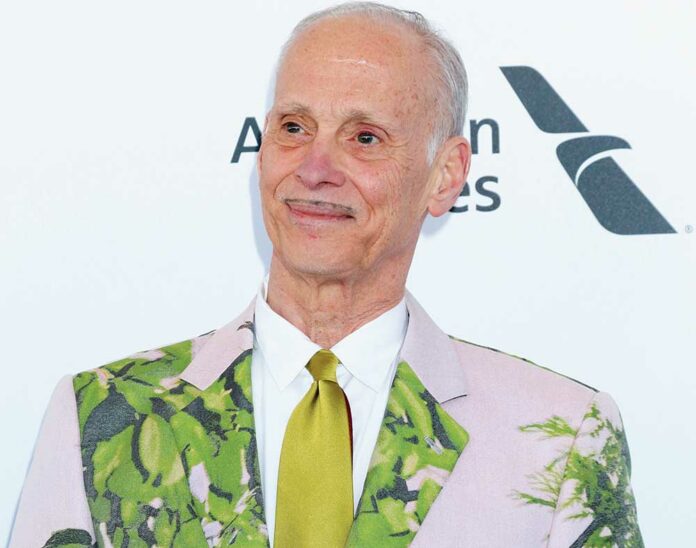
“Somehow I became respectable. I don’t know how,” writes John Waters in the opening lines of his new book Mr. Know-It-All: The Tarnished Wisdom of a Filth Elder.

But the rest of us do. The world might have been scandalized by the sight of a 300-pound drag queen eating dog droppings in 1972’s Pink Flamingos—the only movie in exploitation history to have a tagline that actually undersold its excesses: “An exercise in poor taste.” But almost a half-century later, Pink Flamingos now plays unedited on cable, not to mention the fact that it’s one of most beloved cult films of all time. And Divine, the outrageous drag queen at the center of the Dreamland troupe of actors and associates who appeared in Waters’ early films—including the “Trash Trilogy” of Pink Flamingos, 1974’s Female Trouble and 1977’s Desperate Living—now adorns everything from shirts to votive candles to coronavirus-resisting face masks on Etsy.

Waters, meanwhile, is now the unofficial Dirty Grandpa of several generations of misfits. He’s been to Hollywood and back, and won over audiences in both arthouses and multiplexes. Hell, you could even take your mom to the Tony-award-winning Broadway version of Hairspray.

But when it comes to the question of how he became respectable, the answer is simple: He stepped out from behind the shock tactics and movie gimmicks (although, let’s be honest, the “Odorama” scratch-and-sniff cards for 1981’s Polyester—featuring scents like gasoline, dirty shoes, new car smell and farts—were genius). He started getting real all the way back in the ’80s with his book Shock Value, and he hasn’t stopped. His crazy early films were always comedies at heart, but the humor he revealed in his writing was warmer and more relatable, and he connected with his growing legion of fans in an entirely different way. That appeal has only expanded over the years through his subsequent books, live shows and holiday-themed music compilations. There’s even a John Waters summer camp now.

In Mr. Know-It-All, he connects all of his various cultural obsessions, sharing stories and offering advice on everything from filmmaking to fine art to food to political activism—and, of course, sex, drugs and rock ’n’ roll. I spoke to Waters about his new book, and why respectability didn’t ruin his career.

I just finished ‘Mr. Know-It-All’ last night. I want to do a spoiler where I tell everyone ‘He dies at the end.’

JOHN WATERS: Yeah, you could do that, that’s definitely true. But I die and then tell you how to beat dying.

One critic called you ‘an indefatigable coiner of droll one-liners,’ and that’s as true as ever in the new book. It’s not really just one-liners though. You’ve expanded into two-liners and three-liners.

I could spend my entire life speaking in blurbs, in sound bites. I think that’s from enjoying the media and always reading how journalism takes something and makes it appealing to everybody. There was a headline in the New York Post the other day when Dr. Fauci threw out the first ball at the baseball game: “Catch This.” It was so funny. That’s the kind of thing that, I don’t know, you need media training. I mean, I start my day with about eight newspapers.

Has anyone ever actually called you Mr. Know-It-All?

Nobody ever called me that—well, I think it was always used in a negative way. People would say, “Well, Mr. Know-It-All! You think you know everything!” And I’ve kind of made a career of embracing negative images. I don’t know, I just liked the title. I always come up with titles. Every one of my movies, I had to have the title first. Since I was going to cover every subject and tell every anecdote I had in my anecdote bank, I thought it would be, in a way, passing on advice to young people about what I’ve learned about negotiation through 50 years. And I think it is a self-help book, for real, even though it’s a humorous book. Hopefully.

The first 100 pages or so is devoted to filmmaking. You write, ‘Winking at the audience was not necessary if you believed, as I did, that the lines were funny enough on their own.’ I love that, because your movies are often described as ‘campy,’ but I think of Steven Dorff in ‘Cecil B. Demented’ and how he’s playing the opposite of camp—with total conviction. And that’s why it works.

He doesn’t do that once—he never winks at the audience. That’s my first direction with everybody in every movie: “Say the lines as if you completely believe them to be the most serious lines.” And that is why I usually hate movies that the critics say are very “John Waters-esque.” Usually they’re in purposeful bad taste, being blatantly obvious about it, and trying to be campy. I like the idea of saying it as if you believe every word of it, and I think all my movies have had that. Even the most ridiculous dialogue, like in Female Trouble where Divine says, “I’m going to go upstairs and sink into a long, hot beauty bath, and erase the stink of a five-year marriage.” I mean, that is the most ludicrous soap opera line. But Divine said it as if she believed it. I think that’s important to the humor.

How much did Divine influence your view of gender fluidity?

Well, Divine had no desire to be a woman at all. He was not trans in any way. He was a drag queen and an actor. In the old days, when I first saw the Jewel Box Revue [a company of female impersonators which toured for decades, beginning in the late 1930s], you had to go see it in African American theaters, even though white people went. That was the first drag show I ever saw; it was a professional drag show that toured. Diane Arbus took a lot of pictures of that. It was all men playing women, except the lead was a woman playing a man—a drag king, which was even kind of more radical then. Milton Berle fucked with it; he was the most watched person on television, and he was in drag. But then Divine fucked with it, because he was overweight. They all tried to be beauty queens and Miss America—Divine would have burned down Miss America’s house! Divine was a monster and a drag queen. And Divine got his best reviews when he put aside that image he first got famous for and played a loving mother, a normal person, because he was going so much against this type we had made up for him.

Your memories of ‘Hairspray’ are very sweet, and it’s funny that the name of that chapter is ‘Accidentally Commercial,’ and then the following ones are ‘Going Hollywood,’ ‘Clawing My Way Higher’ and then ‘Tepid Applause,’ ‘Sliding Back Down’ and ‘Back in the Gutter.’ 

I failed upwards a lot. I don’t know if that’s as possible to do today. But it is, in a way. Something has to have been successful recently that it reminds [studio executives] of, even if it’s not yours. You can pitch it in a certain way, although every pitch I ever gave about my films being commercial, I meant it. I was never lying. I believed that every one of them could make money. And weirdly enough, eventually they all will. Because they won’t go away.

Was there a particular moment where you felt like, ‘Finally, the weirdos won!’?

Yes, I think three times in my entire career. Once, when Pink Flamingos had been out, and I had been showing it myself in different cities and saw that it worked—but it had never played New York. New York was the very last place it played. Finally, New Line picked it up, and we showed it one week at the Elgin, and maybe 50 people came. They said, “Okay, you can have one more week,” and I went back the next week and the line was around the block from word of mouth. That was one night my career changed. Another night was when Hairspray won the Tony. I mean, that was definitely career-changing. And the first time one of my later books made the bestseller list. Not because that says it’s good or bad, but it was something I never thought possible.

How did mainstream culture come to accept the Pope of Trash? Do you think you changed, culture changed, or both?

I didn’t change that much, but I kept up with the times and always knew the audience was changing—and coming my way. I realized that people wanted me to scare them, but not in a negative way. I loved everything I made fun of, always. I think that’s why I lasted. I mean, I can be mean-spirited, but if I ever am, it’s about Forrest Gump. Who cares that I don’t like Forrest Gump? Even Tom Hanks doesn’t. The movie won every Oscar and made a billion dollars. I never say negative things about people too much, except Donald Trump. And even when I make fun of him … no, I’m mean about him. I don’t feel guilty about that. Because he won’t last. That’s why I would never put him in anything I write or anything. He’s not mentioned in the book, because that dates it. You immediately date yourself if you put something in like that.

Speaking of being caught up in the moment, was it hard to write your commencement speech to the graduating class of the School for Visual Arts in May?

Well, I had to write it in the middle of the virus—it was supposed to be 5,000 people in Radio City Music Hall, but of course I had to do it virtually. Now, I must admit I’m a little lucky because it happened right before the racial uprising, which would have been even harder—as a white man—to ever cover that with humor in any way. I think that anybody that has any speaking engagement, everything has to be completely rewritten now. Because you can’t just ignore what’s going on now. It’s a completely different time. I did say in that speech, “You kids, if it ever goes back to the old way of ‘normal,’ it’s your fault.” I didn’t mean to be prophetic, but they didn’t go back to the old normal. They certainly thought up the new normal in protesting, and how great that it’s gone this far. And how sad that I’m old! I don’t want to get the virus!

I love that the only reason I have to ask whether this is actually true is because you’re John Waters and it just might be, but that part in the book about you and your staff licking every parcel you send out to studios—is that a joke?

No! I have pictures of them doing it. In the old days—well, when I finish something I still don’t submit it totally online. If I had a new script, I would send them a bound copy with a cover and everything, right? As we put it in that FedEx, as we turn in the final thing—like when I send in a book for the first time—everyone who works for me knows they have to wet the package before they put it in the mailbox.

What the hell? How did that even start?

I don’t know! It was just for good luck. It’s a little ritual. I have a picture somewhere—I’m not going to give it to you—of the staff all licking the same envelope out in front of my house. These days, I guess that’s not too safe. I hadn’t better be saying that, or FedEx won’t come to my house for pickup! I guess I’d have to put that on hold if we were doing it today. Then I wouldn’t get the deal, though.

John Waters speaks in conversation with Steve Palopoli for a virtual event presented by Bookshop Santa Cruz on Wednesday, Aug. 12. 7pm. $24; includes a shipped copy of ‘Mr. Know-It-All.’ bookshopsantacruz.com.

Sipping Safely at Area Wineries

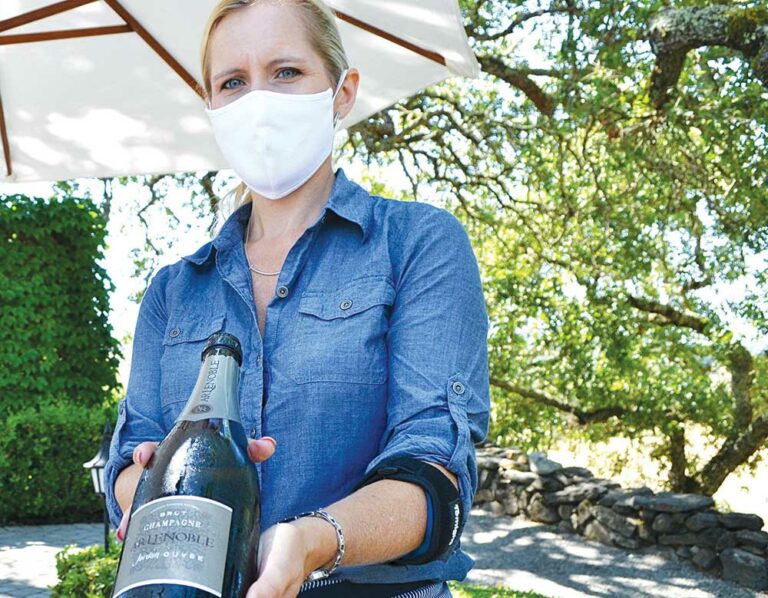
In normal times, I’m not one to dither about an invitation to a gourmet lunch, with wine—and real Champagne!—at Jordan Vineyard & Winery. But, these times not being normal, dither I did.

I hedged. I even offered up a proxy—wouldn’t Bohemian editor Daedalus Howell rather enjoy this experience?

The experience is called Paris on the Terrace, a $110 wine tasting and lunch in an outdoor setting, which Jordan is offering in summer 2020 to welcome visitors back to their picturesque corner of the Alexander Valley wine region, while complying with an ever-shifting regime of shutdown and reopening guidelines set by state and county authorities in ongoing efforts to limit the spread of Covid-19.

The latest state health order, at press time, limits wine tasting in Sonoma County to outdoor experiences until at least Aug. 2, but does not require food service, an earlier reopening stricture that many wineries found confusing or impractical. Bars, clubs, breweries, brewpubs, and distilleries, however, may only serve drinks in the same transaction as a meal.

Eventually, the winery’s longtime director of marketing, Lisa Mattson, conscripted me to attend the tasting—not virtually, through the video conferencing tools like Zoom that have become indispensable, if also problematic, during the Covid-19 pandemic. This was a real-time tasting, in the flesh, tender parts of which are susceptible to infection by a stealthy, novel coronavirus that continues to stalk every corner of California Wine Country.

If that last line doesn’t sound overwrought, you’re catching up with these times.

Mattson explained that seatings, at 11am and 2pm, Thursdays through Mondays until Sept. 7, are scheduled to allow ample time to wipe down and disinfect high-touch surfaces and objects like tables and chairs. Currently, all tasting rooms must require visitors to secure a reservation, and the three I visited in the past month declared that all such surfaces were cleaned in between parties of visitors.

At first, my visit to Jordan’s terrace tasting felt just like a dream! Well, I’ve been having these dreams for the past several months, in which I’m wading through a happily buzzy pub, and suddenly realize that nobody’s wearing a face mask—good heavens, what are they thinking? Or worse, leaning in to talk to someone, I realize with horror that I am unmasked. It’s the new “naked” dream.

No—you, too?

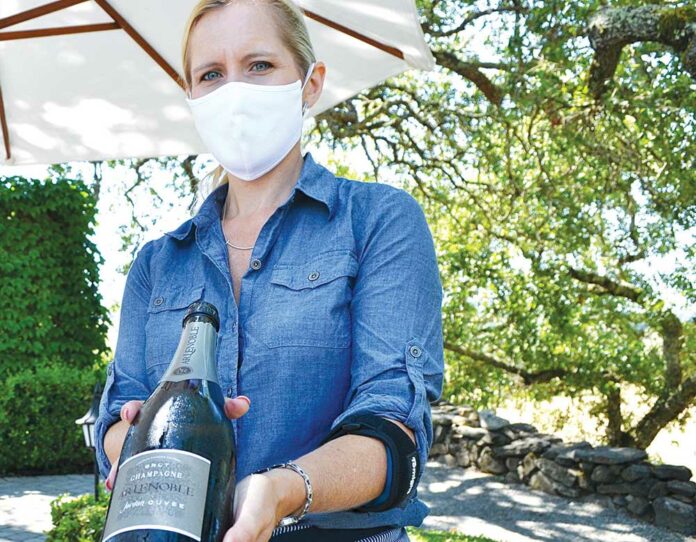
This is the first time in months I’ve sat down and talked this close, without a face covering, with anyone except my very senior cat (and even then maybe I should, as she would appear to anyone as nothing so much as a hobbling ball of fur and underlying conditions). Speaking with Mattson and her colleagues, who are wearing fashionable—if not entirely medical grade attire—at all times, I self-consciously pull mine back on—since hospitality workers are more at risk over the long term than the visitor—and again when I’m speaking with Howell, who turns up at the table a judicious six-plus feet away from mine.

Yet, when Howell declares halfway into lunch that he’s actually feeling kind of alright about things for once, I have to agree. Who wouldn’t, after half a glass each of Jordan Cuvée by Champagne AR Lenoble; Jordan 2016 Chardonnay, which shows more bright apple and toasty character than previous vintages; two vintages of Jordan Cabernet Sauvignon, the 2016 displaying the remarkable consistency of the supple, leather-and-mixed berries hallmarks of this restaurant favorite wine, despite a recent switch to French oak. And there’s the cuisine, by Jordan chef Todd Knoll: a precious arrangement of greens, vegetables and flowers from the estate garden just below the terrace; charcuterie from Healdsburg’s Journeyman Meats; crispy fougasse and rillette. Completing the pastoral scene, Jordan’s herd of cattle head for pasture, with uncommitted leisure.

Wineries have been hit hard by the pandemic and shutdowns, especially those that rely heavily on “on-premise” restaurant sales. Luckily for Jordan, according to Mattson, they moved to better position themselves in “off-premise” retail back in 2019. Many wineries count on a steady stream of walk-in wine tasters to generate immediate revenue, as well as wine club sign-ups. But are these kinds of limited, if tentatively sanctioned, wine-tasting experiences enough to keep them afloat?

“Yes and no,” answers Suzanne Hagins, co-owner of Horse & Plow Winery. “We get good support from our locals, but people are just not out. And I get it.”

Hagins is also concerned about the musicians and artists who used to regularly appear in afternoon shows and exhibits at their “tasting barn,” which has become a popular hangout in the four years they’ve been open in Sebastopol. But, the patio space, garden and oak-shaded picnic area adjacent to the tasting room has allowed them to separate tables widely and reopen for bottle service only, Fridays through Sundays, noon to 5pm.

Although Horse & Plow shut down voluntarily two days before California’s state-wide order in mid-March, they became the unlucky poster child of Covid-era wine tasting when a Bay Area daily newspaper published an undated photo of their tasting room—that was taken two years previously—as an example of the kind of activity that would have to shut down in the coming weeks.

For guidance, Hagins says she relies on the governor’s press conferences, County of Sonoma health orders and helpful tips from Sonoma County Farm Trails and industry colleagues. But there’s been no direct guidance or auditing, according to Hagins.

In between each seating, tables and chairs are sprayed and wiped down, and the kraft paper that covers picnic tables is changed. On a recent Sunday, groups of two to four adults stop by a table fronting the now-closed tasting room, to make their selection and choose a table. Food is not required here, but cheese and charcuterie plates are available, plus a pack of snacks and juice box for kids. Visitors, many from out of town, are generally quite respectful of the new rules, says Hagins, allowing that some tend to loosen up on their mask strings a little when leaving, after a glass or two of wine.

It’s certainly a must to lower my mask to take a whiff of Horse & Plow’s 2019 Sauvignon Blanc, a rush of juicy, nectarine and grapefruit aromas, or the 2019 Draft Horse Red, a soft and easy-drinking summer red with hints of dried Mediterranean herb and raspberry sour candy.

I’m glad that the unmasked party of four twenty-somethings at the next table, a good 10 or 12 feet away, are enjoying themselves, too. But, while I can’t assume they’re not in the same household, snippets of their conversation suggest otherwise. And I wonder—is this all going to work out OK?

• • • 

My host at the outdoor bar at Iron Horse Vineyards says he’s not afraid of a little “policing,” asking members of groups next to each other who get to talking excitedly, and a little too close—as people do when drinking the bubbly wine—to please don a mask if they’re going to converse. Still, “It’s not a frat party anymore,” he says, “with people six deep at the bar.”

The tastings here are also spaced apart in time, four per day, to allow cleaning. But at the bar, it’s clear it could get a little too close to comfort. In mid summer of 2020, the obsession with blasting seldom-touched objects with sanitizer (remember dubiously dunking your bag of tortilla chips in a tub of chlorine solution—anyone else?) seems a bit quaint, as guidance has moved toward mask-wearing as the best effort to ward off viral infection.

Indeed, an oft-quoted, recent article in The Atlantic dubbed the deceptively reassuring practice of surface disinfecting, “hygiene theater.”

Curiously, the County of Sonoma still has the outdated statement, “CDC does not recommend that people who are well wear a face covering to protect themselves from respiratory diseases,” on their Epidemic Preparedness website page. The CDC currently recommends, “people wear masks in public settings and when around people who don’t live in your household.”

It’s easy to relax with a pour of the latest Iron Horse Brut X, which was particularly rich in 2014, with the sweet, creamy aroma of glazed Danish, and grapefruit, for a wine with zero sugar added to the dosage. Another surprise, and sign of the times, is the winery’s seldom-seen Fairytale Cuvée, a special 500-case lot that’s been sent down south to the Mouse for the past 15 years at Disneyland California, and related cruises and venues. It’s pretty darn tasty—and it’s also hard to beat the view in this corner of California wine country.

Having had enough with driving around Wine Country in post-lockdown traffic, I call up Liam Gearity, director of hospitality at Frank Family Vineyards, to get a perspective from Napa Valley.

“In the beginning, I don’t think anyone saw it dragging on as long as it did,” says Gearity.

Frank Family opted to open up a week after the go-ahead on June 6, in order to focus on preparedness. Like other wineries, they book distinct slots of time for guests, at 1:30pm and 3:30pm, and allow 30 minutes for cleaning. (They also still welcome guests with a glass of sparkling wine.)

The biggest challenge, says Gearity, is the quality of the guest experience.

“Wine tasting is a guided experience,” he explains. “If you want a good glass of wine, there’s a wine bar or a wine shop for that. But people come to Napa for the experience.”

For the month of July, guest counts have only been down 30 percent, says Gearity. Staff presence, on the other hand, has been 100 percent so far.

“That’s the thing about hospitality workers,” Gearity says. “They feel successful when their guests are happy.” 

To help ensure workers take care of themselves, and each other, Frank Family hospitality staff work on the “buddy system,” with a partner.

“We stress to partners: you are each other’s eyes,” Gearity says. “We’re going to keep doing this style of service as long as our guests, and the weather, allow it. People need an outlet; they need a break. It’s still a weekend in Napa … . It’s different, but people still enjoy it.”

Defending Dreamers

Thank you for this explanation of what DACAs face in our court system. (“Dreams Deferred,” News, July 29)

I’m surprised and angry that our (Sonoma County) DA is being so brutal in this case. It seems they are not only ignoring, but violating the Penal Code Sections 1016.2 and 1016.3 mentioned. This was a first time offence (I assume), and the Dreamer had a job and was in school!

Leslie Ronald 

Via bohemian.com

Sad to See

Poignant prose … (“Sadness in His Madness,” Open Mic, July 29). They tug at my heartstrings at the traffic light. I always give them a few bucks; but for the grace of God it could be me on that curb.

JD Compian

Via Bohemian.com

Live Online

I enjoy the online theater (“Out of the Dark,” Feature, July 22) from BroadwayHD, Broadway on demand and National Theater in London. If there were mostly online productions that would be fine with me. 

Since it is difficult to get to Broadway or the West End from Sonoma County, online is the perfect alternative. I would like local companies to do more virtual performances. The time has come to embrace virtual technology.

Larry Loebig

Via Bohemian.com

Waive It 

A working nurse at a Petaluma hospital that cares for Covid-19 patients, emailed me, “How about having the Covid waiver include waiving all rights to medical treatment if you get the virus!” (“Pandemic Fuel,” News, July 22). That is a good point. 

Peter Byrne

Via Bohemian.com

Cannabis and the County

A sense of frustration characterizes the mood of the Sonoma County cannabis community, but cultivators are also smiling more now.

That’s due to Niki Berrocal who runs the county’s cannabis cultivation program, and who has help from analyst, McCall Miller, and from Andrew Smith, the current ag commissioner, who tells me, “It’s a team effort to amend our cannabis policy, and it’s especially challenging with Covid-19.”  

Smith and Berrocal have written and released an extensive report that calls for significant improvements to the county’s cannabis program. (sonomacounty.ca.gov/Cannabis-Program). It ought to be read and studied by everyone in the cannabis community.

Tony Linegar, who recently retired as ag commissioner, tells me “Cannabis can be a significant crop for Sonoma County farmers and ranchers so they’re protected from the fluctuations of the market.” He suggests that the one-acre cap on cultivation ought to be lifted.

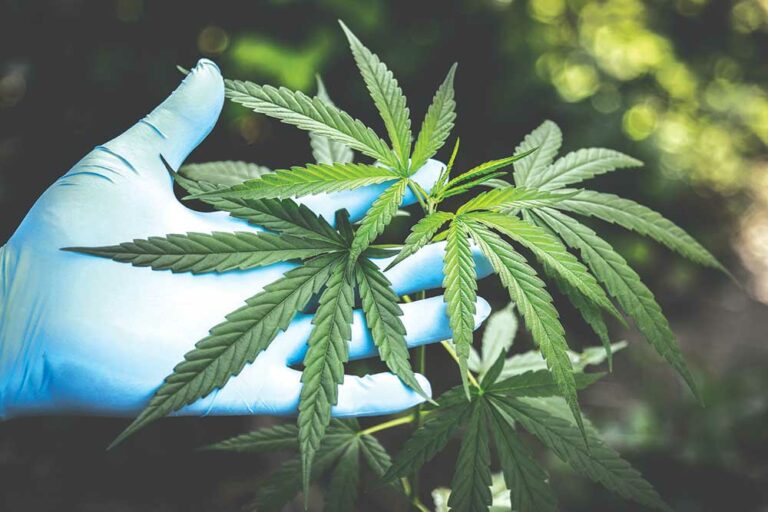
I recently caught up with Niki Berrocal on a farm where twenty-five thousand plants were flowering, “I welcome and am grateful for cannabis economically, medicinally and recreationally,” she tells me, Berrocal feels comfortable with pot farmers and at the same time, doesn’t wilt under pressure from Permit Sonoma, which has its head in the sand and has resisted change.

For Berrocal to do her job properly the cannabis program needs more resources and fewer bureaucratic barriers. Sadly, too many applications for the cultivation of cannabis are sitting in an office, begging to be processed. Other changes are also needed.

Four years after California voters approved Prop 64, which ushered in the era of the adult use of cannabis, some growers are stuck in the old outlaw days, and some citizens want to roll back the clock and make the county weed free.

“It’s hard to go beyond long-standing paradigms,” Berrocal tells me. “But I’d like to see the day when the community can work together and make Sonoma a destination for wine, weed and wilderness.”

Berrocal grew up in a small farming community and graduated from University of Idaho and the University of Nevada, Las Vegas. A natural born leader, she has slowly and steadily begun to chip away at the institutionalized barriers to the fledgling cannabis industry.

Berrocal tells me, “Cannabis never should have been made illegal. For a long time it has been a sacred medicine. It helped my dad when he had cancer.”

Berrocal’s father worked in law enforcement and emphasized community police work, now essential in the wake of Black Lives Matter. Like her father, Berrocal wants sustainability. “We need to understand the impact the laws have had on certain communities,” she tells me. “And not leave people behind.”

Jonah Raskin is the author of “Marijuanaland: Dispatches from an American War.”

Jewel Mathieson: Fearless Activist

She called herself “a breast cancer survivor, dancer, award-winning storyteller and poetry slam champion.” Jewel Mathieson was all those things and much more. She was a wife, a mother, an educator, a fierce truth-teller and a vigilant advocate for medical marijuana who helped put the Sonoma Patient Group (SPG) on the map for cannabis dispensaries in Northern California. Her...

Inauthenticity cure

Some flack from West L.A. beamed me a release for a premium, naturally-alkaline spring water from some Nordic country that hopes to inspire individuals to find their own “pure authenticity.” Ha. When I lived in L.A., I visited the FAQs on the municipal water company’s website. The answer to the question, “Is my water safe to drink?” was a...

Open Mic: PG&E erects unsightly monster

Once again, PG&E is up to its dirty tricks. Without specific prior notice or a public review process, PG&E erected a gargantuan power pole with banks of unsightly transformers and a high voltage electric switch in a densely packed residential street across from a public park in Sausalito. We have been told by PG&E officials that these same power...

Ariel B. keeps busy during pandemic

By j. poet San Francisco singer Ariel B. is facing the pandemic that has shut down the Bay Area with a heart full of song.  Her video for “Keep On (Quarantine Style),” a song she recorded in San Rafael with Grammy winning producer Narada Michael Walden, opens with her walking down the deserted streets of the Mission district. The song’s rhythm...

Letters: News Talk

People need to continue to speak out against the toxins in our food (“Roundup Row,” News, Aug 5). The only thing I don’t agree with in this article is that people can’t afford to buy organic. I have eaten almost 95 percent organic for the past 4 or 5 years. I can buy an entire box of tomatoes at...

Virtual Art in the Park Showcases North Bay Creators

The Petaluma Arts Association has supported North Bay artists for more than 60 years, and the group’s signature event, Art in the Park, annually displays dozens of artists from Sonoma, Marin and Napa Counties at Walnut Park in Petaluma for a weekend of art and performance each summer. This year’s Art in the Park could not happen in person due...

Ask a Freak

“Somehow I became respectable. I don’t know how,” writes John Waters in the opening lines of his new book Mr. Know-It-All: The Tarnished Wisdom of a Filth Elder. But the rest of us do. The world might have been scandalized by the sight of a 300-pound drag queen eating dog droppings in 1972’s Pink Flamingos—the only movie in exploitation history...

Sipping Safely at Area Wineries

In normal times, I’m not one to dither about an invitation to a gourmet lunch, with wine—and real Champagne!—at Jordan Vineyard & Winery. But, these times not being normal, dither I did. I hedged. I even offered up a proxy—wouldn’t Bohemian editor Daedalus Howell rather enjoy this experience? The experience is called Paris on the Terrace, a $110 wine tasting and...

Defending Dreamers

Thank you for this explanation of what DACAs face in our court system. (“Dreams Deferred,” News, July 29) I’m surprised and angry that our (Sonoma County) DA is being so brutal in this case. It seems they are not only ignoring, but violating the Penal Code Sections 1016.2 and 1016.3 mentioned. This was a first time offence (I assume), and...

Cannabis and the County

A sense of frustration characterizes the mood of the Sonoma County cannabis community, but cultivators are also smiling more now. That’s due to Niki Berrocal who runs the county’s cannabis cultivation program, and who has help from analyst, McCall Miller, and from Andrew Smith, the current ag commissioner, who tells me, “It's a team effort to amend our cannabis policy,...
3,002FansLike
3,850FollowersFollow