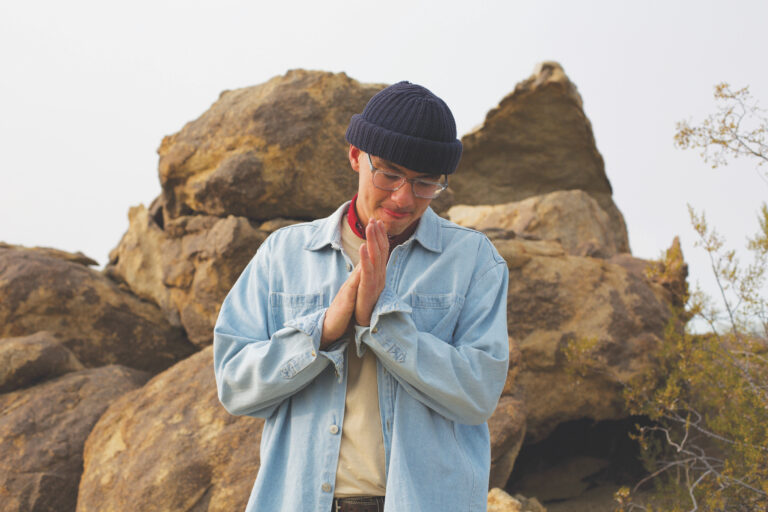
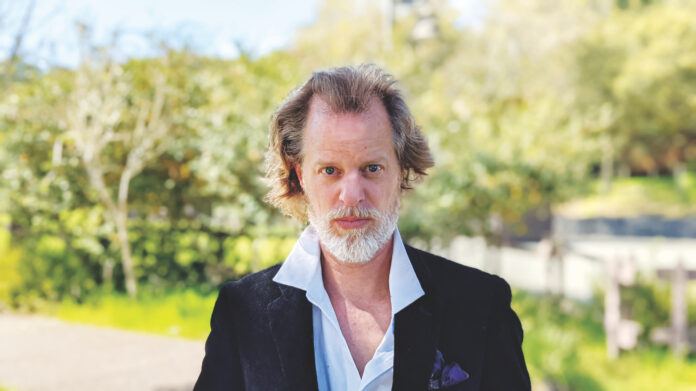
Pairing a laid-back flow and a relentless drive, North Bay native J.Lately has crafted relatable and engaging hip-hop since his days at high school.
Now 10 years into his music career, Lately just dropped his latest album, Winnebago, and he’s inviting audiences to join him on his journey.
“For me, it’s always felt like writing a song is not the entire process; sharing it is also an important part of the process as well,” Lately says.
From his days burning CDs for friends at school to his years on the road touring across the country, Lately steadily increased his musical output as he matured as an artist, and Winnebago follows on the heels of his Campfire EP, released in August of 2020, and his last full-length, Tuesday, released in 2019.
“It’s taken me a lot of time to develop that confidence in myself as an artist; find my voice and find my path,” Lately says. “That’s something I’ve been able to tap into more in recent years. I am feeling more comfortable in my shoes now.”
That confidence and comfort shows through on Winnebago’s 10 tracks, which lyrically find J.Lately on the move and navigating life’s detours amidst the album’s memorable hooks and smooth beats.
The title track was the first song Lately wrote for the new album, and he says it became the cornerstone for the whole record.
“It happens to me a lot with albums, the first song that I write is my thesis statement about just where I am in life at the time,” Lately says. “That’s what happened with Winnebago.”
Shortly after writing Winnebago, the Covid-19 pandemic sequestered everyone in their homes, amplifying Lately’s physical need for movement, growth and freedom.
“The idea of a Winnebago is such a perfect representation of that idea; you’re in your home, but you’re moving in your home,” Lately says. “That’s what I’m trying to find; being comfortable with myself in my home, but that home doesn’t need to be a stagnant place.”
During the past year, Lately collaborated remotely with his two producers, Space Cadet and Trey C—who Lately knows from high school—as well as the three guest artists, Las Vegas’s Dizzy Wright, L.A.’s Gavlyn and Vancouver, British Columbia’s Junk, who all appear on the album.
“It’s been a blessing to have these producers that I can work so closely with,” Lately says. “I think that’s helped with the sound on Winnebago and finding something that’s uniquely myself.”
With the pandemic’s end almost in sight, Lately looks forward to returning to the touring life so he can keep sharing his music with the world. For now, Winnebago is a great way for listeners to musically hit the road and expand their horizons.
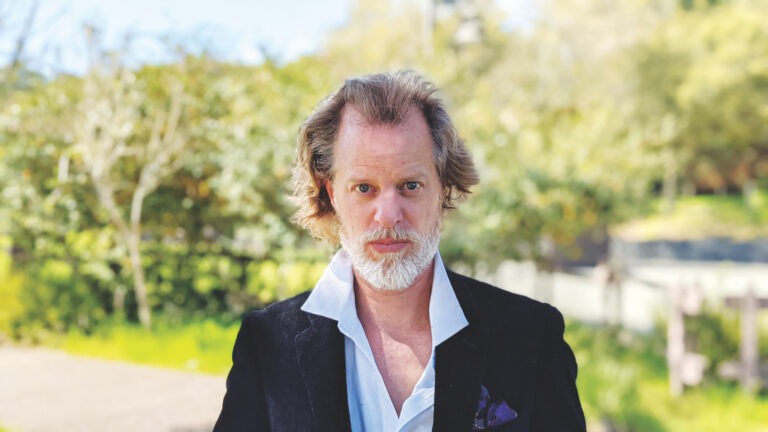
Like a bird chirping on a branch deep in the forest of my mind, the voice kept repeating the word like a mantra while I walked the crowded streets of New York.
“Back,” it said. “Back to what?” I demanded. “To where, to whom?” But the voice flew away on the winds of my thoughtstream. Over a period of nine months the phantom nightingale added more words to its lament, until finally, as I lay in Central Park on a summer’s day, it came forth loud and clear:
Go back. Come. To me. Home.
Or, translated from the language of the unconscious, “Come back home to me.”
And so here I was en route for California, roused in the middle of the night by the sudden stillness of the train. As I stepped outside, my feet landed on snowy turf. My sleepercar’s attendant said a truck had flipped on the tracks up ahead. We were somewhere in the cavern of the heartland, where there are neither lights nor mountains, only an endless flatness that suffocates with its emptiness. For, in the United States, there is more space where nobody is than where anybody is, noted Gertrude Stein. “That’s what makes America what it is.”
The delay meant more interminable hours in the tiny Amtrak compartment, which was something like an airplane restroom connected to a closet, a masterpiece of Soviet-style design at its most brutally efficient. I was halfway through my four-day journey from Manhattan’s Penn Station to the end of the line in Emeryville, after 12 years away from home. But now I knew I’d been split apart inside for much longer than that, traumatized by the loss of someone dear. The inability to properly grieve had made me a hollow man cut off from his feelings, from all sense of continuity with the past and from the internal rhythm of my heart and its murmurs of affirmation.
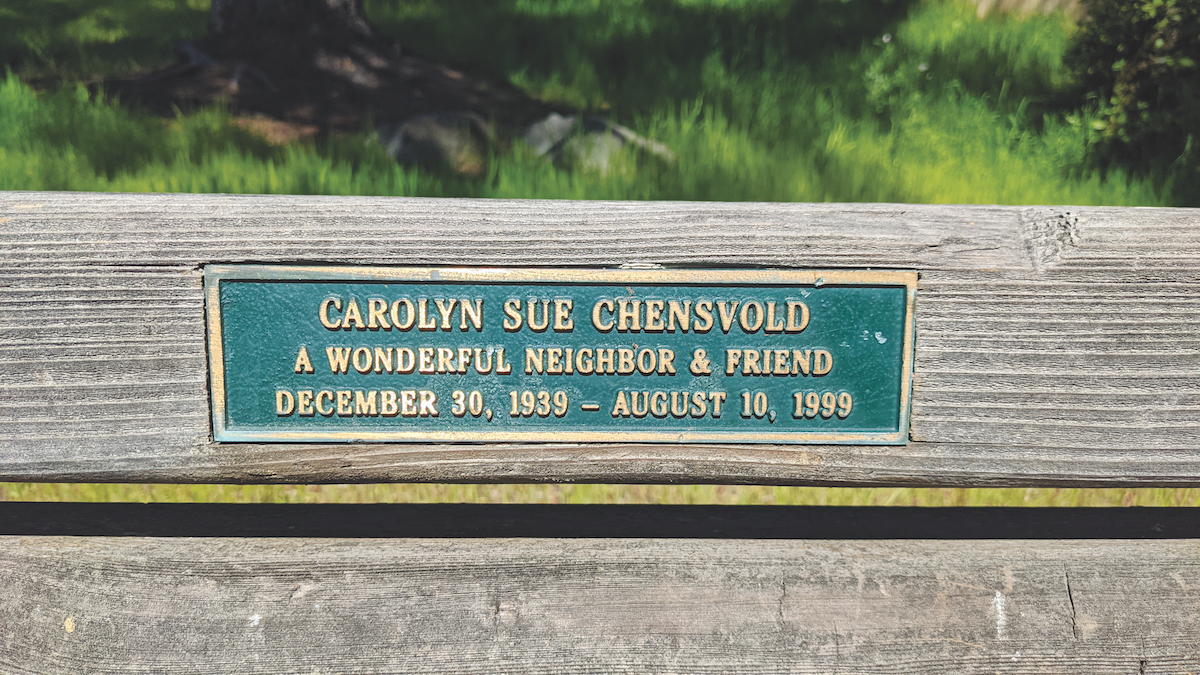
It had been two decades since my mother died, and I was finally ready to face her, to apologize for the mute goodbye that final day on the bench in Rincon Valley that now bears her name, where she stoically endured the effects of chemotherapy before cancer finally sucked her into a coma so it could finish ravaging her insides and shut down her remaining systems. She had faced death more bravely than I’d faced life, and now I was coming home a humbled and enlightened man, cramped on a train with an aching back, microdosing cognac, Advil and Dramamine, the salmon I’d brought starting to smell like cat food. With the obstruction cleared, the train recommenced its clickety-clack towards California, to that never-mourned astrologer-mother whose maternal spirit haunts the night sky in the guise of that lunar luminary that shines over my childhood home deep in the Valley Of The Moon.
1: Written in the Stars
According to Shakespeare, our faults lie not in our stars, but in ourselves. But when you’re raised by an astrologer, you learn that faults in ourselves are faults in our stars. And sometime around the age of 40 you’re forced to realize that playing to your strengths only gets you so far, and that conflicting tendencies, if not reconciled, will eventually unravel you.
The recession of 2008 exposed all my inner fault lines as, one by one, my clients slashed their budgets. I should have gathered my wits and taken action at the first sign. Instead, I decided to ignore what I didn’t like, and followed my sun even deeper into distracting hobbies. Soon the fragile moon, angry at being neglected, took her revenge in the form of anxiety, insomnia and a paralyzing sense of existential dread.
“I feel like the gods are judging me,” I remember saying. My mother would have understood. Before working as Elsie Allen High School’s career counselor, Carolyn Chensvold combined her master’s degree in Jungian psychology from San Francisco State with the ancient wisdom of astrology, mankind’s oldest science. She’d learned it from her mother and her aunt, and then taught classes and analyzed natal charts from our quiet home in Rincon Valley. I had a natural affinity for the family tradition, and found my mother’s wisdom both eerie and strangely logical. I knew my Moon in Virgo made me both imaginative and orderly, but it was only after her death that I discovered that its placement in the First House brings with it a deep connection to the mother. I’d always thought losing her would be the worst thing imaginable, and when her ovarian cancer was deemed terminal, suddenly the unimaginable became real.
When she died, it was as if my nervous system short-circuited and stopped carrying signals from my heart to my brain. Astrologically speaking, it was like my microcosm of a self could no longer properly reflect the microcosm that had stamped it with a unique energy pattern. I swept the grief under the rug of avoidance and forged onward into the world of the marketplace, bartering my skills for money and prestige, both of which were eventually revealed to be as fleeting as moonlight among clouds. In tandem with the rise of the internet, mobile phones and social media, my inner world went from a rich kingdom of the imagination to a ghost town sunken into desuetude, as my once-grounded sense of self was sucked into the digital vortex.
Until the end, my mother embodied both unconditional maternal love as well as the mythological figure of Sophia, the Greek personification of feminine wisdom in a man’s world. She was her father’s daughter, and raised me to handle bullies, court a lady, seek victory in sport and take my place among my peers. That is, she instilled in me the kind of knowledge that helps a storybook hero discover vital powers that lay hidden within him, and which are shunned by the world of the fathers and their rigid laws. As with Alexander the Great, it is the mother who helps the hero understand his true lineage; that he has not just an earthly father, but a “second father” beyond the stars, whose divine spark glows in his breast.
REMEMBERED A plaque on a bench in Santa Rosa’s Brush Creek Park commemorates the author’s mother. Photo by Daedalus Howell.
2: The Dark Side of the Moon
I don’t like to fly as it is, and online chatter painted an ugly picture of air travel in the age of Covid-19, with in-flight brawls, planes turned around because a two-year-old wouldn’t keep their mask on, flight attendants encouraging passengers to sip beverages with straws beneath their face coverings. I had visions of snapping mid-flight, suffocating and howling about mass psychosis, being forcibly restrained in my seat and arrested upon arrival. Driving would mean10 days of backbreaking tedium, bad food and the constant threat of snow. There was only one way back to California: in my own train compartment, quietly sipping cognac while watching 3,000 miles of the United States roll by across four days of sun and three nights of moon.
In the wisdom traditions, the moon rules over the body and emotions, the receptive soul as opposed to the active spirit. It regulates the tides of the sea, the human menstrual cycle and the harvesting of crops. In our little corner of the vast universe, the earth’s moon is a femine energy representing the maternal side of creation, the bride of the sun and, like all energies, it contains a positive charge as well as a negative one. The bright side is the light of maternal love, while the dark flipside is the destructive side of Mother Nature, which values the species over the individual. In its mythological guise as the devouring dragon of the Great Mother archetype, what we call “lunar consciousness” reduces all of mother’s children to the same level, washing over them with a tidal wave of egalitarianism that erases all qualitative difference, since all children are equally deserving of mother’s love. All members of society must don the tribal mask to ensure the cohesion of the social unit. There is no place for the individual in a system ruled by lunar consciousness, and universal myths speak of heroes who face “castration,” or what in our digital civilization we’d call “canceling,” for disobeying the Great Mother.
Jungian analyst Liz Greene was my mother’s favorite astrological writer, and in her book The Luminaries, she writes:
“Because the Moon governs the realm of nature, a purely matriarchal consciousness dispenses with the value of the individual, giving absolute importance to family and to tribe, justifying the suppression or destruction of individual self-expression if the security of the group is threatened. There are no ethics or principles in this domain, nor any disciplined use of the will. All is justified by instinctual need and preservation of the species.”
Unchecked by yin-yang balance, lunar consciousness conjures up images of bald men with manicured goatees presiding over rituals of human sacrifice, of orgiastic frenzy with people’s eyes rolling back into their sockets, of descent into dreamlike states and regression into earlier, sub-rational stages of human development—what we’d call mass recollectivization, or in the age of coronavirus, “mask recollectivization.” The solar instinct is to sacrifice the weak in order to maximize future conditions for the young and healthy, while the lunar instinct places compassion above all else and will immediately halt civilization in order to protect the most vulnerable, for it exists in a state of aevernity, the eternal now, in which the future does not exist.
Our response to the pandemic is guided by cosmic forces that stand in complete opposition to one another, squaring off in a way we haven’t seen for 30,000 years. The ancient Greek mystery schools—in which those gifted with metaphysical sensibilities were initiated into knowledge of divine law—taught that the greatest mystery of all is that the solar element must dominate and yet the lunar must be free. This is the great paradox that comes with a universe based on polarity, where the immovable object is met by an implacable force. It is the opposition of night and day, positive and negative, masculine and feminine, and the battleground of the sexes that will cycle through time for all eternity.
3: Moon Talk
Chemotherapy rendered my mother bald and frail, but failed to stop the corruption, which continued to gnaw at her ovaries and uterus before finally marching an assault of the vaginal wall—all the organs that brought me into this world. By the end, she was emaciated and comatose, and her breath rattled like a rusty pipe, until on the last morning it became a desperate chortle as the last living part of her fought for its final breath. She was gone, but the survivors lived on. Mythology teaches us that the cause of a paralyzing wound contains within it the key to healing. In other words, whatever causes one’s fall from grace is ultimately the source of one’s redemption. But one must undertake the excruciating journey into the cavern of the heart, face the pain and redeem it through compassion for one’s human weaknesses, guided by the magical ability of the soul to heal itself with the light of truth, as if it were some sort of ultraviolet medical instrument steadied by the hand of God.
Coming back to California was like coming back to myself. Each passing fragrance wafting in the air—newly mown grass, blossoms from the trees, a fireplace on a breezy night—seemed to recapture a youthful memory I thought was lost forever. The moon governs the world of feelings, and as I worked through my mother’s loss and repaired the inner short-circuits, everything inside began to flow and the background noise of agitation was gradually replaced by one of joy. I began to feel that I’d fallen into a kind of time-travel paradox in which I had to fall apart in order to embark on a journey to understand why I’d fallen apart. To the awakened being, life ceases to be linear and becomes a single pulsing energy field, with the past just as necessary for the future as the future is for the past. Time moves both ways, or, as Kierkegaard put it, life is lived forwards, but understood backwards. This coming-home story, whose focus I did not know when the Bohemian asked me to write it, has now been made clear; an exercise in how we are able to create reality and meaning even in the face of tragedy, or, precisely the kind of lesson my mother would have wanted me to learn.
Now I was ready to finally talk to her. I knew I was ready, because that’s precisely what I was doing. To the sound of dogs barking and children playing, I sat cross-legged with both hands on my mother’s weathered bench. I don’t believe it is possible to contact the spirits of the dead, and my mother certainly never discussed such things. But we can tune our heart’s inner receiver to the channel where all our memories of someone who’s departed are stored. This channel will then vibrate in consciousness, which is not confined to the body, but a field that surrounds us through what the ancients called akasha, ether or numen, and what modern science calls dark energy. It’s that invisible medium through which light and cellular signals travel, and maybe even thoughts and deeds. This is what I believe we can talk to, and so I did. I also shared with my mother a line I’d written years before in the notebook she gave me: “I would not be surprised if the answers you seek are right here in this book, which is to say right inside you.”
There is one little coda to the story of my return to Sonoma County, and that is the matter of housing. While I’d been away the cost of living had grown rather high, and there seemed to be few vacancies. All my old tendencies began bubbling in a sickly stew of despair until I quieted my mind and let the heart lead. A kind of electro-magnetic energy brought a fanciful notion into my head, and I followed it to the apartment complex where I’d stayed briefly in 2009 at the dawn of my crisis, trying to summon the pluck to move to New York. Sure enough, as if waiting for me in this sprawling complex of 60 apartments, was the exact same unit where I’d lived at the start of my inner journey, when I’d felt the intolerable burden of the gods judging me.
Now it’s clear I was right: the gods have indeed been judging me all along. But I had proven my worthiness through the courage to confront my failings, and so the planets showed me that they are not just malefic, but benevolent as well, and that they giveth as much as they taketh away. Now each day when the sun rises over the hills of Rincon Valley, I see what I want and who I am a little bit more clearly. What I want is to fulfill the potential—from the Latin word for power—of all my stars, for a horoscope is a kind of cosmic fingerprint of everything one could be if they could get all their internal energies working together in harmony, instead of opposition. As for who I am, I’m just like you: a mixture of Sun and Moon, Mars and Venus, light and shadow, heaven and earth.
I wish you had a chance to interview my dear son Trevor, who started smoking pot at age 14 while a Freshman at Redwood High School. This handsome, sweet young man, if sober, could have told you how he became violent when coming down from cannabis. He would have told you that no matter the treatment he received, he knew he was going to use cannabis, since he was unable to fight his brain activity that prioritized using his drug of choice (cannabis) to get high over everything else.
The day after he turned 18, he received his medical marijuana card in the mail, despite the Cannabis Use Disorder diagnosis that sent him away for much of his high school years. (Disproving your comment about cannabis not legally available to teens.)
Alas, you can’t interview him, because he is dead—poisoned by a fentanyl-laced street pill in his dorm room at age 18, looking for his next high. His addiction, like one-in-six youth, began with cannabis.
Mr. Raskin, your entire article is full of misinformation. This is unfortunate, since the cannabis industry perpetuates untruths and has much deeper pockets to spread this misinformation, and newspapers like this are eager to run stories like yours in order to support their advertisers.
I am disgusted and appalled at this “journalism,” and remain devastated at the loss of my beautiful boy, whose life could have been saved had it not been for the normalization and proliferation of youth and adult use of cannabis throughout Marin County, in part by articles like this.
I would close my eyes before being called away forever to the sounds of the sea.
My heartbeat would stop, and I would fall asleep forever in the sea.
I have looked in a mirror often, and once every twenty years,
I stop, and I examine the face of me, a portrait.
I am just a human being.
I would think of how graceful it would be for my skin
to become the bark of a hardwood tree.
It would conceal its age inside,
one ring for every year.
I see the rings that have scarred my face.
The pendulous features of a man are less graceful
than the branches of a Katsura tree.
The Katsura’s beauty lies in its branches that have
umbrellaed and touch the ground.
The other young trees that surround the old Katsura don’t mock,
but instead, they wait, they wait, they wait.
They wait for their own rings of years that will expand their trunks,
not as fat, but as the strength of an old tree.
I often feel my strength inside.
We are reminded every year of the time we were born. Perhaps one day, and many years away,
a gentle wind will blow with a scent of cotton candy.
And like the Katsura tree, I will lean and fall to the ground.
Before I am swept away, a young child will walk upon me,
and she will look closely at my skin and the bark of an old tree.
Scott Reilly runs Glaze and Confused pottery studio in San Rafael.To have your topical essay considered for publication, write to op*****@********un.com.
With America’s working waterfronts under siege by developers building luxury condos, can Marinship, Sausalito’s working waterfront, survive?
If some members of the Sausalito City Council have their way, it won’t. They’re considering changing the zoning of the waterfront property, a mile-long stretch of land at the northern end of Sausalito, to allow for future housing development.
Sausalito city councilmembers Susan Cleveland-Knowles, Melissa Blaustein and Ian Sobieski want to build affordable housing in Marinship, according to their comments at a city council meeting in February. Though Mayor Jill Hoffman and Vice Mayor Janelle Kellman agree the city needs affordable housing, especially with the deadline for state-mandated affordable housing looming, they’re not in lockstep with plans to build it in the city’s working waterfront.
While supporters say the plan could bring much-needed affordable units, private developers usually build higher-priced units in the same development in order to make a profit.
“It’s mostly been private developers interested in Marinship, and any private developer is going to make sure it pencils out,” Kellman said. “In order to do that, they have to offset with market-rate housing. I’m not familiar with a private developer that’s able to go 100% affordable housing.”
The Sausalito Working Waterfront Coalition, a nonprofit organization comprised of local business owners, employees, property owners, artists and residents, aims to save Marinship and its hundreds of thriving enterprises by keeping housing out of the working waterfront.
Molly Strassel, owner of Molly’s Marine Service in Naples, Florida, shared her cautionary tale with the Coalition at a Zoom meeting last week. In the early 2000s, swanky condos were built next to her boatyard, which has been there for 24 years.
“Developers see the fantasy,” Strassel said. “Now, the condos complain about the dust and the noise.”
The City of Naples says her marine service is in compliance; however, in 2017, condo owners filed a lawsuit against Strassel’s business, alleging their property values have diminished, because they are next to a working boatyard. The litigation is ongoing.
Much to the chagrin of the Coalition, the Sausalito City Council is talking about getting rid of the Marinship Specific Plan, last revised in 1989, and incorporating it into the Sausalito General Plan. The Coalition wants to continue abiding by the zoning in the Marinship Specific Plan, which permits art, maritime and industrial businesses, while prohibiting residential use and limiting commercial office space.
“By incorporating the Marinship Specific Plan into the General Plan and then doing a zoning ordinance amendment, the door is wide open for other uses to enter the Marinship area,” Kellman said.
Housing doesn’t belong in Marinship, says John DiRe, a retired engineer who is a member of the Coalition and the Sausalito General Plan committee.
“There are other places in Sausalito for affordable housing,” DiRe said. “There’s room for dozens of additional floating homes. City-owned property is also available, and that would make it easier to develop.”
In fact, the city has identified several properties, other than Marinship, where affordable housing could be built: the city-owned Corporate Yard on Nevada Street, the privately-owned Olive/Bridgeway offices and various privately-owned property on the north end of Bridgeway.
In addition to the need to preserve the vital arts, maritime and industrial businesses, there are many reasons the city should keep housing and other uses out of Marinship, the Coalition argues.
The companies in Marinship continued to flourish during the pandemic, saving Sausalito’s tax base. In the first quarter last year, Marinship paid 75% of the city’s total business license tax, 48% of the secured property tax, 76% of the unsecured property tax and 48% of sales tax, according to DiRe.
There are also environmental problems.
“Marinship is in a flood zone and built on landfill,” DiRe said. “Groundwater is coming up. There’s the problem of sea level rise. And there’s already been two sites where toxic contamination has been documented. This all makes it incompatible with housing.”
Many people equate affordable housing with equity, and that’s certainly necessary in Sausalito, which is 87% white. However, placing all the affordable housing in one location is segregation. True diversity is accomplished by integrating our community and having affordable housing located throughout the city, Kellman says.
“If you genuinely believe in diversity, you integrate,” Kellman said. “I want affordable housing and I want to ensure diversity. I’m also not going to relegate our BIPOC population to areas that are known to be contaminated, flooding and/or sinking.”
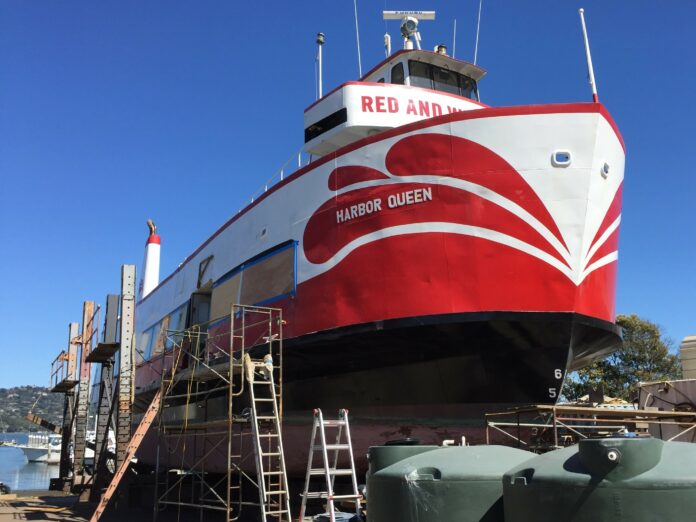
Many residents aren’t familiar with the importance of protecting Marinship, which started in World War II and built 93 ships for the war effort.
I’ve lived in Sausalito for more than 30 years, but never knew much about Marinship. Sure, I dine at Fish, rent kayaks from Sea Trek and visit the art studios at the ICB Building. Yet, until I went on a tour last week, I never paid much attention to the maritime and light-industrial businesses hidden along the narrow streets of Marinship.
While at the innovative Universal Sonar Mount, I met a robot that helps manufacture their products. Owner Reason Bradley says the company, which has been at Marinship for 15 years, has secured seven patents based on their work there.
They developed the test equipment for the Square credit card reader. In September, they joined forces with the United States Geological Survey to map the floor of Lake Tahoe. And when the pandemic began last year and hospitals didn’t have enough personal protective equipment, Universal Sonar Mount collaborated with several other Marinship companies to produce 15,000 face masks that were donated to local hospitals, the Navajo Nation and other hospitals nationwide.
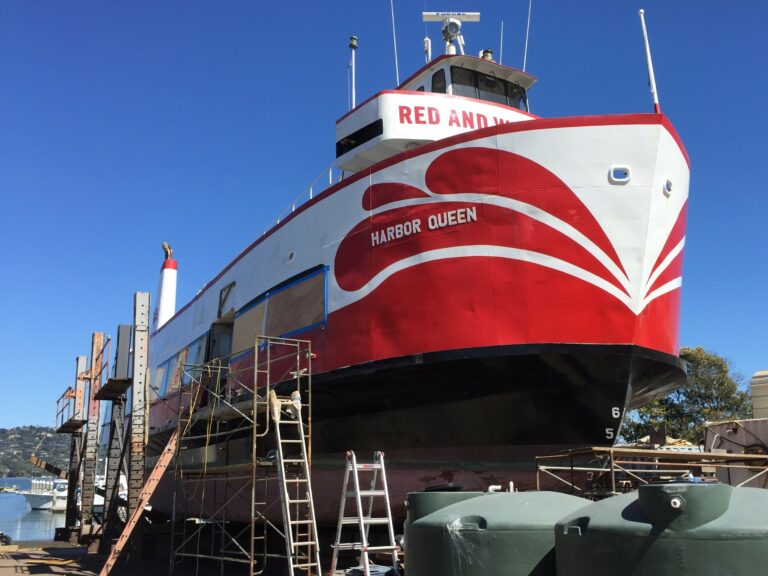
I watched workers repairing a 200-ton, four-story boat that was hauled out of the water at Bayside Boatworks, which Mike Linder has owned for more than 32 years. He employs 10 full-time and two part-time employees, all of whom kept working throughout the pandemic.
Aquamaison builds floating homes and concrete barges. In business for more than 42 years, the company’s homes have been featured in Architectural Digest. Owner Ian Moody says he doesn’t know of another company in the Bay Area building concrete barges for floating homes.
”Our industrial capabilities and our micro manufacturing are entirely unique in all of Southern Marin and much of the Bay Area,” Kellman said. “We’re the only ones in Southern Marin that have it. It’s part of the culture of Sausalito. This is the fabric of our community. We are a waterfront community.”
Like the Big Bang, the music of North Bay solo artist Krane Alis began with a spark of an idea before expanding into a cosmic tapestry … of electronic pop music, in Alis’ case. This month, Krane Alis, a.k.a. Chelsea Walsh, debuts her darkly danceable sound on the album Shake What Sticks.
The longtime North Bay resident always loved music and played piano when she was younger, but she was in her 20s when she became interested in performing music.
“I just had a bit of an epiphany,” she says.
That spark of inspiration came from a book her friend lent her—The Artist’s Way, by Julia Cameron.
“It’s a book about challenging artists,” she says. “One of the questions was, ‘What’s something you’ve always wanted to do but have not allowed yourself to do out of fear of failure?’ Out of nowhere, ‘being a musician’ came into my head. It surprised me a little, but I decided to go with it.”
Walsh started learning drums, and then began attending production school at Pyramind in San Francisco in order to match her technical and musical skill sets with her natural songwriting skills.
“Initially, when I started all this, my goal was to play one show on the drums,” she says. “But, you can never set too many boundaries on anything, because it usually evolves into something different than what you thought it would; and that’s what happened here.”
For her solo project, Walsh adopted the moniker Krane Alis—with nods to literary characters Ichabod Crane and Alice from “Alice in Wonderland”—to pursue dance music that’s heavy on synths and drums and filled with dark and dreamy lyrical themes.
“I love dancing and dance music, for myself that is one inspiration I draw on,” she says. “I think, too, that I was at this point where I wanted to let go of genres in my own music and see what I could do as far as bringing different elements in.”
Falling in love with the recording process as much as the writing process, Walsh spent countless hours in her bedroom studio perfecting the beats and embellishments on the nine-track album as both songwriter and engineer.
Possessing a dark edge in its synthesizers and programmed rhythms, Shake What Sticks is a rich collection of bedroom-pop and indie-electronica that also tells personal stories and explores significant emotional lyrics among the beats and breakdowns.
For the past year, the creative endeavor of making Shake What Sticks helped Walsh navigate the social isolation of the pandemic. Now, with the album available online, she says she feels a mixed bag of emotions ranging from nervousness to catharsis.
“Ultimately though, I think it’s always a good thing to put your creative self forward and put out what you’ve made, regardless of what anyone else thinks,” she says. “At the end of the day, I do this for myself and that’s what matters most.”
“Shake What Sticks” is available online now. Get links to Krane Alis at linktr.ee/KraneAlis.
Californians frustrated by the never-ending hunt for Covid-19 vaccine appointments may have to wait several weeks until appointments are more readily available, Blue Shield’s CEO said in an interview with CalMatterson Friday.
Blue Shield, the insurer tasked to oversee the state’s vaccine distribution, is aware of Californians’ frustrations and health care providers’ complaints, and is working to quickly expand distribution so that everyone who wants a dose can get one, CEO Paul Markovich said.
“Immediately on the first day, there probably won’t be availability for everybody, just because…when you make millions of people eligible overnight, there’s not millions of appointments immediately available at that moment,” Markovich said. “But I would say by the time we get to the end of April, or potentially early May, I don’t think that’s going to be an issue.”
Blue Shield says California now has the capacity to administer 4 million vaccines a week. But to meet that capacity, manufacturers have to deliver the vaccine supply they have promised, Markovich said.
The scope of California’s vaccination push is massive. To date, 16.4 million vaccine doses have been administered, more than the amounts that some entire countries — Russia and Germany — have administered. About 18% of Californians are fully vaccinated, but far more are needed to achieve the herd immunity that will ease pandemic restrictions.
California is expected to receive 2.5 million vaccines per week in early April and close to 3 million by the second half of the month. That’s a substantial increase from the approximate 1.8 million vaccines a week the state is currently receiving. The boost allows California to expand eligibility to residents who are 50 and older starting Thursday, and then to everyone 16 and older beginning on April 15.
At the same time, two mass vaccination sites in Oakland and Los Angeles run by federal and state agencies are expected to close April 11, California officials announced today. The federal-state pilot project ends then, although the local health agencies may take over the sites.
California’s no-bid, abruptly-announced contract with Blue Shield to oversee vaccine distribution has been controversial. Some counties refused to sign a contract with the insurer, fearing giving authority to a private company. Counties now are allowed to sign modified agreements with the state to join Blue Shield’s network.
In a troubleshooting meeting today for vaccinators, some doctors complained that they had tried to sign up with Blue Shield yet couldn’t get doses for their patients.
But that’s by design, Markovich said. Blue Shield first will bring on board the clinics and doctors who can reach the most people, he said.
“We’re certainly going to get back to everybody who’s interested,” Markovich said. “But some of that delay has been intentional. We didn’t see a lot of point in making them go through the work if they were going to then have to potentially wait three or four or more weeks” for doses.
As of Thursday, only 20 of the 61 county and city health departments had signed onto the new network. Only Kern and Orange counties signed up directly with Blue Shield. Blue Shield’s network so far includes 270 providers with 2,100 sites, including hospitals, pharmacies and community clinics.
Markovich said he expects all counties and more providers to make the switch in the coming days — if not by March 31, the original goal, then soon after that.
Doctors and other providers must sign onto the Blue Shield network to continue getting doses.
For months, the state has been dogged by concerns over equity as Latino and Black Californians hardest hit by the pandemic are being vaccinated at lower rates than white people.
A study published Friday found that the age-based approach in California helped white people more than people of color. That’s because California’s older population is more white.
Vaccinating all Californians 75 and older would have prevented the deaths of two-thirds of white people compared to 42% of Black people’s deaths and 35% of Latinos’ deaths, according to the study.
“An age-based approach in California benefits the state’s older white populations at the expense of younger BIPOC (Black, Indigenous and people of color) populations with a higher risk of death from COVID-19,” wrote the researchers from the University of California, San Francisco, University of Minnesota and other institutions.
The study suggests that California’s more recent move to put more focus on disadvantaged neighborhoods will improve this inequity.
California this month began earmarking 40% of its vaccine doses for the state’s lowest income and most diverse communities.
Activists with the Mill Valley Force for Racial Equity and Empowerment (MVFREE) will hold a vigil this Sunday in response to recent violence against the Asian American and Pacific Islanders across the country.
The event, titled “A Vigil in Solidarity with the Asian American Pacific Islander Community,” will be held in downtown Mill Valley’s Depot Park between 2 and 3pm on Sunday, March 28.
MVFREE, which was formerly known as the Mill Valley Diversity, Equity and Inclusion (DEI) Task Force, is encouraging participants to bring fresh flowers and possibly arrive before the start of the event to help construct a community art altar using fresh flowers.
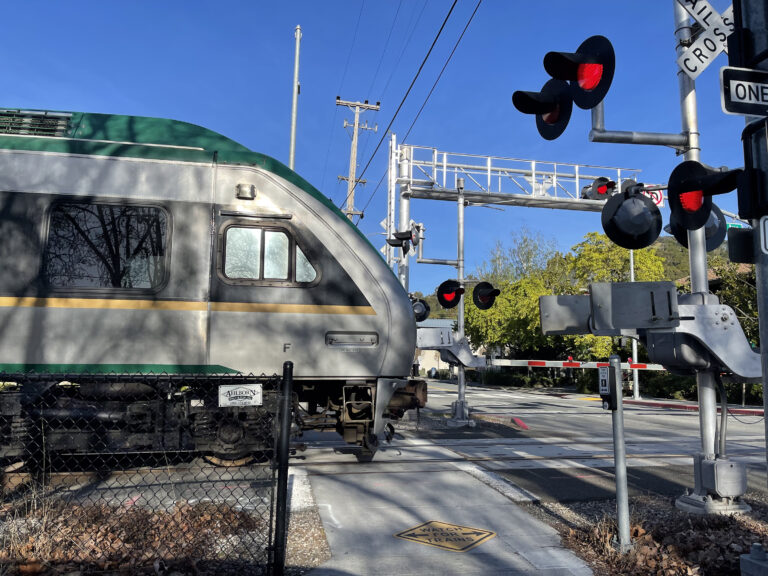
In a federal lawsuit filed last week in San Francisco, dozens of landowners from Sonoma and Marin counties accused Sonoma-Marin Area Rail Transit of a land grab.
At issue is the “multi-use pathway” that SMART is building on a 43-mile stretch between Airport Boulevard in Sonoma County and San Rafael in Marin County. According to a progress report on its website, SMART has completed 24 miles of pathway and another 8.8 miles are “fully funded and planned for construction.”
SMART was created in 2002 to develop and operate a commuter rail line parallel to U.S. Highway 101 in Sonoma and Marin counties. Train service began in 2017 and SMART controls the railroad right-of-way that runs through private lands adjacent to the railroad tracks.
The plaintiffs in the suit filed March 15 allege that SMART’s rights under the right-of-way are derivative of the rights obtained by predecessor railroads through condemnations going back into the late 1800s. According to the complaint, those railroads only obtained authority to use the land in the right-of-way for “railroad purposes.”
The pathway is being used for hiking and biking, not rail purposes, the plaintiffs contend, and therefore amounts to an unauthorized “taking” of their property for which they are entitled to compensation.
According to the complaint, “SMART has improperly and illegally invaded, taken, and burdened Plaintiffs’ fee ownership in their land.”
The plaintiffs are represented by Sacramento attorney Stuart Talley, and a Kansas City, Missouri law firm, Stewart, Wald & McCulley LLC, that has developed a specialty legal practice of bringing such claims against trail projects on railroad rights-of-way throughout the country.
According to its website, the law firm is handling roughly 50 “Rails-to-Trails” cases. It touts its expertise in the area stating, “there are very few law firms who have the ‘niche’ of successfully representing property owners in Trails Act cases and no lawyers have been as successful.”
Rails-to-trails refers generally to building trails for public use on the beds of train tracks no longer being used for rail service or on adjoining property included in a railroad’s right of way.
A section of the Sonoma-Marin Area Rail Transit’s multi-use pathway in San Rafael, Calif. on March, 25, 2021. Photo: Joe Dworetzky/Bay City News
A section of a federal statute, the National Trails System Act, creates a “railbanking” process that allows un-utilized rail lines that would otherwise be abandoned to be preserved and used for trails until such time in the future as the railroad seeks to use the lines again for service.
Andrea Ferster is general counsel of the Rails-to-Trails Conservancy, a non-profit organization that defines its mission as building “a nation connected by trails.” Ferster says that the federal railbanking process is based on the supremacy of federal law over state law so that when an agency proceeds with railbanking under the Trails Act, otherwise applicable state law is “pre-empted” by the federal process.
SMART has not, to date, pursued railbanking.
In the view of attorney Thomas Stewart from the SWM firm representing the plaintiffs, SMART has not been smart in its approach.
According to Stewart, SMART should have pursued converting its easement to one for hiking and biking under the railbanking provisions of the Trails Act. Following that process would mean that the United States—not SMART—would be responsible for compensation due to landowners through a process at the U.S. Court of Claims.
Stewart predicts that SMART will ultimately decide to follow that process.
Thomas Lyons, general counsel for SMART, agrees that SMART could possibly pursue such an approach under federal law but he does not think that it is necessary.
Lyons says the multi-use pathway is a “railway purpose” and is therefore permitted in the right-of-way under California law.
Lyons points to the California statute that created SMART and notes that it contemplated that SMART would have passenger service “along with ancillary pathways connecting our stations.”
Those pathways are important, among other things, to allow access to SMART stations for disabled riders, he says.
More generally, Lyons notes that the multi-use pathway is a part of SMART’s overall rail strategy of creating a green alternative to car commuting. SMART’s website says that its “investment in bicycle and pedestrian facilities connects people to other pathways and to train stations, providing opportunities for multi-modal commuting and recreation.”
To that end, each two-car SMART train has space for up to 24 bikes and SMART stations have bike storage.
SMART envisions the pathway as a way that commuters can access the train without driving to a station, and then, with their bikes on the train, they can pedal from their stop to work or home.
Under this view, “railroad purposes” includes making pathways for bikers to reach trains, just as in times past, railroads made space for train riders arriving by horseback, carriage, automobile or bus.
Lyons acknowledges that every easement granted is different and the agency is “in the process of evaluating the claims and determining what our interests were granted back in the 1800s.”
According to Stewart, what SMART is really trying to do is change the easement into one for biking and hiking. He says that if the federal law approach is not used, SMART will have an uphill battle because “under almost all state laws, when you change the scope of an easement to a different purpose or use, it extinguishes the original easement … California is no different.”
Stewart says SMART is “trying to have their cake and eat it too. They’re trying to change the use and change the scope without utilizing the regulatory process correctly.”
Stewart says he doesn’t know why SMART hasn’t pursued the federal approach.
He predicts that “if they don’t do that, then they’re going to get hit with one hell of a big price tag. And I think that would be a monumental error.”
California will open Covid-19 vaccine access to all residents age 16 and up starting on April 15 based on expected increases in the supply of vaccine doses, Gov. Gavin Newsom announced Thursday.
Vaccine doses will first become available statewide to residents age 50 and over on April 1, with eligibility opening for all residents 16 and up two weeks later.
According to Newsom’s office, the state expects to receive 2.5 million first and second vaccine doses per week in the first half of April. That will increase to 3 million doses per week in the second half of the month.
Newsom credited President Joe Biden’s administration for the exponential rise in vaccine supply that has already enabled some states like Texas and Arizona to open vaccine access to all adults.
“With vaccine supply increasing and by expanding eligibility to more Californians, the light at the end of the tunnel continues to get brighter,” Newsom said in a statement. “We remain focused on equity as we extend vaccine eligibility to those older than 50 starting April 1, and those older than 16 starting April 15.”
Newsom and state Health and Human Services Secretary Dr. Mark Ghaly cautioned that it will still take several months to vaccinate all residents to want to receive a dose.
The state will also continue to reserve 40% of the weekly vaccine shipments sent to local health departments and health care providers for the ZIP codes that have been hardest-hit by the pandemic.
“It will take time to vaccinate all eligible Californians. During this time, we must not let our guard down,” Ghaly said. “It is important that we remain vigilant, continue to wear masks and follow public health guidance.”
California residents can contact their local health department for information on how to sign up for a Covid-19 vaccine when they become eligible.
Residents can also use the state’s My Turn vaccine notification and scheduling tool to sign up for a vaccination appointment when they are eligible.
Pairing a laid-back flow and a relentless drive, North Bay native J.Lately has crafted relatable and engaging hip-hop since his days at high school.
Now 10 years into his music career, Lately just dropped his latest album, Winnebago, and he’s inviting audiences to join him on his journey.
“For me, it’s always felt like writing a song is not the entire...
By Christian Chensvold
Prelude
Like a bird chirping on a branch deep in the forest of my mind, the voice kept repeating the word like a mantra while I walked the crowded streets of New York.
“Back,” it said. “Back to what?” I demanded. “To where, to whom?” But the voice flew away on the winds of my thoughtstream. Over a period...
In response to your story "North Bay Teens Talk About Cannabis During Quarantine" (March 10), the author Jonah Raskin says “None of the teens I interviewed showed a lack of core cognitive skills...” among other subjective measurements he witnessed.
I wish you had a chance to interview my dear son Trevor, who started smoking pot at age 14 while a...
By Scott Reilly
I left my home and the sounds of the ocean,
so close were the waves as I sat on my porch.
I would fall asleep at night. In my dreams,
I would awake before I passed, and then
I would close my eyes before being called away forever to the sounds of the sea.
My heartbeat would stop, and I would fall...
Like the Big Bang, the music of North Bay solo artist Krane Alis began with a spark of an idea before expanding into a cosmic tapestry ... of electronic pop music, in Alis’ case. This month, Krane Alis, a.k.a. Chelsea Walsh, debuts her darkly danceable sound on the album Shake What Sticks.
The longtime North Bay resident always loved music...
Californians frustrated by the never-ending hunt for Covid-19 vaccine appointments may have to wait several weeks until appointments are more readily available.