When it comes to holiday entertaining, the primary questions most hosts face are: what to cook, who to invite and does Uncle Charlie really have to come?
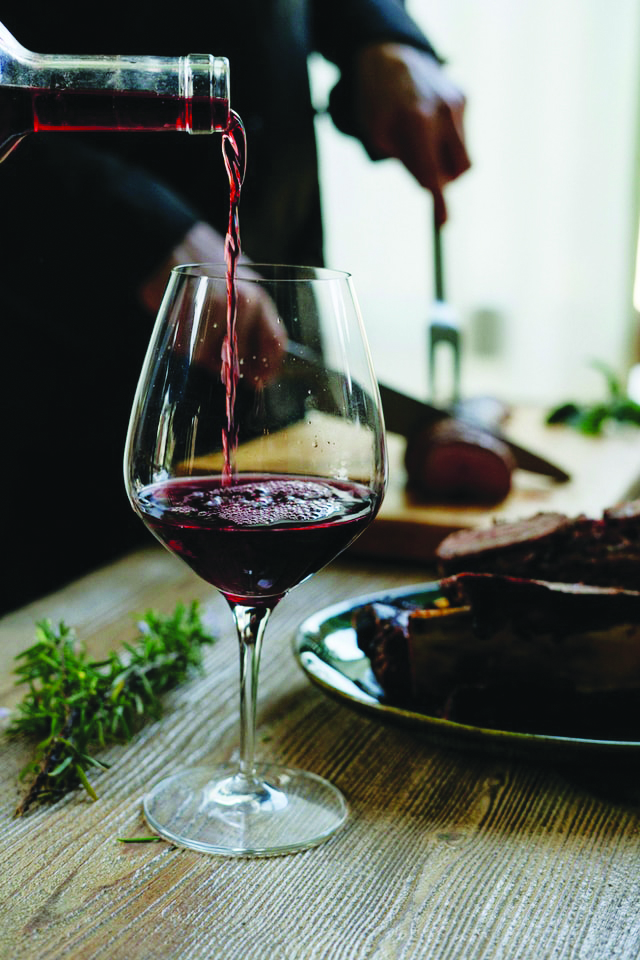
Here in Wine Country, where priorities skew a little more liquid, the No. 1 question is often: what to drink?
In my greener, wetter days, I’d have simply answered, “Everything.” But now that I’m a more discerning imbiber of holiday cheer, I’ve narrowed the spectrum a bit so we shan’t see any cooking sherry or Night Train chugging in from the fringe. For a grittier experience, read Mark Fernquest’s guide to local dive bars in this week’s “Press Pass.”
Instead, I’ll introduce you to Wine Spectator’s “Wine of the Year,” the Dominus Estate Napa Valley 2018. Rated at 97 points—yep, their top wine couldn’t reach 100 points, way to withhold affection, Spectator—this beauty runs about $269 a bottle, which is about $260 more than I generally care to pay for a wine. That said, for those who want a ranked wine that won’t destroy their credit rating, consider No. 41, the Rapaura Springs Sauvignon Blanc Marlborough Classic, which scored 91 points and runs a mere $13. Boasting notes of “lemongrass and makrut lime leaf”—man, do I love wine reviewers—this 2020 vintage comes with the proviso, “drink now.”
Those willing to roll the dice on a label that looks more like a word scramble might bravely throw $20 at No. 68 in order to see what happens when they open the “Etxaniz Txakolina Getariako Txakolina Rosado Txomin Etxaniz.” I have no idea what this means. Nobody does. It’s a wine that was named by a cat walking across a laptop.
Our own “Best Sommelier” title-winner, Christopher Sawyer, arrived on my doorstep last night with a handsome bottle of the Lasseter Family Winery 2017 Enjoué, an elegant, pretty and piquantly dry rosé that’s become my favorite way to chase away the winter blues. This wine is a lazy summer day captured in a bottle and boasts notes of strawberry, ruby grapefruit, mango and a few delightfully stolen kisses. Whatsmore, it’s a steal at $28.
Those looking for a wine of a deeper hue, and perhaps from lower on the shelf, can’t look any lower than the bottom shelf of the Petaluma Market’s wine aisle, where they will find the Silver Ridge Pinot Noir, which consistently delivers splendid notes of light spice and pungent berry, and hovers enticingly at around $9. This is a markedly better wine than its price point would suggest, and it frequently sells out. If we encounter each other reaching for the last bottle, please know that I’ve fought harder for much less. Happy Holidays.
For holiday shoppers who still can’t find that perfect gift, the creative members of Artisan’s Co-op, in West Sonoma County, offer a host of art and gifts for all tastes, as well as goods for the home and the holiday tree. Spanning this week and next, the Merry & Bright Holiday Sale offers 10% off items throughout the co-op’s gallery, featuring work from over 50 local artists. Shop merrily and locally Thursday, Dec. 23 through Sunday, Jan. 2 (closed Saturday, Dec. 25), at 17175 Bodega Hwy, Bodega Bay. 11am to 5pm each day. Face coverings required. artisansco-op.com.
Monte Rio
Big Screen Buddy
When people list their most-beloved Christmas movies, the 2003 film Elf regularly ranks among the most popular movies to celebrate the holiday with. This week, the new proprietors of the Monte Rio Theater & Extravaganza screen the Will Ferrell comedy just in time for Christmas, and they’ve pulled out all the stops to make it a memorable event. Along with the movie, attendees can participate in an “ugly sweater” contest, win prizes, enjoy snacks and drinks, and hear Christmas carols on Thursday, Dec. 23, at 20396 Bohemian Hwy, Monte Rio. 6pm. $10–$15. Face coverings required. monteriotheater.com.
Mill Valley
Holiday Concert
Discovered by Jerry Harrison of Talking Heads at age 16, Matt Jaffe is a Bay Area artist who gives back to the community through volunteering with nonprofits like Bread & Roses and using his music to support local and national epilepsy groups. Jaffe’s latest album, Kintsugi, was inspired by his own struggles with seizures and an incident onstage in 2019. Overcoming these obstacles and finding strength in his music, Jaffe shares his songs onstage at his annual holiday concert on Thursday, Dec. 23, at Sweetwater Music Hall, 19 Corte Madera Ave., Mill Valley. 7pm. Free. sweetwatermusichall.com.
Novato
Space Talk
Since the dawn of science fiction, authors and artists have imagined spacecraft capable of delivering humanity to the farthest reaches of the universe. But, what would these vessels look like in real life? That’s the question that science series Wonderfest asks this month. “Starship Reality-Check: The Science of Deep Space” features Wonderfest Director Tucker Hiatt and Dr. Pascal Lee, of the SETI Institute and the Mars Institute, in a talk about interstellar travel on Monday, Dec. 27, at HopMonk Tavern, 224 Vintage Way, Novato. 7pm. Free. Face coverings and proof of vaccination required. Wonderfest.org.
The holidays are in full swing, and Bohemian and Pacific Sun readers are spreading the good cheer by voting for their favorite North Bay bands, music venues and more in the 2021 Norbay Music Awards.
This year’s winners include longtime favorites, fresh faces and a few brand-new categories that recognize the hardworking musicians and music advocates who make the North Bay a year-round wonderland of rock ’n’ roll, blues, jazz and more.
Without further ado, here are the winners of the 2021 Norbays.
Americana: The Farallons
A trio of seasoned professionals with a strong local following, the Farallons play an acoustic blend of original tunes that span the gamut of Americana and cover classic hits at local gigs like their upcoming shows at Tips Roadside in Kenwood on Jan. 23 and Feb. 6. thefarallons.com
Blues: Spike Sikes & His Awesome Hotcakes
Veteran bluesman Spike Sikes found a swinging family of like-minded musicians in Sonoma County, and Spike Sikes & His Awesome Hotcakes produce a classic soulful brand of music at local venues and on records like 2021’s Take Some Time to Dream. awesomehotcakes.com
Country: Bloomfield Bluegrass Band
In 2018, the Bloomfield Bluegrass Band snagged the Norbay award for “Acoustic” group. This year, the homegrown North Bay ensemble is recognized in the “Country” category, lending credence to the group’s eclectic output. bloomfieldbluegrassband.com
DJ (Live): DJ Shannon J
Shannon Jones, a.k.a. DJ Shannon J, is the owner and spinner behind North Bay party-starters Surge Entertainment, which hosts karaoke and DJ nights at clubs and private events. facebook.com/SurgeEntertainmentLLC
DJ (Radio): Bill Bowker
Earlier this month, beloved KRSH (95.9FM) afternoon drive-time radio DJ Bill Bowker spent his last afternoon behind the dial, retiring from radio after a career spanning more than four decades. In the North Bay, Bowker will be forever known as the region’s best purveyor of the blues and a champion of local artists. Have a wonderful retirement, Bill!
Electronica: Eki Shola
Classically trained pianist and songwriter Eki Shola crafts jazzy, ambient tones with ethereal melodies. Last year, Shola completed a trilogy of albums—Possible, Drift and Essential—that musically chronicled her life from the Tubbs fire to the pandemic. ekishola.com
Folk: Dave Hamilton
North Bay–veteran Dave Hamilton has won Norbays in several categories over the years, and continues his long-running winning streak with this year’s recognition. Hamilton will be back onstage next year, performing on Jan. 8 at HopMonk Tavern in Sebastopol. davehamiltonfolkamericana.com
Hip-Hop: Kayatta
Since hitting the North Bay, hip-hop artist Kayatta has enlightened and elevated the local scene with mindful events and albums such as Beautiful and Messy, released on Juneteenth in 2020. kayattamusic.com
Indie: Sebastian Saint James & the Highway Poets
Led by guitarist and vocalist Sebastian Saint James, the Highway Poets are a tight-knit powerhouse group on record and on stage. Next up, the band plays a New Year’s Eve show at JaM Cellars in Napa. highwaypoetsmusic.com
Jazz: The King Street Giants
Bringing a New Orleans flair to the North Bay, the King Street Giants conjure up popular trad jazz and create their own original songs. During the last year, the King Street Giants performed as trios and quartets in addition to full-band arrangements, offering lean new takes on their jazz repertoire. thekingstreetgiants.com
Metal: A Hero To Fall
Santa Rosa metalcore band A Hero To Fall recently released their debut LP, Ambivalence, featuring lightning-fast drums, shredding guitars and growling screams. The record is available for streaming now, as the group gears up for more live shows in the New Year. facebook.com/aherotofall
Promoter: Jake Ward Presents
Jake Ward is the founder and face of several local arts enterprises including the mischief-making variety show North Bay Cabaret, which recently marked its return after nearly two years and which takes over Whiskey Tip in Santa Rosa for a New Year’s Eve blowout. Northbaycabaret.com
Punk: One Armed Joey
The melodic—even harmonizing—Petaluma punk trio returns to the Norbay winner’s circle, even as they work on a new record and look forward to their first show of 2022 on Jan. 9 at Shady Oak Barrel House in Santa Rosa. facebook.com/onearmedjoey
R&B: The Soul Section
After a year away from the stage, veteran outfit the Soul Section recently returned to action with live shows at the Cotati Music Festival and the Novato Festival of Art, Wine & music, bringing the band’s high-energy funk and soul revues back to local stages. thesoulsection.com
Reggae: Sol Horizon
Featuring former members of Groundation and Les Claypool’s Frog Brigade, North Bay reggae mainstays Sol Horizon most recently rocked the stage with a headlining set on Halloween and keep the musical fire alive with energetic live performances and messages of peace, community and sustainability. facebook.com/SolHorizonBand
Rock: The Bluebyrds
Winning the category for the second year in a row, the Bluebyrds play tribute not to just a single artist or band but to an entire music genre, proving that the music of well-known classic rock bands stands the test of time. thebluebyrds.com
Singer-Songwriter: Frankie Bourne
California-native Frankie Bourne is a prolific and soulful songwriter whose tunes can be heard on four solo albums, 3 EPs, a handful of singles and on North Bay stages. Next month, Bourne gets onstage at Reel & Brand, in Sonoma, on Jan. 14 and at Legit Provisions, in St. Helena, on Jan. 28. frankiebourne.com
Venue: Mystic Theatre & Music Hall
Petaluma’s iconic music venue is alive and well, and rings in 2022 with a New Year’s Eve show featuring Brothers Comatose and T Sisters. Next year’s schedule at the Mystic includes headliners Elvin Bishop, Nicki Bluhm & the Band of Heathens, John Craigie, Gary Numan and many others. mystictheatre.com
Music Instructor: Casey Jones and Nick Pulley
In addition to their Norbay award for “Jazz,” the King Street Giants can also celebrate that members Casey Jones and Nick Pulley are splitting the inaugural “Music Instructor” Award. Pulley heads the music program in Sebastopol’s Gravenstein school district, and Jones teaches at West County High School.
Hardest Working Musician: Spike Sikes
Spike Sikes—winner of the first-ever “Hardest Working Musician” Norbay award and frontman of the “Blues” Norbay award-winning band Spike Sikes & His Awesome Hotcakes—is a father, husband, part-time elementary school band director, songwriter, multi-instrumentalist and much more. Catch him next when he plays Reel & Brand in Sonoma on New Year’s Eve.
The California Coastal Commission signed the death warrant for tens of thousands of house mice living on the South Farallon Islands. The controversial plan, years in the making, was approved by a 5–3 vote on Thursday, Dec. 16, after commissioners heard seven hours of compelling and passionate testimony from supporters and opponents.
While experts agreed the non-native, invasive critters are wreaking havoc on the environmentally sensitive island ecosystem, the means of execution—dropping 2,880 pounds of bait pellets laced with brodifacoum, an anticoagulant poison, onto the islands from a helicopter—pitted scientist against scientist.
The rich and fragile biodiversity of the South Farallon Islands is at stake, either from the effects of the house mice or the poison used to kill them. The islands are home to a variety of wildlife and plant species, as well as a breeding ground for seals and their relatives. The largest seabird-breeding colony in the contiguous United States and the world’s largest population of the rare ashy storm-petrel, a small seabird, inhabit the rocky isles. Migratory birds, bats and insects stopover on the archipelago during migration. Rare and endemic species found on the islands include the Farallon arboreal salamander and Farallon camel cricket.
Sailors brought the house mouse (Mus musculus) to the Farallons in the late 19th century. Since rabbits and cats were removed in the 1970s, the mice are the last remaining invasive species. With the population of the tiny rodents estimated at 500 mice per acre on the South Farallon Islands, the U.S. Fish and Wildlife Service, which manages the islands, maintains that distributing bait pellets treated with the rodenticide brodifacoum is the only effective eradication method.
November 2022, after bird-nesting and marine-mammal pupping seasons have ended, is the target date to spread the ton and a half of poison-laced pellets in two helicopter drops. The rodenticide-laced pellets will be dispersed by hand in any areas of the islands not reached by the helicopter drop. The goal is to eradicate every house mouse inhabiting the South Farallon Islands.
Opponents of the plan claimed the poison pellets have the potential to land in the ocean and move up the food chain to nontarget species. While acknowledging the mice need to go, they suggested using less-destructive poisons or waiting until a highly effective mouse contraceptive is developed.
“There is no mouse emergency,” Sarah Wan, founder of the Western Alliance for Nature and former member of the California Coastal Commission, said during her emotional testimony. “Dropping poison kills non-target species. And doing it in November, during the raptor migration, will affect the raptors on the entire West Coast.”
Eradicating the mice, which directly and indirectly impact the South Farallon Islands’ ecosystem, will help restore the natural balance, according to the U.S. Fish and Wildlife Service. The mice eat native insects, plants and seabirds, and compete with salamanders for food. Migrant burrowing owls visit the islands during their fall migration, which coincides with the peak of the mouse population. Typically, the owls, which prey on the mice, would leave the islands to continue on their migratory route; however, some remain due to the easy food source. When the mice population dwindles, the burrowing owls feed on the ashy storm-petrel, the Farallon camel cricket and other native insects.
WildCare, a nonprofit wildlife hospital in San Rafael, also provided testimony during the commission hearing. The agency is concerned the brodifacoum poison won’t remain on the island. Western gulls, which are plentiful on the Farallons, travel between the mainland and the islands. San Francisco is 27 miles from the archipelago, and Marin is just 20 miles away.
“A Fish and Wildlife Service letter stated 95% of the gulls at Fisherman’s Wharf are from the Farallons,” Alison Hermance, WildCare spokesperson, said during her testimony.
The U.S. Fish and Wildlife Service plan includes hazing the gulls, by using lights, statues and sounds, to keep them from staying on the islands while the poison is present and for weeks afterward. However, WildCare is not convinced the gull hazing will be effective, as the poison is delivered in “delicious cereal pellets,” according to Hermance.
WildCare fears dozens, hundreds or thousands of poisoned gulls could end up on the region’s beaches, as happened in Cape Cod, Hermance said in an interview with the Pacific Sun. If true, scavengers such as turkey vultures, red-tailed hawks and coyotes could prey on the highly toxic carcasses, spreading the poison up the food chain. Already, 76% of predatory animals tested by WildCare have anticoagulant rodenticides, such as brodifacoum, in their bodies. The agency believes they will be caring for a large number of animals impacted by the rodenticide drop next year.
Supporters of the plan, including Petaluma’s Point Blue Conservation Science and Island Conservation, an international organization based in Santa Cruz, said the benefits of eradicating the mice with poison pellets outweigh the potential risks, pointing to hundreds of studies.
The eradication of the non-native black rat from Anacapa Island was one success story offered up several times during the hearings. The island, located 12 miles off the coast of Ventura, was once overrun with the rats, which upset the delicate ecosystem. A similar method to the one planned for the Farallon Islands was used to kill the rats, and scientists quickly reported positive results for the Scripps’s murrelets, a rare seabird that nests on the island. Twenty years later, there are still no black rats on the island, and an amazing recovery of rare birds and other species has taken place.
At the end of the hearing, members of the California Coastal Commission took turns questioning Gerry McChesney, manager of the Farallon Islands National Wildlife Refuge. McChesney fielded some tough questions from Commission Vice Chair Dr. Caryl Hart, who is also the interim director of Sonoma County’s Agricultural Preservation and Open Space District.
Hart grilled McChesney about a photograph used during his presentation at the hearing, which showed a mouse eating a bird egg and elicited information he failed to reveal previously—the photo was not taken on the Farallon Islands, and there is no proof of the mice eating eggs on the Farallon Islands. Another concern of Hart’s was the probability of some pellets entering the water. Hart ultimately voted against the rodenticide drop.
Commissioner Katie Rice, who also serves on the Marin County Board of Supervisors, asked few questions of McChesney. In an interview with the Pacific Sun, Rice said she had already made up her mind to vote for the plan by then.
“I really leaned on the scientists, ecologists and the folks in the conservation movement and relied on their experience and knowledge about the restoration of other islands,” Rice said. “On balance, they all agreed about the importance of getting rid of the mice and allowing the species to recover. If we stand by and do nothing we’re causing way more harm.”
EDITOR’S NOTE: Paragraphs two and five have been updated to clarify that the reporter was referring to the weight of the poison-laced pellets, not pure poison.
Attorneys are outraged that the Sausalito Police Department obtained a search warrant and examined a journalist’s unpublished work, even after being advised these actions violate state and federal laws.
On Nov. 30, three Sausalito police officers arrested independent photojournalist Jeremy Portje, 43, and seized his equipment while he filmed at a homeless encampment in Marinship Park, which is located on public property. Portje, whose work has been published by the Marin Independent Journal, the Associated Press, and other outlets, is currently working on a documentary about homelessness in Marin County.
The three charges against Portje include obstructing an executive officer, battery on a police officer with injury and battery on a police officer, according to the Marin County jail booking log on Nov. 30. Marin County District Attorney Lori Frugoli has not yet decided whether to file charges.
The events that led to Portje’s criminal arrest are still unclear. A bystander filmed officers arresting the journalist and witnesses say that he was recording police activity at the encampment prior to being handcuffed. Regardless of whether the arrest was justified or not, the journalist’s unpublished materials are protected from a government search warrant, according to the First Amendment Coalition, a press advocacy group.
On Dec. 7, after the Pacific Sun first reported on Portje’s arrest, the First Amendment Coalition sent a letter to Sausalito Mayor Jill Hoffman, Sausalito Police Chief John Rohrbacher and Marin County District Attorney Lori Frugoli, informing them California law prohibits police from using search warrants to review journalists’ unpublished materials. The six-page letter also asserted police violated the California Shield Law protecting journalists, the First Amendment and the federal Privacy Protection Act by seizing Portje’s equipment during the arrest.
Despite the police, mayor and district attorney being informed of the applicable laws, Sausalito police detective Davin Rose sought a search warrant allowing police to review materials stored on two camera memory cards and an iPhone taken from Portje during his arrest. On Dec. 9, Marin County Superior Court Judge Mark Talamantes approved the search warrant.
“It is unbelievable to me that the police could seek a warrant and be able to get one in a circumstance like this when it’s clearly barred under California law,” David Snyder, executive director of the First Amendment Coalition, said. “Even more troubling is they sought the warrant knowing that Mr. Portje is a journalist and having received our letter that makes crystal clear search warrants are not allowed in this situation.”
In an emailed response to questions on Friday, Dec. 17, Hoffman acknowledged she and Rohrbacher received the First Amendment Coalition’s letter but declined to discuss the ongoing investigation.
“I support the First Amendment of the Constitution and the rights afforded to journalists, and that an investigation should proceed under the rule [of] law to determine if there was wrongdoing,” Hoffman wrote.
In a separate response, Rohrbacher, the police chief, supported Davin’s decision to seek the search warrant, which states Portje is also being investigated for conspiracy to commit a crime.
“I will say that our detective’s affidavit for a search warrant was reviewed by the District Attorney’s Office and signed by a Marin County Judge,” Rohrbacher wrote in an email to the Pacific Sun on Dec. 17.
Snyder is baffled as to why the police needed a search warrant at all, since the three police officers arresting Portje were wearing body cameras and several witnesses saw the arrest and the circumstances preceding it.
Portje’s defense attorney, Charles Dresow, intends to file a motion to quash the search warrant and bring issues to Talamantes’ attention, which he believes the judge was not aware of when he signed the warrant. In addition, the attorney is incensed about the Sausalito police alleging Portje is a part of a conspiracy.
“It is beyond the pale of logic that they alleged there was a criminal conspiracy,” Dresow said. “It’s absolutely offensive to everything our Constitution stands for that law enforcement would use a process of the court to allege a conspiracy when a journalist is filming police activity in public. What is he [Portje] conspiring to do—show what Sausalito police are doing?
Once again, Snyder has penned a letter on behalf of the First Amendment Coalition, this time adding Talamantes to the recipient list. The Dec. 17 letter begins by saying the First Amendment Coalition is “shocked and dismayed” that a search warrant was issued and executed to review Portje’s unpublished work. Snyder calls for the police to immediately return the seized materials and for the judge to “take control of Mr. Portje’s seized materials and maintain their confidentiality.”
Dresow is concerned about the chilling effect Portje’s arrest and the subsequent search warrant may have on other journalists in the community. Journalists are a critical check to the government’s activity, according to Dresow.
“It was an absolute abuse of power to arrest Jeremy and take him to jail for doing his job as a journalist,” Dresow said. “That is compounded by the further abuse of getting a search warrant for materials protected by the [California] shield law. This really just indicates the atmosphere of arrogance that exists in the Sausalito Police Department.”
Read the Pacific Sun’s previous coverage of Portje’s arrest here.Copies of the search warrant and the First Amendment Coalition’s letters are available here and here.
Wildfires, floods and drought—it’s been a rough stretch for Northern California, even before the arrival of a pandemic. In Knight’s Valley outside of Calistoga, Cheryl LaFranchi of Oak Ridge Angus Ranch has seen it all, most notably the Kincaide Fire that left her house and several barns in ashes just two years ago.
“I swear to God, if I didn’t have a ranch, I’d be somewhere decent, that’s for damn sure,” she says. LaFranchi is kidding, of course—there’s no place she’d rather be, she admits with a smile, than on her resurrected ranch with her herd of cows, in the community where her family has lived and worked for more than three generations.
LaFranchi and her husband, Frank Mongini, a large-animal veterinarian, charged right into rebuilding their ranch shortly after the fire. With plenty of help from friends, family and local agriculture organizations, the two co-owners are back in the business of raising premium, pasture-fed and grain-finished cattle under their Oak Ridge brand.
But LaFranchi knows that beyond the ranch, the region’s successive challenges have overstretched the resilience of many communities—and their food security. For nearly a decade, she and her husband have spearheaded the Range to Table program, a barn-raising effort to beef up hunger relief through the Redwood Empire Food Bank. They corral local ranchers to donate cattle, fattening them up alongside their own herd on pasture grass and spent grain from a nearby brewery. Since 2012, the program has produced thousands of pounds of beef annually for low-income households throughout the North Coast.
“It’s a really innovative program,” ostensibly a first and one of a kind, says Food Bank CEO David Goodman. “Cheryl and Frank are bridging the world of ranching and hunger relief. They see the connection between their work and making sure that this high-quality food makes it to as many people as possible.” And they’re tightening the loop between ranchers, their land and their community by putting beef sourced locally and sustainably on a wide range of local tables.
Oak Ridge’s herd of 350 cattle spend most of the year grazing the rolling 1,200-acre ranch. “The Angus are an extremely hardy breed,” says LaFranchi, thumping the smooth rump of an ebony brown heifer, which bats its long eyelashes while giving her a sideways glance. “They’re tough in cold weather, they make great mothers and these cows love the hills,” she adds. And with ample range to roam, the low-stress environment keeps them healthy without antibiotics or hormones.
“It’s just a great cow ranch,” she says. There’s not enough water for crops, but the pastures get enough rain to grow native forage—hardy, drought-tolerant perennials like rye and clover—for a good part of the year. As the cows graze and trample the ground, they enrich the soil with organic waste, building nutrients and retaining more moisture. And they reseed the grass and clear away brush, creating a regenerative relationship between herd and pasture.
During the arid months when the land is parched, the cattle head down to the newly rebuilt, open-air barn, where they feed on haylage—bales of grass harvested in the spring. There beneath the shade, the troughs hold another incentive for them to descend the hills: freshly spent beer grain, courtesy of the Bear Republic Brewing Company, located in nearby Cloverdale.
The cows relish the moist mash of malted barley and wheat. “It’s a significant part of our operation,” LaFranchi says, holding up a hay-colored handful resembling rough, steel-cut oats. High in protein, amino acids and fiber, it supplements about a third of the herd’s feed, fattening them up while imparting rich flavor and deep marbling to the beef. She’s been hauling it in by the truckload several days a week since the brewery opened in 1996.
WITH THE GRAIN Rancher Cheryl LaFranchi holds a handful of the beer grain that feeds her cattle. Photo by Naoki Nitta.
“We have a wonderful partnership,” says Bear Republic co-owner Tami Norgrove. Spent grain is their most abundant by-product, so the brew-moo symbiosis is “a sustainable way of making sure that we’re putting as little into the waste stream as possible.” By donating it to the ranch, she says, “we’ve never had to put it into landfill.”
LaFranchi usually picks up the grain just hours after it’s been brewed. It’s often still a bit warm, she notes, and the cows love the residual sweetness. As she pulls her truck up to the barn’s hangar-like canopy, there seems to be enough excitement over the day’s delivery to incite a minor stampede.
In an interior portion of the barn marked by a few remaining burnt posts, calves and mothers chew quietly, safely buffered from the hooves, hustle and occasional mooing of the larger group. There, some of the youngsters, including a pint-sized newborn with a soft auburn shag, duck under udders to nurse. But the older ones get a hefty share of brewers mash along with their haylage; packed with 22% protein, the supplemental feed gives the junior cows a healthy nutritional boost—and bulk.
LaFranchi has a soft spot for the “cute little pennies,” as she calls them, often taking in calves with special needs from other ranches. “If anybody has problems, whether the mom dies, they’re twins or they’ve been kind of chewed up by the coyotes,” she says, “they send them to us, and we give them a little extra love.”
Enter Sparky, who lost part of his nose and his tail back in the spring, in a gruesome nighttime attack. “I don’t know how Frank kept him alive, but he did,” LaFranchi says of her husband’s heroic veterinary intervention. Sparky is now a spry, seven-month-old calf, but the accident left him unable to nurse properly, and consequently smaller and scrawnier than his peers.
For small-scale ranchers, outliers like Sparky—injured cattle, runts, orphans and calves with congenital defects—can impact their bottom line. “If you get cows that don’t fit your branded-beef program, you can’t sell them with your herd,” LaFranchi says. With premium cattle commanding premium prices at auction, it could devalue a cow by half, she notes, making the raising of misfits a costly proposition.
But “if you have cows that aren’t going to get you top dollar,” she says, “people can send them here, and they have a great life.” With beer grain defraying the cost of feed, those calves can bulk up alongside the herd while roaming the hilly pastures. And in a year or so, each head of cattle can provide the Redwood Empire Food Bank with up to 1,000 pounds of high-quality, locally sourced USDA beef.
That’s the premise of Range to Table: ranchers donate their undervalued cows to the program, receive a tax write-off from the Food Bank and maximize their impact on hunger relief in the local community.
Since its inception in 2012, nearly 40 regional ranchers have participated in the program, either through calves raised by LaFranchi—which she donates in their name—or through older cattle which have lost market value. “Everybody is beyond nice and very community-minded,” she says. Many have grown up locally, she adds, “and want to give back just a little.”
Contributions have steadily increased over the years, with large boosts during the Wine Country fires in 2017 and flooding in 2018, hitting an all-time record of 22,000 pounds of beef in 2019. Bottlenecks in meat processing during the pandemic brought donations down to a respectable 8,500 pounds last year, but LaFranchi is hoping for a bullish rebound as the industry normalizes.
Meanwhile, the need for food assistance has doubled since 2020, states the Food Bank’s Goodman, whose organization serves Sonoma, Lake, Mendocino, Humboldt and Del Norte counties. And each calamity, he adds, leaves a long wake of economic uncertainty in the region. “But whether it’s natural disasters—fires or floods—or human disasters like a federal shutdown or a global pandemic, it’s all the same,” he says. “Hunger doesn’t really care what the reason is.”
For Goodman, being able to offer nutritious protein—what he calls “center of plate” foods—is invaluable. “Beef is highly prized and very expensive, so it’s tremendous when we [can] provide that.” In the spirit of equality, the whole cow, prime cuts and all, is churned into ground beef. “It just stretches so much further,” he says. “You don’t want hamburger while the other person gets filet mignon, so this makes everybody happy.”
It’s a novel program, he notes, one that builds local resilience through a full circle of locally sourced resources. “I have this vision that this should be in every community, every state where there’s ranching,” he says. But in a profession that’s particularly vulnerable to uncertainty, Goodman recognizes that it takes dedication and a tough resolve to keep up the effort.
“Gratitude isn’t what fuels them,” he says of LaFranchi and Mongini. “Their fuel comes from within, just doing community good.” And, he emphasizes, “they continued to keep Range to Table alive after the [Kincaide] fire, when most people would have just folded up shop.”
Back at the ranch, “around here, there’s always something,” LaFranchi says. This year, she’s been trucking in 90,000 gallons of water a week since her ponds and springs dried up over the summer. “So much depends on what happens,” she says, “and you end up having to do things that you never, ever thought you’d have to do.”
But the pragmatic rancher isn’t one to ruminate on adversity. “[Ranching] isn’t exactly monetarily rewarding,” she says, “but it’s a great way of life, I’m not going to lie to you.” And with her herd of cattle, endless rolling pastures and a supportive community, she adds, “we’re just in a very fortunate situation to be able to make an impact.”
Naoki Nitta is a food and sustainability writer based in San Francisco.
Yes, another pandemic-prompted introduction. As Covid continues to be a reality-altering phenomenon, exposing the circumstances and flaws of our society on a macroscale, it often features in journalism of late.
Much of what isn’t working in our social structures has come to light over the last two years. In the rupture of “normalcy,” the pressure for change reached a critical, turning point, where the decision to remain silent was no longer an option. Structures of systemic oppression, for reasons of race, sexual orientation, socio-economic status, access to healthcare and so on, were thrown into sharp relief. Those not knowingly living in these acute circumstances had the wool abruptly pulled from our eyes.
Though I had some sense of these issues prior to the pandemic, their magnitude and my own inadvertent participation in them was only made fully clear during 2020. I recall my seventh-grade social-studies class, where I learned racism as though it existed in the past tense, heroically resolved by Abraham Lincoln and Martin Luther King Jr. During the course of 2020 and into the present moment I have systematically educated myself on the very contemporary issues our country faces and perpetuates, but on one issue I confess I remained largely ignorant—the issue of ableism.
Depending on one’s level of exposure to differently-abled people, the concept of ableism itself might be unfamiliar. Because our systems are built assuming able bodies, it is easy to forget that there are those who cannot access doors, stairs, elevators, movie theatres, etc., in the same way as able-bodied people do, especially because we see them less often in places not built to accommodate their presence. It is a dark example of out-of-sight out-of-mind, specifically excluding a group of humans from engaging with comfort, or engaging at all, in the larger communal activities of society. Though I respect handicapped parking spaces and appreciate seeing a wheelchair ramp added to a building, as a traditionally able-bodied person, I found myself overall guilty of participating willingly, if unwittingly, in an exclusively constructed society. My lack of consideration for the depth and dimension of differently-abled needs and experience became clear.
I did some research on ableism recently, and found an article by Leah Smith—writer, communications professional and disability activist—on the Center for Disability Rights website. Smith describes ableism as follows: “… a set of beliefs or practices that devalue and discriminate against people with physical, intellectual or psychiatric disabilities and often rests on the assumption that disabled people need to be ‘fixed’ in one form or the other.”
This highlights a problematic approach our society currently takes when considering differently-abled bodies and beings—that they need to shift to fit an able-bodied structure, rather than the structure itself broadening to accommodate their way of life. It is all too easy to understand how a differently-abled person moves through the world feeling the walls of society circumferentially closing in on them due to the difference in their functionality and the lack of inclusion by differently-abled persons who make decisions that impact community structure. Navigating differences has never been the human strong suit, and physical and intellectual differences have long been treated as illnesses to be cured, rather than considered valid and respectable states of being.
Smith’s article reinforced my awareness of how little I know about the differently-abled experience and perspective, which not only lacks representation as a whole, but is an umbrella term for myriad different experiences which all require specific accommodations and compassions. It is altogether too easy for the able-bodied, in our current social models, to forget the circumstances and needs of those different from us. Our non-inclusive model supports, if not actively encourages, this “forgetting.” This reality has never been lost on the differently-abled.
Able-bodied people need an education, and community structure needs reform. I’m happy to report that a phenomenal opportunity to address both issues is coming up this weekend.
Recognizing the very real need, Marin County Office of Equity—in partnership with Book Passage; Institute of Leadership Studies at Dominican University of California; and the Office of Diversity, Equity, and Inclusion at Dominican University of California—created Community at the Table: Leading with Anti-Racism series, inviting the population of Marin County to engage in thought, dialogue and learning on how to support and establish racial equality. Exceptional speakers such as John A. Powell and Dr. Peggy McIntosh have spoken at these events, helping the community to reconsider and restructure itself toward an equitable goal.
The Community at the Table series continues on Friday, Dec. 17, with Yomi Sachiko Wrong and Alice Wong, two disabled activists and women of color leading the discussion, and representing the differently-abled perspective.
Yomi Sachiko Wrong is an Oakland-based disability-rights leader and self-described disability-justice dreamer who works at the intersection of disability, race and health access. She is also a writer, facilitator and trainer committed to helping movements and organizations disrupt ableism.
Alice Wong is a disabled activist, media maker and consultant based in San Francisco. She is the founder and director of the Disability Visibility Project, an online community dedicated to creating, sharing and amplifying disability media and culture.
Wrong and Wong will be joined by two Marin community disability-rights leaders—Eli Gelardin, of the Marin Center for Independent Living, and Abby Yim, of Integrated Community Services—to inform the community.
“As our County continues to evolve and grow in our commitment to diversity, equity and inclusion,” Yim said, “it brings me great joy to have the opportunity to learn from the expertise and perspective of Alice Wong and Yomi Sachiko Wrong, who are critical thinkers in asking questions of systemic access for all. These questions are urgent for us to center ourselves around as our County includes a growing number of people with disabilities and older adults, who deserve to thrive in our community.”
This is an opportunity to ask the provocative, hard questions about how we can use the current disruption as fodder to build a more just, equitable and accessible world, and to see outside of an able-informed perspective. Through listening, inquiry and dedication to change we can restructure our systems toward informed inclusivity.
The “Community at the Table” forum happens on Friday, Dec. 17, at 5pm online. Register for the webinar by visiting equity.marincounty.org.
Those who have yet to set foot in recently reopened live-music venue the Lost Church can get a look at the intimate space during the Lost Church Holiday Happy Hour Open House. In addition to opening the big rolling doors that it resides behind, the venue presents a lineup of live music performed entirely by Lost Church staff members, including Josh Windmiller (the Crux), Michele Kappel (Secret Emchy Society/Yours Truly, Michele), Joshua James Jackson (Sharkmouth) and Bryce Dow-Williamson (DdW). Visit the Lost Church on Friday, Dec. 17, at 427 Mendocino Ave., Santa Rosa. 6pm. Free, RSVP requested. Thelostchurch.org.
Napa & Marin
Shop Local
Last-minute holiday shoppers can visit local crafters and artists at several markets this weekend. In Napa, Makers Market Open Air Marketplace gathers local producers and purveyors of gifts and goods on Saturday, Dec. 18, at 1300 First St., Napa. 11am to 5pm. Firststreetnapa.com. Meanwhile, the MC Arts Gallery presents its second Holiday Soul Bazaar on Saturday and Sunday, Dec. 18–19, at 100 Donahue Ave., Marin City. Mcartsandculture.com. Then, the French Market Marin presents “The Big Christmas Show” outdoors antiques market on Sunday, Dec. 19, at Marin Veterans Auditorium parking lot, 10 Avenue of the Flags, San Rafael. 9am to 3pm. Thefrenchmarketmarin.com.
Sonoma
Gift of Dance
After two years online and outdoors, Sonoma Conservatory of Dance is back onstage this weekend to perform their classic winter show, The Snow Maiden. This original ballet, based on Russian folklore, is a long-running holiday highlight for the conservatory, and this year’s production brings together current and former students, as Artistic Director Patricia O’Reilly welcomes back several alumni in positions new and old. The Snow Maiden dances its way into the audience’s hearts on Saturday and Sunday, Dec. 18–19, at Sebastiani Theatre, 476 First St. East, Sonoma. 1pm both days. $12–$22. Proof of vaccination or a negative Covid test required. Sonomaconservatoryofdance.org.
North Bay
To the Moon
A North Bay musical tradition spanning 40 years,the Christmas Jug Band is back on tour and bringing with them a new single, “Christmas on the Moon,” an all-acoustic send-up of the recent billionaire space race. The jug band—featuring longstanding members like Austin de Lone, Gregory Leroy Dewey, Tim Eschliman and others—will also play their classic holiday hits when they take the stages on Saturday, Dec. 18, at the Big Easy in Petaluma; Sunday, Dec. 19, at Reel & Brand in Sonoma; and Wednesday, Dec. 22, at Sweetwater Music Hall in Mill Valley. Get details and tickets at Christmasjugband.com/live.
Nightmare Alley, starring Tyrone Power and directed by Edmund Goulding, was just about the darkest of film noirs when it was released in 1947. Its disturbingly cynical storyline never fails to ring the doomsday bell for noiristas, but a remake …? It didn’t seem to need one.
Guillermo del Toro thought differently. The creator of The Shape of Water and Pan’s Labyrinth decided to film William Lindsay Gresham’s novel, rather than strictly remake the old movie, but the germ of fake midway-mentalist Stan Carlisle’s predicament remains the same. In the weary last days of the Great Depression, in a small town in the middle of nowhere, drifter Stan (Bradley Cooper), on the run from a murder, casually joins a traveling carnival as a roustabout day laborer. But his natural talent for predatory hustling spurs him to a higher level of carny knowledge.
As set up in del Toro and Kim Morgan’s screenplay, the carnival is a catchall destination for archetypal misfits. Bossman Clem (Willem Dafoe) keeps his collection of dead anomalies in glass jars, grotesqueries to shock the squares. Fortune teller Zeena (Toni Collette) and her unreliable alcoholic husband Pete (David Strathairn) are walking encyclopedias of trickery; Pete even keeps a book of routines to help carnies like Stan—in his new job—“see into” the minds of gullible customers. Stan becomes quite interested in dark-eyed beauty Molly (Rooney Mara), who does an “electric chair” thrill act while not under the protection of Bruno the strong man (Ron Perlman).
Everyone in the troupe, however, is repelled by the geek; a filthy, frenzied character—“Is he man or beast?”—who bites the heads off chickens. Stan soaks up the rackets and dirty secrets and puts them to use.
In accordance with the noir lexicon it’s a given that Stan will fall, and fall hard. How and why that might happen is largely up to a psychologist Stan meets after he has maneuvered his act into nightclubs to play to a richer class of chumps. Well-heeled Dr. Lilith Ritter—Cate Blanchett in her patented vulpine mode, all sharp chin and cheekbones—and eager con-man Stan seem made for each other. With his gift of gab and her sucker list, money should roll right in.
The scenario, considered uncommonly sleazy in 1947, seems to fit appropriately into 2021 as a tale of human frailty and guilty miscalculations. Nightmare Alley is its very own resplendent carnival of human failings, one of del Toro’s most accomplished fantasies and one of the best films of the year.
I have been following the behavior of the Sausalito Police Department, and I am sickened by the unprofessional and outwardly antagonistic behavior perpetrated against the homeless—and of late, the journalist recently arrested (“First Amendment,” Pacific Sun, Dec. 8).
When the definition of a “police state” comes to mind, it’s very difficult to NOT have the brash and completely inappropriate actions of these officers who are clearly NOT acting to de-escalate the already-tenuous circumstance the city faces, come to mind. Oh yes, let’s bring a civil lawsuit into the mix, as merely asking the DA to drop charges is absurd; a deprivation of this journalist’s personal freedoms and rights to document the activities of the police department were infringed.
I, for one, will stay the hell out of Sausalito. Basically, I don’t care how difficult the job of “the police” is, no justification exists for the actions of a few officers whose job it is to know better. And when the community—as I have—has lost trust for/in Law Enforcement, it’s a sad day indeed.
Joseph Brooke
Point Reyes
End the Filibuster
Between Jan. 1 and Sept. 27 of this year, at least 19 states enacted 33 laws that make it harder for Americans to vote—and more will come out of GOP-held state legislatures unless we end the filibuster and protect our voting rights.
So far, I’ve seen more talk than action in the way President Biden has handled our voting-rights crisis. He advocated for voting rights legislation and asked Congress to take action, but if Biden actually wants the Senate to pass voting rights bills, he needs to use his influence as president to get the Senate to abolish the filibuster. Anything less is a failure of leadership.
When it comes to holiday entertaining, the primary questions most hosts face are: what to cook, who to invite and does Uncle Charlie really have to come?
Here in Wine Country, where priorities skew a little more liquid, the No. 1 question is often: what to drink?
In my greener, wetter days, I’d have simply answered, “Everything.” But now that I’m...
Bodega Bay
Stay Merry
For holiday shoppers who still can’t find that perfect gift, the creative members of Artisan’s Co-op, in West Sonoma County, offer a host of art and gifts for all tastes, as well as goods for the home and the holiday tree. Spanning this week and next, the Merry & Bright Holiday Sale offers 10% off items throughout...
The holidays are in full swing, and Bohemian and Pacific Sun readers are spreading the good cheer by voting for their favorite North Bay bands, music venues and more in the 2021 Norbay Music Awards.
This year’s winners include longtime favorites, fresh faces and a few brand-new categories that recognize the hardworking musicians and music advocates who make the North...
The California Coastal Commission signed the death warrant for tens of thousands of house mice living on the South Farallon Islands. The controversial plan, years in the making, was approved by a 5–3 vote on Thursday, Dec. 16, after commissioners heard seven hours of compelling and passionate testimony from supporters and opponents.
While experts agreed the non-native, invasive critters are...
Attorneys are outraged that the Sausalito Police Department obtained a search warrant and examined a journalist’s unpublished work, even after being advised these actions violate state and federal laws.
On Nov. 30, three Sausalito police officers arrested independent photojournalist Jeremy Portje, 43, and seized his equipment while he filmed at a homeless encampment in Marinship Park, which is located on...
Wildfires, floods and drought—it’s been a rough stretch for Northern California, even before the arrival of a pandemic. In Knight’s Valley outside of Calistoga, Cheryl LaFranchi of Oak Ridge Angus Ranch has seen it all, most notably the Kincaide Fire that left her house and several barns in ashes just two years ago.
“I swear to God, if I didn’t...
Yes, another pandemic-prompted introduction. As Covid continues to be a reality-altering phenomenon, exposing the circumstances and flaws of our society on a macroscale, it often features in journalism of late.
Much of what isn’t working in our social structures has come to light over the last two years. In the rupture of “normalcy,” the pressure for change reached a critical,...
Santa Rosa
Opening Up
Those who have yet to set foot in recently reopened live-music venue the Lost Church can get a look at the intimate space during the Lost Church Holiday Happy Hour Open House. In addition to opening the big rolling doors that it resides behind, the venue presents a lineup of live music performed entirely by Lost Church...
Nightmare Alley, starring Tyrone Power and directed by Edmund Goulding, was just about the darkest of film noirs when it was released in 1947. Its disturbingly cynical storyline never fails to ring the doomsday bell for noiristas, but a remake …? It didn’t seem to need one.
Guillermo del Toro thought differently. The creator of The Shape of Water and...
Outrage
I have been following the behavior of the Sausalito Police Department, and I am sickened by the unprofessional and outwardly antagonistic behavior perpetrated against the homeless—and of late, the journalist recently arrested (“First Amendment,” Pacific Sun, Dec. 8).
When the definition of a “police state” comes to mind, it’s very difficult to NOT have the brash and completely inappropriate actions...