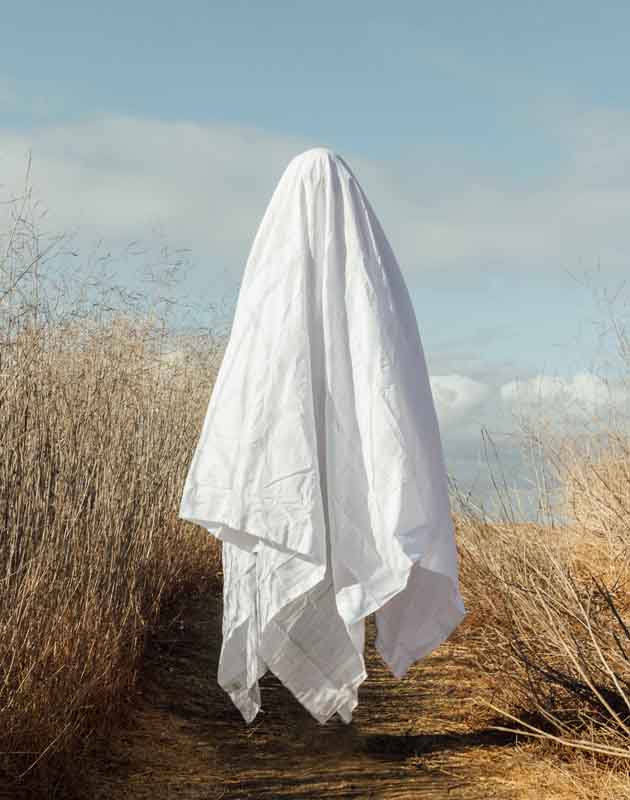
Thinning the Veil: A Halloween state of mind

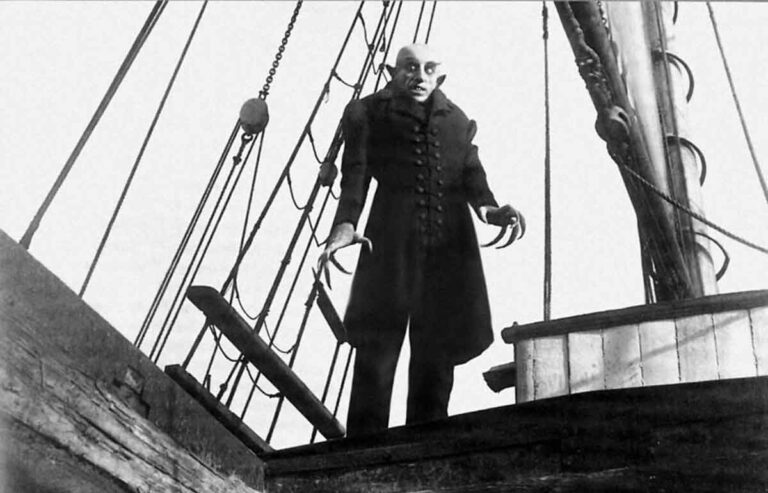
In 1979, around the time horror rock legends The Misfits were singing “I remember Halloween” while dressed in skeleton suits, I was rattled by anticipation tremors leading up to Oct. 31. 

Aged nine, I had my monster mask, ripped clothes and fake blood, and was in the backyard at twilight “playing” with friends, as we called it back then. 

I became inspired—which means “in spirited”—to play a game called Skeleton that would lead us into the magical world of Hallow’s Eve. The only problem was I couldn’t figure out what the game should be, beyond simply hide-and-seek in costume. I’ve clearly filed the episode in my long-term memory as an epic fail of the imagination. 

There’s not a ghost of a chance of such a failure now, of course, since everyday life increasingly resembles a dystopian horror flick through which we’re all forced to live. And you don’t even need your imagination, which has anyway been bludgeoned into passive submission by every aspect of digital life.

All you have to do is go outside and witness the ragged clothes and soulless stares of the walking dead zombie automatons whose consciousness is no longer anchored in the here and now of physical reality. Nor is it connected to higher realms via the divine gifts of reason, will and imagination.

Instead, it has been sucked into the netherworld of their smartphone, a device whose ironic moniker never fails to elicit a hearty laugh from the Prince of Darkness himself, who loves spreading stupidity. This is especially true concerning his own existence, since the devil’s greatest ruse, noted Baudelaire, is convincing you he doesn’t exist. 

In 1979, we didn’t go quite so overboard with Halloween decorations. Pumpkins on the porch was it, and only on the 31st, not three-and-a-half weeks beforehand. 

We who live on the razor’s edge between this world and the other have been forced to conclude that the rise of Halloween mania is a phenomenon of the past two decades, and therefore a reaction to the rise of digital culture, which, in the spirit of the season, is so deliciously dehumanizing. So once a year, we take a month to cosplay the supernatural, hanging ghosts over our front steps and crafting mock graves on our lawns, from which skeletal ancestors seem to rise and shriek, “What have you done?” 

It is perfectly in keeping, in fact, with the ersatz and counterfeit nature of modern life that we prefer to ironically play-act supernatural reality rather than face it head on in the dark caverns of the psyche. Modern life has so body-snatched us that a 2014 study—that’s before Donald Trump, COVID, war and inflation—that was recently discovered and went briefly viral, revealed that two-thirds of adults would rather endure 15 minutes of electric shocks than have to sit along with their thoughts. 

Before the past three centuries, when the rise of scientific reason joined Christianity as a strange bedfellow to gradually exterminate all sense of metaphysical reality, the supernatural was felt as a real and living presence capable of being experienced and understood by anyone with the proper qualifications, which simply meant the intelligence and will to embark on the path of initiation, or awakening of higher consciousness. 

But our predecessors actively sought out times of reflection, like watching the sky grow slowly dark on a cloudy autumn evening, and their divine gifts of reason, will and imagination were not atrophied, but instead virile and fertile. And these are the very faculties the Supreme Principle bestowed upon human beings that they might come to know their creator.

And so the mind boggles, as if replaced through some sinister Frankenstein experiment, why anyone would settle for horror movies and monster toys when you can actually live supernatural reality, when you can read Paracelsus by candlelight rather than Stephen King, and make legitimate tears in the veil between worlds.

The traditions of alchemy and Hermeticism sought to unravel the principles that govern the universe, one of which is the law of equilibrium, which we know as “every action has an equal and opposite reaction.” This is precisely why Halloween mania strikes adepts like a desperate compensating hunger for a loss of connection with higher reality. 

Following the “death of God,” Dostoyevsky famously wrote, the concern is not that people will believe in nothing but that they’ll believe in anything, and, if given enough time, will eventually be so demoralized that their sole connection to the sacred is once a year dressing their yard with plastic totems of supernatural forces they suspect are real but can’t be bothered to actually understand. 

So let this be your first lesson in the occult sciences: The universe balances itself through invisible, magnetic forces subject to divine law, whose social manifestation we call the zeitgeist. This means the creeping breed of soulless phone-drones will eventually be opposed by a new race of metaphysical action heroes, who’ll start out by LARPing (that stands for Live Action Role Play), then eventually come to realize that they are indeed the priestesses and wizards of the apocalypse. 

“Be careful what you wish for” is another chilling bit of folk wisdom trotted out by some toothless oldster from a creaking rocking chair. I finally got my childhood dream, in which every day feels like Halloween. But to paraphrase those great punk-goth rockers The Misfits, you think you’re a zombie? You think this is a scene from some monster magazine? 

Open your eyes: This ain’t no fantasy, boy.
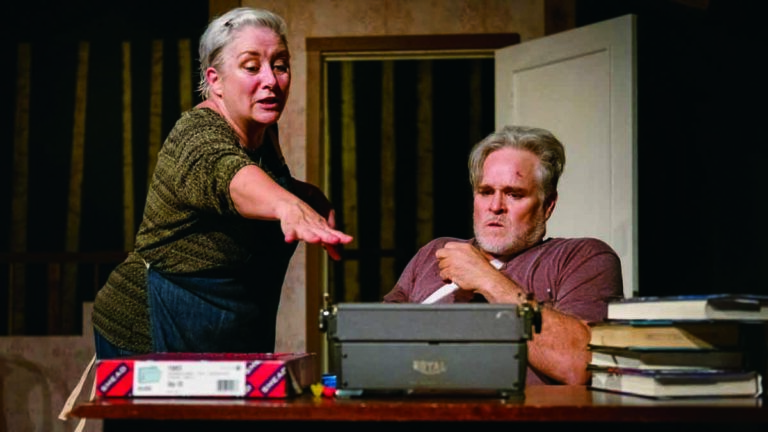
Cinnabar brings ‘Misery’ to Petaluma

0

Adaptations of the works of Stephen King for film and television have been hit or miss over the years. For every The Shining or Salem’s Lot, there’s a Firestarter or The Langoliers

Mainstream theatrical adaptations have been limited to a 2018 musical version of Carrie (a major Broadway flop but cult hit) and Misery, which had a short Broadway run in 2015 and featured Bruce Willis’ Broadway debut alongside Roseanne’s Laurie Metcalf. Petaluma’s Cinnabar Theatre has a production running through Oct. 30.

The stage adaptation, like the 1990 film version, was done by playwright William Goldman, so it resembles the film more so than King’s novel.

Author Paul Sheldon (Edward McCloud) wakes up severely injured and bedridden. He has been in the care of Annie Wilkes (Mary Gannon Graham), a former nurse who happened to witness his snow-driven automobile accident and brought him back to her somewhat-isolated cabin to recuperate. Luckily for Sheldon, Wilkes is his number one fan and a passionate devotee to his Misery Chastain novels. When she discovers his latest novel will be Misery’s last, she gets a little upset. And then she gets a lot upset.

Adapting a well-known thriller for the stage can often be difficult, as audience familiarity with the material often robs a show of its suspense and “gotcha” moments, but director Tim Kniffin and his cast do a grand job of setting and maintaining a mood of great discomfort throughout the show while delivering a few jolts.

McCloud renders a very convincing portrayal of Sheldon’s physical and mental anguish, which is impressive, as the majority of the performance is delivered from a bed. Gannon Graham is the type of performer who can communicate as much with her eyes as most other performers can with 30 pages of dialogue, but Goldman’s script makes it apparent she’s batshit crazy from the get-go. It’s almost as if he made the assumption that since you’d already read the book or seen the movie, why bother wasting time building that up? Let’s get right to the hobbling!

The story’s most famous scene is well handled, but the show’s denouement is missing some of the excitement and energy that film can accomplish with quick-cuts and close-ups.

Lovers of Stephen King’s work and those seeking out (former Parisian horror theater) Grand Guignol-ish entertainment this Halloween season will find Misery more than fits the bill.

‘Misery’ runs through Oct. 30 at Cinnabar Theater, 3333 Petaluma Blvd. N., Petaluma. Fri–Sat, 7:30pm; Sun, 2pm. $25–$40. Masking is encouraged. 707.763.8920. cinnabartheater.org

Vamp Champ

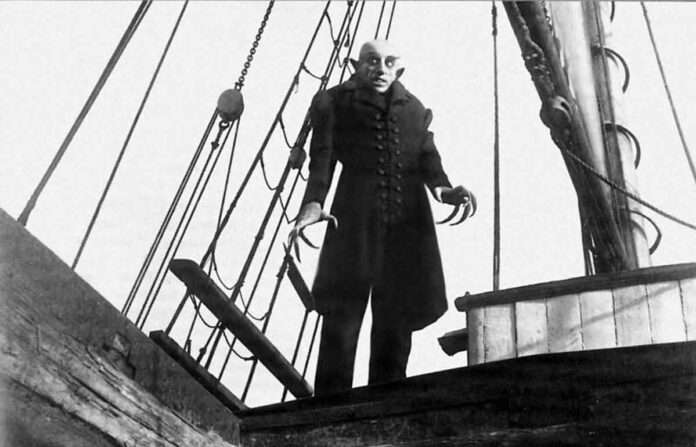
A veritable vampire weekend awaits local Halloween celebrants with a taste for blood (and beyond) as the veil thins this week. 

It stands to reason—according to recent analysis by the fine folks at Lawn Love—San Francisco (and by extension the greater Bay Area) is among the researcher’s “Best and Worst Cities for Vampires.”

Their criteria for ranking metro centers was simple: “cities with plenty of warm bodies, blood centers, and vampire-friendly dwellings (a.k.a., casket suppliers and homes with basements).” They also tallied “deterrents like garlic festivals and sunshine, as well as community and entertainment factors, such as vampire groups, nightlife options, and vampire tours.”

So, how did we rank in the San Francisco Bay Area? We were fifth behind New York, Chicago, Philadelphia and Los Angeles, in that order, which I attribute to our relative lack of basements (it’s earthquake country after all) and a relatively low ebb—at least in recent years—of nightlife. That said, it does have plenty of blood centers and, wait for it…vampire groups.

Of course it does. And even if you don’t identify as a sanguisugent member of the undead, there are many ways to get your fix of Halloween, if not hemoglobin.   

Nestled riverside at the edge of Guerneville, Dawn Ranch offers a “Blood Tasting” in lieu of the Russian River Valley’s usual oenophilic offerings. Wine partner ​​Arista Winery is the “blood” donor in this case, providing a variety of, um, blood “types.” Additionally, Agriculture Public House, the rustic lodge’s eatery, offers anyone who dresses up in costume 10% off their meal during dinner service.

The tasting commences at 4pm, Saturday, Oct. 29, Dawn Ranch, 16467 California 116, Guerneville. dawnranch.com.

Marin Filmmaker Produces Documentary Revealing the Hell Wreaked by Autocrats

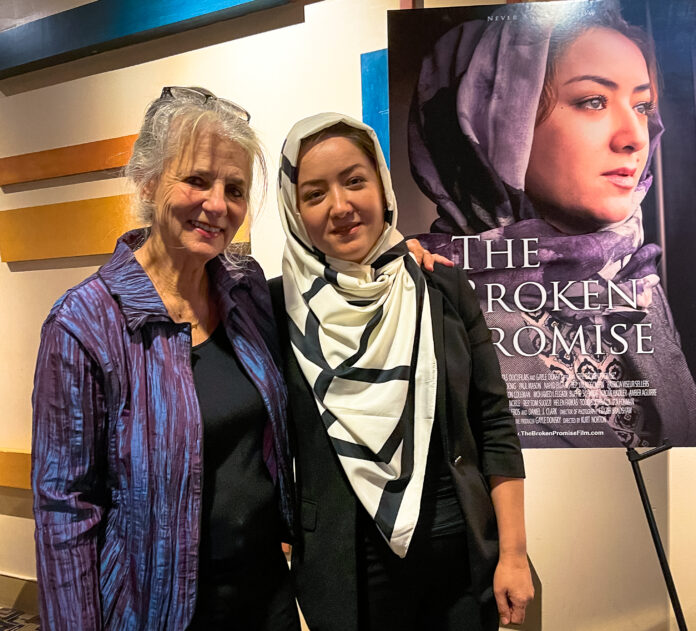
The Broken Promise, a Marin filmmaker’s new documentary, examines current and past genocides, providing a chilling reminder that history will keep repeating itself until we learn from our mistakes.

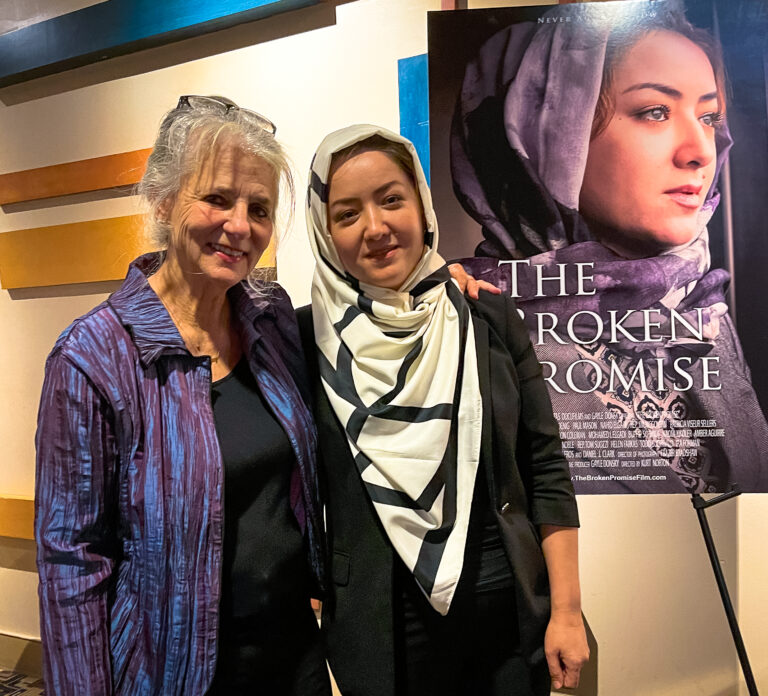
Gayle Donsky, a retired social worker from Mill Valley, is the force behind The Broken Promise

Distraught about the dangers posed by autocratic governments around the world, Donsky, the film’s executive producer and cowriter, set out to produce a documentary that fosters an understanding of why and how genocides continue to occur. She succeeded.

“Since the Holocaust, there has been an unprecedented movement against genocide,” Donsky said in an interview. “I wanted to know why it didn’t work.”

The film’s name refers to our failure to protect people from massacres, disregarding “Never again,” the vow made after Nazi Germany’s attempt to annihilate the European Jewish population.

This isn’t Donsky’s first foray into the subject of genocide. In 2018, she produced Faces of Genocide, an award-winning short-form documentary that told the stories of genocide through the eyes of survivors. Kurt Norton directed both of Donsky’s films.

The Broken Promise, a full-length film, builds upon Faces of Genocide. The new documentary has three chapters: The Pattern, Ripple Effects and Arc of Justice. Survivors, their children, politicians, scholars, activists and archival footage paint a picture of a genocide’s roots, its enduring impact through generations and the steps individuals and governments can take to prevent recurring human rights violations.

“This film is much more comprehensive,” Donsky said. “It sheds more light on genocide and how crimes against humanity happen. We’re at a really dangerous time in our country and in our world—on the road to autocracy.”

One of the many narrators of The Broken Promise is a Marin native, Alexa Koenig. As the executive director of the Human Rights Center at UC Berkeley School of Law, Koenig conducts investigations into war crimes, including international crimes such as genocide and crimes against humanity.

“For most people, when we talk about genocide, socially, what we’re talking about is killings of large numbers of people,” Koenig told the Pacific Sun. “But from a legal perspective, the technical definition is the intent to destroy, either in whole or in part, a group of people because of their religion, their race, their ethnicity or their nationality.”

While The Broken Promise looks at past genocides and crimes against humanity, including the slavery of African-Americans in the United States and the Armenian genocide, it also delves into Russia’s current war against Ukraine and China’s oppression of the Uyghurs, Turkic Muslim people living in Xinjiang.

The Uyghurs, an ethnic and cultural group of East Turkistan in Central Asia, have a 4,000-year history. The area was conquered by the Chinese in 1949 and renamed the Xinjiang Uyghur Autonomous Region. For the past five years, the Chinese government has systematically placed an estimated one million Uyghurs into concentration camps. Forced labor, torture and sexual violence are but a few of the crimes committed against the Uyghurs,

It is likely the largest genocide since the Holocaust, although many Americans are unfamiliar with the Uyghurs and their plight. The Broken Promise aims to change that by interviewing two Uyghur people, a survivor who relates her harrowing experiences, including the death of one of her triplets, and an attorney and activist who shares his insights into the genocide.

Nury Turkel, a Uyghur-American attorney who is the chair of the U.S. Commission on International Religious Freedom and a cofounder of the Uyghur Human Rights Project, has been working diligently to bring awareness to the atrocities being carried out by the Chinese government.

Before explaining how politics and economics are intertwined in the genocide, Turkel recalls from his childhood that Uyghurs were “the others.” They want political freedom, causing a problem for the Chinese government. Rather than grant them sovereignty, China is forcing them to assimilate or sending them to concentration camps.

From sneakers to solar panels, many products imported by the United States from China are made by the Uyghurs. A whopping 80% of the cotton products made in China are sourced from the Uyghur region. Several global brands have been “implicated” in buying goods produced by Uyghurs, including Hugo Boss, Volkswagen, Nike and Coca Cola, says Turkel. Some companies are actually lobbying U.S. politicians to allow the continued importation of these products, which is currently banned by the Uyghur Forced Labor Prevention Act signed into law by President Joe Biden last December.

U.S. Representative Jim McGovern of Massachusetts picks up the narrative about China. In 2021, the Congressional Commission on China held a hearing on the corporate sponsorships of the 2022 Olympics in Beijing. None of the U.S. based company leaders would acknowledge concern over the Uyghurs’ forced labor.

There are steps that a government takes prior to genocide, according to Koenig. She likens it to the metaphor of boiling a frog, turning the temperature up a little at a time so the frog doesn’t realize it’s in boiling water until it’s too late.

“Genocide is often led by a very charismatic leader who activates people’s fears about their own personal futures and says there’s a solution to making the world better for those that rally behind his or her cause,” Koenig said. “By creating a stigmatized group, you identify the inside people and the outside people.”

Holding those who commit atrocities accountable is important, says Koenig. Yet prosecuting perpetrators of genocide is difficult because there must be proof of intent. Instead, they’re often charged with crimes against humanity of persecution or extermination by showing that large numbers of people are being targeted and killed.

Donsky ends the film on a positive note, with the participants suggesting ways ordinary people can encourage change. Personally, Donsky tries to be hopeful.

“Humans are capable of doing really bad things, but they’re also capable of getting together and preventing these things from happening,” Donsky said.

‘The Broken Promise’ premieres on Sunday, Nov. 6 at the Smith Rafael Film Center in San Rafael. A reception begins at 4pm and the screening is at 5pm, followed by a panel discussion. Tickets are free and can be ordered online at www.rafaelfilm.cafilm.org/broken-promise.

Wile E. Coyote

On This Week’s Cover: No, he’s not the Loony Toons stalwart but Canis latrans is still a nuisance to neighborhoods in Belvedere and Tiburon—yep, there’s a coyote conundrum, reports Nikki Silverstein. Meanwhile, San Rafael has dedicated a “social justice park” writes Jane Vick; the Mommyheads tune-up for two Bay Area gigs in Michael Gioits’ profile; and editor Daedalus Howell interviews the baker who put the “carb” in carbonite with her doughy depiction of space cowboy Han Solo.

Trivia Cafe – Oct. 19-25, 2022

1 America’s first computerized and fully automated rapid transit system, established in the Bay Area, is known by what four-letter abbreviation, which stands for what four-word phrase?

2 When did the phrase, “In God We Trust,” first appear on U.S. coins: 1864 or 1964?

3 The 2.4 million baseballs used in the Major League are produced each year at the Rawlings’ company factory, located in what central American country, which has produced very few, if any, major league players?

4 Three of Henry VIII’s eight wives had the same first name. What was it?

5 In the early 1790s, French architect and engineer Pierre L’Enfant laid out his design of what North American city?

Washington DC
5.

6 The Grateful Dead’s highest charting song of all time hit #15 on the Billboard charts in September 1987. What was this song with a color in the title?

7 If the eastern end of the Earth is called the Orient, what is the western end called?

8 No human being has ever celebrated the sesquicentennial of their birthday. How many years are celebrated at a sesquicentennial event?

9 The historical region known as Transylvania, home of Count Dracula, is located in what modern-day country?

10 In 1874, C.F. Bennett, a designer of the Sharp & Smith sportswear company, invented what wearable item, to provide a more comfortable ride to bicycle jockeys working the cobblestone streets of Boston?

Bicycle Jockeys
10.

BONUS QUESTION: Among the five least populated U.S. states, which two of them border each other?

Want more trivia? Contact ho*****@********fe.com. Have a great question? Send it in with your name and hometown and if we use it, we’ll give you credit!

ANSWERS:

1 BART (Bay Area Rapid Transit)

2 On the two-cent coin in 1864 (printed on some stamps in 1954 and on paper money in 1957)

3 The Rawlings company is located in Turrialba, Costa Rica. Thanks for the question to Michael Vogel from Mill Valley.

4 Wife #2, Catherine of Aragon; #6, Catherine Howard; #7, Catherine Parr

5 Washington, DC

6 “Touch of Grey”

7 Occident

8 150 years

9 Romania

10 Jockstrap (the word jock comes from bicycle jockeys). Thanks for the question to Cynthia Pepper from San Rafael.

BONUS ANSWER: North and South Dakota. (Others are Wyoming, Vermont, Alaska.)

Open Mic: Keep an eye on Petaluma City Council candidates

1

Sadly, “pay to play” is a too-familiar concept in Petaluma. For too many years, campaign-contributing real estate developers have been given undue city council influence, resulting in problematic land use, traffic, flood-impact, tree clear-cutting and millions in taxpayer money losses. Petaluma is substantially overdeveloped: 525% of the state’s quota—all luxury-market rate homes.

Recently, a new special interest showed up: AT&T. 

On July 27, Dylan Lloyd, a broadband consultant who is chair of the city’s Technology Advisory Committee (TAC), played a role in AT&T’s attempted co-opting of the City of Petaluma to lobby for AT&T by writing a letter to the California Public Utilities Commission supporting AT&T’s preferred terms for a broadband-related fine. AT&T enjoyed unchallenged access to TAC with no opposing public or consumer viewpoint represented. Only AT&T’s information was presented. 

Despite city staff warning this was murky, potentially a conflict of interest, and outside proper jurisdiction, Chair Lloyd pushed forward—even past a committee member’s challenge (“we don’t have to write a letter”), continuing his dictation of the letter before a vote was taken. Further, Chair Lloyd limited comments by the public to just one-third of usual city committee-allowed time. 

At the following week’s city council meeting (Aug. 1), an outraged public called out TAC’s multiple violations, which included the Brown Act (only one day public notice of AT&T support letter); violation of TAC authority; outside TAC’s jurisdiction. 

At the next TAC meeting (Aug. 24), it was announced the Petaluma city attorney had taken action and called TAC to withdraw the letter. Sharp-eyed Petalumans demanded and got accountability.

The Nov. 8 election is critical for Petaluma. Petaluma’s next city council will decide whether Petaluma becomes sprawl by allowing the pushing out of its Urban Growth Boundary. 

Keeping a sharp eye out for which candidates are funded by special interests as well as which candidates have a record of prioritizing the benefit of those interests is crucial. 

Dylan Lloyd has announced he is running for Petaluma City Council… and his website lists he is supported by multiple real estate development industry interests.

Taryn Obaid lives in Petaluma.

Free Will Astrology – Oct. 19-26, 2022

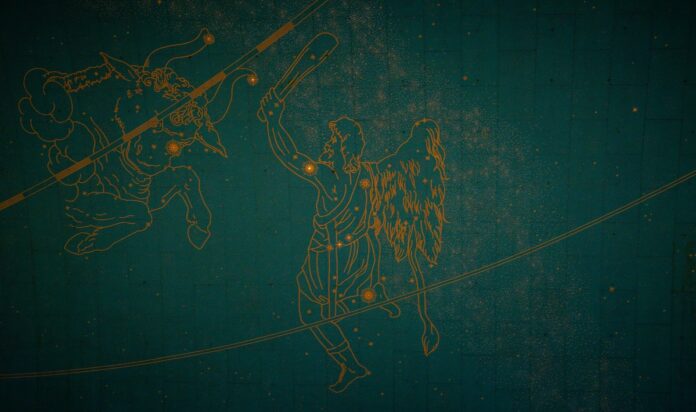
ARIES (March 21-April 19): “We must be willing to let go of the life we planned, so as to have the life that is waiting for us.” Aries mythologist Joseph Campbell said that, and now I’m passing it on to you just in time for the Sacred Surrender Phase of your astrological cycle. Make sage use of Campbell’s wisdom, Aries! You will generate good fortune for yourself as you work to release expectations that may be interfering with the arrival of new stories and adventures. Be brave, my dear, as you relinquish outdated attachments and shed defunct hopes.

TAURUS (April 20-May 20): Plastic bags are used for an average of 12 minutes before being discarded. Then they languish in our soil or oceans, degrading slowly as they cause mayhem for animals and ecosystems. In alignment with current cosmic rhythms, I’m encouraging you to be extra discerning in your relationship with plastic bags—as well as with all other unproductive, impractical, wasteful things and people. In the coming weeks, you will thrive by focusing on what will serve you with high integrity for a long time.

GEMINI (May 21-June 20): Achilleas Frangakis is a professor of electron microscopy. He studies the biochemistry of cells. In one of his research projects, he investigated how cells interact with the outside world. He didn’t learn much about that question, but as he experimented, he inadvertently uncovered fascinating new information about another subject: how cells interact with each other when they heal a wound. His “successful failure” was an example of what scientists sometimes do: They miss what they looked for, but find unexpected data and make serendipitous discoveries. I suspect you will experience comparable luck sometime soon, Gemini. Be alert for goodies of which you weren’t in quest.

CANCER (June 21-July 22): Renowned Brazilian novelist Osman Lins was born under the sign of Cancer the Crab. He wrote, “I will now live my life with the inventiveness of an engineer who drives his locomotive off the tracks. No more beaten paths: improvisation is the rule.” In the coming weeks, I am all in favor of you, my fellow Cancerian, being an inventive adventurer who improvises liberally and departs from well-worn routes. However, I don’t recommend you do the equivalent of running your train off the tracks. Let’s instead imagine you as piloting a four-wheel-drive, all-terrain vehicle. Go off-road to explore. Improvise enthusiastically as you reconnoiter the unknown. But do so with scrupulous attention to what’s healthy and inspiring.

LEO (July 23-Aug. 22): In recent years, art historians have recovered numerous masterpieces that had been missing for years. They include a sculpture by Bernini, a sketch by Picasso, a drawing by Albrecht Dürer and a painting by Titian. I’m a big fan of efforts like these: searching for and finding lost treasures. And I think you should make that a fun project in the coming weeks. Are there any beautiful creations that have been lost or forgotten? Useful resources that have been neglected? Wild truths that have been buried or underestimated? In accordance with astrological potentials, I hope you will explore such possibilities. 

VIRGO (Aug. 23-Sept. 22): The most important experience for you to seek in the coming months is to be seen and respected for who you really are. Who are the allies best able to give you that blessing? Make vigorous efforts to keep them close and treat them well. To inspire your mission, I offer you three quotes. 1. Franz Kafka said, “All the love in the world is useless if there is a total lack of understanding.” 2. Anais Nin wrote, “I don’t want worship. I want understanding.” 3. George Orwell: “Perhaps one did not want to be loved so much as to be understood.”

LIBRA (Sept. 23-Oct. 22): Libra poet Wallace Stevens said that the great poems of heaven and hell have already been written, and now it is time to generate the great poems of Earth. I’d love to invite all Libras, including non-writers, to apply that perspective in their own sphere. Just forget about heaven and hell for now. Turn your attention away from perfection and fantasylands and lofty heights. Disregard pathologies and muck and misery. Instead, explore and celebrate the precious mysteries of the world as it is. Be a connoisseur of the beauty and small miracles embedded in life’s little details. Find glory in the routine.

SCORPIO (Oct. 23-Nov. 21): Here are two top Scorpio pastimes: 1. exploring and deploying your intense, fertile creativity; 2. spiraling gleefully down into deep dark voids in pursuit of deep dark riches. Sometimes those two hobbies dovetail quite well; you can satisfy both pursuits simultaneously. One of my favorite variations on this scenario is when the deep dark void you leap into turns out to actually be a lush wonderland that stimulates your intense, fertile creativity. According to my analysis of the astrological omens, that’s likely to happen soon.

SAGITTARIUS (Nov. 22-Dec. 21): “I don’t want to be made pacified or made comfortable. I like stuff that gets your adrenaline going.” Sagittarian filmmaker Kathryn Bigelow said that. With the help of this attitude, she became the first woman ever to win an Academy Award for best director. Her film was The Hurt Locker, about American soldiers in Iraq who dispose of unexploded bombs while being harassed by enemies. Anyway, Bigelow’s approach is usually too hard-ass for me. I’m a sensitive Cancer the Crab, not a bold Sagittarius the Centaur, like Bigelow and you. But I don’t want to assume you’re in the mood for her approach. If you are, though, the coming weeks will be a favorable time to deploy it. Some marvelous epiphanies and healing changes will be available if you forswear stuff that makes you pacified or comfortable.

CAPRICORN (Dec. 22-Jan. 19): Author Jan Richardson tells us we can’t return home by taking the same route we used when we departed. This will be wise advice for you to keep in mind during the next nine months. I expect you will be attempting at least two kinds of homecomings. For best results, plan to travel by different routes than those that might seem natural and obvious. The most direct path—the successful passage—may be circuitous.

AQUARIUS (Jan. 20-Feb. 18): In the coming days, maintain strict boundaries between yourself and anyone or anything that’s not healthy for you. Be ultra-discerning as you decide which influences you will allow to affect you and which you won’t. And rather than getting sour and tense as you do this, I recommend you proceed with wicked humor and sly irony. Here are three saucy self-protective statements you can use to ward off threats and remain inviolable. 1. “The current ambiance does not align sweetly with my vital soul energy; I must go track down some more harmonious karma.” 2. “This atmosphere is out of sync with my deep precious selfness; I am compelled to take my deep precious selfness elsewhere.” 3. “The undertones here are agitating my undercurrents; it behooves me to track down groovier overtones.”

PISCES (Feb. 19-March 20): While asleep, have you ever dreamt of discovering new rooms in a house or other building you know well? I bet you will have at least one such dream soon. What does it mean? It suggests you want and need to get in touch with parts of yourself that have been dormant or unavailable. You may uncover evocative secrets about your past and present that had been unknown to you. You will learn about new resources you can access and provocative possibilities you had never imagined.

Measuring Up – Letters to the Editor, Oct. 19-26

Almost two years ago, 65% of Sonoma County voters cast their votes for Measure P. It was a clear reflection of a desire for stronger oversight of county law enforcement. 

The sheriff, the Deputy Sheriff’s Association (DSA) and their conservative allies fought against it. Writing a measure is difficult. Most end up with wiggle room for different interpretations. That happened with Measure P. 

But through the campaign, the framers, its endorsers and the voters were clear. They wanted independent investigations of death and serious injury at the hands of a deputy or while in custody to be independently investigated from Day One. They wanted the Independent Office of Law Enforcement Review and Outreach to have subpoena power. They wanted change.

The interpretation of the conservative groups which opposed Measure P guts much of the measure. So, when the Board of Supervisors proudly announced the implementation of Measure P through Letters of Understanding with the deputies, which interpretation did they implement? The interpretation of the opposition. 

Recently, Supervisor James Gore claimed that “we all worked to pass Measure P.” Despite having supported the opposition, Mr. Gore claims that citizen complaints are “complete crap.”

And when the California Supreme Court supported the voters’ interpretation of Measure P, not the DSA’s, there was no proud announcement. There was silence.

Now that the courts have spoken, it is time for the board to rescind the Letters. If they fail to act, it will be difficult to miss understanding which side the board is on.

Susan Collier Lamont

Santa Rosa

Mommyheads Have Faith

Sometimes you need to go back to go forward. Knowing when to mine what came before and when to blaze a way forward is a kind of wisdom. After 35 years of relentless effort to find that balance, the Mommyheads manage to do both at the same time.

This month, Mommyheads return to the Bay Area where they were based during the heady San Francisco alternative music scene of the ’90s. The band will play Santa Rosa’s Lost Church on Oct. 26 and the Chapel in San Francisco on Oct. 27.

Although the Mommyheads’ lyrical, timeless, retro-now sound draws from across the eras of rock, the legacy of the ’90s post-punk takeover looms large in the feel of the band. Their weird mix of musical styles is almost normal to the ear now, enriched by the alternative rock legacy of noise fused with melody.

The Mommyheads’ new album, Genius Killer, is a tight, self-assured affair that sounds all the more youthful for its maturity. 

Adam Elk’s raw vocals, brazen for their limited—if any—production, sound familiar and edgy, like listening to the patient arguments of a kid home from college trying to open the mind of a beloved uncle.

Oscillating wildly from the electro-tweak of the title track to the straight up Stevie Wonder future-funk of “Distill Your Love into Your Dying Light,” to an album closer with trip-out electro-rock worthy of the Doors, the Mommyheads produce that heart swelling pull of rock anthems without sounding like Panic at the Disco. 

Reflecting on the band’s time in the Bay Area, Elk told the Bohemian how different the nurturing local scene was compared to the band’s original and current home, NYC. “[In the Bay Area if] you connected with the audience, you played for three hours,” said Elk. “In New York, you got half an hour, 40 minutes. In LA, you had to pay to play in the ’80s and ’90s.” 

We also shared memories of the idiosyncratic local experimental noise scene of the ’90s and 2000s.

“A band like Mr. Bungle would never come out of a big city like … New York,” Elk said. “In the Bay Area, you could woodshed a little bit, work on your [music] without the pressure of having a big crowd so fast,” or having to appeal to the attention of industry players.

“We’re number 58 this week in college radio,” Elk enthused. “There’s some 20 year olds that like a band in their 50s. That’s an accomplishment,” he laughed. 

Even with an outsider mentality from the start, Elk has come to see more clearly than ever that the band’s endgame is to have fun and play music.

“[So many] artists are wrapped up in their ego, and they’re just gunning for something … but they don’t know where they’re going. I think when you finally realize what you’re trying to get [as a band], it can be as simple as what’s right in front of your nose, [which] for us is a better show and better music,” said Elk. “That’s where we’re at, which is very healthy.” 

When I congratulated Elk on his wisdom, which seems lacking in music now as much as ever, he said, “Well, music wisdom. It’s all I got.”

The Mommyheads play on Wednesday, Oct. 26, at the Lost Church, 427 Mendocino Ave. in Santa Rosa. 7:30pm, $15, all ages. Local electro-funkers B3PO open for the Mommyheads.

Thinning the Veil: A Halloween state of mind

In 1979, around the time horror rock legends The Misfits were singing “I remember Halloween” while dressed in skeleton suits, I was rattled by anticipation tremors leading up to Oct. 31.  Aged nine, I had my monster mask, ripped clothes and fake blood, and was in the backyard at twilight “playing” with friends, as we called it back then.  I became...

Cinnabar brings ‘Misery’ to Petaluma

Adaptations of the works of Stephen King for film and television have been hit or miss over the years. For every The Shining or Salem’s Lot, there’s a Firestarter or The Langoliers.  Mainstream theatrical adaptations have been limited to a 2018 musical version of Carrie (a major Broadway flop but cult hit) and Misery, which had a short Broadway run...

Vamp Champ

A veritable vampire weekend awaits local Halloween celebrants with a taste for blood (and beyond) as the veil thins this week.  It stands to reason—according to recent analysis by the fine folks at Lawn Love—San Francisco (and by extension the greater Bay Area) is among the researcher’s “Best and Worst Cities for Vampires.” Their criteria for ranking metro centers was simple:...

Marin Filmmaker Produces Documentary Revealing the Hell Wreaked by Autocrats

Gail Donsky - The Broken Promise documentary
The Broken Promise, a Marin filmmaker’s new documentary, examines current and past genocides, providing a chilling reminder that history will keep repeating itself until we learn from our mistakes. Gayle Donsky, a retired social worker from Mill Valley, is the force behind The Broken Promise.  Distraught about the dangers posed by autocratic governments around the world, Donsky, the film’s executive producer...

Wile E. Coyote

On This Week's Cover: No, he's not the Loony Toons stalwart but Canis latrans is still a nuisance to neighborhoods in Belvedere and Tiburon—yep, there's a coyote conundrum, reports Nikki Silverstein. Meanwhile, San Rafael has dedicated a "social justice park" writes Jane Vick; the Mommyheads tune-up for two Bay Area gigs in Michael Gioits' profile; and editor Daedalus Howell...

Trivia Cafe – Oct. 19-25, 2022

trivia baseball
1 America’s first computerized and fully automated rapid transit system, established in the Bay Area, is known by what four-letter abbreviation, which stands for what four-word phrase? 2 When did the phrase, “In God We Trust,” first appear on U.S. coins: 1864 or 1964? 3 The 2.4 million baseballs used in the Major League are produced each year at the Rawlings’...

Open Mic: Keep an eye on Petaluma City Council candidates

Sadly, “pay to play” is a too-familiar concept in Petaluma. For too many years, campaign-contributing real estate developers have been given undue city council influence, resulting in problematic land use, traffic, flood-impact, tree clear-cutting and millions in taxpayer money losses. Petaluma is substantially overdeveloped: 525% of the state’s quota—all luxury-market rate homes. Recently, a new special interest showed up: AT&T.  On...

Free Will Astrology – Oct. 19-26, 2022

ARIES (March 21-April 19): "We must be willing to let go of the life we planned, so as to have the life that is waiting for us." Aries mythologist Joseph Campbell said that, and now I'm passing it on to you just in time for the Sacred Surrender Phase of your astrological cycle. Make sage use of Campbell's wisdom,...

Measuring Up – Letters to the Editor, Oct. 19-26

typewriter opinion newspaper
Almost two years ago, 65% of Sonoma County voters cast their votes for Measure P. It was a clear reflection of a desire for stronger oversight of county law enforcement.  The sheriff, the Deputy Sheriff’s Association (DSA) and their conservative allies fought against it. Writing a measure is difficult. Most end up with wiggle room for different interpretations. That happened...

Mommyheads Have Faith

mommyheads
Sometimes you need to go back to go forward. Knowing when to mine what came before and when to blaze a way forward is a kind of wisdom. After 35 years of relentless effort to find that balance, the Mommyheads manage to do both at the same time. This month, Mommyheads return to the Bay Area where they were based...
3,002FansLike
3,850FollowersFollow