Letter: ‘But have you noticed that those who use this argument seem to have compassion only for the illegal immigrants …’

America did not become what it is by doing the decent thing …

I was astonished to read the headline that you wrote for my Dec. 12 letter to the Sun [criticizing President Obama for granting temporary legal status to 5 million undocumented immigrants]. The headline you gave my letter was, “Obama Had No Right to Do the Decent Thing!” This is the strongest argument that the pro-open-borders people have for granting amnesty to illegal immigrants in the United States. It is the argument based on compassion.

But have you noticed that those who use this argument seem to have compassion only for the illegal immigrants and not for the millions of American citizens who have lost their jobs to the illegal immigrants? How many Marinites actually know someone who has suffered such a job loss? I have met a number of independent building contractors who have lost their businesses in the past five to 10 years because they refused to use illegal labor and were consistently underbid on construction jobs by other contractors who used illegal labor and paid very low wages.

This whole crisis, which has accelerated enormously during the Obama administration, is very complex. Real decency means we also have compassion for our own people who are being hurt by continued, massive, illegal immigration. Our own citizens are our first responsibility. Obama, and George W. Bush, have betrayed America in becoming open-borders presidents. Many Marinites are living in their own fantasyland here and are not aware of the millions who are hurting all across the country either from direct job loss or the chronic depression of their wages.

Kenneth Kelzer, Novato

Food & Drink: Indulge in eateries

by Tanya Henry

Because January is typically a slow month for restaurants, the state’s tourism group, Visit California, has teamed up with convention and visitors’ bureaus across the state and proclaimed January to be California Restaurant Month. So, since you have surely recovered from your holiday indulging, why not head out and support your local restaurants? A number of eateries are participating in the promotion throughout the entire month. To find out which ones, visit www.visitmarin.org/things-to-do/culinary.

WINO FOREVER If you are still in a celebratory mood, join Wine Road’s 23rd Winter WINEland on Saturday and Sunday, Jan. 17 and 18 from 11am-4pm each day. This is a wine-lover’s dream trip, with an opportunity to visit more than 140 wineries—enjoy special food pairings and tour wineries. Buy tickets and learn more here: www.wineroad.com/events/winter_wineland/10.

WINE WHILE YOU WORK More wine! Downtown Mill Valley’s Piazza D’Angelo is offering their next Winemaker’s Dinner on Tuesday, Jan. 20, at 7pm. The prix fixe tasting menu includes wines selected and imported by Banfi Vintners and the meal will be prepared by chef Andrea Giuliani. To make a reservation, call 415/388-2000.

DRIVE OVER TO THE MARKET If you haven’t discovered Sausalito’s sweet, family-owned Driver’s Market, now you have a good reason to go. Local mother and author, Jennifer Tyler Lee, will be at the market on Wednesday, Jan. 21, at 6:30pm to discuss her new book, The 52 New Foods Challenge, which gives parents clever tips to encourage their kids to eat healthfully. She offers up ideas to take the stress out of mealtime—all in just 30 minutes each week. The event is for families, and includes a signed copy of Lee’s book. Cost is $20 per family and Driver’s Market is located at 200 Caledonia Street in Sausalito. Tickets are available at www.driversmarket.com or you can call 415/729-9582.

A BITTERSWEET FAREWELL Goodbye to the Royal Sweet Bakery in San Anselmo. After more than 30 years, the bakery is closing its doors. The building is being sold, and there are no plans to reopen in a different location. “It’s just too much to talk about,” lamented the owner when I gave him a call. Countless families have enjoyed the pies, cookies and ice cream sold from this San Anselmo Avenue institution for over three decades. Sad times indeed for San Anselmo.

BYE BYE BAR, HELLO PRIVATE PARTIES La Loggia Vinoteca and Café is also shuttering its restaurant business in San Anselmo. The wine bar newcomer had transformed its corner location into a stunning eatery, but never quite made the entire operation work. The owners plan to rent the space and offer special events for private parties for members and friends. Inquire about the space at in**@********sa.com.

Share your hunger pains with Tanya at th****@********un.com.

CVNL Center for Volunteer & Nonprofit Leadership

0

A round of applause to this year’s Hearts of Marin recipients:

Volunteer of the Year: Helen Rogers, Next Generation Scholars

Excellence in Board Leadership: Bob Rosenberg, Marin County School Volunteers

Corporate Community Service: Genworth Financial

Youth Volunteer of the Year      

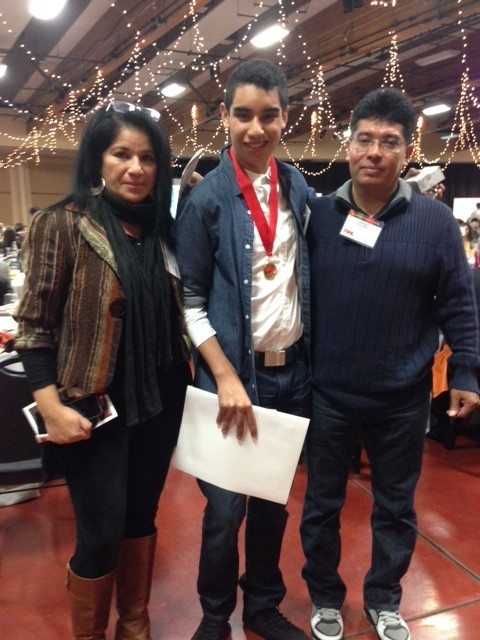
  1. Marlon Alvarez, Novato HS, Hamilton School
  2. Tyler Barbee, Tamalpais HS, PAASS (Project Awareness and Special Sports Inc.)
  3. Laura Dickinson, St. Ignatius College Prep, Community Action Marin, Canal Child Care Center, SF-Marin Food Bank
  4. Harrison Jantze, Redwood HS, Marin County Search and Rescue
  5. Rachel Rothken, San Domenico School, Novato Adult Education Center

Excellence in Innovation: Homeward Bound of Marin, Fresh Starts Culinary Academy

Excellence in Leadership: Cassandra Flipper, Bread & Roses

Achievement in Nonprofit Excellence  

  1. Center for Domestic Peace
  2. Respecting Our Elders

Lifetime Achievement Award: Ethel Seiderman, Legal Aid of Marin, Parent Services Project & Fairfax-San Anselmo Children’s Center


For more information about CVNL, visit www.cvnl.org. 65 Mitchell Blvd. Suite 100, San Rafael. 415/479-8100

Upfront: Path of most resistance


by Peter Seidman

When county supervisors recently approved a new plan that sets policies for trail use in Marin County open space preserves, they capped a long and contentious process in a quiet meeting marked by consensus. Hard work still lies ahead.

The meeting in which the supervisors approved the new plan was the 16th public session, including workshops, notes Linda Dahl, director and general manager at Marin County Parks and Open Space. The first meeting four years ago was marked by rancorous argument and a sign that the ensuing debate wouldn’t be genteel. But as the process unfolded under the guidance of stakeholders and Dahl’s open space department, it yielded a quiet assertion that hikers, mountain bikers and equestrians could, indeed, live together. Maybe not in a rainbow world with unicorns and shafts of ethereal light falling on them, but they could find ways to live together on the county trail system.

Reaching that point of consensus “is what you dream of in conflict resolution,” Dahl says. “The breakthrough was giving people a forum to have a conversation. Giving everybody a forum where they all had to come together and they all had to listen to each other and put themselves in each other’s shoes, and then agree that there should be rules and they would live by them,” created the process that led to the consensus.

Dahl and the county faced a daunting task: Creating rules for an open space system about which hard information didn’t exist. An ironic twist to a story that started when county officials in 1971 agreed that the hillsides and ridgetops of the county should be protected by concentrating development along corridors that corresponded to main roads.

As part of the process that led to the approval of the new road and trail plan, the county conducted for the first time an inventory of the trail system and assessed the condition of the trails. The county thought it had about 170 miles of trails. Actually the inventory found about 250 miles of trails that fell into three categories.

When county residents voted to create the Open Space District in 1971 to purchase undeveloped land, the district inherited trails that ranchers had built as utilitarian connectors. The district created other sanctioned trails. And rogue users hacked some illegal trails. The road and trail plan looks at each of the three categories in a process that allows informed decisions about whether to retain a trail, improve a trail or eliminate a trail. The road and trail plan is a policy document rather than a call for specific actions.

In 2010, when the Board of Supervisors, acting as the board of the Open Space District, held a meeting to begin a review of management practices in the district, about 47.5 miles of non-system trails criss-crossed the patchwork of preserves. Mountain bikers could use 24 percent of the single-track trails and shared-use trails. Hikers and equestrians objected to any suggestion of expanding access to mountain bikers.

The battle lines drawn then were similar to the battle lines drawn in 2005, when a study of the county’s open space policies revealed that most Marin residents favored the status quo when it came to bike access.

But contention on the roads and trails had simmered for some time and showed no signs of abating. The main issue focused on hikers and equestrians who voiced concerns and complaints that mountain bikers rode too fast on shared routes, causing hazardous conditions for everyone and generally creating an unpleasant experience for hikers and equestrians. Letters to the editor decrying the bikers often appeared—and still do—in waves. The fact that most mountain bikers ride with courtesy is overshadowed by a rogue element that creates continual bad press for the bikers.

The huge irony is that in the county where mountain biking began, trail-users wanted to limit bikers from riding on roads and trails in the district. Back in the 1960s, Joe Breeze and his friends looked at their fat-tire bikes and turned their heads toward Mount Tam. The early attraction was inescapable. The boys began riding the mountain. In doing so, they created a sport and an industry that has swept across the globe. The thrills are unmistakable. But so is the impetus to get closer to nature at a slower pace, on foot and on horse and bike. The speed demons often overshadow the more causal bikers who simply enjoy riding in nature. (Breeze now is curator at the nascent Marin Museum of Bicycling in Fairfax.)

The problems of sharing trails with the minority of bikers who favor speed over contemplation came to a head when two equestrians on a single-track trail in the Indian Tree Preserve in Novato said that two boys on bikes flying around a blind curve spooked the horses. One of the riders was thrown and suffered spinal fractures. The horse she was riding bolted and wasn’t recovered until 24 hours later. The incident triggered renewed general condemnation of mountain biking. Although the two boys reportedly were about 10 or 12 years old, an age of irresponsibility, mountain bike critics used the incident to renew calls for limiting mountain bike riding.

Controlling the relatively few rogue riders always has been an issue when it comes to sharing trails. Bike groups have conducted their own outreach campaigns to educate their membership about the rules of the trails and proper etiquette. The situation is analogous to drivers on the freeway who speed wildly in the center lane—or the fast lane—and then at the last minute force their vehicles into a line leading to an exit ramp. The behavior has become common in Marin. The Highway Patrol cannot ticket all the recalcitrant drivers who show little respect for safety and etiquette. Neither can officials control all bikers who ride the roads and trails of the Open Space District. But that doesn’t mean drivers are inherently disobedient and uncaring. Neither does it mean all bikers are rogue elements. (The district has added nine rangers, and Dahl says the district can, if necessary, ticket rogue riders.)

In another irony, the challenge of sharing roads and trails in the district is exacerbated by the success the county has had in creating an open space system that’s enticing. In addition to Marin residents, people come from across the Bay Area and beyond to enjoy the road and trail system. The road and trail plan is, in part, an acknowledgement of that attraction.

Early in the process, a draft of the road and trail plan included policy implications that could have led to a strong prohibition of off-trail use for hikers. That met opposition from critics who said a large part of the attraction of the open space in the county was the ability to wander in nature. The final version allows hikers to walk off of the roads and trails—as long as they are not unaccompanied by dogs. Mountain bikers and equestrians must stay on designated routes.

The change in policy is one example of how the public process helped shape the final version of the document. “It’s a small system” that has many users, Dahl says. “They like it because they want to experience nature. If everybody does everything they want to do, there’s no nature left.” The road and trail plan sets policies the county will use to create specific standards and procedures for each of its preserves.

“It’s a delicate balance,” Dahl says. “The mandate is to let people enjoy. The big debate is how much enjoyment is too much and what’s appropriate enjoyment. That’s what this process brought us to.” When discussions started about creating the plan, the talk centered on what range of environmental pressure the county and users and residents were willing to accept. “We’ve done that” with the road and trail plan, Dahl adds.

“The process worked,” says Tom Boss of the Marin County Bicycle Coalition. “We went into this process knowing we were going to have a seat at the table and we weren’t going to get everything we wanted. But Director Dahl told us that [we would have a seat], and I think she honored that.” Boss says that bike advocates pushed for as many miles of trail as possible, and although the bike contingent didn’t get everything, it got “the key things we wanted.”

One of those keys includes a policy that strives for road and trail connectivity “for all trail-users.” The district will “consider one-way, uphill only, time separation and single-house or priority-use trails to achieve these ends.” Wagon Wheel Trail in Camp Tamarancho in Fairfax is a mountain bike priority trail. For 17 years the trail has been a priority route for bikes. No conflict has resulted among users, notes Vernon Huffman of Access4Bikes.

Like Boss, Huffman is pleased with the outcome of the road and trail debate. “We’ve come a long way from that first contentious meeting,” he says. The Open Space District “has done an exceptional job of listening and responding to all the different interest groups” on the way to creating “an environmental protective document. It’s pretty impressive.”

The massive growth in the sport, the lifestyle, of mountain biking has changed the demographics on the roads and trails of the district. The management plan is an attempt to recognize the changing demographic and adjust policies to accommodate the new users as well as protect the legacy users. “We are now 25 to 30 percent of the users,” Huffman says. “We’re asking for change. They are trying to accommodate it.” Above all, the road and trail plan holds safety as the paramount goal, along with environmental protection.

The bike community also succeeded in winning an adjustment of how creating new trails will affect old ones. In a draft version, the plan called for no new trail miles in the preserves. The plan delineated four zones, from the most environmentally sensitive to the most amendable to recreational use. In the most environmentally sensitive zone, if the district built a new trail, for every mile of new trail the district would eliminate two miles of old trail. In the other three zones, for every mile of trail that gets built, the district would eliminate a mile of old trail.

The calculation was based on linear miles of trail. Boss says that the bike coalition pushed for a different way to look at the trail-for-trail process. “We pointed out that removing one mile of steep fire road is going to have a greater effect than removing two or three miles of switchback trail that is much more gentle on the environment. Now, it’s the cumulative impacts rather than the linear” assessment that will decide how much trail must be removed to make way for new routes.

Although the policy document has been approved, the hard work of using the policies to create specific rules in the preserves is yet to come. Starting in a few months, the district will conduct another series of open meetings to set specific rules and standards for the preserves.

Nona Dennis of the Marin Conservation League wanted those standards in the plan. She says that without them, the document is incomplete. “The things the plan does are good,” she says, but parameters for safe design of trails should be established and included as part of the plan. (Dennis calls the road and trail plan basically a mountain bike plan.) Dahl, Boss and Huffman say that setting overall standards is too general an approach. A better way to accomplish what Dennis talks about should come as the district sets specific rules for each preserve. Setting those rules sets up the next round of debate.

Huffman adds that Access4Bikes is ready to move to other agencies in a wider push for bike access. He says that the Marin Municipal Water District is next. “No legal bike trails exist on Water District land,” he says, and that land represents “the heart of Marin.” 


Marin experiences shortage of temporary foster homes

by Molly Oleson

The season of giving may be over, but there are children in Marin who didn’t get what they had hoped for: a stable, loving home. Experiencing a shortage of temporary foster homes for the county’s most vulnerable kids, the Marin County Health and Human Services (HHS) Department has put a call out to residents interested in foster parenting.

On Wednesday, Jan. 7 in San Rafael, the HHS Children and Family Services Division will be offering an orientation, during which residents can learn about what the temporary care of boys and girls of all ages and socioeconomic backgrounds entails, and ask a social worker and experienced foster parent questions about the application and training process.

Typically providing a home for six to 12 months, foster parents may be of any adult age, of any sexual orientation and be single or part of a couple—married or not. Especially needed are foster families who can care for siblings who do not wish to be separated.

The children “have experienced separation and the effects of abuse and neglect,” according to a press release. But “are still growing and learning and can blossom in a family able to offer them safety.”

The orientation will take place from 7-8:30pm on Wednesday, Jan. 7 in room 107 of the Marin Health and Wellness Campus, 3250 Kerner Blvd., San Rafael. For more information, visit www.marinhhs.org/foster-care, or call Cindy Wasserman at 415/473-5028.

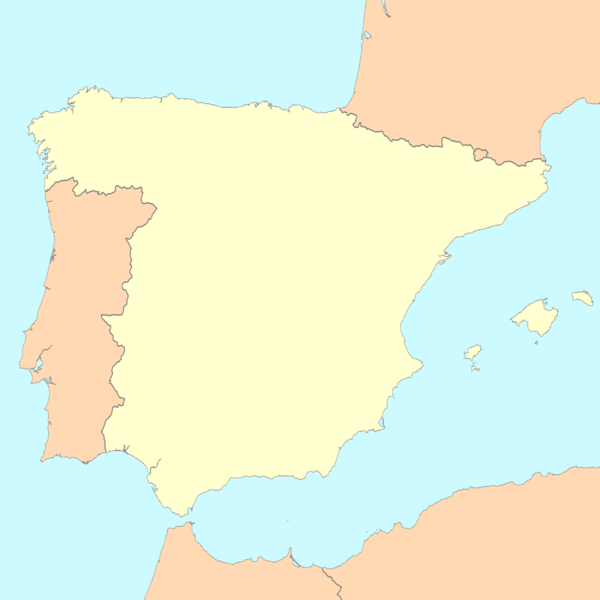
Trivia: In January, Spain invited what ethnic group, disbursed around the world for over 500 years, to return as citizens?

Answer: Sephardic Jews, those of Spanish descent, forcibly exiled in 1492.

For more trivia questions (and answers!) see Howard Rachelson’s Trivia Café every week in the Pacific Sun.

Editor’s Note: Best of Marin 2015

“Some day you will be old enough to start reading fairytales again.”—C.S. Lewis

Over the river and through the woods to Best of Marin, we go!

Channel your best Big Bad Wolf impression and quiver with fear at the thought of the Headless Horseman riding down Fourth Street—this year the theme for our annual readers’ poll will take an imaginative turn down memory lane as we explore the world of esteemed storybook classics and fairytales alike.

The theme will feature a cast of characters so eclectic, you’d have to dream them up. And the royalty and rulers of the roost will earn a coveted Best of Marin award.

In similar fashion, before we reveal who has the best nursery supplies for Jack’s beanstalk, the best eco-friendly cape for Little Red Riding Hood or the best set of glasses for the Three Blind Mice—we ask you, Marin, to vote for your picks for the county’s best of the best at www.pacificsun.com.

So ask yourself: Mirror, mirror on the wall, who is the best of them all?

Upfront: Path of most resistance

by Peter Seidman

When county supervisors recently approved a new plan that sets policies for trail use in Marin County open space preserves, they capped a long and contentious process in a quiet meeting marked by consensus. Hard work still lies ahead.

The meeting in which the supervisors approved the new plan was the 16th public session, including workshops, notes Linda Dahl, director and general manager at Marin County Parks and Open Space. The first meeting four years ago was marked by rancorous argument and a sign that the ensuing debate wouldn’t be genteel. But as the process unfolded under the guidance of stakeholders and Dahl’s open space department, it yielded a quiet assertion that hikers, mountain bikers and equestrians could, indeed, live together. Maybe not in a rainbow world with unicorns and shafts of ethereal light falling on them, but they could find ways to live together on the county trail system.

Reaching that point of consensus “is what you dream of in conflict resolution,” Dahl says. “The breakthrough was giving people a forum to have a conversation. Giving everybody a forum where they all had to come together and they all had to listen to each other and put themselves in each other’s shoes, and then agree that there should be rules and they would live by them,” created the process that led to the consensus.

Dahl and the county faced a daunting task: Creating rules for an open space system about which hard information didn’t exist. An ironic twist to a story that started when county officials in 1971 agreed that the hillsides and ridgetops of the county should be protected by concentrating development along corridors that corresponded to main roads.

As part of the process that led to the approval of the new road and trail plan, the county conducted for the first time an inventory of the trail system and assessed the condition of the trails. The county thought it had about 170 miles of trails. Actually the inventory found about 250 miles of trails that fell into three categories.

When county residents voted to create the Open Space District in 1971 to purchase undeveloped land, the district inherited trails that ranchers had built as utilitarian connectors. The district created other sanctioned trails. And rogue users hacked some illegal trails. The road and trail plan looks at each of the three categories in a process that allows informed decisions about whether to retain a trail, improve a trail or eliminate a trail. The road and trail plan is a policy document rather than a call for specific actions.

In 2010, when the Board of Supervisors, acting as the board of the Open Space District, held a meeting to begin a review of management practices in the district, about 47.5 miles of non-system trails criss-crossed the patchwork of preserves. Mountain bikers could use 24 percent of the single-track trails and shared-use trails. Hikers and equestrians objected to any suggestion of expanding access to mountain bikers.

The battle lines drawn then were similar to the battle lines drawn in 2005, when a study of the county’s open space policies revealed that most Marin residents favored the status quo when it came to bike access.

But contention on the roads and trails had simmered for some time and showed no signs of abating. The main issue focused on hikers and equestrians who voiced concerns and complaints that mountain bikers rode too fast on shared routes, causing hazardous conditions for everyone and generally creating an unpleasant experience for hikers and equestrians. Letters to the editor decrying the bikers often appeared—and still do—in waves. The fact that most mountain bikers ride with courtesy is overshadowed by a rogue element that creates continual bad press for the bikers.

The huge irony is that in the county where mountain biking began, trail-users wanted to limit bikers from riding on roads and trails in the district. Back in the 1960s, Joe Breeze and his friends looked at their fat-tire bikes and turned their heads toward Mount Tam. The early attraction was inescapable. The boys began riding the mountain. In doing so, they created a sport and an industry that has swept across the globe. The thrills are unmistakable. But so is the impetus to get closer to nature at a slower pace, on foot and on horse and bike. The speed demons often overshadow the more causal bikers who simply enjoy riding in nature. (Breeze now is curator at the nascent Marin Museum of Bicycling in Fairfax.)

The problems of sharing trails with the minority of bikers who favor speed over contemplation came to a head when two equestrians on a single-track trail in the Indian Tree Preserve in Novato said that two boys on bikes flying around a blind curve spooked the horses. One of the riders was thrown and suffered spinal fractures. The horse she was riding bolted and wasn’t recovered until 24 hours later. The incident triggered renewed general condemnation of mountain biking. Although the two boys reportedly were about 10 or 12 years old, an age of irresponsibility, mountain bike critics used the incident to renew calls for limiting mountain bike riding.

Controlling the relatively few rogue riders always has been an issue when it comes to sharing trails. Bike groups have conducted their own outreach campaigns to educate their membership about the rules of the trails and proper etiquette. The situation is analogous to drivers on the freeway who speed wildly in the center lane—or the fast lane—and then at the last minute force their vehicles into a line leading to an exit ramp. The behavior has become common in Marin. The Highway Patrol cannot ticket all the recalcitrant drivers who show little respect for safety and etiquette. Neither can officials control all bikers who ride the roads and trails of the Open Space District. But that doesn’t mean drivers are inherently disobedient and uncaring. Neither does it mean all bikers are rogue elements. (The district has added nine rangers, and Dahl says the district can, if necessary, ticket rogue riders.)

In another irony, the challenge of sharing roads and trails in the district is exacerbated by the success the county has had in creating an open space system that’s enticing. In addition to Marin residents, people come from across the Bay Area and beyond to enjoy the road and trail system. The road and trail plan is, in part, an acknowledgement of that attraction.

Early in the process, a draft of the road and trail plan included policy implications that could have led to a strong prohibition of off-trail use for hikers. That met opposition from critics who said a large part of the attraction of the open space in the county was the ability to wander in nature. The final version allows hikers to walk off of the roads and trails—as long as they are not unaccompanied by dogs. Mountain bikers and equestrians must stay on designated routes.

The change in policy is one example of how the public process helped shape the final version of the document. “It’s a small system” that has many users, Dahl says. “They like it because they want to experience nature. If everybody does everything they want to do, there’s no nature left.” The road and trail plan sets policies the county will use to create specific standards and procedures for each of its preserves.

“It’s a delicate balance,” Dahl says. “The mandate is to let people enjoy. The big debate is how much enjoyment is too much and what’s appropriate enjoyment. That’s what this process brought us to.” When discussions started about creating the plan, the talk centered on what range of environmental pressure the county and users and residents were willing to accept. “We’ve done that” with the road and trail plan, Dahl adds.

“The process worked,” says Tom Boss of the Marin County Bicycle Coalition. “We went into this process knowing we were going to have a seat at the table and we weren’t going to get everything we wanted. But Director Dahl told us that [we would have a seat], and I think she honored that.” Boss says that bike advocates pushed for as many miles of trail as possible, and although the bike contingent didn’t get everything, it got “the key things we wanted.”

One of those keys includes a policy that strives for road and trail connectivity “for all trail-users.” The district will “consider one-way, uphill only, time separation and single-house or priority-use trails to achieve these ends.” Wagon Wheel Trail in Camp Tamarancho in Fairfax is a mountain bike priority trail. For 17 years the trail has been a priority route for bikes. No conflict has resulted among users, notes Vernon Huffman of Access4Bikes.

Like Boss, Huffman is pleased with the outcome of the road and trail debate. “We’ve come a long way from that first contentious meeting,” he says. The Open Space District “has done an exceptional job of listening and responding to all the different interest groups” on the way to creating “an environmental protective document. It’s pretty impressive.”

The massive growth in the sport, the lifestyle, of mountain biking has changed the demographics on the roads and trails of the district. The management plan is an attempt to recognize the changing demographic and adjust policies to accommodate the new users as well as protect the legacy users. “We are now 25 to 30 percent of the users,” Huffman says. “We’re asking for change. They are trying to accommodate it.” Above all, the road and trail plan holds safety as the paramount goal, along with environmental protection.

The bike community also succeeded in winning an adjustment of how creating new trails will affect old ones. In a draft version, the plan called for no new trail miles in the preserves. The plan delineated four zones, from the most environmentally sensitive to the most amendable to recreational use. In the most environmentally sensitive zone, if the district built a new trail, for every mile of new trail the district would eliminate two miles of old trail. In the other three zones, for every mile of trail that gets built, the district would eliminate a mile of old trail.

The calculation was based on linear miles of trail. Boss says that the bike coalition pushed for a different way to look at the trail-for-trail process. “We pointed out that removing one mile of steep fire road is going to have a greater effect than removing two or three miles of switchback trail that is much more gentle on the environment. Now, it’s the cumulative impacts rather than the linear” assessment that will decide how much trail must be removed to make way for new routes.

Although the policy document has been approved, the hard work of using the policies to create specific rules in the preserves is yet to come. Starting in a few months, the district will conduct another series of open meetings to set specific rules and standards for the preserves.

Nona Dennis of the Marin Conservation League wanted those standards in the plan. She says that without them, the document is incomplete. “The things the plan does are good,” she says, but parameters for safe design of trails should be established and included as part of the plan. (Dennis calls the road and trail plan basically a mountain bike plan.) Dahl, Boss and Huffman say that setting overall standards is too general an approach. A better way to accomplish what Dennis talks about should come as the district sets specific rules for each preserve. Setting those rules sets up the next round of debate.

Huffman adds that Access4Bikes is ready to move to other agencies in a wider push for bike access. He says that the Marin Municipal Water District is next. “No legal bike trails exist on Water District land,” he says, and that land represents “the heart of Marin.”

Feature: Carlos Santana

1

by Steve Heilig

In the past decade, it was quite possible for virtually any Marinite to have lunch with one of modern music’s biggest legends—Carlos Santana. All one had to do was show up for lunch at the original corner site of Sol Food in San Rafael, and if he was not on tour, chances are he’d be there, eating at the counter. But it seemed even big fans wouldn’t bug him—that wouldn’t be cool, and Marin is—or as Santana might aver, was?—cool. In any event, our most renowned and revered local musician would easily give up a smile and a nod, and that was enough.

Now he lives mostly in Las Vegas. No, that’s not a misprint, and he went voluntarily, although he still keeps a very nice Tiburon home. After the breakup of his longtime marriage, he eventually landed a nice, regular gig in that desert resort town, and married a very talented drummer named Cindy Blackman. He continues to tour the world and draw massive crowds, releases new albums regularly, has restaurants and a shoe company and more, and is a serious philanthropist through his Milagro Foundation—still located in Marin and focused on child health, education and artistic growth.

Santana is also now an author with his new autobiography The Universal Tone: Bringing My Story to Light. At 500 pages, most any book risks becoming too long, especially in the dreaded self-indulgent genre known as “rock bio.” But Santana’s rags-to-glory story is so compelling, and his recall so impressive, that this one is well-worth any fan’s time and money. And sure enough he has recently drawn crowds to local appearances in Marin and San Francisco that were bigger and more diverse than any other “literary” event around.

“No other performer attracts bikers, former hippies, middle-class Hispanics, Chicanos, vatos, lovers of Latin jazz, blacks, curious white college students, whole families from babies to grandmothers,” wrote the late great Peter Warshall as editor of Marin’s late, lamented Whole Earth magazine. Previous biographies and interviews, including an extensive one I conducted with him in 1999, have outlined his path from birth in 1947 in a small town of Autlán de Navarro in central Mexico to selling gum on the streets of Tijuana as an adolescent to washing dishes in San Francisco’s Mission District as a teen. While his band was still forming, he climbed onto the stage at the fabled Fillmore, wowing the crowd and promoter Bill Graham, and then, at 22 years of age, without even an album out yet, found explosive stardom in 1969 at the original Woodstock festival (where, as he confirms in his book, Jerry Garcia handed him a large dose of mescaline before Santana’s stage time). All along he was listening to all types of music, learning to play first violin and then guitar, dreaming of the big time, and 100 million albums and tickets sold, the rest is history—and now all in one firsthand place in his remarkable book.

The original Santana band, so named as it simply seemed the most likely name among the members, released three albums that “sprinkled a little chili pepper into rock,” as the New Yorker put it. The usual mix of money, drugs and ego broke them apart, and Santana himself emerged as not just the name, but the face and most crucially, the lead guitarist of the group. His sound remains immediately recognizable as that of one of the few true living legends of rock, whose early hits retain their freshness and drive over four decades later. He’s won pretty much every music award worth winning, has been feted at the White House, has schools named after him, and much, much more. But he’s still “proud to be a hippie,” prone to baffling interviewers with some of his pronouncements. “In some ways I think I was born tripping!” he reflects in his book. He writes candidly about many personal trials, from childhood poverty in a fractured family to sexual abuse and a very painful divorce. He also stresses that he has been a devoted family man, raising three children in Marin.

Through it all, he has remained very much a mix of streetwise Latino funk and cosmic guru, living to send his long-sustained guitar notes out into the world with a passionate wish to both entertain and enlighten. And as he concludes in his book, “I have never been happier in my life than at this moment.”

*****

So, welcome back home, as it were. What do you miss most about Marin—besides Sol Food, I mean?

[Laughs.] Oh, I think the sunrises and sunsets. Although those can be absolutely incredible out in the desert, too, you know. But wherever I am, that’s where my heart is. I don’t miss … well, there are a lot of angry people in the Bay Area now. Just look at the traffic jams and the way people drive and all that. And in California they keep closing more schools, and building more prisons. So I moved to Vegas, and I can’t tell you how much money that saves me a year, but I give that all away. I call that money “weapons of mass compassion.”

This is through your foundation?

Yeah, and I’d rather give my money to where I want it to go than to the Pentagon, or to Barack Obama. I like him still, but I don’t like that he hasn’t kept his promises, like to spend more for education and less on incarceration, and to stop the wars. As much as I love him, that’s where I am.

You and many others, I’m afraid. In your book you go into many deeply personal stories—what were you trying to do by writing it?

There’s a new chapter being written in my life as we speak, a different kind of luminosity, different aspirations, different goals. So it was time. But mainly I needed to share stories I learned to tell—from my dad, Bill Graham, B.B. King—storytellers who can captivate you. A good musician must be a supreme storyteller, like Billie Holiday, Alice Coltrane, John Lee Hooker. I always mention these names because I am them and they are me, as I learned so much from them. And I took so much from them, like I am taking now from Dolores Huerta and Harry Belafonte, who are my left and my right teachers right now, for their values of equality, fairness and justice. They are the Mahatma Gandhis of our day.

In this new phase of your life, are you planning to make less music, different music, or something else?

Some of all that. We are together with the original band for one thing—we’re finally making the album Santana IV! And I’ll be trying to do what I’ve long been longing to do, to make some new stuff that is elevating, transforming. Lately I’ve been really thinking of Alice Coltrane and Sonny Sharrock [a pioneering, hard-edged free-jazz guitarist], and I want to make music that I call “beautiful ugly.” Sharrock can sound like a hurricane or tornado, and I want to use that energy to take a photo of the other side, like Wayne Shorter does when he plays.

So, that sounds to me like it would be a less commercial approach than you’ve done in recent years, right?

Yeah, less radio-orientated, but that’s fine, it is time.

That reminds me of in your book where you write about when the first band was breaking up, you brought in new people and a new sound for the 1972 LP Caravanserai, and your management and even Bill Graham resisted that as being “career suicide.” But many of your fans, myself included, call that their favorite of your work.

Well, I thank you for that! [Smiling.]

And would you be bringing in more new, international, say, African influences and new musicians?

Yes, and I’d love to work with Kenny Garrett, Wayne or Herbie [Hancock] if they are available, and my wife—and I’d allow her to bring in the bass player of her choice. And maybe some African musicians, too.

You started with the blues, and in fact your band was first called the Santana Blues Band.

Yes, and we still sneak the blues into our sound, you know. Look, for me, Elvis was just the “King” of whatever—the real kings are people like B.B., Albert, and Freddie King, and T-Bone Walker and John Lee Hooker.

Your recall and memory in your book amazed me, with so many names, places, events, from long ago. How did you do that?

I got that from my mom—she had that kind of mind, incredible detailed memory about things. And I am hanging around Jerry and Diane [Drs. Gerald Jampolsky and Diane Cirincione, noted Marin therapists and authors], and I have “celestial selective memory” now and I only really remember the good. The bad, you have to say, “You know, I can try to remember it but I don’t have to and I don’t want to.”

But in your book you included plenty of rough times, from your childhood onward …

Yeah—but that was about healing. My publishers were great; they allowed me to tell the story without sensationalism, gossip and dirt—I said, this is about taking the high road, looking at the big picture.

That is striking in the book—you tell of so many people, some of whom it would seem could have been painted in a bad way, but most of it is positive.

The rascal in me wanted to put a line at the end saying, “When you pick up this book and go in the back pages to see where your name is and it’s not there, I did you a favor!’” [Laughing.]

When we spoke for an interview 15 years ago, you were working on the CD that was to become Supernatural and explode you into the big world again, and you mentioned a big secret you didn’t want to come out just yet—your childhood sexual abuse. Then, when you got all those awards and sales, you told your story. I thought this was a brilliant way to do it, to get that tough issue out there when you were already on the front pages everywhere.

Yes, that was a healing, with a high purpose to it, to reveal something, bring to light the problem, and to invite those others who had been violated in their innocence to look in the mirror and say, “I am not what happened to me, I am still as God created me with purity and innocence. And I forgive that person.” In my case, I transfigurated that person into a 7-year-old child in front of me and said, “I forgive you, and will not send you to hell, because if I do that, I will go with you. So I will send you into the light instead, so I can be free.” And it worked.

And did you hear from others with similar experiences, to thank you for that?

Oh yes. When I said that first in Rolling Stone, they were flooded with people who were saying things like, “Man, that was me, too.” And at the same time all this stuff came out—people saying they had been abused by priests, you know, and it just went global. So you know, we have the power, like John Coltrane said, one positive thought can create millions of positive vibrations. Don’t underestimate the power of consciousness, how vast it can be in helping people to recognize their own light.

You’ve spoken out a fair bit about the plight of illegal immigrants, especially Mexicans like yourself. This is such a hot issue, especially now. A few years ago at a Major League Baseball game you were booed for saying, “People are afraid we’re going to steal your job. No we aren’t. You’re not going to change sheets and clean toilets. I would invite all Latin people to do nothing for about two weeks so you can see who really, really is running the economy.”

Yeah, well, I try to represent all the people the bigots and Republicans are trying to keep out. Look, I read somewhere that in some parts of the country more tortillas are sold than loaves of bread. Get used to it, man, I don’t think we are going away!

You also said that “the highest thing one can do, whatever your position, is to inspire people to aspire.” That is just beautiful.

Yes. Yes! And what does that mean? To a starving person, food is God. To an aspiring person, who is not hungry for food anymore, only God is the food, you’re not hungry for anything else, you just wanna eat God, to stay in grace and luminosity.

Let me challenge you a bit on one thing; you’ve said, “If you don’t believe in God, you are free to believe in nothing, but that’s what you’ll get.” But so many seem to believe in their God out of fear, out of hope for some reward. But what about those who don’t believe in God but still try to be good, to do right for others?

Oh, you don’t have to believe in G.O.D, some big guy in the sky you know. For me God can be called … the highest good. Or even love. What I mean to say is that if you don’t have faith, or trust, then you’re just not gonna get far. And even if you do get there, you’re not gonna enjoy it. God is in a prostitute as much as in the Pope, or Dalai Lama, or Desmond Tutu—look who Jesus hung out with—Mary [Magdalene]! If you don’t believe that, you just have some issues.

Well I think the world’s negativity can be overwhelming, too. There is so much suffering out there. Do you read newspapers? One hundred and fifty years ago, Emerson said that doing so was “bathing in blood.”

Whoa! No, I don’t read them, never. But you know, all that stuff is not real. There are a lot of different forms of unrealness. The only thing that is real is love. As hard as it may seem for our mind to realize, what God created cannot be altered or changed, it can only be by personal choice created into your own little evolution, because we are only light and love and nothing else. All that suffering can be wiped out, when we reach a point on this earth when we collectively awaken to our own light … [pauses]. Look, this is something I need to say, a highest salutation that I learned from J.J. Hurtak in Los Gatos, who wrote The Book of Knowledge: The Keys of Enoch. He says, “May the heavens open up, and the angels bless each and every one with the deep awareness of your own light.” Once you see that is possible, everything else is like film, like in the old days, when you take it out of the can and put it into the light, it disappears. All the bad stories and suffering on this earth can be like that, as incredible as it may seem. Everything else is E. G. O.-created—Edging God Out—which is impossible, but we live by it every day, promoting fear.

I might also challenge you on the “suffering is not real” thing, but we don’t have the space and time here for a deep debate. I’m also not going to ask you about your divorce, as you expressed all that movingly in your book and the Pacific Sun is not the National Enquirer anyway. People can get the book to read about all that, right?

[Laughing.] Well, thanks!

Finally, you’ve recommended that we change our national anthem from that “bombs bursting in air” song—which you’ve played to open a Giants World Series game!—to Billie Holiday’s “God Bless the Child” or Louis Armstrong’s “What a Wonderful World.”

Yes. I just don’t like to celebrate bombs and fear, you know. And I don’t think there is any country in this world that promotes fear like the United States. And really, where has that gotten us? 


Carlos Santana”s “Desert Island Discs”

  • Miles Davis—Sketches of Spain
  • John Coltrane—A Love Supreme
  • Bob Marley and the Wailers—Exodus
  • Marvin Gaye—What’s Going On
  • Jimi Hendrix—”Any of his first three LPs,” Santana says. “Don’t make me choose!”
  • Salif Keita—Soro
  • Aretha Franklin—Lady Soul
  • Miles Davis—Kind of Blue
  • Miles Davis—Bitches Brew
  • Miles Davis—On the Corner
  • “And, could I maybe add Supernatural in there?”

Ask Steve about Santana’s favorite Sol Food dish at le*****@********un.com.

Letter: ‘But have you noticed that those who use this argument seem to have compassion only for the illegal immigrants …’

America did not become what it is by doing the decent thing ... I was astonished to read the headline that you wrote for my Dec. 12 letter to the Sun . The headline you gave my letter was, “Obama Had No Right to Do the Decent Thing!” This is the strongest argument that the pro-open-borders people have for granting...

Food & Drink: Indulge in eateries

Drink up and savor some of Marin’s esteemed restaurants
by Tanya Henry Because January is typically a slow month for restaurants, the state’s tourism group, Visit California, has teamed up with convention and visitors’ bureaus across the state and proclaimed January to be California Restaurant Month. So, since you have surely recovered from your holiday indulging, why not head out and support your local restaurants? A number of eateries...

CVNL Center for Volunteer & Nonprofit Leadership

hearts of marin 2015
A round of applause to this year's Hearts of Marin recipients: Volunteer of the Year: Helen Rogers, Next Generation Scholars Excellence in Board Leadership: Bob Rosenberg, Marin County School Volunteers Corporate Community Service: Genworth Financial Youth Volunteer of the Year       Marlon Alvarez, Novato HS, Hamilton School Tyler Barbee, Tamalpais HS, PAASS (Project Awareness and Special Sports Inc.) Laura Dickinson, St. Ignatius College Prep, Community Action Marin, Canal Child...

Upfront: Path of most resistance

by Peter Seidman When county supervisors recently approved a new plan that sets policies for trail use in Marin County open space preserves, they capped a long and contentious process in a quiet meeting marked by consensus. Hard work still lies ahead. The meeting in which the supervisors approved the new plan was the 16th public session, including workshops, notes Linda...

Marin experiences shortage of temporary foster homes

by Molly Oleson The season of giving may be over, but there are children in Marin who didn't get what they had hoped for: a stable, loving home. Experiencing a shortage of temporary foster homes for the county's most vulnerable kids, the Marin County Health and Human Services (HHS) Department has put a call out to residents interested in...

Trivia: In January, Spain invited what ethnic group, disbursed around the world for over 500 years, to return as citizens?

Answer: Sephardic Jews, those of Spanish descent, forcibly exiled in 1492. For more trivia questions (and answers!) see Howard Rachelson's Trivia Café every week in the Pacific Sun.

Editor’s Note: Best of Marin 2015

"Some day you will be old enough to start reading fairytales again."—C.S. Lewis Over the river and through the woods to Best of Marin, we go! Channel your best Big Bad Wolf impression and quiver with fear at the thought of the Headless Horseman riding down Fourth Street—this year the theme for our annual readers' poll will take an imaginative turn...

Upfront: Path of most resistance

by Peter Seidman When county supervisors recently approved a new plan that sets policies for trail use in Marin County open space preserves, they capped a long and contentious process in a quiet meeting marked by consensus. Hard work still lies ahead. The meeting in which the supervisors approved the new plan was the 16th public session, including workshops, notes Linda...

Feature: Carlos Santana

Carlos Santana
by Steve Heilig In the past decade, it was quite possible for virtually any Marinite to have lunch with one of modern music’s biggest legends—Carlos Santana. All one had to do was show up for lunch at the original corner site of Sol Food in San Rafael, and if he was not on tour, chances are he’d be there, eating...
3,002FansLike
3,850FollowersFollow