Q: My girlfriend always cries that she’s “broke.” I just ended up buying her groceries and paying to have her car fixed, and then I discovered by accident that she’d recently paid hundreds of dollars for hair extensions, beauty products and a facial. She isn’t the first girlfriend I’ve had who prioritizes beauty stuff over necessities. I really don’t get some women’s relationship with money.—ATM on Legs
A: Some personal financial crises are caused by unexpected events, and others simply by how one answers certain basic questions, such as “Hmm, get waxed or continue living with electricity?” or “I can’t decide: New brakes or traffic-stopping hair?”
Old-school economists, who view humans as hyper-rational, data-crunching machines (like big, sweaty chess-playing computers), would tell you that it makes no sense for your girlfriend to keep ending up, as the saying goes, with so much month at the end of the money. (And sure, car trouble can pop up out of nowhere, but it isn’t like the need to eat comes as a surprise.)
Evolutionary economists take a more nuanced view of human rationality. They find that our glaringly irrational choices in one domain (like the survival domain, including financial survival) aren’t so irrational in another (like the mating domain). For example, because men evolved to have a very visually driven sexuality, women looking to land a man or retain one’s interest will (often subconsciously) prioritize beauty measures—sometimes buying eye creams so pricey they should come with power steering and a sunroof.
And though we aren’t in a recession right now, a July/August 2014 Public Religion Research Institute poll found that 72 percent of people believe that we are. This is relevant because research by evolutionary psychologist Sarah Hill finds that though economic downturns lead both men and women to cut their spending across the board, they also seem to prime women to increase their spending in one area: beauty enhancement. Hill explains that a scarcity of resources appears to cue an evolutionary adaptation in women to “increase the effort they invest in attracting a mate who has them.” (And this seems to be the case even when a woman has resources of her own.)
Still, it isn’t fair for your beauty-binging girlfriend to treat you as her boyfriend-slash-overdraft-system, taking advantage of how you’d rather pay for her car and groceries than see her hoof it and crash wedding buffet lines with a big purse. Tell her that you feel bad being put in this position and though you love her, her abusive relationship with her debit card is eating away at your relationship. (A mate-retention warning light should go off in her head.) Next, show empathy. Mention that many people find themselves in her position, mainly because nobody ever taught them how to budget, and we aren’t all natural fiscal wizards. In fact, we’re more like chimps with credit cards.
To help her conscious mind better understand her subconscious one, explain the evolutionary view of human rationality and offer to help her plot out her finances. You might get her the book Smart Women Finish Rich, by David Bach. And because our decision-making ability evolved in an ancestral environment where we typically had just a handful of visible choices in front of us (like five bison and one with a limp)—as opposed to big mathematical abstractions to chew on—you can help her get a better grip on her spending by making it visual. As for how helpful visuals can be in decision- making, evolutionary cognitive psychologist Gary Brase finds that people are far better at understanding medical risks when they are communicated with pictures (for example, 100 little people on a page shaded to show that this many of 100 will be cured and this many will end up going home in an urn).
In keeping with Brase’s findings, you could draw little rectangles all over a page to represent $100 bills (in the amount of her monthly salary). Color in blocks of dollars to indicate all her monthly expenses, including any potential expenses, and offer to help her budget until she gets the hang of it. If you’re open to paying for the occasional item that’s not in her financial plan, let her know, but explain that you’d like to be asked first, not just informed that all of her dollar bills have run off and taken up residence in the cash register at Sephora. And finally, while you’re helping her tally things up, you might take a moment to count your blessings. Your girlfriend might be a little money-dumb, but she seems to understand the importance of keeping up her curb appeal—mindful that there’s a reason men get accused of talking to a woman’s breasts and not her calculator.
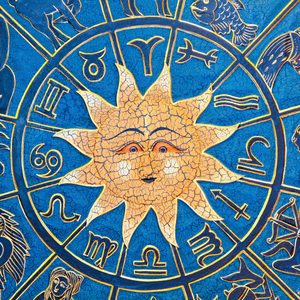
Aries (March 21 – April 19) Upgrade your iPhone already, Aries! Mercury goes direct on June 11—hallelujah! You’ve been breaking appliances left and right all month. It’s time for the madness to stop. If you’ve been asking your significant other for a 60” TV, he or she will finally agree on June 14.
Taurus (April 20 – May 20) A job offer is headed your way, Taurus. That’s right—upgrading your LinkedIn account actually did pay off. And it looks like it’s actually going to pay you. Expect the unexpected in your career sector on June 10. Your long-lost dream of becoming an entomologist might finally come true.
Gemini (May 21 – June 20) Did you shoot a screw into your hand again, Gemini? It’s time for a doctor’s appointment on June 12. This is something that a little Super Glue and Neosporin won’t fix. Everyone knows how hard you work and that you’re practically Superman, but quit playing the hero before you lose all of your fingers.
Cancer (June 21 – July 22) Do you hear that round of applause, Cancer? It’s all for you! What started off as a slow, awkward clap has built momentum and a fan base. Bask in the glory, but keep up the hard work on June 10. Your sign is just around the corner and that’s when you’ll finally be able to unveil your masterpiece to all of your adoring fans.
Leo (July 23 – Aug. 22) BottleRock wasn’t enough of a getaway for your ostentatious taste, Leo? Looks like you and yours will be taking another mini-vacation on June 12. A weekend getaway can do the soul good—and exposing yourself to new scenery might trigger the creative spark that you’ve been searching for. Cut corners where you can to save money—you’ve been rather spendy this month.
Virgo (Aug. 23 – Sept. 22) Is your mom proving to be a little much these days, Virgo? If you’ve taken over primary care for a relative, you’re about to get the rest that you’ve been daydreaming of. There’s only so many times that you can handle finding mom’s socks in the toilet or dad’s toothbrush in the microwave—take a break on June 14.
Libra (Sept. 23 – Oct. 22) It’s time to invest, Libra! Don’t worry, flighty one—we’re not talking about emotional investments. We’re talking lottery tickets. Saturn is heading into Scorpio on June 14 and begging you to take a closer look at your finances. Quit the QVC, and pick up a CD account—or two.
Scorpio (Oct. 23 – Nov. 21) Can you say “trust issues,” Scorpio? Your final ride with Mercury in retrograde may be a wild one. Skeletons from your relationship closet will keep you busy and, maybe even second-guessing. Do your best to avoid ending up on an episode of Snapped.
Sagittarius (Nov. 22 – Dec. 21) Are your family and friends wondering what’s gotten into you, Sagittarius? Someone special has moseyed into your life—and just at the perfect time, too. It’s love or nothing these next few weeks. Dreams do come true—it looks like you finally have someone to share your guilty pleasure and watch The Bachelorette with.
Capricorn (Dec. 22 – Jan. 19) Feel like you’re in the fast lane, Capricorn? Mercury finally went direct on June 11 and your life is about to get back on track. No more email mix-ups or computers crashing. It’s all about to be relatively boring once again. Embrace the adjustment period on June 12—everything is going to feel go-go-go compared to the past few weeks, but you’ll adjust.
Aquarius (Jan. 20 – Feb. 18) Traveling might be just the medicine you need, Aquarius. Pack your bags and head out of town on June 13. This retrograde has worn you down quite a bit. A little sightseeing might help you appreciate what you’re working with back at home—a broken toilet, and no heat or air conditioning.
Pisces (Feb. 19 – March 20) It’s time to make a decision, Pisces! We told you to put a halt on all life-altering decisions last month. Well you can rest assured that Mercury has gone direct and wants you to either quit your job, propose to your sweetheart or move to Canada.
Government efforts to arrest the fact of climate change have been so ineffectual that the call has gone out: What’s needed is a dramatic overhaul of the American political and economic system—before global warming renders the planet—and Sonoma and Marin counties along with it—uninhabitable.
The writer Naomi Klein has argued that rightward-leaning citizens resist climate-change policies because they recognize them as a threat to their way of life, unfettered consumption and capitalism. Climate change is a direct consequence. But the grim face of climate change glowers over the banquet table. The party’s over, and that’s not easy to accept.
And so, this spring, a group of academics launched the Next System Project. Gar Alperovitz, author of What Then Must We Do? called on think tanks, activists and grassroots visionaries for ideas. The Washington D.C.-based organization’s petition was signed by hundreds, among them the North Bay prophet of peak oil, Richard Heinberg (find the petition at thenextsystem.org; see sidebar for more on Heinberg).
Heinberg, a senior fellow at Santa Rosa’s Post Carbon Institute and author of 12 books, does not mince words: “If we were going to arrest climate change, we would have started two or three decades ago.”
Instead, we now face spiking temperatures, weird weather, rising sea levels, species die-offs and ocean acidification. Capitalism as a system has failed to address climate change—because capitalism is premised on the idea of unlimited growth and easy credit, he says.
“We built our economic institutions around consumption based on cheap energy and stoked it with advertising,” Heinberg says. “We just can’t continue to grow.”
The economy is in crisis, Heinberg says, and collapse looms. “We’re not very far away from it,” he says. “Two or three years.”
Sustainability as currently practiced is of no use, he says, unless “we move toward deep sustainability rather than fake sustainability. Fake sustainability asks, ‘How can we sustain what we’re doing right now?’ The answer is: ‘We can’t.’ Resilience is a more important term than sustainability,” Heinberg argues.
“Resilience is being able to absorb shocks and continue functioning.”
Americans are used to having what we want—and many among us have trouble facing the implications of climate change.
Trathen Heckman is the founder of Daily Acts, best known for its annual Community Resilience Challenge in which folks make pledges to save water, grow food, conserve energy, reduce waste or build community—the five spheres of so-called whole-system regeneration. The program has grown from 628 pledges nine years ago to 6,500 this year, and spread to Humboldt and the East Bay through TransitionUS (Heckman is on the board).
“People say, ‘What if climate change is a hoax?’ If people are healthier, happier, living in community, growing food like this,” Heckman says, “it’s just the best and the right thing to do either way.”
Heckman advocates for the Gandhian idea to “be the change.” He boasts the first permitted gray-water system in Sonoma County and worked with a local group to change state policy on gray-water. Daily Acts is as engaged as can be with agencies at every level to further the lifestyle Heckman models with his family—low consumption of water and energy, growing food instead of ornamentals, and, naturally—building community.
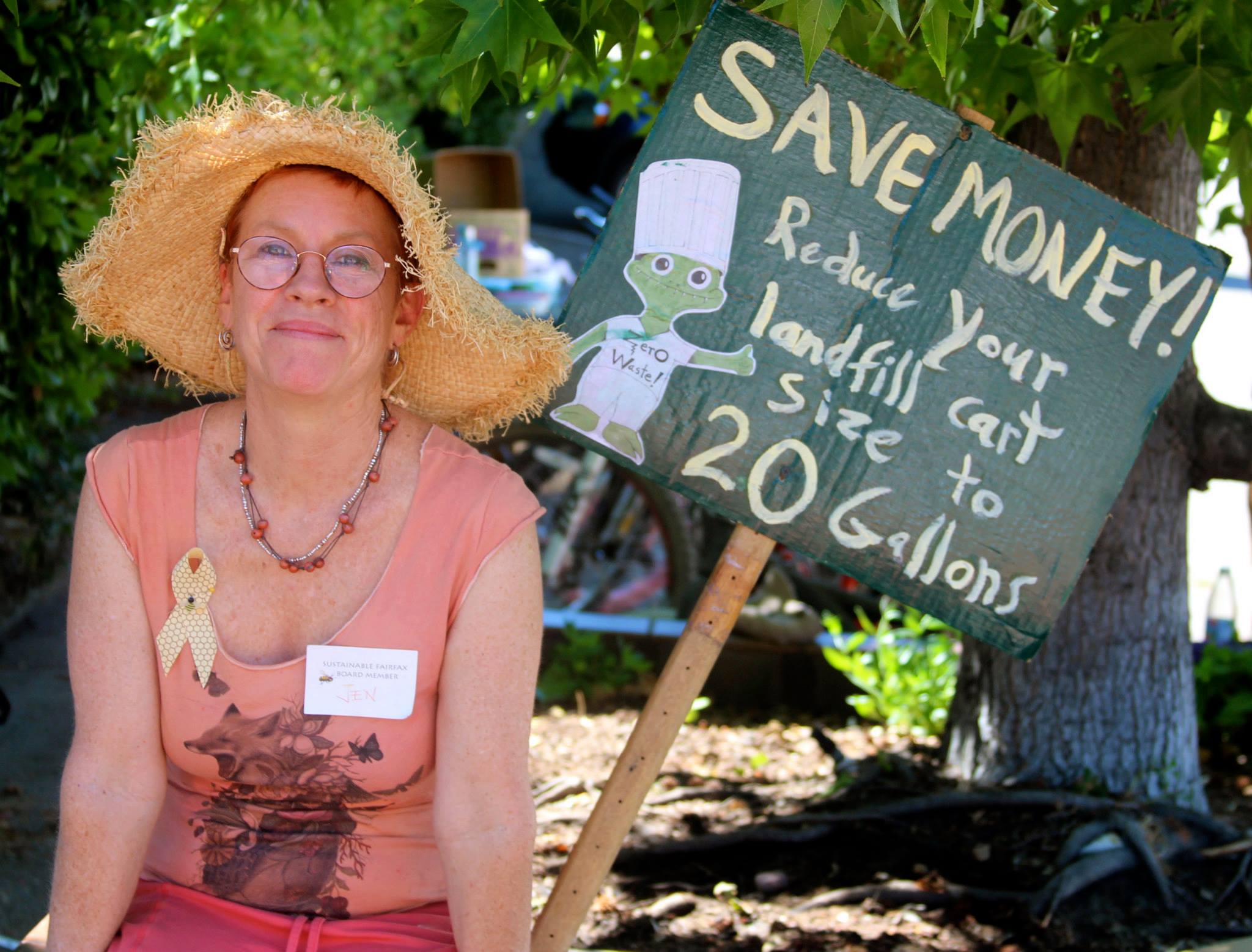
The folks at Sustainable Fairfax recently hosted a panel discussion with Heckman where he gave the good word on gray-water systems, says executive director Jennifer Hammond.
“We need to look at how we localize, prioritize and manage water,” she says. “As climate change accelerates, we expect the drought to continue to worsen.”
Sustainable Fairfax has been around for more than a decade and “was founded by two women,” says Hammond, “whose main concern was climate change.” Those women were Rebekah Collins and Odessa Wolfe, who had a big role in getting the county’s landmark community-choice-aggregate Marin Clean Energy off the ground.
Climate change “has been a driving force in everything we do,” chimes in Renee Goddard during an engaging interview with Goddard and Hammond at the nonprofit’s office in downtown Fairfax.
Goddard is a volunteer at the organization and also the vice-mayor of Fairfax. She notes that the biggest challenge for climate-change activists in Marin is “finding the best channel for behavior change” among residents, many of whom are somewhat wealthy.
Marin County has pushed out numerous initiatives aimed at localized efforts at climate-change reduction, including the “zero waste” initiative and the MCE, a groundbreaking effort to reduce reliance on fossil fuels by breaking free of the PG&E monopoly with local renewables and other green power sources.
“We’ve become the workhorses for some of the county’s goals and initiatives,” says Goddard, “and we are a fired-up nonprofit!”
Rather than eco-shame luxe residents, Sustainable Fairfax leads by example. As the organization was prepping for an upcoming rollout on a big transportation initiative to get folks to leave their cars at home a couple days a week—Hammond and Collins took their bikes, and then public transportation, from Marin to Sacramento for a transportation conference. “We had to make a lot of connections,” Hammond says. “It was kind of a blast.”
Goddard ticks off the trip: “Bike, bus, BART, train, walk, run.”
“We ran to Sacramento to get to this transportation summit!”
The emphasis, says Goddard, in in getting people to take stock of the very small things they can do—simple things like, which disposable coffee cups are compostable? It’s tricky.
“We are big on educating people to affect and mitigate the climate crisis impact,” Goddard says, “but we don’t take positions that alienate people. We are not here to advocate politics. We advocate collaboration.”
Hammond nods in agreement. “We’re not going after minds,” she says. “At Sustainable Fairfax, it’s all about the actions, big and small, that can add up.”
The Napa Valley Vintners (NVV)—a group of Napa Valley growers and winemakers—are well aware of their collective actions. A strong commitment to the environment and the community has been a long-held practice, says Patsy McGaughy, communications director at NVV.
The Napa Green Winery and Napa Green Land programs predated, by a few years, a 2011 NVV climate change study—one that aimed to point out what the impact of climate change could be for winemakers. The goal was to help Napa wineries reduce energy use, water use and waste, McGuaghy explains.
Michelle Novi works in industry relations at NVV and is known as the “queen of green” there. She helps participating vineyard get the coveted certification from Napa Green Winery or Napa Green Land (there’s a lot of crossover given that many vineyard owners also own the land). “We will essentially walk them through a water audit, an energy audit, a waste audit—looking at what they are doing on-site and tailoring their plan to their operation,” Novi says.
A vineyard gets a three-year certification from Napa Green Winery only after the county Public Works Department does its own audit. It’s a tough and coveted designation, and a vineyard that wants to re-certify after three years has to “do even better than you just did,” McGuaghy says.
The organization hopes to get all of its members certified by 2020 (there’s more than 500 of them). This April it highlighted several vineyards for work they’ve done to take up the climate-change call. Among them was Honig Vineyard & Winery in Rutherford, which installed solar fields and got hooked into the Marin Clean Energy community choice aggregate. And, the winery bought a company car for errands—a Nissan Leaf, natch.
Outside of such glowing examples close to home, there is the sluggish national and international response to the climate crisis. But the economic system is not about to unravel, according to Michael Shuman, an economist and a fellow at the Post Carbon Institute.
He’s the author of Local Dollars, Local Sense, his eighth book. Like Heinberg, he is a committed proponent of localism. But Shuman does not believe all is lost under the remorseless yoke of capitalism.
“Yes, many features of doing business-as-usual will have to change. But there’s a lot to be said for a healthy private marketplace with government setting the rules, and a high degree of decentralization.
“I think scenarios of economic collapse are the Y2K of the environmental movement,” Shuman adds, referring to the turn-of-the-last-century panic over the computer glitch that wasn’t. “People predict catastrophes that just never happen. We’re a big economy with many working parts. Chances are things are going to go wrong slowly rather than all at once.
“More self-reliant local economies will make life easier and safer.”
Local business is the core driver of our economy, and Shuman says that the more self-reliant a local economy can become, the more its citizens’ lives will be made easier and safer through whatever climate-change calamities are around the bend.
As Shuman explains, the vast majority of local businesses (about 99 percent of them) have fewer than 500 workers—yet they provide 90 percent of all jobs.
“Over the last 20 years, if local businesses were really becoming less competitive,” says Shuman, “we should have seen a shift from small to large; and while many people believe this is the case, empirically it’s not true.”
Locally directed spending more than doubles the number of dollars that circulate among community businesses. Economists call it the multiplier effect. The Sonoma County Food Action Plan noted that if $100 million more dollars of locally-produced food were consumed in the county, local economic activity would increase by $25 million.
And, localization nurtures diversity as it fosters accountability: “If a CEO of a company behaves badly, he is exposed to the ire of the community,” says Shuman. Shame is a powerful motivator. He adds, “localization is the ticket for expanding global wealth and even global trade, so long as it is less intensive in non-renewables.”
There are local enterprises all over the place in the North Bay, poking up like mushrooms out of the fecund soil. But the localism movement in the county is so decentralized that it’s actually kind of hard to describe, says Marissa Mommaerts, who works with the Sebastopol-based Transition US.
Transition Town is a movement that began in Ireland in 2005. Its core tenet is to build resilient person-to-person networks in communities. Irish neighbors worked together to install organic gardens, share skills and tools and enjoy the fruits of their labor in community get-togethers. The movement has spread all across the world.
Mommaerts keeps the dismal specter of climate change firmly in view. She gave a talk recently at Chico State University and said, “If we act alone, it will be too little. If we wait for government to act, it will be too little too late. But if we come together to act as a community, it could be just enough, just in time.”
Mommaerts is 28 years old and hails from Wisconsin. She says that her main goal is to “slow climate change, adapt to impacts and have something left standing on the other side.”
She says the American economy is “at the root of our ecological and economic crises” and says a growing movement is redefining investment so it is about more than profit, and that “extra profit is reinvested in the community.”
Kelley Ragala is a co-founder of GoLocal, a point-earning network of local businesses. Now she’s now engaged in a new project, North Bay Made, to promote Northern California products. Then there’s Oren Wool, another inspired North Bay visionary who coordinates the Sustainable Enterprise Conference that is now in its 10th year with 160 participating companies.
“Companies that are sustainably run are our best community citizens,” Wool says. The Sustainable Enterprise Conference is intended, he says, “to help people find new ways to keep their money active locally. In America one of our biggest problems is economic stratification. A sustainable community would be addressing that. If we had built companies to address environmental problems, we wouldn’t have climate change.”
Farms remain the heart of the local network. Petaluma Bounty is a small urban farm that has helped start eight other farms that are now independent. The group partners with the Petaluma Health Center to host an eight-week program that serves youth at risk of obesity. The program starts with an invitation to the farm so young people can see how their food is grown. There’s also a Produce Prescription Program: For needy patients, practitioners may write a prescription for $10 of organic produce, to be filled at the farm.
Suzi Grady is the director of programs at Petaluma Bounty, which along with dozens of other organizations is a member of the Sonoma County Farm System Alliance.
“You can talk until you’re blue in the face about how things aren’t working,” she says, “and until you put your energy into an alternative that does work, you’re just blowing hot air.”
She’s not blowing hot air: Bounty’s programs reach deep into the community. The alliance has endorsed Sonoma County’s Food Action Plan, a landmark collaboration of stakeholders throughout the county food system, which is funded by the Health Action Initiative, a county-wide effort to “develop a framework for a community engagement effort to get people involved in creating a healthier Sonoma County.”
“The county health department had great foresight,” Grady says, “in seeing the link between diet and health. Sonoma County is considered the foodie destination of the U.S. We’re selling this image, but how do we make it work for everyone? I think we’re ready to have that conversation.”
It’s fitting that an emergent localized economy started around food. The entire purpose of an economy is to provide for needs, as “slow money” investment specialist Marco Vangelisti explains in presentations for Transition US.
Our economy is in trouble and its precarious condition is largely due to its reliance on debt. “People think that the government creates money,” Vangelisti says, “but it’s the banks that create money, and they create it from debt.”
The Napa Valley Vintners understand the complexity and challenges wrought by climate change—but wanted a better understanding of actual impacts in Napa County. The organization notes on its website that over the past decade, there’s been quite a lot of dramatic headlines around climate change and its impact on winemaking. They’re not denying it, but they are looking for some localized context.
“While the news is titillating and makes for dramatic headlines that Napa’s famed wine industry is doomed, the headlines belie the fact that there is a lot that is unknown about climate change as it affects the wine industry and particularly Napa Valley.
“There’s 30,000 Napa Valley jobs and billions in revenue at stake, and even as the vintner’s group noted that climate change can and will affect all fine wine-growing regions worldwide … the results will not necessarily be a blanket effect, as climate change is not a one-size-fits all phenomena.”
The vintner’s organization continued, in somewhat eye-popping manner, with the following observation: “There is also little consideration for the potential impact of global warming on all forms of agriculture and human and animal activity—were this apocalypse to come true, one could argue that world hunger, deforestation, coastal flooding and other horrific environmental changes would dominate the world’s agenda and no one would care about where the best Cabernet Sauvignon is produced.”
Enter the next-economy movement, where optimism splashes forth from all quarters—a refreshing and diverse development. But if governments and big corporations continue to push policies that contribute to climate change, will local efforts to understand and work the problem really do any good?
The stakes could not be any higher. “In the hot and stormy future we have already made inevitable through our past emissions,” Naomi Klein wrote in This Changes Everything: Capitalism vs. The Climate, “an unshakable belief in the equal rights of all people, and a capacity for deep compassion will be the only things standing between civilization and barbarism. Climate change, by putting us on a firm deadline, can serve as the catalyst for precisely this profound social and ecological transformation.”
Tom Gogola contributed reporting.
Richard Heinberg: Cheerleader for local
By Jonah Raskin
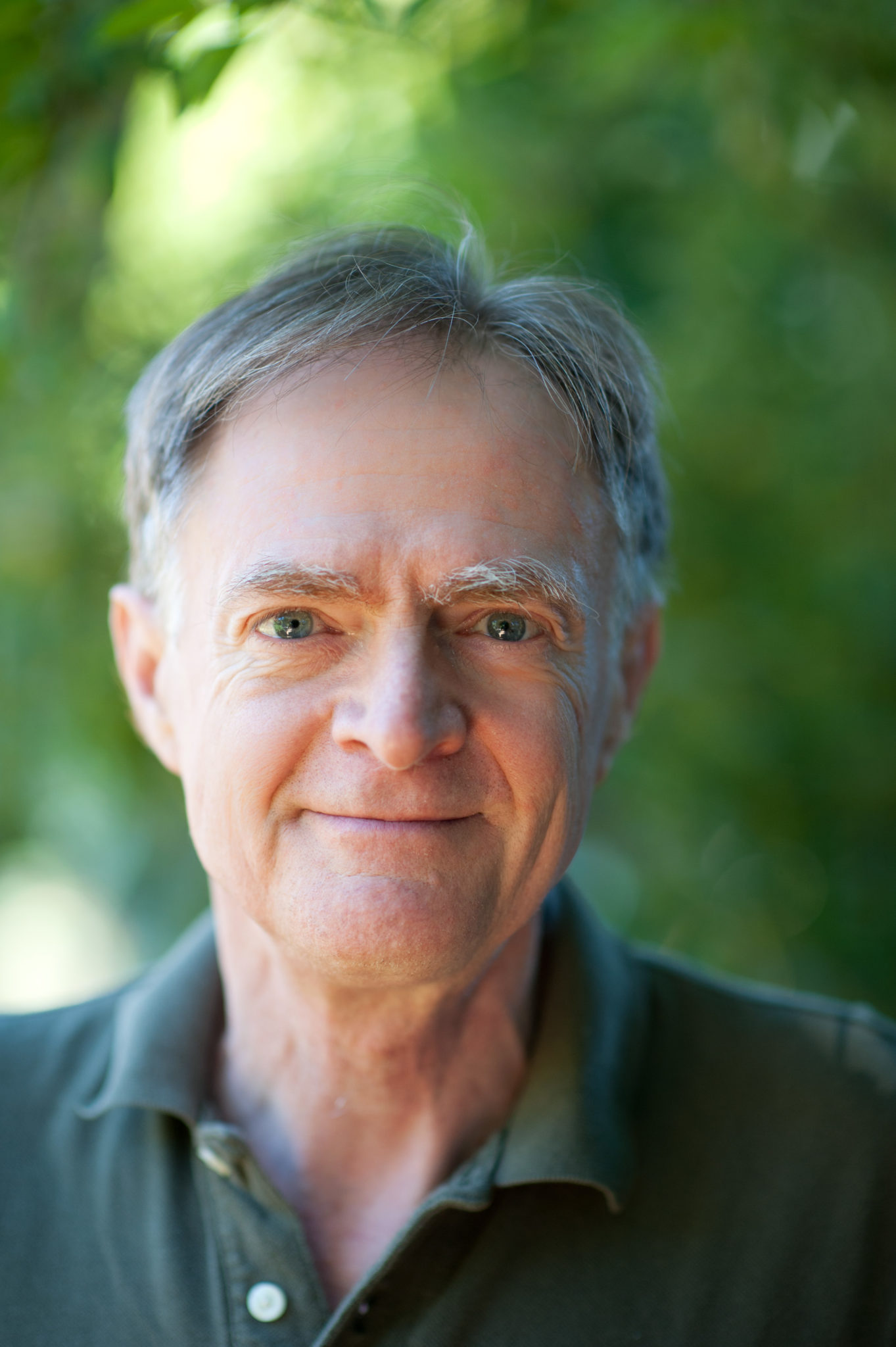
Barefoot and in a bright green T-shirt, Richard Heinberg kicks back in his Santa Rosa living room and outlines his views on the local, the global and the future of civilization. A charismatic public speaker and the author of a dozen books including Afterburn, his latest, Heinberg and his wife, Janet Barocco, raise chickens, grow vegetables and cultivate backyard fruit and nut trees that nourish them all year long.
“I’m a cheerleader for local and all in favor of local solutions to economic problems,” he says. “We need to reverse the trend toward the global civilization that creates instability and imbalance, and that wreaks havoc with communities everywhere.”
Richard Heinberg
Heinberg offers suggestions for local consumers: Take your money out of big banks and deposit it in credit unions; buy at food co-ops; vote with pocketbooks; and push for local power apart from PG&E.
He also urges political activism. “Citizens should tell their representatives to reject the Trans-Pacific Partnership (TPP) that was negotiated in secret and that’s meant to increase the volume of international trade at the expense of local businesses and local economies,” he says. “One provision of the TPP says that if municipal governments promote local over imported, the importers can sue for lost profits.”
Born in Missouri in 1950, Heinberg didn’t tune into localism until 1992, when he settled in Sonoma County and began to track the dangers of globalization. From 1998 to 2008, he taught localism at the New College of California in Santa Rosa. In 2009, he joined the Post Carbon Institute, where he’s now the senior fellow-in-residence.
Heinberg points out the limits to localism. “If your goal is to be 100 percent local, then you won’t consume very much at all,” he says. “The point, however, ought not to be 100 percent local. Trade from distant places will always be necessary. But we ought to return to some kind of balance.”
He adds, “In the last three decades, long-distance manufacturing and trade has greatly superseded local manufacturing and trade, which means that our civilization is much more brittle and far less resilient than it was, say, 30 years ago.”
In Afterburn, Heinberg offers gloomy thoughts on Santa Rosa, Sonoma County and California generally. They’ve all “bet their futures mostly on cars, trucks, airplanes, highways and runways—and therefore, in effect, on oil,” he writes. “It appears to be a losing bet.”
Heinberg hopes to see a dismantling of the power of corporations to maximize profits at the expense of society as a whole. “Our civilization is well in decline,” he says. “The process will accelerate, though we can slow it by moving away from corporations and toward co-ops that operate locally and that offer high-quality products to consumers.”
Despite gloomy thoughts and a host of even gloomier book titles to his name—The Party’s Over, Powerdown and The End of Growth—Heinberg enjoys a good party, a good laugh, a good meal and the good life itself.
A violinist, book designer and illustrator, Heinberg is a sensualist who reveres the senses. To that end, a real sense of joy and delight in community bubbles up between some of the gloomier passages in Afterburn. And he’s positively upbeat in a chapter called “All Roads Lead Local.”
This week, you’ll find the Pacific Sun‘s Eco Living issue–featuring stories on North Bay heroes of climate change, expanded marine sanctuaries along the Northern California coast, avian flu in the region and more–on stands and online. On top of everything eco, Peter Seidman writes about a new campaign that encourages trail etiquette in Marin open spaces, and Tom Gogola reports on San Rafael Rocks, an unprecedented art, film and music festival that benefits at-risk kids and kicks off this Friday, June 12. Don’t miss it!
The state-mandated water conservation that began this week asks Marin residents to reduce their water use, even though the reduction will not do much to help the statewide water picture. Call it a mandate for Marin to accept its place as a member of the California community of counties. Call it a request for shared sacrifice.
How that call will play in a county that’s been highly resistant to participating on a wider stage regarding issues ranging from affordable housing to water use remains to be seen. The mandatory conservation began Monday. It recalls—or should recall—the failed attempt in the county to build a desalination project that could insulate Marin from drought. It also recalls—or should recall—the adamant refusal to accept the idea of a proposal to possibly construct a pipeline from the East Bay that could provide Marin with emergency water in the event of a severe drought.
The state-mandated conservation is part of the governor’s attempt to meet the challenges of the severe drought in other parts of the state. Marin has been lucky and has escaped drought conditions. The Marin Municipal Water District (MMWD) serves about 186,000 customers in Southern and Central Marin. The North Marin Water District serves about 61,000 customers in Novato and West Marin.
The North Marin District, which receives the bulk of its water supply from the Russian River and reservoirs, must reduce its water use by 24 percent. The MMWD must cut back 20 percent.
Dan Carney, MMWD conservation manager, says that the State Water Resources Control Board arrived at the cutback targets by calculating the average per capita consumption using 2013 as a baseline. The average state-mandated cutback is 25 percent. The range of reductions that the state is requiring runs from 8 percent to 36 percent.
The MMWD receives about 75 percent of its water from reservoirs in Marin. It receives about 25 percent from the Russian River under a contract with the Sonoma County Water Agency.
The MMWD is in large part—actually 75 percent—insulated from drought conditions that could affect the delivery system in the rest of the state. Even so, the state requires Marin to show good faith as a member of the California water use community by following the 20-percent-reduction mandate even though Marin reservoirs are at about an average level.
Residents of the MMWD have already demonstrated an exceptional ability to conserve. Many district residents were around for the “Great Drought” in the 1970s. Putting bricks in toilets became a way of life—a way to reduce water consumption before low-flow toilets. Residents stopped washing their cars and watering their lawns. Short showers were de rigueur.
The water-reduction measures worked. Still, a pipeline across the Richmond/San Rafael Bridge, in large part, saved the day and reminded district residents that Marin reservoirs are vulnerable to severe drought conditions. According to a district Urban Water Management Plan report, a periodically prepared document sent to the state, “The district’s programs for demand management through water conservation began in 1971, and a study in 1999 found that the per capita demand [had] been reduced by an estimated 25 percent during the period from 1970 to 1998.”
The state-mandated reduction will be assessed based on consumption from June of 2015 to February of 2016. The cumulative total reduction must meet the 20 percent target in MMWD and 25 percent statewide.
Meeting the target should be fairly easy for MMWD customers. Using 2013 as a baseline, customers in the district had already reached a 13.5-percent-conservation target in 2014. The historic lack of rain in 2013 helped spur the reduction. Residents of the MMWD need to reduce their consumption by just 6.5 percent more to reach the state target. To customers who already follow good conservation procedures, Carney says, “Thank you. I’m not asking for anything more.”
Carney says that meeting the state target, even though Marin reservoirs are in good shape, is a benefit to the district and the county. “Whether it’s a state order or people recognizing that it’s possible to increase conservation, it’s a good thing for Marin to raise conservation awareness.” Carney notes that even with a normal amount of water in the reservoirs and a normal amount of rainfall in winter months, MMWD still has only a two-year supply of water in MMWD reservoirs.
Running a pipeline from the East Bay similar to the one in the 1970s was a topic of discussion when the district once again considered the possibility of augmenting the water supply in the county if another severe drought hits the North Bay. The proposal to just investigate the possibility triggered strong opposition that resulted in the idea getting put back on the shelf. Chief among the objections was the unsubstantiated charge that bringing more water to Marin would bow to big-time developers slavering for an increased water supply. The argument was an intrinsic rejection of the planning process and a declaration of no faith in planners and elected officials. The debate about water supply entrapped the discussion about affordable housing and how much support the county should give it.
A similar objection was raised when a proposal for a desalination project was the topic of the day. Consultants submitted a report stating that desalination would work as a drought-proof water source for district customers. A report outlined four options that the water district could pursue. As with most public works projects, the initial cost estimates—including facilities ranging from $111.2 million to $173.4 million to build— grew as time went by, but the MMWD manager at the time said considering inflation, the costs were within an expected range.
There’s no doubt that desalinating water is a relatively expensive proposition, although costs are coming down as the technology improves. Creating a small plant that could be expanded was meant to address the cost issue. Critics also raised the possibility that desalination would harm the environment in the bay. But a close look at the environmental studies for the project showed few, if any, truly negative effects. A plan to take brine after desalinating the water, and pump the brine to a waste treatment facility in Central Marin meant that the salinity of bay water actually could improve because of the desalination process. Adding brine to the fresh water from the treatment facility would bring the water closer to the salinity level of the bay. The essential takeaway was that not all desalination plants are the same. Each one needs to be assessed based on its proposed procedures.
Another objection centered on energy use. Desalination takes power. Critics soundly rejected the idea that the desalination plant could combine with a solar facility either here or elsewhere in the state to produce clean-power sweet water.
But it was a philosophical rejection of desalination and also of a pipeline that created the strongest pushback to the idea that Southern and Central Marin need an increased water supply. Evidence of that position came with the caution among critics that increasing Marin’s water supply would mean that water could be exported out of the county. Water in a pipeline can flow both ways, critics charged.
Critics succeeded in forcing the district to go to voters for approval of a desalination plant, if and when the district decides to proceed with desalination.
That, in turn, raises the question of whether Marin residents in general, and MMWD residents in particular, see themselves as participating members of a wider community and would, as a matter of social service, be willing to contribute to the wider community’s water supply well-being.
The good news is that MMWD customers should be able to meet the additional 6.5-percent-conservation target—and make additional conservation gains through simple actions like shutting off faucets and following mandatory lawn-watering restrictions. Conservation rules and tips abound on the websites of the two Marin water agencies.
The bad news is that even with Draconian conservation measures, MMWD customers face the prospect of a water deficit when the next multi-year drought hits.
SELMA makes clear in its opening frames that it’s going to be a subtle film, not an easy hagiography of a national hero, and it’s refreshing to see how many scenes show Martin Luther and Coretta Scott King vulnerable and trusting their flagging spirits to the energies of other people. When King does act, in the days winding down to their fateful march to Birmingham, he shows a surprising adroitness at tactics and negotiation with unruly people, and reveals a gift for protest choreography in the new television age. But it’s the film’s unsentimental look at the work of creating a movement—toxic battles between the Southern Christian Leadership Conference and local rival Student Nonviolent Coordinating Committee (SNCC), the petty turf-guarding of Alabama officials—that had the effect for me of loosening the floodgates: I couldn’t stop crying through the entire film. Intensely suspense-making as it lays out the ground game of the voting rights march (I was reminded of The Battle of Algiers) and focusing on the key players, this film captures, like no other, the apartheid mindset running through the 1965 South. David Oyelowo does a matchless incarnation of the civil rights leader under the sure helm of director Ava DuVernay. The question of Lyndon B. Johnson’s guilt or innocence (he was a more sympathetic player than depicted here) has opened the film to criticism, which is fine for the history books but beside the point: He’s an emblem for white America at a time when, like King, they were listening to the better angels of their nature, but not sure if it was yet time to live by them.—Richard Gould
Hero: Thumbs up to the Footpeople for taking on the cyclists who terrorize hikers, equestrians and dogs on Marin’s open space trails. The Footpeople, an advocacy group, released a report calling for better enforcement of the bike laws and an improved tracking system for violations. Rogue and dangerous mountain bikers are certainly a minority of the cyclists on the trails, yet ask most folks on two legs if they’ve had a close call with a two-wheeler and you’ll know it’s a fairly common occurrence. With almost 16,000 acres of land in the Marin Open Space District, there’s plenty of room for all law-abiding users. Let’s take the Footpeople report to heart and slap the handcuffs on the cyclists jeopardizing the safety of everyone on the trails.
Zero: Is the Sausalito City Council cowered by 20 letters? Bill Hess of Greenbrae is appalled that council members recently reversed course about heavy fines for cyclists parked illegally in Sausalito. “Maybe other people engaging in illegal activities can get their friends to write letters to the Sausalito City Council to get them not to fine their activities,” Hess said. (Imagine all of the fun. Run naked in the downtown fountain. Use the seal statue as a water slide. Block off Caledonia Street to tourists.) “These must have been very powerful letters,” Hess said. And, he wonders whether there is an intimate relationship between the council and cyclists. We think the council is cowered, not by cyclists, but by the wrath of the businesses catering to tourists on bikes.
Got a Hero or a Zero? Please send submissions to ni***************@***oo.com.
Q: My fiancé is good friends with his ex-girlfriend from college. (We’re all in our 30s.) She isn’t a romantic threat, but she’s become a source of stress. Long before I met my boyfriend, they began hanging out at a local bar together twice a week. They still do this, and I go along, but I’ve increasingly found these evenings a draining time-suck. When I don’t want to go, my fiancé hangs at home with me. This prompts a tantrum from his ex-girlfriend, complete with a barrage of angry texts. I’ve tried reasoning with her, but she claims that when he was single, he “dragged (her) out constantly” so he still owes her. My boyfriend is a laid-back, non-confrontational kind of guy and just says she needs to calm down.—No Wonder They Broke Up
A: They’ve translated the Dead Sea Scrolls, and it turns out they’re actually a 900-page list of everything this “friend” has ever done for your fiancé.
OK, when he was single, maybe he “dragged (her) out constantly.” Unless he did this by unchaining her from the wall and yanking her to the bar on a choke collar, it was up to her to decline. Gotta love the notion that her companionship led to some unwritten indentured “frienditude” contract that he still owes big on. (One person’s friendship is another’s mob extortion scheme.)
It’s your fiancé’s job to be “reasoning” with his friend, not yours. (You’re marrying the guy, not adopting him and trying to get him into a good preschool.) You excuse his passivity by describing him as a “laid-back, non-confrontational kind of guy.” Well, there’s laid-back, and there’s confusing onlookers as to whether you’re a person or a paperweight.
The thing is, whether somebody gets to abuse you is usually up to you. In other words, your fiancé needs to grow a pair (or at least crochet a pair and pop ’em in) and then get on the phone. Tell him that he needs to tell this woman—calmly and firmly—something like, “You know, lovey, I’ve got a fiancé now, and I can’t be as available as I used to be.” He needs to shut down the abusive text storm the same way, telling her, “Not acceptable. Cut it out,” and then block her number if she keeps up the telephone thuggery.
Sure, it’s uncomfortable standing up to a person who’s been treating you badly—an uncomfortable and necessary part of adult life. It’s how you send the message, “Nuh-uh … no more” instead of “Forever your tool.” And here’s a tip: You don’t need to feel all cuddly and good about confronting somebody; you just need to do it, as opposed to cowering in fear as the Bing! Bing! Bings! of their texted multi-part tantrum come in on your phone. Start encouraging assertiveness in your fiancé now, and keep letting him know how much you admire all the steps he takes. He could soon be a man who’s got your back when there’s trouble—and not just in the corner of his eye as he curls up in a fetal position and whimpers, “Donnnn’t hurrrrt meeee!”
Q: I’ve started seeing this wonderful guy. There’s no official commitment yet, but I have no interest in anyone else, including the two guys I was casually seeing from time to time. When they text me to try to hook up, I won’t respond or I’ll say I’m busy, but they don’t seem to be getting the message. Admittedly, in the past, I’ve said “no more” and then caved when I’ve gotten lonely or had a few glasses of wine. Also, how do you say “beat it” without being mean?—Go Away Already!
A: There’s little that tempers a man’s enthusiasm for a late-night shag like responding to his “want 2 hook up?” by texting back, “YES! I’m ovulating & dying 2 have a baby!”
But it shouldn’t have to come to this—that is, if you start by actually saying “no” instead of starting a game of “Guess why I’m not returning your texts?!” An ambiguous “no”—not responding or saying, “I’m busy”—is not a “no.” This is especially true of your ambiguous “no,” which, in the past, has translated to, “I’m not drunk/lonely enough. Try me later.” Because of this, you may need to repeat even a firm, “I’m no longer interested” a few times for these guys to get that you aren’t just confused about what you want, or playing hard to get. But in general, the nonevasive “no” eliminates the need to make your point repeatedly, in turn curbing the likelihood of your getting mean on the phone (or, worse, hiding under the bed when you hear the ladder being leaned against your upstairs window).
“Well I don’t care what the critics say—I think it’s a great message!”
So confesses Will Durst, exiting the San Rafael movie theater where we’ve just watched the upbeat, epic action movie Tomorrowland, Disney’s optimistic answer to the end-of-the-world gloom and doom of Mad Max, San Andreas and Age of Ultron.
Wait a minute.
Age of Ultronwas a Disney movie, wasn’t it?
Never mind.
“You know what? I liked Tomorrowland a lot!” continues Durst, the San Francisco-based comic, author and political satirist known for finding a silver lining of humor in even the worst of situations. “I like the whole ‘hope’ thing in the movie. Stop with the doom and gloom already. I think the movie is totally right. I think all of these apocalyptic-nightmare-dystopia movies are a self-fulfilling prophecy. It’s nice to have something that challenges that a little.”
Tomorrowland, directed by Brad Bird (The Iron Giant, The Incredibles) is nothing if not a challenge to the norm—not that it doesn’t offer a bit of sobering future shock on its way to suggesting a possible redemption. The movie is inspired, in part, by the utopian dreams of Walt Disney, who concocted the original Tomorrowland attractions at Disneyland and went on to dream up the futuristic Epcot Center at Disney World. It follows a brilliant teenager named Casey Newton (Britt Robertson), who hears warnings of global warming and nuclear proliferation and asks, “What are we doing to fix it?” When she finds a mysterious pin showing her a glimpse of a big, bright, beautiful city full of rocket packs and hovering busses, she heads out in search of the reclusive inventor Frank Walker (George Clooney), who might know how to take her there.
Unfortunately, she eventually learns, the world is going to end in 58 days, and nobody cares enough to change it. Critics have called the movie “half-baked” and “simplistic,” even accusing it of having lapses in logic. But criticizing a film like Tomorrowland for a few logical failures is a bit like finding plot problems in Aesop’s Fables.
“This fable has plot problems!” Durst says, taking on the haughty tone of some anti-Aesop pundit. “If frogs could talk, would the frogs not be more interested in locating a sustainable food source than engaging in existential discussions on the nature of humankind?’ These frogs have clear logic issues!”
Despite its Aesop-like nature, Tomorrowland does carry plenty of action, with killer robots, spaceships, flying contraptions, laser beams, explosions, implosions, inter-dimensional travel and an awesome battle in a store full of Star Wars kitsch and Lost in Space collectibles.
“The thing is,” Durst says, once we’ve settled down with our biodegradable coffee cups filled with fair trade beverages, “the world really might be coming to an end if we don’t do something about it. And we really do love movies about the apocalypse. In Tomorrowland, the one guy says that when we were given a vision of the future we were heading for, we turned it into movies and video games. And he’s right. Even Stephen Hawking says that if we create real Artificial Intelligence (AI) it could be very bad, but instead of abandoning it, the corporations plow ahead with AI and the rest of us watch movies in which the robots take over the world.”
That—in a nutshell—is exactly what Tomorrowland is saying. Durst has been thinking a lot about the end of the world lately. Having struck a chord with his hit one-man-show about the past, Boomeraging: From LSD to OMG—which plays this Friday and Saturday at 8pm at San Rafael’s Belrose Theater—he’s about to launch a brand new solo show titled, Durst Case Scenario, in which he looks at the future.
“The new show is definitely going to touch on the end of the world,” Durst says. “You know there are those Worst Case Scenario books, giving contingency plans on how to escape from grizzly bears or how to escape from quicksand. Well in my new show I’ll explain what to do if you find Vladimir Putin in your hotel room shirtless. So it’s about terrible things, but it’s funny. It’s like if the zombie apocalypse happened, but all the zombies were wearing clown noses.”
Actually, that would be terrifying.
“I’m just glad there were no zombies in Tomorrowland, Durst goes on. “I’m so tired of zombies. And who invented fast zombies? When did that happen? Zombies aren’t supposed to sprint, like in a lot of the new zombie movies. Zombies are supposed to trudge and stumble. I want dim, stupid, meandering zombies. Oh wait! That’s the Tea Party!”
One of the points of the movie is that the end-of-the-world scenarios we play out in our entertainment aren’t just society’s way of examining the things we are afraid of. These movies are our way of preparing for a future we’ve consciously chosen to embrace.
“Sure, ’cause if the end of the world comes, then we’re off the hook,” Durst says with a laugh. “The apocalypse is coming this afternoon? Great! I guess I don’t have to go to work tomorrow. And I can stop recycling while I’m at it! Seriously though, nobody wants a drought in California, right? But is anyone willing to actually change their lives to keep it from coming? Of course not!
“In the movie, the guy says, ‘You have concurrent epidemics of starvation and obesity. How does that happen?’ He’s right. We could fix a lot of our problems right now, but that would hurt the corporations’ bottom line, so we just shrug and move on. Even when we fix one problem, we create another. We’re figuring out how to make machines to turn seawater into drinkable water, which is great, right? So what’s going to happen when we perfect these systems? We are going to suck the oceans dry! Because that’s how we roll.”
The best thing about Tomorrowland, though, is its suggestion that if enough people were inspired by a positive vision of the future, the dreamers and thinkers and artists might band together to find a way to solve our problems in a sustainable, mutually beneficial way.
“I actually think it can happen,” Durst says. “I do. I think we can get out of our own way, and make it hip to be positive, and we can find the people who can save the world. I believe there can be a positive, optimistic tomorrow.
“I just hope,” he adds with a laugh, “the world lasts long enough for tomorrow to happen.”
Ask David if he thinks the world is ending at ta*****@*******nk.net.
The Pac Sun’s concern over illegal immigrants’ bike commute is laughable [“Critical Connection,” May 27]. The average Canal resident commutes by bike about three blocks to a hardware store to look for day work. Any who travel further drive or take the bus. As far as concern over these poor people having to brave the perils of traffic, if you came down here you’d see that all the illegals and their descendents ride their bikes on the sidewalks (which is illegal), never on the street. Why? Well, they know their fellow illegals are driving. Now that illegals have drivers’ licenses, they’re storing their cars in the industrial area of Kerner Blvd., taking away parking for employees in the area. Sorry, I’m not seeing an upside to illegals unless you want cheap lawn care.
by Amy Alkon
Q: My girlfriend always cries that she’s “broke.” I just ended up buying her groceries and paying to have her car fixed, and then I discovered by accident that she’d recently paid hundreds of dollars for hair extensions, beauty products and a facial. She isn’t the first girlfriend I’ve had who prioritizes beauty stuff over necessities. I...
by Leona Moon
Aries (March 21 - April 19) Upgrade your iPhone already, Aries! Mercury goes direct on June 11—hallelujah! You’ve been breaking appliances left and right all month. It’s time for the madness to stop. If you’ve been asking your significant other for a 60” TV, he or she will finally agree on June 14.
Taurus (April 20 - May...
By Stephanie Hiller
Government efforts to arrest the fact of climate change have been so ineffectual that the call has gone out: What’s needed is a dramatic overhaul of the American political and economic system—before global warming renders the planet—and Sonoma and Marin counties along with it—uninhabitable.
The writer Naomi Klein has argued that rightward-leaning citizens resist climate-change policies because they...
This week, you'll find the Pacific Sun's Eco Living issue--featuring stories on North Bay heroes of climate change, expanded marine sanctuaries along the Northern California coast, avian flu in the region and more--on stands and online. On top of everything eco, Peter Seidman writes about a new campaign that encourages trail etiquette in Marin open spaces, and Tom Gogola reports on San Rafael Rocks,...
by Peter Seidman
The state-mandated water conservation that began this week asks Marin residents to reduce their water use, even though the reduction will not do much to help the statewide water picture. Call it a mandate for Marin to accept its place as a member of the California community of counties. Call it a request for shared sacrifice.
How that...
by Richard Gould
SELMA makes clear in its opening frames that it’s going to be a subtle film, not an easy hagiography of a national hero, and it’s refreshing to see how many scenes show Martin Luther and Coretta Scott King vulnerable and trusting their flagging spirits to the energies of other people. When King does act, in the days...
by Nikki Silverstein
Hero: Thumbs up to the Footpeople for taking on the cyclists who terrorize hikers, equestrians and dogs on Marin’s open space trails. The Footpeople, an advocacy group, released a report calling for better enforcement of the bike laws and an improved tracking system for violations. Rogue and dangerous mountain bikers are certainly a minority of the cyclists...
by Amy Alkon
Q: My fiancé is good friends with his ex-girlfriend from college. (We’re all in our 30s.) She isn’t a romantic threat, but she’s become a source of stress. Long before I met my boyfriend, they began hanging out at a local bar together twice a week. They still do this, and I go along, but I’ve increasingly...
by David Templeton
"Well I don’t care what the critics say—I think it’s a great message!”
So confesses Will Durst, exiting the San Rafael movie theater where we’ve just watched the upbeat, epic action movie Tomorrowland, Disney’s optimistic answer to the end-of-the-world gloom and doom of Mad Max, San Andreas and Age of Ultron.
Wait a minute.
Age of Ultron was a Disney...
Who said anything about 'illegal immigrants?'
The Pac Sun’s concern over illegal immigrants’ bike commute is laughable . The average Canal resident commutes by bike about three blocks to a hardware store to look for day work. Any who travel further drive or take the bus. As far as concern over these poor people having to brave the perils of...