Two Arrested Following Election Day Shooting in Marin City

The Marin County Sheriff’s Office arrested two Cotati residents after a young Black man in Marin City was shot at 1:00 pm on Tuesday, the law enforcement agency announced Wednesday morning. The suspects, Isaac Quixote Rangel, 18, and Jasmine Ciara Medeiros, 18, were booked into the Marin County Jail several hours after the shooting.

Rangel is currently being held on $500,000 bail and was charged with attempted murder and carrying a concealed weapon. Medeiros was charged with being an accessory.

The suspects went to Marin City to look at an item for sale. A struggle ensued and Rangel, a passenger in the vehicle, allegedly shot a firearm and hit the victim, according to a statement released by the Marin County Sheriff’s Office on Wednesday morning. 

After witnesses provided Sheriff’s deputies with a description of the vehicle and its occupants, the agency issued a countywide “be on the lookout” order. The car was spotted on northbound Highway 101 near Freitas Parkway at around 1:10 pm by a San Rafael police sergeant. He followed the vehicle while waiting for back-up units.

The Sheriff’s Office and California Highway Patrol made a traffic stop in Petaluma and detained Rangel and Medeiros, according to the Sheriff’s statement.  

Deputies discovered a .40 caliber gun on the side of 101 near Marin City.

Witnesses Amber Allen Peirson and Paul Austin were celebrating Election Day with friends at 100 Drake Avenue in Marin City when they heard the gunfire a block away. A black car with multiple occupants immediately left the scene of the shooting, they told the Pacific Sun on Tuesday.

The victim, who is approximately 19 to 20 years old, was taken into surgery after being transported to a local hospital, the two witnesses said. He is currently in stable condition, according to the Sheriff’s Wednesday morning statement.

After Peirson heard the shots ring out, she ran to the victim and spoke with him while he lay on the ground. Two nurses nearby also quickly responded to help the victim until Marin County Sheriff’s deputies arrived and began providing medical treatment. Medical and fire crews also responded and the victim was transported by ambulance to a local hospital.

Deputies interviewed Peirson, Austin and other witnesses. A short time later, Peirson, Austin and two other witnesses were brought to Petaluma to identify the suspects and their vehicle. said.

Though the shooting occurred just two days after approximately 1,000 Trump supporters gathered in Marin City, the only community in Marin County with a large Black community, the Sheriff’s Office said Tuesday afternoon that it had “no information to believe the shooting is associated with the event.”

In an interview on Tuesday afternoon before the Sheriff’s Office released information about the suspects, Peirson said she was concerned that the rally may have thrust Marin City into the spotlight. 

“In some ways, I think it is related to the Trump rally,” she said. “Marin City received national attention and I think it activated people to come here. My big fear is more people will come.”

Tensions were certainly high during the event on Sunday. Trump supporters yelled racial epithets and curse words at Marin City residents. The rally vehicles were pelted with eggs and shot with paintballs, Schneider, the Sheriff’s spokesperson told the Pacific Sun on Sunday. 

Marin City residents were not alerted that the rally was going to take place in their neighborhood and many are still reeling from its effects on the small community.

“There is a heightened level of anxiety from Sunday,” Austin said.

The Sheriff’s Office received 911 calls about physical altercations; however, law enforcement didn’t observe any physical fights, and no victims have come forward, Schneider said.

In a statement released on Tuesday morning, Marin County officials condemned the “Trump Train” event, which they say featured “race-based hate speech and acts of blatant intimidation.”

In its statement on Wednesday, the Marin County Sheriff’s Office thanked the witnesses that came forward with accurate and timely information that led to the arrests.

“The police did a good job,” Peirson said. “Multiple officers came. They listened, they were calm and they let people be angry and have their emotions. They engaged.”
Marin Artist Follows Rising Tides with Aquatic Sculptures

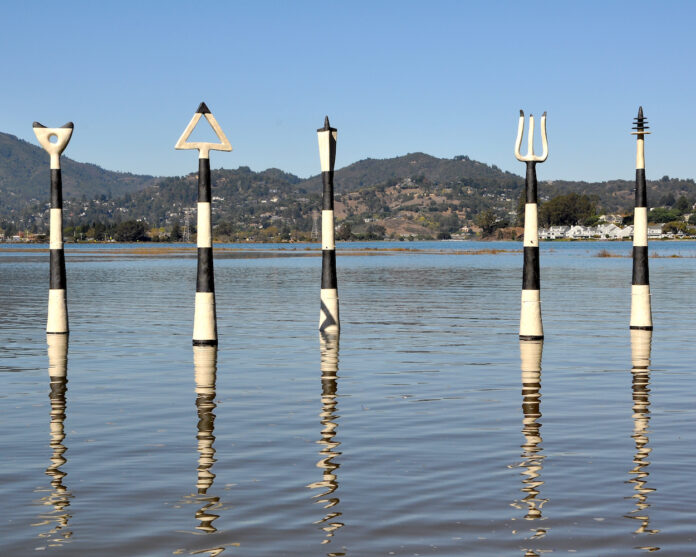
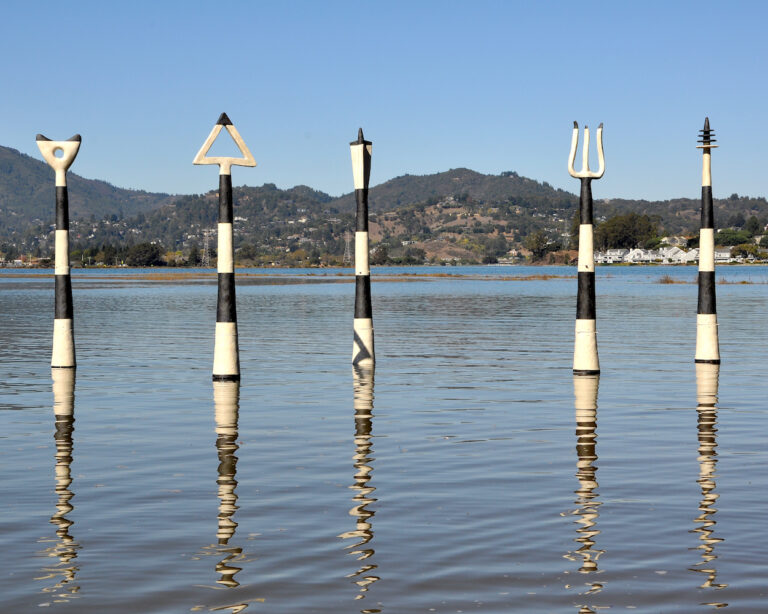
Over the past several months, a curious sight has arisen from the waters surrounding South Marin. Four markers, painted in black-and-white stripes and adorned with nautical symbols, have been placed throughout the Bay to document the rising tides in a new visual model created by Marin County sculptor Jeff Downing.

This month, Downing displays his aquatic markers at MarinMOCA in Novato for the exhibit, “Level Up! A Sculptural View of Sea Level Rise.” Opening on Nov. 21, the show will reveal sea level rise and its direct impact on communities in Marin.

Downing’s concept for “Level Up” came about in 2017 when he participated in an environmental art project in Mexico. 

“There was a lake on the site that was full most of the year,” Downing says. “But there’s a drought season and the lake water goes out, and a lot of the things covered in water are exposed.”

Downing installed aquatic sculptures in Mexico to mark the diminishing water levels, though he was inspired to document the opposite effect when he returned to the Bay Area.

“I thought about working with water, and the Bay Area having its own water issues with drought, but it also has tidal flooding,” he says. “I became interested in the tidal surge and King Tides, which happen twice a year. King Tides show what tides are going to be like with sea level rise, and everybody’s learning now that sea level rise is progressing because the Earth is getting warmer and the ice caps are melting.”

According to data compiled by the California Coastal Commission, San Francisco Bay is projected to see a rise between 1.1 and 2.7 feet by 2050. To see exactly what that means for Marin, Downing began placing his aquatic markers in waters near the Richmond Bridge and spots like Gate 5 Road in Sausalito, where the Bay already rises dramatically.

In addition to being eye-catching works, Downing’s sculptures aim to raise awareness and to educate the public about the realities of rising tides.

“My project is about making something that is attractive and beautiful, but it also has a meaning,” Downing says.

An East Coast native, Downing moved to the Bay Area in the ’80s to play music, and he pursued ceramics at the Academy of Art. There, Downing met artist and longtime College of Marin professor Bill Abright, who inspired Downing to further refine his art.

To date, Downing’s brightly colored sculptures have been exhibited in galleries and public venues in the U.S., Mexico, Brazil and throughout Europe. In addition to being a working artist, Downing is a full-time professor at San Francisco State University.

For the MarinMOCA exhibition, Downing will display several ceramic markers, as well as photos of them in the waters around Marin, with explanatory text accompanying the visuals. After the exhibit closes, the markers will be placed in the lagoon at the Marin Civic Center in San Rafael as a public art display.

“They’re going to be a monument of sea level rise awareness,” Downing says. “It will be a public art sculpture with a message.”

“Level Up” opens on Saturday, Nov. 21, at MarinMOCA, 500 Palm Dr., Novato. Marinmoca.org.

Marin County Officials Condemn ‘Trump Train,’ Request Reports of Voter Intimidation

An assortment of Marin County elected officials, cities, organizations and nonprofits signed on to a statement condemning the behavior of several hundred supporters of President Donald Trump who occupied a Marin City shopping mall on Sunday morning. 

“Over the weekend, residents of the Marin City community were subjected to race-based hate speech and acts of blatant intimidation. We will not tolerate this in Marin County,” the statement, released on Tuesday morning, reads.

“Marin is a community that stands against Hate, Bigotry, Racism, Sexism, Anti-Semitism, Ableism, Misogyny, Ageism, Homophobia, Religious Intolerance, and Xenophobia,” the statement continues.

Marin County Registrar of Voters Lynda Roberts reported the Trump supporters’ caravan to county and state officials as a possible act of voter suppression. 

“A voter was trying to use that box and felt intimidated,” Roberts told the Pacific Sun on Monday. “I reported it to the Marin County Sheriff’s Department and the California Secretary of State as soon as I learned about it.” 

Similarly, the Tuesday, Nov. 3, statement urges Marin residents to contact local officials if they have experienced or witnessed voter suppression on Election Day.

“Please talk to a poll worker if you witness any such behavior at the polls. If a poll worker isn’t accessible, contact (415) 473-7191 between 7 a.m. and 8 p.m. Tuesday, November 3rd if you witness any attempts at voter suppression or intimidation,” the statement reads.

The full statement and list of signatories is available here.

‘Trump Train’ Descends on Marin City Shopping Center

Days before a contentious election, hundreds of President Donald Trump’s supporters drove into Marin County’s only Black community, sparking fear and anger among residents.

The Trump Train, consisting of approximately 300 pickup trucks, cars, motorcycles and retired fire trucks, flew Trump flags and rolled down Highway 101 to Marin City.

The motorcade, which started in Santa Rosa and made a stop at the Vintage Oaks Shopping Center in Novato, exited the freeway at about 11:15am and pulled into the Marin Gateway Shopping Center in Marin City as part of a series of Trump Train events across the country Sunday.

Up to 100 people from Marin City came outdoors to watch more than 1,000 Trump supporters take over the center’s parking lot, according to attendance estimates from the Marin County Sheriff’s Office.  The cacophony was almost unbearable as the Trump demonstrators honked their horns, ranted through loudspeakers and screamed. 

The Marin County Sheriff’s Office,  Sausalito Police Department and California Highway Patrol were present in the parking area but took little action, except to direct traffic. A sheriff’s deputy on the ground said they were there to keep the peace.

Sergeant Brenton Schneider, a spokesperson for the Marin Sheriff’s Office, said the demonstration did not have or need a permit, because they were exercising their First Amendment rights; however, he did not know whether they were lawfully permitted to assemble on the shopping center’s private property.

“We did not give them [Trump supporters] permission to be on the property,” said Terri Henry, property manager of the Marin Gateway Shopping Center. “They just showed up.”

It was likely illegal to hold a political action within 100 feet of the official ballot box located in the shopping center, according to California state law. 

“At vote by mail ballot drop boxes, loitering near or disseminating visible or audible electioneering information” is prohibited,  Chapter 806 of Senate Bill No. 286 states. 

“‘Electioneering’ means the visible display or audible dissemination of information that advocates for or against any candidate or measure on the ballot,” the law continues.

The caravan of vehicles blocked the area directly in front of the ballot box as the rally bled out the exits of the parking lot, bringing traffic to a virtual standstill. The Trump supporters took this opportunity to taunt Marin City residents lining the streets.

“A voter was trying to use that box and felt intimidated,” said Lynda Roberts, the Marin County Registrar of Voters. “I reported it to the Marin County Sheriff’s Department and the California Secretary of State as soon as I learned about it.”

In interviews with the San Francisco Chronicle, caravan participants denied allegations that they chose the Marin City shopping mall to intimidate residents of Marin County’s only predominantly Black area. Some residents weren’t convinced. 

“Why didn’t the Sheriff’s Department let the community know the rally was coming?”said Damian Morgan, a Marin City resident and board member of the Marin City Community Services District. “When Black people demonstrated recently in Tiburon and Sausalito, the police let their communities know.”

Schneider said the Sheriff’s Office didn’t know until 15 minutes before the MAGA supporters arrived in Marin City, when the Novato police informed them. Morgan disputes the timeline.

“Deputy Josie Sanguinetti told me they had a three-hour heads-up,” Morgan said. “That was plenty of time to email people they know in the community or to alert us on Nextdoor. They could have at least told us there’s going to be 300 cars in our community.”

Though they received no notice, most Marin City residents remained calm, even as the unwelcome rally goers stormed their neighborhood. Racial epithets and curse words were tossed from the Trump supporters. Schneider, the Sheriff’s spokesperson, said counterdemonstrators shot paintballs and threw eggs at the caravan cars.

The Sheriff’s Office received 911 calls about physical altercations; however, law enforcement didn’t observe any physical fights, and no victims have come forward, Schneider said. Marin City residents hope Election Day is calm and peaceful, though there is concern this type of unrest may be a precursor of things to come.

“You can never be too careful,” Morgan said. “I would like to think there’s not going to be any trouble, but we have to be prepared and have our eyes open. We just don’t know.”

Marijuana Measure Divides

In August 2020, after years of dickering, the city of Sonoma finally voted to allow SPARC—which has a marijuana farm in Glen Ellen and dispensaries in Santa Rosa and Cotati—to open a weed shop on Highway 12. 

SPARC seemed to be home free, but in October the city council withdrew its approval. Seems that shenanigans sealed the deal with SPARC. Now there’s bickering among council members, some of whom are crying foul, and there’s Measure Y on the ballot November 3 in this city that has long had a tangled love/hate relationship with marijuana.

If Measure Y were to pass, some zoning laws would change. The opportunities for cannabiz would expand. SPARC’s Erich Pearson warns there could be dispensaries on every corner. Proponents of Y call that fear tactics aimed at defeating it.

Jon Early, the author of Measure Y (sonoma-access.com), says he wants competition in the marijuana market place and an end to backroom deals.

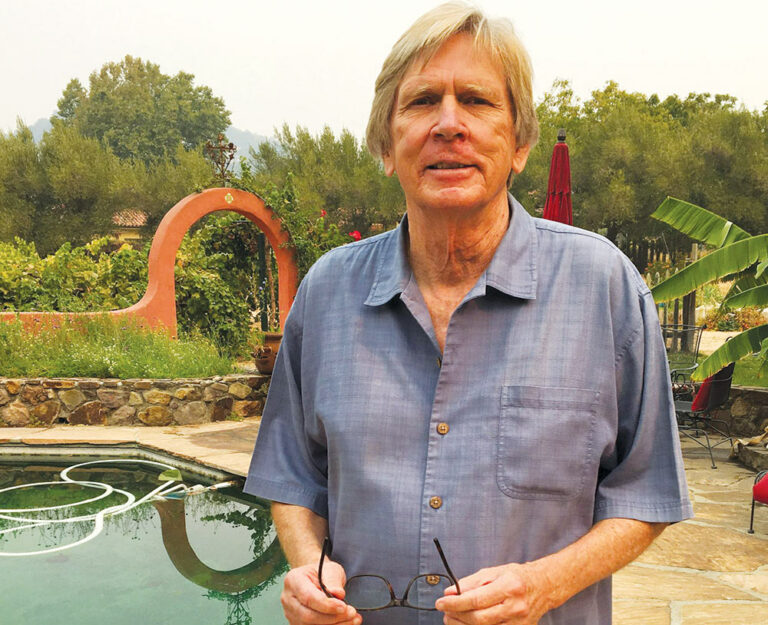
“What motivates me is democracy,” he tells me at his home in Sonoma where he and his wife have lived since the 1970s. “The attempt to undermine Measure Y—which gives citizens the opportunity to vote on dispensaries— has been shameful,” he says. “People have died defending the ballot box.” Early risked his own life in Vietnam. “I got a taste of that side of things,” he adds. 

Over the years, Early has seen some of the same issues in Sonoma as he has seen in the nation’s capital.

“Small town politics can be almost as bad as big city politics,” he tells me. In fact, Early suggests that there’s been a conspiracy afoot against Y and maybe against him personally. The city council came out unanimously against Y. Early has foes, but he has many friends, including former mayor Ken Brown. Early points out that the State of California would have oversight of any new dispensaries in town.

Local rules stipulate that cannabis can’t be sold or consumed near a school or around the library, nor on the plaza where locals and tourists are free to consume alcohol from 11:30am to sunset. Years ago, Early wanted to open a dispensary. Now he’s not sure. Years ago, he also smoked a lot of weed. Not at 73.

“I’ve reached out repeatedly to the city of Sonoma and to cannabis groups,” Early says. “No one has come forward to talk.”

Whatever happens with Y, the town needs a mediator to help heal the rifts in the community.    

Early can be reached at Ym*******@***il.com. Jonah Raskin is the author of Dark Past, Dark Future: A Tioga Vignetta Murder Mystery.

Home De Coeur

This issue is ostensibly “home decor” themed, which at any other moment in our collective social history is perfectly fine. But with less than a week before the most epochal election since the one that resulted in Lincoln’s second term, I’d have to be tone deaf to focus on Chez Nous when the nation is crumbling. 

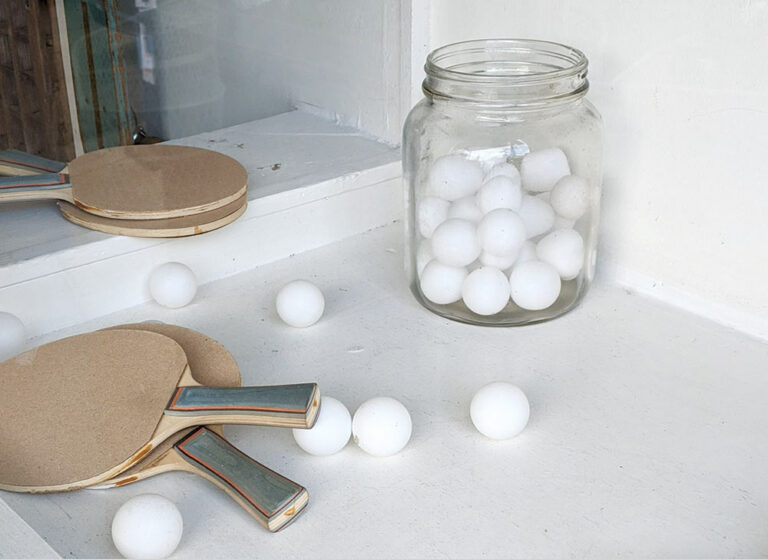
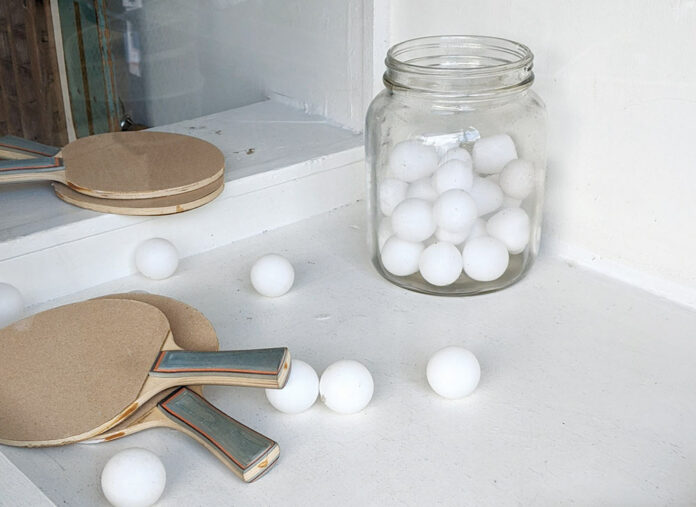
I tried anyway. And I failed. I strolled through San Anselmo looking for inspiration and found it in the window display of a tiny home and design storefront. It was a jar of table tennis balls and a couple of haphazardly laid paddles. The overall effect belied an aesthetic of blunt honesty–who cares? 

I admire the display for a few reasons. It not only looks like my house (finally my living room looks like a window display) since two boys live here, but it also resembles a Fluxus-style installation qua deconstruction of home decor. For those who forgot their art history, “Fluxus was an international, interdisciplinary community of artists…who engaged in experimental art performances which emphasized the artistic process over the finished product,” thus spake Wikipedia. 

My favorite window display ups the ante by depicting the “artistic process” in media res, at the precise moment when the artist said “f— it.” When it comes to home decor, I think many of us have reached that point. Apart from kicking an ottoman around the room, not much has changed at my place and why should it? No one is going to see it unless they’re doing CSI-style analysis of my Zoom calls, barking “enhance!” at the screen until the aforementioned ottoman comes into focus and one turns to the other and says, “Yep, that’s where he said f— it.”

“It’s like an epidemic with these people,” the rookie will reply and they’ll be right. Well, more of a pandemic; but with 200,000 dead, why split mohairs?

No, the only significant change in my home decor is the amount of election-themed collateral that’s appeared courtesy of my stepson, whose graphic design efforts have been replicated throughout Petaluma (you may have seen his wave of Keith Haring-esque “Vote” signage). It’s telling that a 13-year-old has taken over the look of the living room. This is their world, we’re just voting in it.

To that end, a recent study found that two of the most voter-friendly cities in the nation for the 2020 Presidential Election are Novato and San Rafael. Both earned A- or A ratings for their voting infrastructure. Good. Now, go out and vote, then straighten up your damn living room.

Daedalus Howell lives at daedalushowell.com.

Open Mic: Rethinking Halloween

I’ve long been disturbed by Halloween, and here we are again. Money spent on lights, plastic skeletons, bones and headstones to frighten small, costumed children eager to stuff themselves with sugar. Perhaps a cynical view of the holiday, but one that arises as I walk in my neighborhood during this season.

If the message were, “We’re dying here, death is real, we must do all we can to save this precious planet on which we depend for life.” Then I might get behind it. If we put out bowls of autumn fruit, an offering of the harvest which the season actually celebrates. Then I might get behind it.  If we stopped training children to use sugar to dull fear trumped up by bones, ghouls and skeletons looming at them out of the darkness. Then I might get behind it. If we stopped to consider what else might be done with money spent on decorations, wigs and empty calories. Then I might get behind it.  

I haven’t participated in the ritual for many years. It’s easy to avoid the flow of children at our house, situated on a hill with no street lights and down a flight of wooden steps. But this year I am tempted. I would put out the scariest thing I can imagine: large white letters on a black background, red Christmas lights illuminating the words, CLIMATE CHANGE! Alongside the sign a bowl of crisp apples with an invitation to take one if you’re hungry, give it to someone who is if you’re not. And a parting message, placed so visitors see it as they’re leaving, “Join hands against the darkness.”

Of course, all this is impossible in the year of our frustrated Lord, 2020. We can’t hold hands, we can’t give out apples, fear having long convinced us a potential razorblade is the real enemy. How convenient to focus on razor blades, candy and consumerism instead of what really matters. How long will it be before we heed the voice calling out, “When will you stop destroying Eden?”

Laura Bachman is a writer, retired body worker and library assistant living in San Anselmo.

Letters: Talking Props

NO! The point of prop 13 was to not force families to sell due to property taxes. THIS WILL FORCE SALES DUE TO PROPERTY TAXES. I have no objection to people being able to transfer assessed value, but Prop 19 will be the slow death of family ranches and dairies in this area.

A million-dollar exemption on a low-impact livestock ranch is small compared to the total market value. The profit from livestock ranching is small. The next generation of multi-generation stewards of the land who put in so many hours caring for the land will often be forced to sell or put in grapes or cannabis, which many can’t due to slopes, water or other issues. Regulations make it also difficult to put in campgrounds, and they must compete with county sales tax subsidized campgrounds, which is unfair. Going from a $10,000 tax bill to a $80,000 tax bill on a few hundred acres of low-income, open-space pasture is only doable for very high-income people, which few ranches are. Ranches pay school and hospital assessments, but livestock do not attend. And the ranch family does not use any more property tax-funded services than other families. 

Save family farms and ranches and vote NO.

Farmer Jane

Via Bohemian.com

Kids Are All Right

Thank you very much for this inspiring article about how teenagers are finding ways to thrive even during these challenging times (“From A to Gen Z,” Oct. 7). Our family has a fourteen-year-old in the house and it’s wonderful to be able to share this article whenever they say something like “things are really hard, I can’t do anything because of the pandemic!” More content like this would be wonderful!

Healdsburgian

Via Bohemian.com

A reflection on online home-decor inspiration

My friend Heather and I met at UC Santa Barbara during our junior year, in Literature of the Reformation (out of respect for her privacy, we’ll keep on a first name basis here). 

I used to wave to her as she rode around Isla Vista on her beach cruiser in a long peasant skirt and pink Jellies, her long strawberry curls trailing behind her in the breeze. She smiled a lot. Heather was one of the few students I knew with her own room in a real house, with a new mattress and high-thread-count sheets. At 20—and decades before Instagram and Pinterest and Pottery Barn—she had a flair for pattern, color, texture and quality second-hand clothing. We both thought David Nagel prints were not only ugly, but the sign of an undisciplined mind.

I saw her last week for the first time since the March lockdown. Honoring our tradition, we went thrift-store hopping and then ate lunch at El Molino, both of us wearing masks and feeling frayed around the edges with too many daytime inhabitants in our respective domestic spaces. 

“So, how much time do you spend looking at Zillow?” I asked in the dishware shelves.

She laughed. “Omigod. How did you know? Too much.”

“Have you seen that house in Bolinas?” I didn’t even have to specify which one.

“Bolinas isn’t happening for us,” she said. “I like Fort Bragg.” 

Sometimes I spend hours in the listings. It seems like everyone I talk to these days is on Zillow. 

“You can look at the inside of people’s houses,” I said. “Some of the desert houses are wild, but I’m still seeing balloon curtains in homes.”

“Don’t get me started,” she said. 

Alone-time has all but disappeared for many of us, while for others life has become a 24/7 dialog with CNN and crane flies. With spouses and partners working from home, with adult children returning to the nest with IKEA bed frames and plastic tubs, and with thrift stores so backlogged with donations that many aren’t accepting more, the domestic sphere can feel like life on the inside of a hamster ball. Residents have taken to putting items on the sidewalk in hopes that their trash is someone else’s treasure. Most often it’s not. 

But for creative types like Heather, the lockdown has unlocked potential to reimagine the home, to fearlessly shirk design trends and to turn domesticity on its head without worrying about the Joneses. While the home has been repurposed as an office, a gym, a daycare, a studio, a campus, a greenhouse, a test kitchen, a Zoom stage and a dojo, it’s also being reinvented. Heather describes her home decor as somewhere between “cabinet of curiosities and opium den.” She credits her matrilineage. 

“My grandmother and my mother were very ahead of their time, very avant garde in their tastes,” she says. “My great grandmother was from Guadalajara and my great grandfather built custom furniture in Philadelphia. He mixed traditional furniture design with elements of Mexican folk art. Both my mother and I inherited a love of objects. For example, some of my favorite things in my house are on my desk; a brass crab, an inkwell from my grandmother, a handmade silver bookmark from my grandfather.”

Heather’s house is made from both materials and memories. She doesn’t shop for new stuff, and she doesn’t follow trends.

“The Marin farmhouse chic is just stamped out,” she says. “I’ve always been into repurposing, restoring and rule-breaking; I like every room to evoke memory and emotion when you walk into it. My daughter goes through things that I put away, and helps me reacquaint myself with what I have. The pandemic has given me a certain sort of freedom to experiment with a style that is more for me than other people since nobody is coming over to look or judge. There is a need right now, I think, to be surrounded by things that provide comfort—there is so much that is leaving and going out of our lives, and fading. I keep a lot of rocks.”

Comfort is often quite different than luxury.

In The Poetics of Space, Gaston Bachelard writes, “We comfort ourselves by reliving memories of protection… Memories of the outside world will never have the same tonality as those of home and, by recalling these memories, we add to our store of dreams…” Thus spoke Zillow.

Because we are breaking with so many traditions in the home, we can now see ourselves in different kinds of spaces, environments and places and with different kinds of things.

“We are tired of our own spaces,” Heather says. “With websites like Zillow, you can vividly imagine these changes, which can be both positive and negative.”

Zillow is as full of $25,000-a-month coastal luxury rentals as it is of foreclosures, drive-by photos with the occasional shot of sagging curtains in the windows and sad, dead garden shrubs.

You might just want to stay put after all that snooping.

In my house, we’ve been letting kids paint the walls for years. In the living room four teenage girls painted a mural, an homage inspired by Klimpt’s “Tree of Life” and populated by the characters in Miyazaki’s Princess Mononoke. In one of the rooms my older daughter hand-painted wallpaper with a design by French textile artist Paule Marrot. I painted a mural in my kitchen I found on the design blog “The Selby,” and have used work by Eugène Séguy, Ukrainian artist Polina Rayko and Vanessa Bell. The boundary between home and studio for artists is often poorly defined. I’ve always thought it’s better to paint the walls than climb them. And speaking of boundaries, let’s not forget the great outdoors, brought indoors during our extended stay inside. Shelter-in-place has been a boon for nurseries. I myself have acquired five banana trees.

In a recent Washington Post article on the rise of the houseplant, gardening columnist Adrian Higgins writes, “… I now sit and watch current affairs and news programs on the TV, not for the perspicacity of the pundits, but to see how they’ve decorated their home offices. Some of the wall art is so bad, it’s good, but I’m on the lookout for the quantity and quality of the vegetation. Tip to commentators: Enough of the bookshelves — we know you’re smart; load up on far more houseplants and tropicals.”

As if we weren’t buried enough in our own long-neglected crap—both material and psychological—many women my age, including myself, have cared for, or lost, parents during these last few grueling months and now find ourselves not only dealing with grief but acting as lead curator of our parents’ possessions. Maybe for the first time, people have started to contemplate in earnest the total life cycle of things, as the life cycle of everything else becomes more precarious.

An artist friend who recently lost her mother told me, “I’m torn between the obligation of honoring my mother by taking care of her things and the burden of holding onto belongings I might not love. Do we all want to be perpetual curators of our own lives? I don’t think so—one thing the pandemic has taught us is that our time here is so limited. I’ve had to confront the reality that some of my clutter is not so creative. Swedish death cleaning is on my mind a lot.” 

Bachelard agrees. “It is better to live in a state of impermanence than in one of finality.”

In the past, peeking inside a seaside mansion in Pebble Beach or a Napa Valley estate might have evoked feelings of impossible outsiderness and envy. Now these palatial spaces resemble empty hotel lobbies, halls of mirrors filled with designer furniture and fixtures that the future has neither room nor desire for; these are the lonely hunting grounds of the Wendigo, rooms appointed with store-bought grandeur on an inhuman scale when humanity is what’s in order. So much clutter is not going to just disappear when the new owners move in. Maybe after the thrift stores open donations back up, they’ll take what’s left.

Cell Phone Video Leads to Racial Justice Protest at Sausalito Beach

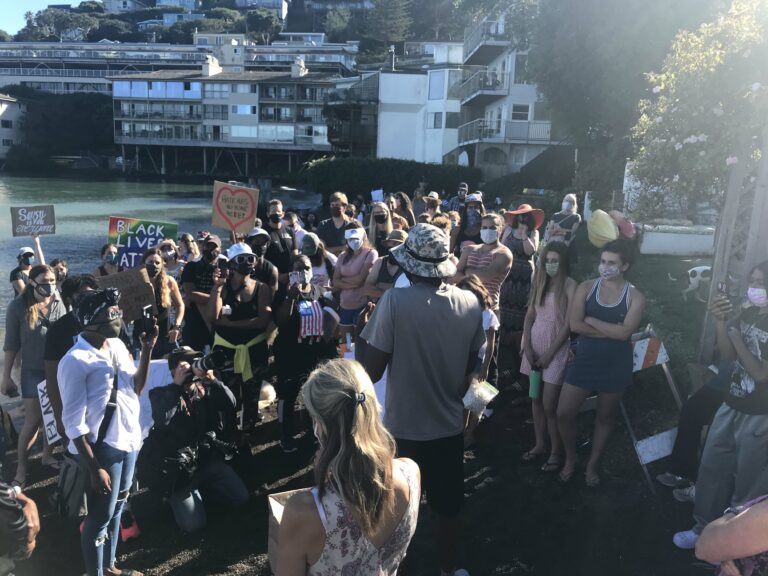
Tensions are high all over America regarding race and ethnic relations, and we know Marin is not immune. In just the past two months, I’ve written articles about the Tiburon police department being accused of racial profiling and about anti-Semitic social media posts targeting students at Redwood High School in Greenbrae. Then, on Oct. 18, dozens of people gathered on Swede’s Beach in Sausalito to protest a homeowner caught on video ordering a Black man off the beach a week earlier.

The brouhaha began on Oct. 8 when Marcus Hall, 29, sat on the beach near a retaining wall behind Mohamed Karah’s house. In a cell phone video filmed by Hall, Karah, 86, informs Hall that he is on private property. Hall maintains that the area is public and refuses to go.

“I was just sitting on the beach,” Hall told the Pacific Sun. “The man came and harassed me. I feel I was racially profiled.”

In Hall’s two-and-a-half-minute video, the interaction starts off civilly enough; however, Karah seemingly grows frustrated, yells twice and curses a couple of times. Hall keeps his cool.

“This is my property,” Karah says on the video. “People don’t like you here.”

The video also reveals Karah accusing Hall of going inside the house. Hall said he never did.

Karah said he demanded Hall leave the beach on behalf of a neighbor, a single mother with a 16-year-old daughter who phoned to say a man was invading their privacy. Karah doesn’t know the name of the woman who called, nor has he spoken with her before or since.

“I kept shouting and shouting, because I thought someone was going to come help me,” Karah told the Pacific Sun in an interview.

He claimed the confrontation started before the video began, when Hall raised his middle finger at him. Hall denied motioning in this manner.

The video, which made the rounds on Facebook, does not show either man making untoward gestures or spouting racial epithets. It ends when Karah threatens to call 911.

Karah said he didn’t initiate contact with the police that day; however, the following week, Hall did. Captain Bill Fraass of the Sausalito police department said Hall filed a police report regarding the disagreement with Karah, and the police spoke to both parties.

Karah insists he is not racist and said he’s experienced discrimination, because he is of Libyan descent and Muslim, his name is Arabic and he speaks with a strong accent.

But the clash with Karah isn’t the only unpleasantness Hall endured on Swede’s Beach. The week before Hall’s interaction with Karah, a white woman who lives in a neighboring house got Hall wet as she watered her garden with a hose. (She requested her name be withheld.) 

It happened accidentally, she said, because she didn’t realize Hall was nearby. After seeing him, she apologized.

Hall thinks the woman may have sprayed him intentionally, because he said it happened on two occasions.

“Marcus was not visible and may have inadvertently gotten wet,” the woman’s husband Steve, said in an email. “She absolutely did not spray Marcus.”

In another unusual episode, the same woman called the Sausalito police on Oct. 7. She said it had nothing to do with Hall.

“I phoned the police because his [Karah’s] door was open,” she said. “The house was abandoned with the door open and the gate broken.”

Hall was on the beach that day, too, the day before his skirmish with Karah. He said he didn’t know about the open door, nor was he aware the neighbor called the police. When he left the beach, he saw police driving up.

“I was scared,” he said. “I thought they were coming for me. As a Black man, you think about it.”

According to Karah, the police contacted him and said his back door was open and they closed it. Karah found no forced entry and nothing inside was disturbed.

Fraass confirmed police responded to a call for service at Karah’s house. He said there’s no indication the open door incident is related to Hall. It’s atypical for the police to receive these types of complaints at Swede’s Beach.

“The vast majority of calls are for city ordinances,” Fraass said. “Dogs off leash or violating the public health order for not wearing masks or being too close together. I can’t think of anything else in the last year and half.”

Hall, a fitness trainer at a health center near Swede’s Beach, likes to spend his breaks relaxing on the beach. If you’ve never heard of the place, you’re not alone. It’s a tiny beach on San Francisco Bay at the south end of Sausalito, located down a steep, rickety set of stairs at the foot of Valley Street. A few homes border it on the west side. 

Karah says he welcomes people to use the beach.

“I have lived here for 37 years and never had a single issue,” Karah said. “People on the beach come and ask to use my bathroom. I say ‘go ahead.’ Or I let them use my phone, give them a glass of water.”

Nonetheless, when activists arrived at the beach on Oct. 18, they noticed barricades placed perpendicular to the Bay, on Karah’s property line.  

Laminated signs on the barricades stated: “Private Property. No public access beyond this point. Public access only along waterline for walking.”

After the demonstration, people castigated Karah on Nextdoor about the signage. Karah denied putting out the barricades and signs. Some didn’t believe him, but, in an interview with the Pacific Sun, the police confirmed that the city installed the signs, which were removed after the protest.

“The police department requested the barricades [from the Public Works department],” Fraass said. “The police department posted the [laminated] signs, so people knew the outline of the public area.”

That clears up one misunderstanding. More differences probably need resolution before this saga concludes, such as verifying public and private land boundaries.

“People can use the beach below the mean high tide line, even if that area is on private property,” said Brad McCrea, regulatory director of the San Francisco Bay Conservation and Development Commission (BCDC), a state agency. “That’s true all around the Bay, because of the Public Trust Doctrine.”

The doctrine holds tidelands, among other lands and waterways, in trust by California for the benefit of the people. Imagine the high tide coming in and getting the sand wet. Draw a line along the edge of the wet sand across the beach, parallel to the water. The public is permitted anywhere on the beach below that line, regardless of whether the tideland is behind someone’s home.  

“The BCDC is in the process of determining the public access area for the entire stretch of Swede’s Beach,” McCrea said.

Fortunately, they should know this week. To ensure the governing bodies agree, the BCDC is coordinating with the City of Sausalito. 

In the meantime, three new “Private Property” signs now sit on the beach behind Steve and his wife’s home.

Two Arrested Following Election Day Shooting in Marin City

Marin City Sheriff Election Day 2020
The Marin County Sheriff's Office arrested two Cotati residents after a young Black man in Marin City was shot at 1:00 pm on Tuesday, the law enforcement agency announced Wednesday morning. The suspects, Isaac Quixote Rangel, 18, and Jasmine Ciara Medeiros, 18, were booked into the Marin County Jail several hours after the shooting. Rangel is currently being held on...

Marin Artist Follows Rising Tides with Aquatic Sculptures

Over the past several months, a curious sight has arisen from the waters surrounding South Marin. Four markers, painted in black-and-white stripes and adorned with nautical symbols, have been placed throughout the Bay to document the rising tides in a new visual model created by Marin County sculptor Jeff Downing. This month, Downing displays his aquatic markers at MarinMOCA in...

Marin County Officials Condemn ‘Trump Train,’ Request Reports of Voter Intimidation

Donald Trump Truck Marin City California
An assortment of Marin County elected officials, cities, organizations and nonprofits signed on to a statement condemning the behavior of several hundred supporters of President Donald Trump who occupied a Marin City shopping mall on Sunday morning.  “Over the weekend, residents of the Marin City community were subjected to race-based hate speech and acts of blatant intimidation. We will not...

‘Trump Train’ Descends on Marin City Shopping Center

Marin City Trump Train truck with flags
Days before a contentious election, hundreds of President Donald Trump’s supporters drove into Marin County’s only Black community, sparking fear and anger among residents. The Trump Train, consisting of approximately 300 pickup trucks, cars, motorcycles and retired fire trucks, flew Trump flags and rolled down Highway 101 to Marin City. The motorcade, which started in Santa Rosa and made a stop...

Marijuana Measure Divides

In August 2020, after years of dickering, the city of Sonoma finally voted to allow SPARC—which has a marijuana farm in Glen Ellen and dispensaries in Santa Rosa and Cotati—to open a weed shop on Highway 12.  SPARC seemed to be home free, but in October the city council withdrew its approval. Seems that shenanigans sealed the deal with SPARC....

Home De Coeur

This issue is ostensibly "home decor" themed, which at any other moment in our collective social history is perfectly fine. But with less than a week before the most epochal election since the one that resulted in Lincoln's second term, I'd have to be tone deaf to focus on Chez Nous when the nation is crumbling.  I tried anyway. And...

Open Mic: Rethinking Halloween

Halloween pumpkin 2020
I’ve long been disturbed by Halloween, and here we are again. Money spent on lights, plastic skeletons, bones and headstones to frighten small, costumed children eager to stuff themselves with sugar. Perhaps a cynical view of the holiday, but one that arises as I walk in my neighborhood during this season. If the message were, “We’re dying here, death is...

Letters: Talking Props

typewriter opinion newspaper
NO! The point of prop 13 was to not force families to sell due to property taxes. THIS WILL FORCE SALES DUE TO PROPERTY TAXES. I have no objection to people being able to transfer assessed value, but Prop 19 will be the slow death of family ranches and dairies in this area. A million-dollar exemption on a low-impact livestock...

A reflection on online home-decor inspiration

My friend Heather and I met at UC Santa Barbara during our junior year, in Literature of the Reformation (out of respect for her privacy, we’ll keep on a first name basis here).  I used to wave to her as she rode around Isla Vista on her beach cruiser in a long peasant skirt and pink Jellies, her long strawberry...

Cell Phone Video Leads to Racial Justice Protest at Sausalito Beach

Swede's Beach protest Oct. 18, 2020
Tensions are high all over America regarding race and ethnic relations, and we know Marin is not immune. In just the past two months, I’ve written articles about the Tiburon police department being accused of racial profiling and about anti-Semitic social media posts targeting students at Redwood High School in Greenbrae. Then, on Oct. 18, dozens of people gathered...
3,002FansLike
3,850FollowersFollow