Culture Crush: At-Home Events and Virtual Gatherings Continue

As the Covid-19 pandemic continues to halt in-person gatherings in 2021, several North Bay organizations are hosting online events boasting music, art, theater and other family-friendly delights this week. Here’s a round up of what’s worth looking forward to.

Virtual Lecture

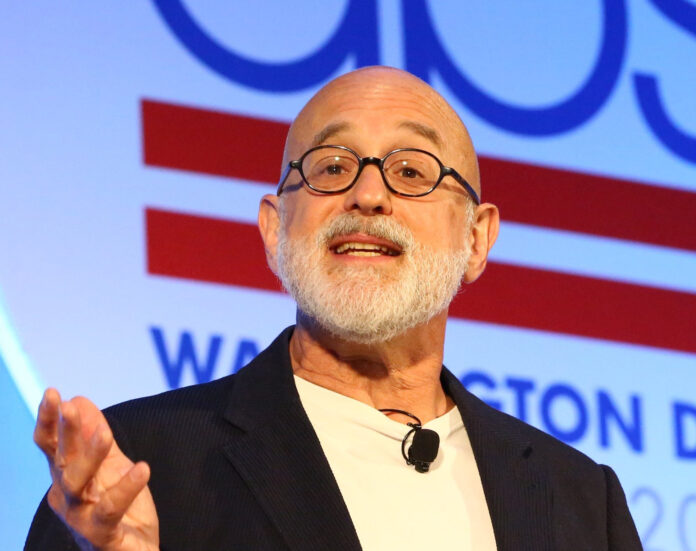
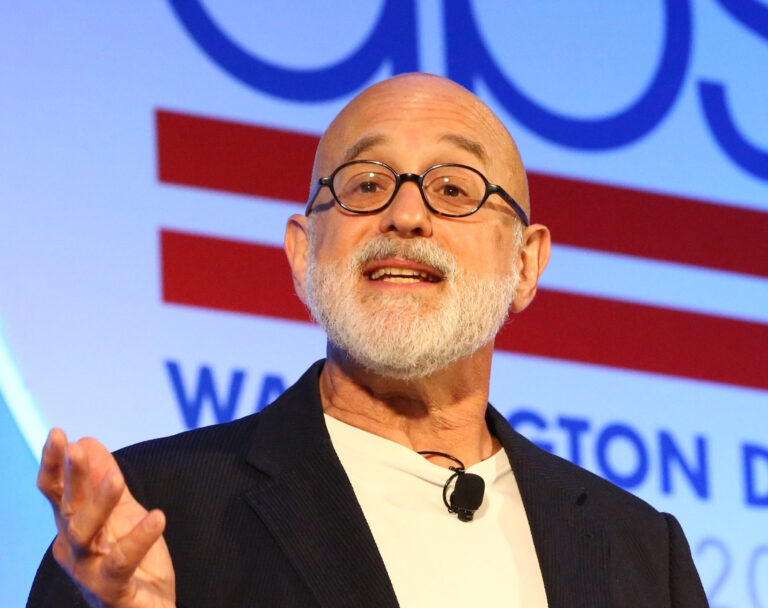
Marin County native Carl Hungerford was an intellectually engaged and socially conscious individual, and The Carl Hungerford Lecture Series—presented in collaboration with the Marin Art & Garden Center—honors his memory by hosting notable speakers in lectures that cover a wide range of topics. Now in its second year, the Carl Hungerford Lecture Series opens 2021 with a timely examination of the facts, and the myths, about what makes us happy. Harvard University psychology professor Daniel Gilbert will dissect and discuss the “The Science of Happiness” and the theories of how we achieve good vibrations on Thursday, Jan. 21, at 5pm. Free. Maringarden.org.

Virtual Theater

Like many North Bay theater companies, Petaluma’s award-winning Cinnabar Theater is moving to video productions as the pandemic keeps social gatherings unsafe. This week, Cinnabar digitally opens a stirring one-man-show, “The Absolute Brightness of Leonard Pelkey,” in which accomplished North Bay actor Mike Pavone embodies nine characters from a small town dealing with the disappearance of 14-year-old Leonard Pelkey. Written by Academy Award–winner and playwright James Lecesne, and directed by Cinnabar’s Education and Associate Artistic Director Nathan Cummings, the who-dun-it is both inspiring and startling, and audiences can stream it safely from home beginning Friday, Jan. 22. $25. Cinnabartheater.org.

Virtual Concert

Back when social gatherings were possible, the Luther Burbank Center for the Arts in Santa Rosa hosted world-class performers and artists as well as nationally-recognized education programs and popular community events such as the Clover Sonoma Family Fun Series. This year, as Luther Burbank Center for the Arts continues to host events online, the Clover Sonoma Family Fun Series presents five free virtual performances that kicks off with “Pete The Cat.” The musical adventure is based on the book series by Eric Litwin and produced by TheaterWorksUSA, which brings beloved productions to venues across the country–and now online–for schooltime performances. The family-friendly show is available to view Saturday and Sunday, Jan. 23–24. Free. Lutherburbankcenter.org.

Virtual Exhibit

While it follows all health and safety protocols due to Covid-19, Gallery Route One in Point Reyes Station continues to present exciting and wide-ranging art in socially-distant and online settings. This month, Marin curator and gallery owner Donna Seager, of Seager Gray Gallery in Mill Valley, juries Gallery Route One’s annual juried exhibition, “Crossing the Divide,” in which more than 50 local and regional artists interpret the disparities and divisions of 2020 as well as the shared ideas and realities that can be achieved through the creative process. The exhibition opens with a virtual art reception and artist talks on Sunday, Jan. 24, at 3pm. Free. Galleryrouteone.org.

Virtual Lecture

Oakland artist and author Jenny Odell, best known for her book How to Do Nothing, is an expert on living in the moment. One of the ways she does so is through the practice of birdwatching, or “bird-noticing” as she calls it. This month, Odell and the Laguna de Santa Rosa Foundation engage in an online conversation on “Bird-Noticing & the Power of Attention,” which kicks off the foundation’s “Birding to Beat the Winter Blues” event series. Odell appears in a candid Q&A on listening and observing the natural world on Tuesday, Jan. 26, at 2:30pm. Pre-registration required. Free; $5–$15 donation requested. Lagunafoundation.org.
When Cannabis Came Out: Remembering Prop 215

Recently, SF Weekly journalist Veronica Irwin went out on a limb and exclaimed, “It’s because of gay activism that Californians have a regulated cannabis market.” 

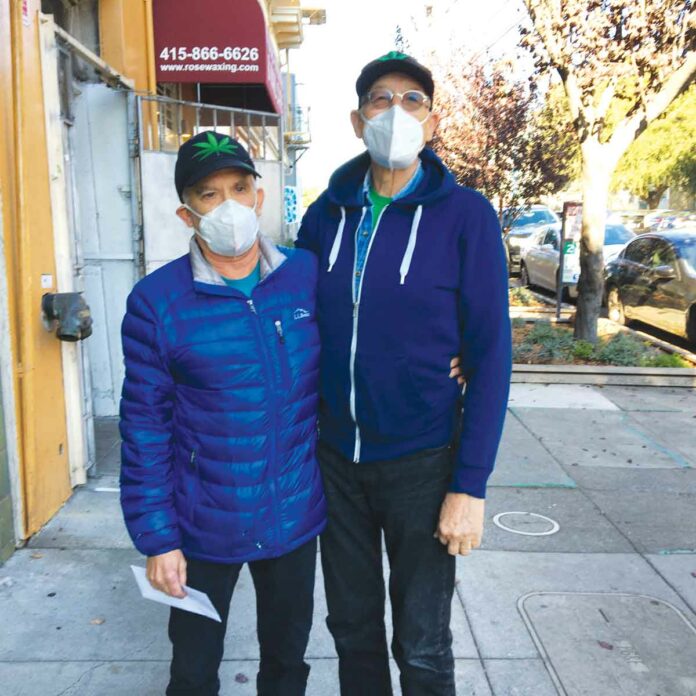
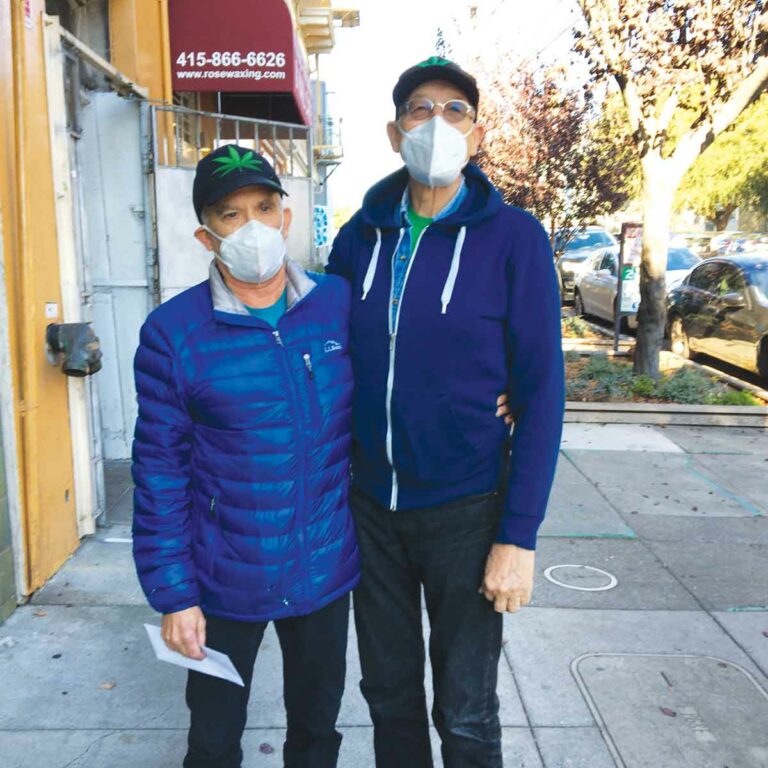
She rattled off a list of famous gays, without genuinely honoring the foot soldiers, not the superstars of the movement. Guys like Michael Koehn, 74, and David Goldman, 69, a gay couple, who met in 1988 and married in 2008. Both have spread the ganja gospel far and wide, and both have benefitted from recreational and medicinal weed. When I visited them in the Castro District, they shared their favorite cannabis products with me—along with their own individual stories that tell much of the bigger picture.

After Michael Koehn graduated from the University of Wisconsin, he worked for the San Francisco Recreation & Parks Department. He tells me he’s never been in the closet as a gay man. “I didn’t think to be secretive, though coming out caused friction with my mom,” he says. “I explained to her, ‘I have to be who I am.’” But while Koehn was out of the gay closet, he was in the cannabis closet. “So was everyone else,” he says. “We smoked on the sly, brands like Acapulco Gold.”

Dave Goldman, an ex-New Yorker and a graduate of the University of Chicago, taught generations of school kids in Marin. “In the 1970s, to be openly gay was fraught with perils,” he tells me. “Jobs were threatened.” Goldman first used cannabis at 18. He hasn’t ever stopped. “It’s been downhill all the way,” he says.

Goldman wisely kept cannabis separate from his day job. “I didn’t socialize with colleagues,” he says. In San Francisco, all through the HIV/AIDS epidemic of the 1980s, Goldman lost friends. So did Koehn, who attributes his survival to a half-dozen factors. “I have good genes, I was in support groups and I had good luck,” he says. “Cannabis gave me an appetite, eased my nausea and provided relief from pain.”

In the wake of the HIV/AIDS epidemic and with savvy lobbying by Dennis Peron and others, plus nifty maneuvering by San Francisco D.A. Terence Hallinan, Californians approved medical marijuana in 1996. After Prop. 215 passed, Koehn and Goldman were out of the cannabis closet for good.

With Covid-19, they practice all the prudent things. “This is our second pandemic,” Koehn says. “Two more than we wanted.” Covid-19 hasn’t deterred them from their cannabis activism, which links them to NORML, Americans for Safe Access (ASA) and the San Francisco dispensary, Green Cross, where they sit on the board of directors. “Cannabis isn’t just about getting high,” Goldman says. “It’s about everyone getting educated about marijuana.” This winter, Goldman and Koehn fly to Florida for much needed R and R. Bon voyage, guys.

Jonah Raskin is the author of “Marijuanaland: Dispatches from an American War.”

Black San Quentin Artist Inmates’ Brush With Justice

What do you get if you add 12 and 21? 

A unique art exhibition, one pushing the idea that society needs to take a new look at mass incarceration.

A dozen San Quentin inmates have contributed 21 artworks to the digital Museum of the African Diaspora (MoAD) display, “Meet Us Quickly: Painting for Justice From Prison,” which runs through Jan. 31.

In an email to Local News Matters, Rahsaan “New York” Thomas, the exhibit’s curator, says the exhibition features Black artists of whom he’s long been “a huge fan,” who “constantly give their art away as acts of amends.”

But in an essay accompanying the exhibition on the museum’s website—moadsf.org—Thomas voices displeasure with the justice system, which he contends “continues its removal of individuals without addressing the root causes of crime. Generation after generation face the same systemic issues.”

NAACP figures show that African Americans are incarcerated at more than five times the rate of white Americans. The organization’s research, furthermore, shows that “84 percent of Black adults say white people are treated better than Black people by police; 63 percent of white adults agree.” In addition, the NAACP website states, “87 percent of Black adults say the U.S. criminal justice system is more unjust towards Black people; 51 percent of white adults agree.” 

Thomas, a Black San Quentin prisoner who’s served 20 years of a 55-year sentence for killing an armed man he maintains was trying to rob him, wants to see the United States shift from mass incarceration to “preventing crimes [through] community investment.”

Meanwhile, he says, art lets inmates turn their “most painful experiences into something beautiful.”

The eclectic exhibition includes linocut prints, acrylic paintings, ink drawings and collage, with at least one painting honoring Aaron Douglas, the African American muralist, illustrator and portraitist who emphasized social issues linked to race and segregation—and who was a major figure in the Harlem Renaissance.

Believing a joint effort could unite Black and Jewish people and simultaneously strengthen the call to curtail mass incarceration, Thomas had jumped at the chance to collaborate—along with MoAD—with Jo Kreiter, founder of San Francisco’s Flyaway Productions, who choreographs apparatus-based, mid-air dancing.

Unfortunately, Covid-19 hit San Quentin hard last summer. Thomas—who co-hosts and co-produces “Ear Hustle,” the Pulitzer Prize-nominated podcast, from inside the prison—contracted it, forcing Kreiter to cancel her dance portion. She hopes to reschedule it as part of a followup exhibition Thomas plans for July.

Meanwhile, Prison Renaissance, an organization Thomas co-founded, sponsored an online auction of the works in “Meet Us Quickly: Painting for Justice From Prison,” with roughly 85 percent of proceeds going directly to the artists, and 15 percent towards work that might lift up the incarcerated.

Money isn’t the reason exhibited artists do what they do, though.

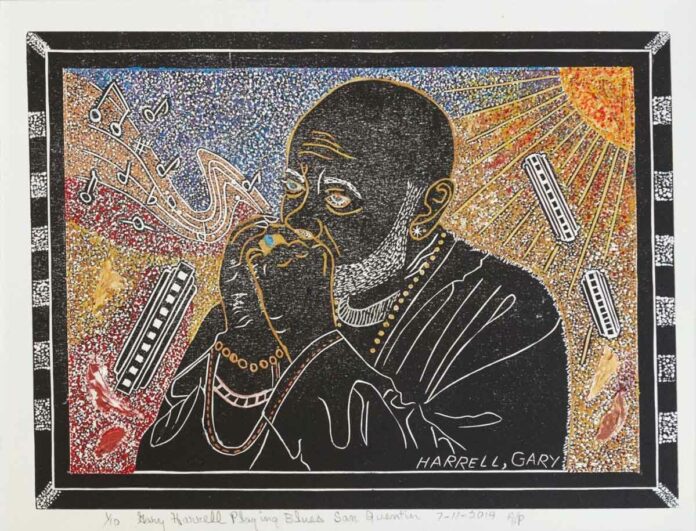
Gary Harrell, a 64-year-old who’s been incarcerated 42 years, contends that he paints to hold onto his humanity. Regarding his lino-print-on-paper self-portrait, “Gary Harrell Plays Blues,” he says that rather than Black men or white men, “we are all people of color searching for justice.”

Ben Chandler, who says he paints “to keep my sanity and commitment to my children,” also says he’s “a passionate and creative soul who loves to give back to communities as living amends for all the bad energy I have created throughout my life.”

Angela Davis once asserted that penitentiaries don’t eliminate social problems as much as they make human beings invisible. Thomas undoubtedly believes this exhibition—digital because the physical MoAD facility at 685 Mission St., San Francisco, is closed due to the pandemic—can help make imprisoned Black artists and their talent visible to the public.

Sadly, the convicts are no longer invisible—because the Covid-19 prison outbreak made headlines. Well over 2,200 inmates were infected, and at least 28 died, including several on death row.

To visit the exhibition, go to www.moadsf.org.

Marin New Wave Band Debuts Digital Bootleg Series

Forty-five years ago, North Bay audiences discovered a new groove.

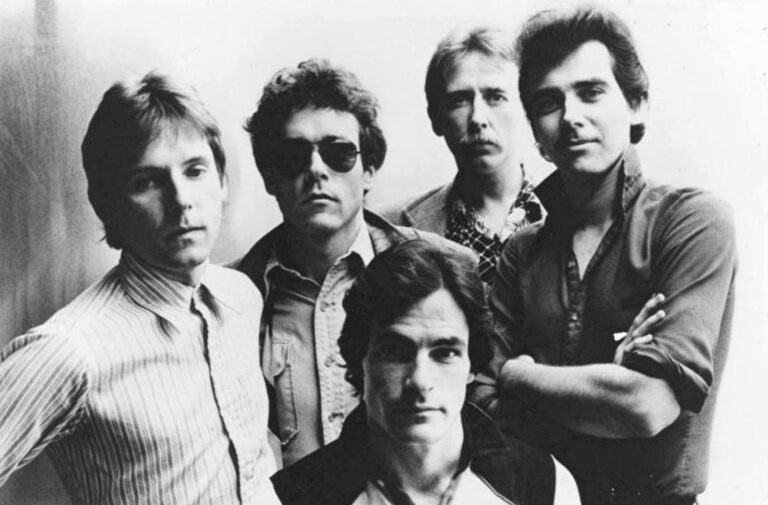
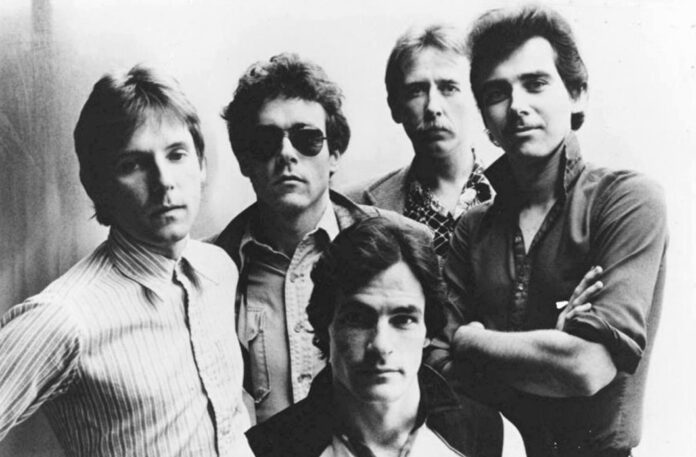
Coming out of Marin County, the Tazmanian Devils were a proto-New Wave band that became one of the first in the region to mix rock ‘n’ roll with roots-reggae, R&B and even Gospel influences.

They almost took the world by storm, signing to Warner Brothers record label and releasing two albums before disbanding in the mid-1980s.

Though the Tazmanian Devils never quite hit the top of the Billboard charts, they lived on in the hearts and ears of Bay Area fans that still fondly remember the band’s lively shows at clubs like the Sleeping Lady Café in Fairfax.

Now, those fans and newcomers have the chance to hear new tracks from the group; recorded during a live show in 1982 and released digitally as the first in a planned ‘TAZ Bootleg Series’ of albums available to stream on the nonprofit Internet Archive.

Guitarist Dave Carlson and keyboardist Pat Craig, with bassist David Mackay, first formed the Tazmanian Devils after playing a show with Jimmy Cliff in 1975.

“That was a life-changer, that show,” Carlson says. “I always loved reggae, but when we saw that band, they were so heavy and powerful. Much different than the records, it was a rock band playing this incredible rhythmic groove.”

That show was the seed that grew into the Tazmanian Devils, who recruited vocalist and guitarist Dennis Hogan, drummer Barry Lowenthal and bassist Duane Van Dieman, after Mackay left to play with Mike Nesmith.

The band quickly became a popular live act in Marin and Sonoma County, and began touring the Bay Area and the West Coast. They also hooked up with producer Erik Jacobsen to record their self-titled debut in 1980 and Broadway Hi-Life in 1981.

“The albums had a great sound, but it was highly produced,” Carlson says. “It was a different sound than us playing live, we always wanted to go more into the live direction.”

After disbanding in the ‘80s, the band members remained friends and released a new record of material in 2006 titled Taz Nuvoux. Now, the Tazmanian Devils go back to their heyday with the release of Eugene 1982, a live album captured on reel-to-reel tape by the group’s former roadie Dave Duca.

Streaming online at the Internet Archive, Eugene 1982 sounds fresh and crisp for a 39-year-old soundboard recording, and the group’s ahead-of-its-time music now pops with a modern attitude.

“I love demos and bootlegs,” Carlson says. “You get the real feeling of what it was like in the day.”

“Eugene 1982” is streaming for free at Archive.org/details/TazmanianDevils.

Letters to the Editor: Sharing Figs & Vital Visions

Sharing Figs

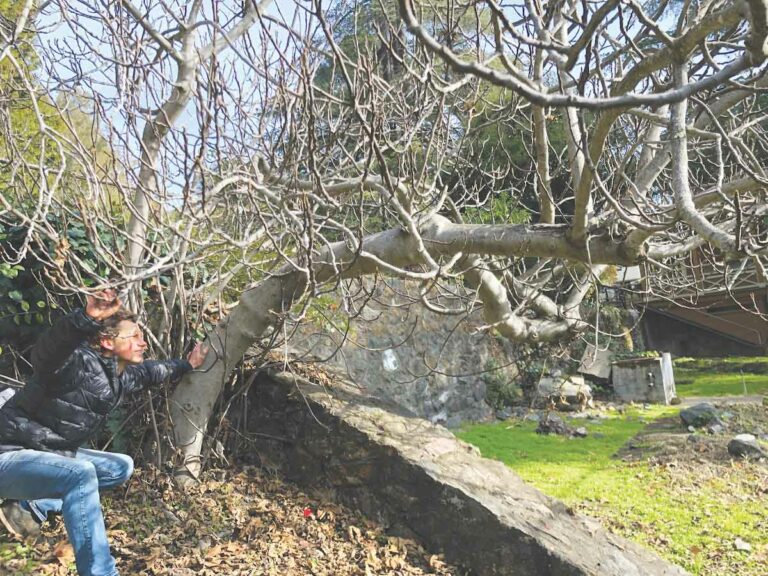
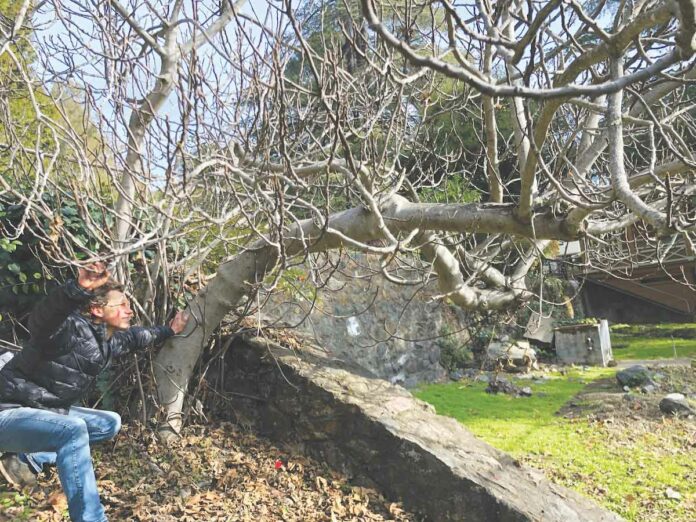
Mr. Bland, I really enjoyed your article on fig trees (“Fig Hunter,” Jan. 6). I have a fig tree in my yard that my mother grew about 80 years ago from a “stick” her Italian father gave her. She just stuck it in the ground and it flourished. I supply the whole neighborhood with figs every year. I trim it every two years or it would be as tall as my two-story house. The green figs with pink insides are sometimes dry but usually dripping with juice, depending on the rains. I’ve grown trees for people and, like you mentioned, it’s easy to do. If you’d like to see it or have a branch, let me know. It’s a fond childhood memory to have those figs with prosciutto!

Kathleen Giono, San Anselmo

Vital Visions

Dear Editor,
As we face climate change, wildfires, and the pandemic, protecting natural and working lands is more than critical than ever. That is why the Vital Lands Initiative of the Sonoma County Ag + Open Space District is so timely. Vital Lands is the vision for land conservation in Sonoma County. Its purpose is to guide the spending from our existing county sales tax revenues for land conservation over the next decade.

Vital Lands prioritizes protection of open space lands to preserve agriculture, natural resources, recreation, greenbelt areas, and urban open space. Vital Lands was developed after more than two years of public workshops from Cloverdale to Petaluma and Bodega Bay to Sonoma.


Vital Lands was completed in 2019 but never formally adopted by the Board of Supervisors, which serve as the governing board of the Ag + Open Space District. Finally, the supervisors plan to vote on adopting Vital Lands at the January 26 meeting. Greenbelt Alliance urges everyone who cares about open space, agricultural lands, clean air and water, wildlife habitat, wildfire resiliency and equal access to the outdoors speak up in favor of Vital Lands. Learn more on the Ag + Open Space website.

Teri Shore, Advocacy Director of Greenbelt Alliance

Write to us at le*****@********un.com.

Open Mic: Who America Is

January 6, 2021, will go down in the annals of history as a day of terror, violence and sedition.

White supremacist mobs, incited by Donald J. Trump and his conspirators in Congress, stormed the U.S Capitol with the full intent of destroying the certification of the electoral votes for Joseph R. Biden and subverting the democratic results of a free and fair election.

As the country reels from this violent insurrection, it’s become clear that well-coordinated militia operatives intended to kidnap and assassinate members of Congress, and five people are dead as a result of this horrendous incident of domestic terrorism.

It’s the lack of preparedness for what so many warned of, and the shock and awe expressed by politicians and pundits in the wake of this incident, that adds so much insult to injury. One need only look to Tulsa, Rosewood, Wounded Knee, Charleston and more than fifty other massacres in our nation’s history that bear the familiar hallmark of white supremacy. This is who America is.

The foundations of white supremacy are wholly without merit or tangible truth, and therefore, violence must be used to perpetuate it. America has chosen time and again to abdicate the responsibility to dismantle white supremacy. This has served to uphold power and cling to the lie that this country was built on liberty and freedom, even as the slaveholding framers drafted our constitution to declare any non-free individual be counted as three-fifths of person.

As we watch corporations, sports platforms and municipalities boldly declare they will no longer do business with the Trump Organization in the wake of the insurrection, this too is a display of white supremacy. It must be noted that alignment with “very good people” in the Charlottesville riot, babies torn from their parents’ arms and placed in cages, racist dog whistling to militia groups, 26 sexual misconduct allegations, pathological lies, callous disregard for the ravages of Covid-19 in BIPOC communities, and violent repression of peaceful protest for Black Lives, were not enough to break ranks.

It must be mentioned that while no member of Congress should have been endangered, that someone had dismantled the panic button system in Ayanna Pressley’s office, that Alexandria Ocasio Cortez reports she nearly died, and that Capitol police officer Eugene Goodman had to lure a vicious white mob away from the Senate with his Blackness. It must be mentioned that over 250 Black police have sued the Capitol Police Department for racial discrimination since 2001. It must be noted that Black Lives Matter protests since 2014 have been met with tanks and teargas, snipers and beatings, enforced disappearances and unsolved killings of organizers.

The Republican members of Congress who now call for healing, while refusing to fulfill their constitutional oaths, while aiding and abetting a President who committed authoritarian sedition and aligned himself with the terror of white supremacy in this country, must resign. This is the ultimate display of white supremacy and privilege. It demands loyalty while giving none, shirks accountability for its damage and lies, and feels entitled to a double standard which it only extends to itself.

This President must be impeached, to bar him from holding office again and to deny him a pension paid for by the American people, which he does not merit. Let us not lose this moment, in this second Civil Rights Movement. Structural racism still defines this machine. The necessary business, the good trouble, of dismantling white supremacy can no longer be abdicated to future generations.

January 6, 2021, represents what James Baldwin meant when he said, “People who treat other people as less than human must not be surprised when the bread they have cast on the waters comes floating back to them, poisoned.” White supremacy must be dismantled, for this country to survive.

Dmitra Smith is the Former Chair of the Sonoma County Commission on Human Rights. To have your topical essay considered for publication, write to us at op*****@********un.com.

Advocates Push to Preserve Historic Druid Heights Community

After the death of renowned sex worker and activist Margo St. James last week, I started thinking about the secluded community near Muir Woods where she lived for several years in the late ’60s to early ’70s. 

I visited Druid Heights in 1991, long after its heyday, and was struck by the organic architecture of the dwellings; however, I knew little then about the vibrant enclave of influential writers, artists, musicians, craftsmen and activists who thrived there decades ago.

Some quick research about what’s going on at Druid Heights today left me scratching my head. The National Park Service (NPS), the current owner of the land and structures, is letting Druid Heights go to ruin, much to the chagrin of Save Druid Heights, a group dedicated to the preservation of the history, buildings and artistic legacy of Druid Heights.

It’s an unfortunate course of action by the NPS, because scores of luminaries from the beat, hippie and other countercultural movements lived at and visited Druid Heights. Some of the residents included writer and Zen philosopher Alan Watts, Pulitzer Prize–winning poet Gary Snyder and legal scholar and sex equality activist Catharine MacKinnon.

Allen Ginsberg, Lily Tomlin, Dizzy Gillespie, Louis Armstrong, Neil Young, Tom Robbins, Carlos Santana, Anna Halprin, Ram Dass and Daniel Ellsberg were just a few of the many famous visitors.

It all began in 1954, when a lesbian poet and an unconventional builder formed an unlikely partnership and purchased five isolated acres of land on the southwestern side of Mount Tamalpais. Elsa Gidlow put up the funds to buy the property she dubbed Druid Heights and Roger Somers supplied the sweat equity to design and build distinctive dwellings and structures on the acreage.

Druid Heights matriarch Gidlow was a trailblazer and a visionary. Considered the progenitor of the lesbian feminist era, she wrote On A Grey Thread in 1923, the first book of openly lesbian love poetry in North America.

Nine of her 13 books were written at Druid Heights, including a 1986 autobiography, Elsa, I Come with My Songs, which was the first lesbian autobiography written under the author’s real name, according to the GLBT Historical Society in San Francisco.

Gidlow died in her home in 1986, at the age of 87. The poet’s ashes were buried under an apple tree on the property.

Druid Heights, a former chicken ranch, started out with two houses and a few outbuildings left over from the ranch. Eventually, it featured about 16 homes and structures, many designed and built by the innovative Somers, who was influenced by Frank Lloyd Wright and Japanese architecture.

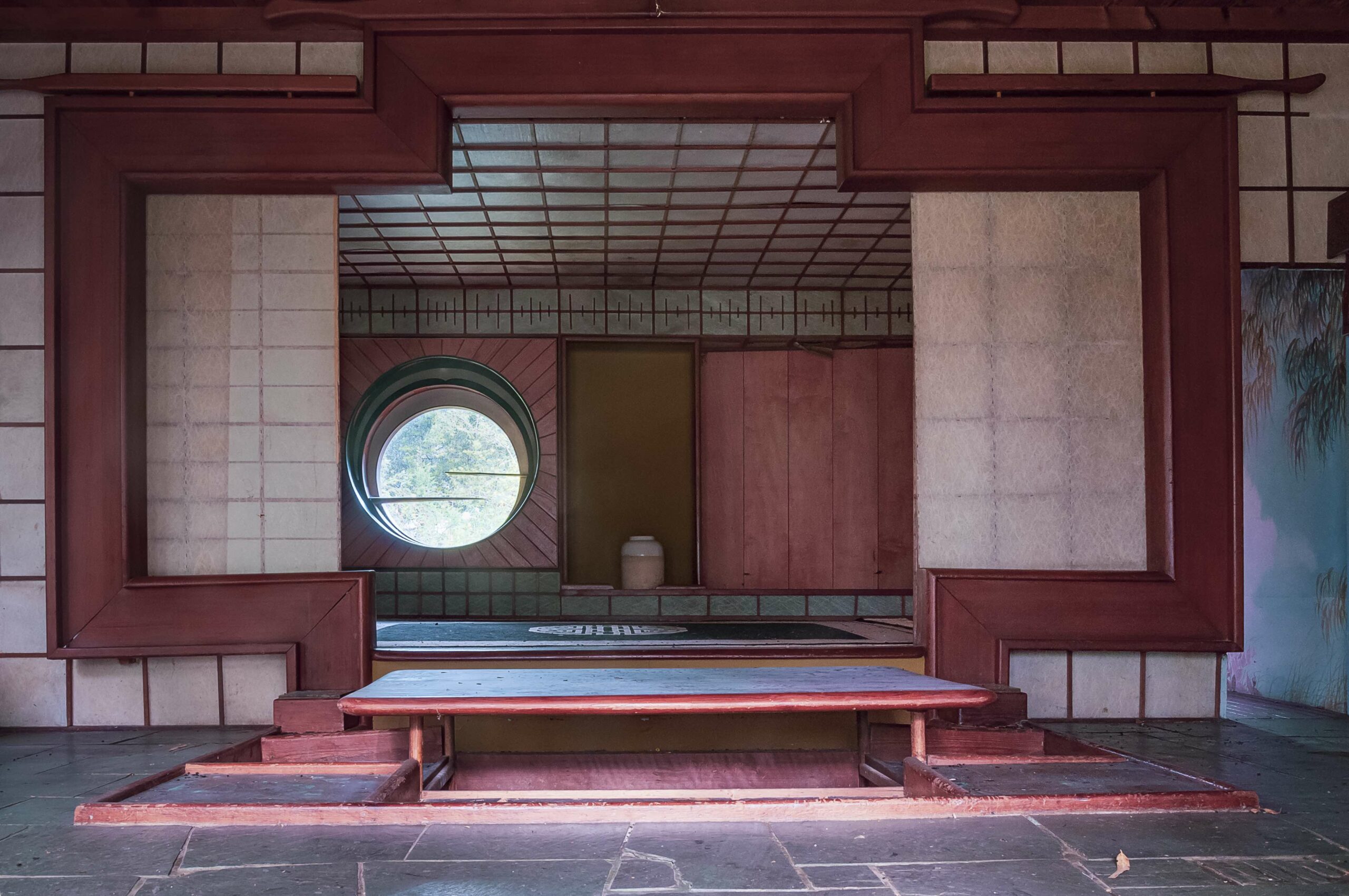
Curvilinear design became his trademark. The Twin Peaks house features a Polynesian-inspired roof and Japanese-style interior. A shoji-paneled room, a large round window, a sunken dining table with built-in benches and upright piano strings mounted into a wall are just a few of the remarkable elements adorning the inside of the home.   

An interior shot of the meditation room and outer sunken seating area in Twin Peaks. Photo by Abby O’Rourke

Somers customized the interior of Neil Young’s 1972 tour bus, which showcased graceful woodwork with organic forms. He also designed and built part of the Trident restaurant in Sausalito, where his artistry can still be seen today.

“Roger was an advanced craftsman,” said Joe Tate, a Sausalito musician who often jammed at Druid Heights. “But Roger was pretty fine on the saxophone. I don’t know why he didn’t do it professionally.”

Somers died of heart failure in his Druid Heights hot tub in 2001, at the age of 74.

The third main Druid Heights owner was Ed Stiles, a furniture maker, who moved there with his wife in 1965, and he still lives there today. Stiles designed and built several of the buildings, including the Casa Rondo, a circular home resembling a lotus flower, constructed in 1968.  

Later, the home was renamed the Mandala House by Alan Watts, who moved there in 1970. Watts was an author, lecturer and radio personality. Writing 25 books, mostly on Eastern philosophy, religion and mysticism, the Los Angeles Times called him “perhaps the foremost interpreter of Eastern disciplines for the contemporary West.

After Watts passed away in 1973 at the Mandala House, he was cremated and half of his ashes were buried near his library at Druid Heights and half were buried at Green Gulch Farms in Muir Beach, which has a Buddhist practice center.

Margo St. James, who passed away last week at 83, lived at Druid Heights from 1969 until about 1974. A colorful regular in Herb Caen’s column, the gregarious St. James founded a sex workers’ rights group in 1973 called COYOTE, an acronym for Call Off Your Old Tired Ethics. To raise money for the organization, she started the annual Hookers Ball, a raucous Halloween event in San Francisco that ran from 1974 to 1979.

Interspersed with the significant creative work taking place at Druid Heights were wild parties that included drugs, hot tubbing and all-night jam sessions.

Steve McNamara, owner of the Pacific Sun from 1966 to 2004, visited Druid Heights on several occasions and recalls the parties, which he says were spectacular.

“There were bands and, of course, a generous supply of pot and cheap wine (Mountain Red?),” McNamara wrote in an email. “My main memory of Druid Heights is/was that it was an astonishing fantasy that seemed to have magically appeared in the woods.”

Unfortunately, the magic began to fade in the mid-’70s, after the NPS invoked eminent domain on the community due to its proximity to Muir Woods National Monument. Druid Heights owners were forced to sell the entire five acres. Gidlow fought the sale but was ultimately defeated. The federal government gave lifetime leases to owners Gidlow, Roger and Faye Somers, and Ed and Marilyn Stiles. Other “non-legal residents” were asked to leave.

Today, Druid Heights is inhabited by a handful of people, including Stiles, who is now 82. Faye Somers still has her lease and rents out the Mandala House. The inhabited homes are reportedly in sound condition.

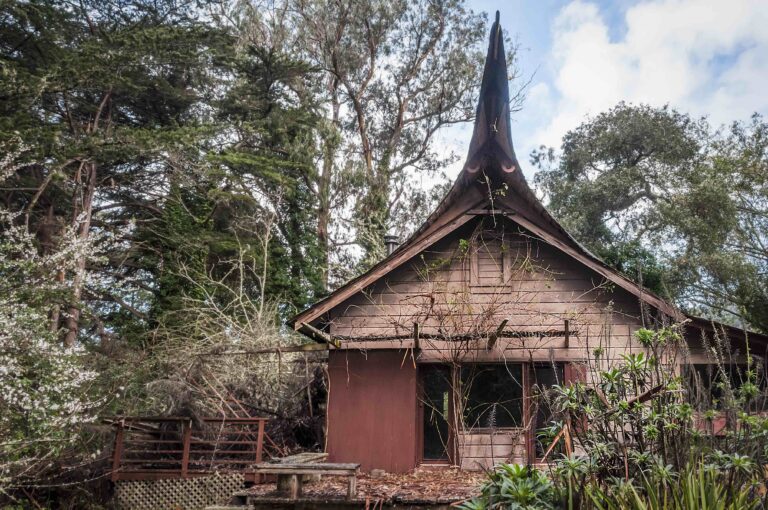
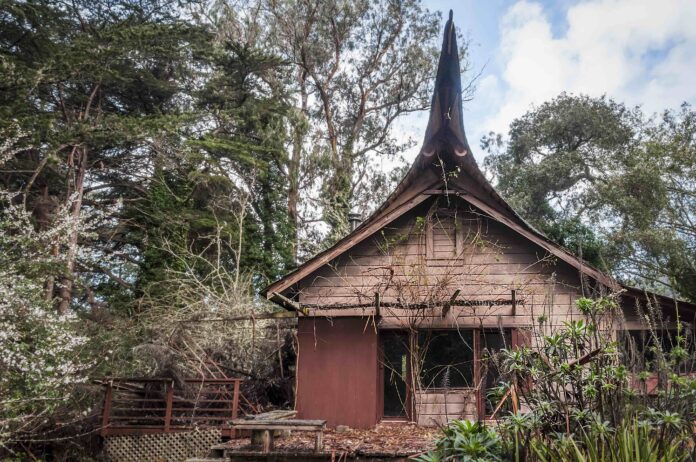
Although Druid Heights is eligible for listing in the National Register of Historic Places, the NPS is allowing the unoccupied buildings, including Twin Peaks, to deteriorate from water damage, rats and structural failure.

“The listing itself doesn’t necessarily confer protection,” NPS Park Ranger Mia Monroe said. “Protecting the buildings may or may not happen.”

The NPS has no anticipated date for any decisions about preserving or restoring Druid Heights, Monroe added.

“Prison and military fortifications in national parks are preserved,” Save Druid Heights founder Michael Toivonen said. “If you’re going to preserve historic places, are you going to have diversity? Druid Heights represents cultural diversity.”

A 2018 photo shows the level of decay in one of the Druid Heights buildings. Photo by Abby O’Rourke

Former Druid Heights’ resident and author Hallie Iglehart Austen expressed dismay after seeing the significant decline of the buildings.

“One reason I think it’s really important to preserve these buildings is they’re works of art and it was part of a whole culture, a whole era,” Austen said in a Druid Heights oral history. “And it just seems to me like a situation of bureaucracy gone wrong …”

Druid Heights is closed to the public. For more information about its preservation, visit Save Druid Heights on Facebook.

New 30-Day Program Honors Martin Luther King Jr in the North Bay

For over 50 years, the Center for Volunteer & Nonprofit Leadership (CVNL) has empowered individuals and strengthened nonprofit organizations in the North Bay.

The Center’s annual events, such as Heart of Marin and Heart of Napa, support nonprofits of every size and purpose; and CVNL’s other programs include the Sonoma Human Race, its Court Referral Program, and Volunteer Wheels.

Now, CVNL is celebrating Martin Luther King Jr Day this year by inviting the public to take action and help others in their communities, 30 days of action to be exact.

Beginning January 18, the Center’s “30 Days of Action” honors the memory and teachings of Dr. Martin Luther King Jr with a plan of activity that stretches on through February 18.

“While many see Martin Luther King Jr Day as a day off, we see it as a ‘day on,'” Melinda Earp says in a statement.

Earp is CVNL’s AmeriCorps VISTA member in Marin and Sonoma Counties. Managed by CVNL, AmeriCorps VISTA members directly work with nonprofit organizations and public agencies in their region to generate resources and encourage volunteer service.

“(30 Days of Action) is an opportunity to start your year in the spirit of volunteerism and service, continuing the legacy Dr. King, who spent his life working to better the lives of others,” Earp says.

Working with local partners across the North Bay, Earp and the team at CVNL recently created a 30-day calendar of activities, inspired by Dr. King’s advocacy, running Jan. 18–Feb. 18. The team specifically designed the activities for people of all ages and abilities. Individuals engage in virtual offerings that range from watching a TED Talk, to reading an inspiring article, to volunteering.

As participants complete each day, they will develop a deeper knowledge and appreciation for Dr. King’s legacy and acquire the skills and knowledge to help address current inequities in their community.

In addition to the 30-day program of online activities, AmeriCorps VISTA members work with CVNL each year to create special Martin Luther King Jr Days of Service programs in specific areas of focus. This year, members address food insecurity and youth literacy though an initiative called Operation D.R.E.A.M (Dedicated Readers Excel and Motivate).

In Marin, Sonoma and Napa counties, CVNL is collecting new books and healthy snacks. These items will go in book bags that will also include resources for local food banks and pantries. The goal is to create 500 bags, which will be gifted to North Bay children and teens.

“Our book bags attempt to nourish the minds and bodies of today’s’ youth because access to healthy food and improved literacy improves overall health and creates a sense of empowerment,” AmeriCorps VISTA Member Sophia Luna says in a statement.

North Bay residents can join the Days of Service by donating new books for children or teens, pre-packaged and non-perishable snacks, new bookmarks, or a gift certificates that can go towards these items.

Each bag of gifts will contain approximately $25 worth of books and $10 worth of snacks. Local organizations that work to improve youth literacy and address hunger will distribute the bags. These groups include Bridge the Gap College Prep in Marin City, Napa County Office of Education, and Petaluma People’s Services.

To donate to the book bags, visit volunteer.cvnl.org and click on the “MLK Day” button. To participate in CVNL’s “30 Days of Action,” visit cvnlvolunteers.org/mlk2021.

State Expects to Make Vaccines Available to People 65 and Older Soon

California’s working groups overseeing the distribution of Covid-19 vaccines are discussing potentially making the vaccine available to everyone age 65 and older, the state’s Health and Human Services Secretary said Tuesday.

As of Monday, 816,673 coronavirus vaccine doses have been administered to health care workers and nursing home staff and residents, according to state officials. 

While the state is rolling out vaccine doses in phases, targeting the most at-risk demographics first, new guidance Tuesday from the Centers for Disease Control and Prevention encouraged states to begin vaccinating everyone age 65 and up rather than segmenting them depending on whether they have underlying medical conditions.

“We believe that having more vaccine, inviting more to be vaccinated will allow California to go faster and quicker through our population and get that vaccine out of our freezers and into our populations to get that protection,” HHS Secretary Dr. Mark Ghaly. 

Roughly 15 percent of the state’s population is older than 65, according to 2019 population estimates by the U.S. Census Bureau.

Ghaly noted that the state’s vaccination rollout has been somewhat tempered so far due to a general lack of available doses as well as a limited number of medical professionals licensed to administer vaccine doses. 

Both of those are expected to change in the coming days, however, with state and local public health officials collaborating to establish large-scale drive-thru coronavirus vaccination sites at sports stadiums like Dodger Stadium in Los Angeles and the Oakland Coliseum as well as Cal Expo in Sacramento and Disneyland. 

In addition, the state is recruiting additional medical practitioners such as pharmacists and dentists as well as the National Guard to increase the administration of vaccine doses.

Prior to the new CDC guidance, the state planned to expand its vaccination pool this month to people age 75 and older as well as education and child care, emergency services, food and agriculture workers.

Those groups are still expected to begin receiving vaccine doses in the coming weeks in addition to those over 65, assuming the state’s vaccine distribution working group expands the vaccination pool.

To date, nearly 2.5 million vaccine doses have been shipped to California’s local health departments and health care systems, according to state officials.

Ghaly said that figure is still well behind what the state had hoped for by now. 

“The truth is, with such limited supply of vaccine and little bit coming into the state, we continue to look at ways that our structure allows us to get vaccine out to those populations as quickly as possible while still allowing us to, unimpeded, finish the vaccine that we’ve already received,” Ghaly said. 

According to Ghaly, in addition to the more than 800,000 doses administered, roughly 99,000 state residents have received both doses of the vaccine required to build immunity.

Earth’s Fast Rotation is the New Spin Cycle

As the world turns

Even though it’s over, 2020 is still getting worse. Case in point, scientists have discovered that, due to a variety of circumstances, the Earth apparently spun on its axis at an increased rate last year. Yes, our collective merry-go-round is going faster—hang on tight.

Though the increased speed added up to only a mere second lost, that’s all the time we need to confirm the world is indeed spinning out of control.

With a speedier globe comes a requisite set of 365 shorter days. Given the unprecedented misery of 2020, perhaps shorter is better. Unless it’s your birthday. The shortest day of 2020 was July 19, which also happens to be my birthday. So, yes, the annual celebration of my earthly existence was shorter than yours. Or, if you’re going to be a size queen about it, yes, your b-day was bigger than mine.

Back in the old, slower days, a full day was 86,400 seconds. On July 19, 2020, the day was 1.4602 milliseconds shy of a complete 24 hours, making it the shortest day ever recorded.

No one knows why this is happening, but here’s my theory—ever notice how objects speed up when they’re circling the drain?

All this terrestrial turning brings to mind Superman in the original 1978 Christopher Reeve film, wherein the titular hero uses his superness to reverse the rotation of the earth. Why did he undertake such a Herculean effort? To mess with magnetic fields or cause geological and meteorological chaos? No—he did it to turn back the course of time a few seconds in order to thwart Lex Luthor’s play for world domination. We can’t blame him for thinking this could work— he went to public schools, after all.

It raises the question, though, what if we had a globally-scaled “redo” button? What day in 2020 would we have pushed it? What was the obvious first misstep when we coulda, shoulda, woulda recognized the mistake and hit the redo button? Or more to the point, when should we hit it now?

Even if it means donning a cape and turning back the clock one orbit at a time, it’s worth a shot (and it’s probably the only shot most of us will be getting any time soon). If capes aren’t your thing, some heroes wear masks.

Editor Daedalus Howell is in geosynchronous orbit at DaedalusHowell.com.

Culture Crush: At-Home Events and Virtual Gatherings Continue

As the Covid-19 pandemic continues to halt in-person gatherings in 2021, several North Bay organizations are hosting online events boasting music, art, theater and other family-friendly delights this week. Here’s a round up of what’s worth looking forward to. Virtual Lecture Marin County native Carl Hungerford was an intellectually engaged and socially conscious individual, and The Carl Hungerford Lecture Series—presented in...

When Cannabis Came Out: Remembering Prop 215

Prop 215
Recently, SF Weekly journalist Veronica Irwin went out on a limb and exclaimed, “It’s because of gay activism that Californians have a regulated cannabis market.”  She rattled off a list of famous gays, without genuinely honoring the foot soldiers, not the superstars of the movement. Guys like Michael Koehn, 74, and David Goldman, 69, a gay couple, who met in...

Black San Quentin Artist Inmates’ Brush With Justice

artist inmates
What do you get if you add 12 and 21?  A unique art exhibition, one pushing the idea that society needs to take a new look at mass incarceration. A dozen San Quentin inmates have contributed 21 artworks to the digital Museum of the African Diaspora (MoAD) display, “Meet Us Quickly: Painting for Justice From Prison,” which runs through Jan. 31. In...

Marin New Wave Band Debuts Digital Bootleg Series

Forty-five years ago, North Bay audiences discovered a new groove. Coming out of Marin County, the Tazmanian Devils were a proto-New Wave band that became one of the first in the region to mix rock ‘n’ roll with roots-reggae, R&B and even Gospel influences. They almost took the world by storm, signing to Warner Brothers record label and releasing two albums...

Letters to the Editor: Sharing Figs & Vital Visions

Fig Hunter
Sharing Figs Mr. Bland, I really enjoyed your article on fig trees (“Fig Hunter,” Jan. 6). I have a fig tree in my yard that my mother grew about 80 years ago from a “stick” her Italian father gave her. She just stuck it in the ground and it flourished. I supply the whole neighborhood with figs every year. I...

Open Mic: Who America Is

January 6, 2021, will go down in the annals of history as a day of terror, violence and sedition. White supremacist mobs, incited by Donald J. Trump and his conspirators in Congress, stormed the U.S Capitol with the full intent of destroying the certification of the electoral votes for Joseph R. Biden and subverting the democratic results of a free...

Advocates Push to Preserve Historic Druid Heights Community

After the death of renowned sex worker and activist Margo St. James last week, I started thinking about the secluded community near Muir Woods where she lived for several years in the late ’60s to early ’70s.  I visited Druid Heights in 1991, long after its heyday, and was struck by the organic architecture of the dwellings; however, I knew...

New 30-Day Program Honors Martin Luther King Jr in the North Bay

For over 50 years, the Center for Volunteer & Nonprofit Leadership (CVNL) has empowered individuals and strengthened nonprofit organizations in the North Bay. The Center’s annual events, such as Heart of Marin and Heart of Napa, support nonprofits of every size and purpose; and CVNL’s other programs include the Sonoma Human Race, its Court Referral Program, and Volunteer Wheels. Now, CVNL...

State Expects to Make Vaccines Available to People 65 and Older Soon

Stanford Medicine California Covid-19
As of Monday, 816,673 coronavirus vaccine doses have been administered to health care workers and nursing home staff and residents.

Earth’s Fast Rotation is the New Spin Cycle

faster rotation
As the world turns Even though it’s over, 2020 is still getting worse. Case in point, scientists have discovered that, due to a variety of circumstances, the Earth apparently spun on its axis at an increased rate last year. Yes, our collective merry-go-round is going faster—hang on tight. Though the increased speed added up to only a mere second lost, that’s...
3,002FansLike
3,850FollowersFollow