North Bay Teens Talk About Cannabis During Quarantine

So, you’re worried your seemingly innocent teenager is a secret cannabis consumer? With good reason.

Cannabis is the “drug” most widely used by American teens. It’s also a multi-billion-dollar-a-year industry. I’ve put the word drug in quotation marks because it isn’t a pharmaceutical that anyone can purchase over the counter at Rite Aid or Walgreens.

Still, cannabis is more potent now than ever before, with higher percentages of THC, the psychoactive ingredient. It’s also more readily available now than at any time in the past. As author Marin Lee points out in his book Smoke Signals, “Marijuana is a controlled substance whose use proliferates everywhere in an uncontrolled manner.”

While teens can’t buy weed at dispensaries, they can persuade adults to make purchases for them. In California, Prop. 64 legalized cannabis for adults 21 and over, not for teens, many of whom likely resent being excluded by law. Whether they’re 13 or 19, they’re not waiting until they’re 21 to use it.

But are teens smoking more than they were prior to legalization? According to the National Organization for the Normalization of Marijuana Laws (NORML), “Studies suggest that marijuana legalization has not had much overall effect on marijuana use by children and adolescents, at least during the past two decades.” The NORML website says that “rates of problematic cannabis use by young people have declined for the better part of the past two decades.”

Moreover, legalizing marijuana has reduced crime, not increased it, in part because it takes marijuana out of the hands of outlaws and criminals. When Sebastopol’s first dispensary, Peace in Medicine, opened, Chief of Police Jeff Weaver fielded phone calls from cops all over California asking if crime had gone up. “No,” he would say. “Even littering has declined.”

One can find studies that purport to show the dangers of cannabis for teens, but many of them are funded by the federal government, which considers marijuana a drug as dangerous as heroin. Teens know that isn’t true. They also know the U.S. government has lied about cannabis for decades. Advocates for normalization rightly point out that the White House lost its credibility on the subject of drugs long ago.

For the past 42 years, I’ve written about California marijuana. I’ve interviewed hundreds of people of all ages, races and social classes: growers, doctors, sheriffs, traffickers and more. This article is based on decades of experience in and around the cannabis community, from Sebastopol and Sonoma to Willits and Ukiah, plus a deep dive into the world of North Bay teens, their parents, teachers and friends. Teens are at the heart of this story.

No one has ever died of a marijuana overdose, though teens told me they’ve had bad experiences. A Bay Area mother of two teens says, “The last time I used, when I was in college, I was hallucinating and having major anxiety, so I stopped smoking.” More often than not teens make sound decisions on their own.

The mother of two teens adds, “I would, in a heartbeat, use it for medical conditions for me or anyone in my family, purchased from a safe place. It is way better and safer than alcohol.” That is the prevailing point of view among North Bay parents.

I’m reminded of the time former Mendocino County Sheriff, Tom Allman, told me in his Ukiah office that cars could not logically be outlawed because automobile accidents have resulted in tens of millions of deaths. “Also,” he said, “the police can’t arrest everyone for speeding on 101, but that doesn’t mean that no one should be arrested, nor does it mean that the state should abolish all highway rules and regulations.”

Teens point out the hypocrisies surrounding drugs. “Alcohol is more dangerous than cannabis, and it’s legal,” one 15-year-old tells me. “That’s hypocrisy.”

Black market marijuana money infuses many California towns; kids get Christmas presents, school supplies and video games thanks to cannabis cash. Business owners look the other way. State and local governments accept tax dollars from the cannabiz, even while they consistently fail to provide accurate information about cannabis. Educating the public about cannabis is the responsibility of the private sector, government officials tell me. For the most part, teens educate themselves. They conduct research online and also experiment on their own bodies and minds and compare notes with peers. That is the case with Martin Bolz, who might be described as a dedicated user.

Teen Tales

Bolz began consuming marijuana at 16. Three years later, he’s still smoking, though he says he won’t smoke forever. His “marijuana habit,” as he calls it, won’t help him get into the U.S. Air Force. He wants the Air Force to pay for grad school.

When asked to describe his relationship to weed, Bolz says, “It’s complicated.”

Many, if not most, Norcal teens say much the same thing. They deplore weed and they praise it, insist they’d like to stop, but go on using it. Are they addicted? It depends on how one defines addiction. With “vaporizing” and dab pens, or e-cigarettes, kids are more likely to be hooked than if they smoke a joint. That’s a choice they make, but the manufacturers of dab pens make it easy for teens to become psychologically, if not physiologically, addicted.

Recently, the SSU police caught Bolz smoking weed and told him to get off campus. On another occasion, he smoked in front of a cop. “I wanted to see how he might react,” Bolz tells me. “He did nothing.” Cops don’t want the hassle of arresting teenagers, especially if they’re white, for violating marijuana laws.

When Bolz’s parents caught him using it, he moved out of their house and went on smoking in his own Rohnert Park apartment. “I started as a secret smoker,” he tells me. “But everyone knew.” I suppose he looks like a stoner, though that’s a stereotype that increasingly doesn’t apply.

Bolz isn’t afraid of an addiction to marijuana, nor are most of his contemporaries, the post-Millennials, who belong to the latest in a long line of demographic groups in the U.S. targeted by the drug warriors.

The Drug War

Marijuana, opioids, heroin, cocaine, acid and speed are readily available on Main Street, U.S.A. The pandemic has persuaded Americans, including teens, to use more uppers and downers, pills, salves, tinctures and edibles—and play more addictive video games—than they ever did before, out of boredom, loneliness and isolation. 

“The kids are not alright” has become  a popular media meme. Ever since the birth of “youth culture” after World War II, teens have been rebels with and without causes. Drugs have played a part in their rebellion.

“It’s impossible to separate people from drugs,” 16-year-old Cadence Sinclair Eastman (not her real name) tells me. “You can’t stop people from having sex, either. The drug war was lost long ago.”

A half-century after President Nixon launched the “War on Drugs”—which was a war on people—the drug warriors have lost three generations of Americans to marijuana. Those same drug warriors have bolstered the prison-industrial complex, arresting and incarcerating tens of millions of Black and Latino boys and men, and thereby helping to perpetuate Jim Crow.

Sixteen-year-old Cadence Sinclair Eastman turned her back on weed. Photo: Jonah Raskin

If scare tactics don’t persuade today’s post-Millennials to stay away from weed, the drug warriors might as well give up the ghost and do something useful, like provide accurate information about drugs.

Dr. Jeffrey Hergenrather has recommended marijuana ever since he lived on “The Farm,” an intentional community in Tennessee, in the 1970s. Before then, he smoked when he was an undergraduate at UC Berkeley. Hergenrather has worked with thousands of patients, old and young, parents and children, and with all kinds of ailments and infirmities.

”Cannabis helps young people get through their teen years, which can be stressful,” he tells me. “It helps them focus, alleviates depression and anxiety and eases insomnia.” Hergenrather adds, “It’s unreasonable to expect that teens won’t use cannabis. It’s their drug of choice, and, while new users sometimes get spacy and abuse weed, they usually come to terms with it.” Hergenrather suggests that teens ought to use marijuana in safe environments, that they respect the wishes of their parents and that their parents let them use it at home.

His January 2020 scientific paper showed that high dose consumption of cannabis helped relieve the symptoms of ADHD in adults. He and his fellow researchers concluded that “more studies are needed.” If only other researchers didn’t rush to unwarranted conclusions.

More Teen Tales

Eastman gets her weed from her father, a longtime cannabis farmer and dealer. “Parents who are okay with their kids smoking are rare,” she tells me. “When parents forbid it, kids do it more often.” She adds, “I think it’s cool if parents allow, but not cool if they encourage.” Her father insists that she only smoke his weed, which she gets for free and which he also sells to some of her friends, if they’re over the age of 16.

Eastman is often uncomfortable with her own use. “Sometimes weed makes me anxious and sad,” she tells me. “When I’m high I forget things and don’t pay attention. Also, sometimes when I smoke with friends I think they’re excluding me. We talk about it. Turns out, they have the same thoughts I have.”

Eastman would rather smoke with friends than smoke alone, but that has been difficult during the pandemic. She can be as negative about cannabis as any drug warrior, though she has no scientific evidence to offer, merely personal experience. “Smoking is bad for you,” she tells me. “It kills brain cells and interferes with learning, though I have some friends who say it opens their creativity.”

The pandemic curtailed much of Eastman’s social life, which revolves around skateboarding, where drugs are part of the scene. Some kids smoke and skate, others only skate, while still others only smoke. Adults are rarely present. There’s sex in the bushes and a teenage male macho culture.

Sixteen-year-old Debbie (not her real name), a high school sophomore, smoked for the first time at 13. “It was in a car with a friend,” she says. “I felt natural, organic and fun. I went home, watched a movie and went to sleep.” Debbie grew up in a family of marijuana smokers and growers. Her parents told her, “don’t talk about it at school.”

These days she mostly uses on weekends. “There’s a lot of misinformation about cannabis,” she tells me. “Some people think it’s as bad as heroin. I think weed should be legalized.” When she looks around, she sees the growth of the cannabis subculture: more cultivating, selling and using. Indeed, it’s a growth industry that offers employment, benefits and decent wages. “Scaring people won’t work,” Debbie says. “The kids who smoke the most are the ones whose parents tell them not to smoke.”

Education and Miseducation

The Sonoma County Department of Health Services offers a social media campaign meant to educate teens about the dangers of marijuana. The website, www.cannabisdecoded.org, features a photo of a 16-year-old girl who is quoted as saying “When I was getting high I thought I was having a good time. But what I started to realize is I was actually missing out on a lot.”

I didn’t smoke pot until I was 25, when a law student who became a New York State Supreme Court Judge got me high. I giggled, ate ice cream and experienced spatial alteration, though two hours later I was back to normal. More than 50 years later, I still get high. When I told my older brother—a psychiatrist who prescribed pharmaceuticals for his patients—that I wrote six books under the influence of weed, he said, “You would have written 12 books if you hadn’t smoked at all.”

Like Sonoma, Marin has a program to educate teens about weed. The Marin Prevention Network explains that the county has “a long history of widespread marijuana use and cultivation,” and that marijuana use among teens has “become commonplace” with “widespread acceptance.”

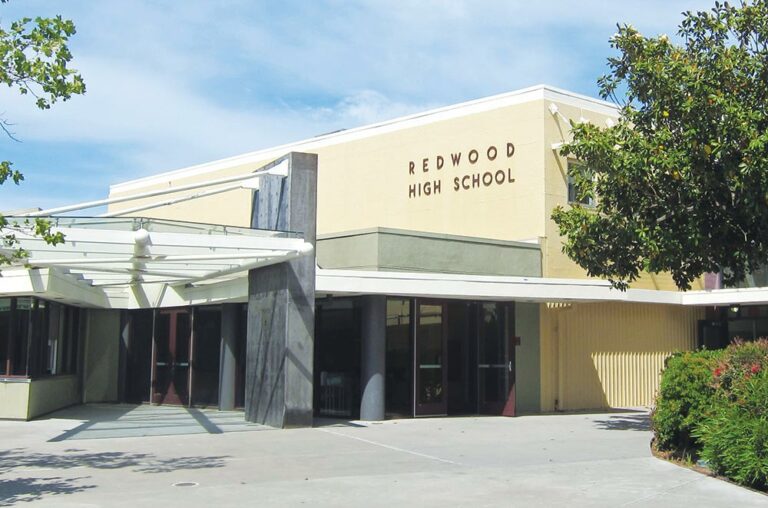
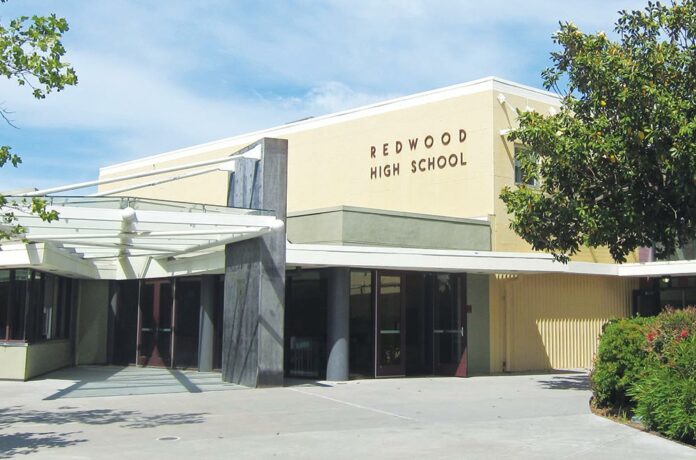
Not long ago, I attended Dr. Jennifer Golick’s lectures to students, parents and educators. “The weed that hippies smoked wasn’t dangerous,” she told an audience at Redwood High School. “Now it is. Marijuana causes mental illness.”

There does not seem to be a substantial body of evidence to support that allegation, as Dr. Hergenrather and others in the medical field will attest. In fact, the weed hippies smoked in the ’60s was often more dangerous than the weed that is used today. In hippie times, it was often grown in Mexico with toxic chemicals. It was usually months, if not years, old and had mold and mites.

The Sonoma County Department of Health Services collaborates with Panaptic, an organization with a website that says, “marijuana prevention is more urgent now than ever before.” On its website Panaptic says: “Imagine growing up in a state where there are twice as many retail marijuana stores and dispensaries as Starbucks and McDonalds.”

Panaptic’s co-founder, Sarah Ferraro Cunningham, 43, lives in Petaluma and has a Psy.D. in psychology. She’s old enough to remember the ad that went viral that showed a man who fried an egg in a hot skillet and said, “This is your brain on drugs.” A member of the new generation of psychologists, she doesn’t demonize. “If you tell students ‘Just Say No,’ they will clam up and you won’t connect to them,” she tells me.

Cunningham tells me that she smoked marijuana in college, that her grades dropped and that when she “cut down dramatically” her grades went up. Panaptic—the name means “view from above”—offers consultations, online courses and workshops, all of them focused on marijuana, with teens, parents, families, teachers and schools.

“We emphasize neuroscience,” Cunningham says. “We can’t honestly say that marijuana causes anxiety, but we can say that it’s more likely to cause it with those who do use marijuana.” Local therapists say there’s more anxiety now than ever before and that it’s not caused by cannabis, but by the pandemic, fears of global warming and economic hardship.

Some studies conclude that cannabis damages teen brains, though none of them offer conclusive proof of harm to the prefrontal cortex, which orchestrates thoughts, actions and goals. None of the teens I interviewed showed a lack of core cognitive skills. I observed them navigating the internet. They made omelets over hot stoves and didn’t burn themselves or wreck skillets. They read books, wrote book reports for school and received top grades. They understood the questions I posed and had no difficulty conversing with me, recalling events from years ago as well as from the previous day.

I ask Cunningham what success in her line of work would look like. “It would mean getting teen wheels turning,” she says. She adds, “I’m reluctant to say success would also mean teens not using marijuana.” Indeed, that would doom Panaptic to failure.

Who Will Stop the Reign?   

Thirteen-year old Jack Black Jr. (not his real name) smokes once a week. His father rolls his joints. Last year, he grew his first commercial crop, though he has been helping his father cultivate since he was eight. Not long ago, he witnessed armed police officers storm his house, arrest his father, handcuff him and take him away in a squad car. That’s drug education! Arrests won’t stop Jack Black Jr. from planting seeds and harvesting weed, and they won’t stop the reign of drugs, either.

Indeed, the war against drugs does more harm than the drugs themselves. That has been the position taken by former police officers who founded Law Enforcement Against Prohibition (LEAP), an organization that recently morphed into Law Enforcement Action Partnership, that wants to end the war on drugs.

“Growing weed is hard work,” Jack Black Jr. tells me. “You have to give the plants lots of sun, water and compost tea.” What does he see in his future? “I want to grow up and be a marijuana farmer and also have a real job, maybe at a fast-food place,” he says.

Colin, a 19-year-old, longtime cannabis user, has been in therapy for eight years. “I’m introverted,” he tells me. “Therapy has helped with insecurities.” When a peer pressured him to do drugs, he exclaimed, “Fuck off.” He adds, “I’m glad I gave up dab pens. They were ruining my life.”

If you’re concerned about a son or daughter smoking weed then sit down, listen and try not to be judgmental. You could learn something, even if you smoked dope in the ’60s. After all, it’s a brave new cannabis world out there. “Just Say No” has never worked. It doesn’t work now. Too often teens are demonized by adults. The ills of society ought not to be tied to teens. They didn’t create the society into which they were born. They inherited it.

Jonah Raskin is the author of “Marijuanaland: Dispatches from an American War.”

Cleanup of Sheen Continues Near Dillon Beach, No Oiled Wildlife Spotted

By Bay City News Service

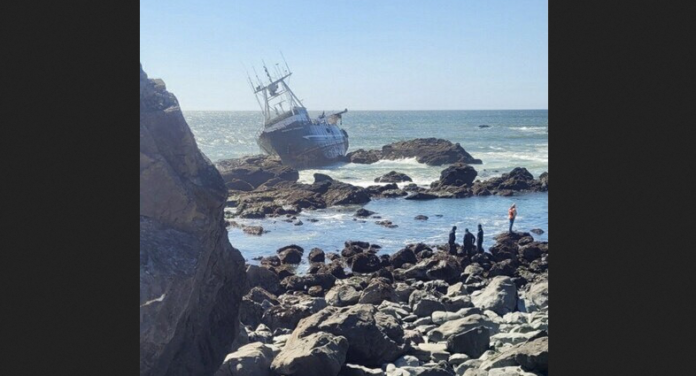
No oiled wildlife has been reported following the grounding of a vessel early Saturday morning near Dillon Beach in Marin County, officials in a unified command said Monday. 

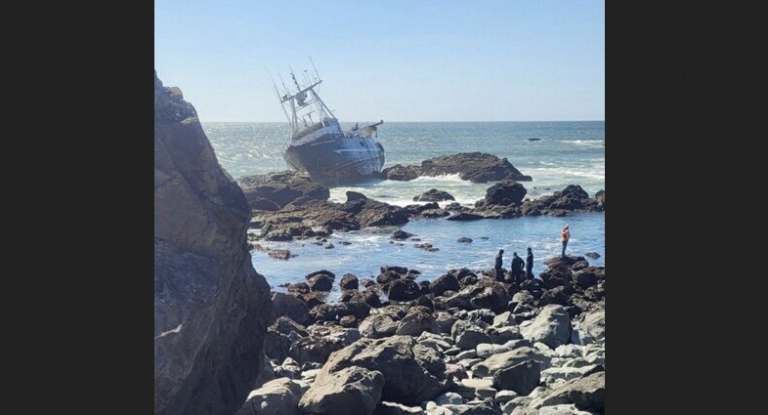
Neither has marine habitat been damaged because the vessel American Challenger grounded at 1am on a rocky shoreline where it remained Monday evening.  

A tugboat was towing the 90-foot American Challenger from Puget Sound, Washington, when a rope got tangled in the tug’s propeller, setting the American Challenger adrift. 

The tug Hunter has since been brought to a pier in Sausalito where the owner is coordinating with the U.S. Coast Guard to make sure the boat gets inspected before departing. 

Marine surveyors have accessed American Challenger and were inspecting the fuel tanks to see how much, if any, pollution is on board. 

Teams surveying the shoreline reported minor sheening in the area near the American Challenger and along the shore adjacent to the boat. Teams are cleaning those areas and no other sheening was seen. 

Officials said brown foam has been washing up on Dillon Beach, but the foam is normal biological material. 

Crews have set up 4,000 feet of boom around American Challenger to protect marine wildlife like the oysters in Tomales Bay. A 100-foot gap exists in the boom to give recreational boaters access to the deepest point of the channel south and east of Hog Island. 

If the oyster beds become threatened, the gap will be closed, according to officials. 

All the beaches in the area are open, but Miller Boat Launch is closed temporarily to help with the emergency response efforts. The efforts to clean up the sheen is not affecting commercial boat traffic. 

If any oiled wildlife is seen, the public is asked to avoid approaching the animal and instead call the Oiled Wildlife Care Network at (877) 823-6926.

Letter to the Editor: The Message in Mill Valley

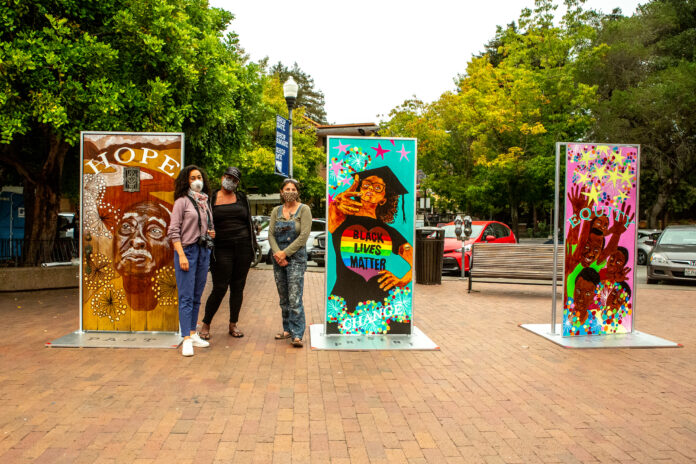
I am deeply concerned with the message the Mill Valley City Council’s decision to disregard the DEI task force’s recommendations sends to the community at large(“Mill Valley City Council Clashes With Equity Task Force,” Feb. 24). I am even more disturbed that the council does not see the absolute necessity and urgency we have to take responsibility for the ways in which the people of color in our community do not feel safe, welcome or seen.

The public outcry and vast number of Mill Valley community members asking, demanding, imploring the council to show up for ALL the people of Mill Valley appears to have fallen on deaf ears–or worse–apathetic, misinformed and shamefully disinterested minds and hearts. The council claims to need more time to research and consider the issues of equity and inclusion and how they need to be addressed in Mill Valley. From my perspective it sounds like they understand the issues exist and simply don’t feel a particularly urgent need to address them because they do not impact council members or the majority white community directly.

I am saddened that the council is unable to see the reality that when anyone in a community feels oppressed or excluded the entire community is impacted. Systemic racism, which exists in Mill Valley and is being supported by council decisions and lack of immediate action, should be a priority issue in Mill Valley’s wheelhouse. As a member of our white majority community I am disgusted with the lack of meaningful response in taking the DEI task force recommendations seriously.

In a statement made by one council member it was claimed that the issues brought to light by the task force were of great importance. In fact, it was stated somewhat begrudgingly that the issues of diversity, equity, and inclusion have been at the top of every meeting’s agenda for months. I’m afraid that putting these issues at the top of the agenda is a hollow gesture if it is not followed up with meaningful and open discussion with the task force and the community. Citing the rules and agreements that excused the council from direct conversation with the task force does not exonerate its members. In fact, it shines a shameful light on how unwilling the council is to move forward with the task at hand: Opening dialogue on issues about race, racism, equity, inclusion and the need for our white majority community to become aware of the ways we intentionally and unintentionally discriminate, oppress, and exclude our black and brown community members.

I would have hoped that after the Mayor’s comments about Black Lives Matter not being directly relevant to our community that the council would have opened its eyes and ears to the ways in which we as a community and they as public servants to that community need to expand, learn, and embrace the dire need we have to change a system that holds others down simply for the color of their skin. These conversations can be uncomfortable and as a white female trying my best to listen and learn I know that at times my implicit bias and racism come through. It has been a shock to me but it has also been the very thing that has made my need to educate myself imperative.

The shame I feel when I notice my own unintentional bias and how it feeds into the system of racism is uncomfortable but I have come to realize that it motivates me to do better. I invite each of the city council members to feel the discomfort of not acting immediately to take meaningful steps towards change that includes all of us here in Mill Valley. The absence of diversity, equity and inclusion for some has a negative impact on us all.

Nina Vincent , Muir Beach

Write to us at le*****@********un.com.

Report: Californians Moving Within State, Not Leaving

A report released last week found that warnings about California residents fleeing the state are over-hyped. While it appears that San Francisco residents have left the city at an increased rate, they tend to have moved elsewhere in the Bay Area or the outer reaches of the state, rather than leaving the state, a trend which is consistent with earlier patterns. 

“Approximately two-thirds of San Franciscan movers remaining in the Bay Area economic region and nearly 80 percent remaining in the state… This is consistent with pre-pandemic patterns,” states the new report released by the University of California’s California Policy Lab.

“In short, to date the pandemic has not so much propelled people out of California as it has shifted them around within it,” the report, which is based on credit reporting data and may not have captured all of the movers over the past year, concludes.

During the pandemic, the rate of people leaving and moving into the North Bay have both increased significantly. However, the changes in rates of movement are not as high as other parts of the state.

For instance, 5,539 people left Marin County, a 23 percent increase over the 2019 rate, while 4,948 people arrived, a 21 percent increase over the 2019 rate. All told, Marin County experienced 591 net exits, the number of people who arrived subtracted from the number who left. The rate was 44.5 percent higher than in 2019.

In Napa County, 2,619 people left the county, a 14 percent increase over the 2019 rate, and 2326 people arrived, an 11 percent increase over the 2019 rate. Napa County had 293 net exits in 2020, a 21.6 percent increase in rate compared to 2019.

In Sonoma County, 7,002 people left the county, an 11 percent increase over the 2019 rate, and 6,415 people arrived, a seven percent increase over the 2019 rate. Sonoma County had 587 net exits in 2020, a 67.2 percent increase in rate compared to 2019.

All told, the North Bay was less impacted than many other California counties. San Francisco experienced a 428.6 percent increase in net exits in 2020 compared to 2019, a trend which caused the city’s sky-high rental market to deflate for the first time in decades.

While it’s too early to tell what this all means, the California Policy Lab report does indicate that the North Bay’s population may look fairly different after the pandemic than it did back in 2019.

Marin Supervisors to Consider Renaming Sir Francis Drake Boulevard

By Bay City News Service

The Marin County Board of Supervisors will hold a public hearing Tuesday to consider renaming Sir Francis Drake Boulevard, one of the county’s main roadways.

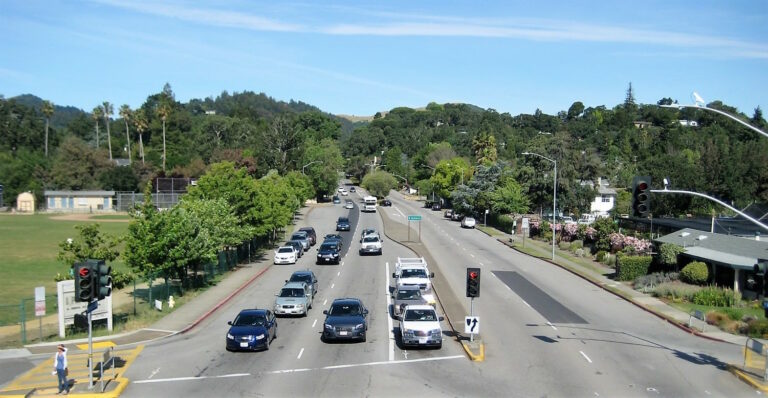
Sir Francis Drake was a 16th century English naval officer and slave trader. The boulevard begins on the Point Reyes Peninsula and ends at Interstate 580 in Larkspur. 

Representatives from Larkspur, Ross, San Anselmo, Fairfax and other unincorporated areas of the county created a working group last summer to analyze Drake’s history and to raise awareness about the name change.

Towns and cities where the boulevard runs through have road naming authority for their section. On Thursday, the Fairfax City Council voted in favor of changing the name of their section of Sir Francis Drake Boulevard.

The Marin County Board of Supervisors meeting starts at 9am, and the public hearing begins at 1:30pm.

Cleanup Crews Respond to Grounded Boat at Dillon Beach

By Bay City News Service

Cleanup crews have set up a containment boom near a grounded boat after finding a small amount of motor oil on shore north of Dillon Beach.

The 90-foot boat, the American Challenger, was being towed Friday from Puget Sound, Washington, when a rope became entangled in the propeller of the tugboat. The drifting boat grounded on a stretch of rocky shoreline north of Dillon Beach at 1am Saturday.

An investigation is underway by a unified command of local, state and federal officials to determine how much fuel has leaked from the boat. Officials said there is no extensive sheen coming from the vessel, but that an environmental assessment found some oil contamination on the beach near the boat.

As a precaution, crews set up 4,000 feet of boom around the boat to protect sensitive habitat in the area, including oyster beds. 

A 100-foot gap in the boom exists for recreational boaters for access at the deepest point of the channel south and east of Hog Island. If there is a threat to the oyster bed, officials said the gap will be closed. 

There are no impacts to commercial traffic or scheduled marine events at this time, officials said, as well as no confirmed reports of oiled wildlife. If oiled wildlife is seen, the public is asked not to approach the animal and instead call the Oiled Wildlife Care Network at  1-877-823-6926.

More information about the cleanup effort is available at CalSpillWatch.com.

Newsom Signs $6.6B School Reopening Package

By Eli Walsh, Bay City News Service

Gov. Gavin Newsom and state legislative leaders celebrated the signing Friday of a $6.6 billion legislative package intended to support the statewide reopening of grades K-6 by the end of the month and grades 7-12 in early April.

The package includes $2 billion in grants to support safety measures for students and educators returning to in-person classes, including personal protection equipment, improvements to classroom ventilation and regular coronavirus testing.

The remaining $4.6 billion will fund voluntary learning expansions, including extending the school year into the summer, tutoring to make up for learning lost amid the pandemic and mental health services for students.

“We all recognize how stubborn and challenging this process has been over the last 60-plus days,” Newsom said during a virtual signing ceremony for the legislative package. 

The reopening plan comes after months of negotiation between officials in the Newsom administration, state legislators and teachers’ unions over details like required vaccinations and a reopening timeline that all sides agree is safe.

While the package does not require the vaccination of educators before in-person classes resume, state officials have argued they’ve taken steps to ensure there are vaccine doses available to educators who want them.

On Monday, the state began reserving 10 percent of the weekly vaccine shipments sent to local health departments and multi-county health care entities for K-12 educators and child care workers.

Assemblyman Phil Ting, D-San Francisco, framed the legislative package as the first of several steps toward reopening schools and cited his children’s experience with distance learning to underscore the need for schools to reopen. 

“I have two children in San Francisco public schools and they’ve been Zooming since last March,” he said. “I’ve seen the effects on them firsthand, whether it is their drop in their desire to learn, their withdrawal, their inability to connect with friends. We’ve seen the devastating effects.”

Ting added that while the San Francisco Unified School District has yet to approve a reopening plan, he is still excited to offer resources from the legislative package to schools in need. 

“We’re going to go home to all our districts and beg all our (school) districts to open up, use this money and do everything possible,” he said. 

The deal stops short of mandating that all grades return to in-person classes across the state, instead using state funding as an incentive.

The deal requires in-person instruction at public schools to resume for K-2 students and all “high-needs” students in grades K-12—including English language learners, students in the foster care system and unhoused students—by the end of the month.

Non-complying schools would lose 1 percent of their funding per day if they are not open by then. 

Once a county is in the red tier of the state’s pandemic reopening system, schools would risk the same penalty if they do not offer in-person instruction to all elementary grade students and students in at least one middle or high school grade level.

State officials noted on Friday that the state’s legislative package is also not contingent on federal funding or the Covid-19 relief bill Congress is currently considering, allowing the state to avoid waiting on political machinations in Washington, D.C., to reopen schools. 

“I feel very confident that the resources provided in this (legislation) in combination with those we anticipate from the federal government will provide us the sufficient funds for our classrooms to open safely,” said state Sen. Nancy Skinner, D-Berkeley.

Schools in at least 35 of the state’s 58 counties have already resumed in-person classes in some form, according to the state.

The state’s school reopening website can be found here.

Marin County is in the Red Tier. What can Reopen?

Coronavirus cases have continued to recede. President Joe Biden said that there will be enough vaccine available for all U.S. adults by the end of May, sooner than previously expected, because of a deal with Johnson & Johnson to boost supply. More than 9 million shots have already been administered in California.

This time, it seems, the reopening of California will be different. Gradual, yes—California, as Gov. Gavin Newsom pointedly noted, isn’t Texas—but lasting. Really.

At least, that’s how officials across the state are framing the progress in the past couple of days.

On Tuesday, state public health officials said that seven counties were moving from the state’s most stringent purple tier to the second most restrictive red tier. It was the most significant easing of restrictions since state leaders abruptly announced that they were lifting stay-at-home orders meant as a kind of “emergency brake” to halt what spiraled into the state’s deadliest surge.

“The fact that we’re moving into new tiers, the fact that we’ve provided billions of dollars in relief checks, speaks for itself,” Newsom, speaking in Palo Alto, said Tuesday at another news conference aimed at drumming up excitement for a long-negotiated deal to bring students back to classrooms after a year of distance learning. (He said later that he planned to sign the bill Friday.)

“Come August, September, we’ll be in a position to safely reopen not only our schools but the vast majority of business sectors as well,” he said.

San Francisco’s mayor, London Breed, told residents in a news conference Tuesday to get in the habit of putting their masks back on as they move about indoor restaurants.

“Because, ultimately, we’re in the red right now,” she said, “but in just a few weeks, we’ll probably, most likely be in the orange.”

Even Barbara Ferrer, director of public health for Los Angeles County—known for her dire warnings as Los Angeles became the epicenter of the winter crisis—struck a somewhat optimistic tone Tuesday in her office’s update.

“LA County is very close to meeting the metric thresholds for the less restrictive red tier,” she said in a statement.

But perhaps you’ve gotten a little fuzzy about what this all means. Here are the answers to your questions:

Which counties are in the red tier now? And how can I find out which tier my county falls under?

There are 16 counties now in the red tier: Del Norte, Modoc, Humboldt, Trinity, Shasta, Lassen, Plumas, Marin, Napa, Yolo, El Dorado, San Francisco, San Mateo, Santa Clara, Mariposa and San Luis Obispo.

Two counties are in the even less restrictive orange tier—Sierra and Alpine—and the rest, including most of the state’s most populous counties, are still in the purple tier, as of Tuesday.

What is allowed in the red tier?

The most significant difference between the purple and red tiers is that in the red tier, restaurants, museums and movie theaters can reopen indoors, at 25 percent capacity or 100 people — whichever is fewer. Gyms can reopen indoors at 10 percent capacity. (In the purple tier, all of those are allowed to operate outdoors only.)

Bars and breweries — businesses that serve alcohol but not food — must remain closed. In both the purple and red tiers, though, wineries can operate outdoors only.

In the purple tier, stores and shopping malls could be open indoors at 25 percent capacity; in the red tier, that can increase to 50 percent.

In the red tier, indoor gatherings are strongly discouraged but allowed, with a maximum of three households.

And masks are still required when you’re not eating or drinking.

What about in the orange and yellow tiers?

Many of the aforementioned places can open indoors at higher capacity, including restaurants, which can be open at half capacity. In the orange tier, bars can reopen outdoors, and smaller amusement parks can also open at 25 percent capacity.

How quickly could even more restrictions be lifted?

Counties fall into different tiers based on their average numbers of new cases per 100,000 residents and their test positivity rates, with some adjustments, so new cases must continue to fall. Officials in each county can opt to keep in place stricter rules than the state allows, as Los Angeles County has done in the past, but given the continuing vaccine rollout — confusing though it may be — that seems less likely now.

While just about 13 percent of the state’s population lives in a county that’s been able to move out of the purple tier, Newsom on Monday hinted that the balance could shift significantly “in the next few weeks.” He said the state was monitoring roughly 17 counties that could have restrictions lifted as early as next week.

Copyright 2021 The New York Times Company

Youth Sports Allowed to Restart in Marin County

Youth sports were allowed to restart Wednesday in Marin County, where officials said the policy now aligns with an update made last week by state officials.

Team competitions are allowed effective March 3, as long as all state restrictions are followed, according to a county statement issued Wednesday. The change comes after the county was moved last week from the more restrictive purple tier (considered widespread risk of Covid-19) to the red tier (considered substantial risk).

Under the change, “Competitions of moderate- and high-contact team sports where physical distancing is impossible to maintain—such as baseball or football—may only take place between two teams (no multi-team tournaments). Sports that are individual in nature—such as track and field, mountain biking, solo sailing or swimming—may conduct multiteam events since physical distancing between athletes is easier to maintain.”

Although officials acknowledged that neighboring Contra Costa and San Francisco counties have red tier status as of this week, the county will allow competitions across those county lines. 

Review the guidelines online or call the state’s Covid-19 hotline, 1-833-422-4255, for questions on the new policies. Questions may also be emailed to Marin County Public Health’s Covid-19 address at co******@*********ty.org.

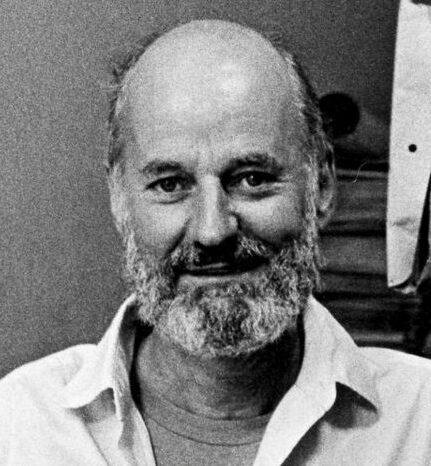
Ferlinghetti Spaghetti

A poet prevails

As regards the recent passing of poet, playwright and Beat publisher, Lawrence Ferlinghetti, exiting at three digits still seems untimely for such a towering figure. This column will not be your encomium du jour—better writers have better remembrances of this particular cartographer of the American soul. But here are mine—all five. 

Please note, I fully accede these are not the literary highlights and homilies my colleagues managed in the week since Ferlinghetti’s death at 101. Upon review, I realize now my reveries read more like the diary of a literary stalker and the canny old man who outwitted him at every turn.

1. Justin S. and I ditch a day during our sophomore year in high school, circa 1988, and catch a Golden Gate Transit bus (80) bus to San Francisco. We find our way to North Beach and the citadel of City Lights Booksellers. Our quest? Find Ferlinghetti. At the cash register is a bearded man who resembles the mugshot on the back of his books. We ask if he’s Ferlinghetti. He says, “No.”

2. San Francisco, the Palace of Fine Arts, a double feature of Michaelangelo Antonioni’s Blow Up and Zabriskie Point—the director is present … so is Ferlinghetti. I conspire to meet him and ingeniously ask him for a light for a cigarette. He says he doesn’t smoke.

3. College days. I’m living in North Beach Adjacent, a.k.a. Russian Hill. I’m hovering around the poetry section of City Lights, which has been moved upstairs near the offices, the door to which is open. Ferlinghetti is in view. I approach, but so does another young literary type. He gets his words in first, but in his haste fumbles with “Do you have a first edition ‘Howl?’” Ferlinghetti replies, “This isn’t a used bookstore.” I’m inwardly glad it wasn’t me who took the hit—close one.

4. North Beach, around New Year’s, mid-’90s. I spy Ferlinghetti crossing the street at Columbus and Broadway. I approach, tape recorder in hand, and ask him for a poem for the new year. He says, “Ferlinghetti Spaghetti.” Well played.

5. I’m a small-town newspaperman asked to emcee a poetry reading at the Phoenix Theater in Petaluma. The star on the bill is Ferlinghetti. Backstage, I busy myself pouring wine for the other poets after having ceremoniously opened the bottle onstage framed as a performance piece I dub “The Poet’s Inspiration.” The gag was almost as cheap as the wine. I’m summoned by a woman who says Ferlinghetti would like to meet me. He says something approving of my “performance piece.” I follow with a pour from the bottle.

“A poet is born

A poet dies

And all that lies between

is us”

—Lawrence Ferlinghetti, “An Elegy On The Death Of Kenneth Patchen”

Daedalus Howell is at DaedalusHowell.com.

North Bay Teens Talk About Cannabis During Quarantine

California teen cannabis use
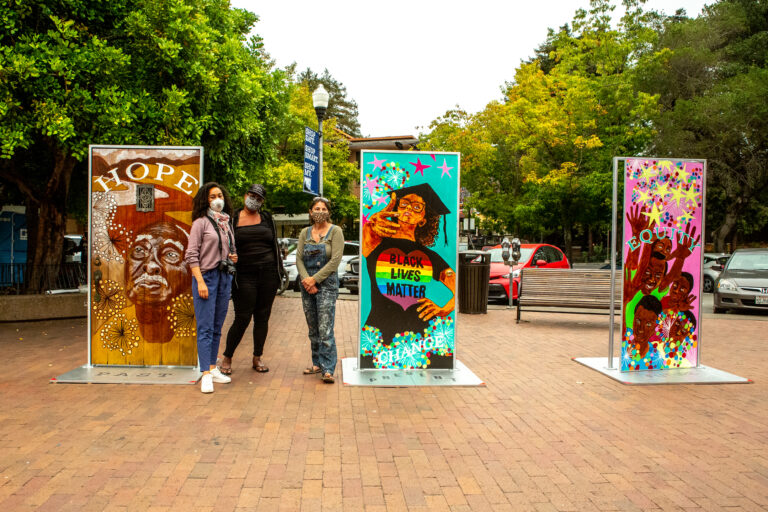
In California, Prop. 64 legalized cannabis for adults 21 and over, not for teens, many of whom likely resent being excluded by law.

Cleanup of Sheen Continues Near Dillon Beach, No Oiled Wildlife Spotted

American Challenger boom cleanup
No oiled wildlife has been reported following the grounding of a vessel early Saturday morning near Dillon Beach in Marin County.

Letter to the Editor: The Message in Mill Valley

Equity task force downtown Mill Valley
I am deeply concerned with the message the Mill Valley City Council’s decision to disregard the DEI task force’s recommendations sends to the community at large("Mill Valley City Council Clashes With Equity Task Force," Feb. 24). I am even more disturbed that the council does not see the absolute necessity and urgency we have to take responsibility for the...

Report: Californians Moving Within State, Not Leaving

Marin County housing
"In short, to date the pandemic has not so much propelled people out of California as it has shifted them around within it," the report states.

Marin Supervisors to Consider Renaming Sir Francis Drake Boulevard

Sir Francis Drake Boulevard begins on the Point Reyes Peninsula and ends at Interstate 580 in Larkspur.

Cleanup Crews Respond to Grounded Boat at Dillon Beach

Dillon Beach spill response
The 90-foot American Challenger, was being towed Friday from Puget Sound, Washington, when a rope became entangled in the propeller of the tugboat.

Newsom Signs $6.6B School Reopening Package

Gov. Newsom celebrated the signing Friday of a $6.6 billion legislative package to support the statewide reopening of schools this month.

Marin County is in the Red Tier. What can Reopen?

Moderna Covid-19 Santa Rosa California
Marin and Napa counties are among 16 California counties now in the less-restrictive red tier. Sonoma County remains in the purple tier.

Youth Sports Allowed to Restart in Marin County

Soccer ball and feet
Team competitions are allowed effective March 3, as long as all state restrictions are followed, according to a statement issued Wednesday.

Ferlinghetti Spaghetti

Ferlinghetti
A poet prevails As regards the recent passing of poet, playwright and Beat publisher, Lawrence Ferlinghetti, exiting at three digits still seems untimely for such a towering figure. This column will not be your encomium du jour—better writers have better remembrances of this particular cartographer of the American soul. But here are mine—all five.  Please note, I fully accede these are...
3,002FansLike
3,850FollowersFollow