Distanced and Virtual Events Pop Up in Marin This Week

While indoor gatherings are still strongly discouraged, Marin County recently lifted some restrictions on events and outings as the county moved from the purple tier to the slightly better red tier in California’s Covid color wheel.

This week, several distanced and online events engage locals with arts, shopping, readings and more on deck for the next seven days. Here’s a rundown of what’s coming up.

Distanced Event

Marin County nonprofit organization Cedars, which has supported individuals with developmental disabilities since 1919, recently unveiled a new collaborative art exhibit, “Heroes and Heroines,” at its gallery in San Anselmo that features work from Cedars artists and students from the Branson School. Now, Cedars artists are teaming up with local agency Age-Friendly San Anselmo for a public art installation in San Anselmo’s Imagination Park.

The new inspirational project–called Let’s Wish upon a Star!–features wooden stars decorated by Cedars artists with expressions of hope, resilience, unity, or encouragement. San Anselmo residents of all ages, business owners and anyone with an expression of hope, resilience, or encouragement are being invited to decorate and hang a star alongside the Cedars stars. The stars will be hung in the trees in Imagination Park on the one-year anniversary of Marin’s first shelter in place order; Wednesday, March 17, at 1pm. 535 San Anselmo Ave., San Anselmo. Cedarslife.org.

Distanced Dining

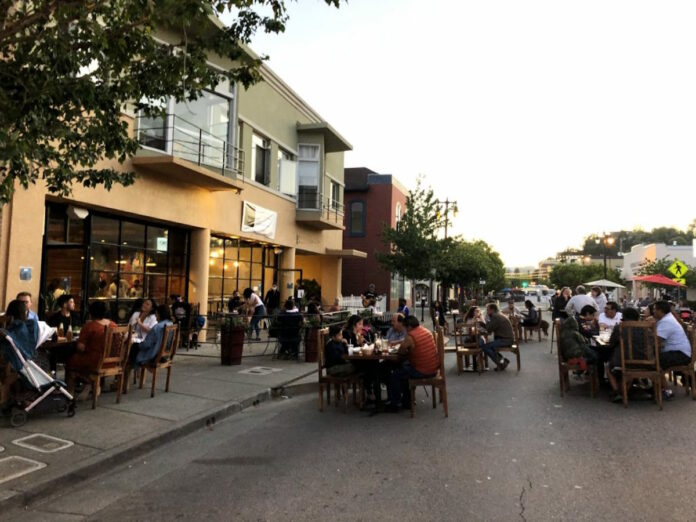
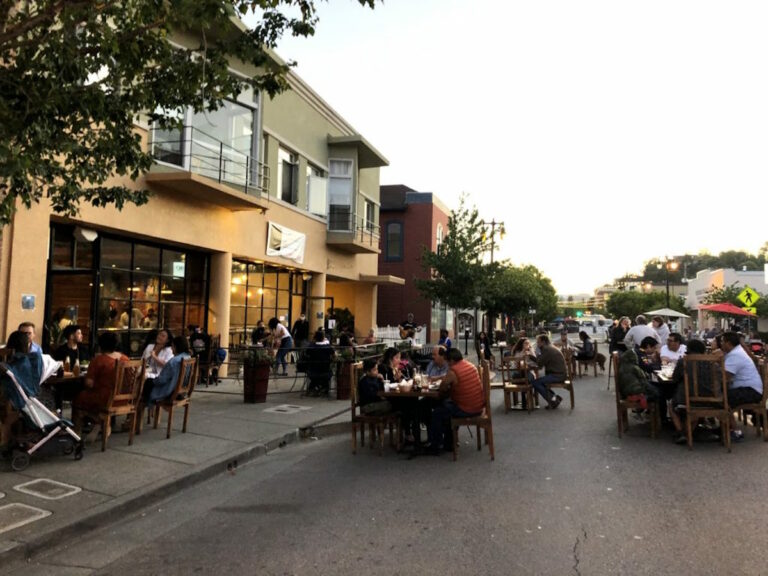
Thanks to the overwhelming support of the local community in maintaining safe distances and wearing masks, San Rafael’s Dining Under the Lights program returns this spring with outdoor offerings from several downtown and West End Village restaurants. Alfresco dining takes over the town every Thursday and Friday, from 5pm to 9pm. Several restaurants and bars are also serving daily meals outside on their sunny sidewalks or patios and inside during their usual business hours and offering take-out and delivery; and Marin residents and business owners are encouraged to enjoy and support these restaurants often, but especially on Thursday and Friday nights. Find a list of participating restaurants and get more details on Dining Under the Lights at downtownsanrafael.org.

Distanced Shopping

Right now, Marin art lovers can see art works from two very different artists­­–San Anselmo’s Katherine Warinner and Fort Bragg’s Nick Taylor–as part of the “Abstract Nature” exhibit on display at the Marin Art and Garden Center. This weekend, local crafts and plants accompany the art when the center hosts a Spring Equinox Pop Up Marketplace and Plant Sale. Offerings include original art from local painter Bonnie Case and ceramicist Jill Whitten, jewelry from emerging designers, unique planters, and more. The sale benefits the Marin Art and Garden Center, which is complying with a health guidelines indoors and out during the pop-up event on Saturday, March 20, 10am to 3pm. 30 Sir Francis Drake Blvd., Ross. Maringarden.org/shop.

Virtual Fundraiser

The Playhouse in San Anselmo has served the community as a performing arts center for more than 50 years. Now, a community of performers gives back in the two-night event, “Marilyn’s Kids Love the Playhouse.” Led by Playhouse Board President Marilyn Izdebski, the virtual showcase boasts songs and dance numbers from performers all over the country and even Europe, streaming from their homes in support of the Playhouse. The two-night event is split into different generations of performers who’ve come through the playhouse. Last week, artists from the Playhouse’s early years appeared online Saturday, March 13, for the event’s Act I showcase; and viewers can still watch that showcase on Youtube now. This weekend, “Marilyn’s Kids Love the Playhouse” presents it’s Act II showcase, featuring performers from the Playhouse’s recent past performing online on Saturday, March 20, at 7pm. Watch for free and donate to support the Playhouse at Playhousesananselmo.org.

Virtual Art Reception and Reading

Point Reyes Station’s Dance Palace community and cultural center hosts two online events in the next week.

Point Reyes Station artist Sue Gonzalez stays true to West Marin’s light and color in her paintings, but she is “most interested in conveying mood and exploring the boundaries between realism and abstraction” in her art. This month, Gonzalez’s works can be seen in Dance Palace’s virtual gallery; and Gonzalez appears online this weekend for an artist reception and discussion on Sunday, March 21, at 5pm. Free. Registration required at Eventbrite.com.

San Francisco physicist, speaker, author and musician Sky Nelson-Isaacs weaves together cutting-edge ideas about the nature of space and time in his new book, Leap to Wholeness. As part of his ongoing mission to find his own sense of purpose, Nelson-Isaacs examines how the human experience is filtered through thoughts and feelings in the same way that light is filtered through glass while remaining unbroken. Nelson-Isaacs also theorizes that humanity can become a greater part of the fundamental wholeness found in nature. The Dance Palace hosts Nelson-Isaacs in an online discussion about Leap to Wholeness on Wednesday, March 24, at 7:30pm. Free. Registration required at Eventbrite.com. Get details on both of these events at Dancepalace.org.


Here’s Why Your Electricity Prices are High and Soaring

by Laurence Du Sault, CalMatters   

California’s electricity prices are among the highest in the country, new research says, and those costs are falling disproportionately on a customer base that’s already struggling to pay their bills.

PG&E customers pay about 80 percent more per kilowatt-hour than the national average, according to a study by the energy institute at UC Berkeley’s Haas Business School with the nonprofit think tank Next 10. The study analyzed the rates of the state’s three largest investor-owned utilities and found that Southern California Edison charged 45 percent more than the national average, while San Diego Gas & Electric charged double. Even low-income residents enrolled in the California Alternate Rates for Energy program paid more than the average American.

“California’s retail prices are out of line with utilities across the country,” said UC Berkeley assistant professor and study co-author Meredith Fowlie, citing Hawaii and some New England states among the outliers with even higher rates. “And they’re increasing.”

So why are prices so high?

One reason is that California’s size and geography inflate the “fixed” costs of operating its electric system, which include maintenance, generation, transmission, and distribution as well as public programs like CARE and wildfire mitigation, according to the study. Those costs don’t change based on how much electricity residents consume, yet between 66 percent and 77 percent of Californians’ electricity bills are used to offset the costs of those programs, the study found. PG&E filed for bankruptcy protection in January 2019, after being held financially responsible for a series of deadly and destructive wildfires in 2017 and 2018.

These are legitimate expenses, Fowlie said. However, because lower-income residents use only moderately less electricity than higher income households, they end up with a disproportionate share of the burden, according to the study. And while the bills of older, wealthier Californians continue to decrease as they adopt cost-efficient alternatives like the state’s Net Energy Metering solar program, costs will keep rising for a shrinking customer base composed mostly of low- and middle-income renters who still use electricity as their main energy source.

“When households adopt solar, they’re not paying their fair share,” Fowlie said. While solar users generate power that decreases their bills, they still rely on the state’s electric grid for much of their power consumption—without paying for its fixed costs like others do. This argument, however, is debatable because the state has set ambitious climate goals to increase the use of renewable energy in order to reduce reliance on fossil fuels.

“As this continues it’s going to make electricity even more unaffordable,” said F. Noel Perry, founder of Next 10, which funds nonpartisan research on the economy and environment.

PG&E this month raised its electricity rates 3.7 percent, amounting to a $5.01 a month increase for the average residential customer, who now pays $138.85 a month for electricity. It was the second increase this year, said Mark Toney, executive director of The Utility Reform Network, who noted that higher rates are particularly difficult for those who have lost their jobs in the pandemic. The California Public Utilities Commission, the state agency that authorizes rate increases, last year approved a PG&E plan for more incremental increases through Dec. 31, 2022.

PG&E spokesperson Kristi Jourdan said in an email statement that the company was committed to keeping prices as low as possible and that although some programs are meant to be subsidized through rates, “in other cases, given that some customers have greater access to energy alternatives, the remaining customers – often those with limited means – are left paying unintended subsidies.”                                   

The costs quickly became overwhelming for Fretea Sylver, who rents a small house in Castro Valley and lost much of her work as the owner of a small woodwork business early in the pandemic. “They’re little tiny changes but they accumulate. You turn around and you’re like wait a second, why is my bill $20 more?,” Sylver said. “And you have to pay it, no matter what.”

Many more are unable to pay. Between February and December of last year, Californians accumulated more than $650 million in late payments from their utility providers, according to an analysis by the CPUC. In 2019, utility debt fell $71,646,869 from the prior year.

Sylver, who was on unemployment for 10 months last year, accumulated over $600 in unpaid PG&E bills. “We sort of went into a bit of debt, having to use credit cards and loans to sustain what we had to pay for. We’re trying to catch up,” Sylver said. The family received some help from the federal Low-Income Home Energy Assistance Program, which provides up to $1,000 to those who are late on their utility bills.The study identified improvements to make California’s power grid more equitable, such as a fixed charge for the grid’s cost that is based on income. Republican state senators this week called on the state to use federal relief money to forgive the billions Californians owe in utility debt. Californians are currently protected by a statewide moratorium on disconnection for nonpayment of electricity bills through June 30. The CPUC this month began taking public input on the issue of how to grant some relief to those who have fallen behind on their utility bills.

State Allows Breweries, Wineries, Distilleries to Serve Alcohol Without a Meal Regardless of Tier

By Eli Walsh, Bay City News Service

State public health officials released updated reopening guidelines Thursday, allowing breweries, wineries and distilleries to operate without serving meals regardless of their county’s tier.

Breweries, wineries and distilleries have been allowed to operate under restaurant guidance since last year, provided that they provide meals with alcoholic beverages. Alcohol vendors that did not provide meals, either from their own kitchens or a partnered vendor such as a food truck, had to remain closed in the purple and red tiers.

Starting Saturday, that will change, according to the California Department of Public Health. 

Breweries, wineries and distilleries in red and purple tier counties will be allowed to serve alcohol to customers outdoors, provided that those customers have reservations and do not stay for more than 90 minutes. On-site consumption without a meal must also end by 8pm.

In the orange tier, the affected businesses may also resume indoor operations at 25 percent capacity or 100 people, whichever is fewer. Yellow tier restrictions increase those caps to 50 percent and 200 people, according to the CDPH. 

Bars that do not serve meals in purple and red tier counties must remain closed while bars in orange tier counties will be allowed to operate outdoors with modifications and those in yellow tier counties will be allowed to operate indoors at 25 percent capacity or 100 people, whichever is fewer. 

State officials also announced that, beginning June 1, overnight sleepaway camps can resume with restrictions in red, orange and yellow tier counties. 

Up-to-date information on tiers and which businesses can operate in each county can be found on the state’s website.

Israeli Film Festival Breaks the Mold with Virtual Screenings

Five films comprising dramas, comedies and a documentary are all coming to home audiences this month in the sixth annual Israeli Film Festival, running online and on demand for three weeks beginning Friday, March 12.

Presented by the Jewish Community Center, Sonoma County, the annual springtime festival normally screens at the Rialto Cinemas in Sebastopol, though this year’s festival is entirely online due to the ongoing pandemic that nearly canceled last year’s Israeli Film Festival.

“The second film (of the 2020 Israeli Film Festival) was screening the day we went into lockdown,” says Irène Hodes, Director of Film Festivals and Cultural Events at the JCC, Sonoma County. “That was a test. We decided to postpone and not cancel. We decided to figure out how to present these films online at home. We decided to persevere.”

That first, partially online Israeli Film Festival became the test case for the JCC, which went totally virtual for last fall’s Sonoma County Jewish Film Festival. That festival ran online on a dedicated server, giving at-home audiences a reliable, on-demand way to watch the films along with access to live filmmaker talks and other programming.

“The film festivals and all sorts of culture and arts programming surrounding that has been a proven lifeline, and people love having access to the films at home,” Hodes says.

This year’s virtual Israeli Film festival opens with a new, on-demand slate of acclaimed films.

The intimate and heartbreaking story of an immigrant single mother, Asia swept the cinematic awards in its home country and is now the Israeli entry for the “Best International Feature Film” at the upcoming Academy Awards.

The buddy comedy Forgiveness, created by popular Israeli television stars Hanan Savyon and Guy Amir, finds two friends at odds over a botched robbery and newfound religion.

Touching on topics like autism, the family drama Here We Are follows a father and son who hit the road rather than become separated by an institution.

The romantic comedy Kiss Me Kosher features an Israeli lesbian who becomes engaged to a German woman, which leads to clashes of opinions in her traditional Jewish Israeli family.

Finally, the charming and inspiring documentary Mrs. G is an account of the life and revolutionary work of Mrs. Lea Gottlieb, the legendary designer, founder and owner of the Gottex swimwear empire.

These five films will screen online March 12 to April 2, and several live filmmaker talks are currently scheduled to take place during the run. Passes are available on the JCC’s website, which also boasts several other online offerings, including virtual daily emails featuring news in the Jewish world, links to free movies, recipes and other mostly uplifting content.

“It’s become so popular it’s practically another mainstay program right now,” Hodes says. “It continues to be a labor of love, but we’ve seen a lot of the fruits of our labor come around, and we see how resilient people have been and how together we all are.”

The virtual Israeli Film Festival runs Friday, March 12, through April 2. Season passes, $60–$80; single film tickets, $14–$24. jccsoco.org.

Breaking News: Fecal Bacteria Poisons Point Reyes Beaches

On any given summer day, scores of families gambol and picnic on the shores of Abbotts Lagoon and Kehoe Lagoon at Point Reyes National Seashore. The stream-fed waters are warmer than the Pacific Ocean into which they periodically drain, beckoning waders and swimmers, toddlers and adults alike. 

But humans are not the only life forms splashing in the pools. 

It turns out that microscopic fecal bacteria known as E. coli are at home in the brackish waters. And they just live to burrow deep into mammalian guts, cow, elk, or human. It’s dark and warm there, steaming with delicious foods, and an exit for traveling E. coli cells surfing waves of gaseous excrement in search of new guts to inhabit.

Don’t get it wrong; most of the 100 trillion bacteria thriving inside your stomach and intestines are essential and benign, serving useful digestive, disease-fighting, and even cognitive purposes. But strains of E. coli can cause meningitis, septicemia, urinary tract and intestinal infections, diarrhea, pneumonia and respiratory illness. 

E. coli can be fatal to children and the elderly and those with weakened immunological systems, including bodies traumatized by Covid-19. You really do not want to wade in waters where it waits.

Consequently, state and federal regulatory agencies have developed complicated formulas to measure the safe amount of fecal bacteria allowed in swimmable waters. In a January test of the water in Abbotts Lagoon by an aquatic toxicology laboratory hired by environmentalists, the number of E. coli cells found in water samples was twenty times the safe amount.

At Kehoe Lagoon, the safety margin was exceeded by a factor of 40. It gets worse for E. coli’s nasty bacterial cousin known as Enterococcus. It can devour your heart, stomach, brain, and spinal cord. This monster thrives in raw sewage and intestines. Abbotts Lagoon contains 60 times the safe number of Enterococcus, which is resistant to antibiotics. 

And Kehoe Lagoon seethes with 300 times the acceptable amount of this voracious creature. That is not a typo: Enterococcus is three hundred times more prevalent than the maximum safety level.

Gee, you’d think the Park Service would put up a few warning signs.

But, no, there are zero signs cautioning those who touch these waters that a drop can wound and kill. There are no Park Service info signs indicating that swarms of the dangerous bacteria emanate from the 130 million pounds of poop and urine excreted annually in the park by thousands of privately-owned dairy cows and cattle. No FAQs on the Park’s website acknowledging that manure-dropping bovines roam barbed-wire fenced pastures inside leased ranches riven by cow-polluted streams running into the lagoons, Tomales Bay, and the Pacific.

A 2013 study by U.S. Department of Interior scientists determined that California’s highest reported E. coli levels occurred in wetlands and creeks draining Point Reyes cattle ranches near Kehoe Beach, Drake’s Bay, Abbotts Lagoon and Tomales Bay. The report determined, “Drakes Bay watersheds and Kehoe and Abbotts Lagoon periodically exhibit high bacterial counts affecting human uses including swimming and shellfish harvesting.” 

Many public records show that Park Service administrators and the California Regional Water Quality Control Board have long known that astronomically high levels of gut-wrenching microorganisms flow directly from the effluvia emitted by livestock into the Park’s recreational and fishing waters.

And these agencies have done nothing to effectively eliminate the source of the potentially lethal bacterial invasions. Recently-appointed Park Superintendent Craig Kenkel told the Pacific Sun that the January test of fecal bacteria levels is accurate and consistent with the 2013 findings. He said that the Park Service has historically addressed the pollution problem with “livestock exclusion fencing, erosion control, livestock water supply, and stock pond restoration,” and that those measures will continue. 

But Kenkel’s explanation begs the question: If these supposedly preventative measures have been implemented for decades, then why has fecal pollution persisted at such unacceptable levels? Clearly, the measures are ineffective.

In 2020, the Park Service released an Environmental Impact Statement which concluded that it is an environmentally sound policy to continue dairy and cattle ranching inside the ocean side park in perpetuity. The report states that the Park Service will continue to monitor water quality and to work with ranchers to alleviate pollution. But it was under Park Service oversight of the ranchers for the last half century that the fecal bacteria were allowed to colonize the waters. 

Dodging responsibility for cleaning up the pollution, the Park Service and the state water board have granted pollution “waivers” to the politically powerful ranchers, allowing the problem to metastasize year after year. Logically, there is no practical solution at hand, but to remove the cows. Or to follow them around and bag their poop, which is not likely.

Environmentalists to the rescue

In the absence of regular testing and effective oversight of water pollution at Point Reyes by the Park Service, two national environmental groups—Western Watershed Project and In Defense of Animals—commissioned the January test of aquatic toxicology levels. The field test was conducted in the Park after a brief rain by Douglas Lovell, a state certified environmental engineer. The samples were analyzed by McCampbell Analytical Inc. of Pittsburgh, California.

The lab results, although astonishingly high and dangerous, are probably lower than they would be in a non-drought year. The toxicology report concluded:

• “Bacteria contamination of surface water significantly exceeds applicable water quality criteria despite the reported implementation of cattle waste management actions.”

• “Imminent human health risks exist regarding exposure to bacterial contamination in surface water, particularly for locations with documented or likely direct water contact.”

• “Reductions in the localized abundance of cattle waste will likely be necessary to adequately protect surface water quality.”

Of course, it is not only humans whose lives are endangered by the fecal materials flowing into streams and pools and the Pacific Ocean. At risk are endangered Coho salmon and California red-legged frogs and orca, blue whales, gray whales, northern elephant seals, Steller sea lions, Southern sea otters, Western snowy plovers, brown pelicans, steelhead trout, tidewater goby, black abalone, and many other species, according to concerned scientists.

Environmentalists are urging the California Coastal Commission to address the pollution issue as it proceeds to rule in April on whether to accept or reject the water safety elements in the Park Service’s plan to permanently continue dairy and cattle ranching at Point Reyes National Seashore. 

Congressperson Jared Huffman, whose district includes Marin County and the entire North Coast, did not respond to repeated requests for comment.

Investigation Continues Into Boat Grounding Near Dillon Beach

By Bay City News Service

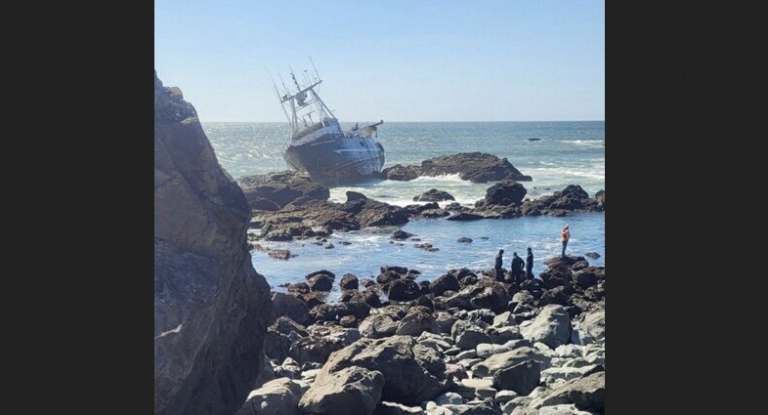
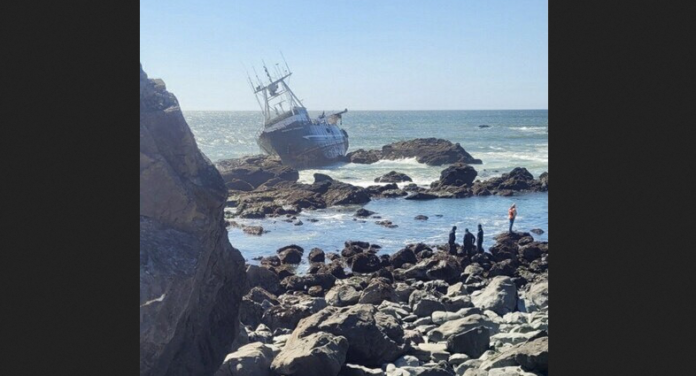
The instability of a boat grounded since early Saturday on rocky coastline near Dillon Beach in Marin County is hampering the efforts of investigators trying to determine whether any fuel spilled from the 90-foot vessel, American Challenger, but crews on shore have yet to find any oiled wildlife or damage to wildlife habitat.

A tugboat was towing the 90-foot American Challenger from Puget Sound, Washington, when a rope got tangled in the tug’s propeller Friday morning, setting the boat adrift. 

Coast Guard Cutter Hawksbill responded to the scene, but the crew was unable to board the drifting boat to attach a tow line due to weather conditions, the proximity to shore and the unknown structural integrity of the unmanned vessel, according to a statement released Tuesday by the unified command of local, state and federal officials responding to the incident.

The American Challenger eventually came aground at 1am Saturday north of Dillon Beach.

Due to the instability of the vessel—and the risk to the safety of surveyors—officials with the unified command said efforts to obtain an accurate reading of the amount of fuel aboard the boat will take time.

Environmental assessments are continuing on shore but have not found additional evidence of a spill, following reports of minor sheening in the immediate vicinity of the vessel and along the shoreline adjacent to the vessel.

Brown foam has been washing up on Dillon Beach, but investigators said the foam is normal biological material. 

Crews set up 4,000 feet of boom around the boat to protect marine wildlife like the oysters in Tomales Bay. A 100-foot gap exists in the boom to give recreational boaters access to the deepest point of the channel south and east of Hog Island. 

If the oyster beds become threatened, the gap will be closed, according to the unified command. 

All the beaches in the area are open, but Miller Boat Launch is closed temporarily to help with the emergency response efforts. The efforts to clean up the sheen is not affecting commercial boat traffic. 

If any oiled wildlife is seen, the public is asked to avoid approaching the animal and instead call the Oiled Wildlife Care Network at (877) 823-6926.

Wine Dogs

Local pups featured in Wine Spectator

Anthropologists believe the “domestication event” that led to wolves becoming Canis lupus familiaris—a.k.a. the modern dog—occured about 10,000 years ago. Coincidentally, this is also the same time frame that Neolithic humans started making wine from grapes. 

By my reckoning, that makes the concept of a “wine dog” inevitable and a “Dogs of Wine Country” cover of Wine Spectator magazine irresistible. Yep, the world’s leading authority on wine has gone to the dogs.

The March issue of the venerable wine magazine profiles over a dozen dogs who accompany their winemaker owners at wineries throughout Sonoma and Napa.

“The issue’s purpose,” according to a statement, is to “bring smiles and spread happiness. Because why not?” This is the same rationale I use when opening a second bottle, so I wholeheartedly endorse the project.

“This special issue, which is near and dear to my heart, has been three years in the making,” said Marvin R. Shanken, the mag’s editor and publisher. “If you have a pet, you will especially enjoy this issue. If you don’t have a pet, we hope to inspire you to consider adopting one.”

For those who like to pair their pinot with a pup, the Dogs of Wine Country issue also features a roundup of pet-friendly tasting rooms (so no more fibbing that Butch is a trained “emotional support dog” as he gnaws on your pant leg).

Dogs have long worked in the wine biz. Vineyard dogs ward off intruding animals and stray bachelorette parties, and some are trained to use their keen senses of smell to sniff out vine diseases such as grapevine mealybug. They protect flocks of sheep, which are increasingly used to do the weeding, and in the post “5 Reasons Every Winery Needs a Dog,” Modern Farmer offers anecdotal evidence that dogs boost on-premise wine sales.

Wine Spectator isn’t the only fan of canines and wine; Wine Dogs has been publishing books, calendars and other merch featuring dogs living and working in the vineyard, winery and tasting rooms of “wineries around the globe” since 1997, indicating that mutts and merlot is less a trend and more a cottage industry. Can cats and cannabis be next?

Readers are encouraged to submit their own dog photos for an opportunity to be featured on the Wine Spectator website at WineSpectator.com/DogPhotos. The March issue becomes available Feb. 16 to humans and pets everywhere.

And, since I’ve run short on pupper puns, permit me to crib from Shakespeare, who would cry havoc and, “Let sip the dogs of wine!”

Daedalus Howell shares a bowl of wine at DaedalusHowell.com.

San Anselmo Artist Shows ‘Abstract Nature’ at Marin Art and Garden Center

As spring comes to Marin County, the Marin Art & Garden Center in Ross celebrates the blooming season with an exhibition of “Abstract Nature.”

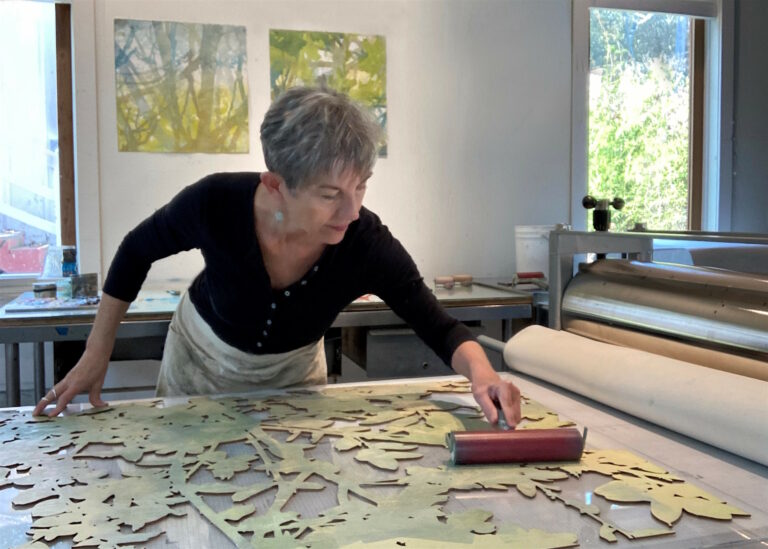
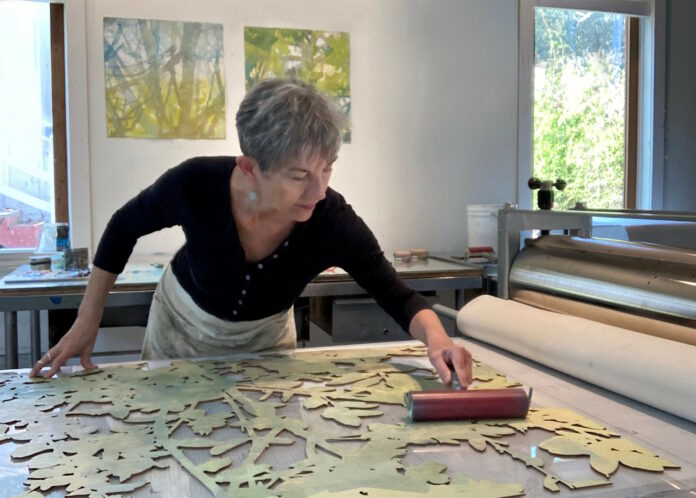
The two-person art show features sculpture by Fort Bragg artist Nick Taylor and large- scale monotype prints and other works on paper by San Anselmo artist Katherine Warinner, who has lived and worked in Marin for 30 years.

“I went to New York City and found that wasn’t the place for me,” Warinner—a Midwest native—says. “Came out to San Francisco and when I came to Marin, I said, ‘This is it, this is utopia.’”

With a background in painting, Warinner’s artistic body of work centers primarily on printmaking, and she specializes in making monotypes that reinvent the traditional forms of printing through modern technology to capture natural objects in their abstract forms.

“The prints in this show are a culmination of years of experimentation in printmaking,” Warinner says. “When I tried monotype, I completely fell in love with it.”

Warinner describes monotype as a hybrid of painting and printmaking, in that each print is a one-of-a-kind piece of art, rather than one of a series of prints.

“The work in this exhibition combines a lot of different methods,” Warinner says.

Those methods include laser-etched woodcuts and a cyanotype sun-printing process that Warinner developed over the course of the last year in social isolation.

Utilizing these methods, Warinner makes large-scale monotypes that can be as big as 60-inches long, and she depends on the massive printmaking press machines at locations like Kala Art Institute in Berkeley and In Cahoots Press in Petaluma, where she prints her works on paper.

In her prints, Warinner illuminates the symmetrical and fractal patterns she finds naturally forming in the wild, and her floral subjects can resemble cellular structures or clouds.

“I love the scientific basis and relationship of nature and its structure,” Warinner says.

With over 40 of her prints in the show, Warinner says it will be interesting for people to see her works in combination with Nick Taylor’s sculptures, which express similar abstract ideas in a completely different way.

For “Abstract Nature,” curator Kate Eilertsen paired Warinner’s prints and Taylor’s wood and metal sculptures to create a show that should be seen in person if possible.

“You can see things in the online exhibition; but if you go, people will definitely feel safe. It’s 2,000 square-feet, three rooms, totally social-distanced,” Warinner says. “Especially experiencing sculpture, you have to walk around it. And my work is large, and I emboss the paper so it has subtle dimensions. It’s about slowing down and looking and sensing and feeling. I think it will be an uplifting show for people.”

“Abstract Nature” opens with an online reception on Friday, March 12, at 5pm, and can be seen online or in person March 13 to April 25. Marin Art & Garden Center, 30 Sir Francis Drake Blvd., Ross. In-person hours are Fridays and Saturdays, 10am to 4pm; Sundays, noon to 4pm. Free. Maringarden.org.

Open Mic: Wildfire Protection Needs Improvement

By Joan Broughton

You come home to find your front door open. Inside, your laptop is missing, your wallet and passport are gone, and the jewelry box lies on its side, empty. You’re angry; you always thought you lived in a safe neighborhood. Once the police report has been filed and the insurance company notified, you make your house secure. You buy reinforced entry doors, invest in home-monitoring equipment, install motion-detection lights and seriously consider getting a dog. You spend whatever it takes to make sure you’re safe.

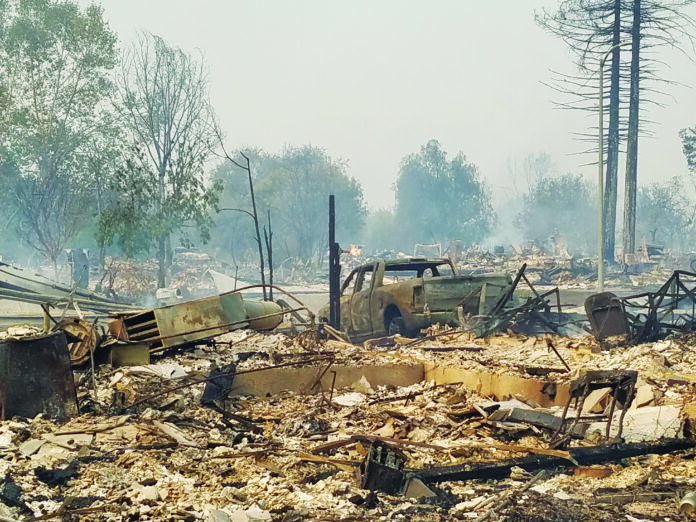
Since 2017, massive wildfires have destroyed wide swaths of Sonoma County, taking lives and destroying tens of thousands of homes and other structures. Billions of dollars have been lost by property owners, the wine and tourist industries, and small businesses. We’ve all been through panicked nights and smoky, ash-filled days, waiting for evacuation orders. 

We know that another wildfire might erupt anywhere in the county any time during an expanding “fire season.” Yet, unlike the homeowner who’s been burgled, we’re not doing much to make our future safer. Fuel continues to build up in our forests and open spaces, just waiting for a fateful spark. Neighborhood groups and small nonprofits are doing what they can to clear small lots and some roadways, but Sonoma County is a big place. We need a big effort to keep us safe.

Fire scientists, local tribes and hundreds of residents (many who have already lost a home) agree that the only way to mitigate the destructiveness of wildfires is to reduce fuel buildup by aggressive, widespread and ongoing vegetation management. Thinning undergrowth, removing smaller trees, and conducting prescribed burns are proven methods to reduce the likelihood of hugely destructive wildfires, which threaten not only the wildland-urban interface of Sonoma County but all the areas adjacent to that.

Just as wise homeowners protect their property from burglars, Sonoma County needs leaders who will find funding and start preventive vegetation management on a huge scale. All of us who live and work in Sonoma County should be ready to support such efforts.

Joan Broughton lives in Windsor and runs Protectsonomacounty.org. To have your topical essay considered for publication, write to us at op*****@********un.com.

Letters to the Editor: Drake Out of Fairfax

Changing Names

Editors,   

As a twenty-five year resident of Fairfax, I am both proud and happy that our town council has voted to remove the name Sir Francis Drake from the portion of this main highway that passes through Fairfax. Renaming our main highway in Fairfax shows a genuine respect for the rights and feelings of not only Native and African Americans but also for all those people of any racial background who feel sincerely committed to ending the lingering ties of our society with racial injustice and the brutal and savage mistreatment by all those like Sir Francis Drake who have continued to maintain a subtle influence on our nation’s ethical character and our nation’s future spiritual possibilities.   

The names we choose for our streets, schools and other landmarks are far from merely superficial symbols. Those we choose to honor through these dedications show much about ourselves and about our deepest and most valued feelings. And to finally remove the name of someone who was known to have not only enslaved many innocent human beings but to also have brutally murdered countless others is a hopeful sign that we as a potentially beautiful nation may finally be on the path toward truly living the great ideals that our nation had supposedly been founded upon.     

Rama Kumar, Fairfax

Duly Noted

Dear Editor,

Two brief notes:

What a pleasure to see a simple camper ad in place of any cigarette ad. That is catering to the Sonoma Marin audience. I’m going to contact them about their services as a result of your ad.

And Mr. Howell, the epitaph written by Lawrence Ferlinghetti (Press Pass, Mar. 3) brought a tear to my eye. His words addressing Kenneth Patchen bear repeating:

“A poet is born

A poet dies

And all that lies between

is us…”

Mark Solomons, Fairfax

Write to us at le*****@********un.com.

Distanced and Virtual Events Pop Up in Marin This Week

While indoor gatherings are still strongly discouraged, Marin County recently lifted some restrictions on events and outings as the county moved from the purple tier to the slightly better red tier in California’s Covid color wheel. This week, several distanced and online events engage locals with arts, shopping, readings and more on deck for the next seven days. Here’s a...

Here’s Why Your Electricity Prices are High and Soaring

Matthew Henry/Unsplash
PG&E customers pay about 80 percent more per kilowatt-hour than the national average, according to a new study.

State Allows Breweries, Wineries, Distilleries to Serve Alcohol Without a Meal Regardless of Tier

Wine beer whiskey California Covid-19
The state released updated reopening guidelines, allowing breweries, wineries and distilleries to operate without serving meals regardless of their county's tier.

Israeli Film Festival Breaks the Mold with Virtual Screenings

Five films comprising dramas, comedies and a documentary are all coming to home audiences this month in the sixth annual Israeli Film Festival, running online and on demand for three weeks beginning Friday, March 12. Presented by the Jewish Community Center, Sonoma County, the annual springtime festival normally screens at the Rialto Cinemas in Sebastopol, though this year’s festival is...

Breaking News: Fecal Bacteria Poisons Point Reyes Beaches

E Coli U.S. Environmental Protection Agency
New tests show that the waters at Point Reyes National Seashore contain dangerous levels of E. Coli and Enterococcus.

Investigation Continues Into Boat Grounding Near Dillon Beach

Dillon Beach spill response
The instability of a boat grounded since early Saturday near Dillon Beach in Marin County is hampering the efforts of investigators.

Wine Dogs

Wine Dogs
Local pups featured in Wine Spectator Anthropologists believe the “domestication event” that led to wolves becoming Canis lupus familiaris—a.k.a. the modern dog—occured about 10,000 years ago. Coincidentally, this is also the same time frame that Neolithic humans started making wine from grapes.  By my reckoning, that makes the concept of a “wine dog” inevitable and a “Dogs of Wine Country” cover of Wine...

San Anselmo Artist Shows ‘Abstract Nature’ at Marin Art and Garden Center

As spring comes to Marin County, the Marin Art & Garden Center in Ross celebrates the blooming season with an exhibition of “Abstract Nature.” The two-person art show features sculpture by Fort Bragg artist Nick Taylor and large- scale monotype prints and other works on paper by San Anselmo artist Katherine Warinner, who has lived and worked in Marin for...

Open Mic: Wildfire Protection Needs Improvement

By Joan Broughton You come home to find your front door open. Inside, your laptop is missing, your wallet and passport are gone, and the jewelry box lies on its side, empty. You’re angry; you always thought you lived in a safe neighborhood. Once the police report has been filed and the insurance company notified, you make your house secure....

Letters to the Editor: Drake Out of Fairfax

Changing Names Editors,    As a twenty-five year resident of Fairfax, I am both proud and happy that our town council has voted to remove the name Sir Francis Drake from the portion of this main highway that passes through Fairfax. Renaming our main highway in Fairfax shows a genuine respect for the rights and feelings of not only Native...
3,002FansLike
3,850FollowersFollow