‘Macbeth’ Sequel in Mill Valley

There is an old Scottish proverb, “Eiridh tonn air uisge balbh.” Roughly translated, it means, “Waves will rise on silent waters.” 

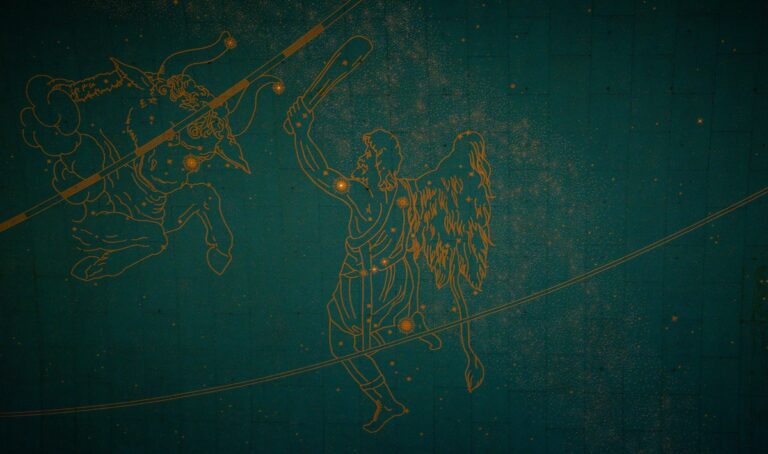
Equal parts threat and hope, the concept that change, hope and danger come out of the seeming calm is at the dramatically beating heart of Dunsinane, the Marin Theatre Company’s season-opening collaboration with Tamalpais High School’s Conservatory Theatre Ensemble (CTE). It runs in Mill Valley through Oct. 16.

Dunsinane begins where Shakespeare’s Macbeth ends, with the battle of Birnam Woods. As Lord Siward, Earl of Northumberland (a solid Aldo Billingslea) and his soldiers take the castle, they find that they have been lied to and that Macbeth’s wife, Queen Gruach (Lisa Anne Porter), is still alive. Even worse for Siward and Macduff (a well-grounded Michael Ray Wisely), the queen has a son.

Much to the vexation of King Malcolm (Josh Odsess-Rubin) and the conniving opportunist Lord Egham (a very funny Daniel Duque-Estrada), Siward is a good man who is trying to do what is right. Unfortunately, in Scotland, honor is a weakness to be exploited by enemies and allies alike. One by one, Siward watches the young men around him die in the name of peace. Told through the eyes of those young soldiers (all students from CTE) writing letters home to their mothers, we watch the most hopeful of these child soldiers (poignantly played by Jack Hochschild) turn into a battle-scarred and mentally wounded man. 

Written during the 2010 Afghan war, playwright David Greig uses the 1054 invasion of Scotland to highlight the problems of one culture trying to define “peace” for another. It’s a sometimes pedantic, sometimes funny, but always earnest allegory about the dangers of imperialism.

The three-hour-long production does sometimes drag due to a dense script and pacing issues, but it is absolutely worth attending. If nothing else, the play contains one of the best sets of antagonists since Saturninus and Tamara. Porter’s Gruach is a force to be reckoned with, and the chameleon-like ability Odsess-Rubin displays as he shifts into the hedonistically conniving King Malcolm is a master class in acting. 

If Dunsinane is a measure of how youth theaters can benefit from collaboration with professional theaters, then this imperfect but well-cast show of veteran and youth actors shows promise for great things in the future.‘Dunsinane’ runs Tues–Sun through Oct. 16 at Marin Theatre Company, 397 Miller Ave., Mill Valley. Tues–Sat, 7:30pm; Sat & Sun, 2pm. $25.50-$65.50.  Masks, proof of COVID vaccination and ID required. 415.388.5208. marintheatre.org.

Banned Books Week

1

Censorship Sucks

Despite all of the press releases, despite all the bookstore banners and despite the groundswell of media attention, I managed to miss Banned Books Week. 

Perhaps I was blinded by its ubiquity—I couldn’t see the forest for the trees (before it was pulped into paperbacks). Or maybe there is something more sinister going on…

Either way, this column is my correction, especially since one of the most important stories from the weeklong defense of free speech, a free press and free-thinking emerged from my own Sonoma County. The most challenged book nationwide in 2021 was Gender Queer, an autobiographical graphic novel by author and illustrator Maia Kobabe. The book depicts what it means to be non-binary and asexual and is very likely saving young lives as you read this.

That Kobabe’s book would face censorship from public and school libraries in at least 11 states is to be expected in an era when the oppression of diverse voices is a favorite conservative pastime.

I remember when getting one’s book banned was a badge of honor, tantamount to having a drink named after you at some literary haunt. The author of a banned book got noticed. A banned book was the book marketing equivalent of boasting “I have the death sentence on 12 systems” in the Mos Eisley cantina. But then, these were almost entirely white, male authors whose newfound “bad boy” status burnished their brands and ultimately led to book sales.

With the advent of “cancel culture” and the shocking rise in intolerance, this past year the books facing banning are disproportionately written for a teen audience and were by, or about, Black or LGBTQIA+ people. This fact underscores the racism, homophobia and transphobia that is shamefully endemic to the present American experience. It also marks the highest number of attempted book bans since the American Library Association (ALA) began compiling the lists 20 years ago.

“In Spring 2022, PEN America published findings from its first-ever Index of School Book Bans, a comprehensive count of more than 1,500 instances of individual books banned by some 86 school districts in 26 states, between July 2021 and March 2022, impacting more than two million students,” wrote Mickey Huff, director of Project Censored, which annually publishes a compendium of the year’s top-25 independent news stories ignored by corporate media.

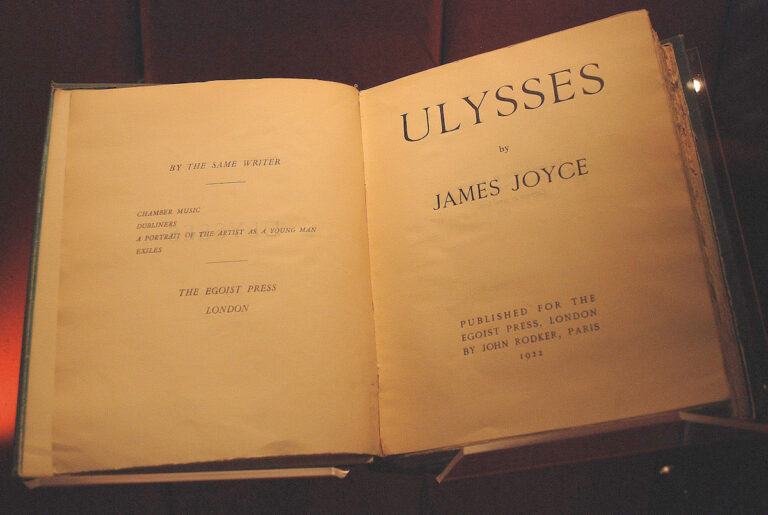
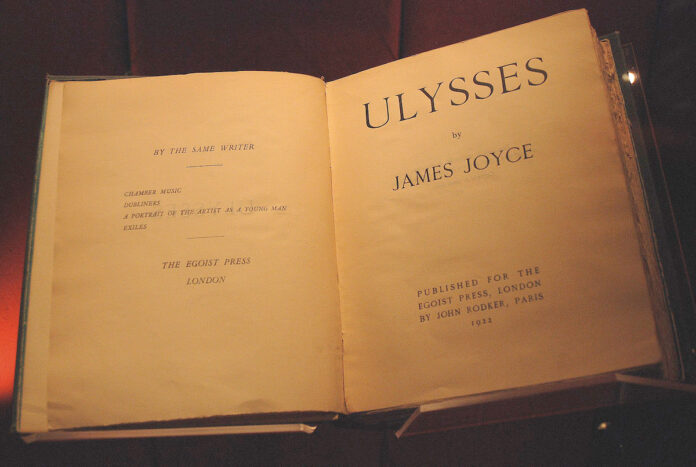
Of course, banning books is an American tradition. One hundred years ago, James Joyce’s modernist masterpiece, Ulysses, was first published by Sylvia Beach’s Shakespeare and Company in Paris and subsequently banned in the U.S. We can thank the New York Society for the Suppression of Vice, which considered the work obscene (ever notice that societies for something are never up to anything good?).

For its 40th anniversary, the Banned Books Week Coalition’s theme was “Books Unite Us: Censorship Divides Us”—a kind of spin on “united we stand, divided we fall,” which is the motto of the state of Kentucky. This is a weird reference, since it has a law on its books that allows student groups at colleges, universities and high schools to discriminate against LGBTQ students on religious grounds.

But why quibble about slogans when, as Deborah Caldwell-Stone, director of ALA’s Office for Intellectual Freedom, said in a recent statement, “This is a dangerous time for readers and the public servants who provide access to reading materials. Readers, particularly students, are losing access to critical information, and librarians and teachers are under attack for doing their jobs.”

To wit, it’s our jobs as readers to keep reading banned books and as writers to keep writing them because, as George Bernard Shaw observed, “Censorship ends in logical completeness when nobody is allowed to read any books except the books that nobody reads.”

Eve, An Opera Confronts Domestic Violence

It may seem obvious that an opera built around the true story of an abusive relationship will make for challenging research, but it was still surprisingly emotional speaking with Andrea “Anny” Densmore and her son, Tony Owen, on the creation of Eve, An Opera. 

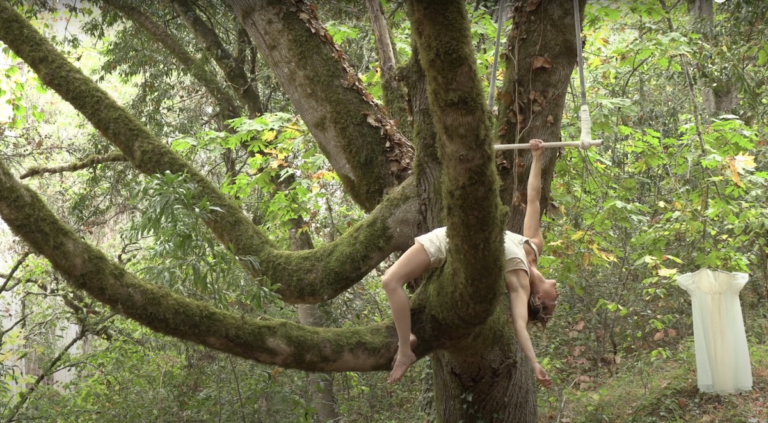
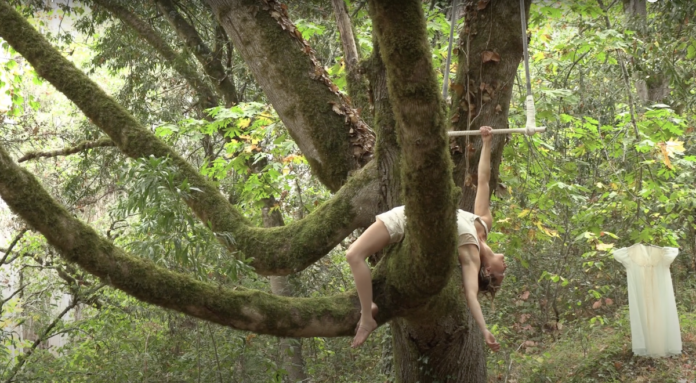
Eve is not so named, as some may think, after the biblical character, though it’s fitting enough. Perhaps portentously, Eve is Densmore’s middle name. Eve is a based-on-a-true-story 13-piece opera that traverses and blends genres to create an utterly unique tale of oppressed and oppressor. R&B, aerial dancers, jazz, ballet and members of the Oakland Interfaith Gospel Choir Ensemble—to name a few—tell the story of Eve, the innocent protagonist, who falls prey to evil, in the form of an abuser, one fated night, and only emerges 18 years later. 

The piece takes Eve, and the audience, through the entire process, from ultimate highs to excruciating lows. 

“This girl was exploring and seeking and trying to understand the world, and there was a time when she just stepped through the wrong door,” Densmore said over the phone. 

Densmore knows this all too well—along with being the composer and co-creator of Eve, she is also the inspiration for the main character. This opera, though a fiction, is also partially her story, and by proxy, that of her sons, Tony and Hobie. And though composed as an act of healing and empowerment, both Densmore and Owen conveyed to me how challenging this process has been for them, stirring an incredible amount of healing ready to be done. 

For Densmore, this started almost 44 years ago, in 1978. Born in 1960, the daughter of a philosophy professor father and songwriter activist mother, she came of age in the height of the Rolling Stones, Beatles era, in what sounds like an almost idyllic childhood.

“My mother was learning to play guitar, and there was music in my house all the time, and dancing. And my dad is an adventurer and sailor, so we were always traveling out to remote amazing places, sleeping under the stars, swimming in the Sea of Cortez while we sailed.” 

She grew up on the beaches of Los Angeles, where she became a beach volleyball player. It took her to UC Berkeley on a full ride, which was going well until, in her third quarter, she missed her ride back to LA for spring break and ended up at a Jerry Garcia Band concert. Too young to get in, she ended up hanging out with some guys who took her to a house in Oakland which was, in her words, a cult. Two weeks later, she dropped out of school.

Densmore opted not to mention the name of the cult, or the location of the house. She doesn’t want to stir up anything, and the cult—though, according to her, they don’t consider themselves this way—is still operative today.  

After meeting the man who would become her children’s father, Densmore found herself in an abusive relationship that lasted 18 years, out of which, among other things, came her two sons, Antonio “Tony” Owen and Hobie Owen, and this opera. 

And this opera has been a long time in the making. When Densmore was finally able and ready to go back to school, she attended Dominican University, where she took composition classes and wrote a cathartic memoir on her story. She described it as a “purge” experience, full of poetry, rhyme and memory. Encouragement from her teachers—specifically, a professor, Thomas Burke, who told her, “you should write an opera”—caused her to consider combining her memoir and her budding composition skills. 

In 2016-17, Densmore went to the California Institute of Integral Studies (CIIS), thinking she would make her story into a film. She created a piece, originally called Bach’s Daughter, which she performed first at a house concert in 2017. Out of Bach’s Daughter, Eve budded—the piece is still part of the opera—which began to really take shape with the help of her lifelong friend and co-creator, Kim Bender, and her sons, Hobie and Tony.

While Hobie Owen plays a more behind-the-scenes role, helping with photo and video assets, Tony Owen, a graduate of California Jazz Conservatory and a composer, arranger, producer and professional guitarist, came on as co-creator, composer, writer and performing musician in Eve. 

It was Tony Owen’s idea to create the character Eve, a fictional protagonist who could move the audience through a narrative. He and his mother collaborated closely on crafting this character, who both served to illustrate the narrative and give the family a bit of space from it, and a bit of privacy. 

“I never thought I would do this, but it came so easy, in a way. I’d spent so much time with the story, it was almost as though I knew what the scenes needed to be. It was kind of miraculous, and a strange feeling—I stepped into a role I never thought I would do and felt immediately that I was the person to do it.”

In Densmore is a woman who experienced, and eventually escaped, domestic violence and is finding healing and catharsis through sharing her story with the world. She can inspire others in similar situations, and continue to shed light on the dangerous reality of domestic abuse.

Tony Owen is the son who, not immediately abused by his father, nor witness to the abuse of his mother, is working to come to terms with his origin story. In the first few performances of Eve, he spoke up unprompted at the show’s end, on behalf of his father, who was also a victim of domestic abuse, and someone he witnessed suffer tremendously before finally passing away just before COVID broke out.
 

“This has brought up a whole lot for me. It’s opened up some cans of worms, but I think we’re all ready to face it,”  he said over the phone. “My whole life, I’ve been fighting against my mom’s demonization story, because it’s kind of our horror story. Once I got to know my father, and became aware of the concept of multi-generational trauma, I started to see this monster as more of a sick animal.” 

Owen was brave, in our conversation, speaking candidly about his suffering during childhood and into his early adulthood, before finding his path. He was candid too, about his concerns in endeavoring to understand, and humanize his father. He treaded lightly but honestly through his thought process and experiences, which he is still investigating and digesting. 

“What’s been really uncomfortable for me to reckon with is having a masculine voice, in the temple of the healing woman. After my impromptu speech, I had a very polarized reaction—some people came up to me, thanking me; others were triggered.” 

Owen is working on understanding his mother’s story, his father’s story and his own. He, like his mother, is working to process his trauma. And because this route—the opera—has been the one his mother chose to process, and because it’s so public, he wanted to participate in the telling of the story. He’s hoping to understand, in more detail, the role of the abused male—in this case, his father—who then becomes the abuser. And he’s also trying to understand how to hold someone accountable for their actions and forgive them at the same time. 

“I’m working on understanding my mother’s story, which she has a right to, while also understanding how we all move forward, and what role compassion plays in all of it.”

Densmore and her sons are healing the hard way. They’re looking at the past, together, opening the old wounds—to the public, no less—and working to heal themselves, past, present and future. In the process, they’re looking to bolster others in similar situations. It’s powerful medicine. And an ongoing process. This will perhaps not be the last opera we see from the family. 

‘Eve, An Opera’ is heading to the San Francisco Palace of Fine Arts on Oct, 28 for a one night show. For tickets and more information, visit www.eveopera.com

Top Reasons to Buy Sungrown Cannabis

Sponsored content by Solful Dispensary

What are the driving factors behind your weed selection? Is it the price, potency or brand name that attracts you to one strain over another? Many people don’t put a lot of thought into how their weed is grown. Others fanatically shop for only the highest terpene content or THC percentage. 

With so many strains on the market, cutting through the marketing noise and getting to the brass tacks of what makes a great strain so great can be challenging. For example, if you’ve ever fallen victim to the notion that indoor weed is best, we’re here to bust that myth. In fact, we’re here to explain why sungrown cannabis is superior and why you should seek it out. 

What Is Sungrown Cannabis?

Sungrown (or sun-grown) cannabis is grown outdoors, under the full sun. You might be familiar with “outdoor” weed, but that category refers to plants grown in a greenhouse or hoop house. It can also describe light deprivation, a technique where growers throw a black tarp over a greenhouse to control the light cycle in specific intervals. This method gives the grower more control over the life cycle, meaning the plants may flower faster to reach a harvest deadline. 

Sungrown doesn’t fall into this category because the plants are entirely exposed to the elements, receiving lighting on the sun’s natural cycle. Generally, growers who decide to grow under the full sun also opt for other organic and regenerative growing practices. This includes growing in native soil with only organic nutrients and materials like bone meal, bloodworms and molasses. Of course, this isn’t always the case, but many growers in regions like the Emerald Triangle are committed to organic cultivation.

“The cannabis plant best thrives in an outdoor environment where it can grow to its highest potential, based on receiving full sun and taking in the vitality of the land’s terroir. Growing cannabis outdoors is the most resource-efficient method for growers with minimal impact to the earth.”  —Eli Melrod, CEO and Co-Founder of Solful dispensary.

There are potential risks involved with growing sungrown cannabis, so it takes dedication and experience to see a successful harvest. For example, while the terroir in Northern California is renowned worldwide, full sun plants may be susceptible to unforeseen weather conditions. A storm producing excessive wind, rain or hail can decimate young crops. A family of hungry deer might wander in and feast on young, tender leaves. Knowing how to mitigate potential issues is part of the job requirement.

Yet, it’s all worth it come Croptober when the sungrown buds are harvested. The effort shines in the quality of the finished product. This is as close to organic, clean weed as you can get. And it’s worth every penny. 

solful cannabis dispensary, sungrown cannabis

Benefits of Sungrown Cannabis

As a consumer, you should care about the quality and purity of your pot. No one wants to smoke chemically-laced herb that burns their throat. It’s time to shop for weed as you shop in a grocery store. If you buy organic food, you probably want organic weed. Since cannabis doesn’t qualify for USDA organic certification, the best thing you can do is purchase locally grown, sungrown cannabis. Here’s why:. 

Potency and Flavor

A longstanding debate in the cannabis community revolves around indoor vs outdoor weed. The terpene and cannabinoid content give a plant its flavor, aroma and effects. The maturation of these compounds is directly related to the plant’s access to light. You might think this is an argument for indoor weed since growers control the light switch. However, even the most innovative lighting technology cannot replicate the sun’s natural UV wavelengths required for photosynthesis. 

Faking the sun is impossible, and harnessing its power unlocks a strain’s true potential. Sunna Ra Acres, a Southern Oregon farm, tested this theory. Sunna Ra Acres cut clones from the same mother plant and grew one indoors and one outdoors. After multiple rounds of experiments with various strains, Sunna Ra Acres proved that every outdoor plant yielded higher cannabinoid content. While not every growing climate will produce the same results, Sunna Ra Acres enjoy similar conditions to those found throughout the Emerald Triangle.

Environmental Factors

If you care about your carbon footprint, support local, sungrown cannabis cultivators. Indoor growing is draining power to run their operations. Outdoor growers using synthetic fertilizers, pesticides and other chemicals are destroying the living soil and poisoning the water supply. Sungrown cannabis requires the least amount of human interference and, when done correctly, feeds the soil so it can live on for generations. 

Non-organic nutrients are mostly produced with the help of fossil fuels, offering zero effort toward sustainability. On the other hand, organic farming tends to the plants, the land and the people who will consume the final product.

Price Point

Despite a flooded market of legal weed, sungrown cannabis often comes with a lower price point than indoor pot. This is because the plants have a vast canopy to expand, reaching massive sizes during their growing seasons. Indoor weed comes with a hefty energy bill, and crops rarely reach a fraction of the size of fully sungrown cannabis. With less start-up cost and larger yields, the growers can typically offer better prices to their dispensary partners. 

solful cannabis dispensary, sungrown cannabis

How to Find Sungrown Cannabis

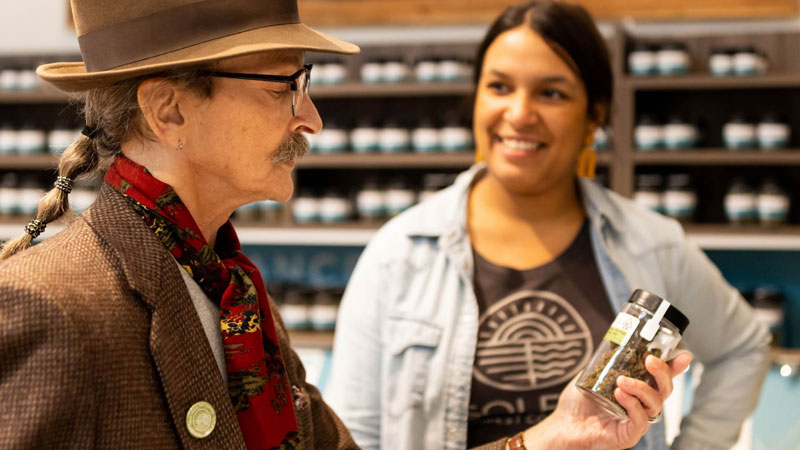
Not all dispensaries prize sungrown cannabis, yet some solely partner with local sungrown farmers who focus on regenerative, organic growing practices. Check out locations like Solful. Solful sources from local farmers who uphold quality, organic growing practices—which means exclusively sungrown cannabis. The Solful standard involves boots on the ground at every farm to ensure their partners produce the cleanest weed possible. If you care about your health and that of the planet, sungrown is the way to go.

Ross Valley Players ‘Picnic’ No Basket of Fruit

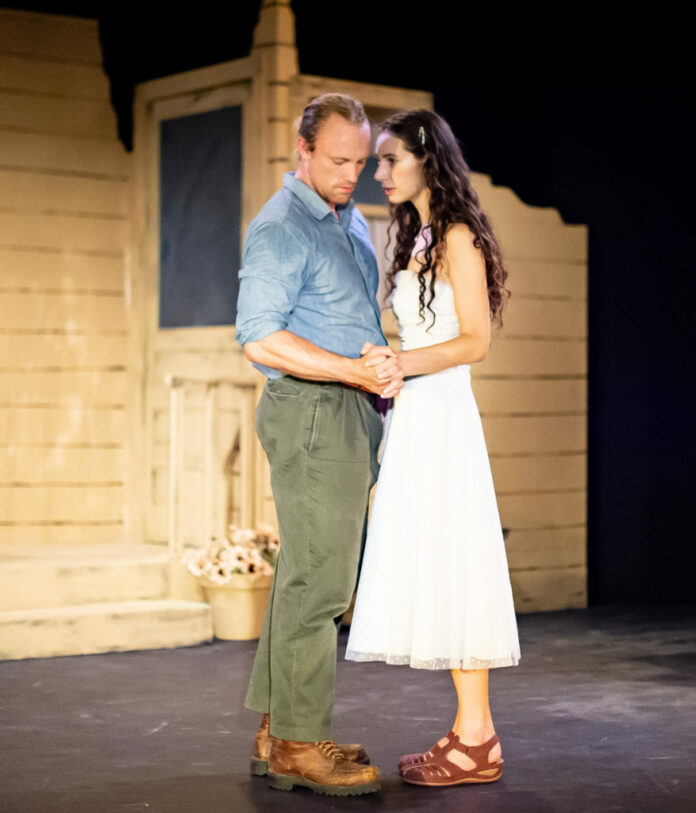
Ross Valley Players (RVP) open their 93rd season with William Inge’s American Classic Picnic, one of this reviewer’s favorite plays.

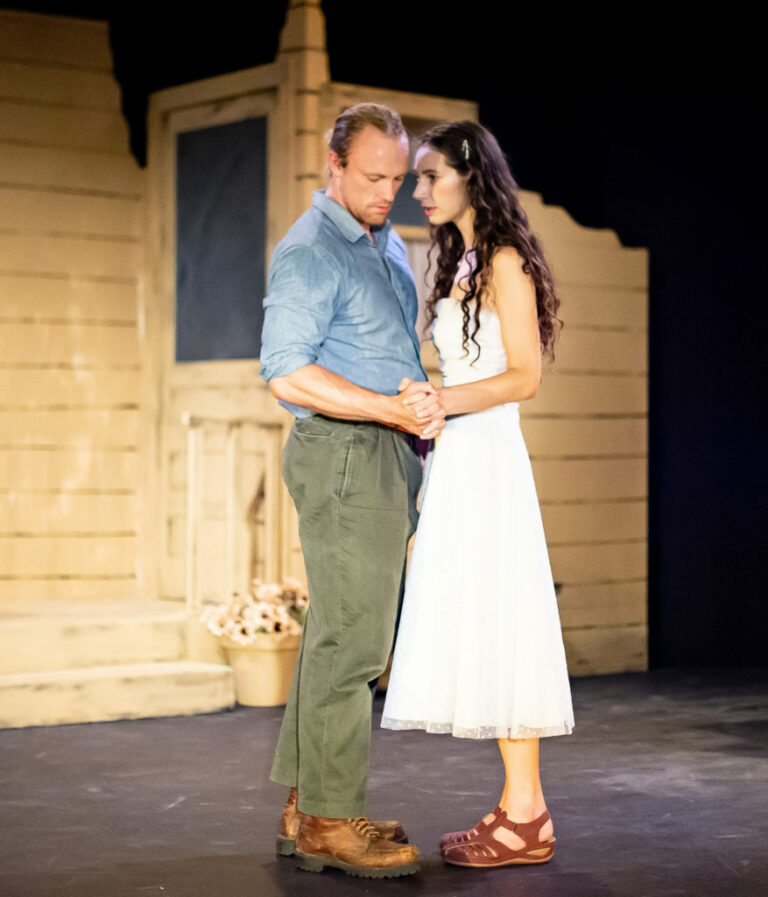
The plot is deceptively simple. It’s Labor Day 1953 in Independence, KS, where town widows Flo Owens (Tori Truss) and Helen Potts (Tamar Cohn) have planned a picnic for the youth. There is a high hope from Flo and begrudging expectation from younger daughter, Millie (Lizzy Bies), that rich collegiate Alan Seymour (Evan Held) will propose to town beauty Madge Owens (Dale Leonheart).

Meanwhile, with school starting the next day, spinster Rosemary Sydney (Valerie Weak) is catching up with old and new colleagues (Jen Marte and Raysheina de Leon-Ruhs) and hoping that her beau, Howard Bevans (Steve Price), will show up sober. Life-altering chaos ensues when handsome Hal Carter (Max Carpenter) arrives in town. 

Based on school teachers who boarded with his mother, Inge wrote Picnic as a condemnation of the dehumanizing of outcasts. Inge himself was no stranger to this theme. As he was closeted most of his life, Picnic speaks of his isolation as well as theirs.

With such deep themes and beautiful writing, it is hard to understand how director Adrian Elfenbaum could have missed the mark so widely. Inge’s meticulous dissection of American society has been reduced to a series of shouting matches.  

Hal Carter is supposed to be the apple on the tree of Eden and confident in his own languid sensuality, but Carpenter lacks this confidence. Even worse, Hal’s iconic cowboy boots are replaced with modern work boots, and the lack of chemistry between Carpenter and Leonhart makes the love scenes difficult to watch.  

Bies and Held are talented, well-grounded actors who understand the humor, vulnerability and gravitas of the material. They anchor this production and are well worth watching. Cohn, Truss and Price are in a different show, but all three deliver competent performances that would have benefited from stronger direction and consistent dialects. 

Overall, this is a case of a good script being paired with the wrong director, which is a shame. There are some good performances here, plus some interesting design concepts in Tom O’Brien’s monotone abstraction of the set, but in the end it’s just no picnic. 

‘Picnic’ runs through Oct. 9 at the Barn Theatre in the Marin Art and Garden Center, 30 Sir Francis Drake Blvd., Ross. Thurs, 7:30pm; Fri. & Sat., 8pm; Sun., 2pm. $15–$30. 415.456.9555. Masking is required. rossvalleyplayers.com

Free Will Astrology

ARIES (March 21-April 19): Poet Susan Howe describes poetry as an “amorous search under the sign of love for a remembered time at the pitch-dark fringes of evening when we gathered together to bless and believe.” I’d like to use that lyrical assessment to describe your life in the coming days—or at least what I hope will be your life. In my astrological opinion, it’s a favorable time to intensify your quest for interesting adventures in intimacy, to seek out new ways to imagine and create togetherness, to collaborate with allies in creating brave excursions into synergy.

TAURUS (April 20-May 20): Social reformer Frederick Douglass (1817-1895) had a growlery. It was a one-room stone cabin where he escaped to think deep thoughts, work on his books and literally growl. As a genius who escaped enslavement and spent the rest of his life fighting for the rights of his fellow Black people, he had lots of reasons to snarl, howl and bellow as well as growl. The coming weeks would be an excellent time for you to find or create your own growlery, Taurus. The anger you feel will be especially likely to lead to constructive changes. The same is true about the deep thoughts you summon in your growlery: They will be extra potent in helping you reach wise practical decisions.

GEMINI (May 21-June 20): “Conduct your blooming in the noise and whip of the whirlwind,” wrote Gemini poet Gwendolyn Brooks. I love that advice! The whirlwind is her metaphor for the chaos of everyday life. She was telling us that we shouldn’t wait to ripen ourselves until the daily rhythm is calm and smooth. Live wild and free right now! That’s always good advice, in my opinion, but it will be especially apropos for you in the coming weeks. Now is your time to “endorse the splendor splashes” and “sway in wicked grace,” as Brooks would say.

CANCER (June 21-July 22): “Don’t look away,” advised novelist Henry Miller in a letter to his lover. “Look straight at everything. Look it all in the eye, good and bad.” While that advice is appealing, I don’t endorse it unconditionally. I’m a Cancerian, and I sometimes find value in gazing at things sideways, or catching reflections in mirrors, or even turning my attention away for a while. In my view, we Crabs have a special need to be self-protective and self-nurturing. And to accomplish that, we may need to be evasive and elusive. In my astrological opinion, the next two weeks will be one of these times. I urge you to gaze directly and engage point-blank only with what’s good for you.

LEO (July 23-Aug. 22): Tips to get the most out of the next three weeks: 1. Play at least as hard as you work. 2. Give yourself permission to do anything that has integrity and is fueled by compassion. 3. Assume there is no limit to how much generous joie de vivre you can summon and express. 4. Fondle and nuzzle with eager partners as much as possible. And tell them EXACTLY where and how it feels good. 5. Be magnanimous in every gesture, no matter how large or small. 6. Even if you don’t regard yourself as a skillful singer, use singing to transform yourself out of any mood you don’t want to stay in.

VIRGO (Aug. 23-Sept. 22): In the coming weeks, you should refrain from wrestling with problems that resist your solutions. Be discerning about how you use your superior analytical abilities. Devote yourself solely to manageable dilemmas that are truly responsive to your intelligent probing. P.S.: I feel sorry for people who aren’t receptive to your input, but you can’t force them to give up their ignorance or suffering. Go where you’re wanted. Take power where it’s offered. Meditate on the wisdom of Anaïs Nin: “You cannot save people. You can only love them.”

LIBRA (Sept. 23-Oct. 22): Buddhist monk Thich Nhat Hanh was born under the sign of Libra. He said, “The root-word ‘Buddha’ means to wake up, to know, to understand; and he or she who wakes up and understands is called a Buddha.” So according to him, the spiritual teacher Siddhartha Gautama who lived in ancient India was just one of many Buddhas. And by my astrological reckoning, you will have a much higher chance than usual to be like one of these Buddhas yourself in the coming weeks. Waking up will be your specialty. You will have an extraordinary capacity to burst free of dreamy illusions and murky misapprehensions. I hope you take full advantage. Deeper understandings are nigh.

SCORPIO (Oct. 23-Nov. 21): I invite you to be the sexiest, most intriguing, most mysterious Scorpio you can be in the coming weeks. Here are ideas to get you started. 1. Sprinkle the phrase “in accordance with prophecy” into your conversations. 2. Find an image that symbolizes rebirth and revitalization arising out of disruption. Meditate on it daily until you actually experience rebirth and revitalization arising out of disruption. 3. Be kind and merciful to the young souls you know who are living their first lifetimes. 4. Collect deep, dark secrets from the interesting people you know. Employ this information to plan how you will avoid the trouble they endured. 5. Buy two deluxe squirt guns and two knives made of foam rubber. Use them to wage playful fights with those you love.

SAGITTARIUS (Nov. 22-Dec. 21): There’s an ancient Greek saying, “I seek the truth, by which no one ever was truly harmed.” I regard that as a fine motto for you Sagittarians. When you are at your best and brightest, you are in quest of the truth. And while your quests may sometimes disturb the status quo, they often bring healthy transformations. The truths you discover may rattle routines and disturb habits, but they ultimately lead to greater clarity and authenticity. Now is an excellent time to emphasize this aspect of your nature.

CAPRICORN (Dec. 22-Jan. 19): Let’s imagine you are in your office or on the job or sitting at your kitchen table. With focused diligence, you’re working on solving a problem or improving a situation that involves a number of people. You think to yourself, “No one seems to be aware that I am quietly toiling here behind the scenes to make the magic happen.” A few days or a few weeks later, your efforts have been successful. The problem is resolved or the situation has improved. But then you hear the people involved say, “Wow, I wonder what happened? It’s like things got fixed all by themselves.” If a scenario like this happens, Capricorn, I urge you to speak up and tell everyone what actually transpired.

AQUARIUS (Jan. 20-Feb. 18): To honor your entrance into the most expansive phase of your astrological cycle, I’m calling on the counsel of an intuitive guide named Nensi the Mercury Priestess. She offers the following advice. 1. Cultivate a mindset where you expect something unexpected to happen. 2. Fantasize about the possibility of a surprising blessing or unplanned-for miracle. 3. Imagine that a beguiling breakthrough will erupt into your rhythm. 4. Shed a few preconceptions about how your life story will unfold in the next two years. 5. Boost your trust in your deep self’s innate wisdom. 6. Open yourself more to receiving help and gifts.

PISCES (Feb. 19-March 20): Author Colin Wilson describes sex as “a craving for the mingling of consciousness, whose symbol is the mingling of bodies. Every time partners slake their thirst in the strange waters of the other’s identity, they glimpse the immensity of their freedom.” I love this way of understanding the erotic urge, and recommend you try it out for a while. You’re entering a phase when you will have extra power to refine and expand the way you experience blending and merging. If you’re fuzzy about the meaning of the words “synergy” and “symbiosis,” I suggest you look them up in the dictionary. They should be featured themes for you in the coming weeks.

45th Mill Valley Film Fest

You screen, I screen, we all screen for film festivals! 

It’s high time we turned off our devices and sat our butts down in an actual movie theater seat for a bigger than life experience. And there’s no better place to do just that in the North Bay than the Mill Valley Film Festival (MVFF). 

Presented by the California Film Institute, the annual festival is now celebrating its 45th year as it unspools acclaimed (and soon-to-be acclaimed) cinema over 11 days.

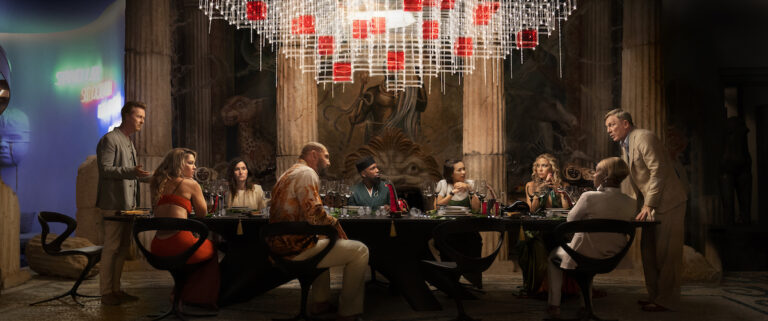
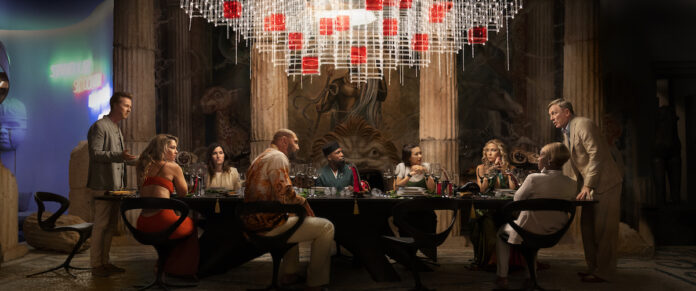
The curtains first split Oct. 6, with director Rian Johnson’s follow up to mystery movie hit, Knives Out, called Glass Onion: A Knives Out Mystery, which not only promises intrigue and laughs courtesy of Daniel Craig’s Detective Benoit Blanc, but enough star wattage to power Marin’s grid through fall. Attending the Opening Night festivities will be Johnson, Kathryn Hahn, Leslie Odom Jr., Kate Hudson and producer Ram Bergman. 

But MVFF is more than a playground for Hollywood; it’s a launching pad for many North Bay filmmakers as well. From local themes to the filmmakers themselves, MVFF boasts a number of movies not-to-be-missed. Among them is the world premiere of The Art of Eating: The Life of M.F.K. Fisher.

A feature documentary that traces the remarkable life of iconic food writer Mary Frances Kennedy Fisher (a past resident of St. Helena and Glen Ellen), the film was a dream project for San Francisco filmmaker Gregory Bezat, who explores the impact of Fisher’s ideas about food, its meaning in our lives and how her writing laid the foundation of modern food writing. W.H. Auden describes Fisher as “the best prose writer in America.” Locals might recognize interviewees like John Ash of Santa Rosa or Alice Waters of Berkeley. 

Another documentary with a local angle is Elemental: Reimagining Our Relationship with Fire, directed by Trip Jennings, which will have its Bay Area premiere at the festival. With portions shot in Santa Rosa and Healdsburg, Jennings’ film looks at how Indigenous knowledge can be applied to science as a way forward to live and thrive with the elementary force, as our fire seasons grow fiercer by the year. 

Sophia is a feature doc that follows the endeavors of inventor David Hanson, whose quest is to perfect the world’s most life-like AI. The film was directed by Jon Kasbe and Crystal Moselle, who, incidentally, was raised in Marin and attended Tamalpais High School.

Marin film producer Blye Faust teamed up with reporter-producer Nate Halverson, producer Amanda Pike and director Gabriela Cowperthwaite to create The Grab, a “thriller” feature documentary that reveals how governments, private investors and mercenaries are seizing food and water resources at the expense of the populations who need them most. 

The North Bay is also well-represented in the shorts department. Currently a student at Archie Williams High School Communications Academy in San Anselmo, Tony Heffernan directed the short narrative film, A Date with Kino Redfield, which was shot at locations in Fairfax and depicts what can go wrong when an over-confident young man goes on a date.

Cardiff is a light-hearted tale of a young gay man and a forbidden romance in a Welsh coastal town, which was directed by Sara Smith and executive produced by Mill Valley’s own Carol Kim. Also premiering at the festival is director Grace Gregory’s short, Earthworm, which explores issues surrounding abortion, when a 20 year old experiences a waking nightmare with lasting repercussions. The film’s graphic designer, Lena Redford, was born and raised in Marin.

In director April Moreau’s Hysterical, a stand-up comedian fails to find solace in comedy, forcing her to look inward for healing in the days following a traumatic event. Jacqueline Toboni, the film’s executive producer, graduated from St. Ignatius College Preparatory and was involved with the American Conservatory Theater while she attended high school there. Emily Hanley (co-writer, lead actor) and her brother, Casey Hanley (associate producer), live in Mill Valley.

Meanwhile, Andy: A Dog’s Tale fetches laughs and levity in the form of a puppy who overcomes a series of obstacles to find his purpose in life in this locally-animated short. Director Jamy Wheless is head of IGNITE Animation Studios in Petaluma, and executive producer Jean Schulz, Charles Schulz’s widow (of Peanuts fame), is president of the board of directors at the Charles Schulz Museum and lives in Santa Rosa.

Marin County director Anthony Codispoti’s short documentary, The Baker, found a tasty subject in renowned baker Matthew Jones, who pursues the art of baking and his devotion to community in the midst of  life’s complexities. 

I’m a Burner is not a (yet another!) Burning Man documentary. The short doc follows Trina, a member of the Mountain Maidu tribe, who works with tribal communities to help them retain their traditional knowledge through meaningful access to their ancestral lands—including the use of prescribed burns to thin excess wildfire fuel. The film is a collaboration between San Rafael’s Nancy Kelly and Kenji Yamamoto (director and producer-editor, respectively). 

The latest installment of a multiple Emmy Award-winning series, The New Environmentalists: From Malawi To Peru, features inspiring portraits of passionate and dedicated activists from around the globe (as well as narration by actor and activist Robert Redford). The short documentary comes courtesy of directors John Antonelli and Will Parrinello of Mill Valley.

In Ramini, director Subei Kyle focuses on Audrey Hitchcock’s Tomales-based water buffalo farm, known for producing Ramini Mozzarella. The Queen’s Closet follows the lives of three San Francisco drag icons: Uti (owner of Piedmont Boutique for more than 50 years), Miss Mary Lou Pearl and Andy. Directors Cameran Grace Ford, Ava Wolf and Joe Tourk all live in Marin.

“I look back on 44 years of the festival with a mixture of wonder and amazement; it’s hard to believe that we were a three-day festival in 1978. And yet, here we are on the precipice of our 45th with a program that will run for 11 days,” said MVFF founder/director Mark Fishkin, whose festival annually welcomes more than 200 filmmakers representing more than 50 countries. “We are committed to having an inclusive festival that everyone can enjoy, whether it’s a daytime matinee or a late-night feature.”

Culture Crush—Indigenous Voices, Farm Trails Fall and More

Occidental 

Arts Literary Series 

Join the Occidental Center for the Arts for their Arts Literary Series, featuring Glen Ellen author Elisa Stancil Levine and former Sonoma County poet laureate and biologist Maya Khosla, as they share work in recognition of the five-year anniversary of the 2017 fires. Both writers will read from their recent works, This or Something Better, A Memoir of Resilience by Levine, and All the Fires of the Wind and Light by Khosla. After the reading, a conversation built around coping with fear, the relentless nature of change and the broader impacts of fire, beyond even our human experiences, will be held, with invitation to the audience for open discussion. The event is Sunday, Oct. 16 at the Occidental Center for the Arts, 3850 Doris Murphy Way. 4-6pm. Free. www.occidentalcenterforthearts.org 

Healdsburg

Indiginous Voices 

Join The 222 in Healdsburg for Indiginous Voices, literary events celebrating the work of two award-winning Indigenous American poets, poet Jennifer Foerster, and poet, writer and small press publisher Lucille Lang Day. The first event of the series will feature Foerster, reading from her latest book and joining prize-winning Healdsburg poet Denise Low—European and Lenape/Munsee—in a dialogue about the inner workings of the poetry world, and the Indiginous experience. Foerster, an enrolled member of the Muscogee (Creek) Nation of Oklahoma, explores the language and culture of her heritage in her writings. Other themes include ecology, history and the human capacity for violence.“Merging the poetic with the prophetic, Foerster offers a startling vision of how to navigate this broken world and its resilient beauty,” said Rigoberto González, Rutgers MFA director. The first night of Indiginous Voices is Sunday, Oct. 9 at 222 Healdsburg Ave., Healdsburg. 7pm. Tickets $20. www.the222.org 

Petaluma

Honoring Life Exhibition 

In the midst of this spooky season, and the beauty of celebrating those who have moved on, Petaluma Arts Center is taking a slightly different approach with their event, Honoring Life: Love and Remembrance. The new event uses the process of artmaking to address and appreciate how different cultures and communities pay homage to those who have passed away. Though practices of honoring our departed may differ, the common ground of expressing through art ties us together. Petaluma Arts Center hopes to provide a supportive, creative and respectful environment, inviting a spiritual, historical and socio-culturally inclusive experience.  Honoring Life: Love and Remembrance opening reception is Oct. 6 at Petaluma Arts Center, 230 Lakeville St. 5:30-7:30pm. Free. www.petalumaartscenter.org 

Sebastopol

Farm Trails

One of the best features of fall in Sonoma County is the Farm Trails Fall Tour. Sonoma Farm Trails’ member ranches, farms and agricultural producers will be open to the public for tours, demonstrations, tastings, workshops and more. This is an incredible way to appreciate all that SoCo agriculture has to offer! “Autumn in Sonoma County is a bountiful time of year, and we’re thrilled to be able to share the season’s agricultural splendor with the public,” said Farm Trails program manager and tour coordinator Ellen Cavalli. “All ages are welcome to learn more about where their food, drink and flowers come from, and to forge a stronger connection with their local farmers and producers.” Attendees will be able to choose their own agrarian adventure from nearly two dozen farms and artisan producers. The Fall Trails Fall Tour is Saturday and Sunday, Oct. 8 and 9, all day. Registration is free, and required. www.farmtrails.org 

—Jane Vick 

Alex Friedman and the Art of Weaving

If you ever want to have your mind blown, spend a day visiting ICB Artists Association in Sausalito. This once naval ship mold loft turned art collective houses over 100 artists of a variety of mediums. It’s a tremendously inspiring space, and the views out any window are jaw-dropping.

One such inspiring artist can be found on the second floor, studio 205. Alex Friedman is a tapestry weaver, rendering works in fabric that delight the eye, titillate the imagination and inspire a multitude of questions, the main one of which is, essentially, how does weaving work?

A great question.

I visited Friedman’s studio on Saturday of last week and watched her process a bit, endeavoring to understand how such fabric masterpieces are constructed. She graciously gave me a demonstration of her process.

In order to create her works, Friedman deftly weaves strings, in a multitude of colors, depending on her goal, back and forth across, well, other pieces of string. The first set of strings, running horizontally, create what’s called the weft, while the vertical strings, stretched taut between a wooden frame, create what’s called the warp.

The warp, Friedman explained, is like the skeleton of the tapestry. It must be taut, tight and made of strong material. The weft, by contrast, is like the body, and can be anything, really. Plastic bags, grass, yarn. It’s often varied in color and can be varied in material also.

When the tapestry is finished, Friedman cuts it off at the warp, with six or so inches extra, for knotting. This extra warp, when left exposed, is what creates the fringes on carpets—a fun piece of trivia to take to the upcoming Halloween party—but Friedman prefers, after creating a row of soumak knots which secure the tapestry, to fold her warp back at the knotted line, sewing it in place so the tapestry has no exposed warp edges. She sews to the folded warp a piece of velcro, which is used to hang the tapestry on the wall.

Friedman expertly and patiently explained this process to me a few times, which I understood eventually with the help of a self-constructed diagram on my office whiteboard. Weaving is an interesting combination of complicated and simple.

She has two main looms: a Glimakra rug loom and an eight foot Shannok tapestry loom, which she playfully refers to as the “big boy.” The Shannok, along with being bigger, has pedals, which Friedman can press to bring certain sections of the warp forward at a time, allowing her to build different patterns within the weft.

After weaving a few lines of the weft—the horizontal strings, in case it’s still confusing—through the desired strings of the warp— the verticals—Friedman used a fork to tamp them more securely in place. By way of a map, or blueprint, Friedman had a large sketch tacked up on the wall next to the Shannok, which she told me is called a “weaving cartoon.”

I found this interesting, thinking immediately of Bugs Bunny and Daffy Duck. In fact, the word cartoon, Friedman told me, is actually derived from the Italian word cartone, which means a drawing on strong paper, used as a model for another work. Another fun fact for the Halloween party.

It was all very satisfying: her foot pedaling to lift and lower the warp, her deft-fingered weaving of the weft, the fork-delivered tamping that punctuated the process every so often. I felt a sense of ancient history, present in Freidman’s colorful, light-filled studio, and my mind wandered to far off deserts, or castle halls, where men and women sat dying wool, spinning it to yarn, weaving such tapestries as The Apocalypse Tapestry from the 1300s, and the Unicorn Tapestries from the 1700s. If these names are unfamiliar, spend an enjoyable half hour on the internet—as I did—perusing BBC’s Top 10 Most Beautiful Tapestries.

Friedman’s story is as interesting as the process of weaving itself. Originally planning to pursue a career in architecture, she found herself after college at an architectural firm in Cambridge, MA. She spent her time cataloging everything from blueprints to doorknob samples, as well as model building. It became clear to her how incredibly difficult a career in architecture was, and how rare it was to make it into residential architecture, the field in which she was most interested. A change needed to be made.

“Someone said why don’t you try weaving?” said Freidman. “So I signed up for some weaving classes at Boston Y and fell totally in love with it, but had no idea how I was going to make a living. I just loved working with my hands, with the color, designing things.”

When her husband was transferred to New York City in the 1970s, Friedman joined a group of weavers and came across a woman who’d been commissioned by Pan Am Airways to make tapestries for their new fleet of 747 planes. Friedman went for an interview and was hired.

“I’d never made a tapestry before! But I brought along all the shawls and pillows and blankets I’d made.”

Each 747 needed six tapestries: four that went across the bulkhead of the first class cabin and two more that covered the movie screens, for a total of 216 tapestries that Friedman and her four fellow weavers produced in a building in Manhattan’s Garment District.

“There was no head and no AC in the building, and concrete floors. But it was such good times, and comradery. And we managed, you know. Mittens in the cold, and we’d strip down in the hot weather.”

After finishing that project and staying on with her commissioner for another year to complete various others, Friedman and her husband moved to England, where she started up her own work full time.

“I was already doing my own work—I would come home from weaving during the day and weave into the night. I had a big frame loom at that time. Going to England was good because I really had to cut my support group and start on my own.”

After three years in England, Friedman and her family moved back, settling in Connecticut, where she bought her first large scale loom when her daughter entered kindergarten. And it worked. She was able to sell her work, and made weaving her full time job.

“I knew I was never going to get rich, but I could make my work, and it paid for itself.”

She started with very realistic-style tapestries, commissioned by offices and corporations. The works, which can be explored on her website, are truly beautiful—they have an almost David Hockney-like quality in both their subject matter and their sense of tone: sunglasses and a book sitting on a back stair, three peaches in a window in front of which beach towels hang. The tapestries feel dimensional, quiet, real.

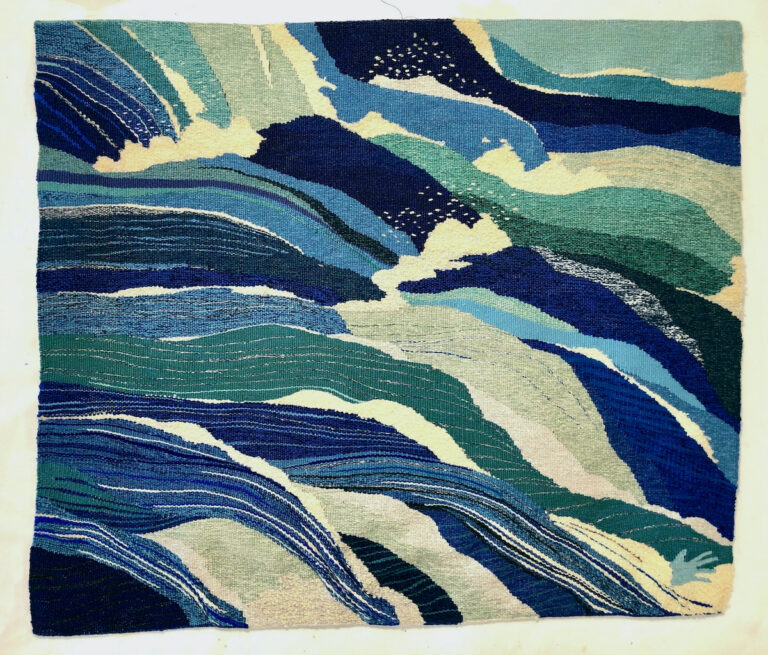
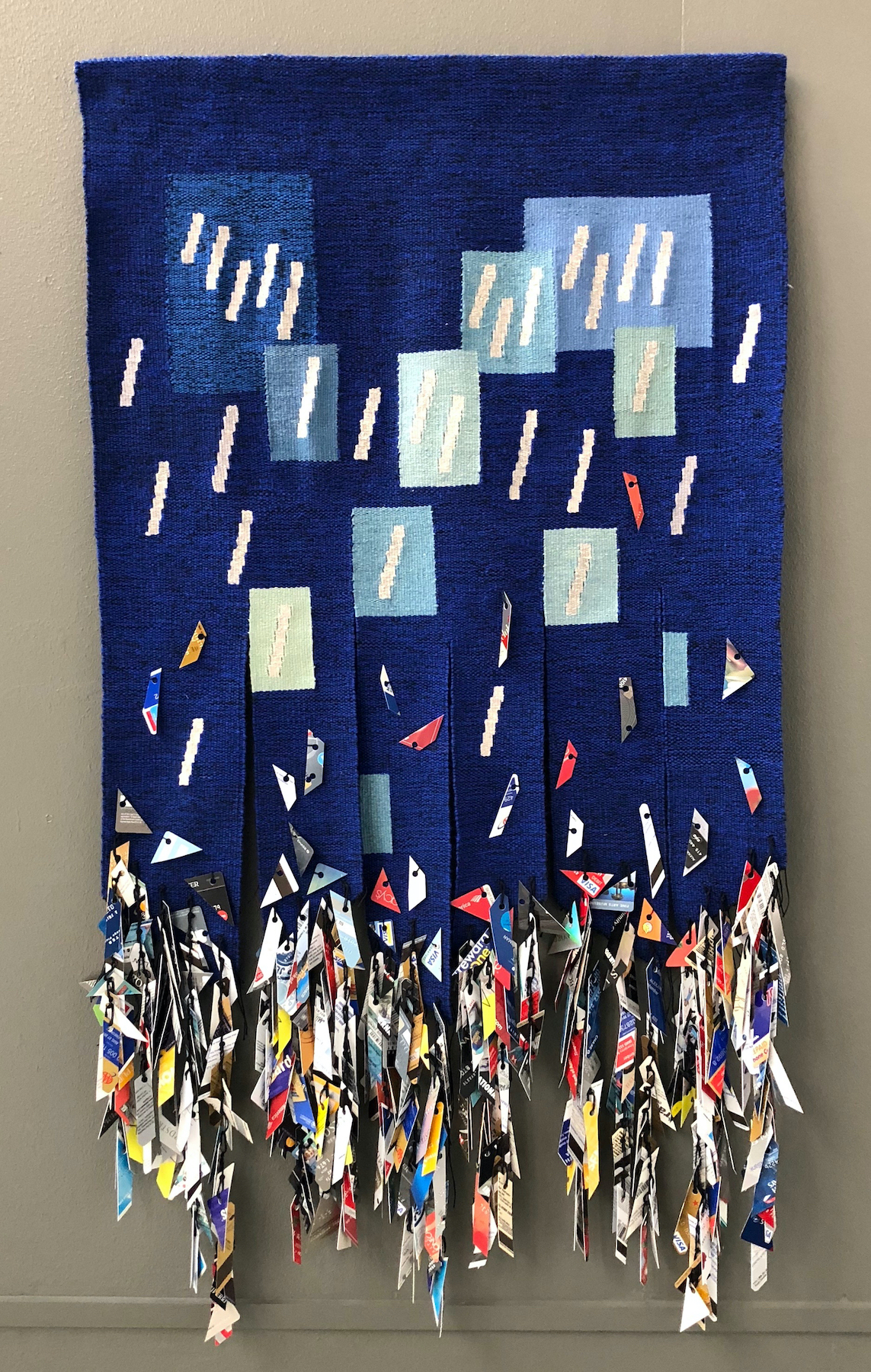
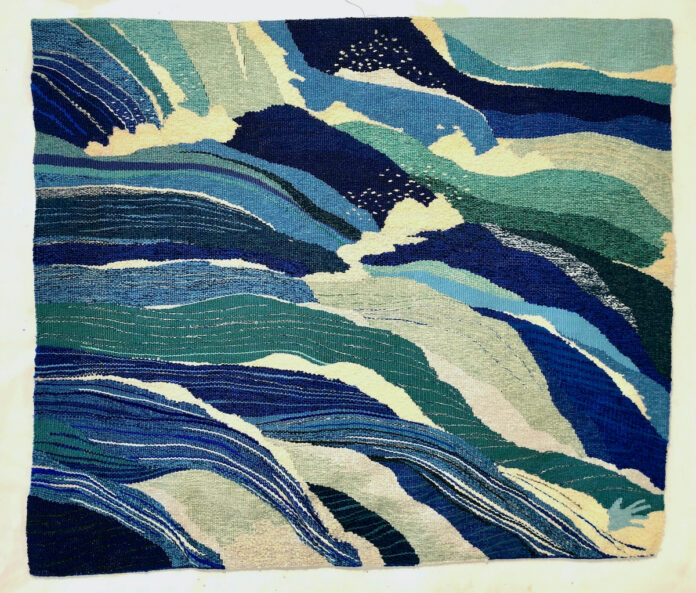
In the early 2000s, Friedman broke out of representational subject matter and into abstract work. Her explorations in texture and color have resulted in a varied and intriguing body of work, including Discharge, a one-off piece she did in response to her growing awareness of the trash production in America.

“I had all these leftover credit cards that I’d never thrown away because they seemed to be such good pieces of plastic. So I cut them all up into little pieces, punched holes in them, and wove them into a tapestry I call Discharge, that represents consumption and over consumption, and in particular our litter making its way into the oceans. I combined those elements in this piece.”

Photo provided by Alex Friedman.

The result is striking, and a wonderful example of how artists can create beauty and social commentary simultaneously—making it much easier to ingest.

Friedman’s work sparked a passion for weaving in me I didn’t know existed. Something about working with the hands in such a way reminds me of scarves I used to knit as a pre-teen. I never moved past the scarf or onto the loom, but who knows? This might be the moment.

Perhaps there’s a weaver in all of us, an ancient remembering in our DNA, like building a fire or gathering together to tell stories. Regardless, there’s certainly one in Alex Friedman, and her work is well worth the visit.

Meet Friedman and see her work for yourself—along with the resplendence that is ICB—Oct. 15 from 11am-5pm. www.icbartists.com

Geyserville Bannister Wines

Downtown Geyserville’s transformation keeps getting better.

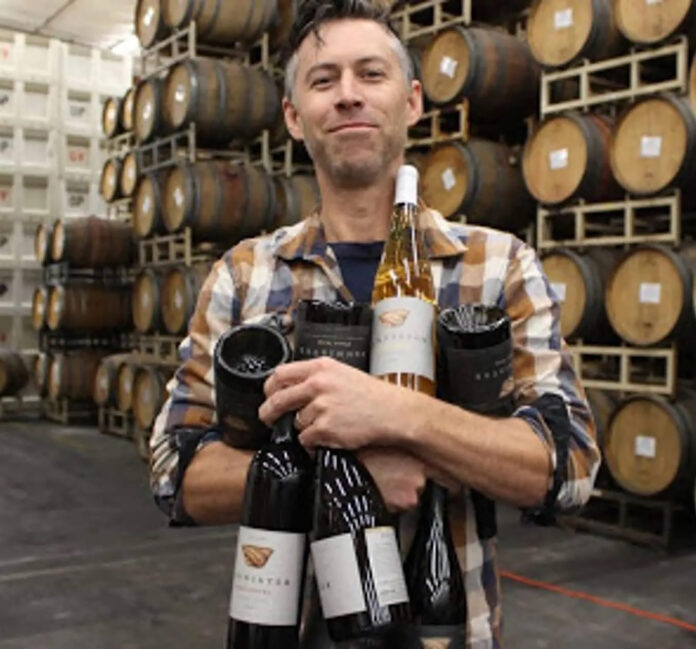
New businesses are moving in to renovate and occupy spaces that have been dormant. The most recent to join the tightly-knit community of local businesses is Bannister Wines, which opened the doors to their new tasting room in the historic vault space formerly occupied by Meeker wines in late June.

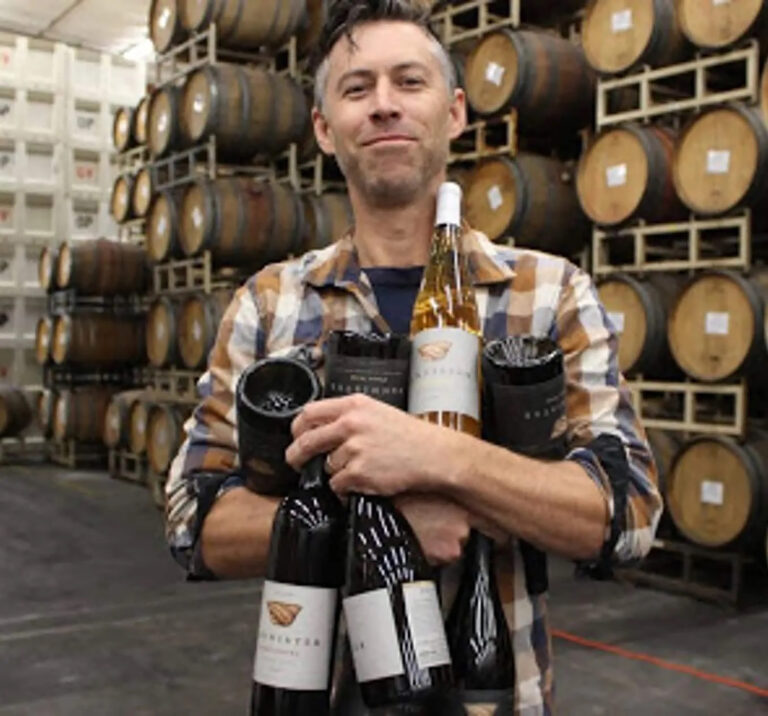
Among the many interesting things about this opening is the fact that though Bannister Wines has been around since the late ’80s, and is run by a fourth generation Sonoma County family, the winery has remained almost unknown to the general public, due to never having a tasting room and focusing almost exclusively on wholesale. This changed shortly after Marty Bannister handed the reins to son Brook Bannister, who retired from his artisan furniture making career to keep the family business alive. 

After taking the reins, Brook Bannister realized that having a place to connect with customers and pour the wines was going to be an essential part of Bannister’s business moving forward. He started by meeting with customers for tastings in a tent at his vineyards, while saving to open a space. 

While the brand has historically produced and been known for elegant, balanced pinot noirs and chardonnays from Sonoma County, Brook Bannister has brought his own style and taste to it. He has added unique, rarely seen varietals and wines to the portfolio, including Scheurebe, skin-contact (orange) Riesling, Sagrantino and Ribolla Gialla. The current wine list also includes five pinot noirs from different vineyard sites.

Bannister and his wife, Morgania, have also brought their passion for natural materials and handcrafted art to the new tasting room, working with the original architectural elements and incorporating their own design. From the hand-crafted, modern furniture made with salvaged wood and custom fabric, to the giant paper-maché light fixtures (designed by Morgania) and the historic bank teller counter and vault (built over a century ago), the new space is open and modern while still maintaining an historic charm. The business will also feature artwork and host artist shows spotlighting a series of different artists throughout the year.

Bannister offers guests a number of tasting options, including wines by the glass, wine flights and guided tastings paired with cheese and charcuterie. Reservations are recommended. but walk-ins are welcome. The tasting room’s hours are 12pm to 7pm Thursday through Monday, though staff regularly stay open later when the space is full.
Bannister Wines, 21035 Geyserville Ave., Geyserville. bannisterwines.com

‘Macbeth’ Sequel in Mill Valley

There is an old Scottish proverb, “Eiridh tonn air uisge balbh.” Roughly translated, it means, “Waves will rise on silent waters.”  Equal parts threat and hope, the concept that change, hope and danger come out of the seeming calm is at the dramatically beating heart of Dunsinane, the Marin Theatre Company’s season-opening collaboration with Tamalpais High School’s Conservatory Theatre Ensemble...

Banned Books Week

Censorship Sucks Despite all of the press releases, despite all the bookstore banners and despite the groundswell of media attention, I managed to miss Banned Books Week.  Perhaps I was blinded by its ubiquity—I couldn’t see the forest for the trees (before it was pulped into paperbacks). Or maybe there is something more sinister going on… Either way, this column is my...

Eve, An Opera Confronts Domestic Violence

It may seem obvious that an opera built around the true story of an abusive relationship will make for challenging research, but it was still surprisingly emotional speaking with Andrea “Anny” Densmore and her son, Tony Owen, on the creation of Eve, An Opera.  Eve is not so named, as some may think, after the biblical character, though it’s fitting...

Top Reasons to Buy Sungrown Cannabis

sungrown cannabis, best cannabis strains
Sponsored content by Solful Dispensary What are the driving factors behind your weed selection? Is it the price, potency or brand name that attracts you to one strain over another? Many people don’t put a lot of thought into how their weed is grown. Others fanatically shop for only the highest terpene content or THC percentage.  With so many strains on...

Ross Valley Players ‘Picnic’ No Basket of Fruit

Ross Valley Players (RVP) open their 93rd season with William Inge’s American Classic Picnic, one of this reviewer's favorite plays. The plot is deceptively simple. It’s Labor Day 1953 in Independence, KS, where town widows Flo Owens (Tori Truss) and Helen Potts (Tamar Cohn) have planned a picnic for the youth. There is a high hope from Flo and begrudging...

Free Will Astrology

ARIES (March 21-April 19): Poet Susan Howe describes poetry as an "amorous search under the sign of love for a remembered time at the pitch-dark fringes of evening when we gathered together to bless and believe." I'd like to use that lyrical assessment to describe your life in the coming days—or at least what I hope will be your...

45th Mill Valley Film Fest

You screen, I screen, we all screen for film festivals!  It’s high time we turned off our devices and sat our butts down in an actual movie theater seat for a bigger than life experience. And there’s no better place to do just that in the North Bay than the Mill Valley Film Festival (MVFF).  Presented by the California Film Institute,...

Culture Crush—Indigenous Voices, Farm Trails Fall and More

Occidental  Arts Literary Series  Join the Occidental Center for the Arts for their Arts Literary Series, featuring Glen Ellen author Elisa Stancil Levine and former Sonoma County poet laureate and biologist Maya Khosla, as they share work in recognition of the five-year anniversary of the 2017 fires. Both writers will read from their recent works, This or Something Better, A Memoir...

Alex Friedman and the Art of Weaving

If you ever want to have your mind blown, spend a day visiting ICB Artists Association in Sausalito. This once naval ship mold loft turned art collective houses over 100 artists of a variety of mediums. It’s a tremendously inspiring space, and the views out any window are jaw-dropping. One such inspiring artist can be found on the second floor,...

Geyserville Bannister Wines

Downtown Geyserville’s transformation keeps getting better. New businesses are moving in to renovate and occupy spaces that have been dormant. The most recent to join the tightly-knit community of local businesses is Bannister Wines, which opened the doors to their new tasting room in the historic vault space formerly occupied by Meeker wines in late June.Among the many interesting things...
3,002FansLike
3,850FollowersFollow