BBQ Marin-Style

Is there a more perfect summertime pastime than spending the day outside, cooking up a storm on the barbecue with a drink in hand?

The short answer is no—when the air is warm, the sunlight lingers well into the night and the urge to grill is great, then the only solution is to don an apron, light up those coals and get something savory a-sizzling.

Luckily, the North Bay has an extra ace up its sleeve when it comes to stunning friends, family, and foes alike with locally-sourced, organic food products, most of which come from within 50 miles of the grill they will be cooked on.

From oysters to baked goods, fruits and vegetables, and all the meats and cheeses, Marin County is the perfect place to source a gourmet grill-n-chill experience locally. Freshly foraged mushrooms, free-range eggs, meats, honey from bees that call the Bay their home, and so much more—these ingredients are close enough to taste them.

Make a plan to showcase some ultra-seasonal items on that cookout menu and shop local this summer to show everyone just how well the Bay can really barbecue.

Frequent Farmers’ Markets

The first and most obvious place to buy local produce for a summertime barbecue is any and all of Marin’s farmers’ markets, which have once again begun in full swing for the duration of California’s (long) warm season. With just one trip to a festive outdoor food market, one can buy everything they need to make a sumptuous spread. Though the prices may be a little bit higher than the deals at a grocery chain, it’s well worth the extra penny knowing the money is supporting a smaller, more local wallet.

Plus, the summer ambiance of a day at the farmers’ market is the perfect way to set the mood for the rest of the day—live music, a cheerful crowd and people happily selling their wares (edible and not-so-edible). One could even pick up a few bouquets and some party favors on the way to add an extra wow factor to the barbecue.

Find a Farm

Of all the options for locally sourcing that summer cookout, finding and creating a relationship with a local farm may be the best way to go—especially since the concept of farm boxes is again taking off. Now, getting a box of fresh, locally-grown produce delivered right to the door is easier than ever. This means that whoever is cooking has more time to kick up their heels and enjoy the ambiance of an outdoor cooking experience. Plus, this takes the guesswork out of figuring out what’s fresh and when since no one knows how to select seasonally appropriate fruits and veggies quite like a local farmer.

Another similar option is to collaborate with the Agricultural Institute of Marin and check in on their Bounty Box pickup program, which aims to support farmers and feed communities. There are also options such as the Indian Valley Campus Organic Farm and Garden and West Marin’s Foodshed co-op (to name only a couple). Some examples of local Marin farms include Stemple Creek Ranch, Star Route Farms, Fallon Hills Ranch, Devil’s Gulch Ranch, Marin Sun Farms, Draper Farms and Clark Summit Farm.

Shop Local Butchers

Marin County is lucky to have a long list of locally run small businesses selling everything one could possibly need, want or even imagine for a big backyard barbecue. From Mill Valley and Sausalito up to Novato and all across Marin’s western front, the selections for shopping locally are plentiful indeed.

Some great ideas for getting started may be as simple as a walk up and down a town’s downtown strip to get a feel for what is available and where. Do that often enough and soon the best local shops for wines, cheeses, meats and more will become abundantly apparent.

Want oysters? Head down to Hog Island! Feeling a pasta salad on the side? Try Mill Valley Pasta Co. And if outsourcing the whole barbecue experience sounds more appealing, there’s always Pig in a Pickle, Marin’s favorite barbecue restaurant, where one can either eat in, order out or have a whole barbecue catered directly to the venue. Alternatively, a trip up to Lombardi’s BBQ in Petaluma is the perfect way to get some sister county grill-inspo.

Booze-B.Q.

Of all the delicious food products available off of Marin’s local market, a must-have for any grill out is an alcoholic beverage or two (to stay hydrated through all that hot work over the coals, of course). And, considering the abundance of fresh craft beer and artisanal wine that is grown and processed in the area, the only hard part may be choosing from so many options…especially when the search parameters are widened to include Sonoma and Napa.

Grow a Garden

The most obvious way to ensure this summer is jam-packed with fresh produce is to simply grow it at home. And considering the temperate climate of Marin County, getting a garden going shouldn’t pose too much of a problem. Simply visit a locally owned garden shop, such as Green Jeans Garden Supply in Mill Valley, and decide what kind of produce would be best blackened over an open fire with a little bit of salt. After that, the rest is a simple matter of planting, watering and waiting for the food to finish growing. In the true community spirit, consider making gardening deals with neighbors to trade crops and keep the cookout menu constantly changing.

Keep Community Clean

One aspect of the North Bay that makes it such an amazing place to shop locally for food, as well as what makes it ideal for outdoor cooking experiences, is the environment itself. From the temperate summer days with clear skies and sparkling bodies of water to the hustle and bustle of the farmers who work the land to provide nourishment to those nearby (as many have for generations), the North Bay must be kept that way.

After the meats are grilled, the memories made and the coals have grown cold, always be sure to double-check for fire hazards and clean up any mess made in the process—after all, part of the joy of locally sourcing a summertime barbecue is knowing that it helps to support the local community, and protecting the land from litter and wildfires is an integral part of that.

CalFresh Cliff: Food banks are being flooded by families seeking help

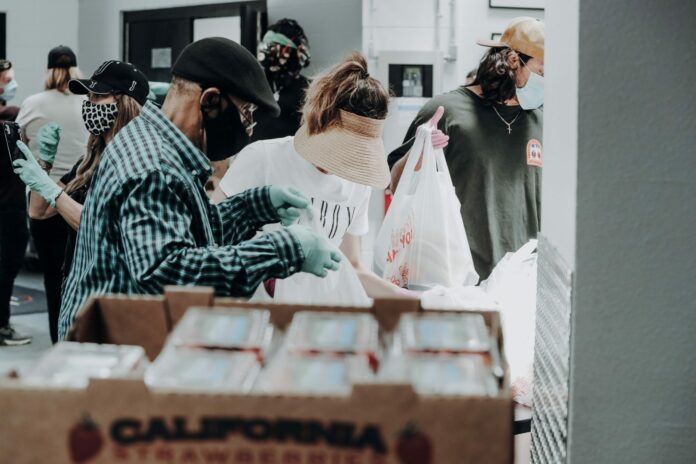
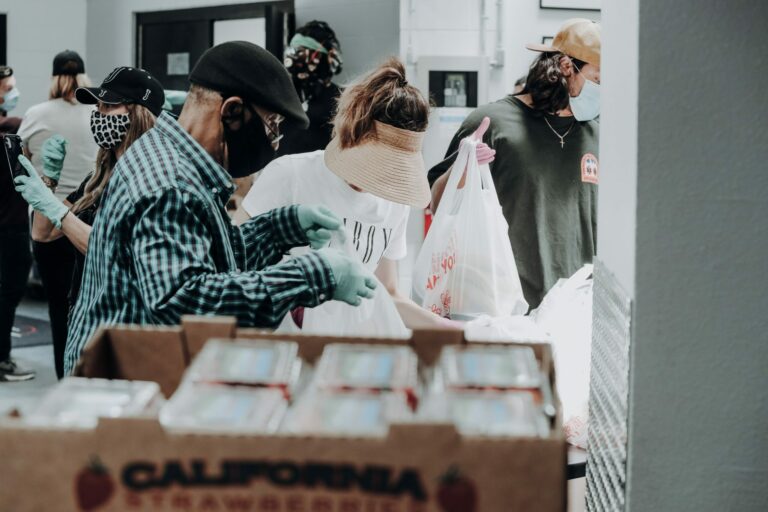
Every two weeks, cars line up at The Hill Church in Vallejo for a drive-thru food distribution. While Whitney Houston songs play over a speaker, volunteers load 39 pounds of food into each trunk—canned tuna, eggs, potatoes and other staples.

Elvira Santiago, a retired medical assistant living in senior housing, is particularly excited about the bag of apples.

“We eat them every afternoon. And I’ll cook chicken adobo with the chicken and vegetables,” said Santiago, who visited the distribution Wednesday for the first time this month and expects to return again. “When you go to Savers or the Filipino grocery, $50 is hardly enough.”

Santiago is one of the thousands of Californians visiting food banks this year, some for the very first time. The Food Bank of Contra Costa and Solano, which organizes the Vallejo distribution, is serving 350,000 people every month across the two counties—double the 175,000 people it served per month before the pandemic.

“With inflation going up and CalFresh food assistance going down, I see people in their 20s to people of retirement age all coming out for help,” said Geo Dinoso, who manages distributions for the food bank. “I’m requesting more food every month at my distributions.”

California food banks, which saw more families seeking help during the pandemic, are now serving more people every month as extra benefits started during the pandemic come to an end. That is reducing benefits to 5.3 million Californians—and prompting the statewide food banks association to warn of a “catastrophic hunger crisis” this year.

Instead of functioning as sources of emergency aid, food banks say they are becoming long-term supermarkets for Californians facing food insecurity.

Recipients of CalFresh, California’s version of the federal food stamp program, were given the maximum benefits available for their household size during the pandemic, or at least $95 more a month if they were already at the maximum. However, those emergency allotments ended March 26, meaning that for some single-person households, CalFresh benefits dropped from $281 to as little as $23 a month.

Also, a federal program that gives eligible households food benefits to replace in-person school meals will conclude at the end of this school year. While a summer program will replace it, the benefit will be $40 per month for each child, a substantial drop from the $125 per month for each child families received last summer.

Now, food banks are also worried about the federal debt ceiling agreement, which imposes more work requirements on food aid recipients.

“Often when people receive less CalFresh benefits or are kicked off the program more permanently, they turn to food banks to make up the difference. So we’re concerned about what the debt ceiling agreement will mean for food banks,” said Lauren Lathan Reid, director of communications at the California Association of Food Banks.

Allison Goodwin, the director of programs at the Redwood Empire Food Bank, said demand at the organization’s Sonoma County locations rose 19% in March and has yet to drop.

“We figured there would be an impact, but we did not anticipate the actuality of it,” Goodwin said. “Not only was the food distribution aspect of things more popular, but in March, we had crummy weather. People were coming out in really torrential downpour weather to access food. Normally, that would be something that might cause participation to decrease.”

Moreover, families are coming more frequently. The average patron has gone from using the food bank 2.3 times per month six months ago, up to 2.7 times per month since March, according to Goodwin.

Other food banks in Northern California have seen similar spikes in demand. Berkeley Food Pantry, which serves families in Berkeley and Albany, has seen a 56% increase in demand in the first five months of 2023 compared to 2019.

Dharma Galang, director of the Berkeley Food Pantry, traces this increase in demand to a letter CalFresh recipients received in January informing them that emergency benefits would be scaled back in March.

Since then, the pantry has been running out of fresh vegetables, meat, eggs and dairy products—nutritious foods that are often more expensive at groceries.

Across the Bay, the San Francisco-Marin Food Bank is serving 56,000 households per week compared to 32,000 households before the pandemic. The programs it offers, including neighborhood pantries and home-delivered groceries, are at or over capacity, with long waiting lists.

“To deal with this, we’ve had to scale back and simplify our menus,” said Meg Davidson, the food bank’s policy and advocacy director.

The food bank also works with a multilingual outreach team that helps people sign up for CalFresh benefits. Since March, many people have stopped applying for CalFresh because the benefits have reduced so drastically.

“To go from $281 to $23 a month is devastating, you cannot come back from that,” Davidson said. “In a place like the Bay Area, the benefit allotments are completely out of touch with reality.”

Even with the extra benefits during the pandemic, 20% of Californians still faced food insecurity in 2021. This year, the number is expected to rapidly rise.

From experiences during the 2008 Great Recession and recent survey results from food banks, Reid of the state association anticipates an increase in demand for food for many years to come.

There are efforts underway at the Legislature to increase the minimum CalFresh benefit. Senate Bill 600, authored by state Sen. Caroline Menjivar, raises the amount from $23 to $50 per month.

The bill, however, is estimated to cost $95 million a year, a steep price tag amid California’s $31.5 billion budget deficit. The Assembly-Senate budget deal unveiled on June 12 included $30 million for a pilot program in some counties.

Food banks across California are in favor of this bill, in addition to SB 348, which would ensure access to summer food and school meals programs, and SB 245 and Assembly Bill 311, which would provide state-funded nutrition benefits to all Californians regardless of their immigration status.

“We’re heartened to see that lawmakers at the state level have been acknowledging that this hunger crisis is still going on,” said Davidson of the San Francisco-Marin Food Bank. “We’ve been seeing the exact opposite at the federal level with Congress holding the debt ceiling hostage over SNAP restrictions, and unfortunately we’re seeing it from our local government.”

All four bills have passed their first house, but could face hurdles to become law as the Legislative Analyst’s Office warns that the state cannot afford costly new programs.

Gov. Gavin Newsom’s May budget plan includes $60 million for CalFood, which enables food banks to distribute California-grown produce; more than $300 million for School Meals for All; and a total of $2.7 billion in combined state and federal funding for anti-hunger programs. 

The budget does not include any money for Market Match, California’s largest nutrition incentive program that allows CalFresh shoppers to double their benefits on fruits and vegetables at farmers’ markets across the state. This has sparked concern from farmers, food banks, and CalFresh recipients who obtained 38 million servings of fruits and veggies through the program. 

Newsom’s plan also does not include money to increase the monthly minimum CalFresh allotment, and Menjivar said it will be a challenge to get it included. 

Food banks are continuing to advocate for the bill to be in the final budget, which is now being negotiated, with a June 15 deadline for the Legislature to pass at least its version. 

“Levels of hunger during the pandemic did not significantly spike, and that was only because we had public programs and food banks that stepped up. If we don’t continue to have investments from the state and federal governments, then all the weight is going to be put on food banks,” said Reid.

For now, people from all walks of life will continue to line up in their cars at the Vallejo food bank. Alvin Angeles, a 32-year-old caretaker in Vallejo who just had a baby, will wait in his car alongside Dave Terry, a 64-year-old on disability. 

“It’s a sad thing to see in our United States of America,” said Terry. “I don’t see an end in sight. We need a lot of policy changes.”

Will Carruthers contributed to this report.

Semper Father: A Day for the Dads

The toughest man I ever knew was my father. He enlisted in the Marines when he was 17 years old, because it was World War II, and the Marines were the ones doing the fighting.

All the years I was growing up, he slept with a loaded handgun on the nightstand next to his bed. I pitied anyone who might decide to break into our house.

But I also remember a time, when I was about 12 years old, my parents had some friends over. After dinner, they went into the living room to chat.

A few minutes later, my father walked out, went into the kitchen and started washing dishes.

Shortly afterwards, one of his friends went looking for him. When he saw what my father was doing, he laughed and said, “I can’t believe that you’re washing dishes! That’s women’s work.”

My father looked at his friend, and after a moment of silence said, “When I wash dishes, it’s man’s work.”

Education happens in many ways and many places, and most of it is not in a classroom. I never had to join the Marines, because my father knew how to take boys and turn them into men.

Happy Father’s Day, Dad.

Semper Fi.

Dan Shiner lives in Mill Valley.

Your Letters, Week of June 14

Duplicity

Excellent reporting as usual, Nikki (Silverstein)! So horrible to hear the duplicitousness of the county (in the June 7 “Decision Maker” piece). You expect it from a developer, but elected county officials saying “yes” and doing “no” is particularly galling. I’ll keep my eye on the Board of Supervisors elections. Seeing the people of Marin City fighting back is exhilarating!

Meg

(via PacificSun.com)


No More Greed

I am embarrassed to say I live in Marin after reading this article (“Decision Maker,” June 7). This, on top of all the issues with the Golden Gate project that’s been there for over seven decades.

The county and state must take responsibility to negate this project, clearly based in white privilege, and do what’s right for the people who live in Marin City.

I’m signing up to do my part in helping to do what’s right. Marin and Marin City don’t need another greedy developer.

Denise Kimura

(via PacificSun.com)

Untrustworthy

Nikki, another terrific, thoroughly researched article (“Decision Maker,” June 7) that gets to the heart of it. Neither the developer nor the county can be trusted to do the right thing. They don’t even understand what that is. We are fortunate to have you and the Pacific Sun to get it right!

Rebekah S Helzel

(via PacificSun.com)

We Got the Beat

Kenwood

Musical Magic

Transcendence Theatre Company presents The Beat Goes On, directed by Susan Draus in her directorial debut. Of the show, which features music from the ’60s, ’70s and ’80s, said Draus, “Music has the ability to bring joy and spark memories, and it’s my hope that the audience will feel that same joy they felt the very first time they heard their favorite songs.” Transcendence’s first ever Pride Night will be Saturday, July 1. Pre-show picnic starts at 5pm, show starts at 7:30pm, June 16 through July 2, Friday, Saturday and Sunday nights. Belos Cavalos, 687 Campagna La., Kenwood. Tickets start at $35.

Bolinas

Painting Place

Painter Carol Duchamp’s exhibition, “Dance Me to the End of Time Retrospective 1983–2023,” features 25 high energy, colorful, abstract acrylic works on large format paper. The size of the works is well suited to the 1,500-square-foot Commonweal Gallery. Duchamp’s recent book, Poetics of the Invisible, uses poetry and quotations to let readers in on inspirations for the faithfully reproduced abstract paintings. The show, running since April, ends on June 23. Commonweal is open most Mondays-Fridays, 10am-4pm. 451 Mesa Rd., Bolinas. Call 415-868-0970 before visiting to confirm.

Santa Rosa

Guitar Night

John Trubee performs solo electric guitar with a selection of his original compositions at Whiskey Tip. Supporting act The Mood is a jam band that organically blends blues, rock and metal with a solid rhythm section supporting heavy guitar sound. Opener Chuck & The Hollywoods deliver blues and rock originals and vintage cover songs, with a mix of R&B rhythms, jazzy melodies and dueling guitars. First 10 to arrive receive a free LP. 6:30pm, Friday, June 16. Whiskey Tip, 1910 Sebastopol Rd., Santa Rosa. Cover charge is $5.

 
Sebastopol

Peace on Earth

The Peacetown Summer Concert Series is a festival “of the people, by the people and for the people,” meaning local bands, supported by local sponsors and donors, and attended by people of all ages. It is free to the public thanks to a number of generous sponsors and support of the City of Sebastopol. The concert series kicks off its 11th season with concerts every Wednesday at five venues all around The Barlow District near downtown Sebastopol. Every Wednesday starting June 14, 5-8pm. Times may vary by venue. The Barlow, 6770 McKinley St., Sebastopol. Free.

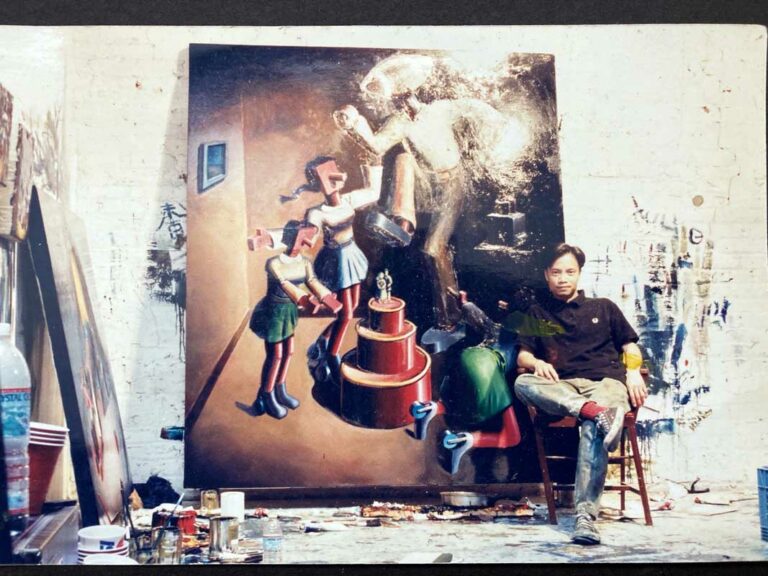
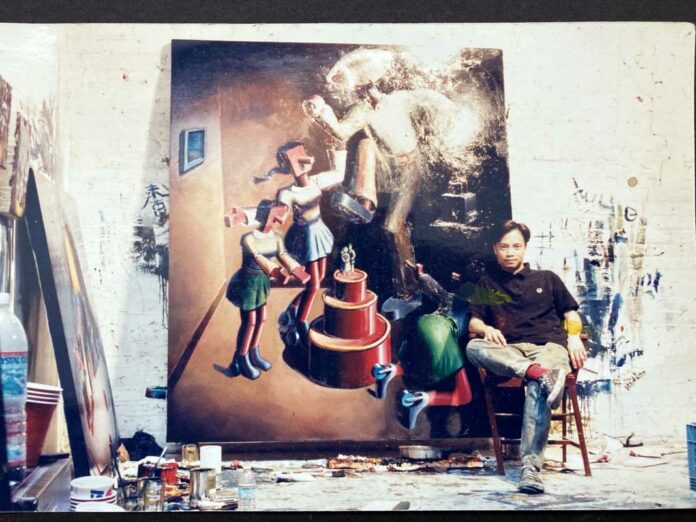
Artist Evri Kwong Paints the Truth

Those who do not learn from history are, inevitably, doomed to repeat it.

This statement remains as true today, in Marin County’s corner of the contemporary California coastline, as it was during the bygone eras of the wild west, industrial revolution and Renaissance. Even pre-medieval peasants and princes alike were bound by the lessons of those who came before them.

For Evri Kwong, a San Rafael-based artist, though, this common catchphrase is more than just a motto—it’s a lifelong passion. By painting visually-stunning works, Kwong aims to use art as a catalyst for conversation; the hard, messy and ultimately unavoidable kind of conversation that comes from sharing something as contentious as the simple, unadorned truth.

“Here’s the thing I think is really important: Share the truth from the get-go, and let go of the idea of whether or not something is ‘appropriate,’” said Kwong. “These things weren’t ‘appropriate’ when they happened, but they did happen, and we shouldn’t forget.”

“People shouldn’t say ‘paint me a pretty picture,’” continued Kwong. “Instead, they should say ‘paint me a powerful picture’—they just want to see art that’s pleasing to look at, but [art] is also a healing tool to reflect upon life and take a pause. Get people to reflect, take a pause and hopefully find something in those pieces.”

Kwong’s most recent work is a large 65-by-79 inch acrylic on window shade painting (with permanent marker and micron pen) that illustrates the 1867 Chinese railway workers’ strike, a protest of which there is no existing photographic documentation. He completed this artwork at the San Rafael Public Library over the past year.

“The library has been so generous in supporting me. In doing this piece, I watched what people do at the library, and it’s way more than just research…,” said Kwong. “For me, the library has been a place to work since I don’t have a studio.”

“I can only speak to the San Rafael Library, but they’ve been amazing and friendly and helpful,” Kwong continued. “Even the people in the library, who range from extreme wealth to extreme poverty, are wonderful. And every time I get there to work, they just get up and move and make room for me. It’s amazing.”

Kwong is set to give an artist talk hosted by the library on Monday, June 26, the day after the anniversary of the June 25, 1867 Chinese labor strike. This artist talk is free to attend and will be held rain or shine.

“The narrative that I want to shed light on is that the Chinese or Asians were protesting a long time ago, and the stereotype that they put their head down and go along with things is untrue,” said Kwong. “The reality is that, even in San Francisco, Chinese or Asian people are perceived as people who don’t make trouble—but they were protesting back then and still are to this day. The strike in 1867 was the largest of its kind.”

Kwong was born and raised in the Bay Area, though his family originally emigrated from China. His name, Evri Kwong, was fashioned after the early 1960s boat, Everyman, which was built in and sailed from Sausalito to protest nuclear test zones in the Pacific Ocean. From the moment Kwong was born, activism on behalf of the everyman was a part of his identity in the same way art was as well.

“I was just driven to make drawings—it’s something in me that I’m driven to do, and it goes beyond liking it or not,” explained Kwong. “It’s like my meditation; it calms me down. I don’t think about my work when I’m doing it; I’m just in a zone where I’m responding to shape, color and form.

“I’m able to engage with the world with my artwork,” continued Kwong. “Not escape, but engage—people think artists are hiding or escaping through their work, but for me, I’m confronting the world through my art.”

Kwong has remained in connection with his family’s generational roots and has not allowed the stories surrounding their experiences as Chinese Americans be forgotten. His grandmother, for instance, was detained on Angel Island for six months during her crossing. And his grandfather, a medicinal herb doctor, moved to a white neighborhood and was promptly asked to move elsewhere (he refused).

“On top of that, my grandfather got visits from the FBI, and there were other American Asians that had similar experiences in the 1950s,” Kwong said.

Kwong did not grow up hearing these stories of his family, however. And it was only after prying answers from his uncle that he learned of the entirety of the experiences.

“When my uncle does answer my questions, he always asks why I want to dredge up these memories—‘I thought we wanted to move past this,’ he’d say,” explained Kwong. “But I feel more liberated and calm knowing the truth of what happened.”

Shared truth (and the freedom and peace it brings) is exactly the medicine the world needs, especially now. And artists like Kwong, who use their voice to lend to the outcry for conversation and camaraderie, are at the forefront of the endeavor.

“We’re past the blaming stage for these kinds of things—we just need to work together to find common ground and know that it’s okay for Americans to have these messy conversations, even if they’re uncomfortable,” said Kwong.

Other topics Kwong’s art has addressed include the children detained at the border, the Tiananmen Square massacre and the famous cold-case murder of the early 2000s at Yosemite’s Half Dome. By illustrating these instances for all to see, Kwong hopes to immortalize the truth of these crimes and, in doing so, rail against the recurrence of them in modern society.

“I enjoy connecting the past to now,” said Kwong. “I did an art piece about the kids at the border and connected them to those from the Japanese internment camps. That piece was called America: Home of the Brave and Land of the Free, and it was exhibited in the De Young Museum in 2020. I’m hoping my latest piece of the railway might be exhibited in the De Young in the fall as well.”

Kwong is scheduled to speak in the San Rafael City Council Chambers at City Hall (1400 Fifth Ave.), across the street from the library, from 6 to 7pm on Monday, June 26. For more information, visit the San Rafael public library’s website at srpubliclibrary.org or call 415.485.3323.

California set to celebrate second annual State Parks Week

The size, age and variety of California’s state parks rank among the best in the country.

The Golden State sports 280 state parks, which include 5,200 miles of trails, 15,000 campsites, and countless natural and historical attractions.

However, it was only last year that a coalition of public agencies and conservation nonprofits came together to formally acknowledging the natural beauty, ecological role and history of the state’s park system one week per year.

“The COVID-19 pandemic brought many challenges to California’s communities, but it also illuminated the important connection of the outdoors to our physical and mental well-being. Parks across the U.S. experienced increased visitation in 2020-21, and California State Parks Week underscores the important role parks play in communities statewide,” a press release announcing the 2022 event stated. Organizers include California State Parks, Save the Redwoods League, Parks California and the California State Parks Foundation.

“We are excited to host the second annual California State Parks Week and build upon last year’s inaugural successes,” Armando Quintero, director of California State Parks, said in a statement announcing this year’s events. “California State Parks Week serves as a reminder that state parks belong to all who call California home. Everyone deserves to enjoy them, to stay healthy and active, find inspiration and connect with nature and areas of cultural significance.”

Like last year, the second annual State Parks Week will include dozens of events spread over five days (June 14-18) in parks across the state. In the North Bay, Sonoma, Napa and Marin county residents are invited to experience local parks for the first time or through a new lens of understanding.

Each of the five days of this year’s Parks Week has a theme. The theme of Wednesday, June 14, is “Explore New Experiences,” followed by “Nourish Your Health and Well-being” on June 15 and “Support Climate Resilience” on June 16. The weekend is split between a “Celebrate Community and Culture” theme on June 17 and “Care for Our Shared Lands” on June 18.

In an interview last week, Matthew Gomez, senior parks program manager at the Save the Redwoods League, said California State Parks Week requires organizers to have an “all hands on deck” mentality to pull off the 143 planned events in five days.

A midwesterner who worked for parks departments around the country before landing in California last year, Gomez highlighted the great range of natural wonders on display in the Golden State. A worthy reminder for any jaded, life-long California residents.

“The ecosystem out here is just so diverse,” Gomez said. “From the deserts in Southern California, up to the dense redwood forests near the Oregon border and everything in between, it is just stunning.”

So, grizzled Californian, if you can, take a break from your day job and set out to appreciate one or two of the state’s many natural wonders highlighted during one of the events listed below. Details are available at www.castateparksweek.org.

Marin Events:

June 14: Forest Bathing at Mount Tamalpais State Park

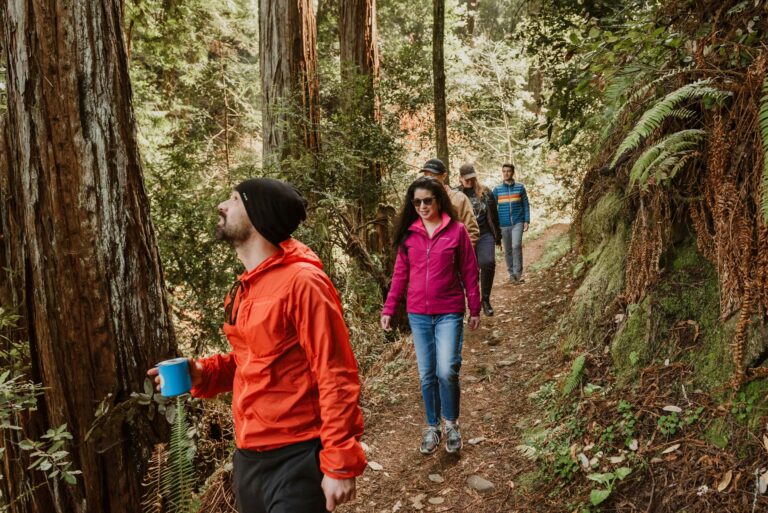
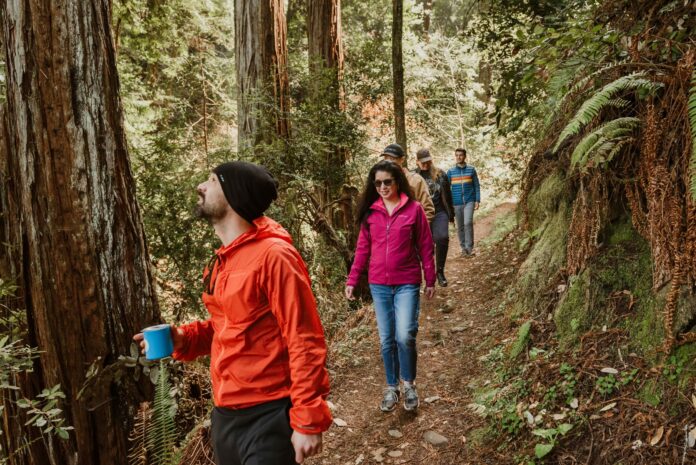
According to California State Parks, “Forest bathing, a literal translation of the Japanese word shinrin-yoku, is the practice of absorbing the calming, wellness-inducing atmosphere of natural places.” This is a low-key event. Participants will reflect on the experience of being in nature, instead of aiming to conquer a peak or finish a new trail. If that sounds enticing, meet up in the Pantoll parking lot at 9:15am or 10:30am on Wednesday. Contact hi************@******ca.gov for the meeting place.

June 15: Nature Journaling and Wellness at Samuel P. Taylor Park

Attendees of this event will “Learn how to start a nature journal, observe nature and explore why spending time in natural landscapes might improve our health and wellbeing.” Meet at the Azalea Picnic Area just past the kiosk entry station before the 10am start of the event. Participants are expected to bring their own writing materials, including pencils, paper and a notebook or nature journal. For more information, contact Ry*********@******ca.gov.

June 16: Exploring Protected Redwood Groves at Samuel P. Taylor State Park

Due to logging during and after the Gold Rush, just 5% of Southern Oregon and California’s Old Growth redwood forests stand today. Attendees of this hike along Pioneer Trail will learn “how California State Parks works to preserve areas like [Samuel P. Taylor State Park], and why the preservation of these forests is so important.” The event is expected to run from 1 to 2:30pm. Contact Ry*********@******ca.gov for more details.

Napa and Sonoma Events:

June 14: A Redwood Hike in the Park at Jack London State Historic Park

Attendees of this four-mile, moderate-difficulty guided hike will “pay homage to an elder tree estimated to be 2,000 years old. On the way, you can expect to see the Jack London Lake and spring native wildflowers for a fabulous morning of exercise and inspiration.” Participants’ park entry fees will be covered by the California State Parks Week sponsors; however, parking fees ($10) are not included. Attendees should meet in the Ranch parking lot, a right turn after the entry kiosk, ahead of the 10am start time. Online reservation at CaStateParksWeek.org is required.

June 15: ParkRx – Forest Therapy Walk at Sugarloaf Ridge State Park

For another Forest Bathing opportunity, meet with other attendees at the White Barn before 10am. According to the organizers, Forest Bathing is “a centering and calming restorative practice, it promotes balance and restored vitality through a quality of presence and heightened sensory awareness.” Online reservation at CaStateParksWeek.org is required for this event.

Those who can’t attend but are interested in the health benefits of parks are invited to join the Forest Therapy Series as part of Sugarloaf’s ParkRx Program the fourth Sunday of each month. For more details about those recurring events, led by certified Association of Nature and Forest Therapy (ANFT) practitioners, visit Sugarloafpark.org.

June 18: New Volunteer Orientation & Social at Sugarloaf Ridge State Park

The Sonoma Ecology Center, which operates Sugarloaf Ridge State Park, is always looking for volunteers. Those seeking an excuse to get outside more often can attend this event, scheduled for 3 to 7pm. The orientation will take place at the Robert Ferguson Observatory classroom, followed by a volunteer social potluck at the group camp, where participants can meet some of the active volunteers.

Attendees must RSVP to su****************@*****************er.org.

Culture Crush, Week of June 7

Petaluma

Home at the Mystic

Sean Hayes returns to the Mystic for the first time since he has really settled into his adopted hometown, where he is a much loved member of the community. Opening for the show is Sean Carscadden. Says Hayes about his opener, “He’s kind of like this unknown jewel of the North Bay,” calling him “probably one of the best guitar players I’ve seen around here.” Hayes is thrilled to be playing with “a little group of some local heavy hitter musicians backing me up,” and hoping for a guitar battle between Carscadden and his guitarist for the night, John Courage—guitarists on notice, the gauntlet has been thrown! “For the first time, I really feel like it’s a hometown show,” says Hayes. 7pm, Friday, June 9, 23 Petaluma Blvd. N, Petaluma. Tickets at the door and online at mystictheatre.com.

Santa Rosa

Public Spectacle

The seventh annual Railroad Square Music Festival returns for one day of multi-genre music in the heart of Santa Rosa. Turning an eye toward equity and a hope to inspire local creatives to feel appreciated and celebrated, this year the festival features local favorites from Banda La Congora to Brazilian reggae artist Ben Roots to Ableton Live aficionado Parson Jones. Besides

multiple stages of music, there will be local food, libations, vendors and a kid friendly family area. 12-7:30pm, Sunday, June 11, Railroad Square, Santa Rosa. All ages and free.

Larkspur

Big Screen Theatre

The Lark Theater in Larkspur hosts a special cinema event with the upcoming showings of T.S. Eliot’s Four Quartets, A Film of the Original Stage Production. Ralph Fiennes’ exquisite performance of T. S. Eliot’s poetic masterpiece is dynamically translated from stage to screen by director Sophie Fiennes. Written by Nobel Prize winner Eliot in the shadow of the Second World War, the poem is a celebrated meditation on human experience, time and the divine. It is a work that bears a powerful relevance to the present day. 1pm, Sunday, June 11, and 7pm, Wednesday, June 14. Student tickets are $10, general admission $15.

Petaluma

Live Your Place

A new monthly series, Life by Design, begins this month, with speakers all summer. “Come for the conversation, stay for a cocktail and return for human connection,” suggests Place Matters, the organizer of the event. Talks over the summer will explore form and function, with local designers from all walks of life. Next up: Alfie Turnshek and Cinda Gilliland speak on “Mise en Place: Efficiency over Speed in Bar Design and Design in Public Spaces: Why It Matters.” 7-8:30pm, Tuesday, June 13, and every second Tuesday, at Griffo Distillery, 1320 Scott St., Suite A, Petaluma. Tickets $20 cash at the door, or purchase in advance at placematters-sonoma.com/events.

Trivia, Week of June 7

0

QUESTIONS:

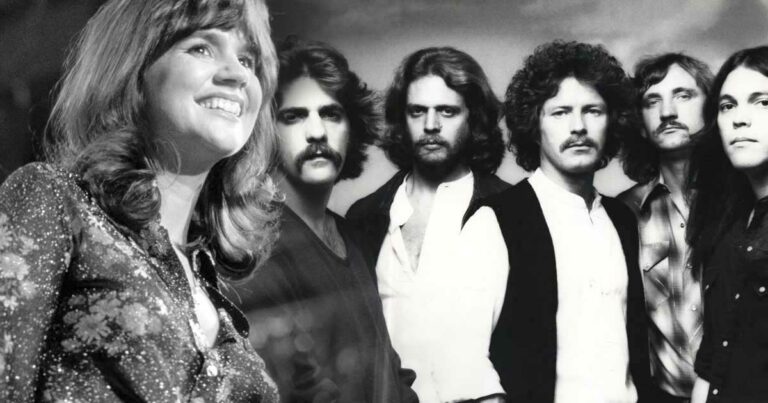
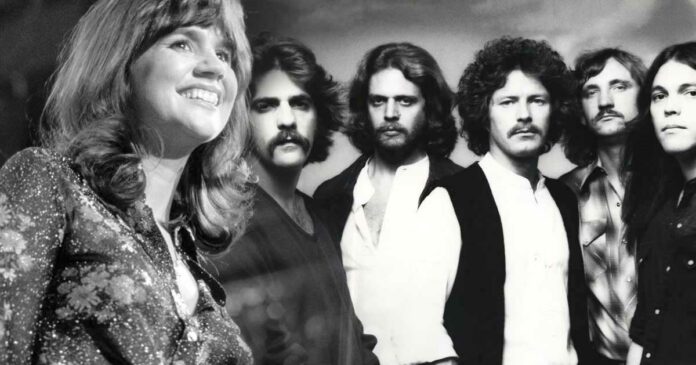
1 The musical supergroup The Eagles got their start as a backup group for what female singer, who has recorded pop, rock, opera, country and Hispanic music, who formerly lived in San Francisco, but now lives in Tucson, Arizona?

2 Which product was banned from America’s television and radio advertising in 1971?

3 Twelve to twenty times per minute, the average human performs what two actions (without even thinking about it), whose names begin with the same letter?

4 On Nov. 28, 1995, 50.28% of Irish voters chose to reverse a national prohibition on what?

5 What word, which can mean “approximately,” is spelled with six letters in alphabetical order?

6 Established in 1776, what musical theater in Russia is well known for its company of ballet dancers?

7 In 1802, E.I. DuPont established a factory that developed into the worldwide firm Du Pont. The DuPont family made their early riches selling what dangerous substance?

8 Tom Hanks won Best Actor Oscars in 1993 and 1994 for his roles in which films?

9 What is the only country of Eastern Europe whose language developed from Latin?

10 Can you name three U.S. states that were created entirely from other states?

BONUS QUESTION: Which basketball superstar wrote a 1996 book entitled Black Profiles in Courage?

Want more trivia? Contact ho*****@********fe.com. Save the date for our next live Trivia Cafe team contest at the Sweetwater Music Hall in Mill Valley on Sunday, July 30 at 6pm.

ANSWERS:

1 Linda Ronstadt

2 Cigarettes

3 Breathe, Blink

4 Divorce

5 Almost

6 Bolshoi

7 Gunpowder

8 Philadelphia, 1993 (shown in photo), and Forrest Gump, 1994

9 Romania

10 Kentucky, from Virginia; West Virginia (split off from Virginia to join the Union side during the Civil War); and Maine, from Massachusetts

BONUS ANSWER: Kareem Abdul-Jabbar

State lawmaker proposes security deposit cap

Most renters know securing housing isn’t as simple as finding the perfect place.

California’s renters must save up thousands of dollars to provide security deposits that can legally be as much as two months’ rent, or three months’ rent for furnished units.

Add in the requirement that renters put up the first month’s rent before they can move in and low-income families are most likely to give up hope of finding a home.

The state Assembly on May 22 passed a proposal that could change that.

Assembly Bill 12 would limit security deposits to one month’s rent, regardless of whether a unit is furnished or not. If the bill passes and gets Gov. Gavin Newsom’s signature, California could become the 12th state to limit security deposits.

“Security deposits present barriers for people to move into apartments, which can lead them to stay in apartments (and) in homes that are too small, crowded or even unsafe,” said Matt Haney, the assemblymember from San Francisco who authored the bill. “In other cases, people take on debt or financial burden that leaves them unable to afford other necessities.”

Haney said the bill has attracted widespread support in the Assembly, including from lawmakers who are landlords, as well as from labor organizations representing teachers, nurses and grocery store workers.

Assemblymember Diane Dixon, from Newport Beach, was among the Nos in the 53-14 vote. She cited concern about the bill’s potential to reduce the housing supply.

“The more we over-regulate people’s ability to offer a successful product, the scarcer it will become,” she said in a statement. “Landlords charge security deposits to cover potential damages and any unused funds are returned to the renter.”

Haney said the issue caught his attention when a janitor in his district described living with his wife and three children in a one-bedroom apartment.

“He wanted to move into a larger unit so his kids didn’t have to sleep in the same room as him and his wife,” Haney said. “He said he could afford the rent, but he couldn’t afford the deposit and first month’s rent to move in. Unfortunately that’s not an uncommon situation.”

In California, the median rent for a two-bedroom apartment is $2,538 and for a three-bedroom home is $3,795, according to Zillow. For a $3,000-a-month unfurnished unit, a landlord can charge as much as $9,000 for a security deposit and the first month’s rent.

“People are being asked to pay the equivalent of the down payment of a home in many parts of the country just to move in,” Haney said. “It’s really untenable.”

BBQ Marin-Style

Is there a more perfect summertime pastime than spending the day outside, cooking up a storm on the barbecue with a drink in hand? The short answer is no—when the air is warm, the sunlight lingers well into the night and the urge to grill is great, then the only solution is to don an apron, light up those coals...

CalFresh Cliff: Food banks are being flooded by families seeking help

Food assistance - Joey Muniz/Unsplash
Every two weeks, cars line up at The Hill Church in Vallejo for a drive-thru food distribution. While Whitney Houston songs play over a speaker, volunteers load 39 pounds of food into each trunk—canned tuna, eggs, potatoes and other staples. Elvira Santiago, a retired medical assistant living in senior housing, is particularly excited about the bag of apples. “We eat them...

Semper Father: A Day for the Dads

Click to read
The toughest man I ever knew was my father. He enlisted in the Marines when he was 17 years old, because it was World War II, and the Marines were the ones doing the fighting. All the years I was growing up, he slept with a loaded handgun on the nightstand next to his bed. I pitied anyone who might...

Your Letters, Week of June 14

Duplicity Excellent reporting as usual, Nikki (Silverstein)! So horrible to hear the duplicitousness of the county (in the June 7 “Decision Maker” piece). You expect it from a developer, but elected county officials saying “yes” and doing “no” is particularly galling. I’ll keep my eye on the Board of Supervisors elections. Seeing the people of Marin City fighting back is...

We Got the Beat

Kenwood Musical Magic Transcendence Theatre Company presents The Beat Goes On, directed by Susan Draus in her directorial debut. Of the show, which features music from the ’60s, ’70s and ’80s, said Draus, “Music has the ability to bring joy and spark memories, and it’s my hope that the audience will feel that same joy they felt the very first time...

Artist Evri Kwong Paints the Truth

Those who do not learn from history are, inevitably, doomed to repeat it. This statement remains as true today, in Marin County’s corner of the contemporary California coastline, as it was during the bygone eras of the wild west, industrial revolution and Renaissance. Even pre-medieval peasants and princes alike were bound by the lessons of those who came before them. For...

California set to celebrate second annual State Parks Week

The size, age and variety of California’s state parks rank among the best in the country. The Golden State sports 280 state parks, which include 5,200 miles of trails, 15,000 campsites, and countless natural and historical attractions. However, it was only last year that a coalition of public agencies and conservation nonprofits came together to formally acknowledging the natural beauty, ecological...

Culture Crush, Week of June 7

Sean Hayes - Photo by Bethany Johanna Weiss
Petaluma Home at the Mystic Sean Hayes returns to the Mystic for the first time since he has really settled into his adopted hometown, where he is a much loved member of the community. Opening for the show is Sean Carscadden. Says Hayes about his opener, “He's kind of like this unknown jewel of the North Bay,” calling him “probably one...

Trivia, Week of June 7

QUESTIONS: 1 The musical supergroup The Eagles got their start as a backup group for what female singer, who has recorded pop, rock, opera, country and Hispanic music, who formerly lived in San Francisco, but now lives in Tucson, Arizona? 2 Which product was banned from America’s television and radio advertising in 1971? 3 Twelve to twenty times per minute, the average...

State lawmaker proposes security deposit cap

Photo by Igal Ness/Unsplash
Most renters know securing housing isn't as simple as finding the perfect place. California's renters must save up thousands of dollars to provide security deposits that can legally be as much as two months' rent, or three months' rent for furnished units. Add in the requirement that renters put up the first month's rent before they can move in and low-income...
3,002FansLike
3,850FollowersFollow