Free Will Astrology: Week of March 13

0

ARIES (March 21-April 19): I will never advise you to dim the flame of your ambition or be shy about radiating your enthusiasm. For the next few weeks, though, I urge you to find ways to add sap, juice and nectar to your fiery energy. See if you can be less like a furnace and more like a sauna; less like a rumbling volcano and more like a tropical river. Practically speaking, this might mean being blithely tender and unpredictably heartful as you emanate your dazzling glow.

TAURUS (April 20-May 20): Some spiritual traditions tell us that the path to enlightenment and awakening is excruciatingly difficult. One teaching compares it to crossing a bridge that’s sharper than a sword, thinner than a hair and hotter than fire. Ideas like these have no place in my personal philosophy. I believe enlightenment and awakening are available to anyone who conscientiously practices kindness and compassion. A seeker who consistently asks, “What is the most loving thing I can do?” will be rewarded with life-enhancing transformations. Now I invite you to do what I just did, Taurus. That is, re-evaluate a task or process that everyone (maybe even you) assumes is hard and complicated. Perform whatever tweaks are necessary to understand it as fun, natural and engaging.

GEMINI (May 21-June 20): Do you have a relative your parents never told you about? If so, you may find out about them soon. Do you have a secret you want to keep secret? If so, take extra caution to ensure it stays hidden. Is there a person you have had a covert crush on for a while? If so, they may discover your true feelings any minute now. Have you ever wondered if any secrets are being concealed from you? If so, probe gently for their revelation, and they just may leak out. Is there a lost treasure you have almost given up on finding? If so, revive your hopes.

CANCER (June 21-July 22): Cancerian poet Pablo Neruda wrote this to a lover: “I want to do with you what spring does with the cherry trees.” That sounds very romantic. What does it mean? Well, the arrival of spring brings warmer soil and air, longer hours of sunlight and nurturing precipitation. The flowers of some cherry trees respond by blooming with explosive vigor. Some trees sprout upwards of 4,000 blossoms. Maybe Neruda was exaggerating for poetic effect, but if he truly wanted to rouse his lover to be like a burgeoning cherry tree, he’d have to deal with an overwhelming outpouring of lush beauty and rampant fertility. Could he have handled it? If I’m reading the upcoming astrological omens correctly, you Cancerians now have the power to inspire and welcome such lavishness. And yes, you can definitely handle it.

LEO (July 23-Aug. 22): Speaking on behalf of all non-Leos, I want to express our gratitude for the experiments you have been conducting. Your willingness to dig further than ever before into the mysterious depths is exciting. Please don’t be glum just because the results are still inconclusive and you feel a bit vulnerable. I’m confident you will ultimately generate fascinating outcomes that are valuable to us as well as you. Here’s a helpful tip: Give yourself permission to be even more daring and curious. Dig even deeper.

VIRGO (Aug. 23-Sept. 22): Unexpected mixtures are desirable, though they may initially feel odd. Unplanned and unheralded alliances will be lucky wild cards if you are willing to set aside your expectations. Best of all, I believe you will be extra adept at creating new forms of synergy and symbiosis, even as you enhance existing forms. Please capitalize on these marvelous openings, dear Virgo. Are there parts of your life that have been divided, and you would like to harmonize them? Now is a good time to try. Bridge-building will be your specialty for the foreseeable future.

LIBRA (Sept. 23-Oct. 22): Many of you Libras have a special talent for tuning into the needs and moods of other people. This potentially gives you the power to massage situations to serve the good of all. Are you using that power to its fullest? Could you do anything more to harness it? Here’s a related issue: Your talent for tuning into the needs and moods of others can give you the capacity to massage situations in service to your personal aims. Are you using that capacity to its fullest? Could you do anything more to harness it? Here’s one more variation on the theme: How adept are you at coordinating your service to the general good and your service to your personal aims? Can you do anything to enhance this skill? Now is an excellent time to try.

SCORPIO (Oct. 23-Nov. 21): Psychologist Carl Jung said, “One of the most difficult tasks people can perform is the invention of good games. And this cannot be done by people out of touch with their instinctive selves.” According to my astrological assessment, you will thrive in the coming weeks when you are playing good, interesting games. If you dream them up and instigate them yourself, so much the better. And what exactly do I mean by “games”? I’m referring to any organized form of play that rouses fun, entertainment and education. Playing should be one of your prime modes, Scorpio! As Jung notes, that will happen best if you are in close touch with your instinctual self—also known as your animal intelligence.

SAGITTARIUS (Nov. 22-Dec. 21): Can Sagittarians ever really find a home they are utterly satisfied with? Are they ever at peace with exactly who they are and content to be exactly where they are? Some astrologers suggest these are difficult luxuries for you Centaurs to accomplish. But I think differently. In my view, it’s your birthright to create sanctuaries for yourself that incorporate so much variety and expansiveness that you can feel like an adventurous explorer without necessarily having to wander all over the earth. Now is an excellent time to work on this noble project.

CAPRICORN (Dec. 22-Jan. 19): You picked Door #2 a while back. Was that the best choice? I’m not sure. Evidence is still ambiguous. As we await more conclusive information, I want you to know that Door #1 and Door #3 will soon be available for your consideration again. The fun fact is that you can try either of those doors without abandoning your activities in the area where Door #2 has led you. But it’s important to note that you can’t try both Door #1 and Door #3. You must choose one or the other. Proceed with care and nuance, Capricorn, but not with excessive caution. Your passwords are daring sensitivity and “discerning audacity.”

AQUARIUS (Jan. 20-Feb. 18): My second cousin has the same name as me and lives in Kosice, Slovakia. He’s a Slovakian-speaking chemical engineer who attended the Slovak University of Technology. Do we have anything in common besides our DNA and names? Well, we both love to tell stories. He and I are both big fans of the band Rising Appalachia. We have the same mischievous brand of humor. He has designed equipment and processes to manufacture products that use chemicals in creative ways, and I design oracles to arouse inspirations that change people’s brain chemistry. Now I invite you, Aquarius, to celebrate allies with whom you share key qualities despite being quite different. It’s a fine time to get maximum enjoyment and value from your connections with such people.

PISCES (Feb. 19-March 20): My Piscean friend, Jeff Greenwald, wrote the humorous but serious book Shopping for Buddhas. It’s the story of his adventures in Nepal as he traveled in quest of a statue to serve as a potent symbol for his spiritual yearning. I’m reminded of his search as I ruminate on your near future. I suspect you would benefit from an intense search for divine inspiration—either in the form of an iconic object, a pilgrimage to a holy sanctuary, or an inner journey to the source of your truth and love.

Homework: See a compendium of my Big-Picture Forecasts for you in 2024: tinyurl.com/BigPicture2024.

Much Ado: A Shakespearean education

0

If one is going to do amateur Shakespeare, then Much Ado About Nothing is the safest bet. It’s mostly in prose, it’s relatively short and the storyline is fairly straightforward. Much Ado also has arguably the best pair of lovers in all of classical literature.

The College of Marin’s current production, directed by Lisa Morse and running through Sunday, March 17, does not disappoint.

Returning from an unspecified battle, Don Pedro (a well-cast Thomas Peterson) and his band of gentlemen have come to the home of their friend, Leonato (Christopher Hammond), for rest, relaxation and romance. Don Pedro’s right-hand-man, Claudio (Dominic Canty), is in love with Leonato’s daughter, Hero (Maya Giacomazzi). All is going well until Don Pedro’s villainous brother, Don John (Landers Markwick), and his henchmen, Borachio (a compelling Adonis Reyes) and Conrade (Paige Flaming), come up with a decidedly dastardly scheme.

The ensuing melodrama is the blueprint for modern soap operas. However, what really matters is Beatrice (Cassie Nesbit) and Benedick (Grisha Driscoll).

Beatrice and Benedick are an early example of the classic enemies-to-lovers trope and still one of the best. Nesbit’s Beatrice is a consistently good if occasionally one note portrayal of the wittiest of Shakespeare’s women. Driscoll’s Benedick is a grounded, truthful and thoroughly enjoyable portrayal of the irascible but loveable bachelor.

With a solid Beatrice and Benedick, the rest of this production could have been an afterthought. But the professional set (Malcolm Rodgers), gorgeous costumes (Pamela Johnson) and quality original music composed by Billie Cox (performed by the impressively talented Sam Hjelmstad) prove that every part of this production was well thought out.

Of course, this is a college production, and these are students still learning their craft. Glitches do abound. At the performance I attended, there was a technical issue that left Don John and his henchmen finishing their scene in low light.

Casting is frequently an issue with college productions. Roles will be (and should be) cast with students if at all possible. This sometimes leads to very young actors playing roles like Don John that require more gravitas than a young student can usually bring. However, how else will they learn if they are not cast?

And how can they learn without an audience? These students need to experience live audiences if they are to have a shot at a successful career. With admission free to the public, there is no excuse to miss this enjoyable, educational and accessible foray into Shakespeare.

‘Much Ado About Nothing’ runs through March 17 at the James Dunn Theatre at the College of Marin, 835 College Ave., Kentfield. Fri–Sat, 7:30pm; Sun, 2pm. Free. Donations welcome. 415.485.9385. pa.marin.edu.

Mill Valley Maker: Karen Goldberg

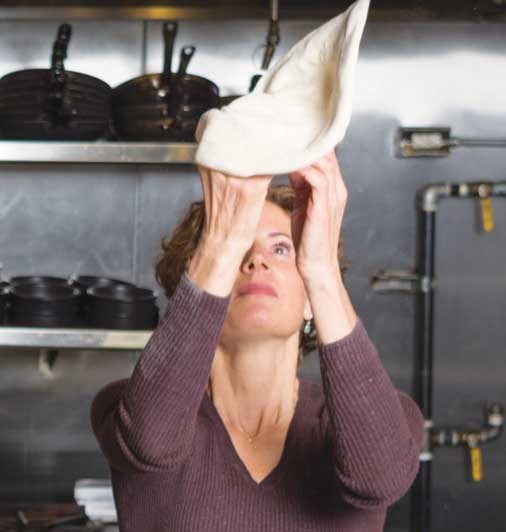
Stopping by Tamalpie on any given night, there’s a good chance Karen Goldberg will be found sitting at the bar with her sister (Susan Griffin-Black, who I interviewed in January, and who introduced me to Goldberg) and a mix of their friends. Come on in and say hi!

What do you do? I’m a mother of two amazing daughters; I own two small businesses, Tamalpie and The Warehouse Mill Valley; and have two labrador retrievers. … So I’m always problem-solving, hiking, cleaning, moving furniture, shopping for furniture. I’m in constant motion.

Where do you live? Downtown Mill Valley, right near the Sweetwater.

How long have you lived in Marin? 30 wonderful years.

Where can we find you when you’re not at work?

To be honest, I’m never “not at work.” I’m always on; it’s become ingrained in my lifestyle. Even when I’m dining out, I’m thinking about how I can make my own restaurant better.

If you had to convince someone how awesome Marin is, where would you take them?

A walk to Tennessee Valley Beach, the hike up Railroad Grade, the bar at Tamalpie, a secret beach in Sausalito that I can’t disclose, Playa restaurant (I would say this is my best work as a restaurant builder/designer), Marin Country Mart, “thrifting” Marin style starting at Tivoli, Karl The Fog, Diamonds in the Rough, The Warehouse, Swan Dive, Petersons, Home Consignment, Design Plus … I love to shop and have managed to turn the art of finding beautiful things into a career.

What’s one thing Marin is missing?

Diversity.

What’s one bit of advice you’d share with your fellow Marinites?

If I could give myself one piece of advice, it would be to slow down and soak it all in. It’s special to have kids who have moved away from home because they’ve now realized how unique it was to grow up here. It’s a nice reminder for me as well.

If you could invite anyone to a special dinner, who would they be?

Definitely Babs and Larry David.

What is some advice you wish you knew 20 years ago?

Don’t forget you can always reinvent yourself. Do what you love, and the rest will follow.

What is something that in 20 years from now will seem cringeworthy?

Fad diets! Eat what you want, and just keep moving.

Big question. What is one thing you’d do to change the world?

I think our healthcare system is a mess, and health and all insurance is a burden. I would work toward a more compassionate and caring system like Europe.

Keep up with Goldberg at @tamalpie and @thewarehousemv on Instagram.

Nish Nadaraja was on the founding team at Yelp, chauffeurs his daughter to Tam High and attempts to play pickleball at Fairfax’s Cañon Club.

Mapping Meaning: Author Lauren Markham in Mill Valley

As a container, the two-dimensional plane of the book page can’t typically hold enough multitudes for a project like Lauren Markham’s new work of poststructural journalism, A Map of Future Ruins: On Borders and Belonging.

Yet she successfully and unapologetically explodes the boundaries placed on her reportage by the constraints of the form. For example, the journey to fill in the gaps of her own Greek ancestral origin story is inseparable from her coverage of the six Afghan refugees who were arrested and tried for starting the fire that devastated the Moria camp on the Greek isle of Lesbos.

Her journey as an educator of immigrant and migrant children in the East Bay remains inseparable from how mythological concepts of whiteness are often traced to ancient Greek civilization. Questions emerge. How can people valorize supposedly “successful” migration stories when migration itself is being criminalized around the world? How can a bouzouki player sit there in Athens, insulting the refugees, when his own instrument, the bouzouki, is disparaged and treated as a symbol of marginalized immigrants?

“I feel like my book is a work of cubism,” Markham said. “It is trying to look at things from multiple angles. … It’s looking at multidimensions, and sort of trying to put those all in a flat plane, and the flat plane of journalism, and in writing.”

One way to follow A Map of Future Ruins is to start at the beginning, where Markham presents the case of the Moria 6, the Afghans who many believe were innocent. From there, we get the miserable conditions under which the refugees lived, the rise of extreme right-wing anti-migrant politics, how the entirety of Western civilization has been inventing versions of ancient Greece in a quest to justify whiteness, plus larger inquiries into the mechanics of borders and belonging.

The story then unfolds like a map. The reader can trace any trajectory—Greek myths, borders, history or corrupt EU policies—and see where it leads. The trajectories often circle back. Linkages begin to solidify as the craftsmanship emerges. This was not a wild goose chase, with the author trying to make connections where none existed.

“I had to be really dogged and unflinching on two levels,” Markham said. “One, in allowing myself to be in a space of trying to make and feel and narrate connections that I was seeing between past stories and present stories, between the myths within families and the myths of whiteness.”

And then, she had to be relentless in letting herself engage with a new kind of storytelling.

“I also had to be really dogged in making sure that those connections really were there and that they were clear and clearly narrated so that it wasn’t just mushy and misty,” she explained.

A Map of Future Ruins eventually becomes a long-form work of essayistic journalism, showing us ways to narrate the past retrospectively to help make meaning of the present and define the present on our terms. How do we report on current issues, knowing how we understand the past is inseparable from how we frame the current moment? For example, knowing that forced migration implicates every single one of us, regardless of what passport we own or what side of the border we occupy due to our own privilege, how do we, the journalists, even possibly separate ourselves from the story?

“I think that there’s this tension in journalism because we don’t want the ‘I’ of the journalist to crowd the story and get in the way,” Markham said. “But there’s also a question that I became increasingly preoccupied with, hence this book, which is: To what degree is effacing the ‘I’ or erasing the ‘I’ and pretending this ‘I’ doesn’t exist, its own form of deceit or dishonesty?”

Migration is a global issue that penetrates everything else. All a reader has to do is follow the map.

Lauren Markham is in conversation with Julia Flynn Siler at 6:30pm, Monday, March 11, at the Mill Valley Public Library, 375 Throckmorton Ave. For more information, visit laurenmarkham.info/events.

Happy Campers

Camps for Marin County kids

As the cold, wet weather of winter gives way to warmer days, Marin’s parents are already busy eying summer camps for their kids. And with school soon to be out of session, it can’t hurt to highlight a few unique summer camps for children in Marin County:

Coastal Camp

A local children’s summer day camp that’s all about the ocean, the coast and appreciating nature as a whole, Coastal Camp is the perfect place to be. Campers can spend the day in the great outdoors, exploring national parks and learning all about fascinating earth science topics like marine biology, coastal ecology, conservation efforts and the cultural significance of all these concepts combined.

Coastal Camp is a 501(c)(3) nonprofit organization founded in 2006 and is partnered with the National Park Service. The camp hopes to continue to engage children in their curiosity about nature and the coast by providing fun and immersive educational opportunities taught by experienced and passionate staff.

Coastal Camp is located at 1033 Fort Cronkhite in Sausalito. For more information, visit the website at coastalcamp.org.

Flynn Creek Circus

For the children who dream of running away with a circus or simply want to have fun and learn a unique skill set that is as enjoyable as it is useful, Flynn Creek Circus is worth considering.

Flynn Creek Circus will see those kids flying, twirling, flipping, tumbling, walking the tightwire, juggling and more—all of these acrobatics are guided under the careful supervision of professional performers and in the best environment for lessons like these…in an actual circus tent. This is one camp that kids will remember for quite some time, especially when sharing what they did over the summer: “I joined the circus,” they’ll say, before backflipping away.

For more information about Flynn Creek Circus, call 707.684.2115, email ci****@**************us.com or visit the website at flynncreekcircus.com.

Marin Humane

Although all the spots for this year’s youth summer camp at Marin Humane are filled up, it’s still worth adding this summertime activity for all the animal-loving children of Marin. Those who want to enroll their kids in a program that fosters compassion, consideration and care for animals can keep Marin Humane’s summer camp youth program in mind for next year, or possibly even make it through the 2024 waitlist.

Marin Humane is located at 171 Bel Marin Keys Blvd. in Novato. For more information, call 415.883.4621 or visit the website at marinhumane.org.

Marin Shakespeare

To the more dramatic children of Marin who want to learn to channel the bard before school starts up again in the fall, Marin Shakespeare has it all. Ages five through eight can participate in the Stories Camp, while ages eight to 12 may enroll in the Youth Camps. Teen Camp is open for those aged 12 to 19 and will include working with a professional director to perform Much Ado About Nothing and dive deep into the dramatic arts.

Marin Shakespeare is located at the Forest Meadows Amphitheatre at 890 Belle Ave. on the Dominican University campus and at 514 Fourth Street Theatre in San Rafael. To learn more about Marin Shakespeare and its summer programs, call the educational director at 415.499.4487, email ed*******@**************re.org or visit the website at marinshakespeare.org/summer-camps.

Mountain Camp Marin

For kindergarten through 8th grade kids in Marin, Mountain Camp Marin offers daytime coed activities to inspire them to stay active, try new things and get all those priceless memories, friendships and oh so much more from this fun in the sun summer camp.

Activities include archery, arts & crafts, dance, live-action roleplaying (aka larping), time spent in nature playing sports and creating, science, music, yoga, drama, pickleball and many more enriching activities for kids K-8. Plus, Mountain Camp Marin’s Wacky Wednesdays include ice cream and spa activities.

For more information about Mountain Camp Marin, call 415.906.2667, email in**@***************in.com or visit the website at mountaincampmarin.com. The summer address of Mountain Camp Marin is Mark Day School at 39 Trellis Dr. in San Rafael, while the winter office can be found at 1480 Moraga Rd., Ste C #392 in Moraga.

Osher Marin JCC Kamp Kehillah

Osher Marin JCC’s Kamp Kehillah (kehillah meaning “community” in Hebrew) offers a place for children of all ages to come out and have, as the website says, “chuggim, Hebrew for choices with a world of fun options.” This unique Marin County camp has summertime classes in art, music, sports, dance and cooking, as well as Jewish cultural programs. Kids over the age of five are eligible for swim lessons, and those between 1st and 10th grade may participate in Kamp Kehillah’s overnight outings.

Osher Marin JCC is located at 200 North San Pedro Rd. in San Rafael. For more information, call 415.444.8000, email bm******@******cc.org or visit the website at marinjcc.org/summercamp2024.

Terra Marin Camps

Those looking to catapult the Mandarin language skills of their children aged three through eight can send them to Terra School’s Mandarin Mania Camp. This fun and immersive language camp is suited to all levels of skill and includes games, songs, stories and cultural lessons as well.

Alongside the Mandarin Mania Camp, Terra Schools offers other summer programs like the Earth Discovery Camp, where young kids can engage with nature and connect with the natural environment around them.

Terra Marin is located at 70 Lomita Dr. in Mill Valley. For more information about the Mandarin Mania Camp or other programs, call 415.906.2220, email ad********@********in.org or visit the website at terraschools.org.

WildCare’s Wildlife Camp

For animal-loving children who want to spend some of their summertime learning all about the natural wildlife that lives in Marin, look no further than WildCare, the locally beloved nonprofit organization for wild animal rescue. WildCare is where unwell or abandoned wild animals are either nursed back to health or, when too adapted and/or dependent on human care to be released, kept as “animal ambassadors.”

Children who attend the WildCare summer camp can expect a rich education with weekly camp programs taught by experienced, impassioned and engaging wildlife experts. Children can come, play games, engage with wildlife and go back to school in the fall with fond memories of a summer spent with wild animals.

WildCare is located at 76 Albert Park La. in San Rafael, though this year’s summer camp will be located at 80 Olive Ave. (Angelico Hall) due to construction. To learn more about WildCare’s Wildlife Camp or any other programs, call 415-453-1000 ext. 190, email ed*******@**************re.org or visit the website at discoverwildcare.org.

Superbugs: The next health crisis is here

Bacteria and fungi are increasingly evolving into “superbugs” immune to existing treatments. According to the World Health Organization, this phenomenon, known as antimicrobial resistance, is one of the top 10 public health threats currently facing humanity. In 2019, antibiotic resistance was associated with more than 170,000 deaths in the United States and nearly 5 million deaths worldwide.

The U.S. government has a long and mostly successful history of responding to national health crises, from funding Operation Warp Speed to accelerate the development of Covid-19 vaccines to establishing the Office of Public Health Emergency Preparedness in response to the anthrax attacks of 2001.

Better stewardship alone won’t combat the superbug threat. We also need to develop new antimicrobials. Many antimicrobials are often only prescribed briefly, like several days or weeks. Consequently, low sales make it hard for inventors to recoup the significant investments required to develop any new medicine.

As a result, many companies developing new antimicrobials—most of which are small—have been unable to commercialize new products successfully. Eight antibiotics developed by small companies have received FDA approval since 2013. Since their approvals, these companies have either filed for bankruptcy, been acquired or left the antibiotics space entirely.

One fix would be to replace the volume-based sales model with something like a subscription, in which drug developers are compensated for new treatments based on the value of the treatment to public health, regardless of the number of doses patients need.

Legislation that would do this is under consideration in Congress. A bipartisan group of lawmakers introduced the PASTEUR Act. Under the bill, the government would contract with a company for a set amount of funds for reliable access to an effective new antibiotic, essentially stabilizing a return on investment.

Passing PASTEUR should be one of Congress’ top priorities. AMR is a national security threat we know how to prepare for. It’s time our political leaders take advantage of that opportunity.

Phyllis Arthur is senior vice president for infectious disease and emerging science policy at the Biotechnology Innovation Organization.

Your Letters, March 6

Safe Sex Party

Mr. Dan Savage’s advice for people who attend sex parties (“Savage Love,” Bohemian, Feb. 29, 2024) is to “maybe consider using condoms.”

I’m a semi-retired professional sex surrogate partner and sex educator, and a person who has occasionally attended a wide variety of events like sex parties and sex and tantra workshops. I’m also a polyamorist. My advice for Mr. Savage’s readers is to definitely at all times use condoms and other “safer sex” items and practices.

The only exception would be if there is a “closed loop” of polyamorous people who have been tested for at least the more popular STIs. There are about 30 STIs ready to be transmitted. Most of them are asymptomatic in their early stages.

Barbara Daugherty

Santa Rosa

Burrito Babies

Your readers may by now be aware that the Alabama Supreme Court has issued a ruling that frozen burritos—be they “beef, bean and cheese, chicken, or any combination thereof”— are, in fact, legally recognized as children.

What impact this decision will have on commercial burrito sales in roadside dining emporia in Alabama and across the country is unknown at this time.

What we do know is that “the moment the frozen burrito is placed in its plastic sleeve, it becomes human life in the image of Our Higher Power.”

Stay tuned to your favorite news outlets to learn more about this breaking story.

Craig J. Corsini

San Rafael

Bass Case, Docent Days and FORKS2FILM Fest

0

Santa Rosa

The Case for Bass

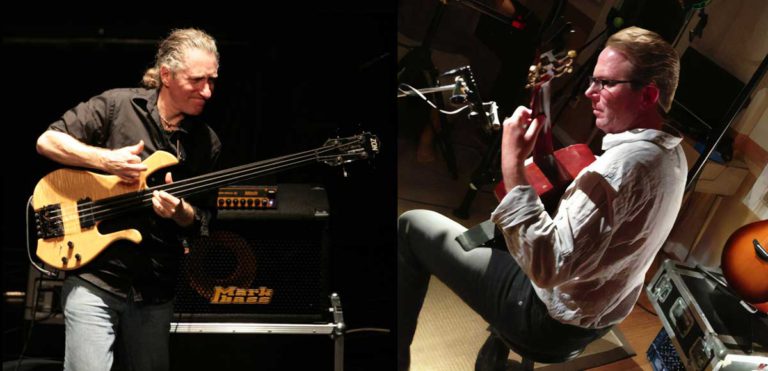
Lauded bassist Michael Manring and noted guitarist and poet Brian Gore join forces for a few sets—solo and duet—Thursday, March 14, at The Lost Church. Gore, known for his fingerstyle guitar playing, founded International Guitar Night and has performed with six-string legends like Pierre Bensusan, Ralph Towner, Vishwa Mohan Bhatt, D’Gary and Lulo Reinhardt. His sets will draw from his album, Seek the Love You’re Yearning. “Michael Manring … can do more with a bass than even the most creative individual could imagine,” according to the Napa Valley Register. Beyond his virtuosity, as Tom Darter wrote in Keyboard Magazine, “his brand of transcendental chops … is all in the service of … the joy of making music.” Doors open at 7:30pm. The venue is located at 576 Ross St., Santa Rosa, thelostchurch.org. $25.

Petaluma

Docent Days

Petaluma Historical Library & Museum seeks volunteer desk docents for shifts from 10am to 1pm and 1 to 4pm, Thursdays and Fridays. The volunteer position entails greeting the public, helping guests navigate the exhibits, mentioning upcoming museum events, explaining the benefits of museum membership and answering general questions. One need not be an expert on Petaluma to volunteer. Those interested in joining the museum’s fellowship of desk docents may contact membership manager Mary Rowe at mr***@************um.org or 707.778.4398.

St. Helena

FORK2FILM Fest

A four-day film fest that showcases the best feature-length narrative and documentary films about food, farming and wine, FORK2FILM Festival serves up its cinematic offerings from Thursday, March 14 to Sunday, March 17. “Throughout my 16 years of programming for the Cameo, CinemaBites has stood out as a favorite among patrons, especially when we connect audiences with a filmmaker or chef,” says founder and owner Cathy Buck. “It’s been a dream of mine to program a festival that centers around food, farming and wine, three things that make the Napa Valley stand out.” Over the course of the festival, attendees will partake in epicurean film screenings, food and wine experiences, filmmaker Q&As and more. This year, FORK2FILM Festival programmers have selected 14 independent movies to be screened alongside culinary classics and award-winning standouts, all screening at the Cameo Cinema, 1340 Main St., St. Helena. For complete programming information, visit cameocinemafoundation.org/fork-2-film-festival.

Novato

Comedy Cuvee

Headliner Dan Gabriel (as seen on The Late Late Show with Craig Ferguson, Showtime, Comedy Central’s Premium Blend and CBS’s Star Search) brings the laughs to Novato’s Trek Winery with a set that pairs well with pinot noir (we’re assuming). Gabriel honed his chops in San Francisco’s comedy scene and is now a seasoned Los Angeles-based comedian. He has appeared on several major TV shows, won competitions, co-developed a TV series, hosts a podcast and has released two comedy albums. Gabriel performs at 7pm, Saturday, March 16, at Trek Winery, located at 1026 Machin Ave., Novato. Special guest Jeff Applebaum will also perform. Tickets range from $20 to $30. For more information, marincomedyshow.com.

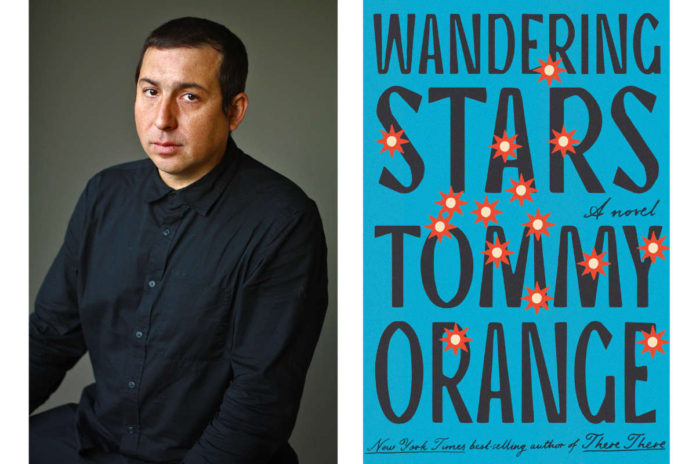
Tommy Orange Writes Second Urban Native Novel

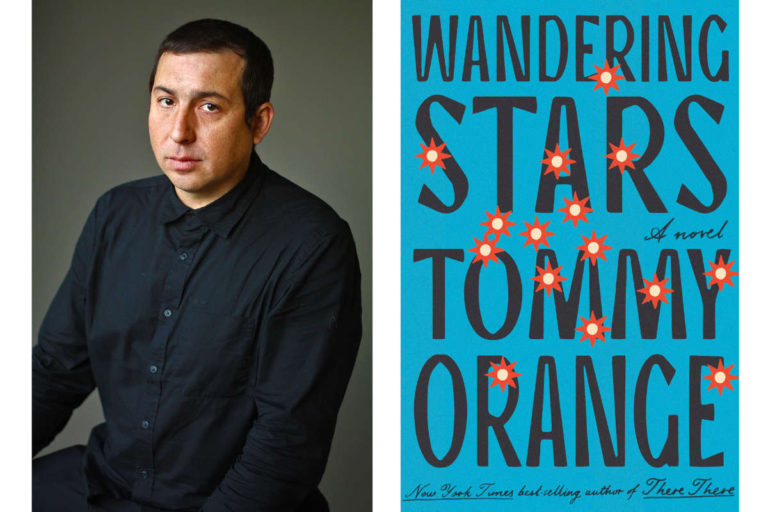
The difficulty in beginning a conversation with Oakland-based, New York Times best-selling novelist and writer Tommy Orange is deciding which direction to go.

We could shift into reverse and march through his earliest years, being born and raised in the Dimond District by his parents, his father Cheyenne, his mother white and a Christian; playing roller hockey and noodling on his guitar during adolescence; graduating from college with a degree in sound engineering before working at San Leandro’s Gray Wolf Books and wondering what to do with his life. Beginning to write and investigate his Cheyenne and Arapaho of Oklahoma tribal identity and citizenship, he pursued and earned a master’s in fine arts from the Institute of American Indian Arts.

Or, is it best to plunge into the more recent here-and-now? After all, there’s the irresistible magnetism of Orange’s fascinating short stories. Published in literary magazines such as McSweeney’s and Zyzzyva, he nudged and eventually pushed hard against Native American tropes and misrepresentations—such as the iconic, mythical, stoic images of Indians as somehow immune from the brutal violence practiced against them throughout American history. 

Ultimately, Orange’s literary energy culminated and was mirrored in the momentous reception to his debut novel, There There (2018). Awards stacked themselves into towers surrounding his first work of fiction, which places as its centerpiece a powwow that attracts—for different reasons—members of a multigenerational, urban Native American family. There There was a finalist for the 2019 Pulitzer Prize and received in 2019 the American Book Award and the PEN/Hemingway Award.

Orange was suddenly and overwhelmingly heralded as a new voice in Indian literature and the visibility was widespread, resulting in demand for public appearances as a Native American thought leader. More honors, including nominations for the Andrew Carnegie Medal for Excellence in Fiction, the Audie Award for Multi-voiced Performance, and two Goodreads Choice Awards: Best Fiction and Best Debut Goodreads Author, also came his way.

All of this is ripe material for discussion, but instead there is the immediate moment and future—which is where the focus should begin.

Orange’s sophomore book, Wandering Stars (Alfred A. Knopf, March 2024), is already attracting starred reviews and notable buzz in the industry and with the general public. His second novel is in some ways a sequel to his first book and follows three generations of the Red Feather family with a story that begins by leaping back to the family’s pre-Oakland history in Colorado, where the Sand Creek Massacre destroys an Indian community and sends a young survivor, Jude Star, to the Fort Marion Prison Castle in Florida.

For three years Star, along with other young Indian children, is essentially imprisoned and must learn English and practice Christianity—all actions meant to erase her Native history and culture, and any traces of Indian identity. The narrative follows Star’s descendants, who end up in Oakland struggling with mixed success through the legacy of annihilation and trauma by white America: bias, prejudice, PTSD, opiate addiction, school shootings and more.

“With There There I could point at any character and give you the difficulty number,” says Orange. “With writing Wandering Stars, the whole thing was just hard. They talk about sophomore albums being difficult, and especially when you’re having success, you’re having to prove that you can still do it, or top it, or people just wanna see you fall from a height, because that’s a spectacle. There was weird pressure.”

Orange found writing during Covid severely challenging. He’s never aspired to write historical fiction because he feels it’s been overdone in Native American literature, but the story about the boarding school had reached a deep place in his soul that compelled him to persist. In part, his Southern Cheyenne tribe is at the story’s heart, and he recognized that the real-life facts and events represented a wrenching origin story that held within it the assimilation, relocation and dislocation that urban Natives experience.

While writing early scenes featuring Star, he researched intensely, changed tense back and forth, rewrote sections and cut out entire episodes as if, having stared into history’s bright lights, he was determined to chase and capture the afterimages. A sense of place had formed the foundation of There There, and the Red Feather family was firmly established, providing structure for Wandering Stars and allowing him to delve deep into character.

“It’s a more interior book, and that’s something I like to do in writing in general,” he says. “It’s where I started and where my characters begin. Fiction can do it in a way that other forms cannot. There’s an over-emphasized voice that says writing is about scene. But we have TV and movies; they’ll always be better than description of scene.”

Orange tried to bring back all of the characters from There There. “When I first started, I picked up right after the powwow,” he says. “In collaboration with my editor, we wanted it to be a standalone and not redundant. I fought to the end to keep the filmmaker character from There There and recently cannibalized some of that writing for my next book. I’ll get his stuff in somehow.”

Although Orange doesn’t keep lists, several of his characters do. The character Lony composes lists that he considers puzzles. “He wasn’t going to be a writer, but it was a way for him to collect information because he’s so curious,” Orange says. “It was a way for him to express that without him having a narrative voice.”

Another list serves a profound purpose and appears from a meditation by Orvil, Lony’s older brother. “He lists the names of tribes, reads them aloud and speaks them into existence,” Orange says. “He felt shame—and this is also my shame in not having the Ohlone people mentioned the way I should have in There There—about not knowing the names of the [nearly 200] tribes in California. I was happy because these are unknown, hard-to-say names that have been reduced to Indian or Native American. With the names of each tribe comes a ton of language, worldview and creation stories.”

Wandering Stars is written with Orange’s natural musicality and instinctive humor. Before becoming a writer, he says he was “a fully failed musician,” and music was his first art form. As a writer, he reads his words aloud; even recording other people reading his words to better hear the cadences, rhythms and sentence structures. He’s considering releasing compositions he’s written that might have been what Orvil, also a songwriter, would have written.

Orange is pleased to be asked about the humor in his work. “It’s rarely mentioned, even in my inner circles, but it was [John Kennedy Toole’s] Confederacy of Dunces that first made me want to write a novel,” he says. “I didn’t know books could make you laugh but also be sad and dark. I don’t try to be funny, but it’s important to render life and lively dialogue, to balance heavy matter, release tension, and provide payoff and lift for the reader having to sit with heaviness. In my family, I was the one cracking a joke during something super intense.”

Inevitably, the conversation wraps up with future thoughts, plans and dreams. Orange is astonished that half the country thinks Donald Trump is a hero instead of a person he says is “brazenly stupid and lacking in humanity, humor, taste—and a despicable human,” whose re-election as president would leave us doomed. On a more upbeat note, he’s thrilled Lily Gladstone won Golden Globe’s Best Female Actor and that Native American television shows, books and across-the-spectrum output from Native artists is thriving. “I just hope it’s a sustaining energy for our representation,” he says. “I believe art can change lives.”

He’s sold his third novel, which leaves behind the characters in his first two novels with a book full of dark humor, the world of Pretendians—ethnic fraud—run rampant and contemporary voices. Meanwhile, There There is being adapted for television, and he says the all-Native American cast it will showcase will raise the visibility of Indigenous people. He’s also writing and hoping to have produced a screenplay, and he laughs—but only lightly—at a suggestion he might compose the film score.

Limitless possibility is the perfect note upon which the conversation reaches its end.

Film Review: ‘Cabrini’ as Lady Liberty

0

Aside from specialty items by religious film producers, it’s unusual for general audiences to find major releases that concern themselves with spiritual matters and figures from organized religion. That’s one of the reasons why director Alejandro Monteverde’s new film Cabrini, a dramatization of the life and times of Roman Catholic nun Sister Frances Xavier Cabrini (1850-1917), is so noteworthy.

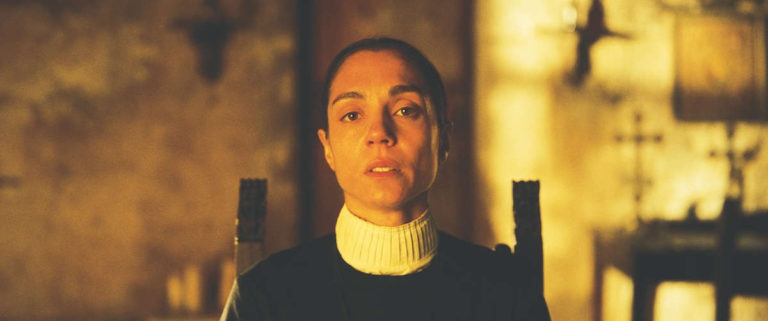
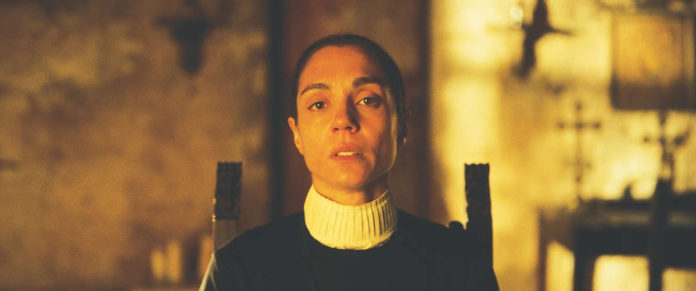
Mother Cabrini (portrayed by Italian actor Cristiana Dell’Anna) immigrates to the U.S. in 1889, accompanied by six other nuns with whom she has founded the Missionary Sisters of the Sacred Heart of Jesus. In her luggage is a personal recommendation by Pope Leo XIII (Giancarlo Giannini) for her mission to aid poor immigrants—specifically Italians—in their painful process of fitting into the United States’ burgeoning multicultural landscape.

In those days newcomers from Italy faced more or less the same barriers as other immigrants from Southern and Eastern Europe in the age of America’s “Manifest Destiny”—the historical label for the global ambitions of the newly industrialized United States. Highly promoted in its time, Manifest Destiny institutionalized a framework of reckless imperialism overseas and systemic domestic racism for anyone outside the era’s White Anglo-Saxon Protestant ruling hegemony. As the Italian nuns soon realize.

Cabrini arrives in New York’s Lower East Side at a time when Italian immigrants are depicted in the press as a horde of poor, illiterate, non-English-speaking, swarthy brutes, reeking of garlic. The missionary sisters lose no time in moving into the notoriously crime-ridden Five Points neighborhood of Lower Manhattan.

Their goal is to help a group of people commonly portrayed as menial laborers and “threats to American values” set up hospitals, schools and a sense of community in a hostile environment. The similarities between the jingoistic, openly bigoted America on display in Cabrini by filmmaker Monteverde, a native of Mexico, and the political extremes of the present-day U.S. are there for all to see.

Seemingly everywhere Cabrini turns, she is met by indifference and outright hatred for her social work. Tea-sipping Archbishop Corrigan (David Morse) dismisses her on gender grounds—so what if this woman was sent by the Pope? New York’s Mayor Gould (John Lithgow) calls Mother Cabrini a “puffed-up dago” and harasses her with vengeful building inspections. A Five Points pimp named Geno (Giacomo Rocchini) physically attacks the nuns for enlisting one of his prostitutes. Meanwhile, ordinary white businessmen are content to mock Mother Cabrini by publicly snorting in her face—to them all Italians are pigs.

In fact, Cabrini is loaded with hot-button social issues that stress the “then as now” aspect of her moral crusade: poverty, immigration, social welfare programs, racial bigotry, narrow-minded opposition, language barriers, street crime, sexism, anti-Catholic prejudice, child labor laws, and that old favorite, cruel and greedy bankers. Looks like a dress rehearsal for 21st-century politics.

Monteverde’s Cabrini—screenplay by Rod Barr from a story he wrote with the director—does a better job than most mainstream films in capturing the flavor of its early-20th-century settings. It’s in a league with Gangs of New York, Once Upon a Time in America, Days of Heaven and even The Godfather in that respect. And cinematographer Gorka Gómez Andreu’s tribute shots invoking photographer/social activist Jacob Riis add to the poignancy. The cinematography is almost too pretty at times—that’s the worst that can be said about the production values.

In modern-day secular terms, Cabrini achieves a gratifying balance between the social and the spiritual in Mother Cabrini’s zealous championing of equality for the underdog. In particular, actor Dell’Anna strikes a positively heroic pose as the woman who intended to “build an empire of hope” in her adopted country, for the marginalized and downtrodden. 

Cabrini was canonized in 1946 as the first American saint, and patron saint of all immigrants. Today the Missionary Sisters of the Sacred Heart of Jesus is the largest charitable institution in the world. The American people were lucky to have her.

* * *

In theaters

Free Will Astrology: Week of March 13

Free Will Astrology: Week of March 13
ARIES (March 21-April 19): I will never advise you to dim the flame of your ambition or be shy about radiating your enthusiasm. For the next few weeks, though, I urge you to find ways to add sap, juice and nectar to your fiery energy. See if you can be less like a furnace and more like a sauna;...

Much Ado: A Shakespearean education

If one is going to do amateur Shakespeare, then Much Ado About Nothing is the safest bet. It’s mostly in prose, it’s relatively short and the storyline is fairly straightforward. Much Ado also has arguably the best pair of lovers in all of classical literature. The College of Marin’s current production, directed by Lisa Morse and running through Sunday, March...

Mill Valley Maker: Karen Goldberg

Stopping by Tamalpie on any given night, there’s a good chance Karen Goldberg will be found sitting at the bar with her sister (Susan Griffin-Black, who I interviewed in January, and who introduced me to Goldberg) and a mix of their friends. Come on in and say hi! What do you do? I’m a mother of two amazing daughters;...

Mapping Meaning: Author Lauren Markham in Mill Valley

As a container, the two-dimensional plane of the book page can’t typically hold enough multitudes for a project like Lauren Markham’s new work of poststructural journalism, A Map of Future Ruins: On Borders and Belonging. Yet she successfully and unapologetically explodes the boundaries placed on her reportage by the constraints of the form. For example, the journey to fill in...

Happy Campers

Camps for Marin County kids As the cold, wet weather of winter gives way to warmer days, Marin’s parents are already busy eying summer camps for their kids. And with school soon to be out of session, it can’t hurt to highlight a few unique summer camps for children in Marin County: Coastal Camp A local children’s summer day camp that’s all...

Superbugs: The next health crisis is here

Bacteria and fungi are increasingly evolving into “superbugs” immune to existing treatments. According to the World Health Organization, this phenomenon, known as antimicrobial resistance, is one of the top 10 public health threats currently facing humanity. In 2019, antibiotic resistance was associated with more than 170,000 deaths in the United States and nearly 5 million deaths worldwide. The U.S. government...

Your Letters, March 6

Safe Sex Party Mr. Dan Savage’s advice for people who attend sex parties (“Savage Love,” Bohemian, Feb. 29, 2024) is to “maybe consider using condoms.” I’m a semi-retired professional sex surrogate partner and sex educator, and a person who has occasionally attended a wide variety of events like sex parties and sex and tantra workshops. I’m also a polyamorist. My advice...

Bass Case, Docent Days and FORKS2FILM Fest

Santa Rosa The Case for Bass Lauded bassist Michael Manring and noted guitarist and poet Brian Gore join forces for a few sets—solo and duet—Thursday, March 14, at The Lost Church. Gore, known for his fingerstyle guitar playing, founded International Guitar Night and has performed with six-string legends like Pierre Bensusan, Ralph Towner, Vishwa Mohan Bhatt, D’Gary and Lulo Reinhardt. His...

Tommy Orange Writes Second Urban Native Novel

Tommy Orange Writes Second Urban Native Novel
The difficulty in beginning a conversation with Oakland-based, New York Times best-selling novelist and writer Tommy Orange is deciding which direction to go. We could shift into reverse and march through his earliest years, being born and raised in the Dimond District by his parents, his father Cheyenne, his mother white and a Christian; playing roller hockey and noodling on...

Film Review: ‘Cabrini’ as Lady Liberty

Film Review: 'Cabrini' as Lady Liberty
Aside from specialty items by religious film producers, it’s unusual for general audiences to find major releases that concern themselves with spiritual matters and figures from organized religion. That’s one of the reasons why director Alejandro Monteverde’s new film Cabrini, a dramatization of the life and times of Roman Catholic nun Sister Frances Xavier Cabrini (1850-1917), is so noteworthy. Mother...
3,002FansLike
3,850FollowersFollow