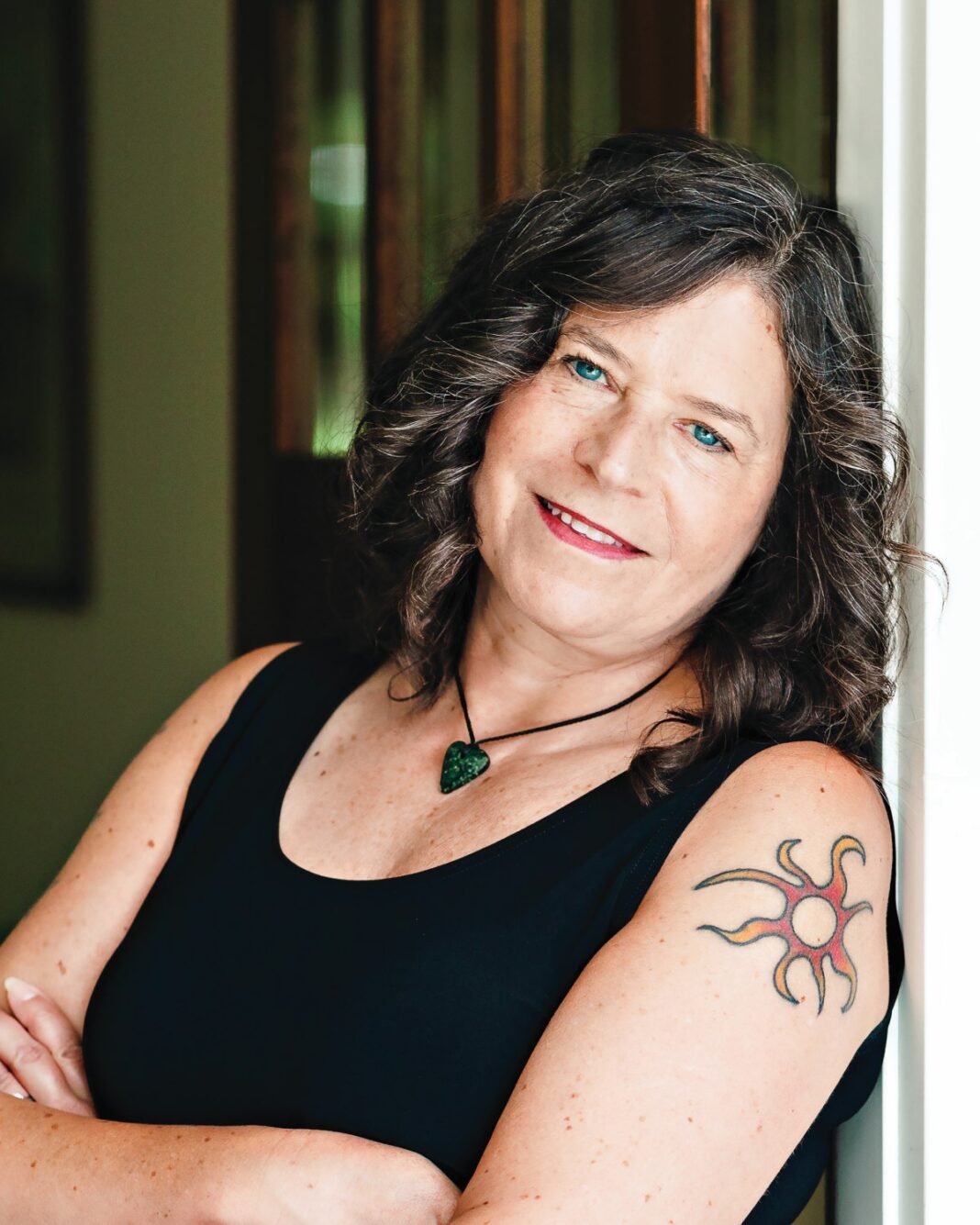
Mindy Uhrlaub’s mother was dying of ALS. Her grandfather had died of it years before.
After making the difficult decision to undergo genetic testing, Uhrlaub learned that she, too, carries a specific gene mutation that can cause amyotrophic lateral sclerosis (ALS), also known as Lou Gehrig’s disease.
“Just because you carry the gene, it doesn’t mean you’re going to develop the disease,” Uhrlaub said. “They used to think it was something like a 97% chance that you’d develop ALS. Now they’re saying it’s more like 50-50. I still don’t like those odds.”
And the San Anselmo mother of two fears that she may have passed on the ALS gene mutation, C9orf72, to her two sons. Each child has a 50% chance that they inherited it.
A dozen years after the Ice Bucket Challenge raised $220 million for ALS research, the quest for treatments and a cure continues. ALS is a neurodegenerative disease that affects the nerve cells controlling movement, leading to muscle weakness, paralysis and death.
The average age of ALS onset is 55. Uhrlaub is 56.
While Uhrlaub can’t be sure what the future holds, the Marin author is working hard to tip the balance in her favor. Her book, Last Nerve: A Memoir of Illness and the Endurance of Family, published last year, chronicles her journey with genetic testing and her fierce determination to assist ALS researchers.
“Science and medicine are my way out,” Uhrlaub said.
Since her genetic testing in 2018, Uhrlaub has participated in 20 longitudinal studies for ALS and a type of dementia caused by the same gene mutation. These studies follow at-risk individuals over a long period of time, providing scientists with invaluable data that could pave the way for early intervention, prevention and treatment of the disease.
Uhrlaub also advocates for people who are genetic carriers of ALS, testifying before the National Institutes of Health and the Food and Drug Administration to call for early access to drug treatment.
May is ALS Awareness month, offering advocates and scientists the opportunity to educate the public about a disease that’s relatively rare but always fatal.
Annually, there are approximately 5,000 new cases of ALS in the United States. It generally takes 11 to 16 months to diagnose, with most people living about two to five years after symptoms develop. The disease is 20% more common in men than women.
“ALS is one of the most devastating diseases known to humankind,” said Kuldip Dave, Ph.D., senior vice president of research at the ALS Association. “It’s a disease where your body stops—you stop walking and moving and talking and swallowing and eventually breathing.”
The nonprofit ALS Association is the largest funder of ALS research in the world. The goal is to make ALS livable by slowing and stopping the disease, allowing patients to survive with a better quality of life. Funding will play an essential role in achieving the objective.
Fortunately, the federal government has maintained ALS research funding in 2026, even while slashing budgets for other diseases. But the $315 million allocated isn’t enough to overcome the challenges posed by ALS, according to Dave.
“We don’t fully understand the biology of why ALS happens,” Dave said. “We don’t have treatments that are close to a cure.”
About 40 genes have been linked with ALS, accounting for 10% of all cases. The other 90% of people with the disease have “sporadic” ALS, meaning the cause is unknown and they are the first in their family with the disease.
Age is the number one risk factor for ALS. Ditto for Parkinson’s and Alzheimer’s, also neurodegenerative diseases.
“The thinking is that your brain is being exposed to all kinds of things over the years,” Dave explains. “Something in our brain is protecting us and protecting us and protecting us—until it gets to a certain level where that protection doesn’t happen because of age.”
Although extremely rare, the disease also affects young people. Those with gene mutation FUS could develop ALS in their teens and 20s.
Certain occupations place people at a higher risk for ALS. Veterans are two to two and a half times more likely than the general population to develop the disease. The prevalence of ALS among veterans has led the Department of Veterans Affairs to recognize it as a service-connected disease.
Dave says the elevated risk among veterans is an active area of study, yet the cause has not been identified. Considerations include post-traumatic stress syndrome, head trauma and breathing in fumes from burn pits.
NFL and soccer players also have an increased risk of developing ALS. Scientists are looking at head trauma and pesticides on playing fields as possible causes.
Even with all the unknowns, ALS treatment has advanced, and Dave believes research is now at an inflection point. A drug granted accelerated approval by the FDA in 2023, tofersen, shows promise. It’s used to treat ALS patients with a genetic mutation called SOD1 that accounts for 2% of all ALS cases.
“Some people with SOD1 ALS, they’re starting to recover function, which is amazing,” Dave said. “If recovery of function is possible, and that is what this drug is showing, it gives us hope for the other 98% of people with ALS.”
Dave is also optimistic about an ALS prevention trial happening now—the first ever. People carrying the SOD1 gene mutation who don’t have the disease are being treated to determine whether ALS can be delayed or even offset completely.
Both Dave and author Uhrlaub recommend genetic testing for people who have family members with ALS. Still, they caution about issues such as genetic discrimination by life insurance and long-term disability insurance companies. There are also ethical, legal and reproductive concerns.
If one does have a genetic mutation that causes the disease, family planning options exist to prevent passing on the gene.
“Nobody wants to have kids just to give them ALS,” Uhrlaub said.
Dave encourages those carrying ALS gene mutations to participate in vital research that’s taking place around the country.
“There are people who have the gene and never get ALS,” Dave said. “The research is trying to understand what happens in these people. What is protective about them? Are there protective genes? And maybe those protective genes can be used to develop drugs that can help everybody.”
Helping everybody is one of Uhrlaub’s primary purposes in life. It’s why she had ALS genetic testing, decided to participate in research and advocacy work and wrote her memoir. With those undertakings, she’s found some peace.
“I’m very, very happy being who I am and knowing that I can effect change in this crazy madness that is the medical system,” Uhrlaub said. “I feel like I have more control over my life now, even as a genetic carrier, than I ever did before. And I am asymptomatic, healthy as a horse.”
To learn more about ALS, visit als.org. For information about Uhrlaub and her book, ‘Last Nerve,’ go to mindyuhrlaub.com.