Hero and Zero: San Rafael City Council cleans up and drones in Tiburon

by Nikki Silverstein

HERO: While many view the Boyd Memorial Park closure as a violation of the rights of the homeless, we have a different perspective. Our close friend who lives within shouting distance of the park had his life disrupted daily as park-goers screamed obscenities, threatened to kill one another and had physical altercations. Unfortunately, this behavior occurred at all hours. Drug-use, litter and human waste made it a harsh environment for families to enjoy Boyd Park. Hurrah to the San Rafael City Council for temporarily closing the park, cleaning it up and planning organized activities once the park reopens. It’s time for the mayor and council to take the next step. Anyone displaced by the closure should receive access to shelter, drug counseling and job training.


ZERO: Some of us want a peaceful walk by the bay after our workday. Blackie’s Pasture is a beautiful, safe setting. Sure we have to listen to people yelling into their mobile phones, dodge dog poop and watch out for speeding cyclists, but we manage. Now, there’s a new menace to our Zen time: a drone with cameras, flown by a middle-aged man. It loudly moved several feet above the fields and walking path. It hovered for minutes over three women at the water fountain. What’s he gawking at? The scenery. He also claims to be at Blackie’s frequently and is emphatic that drones can’t read your mobile phone screen, though his “is a pricey one.” His noisy toy is intrusive, creepy, and should be banned from the park.

Got a Hero or a Zero? Please send submissions to ni***************@***oo.com.

Video: To the beat of your own drum

by Richard Gould

Why has WHIPLASH struck the chord it has, coming from nowhere to bring A-list fame upon J. K. Simmons (our friendly Farmer’s agent) and garner a best picture nomination? Maybe because Simmons’ Terence Fletcher, Shaffer Conservatory’s charismatic demon-instructor offers a bracing alternative to participant-trophy youth. Call it focused feedback, or Amy Chua meets Dr. House. Young student drummer Andrew Neiman (Miles Teller) and Fletcher actually share a belief that the heights of jazz, like all excellence, are privileged spaces where craft is everything and the muses are fickle. If you’re lucky enough to rate–never mind where you’re from–you might win yourself fifty shades of love and caring from the likes of a Mr. Fletcher. Any emotional wreckage that follows, Fletcher might argue, is a misplaced concern if the faith is good and the zone is felt. When a lawyer queries, “Did he ever intentionally inflict emotional distress?” the question’s cluelessness at that late stage of the film only serves to highlight the looking-glass world Whiplash has brought us through, and the growing distance between where we thought young Andrew’s humanity lay and where it actually might be. Hardly a reviewer has missed the chance to use “abusive” or “sadistic” in describing J.K. Simmons’ tempo-minded studio jazz band leader Fletcher, but sadists haunt every room in the multiplex these days. Some third-act cheating eventually bring Whiplash down on the side of the angels<0x2014>but just barely. As an anonymous Oscar voter told the Reporter last week, “There are many people in Hollywood who would model themselves on Fletcher.” A film that clouds your thinking on mentors–just slightly–it might bring to mind the best teacher you ever had … or the worst.

Upfront: Five-finger discount

by Peter Seidman

Marin Clean Energy (MCE) is about to celebrate its fifth anniversary. The success of the alternative power agency continues to trigger paroxysms of consternation among its critics.

The energy agency began supplying power to Marin residents in May of 2010. Critics of public power agencies, dubbed community choice aggregators, attacked the concept in general—and Marin Clean Energy in particular—in an attempt to prevent the Marin power agency from becoming the first community choice aggregator to operate in California.

Paul Fenn, a former Marin resident, wrote the legislation that allowed communities to choose where they buy their power. The legislation mandated that community choice aggregators could form their own power agencies and buy power from wherever they chose rather than from the investor-owned utilities in California. The legislation, AB 117, became law in 2002. It took until 2010 before a community choice aggregator formed and started operating a power agency. That was MCE.

The Marin Energy Authority (MEA) is the joint powers agency that took on the administrative role for MCE. Former Marin County Supervisor Charles McGlashan championed the cause of creation for MCE and was an igniting spark until his untimely death. The goal McGlashan wanted for MCE was to meet or beat the rates that PG&E charged. That, and striving toward providing as clean and as renewable an energy product as possible, would be the foundation of success for MCE, McGlashan often said.

Stiff opposition rallied even before MCE could start operating, but critics failed to put a spike in forward progress. The opposition did, however, delay the start of service. Nevertheless, MCE threw its first switch in 2010 and started providing customers in Marin with two options: Light Green, which provides an energy product that’s 50 percent renewable at a price that meets or beats PG&E, or Dark Green, which gives customers power from 100 percent renewable sources. Even before MCE started service, critics said the meet or beat goal was a pipe dream.

McGlashan and other early supporters also wanted MCE to produce clean power in Marin County (and elsewhere as close as possible). Local generation could contribute jobs and valuable injections into the economy, supporters said. Critics said that would never happen. It was a pipe dream.

MCE has, and continues, to meet or beat PG&E rates with the MCE Light Green product. According to Jamie Tuckey, MCE communications director, in 2015, MCE customers who choose the Dark Green option will pay $3.20 more per month than Light Green customers for electricity.

PG&E raised its rates about 6 percent in January. That adds about $5 per month to the bill for an average PG&E customer who consumes 500-kilowatt hours of electricity per month.

MCE now serves customers in Marin and Richmond. Unincorporated Napa County and the cities of San Pablo, Benicia and El Cerrito will begin receiving MCE service in the first half of this year. With additional service areas, Tuckey says, the typical MCE customer uses 463 kilowatt hours per month.

The Marin Energy Authority Board of Directors took a preliminary vote on Feb. 4 to raise MCE rates. The power agency meets just once a year to set rates for the year. PG&E sets rates throughout the year. Its customers can see increases as the year progresses. Even with a 4.2 percent increase for 2015, MCE still will beat the PG&E rates for 2015, Tuckey says. The Marin Energy Authority board will meet Thursday, March 5 to adopt the new rates, which go into effect in April. Using the typical MCE customer kilowatt residential consumption number, the MCE customer will pay $80.14 per month for Light Green. The typical PG&E customer will pay $81.58 per month.

MCE commercial customers also save over their colleagues who choose PG&E. The lower rate has attracted commercial customers, Tuckey says. MCE embarked on an advertising strategy in 2014 to broadcast its lower commercial rate—and its stability. Commercial customers in particular respond to a power agency that has a track record and a shot at longevity. Enter the value of MCE’s fifth anniversary.

While MCE is meeting or beating PG&E rates, critics continue to charge that the agency is a fraud that merely bills customers for some kind of ethereal or downright nonexistent clean power. They scoff at the MCE statistic that says it’s providing 50 percent renewable energy to its customers.

PG&E supplies 24 percent renewable to its customers. Those PG&E percentages follow state guidelines that prevent PG&E from including nuclear power and large hydroelectric generators. Even considering the state’s restrictions in calculating allowable renewable power, the PG&E track record shows it has been slow to meet state guidelines to produce renewable energy.

PG&E hasn’t always been on the bandwagon, even reluctantly. The utility first tried to scuttle community choice in general and MCE in particular by pushing legislation that would have stopped MCE dead. The utility backed Proposition 16 in the June 2010 election. That was one month after MCE started operating. The proposition required a two-thirds vote of residents within an area in which a community choice aggregator contemplated providing service. It also required a two-thirds vote within an area that an existing aggregator wanted to expand.

PG&E was the largest financial supporter of the proposition, contributing to the $46.1 million that went toward passage, as opposed to a mere $100,000 that opponents spent to defeat Prop. 16. The effort backfired for PG&E; voters rejected the proposition by a 52.8 percent margin.

But that didn’t stop critics of community choice—or of MCE. In 2014, another legislative attempt bubbled up in Sacramento that could have frozen community choice in California. AB 2145, authored by Assemblyman Steven Bradford—a southern California Democrat who once worked in public relations for the investor-owned utility Southern California Edison—called for restricting community choice agencies from expanding beyond their initial geographical range. It also called for using an opt-in system for signing up new customers to a public-power agency rather than the opt-out system in the original community choice-enabling legislation.

That legislation, AB 17, calls for an opt-out system in which potential customers in a service area that will become part of a new public-power district must take action if they want to opt out. That requirement yields significantly more customers for a new public-power agency. Industrial psychologists say that requiring potential customers to take the positive action of opting in to a community choice aggregator is a mortal requirement for a new power agency. It’s just human nature to stay with the known and familiar.

AB 2145 failed to make the grade, but while it was bouncing around Sacramento, it sent shock waves through the community choice community. MCE was the first power agency in California to start operating under community choice. Since it began, public-power agencies have become hot topics across the state. San Francisco has been debating how to start an agency. The sticking point there is how much local generation to provide. Sonoma County Clean Power has already started operating.

In addition to creating local power agencies that initiate building projects and generate jobs and revenue for local economies, the new public-power agencies help spur the investor-owned utilities toward a more renewable future. Despite Prop. 16 and AB 2145, competition in the renewable world is alive and thriving, despite a continued harangue from critics.

Given the success of MCE, it’s curious why critics continue their vocal attacks on the agency. One of their harshest contentions is the assertion that Renewable Energy Credits (RECs), which MCE uses to boost its renewable portfolio to 50 percent for Light Green, are a scam.

It’s true that the staunchest advocates of renewable energy would rather see public-power agencies eschew RECs in favor of local brick and mortar projects. But even they often acknowledge that the certificates can be a legitimate way to subsidize renewable energy. Still, they also contend that RECs may be stultifying the renewable-energy industry. (Critics of MCE using RECs usually fail to mention that PG&E also uses RECs to meet its renewable portfolio.)

The issue is not unimportant, especially in light of report after report substantiating the critical need to increase renewable energy and reduce greenhouse gas emissions as fast as possible.

In essence, RECs provide a stimulus mechanism for the renewable energy industry, according to the federal Environmental Protection Agency.

When a wind farm, for example, produces one megawatt-hour of renewable energy, it gets one renewable energy credit. It can sell the energy along with the one REC. The REC proves that the energy was produced from a renewable source. The RECs can be sold along with the energy or decoupled and sold separately. RECs are a tradable commodity. Once they are bought and put into an agency’s renewable portfolio, the RECs are retired and can no longer be bought or sold. MCE renewable credit transfers are administered through a clearinghouse for renewable energy transactions and tracking called the Western Renewable Energy Generation Information System. Green-e, a recognized independent nonprofit, certifies the RECs.

Critics often say that the MCE renewable portfolio is a fraud because no one knows where the electricity coming into a home originates or how it was generated. Just because a customer pays for renewable doesn’t mean the power received actually has been cleanly generated. The concept of the power grid is a complicated and confusing one. Some critics honestly fail to comprehend its intricacies. Others trade on its complexity to confuse people into believing that renewable power and RECs are a phantasm.

McGlashan liked to explain the concept of RECs using a pond on a farm as a metaphor. The key is the aggregate of what goes into the pond. The more clean water in the pond, the cleaner the water farmers can take out of it. Although not all the water is clean, the more clean water added to the pond, the cleaner the overall product that can be withdrawn. That’s just like the power grid. The more renewable power—no matter the origin—that gets generated and added to the grid, the cleaner and more renewable the total amount of power that gets distributed. RECs provide a bridge to a renewable paradigm, say proponents.

MCE critics also attack on the ground that the agency contracted with Shell, hardly known for its clean energy history. But in starting a new public-power agency, early proponents wanted to go with a stable, known quantity. The Shell contract ends in a few years, and MCE has no current plans to continue with Shell, according to Tuckey. MCE critics who say that they’re sticking with PG&E rarely acknowledge that the investor-owned utility also uses RECs and has dealt with Shell.

MCE critics also said a Marin public-power startup could not possibly produce local generation projects. “Nine new solar projects in MCE’s service area will be built through our feed-in tariff program and local renewable development fund,” Tuckey says. “Half of the revenue from the Deep Green premium is directed to this fund, so it is our customers’ commitment to renewable energy that will make it possible to build MCE-owned, locally sourced power.” In addition to the solar projects on tap, MCE will begin generating power from methane now burned off at the landfill.

Given the benchmarks that MCE has met, it’s curious that critics continue their attacks. No tax dollars are at stake. MCE customers choose to stay with the agency and support it by paying the (lower than PG&E) rates MCE charges. Their choice seems to irritate the critics, who seem to think MCE customers have been duped. It’s an irrational attack.

Marin is, indeed, special when it comes to public power—in more ways than one. A highly vocal minority of critics continues to sling (unfounded) accusations with a vociferous enthusiasm that just doesn’t exist in the East Bay or Napa.

Contact the writer at pe***@******an.com.

This week at the Pacific Sun

0

What can you find Graham Nash of Crosby, Stills, Nash & Young doing in his spare time? Take a look at Nash and his hobbies through another lens in his latest Q&A with Steve Heilig. Peter Seidman explores what’s next for Marin Clean Energy–the company will celebrate its fifth year in 2015. Wondering how Fifty Shades of Grey lived up to all of its hype? Ponder no more, David Templeton sits down with actor-comedian Debi Durst to talk everything you were too afraid to ask and more. Meanwhile Tanya Henry rounds up some of the latest food events around the North Bay–all with a hint of health on the bill! All that and more in this week’s issue of the Pacific Sun, available online and on stands today.

Food & Drink: Clean bill of health

by Tanya Henry

Remember those New Year’s resolutions? Chances are a healthier you was on that well-intentioned list. Circling back to make good on some of those plans, here are a few ideas to keep you—or get you—back on track.

FOOD ON THE BRAIN Book Passage in Corte Madera presents chef Rebecca Katz, who will discuss and sign her new book, The Healthy Mind Cookbook: Big Flavor Recipes to Enhance Brain Function, Mood, Memory, and Mental Clarity. Her book shares how the food we consume can improve the brain’s ability to control cognition, emotion and physical function—hence mood, memory and motion. Katz, author of the award-winning cookbooks The Cancer Fighting Kitchen and The Longevity Kitchen, has worked with a number of leaders in the field, including Andrew Weil and Deepak Chopra. She is the director of the Healing Kitchens Institute at Commonweal in Bolinas and a core faculty member at the Center for Mind-Body Awareness, where she serves as the executive chef for their annual Food as Medicine Training Program. Tickets are $110/single or $175/couple, and include lunch, wine, tax, tip and a signed copy of the book. The event will take place at Left Bank, 507 Magnolia Ave., Larkspur, on Sunday, March 29 at 12:30pm.

LUNCH AND LEARN Speak to Me, a forum created for women to learn and explore new ideas together has launched a Lunch & Learn series. It kicks off the spring season with a Health & Wellness program sponsored by Marin General Hospital. Coming up on Thursday, March 19 is a lecture, “What’s Happening to Me? Hormones & Other ‘Taboo’ Topics,” to be presented by K. Jennifer Voss, M.D. and Sujatha D. Pathi, M.D.—both from Marin General Hospital. Tickets are $50 and will include lunch at Piatti’s Restaurant in Mill Valley from 11:30am-1:30pm. Learn more at: www.speaktomeevents.com.

ORDER, ORDER! Want to get involved with local food issues? Marin Food Policy Council (FPC) was created to serve the unique purpose of bringing together various organizations and people who play a role in the local food system in a roundtable format that allows for information exchange, resource identification and prioritization of needs. FPC develops policies and practical solutions based on a systems approach to solving problems of food access. Lean more at: www.ucanr.edu/sites/MarinFoodPolicyCouncil.

SLOW DOWN Here is another opportunity to take a closer look at our food systems and learn about solutions that can help our ever-growing population lead healthier lives. Slow Food San Francisco is holding its annual Childhood Obesity Bay Area Conference; Building Our Community, Empowering Our Children. The conference brings together local stakeholders in childhood obesity prevention to promote innovation and provide insight into work being done on this critical issue. Along with an impressive roster of keynote speakers and panel discussions, the two-day conference will feature opportunities in the spirit of Slow Food, including tastings from sustainable wineries, a school garden workshop led by Education Outside and small group dinners at Hillside Supper Club, Pauline’s Pizza & Wine Bar, Plant Cafe Organic and Bar Tartine. The conference will be held at the UCSF Medical Center, 500 Parnassus Ave., San Francisco, on Friday, March 6 through Saturday, March 7. For more information and to register, visit: www.slowfoodsanfrancisco.com/event/childhood-obesity-bay-area-conference-2015.

CONGRATS TO OUR NORTH BAY NEIGHBORS Finally, a big congratulations is in order! The James Beard Award Semi-Finalists—the country’s top food and wine professionals—were announced last week. A number of San Francisco chefs and restaurants were nominated, but I want to give a nod to our neighbors further north in the wine country who also made it onto this impressive short list. Winners will be announced on Saturday, March 24.

*****

Outstanding Baker  Edmund and Kathleen Weber, Della Fattoria, Petaluma, CA

Outstanding Restaurateur  Cindy Pawlcyn, Napa, CA (Mustards Grill and Cindy’s Backstreet Kitchen)

Outstanding Wine Program  PRESS, St. Helena, CA  |   La Toque, Napa, CA

Outstanding Wine, Beer, or Spirits Professional  Ted Lemon, Littorai Wines, Sebastopol, CA   |  Steve Matthiasson, Matthiasson Wines, Napa, CA

Share your hunger pains with Tanya at th****@********un.com.

Advice Goddess

by Amy Alkon

Q: There’s a girl who works at the hotel where my co-workers and I go for drinks. She’s hot and smart and fun, and I really like her and want to ask her out. The problem is that when she laughs, she cackles in this really annoying way. I’m wondering whether, if we started dating and hit it off, I could subtly hint to her that she should change her weird, witchy laugh. Because, honestly, she’s perfect otherwise.—Bothered

A: It’s great to find a woman who laughs at your wit, but not when she sounds like she’ll follow up with, “I’ll get you, my pretty, and your little dog, too!”

I know, the “expected” reply to a man wanting a woman to change something about herself is, “How dare you, you shallow pig?!” And I’m aware that behaviors that initially seem mildly annoying can, in time, make you want to bludgeon the person with the soup ladle. But it does seem a shame to nix a woman you really like right off the bat simply because it’s hard to tell whether she’s laughing or you’re around the corner from a donkey engaged in erotic asphyxiation.

It’s possible that her laugh really is her laugh, “designed” by the shape and location of her larynx. HowStuffWorks founder Marshall Brain explains that when we’re laughing, the larynx gets half-closed by the epiglottis. (Laughter, most charmingly, is the sound of a person struggling for air, which we each do in our own special way.) But the reality is, some people with disturbing laughs have created them, often out of a desire to seem unique or get attention. They repeat their fabricated ha-ha, and it becomes part of them. And then time passes, and they forget to check whether their creation is still serving them or whether it might be to potential dates what garlic and crosses are to working vampires.

Obviously, a woman is likely to be to hurt and offended if you announce, “If we’re going to have any future together, you’ll need a laughectomy.” However, IF you started dating her and IF you saw that she’s one of those (rare) people who “would rather know,” you could ask her about her laugh: “Have you always laughed that way?” But brace yourself for her to come back with something like “Do you hate my laugh?” At this point, like a rat on flotsam after a shipwreck, all you can do is grab for a piece of flattery: “Uh, um … it’s just that you’re so elegant. It doesn’t seem to go with the rest of you.”

But first things first. You haven’t even asked her out. She might say no (laughing raucously and scaring away crows). Or, if she said yes, things might fizzle after a date or two. So maybe go out with her a few times, taking it slowly (no sex, tickling, or comedy club visits), and weigh whether her general fabulousness is enough to offset the intermittent cackly audio. Who knows … maybe you’ll fall for her to the point where her laugh becomes endearingly awful—always making you long to grab her and kiss her in the back seat of her broomstick.

Q: The guy I’m seeing revealed that he is hesitant to get into a relationship because it means “taking responsibility” for another person on a level you don’t have to when you’re just friends with benefits. In his words: “I mean, what if you got cancer?” He wants the friendship and connection of a relationship, but he inevitably fails to step up and women bail. (What a surprise.) He did have a three-year relationship in the past, and I really like him. Should I stick around and hope he calms down?—Unsure

A: Here’s a guy who will have your back—getting smaller and smaller in his rearview mirror at the first sign of a serious problem, such as a bad hangnail. Sadly, it isn’t enough to “really like” a guy. You need to really like a guy who’s prepared to respond to your needs with loving concern instead of burning rubber. And in keeping with this unfortunate automotive theme, assessing a guy’s boyfriendability should be approached like selling cars. The successful car salesman will not spend his morning singing the praises of heated seats and in-car Wi-Fi to the customer wearing a blanket and cardboard sandals. That guy sure could use a car, just as your guy sure could use the “friendship and connection” (and, no doubt, the sex) of a relationship, but neither will be able to make the required payments. So, yes, waiting and hoping this guy “calms down” is an option—but you’d probably have better luck waiting for the brown bird outside your window to turn into a UPS driver.

Publisher’s Note: The changing rays of the ‘Sun’

by Bob Heinen

This week is bittersweet as we say goodbye to our Managing Editor Stephanie Powell and welcome our staff writer Molly Oleson, as our new editor.  Stephanie will stay on as a contributing editor to the Pacific Sun, but we will miss her as she steps down from the day to day rigors of producing a weekly newspaper as well as editing our website PacificSun.com and our PS Today newsletter. It has been great to see the growth in Stephanie’s leadership and editing skills over the past year, and we wish her the best of luck in her new position at Strings magazine.

This week we also welcome Lily O’Brien as copy editor.  Lily has lived in Marin County for more than 15 years. Her passions include singing, music, writing, world travel, bicycling and Buddhism.

Our new Editor Molly Oleson is a writer, editor, photographer and illustrator with a B.F.A. from Boston University and a master’s degree in journalism from UC Berkeley. She has produced content for local and national publications, and has traveled as far as India, South Africa and Brazil for stories. Molly looks forward to taking the helm at the Sun, and is committed to making the paper the best that it can be.

Congratulations to Steph, Lily and Molly, and stay tuned for more …

Talking Pictures: Fifty shades of what?

by David Templeton

“Wow! That was definitely not inspired by Downton Abbey, was it?” observes actress-comedian Debi Durst, with a cringe, as the credits for Fifty Shades of Grey roll up the screen of this strangely silent theater in San Francisco. Durst (and yes, her husband is renowned political satirist Will Durst) knew very little about the content of the Shades of Grey movie, or the books by E L James, when she accepted my invitation to see and discuss the movie this President’s Day afternoon. “I know the book has sold a bazillion copies, and that they are not suitable for children,” Durst says. “And I knew that Charlie Hunnam from Sons of Anarchy was originally going to be in it but was replaced with this guy. But that was about all I knew. I had no expectations. Now that I actually do know what Fifty Shades is about, all I can say is … good God! I’m sure at the end of my life I’m going to want those two-and-a-half hours back!”

“I know,” I tell her. “I still feel the same about All Dogs Go to Heaven, and that was only 89 minutes long.”

“Well then,” Durst says with a laugh, rising to escape the theater, “at least the movie was kind of pretty.”

Yes it was. Pretty bad.

The story of Anastasia Steele (Dakota Johnson), a meek, virginal, lit major drawn into a relationship with a cold-but-handsome billionaire, Christian Grey (Jamie Dornan)—and her gradual introduction into his world of kinky behavior—not to mention his whips-and-chains playroom known as the Red Room of Pain—makes for a very strange movie, with its eerie reverse-rom-com sensibility and a chilly sense of distance between the characters, even in mid-coitus, gasping and grunting on the plush sex-bench in the Red Room of Pain. Not that the film’s lack of charm or plot, its epic running length, and the total lack of chemistry between its two leads stopped the film from earning nearly $250 million over its opening weekend alone. With a built-in audience of rabid fans of the books—the trilogy has sold more than 60 million copies—those opening-weekend numbers speak more to the massive public awareness of the film that they suggest any actual quality or longevity.

“I can’t imagine that anyone would want to see this twice,” notes Durst as we walk through the opulent lobby of the theater, where a pair of leather-covered massage machines stand like sentries by the door. At my observation that the Fifty Shades people missed an opportunity to convert such machines into spanking devices, Durst laughs at roughly the same volume with which Anastasia gasps with pleasure the first time Christian paddles her. “They should make them out of red leather,” Durst remarks. “The Red Chair of Pain! I bet they could get a $25 ‘massage.’”

As we exit the theater and head up the street toward a local coffee shop, I inform Durst that the original Fifty Shades was a self-published E-book written as Twilight fan fiction.

“You’re kidding me!” Durst guffaws. “Really?”

Nope, not kidding.

The best-selling trilogy about vampires in love did inspire Fifty Shades—all the former’s bloodsucking and twinkling transformed into the latter’s spanking, bondage and sadomasochistic sex. The last time Hollywood attempted to turn a popular S&M novel into a movie, it was Anne Rice’s 1985 sex-fantasy-island romance Exit to Eden, and the movie adaptation, starring Dana Delany and Paul Mercurio, was clearly made by a studio so nervous about the BDSM (Bondage and Discipline; Dominance and Submission; Sadism and Masochism) goings on that they buried it under added-on comedy routines involving diamond thieves and a pair of bumbling cops played by Dan Aykroyd and Rosie O’Donnell.

It was not a success. People just weren’t prepared for it, it seems. But evidently, the world is finally ready for a big-screen, non-vampire BDSM blockbuster, though not everyone is thrilled about the film’s existence—and I’m not talking about fundamentalist Christians or people working to stop spousal abuse and glorified violence against women.

“I understand,” I inform Durst, “that a lot of people in the BDSM community are not happy about the movie either, because it suggests that Christian Grey is into domination and pain-giving because he’s psychologically screwed up—and that makes real people who are into BDSM look bad!”

“Wow!” says Durst, as we take a table, caffeinated beverages in hand. “I don’t even know how to respond to that. Because sadomasochism is a lifestyle, we shouldn’t judge it? Well, OK, I don’t judge it—as a lifestyle. But I do have the right to judge this movie, don’t I? And this movie is a few too many shades of grey for my taste.”

“How many shades of grey are there?” I wonder.

“Only Ansel Adams knew for sure, and he’s dead,” Durst says with a laugh. “He was the master. That guy, with his black and white photography, knew more about grey than the rest of us will ever know. This movie was more like, fifty shades of what?”

“The only way I got through it,” I confess, “was by imagining a young Meg Ryan and Tom Hanks doing these roles back in the ’80s. It was a lot funnier imagining it that way.”

“Yeah! The contract negotiation scene would have been extra fun with them, I think,” Durst says, referring to the movie’s most entertaining scene. Fully clothed, sitting at opposite ends of a boardroom table, Anastasia and Christian go over the contract he’s asked her to sign, negotiating which sexual practices she will agree to and which are off the table.

Anastasia, for example, is OK with rope, but not masking tape, and while she never officially rules out butt plugs, she does draw the line at vaginal clamps.

“And after all of that,” Durst says, “when we finally get to the big S&M scene in the playroom, it comes down to him spanking her six times with a belt. Compared to all the whips and chains hanging on the wall, and all the stuff talked about in the negotiation scene, it was actually sort of tame and disappointing. Kids who went to Catholic school suffered worse on a daily basis.”

“I had a ninth grade English teacher named Mrs. Martin,” I tell Durst, “who, for those who agreed to submit to it, would paddle us with a ruler on our birthday. She’d hit us once for every year we’d been alive, and then we could choose a pencil from this box of cool pencils with funny sayings. Even that looked worse than this.

“The movie was kind of funny, at first,” I add. “It was like this really dark comedy, but by the end, when things get serious, it’s hard to not really hate this guy for needing to inflict pain in order to feel pleasure.”

“Though I could name a few politicians who fit that description,” Durst says with a laugh. “Ultimately, I think all there is to say about Fifty Shades of Grey, the ultimate movie about pain and pleasure, is that the pain is having to sit through it.

“And the pleasure,” she laughs, “is leaving at the end.”

Ask David if it was more pleasure or pain at ta*****@*******nk.net.

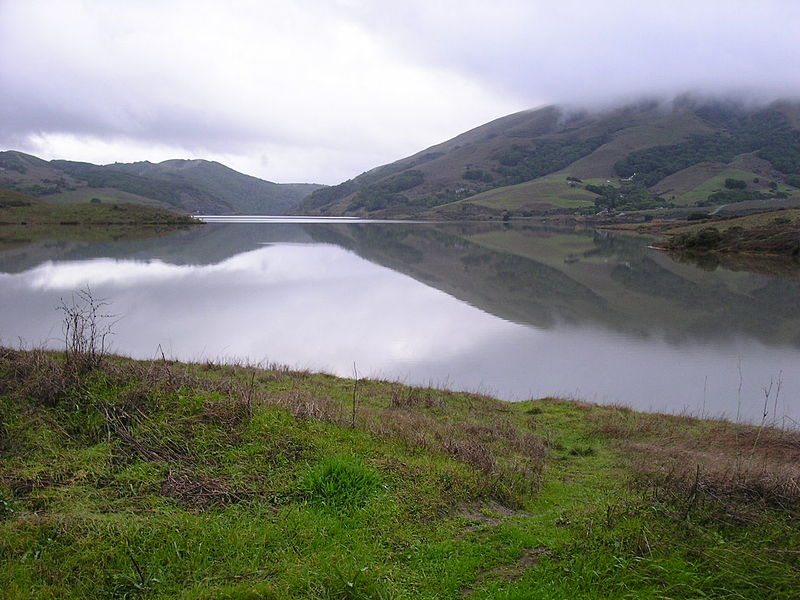
Trivia: Right now, Marin’s water reservoirs are which of the following: dangerously low, or quite full?

For more trivia questions (and answers!) see Howard Rachelson’s Trivia Café every week in the Pacific Sun.

Answer: Quite full

Letter: ‘I saw the letter from Donald Harte about vaccines …’

I Harte quack-a-be

I saw the letter from Donald Harte about vaccines [“Measles Schmeasles!,” Feb. 13] and my guess is he is Dr. Donald Harte from Corte Madera. First he should be identifying himself as a chiropractor and, secondly, if he is said chiropractor he should also include the disputes he has had with the medical field because of his practices and marketing.

Wesley Knitter, Marin

Hero and Zero: San Rafael City Council cleans up and drones in Tiburon

hero and zero
by Nikki Silverstein HERO: While many view the Boyd Memorial Park closure as a violation of the rights of the homeless, we have a different perspective. Our close friend who lives within shouting distance of the park had his life disrupted daily as park-goers screamed obscenities, threatened to kill one another and had physical altercations. Unfortunately, this behavior occurred at...

Video: To the beat of your own drum

by Richard Gould Why has WHIPLASH struck the chord it has, coming from nowhere to bring A-list fame upon J. K. Simmons (our friendly Farmer's agent) and garner a best picture nomination? Maybe because Simmons' Terence Fletcher, Shaffer Conservatory's charismatic demon-instructor offers a bracing alternative to participant-trophy youth. Call it focused feedback, or Amy Chua meets Dr. House. Young student...

Upfront: Five-finger discount

by Peter Seidman Marin Clean Energy (MCE) is about to celebrate its fifth anniversary. The success of the alternative power agency continues to trigger paroxysms of consternation among its critics. The energy agency began supplying power to Marin residents in May of 2010. Critics of public power agencies, dubbed community choice aggregators, attacked the concept in general—and Marin Clean Energy in...

This week at the Pacific Sun

What can you find Graham Nash of Crosby, Stills, Nash & Young doing in his spare time? Take a look at Nash and his hobbies through another lens in his latest Q&A with Steve Heilig. Peter Seidman explores what's next for Marin Clean Energy--the company will celebrate its fifth year in 2015. Wondering how Fifty Shades of Grey lived...

Food & Drink: Clean bill of health

by Tanya Henry Remember those New Year’s resolutions? Chances are a healthier you was on that well-intentioned list. Circling back to make good on some of those plans, here are a few ideas to keep you—or get you—back on track. FOOD ON THE BRAIN Book Passage in Corte Madera presents chef Rebecca Katz, who will discuss and sign her new book,...

Advice Goddess

advice goddess
by Amy Alkon Q: There’s a girl who works at the hotel where my co-workers and I go for drinks. She’s hot and smart and fun, and I really like her and want to ask her out. The problem is that when she laughs, she cackles in this really annoying way. I’m wondering whether, if we started dating and hit...

Publisher’s Note: The changing rays of the ‘Sun’

by Bob Heinen This week is bittersweet as we say goodbye to our Managing Editor Stephanie Powell and welcome our staff writer Molly Oleson, as our new editor.  Stephanie will stay on as a contributing editor to the Pacific Sun, but we will miss her as she steps down from the day to day rigors of producing a weekly newspaper...

Talking Pictures: Fifty shades of what?

by David Templeton "Wow! That was definitely not inspired by Downton Abbey, was it?” observes actress-comedian Debi Durst, with a cringe, as the credits for Fifty Shades of Grey roll up the screen of this strangely silent theater in San Francisco. Durst (and yes, her husband is renowned political satirist Will Durst) knew very little about the content of the...

Trivia: Right now, Marin’s water reservoirs are which of the following: dangerously low, or quite full?

For more trivia questions (and answers!) see Howard Rachelson’s Trivia Café every week in the Pacific Sun. Answer: Quite full

Letter: ‘I saw the letter from Donald Harte about vaccines …’

I Harte quack-a-be I saw the letter from Donald Harte about vaccines and my guess is he is Dr. Donald Harte from Corte Madera. First he should be identifying himself as a chiropractor and, secondly, if he is said chiropractor he should also include the disputes he has had with the medical field because of his practices and marketing. Wesley...
3,002FansLike
3,850FollowersFollow