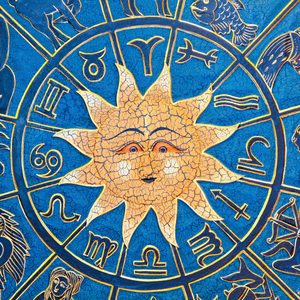
Horoscope

ARIES (March 21–April 19) We might initially be inclined to ridicule Stuart Kettell, a British man who spent four days pushing a Brussels sprout up 3,560-foot-high Mount Snowden with his nose. But perhaps our opinion would become more expansive once we knew that he engaged in this stunt to raise money for a charity that supports people with cancer. In any case, the coming weeks would be a favorable time for you, too, to engage in extravagant, extreme or even outlandish behavior in behalf of a good or holy cause.

TAURUS (April 20–May 20) The Taurus guitar wizard known as Buckethead is surely among the most imaginative and prolific musicians who has ever lived. Since producing his first album in late 2005, he has released 306 other albums that span a wide variety of musical genres—an average of 23 per year. I propose that we make him your patron saint for the next six weeks. While it’s unlikely you can achieve such a gaudy level of creative self-expression, you could very well exceed your previous personal best in your own sphere.

GEMINI (May 21–June 20) Novelist Arthur Conan Doyle created Sherlock Holmes, a fictional character who personifies the power of logic and rational thinking. And yet Doyle was also a devout spiritualist who pursued interests in telepathy, the occult and psychic phenomena. It’s no surprise that he was a Gemini, an astrological tribe renowned for its ability to embody apparent opposites. Sometimes that quality is a liability for you folks, and sometimes an asset. In the coming weeks, I believe it’ll be a highly useful skill. Your knack for holding paradoxical views and expressing seemingly contradictory powers will attract and generate good fortune.

CANCER (June 21–July 22) In 2006, a 176-year-old tortoise named Harriet died in an Australian zoo owned by “Crocodile Hunter” and TV personality Steve Irwin. Harriet was far from her original home in the Galapagos Islands. By some accounts, evolutionary superstar Charles Darwin picked her up and carried her away during his visit there in 1835. I propose that you choose the long-lived tortoise as your power creature for the coming weeks. With her as inspiration, meditate on questions like these: 1. “What would I do differently if I knew I’d live to a very old age?” 2. “What influence that was important to me when I was young do I want to be important to me when I’m old?” 3. “In what specific ways can my future benefit from my past?” 4. “Is there a blessing or gift from an ancestor I have not yet claimed?” 5. “Is there anything I can do that I am not yet doing to remain in good health into my old age?”

LEO (July 23–August 22) John Lennon claimed that he generated the Beatles song’ “Because” by rendering Beethoven’s “Moonlight Sonata” backwards. Even if that’s true, I don’t think it detracts from the beauty of “Because.” May I suggest you adopt a comparable strategy for your own use in the coming weeks, Leo? What could you do in reverse so as to create an interesting novelty? What approach might you invert in order to instigate fresh ways of doing things? Is there an idea you could turn upside-down or inside-out, thereby awakening yourself to a new perspective?

VIRGO (August 23–September 22) The Tsonga language is spoken by more than 15 million people in southern Africa. The literal meaning of the Tsonga phrase I malebvu ya nghala is “It’s a lion’s beard,” and its meaning is “something that’s not as scary as it looks.” According to my astrological analysis, this will be a useful concept for you to be alert for in the coming weeks. Don’t necessarily trust first impressions or initial apprehensions. Be open to probing deeper than your instincts might influence you to do.

LIBRA (September 23–October 22) The old Latin verb crescere meant “to come forth, spring up, grow, thrive, swell, increase in numbers or strength.” We see its presence in the modern English, French and Italian word “crescendo.” In accordance with astrological omens, I have selected crescere and its present participle crescentum to be your words of power for the next four weeks. May they help mobilize you to seize all emerging opportunities to come forth, spring up, grow, thrive, swell and increase in numbers or strength.

SCORPIO (October 23–November 21) When animals hibernate, their metabolism slows down. They may grow more underfur or feathers, and some add extra fat. To conserve heat, they may huddle together with each other. In the coming weeks, I don’t think you’ll have to do what they do. But I do suspect it will be a good time to engage in behaviors that have a resemblance to hibernation: slowing down your mind and body; thinking deep thoughts and feeling deep feelings; seeking extra hugs and cuddles; getting lots of rich, warm, satisfying food and sleep. What else might appeal to your need to drop out of your fast-paced rhythm and supercharge your psychic batteries?

SAGITTARIUS (November 22–December 21) When people tell me they don’t have time to read the books I’ve written, I advise them to place the books under their pillows and soak up my words in their dreams. I don’t suggest that they actually eat the pages, although there is historical precedent for that. The Bible describes the prophet Ezekiel as literally chewing and swallowing a book. And there are accounts of 16th-century Austrian soldiers devouring books they acquired during their conquests, hoping to absorb the contents of the texts. But in accordance with current astrological omens, I suggest that in the next four weeks you acquire the wisdom stored in books by actually reading them or listening to them on audio recordings. In my astrological opinion, you really do need, for the sake of your psychospiritual health, to absorb writing that requires extended concentration.

CAPRICORN (December 22–January 19) Among the top “how to” search inquiries on Google are “how to buy Bitcoin,” “how to lose belly fat fast,” “how to cook spaghetti in a microwave” and “how to make slime.” While I do think that the coming weeks will be prime time for you to formulate and launch many “how to” investigations, I will encourage you to put more important questions at the top of your priority list. “How to get richer quicker” would be a good one, as would “how to follow through on good beginnings” and “how to enhance your value” and “how to identify what resources and allies will be most important in 2019.”

AQUARIUS (January 20–February 18) A motivational speaker and author named Nick Vujicic was born without arms or legs, although he has two small, unusually shaped feet. These facts didn’t stop him from getting married, raising a family of four children and writing eight books. One book is entitled Life Without Limits: Inspiration for a Ridiculously Good Life. He’s a positive guy who has faith in the possibility of miracles. In fact, he says he keeps a pair of shoes in his closet just in case God decides to bless him with a marvelous surprise. In accordance with current astrological omens, Aquarius, I suggest you make a similar gesture. Create or acquire a symbol of an amazing transformation you would love to attract into your life.

PISCES (February 19–March 20) About 11 percent of the Philippines’ population is comprised of Muslims who call themselves the Bangsamoro. Many resist being part of the Philippines and want their own sovereign nation. They have a lot of experience struggling for independence, as they’ve spent 400 years rebelling against occupation by foreign powers, including Spain, the United States and Japan. I admire their tenacity in seeking total freedom to be themselves and rule themselves. May they inspire your efforts to do the same on a personal level in the coming year.


Sole Man

Dominic “the Shoe Surgeon” Ciambrone has never been afraid to step out on his own. Growing up in Santa Rosa, Ciambrone was always building things by hand in the backyard of his childhood home. Instead of following instructions when building forts and making things out of Legos, he created something new.

The 32-year-old Ciambrone’s backyard is now in Los Angeles’ Silver Lake neighborhood, and what he creates now are highly sought-after, one-of-a-kind sneakers. And those who surround him these days are famous athletes and musicians. But one thing remains the same from his early days in Sonoma County: he doesn’t follow instructions; he follows whatever’s in his head.

At one point, what was in Ciambrone’s head deteriorated into a cacophony of tormented voices brought on by severe anxiety and drug abuse. The noise became so unbearable that it eventually sent Ciambrone leaping out of a second-story window and landing in a muddling haze of prescription drugs and psychiatric care seven years ago. He says that he felt the need to turn to drugs and alcohol to feel “normal and escape reality.”

“After he jumped,” says his mother, Kim Ciambrone, “I remember the doctors telling us that our son was delusional—that he thinks he makes shoes for Justin Bieber. My husband and I said, ‘He does make shoes for Justin Bieber.’”

The doctors found it hard to believe, but truth is often stranger than fiction. Ciambrone’s big break came when he was introduced to Justin Bieber through a mutual friend while delivering a pair of custom-made sneakers for musician will.i.am to wear at an MTV Video Music Awards show. The Shoe Surgeon and the Biebs hit it off, and Ciambrone found himself fulfilling a few dozen orders of shoes for one of Bieber’s upcoming tours. Then, after Law & Order: Special Victims Unit enlisted his services for a 2011 episode titled “Personal Fouls,” Ciambrone’s work catapulted into the sneaker stratosphere.

But before he could continue to keep celebrities’ sneaker games looking fresh, Ciambrone needed a fresh outlook himself. Kim recalls her son being diagnosed with bipolar disorder and prescribed a cocktail of mood stabilizers, anticonvulsants and antidepressants. “Dominic had one of those Monday-through-Sunday pill boxes, and some pills he had to take were just to offset the side effects of the other pills. It really put him in a fog,” she says.

The lack of clarity was stifling his creativity and distorting his artistic vision. “He didn’t want to continue taking the medication because of the damage it was doing to his body,” she says. “He felt more like a zombie than a human.” Ciambrone turned to a traditional Chinese medicine clinic in Petaluma, where he underwent a full-body cleanse. He started meditating, resumed exercise activities and phased out his prescriptions.

Ciambrone’s interest in fashion began in middle school. “My older cousin let me wear her original 1985 Air Jordan 1’s in high school. It was the first time that I felt like I was able to wear something without having to say anything to express myself,” Ciambrone says.

The experience inspired the then-16-year-old to try his hand at sneaker design by airbrushing Jordan’s with model paint and tinkering with the iconic Nike “swoosh” by removing it from the side of the shoe and gluing it to the top. Ciambrone’s DIY-alterations caught the attention of his friends, who implored him to customize their kicks in the same fashion.

Taking liberties on an original design was nothing new for Ciambrone, as he told Hypebeast earlier this year. He was counterfeiting Chuck E. Cheese prize tickets with his brothers at the age of 12, and quite literally graduated from the ball pit with his next venture: hawking counterfeit high school graduation tickets for $15. It proved to be a lucrative racket, until his younger brother was caught and prohibited from participating in the ceremony.

When Ciambrone graduated from Santa Rosa’s Elsie Allen High School, in 2004, he didn’t ask for a new car or laptop as a graduation gift; he asked for a sewing machine. His grandmother gave him a Brother Pacesetter PS1000 13-stitch machine. Designed more for clothing than shoes, it was the perfect introductory tool for the young Ciambrone to realize his potential. In 2005, he enrolled at Santa Rosa Junior College to study fashion design, but there was one problem.

“I just couldn’t sit still,” he says. Ciambrone’s time as an SRJC Bear Cub was over before it started, and at the age of 19 he moved from Santa Rosa to Charlotte, N.C., to stay with his grandmother.

The move opened up his view on what fashion was and could be outside of his wine country stomping grounds. “You could go to a kiosk in a mall in Charlotte and people there were airbrushing shoes,” Ciambrone says. “That just didn’t exist back home in NorCal.”

While in Charlotte, Ciambrone teamed up with a local shoe customizer who designed the cleats for the Carolina Panthers in the 2003 Super Bowl—a connection that accelerated Ciambrone’s learning curve. Eventually, his fascination with Charlotte mall culture led to his first design job at a No Fear clothing store in Charlotte. As assistant manager, Ciambrone was able to put his customized kicks on display for $120 a pair, a price point that netted him a mere $20 profit after his labor costs.

When Ciambrone moved back to Santa Rosa, he began searching for local shoe-repair shops that would give him the chance to further hone his skills and expand his craft—easier said than done. “The first person I approached shoved me away,” Ciambrone says. “He was cussing at me, and said he wouldn’t work with me because I’d steal all his business.”

He finally took a step in the right direction when he and met his future mentor, Daryl Fazio, in Windsor. Initially, Fazio, who had more than 30 years changing soles under his belt, was reluctant to work with Ciambrone, due to the younger man’s relative lack of hands-on experience. The Shoe Surgeon eventually swayed Fazio with his determination.

“Daryl really helped me learn how to properly sand and sew,” and showed me “what machines were best to work with,” Ciambrone says. He would go on to apprentice at Fazio’s shop for five years, in conjunction with learning from Michael Carnacchi, a custom-fitted boot maker at the Apple Cobbler in Sebastopol. “I remember Michael’s eye for detail and passion for craft, and Daryl’s amazing work ethic, and how he built relationships with customers,” Ciambrone says.

Before Ciambrone could set up shop and begin work as a self-employed shoe stylist, there was some paperwork to submit. His father, Lou, owner of Santa Rosa’s Canevari’s Deli, required him to draw up a loose business plan. In return, Ciambrone’s parents made an investment in their entrepreneurial son in the form of a $3,500 sewing machine.

“It wasn’t like I wanted him to draw up this fully realized business plan that was going to work.” Ciambrone’s father says. “I just wanted him to see what that entailed and what needs to be presented to someone when you ask for a loan.” Ciambrone, 21 at the time, was able to enlist the help of Guy Fieri through a mutual friend, who provided him with some valuable financial insight.

The Shoe Surgeon remembers his humble beginnings, when he often worked for free and felt fortunate to charge someone $100 for his designs. “There were times where I wasn’t making any money,” he says. “The friends and family I had in Santa Rosa helped feed me and pay my rent.” Ciambrone can now pay his rent with just one higher-end pair of his current lineup of custom shoes. His website offers shoes ranging in price from $200 to $3,500—not bad for someone who once operated entirely out of his parents’ garage with one sewing machine.

Ciambrone hasn’t forgotten where he came from, crediting the “old leather spots” in Petaluma and Sebastopol with helping to trigger his success. He frequently returns home to visit family and friends, and credits his father with instilling in him a “strong work ethic and eternal sense of optimism” as a foundation that got him where he is today.

A husband and a father now himself, Ciambrone has a new appreciation for the pair that raised him. “I’m extremely grateful to have had the most loving, hard-working parents,” he says. “As a parent myself it puts life into a different perspective.”

Ciambrone recently collaborated with retail giants eBay and Farfetch on charity events that raised money for victims of the North Bay wildfires, and now has his sights set on raising awareness for mental-health issues. “The goal is to share my struggles of the mental challenges and diagnosis of what I went through to help others out of very bad situations,” he says. “This upcoming year I’m focused on devoting more of my time to be an advocator of mental health awareness. I want everyone to learn more about themselves and talk about the dark feelings they may have.”

By Michael Barnes

Advice Goddess

Q: A lot of women are posting pix of themselves on Instagram in very skimpy attire. I don’t feel comfortable doing that (though I’m in great shape), because I’m single and I’m afraid men would think I’m “easy.” Am I right in thinking men don’t take you seriously as relationship material if you post this type of pix? Or am I prudish and out of touch?—Curious

A: Ideally, if you tell somebody you have a few more weeks out on disability, they don’t immediately assume it’s because you got really bad friction burns working the pole. Evolutionary psychologist Cari Goetz and her colleagues note, not surprisingly, that men see skimpy attire on a woman as a signal that they can manipulate her into casual sex. (Women in their research also understood that men perceive skimpy attire this way.) But who actually ends up manipulating whom?

Goetz and her team speculate that some women—especially those who perceive themselves to be “low in mate value”—use revealing attire to advertise what seems to be their hookupability and other “exploitability cues.” However, these seemingly poor, defenseless sex bunnies may actually be looking to “advance their own mating and relationship goals.” As for how this might work, if a man likes the casual sex and keeps coming back for more, maybe, just maybe, she can draw him into a relationship. (Hookupily ever after?)

However, this approach is a risky strategy because, as Goetz and her colleagues point out, “men found women displaying cues to sexual exploitability to be attractive as short-term mates, but, importantly, not attractive as long-term mates.”

As for what you might make of all this, it’s best to avoid clothes with coverage just this side of G-strings and nipple tassels, as well as overtly sexual poses (like sucking on a finger—subtle!). However, you can take advantage of evolutionary psychology research that finds that men are drawn to women with an hourglass figure (as well as, heh, women who use deceptive undergarments to fake having one). In short, your best bet is posting shots of yourself looking classy-sexual. This means wearing clothes that reveal your curves to a man—but not your medical history: “I don’t know her name yet, dude, but I can tell you that she had her gallbladder removed.”

Q: I love my girlfriend, but she has some weird rules about her place: no shoes inside, cabinets can’t be left open, etc. We’ve gotten in fights when I’ve forgotten to do this stuff and then mentioned how ridiculous I find it. Should I have to do things I think are stupid?—Besieged

A: Your girlfriend reminds you of a well-known television star. Unfortunately, it’s Judge Judy.

You, like many people in relationships, have the expectation that your partner’s requests should make sense. This is where you go wrong. To be human is to be kind of an idiot. We’re all idiots on some level—meaning that we all say and do things that make sense to us but that others would reasonably find utterly idiotic.

That said, our idiocy is not without benefits. Economist Robert H. Frank observes that we evolved to sometimes behave in “seemingly irrational” ways that actually serve our interests. An example would be acting out in ways that test others’ commitment to us (though, typically, we don’t see it that way and may not even intend to do that).

So, though your girlfriend would probably list reasons for each of her rules—reasons you might find silly—what isn’t silly is her caring about your following them or at least caring enough to try. In short, you don’t have to endorse her ideas to try to act in accordance with them and to treat her kindly when she gets upset that you’ve forgotten. (For example, you could say: “I’m sorry. I know it’s important to you that I do this.”) This would be a signal that you care deeply about her, that you love her enough to do ridiculous things just to make her happy—maybe even to the point of handing her a shopping bag: “Look, honey! There was a sale at Prada on surgical shoe covers!”

The Hard Cell

When the chips were really down for Jason Rezaian, the Washington Post reporter and former Iranian hostage says he’d reflect on one of his late father’s Yogi Berra–type malapropisms.

His father, Taghi, an Iranian émigré to Marin County in the 1950s was “filled with jokes,” says Rezaian, “He had these sayings that didn’t make 100 percent sense, but when you thought about it, they did.” His dad, well-known in the community, ran a Persian rug emporium in San Rafael for decades, and Rezaian says he still has lots of relatives in and around the Bay Area, though he hasn’t lived here for years.

While reporting on Iranian life for the Post in 2014, Rezaian and his Iranian wife, Yeganeh Salehi, were arrested by Iranian security forces and accused of espionage.

He spent 544 days in the country’s most notorious prison, known as Evin—around six months of those in solitary confinement. His ordeal is recounted in Prisoner, a memoir just published on the late Anthony Bourdain’s imprint at HarperCollins, Ecco Books. He’s back in his hometown for several readings scheduled around the Bay Area.

The Marin County native, a graduate of Marin Academy High School, is in his early 40s and lives in Washington, D.C., now with his wife. Before their hostage crisis, they’d decided that they’d never have kids—now he says they’re considering it, though with a laugh he adds that the nine-month window has not yet opened.

Rezaian was subjected to intense psychological torture during his ordeal, which ended when he was freed as part of President Barack Obama’s negotiation of the Iran nuclear deal in 2015. His detainment included multiple threats that he’d be executed. He was repeatedly told to sign a confession as a condition of his release but heroically held the line against his captors and only ever admitted to doing his job at the Post, which was to report on Iranian life from the street-side and culturally engaged perspective of a returning son.

One of his dad’s Yogisms came in very handy, he says. “If you worry, you’re going to die,” he would advise his son. “If you don’t worry, you’re going to die. So don’t worry.”

He tried to not worry, despite his guards’ numerous threats that they’d cut off his fingers and toes, that he’d be executed. He spent months in a solitary confinement cell in the prison, and even there, he says, his natural optimism helped him to deal with the soul-crushing conditions.

“You have to keep separate sets of mental books,” he says by way of explaining how he survived long periods in solitary. (As his plight unfolded, Rezaian would eventually spend significant time with other inmates in a two-person cell.) “On the one hand, the fear and anxiety is omnipresent. But you learn that if you let that take everything over, it takes everything over. This is not a place where I or anybody wants to be, and I looked at my situation as always: I’m in this prison, considered one of the worst in the world. But just around me, I could see people who were in worse situations, cellmates who were more isolated, who couldn’t speak to the guards.”

Rezaian would come to look forward to his interrogations, he says in his book, because they would at least afford him human contact. He eventually came to appreciate that he was a player in a big unfolding negotiation between the United States and the Rouhani regime. He thought: “This is horrible, but it could be worse and worse and worse. Some days, it did get worse. Other days, there were glimmers of hope. I’m optimistic by nature.”

The first few weeks of Rezaian’s confinement were filled with fear and bewilderment. “I didn’t know what to think,” he says, and in his book writes how he repeatedly claimed his innocence and that this was all a big mistake. That was the first few days, he says. “Then the reality sets in.” His guards told him that the whole world already thought he was dead anyway, that the Washington Post didn’t care, and neither did the Obama Administration.

“Then the fear of influences on your thinking comes in,” he says. The guards would take him out of his “tiny vacuum sealed cell,” and then at least he’d be having interactions with people, even if they were threatening to cut off his fingers. Now Rezaian saw his captors let down their guard a bit. They threatened him with physical violence but never beat him. “Then you start to see—this is a hostage-taking. This particular moment in this country’s trajectory is not going to be served by killing an American.”

Still, he did fear that he’d be left behind in the Iran nuclear deal since scrapped by Donald Trump. Rezaian feared it might be a long time before he was released.

What he could not and did not know while in prison was that his older brother, Ali, his employers at the Post, officials in the Obama Administration—not to mention Marin Congressman Jared Huffman—were working on his release from the day he was arrested. “I can’t say it because I’m a journalist working for the Washington Post,” he says with a laugh, “but vote for Huffman!” He credits the pol for his dogged efforts on his behalf; Huffman was at a German airport to meet Rezaian when he was released.

Upon his release, Rezaian recalls that it was encouraging to him to know, in hindsight, that every time then-Secretary of State John Kerry met with his Iranian counterparts during the nuclear negotiations, Rezaian’s name came up in the negotiation.

That was encouraging. “What’s disheartening,” he says, “is that several [Americans] have been taken hostage since I was released, and there is no conversation going on with the United States and Iran right now, and for those people who are saying, ‘Don’t talk to evil, don’t negotiate with evil,’—well, that’s shortsighted,” and of no comfort to the hostage’s families.

The brutal murder of Rezaian’s colleague, Jamal Khashoggi, hangs over our conversation, as does the gourmet ghost of the late Anthony Bourdain, who filmed Rezaian for his Parts Unknown show in a segment about Persian cuisine, before the hostage-taking, and urged him to write Prisoner after his release.

First, Khashoggi, a Washington Post columnist who was murdered by Saudi Arabian officials last year: “The one thing in which the murder of Jamal and what happened to me are connected, or have in common: both are two instances of authoritarian regimes using extraordinary means to silence journalists who were writing about them. Full stop. Not even writing about them in ways that they didn’t like—in my case it was taking the pen out of my hand, and getting leverage with America. In Jamal’s case, it was simply, we are going to silence this person in an audacious and horrifying way so that other people are silenced too.

“I don’t want to compare and contrast the Iranian and the Saudi regime, they are both terrible, but I will say that this act by the Saudi regime, along with the war with Yemen, the crackdown on dissent within their own borders—I don’t think this is something that most Americans can wrap their minds around. They routinely behead people.”

He says that the disconnect between the American posture toward Iran and Saudi Arabia is an “incredibly disheartening” thing to behold in Washington, D.C. Trump has reportedly been trying to figure out a way to go to war with Iran for the past two years, instilling fear and propping up the “Death to America” rhetoric that Rezaian says woefully misreads the Iranian mindset toward America. “Juxtapose that with the way that this administration has responded to the death of my colleague, someone I was getting to know.”

“The most noteworthy thing about Iran is its people,” Rezaian adds and highlights an ancient culture with rich musical, literature, poetry, film and food traditions. “My money is always on the Iranian people,” he says. “They are resilient, they are smart, and over time they’ve made it clear that they are dissatisfied, the majority of them, with the rulers of this country.”

He suggests that the United States, as it promotes policies advertised as good for fomenting democracy and good for Iran, should take a look at whether travel bans and crippling sanctions are accomplishing the mission. “How can we say we support your quest for freedom when we’re not going to let you come here?”

Rezaian recalls a time in the 1960s and ’70s, before the Iranian hostage crisis, when Iranian students comprised the highest percent of foreign-born university students in America—many of them receiving their education in the Bay Area, long a destination for Iranian immigrants. “I don’t think there is hatred of America,” he says.

Rezaian’s time spent reporting on the streets of Iran left him with a clear impression that, instead, “Iranians are probably one of the most pro-America populaces” in the Middle East. “People are tired of the ‘Great Satan’ state media stuff.” Despite the longstanding Friday ritual of burning American flags in Tehran, he insists, “there is not rabid anti-Americanism in Iran.”

And then there’s Bourdain. Rezaian says the author and TV host’s 2018 suicide “remains, continues to be, the hardest thing that my wife and I have to grapple with.” He’ll get stopped on the street, he says, by Bourdain fans who saw Rezaian and his wife on his show during an episode filmed in Tehran six weeks before he was arrested. Rezaian says of himself that he’s not a gourmand but is a big lover of food (he lost lots of weight in prison, he recollects in the book), and in an interview, recalls a Marin youth filled with visits to the bustling multi-ethnic food scene on Fourth Street in San Rafael. “It was one of the great culinary destinations that nobody knew about where you could find food from all over the world,” he recalls.

During his ordeal in Iran, Bourdain’s celebrity status, he says, “gave a spotlight to our imprisonment that nothing else could.” The episode aired numerous times during his imprisonment and Rezaian says with obvious emotion that he “had no idea the lengths to which [Bourdain] was advocating for me publicly and privately while we were there.”

A few weeks after their release, Rezaian and his wife met with Bourdain for a meal in New York City. “This is a guy we are meeting for the second time, 20 months after the first time. It was an incredible roller coaster ride for us in the meantime—and it turned out he had been an incredible friend to us while we were in trouble.”

Bourdain encouraged Rezaian to write his story, and he did the “traditional thing,” he says—wrote a proposal, shopped it around to 14 publishers, six of whom made offers, including Bourdain’s Ecco imprint at HarperCollins. Rezaian then got an email from Laos, from Bourdain. “It was more like, whatever you decide, I’m going to be there for you,” Rezaian recalls. Bourdain added, “‘I’ll be a vocal and spirited advocate no matter what. Give my offer some consideration.’ When you get something like that, how can you say no?”

Rezaian sighs and reflects on his interactions with the late Bourdain. “We’re doing this for Tony.”


Jason Rezaian will appear with W. Kamau Bell on Jan. 28 at 7pm at

Angelico Hall, Dominican University of California, 20 Olive Ave., San Rafael. $45 includes book. On Jan. 29 at 7pm, he’ll be at Books Inc., 1491 Shattuck Ave., Berkeley. Contact store for ticket info. And on Jan. 30 at noon, he’ll be at the Commonwealth Club, 110 the Embarcadero, Taube Family Auditorium. Tickets, $10–$60.

Flashbacks

40 Years Ago This Week

In the auditorium of the Food and Agriculture Building on N. Street, where Jerry Brown was in the midst of delivering his longest, broadest and most conservative speech ever, Richard Silberman, his director of finance, and Grey Davis, his chief of staff, squirmed smugly in their metal folding chairs and looked at each other with an emotion that can only be described as wanderlust.

Behind the lectern, before a battery of prime-time TV cameras, the governor of California was in the midst of his 20-minute long paean to fiscal tight-fistedness. “The tax revolt is being heard,” he uttered coarsely, punctuating the air with right jabs.

Language a little less colorful than his predecessor’s, perhaps, but rhetoric redolent with rampaging Reaganism nonetheless.—Peter Anderson, Jan. 19–25, 1979

20 Years Ago This Week

Am I saying what Bill Clinton did was OK? Of course not. But is this offense an impeachable offense? I don’t think so. Bill Clinton has been an exceptional president. Our economy is better than it has been in decades. Our jobless rate is at an all time low, to name two of his accomplishments. To impeach a man who made a grave mistake in his personal conduct is bankrupting our government values. Should Bill Clinton be punished? I think he has been. By his family, friends, and the people of the world.

If there are 10 people in our government that can honestly say they have not had an “inappropriate relationship” and have not lied about it to their family and friends to protect themselves, their families and the people they love, then let them stand up, and let their votes be counted. Where is our generosity of spirit, and the forgiveness you would like bestowed on you, when a grave error in judgment has been made. After all, we all are only human.

—Letter to the Editor, Jan. 20–26, 1999

Border Myths

0

The nation is currently enduring a lengthy government shutdown because Congress won’t give Donald Trump $5.7 billion for a border wall he said that Mexico would pay for. But the supposed border crisis that requires a new wall is based on Trump mythology—a series of “alternative facts” that he and his acolytes continuously put forth. Many of these are amplified by media outlets and talk radio such that large numbers of Americans are misled about the state of the border and immigrants who pass through it.

Why should we in the North Bay be so concerned about Trump’s shenanigans on the border?

There is a humanitarian crisis at the Mexican border—although not one that a wall will solve. Thousands are being held by Customs and Border Protection in inhumane conditions at border facilities. Others are living in squalor at camps on the Mexican side of the border, awaiting asylum processing. Many of these refugees are from regions of Mexico and Central America with large populations in the North Bay. Many have close family in Sonoma, Marin and Napa counties and end up settling here.

Our country has handled refugee crises before. Thousands of European refugees settled here after World War II. In the 1980s, we opened our door to Cubans, Eastern Europeans and others fleeing communism. As before, we ought to work on an orderly and a humane manner for handling their claims of persecution—a solution more worthy of a nation of immigrants than an expensive and ineffective wall.

It’s worth examining some of the false myths surrounding the wall debate, so we can all understand better what sort of crisis we have on the border and whether a wall will help at all:

Myth #1: Illegal immigration across our southern border is out of control

One of the oft-repeated myths is that illegal immigration through the U.S.-Mexican border has been rising and now is higher than ever. Actually, there has been a net drop in undocumented immigration from Mexico over the last 10 years; the overwhelming majority of those trying to cross illegally are now caught and subject to expedited deportation. Many more undocumented immigrants have been deported over the last decade than ever before. In truth, half of the undocumented immigrants here are visa overstays, usually from Europe or Asia.

Myth #2: Asylum seekers all come illegally

In fact, a large portion of the refugees at our southern border are entering the United States legally, seeking asylum under the Refugee Act of 1980. The Trump administration is trying to cut off these legal paths to asylum. But the truth is that most of these families at the southern border—including the caravans of asylum seekers Trump has condemned—are actually following our own immigration laws and procedures.

Myth #3: Many of those coming across the border are criminals and terrorists

Most of those seeking asylum are from parts of Mexico or Central America ravaged by violence at the hands of criminal cartels or gangs. Extortion, kidnapping and murder are commonplace there. Virtually all of the asylum seekers I’ve met reported that their families were targets of this violence and were threatened with more violence if they stayed in their communities.

Department of Homeland Security officials have admitted there has never been any evidence of terrorists entering our southern border, and the claims that gang members proliferate among those seeking asylum is completely unsupported by fact.

Myth #4: These immigrants disappear once allowed in the United States

All applicants for asylum go through an interview process at the border to determine if they have a “credible fear of persecution” in their home country. Those who fail these interviews are deported immediately.

Those found to have a credible fear of persecution still have to wear an electronic monitor in order to get released. Later, they have a trial before an immigration judge and must prove they have a “well-founded fear of persecution based on religion, race, nationality, political opinion or social group.” If they fail to do so, they are deported.

Trump has falsely claimed only 10 percent show up for their hearings. In fact, the overwhelming majority who file asylum claims appear in court and a substantial number have proven their eligibility for asylum.

Myth #5: Undocumented immigrants get welfare and government aid

Despite repeated claims to the contrary by Trump, undocumented immigrants do not qualify for welfare, food stamps, Medicaid or virtually any other form of government assistance.

Christopher Kerosky has been an immigration lawyer for over 25 years and has personally handled more than a thousand asylum cases. He has offices in Santa Rosa, Napa and San Rafael.


Top Torn Tickets

0

It’s said that musicals are the bread and butter of community theater, so here’s a list of the North Bay productions I toasted this past year, my Top Torn Tickets of 2018: Part Two, the Musicals (in alphabetical order).

‘Always, Patsy Cline . . .’ (Sonoma Arts Live) Danielle DeBow’s Patsy was as heartbreaking as Karen Pinomaki’s Louise was amusing in director Michael Ross’ labor of love. Excellent costume and set design work (also by Ross) along with outstanding live music accompaniment under the direction of Ellen Patterson made this a memorable evening of musical theater.

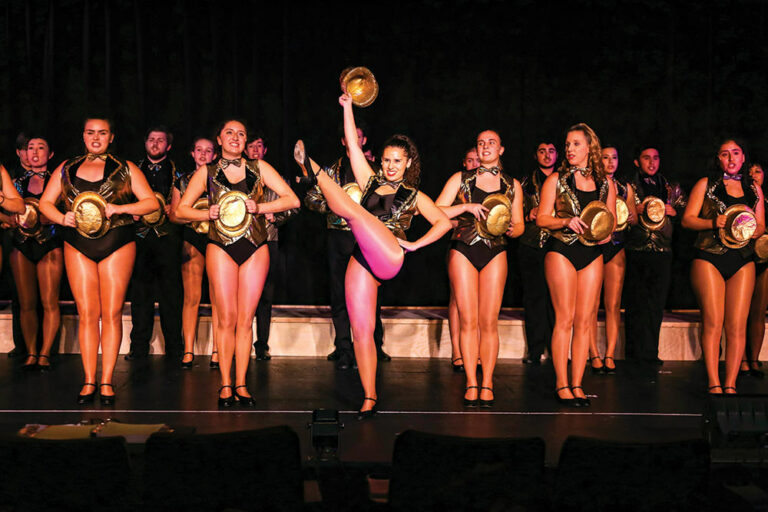
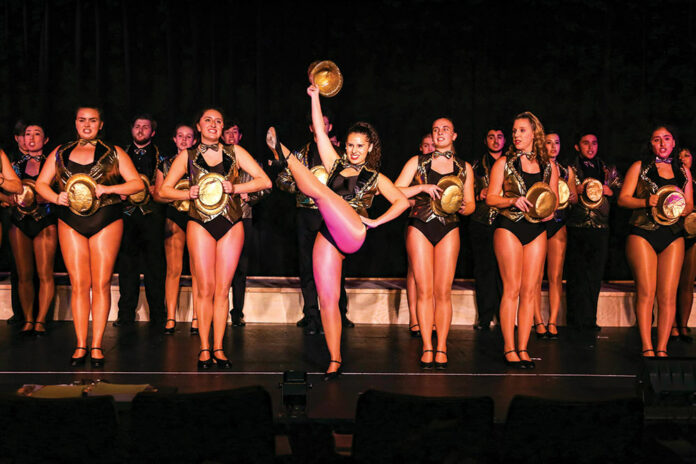
‘A Chorus Line’ (Novato Theater Company) Few small theater companies would take the risk of producing a vehicle that requires triple-threat performers in most roles. Director Marilyn Izdebksi’s decades of experience in dance and choreography and terrific casting were key to this production’s success.

‘Hands on a Hardbody’ (Lucky Penny) The perfect-sized musical for the Napa company’s small space, there wasn’t much room for anything else once they got the pickup truck that’s central to the story onstage. Director Taylor Bartolucci and choreographer Staci Arriaga had just enough room for a nice, diverse cast to beautifully tell the atypical story.

‘I Love You, You’re Perfect, Now Change’ (Raven Players) The cavernous Raven Theatre in Healdsburg was converted into a quaint black-box space where director Diane Bailey let loose four talented performers to tell musical stories about the arc of human relationships. It worked really well.

‘Illyria’ (6th Street Playhouse) Shakespeare. Ugh. A Shakespeare musical? Groan. A really entertaining musical production based on Twelfth Night? Surprising! Director Craig Miller’s swan song was a clever adaptation of the Bard’s comedy, which combined excellent vocal talents and the musical direction of Lucas Sherman to produce the best sounding show I’d seen at 6th Street in a long time.

‘Peter Pan’ (Spreckels Theatre Company) There’s no better stage in the North Bay on which to see a large-scale musical than the Nellie Codding Theatre at Spreckels. Flying around on wires is so much more impressive in a 550-seat theater, and Sarah Wintermeyer’s winsome performance as Peter was good enough for me to set aside my long-standing beef with always casting a female in the role.

‘Scrooge in Love!’ (Lucky Penny) A fairly new play (this was only its third production) that’s good enough to become a Christmas standard. A great lead performance from Brian Herndon was supported by a top-notch ensemble in this reverential continuation of the Dickens classic.

Strike a Pose

0

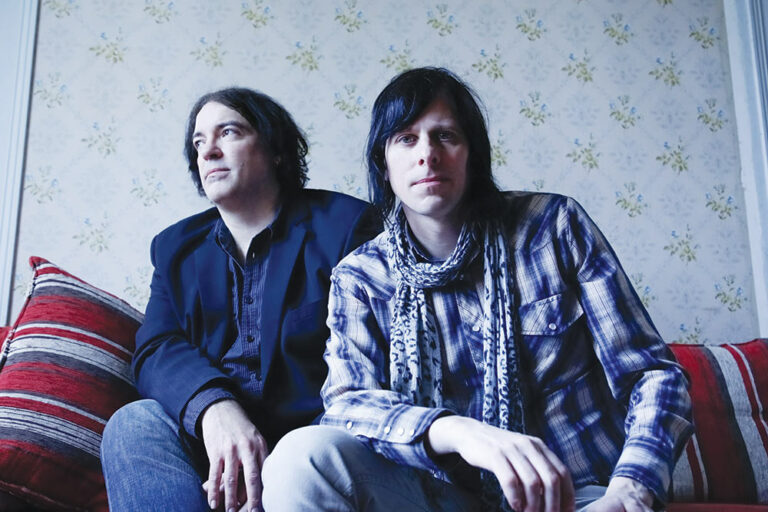
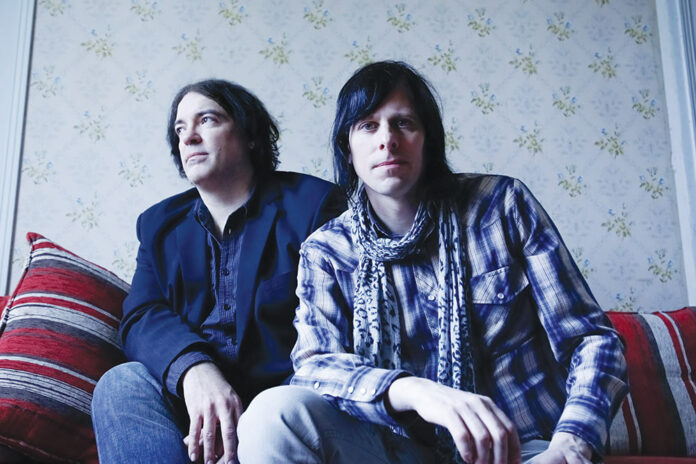
Guitarists and songwriters Jon Auer and Ken Stringfellow were barely out of high school when they first formed and fronted alternative rock outfit the Posies in the late 1980s in Bellingham, Wash.

Last year, the two marked the Posies’ 30th anniversary, a milestone for a band that gained major label renown with power-pop records like Dear 23 and Frosting on the Beater in the early ’90s, and who continue to produce well-received albums like 2016’s Solid States.

After a year-long anniversary tour as a full band, the Posies will pare down to the duo of Auer and Stringfellow for a special seated show with opener Rebecca Blasband on Jan. 19 at Sweetwater Music Hall in Mill Valley.

“It was a great experience,” says Stringfellow of the band’s recent anniversary tour. “It’s wonderful that this music can still have a life and give us a life.”

While the band’s overall lineup has changed several times in 30 years, the heart of the group has always been Auer and Stringfellow’s collaborative, competitive and fraternal musical relationship.

Jon, says Stringfellow, “was definitely a prodigy, an absolutely technically proficient guitar player at age 13. We competed a lot, and the competition we have brought us good things in the art, but sometimes it can get personal.”

Stringfellow notes that, through ups and downs, the two have managed to come out on the other side still dedicated to making music together.

“This anniversary was a much needed celebration,” says Stringfellow. “I think we have a nice little momentum going.”

For the upcoming show in Mill Valley, the duo will still play an electric set, though they plan to showcase the Posies’ harmonious side in the intimate setting.

“As a rock band, we play very hard,” says Stringfellow. “It’s bombastic and it’s loud, and the songs we have support that—but I think we have also have nice vocal harmonies, melodies and lyrics that go in all sorts of different directions.”

In addition to offering their classic songs in a new light, Stringfellow notes that this duo tour will be a chance to think about more music.

“One of the things this tour is about,” he says, “is to get together and spend long car rides talking about how we’re going to do the next record, whatever the next record is.”

The Posies perform on Saturday, Jan. 19, at Sweetwater Music Hall, 19 Corte Madera Ave., Mill Valley. 8pm. $25–$30. 415.388.3850.

Letters

Suffering and Devastation

Good article (“Wilde? Child!” Jan. 9), but it does not take into account the suffering and murder of innocent animals, or the devastation to the climate and earth caused by fishing and animal agriculture. Your thoughts?

Yogaworksatwork, Via Twitter

Now Hiring

Bianca May (Letters, Dec. 12): I read the WH is having difficulty hiring staff lately. Perhaps send them a résumé. I used to call the WH when O was in there and a nice lady would answer the phone. Now it doesn’t even go to a machine . . .

David Curtis, Pacificsun.com

Second Chance

The Marine Mammal Center is the only organization authorized by the National Marine Mammal Fisheries Service to rescue and provide veterinary care for ill and injured marine mammals along 600 miles of California Coast (Heroes & Zeroes, Dec. 12). Please report marine mammals that appear to be ill, abandoned or in danger (415.289.7325). You’ll help give these animals a second chance at life while also aiding researchers with their ongoing studies.

Frank Shinneman, Pacificsun.com

Housing for All

It’s not as if real estate in Marin and Sonoma counties has been affordable anytime recently (“The Rent Kept a-Rollin’,” Dec. 6). We should look at this as an opportunity to build dense, transit-oriented housing for all income levels around all the SMART stations.

Mike C, Via Twitter

Hero & Zero

Marin County Sheriff’s Office Facebook Page

Hero

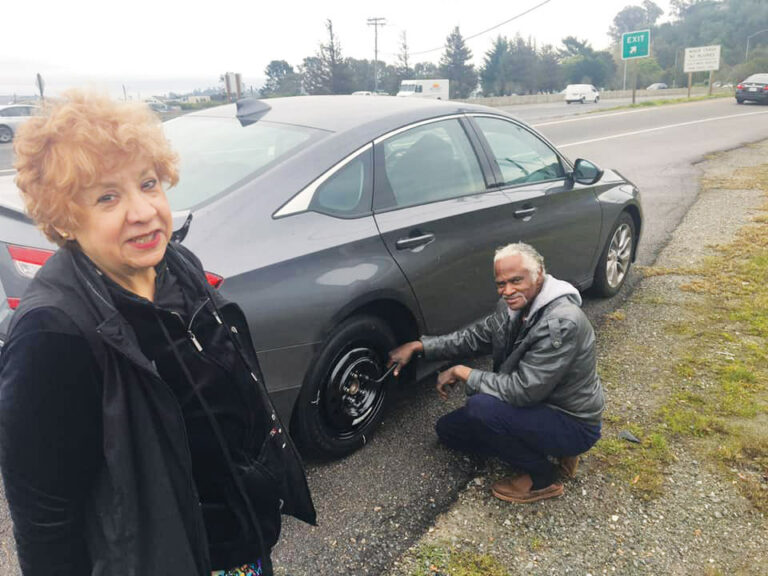
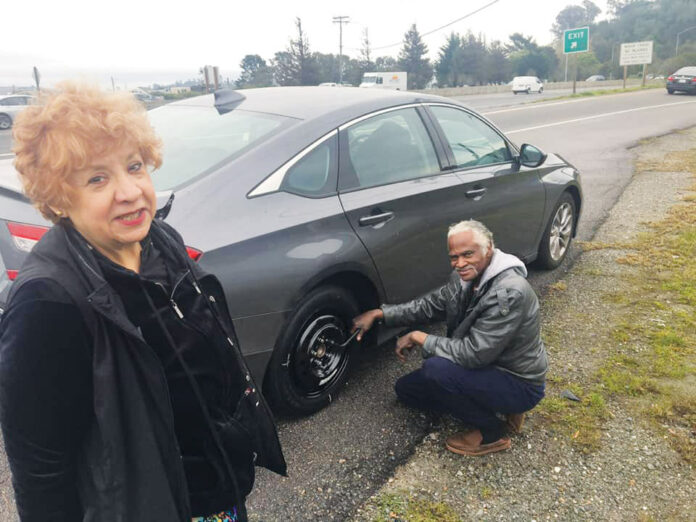
Steven, bound and determined to help a woman with car trouble, hopped a fence, among other things, to accomplish his mission. It began when he saw a woman driving on 101 southbound in Marin City with a flat tire. As he pulled up next to her on the freeway, he delivered the bad news. She exited 101 onto the Marin City off-ramp to call AAA. Many a man would keep on going, figuring he’d done his duty, but not Steven. This fine gentleman drove to the Gateway Shopping Center parking lot and climbed over the fence to check on the woman and her broken-down car (quite an achievement, considering he was sporting house slippers on his tootsies). When he discovered AAA couldn’t respond for approximately 30 minutes and the woman had an appointment, he rolled up his sleeves and changed her tire in less than 10. A big shout out to Steven for his kind deed, and thanks to the Marin County Sheriff’s Department for sharing his story.

Zero

Human excrement piled up at Point Reyes National Seashore due to Trump’s stubborn stance on reopening the federal government (see Upfront, Jan. 15). The bathrooms weren’t serviced and the toilets overflowed—but what cretins decided that the once pristine park made a suitable dumping ground? Thanks to party poopers, entire sections of the park were closed. Conditions became so disgusting that the Marin County Board of Supervisors voted to pay for the clean-up and maintain the bathrooms for two weeks. With a $1,000 price tag, the supes requested indemnification from the National Park Service and were promptly turned down. Grrrr.

Got a Hero or a Zero? Please send submissions to ni***************@***oo.com. Toss roses, hurl stones with more Heroes and Zeroes at pacificsun.com.

Horoscope

All signs look to the 'Sun'
ARIES (March 21–April 19) We might initially be inclined to ridicule Stuart Kettell, a British man who spent four days pushing a Brussels sprout up 3,560-foot-high Mount Snowden with his nose. But perhaps our opinion would become more expansive once we knew that he engaged in this stunt to raise money for a charity that supports people with cancer....

Sole Man

Dominic “the Shoe Surgeon” Ciambrone has never been afraid to step out on his own. Growing up in Santa Rosa, Ciambrone was always building things by hand in the backyard of his childhood home. Instead of following instructions when building forts and making things out of Legos, he created something new. The 32-year-old Ciambrone’s backyard is now in Los Angeles’...

Advice Goddess

Q: A lot of women are posting pix of themselves on Instagram in very skimpy attire. I don’t feel comfortable doing that (though I’m in great shape), because I’m single and I’m afraid men would think I’m “easy.” Am I right in thinking men don’t take you seriously as relationship material if you post this type of pix? Or...

The Hard Cell

When the chips were really down for Jason Rezaian, the Washington Post reporter and former Iranian hostage says he’d reflect on one of his late father’s Yogi Berra–type malapropisms. His father, Taghi, an Iranian émigré to Marin County in the 1950s was “filled with jokes,” says Rezaian, “He had these sayings that didn’t make 100 percent sense, but when you...

Flashbacks

40 Years Ago This Week In the auditorium of the Food and Agriculture Building on N. Street, where Jerry Brown was in the midst of delivering his longest, broadest and most conservative speech ever, Richard Silberman, his director of finance, and Grey Davis, his chief of staff, squirmed smugly in their metal folding chairs and looked at each other with...

Border Myths

The nation is currently enduring a lengthy government shutdown because Congress won’t give Donald Trump $5.7 billion for a border wall he said that Mexico would pay for. But the supposed border crisis that requires a new wall is based on Trump mythology—a series of “alternative facts” that he and his acolytes continuously put forth. Many of these are...

Top Torn Tickets

It’s said that musicals are the bread and butter of community theater, so here’s a list of the North Bay productions I toasted this past year, my Top Torn Tickets of 2018: Part Two, the Musicals (in alphabetical order). ‘Always, Patsy Cline . . .’ (Sonoma Arts Live) Danielle DeBow’s Patsy was as heartbreaking as Karen Pinomaki’s Louise was amusing...

Strike a Pose

Guitarists and songwriters Jon Auer and Ken Stringfellow were barely out of high school when they first formed and fronted alternative rock outfit the Posies in the late 1980s in Bellingham, Wash. Last year, the two marked the Posies’ 30th anniversary, a milestone for a band that gained major label renown with power-pop records like Dear 23 and Frosting on...

Letters

Suffering and Devastation Good article (“Wilde? Child!” Jan. 9), but it does not take into account the suffering and murder of innocent animals, or the devastation to the climate and earth caused by fishing and animal agriculture. Your thoughts? Yogaworksatwork, Via Twitter Now Hiring Bianca May (Letters, Dec. 12): I read the WH is having difficulty hiring staff lately. Perhaps send them a...

Hero & Zero

Marin County Sheriff’s Office Facebook Page Hero Steven, bound and determined to help a woman with car trouble, hopped a fence, among other things, to accomplish his mission. It began when he saw a woman driving on 101 southbound in Marin City with a flat tire. As he pulled up next to her on the freeway, he delivered the bad news....
3,002FansLike
3,850FollowersFollow