Whole Hog

0

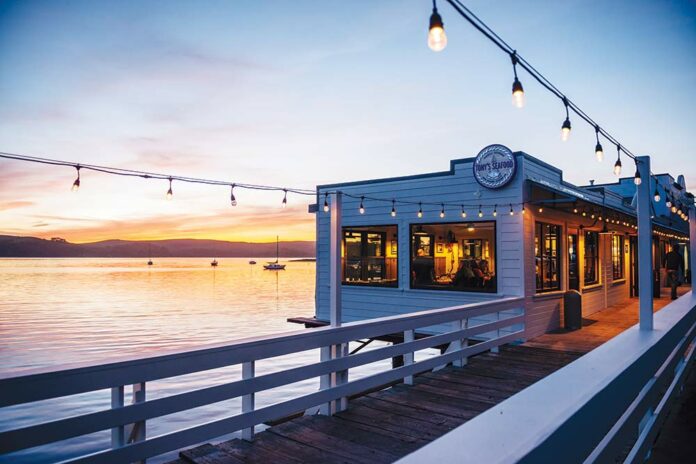
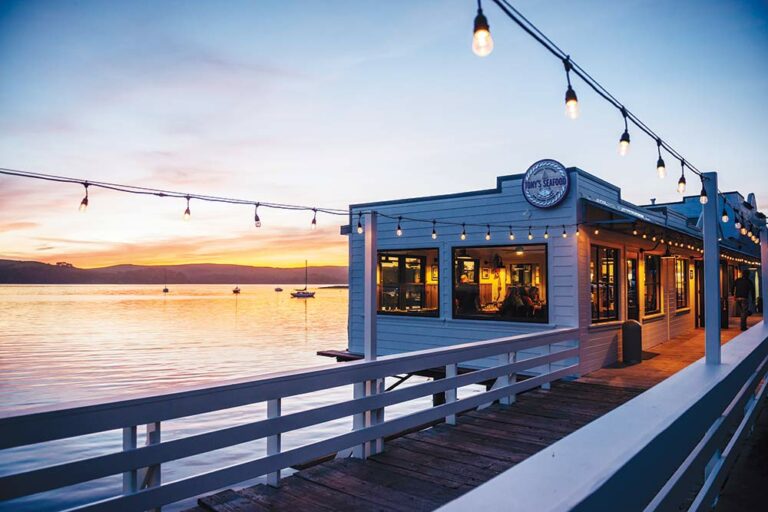
It’s busy and cool early evening at Tony’s Seafood in Marshall on a recent Thursday. The heat lamps are ablaze in the foggy twilight and a throng of people wait outside for a seat, but the wait won’t be too long at this welcoming, two-room saloon slung along Tomales Bay.

Inside, soup bowls appear to fly out of the kitchen and Manila clam shells pile up on the tables. The chowder’s a perfectly creamy and hearty dish for a perfectly micro-weather moment. The sun’s shining nearby as it often is in West Marin, but for tonight the star of the show is the food. Diners perch along a window counter and peer out into the bay and at the old dockworks that are part of the winsome landscape here.

Tonight it’s locals night and the crowd is heavy on flannel shirts, kindly eyes and worldly beards. Glasses clink, the waitstaff zips between the tables with plates akimbo and the locals just keep pouring in through the door and out of the fog. They’re here to revel in chef Matt Shapiro’s creations at this recently re-opened joint, now operating under the cosmic snout and ownership of nearby Hog Island Oyster Company.

Perched at the edge of the bay, Tony’s manages to simultaneously feel like both the center of the universe and the most far-flung place on earth—no mean feat. After a nearly two-year shutdown and renovation, the iconic saloon reopened earlier this year and by all accounts—my own, especially—this place rocks.

I visited earlier in May and met with Brenna Schlagenhauf, who handles public relations for Hog Island and who insisted I try the halibut crudo. More on that dish in a moment—it’s worth the wait. Schlagenhauf’s story of how she came to Hog Island is pretty simple: She stopped in for a beer and some oysters one day, and now she’s been with the company 10 years.

The “newest baby,” as she calls Tony’s, was a dream of John Finger and Terry Sawyer, the founders and partners at Hog Island, which now fields five culinary outposts in the Bay Area—from Napa to San Francisco. Entering the restaurant, there’s an immediate work-hard, play-hard feel to the place, and as Schlagenhauf notes, many of the staff stayed on after Hog Island bought the place in 2016. The fact that they waited out a two-year renovation to return speaks volumes about the generous corporate ethic at Hog Island, a Certified B corporation that’s been farming oysters since 1983.

The grilled oysters are legendary and were reportedly first offered by Anton “Tony” Konatich, a Croatian fisherman from the Isle of Iz who located to West Marin with his wife and daughter after World War II and opened Tony’s in 1948. The family approached Hog Island a few years ago “to see if they’d like to buy the family business,” recounts Schlagenhauf. “They jumped at the chance,” she adds, but went into the business “with eyes wide open,” given there was a bit of deferred maintenance to address before the joint could reopen under new ownership.

Chef Shapiro stops by the table while Schlagenhauf talks history and sustainability over a glass of wine for her and a Coke for me. The new owners embarked on a renovation that clearly hewed to maintaining the classic seaside “joint” feel of the original Tony’s. They kept the signature grilled oysters and Shapiro, who started with the company at its location at the Ferry Landing in San Francisco, set out to put some saloon classics alongside the ever-present oysters.

The menu is simple and doesn’t go overboard bragging about the locally sourced ingredients. There’s no superfluous information about where the produce or fish is sourced from, which Shapiro says is part of the deal here: There has to be a degree of trust in the chef, he says, and the chef goes out of his way to make sure his sourcing can be trusted.

Shapiro, 35, is a Queens native who’s lived in the Bay Area for a decade and calls himself a “wandering culinary soul,” he says with a laugh before turning serious again. In this business, he says, it’s all about trust. He says it a few times, but it’s not for show. His menu features those grilled oysters (they call them barbecued but they’re not) served with house-made barbecue sauce and garlic butter and are offered, he says, “as a nod toward what Tony’s used to have. People come here just to have that dish.”

The dinner hour’s in high gear as Garrett Hamner comes by the table with a big smile and a greeting. Garrett is off to seminary school in Pennsylvania this fall but first he has to refill a keg, says Schlagenhauf with a laugh. Hamner’s been working at Tony’s since he was a kid; now he’s about to study to become an Eastern Orthodox priest. He explains he’s headed east this summer with his wife and three kids—but first, that keg. Schlagenhauf departs for the night and I take some time to absorb the surroundings and décor. The light fixtures hanging over the open-kitchen counter look trés bizarre until I realize they’re actually kelp sculptures created by Inverness kelp sculptor Lina Jane Prairie.

The place smells of oysters and white wine; on locals’ night, expect to hear some tasty licks from the old-time corner-men playing American tunes. A kind of Garcia-Grisman conceit prevails that will have you tapping your toe as you scarf down some Hog Island Sweetwaters. The tables are all from the original Tony’s and the chairs are a mix of old and new—and again, the locals’ touch pervades; the furniture is wrought from cypress and produced by Marshall’s own Evan Shively. The open kitchen is clean and bustling, and the blue-and-white color scheme is so nautical, you’ll cry in your mizzenmast. And look, there’s Blue Slide’s own Gordon Bryant sitting at a neighboring table—he provided all the new tilework. The concrete countertops are also worth a lingering glance. As Sawyer explains (he’s hanging out with a beer and a lopsided grin), the countertops have the signature Hog Island oyster shells poured into them.

I’m keen on a fried oyster po’boy—hang in there, Louisiana!—and a Mexican Coke, and Schlagenhauf had insisted I try the halibut crudo. I wondered why she was so insistent. Well, I first visited Tony’s in late May and, with Gaia as my witness, I swear there’s not a day gone by since where I have not reflected, in one way or another, on that outstanding halibut crudo.

No, really: As much as I’ve held a crashing sea–into­-rocks mantra over these decades of seaside reflection, I do believe I’ve found a new mantra. The small plate ($15) features rugged fingers of fleshy halibut laid over a flower-like array of paper-thin granny apple slices, topped off with purple chive blossoms, all macerated in lime juice. If Tony’s grilled, er, barbecued, oysters were the signature dish to drive for miles to enjoy, that halibut crudo will surely become the next generation must-have dish here.

The fried oyster po’boy ($18) was crunchy-mushy, and the coleslaw, aka Hogwash Slaw, is all you need as a side to that overstuffed sammy besides the essential Crystal hot sauce. On a separate visit I wolfed down a solid platter of fish and chips with another one of those delicious $4 Cokes. I’ll save round two of the crudo for another time, and there will be another time.

I’m not sure how the rest of your summer’s playing out, but I’ll be headed to Tony’s every chance I get for some of those McEvoy olive oil-enhanced warm olives ($6), the steamed mussels ($15), and a shot of those wild Gulf shrimp with smoked paprika ($9)—and I’ll definitely head back for a $16 bowl of that signature HIOC chowder when the weather turns.

That could be, like, tomorrow. The chowder comes with a big side bowl of drop-yer-own Manila clams, and the broth features vegetables that are indeed aromatic even a table or two away (though the culprit might be the bacon). A Stemple Ranch burger whizzes by on a platter and appears to be a ruddy and worthwhile non-fish dish ($17), though it does come with house-made tartar (and Pt. Reyes Toma cheese). The back of the menu finds two-dozen wines by the glass or bottle, with a few regionals thrown into the worldly mix of whites, reds, rosés and sparkling wines. On the sudsy front, Santa Rosa’s Henhouse brewery holds up the local end of a beer wagon that also includes a Lost Coast Belgian and a Sudwerks’ Pilsner.

Yes, but did I mention the halibut crudo?
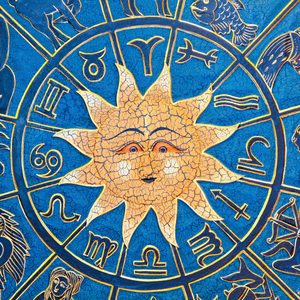
Horoscope

ARIES (March 21-April 19): An Aries reader sent me a boisterous email. “I was afraid I was getting too bogged down by my duties,” he said, “too hypnotized by routine, too serious about my problems. So I took drastic action.” He then described the ways he broke out of his slump. Here’s an excerpt: “I gave laughing lessons to a cat. I ate a spider. I conducted a sneezing contest. I smashed an alarm clock with a hammer. Whenever an elderly woman walked by, I called out ‘Hail to the Queen!’ and did a backflip. I gave names to my spoon (Hortense), the table (Beatrice), a fly that was buzzing around (Fallon) and a toothpick (Arturo).” According to my analysis of the astrological omens, Aries, you’d be wise to stage a comparable uprising.

TAURUS (April 20-May 20): Welcome home, homegirls and homeboys. After observing all your homesteading in homes away from home, I’m pleased to see you getting curious about the real home brew again. I wonder how many times I’ll say the word “home” before you register the message that it’s high time for you to home in on some homemade, homegrown homework? Now here’s a special note to any of you who may be feeling psychologically homeless or exiled from your spiritual home: the coming weeks will be a favorable time to address that ache and remedy that problem.

GEMINI (May 21-June 20): The world is full of eternally restless people who seethe with confused desires they don’t understand. Fueled by such unfathomable urges, they are driven in unknown directions to accomplish fuzzy goals. They may be obsessed in ways that make them appear to be highly focused, but the objects of their obsession are impossible to attain or unite with. Those objects don’t truly exist! I’ve described this phenomenon in detail, Gemini, because the coming months will offer you all the help and support you could ever need to make sure you’re forever free of any inclination to be like that.

CANCER (June 21-July 22): What would you say if I asked you to tell me who you truly are? I wouldn’t want to hear so much about your titles and awards. I’d be curious about your sacred mysteries, not your literal history. I’d want to know the treasured secrets you talk about with yourself before you fall asleep. I’d ask you to sing the songs you love and describe the allies who make you feel real. I’d urge you to riff on the future possibilities that both scare you and thrill you. What else? What are some other ways you might show me core truths about your irrepressible soul? Now’s a good time to meditate on these riddles.

LEO (July 23-Aug. 22): Isaac Asimov wrote a science fiction story about a physicist who masters time travel and summons William Shakespeare into the present time. The Bard enrolls in a night school class about his own plays—and proceeds to flunk the course. Modern ideas and modes of discourse are simply too disorienting to him. He’s unable to grasp the theories that centuries’ worth of critics have developed about his work. With this as a cautionary tale, I invite you to time-travel not four centuries into the future, but just 10 years. From that vantage point, look back at the life you’re living now. How would you evaluate and understand it? Do you have any constructive criticism to offer? Any insights that could help you plan better for your long-term future?

VIRGO (Aug. 23-Sept. 22): The coming weeks will be a favorable time for you to buy yourself toys, change your image for no rational reason and indulge in an interesting pleasure that you’ve been denying yourself for no good reason. In addition, I hope you’ll engage in at least two heart-to-heart talks with yourself, preferably using funny voices and comical body language. You could also align yourself gracefully with cosmic rhythms by dancing more than usual, by goofing off more than usual and by wandering in the wilderness and seeking to recapture your lost innocence more than usual.

LIBRA (Sept. 23-Oct. 22): Although you’ll never find an advertisement for Toyota or Coca Cola within my horoscope column, you’ll find hype for spiritual commodities like creativity, love and freedom. Like everyone else, I’m a huckster. My flackery may be more ethical and uplifting than others’, but the fact is I still try to persuade you to “buy” my ideas. The moral of the story: Everyone, even the Dalai Lama, is selling something. I hope what I’m saying here purges any reluctance you might have about presenting yourself and your ideas in the most favorable light.

SCORPIO (Oct. 23-Nov. 21): You’re growing almost too fast, but that won’t necessarily be a problem—as long as you don’t expect everyone around you to grow as fast as you. I suspect you also know almost too much—but I don’t anticipate that will spawn envy and resistance as long as you cultivate a bit of humility. I’ve an additional duty to report you’re on the verge of being too attractive for your own good—although you’ve not yet actually reached the tipping point, so maybe your hyper-attractiveness will serve you rather than undermine you. In conclusion, Scorpio, I invite you to celebrate your abundance, but don’t flaunt it.

SAGITTARIUS (Nov. 22-Dec. 21): The snow leopards of Central Asia crave a lot of room to wander. Zoologists say each male prefers its territory to be about 84 square miles, and each female likes to have 44 square miles. I don’t think you’ll require quite that vast a turf in the coming weeks, Sagittarius. But on the other hand, it will be important not to underestimate the spaciousness you’ll need in order to thrive. Give yourself permission to be expansive.

CAPRICORN (Dec. 22-Jan. 19): “I want to do things so wild with you that I don’t know how to say them.” Author Anaïs Nin wrote that in a letter to her Capricorn lover Henry Miller. Is there anyone you could or should or want to say something like that to? If your answer’s yes, now’s a good time to be so candid and bold. If the answer’s no, now’s a good time to scout around for a person to whom you could or should or want to say such a thing. And, if you’d like to throw in a bit more enticement, here’s another seductive lyric from Anaïs: “Only the united beat of sex and heart together can create ecstasy.”

AQUARIUS (Jan. 20-Feb. 18): Did you hear the story about the California mom who started a series of forest fires so as to boost her son’s career as a firefighter? She’s an apt role model for behavior you should diligently avoid in the coming weeks. It’s unwise and unprofitable for you and yours to stir up a certain kind of trouble simply because it’s trouble that you and yours have become skilled at solving. So, how should you use your problem-solving energy, which I suspect will be at a peak? I suggest you go hunting for some very interesting and potentially productive trouble that you haven’t wrangled with before—some rousing challenge that will make you even smarter than you already are.

PISCES (Feb. 19-March 20): The heroine of Alice in Wonderland and Through the Looking Glass is curious, adventurous and brave. First, she follows a well-dressed rabbit down a rabbit hole into an alternate universe. Later, she slips through a mirror into yet another parallel reality. Both times, with great composure, she navigates her way through many odd, paranormal and unpredictable events. She enjoys herself immensely as she deals with a series of unusual characters and unfamiliar situations. I’m going to speculate that Alice is a Pisces. Are you ready for your very own Alice-in-Wonderland phase? Here it comes!

Time After Time

Before the Europeans arrived in California, the Coast Miwok people inhabited what we now call Marin and southern Sonoma Counties.

Over thousands of years, the Miwok and other coastal and California tribes developed a rich economy based on gathering, fishing and hunting, with villages of up to several hundred people.

Today, Point Reyes National Seashore offers a glimpse into this bountiful past at Kule Loklo (“Valley of the Bear”), a recreated interpretive village composed of structures including a roundhouse, a sweathouse and several traditional dwellings built and maintained by tribal and non-tribal volunteers.

Kule Loko is also the home of the annual Big Time Festival, which returns for its 39th annual gathering on Saturday, July 20.

“This festival celebrates the first people in the area, the Coast Miwok,” says festival organizer Donna Shoemaker, one of a handful of volunteers putting on the event. “What I value is that it’s honoring the people who were here long before the European-Americans came, and it’s giving current native people an opportunity to celebrate that heritage.”

Co-sponsored by the Miwok Archeological Preserve of Marin (MAPOM), the National Park Service and tribal partner the Federated Indians of Graton Rancheria, the Big Time Festival boasts activities for both adults and children that evoke the earliest days of life in California.

The highlights of the festival include original music performed by Sky Road Webb, a descendent of the Tamal’ko–Tomales Bay Miwok of present day West Marin, and the president of the Marin American Indian Alliance. Webb composes and performs original Miwok songs with many organizations and teaches workshops on traditional instrument making and singing in the Coast Miwok dialect.

The festival features keynote speakers Henry Frank, a Native American who was incarcerated at San Quentin between 2003 and 2009, talking about his journey into and out of prison; and indigenous, interpretive instructor and naturalist Alicia Retes, offering a presentation on how music was brought to California Indians.

Some of the festival’s biggest draws are the Pomo dancers, who gather in the fireside dance circle. “When you come out to the meadow, there’s a large circular area that is scraped to the dirt, and in the center of that is a circle of stones where the sacred fire is lit and stays lit during the festival,” Shoemaker explains.

Native skills demonstrations include traditional acorn cooking, in which the hand-mashed nuts are cooked in baskets by the heated rocks from the fireside circle. “It’s fascinating because you would think the hot rocks would burn the baskets, but they don’t and the baskets are made to accommodate this,” Shoemaker says. “This is a very ancient and traditional way of preparing food that was so important to the Miwok.”

Throughout the festival, attendees get to experience a culture that exists in harmony with the environment, Shoemaker adds. “People come away feeling like, wow, there’s another way to live.”

The Big Time Festival takes place on Saturday, Jul 20, at Kule Loklo, 1 Bear Valley Rd., Pt Reyes National Seashore. 10am to 4pm. Free admission. 415.464.5146.

Advice Goddess

Q: I keep reading about how detrimental social media usage is, with people avoiding face-to-face interaction and feeling inferior when they see everyone else looking gorgeous and having fabulous lives. Would you recommend taking regular breaks from social media?—Instagrammer Girl

A: Put on 10 pounds recently? No problem! There’s surely an app that’ll stick your head on the bod of some 22-year-old actress who works out 13 hours a day and subsists on Nicorette gum and bottles of air blessed by monks.

Social media is often seen as Satan-with-cat-memes. It gets blamed for everything from eating disorders to the decline in the bee population. But consider that how a person uses social media shapes how it affects them.

Psychologist Sarah M. Hanley and her colleagues note there are two different kinds of social media users: active and passive. Active social media users create content and communicate with others. Passive users browse newsfeeds and posts without commenting. They’re basically read-only info consumers.

For both active and passive users, taking a vacation from social networking sites like Facebook and Instagram is a thing lately—the digital version of cutting out sugar (at least temporarily). But is it actually a good thing?

Hanley and her colleagues blocked research participants’ access to social media sites for a week. They figured this would benefit passive users—the silent observers—by giving them a break from the noxious barrage of how rich, beautiful and successful everyone else seems to be.

In fact, passive users’ well-being wasn’t affected positively or negatively during their social media exile. However, active users ended up being kind of bummed (or, in researcher terms, they had diminished “positive affect”—a decrease in positive, pleasant moods and feelings).

In short, social media is a tool—same as an ax, which you can use to cut wood for a lovely campfire or to chase terrified teenagers through the forest. You can choose to take an emotionally healthy approach to social media: be an active participant instead of a passive one by posting stuff or at least participating in conversations, even in small ways.

Q: My newly divorced business colleague keeps asking for my hot friends’ phone numbers. I think this is highly inappropriate. If things go badly, I’m stuck in the middle! I keep hinting that I don’t think it’s cool for him to put me in this position, but he doesn’t seem to be getting the message. Help.—Stuck

A: It’s so annoying when your colleagues leave their mind-reading helmets at home.

In such cases, there’s a way to get your message across, and it’s by directly expressing it—in words. This isn’t exactly a mystery of the universe I’m revealing here. But like many women, you probably have a tendency to default to hinting and hoping for compliance.

This looks like a flaw in female psychology—until you hold it up to an evolutionary lens, as the late psychologist Anne Campbell did in looking at sex differences in assertiveness. Campbell explained that being direct—unambiguously stating what you want—can make another person angry and lead them to retaliate, possibly physically. A woman who is physically harmed might not be able to get pregnant or fulfill her role as her children’s primary caretaker, making her a genetic dead end. So, women especially have been driven to protect themselves and their reproductive parts. Campbell believes this led to the evolution of female indirectness—not as a flaw, but as a feature.

The thing is, the evolved emotions driving this behavior aren’t your master, and you don’t have to obey them.

Playing Tribute

Since the earliest days of the Elvis Presley impersonator, tribute bands have found a place in the music scene as a way for audiences to hear their favorite songs from their favorite artists in more accessible settings. Tribute bands also allow casual music fans to attend a concert and know exactly what they’re getting for their ticket.

“Sometimes we have conversations about tribute bands being sort of the dirty little secret of the music industry,” says Aaron Kayce, manager and talent booker for Sweetwater Music Hall in Mill Valley. “I don’t think it’s really that dirty, and I don’t think it’s that much of a secret.”

While tribute bands have long been seen as secondary in the industry, they’ve exploded in popularity in the last 20 years, as classic rock icons retire or pass on. Now, for many fans, venues and musicians, tribute bands are becoming the bread and butter of the live music business.

“Everybody likes to sing along, everybody likes to know the songs, and that’s what you get,” says Kayce. “The bands that do it well are really good, take it really seriously and sell a lot of tickets.”

In the Bay Area, tribute bands run the gamut from recreating songs to recreating entire concert sets from decades past, and classic rock tribute acts such as Petty Theft, Zeparella and the Sun Kings are some of the busiest bands working today.

Petty Theft

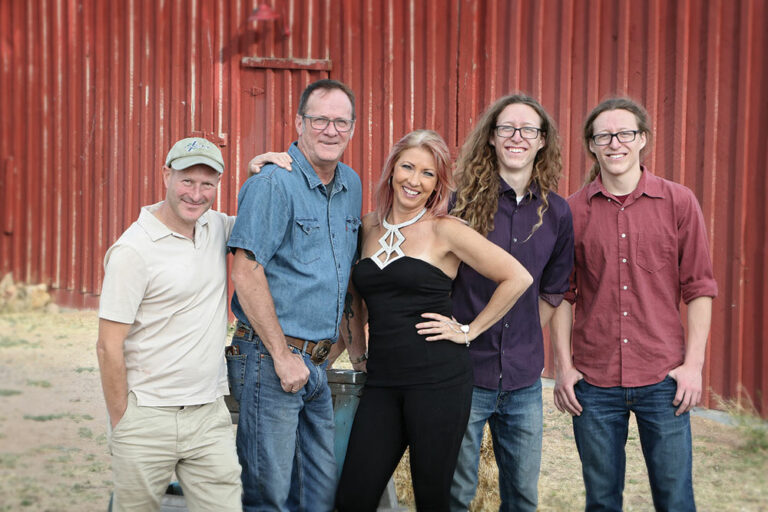
Since 2003, Marin- and San Francisco-based tribute band Petty Theft has toured the Western United States, performing the songs of Tom Petty & the Heartbreakers in the spirit of the band’s live shows. For the past two years, Petty Theft was voted ‘Best Cover Band’ in the Pacific Sun’s annual readers poll.

For Marin native and Petty Theft guitarist and vocalist Monroe Grisman, Petty Theft is more than a band; it’s a community.

“For the longest time I was only in original music bands and even at a certain point kind of frowned on cover bands, because I was so into my own thing,” Grisman says.

“But there came a point in my life where I didn’t have as much time (for original music), and I got invited to join this band, and I thought out of all the bands I could think of playing their songbook, Tom Petty struck a chord with me. It’s great rock and roll music, great songs, something I could have fun with.”

With live sets that regularly include more than two dozen songs each show, Petty Theft pulls from over a hundred Petty songs and performs the late artist’s biggest hits as well as the deeper album cuts that true fans will recognize.

Within the tribute band genre, there are different varieties of tributes. There are bands whose members dress up in costumes and try to look like the band, and there are bands whose members take performance to a high level, like that of a Broadway show.

“I just saw a Genesis tribute band with set designs and period-specific gear,” Grisman says. “And there’s a certain value for that, like for me that was the closest thing I’ll ever get to seeing Peter Gabriel-era Genesis in 1973.”

Forgoing the costumes themselves, Petty Theft focuses on performing the music and honoring the sound, while also adding their own touches and taking liberties that keep the concerts fresh for fans.

“I think it’s why we’ve built up a pretty amazing following now; people like that we’re not trying to be Tom Petty & the Heartbreakers, rather we always pay tribute and we always give it up to the real deal,” Grisman says.

And the real deal has given it up back to them, with Heartbreakers drummer Steve Ferrone meeting the band through a mutual friend and sitting in with Petty Theft three times over the years. “It’s been an amazing honor,” says Grisman.

While Grisman says the band never imagined the project would gather such a following, they’re happy to share Petty’s music as long as people want to hear it.

“It’s the funny thing with the tribute band, I’ve always considered what we do more of a celebration rather than a tribute,” Grisman says. “Although with Tom’s passing in the last two years, the tribute thing takes on a new meaning. It was definitely a heavy period after Tom’s passing—it was really emotional for fans and for us, and it still is. But, what we’ve found is that the heaviness has lightened and people are embracing that the music lives on, and to celebrate it is a great thing.”

Zepparella

Veteran hard-rock drummer Clementine first fell in love with Led Zeppelin as a youngster listening to KMET radio in Southern California, and when she began to hit the skins herself, she realized just how much influence Zeppelin drummer John Bonham had on her musical aspirations.

In 2004, looking to better-learn those Zeppelin songs and the drum parts she loved, Clementine hooked up with guitarist Gretchen Menn—who admired Jimmy Page as much as she admired Bonham—and the two formed the Bay Area’s all-female tribute band Zepparella.

“When we started it, we looked at it being a practice project,” Clementine says. “Shortly after, we started talking about, ‘Why not do it onstage?’”

For Clementine it was, and still is, all about the music.

“I wanted to get better as a drummer, and why not go to the source of how I got into playing drums,” Clementine says. “I feel like I came into this through the back way. It wasn’t that I set out to start a tribute band, it was that I wanted to learn this stuff and see what happens.”

Even 15 years into the band, Clementine notes she’s still learning from Bonham. “We just keep going forward because it’s so musically exciting,” she says. “Led Zeppelin is maybe the only band that I could continue to play for 15 years, and a lot of that is because we take parts of the songs and develop them through improvisation onstage, and Led Zeppelin gives us that freedom because they were so improvisational in the way they presented the music. It enables us to create new parts of songs, new ways to approach songs. It’s always changing.”

In addition to the musical explorations afforded to her in Zepparella, Clementine appreciates how the band acts as a steady source of income and helps her develop an audience for her other singer-songwriter projects.

“The creative process as far as being able to write something from scratch with other musicians is a beautiful thing, and I have that in the other projects I do,” she says. “I value it all. I feel like one feeds the other; what I learn from Zeppelin is what I take to my original writing, and parts of my original writing I put into the drumming with Zepparella.”

With the recent return of lead singer Anna Kristina, a vocal powerhouse who first showed her talents as a member of the Santa Rosa High School Chamber Singers back in the day, Zeparella is rocking stage on both the West and East coasts this summer. In addition to their live shows, Zepparella is offering fans a way to learn the songs themselves, with the newly launched Zepparella Learning Channel on YouTube, a series of videos in which the members teach audiences their parts to a Led Zeppelin tune. So far, the series has featured “When the Levee Breaks” and “Immigrant Song.”

“It’s been a remarkable learning experience for us to teach these songs,” Clementine says. “For 15 years we’ve been learning all these little things that you learn playing this music onstage, and to be able to share that freely with people, it feels lik

e we’re able to give a little back from what we’ve gained playing the music.”

Obviously, Led Zeppelin will never play together in concert again. And classic rock acts like the Rolling Stones or AC/DC that do still tour play in stadiums that don’t offer the intimacy clubs provide. Clementine sees Zepparella as a way for audiences to experience the classic rock of yesterday in an intimate setting. “To be able to get swallowed up by these songs in a smaller venue is where the power is,” she says.

Zepparella continues to thrive because of the power of those Led Zeppelin songs, and Clementine says the tribute band has lasted so long because of the musicians she’s been able to share that power with. “I value the people I’ve played with in the past and now,” she says. “It’s a great experience. I wouldn’t trade it.”

The Sun Kings

The Sun Kings have performed the music of The Beatles for over 18 years now. Forgoing mop top wigs and Sgt. Pepper’s clothes, the group instead pays tribute by delivering note-for-note recreations of the Fab Four’s entire catalogue.

“I might have to write to Guinness about this,” says guitarist and John Lennon-tribute-vocalist Drew Harrison. “By the end of this year, I will have played every Beatles song ever released, live. The Beatles never did that.”

The 58-year-old Harrison says he should’ve been a brain surgeon, but got bit by rock and roll, “much to me parents’ chagrin.” As a musician, he’s spent more than three decades performing original music and covers, and like most other baby boomers, is a lifelong Beatles fan. He’s even more of a John Lennon fan, though he stumbled into The Sun Kings accidentally.

“I didn’t set out to do Beatles’ tribute with the Sun Kings, but you know how life goes, you just end up in these places,” Harrison says.

In the 1990s, after the Berlin Wall came down, Harrison found himself living in Eastern Europe and he joined up with a band in the Czech Republic.

“I was the token English singer, and they said, ‘Play Beatles,’ because they couldn’t have the Beatles or the Stones or anybody out there during the communist era,” he says. “I played this show for about 6,000 people in this town, Karlovy Vary, and the people went nuts for ‘Ticket to Ride,’ literally nuts, they screamed bloody murder. It was crazy.”

When he got back to the States six months later, Harrison recruited a band and joined the ranks of Beatles tribute bands with the Sun Kings.

“We’re not costumes and we’re not caricatures,” Harrison says. “Not to take anything away from bands that do that, but we’ve found our niche in that we play the concert the Beatles never gave.”

The Sun Kings play both hits and deep album cuts from across the Beatles’ entire career, using Rickenbacker guitars, Ringo Starr-appropriate drum kits and classic amps.

“There’s a pleasant obsession about trying to get it right,” Harrison says. “We’re all fans of the music, so when we get kind of close, we all get this feeling and people love it. That’s the nostalgia that everybody in the tribute world is pining for; a piece of our past.”

That nostalgia is driving the tribute market to new heights in the 21st century, as a generation looks to recapture the classic rock of their youth.

“It’s gotten much bigger in the 20 years since we started,” Harrison says. “And there’s tributes for everything. There’s a certain amount of competition for a Beatles band, for example. It becomes like any business—our product is this music and we are fulfilling the need.”

Part of that business means staying aware of rights issues, though most tribute bands avoid major publishing problems by not selling albums and ensuring that the songwriters are given credit where it’s due.

“I know the new media licensing is such that ASCAP found us and other tribute bands and said, ‘You’re going to have to pay licensing just for having snippets of the songs on your website,’” says Harrison. “And that’s fair, that’s fair.”

While the Sun Kings take the business of tribute bands seriously, they don’t forget to enjoy the music.

“I’m the fan I have to impress,” Harrison says. “I love the music, and getting it right is like building a kit-car—it’s made me a better musician, certainly a better singer.”

In addition to their own instrumentation, the five-man outfit also brings in horns and strings for full-album shows. The band also invites schools to bring in music students to play with them from time to time.

“It’s a lot of fun, it introduces kids to the music,” Harrison says. “This music has a long shelf life, and as long as we’re around we’re going to have a gig.”

Force of Nature

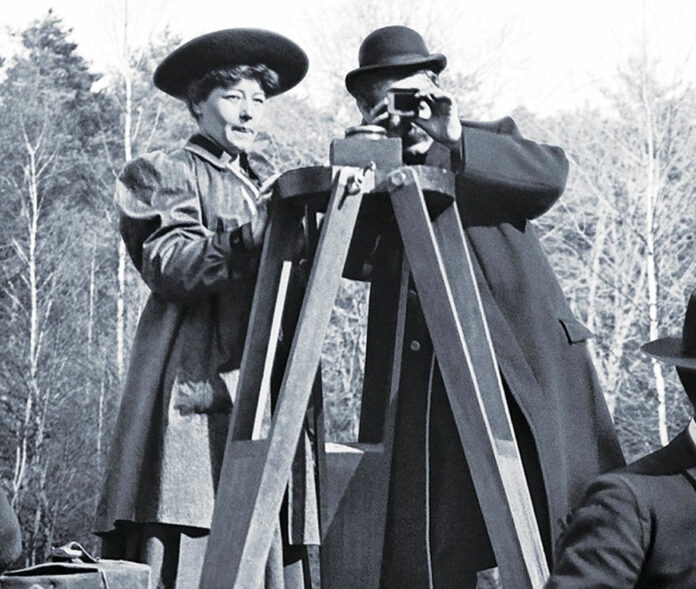
If there’s one sad thing historians know about official histories, it’s that success has a thousand fathers … but few mothers. From the days of glass box theaters and hand-cranked cameras comes Pamela B. Green’s fascinating, deeply researched documentary Be Natural: The Untold Story of Alice Guy-Blache.

Guy-Blache has many firsts on her resume. She was very likely the first female film director. She was certainly the first woman to start a film studio. She also co-founded the Solax Studio in Fort Lee, New Jersey—a town one historian here calls “Hollywood 1.0” because Goldwyn, Fox and Paramount all hatched there, on the palisades right across the river from New York City, before WWI. Guy-Blache was the first person to make a film with an entirely African American cast (in 1912). Director Ava DuVernay (When They See Us) comments here on the short’s historical importance, while distancing herself a bit from its attitudes. Guy-Blache made an early film about family planning; it would have screened at the Margaret Sanger Clinic if the cops hadn’t shut the clinic down first. Her short The High Cost of Living (1912) studies a crime committed by an ironworker who is forced to be a strikebreaker. In his Behind the Mask of Innocence, the eminent silent film historian Kevin Brownlow calls it “a fascinating glimpse into the conditions of the time.”

As well as being first, Guy-Blache was also funny: her two-minute-long, 1906 film La Femme Colante (“The Sticky Woman”) is as uproarious as a Kate McKinnon sketch. Early on, Guy-Blache discovered that deadpan humor triumphs over gesticulation. At Solax Studio, above the boards where the actors hit their marks, was a large sign urging them to go smaller: “BE NATURAL.”

Guy-Blache rose from the rank of stenographer at France’s Gaumont studios to become the person who hired Louis Feuillade to direct. In terms of importance as it relates to the creation of cinema, this is equivalent to being the boss who used to send D.W. Griffith out for cigarettes.

And, yet, this pioneer was written out of official histories and considered a secondary player to better-known names. I’m not saying it was gender … but it was gender.

The traditional source of information on Guy-Blache is a 1964 television interview featuring her as a proper, elderly Frenchwoman with pearls around her neck. At that point in time, perhaps two-and-a-half of her movies had been retrieved from loss. Green delves from there, making the hunt for Guy-Blache visually thrilling.

Be Natural is a celebration of how the internet picks the locks of history. Case-in-point: the passage in which Green rescues a fouled tape of an interview with Guy-Blache’s daughter by racing all over Los Angeles, from one engineer to another. In a technical institute in Paris, she visits the theater where Guy-Blache screened her early films more than a century ago. In Seattle, a facial recognition expert confirms that Guy-Blache is a figure in certain films and photographs. Green researches family trees from the roots up, until she finds a trove of materials in a humble house in St. Louis. She also takes a look at Guy-Blache’s Legion d’Honneur medal, which is being kept in storage by one of Guy-Blache’s descendents in a tiny town in Arizona.

Digging in the style of an investigative reporter, Green creates a portrait of this pioneer in both her highly-paid success and later unhappiness: Guy-Blache’s husband left her for the better-known early female film director Lois Weber. She was robbed of credit in the official histories again and again, and in later life was unable to get work at Gaumont, the studio she helped thrive. Happily, Green’s intrepid research restores Guy-Blache to her rightful place in cinema history.

‘Be Natural: The Untold Story of Alice Guy-Blache’ is playing at the Lark Theater in Larkspur.

Letters

Shocking Conditions

Recently, I visited what some might call a “concentration camp.” Conditions in the facility shocked me: residents were crowded in, and the smell of dirty diapers and soiled clothing/bedding and urine from shared restrooms permeated the air. Language barriers between staff and residents created other issues. Many residents appeared listless, surrounded by institutional-beige walls, bedding and floors. Was I at a border facility housing illegal immigrants? No, I was at one of Marin’s skilled nursing facilities that’s home to hundreds of elderly and disabled poor.

Terry Graham

Mill Valley

Options

Now that we’ve elected our first openly fascist president, a socialist (Bernie), an upstart (Harris), a Stanford man (Booker), a gay mayor (Buttigieg) and an old-school hack (Biden) don’t look half bad. Heck, I’d even take a religious reprobate (Pence) over Donito Trumppolini. I read that Pence might follow the rule of law on occasion. Give democracy a chance. Bring on 2020!

Craig Corsini

San Rafael

We Need Trees

Trees sequester carbon dioxide. Trees release oxygen into the air. Trees are a part of the solution to global warming. We must plant trees, prune trees and, of course, avoid killing trees. They are here to help us. Honor them. By doing so we avoid the intense fires that are part of global warming.

Theresa Roach Melia

Graton

Good To See

The recent “Seeing Is Believing” article (July 3, 2019) is a timely counterpoint to the rah, rah, rah about the supposed widespread benefits that artificial intelligence will bring to us all.

For more on problematic aspects of artificial intelligence, I alert readers to an upcoming talk by Nicanor Perlas on Tuesday July 16, 7pm in Sophia Hall, at the Summerfield Waldorf School and Farm in Santa Rosa. Nicanor has recently published his views in Humanity’s Last Stand: The Challenge of Artificial Intelligence: A Spiritual Scientific Response.

Sean Casey

Santa Rosa

Desert Foxes

0

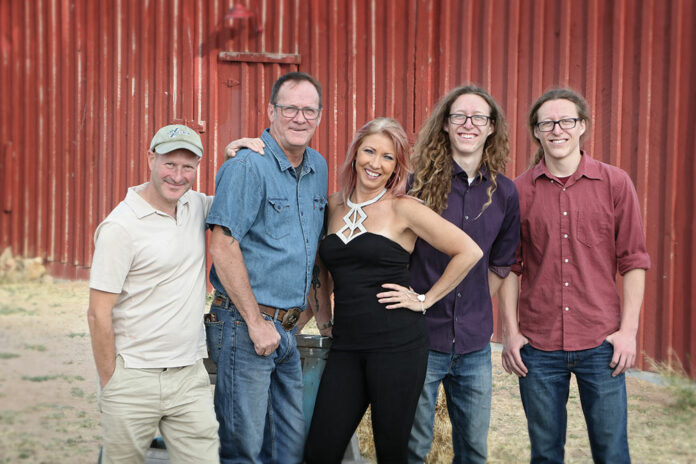
Situated within the Bradshaw Mountains in central Arizona lies the small town of Prescott (Pronounced “press-kit”). Over the years, this mile-high hamlet has earned a reputation as a place for emerging artists to find an audience, and today it draws singers and songwriters of all kinds to its many clubs and venues.

Jim Sobo was drawn there in 2003. He performed and recorded music in the Bay Area and Los Angeles for years before relocating to Prescott with his family, where he soon discovered a vibrant music scene at a venue called Coyote Joe’s.

“I started seeing some exceptional talent there,” Sobo says. “I was so taken with the talent that I decided to start this tour.”

For the past 14 years, Sobo has spent his summers curating and leading the Howling Coyote Tour, which appears at a half-dozen North Bay venues between July 16–21.

“I want to expose this talent to a larger fan base, a larger musical community,” Sobo says. “The San Francisco Bay Area is my favorite musical community. I’ve done a lot of traveling, and I think that San Francisco has a great ear for original singer-songwriters and acoustic showcases like mine.”

This year’s lineup of performers is one of the tour’s most widely varied yet, featuring instrumental guitarist Darin Mahoney, flutist Sherry Finzer and folk/blues duo Cross-Eyed Possum.

Mahoney’s roots are in folk music, though he’s performed instrumental numbers on acoustic guitar much closer to the world music-style of Windham Hill Records ever since he discovered the New Age label while battling cancer.

An internationally known flutist, Finzer is also the founder of Heart Dance Recordings—to which Mahoney is signed—and the two have collaborated on records and onstage in the past.

Joining those two, Cross-Eyed Possum is twin brothers Jonah and Jason Howard, who mix jazz, blues and alternative rock, on guitar and bass. On Sobo’s podcast, The Howling Coyote Radio Hour, Cross-Eyed Possum recently met and started jamming with, Mahoney and Finzer.

“The tour hasn’t even started yet, and they’re already starting to collaborate,” Sobo says. “I can only imagine what’s going to happen when we get out on the road and start to work on stuff with each other.”

Howling Coyote Tour performs on July 16 at Mantra Wines in Novato, July 17 at Barrel Brothers Brewing Co. in Windsor, July 18 at 256 North Restaurant in Petaluma, July 19 at Grav South Brewing in Cotati, and July 20 at Marin Country Mart in Larkspur. Times vary. Free, donations welcome. howlingcoyotetour.com.

Modern Measures

0

The Marin Shakespeare Company opens its 30th season with Measure for Measure. Shakespeare on justice and mercy would seem to be a perfect fit for a company that brings their Shakespeare for Social Justice program to eight California state prisons.

Officially labeled a comedy, Measure for Measure is considered by some to be one of Shakespeare’s “problem plays,” in which the situation a main character gets into is reflective of a greater societal problem. Here, the issue is the enforcement of law with little mercy.

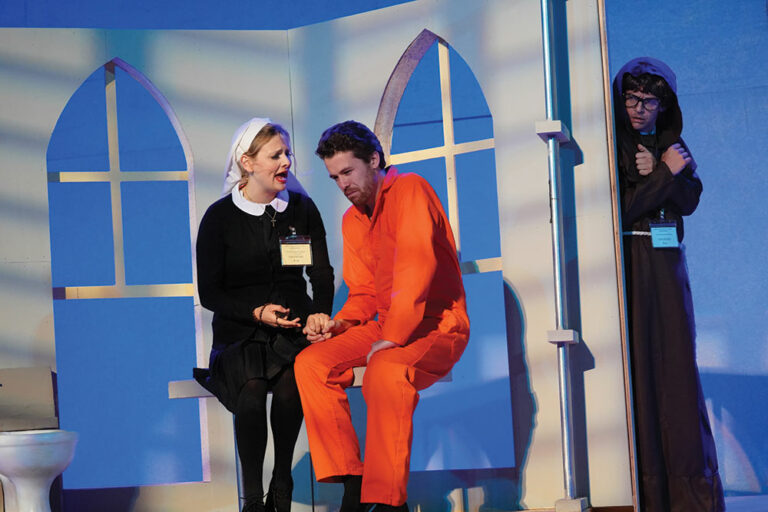
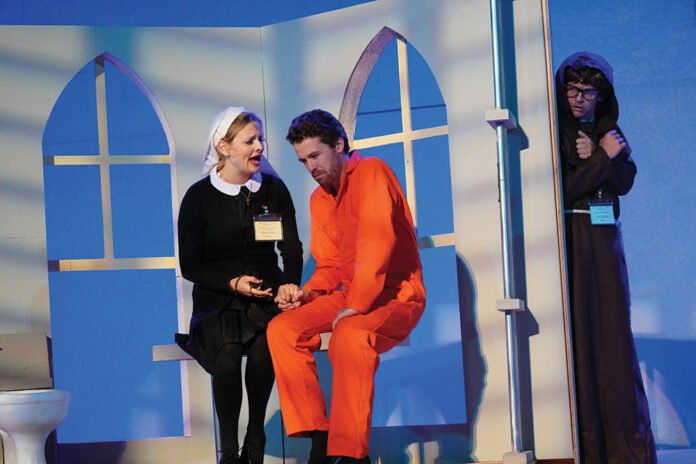
Judge Vincentio (Patrick Russell) cedes his authority to Judge Angelo (Joseph Patrick O’Malley) in an attempt to avoid responsibility for the strict enforcement of the law. Vincentio disguises himself as a friar so he can stick around and see what happens.

Angelo begins immediate enforcement of the laws, closing all the brothels (except those that cater to the upper crust) and imposing the death penalty on those found guilty of fornication. Claudio (Brennan Pickman-Thoon), who has impregnated his girlfriend, soon finds himself on death row. He begs his friend Lucio (Ariel Zuckerman) to get his sister Isabella (Luisa Frasconi) to leave her convent and intercede with the judge.

Isabella meets with the judge to plead for her brother’s life. After a day’s consideration, Angelo offers to release Claudio if Isabella gives herself to him. Isabella threatens to expose him, but the smug Angelo knows she will not be believed: “Say what you can, my false o’erweighs your true.”

Working behind the scenes to right the many wrongs in play, Vincentio puts a plan in motion to save the day.

One of Shakespeare’s less frequently produced works, director Robert Currier has added elements to make this play more contemporary. The set, by Jackson Currier, is modeled after San Quentin. The costumes, by Tammy Berlin, are modern. Spoken word sound bites by LeMar “Maverick” Harrison and picket signs with social justice messages bridge the scenes. Such devices are often used to make plays more accessible, but in this case some of them weakened the show and made it longer than necessary.

Performances ranged from professional to amateurish, with the best work done by Russell, O’Malley (when you could hear him), Frasconi, Steve Price as advisor Escalus, and Ed Berkeley as Pompey.

Get past the directorial excesses, and you’ll find a darkly comic tale of morality, hypocrisy and law. “After all, the play’s the thing.”

‘Measure for Measure’ runs through July 21 at the Forest Meadows Amphitheatre, Dominican University, 890 Belle Ave., San Rafael. Thursday – Saturday, 8 pm; Sunday, 4 pm. $10 – $38. 415.499.4488. marinshakespeare.org.

Taste Riot

I fully expect new folks to show up in North Bay wine country next week and announce their plan to make wine as good as, or better than, the best wines of France.

The plan is nothing new. James Concannon did just that in 1883 when he planted vine cuttings from Château Margaux—famed for its wines then as now—in his Livermore Valley vineyard. Margaux, located in the Bordeaux region on the southwestern coast of France, happens to be big on Cabernet Sauvignon—now the most widely planted grape in California by far—and some 80 percent of its acreage is now planted with clones of Cabernet that originated in the Concannon Vineyard, according to the winery. With its toasty Cabernet s’more aroma of graham cracker and jelly, Concannon’s classic 2016 CV Paso Robles Cabernet Sauvignon ($20) has plenty of varietal character for the price, with room left over in the middle palate for sensibly paired cuisine.

Despite our reputation as revolutionaries, Americans are restorationists par excellence when it comes to the king of grapes—you see the Bastille Day tie-in? Take Jordan Vineyard & Winery, which recently dumped its American oak barrels in favor of French oak barrels for its latest vintage, 2015 Alexander Valley Cabernet Sauvignon ($57). Just as food-friendly as the last vintage, this mélange of dried mixed berries, walnut, and raspberry herbal tea isn’t necessarily my cup of tea for a second glass, but as a Bordeaux-styled accompaniment to food, it’s hard to beat.

Choose Frank Family Vineyards’ 2016 Napa Valley Cabernet Sauvignon ($58) for a broadly warm, strawberry and plum jam-flavored sipper. Sweet and soft, it also shows enough black olive and pencil box Cabernet character to stay in its price lane.

Now, name the reigning monarch of California white wine. Sauvignon Blanc? Good guess, because that’s the blanc heavy of southwestern France. Yet, despite the popularity of “Sauternes” among California wine drinkers of the 1880s, their successors of the 1980s weren’t as savvy. That’s just as well, because Gamble Family Vineyards’ 2018 Sauvignon Blanc Yountville ($28) offers plenty of pretty citrus blossom, honey, and tropical fruit cocktail aromas for the price. With Asian pear flavor and a green, fruit cocktail grape note, the finish has a balancing touch of bitter melon rind.

I also like the simpler Pixy Stix, grapefruit zest and smoky flint-scented Benziger North Coast Sauvignon Blanc ($15). When it’s time to let them have Chardonnay, try the Benziger 2017 Sonoma County Chardonnay ($16) or Imagery 2018 California Chardonnay ($20), whose on-type, if muted, apple pie and caramel flavors should cause no revolt among loyalists to the queen of California white wine.

Whole Hog

It’s busy and cool early evening at Tony’s Seafood in Marshall on a recent Thursday. The heat lamps are ablaze in the foggy twilight and a throng of people wait outside for a seat, but the wait won’t be too long at this welcoming, two-room saloon slung along Tomales Bay. Inside, soup bowls appear to fly out of the kitchen...

Horoscope

All signs look to the 'Sun'
ARIES (March 21-April 19): An Aries reader sent me a boisterous email. “I was afraid I was getting too bogged down by my duties,” he said, “too hypnotized by routine, too serious about my problems. So I took drastic action.” He then described the ways he broke out of his slump. Here’s an excerpt: “I gave laughing lessons to...

Time After Time

Before the Europeans arrived in California, the Coast Miwok people inhabited what we now call Marin and southern Sonoma Counties. Over thousands of years, the Miwok and other coastal and California tribes developed a rich economy based on gathering, fishing and hunting, with villages of up to several hundred people. Today, Point Reyes National Seashore offers a glimpse into this bountiful...

Advice Goddess

Q: I keep reading about how detrimental social media usage is, with people avoiding face-to-face interaction and feeling inferior when they see everyone else looking gorgeous and having fabulous lives. Would you recommend taking regular breaks from social media?—Instagrammer Girl A: Put on 10 pounds recently? No problem! There’s surely an app that’ll stick your head on the bod of...

Playing Tribute

Since the earliest days of the Elvis Presley impersonator, tribute bands have found a place in the music scene as a way for audiences to hear their favorite songs from their favorite artists in more accessible settings. Tribute bands also allow casual music fans to attend a concert and know exactly what they’re getting for their ticket. “Sometimes we have...

Force of Nature

If there’s one sad thing historians know about official histories, it’s that success has a thousand fathers … but few mothers. From the days of glass box theaters and hand-cranked cameras comes Pamela B. Green’s fascinating, deeply researched documentary Be Natural: The Untold Story of Alice Guy-Blache. Guy-Blache has many firsts on her resume. She was very likely the first...

Letters

Shocking Conditions Recently, I visited what some might call a “concentration camp.” Conditions in the facility shocked me: residents were crowded in, and the smell of dirty diapers and soiled clothing/bedding and urine from shared restrooms permeated the air. Language barriers between staff and residents created other issues. Many residents appeared listless, surrounded by institutional-beige walls, bedding and floors. Was...

Desert Foxes

Situated within the Bradshaw Mountains in central Arizona lies the small town of Prescott (Pronounced “press-kit"). Over the years, this mile-high hamlet has earned a reputation as a place for emerging artists to find an audience, and today it draws singers and songwriters of all kinds to its many clubs and venues. Jim Sobo was drawn there in 2003. He...

Modern Measures

The Marin Shakespeare Company opens its 30th season with Measure for Measure. Shakespeare on justice and mercy would seem to be a perfect fit for a company that brings their Shakespeare for Social Justice program to eight California state prisons. Officially labeled a comedy, Measure for Measure is considered by some to be one of Shakespeare’s “problem plays,” in which...

Taste Riot

I fully expect new folks to show up in North Bay wine country next week and announce their plan to make wine as good as, or better than, the best wines of France. The plan is nothing new. James Concannon did just that in 1883 when he planted vine cuttings from Château Margaux—famed for its wines then as now—in his...
3,002FansLike
3,850FollowersFollow