Flashback

50 Years Ago

Michael Evens, a 14-year-old Marin City youth, has been named 1969 “Boy of the Year” of the Marin City Boy’s Club. The award was made last week at the annual club awards banquet attended by several hundred persons at the Corte Madera Recreation Center.

According to club executive director Manny Chandler, Evans won because he “participated in all club activities, was a good sportsman, the club’s best athlete, was courteous, helpful, and a gentleman at all times.”

⁠—Uncredited, 2/25/70

40 Years Ago

Being an American is never having to say you’re sorry. That’s the John Wayne tradition, and that’s giving us a lot of trouble as we try to nail down a solution to the Iranian hostage problem.

William Beeman, an anthropologist and resident of Iran for seven of the past 10 years, told Pacific News Service that the final hurdle to getting the hostages home is a cultural one. The Iranians want us to apologize for past actions in their country. Says Beeman: “We advise our sons and daughters never to apologize for past actions, never to make excuses. John Wayne and Vince Lombardi never apologized. It’s something Americans do with resentment and loathing…”

…Beeman winds up by pointing out that in asking for America to apologize, Iran is not out to humiliate us. Quite the contrary; by Iranian cultural standards the call for an apology is a statement that they are willing to forge a reconciliation.

⁠—Steve McNamara, 2/22/80

 30 Years Ago

The homeless population in Marin may be four or five times greater than previously estimated. At least that’s the conclusion of a recent San Rafael task force report, which says there may be between 1,500 to 2,000 homeless in the country with about 20 percent living in San Rafael. Meanwhile, the U.S. Census Bureau will do an actual homeless count March 20 to 21 when they scour local streets, abandoned buildings and shelters.

⁠—Newsgram, 2/23/90

20 Years Ago

Republicans prefer decorous political conduct. Indeed, Ronald Reagan once promulgated an “Eleventh Commandment” requiring that GOP candidates not speak ill of each other. That’s certainly not the way the current Republican presidential campaign is unfolding. George “Dubya” Bush and John McCain are beating each other up in a manner no Democrats have matched in decades. It’s a sight to behold.

The bitterness of the fight is odd because, with the conspicuous exception of campaign finance reform, the positions of the two candidates are not all that far apart. They both embrace the far right position on abortion, they both want to fatten up the Pentagon’s portion of public spending and they both have environmental positions to range from timid to terrible.

But there is a difference. Bush is a personable fellow who wants to be president without much knowing what he might do when he gets there, just like his daddy. He is also deeply beholden to the moneybags who dominate the Republican Establishment. McCain, the feisty war hero, is amazingly frank on all things and is committed to cleaning up the campaign finance swamp.

The Sun endorses John McCain as the Republican candidate for president.

—Endorsements, 2/23/00

Compiled by Alex T. Randolph

Hero & Zero

Hero

Three septuagenarian hikers went missing over the last 10 days, sparking two separate search missions.

Carol Kiparsky, 77, and Ian Irwin, 72, both of Palo Alto, went missing in Inverness on Valentine’s Day. By Monday, Feb. 17, a multitude of agencies were searching for the couple.

Meanwhile, Robert Bennett, 76, of Novato, went hiking on the Valley Stone trail in Marinwood last Monday and never made it home. Rescue teams combed the area on Tuesday. That evening, two search dogs, Luna and Zinka, found Bennett off the trail in the Lucas Valley Preserve. The dogs likely saved his life, as doctors believe he suffered a stroke and fell while hiking. Bennett is now recovering.

Back in Inverness, the search continued for Kiparsky and Irwin. Hearts were heavy on Thursday when the Marin County Sheriff announced the search had moved from a rescue to a recovery operation.

Then, on Saturday morning, volunteers from Marin County Search and Rescue and the California Rescue Dog Association heard calls for help. Miraculously, Quincy Webster and Rich Cassens and his golden retriever Groot found Kiparsky and Irwin alive.

The pair had spent nine days in a drainage area surrounded by dense foliage and stayed alive by drinking from a puddle. Kiparsky and Irwin were extracted by helicopter and taken by ambulance to the hospital, where they are both recovering.

Hats off to the hundreds of volunteers involved in the searches and paws up to the dogs that assisted them.

Zero

Marin County Supervisors recently approved a 44-percent fee hike for building and safety permits in unincorporated Marin. They justify the outrageous increase by saying fees weren’t raised for nearly 10 years. Fees should have been increased incrementally over that time. The solution is to now begin raising them by a reasonable amount annually. A 44-percent increase in one bite is hard to swallow. Geez. I’m glad I already finished my remodel.

email: ni***************@***oo.com

Hero & Zero

Hero

Three septuagenarian hikers went missing over the last 10 days, sparking two separate search missions.

Carol Kiparsky, 77, and Ian Irwin, 72, both of Palo Alto, went missing in Inverness on Valentine’s Day. By Monday, Feb. 17, a multitude of agencies were searching for the couple.

Meanwhile, Robert Bennett, 76, of Novato, went hiking on the Valley Stone trail in Marinwood last Monday and never made it home. Rescue teams combed the area on Tuesday. That evening, two search dogs, Luna and Zinka, found Bennett off the trail in the Lucas Valley Preserve. The dogs likely saved his life, as doctors believe he suffered a stroke and fell while hiking. Bennett is now recovering.

Back in Inverness, the search continued for Kiparsky and Irwin. Hearts were heavy on Thursday when the Marin County Sheriff announced the search had moved from a rescue to a recovery operation.

Then, on Saturday morning, volunteers from Marin County Search and Rescue and the California Rescue Dog Association heard calls for help. Miraculously, Quincy Webster and Rich Cassens and his golden retriever Groot found Kiparsky and Irwin alive.

The pair had spent nine days in a drainage area surrounded by dense foliage and stayed alive by drinking from a puddle. Kiparsky and Irwin were extracted by helicopter and taken by ambulance to the hospital, where they are both recovering.

Hats off to the hundreds of volunteers involved in the searches and paws up to the dogs that assisted them.

Zero

Marin County Supervisors recently approved a 44-percent fee hike for building and safety permits in unincorporated Marin. They justify the outrageous increase by saying fees weren’t raised for nearly 10 years. Fees should have been increased incrementally over that time. The solution is to now begin raising them by a reasonable amount annually. A 44-percent increase in one bite is hard to swallow. Geez. I’m glad I already finished my remodel.

email: ni***************@***oo.com

Meaning of Freedom

Interesting first-person experience about visiting San Quentin, but I am still waiting to hear about the “Meaning of Freedom,” (Feature, Feb. 19)  that was offered in the article’s sub-headline. 

I was really hoping to hear the perspective of Jarvis Jay Masters, the death row inmate with whom the author purports to be friends of two decades. This was a decent first installment, but I am hoping for a second piece that will truly reveal the Meaning of Freedom to the folks on Death Row at S.Q.

Alex Horvath

Via Pacificsun.com

SMART Tax

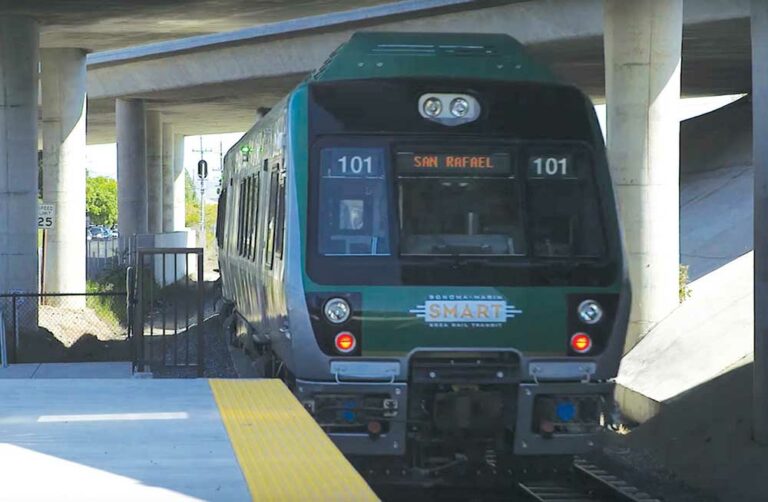
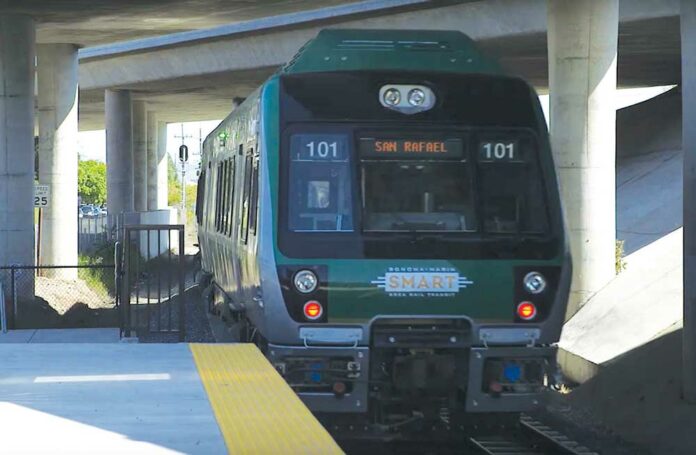
The “No” on Measure I information I’ve seen in the media gives an incomplete picture of the need for continued funding for the SMART train as an integral part of the North Bay transportation system. 

Discussion of funding SMART must address the role of greenhouse gasses produced by our transportation system in contributing to the climate crisis. Although the State of California has done well in reducing carbon emissions in our electricity grid, transportation is a part of our economy in which we are making poor progress in reducing greenhouse gasses. 

Granted, there has been mismanagement at SMART, and those problems should be rooted out, but voting “No” on I is throwing out the baby with the bathwater. Even though it does not serve me in Sonoma Valley, I realize that SMART is a crucial element in a climate-smart regional transportation infrastructure. 

We must develop a transportation system that does not require us to get into private CO2-spewing automobiles to get around, and SMART is an essential first step. Please vote “Yes” on I in March.

Matt Metzler

Sonoma

Chase goes spaghetti western

0

Growing up, San Francisco singer-songwriter Sam Chase learned to play music from listening to classic-rock greats such as the Who and Bruce Springsteen, folk outfits such as Simon & Garfunkel and old-school punks such as Rancid, giving his alt-Americana sound a rock & roll edge.

Since adopting his moniker, the Sam Chase, and forming his band, the Untraditional, the Bay Area raconteur has released three albums, though his fans haven’t seen anything like his new endeavor, an authentically epic rock opera of an album, The Last Rites of Dallas Pistol, available now. The Sam Chase performs a solo set on Sunday, March 1, with fellow alt-folk singer-songwriter Willy Tea Taylor at HopMonk Tavern in Novato.

“I love the album format that I grew up with,” Chase says. “I feel that in this day and age we’re moving into an era of singles instead of full-on albums—and I find that sad. This is my protest to the Spotify world we live in; by making an 18-song rock opera.”

In the works since 2012, The Last Rites of Dallas Pistol is a single narrative Chase tells over 18 tracks. The story involves the Devil and a man who sells his soul to save his son, the titular Pistol.

“I always wanted to make a spaghetti western rock opera,” Chase says. “I probably wrote about 30 songs and whittled it down to 18. I had a bunch of other characters in mind; love interests and other bad guys. I wanted to write an Odyssey, but I realized at the end of the day 18 songs is plenty.”

When Chase approached his seven-piece band with the concept, they welcomed the challenge.

“We knew from the beginning we were biting off more than we could chew,” he says. “Part of me never thought it would get finished. We put out two other albums in the time it took us to write and record this album. Leading up to the album’s release, I was just thinking to myself, ‘Ok, just don’t die before you’re done.’”

The Sam Chase and Willy Tea Taylor co-headline a concert on Sunday, March 1, at HopMonk Tavern, 224 Vintage Way, Novato. 7pm. $20. 415.892.6200.

Marin County ballot measure campaigns heat up

Measure D – San Geronimo Valley Golf Course

A long-running disagreement over the fate of a former Marin County golf course is going in front of voters in the ballot box on March 3.

According to the County Counsel’s summary, Measure D would require that “prior to the County approving any change in use for the property formerly operated as the San Geronimo Golf Course, the County must undertake certain studies regarding the proposed change of use, and the proposed change must be approved by a majority vote of the electorate of Marin County.”

At issue is the sale of the San Geronimo Golf Course to the Trust for Public Land, a San Francisco-based nonprofit. After the sale, a group called the San Geronimo Advocates sued the county over the deal. The same group gathered signatures to put the issue on the ballot.

According to a report in the Marin Independent Journal, the supporters and opponents of the ballot measure disagree on basic facts. 

“In 2018, with no public disclosure, County officials developed a backroom deal with Trust for Public Land, a private corporation. TPL would purchase the property, and then Marin County would use taxpayer funds to buy out TPL and change the use,” an argument in support of the measure alleges.

But Brendan Moriarty, a project manager at the Trust For Public Land, told the Independent Journal that there is “no chance” the group will attempt to sell the land back to the county due to a legal agreement reached with the county and the San Geronimo Advocates last April.

In any event, the trust does have some interest in the outcome. County election filings show that the “no campaign’s largest backer is the California Trust for Public Land Action Fund. As of Feb. 15, the group had contributed $47,679.61 in cash and staff time to the cause.

Campaign committees tied to Marin County Supervisors Katie Rice and Dennis Rodoni contributed $5,500 and $5,000 respectively to the “no” campaign.

As of Feb. 15, the ‘no’ campaign had spent $86,916.49 on its campaign. The “yes” campaign had spent $35,854.

Measure I – SMART Ballot Measure

Spending on Measure I, an item on the ballot in Sonoma and Marin counties, to extend a quarter-cent sales tax from 2029 to 2059 has continued to balloon as the March 3 election approaches.

With consecutive waves of voter mailers, radio reads and Facebook advertisements from both sides inundating North Bay residents, money in support of the ‘no’ campaign is approaching $1.7 million, while money gathered in support of the measure is $1.2 million and change, according to news reports.

In some ways, the campaign has become a war of the media. The editorial board of the Marin Independent Journal opposes Measure I, while the Santa Rosa Press Democrat’s editorial board supports it.

And, last week, the ‘no’ campaign, funded almost entirely by Molly Gallaher Flater, a 35-year-old business executive at Sonoma County’s Gallaher Homes and Poppy Bank, shipped mailers to North Bay voters calling into question the impartiality of the Press Democrat’s editorial board.

For those who don’t know, Darius Anderson is an investor in the Press Democrat’s parent company, Sonoma Media Investments, and owner of Platinum Advisors, a prominent Sacramento lobbying firm.

In 2015, SMART hired Platinum Advisors to lobby for the agency’s interests in the state capitol. The rail agency paid Platinum Advisors $590,000 for its services through Feb. 1, according to records from the California Secretary of State’s office.

The Flater-funded fliers, emblazoned with the flashy headline “A Serious Conflict of Interest?”, reached mailboxes last week. The document states in part that “It appears that neither SMART nor Sonoma Media Investments, which owns the Press Democrat, have disclosed this relationship [between Anderson and SMART] to the public.” 

Apparently, Press Democrat readers took notice of the mailer. On Feb. 20, a few days after the mailers arrived, the Press Democrat’s editorial board ran an article responding to the allegations laid out in the mailer.

“Some of our readers are asking about a scurrilous flier that implies a connection between The Press Democrat’s endorsement of Measure I, the SMART rail sales tax extension on the March 3 ballot, and other business interests of one of the paper’s owners,” the editorial states in part. “There is no connection.”

The editorial later acknowledges that the board “probably” should have mentioned that Anderson’s firm lobbies for SMART in their Feb. 2 endorsement of Measure I, but stops short of the next step: enacting a similar disclosure policy for the paper’s reported content.

The generally-accepted practice in the news business is laid out in the Society of Professional Journalists Code of Ethics: “Avoid conflicts of interest, real or perceived. Disclose unavoidable conflicts.” 

The Press Democrat doesn’t disclose Anderson’s clients in its reported content—as shown in a Feb. 22 article about spending levels in the Measure I competition—or, until now, their editorials. 

Cheek to cheeky

0

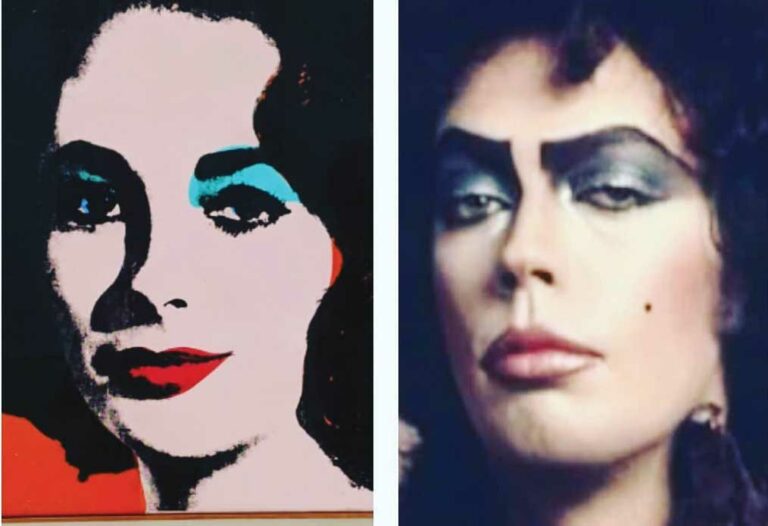
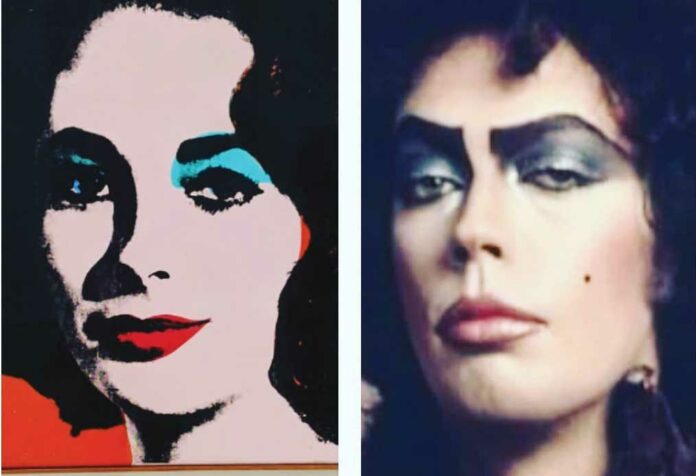
On view on floor five as part of the “Pop, Minimal, and Figurative Art” exhibit at the San Francisco Museum of Modern Art is Andy Warhol’s Liz #6, an iconic work that we’ve all seen. But have you seen it side by side with Tim Curry’s Dr. Frank N. Furter from The Rocky Horror Picture Show? See above—now you have. The resemblance is uncanny in that “separated at birth” kind of way. Surely, this sixth Liz Taylor was the inspiration for Curry’s make-up, right? Happy to debate this with you at a drinking establishment of your choice—just say when, where and the name on your tab. I see you shiver with antici……pation.

• • •

Starting Monday, Petaluma will be the scene of a massive arboreal apocalypse as the city fells trees along Highway 101 between Lakeville Street (Highway 116) and Corona Road (a name that makes you want to wear a face mask). Unless you’re a vampire, this shouldn’t affect your commute—the tree slaying will close northbound lanes from 10pm to 6am and southbound lanes from 7pm to 4am—for the next seven weeks. Alas, it never occurred to the powers-that-be to instead keep the trees and rip out the highway, as an act of civic healing. This particular leg of 101 has artificially divided Petaluma and fomented an intense East-West rivalry that’s led to calls to dam the Petaluma River and create Petaluma Bay to flood the side opposite their own. 

Did English 101 teach us nothing? Being the “egg basket of the world” at the time F. Scott Fitzgerald was writing the Great Gatsby, surely Petaluma was the inspiration for East Egg and West Egg (aha!), the tony enclaves that indicated whether you come from old money or new money. I don’t know where Petaluma’s money is now, let alone its relative youth, but I do know that “mature trees” are showcased on every million-dollar-plus real estate listing (which is to say every listing at this point). Factor that into your nest egg, P-town.

• • •

Someone has vandalized undercover artist Banksy’s latest mural in Bristol, England, leading others to ask “Wait, isn’t Banksy’s art itself technically vandalism?” Armed with spray paint and stencils, the much-lauded Banksy surreptitiously appropriates city walls as his canvases, which can become worth millions—that is, until another artist scrawls “BCC Wankers” across it in an apparent critique of the “Bristol City Council.” Sure, beauty is in the eye of the beholder, but value in the art world starts with the holder of the spray can. A decade ago Banksy created six pieces during a San Francisco “residency”—surely Sonoma, Napa and Marin are next.

Nominate local targets for Banksy-treatment on our Facebook page (facebook.com/NorthBayBohemian) and we’ll pass them along (and, naturally, take a gallerist’s commission).

Daedalus Howell is the writer-director of the movie “Pill Head.” 

Advise Goddess

Q: I hooked up with a really good friend a few times. We both agreed to forget about it to preserve our friendship, but he’s been really distant. I don’t want to be the one to reach out and say something. How do I get things back to normal?—Upset Woman

A: They say a really good friend is someone who knows everything about you—but, ideally, that stops short of them knowing how your sex face is a ringer for a pug having a seizure.

Chances are, this stretch of awkward silence between you has two interconnected causes: 1. “Eek, too much naked!” with somebody who isn’t a romantic partner, and 2. The fog of uncertainty over what sort of relationship you and he now have.

Problem 1, “Eek, too much naked!” comes out of how, when you two “just friends” hooked up, you abruptly and unwittingly vaulted across the boundaries of friendship into romantic territory. Major features of a romantic relationship—an intimate relationship—are vulnerability and openness. We look to find someone we can trust with our most embarrassing flaws and deepest fears, along with other stuff we don’t put out to the world with a bullhorn: “Hey, everybody on this bus, let’s have a chat about what I like in bed!” 

Sex tends to feel less like sexual overshare after the fact if it was preceded by some starter romance—talking flirty, lite touchyfeely, making cartoon heart eyes at each other. This stuff signals a transition to a deeper relationship (or at least sincere hopes of one). 

However, when we get naked without any romantic prep, our feeling weirded out—overly exposed—probably comes out of our evolved motivation to protect our reputation: our public image, the sort of person others perceive us to be. Back in the harsh, 7-Eleven- and Airbnb-free ancestral environment that shaped the psychology still driving us today, our social survival and, in turn, our physical survival were dependent on whether people believed we were a good person and somebody good to keep around.

Welcome to the origins of our longing for privacy—to keep some info about ourselves out of the public eye (everyone we don’t have intimate relationships with) and to manicure the info we do release. Social psychologist Mark Leary refers to this as “impression management.” Others’ evaluations of us affect how we’re perceived and treated, so, Leary explains, we’re driven to “behave in ways that will create certain impressions in others’ eyes.” Regrettably, it’s difficult to keep up the role of steely image manager while naked and barking like a coked-up elephant seal. 

Moving on to problem 2, the fog of uncertainty over what sort of relationship you and this guy now have, getting naked together is also a defining act of sorts—or rather, a possibly redefining one. Before you two had sex, your relationship was clearly defined as a friendship. There’s comfort in this sort of clarity. It’s like a sign over a business. When we see “Laundromat,” we know what to expect, and it isn’t Thai takeout or stripper poles, watered-down $20 drinks and loose glitter. 

Right now, there’s probably an uncomfortable question looming over the two of you: Does one want more of a relationship—a romantic relationship—than the other’s up for providing? Psychologist Steven Pinker explains that people get uneasy when they’ve had one type of relationship with somebody—say, a friendship—and they aren’t sure whether that person wants a different type of relationship. A changed relationship has changed terms and behaviors that go with it, and they need to know which set they’re supposed to adhere to.  

And sure, you do say you both agreed to ditch the sex to preserve the friendship, but people say lots of things, because it’s not like a dude in some control room somewhere gives us an electric shock whenever we tell a lie. 

Ask yourself whether you might want more than a friendship. If so, figure out whether you want it enough (and whether it’s possible enough) to risk making it too uncomfortable to remain friends—which could happen.

If friendship is really all you want, you don’t have to “reach out and say something.” In general, guys don’t want to talk about it; they just want life to go on. And there’s your answer. Start asking this guy to do “just friends” things, like hanging out with you and other amigos. To stay on the clothed and narrow, schedule these outings at “just friends” times—in unsexy bright daylight—and in “just friends” locations: places you’d get arrested if you stripped down to “Yo…check out the wild birthmark that looks like Lawrence of Arabia crossing my labia on a camel!”

Bischoff retrospective goes on display

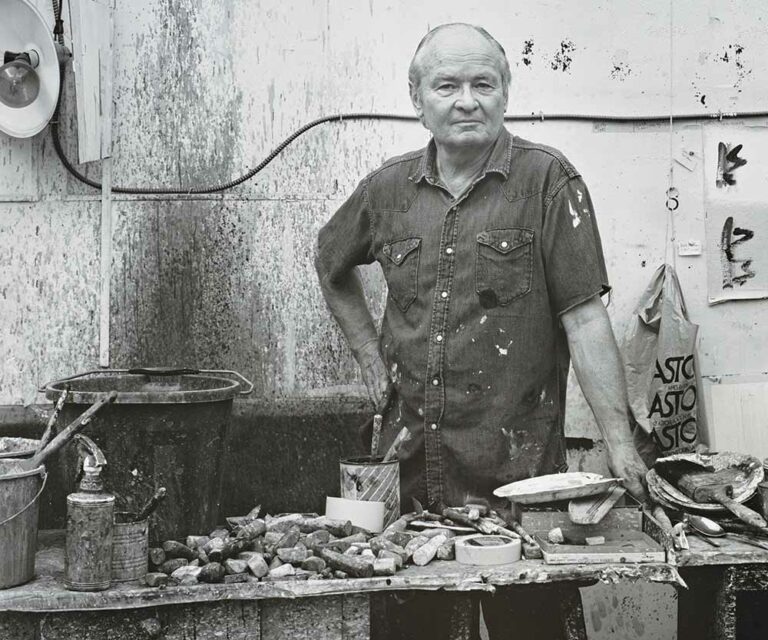
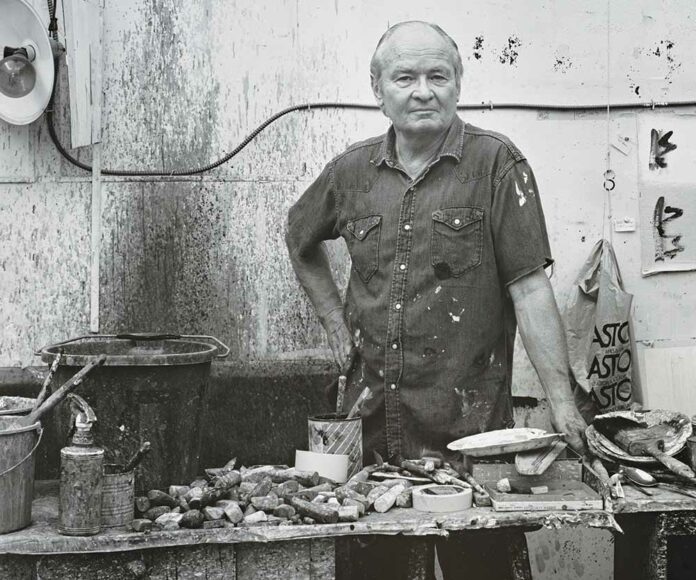
Few artists had as much impact on the development of artistic movements in the 20th century Bay Area as Elmer Bischoff, from his contributions to abstract expressionism in the 1940s and ’50s, to his pioneering work in the figurative movement through the 1970s.

Now, for the first time, Marin Museum of Contemporary Arts has gathered a collection of nearly 40 of Bischoff’s most expressive and impressive works for its latest exhibit, “Elmer Bischoff: A Survey of Paintings and Drawings, 1937–1972,” which opens on Saturday, Feb. 29, in Novato.

“Each year we like to highlight a visual artist that we think has had an impact on the Bay Area art scene,” says MarinMOCA Executive Director Nancy Rehkopf. “Even though we are a contemporary art museum, we like to honor those who have come before us. Elmer Bischoff is one of those legends.”

For this exhibit, the museum worked with the Bischoff Family Art Trust, Bischoff family members, private collectors and Napa’s di Rosa Center for Contemporary Art. All together, the survey includes 38 works that have never all appeared together at once, and which chronicle Bischoff’s journey through abstract and figurative movements.

“For most people, they’ve only seen these works in books,” Rehkopf says.

Featured paintings include the 1959 oil painting Figure Seated In Backyard, which Rehkopf describes as evocative, romantic and contemplative.

“It’s emblematic of the way he used his experience as an abstract painter to create a brand-new style for figure painting,” she says. “Some curators have called it the Bay Area Figurative School, but I know that Elmer Bischoff really resisted having any label applied to him.”

The exhibit also features seven large oil paintings that are more than 4 feet by 5 feet in size, as well as works that depict local sights like the Marin Headlands.

“It’s going to be a feast for the eyes,” Rehkopf says.

Open to the public through April 19, the exhibit will also be viewed by several hundred Novato fourth-grade students as part of MarinMOCA’s education programming.

“We are really thrilled to be able to share professional exhibitions with local school kids for absolutely free,” Rehkopf says.

For the Feb. 29 opening, the museum welcomes art-scholar Meghan O’Callaghan for a talk about several of the pieces on display, followed by a reception.

At the same time, the museum’s Second Floor Gallery is hosting the opening of a new solo exhibit by MarinMOCA member artist Marie Krajan, “Deep Secrets,” which captures the wonder and vulnerability of the ocean’s coral reefs in paintings that emphasize the need for ocean conservation.

“We’ve all read about the destruction of the coral reefs and what an ecological disaster that is for all of us, if we don’t make changes in the way we’re polluting the ocean,” Rehkopf says. “Marie’s beautiful acrylic paintings of coral reefs and other undersea creations just remind us what a treasure we’ve got there, just beneath the waves.”

“Elmer Bischoff: A Survey of Paintings and Drawings, 1937 – 1972” opens Saturday, Feb. 29, at MarinMOCA, 500 Palm Dr., Novato. Art talk, 4pm; Reception, 5pm. $8–$10; Free for members. marinmoca.org.

The Meaning of Freedom

2

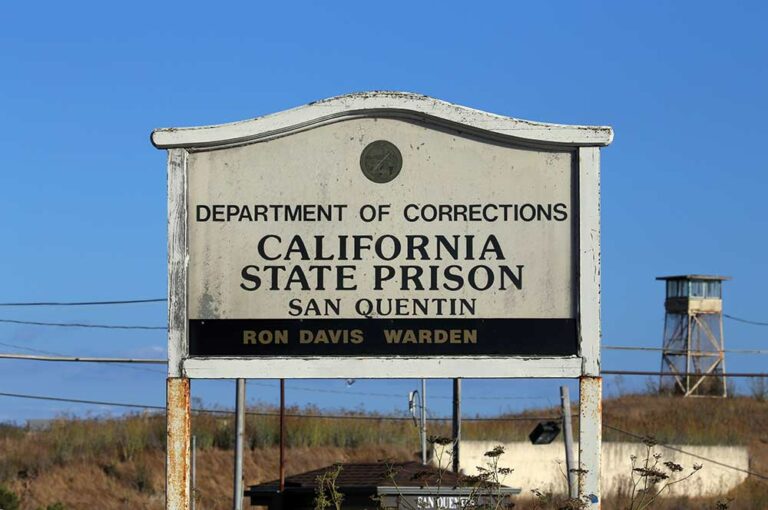
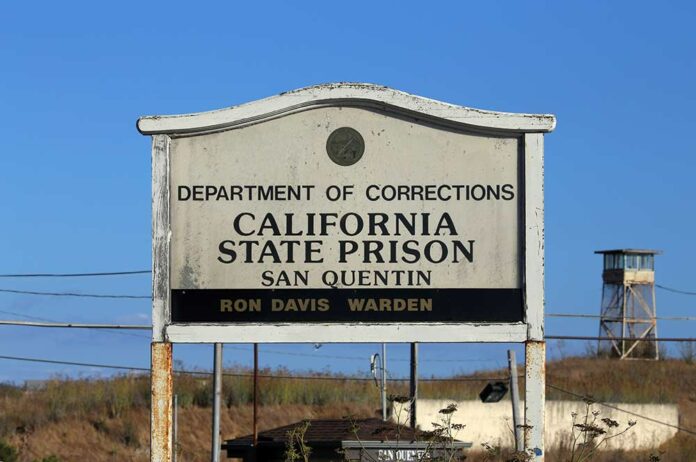
San Quentin State Prison is the only prison in California that executes condemned men, but there hasn’t been an execution there since 2006. However, Death Row still exists, and the heavy vibe that permeates that world is still palpable.

The last exit to San Quentin on Interstate 580 is an easy right turn just before the Richmond Bridge. The person I’m visiting is Jarvis Jay Masters, a most remarkable man who’s been on Death Row for 38 years—21 of which were in solitary confinement—longer than any other prisoner in San Quentin history. I know Jarvis to be an innocent man, wrongfully convicted, and we have been friends for 20-plus years.

A visit to San Quentin is a journey into juxtaposition. The ride along the rocky coast where the prison sits fills one’s eyes with the ocean’s raw beauty and the familiar sounds of the sea against the shore. All this is set against the stark background of drab and aging buildings that house desperate souls with grim prospects. 

In the visitor’s admission’s building, children of all ages, mostly black Americans, play and laugh and sometimes get scolded by worried families while awaiting entry. A common-enough scene as compared with the next step—the tightly confined, caged visit with their inmate relative or friend. It’s a contrast of childhood enthusiasm with the heavy reality of the inmate’s locked-down life.

As with entering any new place, it helps to know the customs and rules of the land. Here’s a little primer:

Gaining access to someone on Death Row is by appointment only and requires jumping through many hoops and considerable phone time. It takes hours of busy signals, interminable waits on hold and getting disconnected repeatedly. Hours turn into days, as business hours are limited. Once at the prison, getting inside to see family or friends is a strictly regulated procedure. You’d better know the scene, or you’re in for some misery.

Unsuspecting newcomers to S.Q., as it’s commonly called, await admission in a long, narrow, windowless building, anywhere from one to three hours, only to be told their clothing is wrong. They can’t wear blue, green or brown—those colors are for the guards and inmates. Visitors are then directed to a distant, small building, where they’re issued alternative clothes. No prior warning or notice is given. The message is clear: “We have the power—you have no say in the matter.”

The same message applies to the inmates. They’re issued identical, prison-blue denim pants, shirts and jackets. Message understood: “You have no identity here. You’re just another blue-clad being in the herd.”

Most of the guards I’ve come across are a pretty decent sort, but of course there are jerks, just like everywhere else. Once you get through the outer first station and pass muster with its long list of restrictions and searches for possible contraband, it’s not an unpleasant walk—except in cold, wet weather—up to the second station that houses the visiting sections.

Visits with inmates are either what’s termed “contact visits”—face-to-face in the same metal cage—or “non-contact visits,” which are done by phone, through a thick Plexiglas separator, like in the movies. The sound quality on these phones ranges from very poor to inaudible. Such is the fun of prison visits.

That’s the most I’ve ever seen of the inside of San Quentin, and it’s enough. It was originally built in the 1850s, but I’d say they constructed its current buildings much later. It’s not a dungeon, but it looks and feels maximally institutional and operates on a bureaucratic scaffolding of rules and regulations that cannot, and will not, be broken or bent.

So what?, you might be thinking—prisons aren’t supposed to be playgrounds; we incarcerate people for a reason. And that’s true. But there are also people there, guards and visitors for instance, who’ve committed no crimes, but nevertheless spend time there. Truth is, nobody cares that much about living, breathing people—especially the visitors—but the guards have a union and therefore a voice. Curiously, they, too, spend time in lockup, and that’s what they have in common with their prisoners. Among these inmates are some angry, violent and dangerous people who need to be separated from society. There are also many who don’t fit that bill, but that’s another matter. 

Each visitor and inmate share an approximately 4-by-8-foot, heavy steel mesh cage; there are about six cages per row and three rows in total. They’re all joined together, forming one gigantic cage partitioned by steel-mesh walls. There’s no privacy; guards patrol constantly, and conversations from neighboring cages are easily overheard. Me, I’m far too concentrated on conversing with my friend to even hear what’s going on around me, and I couldn’t care less anyway.

A wall of vending machines provides a background soundtrack while inmates await a break from the usual prison fare. It’s a strange mixture of life’s mundanities and sanctioned death.

If the prisoner hasn’t already arrived at the appointed cage, he enters the visiting room via a separate entrance—accompanied by guards, of course—and they open the cage from the opposite end. The inmate, his hands handcuffed behind his back, stands at a narrow opening on that side of the cage, and a guard unlocks the cuffs. Visitor and inmate are then allowed one hug. One more hug is allowed when visiting time is over. Visiting time is three hours max.

I’ve become increasingly claustrophobic over time. Airplanes freak me out and I’ve pretty much given up on flying. I can overcome it in this situation, though, because the cage lets in air, light and soundand if I concentrate on the conversation at hand, I can pretty much drown out the surroundings and ignore the other cages and their inhabitants. We humans are nothing if not adaptable, otherwise why would anyone put up with steerage-class air travel or commuter traffic, day in and day out? Some of us can even adapt to jail.

But my point is not about what prisons look like or how they operate. My descriptions simply set the scene. This account is about freedom and what that word has come to mean for me.

Prison not only confines the human body to an 8-by-10-foot cell, it also restricts virtually all human activity except for thinking. There is no freedom of choice, as authorities make all decisions for the prisoners: when and what to eat, when to sleep and get up, when to bathe, when to exercise, what to wear, with whom one can communicate, and so on. Even when to die, in some cases. Everything we take for granted in our everyday lives no longer applies inside those drab, cinder-block corridors, where the law regulates and regiments an inmate’s life every hour of every day, week, month and year until they are out, or dead.

That’s life, for the masses, in our prisons.

When a person goes to prison in this country, they abandon every aspect of their freedom. Their life, for all intents and purposes, no longer belongs to them. It belongs to the state and its representatives; the prison officials. They place the choices that govern almost every aspect of a person’s life in the hands of others, and what that person wants or doesn’t want and needs or doesn’t need, is no longer up to them. They have, in a sense, been reduced to zero. 

I’m always struck by two things after leaving San Quentin: What it means to be free, and the beauty of the natural environment just beyond the prison walls. They built San Quentin along the coastal bay, almost right alongside the water’s edge—a high, fortress-like tower dominates that point. Across the bay a housing development—probably an upscale one, given its location—is nestled into the coastal hillside. Anything along the San Francisco Bay is high-end property. One assumes any developer would sell their soul to get their hands on the property on which San Quentin sits.

I walk out of the prison and take deep breaths of sea air, cleansing and reviving myself, heaving a sigh of gratitude for the cries of the gulls. I feel the ocean’s cool breeze and invite the chill. I notice my own footsteps and feel my body as it carries me to my car. And then … I can go wherever I want to go. Any direction I choose, to any destination I want. And in that moment I realize what freedom is.

Freedom is not “just another word for nothing left to lose.” Freedom is not a word. It’s not a concept. It’s not a lyric in a song, no matter how good that sounds. Freedom is something real and tangible. Freedom is having choices. Don’t let anyone tell you different.

—- Sidebar —-

Jarvis Jay Masters was wrongfully convicted of the crime of taking part in the plot to murder a prison guard in 1985 and became a victim of both a corrupt legal system and wholly incompetent legal representation. Despite a wrongful conviction and decades of imprisonment he has led a remarkable and highly productive life. Readers can access his full life story at www.freejarvis.org.

Simon & Schuster will publish The Buddhist on Death Row, a biography written by noted author/journalist David Sheff about Master’s life and accomplishments, in 2020. davidsheff.com.


Flashback

50 Years Ago Michael Evens, a 14-year-old Marin City youth, has been named 1969 “Boy of the Year” of the Marin City Boy’s Club. The award was made last week at the annual club awards banquet attended by several hundred persons at the Corte Madera Recreation Center. According to club executive director Manny Chandler, Evans won because he “participated in all...

Hero & Zero

Hero Three septuagenarian hikers went missing over the last 10 days, sparking two separate search missions. Carol Kiparsky, 77, and Ian Irwin, 72, both of Palo Alto, went missing in Inverness on Valentine’s Day. By Monday, Feb. 17, a multitude of agencies were searching for the couple. Meanwhile, Robert Bennett, 76, of Novato, went hiking on the Valley Stone trail in Marinwood...

Hero & Zero

Hero Three septuagenarian hikers went missing over the last 10 days, sparking two separate search missions. Carol Kiparsky, 77, and Ian Irwin, 72, both of Palo Alto, went missing in Inverness on Valentine’s Day. By Monday, Feb. 17, a multitude of agencies were searching for the couple. Meanwhile, Robert Bennett, 76, of Novato, went hiking on the Valley Stone trail in Marinwood...

Meaning of Freedom

Interesting first-person experience about visiting San Quentin, but I am still waiting to hear about the “Meaning of Freedom,” (Feature, Feb. 19)  that was offered in the article’s sub-headline.  I was really hoping to hear the perspective of Jarvis Jay Masters, the death row inmate with whom the author purports to be friends of two decades. This was a decent...

Chase goes spaghetti western

Growing up, San Francisco singer-songwriter Sam Chase learned to play music from listening to classic-rock greats such as the Who and Bruce Springsteen, folk outfits such as Simon & Garfunkel and old-school punks such as Rancid, giving his alt-Americana sound a rock & roll edge. Since adopting his moniker, the Sam Chase, and forming his band, the Untraditional, the Bay...

Marin County ballot measure campaigns heat up

Measure D - San Geronimo Valley Golf Course A long-running disagreement over the fate of a former Marin County golf course is going in front of voters in the ballot box on March 3. According to the County Counsel’s summary, Measure D would require that “prior to the County approving any change in use for the property formerly operated as the...

Cheek to cheeky

On view on floor five as part of the “Pop, Minimal, and Figurative Art” exhibit at the San Francisco Museum of Modern Art is Andy Warhol’s Liz #6, an iconic work that we’ve all seen. But have you seen it side by side with Tim Curry’s Dr. Frank N. Furter from The Rocky Horror Picture Show? See above—now you...

Advise Goddess

Q: I hooked up with a really good friend a few times. We both agreed to forget about it to preserve our friendship, but he’s been really distant. I don’t want to be the one to reach out and say something. How do I get things back to normal?—Upset Woman A: They say a really good friend is someone who...

Bischoff retrospective goes on display

Few artists had as much impact on the development of artistic movements in the 20th century Bay Area as Elmer Bischoff, from his contributions to abstract expressionism in the 1940s and ’50s, to his pioneering work in the figurative movement through the 1970s. Now, for the first time, Marin Museum of Contemporary Arts has gathered a collection of nearly 40...

The Meaning of Freedom

San Quentin Prison
San Quentin State Prison is the only prison in California that executes condemned men, but there hasn’t been an execution there since 2006. However, Death Row still exists, and the heavy vibe that permeates that world is still palpable. The last exit to San Quentin on Interstate 580 is an easy right turn just before the Richmond Bridge. The person...
3,002FansLike
3,850FollowersFollow