Several Fall Events Planning Pandemic-Related Postponement

Last March, Covid-19 forced California to cancel most social gatherings and events through the spring of 2020. Soon after, it was clear that summer 2020 would follow suit as fairs, festivals and other fun events were postponed or called off in the wake of the virus’s continued spread.

Now, autumn 2020 looks to suffer the same fate socially as the last two seasons. Many North Bay–based events and harvest celebrations are postponing their fall gatherings before July even begins, as Covid-19 continues to gain ground in the state and the Bay Area with increasing numbers of new cases each week.

In Sonoma County, fall traditionally begins prior to Labor Day—which is scheduled for Sept. 7 this year—as harvest-related events get rolling in August. One such event, now canceled, is Sebastopol’s popular Gravenstein Apple Fair.

Agricultural organization Farm Trails hosts the fundraising fair that celebrates the locally grown Gravenstein Apple. On the fair’s website, the Farm Trails team writes, “Though we can hardly imagine August in Sebastopol without the Apple Fair, we are fully on board with the County’s decision to cancel large gatherings. We are so grateful for the health care workers and first responders on the front lines and for all of the essential businesses (farmers/producers, nurseries, grocery store workers, postage and parcel services, etc.) who continue to sustain and support our lives during these unprecedented times. We are also appreciative of the sacrifices our entire community is making by staying at home to help flatten the curve.”

The fair organizers also note that Gravenstein apples will still be falling in Sonoma County this fall, and they hope to find ways to mark the occasion with virtual events or DIY activities.

“We’re doing everything we can to make sure that Farm Trails continues to make good on its mission to preserve farms forever in Sonoma County,” says Farm Trails Board President Vince Trotter, in a statement. “With our main fundraiser off the table, we’re certainly facing some financial challenges this year, but our farmers are fighting through this, and so will we. We’re cutting our expenses to the bone and looking at some creative ways to bring in revenue and make the 2021 fair better than ever.”

Other popular harvest and culinary events canceling their 2020 gatherings include the massive Taste of Sonoma wine-tasting extravaganza, the annual Heirloom Expo of food providers and enthusiasts best known for its giant pumpkin contest and the Sonoma County Harvest Fair’s Grand-Tasting and World Championship Grape Stomp Competition—though the Harvest Fair’s professional wine and food competitions will still be held remotely.

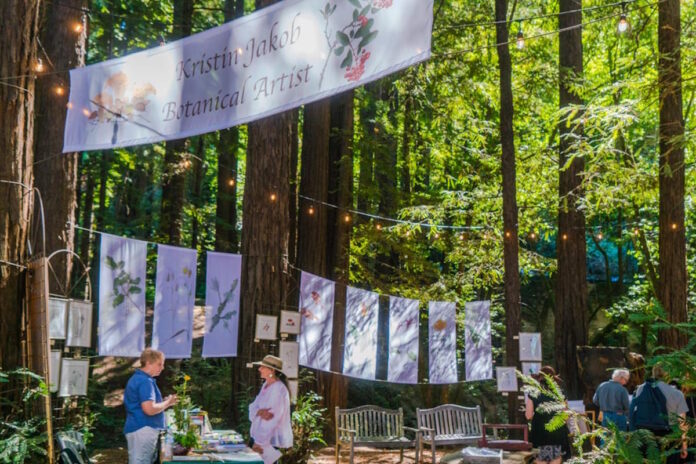
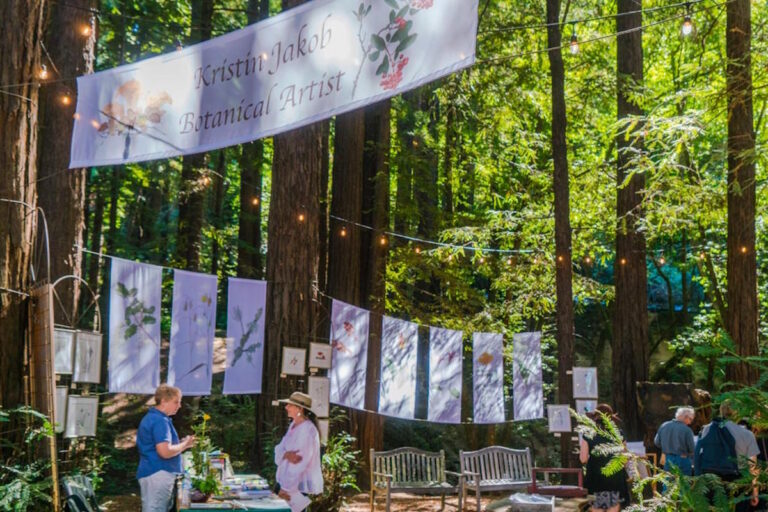
In Marin County, the arts are often a major part of the fall season, with festivals and fairs showcase both international and local artists and crafters.

One of Marin’s largest gatherings each fall is the Sausalito Art Festival, taking place on Labor Day weekend for more than 60 years. This year, the Sausalito Art Festival Foundation will pause production of this signature event due to the uncertainty of the pandemic and other current challenges associated with event production. On the festival’s website, the Foundation says it will plan a new iteration of the event “to meet a shifting arts and entertainment landscape.”

In addition to pandemic concerns, the Sausalito Art Festival Foundation writes that restrictions to access of the waterfront venue, competition for headlining musical talent and increased security costs and concerns are also factors in their decision to reimagine the event for 2021.

Another Marin fall staple, the Mill Valley Fall Arts Festival, also recently announced its 2020 fest would be canceled due to Covid-19.

“For over sixty years our little festival has been a wonderful celebration of Mill Valley’s unique culture and community,” says festival executive director Steve Bajor, in a statement. “This year the responsibility to act prudently to ensure everyone’s safety is our top priority. Like so much we are missing, we are hopeful that the festival will return next year for us all to enjoy.”

Artists previously juried into the 2020 show will instead be featured on the festival’s website and will be invited to show their work in person at the next event, now scheduled for Sept. 18 and 19, 2021, in Old Mill Park.

Other fall arts events in the North Bay forgoing 2020 include Open Studios Napa Valley’s self-guided art tours, usually planned for two weekends in September, and the Sonoma County Art Trails, normally scheduled for two weekends in October. Still other major events canceled this fall include the Sound Summit music festival that celebrates Mount Tamalpais State Park each September at the historic Mountain Theater, and the Napa Valley Film Festival that was slated to happen in November.

“We appreciate the tremendous support and well wishes from our community during these uncertain times,” said Cinema Napa Valley Chairman Patrick Davila, in a statement. “Rest assured we will use this time to strengthen our commitment to our mission and develop new avenues to fulfill our vision. I look forward to seeing all of you in 2021 for our 10th year anniversary.”
Marin County Delays Some Reopenings as Covid-19 Cases Rise

Marin County, like many other regions in California, has recorded an increase in new Covid-19 cases over the past week. The increase in active cases is significant enough that the county is rethinking its reopening schedule this summer.

“Since the beginning of our reopening process in early May, Marin Public Health has committed to moving at a sequential rate, guided by local Covid-19 data and our progress indicators,” said Dr. Matt Willis, Marin’s public health officer, in a statement. “We’re seeing patterns we need to pay attention to. We’re not closing anything down. We’re just slowing the pace in response to the data.”

That slowed-down pace means the reopening process for several Marin County businesses scheduled to open doors on June 29 has been paused for the moment. The delayed reopenings include hotels, motels, short-term rentals, gyms, tattoo parlors, piercing shops, non-medical massage services, nail salons and other personal service businesses. These businesses will be re-evaluated for the next round of reopenings at a yet-to-be-determined date.

The businesses and activities allowed to move forward with reopening on June 29 include indoor dining, hair salons and barbershops. Also coming back in Marin County are campgrounds and RV parks, among other outdoor, vehicle-based gatherings.

On June 25, Marin counted 54 new cases of Covid-19, the highest number in any one day in the county since the pandemic appeared locally in March. This increase in cases is leading to record numbers of people being hospitalized with the virus—currently 12—as well as people battling the virus in intensive care—currently five. 

Complicating Marin County’s response to Covid-19 is a large outbreak at San Quentin State prison, with more than 500 inmates infected in the past two weeks. In addition to the infected inmates, some of whom have been transferred to local hospitals in critical condition, more than 75 prison employees have also been infected.

“We’re all eager to move forward out of the shelter-in-place, but the pandemic is far from over,” said Max Korten, director of Marin County Parks and acting coordinator for the Marin Recovers Industry Advisors, in a statement. “We have a shared responsibility in this. Everyone in Marin County needs to wear a face covering, maintain social distance and practice good hygiene. These are simple tools, and our ability to reopen further depends a lot on following these practices as a community.”

Recent spikes in cases have been observed across the State of California, meaning that other Bay Area counties such as San Francisco and Contra Costa County have also announced delays in their reopening plans.

On June 28, The California Department of Public Health announced that the state’s positivity rate—a barometer for community spread—is still moderately trending upward on average for the last two weeks, with hospitalization rates also slightly increasing over the last 14 days. 

As of June 28, California has 211,243 confirmed cases of Covid-19 from 3,955,952 tests conducted. There have been 5,905 Covid-19-related deaths in the state since the start of the pandemic. As testing numbers continue to grow across the state, an increase in the number of positive cases is expected—highlighting the importance of positivity rates to find signs of community spread.

Find more information on Marin County’s reopening and response to Covid-19 at MarinRecovers.com.

Drive-In Theaters Come Back to Life in the North Bay

0

It’s been three months since movie theaters have been allowed to let patrons see a movie on the big screen. In the North Bay, cinemas have stayed closed since mid-March as the Covid-19 pandemic has the region under social distancing orders.

Even now, as restaurants, shops and other businesses start reopening to the public, public venues like movie theaters face a challenge in housing people in tight quarters and keeping their spaces sanitized and socially distant enough to meet the state and county orders that are in place to stop the spread of Covid-19.

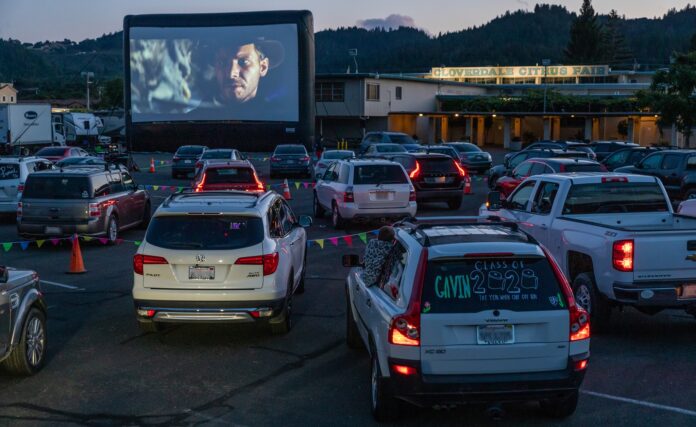
One way that theaters and event organizers have solved the problem of seeing movies while social distancing is the return of the classic drive-in movies. From Larkspur to St. Helena, makeshift drive-in theaters are becoming all the rage, showing classic blockbusters in spacious outdoor settings.

Drive-in theaters are as old as the automobile, with some form of outdoor car-centric film screenings dating back to the 1910s, though the drive-in had its hey day some sixty years ago when Baby Boomer families flocked to drive-ins in mostly suburban and rural areas.

There were drive-ins in the North Bay back in the day, most notably the Sonomarin (Midway) Drive-In Theatre that opened south of Petaluma in 1968 and ran until 1989. That drive-in famously showed mostly X-rated films after 1983 and was finally demolished in 1991.

Families in 2020 have no fear of coming across such scandalous movies in the new crop of drive-in theaters. Instead, this new wave of distance-conscious screenings is keeping the films family friendly and fun. Find the drive-in theater in your neighborhood with this guide.

In Marin County, the historic Lark Theater and the popular Bon Air Center invite film lovers to Drive-In to the Movies this summer.

The series is free for all, though advance registration is required. The drive-in series next screens the summer movie classic Dirty Dancing on Thursday, July 16, at 8:30pm. Later this summer, the series offers a screening of another ‘80s musical hit, Flashdance, on Thursday, August 20.

After making reservations to the screening, moviegoers can also swing by the Lark Theater near the Bon Air Center before the movie and buy a tub of the theater’s fresh-popped organic popcorn to complete the experience.

In Napa County, the independent Cameo Cinema often presents first-run features and indie-film darlings on its one screen in St. Helena. In addition to offering on-demand at-home film streaming since the Covid-19 pandemic, Cameo Cinema is branching into the drive-in craze with the help of Gott’s Roadside in St. Helena and owner Joel Gott, who agreed to host the Cameo Drive-in Movie Theater in Gott’s back parking lot for a few weeks.

The Cameo Drive-In Theater is also made possible with a grant from the City of St. Helena and the support of the Chamber of Commerce and the Cameo Cinema Foundation.

The drive-in will feature a state-of-the-art, thirty-foot outdoor screen with 4K digital projection, and the family-friendly series opens this weekend and features two alternating films each weekend, Thursdays through Sundays.

For instance, this opening weekend features Jurassic Park screening Thursday and Saturday, June 25 and 27, with the recent Sonic the Hedgehog screening Friday and Sunday, June 26 and 28.

The classic and contemporary movie pairing continues next week, as Cameo Drive-In Theater features Wonder Woman and Jaws. Future weeks will see classics like E.T. and new films such as the Hulu original film Palm Springs playing as well.

Gott’s parking lot opens for the drive-ins at 8pm each night, and the Roadside will be available to serve pre-ordered food. Tickets to the Cameo Drive-In Theater is limited to 45 cars per screening. Tickets are $30 per car and must be purchased in advance.

In Sonoma County, Santa Rosa Cinemas–which operates theaters like the Roxy Stadium 14 and Airport Stadium 12–are collaborating with the Luther Burbank Center for the Arts in a new series entitled Carpool Cinema.

The screenings take place at the LBC’s south parking lot, beginning at sunset. For the drive-in experience, the movie’s sound is pumped into the car through a FM signal on the radio. Like other drive-in screenings in the North Bay, the Carpool Cinema series is adhering to the strict social distance guidelines.

This week, Carpool Cinemas presents the classic ‘80s teen comedy Ferris Bueller’s Day Off on Saturday, June 27. Next week, Carpool Cinemas plans to screen the Mel Brooks’ parody Spaceballs on Wednesday, July 1. Gates open at 7:45pm. General admission tickets are $30 per car, with a limit of two cars per household. Visit LBC’s website for more information and to purchase your spot in the carpool.

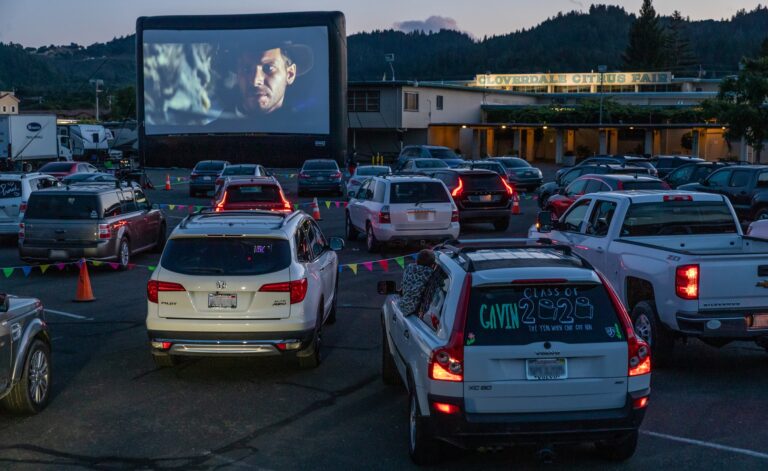
In North Sonoma County, the Alexander Valley Film Society is revisiting the drive-in days with its own outdoor screening series at the Citrus Fairgrounds in Cloverdale.

The society has already hosted throwback drive-in events in previous summers, and they continue the tradition in 2020 with an outdoor screening of Wonder Woman on Friday, July 24 and a presentation of Furious 7 on Saturday, Sep 12. Gates open at 8pm for each screening. Tickets are $30 per car and must be purchased in advance.

Limited services for first responders

0

In 2017, a retired police captain woke up in the middle of the night with his gun in his hand, his wife’s shriek breaking the 3am silence. The metal felt cold against his sweaty palm, his heart beat like it was ready to explode. He was crouched in attack mode, his shoulders tensed together, ready for a fight. He doesn’t remember running around the house with his weapon, believing there was an intruder somewhere. 

According to his wife, this wasn’t the first time it had happened.

The captain—who asked his name not be used because of the sensitivity of his medical condition—worked at a mid-sized, East Bay police agency and had long suffered from night terrors, extreme PTSD and alcoholism during his 25-year career. But the mental health services that once kept his conditions at bay were shut down—like so many other businesses and services—in the wake of Covid-19 stay-at-home orders.

The West Coast Post-traumatic Retreat Center in Napa County that the former captain relied on to get his life back on track specifically serves first responders. It closed its doors on March 13 to help curb the spread of the disease.

“I think if he didn’t go to this program, he would have died,” his wife said. “You have to hit a bottom to get there. Somebody drives you there.”

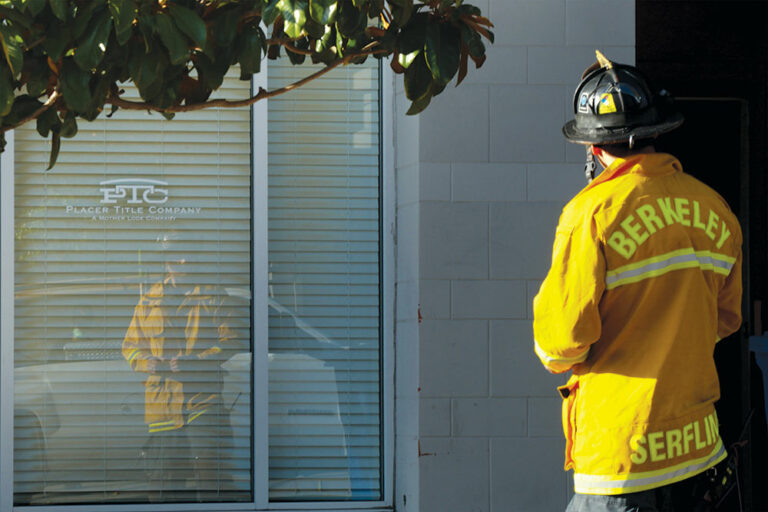
First responders have long been known to suffer from mental trauma, with law enforcement officers especially vulnerable to depression and suicide. And while first responders now work on the front lines of the pandemic, there is renewed concern over their mental health and the safety of their loved ones. With state-wide shelter-in-place orders, these essential workers have nowhere to go to receive the mental-health help they need, particularly for the heightened trauma they’re now facing—risking exposure to Covid-19 every day while out on patrol or responding to calls for service, sometimes without the necessary personal protective equipment needed to protect themselves.

According to the International Association of Chiefs of Police and the Center for Evidence-Based Crime Policy at George Mason University, around 130 agencies, of the nearly 1,000 agencies that responded to the survey, reported their ability to provide PPE for their officers as “poor” or “very poor.” Their survey responses were collected in mid-to-late March, just after the president declared a national emergency and after California’s shelter-in-place ordinance went into effect. 

At that time, around 70 agencies reported their ability to manage exposed officers as poor, and a little over 25 percent did not report having a contingency plan or strategy in place to handle a significant number of officers on sick leave or in quarantine. 

Which, according to data collected by The National Police Foundation, is happening all too frequently. According to their Covid-19 real-time data dashboard, California has a higher rate of exposures and diagnoses than any other state. More than 21 percent of reported personnel—nearly 4,000 people—have been exposed, with 0.4 percent diagnosed. 

First responders risk Covid-19 exposure every day, with dire mental-health implications. And this population is already more vulnerable than others.

According to Blue H.E.L.P., a nonprofit aimed at mitigating the stigma of mental health in police departments, 228 officers committed suicide nationalwide in 2019, an increase from 172 the year before. During the years Blue H.E.L.P.’s been collecting data, more police officers in the United States have died by suicide than by all line-of-duty deaths combined.

Which is what makes centers like WCPR so vital to this community. WCPR relied heavily on group therapy. Using what they call a tri-pronged system, the facility relied on licensed clinicians, chaplains and peers. Peers—people who’ve been through the program before—were hailed as the most pivotal parts of the program, said Cyndee Thomas, chaplain director at WCPR.

An LAPD homicide detective, who asked to remain anonymous, was on the WCPR waitlist. He was specially interested in its peer support, to help him cope with his alcoholism and recurring nightmares. His most recent nightmare occurred three weeks ago, when he awoke in a sweat, his body tense, recovering from the mental image of a young officer he’d trained who died brutally in a car chase just a month into the force.

“He was one of my favourite trainees,” he said. “The car wrapped around the telephone pole and he died. That was 18 years ago and it’s still with me.”

The detective tried seeking help during his 20 years on the force, but found therapists were unable to help him.

“A lot of the time it makes it worse,” he said, regarding usual therapy.

Being in law enforcement is a “unique experience,” something that is not easily or completely understood by the general public. Opening up to first responders who have lived a similar reality can help facilitate the healing process.

“What’s the backup plan?” he asks, as mental health facilities like WCPR shut down because of shelter-in-place. The detective shares his concern that first responders need more support than ever during Covid-19. He believes suicides, alcoholism and substance abuse are going to skyrocket; that the numbers and overall impact will only be visible in hindsight. 

Preventing exposure among personnel is already difficult enough, even more so when departments are hindered by a lack of PPE. According to the NPF, nearly 28 percent of personnel in California have reported insufficient access to PPE. And even more concerning is the lack of information being provided to law enforcement.

The California Police Chiefs Association surveyed the 322 law enforcement agencies throughout the state during the last week of April, and more than a third responded. Of the respondents, 30 percent said they were not receiving information from health officials on Covid-19 cases in their city. Meaning, several law enforcement agencies in California are being forced to send their officers to answer calls without knowing whether or not the call is related to someone Covid-19 positive, potentially and unknowingly risking them exposure. And, half of all respondents said they have had to quarantine at least one officer due to Covid-19.

Without access to facilities like WCPR, these first responders have to handle the anxiety from being put in these stressful situations on their own.

“This is not a luxury thing,” said the detective, “there are a lot of guys out there who’re really worried [that they’re] at the end of their rope and are needing to get into a facility.”

The WCPR retreat was crucial, as attendees were physically surrounded by peer-support and constant check-ins. WCPR is a no-substance zone, and those dealing with addiction were physically removed from drugs and alcohol.

In order to provide some relief, WCPR has been moderating online video conferencing where first responders can find a safe space to talk. Not meant to be a replacement for the retreat, the virtual platform functions as an SOS helpline.

At the retreat, the captain found clients who’d been in similar situations as him and were willing to talk about their experiences. They understood his trauma.

“I felt an affinity for them almost immediately, which happens at WCPR,” he recalled.

He attributes recovery and bonding to their physical presence, a connection missing in online meetings.

Other types of first responders are also at a high risk for death-by-suicide. The Firefighter Behavioral Health Alliance recorded 139 firefighters and EMT suicides last year, and nearly 40 deaths this year so far.

“Covid-19 is just the beginning of a lot of issues that my brothers and sisters will be dealing with,” Jeff Dill, founder of the FBHA, said.

Adding to existing PTSD and depression, first responders are expected to face compassion fatigue, a higher risk of exposure to Covid-19 and the stress of potentially infecting their own families.

David Bevers, an engineer and paramedic with the Sacramento Fire Department, said paramedics are under intense pressure in the midst of the pandemic. Stress already occurs from working on the front lines, but the added tension around protecting against a deadly contagion makes first responders particularly vulnerable.

“We’re fighting the invisible war,” Bevers said.

Bevers emphasized the need for first responders to deal with their mental trauma, which if left untreated, often worsens into more dangerous health situations. Symptoms of mental trauma begin subtly, with a person acting distant. Feelings of isolation evolve into substance abuse as a method of suppressing trauma, which can eventually lead to addiction. State-wide shelter-in-place orders prevent first-responders access to the typical recreational outlets, such as going to the movies or shopping, that once helped them cope with daily job pressures.

Bevers recalled his own experience attempting to resuscitate an unresponsive infant, who later died in the hospital. At the time, he had his own newborn at home. Soon after, Bevers realized he had to avoid developing attachments to patients.

“If I were to look at this kid, or look at the patient, and see somebody I know, or relate this to my kid or my family, that is what would tear me up,” Bevers said.

By Aashna Malpani and Natalia Gurevich

True Grit

0

Lisa Lai stands, hands on hips, on a remote mountain top with her watch dog Smokey at her side. She tells me, “I’m a no bullshit person.” She goes on to explain that she doesn’t bullshit her husband, her daughters, her friends, the county of Sonoma or the cannabis industry to which she belongs.

To get to her fifteen-acre property, I’ve had to pass through two locked gates and cross two cattle guards. To get into Lisa’s indoor garden she’s had to unlock three doors.

It’s unlikely anyone would come this far to steal her crop, first on paved road, then on dirt road, along the edge of a cliff. It would take serious effort to get here, and then even more effort to harvest, transport downhill safely and sell on the black market, the only place you can hawk “hot” weed. Only a fool would try.

“I have what’s called ‘penalty relief,’” Lisa explains when I first arrive. “I’m allowed to grow weed even though I don’t have final county approval.”

Lisa calls the whole approval process expensive and frustrating. Members of the Hessel Grange, the local organization to which she belongs, echo her view, though they each tell their own individual stories. Some don’t want to be written up and photographed. They prefer to be anonymous. That’s not Lisa.

I met her at the Hessel Grange at the end of a meeting held outdoors, with everyone sitting in chairs in a circle, practising social distancing and yet still smiling and laughing. Lisa gave me her cell number and the name of her business, All Cali Farms, and asked, “What do you know about me?”

I replied, “That you’re a marijuana grower and a woman.”

The daughter of a mechanic and a nurse, Lisa attended Humboldt State University and cut her eye teeth in the Humboldt cannabis industry. She remembers the days when feds helped state and local police raid gardens and make arrests.

Not surprisingly,  she hasn’t returned to her cannabis roots in Humboldt.

“I’ve been in Sonoma County for 10 years now,” she tells me. “This is home. I keep bees here and make honey, my daughters go to school in The Springs, and I’m a member of the Hessel Grange.”

At a recent meeting, the members swapped stories and talked about Black Lives Matter and George Floyd. The men tended to be loud and say “fuck” a lot. The women seemed to listen more carefully than the men.

Lisa likes the no-bullshit style of the Grange and the fact that the organization supports Black Lives Matter.

“I stand in solidarity with the Black, Latinx, and LGBTQ communities,” she tells me. “I think that people in prison for cannabis ought to be released.”

She’s on her feet much of the day in a room with artificial lights, whirling fans and there’s really only enough room for one person.

Lisa’s organic grow is “a sea of green,” which might be accurately described as a small, compressed version of a large outdoor plantation on steroids, so to speak. The marijuana plants in Lisa’s sea of green are protected by a complex security system.

“I have 400  girls here,” she says, “I’ll harvest 30 pounds of flower in a couple of months and then I’ll start another crop. I grow different strains because I believe in diversity and because connoisseurs and aficionados want variation and not the same-old same-old same-old.”

Lisa gets up close and personal with her “girls,” energizing them with her energy, providing good soil, bright lights and good clean water, which she has to give them every three to four days or they’ll shrivel and die.

“Growing indoors was originally a way to hide,” she reminds me.

Indeed, it was a way to conceal plants from aerial surveillance. Indoor also opened up opportunities. You can grow and harvest three to four times a year, protect the environment and have zero waste, though bad actors operate everywhere. Lisa’s sea of green looks healthy, smells fresh and clean, and it’s also pesticide free.

Lisa and her husband have two school-age daughters who have grown up knowing their mother was a successful pot grower.

“They know what I do for a living,” she tells me. “They also know marijuana is medicinal and not for little girls.”

Lisa is a success in a fledgling industry that the state of California and local municipalities have often tried to stymie. Indeed, officials have created a maddening and monstrous system and made a woman—Lori Ajax—the czar of the Bureau of Cannabis Control.

If Ajax is near the top of the cannabis pyramid, Lisa is near the bottom, not scraping it and yet scraping by. She plans to make real money soon and expand.

To get to the place where she is now she’s had help from family and friends and she gets along with neighbors who know what she’s doing and who like her. That’s essential. She doesn’t want anyone to file a complaint with the county. Lisa also gives credit to her own “grit,” her ability to stay focused and her ability to be happy on her remote mountain top.

“I’m never bored,” she says. “I can always process my thoughts.” She pauses, looks out at the forest in the distance, and adds, “There’s a revolution in our own country.”

Lisa is on the side of the whole cannabis community and especially with the women in the industry including Erin Gore, Dona Frank and Nikki Borracal—newly appointed a county deputy administrator—who aims to end the chaos and confusion at the county level where folks acted as though pot was still illegal and had to be stamped out before it multiplied.

Lisa thinks that men have dominated the industry because they’re likely to be tougher and rougher than women and more likely than women to provide “security.”

David Downs, the California editor of Leafly and the author of four stellar books about cannabis, has probably written more copy about women in the industry and provided more insights than any other reporter.

“There’s a gender gap in the industry, and there’s sexism, too,” he tells me during a phone interview. “There is support by women for women, but in general women have more to lose when they come out of the cannabis closet than men.

“Young men who want high levels of THC in their weed tend to spend more money and to talk more than women. Guys go online and brag about the big bong hit they did.”

Downs pauses a moment and adds, “There’s real feminine energy to the cannabis plant that should be respected. Some of the best growers are female. They tend to be less obnoxious than the guys.”

Lisa doesn’t brag, though she has bragging rights. She harvests the crop herself, dries it, cures it, manicures it, weighs it, packages it and keeps the books.

“I’ve never hired a lawyer or a consultant to do anything for me in the industry,” she says.

She is looking forward to final county approval, building a greenhouse, growing more weed and maybe exchanging seeds with another farmer and growing a strain or two, for her own personal use. Wasn’t that how she got started?

To get out of her sea of green and into the sunlight, I have to pass through three doors. To get downhill I have to get beyond two gates. Once I’m back on the paved, two-lane road, I can hear Old Courthouse Square and Santa Rosa civilization calling out to me.

Jonah Raskin is the author of Marijuanaland: Dispatches from an American War.

Windsor’s Open

0

Eighteen years ago, Windsor officially incorporated into a town. What’s in store as it heads into its next decade? At this point, who knows what’s in store for any small American town? What a strange time to be entering your 20s, Windsor—you have my sympathies. And yet, you seem to be doing just fine; perhaps even better than ever.

My month began in Windsor with a guest appearance on your locally produced, nationally syndicated TV show, Creature Features (Crowhaven Productions is your best-kept secret—pssst … vimeo.com/crowhaven) and will likely end with a flurry of letters to the editor about how I know nothing about the place. But I do, just ask your local Rotarians about my Zoom chat with them. They asked me to speak about media at an hour that was both early and ungodly. In my delirium, I claimed to have been conceived in the ’70s during a cocaine-fueled night in a Marin County hot tub (for the record, it was more likely jug wine at Bodega Bay). Their polite reception of my rant was followed by what we in the biz call “crickets.”

To fill my Windsor knowledge gap, I visited it—last night, in fact. At first blush, the suburban idyll might appear as a rogue Disneyland colony, perhaps Stepford, Conn. or a simulacrum of a natural human habitat. Works for me—clean and quiet—a perfectly lovely place, particularly for a jaded Gen Xer who just wants to chill the F out. The electric cars made nary a purr, the wind whispered, even the preponderance of children around the Town Green played in near silence. Kids—so many kids. I had to ask myself, “What did they do to all the adults?” My companion and I finally spied some grownups at nearby Kin Windsor—which looked too adult for my state of mind—so we ventured up the block to Lupe’s Diner. 

Germaphobes like me will be happy to know that Lupe’s seating is properly socially-distanced, the waitstaff wore masks and gloves, and the outdoor seating undergoes thorough spraying and wiping-down between diners. My grilled-chicken burrito was dependable and perfect. My companion’s tilapia tacos, ditto. The guacamole will make you rethink the green substances being eaten elsewhere—good to the last chip. 

Lupe’s Diner, 710 McClelland Drive, Windsor. 707.836.0150. lupesdiner.com.

A Writer Confronts Her Own Bias

0

When I was 7 years old, my implicit biases against Black people began to show. When talking about Black people, I would opt to say African American or whisper the word “Black” as if the word was a derogatory slur rather than a term as basic as “white,” to describe one’s race.  

When I was 17 years old, a friend asked me if I would ever date a Black guy. I hesitated before saying, “Yes.” 

When I was 19 years old and interned at a documentary film company that focused on racial relations, I drafted a Tweet that used the hashtag #AllLivesMatter when Zachary Hammond, a young white teenager, was shot by police. My supervisor kindly responded me that although my intent was good and what had happened to Zachary was tragic, #AllLivesMatter contradicted the significance of #BlackLivesMatter.

Now I cringe at my transgressions, ashamed I could have ever been so wrong. And unfortunately, many of us remain guilty of implicit biases, even those like me who grew up in a diverse, progressive community like the Bay Area. It shows in the way women cross the street when a Black man walks in their direction, in the way parents lock car doors as they drive their children through predominantly Black neighborhoods such as the Fillmore District and Oakland, and in the way children associate “black” with bad and “white” with good. 

Yet, the first step to address the brutality and injustices towards Black people is to address our own implicit biases, regardless of how uncomfortable that may feel, in spite of how ugly they are to face. 

Once I acknowledged the implicit biases I held, I questioned why. Racism is taught. Prejudice is taught. To fear or think of someone in a certain way because of how they look, is taught. I was taught to regard Black people as anything but equal to white people—not because the adults in my life were racist or because I lived in a conservative town, but for countless other reasons. For one, the news and entertainment I watched growing up highlighted Black men as violent, intimidating and angry or comedic; lesser caricatures. They were more often than not the criminals in Law & Order or the funny sidekick who only existed to serve the story of the white protagonist. 

Secondly, despite the “diversity” of my suburb, only 2.5 percent of residents are Black. As I recall, there would be at most two Black children in my class, if any at all. I could typically count all the Black students in my school of 500 children on both my hands. This reality ties into the fact that the histories of redlining remain prevalent and integration movements have been slow to act, particularly with the Bay Area’s gentrification and the segregation of Black communities from neighborhoods like the one I grew up in. 

This is not to excuse my former racial biases, but to understand how they are frequently produced within non-Black people. These are deep-seated, complex issues that we must address and realize; they bolster our underlying prejudices and racism. 

I want us to get out of this cycle, yet I realize that my previous passivity was a sign of complicity for a system that inherently seeks to oppress Black people. I want to break this perpetuity of violence, but did not actively seek to do so. I let the excuses of school, work and my own ambitions stop me from doing more. 

For my failure, I am so, so, so sorry. Yes, some, like me, feel guilty and can apologize for our past faults and inaction. But this is insignificant, paralyzing and futile. 

Oscar Grant, Eric Garner, Mike Brown, Trayvon Martin, Sandra Bland, Philando Castile, Tamir Rice, Jordan Davis. Atatiana Jefferson, Ahmaud Arbery, Breana Taylor, George Floyd. I, like millions of us, am tired of hearing tragedies like theirs occur, time and time again. Yes, we non-Black people are exhausted, but this weariness pales in comparison to the suffering of Black people who are depleted, enraged, terrified and heartbroken that they and their loved ones are murdered senselessly for something as arbitrary as their skin color. 


So we need to keep going and the first step is recognizing our implicit biases and pointing these out to our peers and loved ones. However, despite the frustration of what we feel people have yet to learn, shaming them will not encourage them to evolve and grow. I did not learn because people screamed at me about how ignorant I was (though I understand the urge to do so and wish I could yell at my younger selves). I learned because people remained patient and were willing to discuss with me why I was wrong. 

We should not leave this obligation solely to Black communities; all of us who have gone through this process of shedding our own racial biases should take it on. These responsibilities to help wholly eradicate racism and implicit prejudices are ones all of us must bear equally, long after the protests end, the stream of woke social media posts stop and the news on police violence pauses. We must continue to listen and to learn from Black voices and leaders, to speak out, to struggle, to shoulder the fight as our own. Please hold me accountable for this. We are all accountable for this now. If no one is coming to save Black people, no one will save us all. 

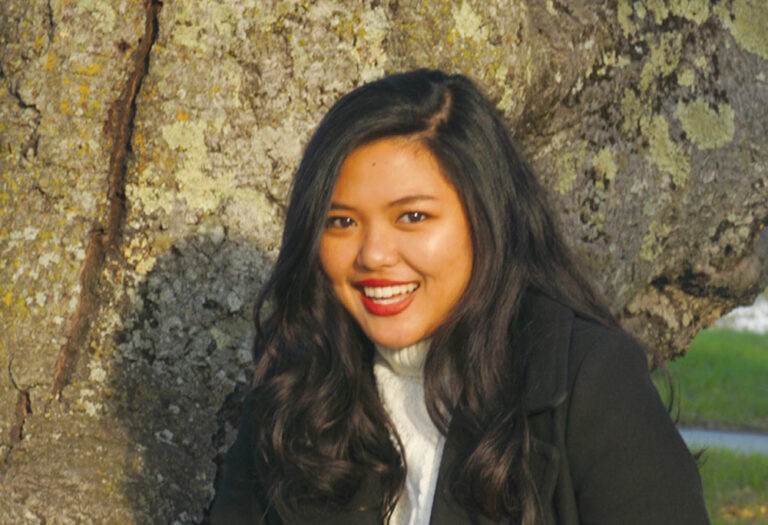
Katrina Fadrilan worked as a staff writer for The Daily Californian and has published works on a variety of platforms including the San Francisco Chronicle, East Bay Express and HuffPost.

‘Defund’ the Sheriff

Marin, the most orderly, low-crime county in California, should redirect the proposed $6-million-dollar Sheriff’s-budget increase toward more immediate needs.

The Sheriff already regards his heavily equipped department as a “paramilitary” force, which is out of step with the times and Marin’s real needs.

I still object to his use of Stingray listening devices to monitor the calls of Marin’s citizens, along with his connections to the National Security Agency.

Alex Easton-Brown
Lagunitas

What’s the Fuss?
Whoa … wait … maybe the cannabis industry would like Jill Ravitch to retire (“Top Cop’s Kerfuffle,” Rolling Papers, June 10), but for other residents of Sonoma County, she is doing exactly what she promised to do when she was elected to office in 2010.

She took an agency that was faltering under the previous administration and focused it on safety. She opened the Family Justice Center, expanding services to victims of family violence, sexual assault, child abuse and elder abuse.

Ravitch, described as a “tough prosecutor” with 27 years of experience, personally took a murder case to trial and won a first-degree conviction. The first in more than 20 years.

Her office has been clearing nearly 3,000 cannabis-related convictions.

Even her detractors (Omar Figueroa) praise her as a “great trial lawyer.” Lawyer and longtime Sonoma County “police watchdog,” Jerry Threet, admits Ravitch brought criminal assault charges against a police officer, but the jury declined to find him guilty.

Jill Ravitch is seeking justice in her work. She is doing the job she was elected to do. Twice.

Cathleen Howell
Santa Rosa

Rio Nido–based music fest goes online

0

When Eli Meyskens was very young, he misheard his parents talking about the town of Rio Nido and thought they said, “Real Neato.”

That phrase stuck with the Sonoma County–raised and San Francisco–based musician, and after he shared the story with music promoter and booker Daniel Strickland, the Real Neato Music Festival was born.

Last year’s inaugural Real Neato helped kick off the North Bay’s summer with a concert on June 15, 2019, at the historic Rio Nido Roadhouse. This year’s planned festival was canceled in the wake of the Covid-19 pandemic that is keeping everyone at home.

Undeterred, Strickland, Meyskens and fellow organizers will present Real Neato at Home, a virtual music festival streaming on Saturday, June 27, at 9pm. The online showcase will feature several Bay Area and North Bay bands and artists. 

“In talking with bands, we found out they are struggling with their finances,” Strickland says. “At first, we were going to do a fundraiser because of what’s going on with Black Lives Matter. Now, we’ve settled on doing something online that raises money for both the artists and for the NAACP Legal Defense Fund.”

Real Neato at Home’s confirmed online lineup of bands and artists include Oakland indie-pop artist Emily Afton, world music ensemble La Gente SF, North Bay rocker John Courage, psychedelic soul outfit Down Dirty Shake, self-proclaimed “Beach Funk Americana” group The Ha, outlaw country stars Caravan 222, folk singer-songwriter Dominique Gomez, longtime North Bay alternative rock band The Spindles and indie-rock duo Jesse Judies.

“It’s going to be like a TV show,” Strickland says. “Each of our artists is working on videos they are recording live. They’re sending that to us, we edit it and we’re going to stream it out on YouTube, Facebook, Twitter and Twitch in real time. The artist will then be on our site and will be able to chat, and that will give people a live experience with the artist while they are watching the show.”

While Strickland and the rest of the Real Neato crew hope to get back to hosting live shows later this year, he says, “the big thing for us is that we want to give people something fun to watch at home and to remind people that just like local restaurants and other businesses, musicians need your support right now, too.”

‘Real Neato at Home’ streams online Saturday, June 27, at 9pm. Realneato.com; linktr.ee/realneato.

Dark of Love

0

Does the term “Dark of Love” feel awkward to you? Most people are more familiar and comfortable with the phrase “Light of Love.”

All my life I have been deeply saddened by the continual racism I see in our country. I’m a writer, so I look to words for understanding. I see embedded in our language a basic racism. We talk about blackmail as bad, but white lies are OK. The examples are endless. And spiritually you’re supposed to go to the light and avoid the darkness.

As a person of light skin, I imagine what it would be like to frequently hear people say, “I just went through a really light time in my life and it was terrible. I’m glad to get away from the light. That lightness was truly ugly and disturbing.”

I believe that there is a pervasive “spiritual racism” occurring in this country, deeply embedded in our spiritual communities.

Equating light with spirituality doesn’t even make sense. When I get ready to meditate, I don’t go around turning up all the lights or sit under a spotlight. I turn down the lights, close my eyes and enter a blessed darkness where I can feel a connection with all Oneness.

I feel more inspired and peaceful staring up at the black night sky than staring at the sun.

I believe it is time to “blackwash” our language and avoid the terrible lightness of prejudice. Let’s talk about encouraging love and connection and avoiding disconnection and chaos. I find it a good spiritual practice to be aware of my words and try to avoid the white/good, black/bad bias. As a white person it also helps me stay aware of racism and white privilege as I listen to my language and other people’s use of words.

I wish I had a magic wand to change the entire world but I can change my words and so I invite you to join me in embracing the beautiful dark of love.

Jan Ögren, MFT, works in Santa Rosa practicing Psychological Shamanism. JanOgren.net

Several Fall Events Planning Pandemic-Related Postponement

Last March, Covid-19 forced California to cancel most social gatherings and events through the spring of 2020. Soon after, it was clear that summer 2020 would follow suit as fairs, festivals and other fun events were postponed or called off in the wake of the virus’s continued spread.Now, autumn 2020 looks to suffer the same fate socially as the...

Marin County Delays Some Reopenings as Covid-19 Cases Rise

Marin County, like many other regions in California, has recorded an increase in new Covid-19 cases over the past week. The increase in active cases is significant enough that the county is rethinking its reopening schedule this summer. “Since the beginning of our reopening process in early May, Marin Public Health has committed to moving at a sequential rate, guided...

Drive-In Theaters Come Back to Life in the North Bay

It’s been three months since movie theaters have been allowed to let patrons see a movie on the big screen. In the North Bay, cinemas have stayed closed since mid-March as the Covid-19 pandemic has the region under social distancing orders. Even now, as restaurants, shops and other businesses start reopening to the public, public venues like movie theaters face...

Limited services for first responders

In 2017, a retired police captain woke up in the middle of the night with his gun in his hand, his wife’s shriek breaking the 3am silence. The metal felt cold against his sweaty palm, his heart beat like it was ready to explode. He was crouched in attack mode, his shoulders tensed together, ready for a fight. He...

True Grit

Lisa Lai stands, hands on hips, on a remote mountain top with her watch dog Smokey at her side. She tells me, “I’m a no bullshit person.” She goes on to explain that she doesn’t bullshit her husband, her daughters, her friends, the county of Sonoma or the cannabis industry to which she belongs. To get to her fifteen-acre property,...

Windsor’s Open

Eighteen years ago, Windsor officially incorporated into a town. What’s in store as it heads into its next decade? At this point, who knows what’s in store for any small American town? What a strange time to be entering your 20s, Windsor—you have my sympathies. And yet, you seem to be doing just fine; perhaps even better than ever. My...

A Writer Confronts Her Own Bias

When I was 7 years old, my implicit biases against Black people began to show. When talking about Black people, I would opt to say African American or whisper the word “Black” as if the word was a derogatory slur rather than a term as basic as “white,” to describe one’s race.   When I was 17 years old, a friend...

‘Defund’ the Sheriff

Marin, the most orderly, low-crime county in California, should redirect the proposed $6-million-dollar Sheriff’s-budget increase toward more immediate needs. The Sheriff already regards his heavily equipped department as a “paramilitary” force, which is out of step with the times and Marin’s real needs. I still object to his use of Stingray listening devices to monitor the calls of Marin’s citizens, along...

Rio Nido–based music fest goes online

When Eli Meyskens was very young, he misheard his parents talking about the town of Rio Nido and thought they said, “Real Neato.” That phrase stuck with the Sonoma County–raised and San Francisco–based musician, and after he shared the story with music promoter and booker Daniel Strickland, the Real Neato Music Festival was born. Last year’s inaugural Real Neato helped kick...

Dark of Love

Does the term “Dark of Love” feel awkward to you? Most people are more familiar and comfortable with the phrase “Light of Love.” All my life I have been deeply saddened by the continual racism I see in our country. I’m a writer, so I look to words for understanding. I see embedded in our language a basic racism. We...
3,002FansLike
3,850FollowersFollow